INTRODUCTION
Methane (CH4) is a potent greenhouse gas (GHG). Estimates of the importance of livestock (cattle, buffalo, sheep, goats, camels, horses, pigs and poultry) as CH4 emitters expressed as a proportion of annual worldwide GHG emissions vary from 0·18 (Steinfeld et al. Reference Steinfeld, Gerber, Wassenaar, Castel, Rosales and de Haan2006) to 0·51, or 32 564 million tonnes of CO2-e/year (Goodland & Anhang Reference Goodland and Anhang2009). The UK Government has committed to reduce GHG emissions by 80% by 2050, according to the Fourth Carbon Budget, which sets the limit on emissions for the 5-year period from 2023 to 2027 announced on 17 May 2011 (Harvey & Stratton Reference Harvey and Stratton2011). Gerber et al. (Reference Gerber, Key, Portet and Steinfeld2010) noted that government CH4 mitigation policies are more likely to be accepted if they can enhance production efficiency, raise farmers' incomes and reduce food costs. One option that can contribute to reducing CH4 emissions from the farming industry is using genetic selection as a means to improve efficiency and to reduce CH4 emissions per unit of output (Cottle et al. Reference Cottle, van der Werf and Banks2009, Reference Cottle, Nolan and Wiedemann2011; Hegarty & McEwan Reference Hegarty and McEwan2010; Wall et al. Reference Wall, Simm and Moran2010a).
The expected impact of genetic selection programmes on CH4 emissions has recently been modelled in hill sheep in the UK by Cottle & Conington (Reference Cottle and Conington2012), who suggested that using the current hill sheep selection indices to improve output per ewe would increase CH4 production by 0·3 t CO2-e per ewe per annum, if farmers received no incentive or penalty price signals for CH4 emissions. A penalty of £269 per kg CO2-e was needed to reduce CH4 by 0·1 kg CH4/head/year to achieve a targeted, cumulative CH4 reduction of 20% over 30 years, assuming direct selection against CH4 production. This resulted in a considerable penalty in production traits, as smaller animals produce less CH4.
In the UK's stratified sheep breeding industry, the overall breeding objective is for lean meat production (Simm & Dingwall Reference Simm and Dingwall1989). For breeds that produce breeding females, the objective is to produce efficient maternal ewes with good milking ability for lamb growth (Conington et al. Reference Conington, Bishop, Grundy, Waterhouse and Simm2001). The question arises whether carbon price would have a different effect in these very different sheep production systems? When considering the breeding objective for terminal sire breeds, the main interest is in growth and carcase traits compared with maternal traits in hill breeds. With terminal breeds fewer offspring are kept for breeding and only the life cycle of lambs from birth to slaughter is usually considered when developing bio-economic models to calculate trait economic values (EVs) (Jones et al. Reference Jones, Amer, Lewis and Emmans2004; Amer et al. Reference Amer, Nieuwhof, Pollott, Roughsedge, Conington and Simm2007). Terminal and crossbreeding sheep systems in the UK also usually use more supplementary feed compared with hill production systems, with more creep feeding and housing of ewes during winter. Therefore, feed intake of sheep and changing feed costs are more important and may impact on other trait responses that result from indices derived from assuming different carbon prices.
There have been very few studies of breeding objective(s) that include CH4 and/or feed intake in livestock production systems (Wall et al. Reference Wall, Simm and Moran2010a,Reference Wall, Ludemann, Jones, Audsley, Moran, Roughsedge and Amerb; de Haas et al. Reference de Haas, Windig, Calus, Dijkstra, de Haan, Bannink and Veerkamp2011; Nakielny & Roden Reference Nakielny and Roden2011). de Haas et al. (Reference de Haas, Windig, Calus, Dijkstra, de Haan, Bannink and Veerkamp2011) reported the genetic parameters for CH4 production predicted from feed intake in dairy cows, whereas Wall et al. (Reference Wall, Simm and Moran2010a) mainly focused on dairy cow breeding. Nakielny & Roden (Reference Nakielny and Roden2011) modelled the expected changes in CH4 production in Welsh sheep using the Signet Welsh Hill Index (hill sheep), the Longwool Index (upland sheep) or the Lean Index (lowland sheep). These do not include CH4 or feed intake as breeding objective traits or selection criteria. For hill and lowland Welsh sheep, there were very small predicted annual reductions in CH4 emissions of 0·05 and 0·18% per tonne (t) of carcase produced, respectively, assuming no change in ewe live weight. The selection traits most likely to reduce CH4 were lambs weaned/ewe joined, ewe longevity, muscle depth and lamb growth (if changes in ewe weight were restricted). Wall et al. (Reference Wall, Ludemann, Jones, Audsley, Moran, Roughsedge and Amer2010b) modelled the impact of current UK selection indices on GHG emissions using a similar approach. They found a predicted annual increase of 0·45% in kg CO2-e/ewe in hill sheep systems, which have heavier index weightings on maternal traits, and a small annual 0·01% reduction of GHG in terminal (lowland) sheep systems. The breeding traits most likely to reduce CH4 per unit change in the trait were ewe longevity in hill sheep and scanned live weight in hill and terminal sheep.
Methane production and feed intake were included as breeding objective traits and selection criteria in the current paper to address the question – is the likely impact of breeding programmes on CH4 emissions in UK hill and terminal sheep farming systems likely to be different? If so, are different Government policies needed for different livestock industries to meet targets to reduce GHG emissions?
MATERIALS AND METHODS
Parameters
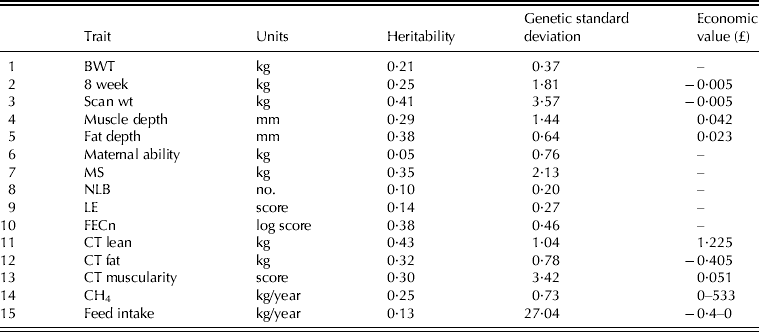
The MTIndex program (van der Werf Reference Van der Werf2012) was extended and used to model predicted changes in traits in response to index selection (Cottle et al. Reference Cottle, van der Werf and Banks2009; Cottle Reference Cottle2011; Cottle & Conington Reference Cottle and Conington2012). The MTIndex was modified to construct selection indices (Table 1), which included CH4 production (kg/year), feed intake (kg/year) and lambing ease (LE) (on a 5-point scale where 0 = unassisted, normal birth and 4 = veterinary-assisted birth) for the Suffolk sheep breed, an important terminal sire breed in the UK. The calculations of annual genetic gains were made by assuming four ewe age groups and three ram age groups mated first at 18 months, with a mating ratio of 50 ewes:1 ram. Mortality and culling rate of 10% for ewes was assumed in the model and a weaning rate of 140%. The resulting generation interval was 2·92 and the selection intensity was 1·73.
Traits in the Suffolk index. Traits 1–5 and 10 are lamb traits, traits 6–9 are dam traits. Traits 11, 12, 14 and 15 are breeding objective traits

BWT, birth weight; 8 week, 8-week weight; scan weight, 150-day weight; maternal ability, total weight of lambs; NLB, number of lambs born; LE, lambing ease; FECn, log nematode worm count; CT lean, CAT scan lean; CT fat, CAT scan fat.
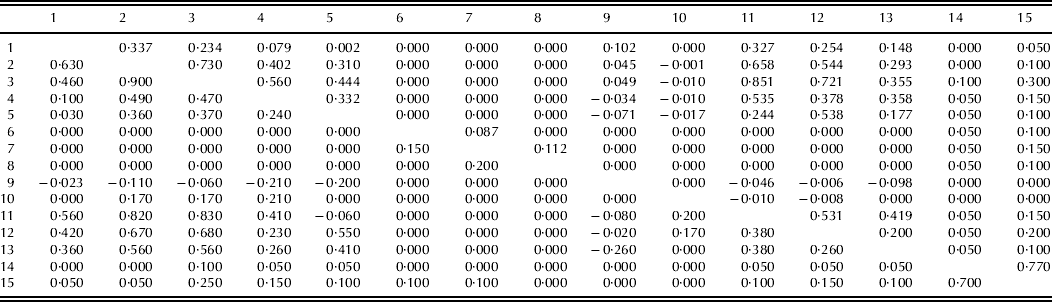
The genetic and phenotypic parameters and EVs for the standard breeding objective traits used in the current study were supplied by Signet breeding services (S. Boon, personal communication), Jones et al. (Reference Jones, Amer, Lewis and Emmans2004) and Lambe et al. (Reference Lambe, Bunger, Bishop, Simm and Conington2008). Feed intake and CH4 parameters were from literature estimates or assumed values after exhaustive discussions with research colleagues (Cottle et al. Reference Cottle, van der Werf and Banks2009; Cottle & Conington Reference Cottle and Conington2012). To overcome the unavoidable uncertainty of these parameter values, sensitivity analyses were carried out on predicted genetic gains for the assumed correlations between CH4 and feed intake with other traits in the breeding objective. This was done by randomly sampling within the normal distributions of the values reported in Table 2 with an assumed standard error (s.e.) of 0·02 for correlations using a Box & Muller (Reference Box and Muller1958) transformation, as in the study of Cottle & Conington (Reference Cottle and Conington2012). A small s.e. was assumed so data points on the result graphs were not too scattered and were interpretable.
Suffolk assumed correlations (phenotypic above, genetic below diagonal)
Traits: 1, birth weight; 2, 8-week weight; 3, 150-day weight, 4, muscle depth; 5, fat depth; 6, total weight of lambs; 7, MS; 8, NLB; 9, LE; 10, log nematode worm count; 11, CAT scan lean; 12, CAT scan fat; 13, CAT muscularity; 14, CH4; and 15,feed intake.
Fifteen breeding goal traits were included in the index (Tables 1 and 2). However, as the UK Suffolk terminal sire index only includes EVs for kg LEAN and kg FAT (as defined by computer tomography (CT), only fat and lean traits, CH4 and feed intake were assigned non-zero EVs. Additional traits in the breeding objective were assigned zero EVs to monitor their response to genetic selection with changes in carbon and feed prices.
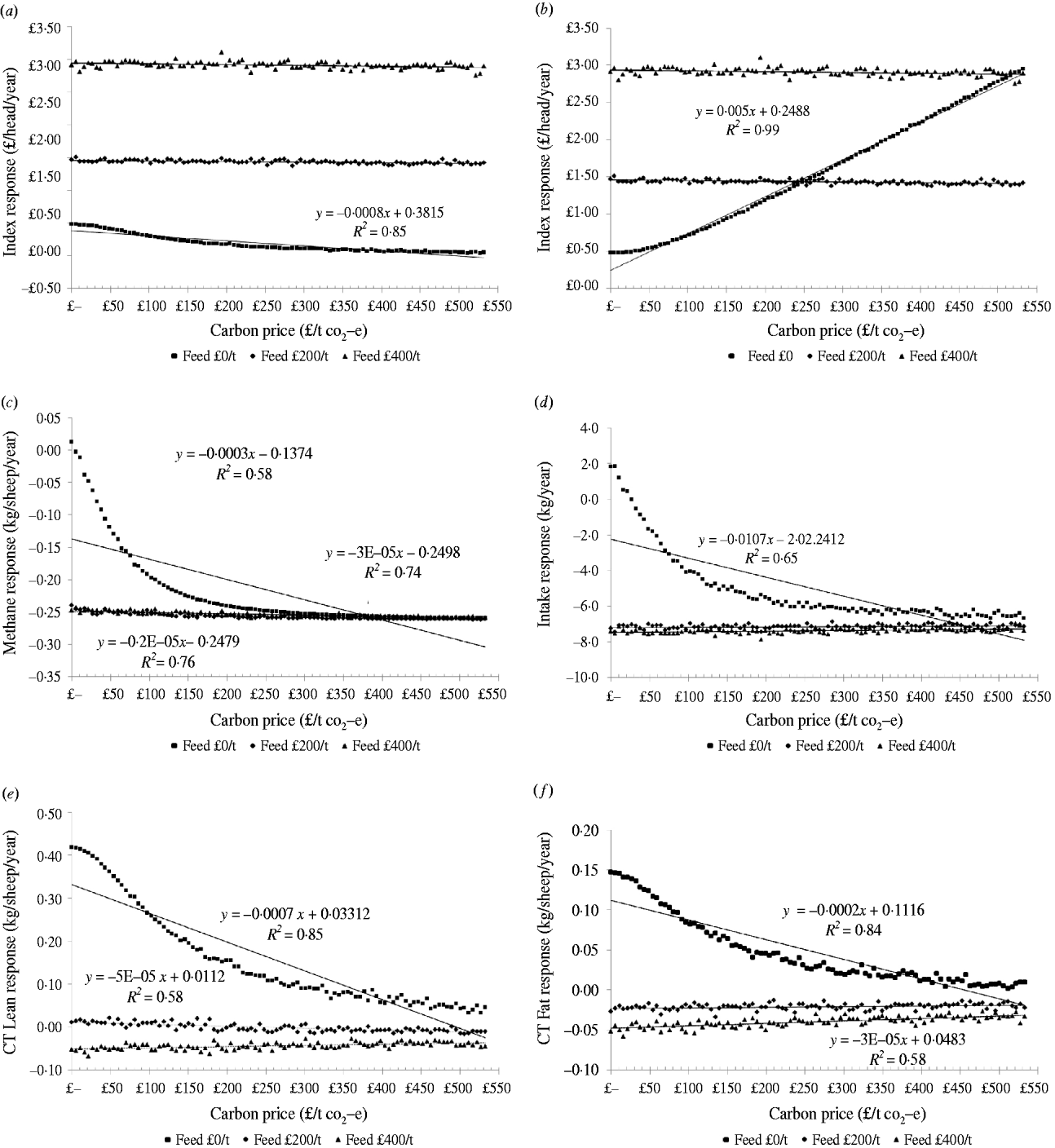
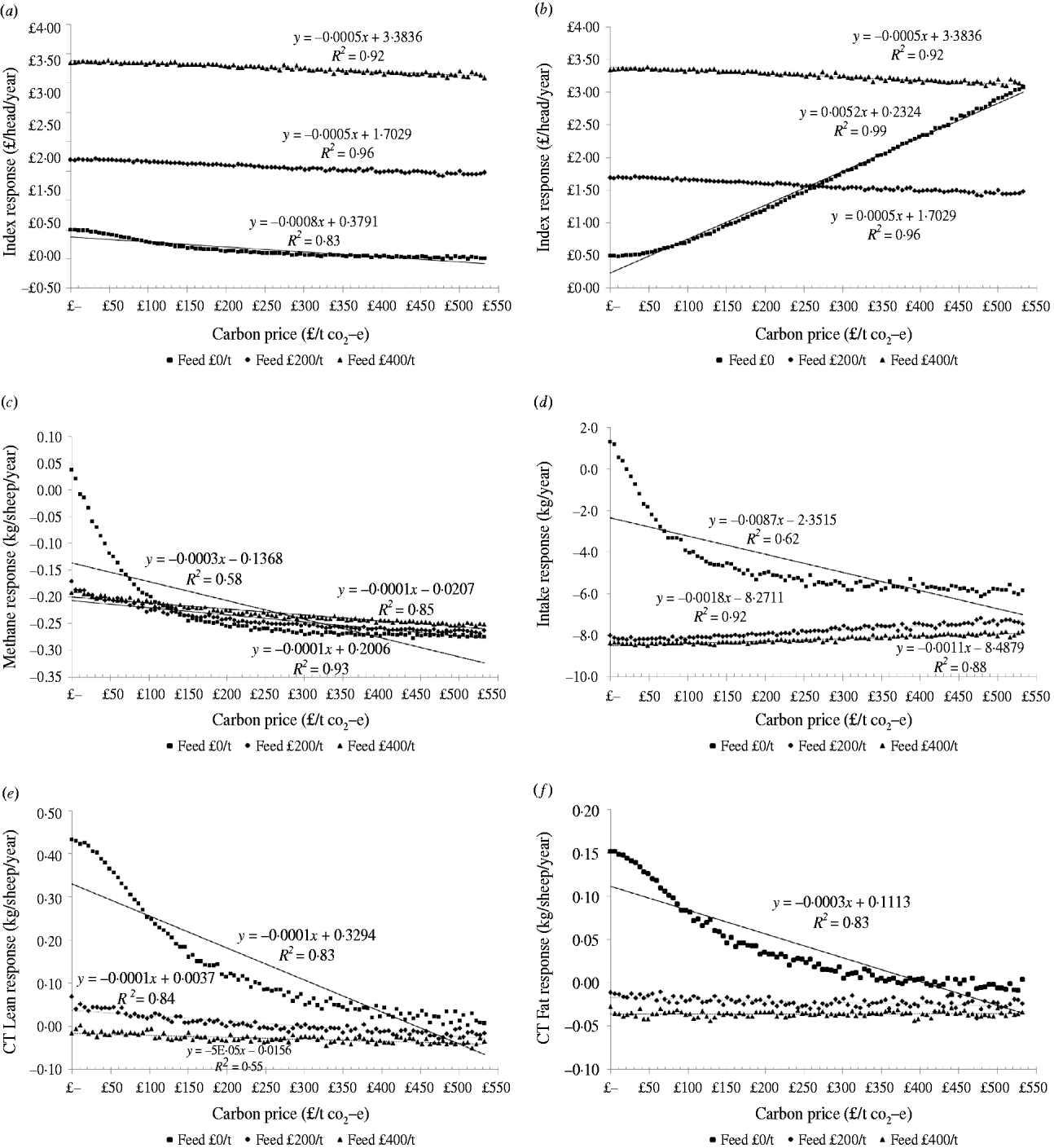
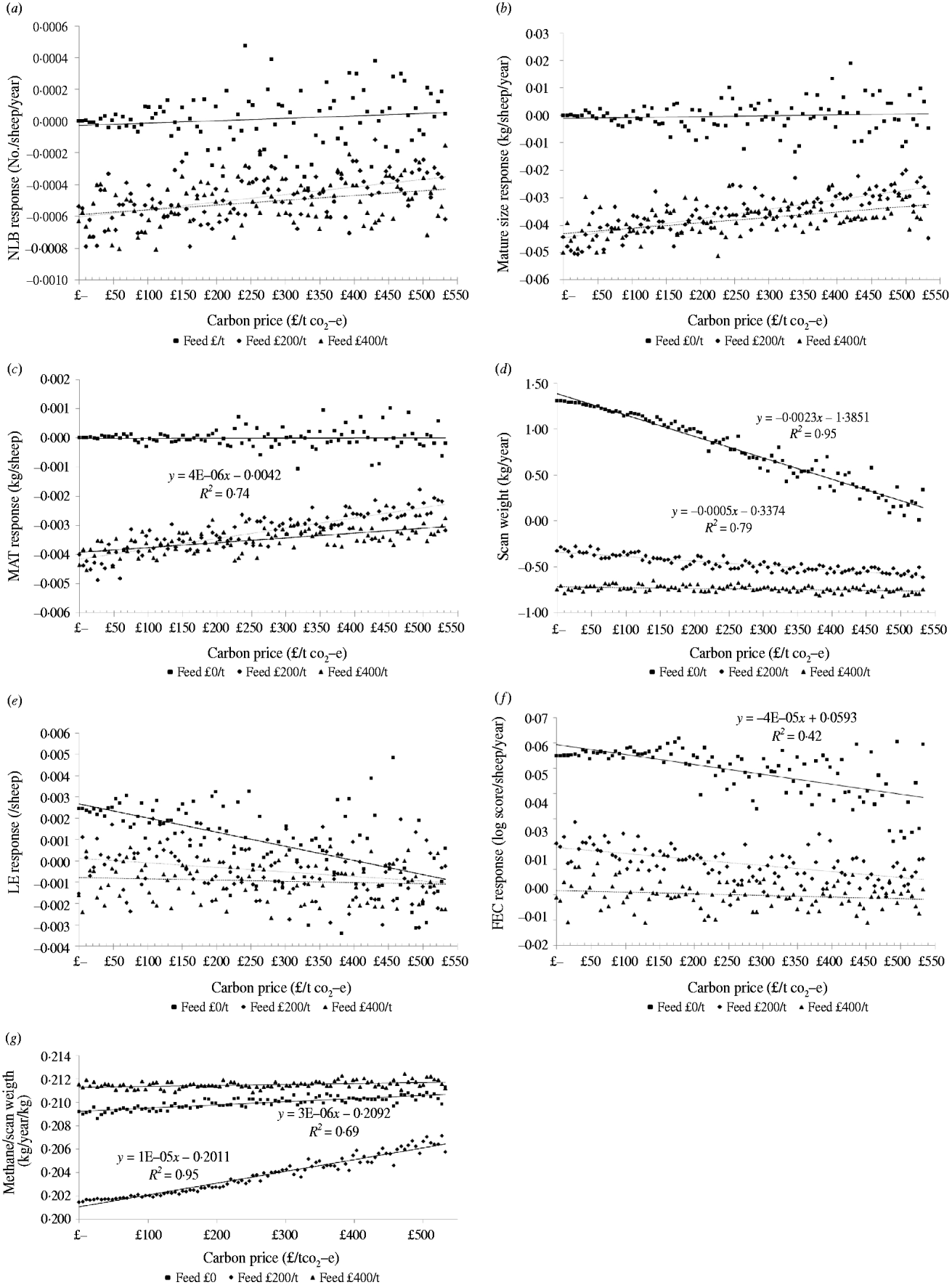
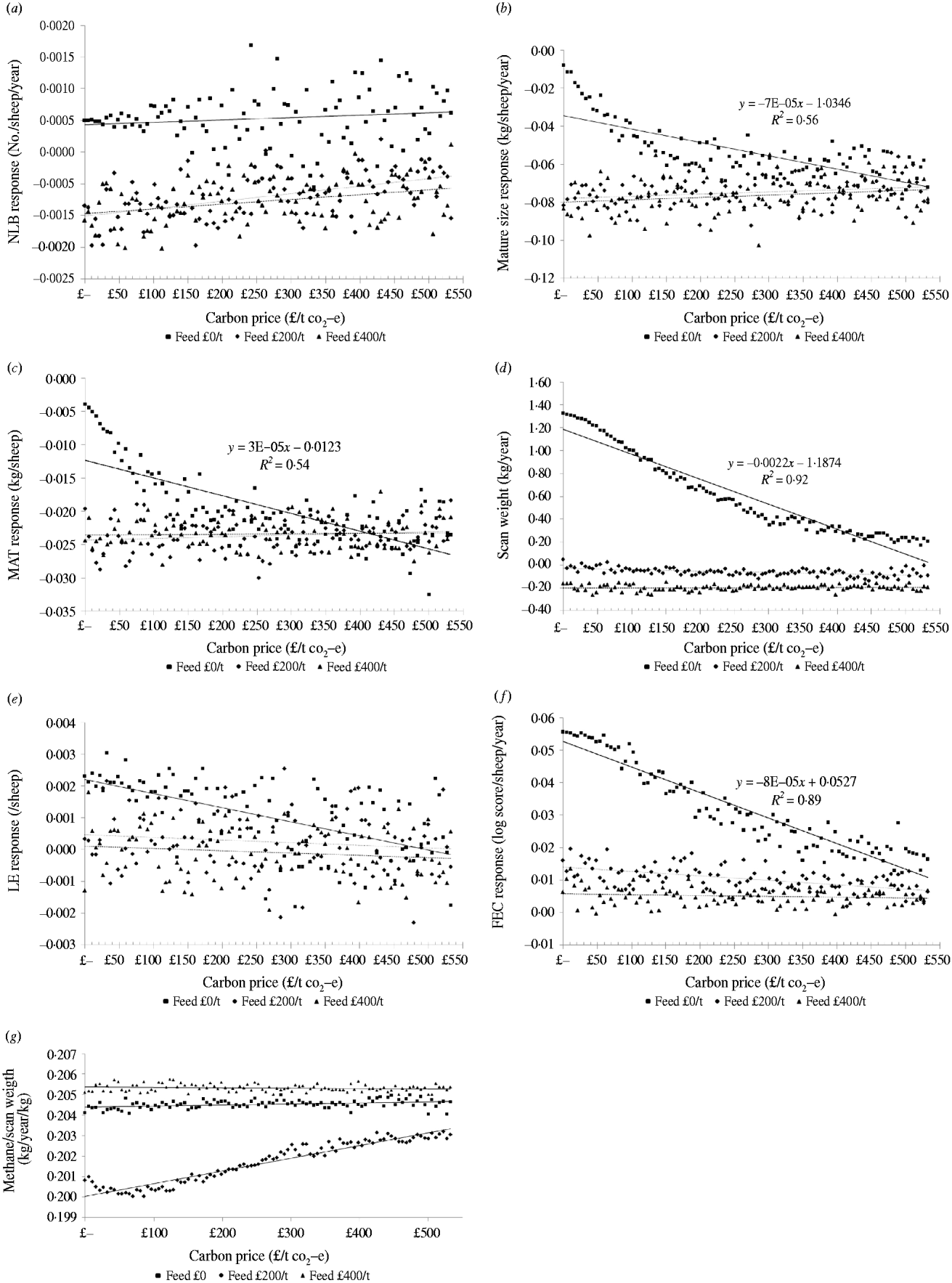
It was assumed that there was one dam record for the four maternal traits, i.e. total weight of lambs weaned (MAT), mature size (MS), number of lambs born (NLB) and LE. One own record and 62 half sib records (i.e. sire pedigree known) were assumed for all remaining ‘lamb’ traits, which included log of nematode faecal egg count (FECn), live weights at birth (BWT), 8 weeks (8 WK) and 21 weeks, when ultrasonic scanning takes place (SCANWT), ultrasonic fat (USFAT) and ultrasonic muscle (USMUS) depths (used as a predictor of kg FAT and kg LEAN). Methane and feed intake were included as possible selection criteria. Genetic responses were estimated for the ten selection traits with: (1) neither feed intake nor CH4 measured (Fig. 1); (2) only intake measured (Fig. 2); (3) only CH4 measured (Fig. 3); or (4) both feed intake and CH4 measured (Fig. 4), as selection criteria.
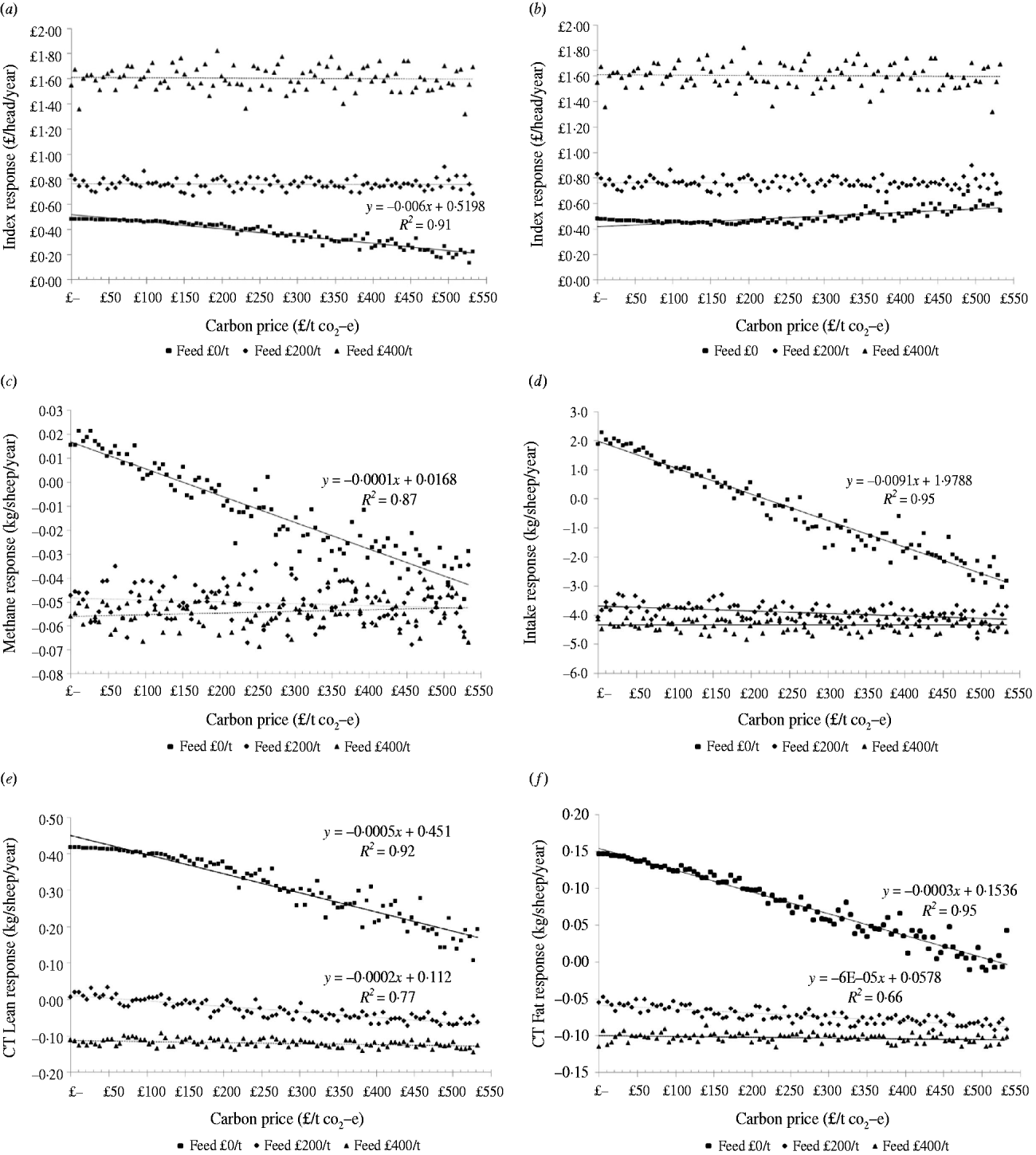
Changes in overall index value (with and without the inclusion of the financial response in CH4 production) and in the breeding objective traits to changes in carbon and feed price without measuring CH4 or feed intake. (a) Index without including financial return from reduced CH4; (b) index with CH4 financial return; (c) CH4 response; (d) feed intake; (e) CT lean; and (f) CT fat.
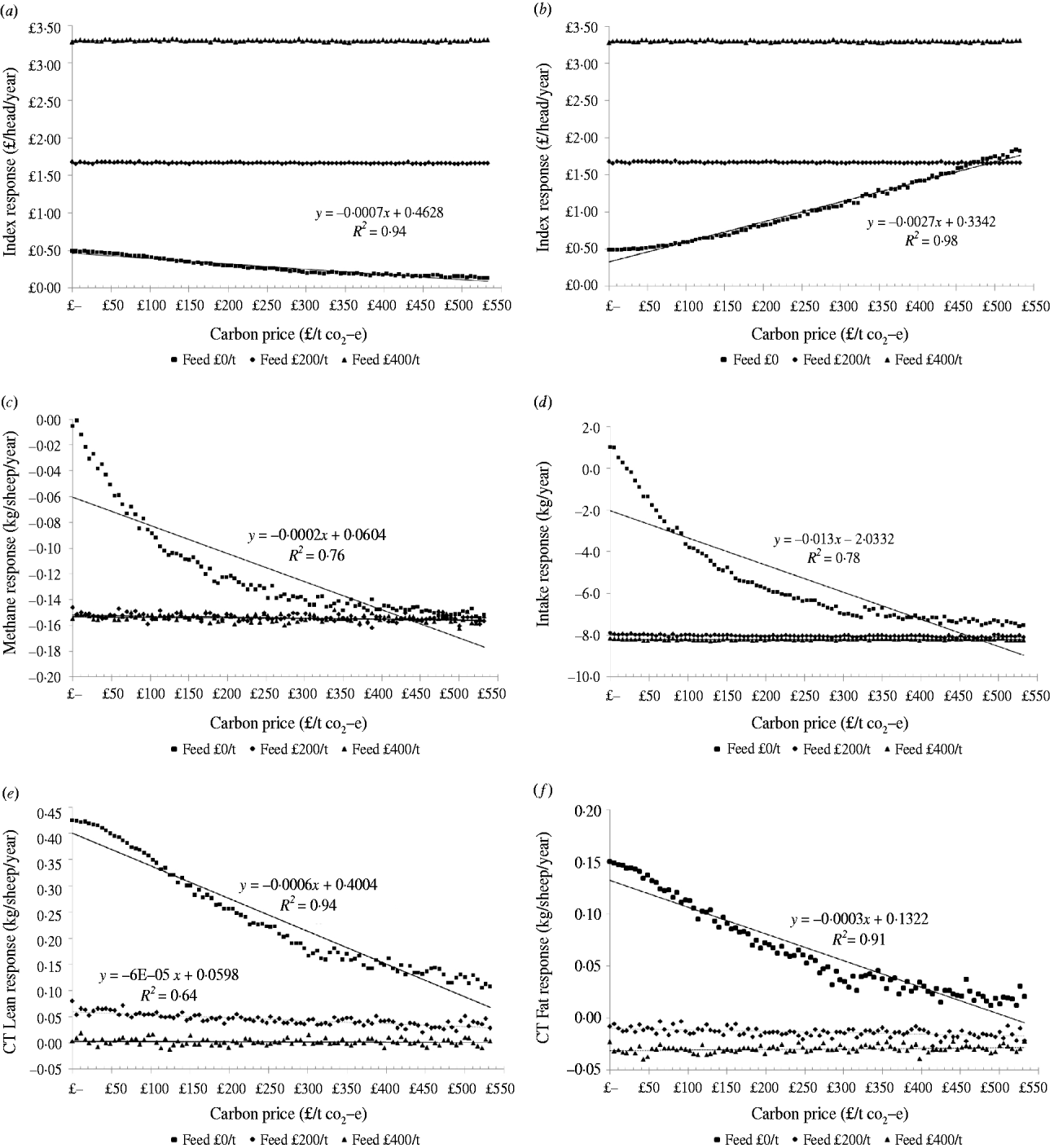
Changes in overall index value (with and without the inclusion of the financial response in CH4 production) and in the breeding objective traits to changes in carbon and feed price without measuring CH4 but measuring feed intake. (a) Index without including financial return from reduced CH4; (b) index with CH4 financial return; (c) CH4 response; (d) feed intake; (e) CT lean; and (f) CT fat.
Changes in overall index value (with and without the inclusion of the financial response in CH4 production) and in the main breeding objective traits to changes in carbon and feed price without measuring feed intake but measuring CH4. (a) Index without including financial return from reduced CH4; (b) index with CH4 financial return; (c) CH4 response; (d) feed intake; (e) CT lean; and (f) CT fat.
Changes in overall index value (with and without the inclusion of the financial response in CH4 production) and in the main breeding objective traits to changes in carbon and feed price measuring feed intake and CH4. (a) Index without including financial return from reduced CH4; (b) index with CH4 financial return; (c) CH4 response; (d) feed intake; (e) CT lean; and (f) CT fat.
The EV of CH4 production (kg/day) was calculated as £/t CO2-e × 21/1000, where 21 is the current internationally accepted global warming potential of CH4 in CO2 equivalents (Price et al. Reference Price, Thornton and Nelson2007). The response to selection was explored by varying the carbon price from zero to £538/t CO2-e in 100 increments of £5·38 to ascertain the price at which desired CH4 reductions (e.g. zero or 0·1 kg/head/year) were predicted. This maximum carbon price was equivalent to c. 10 times the central, non-trading sector carbon price of £51·70 in 2010. The EV of feed intake was set at zero, £200/t feed or £400/t feed to study the interaction of feed price with differing carbon prices. Sheep with higher feed intakes due to selection would need to be fed additional pasture or supplementary feed produced at the assumed prices.
Selection index methodology outlined in Cottle & Conington (Reference Cottle and Conington2012) was used to compute the index responses after one round of selection and these results were converted to annual responses by multiplying by selection intensity (1·73) and dividing by the average generation interval (2·92). Only linear regression lines with R 2 values >0·40 are displayed on graphs of predicted responses.
RESULTS
Methane and feed intake not measured as selection index traits
Changes in index value with different assumed carbon and feed prices with CH4 and feed intake included in the breeding objective, but not measured, are shown in Figs 1a, b (with and without inclusion of the financial impact of CH4 respectively).
Results for terminal sheep were sensitive to feed costs but not carbon price, whereas hill sheep indices that did not include feed intake as a breed objective trait (Fig. 1 in Cottle & Conington Reference Cottle and Conington2012) were sensitive to carbon price. Index responses were higher with the highest feed cost because selection resulted in lower predicted feed intake (even though it was not measured) via indirect selection pressure on other correlated traits. Non-inclusion of the CH4 component in the index response was only significant when feed costs were zero, as CH4 response was steady and similar for all carbon prices when feed costs were not zero (Fig. 1c). With no feed cost or carbon price, it is expected that terminal sheep would genetically gain in CH4 production by c. 0·02 CH4 kg/head/year. This is in the opposite direction desired by government policy and in the same direction as that predicted for hill sheep (Cottle & Conington Reference Cottle and Conington2012). However, with more realistic feed prices, CH4/head reduced by c. 0·05 CH4 kg/head/year for a wide range of carbon prices, including zero, if CH4 and intake were included as breeding objective traits, even when they were not measured directly. This was due mainly to the positive correlation between feed intake and CH4 production. Carbon prices would still need to be >£1000/t CO2-e to produce an index that resulted in predicted reductions in CH4 of 0·1 kg/head/year, the level that is needed for a cumulative reduction of 20% in total CH4 production over a 30-year period. With zero feed costs, the price of carbon would need to be c. £150/t CO2-e to produce an index that would achieve a predicted zero change in CH4 production. This is a lower price than the £270/t CO2-e estimated for hill sheep (Cottle & Conington Reference Cottle and Conington2012).
Feed intake fell due to index selection when carbon price increased above £270/t CO2-e, assuming a zero feed price. More realistic feed prices (£200–400/t) produced indices that resulted in a steady intake reduction of 3–4 kg/head/year (Fig. 1d), following the pattern for CH4 changes; CT Lean and CT Fat also followed a similar pattern. At zero feed price, CT Lean and CT Fat increased at all carbon prices studied, the response falling as carbon price increased. At more realistic feed prices CT Lean and CT Fat decreased with index selection at all carbon prices, except when feed price was £200/t and carbon price was <£50/t C02-e, which resulted in zero-predicted CT Lean change. A reduction in CT Fat is favourable, i.e. fat is predicted to increase at a much slower rate with higher carbon prices and to decrease when feed prices are not zero (Fig. 1f).
Feed intake measured
Overall financial response when feed intake was measured was higher than when it was not measured, as expected (Fig. 2).
Reductions in CH4 were achieved at lower carbon prices when intake was measured. When feed was given a zero cost, CH4 was predicted to decrease and a target of 0·1 kg CH4/head/year reduction was achieved by an index with a carbon price of c. £120/t CO2-e. Both non-zero feed costs resulted in larger 0·15 kg CH4/head/year reductions with a carbon price of zero. Other traits followed patterns of change in response to carbon price changes similar to those seen when feed intake was not measured. Larger genetic gains occurred for intake and CH4, but similar gains for CT Lean and CT Fat. With increasing carbon prices, the annual economic response with or without CH4 returns included was stable at £1·70 and £3·25/head when feed costs were £200 and £400/t, respectively. This is mainly due to the economic benefit of lower feed intake. Given that feed realistically has a cost, breeders should consider including feed intake as a selection criterion if it can be measured cost-effectively, even when carbon has zero price. With higher feed costs, the genetic gain in reducing feed intake by 8 kg/head/year was relatively stable in relation to carbon or feed price. When feed had no cost the economic returns, net of the carbon penalty, reduced gradually as carbon price increased. That is, breeders would be worse off financially as carbon price increased. Feed cost affected the gains predicted from index selection for some traits much more than others with increasing carbon price (Appendix, Figs A1–A4).
Methane measured
If CH4 could be directly measured in sheep, CH4 production would remain static by the index constructed with zero carbon and feed prices (Fig. 3), despite feed intake and CT Lean increasing and CT Fat decreasing. When feed was given a zero cost, a target reduction of 0·1 kg CH4/head/year was achieved by an index with a carbon price of c. £45/t CO2-e, lower than when just intake is measured. When feed was given a more realistic cost, the difference in reduction of CH4 resulting from measuring feed intake or CH4 was 0·15 v. 0·25 kg CH4/head/year, respectively, for a wide range of carbon prices.
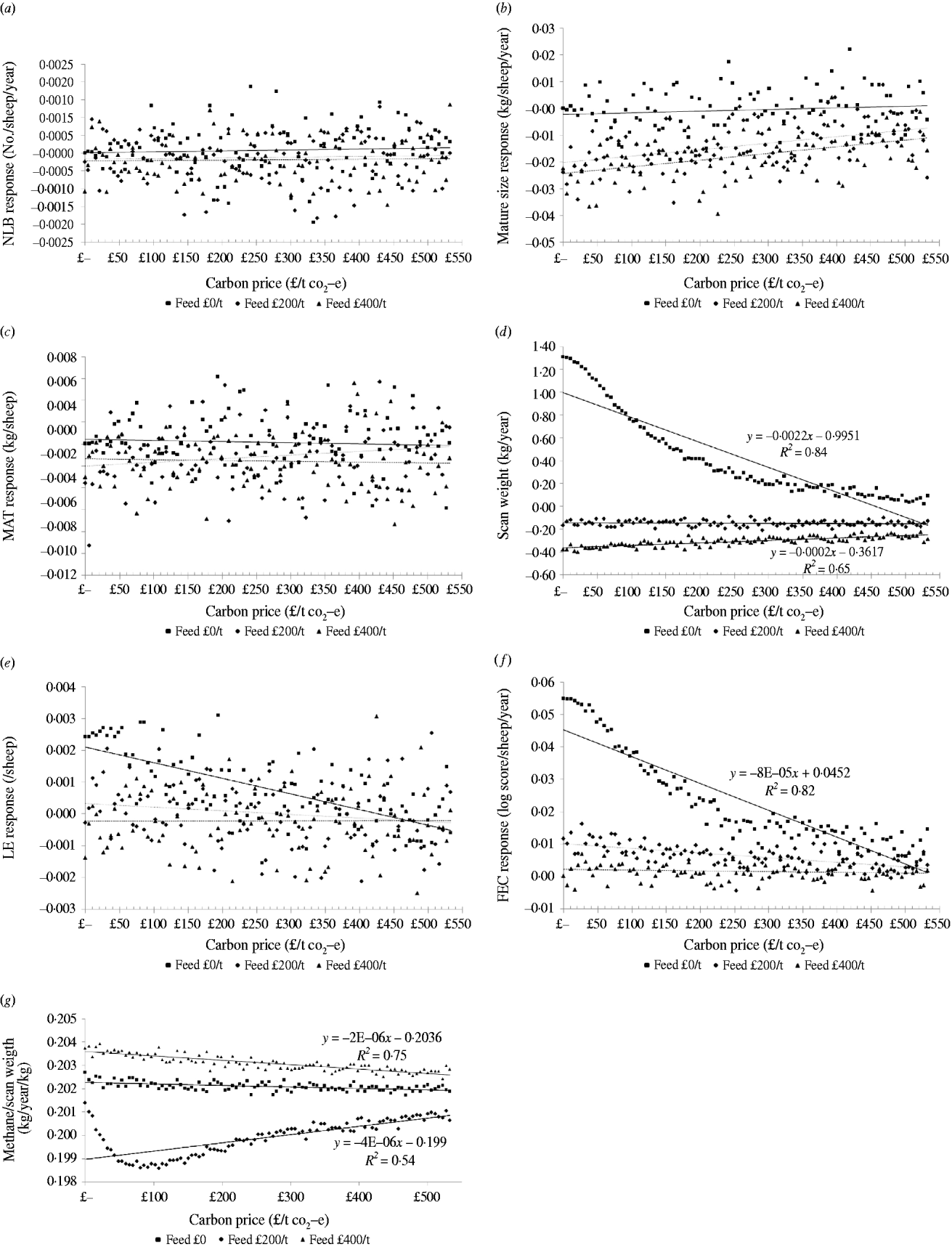
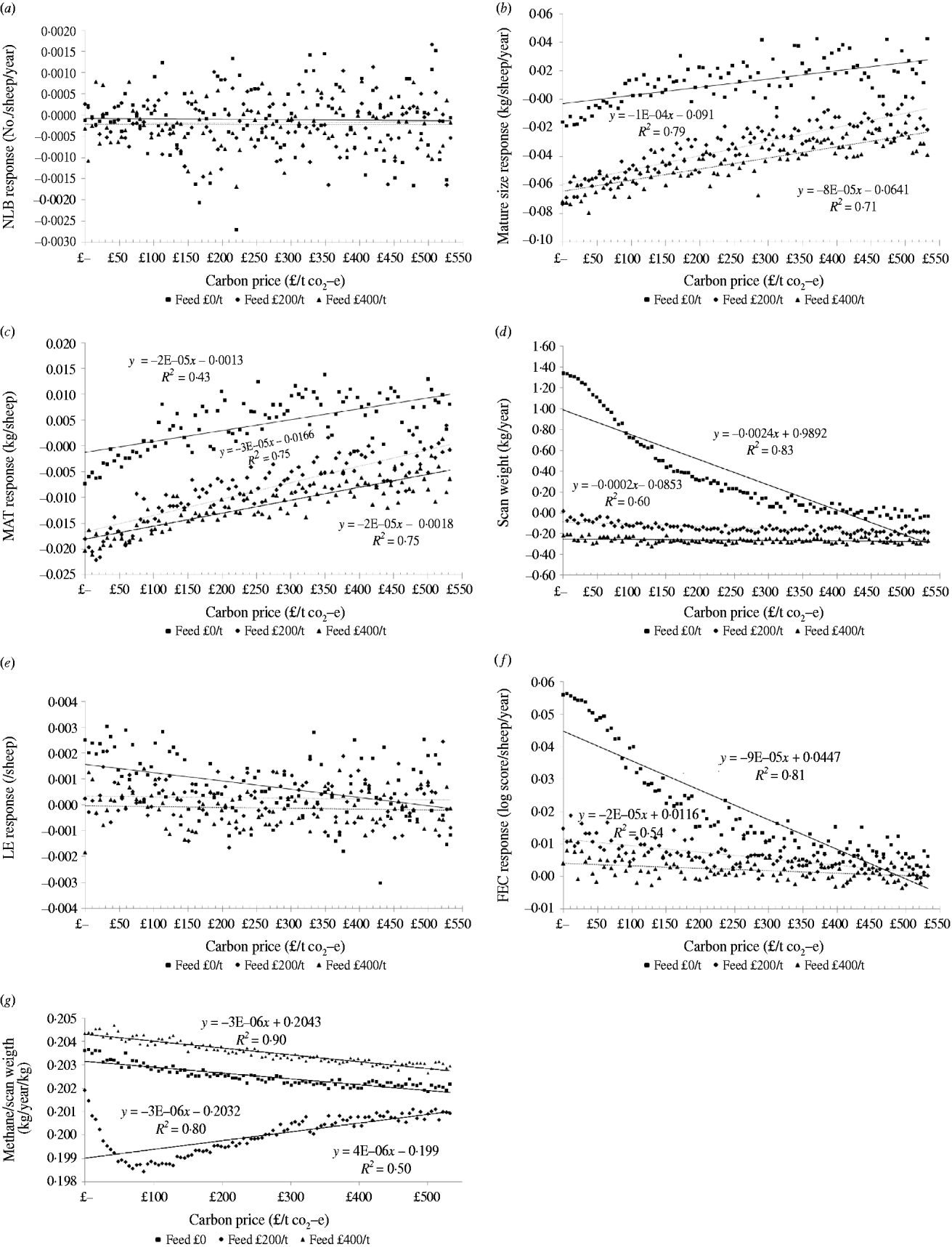
The more minor traits followed similar patterns of changes when either feed intake or CH4 were the selection criterion (Appendix, Figs A1–A4). When feed costs were not zero, the responses of minor traits to index selection were insensitive to carbon price.
Feed intake and CH4 are both measured
Measuring both intake and CH4 (Fig. 4) resulted in a financial response that was only slightly better overall than measuring just one of these selection criterion. For example, if feed cost was £400/t, then measuring intake resulted in an index response of c. £3·30/sheep/year, while measuring both intake and CH4 resulted in an index response of c. £3·40/sheep/year. This small difference is expected, since intake and CH4 are highly correlated.
At any carbon price, including zero, the annual economic response without CH4 returns included (Fig. 4a) was stable at £0·40, £1·70 and £3·35/head/year when feed costs were zero, £200 and £400/t, respectively. Again this suggests that breeders should include feed intake or CH4 as a selection criterion, if it can be measured cost-effectively, even when carbon has no price. When feed costs were zero and the EV of CH4 was included (Fig. 4b), the index response increased rapidly with increases in carbon price, as direct selection for CH4 and indirectly via feed intake produced a desirable genetic reduction in CH4 production.
A reduction of 0·1 kg CH4/sheep/year was achieved at a carbon price of £40/t C02-e with zero feed cost, similar to that found when only intake or CH4 were measured. Higher reductions in CH4 were achieved with non-zero feed costs. The response of most traits was the same or slightly higher than that achieved when only intake or CH4 were measured, no matter what carbon or feed price was assumed. The more minor traits responses were relatively insensitive to carbon or feed prices (Appendix, Figs A1–A4).
DISCUSSION
Other studies
The terminal sheep system results presented in the current paper differed from the predicted genetic change in CH4 for hill sheep (Cottle & Conington Reference Cottle and Conington2012) where feed costs were not considered (i.e. were zero) and feed intake was not measured. The index responses to carbon price with zero feed cost in hill sheep, when the financial impact of CH4 was included, fell and then increased at over £300/t CO2-e, whereas without the CH4, financial effect included, index response became negative over £300/t CO2-e. In hill sheep indices, carbon price needed to be over £270/t CO2-e when CH4 was not measured for predicted CH4 emissions to not increase, whereas in terminal sheep the price needed to be only over £150/t CO2-e (Fig. 1c). Terminal sheep have had a desired-gains approach to EV derivation that has evolved over the years by Signet. The EVs are not calculated directly from market analyses of the impacts of trait values on income, and this may partly explain the differences in results.
When CH4 was measured, a carbon price of £50/t CO2-e was needed for hill sheep to reduce CH4, whereas an index based on a zero carbon price would reduce CH4 in terminal sheep (Fig. 3c). While the carbon price needed to achieve CH4 reductions was lower in terminal sheep, whether CH4 was measured or not, the predicted CH4 increase at zero carbon (and feed) price was substantially higher in terminal sheep when CH4 was not measured. This was c. 0·25 t CO2-e/100 head/year in hill sheep (Fig. 1 Cottle & Conington Reference Cottle and Conington2012) v. 0·04 t CO2-e/100 head/year in terminals (obtained by multiplying kg CH4/head by (21/1000) × 100). Wall et al. (Reference Wall, Ludemann, Jones, Audsley, Moran, Roughsedge and Amer2010b) predicted that using current Signet indices would increase GHG in hill sheep (c. 3 t CO2-e/100 ewes/year), whereas terminal sheep were predicted to reduce by 0·08 t CO2-e/100 ewes/year. However, when Wall et al. (Reference Wall, Ludemann, Jones, Audsley, Moran, Roughsedge and Amer2010b) included GHG (environmental) weights in the calculation of their various selection indices, hill sheep had higher reductions in GHG/ewe/year.
The methods used by Wall et al. (Reference Wall, Ludemann, Jones, Audsley, Moran, Roughsedge and Amer2010b) and Nakielny & Roden (Reference Nakielny and Roden2011) were different to those used in the current paper, which makes comparisons between studies difficult. However, it is important to try to understand any differences and the relative merits of alternative modelling approaches. The question of whether hill or terminal sheep are likely to be increasing or decreasing in per head GHG emissions when undergoing current selection practices with zero or future carbon prices is important. The differences in results are caused by: different methods of calculating CH4 production and feed intake, differences in assumed genetic parameters in selection indices, assumed source of animal records (own record and half sib records), average flock production characteristics, discount rates, time horizons and feed digestibility estimates. Comparing predicted physical trait responses (e.g. kg) between studies is easier than comparing index or total £ responses. Flock average trait responses are only dependent on genetic parameters and are independent of any scaled increase in the EVs of all traits that occurs when different flock size and structure and gene flow assumptions are used in calculating trait EVs. James (Reference James, Dickerson and Johnson1986) listed reasons why traits such as feed intake (or CH4) are best included as a separate trait in the breeding objective, as was done in the current paper, rather than being included as an adjustment to the EV of other production traits, as undertaken in the studies of Wall et al. (Reference Wall, Ludemann, Jones, Audsley, Moran, Roughsedge and Amer2010b) and Nakielny & Roden (Reference Nakielny and Roden2011). Methane production and feed intake changes were predicted from assumed correlations with other traits in the multi-trait selection index modelling used in the current paper, whereas the other two studies did not include CH4 and feed intake as separate breed trait objectives and estimated CH4 production using Tier 2 equations from Dong et al. (Reference Dong, Mangino, McAllister, Hatfield, Johnson, Lassey, de Lima, Romanovskaya, Eggleston, Buendia, Miwa, Ngara and Tanabe2006). These add complexity and may introduce unknown levels of imprecision to the prediction of genetic changes in traits. Including intake and CH4 as breeding objective traits and selection criteria allows the impact of changing carbon and feed prices to be studied more easily. It also produces the selection index trait weights (bi) that could be used for feed intake or CH4 if these traits were to be introduced into future sheep industry breeding indices.
The equations of Dong et al. (Reference Dong, Mangino, McAllister, Hatfield, Johnson, Lassey, de Lima, Romanovskaya, Eggleston, Buendia, Miwa, Ngara and Tanabe2006) include estimating CH4 emissions as being at a constant 4·5% of gross energy intake for outdoor lambs and 6·5% for outdoor adults. Gross energy (MJ/day) is calculated from equations that calculate the net energy needed for maintenance, activity, growth, lactation, wool and pregnancy. The digestible energy consumed is calculated from the assumed live weight of ewes and lambs at various times, birth types, wool growth and digestible energy as a percentage of gross feed energy. Trait change effects (kg CO2-e/ewe/unit change in trait) on CH4 production resulting from current selection indices were calculated via the modelled impacts of resultant trait changes on feed intake (gross energy was assumed to be 18·45 MJ/kg dry matter).
Wall et al. (Reference Wall, Ludemann, Jones, Audsley, Moran, Roughsedge and Amer2010b) used published terminal sheep index trait weights, whereas modified index weightings currently in use by Signet were used in the present paper, and this is another reason why the results differed. Further, an assumption was made in the current study that flocks kept pedigree records so dam and half sib records were available for some traits. The environmental indices of Wall et al. (Reference Wall, Ludemann, Jones, Audsley, Moran, Roughsedge and Amer2010b) equated the EVs of breeding objective traits to their modelled effects on GHG and these resulted in a reduction in kg CO2-e/ewe/year of 1·26 and 0·27% in hill and terminal sheep for a zero carbon price. Wall et al. (Reference Wall, Ludemann, Jones, Audsley, Moran, Roughsedge and Amer2010b) also modelled the use of combined economic and environmental weights (i.e. standard trait EV plus impact on GHG) at four carbon prices of £12, £26·50, £32·90 and £100/t CO2-e. Reductions of 0·42 and 0·05% in kg CO2-e/ewe/year were estimated for hill and terminal sheep for the 2020 shadow price of £32·90/t CO2-e.
When feed intake was included as an objective trait in the current study with non-zero feed costs, the results between hill and terminal breed sheep also differed as CH4 emissions reduce even when carbon price is assumed to be zero in terminal sheep. This is mainly because feed intake and CH4 production were assumed to be highly positively correlated and both had assumed negative EVs.
Allocating zero EVs in the terminal index to maternal breeding objective traits with non-zero EVs in hill indices (positively correlated to CH4) decreased the carbon price needed in terminal indices to prevent CH4 from increasing, compared with hill sheep. Some of these hill breeding-objective traits, such as number of lambs weaned, longevity and weaning weight were assumed to have positive EVs in hill sheep, while other traits, such as MS and lamb loss were assumed to have negative EVs. As these traits are given zero EVs in terminal sheep, it is possibly easier to optimize the index (overall economic) response when reducing CH4, as their economic impacts are only realized indirectly through the EVs of responses in correlated traits.
Which trait to measure?
The additional benefit of measuring both feed intake and CH4 compared with measuring only one of these traits was small. Measuring either of these traits (without accounting for measurement cost) led to worthwhile responses brought about by responses in CT Lean (more lean) and CT Fat (less fat) and lower predicted levels of CH4 and feed intake compared with when these traits were not measured. The responses of CT Lean and CT Fat were considerably lower in the current paper compared with those in the index studies of Jones et al. (Reference Jones, Amer, Lewis and Emmans2004); however, the current paper included far more breeding objective traits in the selection index, so that is expected.
Hill sheep are much less likely to receive any supplementary feeding and usually graze pastures, with lower production costs than those required to supplement terminal breed sheep. Thus it is more appropriate to include feed intake as a trait in the index of terminal sheep breeds when typical systems for sheep production are being modelled.
The costs of measuring CH4 or feed intake should ideally be included in any system modelling but these costs are difficult to model and both traits are difficult and costly to measure in practice, so it is unlikely that it would be worth measuring both traits. Pasture feed intake can now be measured at lower cost using a patented method (PCT/AU2010/001054 2012) to be marketed by Proway Livestock internationally based on natural, indigestible markers and electronic feed bins. This method could be used to estimate feed intake at pasture in similar studies or by livestock breeders.
Government policy
For simplicity, the methods used in the current paper assume that breeders would receive a carbon price signal and penalty based on the amount of CO2-e produced per sheep. It is unlikely that a carbon tax would be imposed on the basis of an actual measurement of CH4 emissions on a farm largely due to the high costs and technical difficulties associated with its measurement. Penalties are more likely to be imposed via a national carbon accounting method based on the number and type of livestock and possibly their average live weight (UNCCC 2008; Gerber et al. Reference Gerber, Key, Portet and Steinfeld2010). Gerber et al. (Reference Gerber, Key, Portet and Steinfeld2010) noted that national inventories are often weak and outdated in methodology and they called for enhancement of the reliability of national GHG inventories, e.g. the methods of Dong et al. (Reference Dong, Mangino, McAllister, Hatfield, Johnson, Lassey, de Lima, Romanovskaya, Eggleston, Buendia, Miwa, Ngara and Tanabe2006). A carbon penalty imposed by such an inventory-based method would not provide a financial incentive for breeders to reduce CH4 or intake in individual animals. If the government desires breeders to make changes to their breeding programme that would create such a change they will need to consider providing a subsidy to offset production losses caused by inclusion of CH4 in the breeding objectives. The payment of the subsidy could be based on their yearly purchase of rams ranked highly on a breeding index to include traits considered to be in the nation's interests or of socio-economic benefit. This could include any technological innovations that promote feed efficiency, such as rams that are genetically proven to have high feed efficiency, or have daughters that produce lambs with high survival rates and greater resistance to disease. The modelling results suggest that such subsidies would need to be different for different sheep systems, as the production losses that result from selection for reduced CH4 can be different.
Conclusions
The predicted rate of CH4 reduction through selective breeding of terminal sire sheep depends on: (a) traits under selection in the breeding objective, (b) whether or not CH4 or feed intake are measured directly, or predicted through their genetic correlations with other traits, (c) the cost of feed, (d) carbon price, (e) whether or not the revenue from reduced carbon emissions is accounted for in the overall economic selection index response and (f) the modelling approach used. The current paper has shown that for terminal sheep systems with feed prices of over £200/t, carbon prices may have little impact on reducing CH4 emissions via selection indices. Both predicted feed intake and CH4 production (per head or per kg of lamb at 21 weeks) follow similar patterns to increases in carbon price. This probably occurs due to the strong genetic correlation (0·7) that was assumed between CH4 production and feed intake. The current paper gives some indication of the likely impact of on-farm carbon accounting on breeding to improve sheep meat production. The likely negative impact on production traits when feed prices are zero, with increasing carbon prices, indicate that it is unlikely farmers will choose sheep breeding as a method of reducing their carbon footprint. Some financial incentive would need to be in place to compensate for the predicted decline in production.
Professor Julius van der Werf provided the original MTIndex program and assisted with developing additional programming modules. Sam Boon of Signet and Kirsty Moore of EGENES provided the current index weightings and genetic parameters currently used for Suffolk sheep.
Appendix
Changes in selection criteria traits to changes in carbon and feed price without measuring CH4 or feed intake. (a) Number of lambs born (NLB); (b) Mature size (MS); (c) Maternal ability (MAT); (d) Scan weight; (e) Lambing ease (LE); (f) log nematode worm count (FEC); and (g) CH4/scan weight.
Changes in selection criteria traits to changes in carbon and feed price without measuring CH4 but measuring feed intake. (a) Number of lambs born (NLB); (b) Mature size (MS); (c) Maternal ability (MAT); (d) Scan weight; (e) Lambing ease (LE); (f) log nematode worm count (FEC); and (g) CH4/scan weight.
Changes in selection criteria traits to changes in carbon and feed price without measuring feed intake but measuring CH4. (a) Number of lambs born (NLB); (b) Mature size (MS); (c) Maternal ability (MAT); (d) Scan weight; (e) Lambing ease (LE); (f) log nematode worm count (FEC); and (g) CH4/scan weight.
Changes in selection criteria traits to changes in carbon and feed price measuring feed intake and CH4. (a) Number of lambs born (NLB); (b) Mature size (MS); (c) Maternal ability (MAT); (d) Scan weight; (e) Lambing ease (LE); (f) log nematode worm count (FEC); and (g) CH4/scan weight.