INTRODUCTION
Combination antiretroviral therapy (cART) has dramatically improved the landscape of HIV-associated mortality and morbidity. In the United States, HIV-associated dementia has become rare, nevertheless, milder forms of HIV-associated neurocognitive disorder (HAND) persist despite viral suppression (Heaton et al., Reference Heaton, Clifford, Franklin, Woods, Ake, Vaida and Grant2010). The persistence of neurocognitive impairment (NCI) and central nervous system (CNS) dysfunction in people living with HIV (PLWH) in the cART era is important as these impairments affect the quality of life and daily functioning, and may impact cognitive aging (Heaton et al., Reference Heaton, Marcotte, Mindt, Sadek, Moore, Bentley and Grant2004; Thames, Arentoft, Rivera-Mindt, & Hinkin, Reference Thames, Arentoft, Rivera-Mindt and Hinkin2013). Critically, the rates of vascular risk factors (VRFs) and vascular disease are elevated in HIV, which likely substantially contribute to cognitive dysfunction. In the general population, VRFs tend to increase with age and are consistently associated with cognitive dysfunction and dementia (Jefferson et al., Reference Jefferson, Hohman, Liu, Haj-Hassan, Gifford, Benson and Ruberg2015). It is estimated that 45% of PLWH in the United States are at least 50-years-old (Centers for Disease Control and Prevention [CDC], Reference Valcour, Shikuma, Shiramizu, Williams, Watters, Poff and Sacktor2020). It is unclear if long-term survivors of HIV who present with HAND and VRFs are at a higher risk for neurodegenerative disease, thus, it is important to investigate VRFs as a mechanism for NCI (Cysique & Brew, Reference Cysique and Brew2019).
Vascular Risk in HIV
Many studies have documented higher rates of cardiovascular disease (CVD) and cerebrovascular disease among PLWH (Demir et al., Reference Demir, Candilio, Fuster, Muga, Barbaro, Colombo and Azzalini2018; Singer, Valdes-Sueiras, Commins, Yong, & Carlson, Reference Singer, Valdes-Sueiras, Commins, Yong and Carlson2013). Similarly, HIV infection has been associated with subclinical CVD and elevated rates of VRFs such as dyslipidemia, type 2 diabetes mellitus (T2DM), hypertension, and abdominal obesity (Grinspoon & Carr, Reference Grinspoon and Carr2005; Hanna et al., Reference Hanna, Post, Deal, Hodis, Jacobson, Mack and Kingsley2015; Seaberg et al., Reference Seaberg, Benning, Sharrett, Lazar, Hodis, Mack and Kaplan2010; Triant, Reference Triant2013). Though HIV was once associated with wasting, the rates of obesity in HIV populations are now similar to the general population (Crum-Cianflone, Tejidor, Medina, Barahona, & Ganesan, Reference Crum-Cianflone, Tejidor, Medina, Barahona and Ganesan2008).
Etiology of VRFs and CVD in HIV
Possible mechanisms for the elevated rates of VRFs and CVD include side effects of cART, HIV-specific factors, chronic inflammation, and comorbidities. While cART treatment has prolonged life of PLWH, cART is associated with several cardiometabolic side effects, and increased risk of myocardial infarction (Nou, Lo, & Grinspoon, Reference Nou, Lo and Grinspoon2016; Onen et al., Reference Onen, Overton, Seyfried, Stumm, Snell, Mondy and Tebas2010). The virus itself is associated with inflammatory changes, and can damage the vascular endothelium and increase arterial stiffness through the modification of aortic wall vascular smooth muscle cell behavior and extracellular matrix composition (Rider et al., Reference Rider, Asaad, Ntusi, Wainwright, Clutton, Hancock and Holloway2014). Studies of untreated and cART-naïve HIV populations support the evidence of increased vascular dysfunction (Hsue et al., Reference Hsue, Hunt, Schnell, Kalapus, Hoh, Ganz and Deeks2009; Palella & Phair, Reference Palella and Phair2011). Further, there is a strong consensus that immune activation contributes to CVD pathogenesis in HIV (Longenecker, Sullivan, & Baker, Reference Longenecker, Sullivan and Baker2016). Studies of untreated HIV infection support relationships between immune activation, inflammation, and CVD in HIV (Lang et al., Reference Lang, Mary-Krause, Simon, Partisani, Gilquin, Cotte and Costagliola2012; Lo et al., Reference Lo, Abbara, Shturman, Soni, Wei, Rocha-Filho and Grinspoon2010; Longenecker et al., Reference Longenecker, Sullivan and Baker2016; Stein & Hsue, Reference Stein and Hsue2012). Even with viral suppression and cART, immune activation persists, albeit at a lower level, contributing to chronic low-grade inflammation. Markers of monocyte activation and inflammation are typically lowered by cART, but are still higher in comparison to HIV-seronegative individuals (Nou, Lo, & Grinspoon, Reference Nou, Lo and Grinspoon2016). Finally, PLWH may also be at an elevated risk of cardiovascular complications due to poor health behaviors and comorbidities. Rates of cigarette smoking are also increased among PLWH (Soliman et al., Reference Soliman, Sharma, Arasteh, Wohl, Achhra, Tambussi and Phillips2015). Coinfections and higher rates of substance use/abuse might also augment CVD risk; Hepatitis C, cytomegalovirus, and substance abuse have been associated with cardiovascular dysfunction (Triant, Reference Triant2013).
Purpose of Review
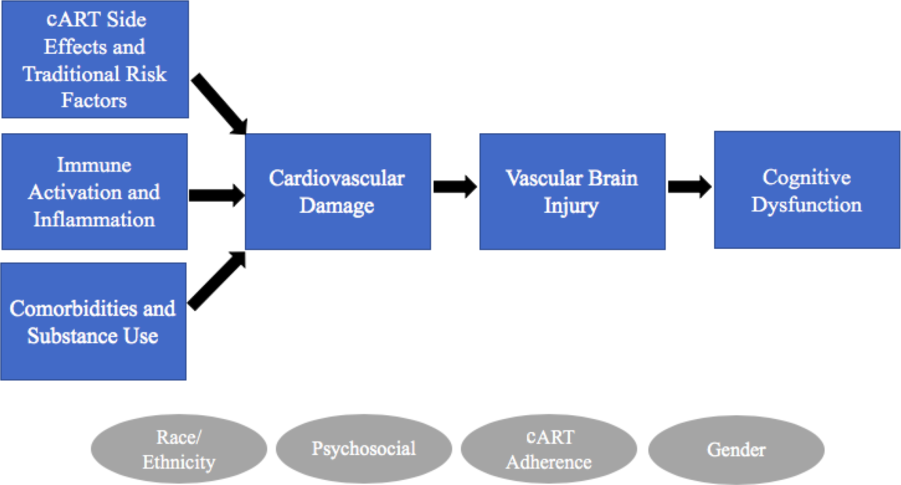
The elevated rates of VRFs and CVD in HIV are concerning as it may put PLWH at an increased risk for cognitive dysfunction and decline. VRFs are thought to detrimentally affect cognition through direct effects on the vascular system and indirect effects on brain structure and perfusion. Insult to the cardiovascular system can negatively impact cognition through several mechanisms, including ischemic brain damage characterized by white matter lesions, atrophy, and reductions in cerebral blood flow (CBF; Figure 1). In the last 10–15 years, a growing number of studies have examined the contributions of commonly studied VRFs in the relationship between HIV and cognitive function; however, to date, no one has systematically reviewed the literature on this topic. The purpose of the present paper is to better elucidate VRF contributions to cognition among PLWH in the cART era. The paper will provide a qualitative review of the literature on relationships between VRFs, subclinical CVD, and cognition, and a quantitative meta-analysis of VRF contributions to NCI in HIV.
Conceptual diagram of vascular contributions to neurocognitive dysfunction in HIV. Diagram illustrates hypothesized relationships between HIV infection, cardiovascular damage, and cognitive dysfunction. Increased prevalence of subclinical CVD (e.g. arterial stiffness, atherosclerosis) and CVD in HIV has multiple etiologies including cART side effects and traditional risk factors (e.g. smoking, type 2 diabetes mellitus, hypertension, dyslipidemia, obesity), immune activation and associated inflammation, comorbidities (e.g. Hepatitis C, cytomegalovirus) and substance use (e.g. cocaine, methamphetamine). Cardiovascular damage leads to brain injury through vascular mechanisms including ischemia (e.g. cerebral small vessel disease, white matter hyperintensities), and reduced blood flow to the brain, which in turn leads to neurocognitive dysfunction. Circles represent additional factors that may influence these relationships.

METHOD
Articles published between January 2000 and June 2020 were identified through searches in SCOPUS, PubMed, and Google Scholar. Search terms included “HIV” or “AIDS”, and “cardiovascular” or cerebrovascular” or “vascular” or “obese” or “obesity” or “diabetes” or “metabolic” or “insulin” or “waist” or “body mass index (BMI)” or “atherosclerosis”, and “cognitive” or “cognition” or “neurocognitive” or “neuropsychological.” Articles were additionally filtered by language (English only), document type (Article only), year of publication (since year 2000), and species if available (Human only). The SCOPUS search produced 390 records, and 2 additional records were identified through Google Scholar and PubMed for a total of 392 records.
Study Selection
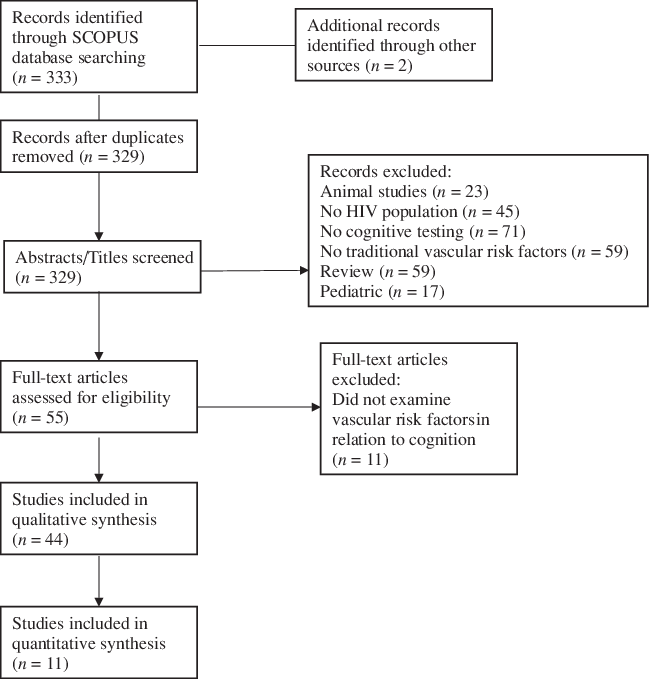
The selected abstracts were reviewed using the following inclusion criteria: human participants; adult population; measurement and/or self-report of traditional VRFs or subclinical CVD; the assessment of neurocognitive functioning using neuropsychological tests; the examination of relationship between VRFs and neurocognition. A total of 44 studies satisfied the selection criteria (Figure 2).
PRISMA flow chart of study selection.

For the meta-analytic review, studies were subjected to the following additional selection criteria: data reported on cART usage (e.g. percent on cART), cognition measured by a comprehensive neuropsychological test battery (i.e. >2 cognitive tests and no cognitive screening measures), VRFs quantified with clinically guided cutoffs (i.e. hypertension defined by blood pressure readings and/or prescribed antihypertensives), VRFs based on quantitative measurement or treatment (i.e. self-report not permitted), the assessment of global NCI using normative data, and presence of cross-sectional neurocognitive analyses assessing relationships between VRFs and NCI. A total of 11 studies met criteria and were included in the meta-analysis (Figure 2). Of these studies, over 50% of the sample reported cART use.
Data Extraction and Management
Systematic review
For selected articles, ECM and KT extracted data for qualitative synthesis, including participant demographics, study design, sample size, cART status, HIV variables, and summarized the main findings. Study demographics, methodologies, and results are summarized in Supplementary Material Table 1.
Meta-analysis
For selected articles, ECM and KT independently extracted the following data: total sample size, number of participants per VRF group included in cognitive analyses (i.e. number of participants with T2DM), age (mean and standard deviation or median and interquartile range), race (e.g. percent White), sex, nadir CD4 count, cART use, undetectable viral load (i.e. percent with viral load <50 copies/ml), AIDS history, and country where study was performed. For the majority of studies (N = 8), study reported odds ratios (ORs) were extracted and additional information (e.g. OR confidence interval and sample size) needed to compute variance. For the rest of studies (N = 3; Gomez et al. Reference Gomez, Power, Gill and Fujiwara2017; Saloner et al., Reference Saloner, Campbell, Serrano, Montoya, Pasipanodya, Paolillo and Moore2019; Yu et al. Reference Yu, Pasipanodya, Montoya, Moore, Gianella, McCutchan and Marquine2019), ORs were computed through an effect size calculator using other statistics provided in addition to sample sizes (e.g. Cohen’s d, chi-square, and binary proportions with cognitive impairment) (Wilson, Reference Wilsonn.d.). Once converted, all ORs and confidence intervals underwent log transformation for analysis to ensure symmetry (Borenstein, Hedges, Higgins, & Rothstein, Reference Borenstein, Hedges, Higgins and Rothstein2010). Standard errors and variances were then calculated using the log-transformed values of the upper and lower OR CI using formulas (Higgins, Li, & Deeks, Reference Higgins, Li, Deeks, Higgins, Thomas, Chandler, Cumpston, Li, Page and Welch2019). Following meta-analysis, log ORs were converted to OR for the ease of interpretation (Borenstein et al., Reference Borenstein, Hedges, Higgins and Rothstein2010). In longitudinal studies, only baseline data were used as the primary outcome of interest was current cognitive impairment and not decline or future cognitive impairment.
To evaluate the effects of VRFs on cognition, each VRF was assigned to one of the following for subgroup analyses: current smoking, obesity (defined by BMI or waist-to-hip ratio), T2DM (defined by blood glucose, and/or T2DM diagnosis, and/or T2DM treatment), hypertension (defined by blood pressure and/or hypertension treatment), hyperlipidemia (defined by total cholesterol, low-density lipoprotein (LDL) cholesterol, and/or triglycerides, and/or the use of lipid-lowering medication), and the previous history of CVD or event (e.g. myocardial infarction, coronary artery disease, congestive heart failure, peripheral vasculopathy, and angina pectoris). VRFs that had a subgroup sample size of N = 1 or those that could not be classified within the listed subgroups were not included.
Authors also sought to investigate relationship between VRFs and individual cognitive domain performance. Given concern for bias due to limited sample size (N = 3 studies), heterogeneity of studies, and the lack of data for all domains (e.g. learning and memory), domain-specific analyses were not performed. Nevertheless, we summarize the results from these studies in our systematic review.
Meta-Analytic Approach
Meta-analysis was conducted on all studies that included a comparison group that allowed us to examine the unique effect of the VRF in question (e.g. hypertension instead of continuous blood pressure) on NCI. First, a meta-analytic model exploring the overall effect of VRFs on NCI was estimated. Many studies evaluated multiple VRF types (e.g. hypertension and T2DM) within the same study. Notably, effect sizes from the same study and sample are statistically dependent and thus violate the assumption of independence and thus are typically a challenge for conventional meta-analytic approaches (Borenstein et al., Reference Borenstein, Hedges, Higgins and Rothstein2010). As such, a robust variance estimation (RVE) meta-analytic approach was conducted which allows for a hierarchical approach to within and between study effects’ sizes and thus allows for multiple indicators from a single study (Hedges, Tipton, & Johnson, Reference Hedges, Tipton and Johnson2010; Tanner-Smith, Tipton, & Polanin, Reference Tanner-Smith, Tipton and Polanin2016).
An intercept only hierarchical RVE model was estimated as it adjusts for nonindependence between effect sizes and provides a better estimate of the effect compared to traditional weighting models (Tanner-Smith et al., Reference Tanner-Smith, Tipton and Polanin2016). A secondary RVE meta-analysis was estimated with the addition of covariates to determine the overall effect of VRFs on NCI after accounting for important HIV variables that included nadir CD4, AIDS diagnosis, and HIV duration. All covariates were mean centered to reduce multicollinearity.
Given the variability present in study selection (e.g. differential definitions of cognitive impairment, sample size, location of sample, and heterogeneous definitions of VRF classifications), a random effects model was run to assess the overall magnitude of effect of VRFs on NCI. This model was run primarily to obtain overall heterogeneity statistics for the RVE meta-analytic model.
Subgroup analyses were performed to examine the unique effects of VRFs and NCI via multiple random effects models. Random effects modeling was chosen a priori as this allows for the consideration of additional studies that were unable to be included (e.g. due to publication bias, language barriers, and “gray literature”) and potential study-level effects that may vary between studies. All models were run using R statistical software (R Core Team, 2014). RVE meta-analyses were estimated using robumeta package and the “robu” function (Fisher, Tipton, & Zhipeng, Reference Fisher, Tipton and Zhipeng2017). Random effects models were run using metafor package using the “rma” function (Viechtbauer, Reference Viechtbauer2010).
Publication Bias
In order to determine the level of publication bias present in this current study, a number of quantitative estimates were employed. First, visual inspection of the funnel plot (Borenstein et al., Reference Borenstein, Hedges, Higgins and Rothstein2010) was conducted to assess for asymmetry. Next, rank correlation test for publication bias was used to estimate Kendall’s tau (Begg & Mazumdar, Reference Begg and Mazumdar1994). Finally, in order to test the robust nature of our estimates, Rosenthal’s Fail-safe N was also calculated (Borenstein et al., Reference Borenstein, Hedges, Higgins and Rothstein2010; Rosenthal, Reference Rosenthal1979).
RESULTS
Systematic Review Findings
Type 2 diabetes mellitus
Several cross-sectional analyses demonstrated relationships between T2DM, prediabetes, insulin resistance, and poorer global cognition, and particularly worse performance on tasks assessing memory, attention/psychomotor speed, executive functioning, and fine motor skills (Dufouil et al., Reference Dufouil, Richert, Thiebaut, Bruyand, Amieva, Dauchy and Chêne2015; Fabbiani et al., Reference Fabbiani, Ciccarelli, Tana, Farina, Baldonero, Di Cristo and Di Giambenedetto2013; Gomez, Power, Gill, & Fujiwara, Reference Gomez, Power, Gill and Fujiwara2017; McCutchan et al., Reference McCutchan, Marquie-Beck, FitzSimons, Letendre, Ellis, Heaton and Grp2012; Saloner et al., Reference Saloner, Campbell, Serrano, Montoya, Pasipanodya, Paolillo and Moore2019; Schouten et al., Reference Schouten, Su, Wit, Kootstra, Caan and Geurtsen2016; Valcour et al., Reference Valcour, Sacktor, Paul, Watters, Selnes, Shiramizu and Shikuma2006, Reference Valcour, Maki, Bacchetti, Anastos, Crystal, Young and Tien2012; Yu et al., Reference Yu, Pasipanodya, Montoya, Moore, Gianella, McCutchan and Marquine2019). However, one study examining relationships between VRFs and HAND status did not find any relationships with T2DM or any VRF examined (Ciccarelli et al., Reference Ciccarelli, Baldonero, Milanini, Fabbiani, Cauda, Di Giambenedetto and Silveri2019). The relationship between T2DM and HIV-associated dementia was particularly pronounced in late middle-aged and older adults (Valcour et al., Reference Valcour, Shikuma, Shiramizu, Williams, Watters, Poff and Sacktor2005).
Longitudinal studies reported relationships between dysglycemia and cognitive decline. Dufouil et al. showed T2DM was independently related to accelerated decline on attention, executive functioning, and memory tests. Poorly managed T2DM was associated with decline on tasks assessing psychomotor speed/attention, and executive function in both HIV-status groups (Yang et al., Reference Yang, Jacobson, Becker, Levine, Martin, Munro and Brown2018). Baseline hyperinsulinemia, impaired insulin sensitivity, and insulin resistance were each associated with cognitive decline in PLWH without a known history of T2DM (Khuder et al., Reference Khuder, Chen, Letendre, Marcotte, Grant, Franklin and Haughey2019).
Few studies examined interactions between HIV and T2DM on neurocognitive performance. The Hawaii Aging with HIV cohort reported HIV and T2DM were independent predictors of global cognitive function, but no interactive relationship was found (Nakamoto et al., Reference Nakamoto, Valcour, Kallianpur, Liang, McMurtray, Chow and Shikuma2011). In contrast, the Women’s Interagency HIV Study (WIHS) cohort reported an interaction between HIV and insulin resistance on working memory and attention/processing speed (Valcour et al., Reference Valcour, Rubin, Tien, Anastos, Young, Mack and Maki2015). Previously, the same cohort found HIV status did not modify the relationship between insulin resistance and an attention/processing speed task using an abbreviated battery (Valcour et al., Reference Valcour, Maki, Bacchetti, Anastos, Crystal, Young and Tien2012).
Hypertension and dyslipidemia
Two studies demonstrated relationships between hypertension and cognitive dysfunction in middle-aged adults with HIV (Ding, Lin, Shen, et al., Reference Ding, Lin, Shen, Wu, Gao and He2017; Wright et al., Reference Wright, Grund, Robertson, Brew, Roediger, Bain and Price2010). Studies among late middle-aged and older adults similarly reported relationships between elevated blood pressure and cognitive dysfunction (Montoya et al., Reference Montoya, Iudicello, Fazeli, Hong, Potter and Ellis2017; Nakamoto et al., Reference Nakamoto, Valcour, Kallianpur, Liang, McMurtray, Chow and Shikuma2011). Similar findings were reported for both PLWH and HIV-seronegative controls in these cohorts. Another study did not find any association between hypertension and global cognition (Sanford et al., Reference Sanford, Strain, Dadar, Maranzano, Bonnet, Mayo and Collins2019).
Two cross-sectional studies cited relationships between dyslipidemia, lipodystrophy, and worse cognitive functioning or HAND status (Gomez et al., Reference Gomez, Power, Gill and Fujiwara2017; Wright et al., Reference Wright, Grund, Robertson, Brew, Roediger, Bain and Price2010). The Multicenter AIDS Cohort Study (MACS) reported hypercholesterolemia was associated with cognitive decline in domains of attention and working memory in both HIV-infected and uninfected men, but men living with HIV exhibited faster cognitive decline which was attenuated with statin use (Mukerji et al., Reference Mukerji, Locascio, Misra, Lorenz, Holman, Dutta and Gabuzda2016). Similarly, another cohort reported baseline dyslipidemia was marginally associated with cognitive impairment at follow-up, and was a risk factor for memory impairment (Ciccarelli et al., Reference Ciccarelli, Grima, Fabbiani, Baldonero, Borghetti, Milanini and Di Giambenedetto2015).
Obesity and adiposity
In the CNS HIV Antiretroviral Therapy Effects Research (CHARTER) sample, greater waist circumference and lower BMI were associated with NCI (McCutchan et al., Reference McCutchan, Marquie-Beck, FitzSimons, Letendre, Ellis, Heaton and Grp2012). The CHARTER sample later reported waist circumference was associated with global deficit score in abdominally obese individuals, and waist circumference affected global cognition directly and indirectly via inflammatory marker IL-6 (Sattler et al., Reference Sattler, He, Letendre, Wilson, Sanders and Heaton2015). Similarly, the AGEhIV cohort reported elevated waist-to-hip ratio was associated with reduced cognitive performance (Su et al., Reference Su, Wit, Caan, Schouten, Prins and Geurtsen2016). In a cohort of largely cART-naïve participants, both underweight and overweight/obese individuals had greater rates of cognitive impairment (Jumare et al., Reference Jumare, El-Kamary, Magder, Hungerford, Umlauf, Franklin and McCutchan2019). An Italian cohort reported higher baseline BMI was associated with memory decline over two years (Ciccarelli et al., Reference Ciccarelli, Grima, Fabbiani, Baldonero, Borghetti, Milanini and Di Giambenedetto2015). However, some studies reported null findings between obesity, BMI, and waist circumference and cognition (Fabbiani et al., Reference Fabbiani, Ciccarelli, Tana, Farina, Baldonero, Di Cristo and Di Giambenedetto2013; Sanford et al., Reference Sanford, Strain, Dadar, Maranzano, Bonnet, Mayo and Collins2019). Similarly, the male MACS study did not find an association between regional adipose tissue and neurocognition for either HIV-status group (Lake et al., Reference Lake, Vo, Jacobson, Sacktor, Miller, Post and Brown2015).
In contrast, some studies reported adiposity was somewhat protective for cognitive function. WIHS did not consistently find relationships between adiposity and worse cognition in middle-aged women living with HIV. Results showed that BMI-defined obesity, elevated waist circumference, and higher waist-to-hip ratio were mostly associated with better performance on processing speed and executive functioning tasks in PLWH (Gustafson et al., Reference Gustafson, Mielke, Tien, Valcour, Cohen, Anastos and Crystal2013). Similarly, another study reported that higher BMI was associated with better global cognitive performance among cART-naïve individuals with HIV (Wright et al., Reference Wright, Grund, Cysique, Robertson, Brew, Collins and Int Network Strategic2015). In the MACS cohort, adiposity was associated with worse motor function in PLWH in cross-sectional analyses, though adiposity appeared protective against decline in motor skills over follow-up (Rubin et al., Reference Rubin, Gustafson, Hawkins, Zhang, Jacobson, Becker and Erlandson2019).
Tobacco smoking
A few cross-sectional studies demonstrated tobacco use was associated with worse cognitive function or impairment, which was observed in tasks assessing motor function, psychomotor/processing speed, and global cognition (Ding, Lin, Shen, et al., Reference Ding, Lin, Shen, Wu, Gao and He2017; Fabbiani et al., Reference Fabbiani, Ciccarelli, Tana, Farina, Baldonero, Di Cristo and Di Giambenedetto2013; Nakamoto et al., Reference Nakamoto, Valcour, Kallianpur, Liang, McMurtray, Chow and Shikuma2011). In contrast, the SMART cohort reported smoking was associated with worse timed gait, but not with NCI (Wright et al., Reference Wright, Grund, Robertson, Brew, Roediger, Bain and Price2010).
Cumulative VRF burden
Similar to HIV-seronegative populations, studies reported the presence of multiple VRFs or cerebrovascular disease was associated with cognitive impairment (Elicer, Byrd, Clark, Morgello, & Robinson-Papp, Reference Elicer, Byrd, Clark, Morgello and Robinson-Papp2018; Fabbiani et al., Reference Fabbiani, Ciccarelli, Tana, Farina, Baldonero, Di Cristo and Di Giambenedetto2013). The Strategic Timing of Antiretroviral Treatment trial found Framingham risk score and T2DM were independently associated with worse neuropsychological performance (Wright et al., Reference Wright, Grund, Cysique, Robertson, Brew, Collins and Int Network Strategic2015). Another study showed the presence of at least one VRF was associated with worse processing speed performance. Participants with untreated vascular risk performed worse than those with treated VRFs on multiple domains including processing speed, learning/memory, and executive functioning (Foley et al., Reference Foley, Ettenhofer, Wright, Siddiqi, Choi, Thames and Hinkin2010). Finally, the presence of at least one VRF was associated with information processing speed in younger, but not older adults with HIV (Patel et al., Reference Patel, Thames, Arbid, Panos, Castellon and Hinkin2013).
Subclinical CVD and atherosclerosis
Several studies reported relationships between subclinical CVD and cognitive performance. In the MACS sample, carotid intima media thickness (cIMT) was associated with worse processing speed (Becker et al., Reference Becker, Kingsley, Mullen, Cohen, Martin, Miller and Multictr2009). In the WIHS, carotid lesions and cIMT were related to worse performance on an executive functioning task, but not processing speed (Crystal et al., Reference Crystal, Weedon, Holman, Manly, Valcour, Cohen and Kaplan2011). A longitudinal study showed abnormal cIMT was associated with baseline cognitive impairment, and with cognitive and memory impairment at a 2-year follow-up (Ciccarelli et al., Reference Ciccarelli, Grima, Fabbiani, Baldonero, Borghetti, Milanini and Di Giambenedetto2015; Fabbiani et al., Reference Fabbiani, Ciccarelli, Tana, Farina, Baldonero, Di Cristo and Di Giambenedetto2013). The same team of investigators reported increased ophthalmic artery resistance index was independently associated with the risk for cognitive impairment, specifically in domains of attention/executive functioning, and psychomotor speed (Grima et al., Reference Grima, Fabbiani, Ciccarelli, Tana, Farina, Colafigli and Di Giambenedetto2012). Another group showed subclinical atherosclerosis was associated with worse-delayed recall in participants without any history of hypertension and/or T2DM (Portilla et al., Reference Portilla, Reus, León, van-der Hofstadt, Sánchez, López and Portilla2019). In contrast to the findings reported above, one study did not find an association between cIMT and cognition (Yaldizli et al., Reference Yaldizli, Kastrup, Obermann, Esser, Wilhelm, Ley and Maschke2006).
WIHS reported greater carotid stiffness was associated with cognitive decline over 10 years on attention/processing speed, executive functioning, and psychomotor speed tasks regardless of HIV status. Though women with HIV evidenced greater stiffness, HIV status did not modify the relationship between baseline carotid stiffness and cognitive decline (Huck et al., Reference Huck, Hanna, Rubin, Maki, Valcour, Springer and Kizer2018). Another study reported pulse pressure, a surrogate marker of carotid stiffness, had a quadratic relationship with cognition such that lowest and highest pulse pressure was associated with worse fine motor function, processing speed, and executive functioning (Montoya et al., Reference Montoya, Iudicello, Fazeli, Hong, Potter and Ellis2017).
Neuroimaging, VRFs, and cognition
Studies reported greater white matter hyperintensities (WMH) load was associated with worse global cognition (Sanford et al., Reference Sanford, Strain, Dadar, Maranzano, Bonnet, Mayo and Collins2019; Su et al., Reference Su, Wit, Caan, Schouten, Prins and Geurtsen2016), and worse executive functioning, and psychomotor speed (Watson et al., Reference Watson, Busovaca, Foley, Allen, Schwarz, Jahanshad and Valcour2017). Increased WMH load was associated with prior immune deficiency in one study (Su et al., Reference Su, Wit, Caan, Schouten, Prins and Geurtsen2016), but was not related to any HIV clinical markers in another (Sanford et al., Reference Sanford, Strain, Dadar, Maranzano, Bonnet, Mayo and Collins2019). HIV status did not modify relationship between WMH and cognition in these studies. In Su et al., HIV-related differences in cognition were attenuated when adding WMH to model suggesting WMH may mediate relationship between HIV and cognitive dysfunction. Interestingly, the appearance, location, and the pattern of WMH in men with HIV looked similar to controls and PLWH with vascular cognitive impairment, suggesting that WMHs in HIV may reflect cerebral small vessel disease (Pantoni, Reference Pantoni2010).
A functional neuroimaging study reported elevated waist circumference and triglycerides, and history of AIDS, was associated with a decreased CBF among PLWH. However, there was no association between cognitive scores and CBF (Su et al., Reference Su, Mutsaerts, Caan, Wit, Schouten and Geurtsen2017). A MACS structural neuroimaging study reported VRFs, including T2DM and hypertension, were not related to brain volume, which may have been due to low amount of risk factors present in the sample (Becker et al., Reference Becker, Maruca, Kingsley, Sanders, Alger, Barker and Selnes2012). In another cohort of late middle-aged PLWH, glucose dysfunction was associated with white matter microstructural abnormalities in the hippocampus and caudate. However, these abnormalities were not associated with cognitive functioning (Nakamoto et al., Reference Nakamoto, Jahanshad, McMurtray, Kallianpur, Chow, Valcour and Shikuma2012).
HIV-by-VRF interactions
Only two studies reported interactions between HIV status and VRFs, although there is reason to suspect interactive effects. HIV-associated brain injury may lower the threshold of cognitive reserve thereby amplifying the negative effects of VRFs on cognition (Mukerji et al., Reference Mukerji, Locascio, Misra, Lorenz, Holman, Dutta and Gabuzda2016; Satz et al., Reference Satz, Morgenstern, Miller, Selnes, McArthur, Cohen and D’Elia1993; Valcour et al., Reference Valcour, Rubin, Tien, Anastos, Young, Mack and Maki2015). Valcour et al. reported there was an interaction between HIV status and insulin resistance on attention and processing speed tasks where PLWH performed worse, and insulin resistance interacted with nadir CD4 count on attention/processing speed. Mukerji et al. showed an interaction between HIV status and cholesterol levels such that PLWH with elevated cholesterol declined at a faster rate than HIV-seronegative controls. In contrast, other studies reviewed here either did not test for or did not find evidence of an interaction between HIV and VRFs on cognition (Nakamoto et al., Reference Nakamoto, Valcour, Kallianpur, Liang, McMurtray, Chow and Shikuma2011; Watson et al., Reference Watson, Busovaca, Foley, Allen, Schwarz, Jahanshad and Valcour2017).
Meta-Analytic Findings
Overall effects
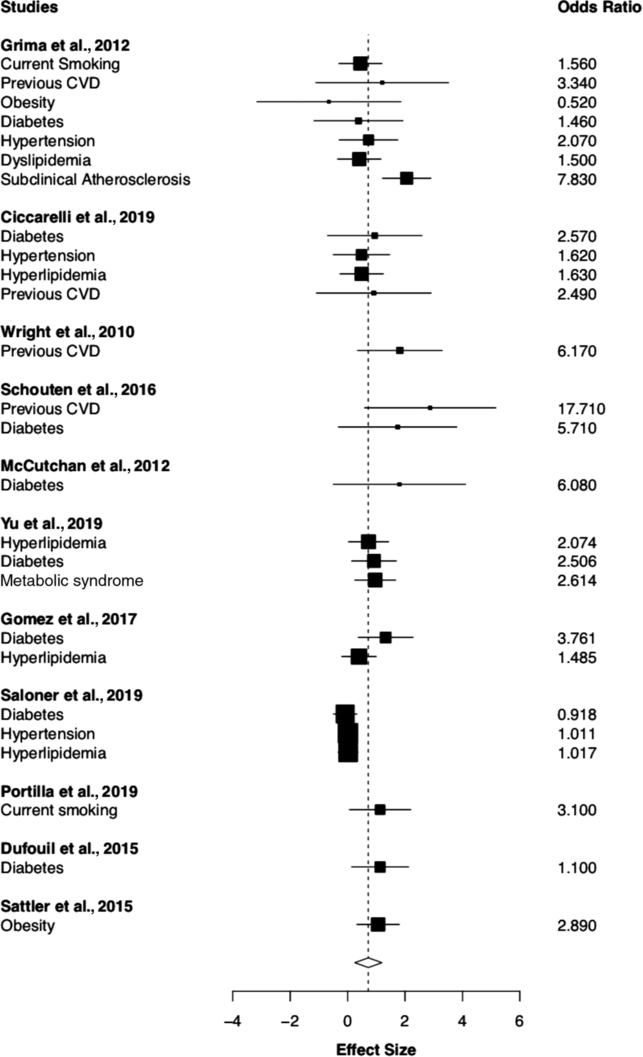
The results for the RVE models including covariates are shown in Table 1. Eleven studies reported 26 VRF effect sizes for NCI with a total sample size of 2139 participants. The individual effect sizes can be found in the forest plot shown in Figure 3. The I 2 estimate of variance was suggestive of moderate heterogeneity of effect sizes (I 2 = 59.28%), suggesting moderator or subgroup analyses may help to explain additional variance (Higgins, Thompson, Deeks, & Altman, Reference Higgins, Thompson, Deeks and Altman2003). The first RVE model estimated the overall effect of VRFs on NCI. Results indicate VRFs were associated with increased odds of NCI (OR = 2.059, p = .010). Next, we included covariates of AIDS diagnosis, HIV duration, and nadir CD4 count. None of the covariates were statistically significant with respect to our outcome variable of NCI. Inclusion of covariates did not change the magnitude of the overall effect (OR = 2.15, p = .017); however, the degrees of freedom were less than 4, suggesting the results should be interpreted with caution due to potential power limitations for the adjusted model (Tanner-Smith et al., Reference Tanner-Smith, Tipton and Polanin2016).
Overall effect of vascular risk factors on global neurocognitive impairment

Note: The unadjusted intercept value is the overall effect size. Adjusted intercept refers to overall effect size after accounting for listed covariates. Models with degrees of freedom <4 are not trustworthy. All models were run separately and estimated using robust variance estimation meta-analysis. Abbreviations: k = number of outcomes included in the category OR = odds ratio; CI = confidence interval of the OR; df = degree of freedom; AIDS = acquired immune-deficiency syndrome; HIV duration = human immunodeficiency virus years since diagnosis.
** p < .01.
* p < .05.
Flow chart detailing study selection procedures. Forest plot for RVE meta-analysis examining the overall effect of all vascular risk factors on global cognitive impairment. Effect size = log(OR).

Subgroup analyses results
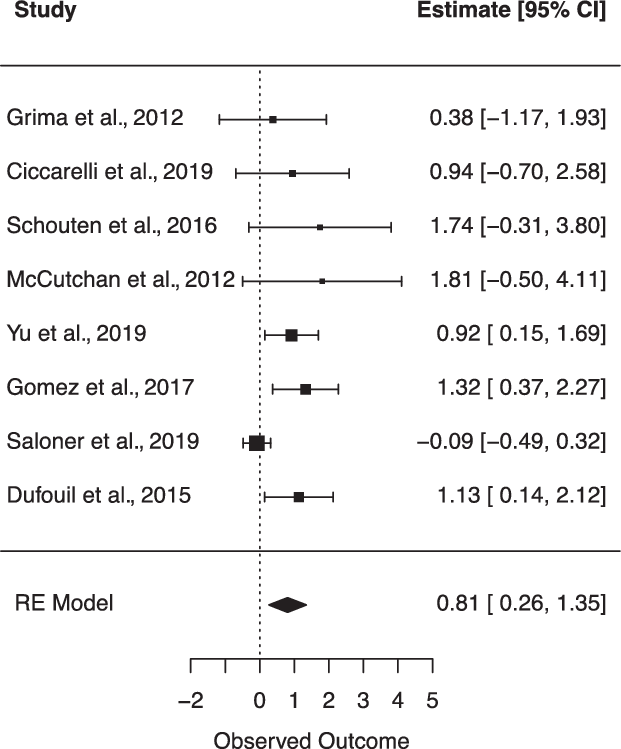
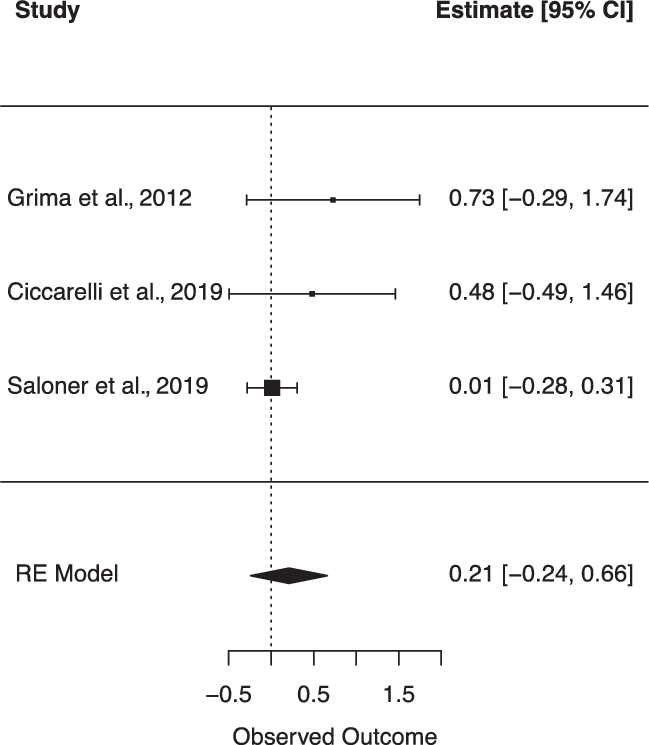
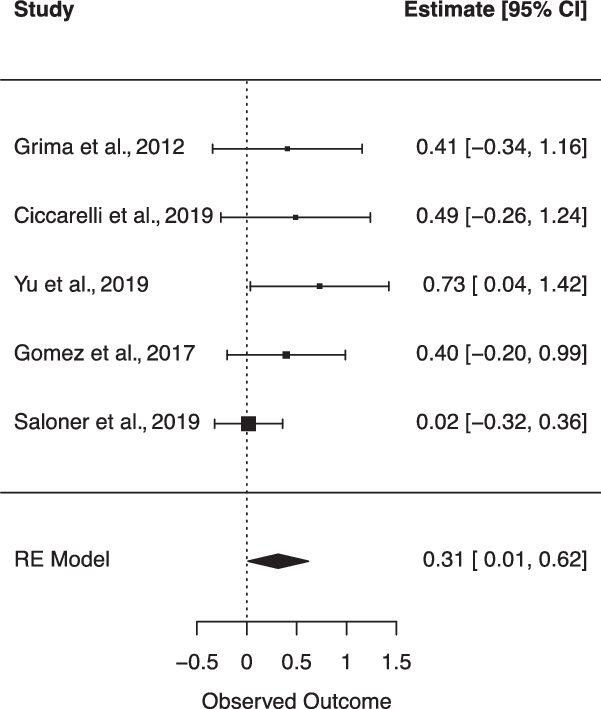
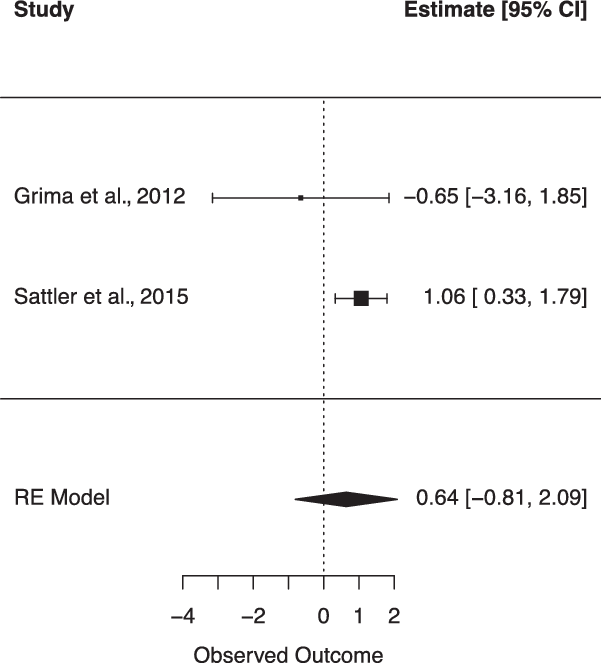
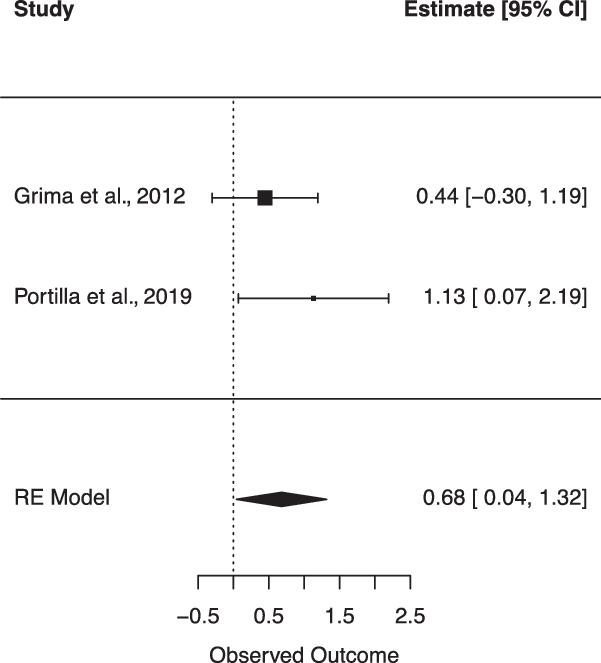
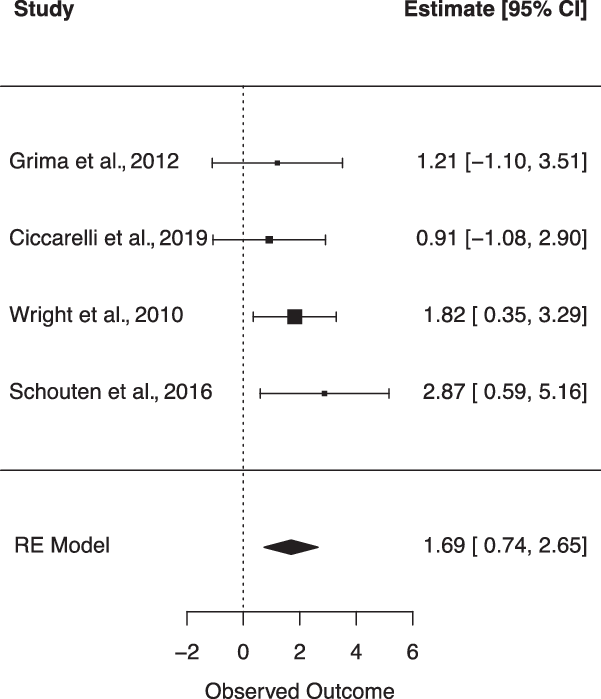
Six subgroup random effects meta-analyses were run to explore the unique relationships between individual VRFs on NCI (Table 2). Figures 4–9 show forest plots for each subgroup VRF. First, we examined the effect of T2DM on NCI (N = 8 studies). The I 2 suggests there was moderate heterogeneity between effect sizes. Results from this model indicated that for PLWH, having T2DM incurs a 2.238 increase in odds for NCI. Next, the effect of hyperlipidemia on NCI was estimated (N = 5 studies). The I 2 suggests there was minimal heterogeneity between effect sizes. Results from this model revealed that for PLWH, having hyperlipidemia increased odds for NCI by 1.369. Next, the effect of current smoking was examined (N = 2 studies). The I 2 suggests there was minimal heterogeneity between effect sizes. Results from this model revealed current smoking is associated with a 1.973 increase in odds for NCI. finally, the effect of previous CVD was examined (N = 4 studies). The I 2 suggests there was a very minimal heterogeneity between effect sizes. Results from this model revealed a history of previous CVD increased the odds of NCI by 5.423. There were no significant associations found for hypertension (N = 2 studies) or obesity (N = 2 studies) on NCI.
Subgroup meta-analyses of individual vascular risk factors on global neurocognitive impairment

Note: All models were run separately and estimated using random effects meta-analysis. Abbreviations: k = number of outcomes included in the category; OR = odds ratio; CI = confidence interval of the OR; Q-statistic = null hypothesis of homogeneity, larger values represent more heterogeneity across effect sizes; CVD = cardiovascular disease.
*** p < .001.
** p < .01.
* p < .05.
Forest plot for random effects meta-analysis examining the effect of type 2 diabetes mellitus on global cognitive impairment. Observed outcome = log(OR).

Forest plot for random effects meta-analysis examining the effect of hypertension on global cognitive impairment. Observed outcome = log(OR).

Forest plot for random effects meta-analysis examining the effect of hyperlipidemia on global cognitive impairment. Observed outcome = log(OR).

Forest plot for random effects meta-analysis examining the effect of obesity on global cognitive impairment. Observed outcome = log(OR).

Forest plot for random effects meta-analysis examining the effect of current smoking on global cognitive impairment. Observed outcome = log(OR).

Forest plot for random effects meta-analysis examining the effect of previous cardiovascular disease on global cognitive impairment. Observed outcome = log(OR).

Risk of Publication Bias
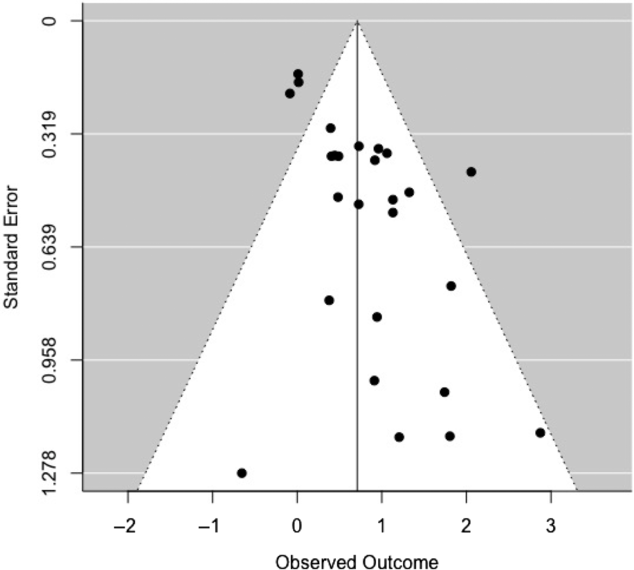
For the omnibus effect of VRFs on NCI, Rosenthal’s Fail-safe N was 560, indicating the number of missing studies required to nullify the effect (Rosenthal, Reference Rosenthal1979). Begg and Mazumdar’s (Reference Begg and Mazumdar1994) rank correlation (τ = 0.225, p = .113) does not indicate significant bias. However, limited power due to small sample sizes may influence this measure, and thus, nonsignificant findings cannot be fully attributable to an absence of bias in this context. Further, examination of the funnel plot (Figure 10) demonstrates asymmetry, which suggests potential for minimal-to-modest publication bias within our sample (Duval & Tweedie, Reference Duval and Tweedie2000a, Reference Duval and Tweedie2000b).
Funnel plot of random-effects meta-analysis examining the overall effect of VRFs on global cognitive impairment.

DISCUSSION
The present review demonstrated that VRFs, subclinical CVD, and history of CVD are associated with cognition in PLWH similar to uninfected populations.
T2DM, Prediabetes, and Insulin Resistance
In summary, 15 studies reported associations between T2DM, prediabetes, or insulin resistance and cognitive dysfunction, particularly in the domains of attention/processing speed, psychomotor speed, executive functioning, working memory, and memory. These effects were independent of other traditional VRFs and HIV-specific factors presenting strong evidence that T2DM, as well as prediabetes and insulin resistance, adversely affects cognitive function in PLWH. Consistent with literature among uninfected populations, poorly managed T2DM was also related to worse cognition (Yang et al., Reference Yang, Jacobson, Becker, Levine, Martin, Munro and Brown2018). Based on limited evidence for interactive effects, it is possible that HIV infection and T2DM may pose an additive rather than synergistic effect on cognition (Nakamoto et al., Reference Nakamoto, Valcour, Kallianpur, Liang, McMurtray, Chow and Shikuma2011).
Future studies of T2DM and related conditions and cognition in HIV will benefit from longitudinal studies, and appropriate control groups as differences in cognition can be influenced by psychosocial variables including socioeconomic status (SES), education quality, race/ethnicity, and diet.
Hypertension
Somewhat surprisingly, few studies cited hypertension as a correlate of cognitive dysfunction in HIV (Ding, Lin, Liu, et al., Reference Ding, Lin, Liu, Zhang, Wong, Sun and He2017; Montoya et al., Reference Montoya, Iudicello, Fazeli, Hong, Potter and Ellis2017; Nakamoto et al., Reference Nakamoto, Valcour, Kallianpur, Liang, McMurtray, Chow and Shikuma2011; Wright et al., Reference Wright, Grund, Robertson, Brew, Roediger, Bain and Price2010). It is possible that the prevalence of hypertension was low given that the participants were largely in middle to late middle age, and may have been too young to observe commonly cited relationships between hypertension, cognitive dysfunction, and dementia seen in in older adults (Kivipelto et al., Reference Kivipelto, Helkala, Laakso, Hanninen, Hallikainen, Alhainen and Nissinen2001; Raz, Rodrigue, & Acker, Reference Raz, Rodrigue and Acker2003; Taki et al., Reference Taki, Goto, Evans, Zijdenbos, Neelin, Lerch and Fukuda2004). Hypertension is not as highly cited as a side effect of cART compared to other cardiometabolic factors (Nou et al., Reference Nou, Lo and Grinspoon2016). Stratification by age in future studies may help to elucidate whether hypertension plays a larger role in cognitive impairment in older adults.
Dyslipidemia
Similar to hypertension, the relationship between dyslipidemia and cognitive function was not as highly cited as T2DM. However, of the studies that examined dyslipidemia, there were documented relationships between dyslipidemia and cognitive functioning in PLWH (Ciccarelli et al., Reference Ciccarelli, Grima, Fabbiani, Baldonero, Borghetti, Milanini and Di Giambenedetto2015; Gomez et al., Reference Gomez, Power, Gill and Fujiwara2017; Mukerji et al., Reference Mukerji, Locascio, Misra, Lorenz, Holman, Dutta and Gabuzda2016; Wright et al., Reference Wright, Grund, Robertson, Brew, Roediger, Bain and Price2010). This is in contrast to studies of HIV-seronegative adults, whereby the relationship between dyslipidemia and cognitive dysfunction has been less consistent (van den Berg, Kloppenborg, Kessels, Kappelle, & Biessels, Reference van den Berg, Kloppenborg, Kessels, Kappelle and Biessels2009). These findings highlight that dyslipidemia in patients with HIV is different from the general population, due to the fact that HIV treatment not only may induce dyslipidemia but also may interact with lipid-lowering medication (Husain & Ahmed, Reference Husain and Ahmed2015). HIV-related dyslipidemia is increasingly recognized as a problem in patients on cART, particularly those on PI-based regimens (Calza, Manfredi, & Chiodo, Reference Calza, Manfredi and Chiodo2004).
Thus, it is possible that dyslipidemia may be a stronger predictor of cognitive function among PLWH, and that cholesterol-driven cognitive decline may increase with age. The inclusion of younger adults in this literature may obscure the relationship between dyslipidemia and cognitive dysfunction.
Tobacco smoking
Though only three studies reported relationships between tobacco smoking and cognition, the majority of these studies reported smoking was associated with slowed motor speed (Fabbiani et al., Reference Fabbiani, Ciccarelli, Tana, Farina, Baldonero, Di Cristo and Di Giambenedetto2013; Nakamoto et al., Reference Nakamoto, Valcour, Kallianpur, Liang, McMurtray, Chow and Shikuma2011; Wright et al., Reference Wright, Grund, Robertson, Brew, Roediger, Bain and Price2010). Consistent with these findings, cigarette smoking in HIV-seronegative adult populations has also been negatively associated with several neurocognitive domains, including processing speed and fine motor dexterity (Durazzo, Meyerhoff, & Nixon, Reference Durazzo, Meyerhoff and Nixon2012). These results are consistent with imaging findings that cigarette smokers have less striatal dopamine transporter availability (Yang et al., Reference Yang, Yao, Yeh, Lee, Chen, Lu and Chiu2008). Given the elevated rates of smoking in HIV, smoking should also be considered when assessing HIV-related impairment in motor function.
Obesity and adiposity
This review demonstrated complex relationships between obesity, BMI, and fat distribution in HIV. Some results were consistent with hypotheses (e.g. visceral fat negatively associated with cognition) (Ciccarelli et al., Reference Ciccarelli, Grima, Fabbiani, Baldonero, Borghetti, Milanini and Di Giambenedetto2015; Okafor et al., Reference Okafor, Kelso, Bryant, Burrell, Miguez, Gongvatana and Cohen2017; Sattler et al., Reference Sattler, He, Letendre, Wilson, Sanders and Heaton2015; Schouten et al., Reference Schouten, Su, Wit, Kootstra, Caan and Geurtsen2016), while others found the opposite (i.e. obesity associated with better cognition) (Gustafson et al., Reference Gustafson, Mielke, Tien, Valcour, Cohen, Anastos and Crystal2013; Lake et al., Reference Lake, Vo, Jacobson, Sacktor, Miller, Post and Brown2015; Wright et al., Reference Wright, Grund, Cysique, Robertson, Brew, Collins and Int Network Strategic2015). There are several possible reasons for these conflicting findings. BMI has been shown to have complex, nonlinear relationships with cognition in HIV-seronegative populations; both lower than and higher than normal BMIs have been associated with worse cognition (Gustafson, Reference Gustafson2008). Further complicating this picture, while higher BMI in midlife has been found to be detrimental, higher BMI may be protective in later life thus differences in cohort demographics may explain some inconsistencies (Fitzpatrick et al., Reference Fitzpatrick, Kuller, Lopez, Diehr, O’Meara, Longstreth and Luchsinger2009). In the studies reviewed here, studies differed in how they defined and quantified adiposity. Additionally, HIV-associated lipodystrophy may distort traditional relationships between visceral fat and cognition. Lake et al. demonstrated higher adiponectin levels were unexpectedly associated with worse cognition in PLWH, and adiponectin was not correlated with visceral adipose tissue. Further, inflammatory markers were not correlated with visceral adipose tissue among men with HIV, but the expected relationship was reported in controls. Though little can be drawn from just one study, the results suggest that there may be adiponectin dysfunction that could obscure expected relationships. Additional research is needed to determine if adiposity has similar relationships with cognitive function across the lifespan among HIV-seronegative populations.
Cumulative VRF Burden
Increased vascular risk burden was consistently associated with worse cognition similar to HIV-seronegative populations (Fabbiani et al., Reference Fabbiani, Ciccarelli, Tana, Farina, Baldonero, Di Cristo and Di Giambenedetto2013; Foley et al., Reference Foley, Ettenhofer, Wright, Siddiqi, Choi, Thames and Hinkin2010; Kaffashian et al., Reference Kaffashian, Dugravot, Nabi, Batty, Brunner, Kivimaki and Singh-Manoux2011; Unverzagt et al., Reference Unverzagt, McClure, Wadley, Jenny, Go, Cushman and Howard2011; Wright et al., Reference Wright, Grund, Cysique, Robertson, Brew, Collins and Int Network Strategic2015). Though these findings are intuitive, it is important to recognize the detrimental effects of multiple risk factors given multimorbidity in HIV.
Subclinical CVD and Atherosclerosis
Overall, there was a consistent evidence that subclinical CVD was associated with cognitive function in HIV (Becker et al., Reference Becker, Kingsley, Mullen, Cohen, Martin, Miller and Multictr2009; Ciccarelli et al., Reference Ciccarelli, Grima, Fabbiani, Baldonero, Borghetti, Milanini and Di Giambenedetto2015; Crystal et al., Reference Crystal, Weedon, Holman, Manly, Valcour, Cohen and Kaplan2011; Fabbiani et al., Reference Fabbiani, Ciccarelli, Tana, Farina, Baldonero, Di Cristo and Di Giambenedetto2013; Grima et al., Reference Grima, Fabbiani, Ciccarelli, Tana, Farina, Colafigli and Di Giambenedetto2012; Huck et al., Reference Huck, Hanna, Rubin, Maki, Valcour, Springer and Kizer2018; Montoya et al., Reference Montoya, Iudicello, Fazeli, Hong, Potter and Ellis2017). These results suggest that atherosclerosis and arterial stiffening may play an important role in the development of neurocognitive dysfunction in the context of HIV. Despite associations between HIV and cIMT and vascular stiffness, none of the studies reported an interaction between HIV status and subclinical CVD measures on cognition.
Neuroimaging, VRFs, and Cognition
All neuroimaging studies reviewed showed an evidence of brain injury or abnormalities in PLWH. Most studies also showed that brain measures were associated with cognitive functioning and/or VRFs. Studies of WMH were particularly strong as they related WMH load to both VRFs and cognition, suggesting WMHs may be a mechanism driving relationships between VRFs and cognition (Su et al., Reference Su, Wit, Caan, Schouten, Prins and Geurtsen2016; Watson et al., Reference Watson, Busovaca, Foley, Allen, Schwarz, Jahanshad and Valcour2017). While some abnormalities shown in HIV (e.g. increased WMH and reduced CBF) likely have a vascular origin, it is important to note that HIV infection can enter the CNS and may cause irreversible damage to the brain, particularly the white matter, where damage could have occurred at the peak of immune deficiency and viral toxicity prior to cART treatment. Further, even without detectable plasma viral replication, there is an evidence that the CNS can serve as a reservoir of viral replication. Given similar patterns of WMHs in subcortical regions observed in HIV and vascular disease, it is important that neuroimaging studies in the context of HIV look for other indicators of vascular disease to distinguish whether white matter abnormalities are vascular in origin, or related to HIV-specific processes such as legacy effect or continued replication in the CNS.
Meta-Analysis
The meta-analytic results largely confirmed findings in the systematic literature review; VRFs were related to NCI in HIV, which was driven by several VRFs including T2DM, hyperlipidemia, current smoking, and previous CVD. Interestingly, hyperlipidemia was a significant risk factor for NCI, and may be more relevant to cognitive health among PLWH compared to uninfected populations as discussed above. Importantly, the relationship between VRFs and impairment remained significant after accounting for HIV clinical variables suggesting that VRFs independently contribute to impairment. Though this meta-analysis had a relatively small sample size, it is the first paper to quantitatively document independent VRF contributions to cognitive impairment among PLWH, supporting the importance of VRFs as a contributor to HAND. As research continues in this field, future research should attempt to quantify VRF contributions to specific domain impairments.
Opportunities for Future Research
An important limitation of the current literature is the lack of HIV-seronegative control groups. A large proportion of studies in this review (N = 21 studies, 47.7%) did not include control groups. Further, of those that did include control groups, several studies did not provide data needed (e.g. demographic information) on both their HIV-infected and HIV-seronegative groups to determine whether groups were similar on variables related to cognition. Well-matched control populations will be critical in elucidating whether PLWH with VRFs are at an increased risk for cognitive dysfunction or dementia. This will prove important in understanding the etiology of HAND and implications for cognitive aging. Controls should be matched, to the extent possible, on past and current SES factors (e.g. education quality, income, and access to healthcare), drug abuse, comorbidities, and psychiatric issues. However, even with well-matched controls, there are certain factors that will confound this question. One of the most important confounds is the survival effect. PLWH with more advanced illness (e.g. AIDS) may have died prematurely due to the lack of access to treatment or comorbid conditions. It is also important to recognize generational differences. Many older adults who acquired HIV decades ago did not get treatment immediately, and were treated with antiretroviral drug classes known to cause cardiometabolic side effects. In contrast, newly diagnosed HIV patients are treated with cART immediately, and may never take medications known to cause metabolic syndrome. Thus, the question of whether HIV poses a synergistic or interactive effect on cognition will likely depend on when people acquired HIV and their HIV treatment history.
Related to the paucity of control groups, few studies reported investigating interactions between HIV status and VRFs on cognition. This is important to further explore as HIV status and vascular risk both independently affect cognition, and there may be synergistic effects. Also, the effects of VRFs on cognition may vary by HIV severity. PLWH who are classified as having asymptomatic NCI or no impairment may present similarly to controls with respect to the effects of VRFs on cognition. PLWH with mild to moderate forms of cognitive impairment may show more severe impairments in the context of VRFs due to lower cognitive reserve. As previously discussed, VRFs, particularly T2DM and multiple VRFs, are strongly tied to increased risk for dementia in older adults. Thus, it is critical to assess whether older adults with HIV and vascular risk are at a greater risk for dementia compared to HIV-seronegative peers with similar VRF profiles.
Race/ethnicity was not a focus in any studies reviewed. In the United States, PLWH are disproportionately African–American; 44% of PLWH are African–American, though they comprise only 12% of the population (CDC, 2017). A few studies in North America were predominantly non-Hispanic white (N = 6, 13.6%), and thus, may be unrepresentative of the larger HIV population. Additionally, there were several studies that did not provide information about race/ethnicity, particularly European cohort studies (N = 10, 22.7%), where participants were likely predominantly non-Hispanic white. Atherosclerotic disease outcomes and the prevalence of VRFs differ between ethnic groups (Gijsberts et al., Reference Gijsberts, Groenewegen, Hoefer, Eijkemans, Asselbergs, Anderson and den Ruijter2015). In the Veterans Aging Cohort Study, researchers reported that race/ethnicity modified the relationship between HIV-specific risks for negative health outcomes in HIV and cognition (Marquine et al., Reference Marquine, Heaton, Johnson, Rivera-Mindt, Cherner, Bloss and Heaton2018). Future studies are needed to examine how race/ethnicity modifies relationships between VRFs and cognition in HIV as it could inform treatment or identify racial disparities.
Socio-environmental factors play an important role in the development of vascular and cognitive risks. Many of the studies reviewed were careful to consider psychiatric comorbidities (e.g. substance use and depression) and educational factors such as educational attainment or literacy. Education is a particularly important contributor to cognition and strongly related to SES. Unfortunately, it was difficult to compare study populations on level of education. A large study of treated PLWH showed 25% of patients had less than a high school education, and 19% of patients had a college degree or more (Cunningham et al., Reference Cunningham, Hays, Duan, Andersen, Nakazono, Bozette and Shapiro2005). In contrast, some cohorts in this review were more highly educated. For example, MACS reported 45% of their HIV-infected sample had a college degree, and the UCSF cohort reported a mean of 16.4 years of education (e.g. Bachelor’s degree) for their HIV-infected sample raising issues for generalizability (Becker et al., Reference Becker, Kingsley, Mullen, Cohen, Martin, Miller and Multictr2009; Watson et al., Reference Watson, Busovaca, Foley, Allen, Schwarz, Jahanshad and Valcour2017). Additionally, years of education is not the best measure of premorbid functioning due to differences in education quality and geographic variation; it would be helpful if studies included tests assessing premorbid intellectual functioning or estimated intellectual quotient. Further, poverty and other indicators of SES and exposure to trauma were less attended to across studies. PLWH are disproportionately affected by poverty, limited resources, violence, and trauma which are related to worse cognition (Tedaldi, Minniti, & Fischer, Reference Tedaldi, Minniti and Fischer2015). Stress is strongly tied to these social issues and impacts both vascular health and cognition (Dimsdale, Reference Dimsdale2008). Both acute and chronic stress are associated with increased pro-inflammatory markers which, over time, cause cellular damage in the periphery and CNS via oxidative stress and microglia activation (Valdez, Rubin, & Neigh, Reference Valdez, Rubin and Neigh2016). Adding measures of stress, whether through biological markers (e.g. cortisol) or questionnaires, may further elucidate relationships between VRFs and cognition in HIV.
Sex differences are another gap in the literature that warrants attention. An examination of sex/gender showed that a large number of studies (N = 21, 47.7%) were predominantly male (e.g. >75%). While HIV is more common in males in developed countries such as the United States (CDC, 2018), the dearth of female participants in these studies is troubling. HIV-associated cardiovascular risk may be at least as high in women (Triant, Lee, Hadigan, & Grinspoon, Reference Triant, Lee, Hadigan and Grinspoon2007; Womack et al., Reference Womack, Chang, So-Armah, Alcorn, Baker, Brown and Freiberg2014). Further, the D:A:D study highlighted decreased rates of cardiovascular interventions in women with HIV highlighting a potential gender disparity in VRF treatment (Hatleberg et al., Reference Hatleberg, Ryom, El-Sadr, Mocroft, Reiss, de Wit and Sabin2014). If women living with HIV are indeed at a higher risk for vascular disease, then it is important that studies include more women, and investigate how this may predispose this population to greater risk of dementia. Further, it is important to evaluate if sex modifies relationships between VRFs and cognition in HIV.
Future work may also clarify if relationships between vascular dysfunction and cognition in HIV are modified by age. Participant age generally ranged from middle-age to older age, which may have washed out age-specific effects. Since vascular risk increases with age, older adults with HIV may be especially vulnerable to vascular-associated cognitive dysfunction.
Investigation of VRF treatment in HIV as it relates to cognition is also warranted. Few studies differentiated between treated versus untreated VRFs. However, the few studies that did account for VRF pharmacological treatment or management showed that participants with untreated or poorly managed VRFs performed worse on cognitive tasks, while treatment attenuated relationships between VRFs and cognition (Foley et al., Reference Foley, Ettenhofer, Wright, Siddiqi, Choi, Thames and Hinkin2010; Mukerji et al., Reference Mukerji, Locascio, Misra, Lorenz, Holman, Dutta and Gabuzda2016; Yang et al., Reference Yang, Jacobson, Becker, Levine, Martin, Munro and Brown2018). These findings are consistent with literature in HIV-seronegative adults (Duron & Hanon, Reference Duron and Hanon2010; McIntosh & Nation, Reference McIntosh and Nation2019).
Another important limitation of these studies is information related to HIV severity and treatment. Important HIV-related factors such as nadir and current CD4, viral load, cART adherence, and cART medications were inconsistently reported, yet each of these variables has been shown to be related to cognitive functioning and/or vascular risk. Furthermore, research in this area might consider the role of clinical AIDS as a modifier of the relationship between VRFs and cognition. Though there is a likely survivor bias as discussed above, it would be interesting to examine if clinical AIDS moderates the relationship between vascular risk and cognitive impairment; PLWH who were diagnosed with clinical AIDS may be more susceptible to vascular-related cognitive deficits. Future studies in this literature should include these clinical characteristics in order to properly characterize the role of VRFs and CVD on cognition in HIV.
Conceptual Model
The etiology of cardiovascular damage in HIV infection is complex and multifactorial with suspected contributions from cART side effects and traditional risk factors (e.g. smoking, diet, and sedentary lifestyle), chronic immune activation and inflammation, and medical comorbidities (e.g. hepatitis C, and cytomegalovirus) and substance abuse (e.g. stimulants). Although this review focused on more commonly studied risk factors, multiple risk factors in HIV-infected populations likely contribute to the observed premature atherosclerosis and arterial stiffness. As in HIV-seronegative populations, cardiovascular damage may inflict vascular brain injury through ischemic injury (e.g. cerebral small vessel disease and WMHs) and reduced hypoperfusion leading to neurocognitive dysfunction (Figure 1). Relationships between cardiovascular damage and neurocognitive dysfunction in PLWH may be influenced by several factors including race, gender, psychosocial risk factors (e.g. stress and healthcare disparities), and cART adherence. Future research on vascular contributions to HAND should explore independent and interactive effects of these additional variables on direct and indirect relationships between cardiovascular risk and neurocognitive dysfunction.
CONCLUSIONS
In summary, this systematic review and meta-analysis showed commonly studied VRFs and subclinical CVD are associated with neurocognitive dysfunction and impairment among PLWH. Despite better metabolic profiles in PLWH taking newer cART medications, elevated rates of VRFs and CVD in HIV will likely remain problematic due to chronic immune activation and inflammation in the context of low viremia. Research shows that HIV infection and VRFs independently negatively affect cardiovascular health and cognition, but it is presently unknown whether HIV and VRFs have an additive or synergistic effect on cognition. This question is particularly important as the HIV population ages, and thus, should be a focus of future research. Additionally, future studies should address how race/ethnicity, sex, medical comorbidities, drug use, SES, and psychosocial factors moderate relationships between CVD risk and cognition in this unique population.
CONFLICT OF INTEREST
The authors have nothing to disclose.
ACKNOWLEDGEMENTS
The authors thank Dr. Nicholas A. Gage of the University of Florida for his statistical consultation for meta-analysis.
SUPPLEMENTARY MATERIAL
To view supplementary material for this article, please visit https://doi.org/10.1017/S1355617720001022