Introduction
Mangroves are taxonomically diverse halophytic (salinity-tolerant) evergreen plants that dominate the intertidal zone between the land and the sea of tropical and subtropical areas. Although some authors categorize mangroves as obligate halophytes (i.e. salinity is necessary for their growth and cannot survive in freshwater permanently; Lugo and Snedaker, Reference Lugo and Snedaker1974; Clough, Reference Clough1984; Wang et al., Reference Wang, Yan, You, Zhang, Chen and Lin2011), the general view is that they are facultative halophytes (i.e. salinity is not necessary for their growth and they are capable of growing in freshwater; Smith and Snedaker, Reference Smith and Snedaker1995; Parida and Jha, Reference Parida and Jha2010). As mangroves live in both high and fluctuating saline habitats, they maintain mechanisms and adaptations to cope with these harsh environmental conditions (Tomlinson, Reference Tomlinson1994). Ion compartmentalization, osmoregulation, selective transport and uptake of ions and capacity to accommodate the salt influx are some of the main adaptations that plants have developed to cope with the saline conditions (Parida and Jha, Reference Parida and Jha2010). These adaptations of seedlings and mature trees to tolerate saline conditions in most of the true mangroves have been widely studied (Tomlinson, Reference Tomlinson1994; Hogarth and Hogarth, Reference Hogarth and Hogarth2007). However, adaptation of mangrove seeds and their germination behaviour has rarely been investigated (Baskin and Baskin, Reference Baskin and Baskin2014). Furthermore, even the seed germination physiology of other halophytes is still mostly unknown (Khan et al., Reference Khan, Zaheer, Ahmed and Hameed2006).
Timing of germination is an important life history trait that determines seedling survival as well as the phenotypic expression of post-germination characters (Donohue et al., Reference Donohue, Dorn, Griffith, Kim, Aguilera, Polisetty and Schmitt2005). Germination behaviour (dormancy, dormancy-breaking requirements and germination requirements) determines the timing of germination (Baskin and Baskin, Reference Baskin and Baskin2014). Thus, seeds should possess adaptations to their germinating environmental conditions, i.e. the seed stage is the first line of adaptation to tolerate harsh environmental conditions (Donohue et al., Reference Donohue, Dorn, Griffith, Kim, Aguilera, Polisetty and Schmitt2005). Studying germination further unveils the strategies that mangroves have developed to cope with the harsh environmental conditions they face. Furthermore, knowledge on seed germination behaviour can be used in meaningful conservation of mangroves as well as mangrove ecosystems, which are greatly threatened by development (Duke et al., Reference Duke, Meynecke, Dittmann, Ellison, Anger, Berger, Cannicci, Diele, Ewel, Field, Koedam, Lee, Marchand, Nordhaus and Dahdouh-Guebas2007; Polidoro et al., Reference Polidoro, Carpenter, Collins, Duke, Ellison, Ellison, Farnsworth, Fernando, Kathiresan, Koedam, Livingstone, Miyagi, Moore, Nam, Ong, Primavera, Salmo, Sanciangco, Sukardjo, Wang and Yong2010; Van Lavieren et al., Reference Van Lavieren, Spalding, Alongi, Kainuma, Clusener-Godt and Adeel2012). Therefore, the main objective of this study was to examine the effect of salinity on germination of five plant species (Acanthus ilicifolius, Aegiceras corniculatum, Allophylus cobbe, Pemphis acidula and Sonneratia caseolaris) from mangrove plant communities in Sri Lanka.
Although the effect of salinity on seed germination of halophytes (salinity-tolerant plants) has been studied extensively (Khan et al., Reference Khan, Gul and Weber2000; Huang et al., Reference Huang, Zhang, Zheng and Gutterman2003; Duan et al., Reference Duan, Liu, Khan and Gul2004; El-Keblawy and Rawai, Reference El-Keblawy and Al-Rawai2005), there are only a few studies that have included mangroves (Downton, Reference Downton1982; Ye et al., Reference Ye, Tam, Lu and Wong2005; Patel and Pandey, Reference Patel and Pandey2009). Salinity affects germination by an osmotic effect or by specific ion toxicity (Katembe et al., Reference Katembe, Ungar and Mitchell1998). Salehifar et al. (Reference Salehifar, Torang, Farzanfar and Salehifar2010) have shown that the effect of NaCl on germination is mainly an osmotic result. Although there are several other salts in mangrove water, 85% of the salt content is represented by NaCl (Scholander et al., Reference Scholander, Hammel, Hemmingsen and Garey1962). Thus, in our research we mainly focused on the osmotic effect of NaCl on seed germination of the study species. Furthermore, as the mangrove forests occur in the intertidal zone, the salt concentration can be as high as ~35 parts per thousand (3.5%) and osmotic potentials as low as approximately –2.5 MPa (Walter, Reference Walter1979). Thus, in our experiments we used osmotic potentials ranging from 0 to –2.5 MPa.
Water potential of the germination medium is one of the crucial factors controlling seed germination (Baskin and Baskin, Reference Baskin and Baskin2014). The hydrotime model describes the relationship between the water potential of the medium and the seed germination rate: θH = (Ψ − Ψb(g))t g (Gummerson, Reference Gummerson1986), where θH is a hydrotime constant (MPa h), Ψ is the water potential of the medium, Ψb(g) is base water potential (threshold water potential) preventing radicle emergence of percentage g, and t g is the actual time to radicle emergence of percentage g. Hydrotime models have mostly been used to examine the seed germination of salinity-sensitive plant species (Bradford, Reference Bradford1990; Dahal and Bradford, Reference Dahal and Bradford1994; Toselli and Casenave, Reference Toselli and Casenave2005; Gianinetti and Cohn, Reference Gianinetti and Cohn2007; Windauer et al., Reference Windauer, Altuna and Benech-Arnold2007; Zhang et al., Reference Zhang, Irving, Tian and Zhou2012). In contrast, they have scantly been used to study the seed germination of halophytes (Allen et al., Reference Allen, Meyer, Khan, Black, Bradford and Vazquez-Ramos2000; Zhang et al., Reference Zhang, Irving, Tian and Zhou2012). To the best of our knowledge, the model has not been used to examine the seed germination of mangroves. Thus, our study would be the first attempt to understand the effect of water potential on seed germination of mangrove species using the hydrotime model.
Materials and methods
Study species
Five species, Aegiceras corniculatum (L.) Blanco, Pemphis acidula J.R. Forst. & G. Forst., Sonneratia caseolaris (L.) Engl., Allophylus cobbe (L.) Raeusch. and Acanthus ilicifolius L., were selected from a mangrove plant community in Sri Lanka to study the effect of salinity on germination as preliminary studies showed that seeds of these species germinate at a range of salinities. Acanthus ilicifoius (Acanthaceae) is a native shrub or sprawling woody herb in Sri Lanka (Tomlinson, Reference Tomlinson1994) that is common along river banks, tidal canals and low swampy areas of mangrove forests. Aegiceras corniculatum (Primulaceae) is a cryptoviviparous evergreen treelet or shrub commonly distributed within the dry, intermediate and wet zone mangroves in Sri Lanka (Jayatissa and Koedam, Reference Jayatissa and Koedam2002), and it often grows near estuarine banks (IUCN, 2013). Allophylus cobbe (Sapindaceae) is a branched shrub or small tree distributed from the coast to the hill country in Sri Lanka (Wadhawa and Meijer, Reference Wadhawa, Meijer, Dassanayake and Fosberg1998). It is also common in mangrove forests (Tomlinson, Reference Tomlinson1994). Pemphis acidula (Primulaceae) is a small tree or low shrub that grows within mangrove communities and in rocky foreshores in Sri Lanka. Soneratia caseolaris (Primulaceae) is a native tree species to Sri Lanka distributed in tidal estuaries, extending upstream into freshwater river banks (Macnae and Fosberg, Reference Macnae, Fosberg, Dassanayake and Fosberg1981).
Collection of seeds
Fruits were collected from at least five individual plants from each species in Sri Lanka on different days (Table 1). All fruits were collected and placed into polythene bags separately, labelled and transported to the Department of Botany, University of Peradeniya, Sri Lanka. Diaspores (hereafter referred to as seeds) were extracted from the fruits and stored in plastic bottles in the laboratory for less than one week until experiments were initiated.
Osmotic potential series prepared from NaCl solutions for germination tests of the mangrove study species and information on seed collection sites and dates in Sri Lanka

–*, not tested.
Effect of osmotic potential on germination of seeds
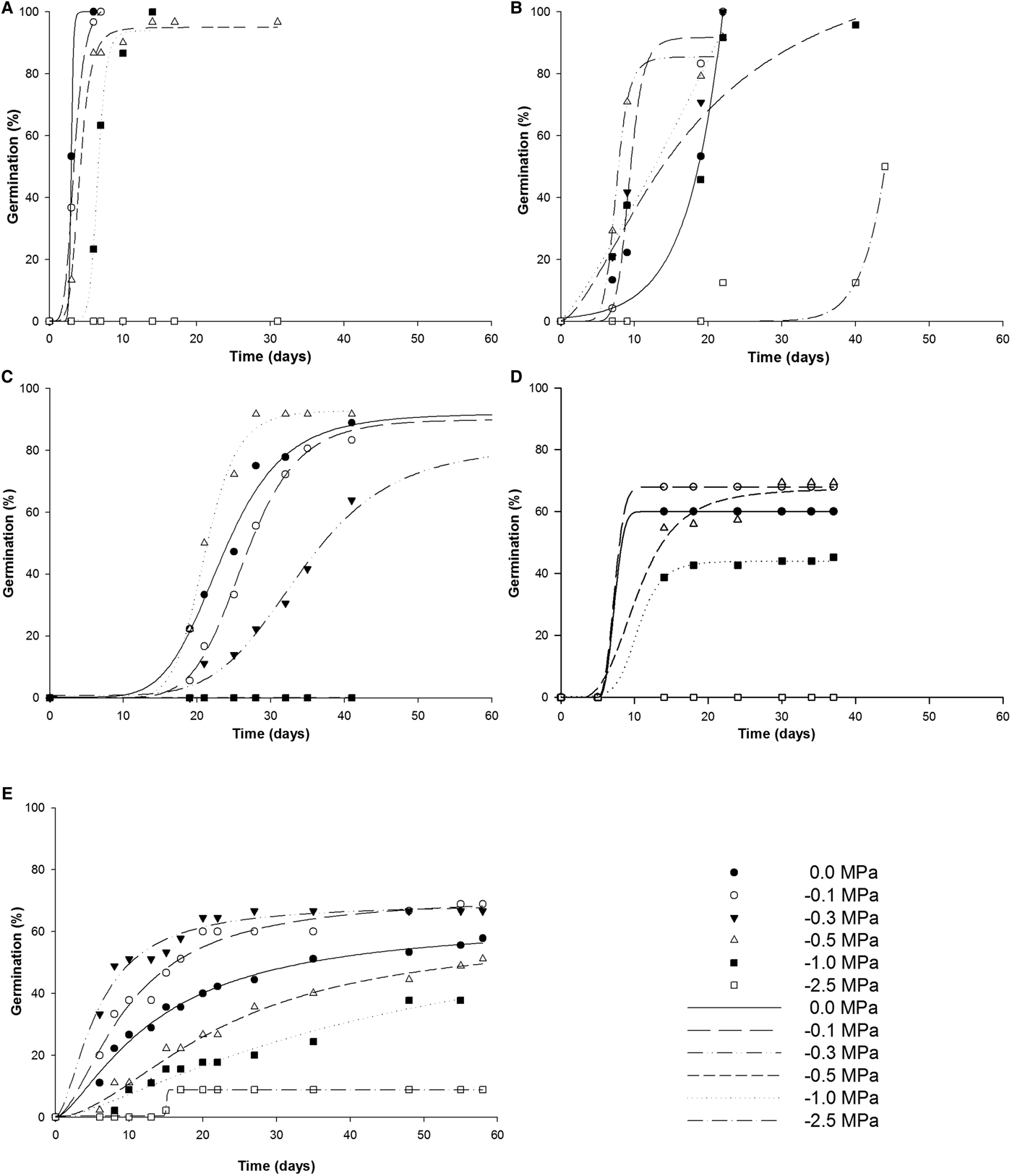
Six samples with three replicates (each containing 15–20 seeds) of A. corniculatum, S. caseolaris and A. ilicifolius seeds, and five samples with three replicates (each containing 15–20 seeds) of A. cobbe and P. acidula, were incubated separately in 9 cm diameter Petri dishes on tissue paper moistened with NaCl solution, representing an osmotic potential gradient of –0.1 to –2.5 MPa, or with distilled water (0 MPa treatment) at 25°C in light/dark (14 h/10 h) conditions (Table 1). In addition, germination of S. caseolaris and P. acidula seeds were tested at 15 and 35°C in light/dark (14 h/10 h) conditions over the same osmotic potential gradient; seeds of the other three species were not tested at these two temperatures due to limited seed supply. Seeds were observed for germination (radicle emergence to >1 mm) regularly and a cut test was used to check the viability of un-germinated seeds at the end of the germination test (after 60 days). Cumulative germination percentages were calculated (based on number of seeds tested) for each osmotic potential × temperature combination of each species. Germination time courses (for germination tests at 25°C) were prepared for the mean germination percentages by fitting sigmoidal logistic 4 parameter curves using the SigmaPlot statistical software (version 10.0, Systat Software GmbH, Erkrath, Germany).
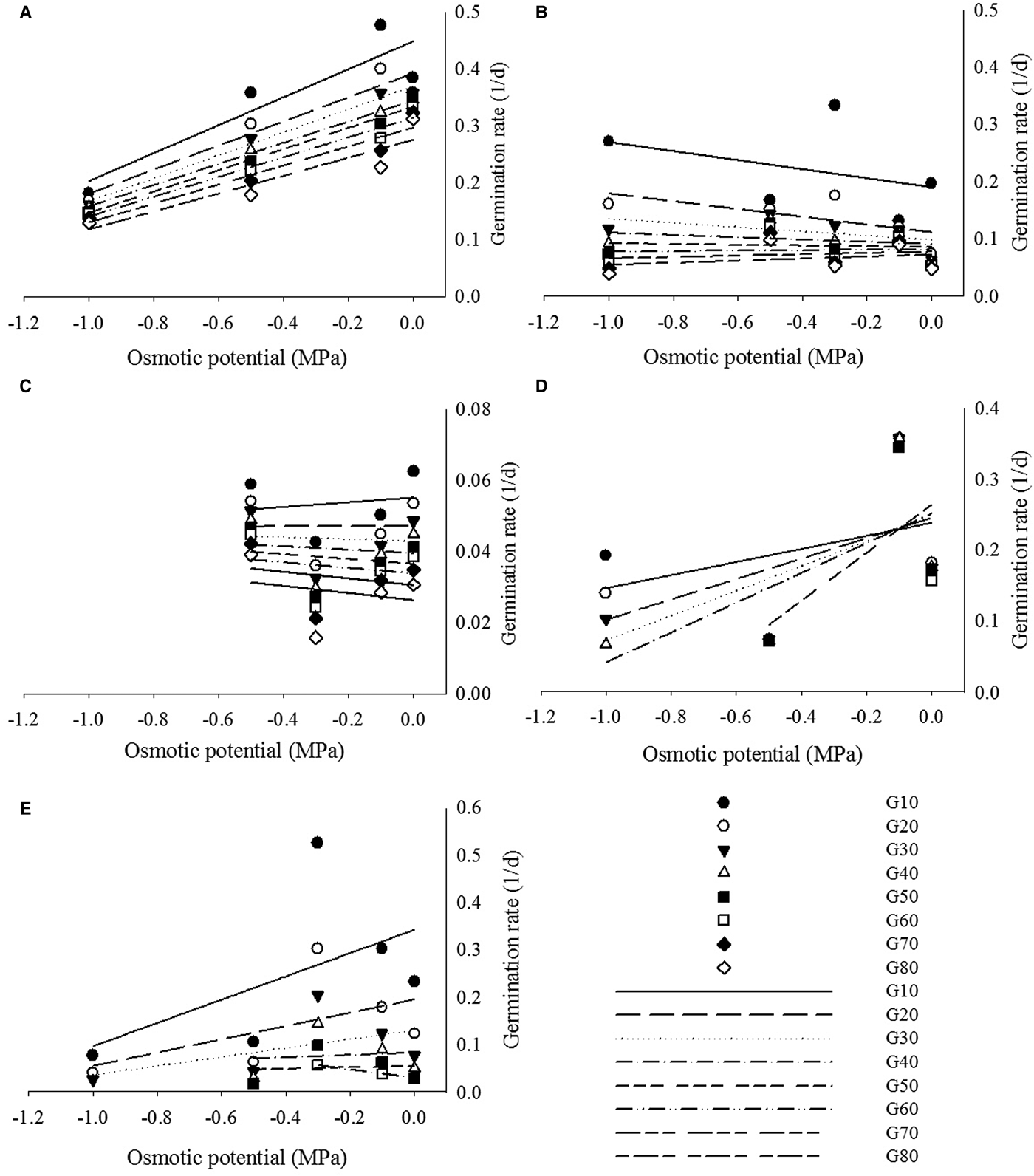
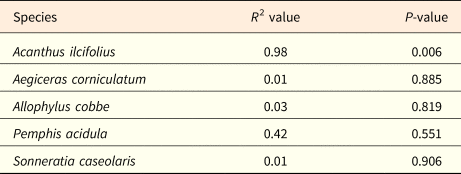
Time taken for 10, 20, 30, 40, 50, 60, 70 and 80% (t g) of the seeds to germinate in each osmotic potential (water potential) for each species (tested at 25°C) was determined using the germination time courses explained above. Germination rates (GRg) were calculated by taking the reciprocal of the time to each germination percentage (g) of each species per water potential. Water potentials were plotted against germination rate and a linear regression curve was fitted for each species using SigmaPlot. Hydrotime modelling was performed on A. ilicifolius as it was the only species that had sufficiently high R 2 values when linear regression lines were fitted to osmotic potential vs mean germination rate for 50% germination (GR50) at 25°C (Table 4). For this species, threshold water potentials (Ψb) for each germination percentage were determined using the x-intercept values of each linear curve and hydrotime constant (θH) was determined from the reciprocal of the slope. Germination percentage (g) values were probit transformed as described by Bradford (Reference Bradford1990) and plotted against the threshold water potential values for A. ilicifolius. Mean water potential threshold (water potential threshold at 50% germination) was determined for each species using the x-intercept, while the standard deviations (ϬΨb) for the threshold water potentials were determined using the slope of the curve.
Data analysis
The effect of salinity on final seed germination percentage (after 60 days) was analysed using a parametric two-way analysis of variance (ANOVA) with species and osmotic potential as factors for tests done at 25°C. Two-way ANOVAs were performed for P. acidula and S. caseolaris to examine temperature and osmotic effects on germination. Differences among means were further examined by using one-way ANOVAs followed by Tukey's multiple comparison test. All data were arcsine transformed prior to analysis.
Results
Effect of osmotic potential on seed germination at 25°C
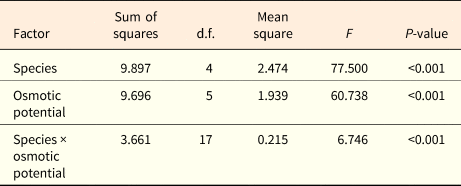
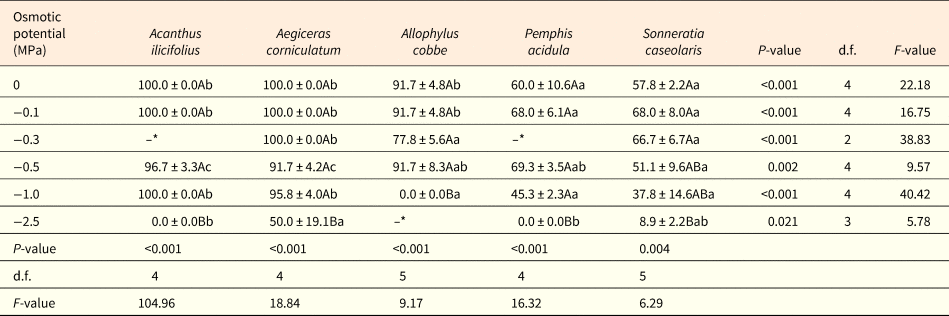
Mean final germination percentages were significantly influenced by species, osmotic potentials and their interaction (Table 2). Germination was significantly reduced at –2.5 MPa in all species: A. corniculatum (50.0%) and S. caseolaris (8.9%) were the only species to germinate at –2.5 MPa (Table 3). Highest germination differed among the species being highly dependent on the osmotic potential when incubated at 25°C (Table 3). The optimal osmotic range (i.e. osmotic range that showed higher germination percentage) for A. cobbe was 0 to –0.5 MPa, for S. caseolaris it was 0 to –0.3 MPa, and for the other three species 0 to –1.0 MPa. Highest final germination percentage at the optimal osmotic potential for A. ilicifolius, A. corniculatum, A. cobbe, P. acidula and S. caseolaris was 100.0, 100.0, 91.7, 69.3 and 68.0%, respectively. Germination percentages varied significantly across species at each salinity level (Table 3, Fig. 1). Acanthus ilicifolius, A. corniculatum and A. cobbe showed significantly highest germination (91.7–100.0%) in distilled water, while P. acidula and S. caseolaris were the lowest (57.8–60.0%) in water. Allophylus cobbe was the only species that did not germinate at –1.0 MPa, while A. ilicifolius, A. corniculatum, P. acidula and S. caseolaris germinated to 100.0, 95.8, 45.3 and 37.8%, respectively. Aegiceras corniculatum had the highest germination (50.0%) at –2.5 MPa. Embryos of all un-germinated seeds were not viable (either they had fungal infections or had yellowish soft embryos) after 60 days of incubation.
Seed germination time courses for Acanthus ilicifolius (A), Aegiceras corniculatum (B), Allophylus cobbe (C), Pemphis acidula (D) and Sonneratia caseolaris (E) on tissue paper moistened with NaCl solutions with different osmotic potentials at 25°C in light/dark (14 h/10 h) conditions. Logistic 4 parameter curves have been fitted for the mean germination percentage at each osmotic potential to obtain the germination time courses.

Results of a two-way ANOVA for final germination among the five study species at different osmotic potentials at 25°C

Mean final germination percentage after 60 days of incubation at 25°C and the effect of salinity on five mangrove species

–*, not tested. Values are means ± S.E. from three replicates, and different lower case letters in the same row or different upper case letters in the same column are significantly different at the level of 0.05.
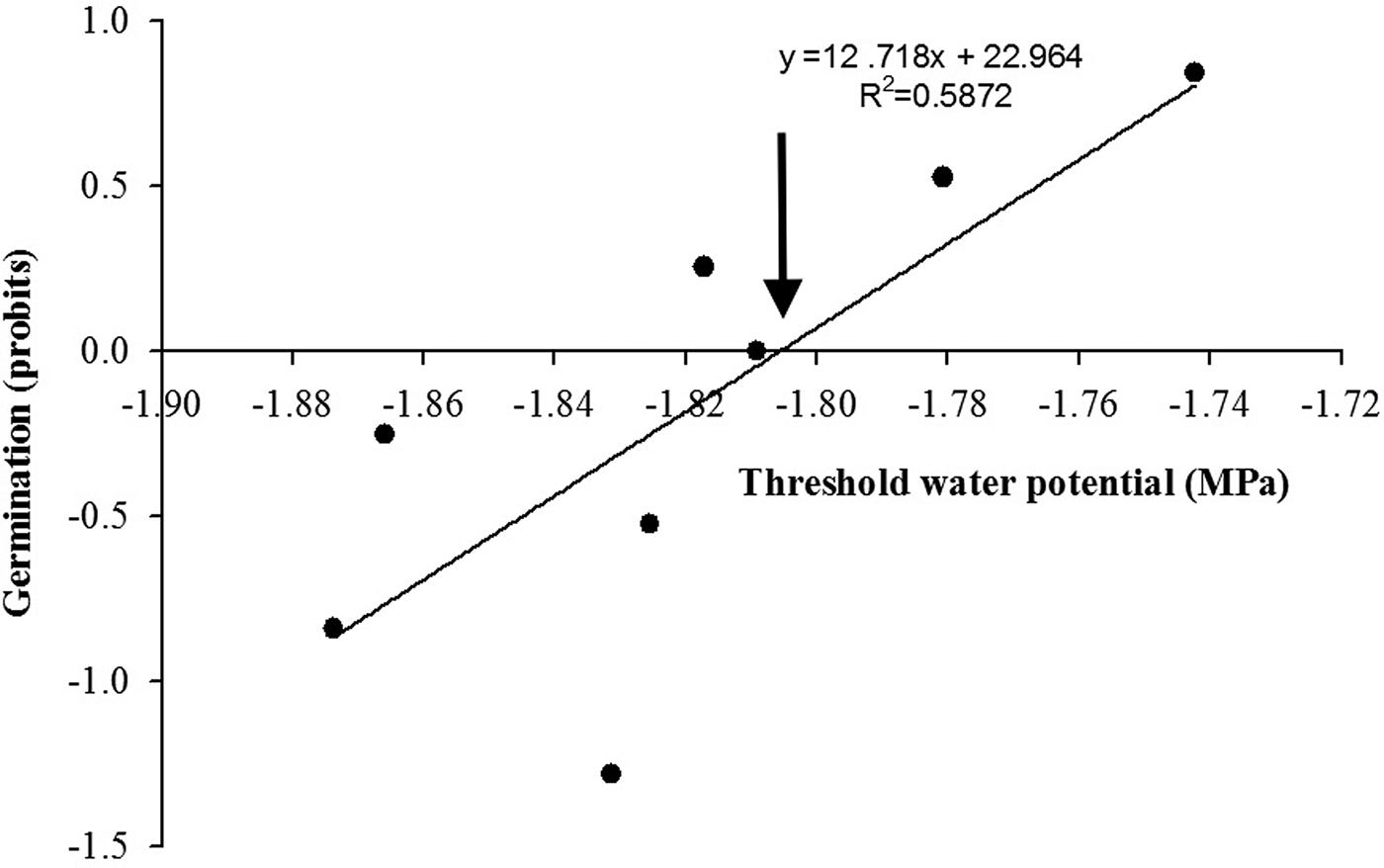
Seeds of A. corniculatum, A. cobbe, P. acidula and S. caseolaris showed a non-significant linear relationship with low R 2 value between water potential (Ψ) vs germination rate for 50% germination (GR50) (Fig. 2, Table 4). Conversely, a significant (P < 0.05) positive linear relationship with high R 2 value was observed between Ψ vs GR50 for seeds of A. ilicifolious. Threshold osmotic potential (Ψb) estimated for 50% germination (g = 50) was –1.8 MPa and hydrotime constant (θH) was 1.02 for A. ilicifolius. Moreover, the mean threshold water potential (Ψb50) of A. ilicifolius seeds was calculated to be –1.80±0.31 MPa with 0.08 standard deviation (ϬΨb) (Fig. 3).
Mean germination rates (GRg) for 10, 20, 30, 40, 50, 60 and 70% germination of Acanthus ilicifolius (A), Aegiceras corniculatum (B), Allophylus cobbe (C), Pemphis acidula (D) and Sonneratia caseolaris (E) seeds on tissue paper moistened with NaCl solutions with different osmotic potentials at 25°C in light/dark (14 h/10 h) conditions. Simple linear regression curves were fitted to each germination percentage.

Threshold water potential for different probit transformed percentages for seeds of Acanthus ilicifolius at 25°C in light/dark (14 h/10 h) conditions. The arrow indicates the mean threshold water potential value. A simple linear regression line was fitted to determine the relationship between water potential thresholds and probit transformed seed germination percentages.

R 2 and P-values for polynomial linear regression lines fitted to osmotic potential vs mean germination rate for 50% germination (GR50) for seeds of the study species at 25°C in light/dark (14 h/10 h) conditions

Effect of osmotic potential on germination of S. caseolaris and P. acidula at different temperatures
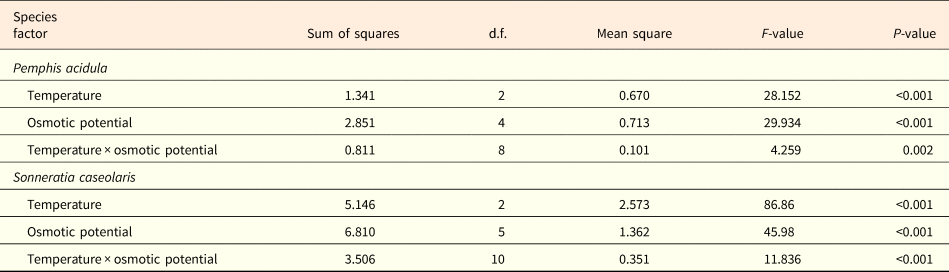
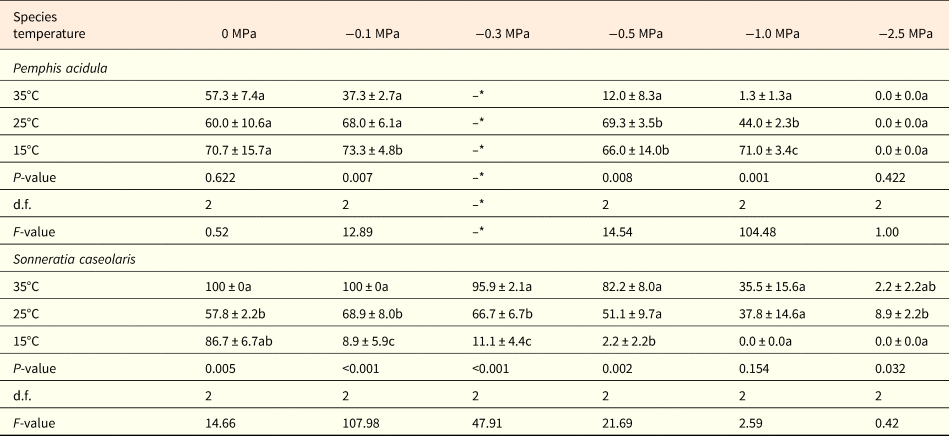
Germination percentages for seeds of S. caseolaris and P. acidula differed significantly among osmotic potentials and among temperature regimes (Table 5). Germination at particular osmotic potentials was highly dependent on temperature for final germination of P. acidula at –0.1, –0.5 and –1.0 MPa, while germination at 0 and –2.5 MPa was not significant across temperature range (Table 6). In contrast, the effect of temperature on germination percentage of S. caseolaris was significant at all osmotic potentials except at –1.0 MPa. For most osmotic potentials, germination was highest at 15°C for P. acidula, while it was highest at 35°C for S. caseolaris.
Results of two-way ANOVA for germination of two mangrove species seeds on different osmotic potentials at three temperatures

Effect of temperature on seed germination of two mangrove species over a range of osmotic potentials

–*, not tested. Values are means ± S.E. from three replicates, and different letters in the same row are significantly different at the level of 0.05.
Discussion
Hydrotime models have been used to predict and understand seed germination of crop species at different field water potentials (Gummerson, Reference Gummerson1986; Bradford, Reference Bradford1990) and this model can also be applied to salinity-sensitive plants inhabiting extreme environments (Bradford, Reference Bradford1990; Dahal and Bradford, Reference Dahal and Bradford1994; Toselli and Casenave, Reference Toselli and Casenave2005; Gianinetti and Cohn, Reference Gianinetti and Cohn2007; Windauer et al., Reference Windauer, Altuna and Benech-Arnold2007; Zhang et al., Reference Zhang, Irving, Tian and Zhou2012). However, use of hydrotime models to study the effect of water potential on seed germination on salinity-tolerant plant species (halophytes) are scanty in the literature (Allen et al., Reference Allen, Meyer, Khan, Black, Bradford and Vazquez-Ramos2000; Zhang et al., Reference Zhang, Irving, Tian and Zhou2012) especially for mangroves. Acanthus ilicifolius showed a significant positive linear relationship with high R 2 value (Table 4) between germination rate and osmotic potential, and parallel linear graphs among germination proportions (Fig. 2), which are the basic requirements to construct a hydrotime model as described by Bradford (Reference Bradford1990). In contrast, the other four species had a tenuous linear relationship with low R2 and un-parallel linear graphs. Therefore, the only species in our study that fitted the hydrotime model was A. ilicifolius. Furthermore, highest germination rate (GR50) for A. ilicifolius was at 0.0 MPa and all other rates gradually decreased with an increase of salinity. Similar germination patterns have been observed in several halophytic species, e.g. Haloxylon recurvum (Khan and Ungar, Reference Khan and Ungar1996), Salicornia rubra (Khan et al., Reference Khan, Gul and Weber2000) and Prosopis strombulifera (Sosa et al., Reference Sosa, Llanes, Reinoso, Reginato and Luna2005). According to the probit germination graph of A. ilicifolius, the threshold water potential value for g = 50 was – 1.80 MPa (Fig. 3). This threshold water potential value suggests that A. ilicifolius seeds can germinate even in highly saline conditions at 25°C, although the highest germination rate was observed at 0 MPa. Germination rate was highest for A. corniculatum, P. acidula and S. caseolaris at water potential less than 0 MPa. These species in which their seeds germinate at a higher rate when incubated at high salinity conditions than on distilled water may not fit the hydrotime model. Other non-mangrove species such as stem succulent halophytes also germinated better in highly saline conditions than in fresh water (Khan and Gul, Reference Khan, Gul, Khan and Darrell2006), suggesting that these species also may not follow the hydrotime model. Notably, a considerable variation observed in seed germination rates over the range of osmotic potentials in these species (Fig. 2) indicates the different behaviour of individual seeds. This may be an important germination trait that can facilitate these mangrove plants to survive in highly fluctuating salinity levels, either with the tide or diluted by fresh water.
One of the most critical stages in the life cycle of halophytes is the period of germination and establishment (Ungar, Reference Ungar1978). In this regard, the salinity of the soil water solution is one of the major factors that can influence germination (Baskin and Baskin, Reference Baskin and Baskin2014). The effect of salinity on final germination percentage was significant for all species in our study. For instance, seeds of all species (except A. corniculatum) did not germinate or germinated to a very low percentage at –2.5 MPa, suggesting that they may have poor early germination establishment in hypersaline soil conditions (Fig. 1, Table 3). Ionic toxicity effect at a high concentration of NaCl (Baskin and Baskin, Reference Baskin and Baskin2014) could be one of the reasons for loss of seed viability at high salinities. Similarly, there are other reports of reduced germination and viability at high NaCl concentrations in halophytes (Khan and Ungar, Reference Khan and Ungar1996). Khan and Ungar (Reference Khan and Ungar1996) reported that although Haloylon recurvum seeds can tolerate very high salt concentrations, highest germination percentages were obtained in distilled water (0 MPa). Similarly, A. corniculatum, A. ilicifolius and A. cobbe showed highest germination percentage (but not significant) in distilled water when compared with other salinity levels. In contrast, S. caseolaris and P. acidula tended to germinate better at –0.1 and –0.5 MPa, respectively, although it was not significantly different from germination at 0 MPa (Table 3).
Germination percentages across the osmotic potential gradient differed significantly among species, suggesting different salinity tolerances (Tables 2 and 3). Considering final germination percentage, the descending order of salinity tolerance was A. corniculatum > S. caseolaris > A. ilicifolius > P. acidula > A. cobbe (Table 3). The highest salt tolerance was observed in seeds of A. corniculatum, a crypto-viviparous species, whereas all the other species in the study were non-viviparous. Consistently, in terms of the whole germination process, Ye et al. (Reference Ye, Tam, Lu and Wong2005) reported that the seeds of A. corniculatum (crypto-viviparous) were more salt tolerant than those of A. ilicifolius (non-viviparous). The reason for such an observation may be that in viviparous species germination and subsequent development of the propagule take place while the fruit is still attached to the mother plant (Tomlinson, Reference Tomlinson1994). Thus, the adaptation of the propagule to saline environments actually starts before dispersal (Joshi et al., Reference Joshi, Pimplaskar and Bhosale1972) and gives an added advantage for them to establish even at high saline conditions.
The variation of salinity tolerance among species may reflect their ecological distribution. Acanthus ilicifolius and A. corniculatum occur in the dry, intermediate and wet mangrove zones in Sri Lanka (Jayatissa and Koedam, Reference Jayatissa and Koedam2002). Thus, the high germination percentage of these species over a wide range of salinity levels (i.e. threshold water potential was –1.8 MPa for A. ilicifolius) may be an important seed trait that allows these species to have a wide ecological distribution. Although A. cobbe is one of the important members in the mangrove plant community, it can be found from coastal to montane zones in Sri Lanka (Wadhawa and Meijer, Reference Wadhawa, Meijer, Dassanayake and Fosberg1998) giving the reason why seeds of A. cobbe did not germinate at –1.0 MPa, but germinated well in distilled water as well as in moderate saline solutions down to –0.5 MPa.
At the range of salinity used in our study, the germination rate as well as final germination percentage of S. caseolaris was low to moderate at 25°C. Similar germination behaviour was observed in P. acidula (but seeds did not germinate at –2.5 MPa). However, germination rate as well as the final germination percentage of S. caseolaris seeds was highest at 35°C when compared with those at 25 or 15°C. Conversely, seeds of P. acidula germinated better at 15°C than at 25 or 35°C in most of the tested salinity levels (Table 6). Thus, temperature had a clear effect on germination rate and percentage which interacted with the salinity showing wide range of germination requirements between species. These different germination requirements among species may play a crucial role in their establishment, growth and distribution under fluctuating salinity conditions. Temperature controlling the salinity sensitivity of seeds has been reported in (non-mangrove) halophytes (Khan and Ungar, Reference Khan and Ungar1985, Reference Khan and Ungar1996; El-Keblawy and Rawai, Reference El-Keblawy and Al-Rawai2005). For example, P. juliflora germination was higher in high saline conditions at 40°C than at low temperatures (El-Keblawy and Rawai, Reference El-Keblawy and Al-Rawai2005), and Huang et al. (Reference Huang, Zhang, Zheng and Gutterman2003) reported that the halophyte Haloxylon ammodendron germinated well in saline conditions at 10°C than at 30°C.
Overall, our results showed that all of the study species behave as facultative halophytes when considering their seed germination behaviour. Such germination behaviour is ecologically important to establish mangrove species along the border between saline and non-saline ecosystems (Tomlinson, Reference Tomlinson1994). These species also have physiological adaptations that enable their vegetative body to cope with saline as well as non-saline conditions, making them facultative halophytes (Parinda and Das, Reference Parinda and Das2005). Our study revealed that seeds of A. corniculatum, A. cobbe, P. acidula and S. caseolaris did not behave according to the hydrotime model at 25°C, suggesting that this model cannot be used to explain the effect of salinity on seed germination of these species. Instead, seeds of these species had a peak germination pattern with high germination rate at moderate saline conditions. In contrast, A. ilicifolius seeds behaved according to the hydrotime model at 25°C, and thus the model was used to explain the effect of salinity on its germination.
Author ORCIDs
Malaka M. Wijayasinghe 0000-0002-3860-7604
Acknowledgements
We would like to thank the two anonymous reviewers for their suggestions and comments to improve this manuscript.
Financial support
This work was supported by the National Science Foundation in Sri Lanka (grant no. RG/2011/NRB/08).
Conflicts of interest
None