Introduction
Plant ingredients, especially cereals like corn, soybean and wheat, account for most of the feed raw materials used for poultry in the world. Although important sources of energy, protein and minerals, these ingredients have a significant amount of their phosphorus (P) combined with inositol (Ins), forming phytic acid (InsP6) and other isomers that are very indigestible for non-ruminant animals (Cowieson et al., Reference COWIESON, RUCKEBUSCH, KNAP, GUGGENBUHL and FRU-NJI2016). For this reason, supplementing diets with more digestible sources of P, such as rock phosphates, became a regular practice in poultry production.
However, the contribution of inorganic sources of P to total feed cost is relatively high, leading producers to embrace exogenous phytase as a means to increase phytate P availability and reduce the need for rock phosphates and other inorganic sources of P in animal diets (Lei et al., Reference LEI, WEAVER, MULLANEY, ULLAH and AZAIN2013). Unfortunately, less than half of dietary phytate P is regularly released from phytic acid and other inositol phosphates by phytases (Woyengo et al., Reference WOYENGO, SLOMINSKI and JONES2010), meaning that the use of inorganic sources of P is still necessary in many cases to fulfil animal's requirement. Besides, all the phytate P not made available by phytase ends up being excreted in faeces, which is a cause for concern due to P being implicated in environmental pollution and water eutrophication (Pinckney et al., Reference PINCKNEY, PAERL, TESTER and RICHARDSON2001).
In the last few decades, following the increasing demand for antibiotic-free production in several markets, organic acids have emerged as promising feed additives to control the development of undesirable microorganisms in the digestive tract. However, apart from their antimicrobial effects, improvements in phytate P availability and bone mineralisation have been described in broilers supplemented with organic acids (Boling et al., Reference BOLING, WEBEL, MAVROMICHALIS, PARSONS and BAKER2000; Rafacz-Livingston et al., Reference RAFACZ-LIVINGSTON, MARTINEZ-AMEZCUA, PARSONS, BAKER and SNOW2005a; Reference RAFACZ-LIVINGSTON, PARSONS and JUNGK2005b; Liem et al., Reference LIEM, PESTI and EDWARDS2008). Moreover, some authors have demonstrated that these benefits persist even after dietary phytase supplementation (Emami et al., Reference EMAMI, NAEINI and RUIZ-FERIA2013; Hariharan and Gangadevi, Reference HARIHARAN and GANGADEVI2015), indicating that some acids have an additive or synergistic effect with phytases.
Part of these ‘nutritional effects’ of organic acids can be explained by cation chelation, which inhibits the aggregation of minerals and other molecules by phytic acid thereby increasing their digestibility (Maenz et al., Reference MAENZ, ENGELE-SCHAAN, NEWKIRK and CLASSEN1999). Additionally, the reduction of gastrointestinal pH induced by dissociated acids decreases the anionic potential of phytic acid, thus minimising the establishment of insoluble phytates which are relatively more resistant to enzymatic hydrolysis than phytic acid (Emsley and Niazi, Reference EMSLEY and NIAZI1981).
In a recent meta-analysis, Vieira et al. (Reference VIEIRA, SILVA, OLIVEIRA, CORREA, CARAMORI and CORREA2017) demonstrated that, despite some inconsistency in the literature, there is scientific evidence supporting a positive effect of the combination of organic acid and phytase on weight gain and bone mineralisation in P-restricted broilers. Nevertheless, little consideration has been given to this approach by researchers and nutritionists. The objective of this review was to gather the available knowledge about phytic acid, phytases and organic acids in order to discuss the mechanisms by which they interact and how organic acids could improve phytase activity and increase phytate P availability in broiler chickens.
Phytic acid and phytates
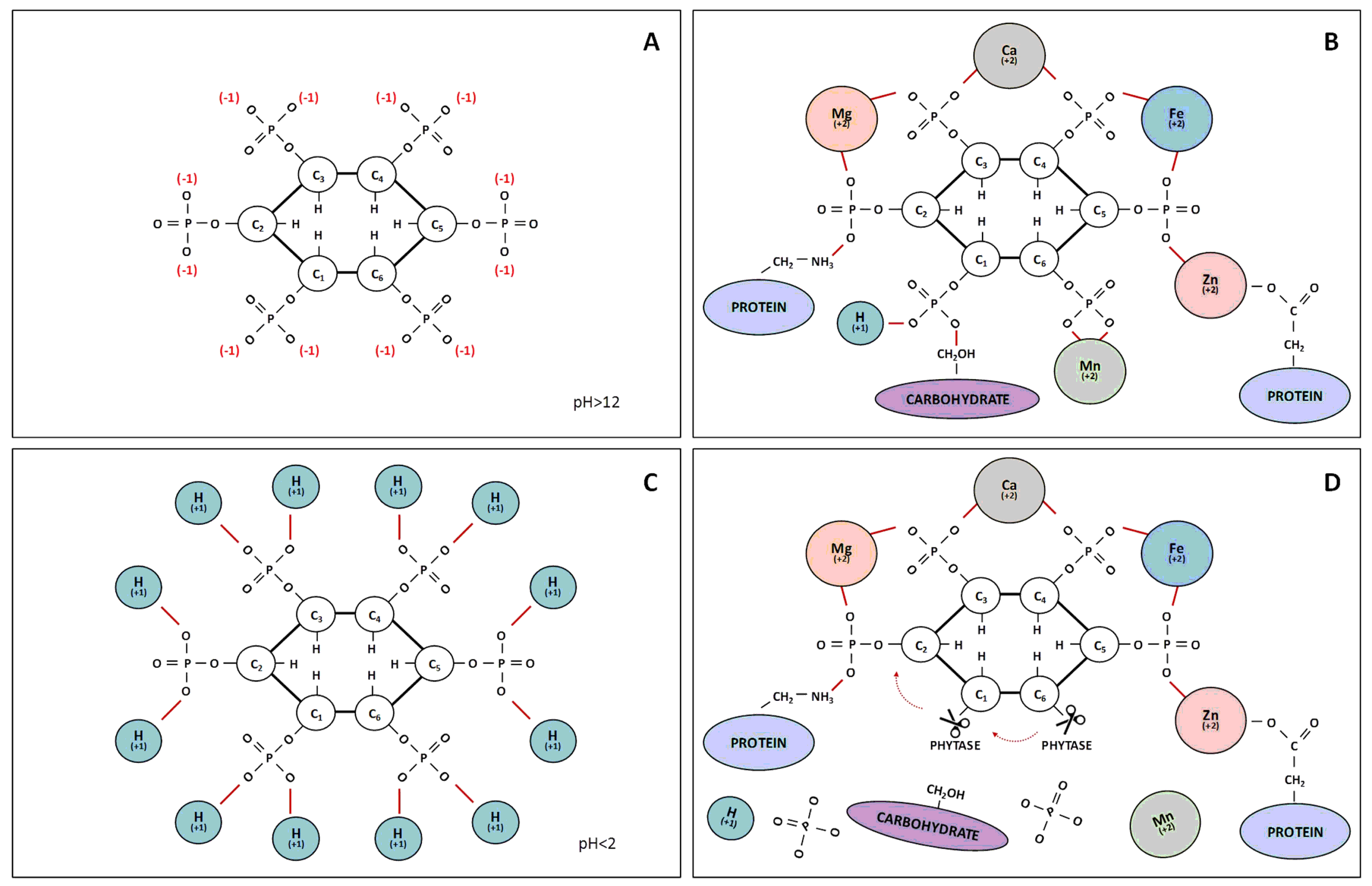
Phytic acid is the main form of P storage in plants (Ravindran and Son, Reference RAVINDRAN and SON2011). Its precursor is a molecule called inositol, a cyclohexanehexol synthesised from glucose-6-phosphate (Eisenberg and Parthasarathy, Reference EISENBERG and PARTHASARATHY1987). A completely phosphorylated inositol, linked to 6 phosphate groups, constitutes one molecule of phytic acid. The phytic acid molecule has 12 replaceable protons on its surface (Figure 1A), and so carries a high electronegative charge when exposed to a pH close to neutrality (Emsley and Niazi, Reference EMSLEY and NIAZI1981). This electronegative potential makes phytic acid very unstable in the free form; therefore, it is usually found in nature combined with other compounds such as minerals (Maenz et al., Reference MAENZ, ENGELE-SCHAAN, NEWKIRK and CLASSEN1999), proteins (Selle et al., Reference SELLE, COWIESON, COWIESON and RAVINDRAN2012) and carbohydrates (Thorne et al., Reference THORNE, THOMPSON and JENKINS1983). When phytic acid combines with a mineral, a salt called phytate is produced.
Animal diets typically contain much higher amounts of calcium (Ca) than other cationic minerals and, because of that, Ca phytate is the most commonly found in poultry digesta (Dersjant-Li et al., Reference DERSJANT-LI, AWATI, SCHULZE and PARTRIDGE2015). However, as animal diets are complex mixtures of nutrients, multiple bonds between phytic acid and different compounds are also frequently described (Figure 1B). In the gastrointestinal lumen, phytic acid can chelate significant amounts of sodium, iron, zinc, manganese and magnesium, in addition to a series of carbohydrates and proteins, including digestive enzymes such as trypsin and alpha-amylase (Singh and Krikorian, Reference SINGH and KRIKORIAN1982; Deshpande and Cheryan, Reference DESHPANDE and CHERYAN1984).
Environmental pH significantly affects the potential of phytic acid to chelate cations in a solution. In an in vitro assay, Emsley and Niazi (Reference EMSLEY and NIAZI1981) observed that the complete protonation of phytic acid occurred at a pH close to 2. In this situation, all the possible phytic acid binding sites are occupied by H+ protons, giving the molecule a null charge and consequently a low potential for binding other compounds (Figure 1C). According to the same authors, the anionic potential of phytic acid increases gradually in response to pH elevation, reaching a value of -5 in pH=3, -6 in pH=6, and -12 in pH>12. Based on this information, and considering the physiologic range of broilers’ gastrointestinal pH (Denbow, Reference DENBOW2015), greater phytate formation is expected in the crop and intestines, as these sites have a higher pH than the gastric region.
Molecular structure of phytic acid (InsP6) and the establishment of complexes with dietary components. A) InsP6 in an extremely basic environment, showing high anionic charge; B) InsP6 bound to divalent cations such as calcium, iron, magnesium, manganese and zinc, in addition to proteins, carbohydrates and H+ ions; C) InsP6 completely protonated in an extremely acidic environment; D) sequential hydrolysis of the ester bounds that sustain phosphate groups linked to InsP6 molecule, making phytate P and other components available for digestion and absorption.

While indirect measurements have indicated some gastrointestinal uptake of phytic acid in humans (Grases et al., Reference GRASES, SIMONET, VUCENIK, PRIETO, COSTA-BAUZÁ, MARCH and SHAMSUDDIN2001) and rats (Grases et al., Reference GRASES, SIMONET, MARCH and PRIETO2000), it is generally accepted that no significant absorption of phytic acid or phytate occurs under intestinal conditions. Due to their high negative-charge density in the gut and the absence of specific carriers in its epithelium, it has been assumed that phytic acid and phytates are not capable of crossing enterocyte membranes. In such a situation, phytic acid and phytates remain in the intestinal lumen and significantly decrease the ratio of digestion and absorption of proteins, minerals and carbohydrates (Ravindran and Son, Reference RAVINDRAN and SON2011). Phytic acid has therefore been recognised as an important antinutritional factor for non-ruminant animals.
The only way the molecules attached to phytic acid (more specifically, to their phosphate groups) become available for intestinal absorption is by hydrolysing the ester bounds that sustains the phosphate groups linked to inositol (Figure 1D). Several phosphatases promote this hydrolysis, including phytases (Tazisong et al., Reference TAZISONG, SENWO and HE2015). However, to reduce the antinutritional property of phytic acid in a significant manner, phytases need to break these ester bounds as rapidly as possible in the gastrointestinal tract. As no reconfiguration of phytic acid occurs along the gut (Dersjant-Li et al., Reference DERSJANT-LI, AWATI, SCHULZE and PARTRIDGE2015), its hydrolysis between crop and gizzard decreases the establishment of insoluble phytates in the small intestine, favouring the absorption of dietary nutrients.
It is not unusual to find stated in the literature that phytate P is naturally unavailable for poultry because non-ruminant animals do not possess the necessary enzymatic apparatus to hydrolyse phytic acid. This information is, at least, incomplete, since phytases and other endogenous phosphatases are synthesised in the animals’ intestinal mucosa by gut-associated microorganisms, or may be naturally present in dietary plant components (Humer et al., Reference HUMER, SCHWARZ and SCHEDLE2015). However, as discussed by Tamim et al. (Reference TAMIM, ANGEL and CHRISTMAN2004), the large amount of Ca present in broiler commercial diets inhibits the enzymatic activity of these phosphatases, reducing the ability of animals to make use of dietary phytate P. Additionally, the enzymatic activity of endogenous phosphatases in poultry is relatively higher in the caeca (Dersjant-Li et al., Reference DERSJANT-LI, AWATI, SCHULZE and PARTRIDGE2015), a site where P absorption is virtually non-existent.
Phytases
Phytases (myo-inositol hexakisphosphate phosphohydrolases) are a specific group of phosphatases that use phytic acid as substrate (Vats and Banerjee, Reference VATS and BANERJEE2004). They have been officially recognised for more than 100 years, since a Japanese research group isolated from wheat and rice an enzyme that ‘splits the phytin into phosphoric acid and inositol’ (Suzuki et al., Reference SUZUKI, YOSHIMURA and TAKAISHI1907). Currently, phytases have been identified in a series of plants, animals and microorganisms. Those synthesised by fungi and bacteria show greater practical application in animal nutrition (Jain et al., 2016).
There was a long period between the discovery of phytases and when the first commercial product was launched, in 1991, by the Dutch company Gist-Brocades, and later acquired by BASF S.A. This phytase, synthesised by the fungus Aspergillus niger, did not receive much attention from producers due to its low stability under gastrointestinal conditions. Only in 1999, with the incorporation of transgenic technology into phytase commercial production, did enzymes with greater stability and higher efficiency in breaking down phytic acid become available (Slominski, Reference SLOMINSKI2011). These ‘new generation’ phytases, expressed in fungi and yeasts from genes originally extracted from the bacterium Escherichia coli, were responsible for an exponential increase in the use of phytases in animal nutrition. Today, phytases are regular components of commercial poultry diets. They represent approximately 60% of sales in the feed enzymes market, recently estimated to be worth US$900 million (Markets and Markets, 2015).
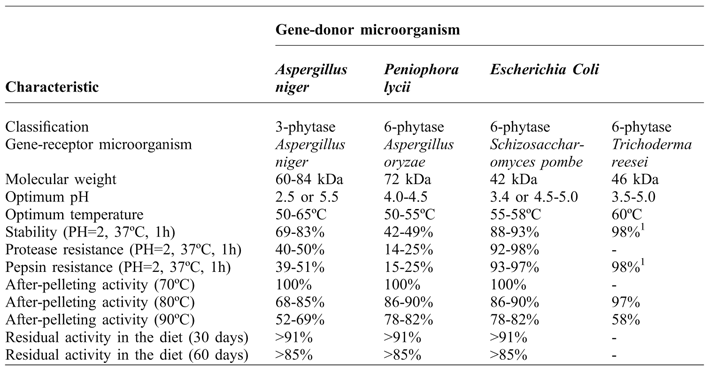
Two systems of classification are frequently applied to phytases. One is based on their chemical and catalytic structure; the other on the carbon atom from inositol by which they start the hydrolysis of phytic acid. According to the first criterion, four classes of phytases were proposed: histidine acid phosphatases, β-propeller, purple acid phosphatases and cysteine phosphatases (Mullaney and Ullah, Reference MULLANEY and ULLAH2003). All commercial phytases used in animal nutrition are histidine acid phosphatases (Lei et al., Reference LEI, WEAVER, MULLANEY, ULLAH and AZAIN2013). According to the second criterion, phytases are classified as either 3-phytases (those that start phytic acid hydrolysis by carbon number 3) and 6-phytases (those that start by carbon number 6). Table 1 gives a comprehensive description of properties of interest in different commercial phytases.
Basic characteristics of different commercial phytases.

Adapted from: Vats and Banerjee, Reference VATS and BANERJEE2004; Greiner and Konietzny, Reference GREINER and KONIETZNY2012; Wilkinson et al., Reference WILKINSON, WALK, BEDFORD and COWIESON2013; Dersjant-Li et al., Reference DERSJANT-LI, AWATI, SCHULZE and PARTRIDGE2015; Menezes-Blackburn et al., Reference MENEZES-BLACKBURN, GABLER and GREINER2015.
1 Analysis conditions: pH=3.0; 37ºC, 45 min.
Under ideal circumstances, both 3- and 6-phytases promote sequential dephosphorylation of phytic acid by individually hydrolysing the ester bonds that keep phosphate groups linked to inositol. This process occurs until the enzyme reaches the carbon number 2 from inositol. Due to its particular configuration, carbon number 2 is more resistant to phytase binding and, as a result, it is usually the point where phytases detach from inositol (Menezes-Blackburn et al., Reference MENEZES-BLACKBURN, GABLER and GREINER2015; Cowieson et al., Reference COWIESON, RUCKEBUSCH, KNAP, GUGGENBUHL and FRU-NJI2016). For this reason, under regular conditions, complete dephosphorylation of phytic acid should not be expected in in vivo assays.
As protein molecules, phytases can be digested in the animal's gastrointestinal tract, which was one of the reasons for the modest performance observed in first-generation enzymes. New-generation phytases were developed to have more affinity for acidic pH and, as a consequence, be more resistant to endogenous proteolysis (Slominski, Reference SLOMINSKI2011). On average, the optimal pH range for most of the new-generation phytases remains between 4 and 5. Under physiological circumstances, such values are only observed in the proximal regions of the gut, before the duodenum (Denbow, Reference DENBOW2015). This has led to an interesting paradox for modern phytases: the more they are improved to better resist the gastric environment and acidic digestion, the lower the expectation that their enzymatic activity occurs at significant levels from duodenum to rectum.
This lack of intestinal activity is not necessarily a problem, as long as satisfactory conditions are provided for phytases to fully achieve their potential while still in the upper gastrointestinal tract. When comparing the enzymatic activities of a commercial Peniophora lycii phytase (Ronozyme, DSM) and an experimental E. coli phytase (Zymetrics Inc.) in broilers fed P-restricted diets, Onyango et al. (Reference ONYANGO, BEDFORD and ADEOLA2005) concluded that the E. coli phytase was probably more resistant to endogenous proteolysis since its activity in the jejunum and ileum was more than 10 times higher than that of P. lycii phytase. Nevertheless, independently of the residual activity in the intestine, both enzymes promoted the complete disappearance of dietary phytate globoids by the time digesta reached proventriculus and gizzard. According to the authors, this finding was not unexpected, since the pH of the crop favours phytate solubility and is close to the optimum pH of 4.5 for both phytases to work.
In addition to pH, the type of compounds combined with phytic acid significantly affects the phytase hydrolysis activity. In a more general analysis, Zyla et al. (Reference ZYLA, LEDOUX and VEUM1995) stated that phytases may have limited access to phytic acid because of the physical occlusion imposed by large surrounding molecules such as starch, lipids or proteins. Moreover, mineral binding and phytate formation decrease phytase performance since phytates tend to precipitate out of the solution, making it difficult for phytase to bind to them.
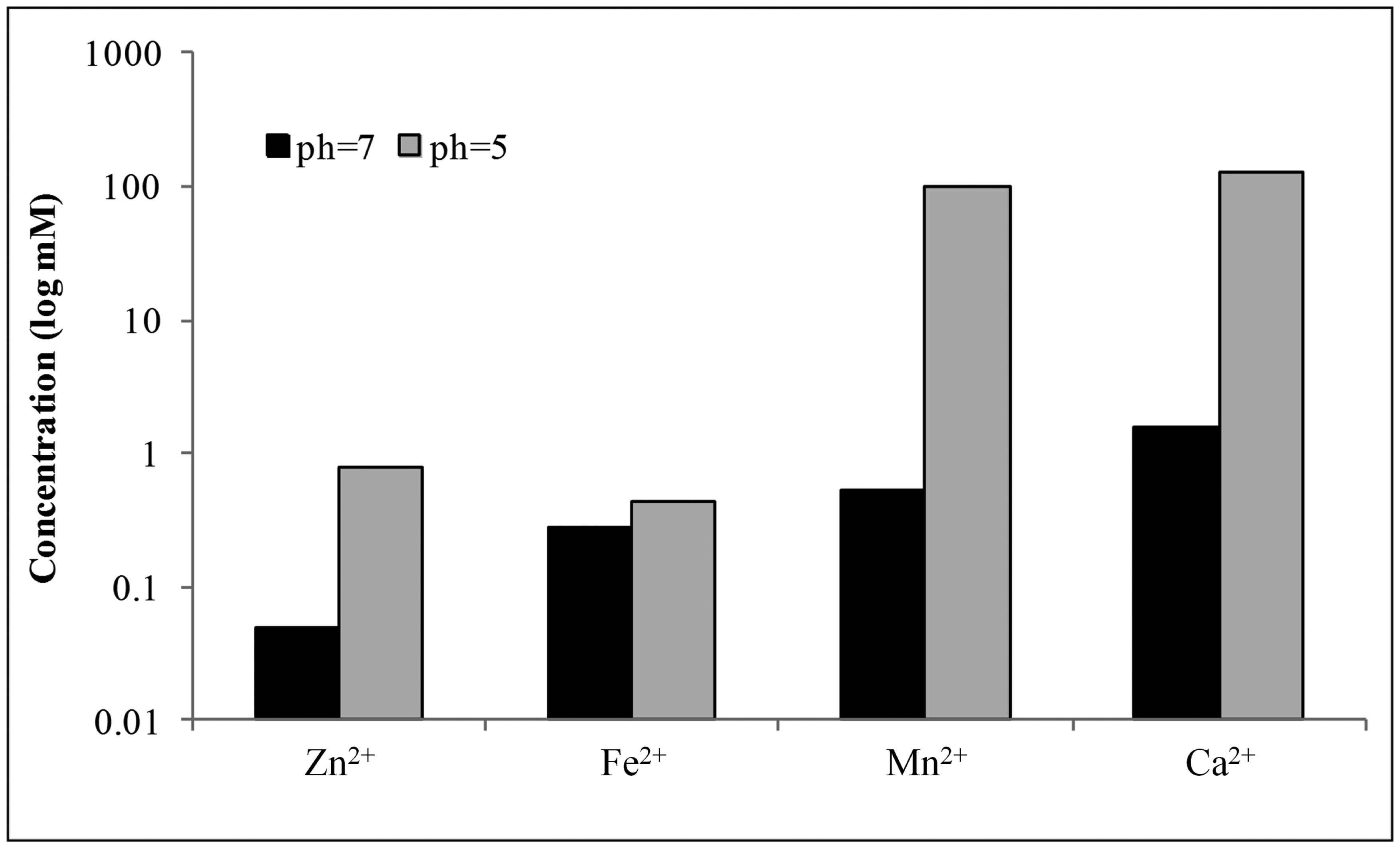
Maenz et al. (Reference MAENZ, ENGELE-SCHAAN, NEWKIRK and CLASSEN1999) evaluated the potential of several metal cations to form phytase-resistant complexes with phytic acid in vitro. They observed that, under neutral pH, Zn2+ is the most important. One Zn2+ atom could form bridges with two adjacent phytic acid molecules, making them extremely inaccessible to phytase. Environmental acidification increased the concentration of Zn, Fe, Ca, Mn and Mg needed to reduce the efficacy of phytase by 50% in hydrolysing phytic acid (Figure 2). As discussed before, the protonation of phytic acid phosphate groups decreases their ability to chelate mineral cations in solution, which helps to explain such results.
Minimum concentration of several cations required to reduce (by 50%) the ability of phytase in hydrolysing sodium phytate. Adapted from Maenz et al. (Reference MAENZ, ENGELE-SCHAAN, NEWKIRK and CLASSEN1999).

Organic acids
Organic acids are low molecular weight compounds with one or more acidic groups such as carboxyl, sulphonic, alcohol and thiol groups (Yin et al., Reference YIN, LI, SHIN, DU, LIU and CHEN2015). Many types of organic acids are available for use in animal nutrition; most of them are intermediates in important metabolic pathways occurring in animal, plant and microbial organisms. Commercially, the majority of organic acids are synthesised from microorganisms and can be divided in two major groups: (1) those produced during the tricarboxylic acid cycle and glycolysis; (2) those arising from the direct oxidation of glucose (Mattey, Reference MATTEY1992). Acetic, citric, fumaric, lactic and malic acids fall into the first group; gluconic and 2-oxo-gluconic acids, in the second.
The antimicrobial effects of organic acids in the digestive tract have been extensively studied and can be explained by the induction of a marked reduction in bacterial internal pH, which changes the normal polarity of the cellular wall and impairs microbial mechanisms of synthesis and transport of nutrients (Biggs and Parsons, Reference BIGGS and PARSONS2008), preventing the maintenance of internal homeostasis. These alterations occur because in the non-dissociated form organic acids can cross the bacterial cellular wall and, once inside, dissociate and reduce cytoplasmic pH (Suiryanrayna and Ramana, Reference SUIRYANRAYNA and RAMANA2015; Zhitnitsky et al., Reference ZHITNITSKY, ROSE and LEWINSON2017).
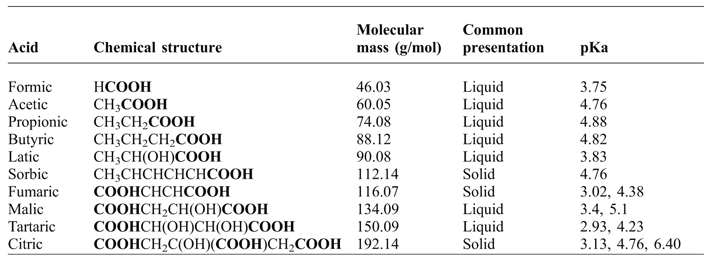
One important property of organic acids that is directly associated with their antibacterial capacity is their pKa, an index that expresses their acidity, i.e., the potential to dissociate in a given pH. The pKa of an acid is equivalent to the pH in which half of the acid is dissociated. Organic acids with low pKa, such as citric, formic, fumaric and lactic (Table 2), show greater antimicrobial activity in the more acidic regions of gastrointestinal tract, like the crop, proventriculus and gizzard. In the intestines, however, the higher intraluminal pH causes these molecules to be highly dissociated, inhibiting penetration into bacterial cells and reducing their antibacterial effects. Based on these particular characteristics, blends of organic acids with different pKa have been developed to ensure a significant antimicrobial activity in the range of pH found from crop to rectum.
Nevertheless, for the purposes of this review, it is important to note that the lower the pKa of an acid, the greater its potential to decrease intraluminal pH. As a result, organic acids such as citric, fumaric and tartaric can decrease the gastric pH of broilers, improving the solubility of minerals in the digesta and potentially reducing the gastric emptying rate because of the greater amount of pancreatic juice needed to neutralise the stomach contents that reach the duodenum (Van der Aar et al., Reference VAN DER AAR, MOLIST and VAN DER KLIS2017). Higher solubility increases mineral availability by favouring intestinal absorption. Lower gastric emptying is theoretically beneficial for intestinal health since a more gradual supply of digesta to the duodenum decreases the risk of tissue damage due to an excess of substrate (i.e. higher than the animal's digestive capacity) and prevents the over-development of undesirable microbiota. Additionally, lower gastric emptying is usually associated with reduced feed intake and better digestive efficiency; responses partially explained by the longer amount of time provided for digestive enzymes to work on digesta. It can be assumed that this last mechanism holds true for exogenous phytases.
Characteristics of some organic acids commonly used in animal nutrition.

Adapted from Partanen and Mroz (Reference PARTANEN and MROZ1999).
When evaluating the effect of citric acid on the gastrointestinal pH of broilers, Esmaeilipour et al. (Reference ESMAEILIPOUR, SHIVAZAD, MORAVEJ, AMINZADEH, REZAIAN and VAN KRIMPEN2011) observed a reduction of 0.15 and 0.31 units in crop pH when citric acid was included at 20 and 40 g/kg of feed, respectively. No significant effect of citric acid was observed for pH in other gastrointestinal segments. In fact, even though some reduction in intestinal pH has been described in broilers supplemented with organic acids (Boling et al., Reference BOLING, WEBEL, MAVROMICHALIS, PARSONS and BAKER2000; Biggs and Parsons, Reference BIGGS and PARSONS2008; Akyurek et al., Reference AKYUREK, OZDUVEN, OKUR, KOC and SAMLI2011), detecting these differences at statistically significant levels is not usual. Circadian variations of intestinal pH and animal's feed status at the time of sampling (i.e. time from last meal) are factors that hinder this detection.
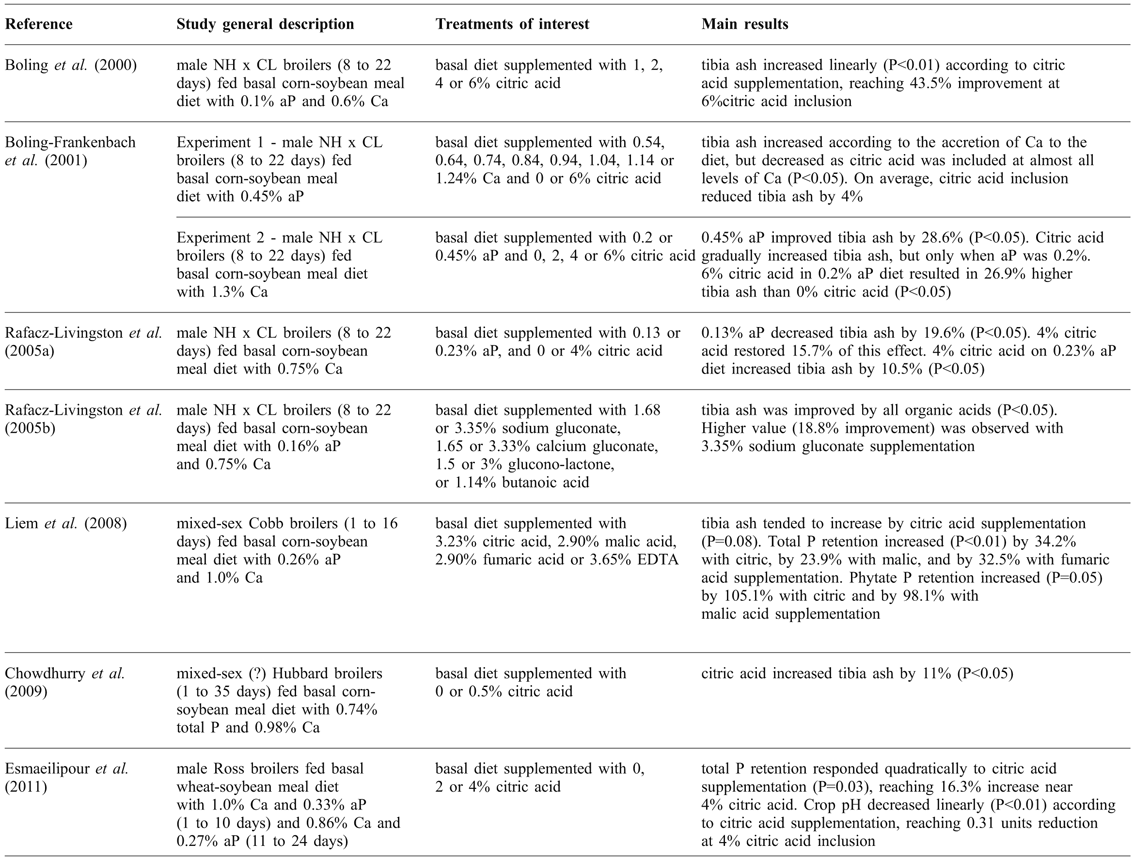
The role of organic acids and gastrointestinal acidification on feed digestibility in poultry has been recently reviewed (Khan and Iqbal, Reference KHAN and IQBAL2016). Although these authors dedicated most of the discussion to the ability of organic acids to improve dietary protein, amino acid and energy availability, they did show some positive effects of organic acids on mineral availability and body retention. Table 3 gives a description of studies that have evaluated this subject in broilers.
Summary of studies evaluating the effects of organic acids on broiler's mineral metabolism.

NH – New Hampshire; CL – Columbian
More frequently, the effects of organic acids on mineral availability in broilers have been indirectly assessed by bone mineralisation (tibia ash). Without considering important methodological differences such as the type of organic acid under evaluation and its dietary inclusion, broilers tibia ash tended to increase between 10.5% (Rafacz-Livingston et al., Reference RAFACZ-LIVINGSTON, MARTINEZ-AMEZCUA, PARSONS, BAKER and SNOW2005a) and 43.5% (Boling et al., Reference BOLING, WEBEL, MAVROMICHALIS, PARSONS and BAKER2000) after feed acidification. Part of this effect can be explained by the enhanced P retention observed in broilers fed organic acids, in which total P retention increased between 16.3% (Esmaeilipour et al., Reference ESMAEILIPOUR, SHIVAZAD, MORAVEJ, AMINZADEH, REZAIAN and VAN KRIMPEN2011) and 34.2% (Liem et al., Reference LIEM, PESTI and EDWARDS2008). Without adding exogenous phytase into the diet, Liem et al. (Reference LIEM, PESTI and EDWARDS2008) demonstrated an increase of 105% on phytate P retention in broilers fed with 3.23% citric acid.
In general, the effects of organic acids on broiler bone mineralisation and P retention are similar to those observed with phytase supplementation, which has led to the question of whether or not these feed additives could interact when used in combination. Indeed, synergic effects between phytases and organic acids have already been described in broilers (Ebrahimnezhad et al., Reference EBRAHIMNEZHAD, SHIVAZAD, TAHERKHANI and NAZERADL2008; Demirel et al., Reference DEMIREL, PEKEL, ALP and KOCABAGLI2012; Ghanaatparast-Rashti et al., Reference GHANAATPARAST-RASHTI, SHARIATMADARI, KARIMITORSHIZI and MOHITI-ASLI2016). However, the number of studies evaluating this relationship is still small.
Combining phytases and organic acids
Considering the inhibitory effect of phytic acid protonation on its ability to create new insoluble phytates (Emsley and Niazi, Reference EMSLEY and NIAZI1981), any organic acid in the dissociated form has the potential to increase phytate P availability since the reduction on gastrointestinal pH generally leads to better conditions for phytase activity. However, the effects of organic acids on phytase activity might be quite specific and associated not only with their common potential for lowering gastrointestinal pH, but also with individual traits related to their structure and nature.
In a series of in vitro assays, Maenz et al. (Reference MAENZ, ENGELE-SCHAAN, NEWKIRK and CLASSEN1999) demonstrated that 5 mM of ethylenediaminetetraacetic acid (EDTA) completely cancelled the inhibitory effect of Ca2+ on the ability of phytase to hydrolyse phytic acid. More than just acidifying the medium, EDTA worked as a competitive chelator, removing free Ca2+ from solution and thereby decreasing the formation of insoluble calcium-phytate complexes.
The applicability of this kind of knowledge in animal nutrition is quite broad, but it is important to note that not all chemical chelators are appropriate for in vivo applications. An ideal chelator should be non-toxic for animals, must have a higher affinity for minerals than phytic acid and, obviously, has to release the minerals for intestinal absorption or be fully absorbed by enterocytes and then discharge the mineral fraction for endogenous metabolism. Some amino acids and carboxylic acids have already demonstrated all of these properties (Cheryan and Rackis, Reference CHERYAN and RACKIS1980). Among them, citric acid has been one of the most studied in broilers.
According to the data presented in Table 2, citric acid presents one of the lowest pKa among the acids commonly used in animal nutrition, and possesses more carboxyl groups (COOH) than the others. This first characteristic provides a higher potential of dissociation to citric acid, leading to greater capacity of pH reduction under gastrointestinal conditions. The second characteristic renders a superior ability to chelate minerals and other components, since carboxyl groups are the main binding sites for cations in organic acids. In fact, citric acid can bind cations in the hydroxyl group (OH), after the dissociation of its hydrogen atom (Milewska, Reference MILEWSKA1988). However, as the pKa of this hydroxyl group is 11, a value far superior than the regular range of pH find in the gut (Huta et al., Reference HUTA, LENSBOEUR, LOWE, ZUBIETA and DOYLE2012), the binding property of this hydroxyl group is generally neglected in animal nutrition. Together, these characteristics help explain the superior results described for citric acid when comparing different organic acids as enhancers of phytase activity and mineral availability in vitro.
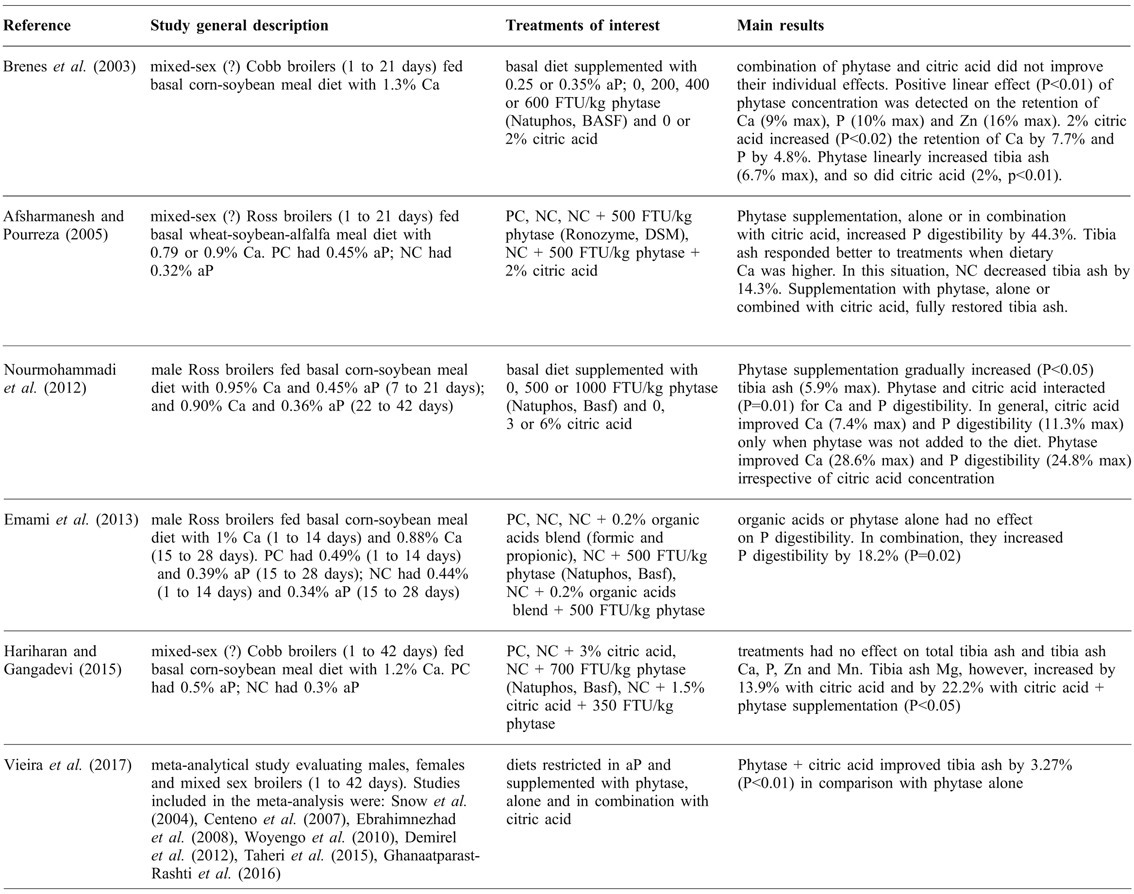
However, a large number of in vivo experiments have failed to demonstrate beneficial effects of the combination of phytase and organic acids in broilers (Table 4). Except from Emami et al. (Reference EMAMI, NAEINI and RUIZ-FERIA2013), where P digestibility increased 18.2% exclusively in broilers supplemented with the additives in combination, individual studies have not shown significant interactions nor synergisms between phytases and organic acids. It is reasonable to believe that any positive effect of organic acids on the efficiency of phytase to hydrolyse phytic acid would be greater in diets with higher amounts of phytate, lower concentration of phytase and relatively high levels of minerals. Together with the use of few experimental replicates, these are examples of factors that might have decreased the statistical power of individual studies on this subject. Indeed, results of a meta-analytical study indicated that the ability of citric acid to improve phytase activity and bone mineralisation in broilers is dependent on the sex of the birds, length of treatment and dietary phytase, Ca and phytate P concentrations (Vieira et al., Reference VIEIRA, SILVA, OLIVEIRA, CORREA, CARAMORI and CORREA2017). Nevertheless, by including seven different studies in the meta-analytical model, authors successfully demonstrated that broilers fed phytase and citric acid have 3.27% more tibia ash than those fed phytase alone (P<0.01).
Summary of studies evaluating the combination of phytase and organic acids on broiler's mineral metabolism.

Boling et al. (Reference BOLING, WEBEL, MAVROMICHALIS, PARSONS and BAKER2000) proposed that citric acid enhanced phytate P availability by competitively inhibiting the bond between Ca and phytic acid, thereby decreasing the formation of insoluble Ca-phytate complexes and favouring a phytase-phytic acid interaction. In evaluating the phytase potential for hydrolysing phytic acid in simulated intestinal conditions, Zyla et al. (Reference ZYLA, LEDOUX and VEUM1995) observed that the complete dephosphorylation of phytic acid only occurred when a blend of phytase, phosphatase, protease, pectinase and citric acid was used.
According to Cowieson et al. (Reference COWIESON, RUCKEBUSCH, KNAP, GUGGENBUHL and FRU-NJI2016), in comparison with the wild ancestors of chickens, the feeding behaviour imposed on modern commercial lines promotes the intake of high levels of minerals, especially Ca, together with phytates and free phytic acid from plant ingredients. This situation favours the formation of insoluble phytates in the gastrointestinal lumen, reducing the efficiency of exogenous phytases and contributing to the insignificant participation of endogenous phytases and other phosphatases on the release of dietary phytate P from phytic acid. Indeed, Wilkinson et al. (Reference WILKINSON, SELLE, BEDFORD and COWIESON2014) increased phytate P digestibility in broilers by providing dietary Ca separately from the rest of the diet. Although this practice may have little application in modern poultry production systems, it highlights the importance of better understanding the interactions between dietary components for the development of alternative mechanisms, such as the supplementation with chelators/acidifiers, to increase the availability of phytate P in commercial diets and reduce the need for inorganic sources of P in broilers nutrition.
Conclusions
The search for phytases with higher stability under gastrointestinal conditions, with broader specificity for phytic acid and other inositol phosphates, and with greater potential for phytic acid degradation have been the goal of the feed enzymes industry for several years. However, the intrinsic properties of phytic acid, dietary components and the digestive tract of broilers continue to work in favour of the establishment of insoluble phytates in the digesta and against the efficient phytase performance. Considering this, greater attention should be given to alternative mechanisms that reduce the ratio of phytate formation and improve the gut environment for phytase activity. The combined use of phytase and citric acid is a promising and easy-to-implement protocol for commercial broiler feeds. The published literature attributes to this combination improvements between 16 to 34% in total P retention and 3.27% in tibia ash of broilers in comparison to phytase exclusive supplementation.
Acknowledgements
The authors would like to acknowledge CAPES/Brazil for granting a PhD scholarship for the first author.