Introduction
Over the past decade, the Internet has become a popular communication vehicle among younger people and it is becoming popular with older adults (Campbell and Nolfi Reference Campbell and Nolfi2005). Although some scholars have not identified a significant impact of computer use on older adults' well-being (e.g. Slegers, van Boxtel and Jolles Reference Slegers, van Boxtel and Jolles2008), several researchers have noted that various health-related benefits could be realised through computer and Internet/Web use in older age (e.g. Harris Reference Harris1999; Morrell et al. Reference Morrell, Dailey, Feldman, Mayhorn and Echt2002). For instance, the utilisation of computer technology for consultations with physicians using email and/or web cameras could augment or even replace face-to-face meetings (Cohen Reference Cohen2001). Also, according to Campbell and Nolfi (Reference Campbell and Nolfi2005), anxiety concerning health problems experienced in late adulthood could be ameliorated if older adults became well-informed regarding their health conditions. This could be achieved by accessing health-related websites that present reliable information about new treatments and medications (DeOllos and Morris Reference DeOllos and Morris1999). Besides, older adults could achieve mental health benefits of increased social support through socialisation using email, instant messaging, chat rooms and other virtual social networks (e.g.Iida Reference Iida2000). They could also use computers to compensate for sight or hearing problems that create barriers to successful social interactions (Dickinson and Hill Reference Dickinson and Hill2007).
Computer self-efficacy refers to feelings of confidence and competence about computer use and is part of a healthy self-concept (Cassidy and Eachus Reference Cassidy and Eachus2002). Thus, enhancing computer self-efficacy is likely to contribute to the improvement of older adults' self-image, possibly increasing their psychological well-being. Attitudes toward technology influence the user's willingness to accept and implement it, since behaviours tend to be guided by attitudes (Regan and Fazio Reference Regan and Fazio1977). Therefore, the enhancement of computer technology attitudes could lead to increased use of this technology in older age. Hands-on training appears to be the most helpful form of computer technology training for older adults (Czaja and Lee Reference Czaja, Lee, Sears and Jacko2008). Scholars have discovered that the difficulties experienced when first acquiring computing skills in older age are often easily overlooked once learners become proficient in computer technology, a factor that transforms the utilisation of technology later in life into a rewarding experience (e.g. Slegers, van Boxtel and Jolles Reference Slegers, van Boxtel and Jolles2009). Although computerised technology is widely available for communicating with others long-distance and for accessing the Web for health and psycho-social purposes, older adults' negative attitudes towards and limited self-efficacy in computer technology might present obstacles to their utilisation of these resources. Communication barriers in older age (including mobility problems or living far away from family) could impede one's ability to engage successfully in social activities or access vital health-related information (Karavidas, Lim and Katsikas Reference Karavidas, Lim and Katsikas2004). This could lead to negative health outcomes and lower quality of life (Dugan and Kivett Reference Dugan and Kivett1994).
To contribute to the limited psychometric literature on older individuals' computer technology attitudes, the first aim of the present study was to test and refine a new measure of attitudes toward computer technology in older age. This tool was successfully pilot-tested by the first author in 2008 on a sample of older adults from several ethnic backgrounds (with 37.4 per cent being European-American). However, given the small sample size (32), there was a need to verify the feasibility of employing this measure on a larger sample prior to its dissemination for research and other purposes. A tool of this kind is required to test accurately the efficacy of computer-training programmes for older adults because, despite the above-mentioned benefits of computer technology use, no measure exists to quantify how older adults in particular perceive this technology. In studies of younger populations (typically college students), researchers have utilised instruments including the Internet Attitude Scale by Zhang (Reference Zhang2007), the Computer Attitude Scale by Loyd and Loyd (Reference Loyd and Loyd1985), and the Attitudes Toward the Computer Scale (Richter, Naumann and Groeben Reference Richter, Naumann and Groeben2000).
In research on older people, Jay and Willis (Reference Jay and Willis1992) used the Attitudes Toward Computers Questionnaire (Jay Reference Jay1989), a tool that was originally created for college students. In 2002, White and colleagues used a brief nine-item adaptation of this measure to assess computer, Web and email attitudes in a study on the impact of Internet training and Internet access on older adults' quality of life. The original instrument has 35 items that quantify seven dimensions of computer attitudes (i.e. comfort, efficacy, gender equality, control, interest, dehumanisation, and utility) on a five-point Likert scale. As reported by Jay and Willis, Cronbach's α on each of its seven factors was modest at best when used with older adults (with α being higher than 0.70 for only two of seven factors, and as low as 0.54 for other factors). Moreover, one of its factors is efficacy, whereas full measures of computer self-efficacy have now become available, e.g. the Computer User Self-Efficacy Scale (Cassidy and Eachus Reference Cassidy and Eachus2002).
The second aim was to test whether an original training programme enhanced older adults' computer technology attitudes and self-efficacy, i.e. the present study's two outcome variables. Concerning the rationale for this aim, both the attitude theory and social learning theory support the value of conducting the intervention. Specifically, according to several scholars (e.g. Fishbein and Ajzen Reference Fishbein and Ajzen1975; McGuire Reference McGuire, Lindzey and Aronson1985), individuals of all ages acquire attitudes through experience; attitudes can be modified by increasing experience in a particular area. In our case, the provision of a simple, one-on-one training programme lasting several weeks was deemed necessary for older adults to gain several positive experiences when using computer technology. Moreover, in line with social learning theory (Bandura Reference Bandura1977), high-quality training should enhance older adults' self-belief in being able to engage in unfamiliar tasks such as computer and Internet use. Thus, in implementing our intervention within a supportive environment, we also targeted the enhancement of trainees' computer self-efficacy.
More empirical evidence on older adults' computer technology training is needed, as the finding of the first author's pilot research with multi-ethnic older adults that both computer technology attitudes and self-efficacy improved as a result of training (Laganá Reference Laganá2008), while encouraging, must be duplicated on a larger sample before being generalised to older people. Previous research on training programmes targeting one or both outcome variables exists, but has had mixed findings. Briefly, Torkzadeh and Van Dyke (Reference Torkzadeh and Van Dyke2002) discovered that training college students improved their computer self-efficacy but not computer attitudes. No prior research on older adults' computer self-efficacy could be located other than Laganá's cited pilot study. The empirical evidence on whether training improves older individuals' computer technology attitudes is somewhat conflicting and almost non-existent with non-European-American older adults. Computer training has shown to impact positively on older trainees' intentions to utilise computer technology in the future (e.g. Eilers Reference Eilers1989), as well as their attitudes toward computer instruction (e.g. McNeely Reference McNeely1991). Yet, although some investigators have shown that training improves older adults' computer attitudes (e.g. Charness, Schumann and Boritz Reference Charness, Schumann and Boritz1992; Kelley et al. Reference Kelley, Morrell, Park and Mayhorn1999), others did not achieve a positive result for such attitudes (e.g. White et al. Reference White, McConnell, Clipp, Branch, Sloane, Pieper and Box2002). Researchers should clarify whether training older people on how to use computers and the Internet enhances their computer technology attitudes and self-efficacy. If this is the case, then older adults, including those from ethnic minorities who are often neglected in research, should be provided with this training so that they can access the postulated benefits.
With regard to the first aim, it was hypothesised that the new measure of computer technology attitudes, once appropriately refined for a multi-ethnic sample of older adults, would demonstrate strong internal consistency. Moreover, an exploratory factor analysis was planned in order to identify a combination of factors/dimensions that would account for a significant amount of variability in attitude scores (in a methodologically sound manner, as highlighted by Fabrigar et al. Reference Fabrigar, Wegener, MacCallum and Strahan1999). Concerning the second aim, we hypothesised that after administering the training to experimental subjects, significant between-group differences would emerge on both computer technology attitudes and self-efficacy. Higher scores were expected on both variables only for the experimental group. Computer technology attitudes and self-efficacy were anticipated to be significantly related, based on prior research (e.g. Wu and Tsai Reference Wu and Tsai2006) and given their conceptually overlapping nature (as they both quantify dimensions of computer technology beliefs).
Methods
The participants
The sample for this longitudinal study was 96 community-dwelling individuals aged 52 to 94 years (mean 67.6). The subjects were volunteers, as in most of the aforementioned studies, and resided in Los Angeles County, California, United States of America (USA). They were recruited through a purposive focus on ethnically diverse populations and through snowball sampling. The study was advertised at various locations such as senior apartment complexes, stores, churches and senior centres. The percentage of the participants who attended or completed high school was 45.8, replicating the reported figure for the USA population (45%; US Census Bureau 2009), although we recognise that one identical percentage does not establish representativeness.
The inclusion criteria were: (a) aged 50 or more years; (b) having English as a second language, fluency in English (to minimise confounding results with acculturation levels); (c) ability and willingness to attend the six sessions of the one-on-one intervention/training programme (six weekly visits for control/waitlist subjects); (d) not planning on leaving the area for the next two months, and (e) access to a computer at their home or computer ownership (the latter was used as a covariate). Criterion (e) was necessary for subjects to be able to access and use computer technology after the study was completed, and is in line with the research ethics principle of providing training for skills that will be used long term. In this regard, researchers have reported that attending computer classes or studying computer manuals often does not help older adults learn computer technology unless they practise those skills regularly (e.g. Buse Reference Buse2010), as computing must be learned through action and practice (Wacquant Reference Wacquant2004). Waitlist participants were also required to have computer access at home or ownership, to match them properly to the experimental group.
The criteria for exclusion from study participation were: (a) residence in an institutional setting; (b) inability to provide informed consent (i.e. although fluent in English, being unable to understand the terms stipulated in the consent form); and (c) more than ‘minor’ computer technology experience. We defined ‘minor experience’ as no more than having turned the computer on and off or having watched others use it for document creation and/or navigation of the Internet. With regard to the last criterion, we allowed two types of users to remain in the study, namely those with absolutely no experience, and individuals with minimal experience, as defined above, yet still unable to use computer technology. All other levels of competence were unacceptable for the present study, as we intended to enhance skills and attitudes among non-users. To control for potential differences between ‘no’ and ‘minor’ experience, this construct was used as a covariate.
The measures
Socio-demographic attributes and computer accessibility/experience
A list of required attributes was drawn up to include items that covered all the inclusion and exclusion criteria. The variables assessed prior computer experience, ability to e-mail, computer ownership, and access to a computer, as well as the socio-demographic attributes of interest such as age, ethnic background, education and household income.
Older Adults' Computer Technology Attitudes Scale (OACTAS)
The testing and refining of this measure created by the first author and preliminary tested on a small sample (Laganá Reference Laganá2008) was planned for the present research. The original version of this instrument had 22 items, all of which were administered to the present study's sample. The OACTAS has various statements on reluctance to use computer technology. All items on the OACTAS were worded negatively, in order to facilitate endorsement of truthful responses from older adults mostly unfamiliar with this technology. Coding of item responses uses a seven-point Likert-type scale, ranging from ‘−3’ ‘strongly disagree’ to ‘+3’ ‘strongly agree’. Scores were reversed in the data analyses, so that higher numbers would signify more positive attitudes toward computer technology.
Computer User Self-Efficacy Scale
This 30-item measure quantifies computer-self-efficacy (Cassidy and Eachus Reference Cassidy and Eachus2002). Subjects are asked to rate each item on a six-point Likert-type scale from ‘1’ ‘strongly disagree’ to ‘6’ ‘strongly agree’. Cassidy and Eachus reported a Cronbach's α of 0.97 and a test–retest reliability coefficient of 0.86. No adaptation of this tool was needed for the present study, except to remove an irrelevant introductory item that related to college students.
Design, procedures, and training protocol
The investigation was a randomised, controlled longitudinal experiment. It offered a one-on-one computer training experience that aimed to increase the participants' computer technology attitudes and self-efficacy. Data on socio-demographic attributes and on the two outcome variables were collected at baseline. After the six weeks' training, all participants were re-tested on the two outcome variables. Each subject was assigned a trainer/research assistant (RA). Like the experimental subjects, the control participants were assessed twice with six weeks in between, but did not receive any training until after completing the second assessment. To equalise the amount of attention received by subjects in the two groups, older adults in the control group were visited by an RA, who spent time with them without performing the training once a week for the same amount of time required by weekly training. As part of the post-test assessment, all experimental participants were requested to e-mail their trainer (without any help) in the presence of this RA, who monitored the execution of the task. All trainees completed this assignment successfully.
Several RAs were extensively trained by the first author to become one-on-one computer trainers for this study. They were strongly discouraged to deviate from the instructions provided in the manual. For quality assessment purposes, they maintained a diary of the training experience with each participant to record anomalies or deviations from the instructions (none were substantial). Each RA conducted both pre-test and post-test assessment and trained subjects individually. Training was implemented for six weeks on a desktop computer, once a week for one-and-a-half hours each session. It was imparted at convenient locations chosen by the participants such as local libraries and the Department of Psychology at California State University Northridge. Each subject signed a consent form before starting study participation.
The training protocol for the RAs was outlined in a manual created by the first author to standardise training procedures. Its content was based on the empirical findings of cognitive ageing research, in an attempt to counteract possible age-related challenges. These include limited processing resources (e.g. Craik and Jennings Reference Craik, Jennings, Craik and Salthouse1992); sensory deficits (e.g. Baltes and Lindenberger Reference Baltes and Lindenberger1997); lack of inhibition (e.g. Zacks and Hasher Reference Zacks, Hasher, Dagenbach and Carr1994); and cognitive slowing (e.g. Salthouse Reference Salthouse1996). The instructions cover the key training issues highlighted by Morrell and Echt (Reference Morrell, Echt, Fisk and Rogers1997) and include: how to introduce the training to each older adult; utilise the ‘Glossary of Computer Terms’ when needed; teach subjects how to use word/wordpad to write letters and messages, send e-mails, and surf the Web; focus on heightening trainees' feelings of task motivation; and encourage participants to pursue intrinsically interesting tasks (e.g. surf the Web on topics of interest). The training covered mainly the provision of skills needed to engage in: (a) word processing, (b) email, and (c) information searching, in line with previous empirical evidence (e.g. Buse Reference Buse2010; Hill, Beyon-Davis and Williams Reference Hill, Beyon-Davis and Williams2008; Selwyn et al. Reference Selwyn, Gorard, Furlong and Maddon2003) showing that these are the three main uses of older adults' computer technology. Researchers have discovered that older people demonstrate superior performance in the absence of time pressure (Charness and Bosman Reference Charness, Bosman, Craik and Salthouse1992) and that it is important to offer older trainees an optimal computer learning and interaction experience to avoid frustrating them (Wood et al. Reference Wood, Willoughby, Rushing, Bechtel and Gilbert2005). Taking such issues into account, our training was structured to allow the trainees' active participation in the learning process, provided fast feedback on progress made, and showed sensitivity to the trainee's preferred pace. According to the feedback received from trainers and participants, the manual and related training were found easy to understand and follow. This minimised the chance of subjects leaving the study as a result of frustration with the instructions, and none dropped out.
Planned data analyses
It was decided that if there were missing scores for any of the items in the two outcome measures, they would be imputed using an expectation maximisation algorithm model for any variable with less than 30 per cent missing data (cf. Tabachnick and Fidell Reference Tabachnick and Fidell2007). For all the variables, including those assessed exclusively for sample description purposes, descriptive statistics were calculated, including means, standard deviations, and percentages whenever applicable. The matrix of Pearson bivariate correlation coefficients among the analysis of covariance (ANCOVA) variables was computed. Internal consistency and exploratory factor analyses of the new tool were planned to test its reliability and factor structure.
In terms of the analyses on the efficacy of the training programme, it was first necessary to test the inter-correlation of the two outcome variables. If lower than 0.30, conducting a multivariate analysis of covariance (MANCOVA) was planned, predicting post-test computer self-efficacy and post-test computer technology attitudes by group (experimental versus control). Had the inter-correlation been higher than 0.30, Roy-Bargman step-down analyses were planned instead, following Tabachnick and Fidell's (Reference Tabachnick and Fidell2007) recommendations. Such analyses would necessitate conducting two ANCOVAs and calculating indicators of effect sizes (i.e. η2). The first analysis would predict the more theoretically and psychometrically relevant outcome variable (i.e. post-test computer technology attitudes) by the grouping variable (i.e. experimental versus control condition). This would occur while controlling for relevant variables/covariates (i.e. prior computer experience, pre-test attitudes, and pre-test computer self-efficacy). The second analysis would predict computer self-efficacy by the grouping variable, controlling for the same three covariates with the addition of the post-test computer technology attitudes. Overall, the use of the Roy-Bargman procedure addresses a substantial correlation between the two outcome variables by assigning the overlap between them to computer technology attitudes.
Results
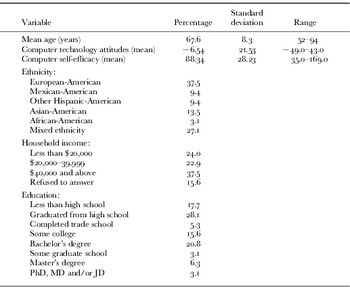
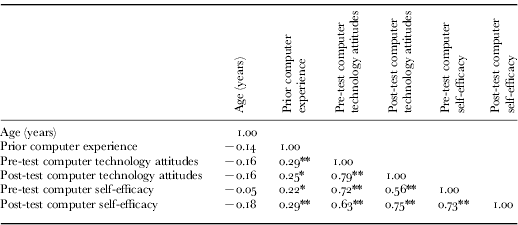
Because in all cases but one the missing values for the items in the two outcome measures were fewer than 30 per cent, imputed values were generated. The majority (54%) of the sample had complete data; the rest had between 2 and 9 per cent missing data. As one participant did not provide information on prior computer experience, the analyses containing this variable had a sample size of 95 instead of 96. Table 1 displays the descriptive statistics on age, gender, ethnicity, and income, and on baseline computer technology attitudes and self-efficacy. Two-thirds (62.5%) of the participants had a non-European-American background. Over half had a trade or high school education (not all completed high school), and almost a quarter was at or below the poverty level for the USA. Nobody missed the questions on age, gender or education. Most (59.4%) of the subjects had absolutely no prior computer experience; the rest, despite having some minor experience, were still unable to utilise computer technology, thus all the recruited subjects were retained. Table 2 presents the inter-correlations among the variables used in the two ANCOVAs.
Characteristics of the sample at baseline

Notes: The sample size was 96. MD: Doctor of Medicine. JD: Doctor of Jurisprudence.
Pearson rank-order correlation coefficients
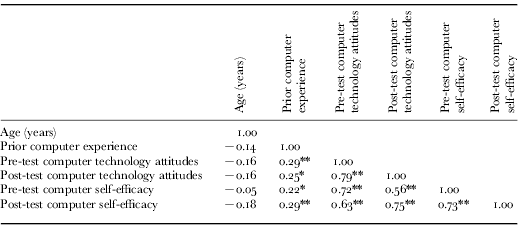
Note: The sample size is 95.
Significance levels: * p<0.05, ** p<0.01.
Reliability analysis for the new tool
Before verifying the efficacy of the training programme, we considered whether item selection was required to refine the OACTAS. This scale had previously been pilot-tested on a small sample (Cronbach's α 0.88, N=32; Laganá Reference Laganá2008) and there were several reasons for attempting scale reduction: (a) to maximise reliability by removing items that were inconsistent with other items; (b) to make this measure as efficient as possible, to reduce older adults' fatigue and their spending time answering unnecessary or redundant items; and (c) to explore the underlying structure of the instrument, i.e. a general factor versus sub-factors. Accordingly, we carried out an item-analysis and preliminary factor analysis to determine if each individual item was necessary in the scale.
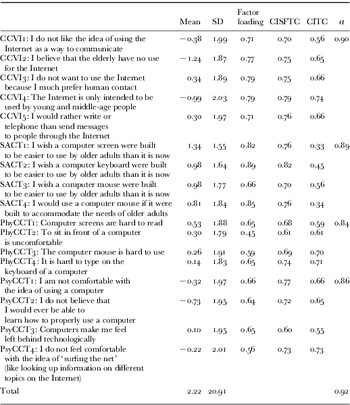
This tool originally had 22 items, but the results of the item-total correlations for each of the OACTAS statements revealed that five were weakly inter-correlated (having an item-total correlation lower than 0.30; Tabachnick and Fidell Reference Tabachnick and Fidell2007). Removing them increased the validity of the scale because, on review, such items had various unwanted attributes, such as being redundant and/or not clearly related to attitudes toward computers. For instance, ‘I cannot afford buying a computer’ and ‘I would buy a computer if I had the money to do so’ were not specifically related to computer attitudes and were redundant. Furthermore, agreement with the assertion ‘computers are a necessity in this day and age’ does not necessarily mean that respondents have positive computer attitudes. Another problem was that two items were ‘double-barrelled’, i.e. each of them consisted of two questions or assertions, and it was unclear which part of the statement respondents had answered. They are: ‘Once I learn how to use the Internet, I will do so regularly’ and ‘I am curious about the Internet and want to learn how to use it’. Thus, the above five items were removed from all subsequent data analyses. The scores on the remaining 17 items were aggregated to give a total OACTAS score. After the five items were omitted, we calculated the Cronbach's α value for the revised scale, which was very strong (r=0.92, reported in Table 3 as total Cronbach's α reliability).
OACTAS factor analysis and factors' reliability

Notes: CISFC: corrected item sub-factor total correlation. CITC: corrected item-total correlation. SD: standard deviation. CCVI: comfort communicating via Internet. SACT: satisfaction with available computer technology. PhyCCT: physical comfort using computer technology. PsyCCT: psychological comfort using computer technology. The sample size is 96.
Factor analysis of the OACTAS
As a uni-dimensional instrument, the OACTAS demonstrated high internal consistency; nevertheless, to identify the dimensions underlying its structure, we conducted an exploratory factor analysis. This analysis was not confirmatory because no specific hypotheses were formulated, in order to allow for the emergence of relevant dimensions of older adults' computer attitudes from the present data. To investigate the structure of the OACTAS, we used principal-axis factor analysis with direct Oblimin and Kaiser normalisation. The respondents' answers were grouped into four oblique factors/dimensions/sub-scales and, because the items were worded to reflect negative perceptions of the computer and Internet, we interpreted each factor as the reverse of its content (i.e. answers of a subject low on discomfort using computers were reconceptualised as high on comfort). The factors are: Comfort Communicating via Internet (CCVI), Satisfaction with Available Computer Technology (SACT), Physical Comfort with Computer Technology (PhyCCT), and Psychological Comfort with Computer Technology (PsyCCT). The four extracted factors accounted for an unusually high share of the score variance (64.9%). Table 3 displays the findings of the factor analysis.
As shown in Table 3, the four identified factors, although related, reflect unique dimensions of older adults' attitudes toward computer and Internet use. The means and standard deviations (SD) obtained, in addition to functioning as descriptive information, reveal the difficulty of each item (specifically, the higher the mean, the easier it was to respond to the item as written) and how homogenous the responses were (i.e. lower SD scores indicate that respondents answered the item in a similar manner). The factor loadings, the corrected item sub-factor total correlations (CISFC), and the corrected item-total correlations (CITC) displayed in the table for each item indicate the degree to which an item relates to its own sub-factor and to the total test score. The factor loadings relate each item to an optimised combination of the items within a sub-factor, with each item weighted by utilising factor analysis (Tabachnick and Fidell Reference Tabachnick and Fidell2007). The CISFC correlates each item to a simple summation of all the items within its own sub-factor, and the CITC relates each item to a summation of all 17 items comprising the scale.
Additionally, as illustrated in Table 3, the factor loading for each statement indicates that the items within each of the four sub-factors were highly related (indicated by a loading value that approaches 1.0). However, the sub-factor items were unrelated to other sub-factors because, with only one exception, the loadings on such sub-factors were negligible and, thus, were excluded from Table 3. The exception occurred for one item, PsyCCT4, ‘I do not feel comfortable with the idea of “surfing” the net (i.e. searching for information on different topics on the Internet)’, which also relates to the CCVI factor with a loading of 0.45. As illustrated in Table 3, the α reliability coefficients (i.e. the degree to which items within a sub-factor relate to each other and share the same valence) of the four factors were all above 0.80, showing noteworthy reliability according to Tabachnick and Fidell's 2007 guidelines.
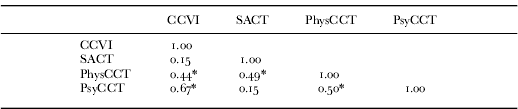
The CCVI factor quantifies older adults' level of comfort in using the Internet to communicate with others; the obliquely rotated factor explained 34% of the score variance.Footnote 1 A sample items is ‘The Internet is only intended to be used by young and middle-age people’. Items on the PhyCCT dimension quantify the ease with which respondents can physically utilise computer equipment; this rotated factor explained 27 per cent of the variability in scores. An example PhyCCT item is ‘It is hard to type on the keyboard of a computer’. The PsyCCT factor covers respondents' feelings toward computers or the possibility of using computers, including items like ‘I am not comfortable with the idea of using a computer’, and explained 30 per cent of the variance after rotation. The SACT dimension quantifies the degree to which participants desire modifications of available computer equipment before they exhibit satisfaction with available hardware; it explained 22 per cent of the variance after rotation. Low scores on SACT items indicate satisfaction with current computer hardware, such as mouse, keyboard, and monitor, including statements like ‘I wish a computer mouse were built to be easier to use by older adults than it is now’. As seen in Table 4, the OACTAS factors represent related constructs underlying older adults' attitudes towards computer technology, with the largest relationship occurring between the CCVI and PsyCCT factors. Other pairs of dimensions illustrate factorial independence; for example, CCVI and SACT.
Correlations among OACTAS factors
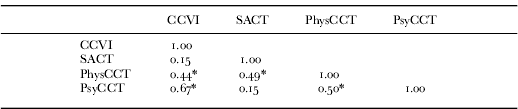
Notes: CCVI: comfort communicating via Internet; SACT: satisfaction with available computer technology; PhyCCT: physical comfort using computer technology; PsyCCT: psychological comfort using computer technology. The sample size is 96.
Significance level: *correlation is significant at α=0.001.
Efficacy test of the computer-training programme
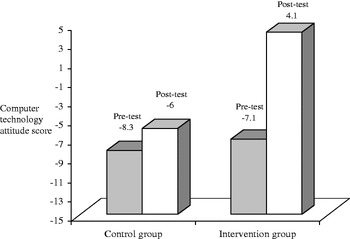
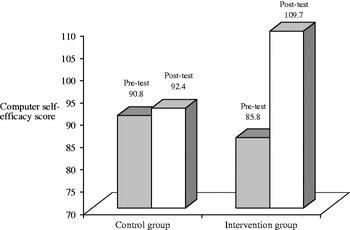
First, we wished to ascertain whether a significant relationship existed between post-test computer self-efficacy and post-test computer attitudes. Indeed, as expected, there was a substantial positive relationship between the total scores for the Computer User Self-Efficacy Scale (Cassidy and Eachus Reference Cassidy and Eachus2002) and the OACTAS (r=0.73).Footnote 2 Roy-Bargman stepdown analyses were therefore conducted. In the first ANCOVA, we used the variable ‘computer technology attitudes’ as the dependent variable. There were three covariates, i.e. prior computer experience, pre-test computer technology attitudes, and pre-test computer self-efficacy. After adjusting for these covariates, a significant main effect for computer technology attitudes was found, F (1,91)=27.82, p<0.001, η2=0.23.Footnote 3 The second ANCOVA (with one more covariate, for methodological reasons discussed earlier) showed a significant effect for computer self-efficacy, F (1,90)=12.87, p=0.001, η2=0.13.Footnote 4 The adjusted means of the two groups for the two dependent variables are shown in Figures 1 and 2.
Computer technology attitudes: mean scores for both groups.

Computer self-efficacy: mean scores for both groups.

Discussion
In this randomised controlled study, as hypothesised, the revised version of the OACTAS (a new measure of older adults' computer technology attitudes) demonstrated strong psychometric properties. The OACTAS was reduced in size from 22 items to 17. This size reduction was welcome, as using short tools can reduce fatigue-related attrition. Some of the currently available measures of computer attitudes that were not designed for older adults contain over 30 items, which is likely to make assessment cumbersome. Data analyses on the 17 items revealed a high Cronbach's α, indicating strong reliability, and the four sub-factors accounted for a large amount of variance in OACTAS scores. Empirical support was found for a uni-dimensional as well as multi-factor solution for the revised measure. The latter solution is a reasonable outcome, as computer technology attitudes are likely to span multiple dimensions. Such findings are especially sound methodologically, considering that the Cronbach's α obtained for each of the four OACTAS factors is substantially higher than that achieved for many of the computer attitudes factors identified in prior research on ageing individuals in this area (i.e. Jay Reference Jay1989). This could be due, at least partially, to the fact that the OACTAS was developed exclusively for older adults. Its present validation on a multi-ethnic sample (representative on education) permits future administration to samples from diverse ethnic/racial backgrounds.
The results of the factor analysis reported in Table 3 illustrate at least four separate dimensions that comprise older adults' attitudes toward computer technology. Although related, these four sub-scales are separate elements that, together, quantify overall attitude toward this technology. Considering the scale as a whole, its items showed a very high internal consistency; this high degree of consistency extended to each of its four factors. CCVI (Comfort Communicating via Internet) and SACT (Satisfaction with Available Computer Technology) had the highest Cronbach's alpha coefficients and had items with the consistently highest factor loadings; these findings indicate a significant level of conceptualisation within each of these factors. Although PhyCCT (Physical Comfort using Computer Technology) had, relatively speaking, the lowest Cronbach's alpha and some of the lowest factor loadings across the scale, these values still fell within an acceptable range, which is indicative of a substantive and usable dimension. In addition to a high level of internal consistency, the OACTAS items showed a wide range of difficulty across the scale, from very easy items, i.e. statements on which most respondents agreed (e.g. ‘I wish a computer screen were built to be easier to use by older adults than it is now’) to more difficult items that prompted more disagreement (e.g. ‘I believe that the elderly have no use for the Internet’).
Table 4 shows a high level of association between some of the OACTAS factors; upon considering the nature of the attitudes in question, it is no surprise that these factors were inter-related. For instance, if older adults are psychologically uncomfortable with using computers in general (i.e. PsyCCT), this negative attitude is likely to affect how they view using the Internet as a communication device (i.e. CCVI). The fact that the dimensions of the OACTAS are not orthogonal indicates that older adults' attitudes concerning computer technology are not easily compartmentalised. Moreover, these attitudes are not just complex, but likely part of a feedback process in which attitudes in one dimension influence other dimensions, eventually affecting overall macro-attitudes towards computer technology in general. To provide an example of this feedback, experiencing psychological discomfort while using a computer to type an email may lead older adults to feel physically uncomfortable with computer technology. This, in turn, could make them feel uncomfortable with email communication. Moreover, because they are uncomfortable writing an email, they may assume that they would be just as uncomfortable using (for instance) a web browser to conduct an Internet search. Consequently, this may lower their satisfaction with computer technology.
The emergence of four dimensions means that if a desired goal of interest to researchers, policy makers, software designers or clinicians is to improve attitudes among older adults regarding computer technology and eventually increase their utilisation of computers and the Internet, then these four dimensions must be included and addressed together. However, if users of this new measure are interested in focusing on one or a few of these sub-scales, this would be methodologically appropriate (given that each has a high degree of internal consistency), with the understanding that, due to the correlated nature of all four sub-scales, using any single sub-scale will not afford comprehensive assessment of computer technology attitudes. Furthermore, given the high level of dependency between some of the factors (e.g. CCVI and PsyCCT), utilising any single factor by itself would disregard these relationships, especially if using the OACTAS dimensions to predict other variables (i.e. when testing regression models).
In addition to testing the new measure of computer technology attitudes, we tested our second hypothesis (i.e. that computer technology training would improve older adults' computer technology attitudes and self-efficacy) using Analysis of Covariance (ANCOVA) separately for each outcome. We adopted this two-step process because of the strong relationship between computer attitudes and computer self-efficacy. First, we tested intervention-related improvement of such attitudes while controlling for prior computer experience, pre-test computer technology attitudes, and pre-test computer self-efficacy. The results of the first ANCOVA indicated that, compared to the waitlist/control group, the experimental participants showed a significant improvement in their attitudes toward computer technology. Because attitudes towards computers and computer self-efficacy were highly related, when testing for intervention improvements in computer self-efficacy, we further controlled for post-test computer technology attitudes (in addition to the previous three covariates). Even after controlling for them, we found a significant effect on computer self-efficacy, indicating that the experimental group showed an improvement in self-efficacy relative to the control group.
Our intervention-related findings indicate that the enhancement of computer attitudes and self-efficacy in older age is feasible, which in turn suggests a strong potential for teaching computer technology to ageing individuals from various ethnic groups. Both computer self-efficacy and technology attitudes demonstrated being amenable to positive modification through one-on-one training. These positive findings confirm the results of the pilot study (Laganá Reference Laganá2008), and those on computer self-efficacy corroborate similar results obtained by Torkzadeh and Van Dyke (Reference Torkzadeh and Van Dyke2002) with a much younger sample, extending them to an ethnically diverse population of older adults. Those on computer technology attitudes parallel existing empirical evidence (e.g. Charness, Schumann and Boritz Reference Charness, Schumann and Boritz1992; Kelley et al. Reference Kelley, Morrell, Park and Mayhorn1999) that training can significantly improve older adults' computer attitudes. However, they contradict other prior findings on older adults (e.g. White et al. Reference White, McConnell, Clipp, Branch, Sloane, Pieper and Box2002).
In our intervention-related analyses, it was essential to control for several factors, including pre-test computer experience, computer technology attitudes, and computer self-efficacy. Indeed, these variables are particularly salient to computer technology use in later life, in light of recent qualitative research by Buse's (Reference Buse2010) on embodied dimensions of computer and Internet utilisation (with a Caucasian sample of community-dwelling retirees living in the United Kingdom). Most applicable to this discussion are Buse's findings that prior attitudes toward and experiences with computers are significant factors that shape attitudes toward computer use in later life, as the experience stemming from using computing technology (including a typewriter, not assessed herein) remains grounded in one's embodiment. Thus, had we not controlled for prior experiences and attitudes toward this technology, we would have confounded our results with technological body techniques (involving embodied knowledge grasped through action; Crossley Reference Crossley2007; Hayles Reference Hayles1999) possessed by respondents who had some prior computer and/or Internet experience. In the case of positive prior experiences, participants would likely have been more comfortable with this technology than individuals without such positive experiences, both physically and psychologically, and vice versa.
Because previously established computer technology-related attitudes, experiences, and physical comfort are critical factors to consider (Buse Reference Buse2010), special attention should be paid to offering older adults positive initial experiences with computer technology at a variety of levels, be they physical or psychological. Such experiences could significantly shape their future interactions with this technology. As emphasised earlier, using computers has become an important contributor to enhanced quality of life in recent years, yet it is possible (although beyond the scope of the present study) that a negative initial experience with computer technology could keep older adults from engaging in computer and Internet use. To avoid this occurrence, and in view of our promising training results on older adults without any substantial computer technology experience, professionals interested in encouraging older patients' use of the Internet for medical and/or socialisation purposes should consider referring them to high-quality, older adult-friendly, hands-on computer and Internet training.
Unfortunately, computer technology hierarchies between older and younger adults still exist, as young people are often viewed by older adults as being superior to them regarding computer technology skills (seeBuse Reference Buse2010; Jaeger Reference Jaeger and Jaeger2005; Richardson, Weaver and Zorn Reference Richardson, Weaver and Zorn2005). Such hierarchies are perpetuated by media stereotypes, which among other things often view adaptation to emerging demands (such as those of computerised technology) in older age as unobtainable and/or to be mocked. Ageism against older adults is perpetrated by individuals of all ages, including mental health professionals (Laganá and Shanks Reference Laganá and Shanks2002), who could be the ones administering computer technology training (as in the case of the present study). Sensitivity to these issues is certainly needed when attempting to impart competent computer technology training to older adults. The provision of this training should occur alongside sustained awareness of issues of ageism, to respect the realities of older adults' ageing bodies while promoting optimal learning experiences.
The limitations of this study include a modest sample size, which is nonetheless comparable or even larger than the samples recruited in many prior studies in this area (it was as large as White et al.'s Reference White, McConnell, Clipp, Branch, Sloane, Pieper and Box2002 final sample). Although the sample was ethnically diverse, all subjects resided in urban or suburban Los Angeles. Thus, the findings may not fully generalise to older adults living in rural or semi-rural locations or in other countries. Information on potentially relevant variables was not collected; for example, no data were available on participants' competency level using a typewriter (considered by older adults as a ‘stepping stone’ to using a computer; Buse Reference Buse2010), speed of information processing (critical when using technological devices in older age; Slegers, van Boxtel and Jolles Reference Slegers, van Boxtel and Jolles2009), or current (or prior) occupation and related computer use. However, we did assess prior computer use in general, and utilised this factor as a critical covariate. Given the modest sample size, we were unable to investigate score variations on the new measure between ethnic minority groups. Furthermore, both the item analysis and factor analysis were conducted on a relatively small sample (statistically speaking). In this regard, a minimum of ten participants per parameter, i.e. factor loading, is ideally recommended (Tabachnick and Fidell Reference Tabachnick and Fidell2007); thus, we would have needed 170 participants with 17 items. However, this minimum criterion could be lowered in the presence of evidence of a stable correlation matrix; this psychometric issue should be further investigated for the OACTAS. Moreover, even though this measure was found to be highly methodologically sound, ideally it should be validated against similar tools. Yet, this will be a challenging task, given that: (a) to our knowledge, the OACTAS is the first tool created specifically to assess older adults' computer technology attitudes, and (b) it is methodologically questionable to use for validation purposes measures created for and validated on much younger populations.
Other limitations of the present research include the fact that the OACTAS is by no means exhaustive in terms of the possible dimensions of computer technology attitudes in older age, as other researchers have identified additional dimensions/factors, e.g. difficulties related to use of websites (such as searching for and locating information of particular interest on a particular website; Czaja, Sharit and Nair Reference Czaja, Sharit and Nair2008) and specific problems experienced when using the mouse (Buse Reference Buse2010; Schlag Reference Schlag2007). It should also be noted that the clinical impact of our training programme is uncertain, as it was beyond the scope of this study to test potential physical and/or mental health benefits of the training offered. Future research in this area could test the impact of computer technology use on older adults' mental and physical health. Researchers should also collect larger samples of ageing individuals in order to further test the reliability and validity of the OACTAS on subjects from different age cohorts and ethnic backgrounds. It would be ideal to recruit future participants from different areas of the USA; gender differences could also be explored. In this regard, of particular interest would be research to corroborate the findings of Karavidas, Lim and Katsikas (Reference Karavidas, Lim and Katsikas2004) that, although older men and women use computer technology at a similar rate, older women browse the Web for health-related information more than men. If such results were to be replicated, efforts should be made to encourage especially older men (as well as older women) to use the Web for health-related purposes because, as previously mentioned, prior research indicates that older adults can reap many health-related benefits from using the Web. Thus, teaching them how to use computer technology should be considered a critical goal of research aimed at improving ageing individuals' quality of life.
Acknowledgements
This study was supported by NIMH grant 3 R24 MH 67851-03S1, as well as by NIH grants MBRS 1 SC3 GM 094075-01 and 2 T34 GM00835. All authors contributed to this manuscript's writing and approved its final version. Professor L. Laganá wrote the majority of the paper, devised the study and the OACTAS, formulated the research questions, and conducted some of the statistical analyses. Professor A. Ainsworth conducted the majority of the statistical analyses and wrote some portions of the manuscript. T. Oliver and M. Edwards were responsible for summarising some of the pertinent literature and assisted in the preparation of the paper.