INTRODUCTION
Metamorphism during many stages of Greece's geological history (Higgins and Higgins 1996) has produced a wide range of polychrome rocks which have been found desirable for building decoration or for manufactured objects, particularly in the Bronze Age and the Roman and Early Byzantine periods. While there are numerous studies of the extraction and use of these stones in antiquity,Footnote 1 there appears to have been relatively little research and publication on the rediscovery and exploitation of the quarries, and on the use of the material, in the nineteenth and twentieth centuries, though P. Rogers has recently published excellent summaries with particular reference to Westminster Cathedral in London (Rogers 2003, 43 sqq.; 2008, 16–19). This is in part due to the proper concern of archaeologists at the damage to precious evidence of ancient exploitation which modern re-exploitation has involved, thus causing an understandable reluctance to study it. At the same time the situation also reflects the relative infancy of Greek industrial archaeology. Nineteenth- and twentieth-century quarry exploitation is, however, becoming part of the history of modern Greek industry and of the heritage of the Greek state. While preservation of the evidence of antiquity must surely remain paramount, a review of more recent exploitation, after a gap of some 1400 years, may be merited, not least because, in the case of the marble studied here, original written records are exiguous and original oral information is now almost (but not quite) unavailable.
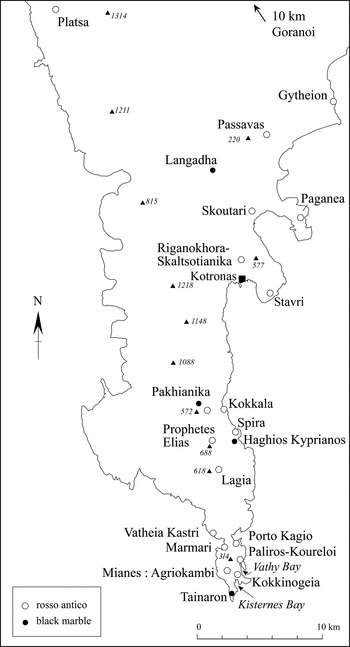
The present study is concerned with the true marble (crystallised calcium carbonate) called rosso antico by the scalpellini of Rome (and subsequently), reflecting the fact that they did not know where it had come from. The name rosso antico is used here, though maroon marble of various shades from deep rose-pink to dark purplish maroon would be more accurate (and more cumbersome). It is found at a number of locations in the Mani peninsula (Moschou, Raftopoulou and Hatzitheodhorou 1998; Lazzarini 2007, 71–96 [with extensive bibliography of his own and others' previous publications on rosso antico]; Warren [forthcoming]) (Fig. 1). The present account attempts to unite distinct elements, the rediscovery of the quarries, their exploitation and export from them, and use of the rediscovered material, primarily in Britain.
Mani rosso antico and black marble deposits.

Rosso antico was one among several Greek coloured marbles widely used in commercial, ecclesiastical, private and public buildings throughout Britain in the nineteenth and earlier twentieth centuries, cipollino from Euboea and Skyros (mainly maroon-red and creamy-white marbles) and verde antico from Thessaly (Omorphokhori, north of Larisa) being the other main ones. Lapis lacedaemonius, the green porphyritic rock from the Psephi hill northwest of Stephania in Laconia, seems not (or very rarely) to have been extracted, the pieces used having been acquired from ancient buildings in Rome, as was imperial porphyry from Gebel Dokhan in Egypt. The beautiful maroon and grey-white fior di pesco or fior di persico (marmor chalcidicum) from near Chalcis seems also not to have been quarried at the time. Greek marbles, naturally including Pentelic, in fact came onto the scene in Britain rather late in the nineteenth century in comparison with prolific importation from Belgium, France, Italy, north Africa and Spain.Footnote 2 Extraction and export of the Greek materials was largely carried out by three British companies: Farmer and Brindley, the Anglo-Greek Marble Company – which rapidly became Marmor and, from 1912, Grecian Marbles (Marmor) – and the Verde Antico Marble Company. Farmer and Brindley and Marmor will feature much in this study; the most credit must be given to William Brindley (on whom see below), the rediscoverer of the ancient cipollino, verde antico and portasanta (Chios) quarries in Greece and the first to attempt (unsuccessfully) to exploit the imperial porphyry quarries.
The wider context of all this conspicuous polychrome lithic consumption and decorative brilliance was the accumulated wealth of Victorian and Edwardian Britain (Warren 2010). Some notable examples of buildings of this period with significant installations of European and north African (brèche sanguine) marbles studied by the present writer are, in chronological order of their date of construction or of the installation of marble within them (* for buildings which include rosso antico; see the main catalogue below): University Museum, Oxford (1855–60) with its remarkable series of columns of British and Irish limestone and marble; St Margaret, Bodelwyddan, Clwyd (1856–60); Albert Memorial Chapel*, Windsor Castle (not visited) (1863–73); All Saints, Babbacombe, Devon (not visited), with a comprehensive ‘collection’ of 50 Devon marbles (1865–74); Examination Schools*, Oxford University, Oxford (1876–82); National Gallery, London (1876, 1887 and later [marble doorframes and main staircase]); St Paul's Cathedral*, London (1876, 1888, 1890); Haghia Sophia Greek Orthodox Cathedral*, London (1877–82); Mount Stuart*, Isle of Bute (1880 and onwards); St Catherine, Hoarwithy*, Herefordshire (probably 1880–5); City Chambers, Glasgow (1883–8); Wisdom of God, Lower Kingswood, Surrey (1892, 1906 [marble floor], 1932 [baptistery]); Westminster Cathedral*, London, with over 120 different marbles (1896 and onwards to 1961); Hotel Russell, Russell Square, London (1898); Lloyd's Register, London, with superb brèche sanguine (1899–1901);Footnote 3 Victoria and Albert Museum, London (1899–1909); Surrey House*, Norwich (1902–4); Old Bailey courthouse, London (1902–7 [not visited]; see Rogers 2003, 8); Birmingham Oratory, Birmingham (1903–6); Central Reference Library, Bristol, with superb cipollino wall cladding (1906). It should be added that spectacular use of marble, in the broad or commercial sense of the term, occurs in Britain well before the explosion of display from the 1860s onwards. One need only recall the huge reredos of Derbyshire alabaster in the chapel at Chatsworth (1688–93) and the architecturally remarkable marble halls of Holkham, Norfolk (1757–9, Staffordshire alabaster) and Kedleston, Derbyshire (1758–63, Nottinghamshire alabaster). At Chatsworth the sixth Duke of Devonshire inherited in 1811. Over the following decades (he died in 1858) this passionate lover of marble (among many other art and horticultural interests) constructed very fine marble floors and introduced chimneypieces, table tops, pedestals, plinths and vessels in foreign marbles. In Scotland Sir Walter Scott was already using foreign marble in his house at Abbotsford, Melrose (1816–24).
We now turn to rosso antico itself.Footnote 4
REDISCOVERY
Christian Siegel
In 1850 King Otho, in a policy of promoting Greek industry and thus the Greek economy, appointed three persons to search for samples of marble for the Great Exhibition to be held in London in the following year (Grimm 1861, 132). The Peloponnese was allocated to Christian Siegel (1808–83), a Bavarian sculptor who had been appointed in 1847 to teach modelling and sculpture at the Athens School of Fine Arts and did so until 1859 (Bires 1956, 85, 110, 137, 493 [cv/biography], 547; Ανωτάτη Σχολή Καλών Τεχνών 1990, 156 [short biography]). Siegel, who had previously discovered and bought quarries on Tenos, quickly achieved his object, finding several quarries of rosso antico and other marbles in the Mani and sending samples to the King in the same year, 1850.
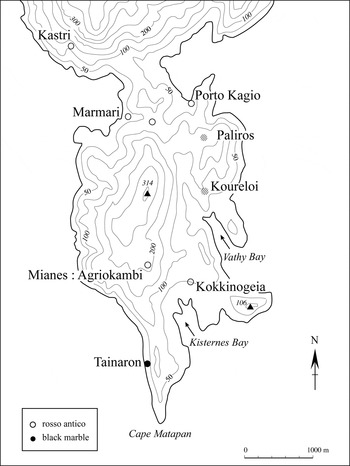
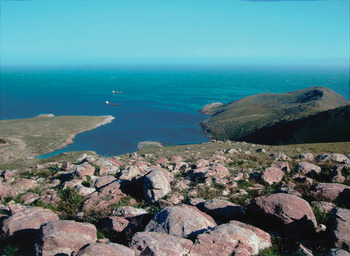
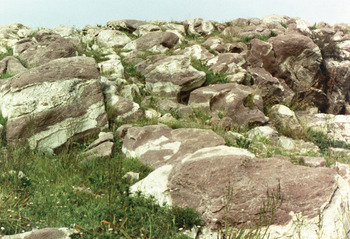
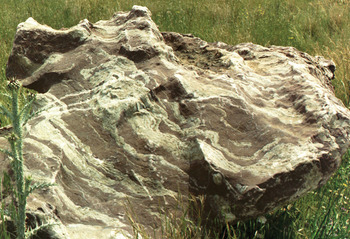
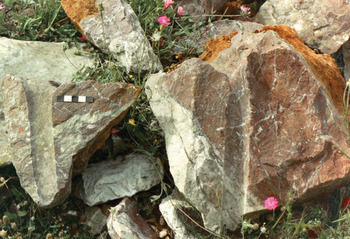
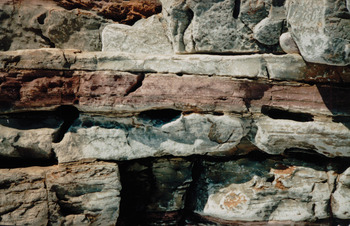
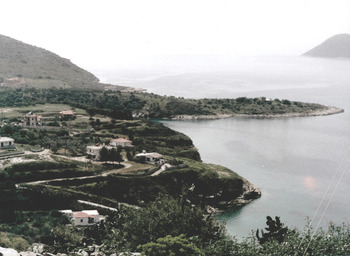
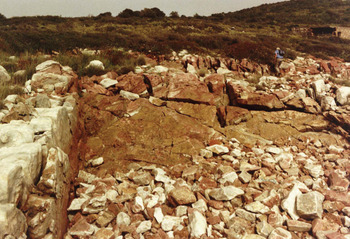
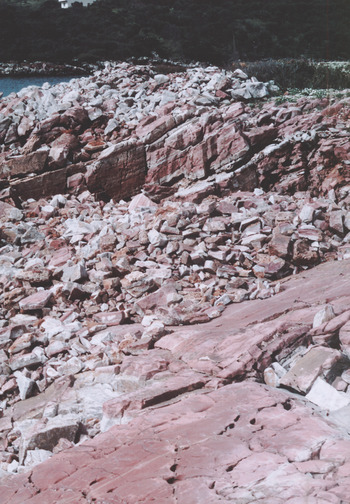
Although he did not himself publish accounts of his discoveries Siegel gave information and notes to three scholars. Since all were published in now relatively inaccessible periodicals a summary of points bearing on rosso antico is in order. First in order of publication was Karl Bursian in 1855 (Bursian 1853–5). His account of the Tainaron promontory contains so much detail, including journey times between places, that it is clear he himself examined the region after Siegel (Fig. 2). He does, however, quote Siegel verbatim. After describing the famous Tainaron black-marble quarry on the west side of Cape Matapan (Siegel apud Bursian 1853–5, 782–3; Chiotis 2001; Lazzarini 2007, 97–109, bigio antico) Siegel then describes two locations further north with broken columns and quarried blocks: the first for red, green and white (but predominantly red) veined marble, the second with the same colours but predominantly green. The latter quarry was a little inland from the bay called Vathy Avlaki (Βαθύ Αυλάκι), the former was to the southwest (Siegel apud Bursian 1853–5, 783; Cooper 1988, 68–9). There can be little if any doubt that the first location is the quarry area of Mianes: AgriokambiFootnote 5 (Bruno 2002; Lazzarini 2007, 111–17) (Figs. 3–4), the second that of Paliros-Koureloi just above the head of Vathy Avlaki (cipollino verde tenario, Lazzarini 2007, 111–17). The low, gently rising ground between the Mianes and Paliros hills, called Kokkinogeia, immediately north of Kisternes Bay (Haghioi Asomatoi, Temple of Poseidon), is covered with boulders of maroon and white veined marble (Fig. 5) and there is one quarried block lying east of the asphalt road. It is certain that Siegel will have seen this ground and it is probably what is meant by his remark that the coloured marbles of the hills here extended into the valleys (‘selbst in Thälern’). As well as abundant evidence of ancient exploitation the Mianes: Agriokambi quarry includes drill holes for dynamite blasting (Fig. 6), clear proof of modern working although there is no evidence that Siegel himself exploited this source.
Mani: Tainaron-Cape Matapan, rosso antico, cipollino verde tenario (Mianes: Agriokambi and Paliros-Koureloi) and black marble deposits.

Mianes: Agriokambi rosso antico deposits (foreground), Kisternes Bay (centre), Tainaron-Cape Matapan (right). View from northwest. Photo courtesy P. Rogers.

Mianes: Agriokambi rosso antico quarry.

Kokkinogeia rosso antico boulder.

Mianes: Agriokambi, rosso antico quarry blocks with modern drill holes (scale 5 cm).

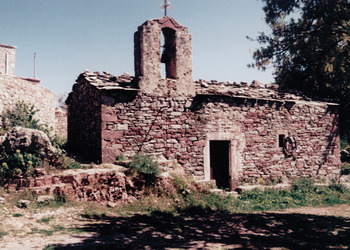
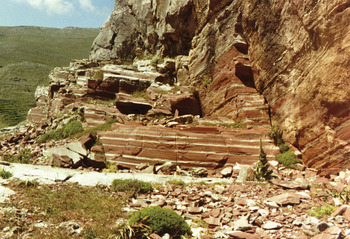
Bursian then describes his own route along the western side north of the Marmari-Porto Kagio isthmus. Close to sea level near the village of Kastraki (today Kastri) he found strong layers of dark red marble and more in the geologically very disturbed mountain area above, south of Vatheia (Warren [forthcoming]) (Figs. 1–2). At Kyparissos (he will actually have been at Alika just to the north) he turned inland on the mountain route across to the large village of Lagia (90 families in 1829). North of Lagia he found in the upland ruined settlement of Oros two small Byzantine columns and an architectural fragment in rosso antico. He then reached the main rosso antico quarries around Prophetes Elias above DimaristikaFootnote 6 (Fig. 7), acknowledging Siegel's rediscovery (‘Wiederentdeckung’) of them; he does not state that Siegel had purchased them, but that does not necessarily mean this had not happened. He briefly describes the appearance of the quarries, the colour differences in the material (brick red in lower layers, cherry red in the higher) and a trackway for the removal of stone, as well as an unfinished ancient column in a stream bed. He will be referring to one of several extraction and removal trackways carefully surveyed by Moschou, Raftopoulou and Hatzitheodhorou (1998, with fig. 2).Footnote 7 He also quotes a note from Siegel, who carefully describes the stratification (Siegel apud Bursian 1853–5, 790): a major basal layer of red marble, over which lay a 2–3 m grey-white layer, over which was a thinner layer of dark red and over this green marble similar to Karystian cipollino, but lacking the latter's mica schist. Siegel's description is fully confirmed by modern geological studies (Lazzarini 2007, 80–1 and fig. 37). Bursian concludes his discussion with convincing clarification of the references by Strabo, Pliny and Sextus Empiricus to Tainarian black and red and green marbles. From Prophetes Elias he descended to the Dimaristika villages and to Spira and Haghios Kyprianos. At the latter antique fragments were incorporated in buildings but no outcrops of marble were noted. Bursian then proceeded northwards along an atrocious track.
Church of Prophetes Elias, with quarry to left.

The second publication is G. Henzen's account in 1857, given very recently to him by Siegel in Rome (Henzen 1857). Henzen much admired the achievement of this ‘valente scultore e professore’ through ‘indefesse ed intrepide investigazioni’ among ‘paesi inospitali e mezzo barbari, rade volte visitati da viaggiatori’. Like Bursian he begins his report on marbles by describing the ancient black-marble quarries on the west side of Cape Matapan (see above and Henzen 1857, 155–6; cf. Moschou, Raftopoulou and Hatzitheodhorou 1998, 287). Again like Bursian he then describes the marble between Vathy Bay and Porto Kagio (Fig. 2), that is the Koureloi quarries (see above), now well published by Lazzarini (2007, 111–17), though Siegel must be recognised as the discoverer of this ‘bellissimo marmo simile al fior di persico [marmor chalcidicum from Euboea], assai ricercato anch’ esso dagli amatori di pietre antiche' (Henzen 1857, 154). He then describes the route northwards, Porto Kagio, Lagia, Spira and, rising up to 2000 feet above the latter, ‘i grandi strati di rosso antico’ and the ancient quarries ‘rinvenuto e riaperto’ and ‘adesso tutte possedute dal ch. Siegel’ (Henzen 1857, 156). His description of rosso in multiple variations and of pure white marble at a low level or sea level must be from Siegel.Footnote 8 He does not mention Bursian's route from Oros down to Dimaristika (and the quarries) and the steep descent to Spira and the east coast. In fact he next describes the Kastri deposits on the western coast (cf. above), an immense mass of jumbled marble rocks (their condition perhaps the result of the earthquake of ad 469) but including white marble of the finest quality. But even Siegel's penetration into their deep caves failed to reveal large undisturbed quantities. This evidence for Siegel's presence here will take its place within the route revealed by the third and final publication.
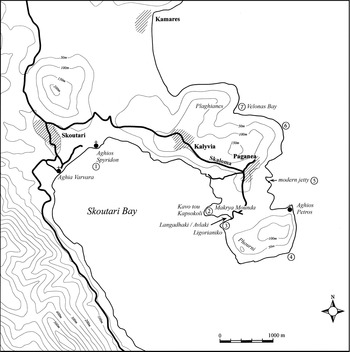
This is the account in Grimm (1861), cited above as giving the reason for Siegel's search for rosso antico. The account is also valuable since it describes Siegel's actual route, which was from north to south down the eastern side of Mani. He had travelled via Megalopolis, Sparta and Gytheion, where he saw rosso seashore pebbles (for installed rosso antico at Gytheion see Appendix B), a column in a vineyard and a mosaic which included red tesserae. Uncertain whether the stone had been imported by sea he decided to go by boat to Cape Matapan (Tainaron) (‘zu wasser nach Cap Matapan’) in order to explore the mountains. At the cape of Paganea (Figs. 1, 8) he found red mica schist. At this point his precise route becomes a little unclear. Soon (‘bald’) he found a layer of pure rosso three fingers thick. This could well have been coastal material on the Paganea peninsula, though ‘three fingers thick’ is an odd underestimate for deposits well over a metre thick. Here (where exactly?) he climbed the heights (‘Prof. Siegel bestieg hier die Höhe’, Grimm 1861, 133). All the mountain slopes lay before him and through his telescope he saw ‘at two hours’ distance' smooth slopes with waste heaps indicating quarries.Footnote 9
Skoutari-Paganea rosso antico coastal deposits; also subsurface at Kalyvia.

Notwithstanding his original plan to proceed by boat to Matapan Grimm clearly states that after sailing across the bay from Paganea to Skoutari he proceeded southwards from there by land (‘zu Lande’) to Dimaristika. That means he will have taken the quite long coastal route round the Kotronas peninsula (as had Bory de Saint-Vincent, in the reverse direction, 21 years earlier – see below) to Kotronas, Phlomokhori and then straight on southwards. It happens that a passage in Philippson can be taken to support Siegel's landward progress round the peninsula:
East of Kotronas on the hillside which ends in Cape Stavri, which appears to consist throughout of marble, lie some modern [in 1892] quarries, opened by Dr Siegel but soon abandoned, about 100 m above sea level. Here, lying over the mica schist, is a thick band of crystalline limestone; in a mass from about 40 m upwards from the boundary [of the crystalline limestone] is the same wine-red [marble], here and there threaded with white bands … and with green chlorite veins. Wholly similar red marble should come from the ancient quarries on Cape Pagania. This stone is the marble known as ‘Rosso Antico’ of the ancients, which we shall find again at Dimaristika. Whether that here at Kotronas was known to the ancients is doubtful, since no ancient quarries are known in the area. (Philippson 1892, 223, present writer's translation)
This passage demonstrates an otherwise unknown Siegel red marble quarry, material which Siegel will have first seen as he made his way round the peninsula. The modern road itself rounds the peninsula at 100 m above sea level (Fig. 1). The occurrence of red marble on the peninsula also fits well with the existence of a former quarry up in the hills north of Riganokhora, north of Kotronas and east of Cape Stavri, and with a remark to the writer (11 April 2007) by an inhabitant of Skaltsotianika (just west of Riganokhora) that the whole subsurface above Skaltsotianika is red marble.Footnote 10
Having arrived at Dimaristika Siegel climbed up to the quarries around Prophetes Elias (Fig. 1), the first scholar to examine them since antiquity. There was unfinished ‘sculpture’ and a rusted tool. The red marble was in bands up to 0.30 m thick. A block found on a waste heap was sent to the King with a written message informing him of the discovery of the quarries. From this point Siegel's exploration is continued by Henzen's accounts, with Siegel going on south to the Kisternes Bay and Cape Matapan area and its quarries. He then proceeded north on the western side to the Kastri area described above by Henzen. After Kastri he will have gone back northwards to Kyparissos and beyond.
Since then, that is between 1850 and the time of Grimm's publication, 1861, Grimm informs us that the quarries had become Siegel's personal possession (cf. Henzen 1857) and, it is important to note, were being worked (‘die Bewohner der Maina arbeiten für ihn’, Grimm 1861, 133). Grimm ends by stating that there were important consequences from Siegel's discovery and reopening of the quarries. Neither Venetians nor Turks had authority in the Mani, nor, until this point, even the present Kingdom of Greece. The Governor of Damaristika had prophesied that the first time Siegel penetrated into the hills he would be shot dead. The opposite had happened. Siegel had come to be held in the highest regard by the Maniotes; he even held a moral leadership (‘moralischen Oberhaupte’) over the people! We may take it Siegel had thus described the position to Grimm. However that may be, his discovery and operations did indeed begin to open up the remote southern end of the Mani. But in relation to rosso antico there is a second development to be examined.
Skoutari-Paganea (Fig. 8)
Among the Maniote deposits of rosso antico those of the Skoutari-Paganea peninsula are, in terms of the present discussion of rediscovery and use, of at least equal importance to those of the Dimaristika: Prophetes Elias area, if only because their coastal location made extraction and transportation extremely easy by comparison. There is a little evidence for exploitation in antiquity (Cooper 1988, 71; Moschou, Raftopoulou and Hatzitheodhorou 1998, 269 n. 11; Lazzarini 2007, 77; Warren [forthcoming]) (Fig. 9), but there has been major working in modern times, as will be examined below.Footnote 11 Primary credit for recognition of this material, in 1829 and thus 21 years earlier than Siegel's discoveries in the southern Mani, must be given to J.G.B.M. Bory de Saint-Vincent, leader of the brilliantly successful but much undernoticed work of the Section des Sciences Physiques of the Expédition Scientifique de Morée.Footnote 12 He reached Skoutari (population 600) on 29 June 1829, after travelling north from Lagia, ‘les deux Dymaristika’ (Dimaristika and Mesa Dimaristika, see above on Damaristika, but he makes no reference to rosso antico there), Pakhianika, and Kournos Monastery and round the promontory of Kotronas. His party pitched camp below the village by the beach and an abandoned Byzantine church (which must be Haghia Varvara, today restored) protected by a fine valonia oakFootnote 13 growing up through its roof (Bory de Saint-Vincent 1836, 443). After describing the village and its agricultural produce he continues:
C'est à la base de l'escarpement couronné par la village de Paléokalivia sur la langue de terre appellée cap Pagania, que, sur une indication donnée par Dzanétaki, nous allâmes visiter les carrières autrefois exploitées de ce Marbre qu'on nomme vulgairement Rouge antique; divers échantillons que nous en recueillîmes, étaient veinées de vert et passaient par toutes les nuances de coloration, de la teinte du sang à celle de la brique. (Bory de Saint-Vincent 1836, 444 and Expédition Scientifique Atlas 1835, pl. X fig. 1a, b, c)
His simple statement that they went to visit (on 30 June) the formerly exploited quarries of the marble commonly known as ‘Rouge antique’ (rosso antico) is exceptionally interesting and important. It may be the first announcement by a scientist of the rediscovery of an ancient Greek marble quarry (perhaps the Attic quarries had already been noticed) and is certainly the first for a rosso antico quarry. Bory de Saint-Vincent not only knew of the marble as such, but locates its source specifically on the Skoutari–Kalyvia–Paganea promontory, he having unknowingly passed by the quarries of Dimaristika: Prophetes Elias. It is just possible that his reference to ‘les carrières autrefois exploitées’ was an assumption, namely that since ancient quarries must have existed in order to explain the many known occurrences of rosso antico in objects and in architecture in Rome, it could be assumed that the deposits in question were the ones that had been quarried. But such an argument is unnecessary. Dzanetakis had indicated to him that they were quarries (see too Philippson above, ‘the ancient quarries on Cape Pagania’) and there are indeed traces of ancient workings (see above) among the modern ones. So the scholarly credit is to be given to Bory de Saint-Vincent.
Paganea: Makrya Mounda quarry with ancient wedge holes. Photo courtesy P. Rogers.

Indirect confirmation that this was an original identification is provided when we turn to the then just published and soon highly influential work of the Roman lawyer and marble collector Faustino Corsi. Bory de Saint-Vincent was, as noted, at Skoutari in June 1829; the report with his Relation was published in 1836. The first edition of Corsi's Della pietre antiche trattato had been published in 1828, the second in 1833 and the third, definitive edition would appear in 1845. How does Corsi open his account of rosso antico in 1828? ‘É veramente cosa straordinaria, che di un marmo tanto bello, tanto raro ed insieme tanto cognito, quale è il rosso antico, siasi ignorata la cava ed il nome col quale dagli antichi si riconosceva’. So, while the source would have remained unknown to Corsi in 1828 and 1833 this was not so by 1845 (his third edition), nine years after the French publication. Yet Corsi's text remained unchanged in the third edition. So Bory de Saint-Vincent's discovery passed into oblivion until mentioned by Cooper (1988, 71) and cited by Rogers (2003, 56; 2008, 36).Footnote 14
EXPLOITATION, EXPORT AND IMPORT
While we have noted the economic purpose of Siegel's mission and discoveries, with a shipload of white and coloured marble being sent to King Friedrich Wilhelm IV in Berlin to enable sculptors to appreciate the beauty and merit of the stone (Grimm 1861, 134), and the important statements by Grimm and later Philippson that Siegel bought and was operating the Dimaristika: Prophetes Elias and other quarries, we must nevertheless turn to England for information at the receiving end of the supply line.
Siegel's samples were to be sent for display at the Great Exhibition in London in 1851. Stephanos Xenos' book published in 1852 is a Greek account of the Exhibition and it naturally has a chapter on the Greek exhibit, long, wordy and with numerous excursions into mythology. A small section deals with marble samples. In translation:
If economy had been put to one side and, instead of small shavings (ῥινίσματα) of marbles with which materials our forefathers had modelled the beautiful world of mythology, large blocks of each marble had been sent they would perhaps have covered the transport costs, since European artists, who thirst for a little Greek marble (οἵτινες διψοῦν δι' ὀλίγον Ἑλληνικόν μάρμαρον), would not have let them be sent back. And if it was a matter of erecting a monument to Prince Albert or of the Exhibition what finer marble would they have wished to choose other than Parian or Pentelic, in order to say that this monument was formed (ἐπλάσθη) on the shoulder of the Parthenon or the Theseion? (Xenos 1852, 164)
The samples exhibited came from the quarries of Pendeli, Paros, Tenos, Sparta, Tainaron, Tripolis, Karystos, Skyros and others,Footnote 15 Xenos records. Here then is confirmation of arrival of rosso antico in 1851. Tainaron could well mean Siegel's Prophetes Elias quarries in southern Mani, as in Grimm's account, but the name might here have the sense of the Mani peninsula as a whole, i.e. it could include Skoutari-Paganea.
Three other statements throw more light. They were made or cited by J.P. Seddon, Secretary, at the annual meeting of the Royal Institute of British Architects (henceforward RIBA) on 1 November 1869, along with the exhibition of some specimens of rosso antico:
1. Already in 1851, the meeting was told, Lysandros Kaftantzoglou (Καυταντζόγλου), a Greek architect who was an Honorary and Corresponding Member of the RIBA,Footnote 16 had sent a notice and samples to the Exhibition by order of the Greek government (Seddon 1869–70, 7–8). His notice stated that rosso antico was used by the ancients, the largest surviving instance being the reuse to form the 14 stepsFootnote 17 in S. Prassede, Rome. It was thought until recently (i.e. until 1850) that the source was unknown. Given Kaftantzoglou's links to Siegel (see n. 16) it is likely that the samples were those actually collected by Siegel. One would expect the material to have been from Prophetes Elias (see above), but ‘It has however been ascertained to be from near the sea at Skutari’ (Seddon 1869–70, 8). Kaftantzoglou may have stated this from personal knowledge or from his links to Siegel, but it is also possible that he was aware of the discovery 21 years earlier (in 1829) by the French Expedition.
2. Seddon goes on to say that within the last three months (i.e. within August–October 1869) Kaftantzoglou had written to hope that this marble might be made great use of in architectural decoration. The opening of the quarry would be very easy and inexpensive, given the (seashore) location and facilities for water transport to London (Seddon 1869–70, 8). Some material may be presumed to have arrived (although from which specific quarry/quarries is not known), since, Seddon reported, Baron Triqueti had used rosso antico in the Albert Memorial Chapel at Windsor Castle and Lord Walsingham had it as decorative panels (i.e. pieces of some size) in his billiard room (see below) and was satisfied with its identity and beauty. While it is possible, though unlikely (given their apparently small size, ‘shavings’ – see above), that the Great Exhibition samples might have become the material used at Windsor this is extremely improbable for Walsingham's private house, Merton Hall, in Norfolk.
3. The third statement related to the specimens exhibited at the 1869 meeting by a Mme Melissa Demetrakarakos. It merits quotation:
The statement confirms that of Kaftantzoglou, but considerably more can be extracted from it. First, the contrasting of transportation ‘across mountains and ravines’ with the easy Skoutari location is a tacit indication that the first location is Siegel's Prophetes Elias quarries, of which indeed ‘mountains and ravines’ is an accurate description and is precisely where unremoved ancient blocks and column drums or cut-off bases can still be seen (as by the writer in April 2009). But, commercially unsurprising, no reference is made to Siegel's operations. Second, we learn that no quarrying of any significance had yet taken place at Skoutari. This would seem to imply that the material already in use in England in or before 1869 must have come from the Prophetes Elias or other quarries of Siegel.This marble is brought from a quarry in the Bay of Skutari … Long before it had acquired in Italy the name of Rosso Antico, it was known as ‘Red Laconian’ to the ancients [the evidence for this remark is not known to the present writer], whose excavations are proved by the large blocks cut by them and never removed, on account of the difficulty of transport across mountains and ravines; but the quarry whence these small specimens are extracted, is situated close to the sea, sloping down into the sheltered and tideless Bay of Skutari; with a village of the same name above. This quarry has not been opened for any excavations of importance, and there is as yet no machinery for lifting large blocks which could be cut out, or for shipping them. The marble becomes richer in colour the deeper it goes into the bed of the quarry, and is found in larger quantities. (Seddon 1869–70, 7)
The potential then is clear. What of actual use in Britain, which we have begun to touch on? This is demonstrated by the installed material forming the catalogue below, but first we must examine quarry ownership additional to and beyond Siegel. Primary written records appear to be non-existent at the Greek end, but for Dimaristika: Prophetes Elias and the Kotronas peninsula Siegel as owner and operator may be assumed to have exported whatever he and his workmen intermittently extracted, and indirect evidence has been cited above. Siegel died in 1883 (Moschou in Moschou, Raftopoulou and Hatzitheodhorou 1998, 272; see also above), aged 75, and his quarries in the Mani and on Tenos were bought by Carl Julius Alexander Kloebe, the German Consul on Syros (British Consular Report 1902, 451).Footnote 18
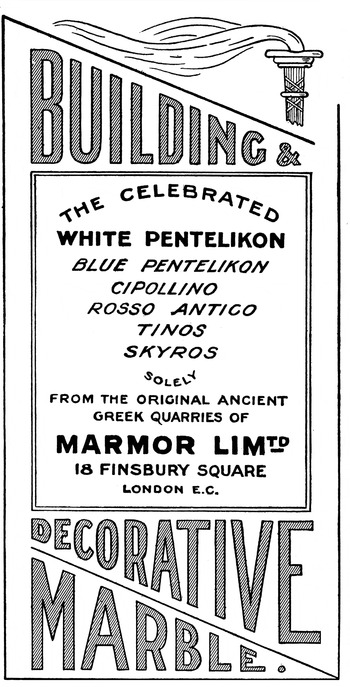
In 1897 the Anglo-Greek Marble Company was formed, its head office in London (British Consular Report 1902, 451; Renwick 1909, 87),Footnote 19 to quarry Pentelic and Skyros marble. Work commenced on Skyros in 1899; the company was renamed Marmor, and in 1912 it became Grecian Marbles (Marmor). From 1900 onwards it is listed under quarry proprietors (as first in 1899) and under stone and marble merchants (Kelly's Post Office London Directory [henceforward POLD] 1900, 2202). It is not listed under importers but the listing under the other two headings implies importation. The company was rapidly expanding its interests and by 1902 was opening quarries on Tenos (Panormos, green serpentine), Paros (Lakkoi, white), Naxos (presumably white), Chios (Latomi, for polychrome portasanta), Euboea (Karystos, for cipollino) and in Arcadia (black marble) to add to those of Athens and Skyros (Cordella 1902, 24;Footnote 20 British Consular Report 1902). At the same time it also purchased, from Kloebe or any successor owner,Footnote 21 the rosso antico quarries, ‘but at the present time [1902] these are not being worked, owing to the unfriendly attitude of the peasants’ (Cordella 1902, 28; British Consular Report 1902, 451). By 1906 this situation had partly improved and the quarries were working, but not regularly (Woodward 1906–7, 253; cf. Renwick 1909, 87 [Fig. 10]). Cordella adds further valuable information for rosso antico (1902, 28), but it is the punctuation only of the original German publication of his work (Cordella 1901, 358) which establishes that the several Mani quarries listed were opened or reopened and worked by Marmor. Here Cordella states that for red marble specifically (‘rosso antiko’) these quarries were at Prophetes Elias, Kastri (red-brown and white, of inferior quality to that of Prophetes Elias), Skoutari, Kypriano (the harbour village of Prophetes Elias, pale-red marble), Tainaron and Kisternae. He describes Tainaron and Kisternae as fine red marble, from which the red blocks of the Byron memorial in London were taken (for which see below – this was in 1880, long before Marmor was formed). The critical name in this list is Skoutari, as we shall shortly see.
Marmor Ltd (after Renwick 1909, Advertisements iii).

This brings us to the other importer of rosso antico into Britain, the prolifically active firm of Farmer and Brindley. William Farmer (1823–79), marble sculptor, stonemason and stone carver, employed William Brindley (1832–1919) in the last capacity in the mid-1850s. Brindley, stone carver, and later geologist, bibliophile, connoisseur and indefatigable explorer, rediscoverer, purchaser and operator of ancient marble quarries, joined Farmer in 1868 as a partner. The firm, Farmer and Brindley, was located at 67 (later 63) Westminster Bridge Road, London (Hardy 1993 and Rogers 2008, 17–19 for summary histories of the company; Hutton 1934 for an account of Brindley). In 1868 they are listed simply as sculptors (POLD 1868, 1807).Footnote 22 In 1881, that is within two years of Farmer's death and reflecting Brindley's major interest, the company is listed both under stone and marble masons and under merchants (POLD 1881, 1866), including as sole agents for cipollino (at this date marble of that name from Saillon, Switzerland, is meant). Marble importers are listed in the Directory as a separate category in 1883 but Farmer and Brindley are not among them until 1886. (Before 1883 at least some of the many marble merchants listed – in each year from 1863 through the 1880s never fewer than 80 – will have been importing, in Farmer and Brindley's case perhaps even before they list themselves as marble merchants in 1881.) Nevertheless, already in 1885 they have expanded their foreign range and are listed under stone and marble merchants, supplying ‘coloured marbles, antique and foreign, sole agents for rediscovered roman quarries, Mumidia [sic], Cipollino, Pavonazzetto’ (POLD 1885, 1926). Then, as noted, in 1886 in the Trades and Professional Section of the Directory they are listed both as marble importers and as marble merchants (POLD 1886, 1770, 1939), and a little more fully in the Commercial section as ‘sole agents for grand antique Cipollino Breche Africano Antique Pavonazzetto rediscovered roman quarries, Numidia, Greece and Spain’ (POLD 1886, 907). In 1887, in the listing under marble importers, as agents for the rediscovered quarries of Greece and Numidia, rosso antico joins the list for the first time. It will continue so until 1920 (Brindley died in 1919), except that from 1899 (to 1920) the firm is listed not simply as agents but as quarry proprietors of rosso antico (POLD 1887, 1795; since 1888 they had also been listed as quarry proprietors of Egyptian Porphyry and Verde Antico [POLD 1888, 1813]). In 1888 they additionally appear (for the first time) under chimney-piece manufacturers (POLD 1888, 1813), doubtless able to incorporate in the latter small pieces or offcuts of the imported Mediterranean coloured marbles.
The conclusions from the above are:
1. Bory de Saint-Vincent and the Expédition Scientifique had found the Skoutari-Paganea quarries in 1829, but even by 1869 no significant quarrying had taken place.
2. Siegel found the Dimaristika: Prophetes Elias rosso antico quarries (and saw others on Cape Matapan itself) in 1850 and then (or soon afterwards) purchased and operated them, as too at Cape Stavri on the Kotronas peninsula.
3. Specimens from Skoutari-Paganea and Dimaristika: Prophetes Elias were exhibited for the Greek government by Lysandros Kaftantzoglou at the Great Exhibition in 1851 and by Melissa Demetrakarakos at the Royal Institute of British Architects in 1869.
4. After Siegel's death in 1883 the quarries were bought by Kloebe.
5. In 1887 Farmer and Brindley became agents for the importing of rosso antico into Britain, though from what ownership or specific source in the Mani is not stated.
6. In 1899 Farmer and Brindley became quarry proprietors for rosso antico.
7. Within 1899–1902 Marmor purchased and intermittently operated the Prophetes Elias and several other Mani quarries (though they were not actually working in 1902 – see above).
8. Farmer and Brindley are still listed as rosso antico quarry proprietors in 1920 but had ceased even to be importers of marble by 1924; Marmor – as Grecian Marbles (Marmor) from 1912 – continued trading until 1940.
Where, then, were Farmer and Brindley quarry proprietors? In the light of the above discussion, even though there is no documentary evidence, the answer may be Skoutari-Paganea, of which the abundant, high-quality and easily accessible rosso antico had been known since 1829 and known in Britain since at least 1851. We have seen above, however, that Skoutari is listed by Cordella among the rosso antico quarries of Marmor in 1901 and we also note (see n. 23) a most interesting remark made to the writer in 2008 à propos Siegel at Paganea. Perhaps, then, both companies owned quarries on the peninsula; there are no indications that Farmer and Brindley owned anything at Prophetes Elias or on Cape Matapan, which virtually leaves only Skoutari-Paganea.
With the end of Farmer and Brindley's importation in 1920 or soon afterwards the later history of the exploitation of the Mani quarries may now be briefly considered. There appear to be no surviving written records, but a little can be said. First there is a valuable and informative statement by Cooper based on an interview in 1981:
Unlike many other marble sources, modern operations have not destroyed evidence of ancient activity [at Makrya Mounda Paganea quarries]. Here and there can be seen ancient toolwork done with punch or pick, sometimes in herringbone patterns [and wedge holes, Fig. 9]. The present and long-time owners of the land, the family Yiannopoulos, say that the quarry was opened by a Greek Etaireia after World War II and operations continued for about fifteen years, until 1964. Twenty workmen, using jack hammers and some dynamite, quarried the stones into blocks 2 m by 1 m by 0.60–0.80 m, or about the largest size possible considering the bedding of this rock. The blocks were shipped by way of Kaikia to Piraeus and hence to Egypt and England. Past generations of the family had seen signs of quarrying prior to the modern operations. (Cooper 1988, 71, reporting interview 1981)
Two points in this report invite comment. First, since the marks of ancient quarrying were seen only ‘here and there’ by Cooper (cf. Fig. 9), the ‘signs of quarrying prior to the modern operations’ may refer to the nineteenth- and early twentieth-century work, by Marmor or by Farmer and Brindley or whoever. Second, the material was quarried in blocks and sent off as such; it would thus have been cut into panels or slabs at marble works in England in the 1950s–60s. On this see below.
The writer is fortunately able to extend this oral reporting. My own informants on 14 April 2008 were the two former quarry owners themselves, Konstantinos Georgariou (aged 87 in 2008, in his house at Kalyvia) for Paganea and Kyriakos Giannopoulos (aged 84 in 2008, in his house at Makrya Mounda) for Makrya Mounda, and a former workman of both, Konstantinos Markakos of Kalyvia, together with an informant (name not recorded) in Haghios Kyprianos.Footnote 23 The following account brings their information together.
Dimaristika: Prophetes Elias
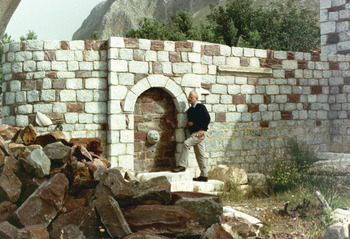
Kyriakos Giannopoulos' family came from Haghios Kyprianos. His grandfather and father were co-owners and operators at Prophetes Elias in the 1930s, his father based mainly at Makrya Mounda but also operating at the former location. Marmor (see above) ceased trading in 1940 but it is possible their specific interest in rosso antico may have declined or ended a little earlier. My informant in Haghios Kyprianos (where in 2008 six blocks still lay in the courtyard of the former manager's house) stated that the company (presumably Marmor) ended work there in 1935, so it is at least possible that Giannopoulos' grandfather bought quarries from the company, or that the co-ownership was briefly with the company. Worked stopped at Prophetes Elias (Fig. 11) because there was no money it, according to Giannopoulos. The precise date is not known but it was probably about 1940. That was the end of operations in the southern Mani, but rosso antico is still used in the peninsula together with grey marble (perhaps from Diros) to build striking fireplaces/mantelpieces (τζάκια) – the writer was shown several such – and in April 2008 a house was under construction in Alika using a substantial number of rosso antico blocks (Fig. 12). The specific sources for these contemporary constructions are not known to the writer, but it is very possible that some material is brought from the Prophetes Elias quarries, since the exposures are vastly more abundant than at other locations.
Prophetes Elias – highest quarry (Moschou et al. 1998, fig. 2 Quarry B) with modern long vertical drill holes at centre and left on main face.

Alika. House under construction.

Makrya Mounda and Ligorianiko on Skoutari-Paganea Bay (Figs. 8, 13–15)
Mr Giannopoulos' grandfather bought land at Makrya Mounda in about 1935 (that is, around the same time that he became an owner at Prophetes Elias) but he (Mr Giannopoulos) did not know, or could not recall, whether the company from whom his grandfather purchased it had themselves quarried it; given the date, about 1935, the company cannot have been Farmer and Brindley, who had ceased trading in 1929. In any case, Giannopoulos stated that it was he himself who quarried and exploited ‘for about 15 years until 1964’ (confirming Cooper 1988, 71), that is from about 1949, when Mr Giannopoulos would have been 23. Cooper, however, states that the Giannopoulos family told him (in 1981) that the Makrya Mounda quarry was opened by a Greek company after World War II, which is difficult to reconcile with Giannopoulos' statement to the writer that he himself quarried and exported, unless, that is, the company was Giannopoulos' own or he had some close involvement with it. Konstantinos Markakos, however, gave information to the writer which confirms the 1981 Giannopoulos family statement to Cooper. He said that before the present Mr Giannopoulos the quarry was owned by a company whose foreman continued on with Giannopoulos, but after a gap between the company's operations and those of Giannopoulos. We must take it, therefore, that this company (which must be Cooper's ‘Greek Etaireia’) began about 1949 and that at some point Giannopoulos himself took over, to finish in 1964.
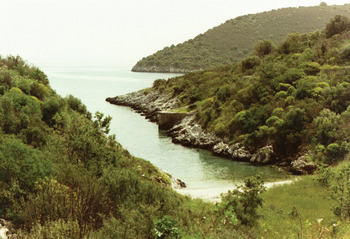
Paganea: Makrya Mounda promontory (Giannopoulos tower house on it towards right end). View from north.

Paganea: Ligorianiko modern quarry. View from west.

Paganea: Ligorianiko modern quarry and waste heap; Langadhaki inlet (top left); Giannopoulos house on Makrya Mounda (top edge). View from south.

The southern side of the Makrya Mounda promontory is bounded by the little inlet called Langadhaki (formerly Ispaniko Avlaki) (Fig. 8). The southern side of the inlet is the north side of the next promontory, Ligorianiko. This again has excellent rosso antico at shore level, pinker in colour than that of Makrya Mounda or other locations further round the Bay of Skoutari (Figs. 14–15). The present owner of the 2.3 ha (23 stremmata) area, Kyriakos Spyridakos, informed the writer that quarrying (του Γιαννούζου το νταμάρι) here ended about 30 years ago, i.e. in the late 1970s. Unless this is a very general estimate it would mean that extraction continued for some years after it ended at adjacent Makrya Mounda in 1964, which seems unlikely. At both locations the marble was quarried at the seashore and for some metres back from it, where the extraction sites and waste heaps are clearly apparent (Figs. 14–15). Cooper states that jack hammers and dynamite were used and blocks of specific sizes were formed (see above). I was told it was loaded into barrels on small boats and taken out to caiques which conveyed it to Peiraieus. From there it was exported as Cooper states.
Paganea
In 1961 Mr Georgariou bought for rosso antico quarrying 5.1 ha (51 stremmata) of land on the east coast of the peninsula at Paganea for 40,000 drachmas from Nikolaos Karakos, who did not have the land as a quarry (Fig. 8). He (Georgariou) sold the land c.1978–80 for building plots (οικόπεδα), not for further quarrying purposes. So quarrying at Paganea ended then or earlier (K. Markakos said quarrying on the peninsula – at a number of locations – ended in the late 1960s, since the mosaiko flooring for which the material was used was [alas] being replaced by tiles [πλάκες]). It was Georgariou who built the loading jetty, still standing, on a small inlet at Paganea (Fig. 16). Caiques took up to 100 tons (every 10 days according to G. Nikolarakos, an informant at Paganea) to Peiraieus. The material came from the land above the jetty, down a constructed track (today just visible but unreachable because of impenetrable undergrowth), at first by horse and cart, later by tractor. There were three or four men working with a pneumatic drill (a Swedish COBRA) and dynamite (cf. Cooper above at Makrya Mounda). At first the drill holes were 0.80 m in length/depth, later 1.5–2.5 m, using seven or eight sticks of dynamite. In this connexion we may note very long drill holes for dynamite, >1.0 m, on the main exposed face of the highest quarry at Prophetes Elias (Fig. 11), demonstrating that extraction here, at least in its final stages, is modern (i.e. by Marmor or Giannopoulos/Kapsokoles), not ancient. Likewise dynamite drill holes are clear at the Mianes: Agriokambi quarry (Fig. 6) alongside clear evidence of ancient (Roman) working (columns and blocks).
Paganea: Georgariou overgrown quarry (right centre) and loading jetty (centre). View from northwest.

NINETEENTH- AND TWENTIETH-CENTURY USE OF ROSSO ANTICO IN BRITAIN
Importation into Britain has been examined above. We therefore come now to actual uses. They are listed here, in approximate chronological order, and comprise installations seen by the writer (one or two not seen), together with reliably stated installations which no longer exist. The list is certain to be incomplete and the writer would be pleased to be informed of additions.Footnote 24 Small pieces set with other marbles in opus sectile/alexandrinum floors (e.g. the cathedrals of Truro [1886], Peterborough [1892] and Bristol [1895]) and in mosaic work surrounding quatrefoils of the reredos of Ely Cathedral, done in 1858 (Watson 1916, 165–6) are not included.Footnote 25 The date at the beginning of an entry is that of the use of rosso antico in a building or, if that cannot be pinned down, the overall date of construction of a building. Dates in brackets are those of study in corpore by the writer. The exhibition of specimens from Skoutari-Paganea in London in 1851 and 1869 (see above) was the starting point for the marble in Britain.
1. 1869. Albert Memorial Chapel, Windsor Castle (not visited). Rosso antico used with other coloured marbles in the decoration of the chapel (1863–73) by Baron Triqueti (cf. Pevsner 1966, 284, spelt Trinqueti). The rosso antico was in place by 1869, since it is referred to in that year (Seddon 1869–70, 8, RIBA sessional meeting of 1 November 1869).
2. 1869. Merton Hall, Norfolk. Together with the Albert Memorial Chapel it was noted at the RIBA sessional meeting that Lord Walsingham's billiard room had rosso antico in its decoration (Seddon 1869–70, 8 and see above). This room was part of Merton Hall (for which see Garnier 2004) and the publication date of the reference implies the existence of the room by that date.Footnote 26 It is very likely to have been added to the house in the 1860s (1861 is one possible date, since alterations to the house were made then); this was done for the recreation of the Prince of Wales.Footnote 27 Much of Merton Hall was destroyed by fire in 1956, but the billiard room itself had been demolished at some point between 1949 and 1955 because of dry rot. Its decoration, however, is still remembered by Lord Walsingham: ‘The walls were panelled in large marbles of different colours. I can't pretend to have remarked the rosso antico. I think I remember a green. They were about 4 feet wide and 5 or even 6 feet tall, and went all round the room, with their frames alone separating them. It was the bling of the day, and rather vulgar.’ The marble was also recalled by Lord Walsingham's sisters; it was of various colours including reddish, and was set as lozenges enclosed by rectangular frames.Footnote 28 The ‘reddish’ fits the RIBA reference above to rosso antico.
3. 1871. St Paul's Cathedral (London), St Dunstan's Chapel (28 September 2010). At the centre of the marble floor in front of the altar is a Greek cross in rosso antico, the total height and width each being 0.71 m. It seems to have been cut from a square slab, 0.63 m × 0.63 m, with a little of the cut-out material used as small rectangles to make the projecting extensions of the north–south arm and as small squares to make the projections on the east–west arm, these additions to form the Greek cross shape. The floor was laid in 1871.Footnote 29
4. About 1873–4. St Paul's Cathedral (London), west front landing (between the lower and upper flights of steps leading up to the cathedral) (September–December 2010). The nineteenth-century landing pavement of the west front of the cathedral included ‘red stone from Laconia, Greece, supposed to be the quarries of the Rosso Antico’ (Clinch 1906, 164–5). The date of this pavement was about 1873–4, since F.C Penrose's (see n. 29) coloured plans for it are of that date, the lozenges annotated (in his hand) ‘to be all reds and blacks’.Footnote 30 The present decorated landing pavement includes diamonds/lozenges of reddish-brown stone with some squiggly veining and occasional fossils, i.e. it is not rosso antico; it is in fact a replacement in 2003 of a previous pavement, which had itself replaced the nineteenth-century one.
5. 1876. Saint Paul's Cathedral (London), south portico (September–December 2010). The apsidal pavement of the south portico consists of five curved bands each made of alternating panels of grey-black marble-like limestone from Poolvash, Isle of Man and pinkish rosso antico, with grey blotches on 6 of the 48 slabs, the latter set into 23 panels (Fig. 17). The pavement measures 10.15 m east–west and 3.34 m north–south. The largest single slab of rosso antico (centre of band three) is 0.82–1.00 m × 0.67 m; the largest panel (three or four slabs) is 1.37 m maximum × 0.72 m. In total there must be at least 13 m2 of rosso antico. The Report of the Surveyor to the Fabric dated 24 June 1876 states that this marble, then being laid to replace an earlier pavement, was ‘from the rediscovered Rosso Antico quarries in the Morea district’. Given the pink colour it seems more likely to have come from Skoutari-Paganea than from Prophetes Elias.
6. 1876–82. Oxford University Examination Schools (7 March 2008). The superb marble floor of the front hall (entered from the High Street) and the ground-floor corridor on the west side include rosso antico panels (cf. Rogers 2008, 36).Footnote 31 The front hall has one lozenge/diamond (length approx. 0.85 m) and two circular panels (diameter approximately 0.58 m); the west corridor has in its central area three rectangular panels, pointed at each end (length approximately 0.90 m). The material throughout is pinkish maroon with an occasional grey-white mass. The building was erected in 1876–82. It would appear from a letter of the architect, (Sir) T.G. Jackson (see n. 31), that he chose the various coloured marbles used in the building. The sculptural carving was done by Farmer and Brindley (P. Howell in Sherwood and Pevsner 1974, 266 n.). It is therefore possible that they also installed the marble floor, but it is not known to the writer whether they supplied the marbles. Jackson himself bought marble in Rome and cut it for use in panels on his staircase in the Schools.
7. c.1880–85. St Catherine, Hoarwithy, Herefordshire (27 August 2009, 20 February 2010). The architect for the rebuilding of the 1843 church was J.P. Seddon (for whom see above), but the interior decoration was by G.E. Fox. Work was begun in 1870 but said to be not complete in 1885. Something of the rich marble decoration, astonishing for such a non-metropolitan, rural location, has long been known (Pevsner 1963, 192; Jenkins 2000, 269–70, but with errors in the marble identifications).Footnote 32 But what appears not to have been previously recorded is that the chancel and sanctuary contain a large amount of rosso antico:Footnote 33 the communion rail step (Fig. 18), the chancel step, the three steps up to the altar and the low, three-course wall on the north and south sides of the chancel. The plinth base blocks under the two west columns of the chancel and the block beside each of these basal blocks on their west side, as well as the frame of the altar platform (itself brèche sanguine) on its north, east and south sides are also rosso antico. Not counting the altar frame we find some 35 separate blocks used, with a total length of about 26.5 m; the blocks are 0.20–0.30 m wide and 0.125–0.16 m in height. The three longest single blocks are a remarkable 1.99 m, 1.96 m and 1.93 m. The marble is maroon, with occasional grey-white straight bands and patches. Some blocks are fairly ‘impure’ (and naturally many are somewhat scuffed from footwear). The blocks forming the surrounding frame of the altar podium are deeper purplish maroon, perhaps because unworn. Who supplied all this marble is unknown (at least to the writer); among the other ‘marbles’ in the church are the green porphyritic rock lapis lacedaemonius (Warren 1992; Lazzarini 2007, 45–69) and imperial porphyry, the latter including the five circular panels (diameter 0.306 m) in the floor in front of the altar. The porphyry quarries of Gebel Dokhan (Mons Porphyrites) in Egypt had been rediscovered in 1822–3 (Rogers 2008, 46) but even Brindley, despite having visited them and negotiated a contract to work them in 1887, found the difficulties of so doing too great. Hence the pieces used at Hoarwithy, as too the lapis lacedaemonius, will in all likelihood have been acquired in Rome, especially since they will have been cut slices of a column or columns. Such a purchase could of course have been made by Brindley, so that Farmer and Brindley would have been the supplier. Given the source evidence from St Paul's Cathedral (nos. 4 and 5) and the substantial quantity, the rosso antico is by contrast much more likely to have come fresh from the Mani. The Hoarwithy steps are paralleled only by those of Westminster Cathedral (no. 13) many years later and by Santa Prassede in Rome.
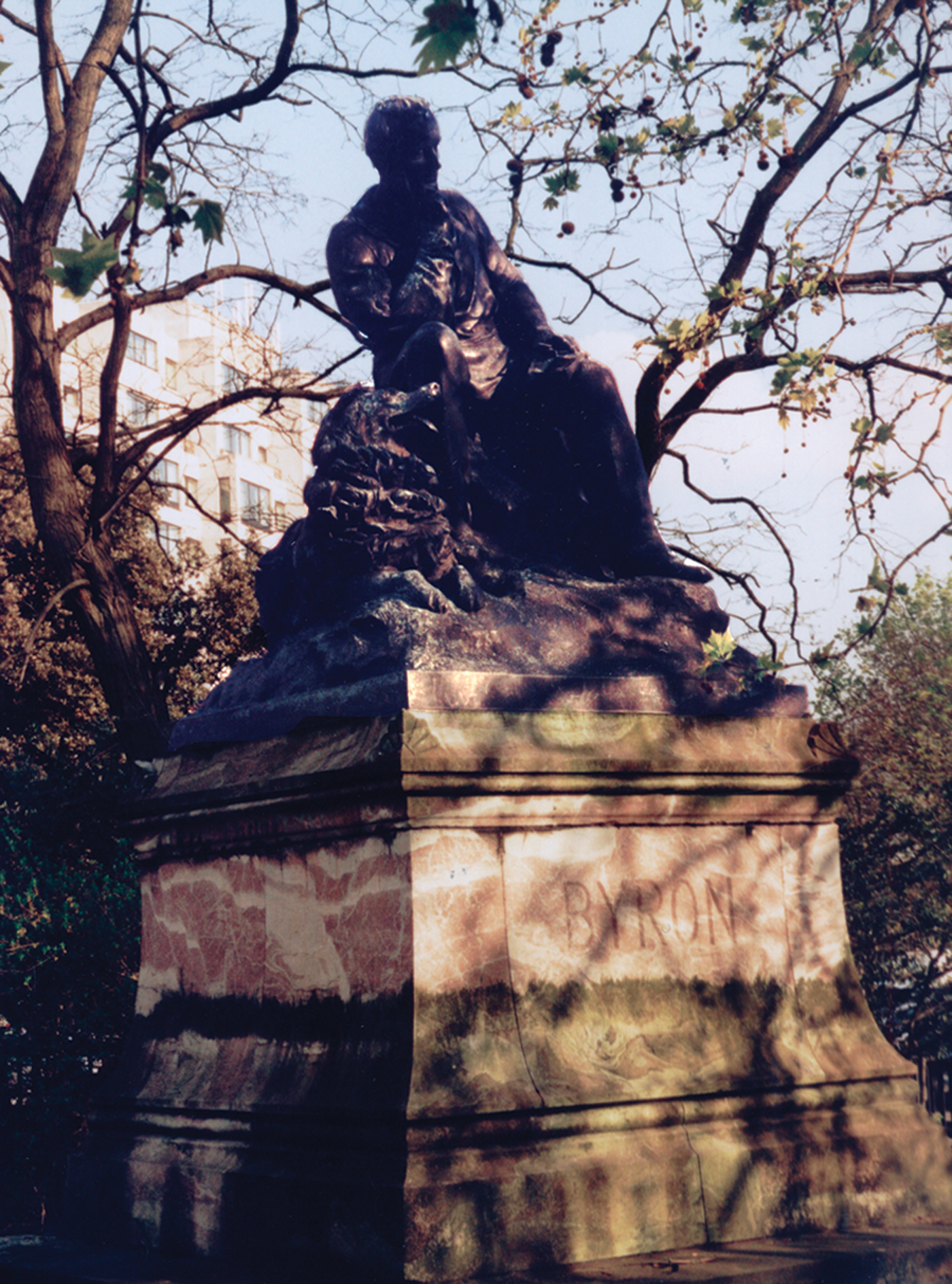
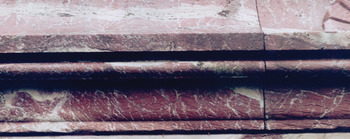
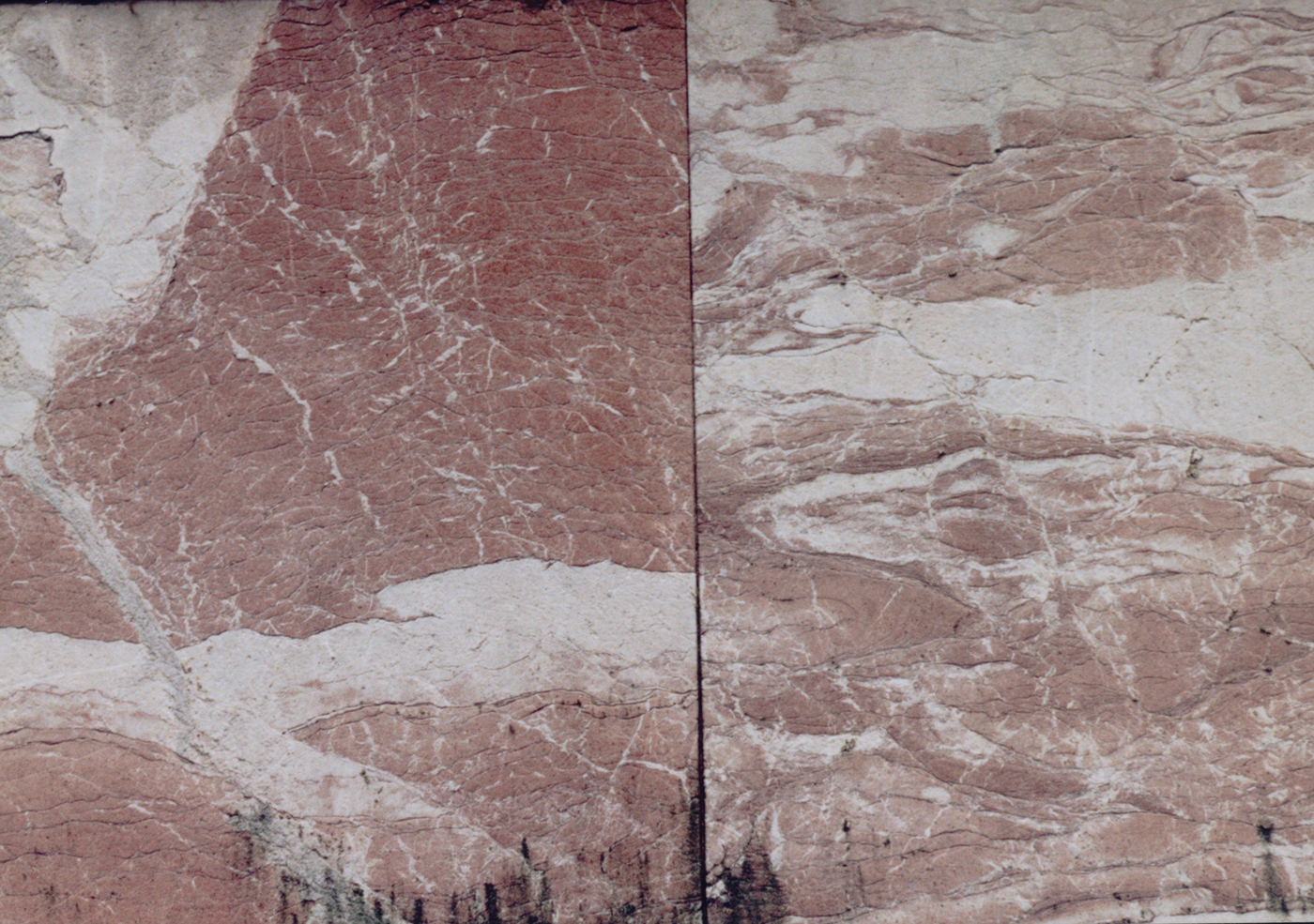
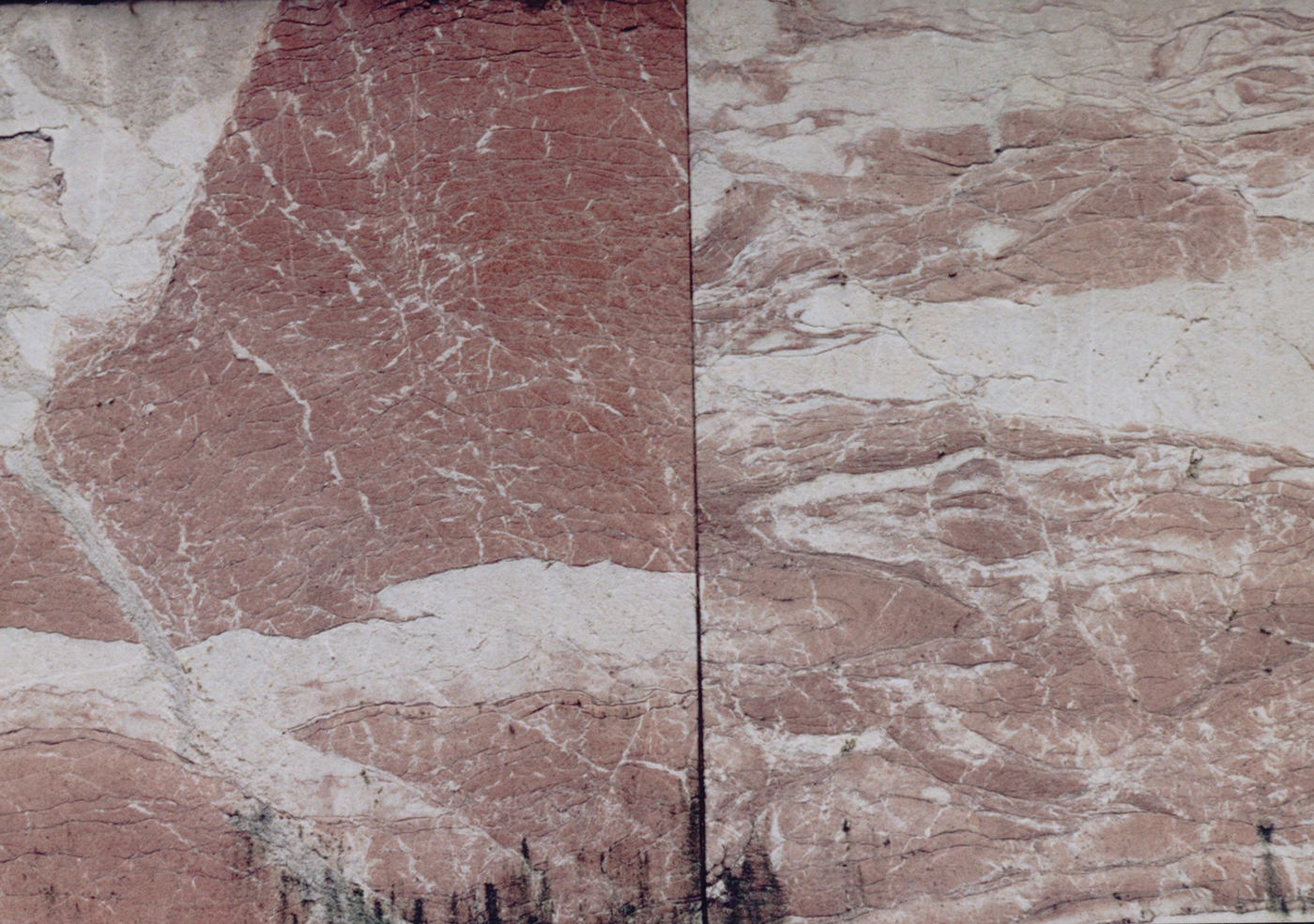
8. 1880–1. The Byron Memorial Statue, Hyde Park Corner (bottom of Park Lane), London (15 August 2007, 23 April 2008). The bronze statue of Lord Byron by R.C. Belt was unveiled on 24 May 1880 in Hamilton Gardens, London. That was shortly before the arrival later in 1880 of the very generous gift from the Greek government of marble for the pedestal. The marble having arrived, the large pedestal was constructed and the statue placed in its permanent, present position in 1881 in the centre of Park Lane, near Hyde Park CornerFootnote 34 (The Times 25, 26 and 27 May and 8 December 1880, anticipating finishing in February 1881)Footnote 35 (Fig. 19). The marble was announced in The Times as ‘a splendid specimen of Rosso-Antico’ ‘from the quarries at Cape Matapan’. Even closer light on the source is fortunately thrown by A. Cordella (1902, 28), ‘Worked deposits [of rosso antico] … are: … Taenaron and Kisternae, a handsome red marble, which furnished the red blocks for the memorial erected in England to Lord Byron’. The area of Tainaron and Kisternae (Fig. 3) was described above and the modern exploitation noted. In fact a very close match can be made between the marble of modern drilled faces at Mianes: Agriokambi and that of the Byron pedestal (Figs. 6, 20–21) (cf. Rogers 2008, 36).Footnote 36 The colour is reddish maroon with irregular white masses and veins. This structure is different from the rosso antico in the other buildings listed here. It is possible that the Mianes: Agriokambi quarry (or, less likely, the Kokkinogeia material lower down) was in modern times used only for the Byron Memorial. The quantity of marble is substantial. The height of the pedestal is 2.00 m, the length of each side at the base 2.52 m, that is approximately 10.00 m2 in total. The base section consists of four blocks, the main section, with the name BYRON on the west side, six blocks and the top, moulded section also six blocks. The longest block, in the base section, is 1.61 m, height 0.54 m. It is not known whether the 16 blocks form the whole pedestal or whether there is a core of other material.Footnote 37 Precisely who or what company quarried it for the Greek government is also not known, the work being before Farmer and Brindley and well before Marmor came on the scene.
9. 1881–2. Haghia Sophia (the Greek Orthodox Cathedral), Moscow Road, London (12 May 2010). The main marble decoration of the cathedral is from Tenos (green serpentine). Among the many other marbles (Constantinides 1933, 78–9, 87–8, 163–4 [detailed list])Footnote 38 there are nine, possibly thirteen blocks of rosso antico, plus a memorial tablet:
(a) The lowest plinth block for each of the two columns holding the candlesticks at the entrance to the sanctuary; each square plinth, 0.59 m × 0.59 m, height c.0.165 m, is in fact a composite of blocks (either two or four), the four sides being carved concave in plan with bevelled corners and with a moulded profile. The maroon marble includes some grey-white areas (Kakavas 2002, 67 pl. 49).
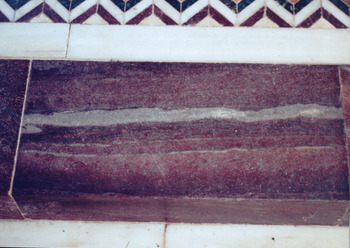
(b) The pulpit (Kakavas 2002, 38 pl. 33) is supported on four columns of Skyros breccia and a central octagonal pillar of broccatello di Spagna. Each of these five supports rests on a square plinth or base block of rosso antico, 0.28 m × 0.28 m, height 0.176 m. The marble is reddish maroon (‘pure’) with a central grey-white band which has thin purple bands within the grey-white. All five blocks look to have been cut from a single larger block. The writer's Skoutari-Paganea samples include this variety.
Altogether, therefore, the nine blocks (possibly thirteen if the candlestick column plinths are each four blocks rather than two) comprise quite a substantial amount of material. It was installed in 1881–2 by Farmer and Brindley, who were responsible for the marble decoration of the cathedral as a whole (The Builder 42 [1882] 386, 388 [drawing]; Building News 1882, 187 [candleholders]; Kakavas 2002, 37–9, 55 n. 40).
(c) Finally there is a memorial tablet (1915) for the Anglo-Greek Spartali brothers on the east wall.Footnote 39 The gold lettering is on a panel of very pure rosso antico, with a miniature column in pale verde antico on each side.
10. 1888. St Paul's Cathedral (London), reredos and sanctuary floor. The ornate and richly decorated marble reredos of the cathedral, by Bodley and Garner, was installed in 1888 (Garner 1886–90;Footnote 40The Builder 28 January 1888, 67; The Illustrated London News 92 [31 March 1888], 341–2; Hardy 1993, 14). The frieze of the entablature, inscribed in gilt bronze letters SIC DEUS DILEXIT MUNDUM, was of rosso antico (Garner 1886–90, 168–9). Its size is not stated, but since it was longer than the width of the altar it must have been substantial, perhaps three metres. The remainder of the reredos was executed in white Parian marble with bands and panels (see below) of rosso antico, verde di Prato and ‘Brescia’ (I presume breccia di Serravezza), and the pavement before the altar and reredos was in the same marbles (Garner 1886–90, 168–9). The work of the reredos was executed by Farmer and Brindley (Hardy 1993, 14). Furthermore a marble floor design of 1887 by Penrose (marked ‘Superseded’), the marbles on which (rosso antico prominent) corresponded exactly to those listed by Garner for the reredos and for the floor in front of it and the altar, was sent to Farmer and Brindley.Footnote 41
The east end of the cathedral, including the reredos and high altar, was damaged by a high-explosive incendiary bomb in the Blitz on 10 October 1940. The altar was virtually destroyed but, remarkably, the damage to the adjacent reredos seems to have been relatively slight (Grynberg 2009, 146), and it was patched up and remained in position. In 1947 it was decided by the Dean and Chapter to take it down; on the instructions of Dean Matthews in 1948 the undamaged parts were to be preserved. The reredos was actually taken down in 1952.Footnote 42 The band of panels which stood above the ground-floor level and below the level of the arcade of columns each consisted of an angel in relief sculpture, with a back panel of rosso antico. These panels were sold to the art and antiques dealer John Brandler (Brandler Gallery) in the early 1970s and eight of them (out of eleven) were sold at Bonham's New York Sale, The Important Sculptures from the Bodley Reredos of St Paul's Cathedral, London, on 29 November 2005.Footnote 43 A final mystery is that of the inscribed rosso antico frieze, which was not bought by Mr Brandler. Was it preserved by the cathedral, but is at present not located?
11. 1890. St Paul's Cathedral (London), St Dunstan's Chapel (in 1890 the Morning Prayer Chapel) (9 December 2009, 14 January and 28 September 2010). The rosso antico cross in the floor before the altar is 3 above. The reredos of the Sanctuary was installed in 1890.Footnote 44 It comprises three panels of valuable and beautiful marbles, including imperial porphyry and lapis lacedaemonius. The main rectangular and circular parts appear to be rosso antico (nine slabs in all), polished dark maroon with (seen close to) dense silver-grey marking characteristic of some of this marble.
12. 1895. Mount Stuart House, Isle of Bute (6 July 2010). After the great fire which gutted most of Mount Stuart on 3 December 1877 the third Marquess of Bute appointed Sir Robert Rowand Anderson architect for the new, very large house (Stamp 2001, 12–13). Construction began in 1880. The central element was the great marble hall, which appears in 1886 to have been recently finished (Stamp 2001, 15, quoting a visitor in 1886: ‘the magnificence of the great marble hall’). Many different marbles were noted by the present writer as used in the building, but from the point of view of this study what stands out is the presence of no fewer than 28 large panels of rosso antico (purplish maroon with occasional grey-white bands) which form part of the floor decoration of the hall. Notwithstanding the ‘recently finished’ state of the hall in 1886, the marble floor was not in fact laid until 1895.Footnote 45 The panels measure 0.375 m on their shorter side and 1.53–1.76 m on the longer side. The total amount of rosso antico is likely to be at least 17 m2. This and other marbles were supplied and worked by Farmer and Brindley (Stamp 2001, 15).
13. 1901–61. Westminster Cathedral (London) (7 March 2007 and many subsequent study visits). The magnificent decoration of J. F. Bentley's cathedral, using over 120 different marbles, has been excellently described by Patrick Rogers in two recent books (Rogers 2003; 2008). The marbles include much rosso antico. The following summary list of the main occurrences or locations, rosso antico being one among various marbles in each, is derived from Rogers 2008, together with the benefit of many study visits by the writer.
(a) 1901. Font, made in Rome and installed in 1902, the panels including some in deep, bright-red rosso antico, likely to be from reused Roman material.
(b) 1903. Narthex floor, including large circular panels, and walls. Farmer and Brindley.
(c) 1904–7. Chapel of the Blessed Sacrament, altar steps and floor. Farmer and Brindley.
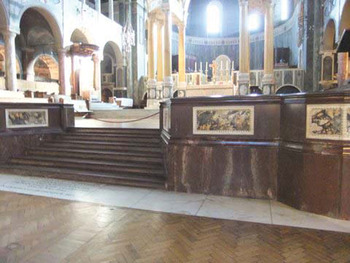
(d) 1905–6. Sanctuary screen (see below), steps and floor. Farmer and Brindley (Fig. 22).
(e) 1906. Chapel of the Holy Souls, floor. J. Whitehead and Sons.
(f) 1907–10. Chapel of St Thomas of Canterbury – Vaughan Chantry. Farmer and Brindley.
(g) 1908. Lady Chapel, except floor. Farmer and Brindley.
(h) 1910. Shrine of the Sacred Heart and St Michael, walls (not east wall). Farmer and Brindley.
(i) 1910, 1914. Chapel of St Joseph, east wall, altar. Farmer and Brindley.
(j) 1912. Baptistery floor, six roundels to the west of the font, diameter 0.58 m. Farmer and Brindley.
(k) 1913–15. Chapel of St Andrew and the Saints of Scotland (commissioned by the Fourth Marquess of Bute). Farmer and Brindley.
(l) 1921. Apse wall. Farmer and Brindley.
(m) 1923–8. Chapel of St Patrick and the Saints of Ireland, altar steps and floor (central roundel rosso antico). Farmer and Brindley.
(n) 1927. Chapel of the Holy Souls, predella panel. Farmer and Brindley.
(o) 1930–1 and 1947–9. Aisles and transept walls. Fenning and Co.
(p) 1934–5, 1939. Chapel of St Joseph, altar steps and floor. Fenning and Co.
(q) 1949. Chapel of St George and the English Martyrs, walls. J. Whitehead and Sons.
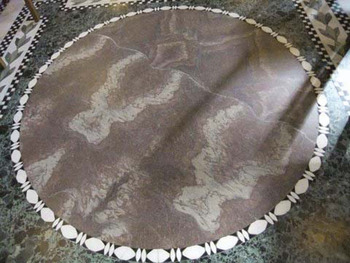
(r) 1956. Lady Chapel floor, large circular panels, diameter 1.60 m. Fenning and Co. (Fig. 23).
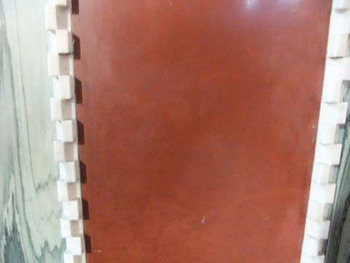
(s) 1959–61. Transept piers. J. Whitehead and Sons. (Fig. 24).
In summary we have nearly all the rosso antico marble being supplied and installed by Farmer and Brindley from 1903 to 1927, with the exception of one installation by J. Whitehead and Sons in 1906; after 1927, Farmer and Brindley ceasing trading in 1929, and Fenning and Co. took over in the 1930s; after World War II some work was done by them, some by J. Whitehead and Sons, notably the cladding of the transept piers in 1959–61, which was the final placement of rosso antico in the cathedral.
Apart from the font (see above, made in Rome) the material is broadly of two forms:
(a) maroon, impure in that there may be much irregular grey-white calcite veining or masses merging into the maroon, for example (i) the lower of the two courses of the sanctuary screen (perhaps, since the veining roughly repeats itself, a dozen panels cut from a single block) (Fig. 22), (ii) the great floor roundels of the Lady Chapel, slightly pinkish maroon with pinkish-white masses merging in (Fig. 23), (iii) the narthex floor roundels;
(b) red maroon, pure in that there are very few grey-white spots or patches present, though in close view networks of fine black veins are just visible (a feature of the structure of rosso antico), for example (i) the vertical panels of the north and south transept piers (Fig. 24), (ii) the upper of the two courses of the sanctuary screen, maroon (i.e. distinctly less reddish than the transept piers) with fine black veins and a little grey to dark-grey mottling (Fig. 22).
There does not appear to be any surviving record of the specific Mani quarry source(s) of the cathedral material, which is not surprising, since that detail would have been the concern only of the supplying companies. But a ‘marble’ visit to the Mani quarries by Monsignor Francis Bartlett from the cathedral a few years before 1965 (Rogers 2008, 20 and in litt. 9 October 2010) suggests that the ‘pure’ marble of the transept piers, installed by Whiteheads in 1959–61 (Rogers in litt. 9 October 2010), came from the Paganea Makrya Mounda Giannopoulos quarry (or adjacent Ligorianiko) or perhaps the Paganea quarries of Georgariou, all operating in the 1960s, while the Prophetes Elias quarries had not been worked since about 1940 (see above). Most of the ‘impure’ marble was installed by Farmer and Brindley. As we have seen, they were rosso antico quarry proprietors from 1899 to 1923, but not at Prophetes Elias. We have proposed above that they may therefore have owned Skoutari-Paganea quarries. That leaves the question of the rosso antico used by Fenning and Co. in the 1930s and for the great roundels of the Lady Chapel floor in 1956 (Rogers 2008, 19). Fennings took over from Farmer and Brindley in 1929 (Rogers 2008, 19), so they could have been using surviving Farmer and Brindley stock. In their work in the period 1947–9 they were using pre-War stock (Rogers 2008, 19), so this might have been the source of the ‘impure’ pinkish maroon of the 1956 Lady Chapel floor. But by 1956 the Paganea quarries were being exploited (see above), so they might have been acquiring new material from there, seemingly as Whiteheads in 1959–61. Finally there is the matter of Grecian Marbles (Marmor), which firm ceased trading in 1940; we have seen that they might have ended extraction of rosso antico a few years before that. They clearly were both quarry proprietors (Prophetes Elias) and importers of rosso antico (Fig. 10), but there does not appear to be any evidence that they were suppliers to the cathedral, whereas Farmer and Brindley clearly were. Patrick Rogers suggests that Grecian Marbles (Marmor) supplied marbles to the cathedral (Rogers 2008, 18–19) but agrees (personal information 14 November 2010) that there is no documentary evidence for this. Perhaps, therefore, Farmer and Brindley supplied (and installed) material both from their own quarries and from the imports of rosso antico (and other marbles, see above and Fig. 10) by Grecian Marbles (Marmor).
14. 1902–4. Surrey House, Norwich (19 December 2008, 29 September 2009). Anyone with an interest in marble entering Surrey House in Norwich, the head office of Aviva (formerly Norwich Union), for the first time will gasp with astonishment. The architectural and decorative marbles include 40 columns of finest Greek cipollino and verde antico, tall pilasters of the latter and strikingly brilliant wall panels of bright-red and cream wavy-banded Skyros marble in open-book (and double open-book) arrangement, together with polychrome alabaster, giallo di Siena columns and other marbles.Footnote 46 The collection, originally destined for Westminster Cathedral, came on the market at the end of 1901 and was bought from Farmer and Brindley by the Board of Directors on the proposal of the building's architect, George Skipper (1856–1948). The dramatic story is well told by Rogers (2003, 7–8). The material was installed in 1902–4. It includes a substantial amount of rosso antico: entrance foyer – wall panels, height 1.09 m, width 0.48 m; main hall – 24 panels between the arches at gallery level; ground floor – lozenges and triangles alternating with Kilkenny Black and veined Carrara; ground floor, side passages – floor, 16 roundels (one diameter 0.48 m) and rectangular slabs, 0.71 m × 0.185 m; central fountain – panels of octagonal base; grand staircase – walls upper section, panels (one length 1.02 m, height 0.272 m, thickness 0.02 m), walls bottom section (almost under staircase), panels (one length 1.37 m, height 0.355 m, thickness 0.008 m); gallery above main hall – walls, many panels (one 1.01 m × 0.255 m, another 0.94 m × 0.255 m). In general the material is not ‘pure’ maroon (see above), but includes irregular grey-white veining, comparable to much in Westminster Cathedral.
15. 1903–4.Footnote 47 Bristol Cathedral, pulpit (many study visits). The pulpit of beige Bath stone is supported on columns of rosso antico, reddish maroon with a very occasional black or grey-white spot and one larger grey-white patch; it is thus of the ‘pure’ variety discussed above (Fig. 25). The elements comprise (1) a thick central pillar, octagonal (height 0.565 m, width/diameter 0.725 m), each side (width 0.305 m) concave (i.e. with a vertical flute) and with a shield crest in relief on three of the sides; (2) seven slender external columns, height 0.705 m, width 0.127 m, each again octagonal and with a vertical flute. The central pillar and each column rest on a polygonal base with inset rosso antico decoration of quatrefoils in relief and incuse corner elements. No other marble is used, so the pulpit overall is bichrome.
St Paul's Cathedral, London. South portico pavement.

St Catherine, Hoarwithy. Rosso antico communion rail step.

Statue of Byron, Hyde Park Corner, London.
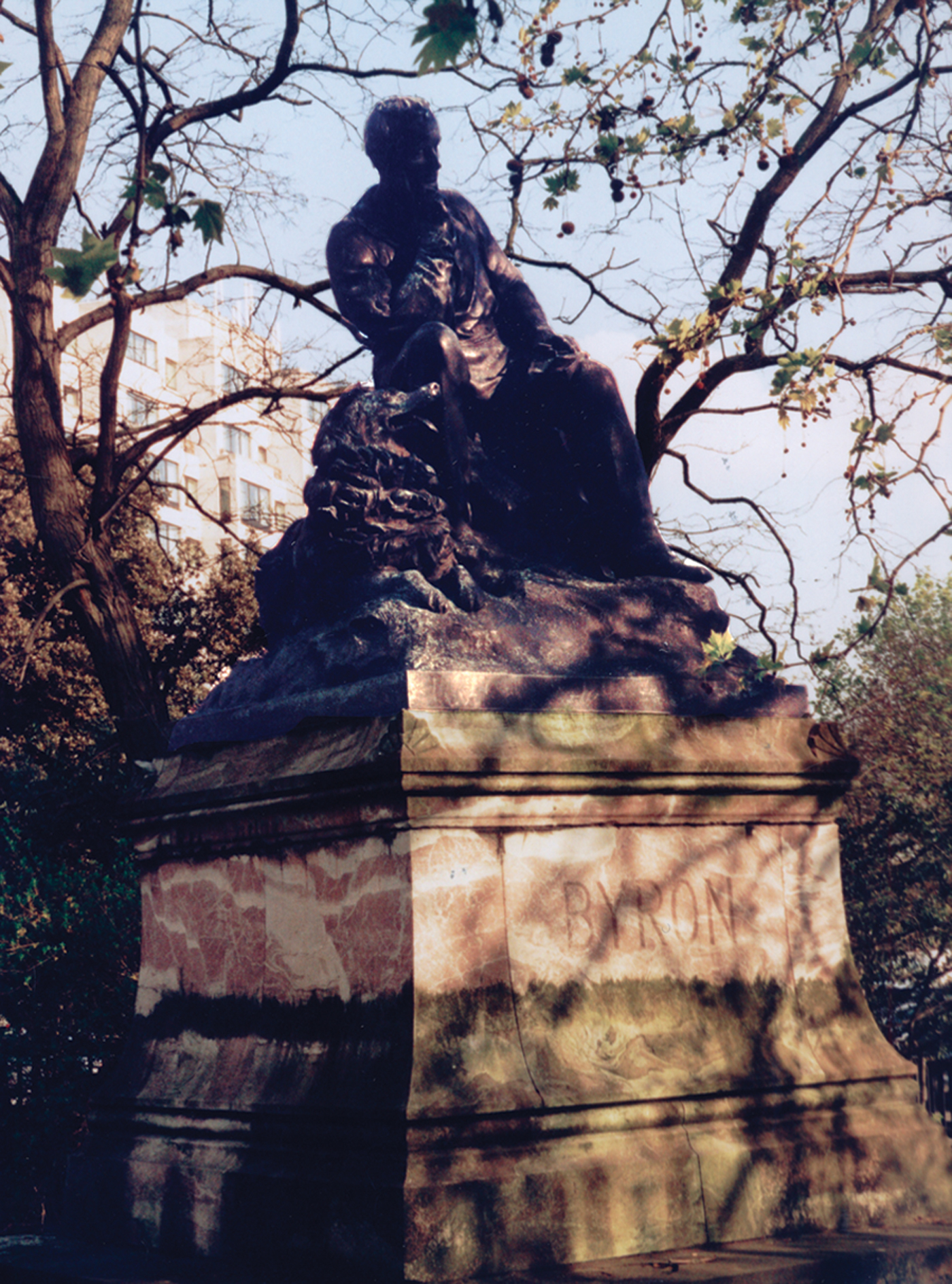
Statue of Byron, plinth upper moulding.

Statue of Byron, plinth blocks.
Westminster Cathedral, London. Sanctuary screen and steps.

Westminster Cathedral, London. Lady Chapel, circular panel of floor.

Westminster Cathedral, London. North transept pier with rosso antico cladding panel.

Bristol Cathedral. Pulpit.

CONCLUSIONS
The reconstructed sequence of rediscovery, exploitation, export from Greece and importation into Britain has been set out, followed by that of usage from the 1860s up to 1959–61. It remains only to observe how the former, essentially the story from Greece to Britain, is to be integrated with the latter, essentially the story in Britain. The absence of company records of Farmer and Brindley and of the Anglo-Greek Marble Company/Marmor/Grecian Marbles inevitably means a much less rich picture than one would like to paint.
While the Albert Memorial Chapel (1) at Windsor Castle may possibly represent privileged access to the material, the same is very unlikely to be true of Merton Hall (2) in rural Norfolk, with its panels of rosso antico in the billiard room. There are likely to have been other instances of use of the marble in the 1860s. Given the knowledge of the Maniote sources it is probable that the material at this time came fresh from there rather than as reuse from older buildings in Rome. That material was indeed arriving from the Mani in the 1870s is demonstrated by the important evidence of St Paul's Cathedral. While the St Dunstan's Chapel chancel floor cross of 1871 (3) could, as a single slab, have been bought up in Rome, this is less likely than that it came directly from Greece. The latter position is certain for the substantial amount which arrived in 1876 to form half of the floor pavement of the south portico of the cathedral (5), where it is still in place, and that of the landing on the west front (4), around 1873–4, but long since replaced. Soon afterwards, about 1880–5, there is, given its rural location far from London, the truly remarkable installation of so much rosso antico in the church of St Catherine, Hoarwithy, Herefordshire (7), along with other fine marbles. Again at this time rosso antico is used in the floor of the Examination Schools at Oxford (1876–82) (6). Farmer and Brindley were responsible for the sculptural decoration of the building, but it is not known whether the architect, T.G. Jackson, used them for the installation of the splendid marble floor.
The history of Farmer and Brindley's foreign expansion from 1881 onwards has been described above. It is therefore no coincidence that it is from 1881–2 that we can for the first time directly connect them with rosso antico, since they were responsible for the marble decoration (including rosso antico) of the Greek Orthodox Cathedral, Haghia Sophia, in London (9) at that date. But it is not until 1887 that they specifically advertise as agents for rosso antico. Brindley was in Greece in that year, beginning his search on the ground for the true verde antico quarries (Brindley 1894–5, 544; 1895–6, 267) and it was doubtless on that visit that he negotiated for supplies of rosso antico. Again unsurprisingly, therefore, we find the firm responsible for the St Paul's reredos and floor (10) in 1888 and Mount Stuart (12) in 1895. Presumably in the years before 1887 they had access to casual arrivals of the material in London, extracted and exported by Siegel and probably some other, unknown, Greek company working at Skoutari-Paganea, stimulated by the exhibition of Skoutari specimens at the Royal Institute of British Architects in 1869. We are, however, unable to document uses in particular buildings from specific quarries. We may nevertheless observe that the decidedly pinkish maroon colour of the St Paul's Cathedral south portico pavement does fit well with the colour of the eastern part of the Paganea quarries at Makrya Mounda and Ligorianiko. We would like to think this too might have been Farmer and Brindley work already in 1876. But while the colour of the portico pavement may suggest Paganea, Siegel's Prophetes Elias quarries, known to be in operation, certainly cannot be ruled out, whether or not Farmer and Brindley did the work. If they did, it is likely to have carried with it the Oxford Examination Schools (6) and Hoarwithy Church (7).
Another significant use took place at the start of the 1880s. This was the generous gift from the Greek government in 1880 of the large blocks for the pedestal of the statue of Byron near Hyde Park Corner (8). The interesting and unusual aspect of this material is the source, seemingly not the quarries of Prophetes Elias or Skoutari-Paganea, but those above Kisternes Bay on Cape Matapan. The material (Figs. 3–6) is in fact somewhat different in appearance from the ‘pure’ and ‘impure’ varieties of the two main sources. Whether Siegel had any involvement in the extraction and sending of the material is not known. He died soon afterwards in 1883.
The years 1902–15 mark the apogee of the use of rosso antico, as with so many other marbles, in buildings reflecting the wealth and conspicuous consumption of the Edwardian era. The substantial use of rosso antico by Farmer and Brindley in Westminster Cathedral (13), and Surrey House, Norwich (14), has been described. This fits accurately with the company having become quarry proprietors in 1899, perhaps, as suggested, at Skoutari-Paganea. The marble was also used in the cathedral by J. Whitehead and Sons in 1906. At this time too Marmor were advertising and importing rosso antico and other marbles ‘solely from the original ancient Greek quarries’ which they owned (Fig. 10).
In post-Edwardian Britain of the 1920s through to about 1940 our marble is still being installed, but on a much-reduced scale. Farmer and Brindley used it in Westminster Cathedral (13) up to 1928, but the company ceased trading in 1929. Fenning and Co. took over and used a little in the building in the 1930s, but whether from bought-up Farmer and Brindley stock or from newly imported material is not known. Grecian Marbles (Marmor) ceased trading in 1940, but it is likely that they sold the Prophetes Elias quarries into local ownership around 1935.
For the final period of use, 1947 to the 1960s, other than local employment in the Mani, which continues to the present day (Fig. 12), our two contemporary sources come into play. We have described, from the published record (Cooper 1988; interview 1981) and from interviews with the elderly former quarry owners and others in 2008, extraction from the Paganea sources up to 1964 (Makrya Mounda/Ligorianiko) and the later 1960s or 1970s (Georgariou quarries). We may add that at least two other Maniote rosso antico quarries have been exploited in modern times, though apparently not for several decades. One is at Platsa: Langadhakia high above the coast in the northwest area, where work stopped in the 1970s because of problems with splitting in the material, itself said to be of good quality.Footnote 48 The other quarry is high in the mountains above Riganokhora. A block lying at the roadside below Skaltsotianika, seen 11 April 2007, was said by a local informant to have been stolen from the quarry and left at that point. It measured 1.10 m × 1.74 m × 0.68 m and had (modern) vertical drill holes all round. My informant said work at the quarry stopped many years ago but that the whole subsurface area above Skaltsotianika, i.e. towards Riganokhora, consisted of red marble.Footnote 49
Meanwhile we have noted that in Britain Fenning and Co. were installing rosso antico in Westminster Cathedral in 1947–9 and 1956 and J. Whitehead and Sons were doing so in 1949 and 1959–61. In 1947–9 Fennings were using pre-War stock (perhaps even old Farmer and Brindley stock). Whiteheads may have done so too. But from about 1949 the Paganea quarries had started and were exporting via Peiraieus to England (Cooper 1988, 71; see above). The cathedral installations of 1956–61 must have been fresh material not only because of the contemporary quarrying at the Paganea sites but also because Monsignor Francis Bartlett went from the cathedral to visit the Mani quarries a few years before 1965 (Rogers 2008, 20; and in litt. 9 October 2010).
The active rosso antico story thus ends in Britain in 1961 and in the Mani in the late 1960s as far as export is concerned, but continues there in new acquisition for local buildings. When maroon marble panels were installed in Westminster Cathedral in 1995, in the nave piers at gallery level, the material was not Maniote but the closely similar rosso laguna from just south of Milas in western Turkey (Rogers 2008, 101, 105; Price 2007, 120 for the source). The Milas quarries are about 24 km (in direct line) east of those of ancient Iasos, the source of marmor iassense/cipollino rosso, itself very similar to rosso laguna. The parallel lives of these superb marbles in antiquity, Laconian and Anatolian, were thus renewed, Maniote and Turkish, in twentieth-century Britain.
APPENDIX A
The following figures, while cited from original works, are subject to the uncertainties stated or implied. In 1890, that is three years after Brindley began operating in Greece but well before the Anglo-Greek Marble Company/Marmor began, Greece exported worked marble to a value of 40,750 drachmas, unworked 212,030 drachmas (Bickford-Smith 1893, 51). In 1873 the exchange rate was £1 = dr. 28 (calculated from Sergeant 1878, 141); in the period 1896–1906 it was £1 = dr. 39 (calculated from Llewellyn Smith 2004, 265 n. 7). If then for 1890 one arbitrarily uses an intermediate rate of £1 = dr. 35, the value would have been £1164 (worked marble) and £6058 (unworked). In 1899 2500–3000 m3 of Pentelic marble was disposed of in Athens, to a total value of 375,000 drachmas (Cordella 1901, 364; 1902, 28). Using Llewellyn Smith's rate of £1 = dr. 39 for this period the value of 375,000 drachmas would have been £9615. Of the 2500–3000 m3, Marmor accounted for 1500 m3 (Cordella 1901, 364; 1902, 28). 1500 m3/2500 m3 gives a value of £5770, 1500 m3/3000 m3 a value of £4807. Actual extraction quantities for Marmor quarries as a whole in Greece, i.e. not just Pentelic, are known (British Consular Report 1902, 452) and are shown in Table A1. At an exchange rate of £1 = dr. 39, the value of 4355 m3 in 1901 would have been about £16,750–£13,960 (using the above £9615 for 2500–3000 m3) and of the exported total of 857 m3 it would have been £3296–£2746. In this context it is interesting to compare the sum of £8139 paid to Farmer and Brindley by the board of directors of Norwich Union for the decoration of their headquarters, Surrey House (14 in the catalogue) in the same year, 1901, for the very large consignment of superb marble, mainly Greek (finest cipollino, verde antico, rosso antico and Skyros rosso) but some Italian, intended for Westminster Cathedral, but which had unexpectedly become available (Rogers 2003, 7–8 for the dramatic story). £8139 was described as a bargain price, especially if one assumes that the 40 columns, pilasters and wall slabs were ready for installation.
Marmor quarries – extraction quantities.
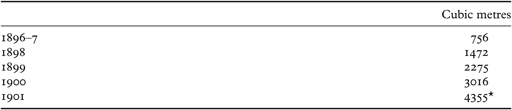
For all the above figures we note (calculating from Rogers 2003, 7) that £1 in 1901 would be £42 in 2003 (Rogers' publication date), and so £8139 paid by Norwich Union would be about £342,000 and Marmor's 1901 extracted 4355 m3 at £13,960–£16,750 would be about £586,320–£703,500, their exported 857 m3 at £2746–£3296 about £115,332–£138,432.
APPENDIX B
Visitors to Gytheion may have noticed that the main waterfront pavement and that of the old, inner harbour includes many maroon marble slabs, as does the harbour wall beyond the Limenarkheio. The marble is rosso antico in the terms of this paper. Its source, seemingly not recorded anywhere in print, was deposits at sea level at Mina, that is the rocky shore below the main road ascending south out of the town (from near the town delimit sign for about 50 m back towards the Kranai causeway), examined by the writer on 14 April 2008. The promenade pavement was constructed between 1875 and 1896, the marble being brought along from Mina on a little train built for the purpose. Until 1968 the main road south out of Gytheion was still very narrow. The present road was then constructed, with much blasting from the steep rock face; this doubtless dislodged marble down to the shore not far below. For the later nineteenth-century building constructions of Gytheion, including the harbour and the waterfront, still today a most attractive feature and fundamental to the working of the town, see Alexandrakes 1898, 48; Tzortzakes 1981, 72–3. Detailed information, including the source of the marble, its mode of conveyance and a first look at Tzortzakes' book (relevant pages later kindly photocopied for me by the Librarian of Gytheion Public Library), came from Leonidas Zervoulakos, aged 90 when my wife and I met him in his house on 14 April 2008. It was during his directorship of the Limenikon Tameion that the outer extension of the present harbour wall (with no rosso antico blocks!) was built in 1978.
APPENDIX C
San Paolo fuori le Mura, Rome
After the great fire of 15–16 July 1823, which destroyed most of the nave and severely damaged other parts of the great fourth-century (and later) basilica, a reconstruction programme was rapidly put in place from 1825 under the direction of Luigi Poletti. The new church was finally consecrated in 1854. Fronting it on the west is the huge columned quadriporticus or atrium with P. Canonica's statue of St Paul at its centre. The atrium was designed by Poletti's pupil and collaborator V. Vespignani, but not built until 1890–1928, mainly by G. Calderini. On its walls, including the outside face of the west wall of the basilica itself, are large panels (made up of smaller panels) of what is surely rosso antico (Fig. 26). Given (a) the amount of material, (b) the slab panel form (and there are other such panels inside the basilica, one of them on the south wall opposite the paschal candelabra), and (c) the date of construction, it seems very unlikely that all this material was taken from ruined buildings in the city of Rome. But, beyond this hypothesis, who supplied the rosso antico to Calderini, and from what quarry in the Mani, is not known to the writer. For information see Ridolfini 1994 [1967], 5–6 and figs. 12–13.
San Paolo fuori le Mura, Rome. Exterior west wall, rosso antico composite panel.