I. INTRODUCTION
Proton conducting polymers have received broad attention due to their potential applications as electrolytes in fuel cells, super capacitors, smart windows, and other electrochromic devices (ECDs).Reference Kreuer1–Reference Zhang and Shen3 Particularly, polymer electrolyte membrane fuel cells (PEMFCs) are receiving more and more attention due to their nearly zero-emission, high energy density, no erodent liquid, etc. Up till now, perfluorinated sulfonic membranes such as Nafion™ and Dow™ are the most commonly used proton exchange membranes (PEMs). However, the water-based ionomer membranes cannot be applied at temperatures and pressures above the dew point of water. Thus, more attention have been paid on anhydrous proton conducting materials, which can be used in medium-temperature fuel cells (100–200 °C).Reference Pu and Ye4–Reference Bozkurt, Ise, Kreuer, Meyer and Wegner6
As the first approach of producing anhydrous proton conductive membranes, the polymers were doped with acids (H3PO4, H2SO4 etc.) to obtain conductivity by the proton transport mechanism that occurs through ions (H4PO4+, H2PO4−).Reference Bozkurt, Ise, Kreuer, Meyer and Wegner6,Reference Lassegues, Grondin, Hernandez and Maree7 For a fast Grotthuss-type mechanism, these must enable the formation of protonic defects and provide strongly fluctuating proton donor and acceptor functions in a polar environment.Reference Kreuer, Fuchs, Ise, Spaeth and Maier8 In that respect, phosphoric acid and heterocyclic compounds were generally used as proton carrier in anhydrous systems. For that purpose, polymers like poly(benzimidazole),Reference Bose, Kuila, Nguyen, Kim, Lau and Lee9 poly(ethylenimine),Reference Tanaka, Yamamoto, Kawamura and Iwase10 poly(ethylene oxide),Reference Donoso, Gorecki, Berthier, Defendini, Poinsignon and Armand11 poly(vinyl alcohol) (PVA),Reference Petty-Week, Zupancic and Swedo12 and poly(4 (5)-vinyl-imidazole)Reference Bozkurt and Meyer13 were used as host polymers that keep phosphoric acid in their matrix, and proton transport is mainly provided by phosphoric acid units via structure diffusion. Another approach was doping of the acidic polymers with aromatic heterocyclic structures such as imidazole,Reference Yang, Costamagna, Srinivasan, Benziger and Bocarsly14,Reference Sevil and Bozkurt15 pyrazole,Reference Yamada and Honma16 benzimidazole, and triazole.Reference Gunday, Bozkurt, Meyer and Wegner17 The introduction of imidazole has generated much excitement in previous years with the hope that the imidazole-based electrolytes may meet the requirements for a new generation of PEM fuel cells.Reference Schuster, Meyer, Schuster and Kreuer18,Reference Bozkurt, Meyer and Wegner19 Although imidazole based materials showed enough proton conductivity, the problems about its electrochemical stability made it inadequate for fuel cell applications because of the high electron density of the imidazole ring.Reference Yang, Costamagna, Srinivasan, Benziger and Bocarsly14–Reference Deng, Molinero and Goddard20 1H-1,2,4-triazole is a heterocyclic molecule with a melting point of 120 °C and proton conductivity of 1.2 × 10⁻³ S/cm at this temperature.Reference Li, Zhou, Zhang and Liu21 There are several studies using 1H-1,2,4-triazole as dopant in an acidic polymer or modifying a polymer backbone with triazole units.Reference Gunday, Bozkurt, Meyer and Wegner17,Reference Celik, Akbey, Bozkurt, Graf and Spiess22,Reference Martwiset, Woudenberg, Granados-Focil, Yavuzcetin, Tuominen and Coughlin23
Studies have been carried out to analyze the possibilities of hydrocarbon-based membranes as potential candidates for proton electrolytes in PEMFCs. Among the different polymers studied, PVA, a basic polymer, has good film-forming capacity, thermal stability, and mechanical resistance. It is a water-soluble polymer that readily reacts with different cross-linking agents to form a gel. It is also biocompatible and biodegradable. PVA shows excellent resistant property as a polymer material; its highest conductivity can reach a value of 10−10 S/cm. In these materials, the doped-impurity ions act as a primary charge carrier. PVA membranes have also been used in alcohol dehydrating agents especially for the alcohol-water azeotrope. Since it has high selectivity for water to alcohol, it can effectively reduce the methanol cross-over through the membrane when used in direct methanol fuel cells (DMFCs). Therefore, it can be expected that PVA based composite membranes if optimized properly can serve as a potential alternative polymer electrolyte membrane for DMFC applications.
Pure PVA does not possess any protonic conductivity. It is necessary for use in fuel cells that the membrane should possess ionic conductivity. It is possible to induce protonic conductivity in PVA by sulfonating the polymer with suitable sulfonating agents like concentrated sulfuric acid, sulfosuccinic acid (SSA),Reference Rhim, Park, Lee, Jun, Kim and Lee24 sulfophthalic acid,Reference Chanthad and Wootthikanokkhan25 and sulfoacetic acid.Reference Seeponkai and Wootthikanokkhan26 Some of the sulfonating agents with carboxylic function can also induce cross-linking. For membrane use, it has already been stated that the PVA-based membranes have to be modified. Cross-linking is one of the ways the properties of the basic polymer can be altered, especially the capacity of the polymer for water uptake, degree of swelling, thermal, chemical, and mechanical stability (brittleness), and its capacity to retain acid functionality (so called acid leaching) methodology adopted to impart proton conductivity.
PVA can be cross-linked in a variety of ways like freezing,Reference Hickey and Peppas27 heat treatment,Reference Yu and Cao Wang28 and chemical treatment.Reference Bolto, Tran, Hoang and Xie29 Variety of chemical reagents like SSA, poly (acrylic acid), and glutaraldehyde have been used for cross-linking PVA. For example, PVA has been cross-linked with varying amounts (5–30 wt%) of SSA, cast, and heat treated at 393–403 K for 2 h. The proton conductivity and methanol permeability are dependent on the amount of SSA content and the temperature used for cross-linking. The methanol permeabilities of the entire cross-linked PVA-SSA membranes decrease until the amount of SSA reached around 15–17 wt% and increased above this amount of SSA.
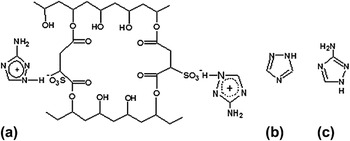
In the present work, sulfonic acid groups were introduced into the PVA matrix at several molar ratios by modifications of the chemical structure of the PVA through esterification with SSA, which has sulfonic acid groups. The resulting cross-linked polymer was blended with 3-amino-1,2,4-triazole and 1H-1,2,4-triazole at several molar ratios (Table I) to obtain a matrix that has acid groups immobilized into the chain and azoles interacting with the acid groups in the matrix (Fig. 1). The effect of formation of a hydrogen bonding network by the triazoles and its impact on the proton conductivity are studied. The polymers were characterized by Fourier transform infrared (FTIR), thermogravimetric analysis (TGA), and differential scanning calorimetry (DSC). The proton conductivity of the anhydrous samples was studied by an impedance spectrometer, and the results are compared with the previously reported systems.
Molecular structures of (a) PVA-SSA-ATri polymer matrix, (b) 1H-1,2,4-triazole, and (c) ATri.

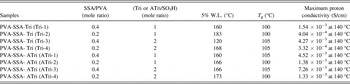
Experimental conditions and maximum proton conductivities of polymers.

II. EXPERIMENTAL
A. Materials
PVA, average M w: 72,000 (SSA, 70 wt% solution in water), was supplied from Merck (Schuchardt, Germany). 1H-1,2,4-triazole (Tri, >97%), 3-amino-1,2,4-triazole (ATri, 95%), dimethylsulfoxide (DMSO), and methanol (MeOH) were obtained from Aldrich Chemical Company (Schnelldorf, Germany). They are all of reagent grades and were used as received.
B. Membrane preparation
10 wt% PVA solutions were prepared by dissolving the preweighed amount of PVA in DMSO for 24 h at 80 °C. PVA solution was mixed with SSA at several stoichiometric ratios, and then the mixture was vigorously stirred at 80 °C for 24 h. Various amounts of Tri and ATri were added to the mixture and stirred at 80 °C for 24 h. After that the homogeneous solutions were spread over Teflon plates. The solvent was removed by evaporation at room temperature for 24 h and the membranes were allowed to dry at 60 °C under vacuum.
C. Instrumentation
FTIR spectra were recorded on a Bruker Alpha-P ATR spectrometer (Germany) between 4000–400 cm−1.
Thermal stabilities of the polymer electrolytes were examined by thermogravimetric analyses using Perkin Elmer STA 6000 (Waltham, MA). The samples (∼10 mg) were heated from room temperature to 750 °C under N2 atmosphere at a scanning rate of 10 °C/min.
Perkin Elmer Jade DSC (Waltham, MA) was utilized to investigate the thermal transitions of the polymers. The samples (∼10 mg) were filled into aluminum pans and then heated to the desired temperature at a rate of 10 °C/min under flowing nitrogen. The second heating curves were evaluated.
Methanol permeability was measured in a homemade test cell of 4 mL volume.Reference Sen, Celik, Ata and Bozkurt30 Permeability cell was initially filled with 2 mL of methanol. Methanol vapor in equilibrium with the liquid diffused through the membrane, which was clamped between the mouth of glass and the cap. The cap had a hole with a 0.84 cm diameter, so that the methanol diffused through the membrane. The weight loss is recorded as a function of time and the weight loss data from the vial were used for permeability calculations.
The conductivity studies of the copolymer samples were performed using a Novocontrol dielectric-impedance analyzer in the frequency range of 0.1 Hz–3 MHz as a function of temperature. The temperature was controlled with a Novocontrol cryosystem between −100 and 250 °C with an accuracy of 0.1 °C. The samples with a diameter of 10 mm and a thickness of approximately 300 µm were assembled into the conductivity cell by placing them between platinum electrodes. The proton conductivities were measured at 10 °C intervals under nitrogen atmosphere.
III. RESULTS AND DISCUSSION
A. Structure and characterization
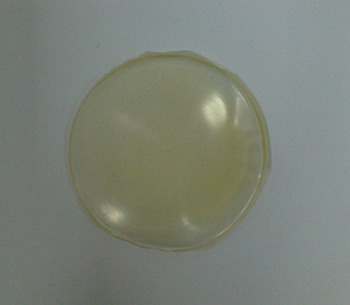
In this study, novel proton conductive membranes were prepared by cross-linking of PVA and SSA and intercalating imidazole molecules into the matrix. The resulting cross-linked polymer was blended with 3-amino-1,2,4-triazole and 1H-1,2,4-triazole at several molar ratios (Table I) and the molecular structures of PVA-SSA-ATri and azoles are depicted in Fig. 1. Transparent, hygroscopic, crack free, and free standing films (Fig. 2) were obtained for all the samples.
Homogeneous, transparent, and thin film of ATri-4 blend membrane.

The cross-linking of the structure was confirmed with the alteration of solubility of the membranes. Pristine PVA membrane is readily soluble in water and DMSO. However, PVA-SSA-Tri and PVA-SSA-ATri membranes lost their solubility in water and DMSO at room temperature and at 100 °C. Formation of a cross-linked structure in the PVA-SSA membrane enhanced the membrane stability in solvents too.
To verify that all the SSA units were immobilized into the matrix, the PVA-SSA membranes were immersed in boiling D2O overnight and the D2O leach-out solution is tested in NMR. The absence of any SSA or PVA was confirmed by 13C NMR in D2O solution. In swelling tests, when the polymer membranes were immersed in water for 24 h, PVA-SSA (0.1, 0.2, and 0.4) membranes showed high swelling ratios (>1500 wt%).
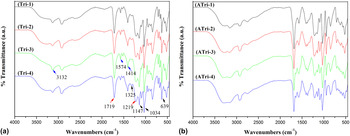
The FTIR spectra of PVA-SSA-Tri and PVA-SSA-ATri membranes are shown in Figs. 3(a) and 3(b), respectively. The peaks at 1219 and 1719 cm−1 are assigned to C–O and C=O vibrations in the ester groups, which are formed from the esterification reaction between the carboxylic acid of SSA and the hydroxyl groups of PVA. In pristine PVA-SSA membrane, intra-molecular and intermolecular hydrogen bonds are expected to occur among PVA chain due to high hydrophilic force.Reference Mansur, Oréfice and Mansur31 The OH group of pristine PVA (3263 cm−1) shifts progressively to higher wave length region during cross-linking (3317 cm−1). This indicates that the cross-linking reaction occurred between PVA and SSA by creating new covalent bonds and reducing hydrogen bonds between PVA chains, depending on the amount of the cross-linking agent at the same temperature. The peaks at 639, 1034, 1147, and 1325 cm−1 are assigned to S–O and S=O vibrations in the sulfonic acid groups. The S=O vibrations are observed to be separated due to its symmetric-, asymmetric-, and shifted-stretches from two kinds of sulfonic acid groups attached to SSA molecules and benzene-bridging groups, respectively.
FTIR spectra of (a) PVA-SSA-Tri and (b) PVA-SSA-ATri blends.

After doping the polymer, the strong absorption bands of the C=N stretching at 1574 cm−1 and C–N stretching at 1414 cm−1 distinguish the PVA-SSA-Tri and PVA-SSA-ATri from the Tri and ATri precursors, indicating the interaction between azole groups and PVA-SSA. Additionally, the formation of peaks at around 3132 cm–1 for Tri and 3155 cm–1 for ATri membranes can be associated with N–H absorption in the protonated triazole in the samples. Between 3500 and 3200 cm−1 a broadening of the band can be related to hydrogen bonding network formation.
B. Thermal analysis
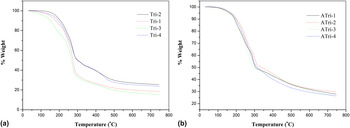
The thermal stability of PVA-SSA-Tri and PVA-SSA-ATri electrolytes was studied by TGA and is depicted in Figs. 4(a)–4(b), respectively. In Fig. 4, the thermal degradation behavior of PVA-SSA blend membranes of changing SSA, Tri and ATri contents was illustrated. The thermal properties of the pristine polymer, PVA-SSA, were studied by Rhim et al.Reference Rhim, Park, Lee, Jun, Kim and Lee24 They reported that the pristine PVA-SSA membranes showed first weight loss at around 250–400 °C due to the SSA group. In our study, pure PVA-SSA membranes showed the same properties with the ones reported in the literature. The weight loss in the first and second stages could be tentatively attributed to the decomposition of acetal linkage formed during cross-linking and the splitting of backbone before the final decomposition of the whole film. After Tri was incorporated into polymer matrices, the thermal stability decreased to 160 °C. PVA-SSA-Tri membranes exhibited two distinct weight losses at 150–290 °C, which is attributed to condensation of sulfonic acid groups and the resulting breakage of cross-linked bonds (i.e., the –CO–O– bonds) and after 290 °C, second weight loss region occurs due to decomposition of triazole groups and the polymer main chain. PVA-SSA-ATri samples are also thermally stable up to at least 160 °C. A relatively high degradation temperature and high char yield were observed with ATri unit compared to Tri unit. This may be due to the number of reactive nitrogen atoms of azoles, which delays the ATri unit degradation.
TG thermograms of (a) PVA-SSA-Tri and (b) PVA-SSA-ATri blend membranes recorded at a heating rate of 10 °C/min in an inert atmosphere.

Table I gives the T g values of PVA-SSA-Tri and PVA-SSA-ATri membranes obtained from DSC. DSC results showed single T g points for all the samples indicating the homogeneity of the blend membranes. The glass transition temperature, T g, of pure PVA-SSA membrane was observed near 85 °C, and the value is in agreement with other reported data.Reference Wilkes, Summers, Daniels and Berard32 For PVA-SSA-Tri and PVA-SSA-ATri blends, the glass transition temperature (T g) appeared around 100 °C and 105 °C due to the strongly bound triazole molecules to the sulfonic acid sites and ionic interactions may result in the restriction of the segmental relaxations.
C. Methanol permeability
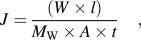
To prevent fuel from penetrating and energy efficiency loss, the PEMs used in DMFCs should possess excellent methanol resistant property. In this study, methanol permeability of the composite membranes was measured by a simple homemade test cell similar to the study of Gasa et al.Reference Gasa, Weiss and Shaw33 The cell is filled with 2 mL methanol and the mass flow is recorded as a function of time. Molar methanol flux (J) through PVA-SSA-Tri and PVA-SSA-ATri blend membranes was calculated using Eq. (1). Nafion112 with known permeability was used as reference for composite membranes and methanol permeabilities of the samples were reported relative to the methanol permeability of the reference sample. Methanol permeability of composite membranes was calculated using molar flux (J) shown in Eq. (2).Reference Lebrun, Da Silva and Metayer34
 $$J = {{(W \times l)} \over {M_{\rm{W}} \times A \times t}}\quad,$$
where J = flux, W = weight loss (g), l = thickness (cm), A = area (cm2), t = time (s). The resulting relationship for the relative permeability is then,
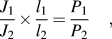 $${{J_1 } \over {J_2 }} \times {{l_1 } \over {l_2 }} = {{P_1 } \over {P_2 }}\quad,$$
where Eqs. 1 and 2 refer to the unknown and reference samples, respectively.
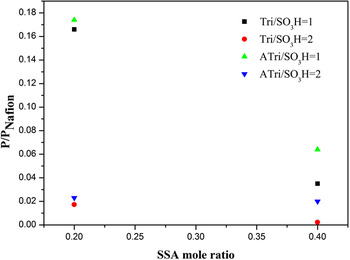
Figure 5 shows the methanol permeability of the PVA-SSA-Tri and PVA-SSA-ATri membranes relative to that of Nafion 112. The methanol permeability of the PVA-SSA-Tri membrane (SSA/PVA mole ratio = 0.2) was about 16.6% of Nafion, and the permeability decreased to 2% of Nafion 112, with increasing degree of cross-linking (SSA/PVA mole ratio = 0.4). For PVA-SSA-ATri membranes the methanol permeability (SSA/PVA mole ratio = 0.2) was about 17.4% of that of Nafion, and the permeability decreased with increasing degree of cross-linking (SSA/PVA mole ratio = 0.4). The cross-linking of PVA by reducing SSA content was also reduced, thereby; the methanol permeability was also increased due to the higher swelling of the membrane.
Relative methanol permeability of PVA-SSA-Tri and PVA-SSA-ATri blend membranes as a function of SSA mole ratio.

As shown in Fig. 5, the relative methanol permeabilities of Azole/SO3H = 2 membranes were lower than that of Azole/SO3H = 1 membranes (SSA/PVA mole ratio = 0.2). The methanol permeability was observed to have decreased significantly with increase in azole content. Furthermore, the methanol permeability was observed to have decreased significantly with increase in Tri and ATri contents. Thus, azole content played a key role in blocking methanol permeation by the insertion of the more hydrophobic heterocycle groups. The lower methanol permeability of PVA-SSA-Tri and PVA-SSA-ATri can be also explained by the interaction of sulfonic acid with azole groups, which can result in an acid–base membrane structure blocking methanol penetration effectively.Reference Zhang, Li, Zhao, Fu, Shi and Na35 Moreover, the lower methanol permeation of the blend membranes containing the ATri groups compared to those containing the Tri groups (Fig. 5) may suggest that the number of reactive nitrogen atoms of azoles could play a role in tuning the methanol permeability property of this type of acid–base blend membranes.
D. Conductivity measurement
For conductivity measurements, polymer–acid composite films were sandwiched between platinum electrodes, and measurements were done at 20–140 °C temperature range and at 1 Hz to 3 MHz frequency range in completely anhydrous conditions. The frequency-dependent AC conductivities, σac (ω), of the polymer blends were measured using Eq. (3):
 $${\rm{\sigma '(\omega )}} = {\rm{\sigma }}_{{\rm{ac}}} {\rm{(\omega )}} = {\rm{\varepsilon ''(\omega )\omega \varepsilon }}_{\rm{0}} \quad,$$
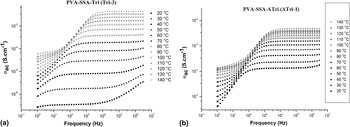
where σ′ (ω) is the real part of conductivity, ω = 2πf is the angular frequency, ε0 is the vacuum permittivity (ε0 = 8.852 × 10⁻¹⁴ F/cm), and ε″ is the imaginary part of complex dielectric permittivity (ε*). Figures 6(a) and 6(b) show the AC conductivities of PVA-SSA-Tri-3 and PVA-SSA-ATri-1 versus frequency at several temperatures. The σac versus frequency curves change with the frequency, whereas in the low frequency region, the reduction in the conductivity is due to polarization of the blocking electrodes. The irregularities at low frequency zone are due to the blocking electrode polarizations. The proton conductivity increases in parallel with the increase in temperature.
AC conductivity versus frequency of (a) PVA-SSA-Tri-3 and (b) PVA-SSA-ATri-1 at several temperatures.

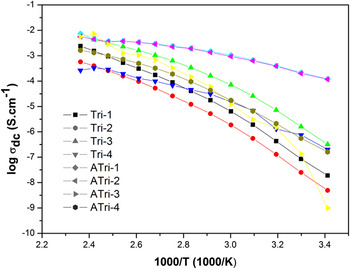
The DC conductivity (σdc) of the samples was derived from the plateaus of logσdc versus log F by linear fitting of the data and depicted in Fig. 7. The conductivity isotherm illustrates that the DC conductivity strongly depends on the acid and heterocycle ratio as well as the temperature. The proton conductivity in this system is carried out by protons of the acid and triazole. Temperature dependence of the conductivity in polymer electrolytes has often been taken as indicative of a particular type of conduction mechanism. A marked curvature was observed for all samples which were interpreted with the Vogel–Tamman–Fulcher (VTF) equation [Eq. (4)];
 $$\log {\rm{\sigma }} = \log {\rm{\sigma }}_0 - E_{\rm{v}} /[k(T - T_0 )]\quad,$$
where σ0 is the conductivity at infinite temperature, E v is the Vogel activation energy, and T 0 is the Vogel temperature, which is the start of the segmental relaxations (°C) (Table II). High accuracy of the VTF parameters proves the contribution of segmental relaxations to proton conductivity. The VTF type behavior indicates that the proton conduction is governed by microscopic viscosity, i.e., proton transfer is cooperated by local polymer chain motion. This behavior is similar to those of PVA-SSA-Tri and the PVA-SSA-ATri membranes.
DC conductivities of PVA-SSA-Tri and PVA-SSA-ATri blend membranes as a function of reciprocal temperature.

VTF parameters of the composite membranes obtained from fitting of the curves in Fig. 7.

The proton transport mechanism under anhydrous conditions can be explained by a Grotthuss-type diffusion mechanism. By this mechanism, the proton transport in the membranes with azole occurs by the hopping of protons because an acid–base complex is formed between the acidic sulfonic groups of the polymer electrolyte and the basic groups of the azole compound. On the other hand, this mechanism is disfavored by the increase of the Tri or ATri content in the membrane because more basic than acidic groups are present at this point, and the membrane becomes anionic. That time there is a second system that is the vehicle mechanism, where the protons travel through the material on a neutral or charged “vehicle.”Reference Dippel, Kreuer, Lassegues and Rodriguez36
Under humidified conditions not evaluated in this work, the proton conduction could occur by both vehicle-type and Grotthuss-type mechanisms. While the vehicle-type mechanism could occur in more hydrophilic regions formed by the clustering of the sulfonic acid groups, the Grotthuss-type mechanism could occur in regions where azole molecules might be inserted into the hydrophilic regions formed by the sulfonic acid groups.Reference Dippel, Kreuer, Lassegues and Rodriguez36,Reference Celik, Bozkurt and Hosseini37
Previously, 1H-1,2,4-triazole was blended with several acidic polymers such as polyvinyl phosphonic acid,Reference Goktepe, Sevim and Bozkurt38 polystyrene sulfonic acid,Reference Goktepe, Bozkurt and Gunday39 polyacrylic acid,Reference Bozkurt, Meyer and Wegner19 and sulfonated polysulfone.Reference Li, Zhou, Zhang and Liu21 In these studies high proton conductivity (∼10−2 S/cm) was obtained with major contribution of triazole units in the Grotthuss type proton transport.
In a recent study, Pangon et al.Reference Pangon, Tashiro and Chirachanchai40 prepared proton conducting polymer composite membranes based on polyethylenimine (MPEI) molecules with varied benzimidazole substitution and MPEI/PVA membranes. The proton conductivity of PVA becomes greater after adding MPEIs. MPEI membranes showed a significant proton conductivity of ∼10−5 S/cm in the case of the pure sample and ∼10−4 S/cm in the case of the blend with PVA in the membrane form measuring at 190 °C under anhydrous condition. Silva et al.Reference Silva, Soares, Malfatti and Forte41 prepared anhydrous proton conducting membranes consisting of PVA, sulfonated hydrocarbon resin (SR) and with different benzimidazole (BZ) concentrations. Membranes with 5 wt% of BZ (PVA/SR–5BZ) present the best results (∼10−5 S/cm).
In this work, the acid groups were attached to a polymer by cross-linking of the chains, and triazole was used as dopant in this matrix. This improved the mechanical and thermal properties of the polymer and also prevented the solubility of the polymer. In PVA-SSA-Tri and PVA-SSA-ATri systems, the ratio of SSA is highly effective on the proton conductivity of the sample which indicates that the major part of proton transport is provided over the SO3- anions as well as over azole units. As the mole ratios of SO3H to PVA increase from 0.2 to 0.4, the proton conductivities of the composite membrane showed higher conductivities at all temperature ranges, and reached up to 7.26 × 10⁻³ S/cm at 140 °C. Compared to PVA-SSA-Tri blends PVA-SSA-ATri blends can be said to have higher proton conductivities. This may be due to the extra amine group present in ATri that may contribute to proton transfer.
IV. CONCLUSIONS
In this work, a new type of chemically cross-linked polymer blend membrane consisting of PVA, randomly grafted SSA side chains, and Tri and ATri at different stoichiometric ratios were prepared and evaluated as anhydrous proton conducting polymer electrolytes. SSA was effectively introduced as a cross-linking agent and a donor of negatively charged ion (−SO3H) in the preparation of the cross-linked PVA membranes, and the interaction of the Tri and ATri rings with SSA units was proved with FTIR. DSC results showed a single T g (∼105 °C), indicating the homogeneity of the materials. TGA showed that the membranes are thermally stable up to ∼170 °C. By comparing the properties of the blend membranes consisting of PVA-SSA and different heterocyclic compounds, the size and the number of nitrogen atoms of the tethered N-heterocycle groups were found to play critical roles in tuning the proton conductivity and methanol permeability properties of this type of acid–base blend membranes. Among the various blend membranes studied, the PVA-SSA-ATri blend membrane shows the lowest methanol permeation due to the largest size of the 1H-perimidine group. The PVA-SSA-ATri-3 blend membrane shows the highest proton conductivity (7.26 × 10⁻³ S/cm) performance due to the easiest proton transfer through the ATri groups compared to those of the other N-heterocycles investigated here. The blend membrane strategy presented here is an effective way to increase the proton conductivity and lower the methanol cross-over simultaneously of the aromatic polymer membranes for DMFC applications.