1. Introduction
Over the past few years, our knowledge of fossil insects has increased exponentially. Studies focusing on behavioural advances, eusociality, plant–insect interactions, extinction–origination rates and biostratinomic issues have helped us to understand why insects have the highest described species-level diversity we find today (Clapham & Karr, Reference Clapham and Karr2012; Karr & Clapham, Reference Karr and Clapham2015; Nicholson et al. Reference Nicholson, Mayhew and Ross2015; Clapham et al. Reference Clapham, Karr, Nicholson, Ross and Mayhew2016; Labandeira et al. Reference Labandeira, Kustatscher and Wappler2016; Labandeira, Reference Labandeira and Krenn2019; Barden & Engel, Reference Barden, Engel and Starr2021). Although insects have a rich fossil record, they contain large temporal and taxonomic gaps in their evolutionary history (Schachat & Labandeira, Reference Schachat and Labandeira2021). This is due to the overwhelming majority of described insect fossils coming from fossil Lagerstätte assemblages. Insect assemblages embedded in Lagerstätten-type deposits allow a vast number of specimens to be collected (Konzentrat Lagerstätten), and they often exhibit exceptionally well-preserved insects (Konservat-Lagerstätten). Fossil insects in the Lagerstätte assemblages are generally preserved in lacustrine or amber deposits. For lacustrine deposits, insects are usually preserved as fossil compressions via mineralization. As an example, one of the best-studied Lagerstätten bearing insects is the Green River Formation from the Piceance Creek Basin in Colorado. After a thorough study was carried out in this unit, Anderson & Smith (Reference Anderson and Smith2017) reported that insects are typically preserved by haematite after pyrite and as carbonaceous compressions, both preservational modes having a high fidelity of anatomical detail for individual body parts. The Jehol biota in northeastern China also hosts a significant palaeoentomofauna in a freshwater deposit with volcanogenic sediments. Wang et al. (Reference Wang, Zhao, Zhang, Fang and Zheng2012) observed that many insects in the Jehol biota were preserved by framboids and microcrystalline pyrite.
The excessive attention given to the insects encountered in Konservat-Lagerstätten localities has given rise to the interest of many researchers in unravelling the taphonomic causes of this preservation in fine detail. The taphonomy of a fossil can be divided into three stages: biostratinomy, diagenesis and recovery (Donovan, Reference Donovan1991; Henwood, Reference Henwood1993). According to Henwood (Reference Henwood1992, Reference Henwood1993), biostratinomy and recovery probably have substantially more taphonomic influence than diagenesis for insects preserved in amber inclusions. For those preserved in lacustrine deposits, diagenesis seems to stand out as the most relevant stage. More and more palaeoentomologists have invested in taphonomic investigations, and most of these studies focus on biostratinomic events and/or early–middle diagenetic processes (Duncan & Briggs, Reference Duncan and Briggs1996; Zhehikhin, Reference Zhehikhin, Rasnitsyn and Quicke2002; Martínez-Delclòs et al. Reference Martínez-Delclòs, Briggs and Peñalver2004; Smith et al. Reference Smith, Cook and Nufio2006; Smith & Moe-Hoffman, Reference Smith and Moe-Hoffman2007; McNamara et al. Reference McNamara, Briggs, Orr, Wedmann, Noh and Cao2011, Reference McNamara, Briggs and Orr2012; Smith, Reference Smith2012; Thoene-Henning et al. Reference Thoene-Henning, Smith, Nufio and Meyer2012; Wang et al. Reference Wang, Zhao, Zhang, Fang and Zheng2012; McNamara, Reference McNamara2013; Pan et al. Reference Pan, Sha and Fürsich2014; Greenwalt et al. Reference Greenwalt, Rose, Siljeström, Goreva, Constenius and Wingerath2015; Anderson & Smith, Reference Anderson and Smith2017; Tian et al. Reference Tian, Wang, Yang, McNamara, Benton and Jiang2020; Iniesto et al. Reference Iniesto, Gutiérrez-Silva, Dias, Carvalho, Buscalioni and López-Archilla2021; Heingård et al. Reference Heingård, Sjövall, Schultz, Sylvestersen and Lindgren2022).
The Crato palaeoentomofauna, from the Aptian of northeastern Brazil, is perhaps the most studied palaeoentomofauna preserved in fine carbonate strata in the world. Crato insects are commonly complete and three-dimensionally preserved, revealing characteristics such as abdominal segmentation, wings displaying well-defined venation and head appendages. A consequence of this exceptional preservation is that the majority of studies on the Crato palaeoentomofauna are focused on taxonomic and evolutionary issues. However, an increasing number of investigations have analysed the general insect taphonomy, with a focus on early-diagenetic issues (Delgado et al. Reference Delgado, Buck, Osés, Ghilardi, Rangel and Pacheco2014; Barling et al. Reference Barling, Martill, Heads and Gallien2015, Reference Barling, Martill and Heads2020, Reference Barling, Heads and Martill2021; Osés et al. Reference Osés, Petri, Becker-Kerber, Romero, Rizzutto, Rodrigues, Galante, da Silva, Curado, Rangel, Ribeiro and Pacheco2016; Bezerra et al. Reference Bezerra, da Silva, de Paula, Oliveira, Paschoal, Freire, Viana and Mendes2018, Reference Bezerra, da Silva, Miguel, Paschoal, Nascimento, Freire, Viana and Mendes2020, Reference Bezerra, Solórzano-Kraemer and Mendes2021; Dias & Carvalho, Reference Dias and Carvalho2020, Reference Dias and Carvalho2021; Prado et al. Reference Prado, Arthuzzi, Osés, Callefo, Maldanis, Sucerquia, Becker-Kerber, Romero, Quiroz-Valle and Galante2021). These authors briefly mentioned the effect of weathering. The high degree of fidelity of the Crato insects was achieved during early-mesodiagenesis under reducing conditions mediated by microbial mats (Osés et al. Reference Osés, Petri, Becker-Kerber, Romero, Rizzutto, Rodrigues, Galante, da Silva, Curado, Rangel, Ribeiro and Pacheco2016; Varejão et al. Reference Varejão, Warren, Simões, Fürsich, Matos and Assine2019; Dias & Carvalho, Reference Dias and Carvalho2021). After final burial, ions and sulfate-reducing bacteria favour the formation of framboidal pyrite, which replaces cuticle and labile tissues and prevents the total collapse of the carcass. Then, telodiagenetic processes transform the pyritized replicas into more stable minerals as the specimens approach atmospheric conditions by denudation of the rock package. This process, under certain circumstances, ensures that the morphological information acquired during early diagenesis survives oxidizing agents and reaches today’s palaeoentomologists. However, the weathering of fossils has the potential to lead to taphonomic consequences, including loss of morphological information. This process can make the weathered specimen unsuitable for systematic studies, which may induce palaeoentomologists/researchers to become disinterested in collecting these specimens during field campaigns. Under extreme conditions, intense weathering can leach away the fossil insect without leaving any evidence of its existence. McNamara et al. (Reference McNamara, Briggs and Orr2012) recognized that the exceptionally preserved characters of the cuticle layers, as well as the insect staining pattern are directly associated with a low rate of chemical weathering.
In this study, we do not consider telodiagenetic effects a part of the fine-scale preservation process. Rather, we suggest that late diagenesis limits preservation potential. To address the lack of information about telodiagenetic processes we integrate mineralogical, chemical and spectroscopic data to identify the post-diagenetic alterations affecting mineralized insects of the Crato Lagerstätte.
2. Geological background
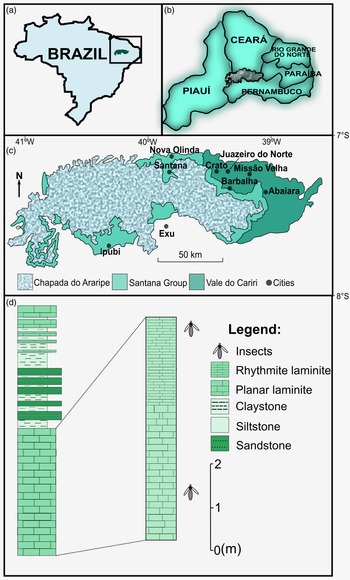
The Araripe Basin is an intracratonic basin located in northeastern Brazil, situated in the central part of Borborema province. The basement of this region consists of Precambrian gneiss and migmatite terrains, which were affected by extensive rifting processes resulting from the split between Africa and South America during the break-up of Pangaea (Matos, Reference Matos1992). The Araripe Basin is composed of the Cariri Formation, proposed by Beurlen (Reference Beurlen1962) (Late Ordovician/Early Devonian). There are four further supersequences (Assine et al. Reference Assine, Perinotto, Neumann, Custódio, Varejão and Mescolotti2014): (1) the Pre-rift Supersequence: siliciclastic fluvial-lacustrine sediments from both the Brejo Santo and Missão Velha formations (Late Jurassic); (2) the Rift Supersequence: deltaic, fluvial and lacustrine siliciclastic sediments from the Abaiara Formation (Early Cretaceous); (3) the Post-rift I Supersequence: siliciclastic fluvial-lacustrine sediments from the Barbalha (pelites and sandstones), Crato (pelites and carbonates), Ipubi (evaporites) and Romualdo (carbonate concretions) formations, these units occurring within the Santana Group (Aptian); (4) the Post-rift II Supersequence: Cenomanian siliciclastic fluvial sediments from both the Araripina and Exu formations. The relief is marked in the landscape by the Chapada do Araripe, a plateau smoothly inclined westwards and surrounded by steep cliffs. The Chapada do Araripe is bordered by plain sedimentary deposits distributed mainly on the east and NE flanks, a region named Vale do Cariri (Fig. 1).
Location and geological setting of the Crato Lagerstätte. (a) Position of the Araripe Basin in the Brazilian territory. (b) Position of the Araripe Basin in NE Brazil. (c) Toponymic and geological map of the Araripe Basin Crato Formation outcrops associated with the Santana Group. (d) Stratigraphic scheme of the Crato Formation highlighting the Nova Olinda Member, recognized as the Crato Lagerstätte.

Several lacustrine depositional episodes have been recognized in the Araripe Basin. The second lacustrine episode took place during late Aptian time and led to deposition of fine-grained deltaic sandstone units (Barbalha Formation), which interlink with several carbonate and siliciclastic units in the Crato Formation (Arai & Assine, Reference Arai and Assine2020; Melo et al. Reference Melo, Guzmán, Almeida-Lima, Piovesan, Neumann and Sousa2020; Coimbra & Freire, Reference Coimbra and Freire2021). These lacustrine carbonate facies are predominantly composed of micritic laminated limestones and have a calcite composition with a low magnesium content (Catto et al. Reference Catto, Jahnert, Warren, Varejão and Assine2016).
The Crato Formation consists of carbonate layers more than 20 m thick (Assine, Reference Assine2007), interbedded with siliciclastic sediments. Their origin is attributed to transgressive–regressive events associated with the expansion and contraction of a lacustrine system (Heimhofer et al. Reference Heimhofer, Ariztegui, Lenniger, Hesselbo, Martill and Rios-Netto2010). The depositional environment of the Crato Formation is interpreted as a restricted lacustrine or lagoon system with a stratified water column. The lake/lagoon bottom was hypersaline and anoxic (Heimhofer et al. Reference Heimhofer, Ariztegui, Lenniger, Hesselbo, Martill and Rios-Netto2010). Recently, Warren et al. (Reference Warren, Varejão, Quaglio, Simões, Fürsich, Poiré, Catto and Assine2017) and Varejão et al. (Reference Varejão, Warren, Simões, Fürsich, Matos and Assine2019, Reference Varejão, Warren, Simões, Buatois, Mángano, Bahniuk and Assine2021) suggested a shallow hypersaline coastal lacustrine system dominated by benthic microbial mats. The Crato Formation is divided into four members including, from bottom to top: the Nova Olinda, Caldas, Jamacaru and Casa de Pedra (Martill et al. Reference Martill, Bechly and Loveridge2007). The lowest Nova Olinda Member crops out in the northern and eastern flanks of the Araripe Basin, where the fossil insects from this study were found. The palaeoenvironmental conditions and exceptional preservation of fossils have made the Crato Formation well known worldwide as a Cretaceous fossil Lagerstätte (Martill et al. Reference Martill, Bechly and Loveridge2007).
3. Material and methods
3.a. Fossil material
Specimens used in this research are deposited in the scientific palaeontological collection of the Laboratório de Paleontologia of the Universidade Federal do Ceará (Brazil). In all, 138 mineralized insects recovered from the Nova Olinda Member were studied for this analysis (online Supplementary Material Table S1). The main analysis, at hand scale, was performed on mineralized specimens preserved in pale-yellow limestone slabs. At this stage, we observed the degree of completeness, articulation and compaction of each mineralized insect. The microscopic and spectroscopic results presented here are from the analyses of the following samples: LP/UFC CRT 122, LP/UFC CRT 708, LP/UFC CRT 720, LP/UFC CRT 1156, LP/UFC CRT 1822, LP/UFC CRT 1834, LP/UFC CRT 1896, LP/UFC CRT 2055, LP/UFC CRT 2083, LP/UFC CRT 2204, LP/UFC CRT 2388, LP/UFC CRT 2529 and LP/UFC CRT 2647.
3.b. Scanning electron microscopy and large-field energy dispersive spectroscopy
The scanning electron microscopy and energy dispersive X-ray spectroscopy (SEM–EDS) analyses were performed in the Central Analítica at the Universidade Federal do Ceará (UFC). Micromorphological measurements of the fossil insects were conducted by SEM in a Quanta-450 electron microscope (FEI) with a field-emission gun (FEG) equipped with a gaseous analytical detector (GAD), coupled to an X-ray detector (model 150, Oxford) for EDS. Specimens were prepared by mounting on aluminium stubs with a black carbon cement. The fossil insects were then inserted into the microscope chamber without other previous preparation. The micrographs were obtained using a working distance of 10 mm. Analyses were performed in a low vacuum to avoid sample charging. Images were acquired at a beam acceleration voltage of 20 kV, using a resolution of 1024 × 884 pixels per image. The images were processed and exported on AZtec software (version 3.0/Oxford).
3.c. Fourier transform infrared and Raman spectroscopy
The spectroscopic analyses were performed in the Laboratório de Espectroscopia Vibracional e Microscopia (LEVM), Departamento de Física, at the UFC. The Raman spectra were obtained with a LabRAM HR (Horiba) spectrometer equipped with a liquid N2-cooled CCD detector behind a 600 g/mm grating. Acceptable spectra were measured using 785 nm laser radiation for excitation (∼2 mW at the sample surface). The laser power was set to ∼1 mW on the samples. In this investigation, the Fourier transform infrared (FTIR) spectra were measured directly by using a Vertex 70 (Bruker). FTIR data were collected in the spectral range from 200 to 4000 cm−1. No sample preparation was necessary. The Raman and FTIR spectra were analysed in the software Origin 9.2.
4. Results
4.a. Morphological details at hand-specimen scale
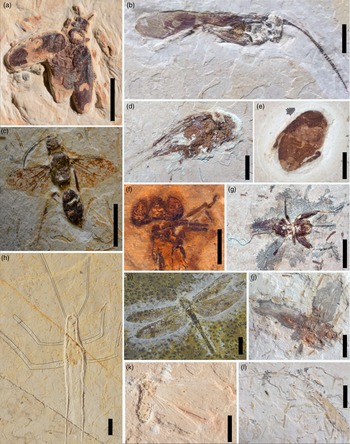
Crato mineralized insects typically appear as orange-brown to dark-brown specimens preserved in pale-yellow to reddish limestone slabs. This type of preservation consists of iron (III) oxide hydroxy replacements of former sulfide minerals that replicated the original cuticle. Crato Formation insects displaying this type of preservation are often uncompacted, articulated and are complete with antennae, head, thorax, abdomen, legs, articulated wings and other appendages (Fig. 2a–c). These specimens also reveal details of the wings or elytra, often displaying a well-defined venation pattern. Abdomens retain structures such as cerci, caudal gills, ovipositors and legs, which are often well articulated with spines, setae and spurs. These sets of structures are significant in taxonomic phylogenetic analyses, and are employed to estimate the historical relationships among the different insect taxa.
Examples of mineralized/impression insects from the Crato Formation in different types of preservation. (a–c) Crato insects well preserved at hand scale: Coleoptera (LP/UFC CRT 2529), Caelifera (LP/UFC CRT 2083) and Hymenoptera (LP/UFC CRT 2768), respectively. (d–f) Examples of insects with iron-oxide overgrowths: Ensifera (LP/UFC CRT 1834), Heteroptera (LP/UFC CRT 708) and Odonata (LP/UFC CRT 1152), respectively. (g, i, j) Mineralized insects with black coatings sometimes associated with dendrites: Ensifera (LP/UFC CRT 2388), Odonata (LP/UFC CRT 1156) and Ensifera (LP/UFC CRT (2647), respectively. (h, k, l) Crato insects preserved as imprints: Phasmatodea (LP/UFC CRT 2698), Isoptera (LP/UFC CRT 1896) and Caelifera (LP/UFC CRT 2204), respectively. Scale bars = 10 mm.

Exceptionally, many disarticulated oxide-hydroxide insects, preserved as fragmentary remains or isolated body segments, still retain remarkable morphological details. This suggests that damage to these insects was probably caused by biostratinomic processes prior to burial. However, many of the Crato mineralized insects appear poorly preserved in hand specimens, and closer examination shows that the damage has been caused by diagenetic alteration rather than the result of biostratinomic processes (in vivo or post-mortem decay). These diagenetic altered insects can appear complete but reveal little to no morphological detail (e.g. ommatidia, wing veins and spines). This style of alteration makes a high classification uncertain even at the order, suborder or family level. In particular, these poorly preserved specimens can be easily damaged by touching, and are commonly encountered in the weathered pale-yellow limestones. After thorough investigations, we have found three types of alterations in Crato insects. The most common type involves insects with iron-oxide overgrowths that reduce morphological fidelity (Fig. 2d–f). This distinctive feature provides a rust-like hue to insects. The specimen can be fully articulated but possesses a body obscured by iron-oxide overgrowth (e.g. head or thorax). Here, the loss of palaeontological information is usually partial. Secondly, weathered insects appear with light-grey to black coatings. These later coatings can overlap diagnostic features such as wing veins, head appendages or even entire body parts. In particular, this feature gives a ‘dirty’ appearance to fossil insects and is often associated with dendrites. Insects exhibiting this type of alteration also have a rusty appearance (Fig. 2g, i, j). The third type of alteration corresponds to the insects recorded only by their imprint left on the limestone. These fossils are found as two-dimensional imprints of insects or of their parts (Fig. 2h, k, l). Fossil imprints can record information about the external shape of organisms but without complete details or delicate appendages. Owing to the lack of details of the original cuticle, a faithful taxonomic description is hampered. Overall, this type of alteration process results in ‘depleted’ versions of the specimens, where telodiagenetic fluids dissolve away the mineral replacements leaving behind only the external outlines of former insects.
4.b. Scanning electron micrograph analysis
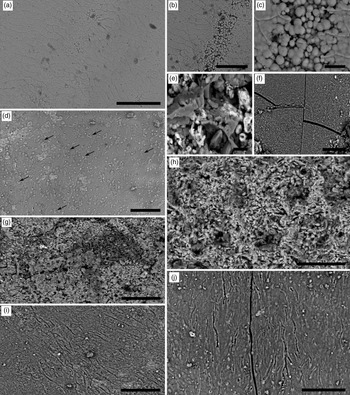
The SEM analysis revealed that preservation of the Crato Formation insects includes individual cuticular surface structures (Fig. 3). Overall, the cuticle surface retains fine morphological details, built by sub-spherical to spherical grains with diameters mainly in the range of 5–15 µm. These structures are commonly arranged as globular aggregates or as close-packing grains. The micrographs also revealed anhedral to euhedral crystals of variable sizes and organization, and many of the grains observed in these fossils were shown to be hollow. This suggests that these crystals may be classified as pseudoframboids (Berner, Reference Berner1970; Kribek, Reference Kribek1975; Ohfuji & Rickard, Reference Ohfuji and Rickard2005) of a mineral precursor. For further clarification of the mineral fabrics of Crato insects, see Barling et al. (Reference Barling, Martill and Heads2020). These crystal structures have not been observed within extant insect cuticle and do not appear to be of a biological origin; they are often interpreted as mineral fabrics produced during the early diagenesis.
Scanning electron micrograph analysis for cuticular characterization of Crato Formation insects. (a) Cockroach (LP/UFC CRT 2055) showing cuticular high fidelity; scale bar = 100 µm. (b) Local loss of cuticle fidelity in (a); scale bar = 50 µm. (c) Detail of the microtexture depicted in (b); scale bar = 10 µm. (d) Beetle (LP/UFC CRT 2529) epicuticle with sensilla insertion holes (indicated by arrows) on its surface; scale bar = 50 µm. (e) Caelifera (LP/UFC CRT 2204) preserved as two-dimensional imprints with inequidimensional and spherical to sub-spherical micro-cryptocrystals of iron oxides associated with crystals of calcite; scale bar = 10 µm. (f) Surface microcracking of a cricket epicuticle (LP/UFC CRT 1834) with iron-oxide overgrowths; scale bar = 50 µm. (g) Cricket (LP/UFC CRT 2388) with black coatings showing microfabric formed by sub-spherical loosely packed grains; scale bar = 100 µm. (h) Ommatidia of a Heteroptera (LP/UFC CRT 708) with iron-oxide overgrowths showing pseudoframboids and alveolar aggregates of iron-oxide crystals associated with dissolution cavities; scale bars = 50 µm. (i) Heteroptera (LP/UFC CRT 720) epicuticle with iron-oxide overgrowths scratched by sets of grooves generated by oxidation reactions; scale bar = 50 µm. (j) Detail of the Heteroptera (LP/UFC CRT 720) epicuticle showing grooves associated with microcracks; scale bar = 50 µm.

In the best articulated specimens at hand scale, the high magnification revealed that the cuticle can also be replaced by a polygonal lamellar arrangement, with grains of ∼1 µm in diameter (Fig. 3a). In these insects, any loss of preservation fidelity is partial or occurs locally on a micron scale (Fig. 3b, c). The cuticle is preserved as a massive film without microtextural differentiation and commonly with sensilla insertion holes in the surface (Fig. 3d). This cuticular arrangement suggests a direct replacement of insect tissue.
The higher magnification investigation of the insects not well preserved at hand scale shows different textural characteristics at the micro scale. Crato Formation insects preserved as two-dimensional imprints commonly record details of the original external form. In micrographs, they display clusters of cryptocrystals or isolated pseudomorphs associated with calcite crystals (Fig. 3e). Fossil cuticles are preserved by a thin discontinuous layer. It is sometimes difficult to distinguish the boundaries between the fossil and carbonate matrix.
The presence of microcracks in the insect cuticles of the Crato Formation has been frequently reported (Delgado et al. Reference Delgado, Buck, Osés, Ghilardi, Rangel and Pacheco2014; Barling et al. Reference Barling, Martill, Heads and Gallien2015, Reference Barling, Martill and Heads2020; Osés et al. Reference Osés, Petri, Becker-Kerber, Romero, Rizzutto, Rodrigues, Galante, da Silva, Curado, Rangel, Ribeiro and Pacheco2016; Bezerra et al. Reference Bezerra, da Silva, Miguel, Paschoal, Nascimento, Freire, Viana and Mendes2020, Reference Bezerra, Solórzano-Kraemer and Mendes2021; Dias & Carvalho, Reference Dias and Carvalho2020, Reference Dias and Carvalho2021; Prado et al. Reference Prado, Arthuzzi, Osés, Callefo, Maldanis, Sucerquia, Becker-Kerber, Romero, Quiroz-Valle and Galante2021). Crato insects with iron-oxide overgrowths show intricate zones of microcracks associated with compact cuticular surfaces without individualized crystals (Fig. 3f). The microcracks commonly appear in isolation but they can also link up, demonstrating that this type of damage has the potential to be quite extensive. They are connected to each other by straight contacts in a perpendicular way, but curved microcracks have also been observed. These microcracks are commonly empty, and rarely filled with minerals. Crato insects with black coatings show regions of the cuticle replaced by inequidimensional, spherical to sub-spherical microcrystals forming alveolar aggregates with partially corroded surfaces, but sometimes areas without individualized crystals can also occur. Such evidence reveals the intense oxidation of these mineralized replacements.
Both styles of preservation, associated with black coatings and with iron-oxide overgrowths displaying aggregates of micro-cryptocrystals, replace the external cuticle, with the corroded surfaces and empty cavities previously occupied by crystals (Fig. 3g, h). Specimens with iron-oxide overgrowths also show a locally rugged and pitted surface scratched by sets of grooves (Fig. 3i). The grooves retain a flow aspect and sometimes appear associated with microcracks (Fig. 3j).
4.c. Raman and FTIR spectroscopy analyses
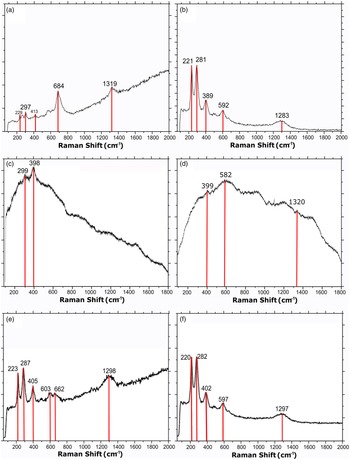
Raman spectra of Crato Formation insects are recorded mainly in the spectral range 160–710 cm−1 with single peaks between 1280 and 1320 cm−1 (online Supplementary Material Table S2). Figure 4a shows the Raman spectra profile obtained from an insect preserved as a two-dimensional imprint with bands at 229, 297, 413, 684 and 1319 cm−1. The bands at 229, 297 and 413 cm−1 are attributed to Fe–O symmetry stretching, Fe–OH symmetry bending and Fe–O symmetry bending, respectively (Das & Hendry, Reference Das and Hendry2011; Mohopatra et al. Reference Mohapatra, Behera, Layek, Anand, Verma and Mishra2011). The intense band at 684 cm−1 is attributed to Fe–O symmetric stretching vibration, which is often associated with α-FeOOH (de Faria & Lopes, Reference de Faria and Lopes2007). The weak peak at 1319 cm−1 is characteristic of various iron-oxide and iron-hydroxide minerals (Marshall & Marshall, Reference Marshall and Marshall2013). Figure 3b shows the Raman spectra obtained from a Crato insect with black coatings bearing two intense bands at 221 cm−1 and 281 cm−1 attributed to Fe–O symmetry stretching and Fe–O bending, respectively (Legodi & de Waal, Reference Legodi and de Waal2007). The broad band centred at 1283 cm−1 is often assigned to iron oxides (Hassan et al. Reference Hassan, Rahman, Guo, Chen and Liu2010). The presence of iron oxides is reinforced by the band at 389 cm−1, the vibration of Fe–OH (Li & Hihara, Reference Li and Hihara2015). The band at 592 cm−1 attributed to Mn–O stretching mode is taken as characteristic for α-Mn2O3 (Julien et al. Reference Julien, Massot and Poinsignon2004). This band indicates that iron compounds are found in close association with manganese oxide minerals.
Raman spectra of insect cuticles of (a) Caelifera (LP/UFC CRT 2204) preserved as two-dimensional imprints, (b) Odonata (LP/UFC CRT 1156) associated with dendrites and (c, d) spectra of crickets with iron-oxide overgrowths, LP/UFC CRT 122 and LP/UFC CRT 1822, respectively. (e, f) Raman spectra of mineralized insects that retain fine details of morphology at hand scale: Blattodea (LP/UFC CRT 2055) and Caelifera (LP/UFC CRT 2083), respectively.

Notably, the Raman spectra obtained from Crato insects with iron-oxide overgrowths display a high background noise (Fig. 4c, d). A possible explanation for this background is the presence of an OH group generating interference. The Raman spectra were also affected by fluorescence artefacts, and the broad bands may reflect the low degree of crystallinity of the fossil material. Regardless, the Raman spectra of the insects with iron-oxide overgrowths show bands associated with the mineral goethite (Zuo et al. Reference Zuo, Zhao, Wu, Du, Xu and Wang2003). In Raman spectra of insects that retain fine morphological details, bands attributed to haematite can be observed (Fig. 4e, f). The presence of haematite is marked by bands at 220, 287, 402 and 603 cm−1 (Legodi & de Waal, Reference Legodi and de Waal2007).
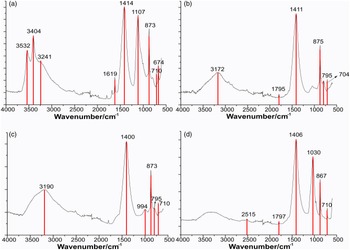
The FTIR spectra of insects show heterogeneity, with different peaks recorded at various positions. FTIR signals were observed mainly in two spectral regions: 600–1000 cm−1 and 3200–3600 cm−1 (online Supplementary Material Table S2). The graphics exhibit a spectral region where it is possible to observe bands related to OH-stretching vibrations. The spectrum of a Crato insect preserved as a two-dimensional imprint show bands at 674, 710, 873, 1107, 1414, 1619, 3241, 3404 and 3532 cm−1 (Fig. 5a). The band at 674 cm−1 is usually attributed to lattice absorption of iron-oxide (Tiwaria et al. Reference Tiwari, Singh, Pandey and Sumana2015). The band at 710 cm−1 appears associated with bands at 873 cm−1 and 1414 cm−1, which suggests characteristic bands of calcite (Rodriguez-Blanco et al. Reference Rodriguez-Blanco, Shaw and Benning2011). The peak at 1107 cm−1 can be assigned to the symmetric stretching mode of CaO (Gunasekaran & Anbalagan, Reference Gunasekaran and Anbalagan2007). The weak band at 1619 cm−1 can be attributed to O–H bending vibration (Raji et al. Reference Raji, Qaiss and Bouhfid2020). Significant bands around 3241, 3404 and 3532 cm−1 are assigned to the OH-stretching vibrations of the hydroxyl units ν(OH) (Frost et al. Reference Frost, Palmer, Spratt and Martens2011, Reference Frost, Scholz and López2016; Frost & Xi, Reference Frost and Xi2012). These bands show that this sample experienced chemical transformations under extremely wet conditions. The FTIR spectrum (Fig. 5b) of an insect with iron-oxide overgrowths shows a wide band centred at 3172 cm−1 in the region related to OH-stretching vibrations. This remarkable wavenumber region probably consists of the overlapping of two or more components in the range 3270–3180 cm−1. Bands at 1411 and 1795 cm−1 correspond to stretching of CO3 2−. The band at 795 cm−1 can be assigned to Fe–O–H bending vibrations commonly associated with α-FeOOH (Musić et al. Reference Musić, Krehula, Popović and Skoko2003). Figure 5c shows the FTIR spectrum obtained from a Crato insect with black coatings. The broad band at 3190 cm−1 can be attributed to O–H stretching vibration. The bands at 710, 873 and 1400 cm−1 are assigned to the antisymmetric stretching modes of calcium carbonate (Frost et al. Reference Frost, Bahfenne and Graham2008). The band at 994 cm−1 can be tentatively assigned to Fe–O vibrations. This band is often obscured in goethite. The FTIR spectrum (Fig. 5d) of a well-preserved insect at hand scale also exhibits the characteristic peaks of calcite. However, the wavenumber region between 3000 and 3600 cm−1 appears less prominent here. In addition, the band around 1030 cm−1 is caused by the vibration of crystalline Fe–O mode, which is characteristic of haematite (Pal & Sharon, Reference Pal and Sharon2000).
Infrared spectra of Crato insects. (a) Isoptera (LP/UFC CRT 1896) preserved as two-dimensional imprints, (b) a cricket (LP/UFC CRT 834) with iron-oxide overgrowths, (c) a cricket (LP/UFC CRT 2647) with black coatings and (d) a Heteroptera (LP/UFC CRT 720) well preserved at hand scale.

4.d. Energy dispersive X-ray spectroscopy
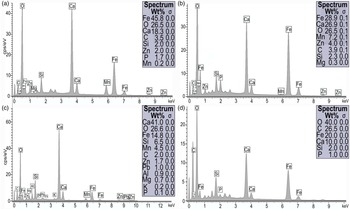
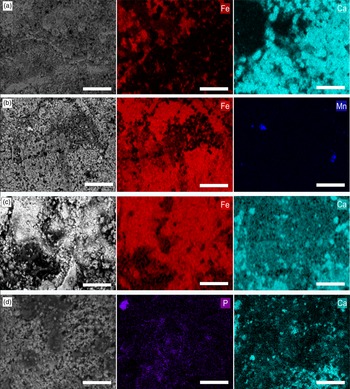
Elemental analyses revealed that iron is more concentrated in fossil cuticles than in the carbonate matrix, while calcium is the opposite. The distribution of oxygen is in accordance with the presence of iron compounds replacing the fossils and the carbonate composition of the rock matrix. The insects with iron-oxide overgrowths contain a higher abundance (wt %) of iron than the other specimens (Figs 6a, 7a). In the spectrum of these insects, silicon, carbon, zinc, manganese and phosphorus are also represented. On the other hand, Crato insects with black coatings display a higher abundance (wt %) of manganese (Figs 6b, 7b). The ‘depleted’ insects preserved as imprints of outer cuticle exhibit a wide range of elements with a predominance of calcium (Figs 6c, 7c). Aluminium, lead, magnesium, potassium, silicon and manganese are also reported (Fig. 6c). Fully articulated insects with fine morphological details display a higher abundance of carbon and a lower abundance of calcium (Fig. 6d), and the conspicuous presence of phosphorus has also been documented (Fig. 7d). Overall, EDS data support that the fossil cuticles have high concentrations of iron and oxygen, suggesting that original pyrite has been replaced by iron oxides/hydroxides due to post-diagenetic events (Fig. 7).
Energy dispersive X-ray spectroscopy point spectra of (a) rust-like Heteroptera (LP/UFC CRT 708) with iron-oxide overgrowths, (b) a cricket (LP/UFC CRT 2388) with black coatings, (c) Caelifera (LP/UFC CRT 2204) preserved as two-dimensional imprints and (d) a mineralized cockroach (LP/UFC CRT 2055) fully articulated and well preserved.

Energy dispersive X-ray spectroscopy elemental map of Crato insects. (a) Secondary electron micrograph of Heteroptera (LP/UFC CRT 708) with iron-oxide overgrowths and the elemental maps of iron and calcium; scale bars = 50 µm. (b) Micrograph of a cricket (LP/UFC CRT 2388) with black coatings and the elemental maps of iron and manganese; scale bars = 50 µm. (c) Micrograph of a Caelifera (LP/UFC CRT 2204) preserved as two-dimensional imprints and the elemental maps of iron and calcium; scale bars = 100 µm. (d) Secondary electron micrograph of a well preserved cockroach (LP/UFC CRT 2055) and the elemental maps of phosphorus and calcium; scale bars = 50 µm.

5. Discussion
5.a. Micro-structure preservation of weathered insects from the Crato Formation
The spectroscopic results revealed that the fossil insects studied here are preserved by iron-oxide/oxyhyroxide compounds, mainly haematite and goethite. Overall, SEM analysis showed that insect cuticles are preserved by globular aggregates or close-packing grains. Mineralized specimens exhibiting more morphological details at hand scale (best preserved) show cuticle surfaces with a polygonal lamellar arrangement and grains of ∼1 µm in diameter. These insects display microtextural surfaces with little differentiation. The loss of fidelity is only partial and sometimes still maintains sensilla insertion holes. On the other hand, our results also show that Crato mineralized insects poorly preserved at the hand scale level show different textural characteristics at the micro scale. These insects commonly display cuticle details preserved by sub-spherical to spherical crystals in variable organizations with diameters mainly in the range of 5–15 µm. These characteristics are clear evidence of intense weathering experienced by Crato mineralized insects. Macroscopically, we highlighted at least three types of post-diagenetic alterations with the potential to distort morphological information essential for systematic studies. The alterations can be observed in specimens with iron-oxide overgrowths, insects with black coatings sometimes associated with dendrites and those preserved as two-dimensional imprints. Microscopically, Crato insects with iron-oxide overgrowths and black coatings are dominated by one fabric arranged into spherical or cylindrical aggregates sometimes possessing needle-like grains and hollow crystals. They also display microcracks and crystal aggregates associated with an alveolar habit, partially corroded surfaces and empty structures of dissolution cavities. In micrographs of insects with iron-oxide overgrowths, flow structures represented by sets of micro-grooves often appear as a striking feature. These scratches are likely the result of intense surface dissolution. The insects preserved as imprints retain discontinuous clusters of cryptocrystals or isolated aggregates, evidence of an intense oxidation process. Intrastratal fluids leach away the insect mineral replica, leaving only parts of the body behind. Undoubtedly, Crato insect imprints represent the most intense type of alteration, and individuals showing this condition are rarely recovered for taxonomic purposes.
Our secondary electron analysis shows that Crato mineralized insects are preserved in a variety of mineral styles. They are interpreted as mineral fabrics produced during the early diagenesis that replicated fine details of the cuticle and other soft tissues. The Fe-oxide/hydroxide pseudomorphs are similar to precursor pyrite. The formation of pyrite replacements and their direct involvement in the replication of insect morphology are intrinsically associated with the time the fossils spent in the bacterial sulfate reduction zone of the sediment (Schiffbauer et al. Reference Schiffbauer, Xiao, Cai, Wallace, Hua, Hunter, Xu, Peng and Kaufman2014). The taphonomic pathways of pyritized insects during the early diagenesis of the Crato Formation have been well documented in previous studies (Barling et al. Reference Barling, Martill, Heads and Gallien2015, Reference Barling, Martill and Heads2020; Osés et al. Reference Osés, Petri, Becker-Kerber, Romero, Rizzutto, Rodrigues, Galante, da Silva, Curado, Rangel, Ribeiro and Pacheco2016; Bezerra et al. Reference Bezerra, da Silva, Miguel, Paschoal, Nascimento, Freire, Viana and Mendes2020; Dias & Carvalho, Reference Dias and Carvalho2020, Reference Dias and Carvalho2021). Nonetheless, the scattered distribution of the aggregate particles and the variety of their arrangements indicates a complex oxidation process with several probable stages. Dissolution cavities, microcracks, flow structures and hollow crystals with corroded surfaces merged into larger aggregates are microtextural features that evidence chemical weathering under variable water conditions.
5.b. Transformation of Fe-oxide/hydroxide pseudoframboids
Pyrite oxidation is a complicated process that includes several types of oxidation–reduction reactions, hydrolyses and complex ion formation. The transformation of pyrite in an oxygen-containing environment may proceed by different mechanisms under different conditions. Parameters such as temperature, oxygen concentration and flow conditions can all affect the transformation process (Jorgensen & Moyle, Reference Jorgensen and Moyle1982). Oxidation is a major process in the dissolution of pyrites, and aqueous oxidation plays a significant role in the production of sulfuric acids as a result of natural weathering of pyritic rocks and shale (Rimstidt & Vaughan, Reference Rimstidt and Vaughan2003). Overall, ferrihydrite is produced as an intermediate phase between the primary sulfide and the final oxides/hydroxides during the oxidation of pyrite in an aqueous environment (Nordstrom, Reference Nordstrom, Kittrick, Fanning and Hossner1982). Ferrihydrite is metastable under oxic conditions, gradually converting to the more crystalline and stable goethite and haematite (Cudennec & Lecerf, Reference Cudennec and Lecerf2006). Ferrihydrite dissolves to neutral pH (7–8) and transforms to haematite. In contrast, goethite formation occurs under either acidic or alkaline conditions (Das et al. Reference Das, Hendry and Essilfie-Dughan2011). The preservational textures observed in the cuticle of mineralized insects from the Crato Formation consist primarily of pyrite framboids and pseudoframboids (Barling et al. Reference Barling, Martill, Heads and Gallien2015; Osés et al. Reference Osés, Petri, Becker-Kerber, Romero, Rizzutto, Rodrigues, Galante, da Silva, Curado, Rangel, Ribeiro and Pacheco2016; Bezerra et al. Reference Bezerra, da Silva, Miguel, Paschoal, Nascimento, Freire, Viana and Mendes2020). These microtextural characteristics indicate that the mineral fabrics of insects are very similar both after and before post-diagenetic changes. In this case, the hypothesis of transformation of pyrite through the dissolution–crystallization process is unlikely. Therefore, the transformation of pyrite into goethite and haematite most likely occurred in the solid state.
The oxidation of pseudoframboidal pyrite is considered to be fast owing to its high specific surface area (Pugh et al. Reference Pugh, Hossner and Dixon1984). However, the formulation of a consistent oxidation reaction of the pyrite surface is not sufficiently characterized, and oxidation of pseudoframboid surfaces may occur upon contact with meteoric water and the Earth’s oxygenic atmosphere, where O2 and Fe3+ play a key role. Initially, transformation involves the adsorption of O2 and water to the pyrite surface. Singer & Stumm (Reference Singer and Stumm1970) suggested that Fe3+ is the major oxidant of pyrite whereas O2 becomes the predominant oxidant at circumneutral pH. Fe3+ is also oxidizing at circumneutral pH, but the reaction cannot be sustained without the presence of dissolved O2 to perpetuate the oxidation to Fe3+ (Evangelou & Zhang, Reference Evangelou and Zhang1994). Schaufuß et al. (Reference Schaufuß, Nesbitt, Kartio, Laajalehto, Bancroft and Szargan1998 a) found Fe3+ oxyhydroxide to be the main product after sulfate during the oxidation process. Jerz & Rimstidt (Reference Jerz and Rimstidt2004) reported that the FeS2 oxidation reaction rate decreases with time, and linked the reduced reaction rate to the development of a thin layer of iron on the pyrite surface. The authors proposed that this layer retards oxygen transport and hence induces a possible change from reaction rate. Eggleston et al. (Reference Eggleston, Ehrhardt and Stumm1996) hypothesized an oxidation mechanism involving surface cycling of Fe2+ and Fe3+, where Fe3+ hydroxide or oxide products serve as a conduit for electron transfer from the pyrite surface to molecular oxygen. This involves the transfer of electrons from pyrite Fe2+ to oxide Fe3+, and this process takes place preferentially from pyrite Fe2+ adjacent to the oxide. Schaufuß et al. (Reference Schaufuß, Nesbitt, Kartio, Laajalehto, Bancroft and Szargan1998 a,b) also provided a similar explanation for the initial formation of iron oxides on pyrite surfaces. The surface crystal attached to the Fe3+ site causes electron transfer from the Fe2+ adjacent to the attached O2. Then, the second Fe3+ adjacent to the first induces Fe3+ oxide propagation, resulting in the formation of FeOOH, which can be dehydrated to Fe2O3 later. Gu et al. (Reference Gu, Heaney, Reis and Brantley2020) postulated that pyrite oxidation is limited by diffusion of oxygen at the grain scale, which is in turn regulated by fracturing at the clast scale. Thus, the pyrite oxidative transformation progresses inwards from fractures when observed at the clast scale. Oxidized pyrites often have an oxidation shell and an unoxidized core. Du et al. (Reference Du, Xian, Wu, Zhu, Wei, Xing, Tan and He2021) noted that the degree of pyrite oxidation is relative to the thickness of the oxidation shell. Therefore, the thickness of the oxidation shell indicates a more oxidizing environment or a longer duration of oxidation. This could be a possible explanation for the numerous hollow crystals observed in the cuticular replicas of Crato insects (Fig. 3e, g, h). Non-oxidized pseudoframboidal crystals would be more vulnerable to erosion. Thus, the hollow crystals observed here could represent a shorter oxidation duration or lower oxygen fugacity.
5.c. Weathering of Crato pyritized insects
Chemical weathering of sedimentary rocks normally produces successions of minerals in different hydration states. Overall, weathered profiles contain several sequences of hydrated–dehydrated–hydrated minerals distributed in zones above and within the ground water table (Chigira & Oyama, Reference Chigira and Oyama1990). An essential mineralogical change in weathered profiles is the formation of oxides and hydroxides, where goethite and haematite are the main hydrated and dehydrated minerals, respectively (Schwertmann, Reference Schwertmann1988). Hydrated minerals appear at the bottoms of profiles, close to the ground water table, while dehydrated minerals appear preferentially in the intermediate part between two horizons containing more hydrated minerals. This general distribution is mainly explained by seasonal fluctuations of the intrastratal water within the profiles. The weathering of fossil insects from the Crato Formation seems to have been directly influenced by meteoric fluids. The oxidation of framboidal pyrites of cuticles of Crato insects is limited by diffusion of oxygen through the carbonate matrix. The transport of O2 depends on the penetration of water, which is in turn limited by the formation of fractures and pores. At the landscape scale, the oxidation process is limited by the movement of meteoric fluids into the carbonate matrix. This idea is supported by observations showing cases where pyrite oxidizes to a depth of metres (e.g. 2 to 10 m) in crystalline rocks and pyrite-rich black shales (Wildman et al. Reference Wildman, Berner, Petsch, Bolton, Eckert, Mok and Evans2004; Drake et al. Reference Drake, Tullborg and MacKenzie2009).
Although efforts to delimit the stratigraphic position of the different fossil groups in the Crato Formation are rare in the literature, mineralized insects seem to be restricted to the uppermost part of the interval II proposed by Varejão et al. (Reference Varejão, Warren, Simões, Fürsich, Matos and Assine2019). This interval consists of yellow to red-coloured laminites with domal stromatolites and halite hoppers (Varejão et al. Reference Varejão, Warren, Simões, Fürsich, Matos and Assine2019). According to these authors, these layers are more fossiliferous in the Nova Olinda region, where they crop out on quarry fronts. Recently, Corecco et al. (Reference Corecco, Bezerra, Silva Filho, Nascimento Júnior, da Silva and Felix2022) reported an interval informally named by quarry workers as ‘veio do besouro’, from which most Crato mineralized insects are recovered. This interval corresponds to the uppermost part of the Nova Olinda Member. The non-homogeneous mineral fabrics observed in Crato insect replicas suggest that the transformation of the pyrite was limited by transport of reactants through the matrix to the grain surface. At this scale, the transport of reactants specifically depends on the porosity and permeability of the matrix. The laminated limestone of the Crato Formation shows average porosity and permeability values of 12 % and 0.04 mD (Miranda et al. Reference Miranda, Barbosa, Gomes, Soares, Santos, Matos, McKinnon, Neumann and Marrett2016). For most relatively unfractured low-porosity carbonate zones within quarry fronts, reactants move by diffusion (Gu et al. Reference Gu, Heaney, Reis and Brantley2020). During weathering, iron oxides slowly replace iron sulfide while retaining the external shape. The observation that the oxidation of framboids in Crato insects was accompanied by small changes in volume is consistent with the pseudomorphic nature of the transformation of pyrite to iron oxides (Putnis, Reference Putnis2009).
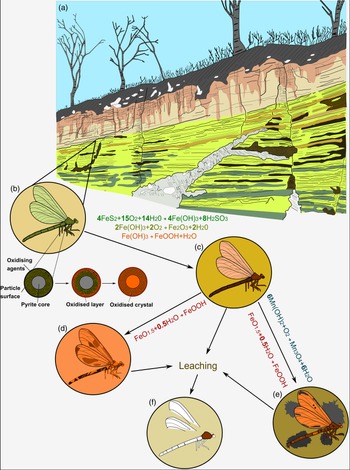
Although we did not find a characteristic spectroscopic spectrum for each type of post-diagenetic alteration identified here, our data show that insects well preserved at hand scale are preferentially replaced by haematite. However, Osés et al. (Reference Osés, Petri, Becker-Kerber, Romero, Rizzutto, Rodrigues, Galante, da Silva, Curado, Rangel, Ribeiro and Pacheco2016) and Bezerra et al. (Reference Bezerra, da Silva, Miguel, Paschoal, Nascimento, Freire, Viana and Mendes2020) have already reported traces of goethite in well-preserved insects from the Crato Formation. Therefore, pyritized insects that retain privileged morphological information can be slowly oxidized to haematite or goethite by diffusion through the carbonate matrix. In this case, goethized insects faithfully replicated at the micro scale are thought to have been oxidized in wetter conditions than the haematized insects. Nonetheless, our spectroscopic results showed that Crato insects with iron-oxide overgrowths are preferentially preserved by goethite (Fig. 8). This secondary goethite seems to correspond to a rehydration process which is thought to be responsible for the destruction of the morphological fidelity acquired in the pyritization stage during early diagenesis. Specimens with black coatings are often associated with dendrites and other fluid structures related to manganese oxides/hydroxides (Figs 4b, 6b). The genetic mechanism for the formation of manganese dendrites and other low-crystallinity products is the invasion of sedimentary discontinuities by mineralized fluids through cracks. The intensification of this process progressively diminishes the morphological fidelity of the fossil insects affected by it. Both types of alteration with iron-oxide overgrowths and black coatings, the most intuitive sources of Mn4+ and Fe3+ is the circulation of enriched solutions through the discontinuities of the Crato carbonates. In this scenario, cracking events provoke the injection of these solutions, which travel through the sedimentary body forming different oxidized zones. Under such conditions, manganese ions will precipitate as MnOOH and iron ions as FeOOH (Giovanoli, Reference Giovanoli, Varentsov and Grasselly1980). These pervasive processes can easily distort or even rub out the morphological information recorded in haematized or goethized insects that maintain the preservation fidelity primarily obtained during pyritization. Consequently, insects preserved as imprints represent the exacerbation of this process, where mineralized replicas are leached away (Fig. 8). Thus, textural, mineralogical and chemical features of Crato mineralized insects damaged during telodiagenesis are indicative of intense palaeoweathering events limited by erosion. Miranda et al. (Reference Miranda, Santos, Barbosa, Gomes, Alencar, Correia, Falcão, Gale and Neumann2018) identified in the laminated carbonates of the Nova Olinda Member a series of extensional fractures and secondary structures such as horizontal veins, stylolites and vuggy fractures. These structures become conduits for infiltration of meteoric water, favouring an intense dissolution process. In some outcrops of the Nova Olinda Member, fractures are filled with calcite and/or gypsum, indicating an origin related to telodiagenetic processes (Miranda et al. Reference Miranda, Barbosa, Gomes, Santos, Neumann, Matos, Guimarães, Queiroz and Alencar2012, Reference Miranda, Santos, Barbosa, Gomes, Alencar, Correia, Falcão, Gale and Neumann2018). Therefore, all types of post-diagenetic deformities observed in Crato insects can be directly linked to these discontinuities in the carbonate matrix. According to Miranda et al. (Reference Miranda, Santos, Barbosa, Gomes, Alencar, Correia, Falcão, Gale and Neumann2018), these structural breaks were formed owing to the uplift of the Crato Formation and evolved along pre-existing planes of weakness, generating karstic features in the laminites. Marques et al. (Reference Marques, Nogueira, Bezerra and de Castro2014) suggested that the current topography of the region is the result of a major inversion event that occurred in the Araripe Basin during Quaternary time. Thus, porosity can grow through dissolution and fracturing due to the exhumation of the Crato deposits and subsequent erosion. Mineralized insects of the Crato Formation have been slowly oxidized by diffusion of O2 through a low-porosity matrix. However, this conservative transformation can be obliterated by a late pervasive event.
Hypothetical model for the different weathering pathways of mineralized insects in the Crato Formation after earlier pyritization. (a) Schematic outcrop (quarry front) of laminated limestone from the Nova Olinda Member. (b) Illustration of a pyritized insect where pseudoframboids are transformed into haematite or goethite through the Quaternary by contact with oxidizing agents from the atmosphere. (c) Haematized or goethized insect that retains the fine morphological details acquired during earlier pyritization. (d) Rehydrated insects with iron-oxide overgrowths preserved preferentially by goethite. (e) Rehydrated insects affected by manganese oxides. (f) Maximum degree of weathering of Crato insects where oxidizing agents leach the fossil material away leaving behind only their imprint on the sediment.

The slow oxidation of Crato insects must have been essential to maintain the morphological fidelity obtained in the early diagenesis. The transmission of information conceived under anoxic conditions to the modern atmospheric environment greatly favours the recovery of specimens. This clearly demonstrates that the high-quality preservation of Crato mineralized insects is a combination of early diagenetic induced mineralization and slow weathering rates in the low-porosity matrix. Therefore, all types of alterations presented in this research were caused by late events that affected fossils positioned in the vicinity of fractures or other secondary structures.
6. Conclusions
The exceptional preservation of mineralized insects from the Crato Formation is attributed to geochemical conditions which allowed the pyritization of their cuticles and internal soft tissues during early diagenesis. Our results of imaging and spectroscopy techniques showed that these mineralized insects were pseudomorphed by iron oxides and hydroxides. Mineral pseudomorphism likely materialized during Quaternary time when the last major uplift event in the Araripe Basin took place. This process transformed the original pyrite into haematite and goethite by slow diffusion of O2 through a fine carbonate matrix. In this case, haematized and goethized insects faithfully replicated, even at the micro scale, the morphological information obtained during the earlier pyritization. On the other hand, our results also showed at least three types of post-diagenetic alterations with the potential to distort, or even destroy, morphological information from Crato insects. Overall, altered insects are not well preserved at the hand scale and also show different textural characteristics at the micro scale. The alterations can be observed in specimens with iron-oxide overgrowths, insects preserved as two-dimensional imprints and those with black coatings sometimes associated with dendrites. Crato insects with iron-oxide overgrowths are preferentially pseudomorphed by goethite and exhibit characteristic grooves and scratches on the surface of their cuticle at the micro scale. This type of alteration seems to correspond to a rehydration process, which is thought to be responsible for the destruction of the morphological fidelity acquired during the pyritization stage. Individuals with black coatings are often associated with dendrites and other low-crystallinity products related to manganese oxides/hydroxides that overlap primary preservation at the macro and micro scales. Lastly, insects preserved as imprints retain only parts of the cuticle with discontinuous clusters of cryptocrystals or isolated aggregates. This last type represents the most intense weathering experienced by Crato insects, which is when mineralized replicas are leached away.
In summary, we list three major geochemical steps involved in the taphonomic history of mineralized insects from the Crato fossil Lagerstätte, excluding biostratinomic processes. Firstly, early diagenetic pyritization of cuticle and labile tissues under hypersaline lacustrine system conditions associated with microbial activity (Catto et al. Reference Catto, Jahnert, Warren, Varejão and Assine2016; Varejão et al. Reference Varejão, Warren, Simões, Fürsich, Matos and Assine2019). This step yielded three-dimensional replicas of insects. Secondly, the transition of palaeontological information obtained under anoxic conditions to an oxic and stable environment. This transformation was provided by slow oxidation in situ, keeping morphological details of delicate features, which can shed light on taxonomy and systematics. Thirdly, the pervasive weathering experienced by oxidized insects near fractures or other secondary structures, where reprecipitation and chemical dissolution is intense. This step obscures the palaeontological information partially or entirely; therefore, Crato insects involved in this step are less likely to be recovered for taxonomic studies.
Supplementary material
To view supplementary material for this article, please visit https://doi.org/10.1017/S0016756823000043
Acknowledgements
FIB is grateful for his doctorate scholarship (Coordenação de Aperfeiçoamento de Pessoal de Nível Superior, Brasil – CAPES, process 88882. 454892/2019-01). JHS is grateful for the financial support of CNPq no 4/2021 – Research Productivity Grants – PQ, process no. 308064/2021-6. JHS is also grateful for the approved project (FUNCAP) ‘Aid to support research group projects’ Public Notice 07/2021. We acknowledge Dr Charlotte Williams for language revision. The reviews of Jaime Dias and an anonymous are greatly appreciated and improved the quality of the manuscript. Dr Wellington Ferreira da Silva Filho (UFC) has always encouraged our work on the Crato Formation. The authors would like to thank the Central Analítica-UFC/CT-INFRA/MCTI-SISANO/Pró-equipamentos CAPES for the support. We also thank the Federal Police of Brazil for proactive initiatives which have diminished the illegal international trade of fossils from the Crato Formation.