Introduction
Stress throughout the life course influences health trajectories across a variety of outcomes. Both early life adversity and adult stress act as key risk factors for physical and mental health in adulthood, but the influence of stressors at different timepoints is not yet well understood. In addition, the accumulation of adversities may better describe the “social ecology” of childhood stress, compared to any single exposure or experience.Reference Bronfenbrenner1, Reference Evans2
To better capture the cumulative stress of childhood circumstances, many studies have examined the quantity of adversities experienced, across several domains. For example, the Adverse Childhood Experiences (ACEs) study identifies a linear relationship between the number of childhood stressors and adult health.Reference Felitti, Anda and Nordenberg3 Participants who experienced abuse and household dysfunction were more likely to have chronic physical and psychological health problems in adulthood, compared to individuals in more supportive environments. Traditional measures of childhood adversity focus on individual- and family-level adversities, including socioeconomic status, subjection to family turmoil, poor health, exposure to drugs and alcohol, and sexual assault.Reference Evans and Kim4–Reference Schilling, Aseltine and Gore6 However, more recent studies have shown similar results using an expanded definition of adversity, including community-level adversities such as experiencing racism, witnessing community violence, living in unsafe neighborhoods, experiencing bullying, and having a history of foster care.Reference Cronholm, Forke and Wade7, Reference Wade, Cronholm and Fein8 Without the inclusion of community-level adversities, many childhood adversities may be missed or underestimated, especially in more diverse, lower-income populations.Reference Cronholm, Forke and Wade7
The timing and chronicity of adversities throughout childhood may also affect health. While exposure to adversity during any period of childhood can affect lifelong health, long-term, chronic exposure to adversity over multiple developmental periods of childhood may have a larger impact on health outcomes in adulthood than exposure to stress only during early childhood.Reference Thompson, Flaherty and English9 Adversity during childhood may reduce educational attainment, limit socioeconomic opportunities, and increase exposure to risky environments in adulthood.Reference McEwen and McEwen10 Furthermore, early life stressors may lead to morbidity in adulthood through the consequences of adverse coping methods such as overeating, smoking, drug use, and other high-risk behaviors,Reference Campbell, Walker and Egede11 or through biological responses that result from chronic stress.Reference Essex, Shirtcliff and Burk12
Within a life course framework, adverse experiences during childhood and adulthood can independently or synergistically influence adult health. Much research describes the independent effects of stress at particular time points.Reference Hertzman and Power13 For example, data from the Panel Study of Income Dynamics (PSID) show independent effects of both early life stress and adult stress on health. Childhood socioeconomic status predicts mental and physical health in adulthood,Reference Bjorkenstam, Burstrom and Brannstrom14, Reference Shuey and Willson15 and cumulative measures of childhood adversity predict functional status and work disability in adulthood.Reference Laditka and Laditka16, Reference Laditka and Laditka17 Socioeconomic status in adulthood consistently predicts multiple health outcomes, including diabetes, depressive symptoms, cognitive ability, and heart disease.Reference Bassuk, Berkman and Amick18–Reference Spencer20 Moreover, accumulation of socioeconomic advantage throughout adulthood has been linked to improved health outcomes.Reference Willson, Shuey and Elder21 However, few studies have explored the interactive effects of adversity at different life stages. Those that have examined the effects of both childhood and adult stress on health have found that exposure during both childhood and adulthood magnifies the risk for poor health, beyond exposure at a single time point.Reference O’Rand and Hamil-Luker5, Reference Pudrovska and Anikputa22–Reference Nurius, Green and Logan-Greene24
Within the life course framework, several mechanisms may explain the ways in which childhood adversity affects health in adulthood.Reference Pudrovska and Anikputa22, Reference Ben-Shlomo and Kuh25, Reference Lynch and Smith26 Critical periods describe specific developmental time points during which exposures have long-lasting and potentially irreversible effects. The pathway mechanism describes the indirect effects of childhood adversities on health, through their effect on adult circumstances and behavior.
Accumulation of risk suggests that stress during different periods may act through either an additive (independent) or interactive (synergistic) mechanism to affect health. Similar to accumulation of risks, the dual-risk or diathesis-stress model of disease suggests that early life adversity contributes to the creation of biologic vulnerability,Reference Champagne27 which then increases health risks among people later exposed to stress.Reference Belsky and Bakermans-Kranenburg28 The accumulation model is also consistent with the model of allostatic load,Reference McEwen29 such that repeated or chronic stress leads to a cumulative biological dysregulation.
The social mobility model focuses on transitions between advantage and disadvantage, with adult circumstances modifying, and potentially reversing, the effect of the childhood environment.Reference Pudrovska and Anikputa22 Similarly, under the theory of differential susceptibility, individuals with heightened reactivity or plasticity experience the worst outcomes in risky environments, but the best outcomes in supportive environments.Reference Ellis and Boyce30, Reference Saxton, John-Henderson, Reid and Francis31 Sources of increased sensitivity/susceptibility may include harsh parenting,Reference Miller and Chen32 childhood maltreatment,Reference Carpenter, Gawuga, Tyrka, Lee, Anderson and Price33 and maternal care.Reference Francis, Champagne and Liu34Although these life course models are interrelated and likely co-occur in the production of health and disease,Reference Pudrovska and Anikputa22 data may be more consistent with one model or another.
Research on biological embedding of early life social conditions provides a biological corollary to the environmental adversities often considered in life course epidemiology. For example, research has shown that sensitization of the hypothalamic pituitary adrenal axis due to early life stress can lead to greater vulnerability to other stressors.Reference Heim and Nemeroff35, Reference McEwen36 Evidence from both human studies and animal models demonstrate that the early life stress may decrease the ability to cope with stress later in life.Reference Mirescu, Peters and Gould37, Reference Taylor38 Such findings suggest an interaction between early life adversity and adult stress, beyond their independent effects.
But how do stressful experiences interact throughout the lifespan to affect health? Which model of life course epidemiology is most consistent with the data? The objective of this study is to examine the interactive effects of early and adult life stress on physical and mental health in adulthood, using a life course framework. Our study expands existing PSID research on the health effects of early life adversity by conceptualizing early life adversity and adult stress more broadly than socioeconomic status, similar to the approach used by others.Reference Laditka and Laditka16, Reference Laditka and Laditka17 We predict that early life adversity will interact with adult stress to predict health in adulthood, such that we see a stronger effect of adult stress among individuals who experienced early life adversity, while those with minimal stress in childhood remain relatively unaffected by adult stress, consistent with the dual risk and accumulation models.
Data
The PSID is a nationally representative longitudinal household survey that began in 1968 with 18,000 individuals in 5,000 families. As the world’s longest running household panel study, over 70,000 individuals representing multiple generations have since participated in the study.Reference McGonagle and Schoeni39 Household interviews, conducted annually until 1997 and biennially thereafter, originally focused on income and poverty dynamics, but has since broadened to address emergent scientific, policy, and health-related areas. The Childhood Retrospective Circumstances Study (CRCS), a supplement added to the PSID in 2014, collected retrospective information on childhood experiences and early life influences, including health conditions, neighborhood quality, family socioeconomic status, and parent and friend relationships.Reference McGonagle and Freedman40 The PSID-CRCS questionnaire was a 20-minute self-administered survey that was administered via internet or paper in May through October 2014. The PSID-CRCS had a 67% response rate and consisted of 8072 participants, 75% of whom completed the survey on the internet and 25% on paper.
We limited our analytic sample to participants aged 30 years and over in 2013, to better assess health in adulthood, and to ensure that participants had the opportunity to experience adult adversity and adult health outcomes. This restriction led to a sample size of 6653. Participants with missing values on variables were excluded from analyses. Due to missing values, 1.97% of participants were excluded from the fair/poor health analysis (n = 6532), and 1.95% of participants were excluded from the analysis of two or more chronic conditions (n = 6533). Due to the data collection methods of the PSID, psychological distress was not collected from all respondents, reducing our sample size for the psychological distress analysis by 36.9% (n = 4202). Compared to the full sample, participants with missing psychological distress data experienced lower levels of adult adversity, were less likely to be African American and more likely to be Hispanic, were more likely to be male, were less likely to be older than 80 years, and reported less healthy behavior.
Methods
This study uses data from the individual and family files of the PSID, as well as the CRCS supplement. We created early life adversity and adult adversity indices to capture stressors experienced in childhood and adulthood, respectively. These indices were then used to predict adult physical and mental health outcomes.
Early adversity index
Using data from the CRCS, we created an Early Adversity Index (EAI). We summed the adversities experienced by each individual during childhood to create a summary score of stress comprising socioeconomic,Reference Cohen, Janicki-Deverts and Chen41, Reference Luo and Waite42 family,Reference Jelleyman and Spencer43, 44 peer,Reference Wolke, Copeland and Angold45 and neighborhoodReference Boyce, Davies and Gallupe46, Reference Vartanian and Houser47 domains. For questions asked about multiple time periods, we counted exposure in each period separately (ages 0–5, 6–12, and 13–16 years), so an individual with persistent adversity received a higher score than one with a more limited window of adversity. This summary index represents the cumulative risk of adverse childhood environmentsReference Bronfenbrenner1, Reference Evans2 and is similar to childhood adversity indices created by others.Reference Laditka and Laditka16, Reference Laditka and Laditka17, Reference Nurius, Green and Logan-Greene24 Although some studies have included poor child health as an adverse experience,Reference Montez and Hayward48 we focused the EAI on external environmental conditions,Reference McLaughlin49 and included child health as a covariate instead.
Socioeconomic components of the EAI included the following: (1) whether participants’ financial situation was worse than the average family; (2–4) whether family faced financial trouble (ages 0–5, 6–12, 13–16 years); and (5–7) whether family used welfare or food stamps for 3 or more months (ages 0–5, 6–12, 13–16 years). Family components included the following: (8) whether family moved 3 or more times in childhood and (9) whether parents got divorced. Neighborhood components included the following: (10–11) whether neighborhood was unsafe (ages 6–12, 13–16 years) and (12–13) whether neighborhood was not close-knit or clean (ages 6–12, 13–16 years). Peer components included the following: (14–15) whether child felt lonely (ages 6–12, 13–16 years); (16–17) whether child was bullied (ages 6–12, 13–16 years); and (18–19) whether child felt unsafe at school (ages 6–12, 13–16 years). EAI scores ranged from 0 to 17, out of a possible 19. EAI was categorized into approximate tertiles of adversity, with low (0–1), medium (2–4), and high (5 or more) levels of childhood adversity.
Adult adversity index
Combining data from the individual- and family-level data files, we created a summary measure of adult stress, the Adult Adversity Index (AAI), for 2003 and 2013. The AAI sums the adversities experienced in adulthood and comprises the following variables: (1) poverty (total annual income below census needs standard); (2) marital status (divorced, separated, or widowed); (3) unemployment; (4) living in public housing or government assistance with rent; (5) less than high school education; (6) use of food stamps; (7) lack of health insurance; and (8) moving for involuntary reasons. AAI scores ranged from 0 to 7, out of a possible 9 adversities. The majority (61%) of participants reported no adult adversities. Of the participants who reported any adult adversities, nearly half reported only one, and the remainder reported more than one adversity. Therefore, AAI was categorized into low (0), medium (1), and high (2 or more) levels of adult adversity.
Change in AAI from 2003 to 2013 was captured by subtracting the 2003 AAI from the 2013 AAI. Participants were categorized as improving (AAI decreased), staying the same (no change in AAI), or worsening (AAI increased) level of adversity.
Health outcomes
We repeated our analysis for three binary outcomes, measured in 2013: self-rated health (fair or poor), diagnosis of two or more chronic conditions, and high psychological distress. Chronic conditions include the following: arthritis, asthma, cancer, hypertension, diabetes, heart attack, stroke, and heart disease. Psychological distress was based on the Kessler Psychological Distress (K6) scale, with scores of 13 or above considered presence of distress.Reference Kessler, Andrews and Colpe50
Covariates
We adjusted for sociodemographic characteristics and health behaviors in all models. Sociodemographic factors included sex (male, female), race/ethnicity (Non-Hispanic (NH) White, NH Black, Hispanic, NH Asian/Pacific Islander), and age (10-year categories). Health behaviors included frequency of alcohol consumption (never, less than 1 month, about once a month, several times a month, about once a week, several times a week, every day), smoking status (never, current, former), and sedentary behavior (no physical activity reported). We also adjusted for self-reported childhood health (fair/poor).
Statistical analysis
We assessed the bivariate association between each component of the adversity indices and each outcome using the design-based F statistic (Table 1). We used multivariate logistic regression models to examine the independent and interactive effects of early life adversity and adult stress exposure on health in adulthood. First, we assessed the independent main effects of EAI and AAI on adult health, controlling for all covariates. We then added the AAI change term to account for differences in AAI between 2003 and 2013. Finally, we added a categorical composite variable for the combinations of EAI and AAI (with low EAI-low AAI as baseline), to investigate if the effect of adult stress on health differed by early life adversity, controlling for all covariates.
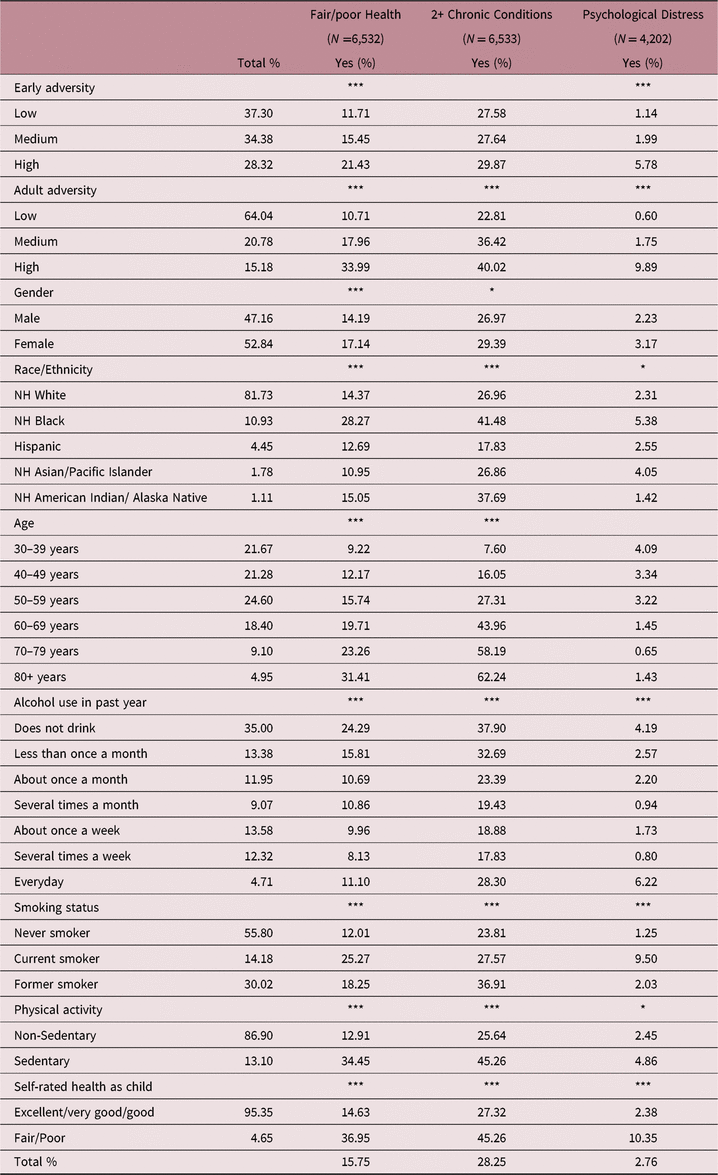
Percentage distribution of adversity, sociodemographic characteristics, and physical and mental health outcomes in adulthood, Panel Study of Income Dynamics (PSID)a

Significance based on design-based F-statistic.
*p ≤ 0.05; **p ≤ 0.01; ***p ≤ 0.001.
a Data from the full PSID and the 2014 PSID Childhood Retrospective Circumstances Study Supplement were used.
We investigated interaction between childhood and adult adversity in two ways, to assess interaction on multiplicative and additive scales. To assess interaction on a multiplicative scale, we ran logistic regression models for all three outcomes that included the main effects of EAI and AAI and an interaction term. A significant OR for the interaction term would indicate that the effect of the interaction was either more or less than the product of the main effects. To assess additive interaction, we ran logistic regression models with mutually exclusive categories for a composite EAI-AAI variable. We then calculated the relative excess risk due to interaction (RERI) as the difference between expected risk and observed risk using the following equation:
 $${\rm RERI} = {\rm OR}_{++} - {\rm OR}_{+-} - {\rm OR}_{-+} + 1$$
Additive interaction is present if RERI does not equal 0, and represents the risk that is additional to the risk expected based on the addition of the odds ratios under each exposure.Reference De Mutsert, Jager and Zoccali51, Reference Knol and VanderWeele52
We conducted sensitivity analyses to examine EAI and AAI as continuous scores in comparison to categorical scores and found similar patterns. We include EAI and AAI as categorical variables in our analyses to allow for examination of additive and multiplicative interactions. Categorizing EAI and AAI as low, medium, and high also has practical relevance for potential clinical and public health applications and identifying high-risk individuals and groups. We also conducted sensitivity analysis to determine whether the cut points for categories of EAI and AAI influenced our results. Different category cut points for low, medium, and high adversity resulted in similar patterns of results.
All analyses were weighted using the CRCS weight variables to adjust for sampling and non-response. All analyses were conducted using Stata 15 (College Station, TX).
Results
Weighted estimates of our sample indicated that over half of the participants were female 52.84% (Table 1). The sample consisted of mostly Non-Hispanic White (81.73%) participants, followed by Non-Hispanic Black (10.93%) and Hispanic participants (4.45%); Non-Hispanic Asian/Pacific Islanders and Non-Hispanic American Indian/Alaskan Native made up 1.78% and 1.11% of the sample, respectively. Over half of the sample were older than 50 years.
Over one-third of the sample reported low levels of childhood adversity (36.72%), and 26.37% of participants reported high levels of childhood adversity (Table 1). Approximately 64% of the sample reported low levels of adulthood adversity, while 15.18% reported high levels of adversity in adulthood. Approximately 16% of participants reported fair/poor health in adulthood, over one-fourth reported two or more chronic conditions, and nearly 3% reported psychological distress.
Bivariate associations indicated a positive association of early adversity with fair/poor health and psychological distress. Adult adversity was positively associated with fair/poor health, two or more chronic conditions, and psychological distress. Females and older participants reported higher prevalence of fair/poor health and chronic conditions. Non-Hispanic Black participants reported highest prevalence of all three outcomes. Higher frequency of alcohol consumption, being a current or former smoker, sedentary behavior, and reporting fair/poor health as a child was associated with higher prevalence of all outcomes.
Fair/poor health
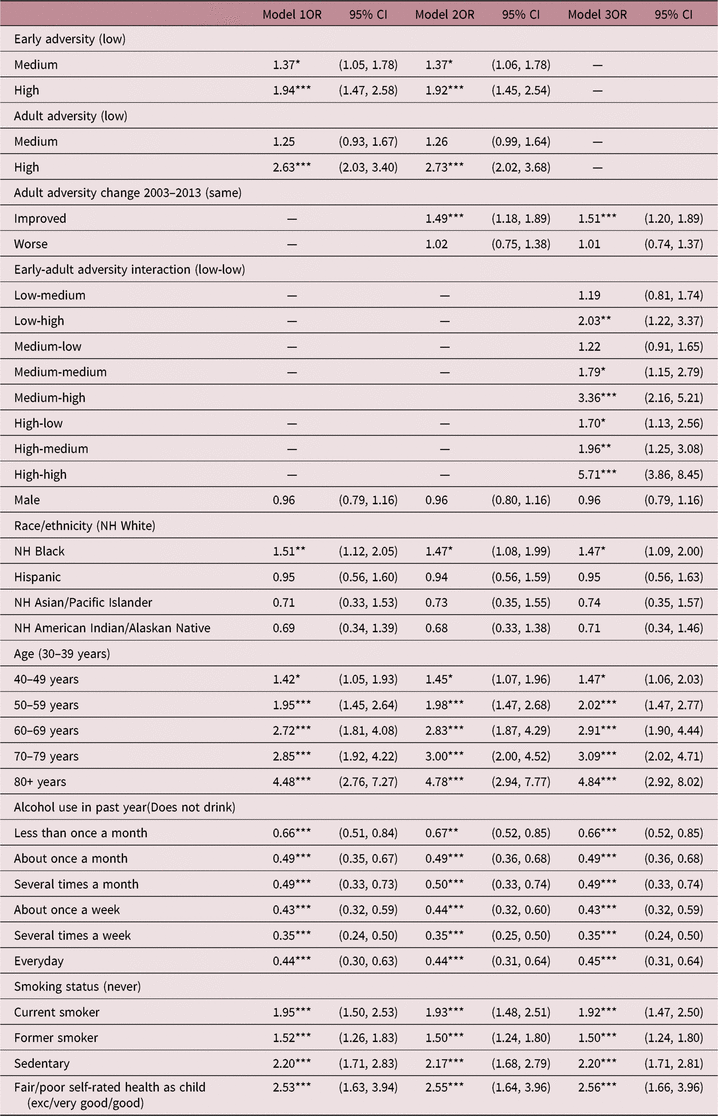
Higher levels of early life adversity and adult adversity were significant and independent predictors of fair/poor health, adjusting for all sociodemographic and health behavior covariates (Table 2, Model 1). Participants with medium EAI and high EAI had higher odds of reporting fair/poor health in adulthood (OR = 1.37, p ≤ 0.05 and 1.94, p ≤ 0.001, respectively) compared to those with low EAI. Those with high AAI had higher odds of reporting fair/poor health in adulthood (OR = 2.63, p ≤ 0.001) compared to those with low AAI. When accounting for AAI change from 2003 to 2013, the effects of EAI and AAI remained similar (Table 2, Model 2). Improvement in adult adversity was associated with higher odds of fair/poor health in adulthood (OR = 1.49, p ≤ 0.001).
Multivariate logistic regression models for fair/poor self-reported health in adulthood, Panel Study of Income Dynamics (PSID)a(N = 6,532)

*p ≤ 0.05; **p ≤ 0.01; ***p ≤ 0.001.
a Data from the full PSID and the 2014 PSID Childhood Retrospective Circumstances Study Supplement were used.
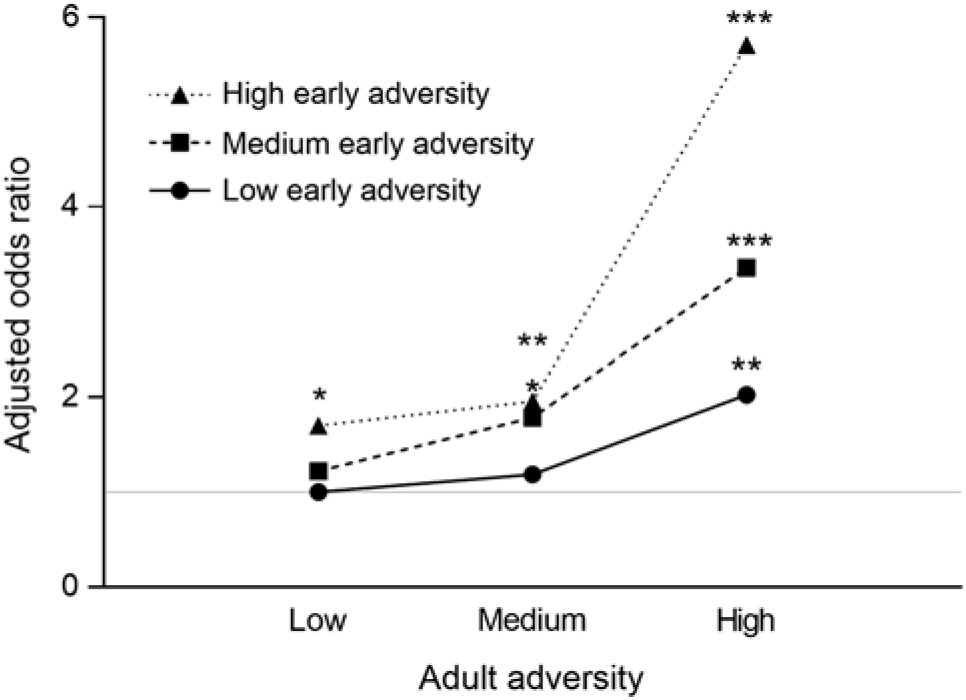
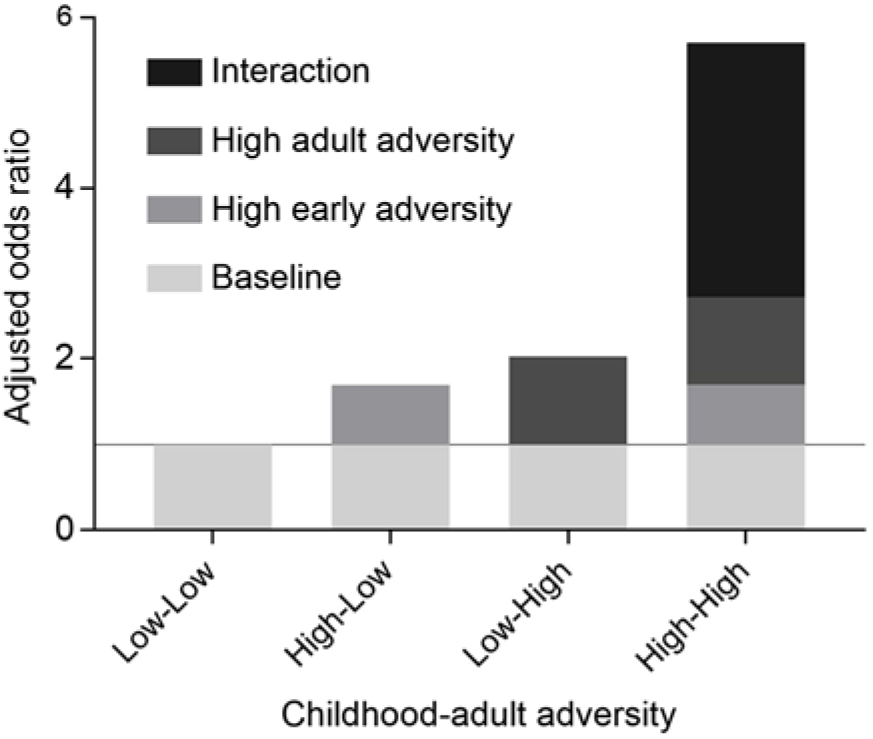
Within each level of EAI, increasing AAI was associated with worse health (Fig. 1). Odds ratios for categories of the composite EAI-AAI variable indicated that individuals with levels of high early life adversity were at especially elevated risk for fair/poor health in adulthood (Table 2, Model 3 and Fig. 1). In particular, those with high EAI and high AAI were at the greatest risk of fair/poor health (OR = 5.71, p ≤ 0.001) compared to those with low EAI and low AAI, controlling for all covariates. Individuals reporting high EAI, and medium (OR = 1.96, p ≤ 0.01) or low AAI (OR = 1.70, p ≤ 0.05), were also at increased risk for fair/poor health. Those with medium EAI showed increased odds of fair/poor health at medium (OR = 1.79, p ≤ 0.05) and high (OR = 3.36, p ≤ 0.001) levels of AAI. However, for those with low EAI, only high AAI was associated with increased risk for fair/poor health (OR = 2.03, p ≤ 0.01). Older age, non-Hispanic Black race/ethnicity, no alcohol consumption, current and former smoking status, sedentary lifestyle, and self-reported fair/poor health as a child were all associated with increased odds of fair/poor health. The RERI calculated from Model 3 estimates was 2.98 (p ≤ 0.001; 95% CI:1.30, 4.66). Due to an additive interaction between EAI and AAI, the odds ratio was 2.98 higher than that expected from the addition of the independent effects of EAI and AAI (Fig. 2). Results from a model that included main effects of EAI and AAI and an interaction term did not indicate a significant interaction on a multiplicative scale (data not shown).
Early life adversity and adult adversity predict fair or poor self-rated health, PSID (N = 6532). Both early life adversity (EAI) and adult adversity (AAI) are associated with poor/fair self-rated health. Odds of fair/poor health among people with low-high (OR = 2.03, p ≤ 0.01), medium-medium (OR = 1.79, p ≤ 0.05), medium-high (OR = 3.36, p ≤ 0.001), high-low (OR = 1.70, p ≤ 0.05), high-medium (OR = 1.96, p ≤ 0.01), and high-high (OR = 5.71, p ≤ 0.001) levels of adversity are significantly different from odds among people with low-low adversity. ORs are adjusted for sex, race/ethnicity, age, alcohol use, smoking status, physical activity, and childhood health (Table 2). * p ≤ 0.05; ** p ≤ 0.01; *** p ≤ 0.001.

Additive interaction of early life adversity and adult adversity predicts fair or poor self-rated health, PSID (N = 6532). The relative excess risk associated with joint exposure to high early life adversity (EAI) and high adult adversity (AAI) is greater than the sum of the independent effects. The excess risk due to interaction is 1.98 (RERI = 1.98, p ≤ 0.001). ORs are adjusted for sex, race/ethnicity, age, alcohol use, smoking status, physical activity, and childhood health (Table 2). * p ≤ 0.05; ** p ≤ 0.01; *** p ≤ 0.001.

Two or more chronic conditions
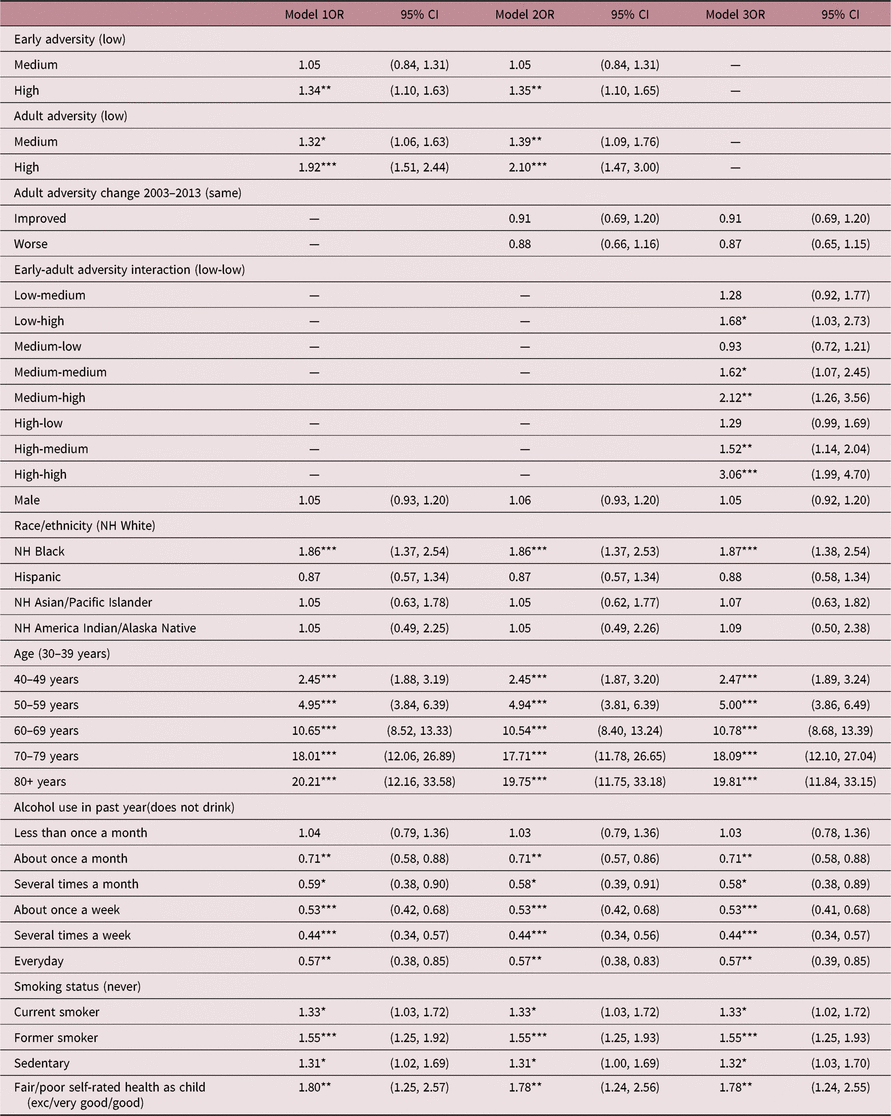
High EAI was associated with higher odds (OR = 1.34, p ≤ 0.01) of having two or more chronic conditions in adulthood compared to low EAI, adjusting for all covariates (Table 3, Model 1). High AAI (OR = 1.92, p ≤ 0.001) was associated with higher odds of having two or more chronic conditions compared to low AAI, adjusting for all covariates. Change in adult adversity was not significantly associated with chronic conditions (Table 3, Model 2).
Multivariate logistic regression models for having two or more chronic conditions in adulthood, Panel Study of Income Dynamics (PSID)a(N = 6533)

*p ≤ 0.05; **p ≤ 0.01; ***p ≤ 0.001.
a Data from the full PSID and the 2014 PSID Childhood Retrospective Circumstances Study Supplement were used.
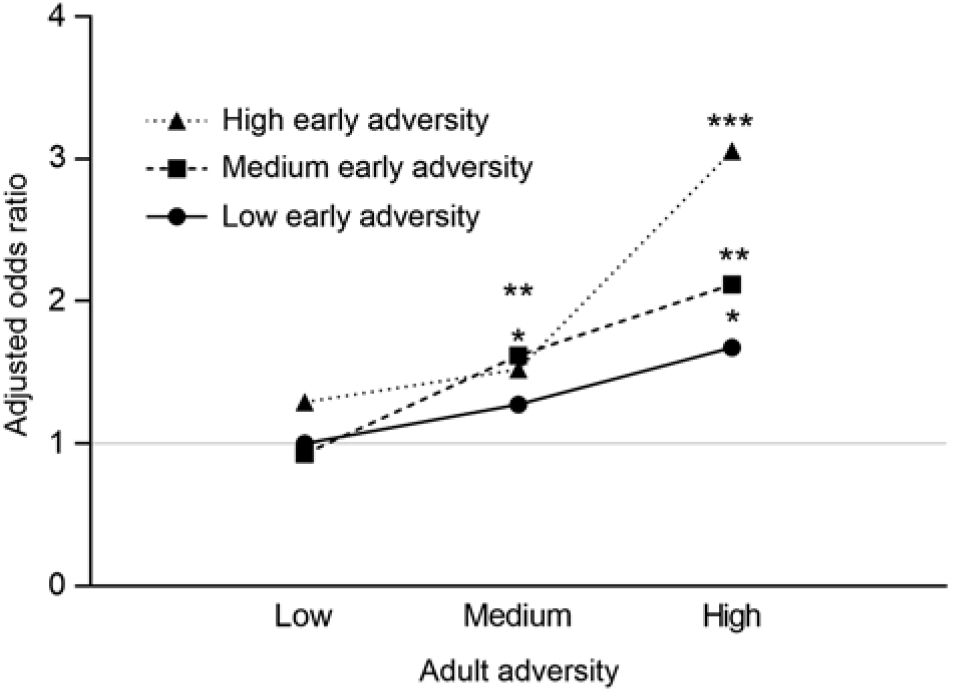
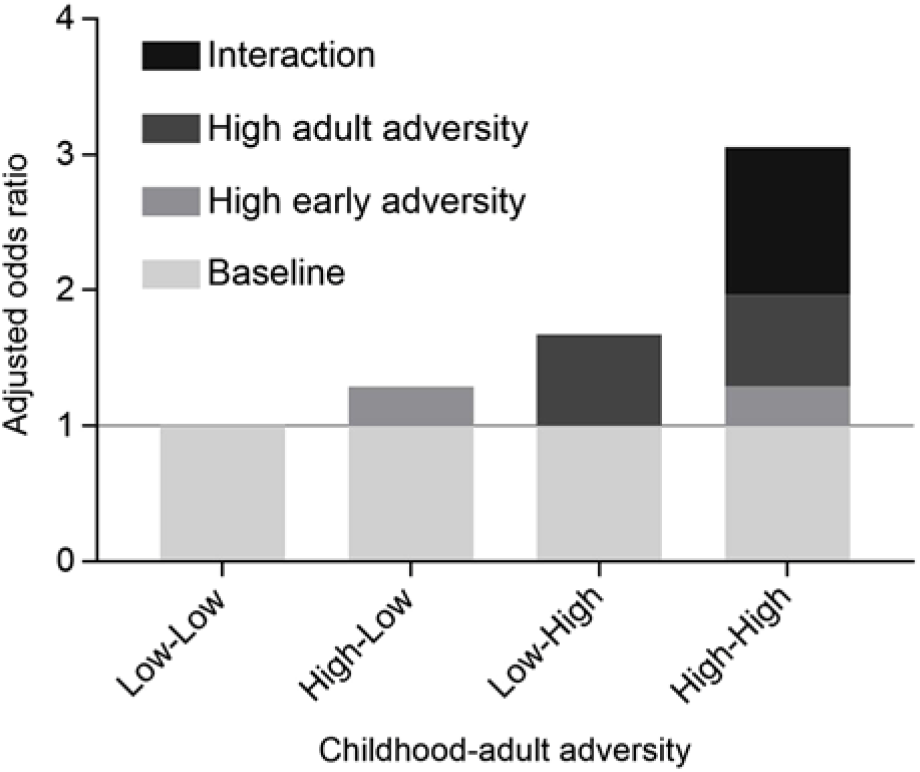
Similar to the results for fair/poor health, odds ratios for categories of the EAI-AAI composite variable indicated that individuals with high early adversity had higher odds ratio of chronic conditions in adulthood, if they also experienced medium (OR = 1.52, p ≤ 0.01) or high adult adversity (OR = 3.06, p ≤ 0.001) (Table 3, Model 3 and Fig. 3). Those with medium EAI and high AAI were also at higher risk for chronic conditions in adulthood (OR = 2.12, p ≤ 0.01). For participants with low EAI, only high AAI was associated with increased odds of chronic conditions (OR = 1.68, p ≤ 0.05). Older age, Non-Hispanic Black race/ethnicity, no alcohol consumption, current and former smoking status, and self-reported fair/poor health as a child were all associated with higher odds of chronic conditions. The RERI calculated from Model 3 estimates was 1.09 (p ≤ 0.05; 95% CI:0.10, 2.07). This indicates an additive interaction between EAI and AAI, such that the odds ratio was 1.09 higher than that expected from the addition of the independent effects of EAI and AAI (Fig. 4). Based on the results from a model that included main effects of EAI and AAI and an interaction term, we did not find a significant interaction on a multiplicative scale (data not shown).
Early life adversity and adult adversity predict presence of two or more chronic conditions, PSID (N = 6533). Both early life adversity (EAI) and adult adversity (AAI) are associated with presence of two or more chronic conditions. Odds of two or more chronic conditions among people with low-high (OR = 1.68, p ≤ 0.05), medium-medium (OR = 1.62, p ≤ 0.05), medium-high (OR = 2.12, p ≤ 0.01), high-medium (OR = 1.52, p ≤ 0.01), and high-high (OR = 3.06, p ≤ 0.001) levels of adversity are significantly different from odds among people with low-low adversity. ORs are adjusted for sex, race/ethnicity, age, alcohol use, smoking status, physical activity, and childhood health (Table 3). * p ≤ 0.05; ** p ≤ 0.01; *** p ≤ 0.001.

Additive interaction of early life adversity and adult adversity predicts presence of two or more chronic conditions, PSID (N = 6533). The relative excess risk associated with joint exposure to high early life adversity (EAI) and high adult adversity (AAI) is greater than the sum of the independent effects. The excess risk due to interaction is 1.08 (RERI = 1.08, p ≤ 0.05). ORs are adjusted for sex, race/ethnicity, age, alcohol use, smoking status, physical activity, and childhood health (Table 3).

Psychological distress
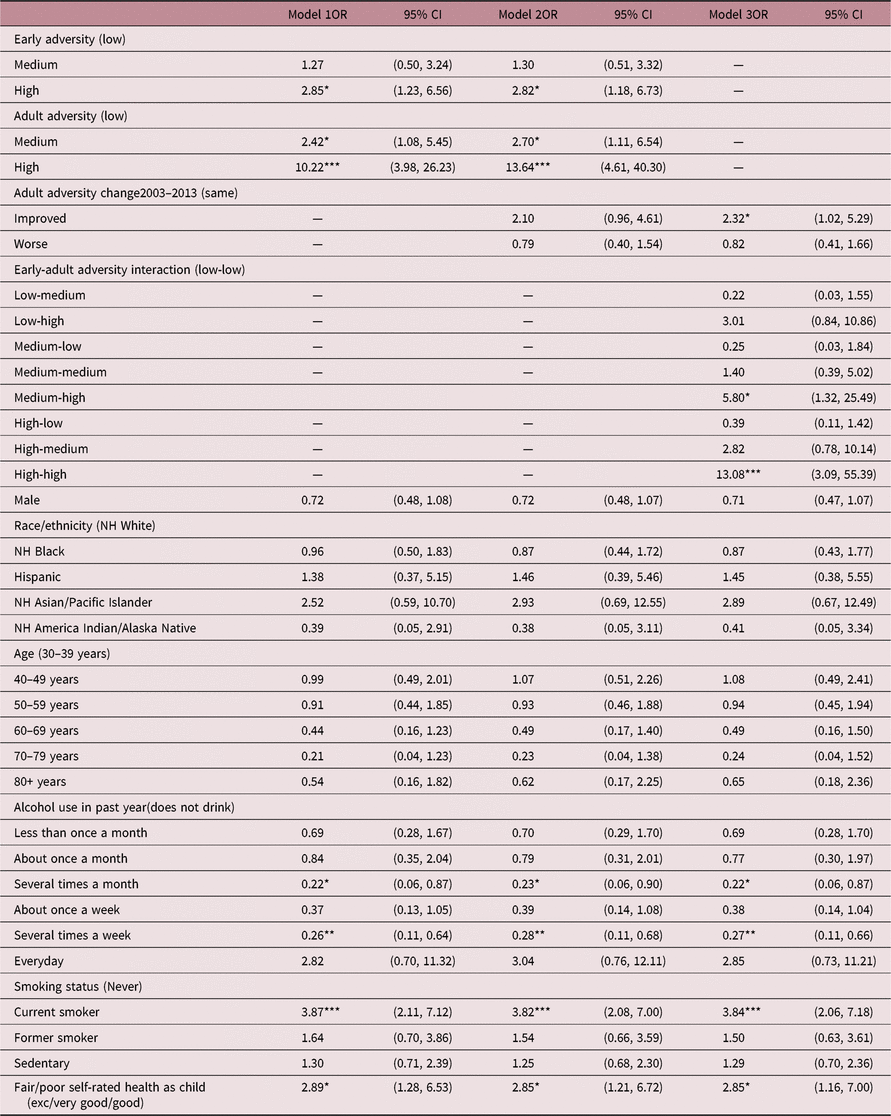
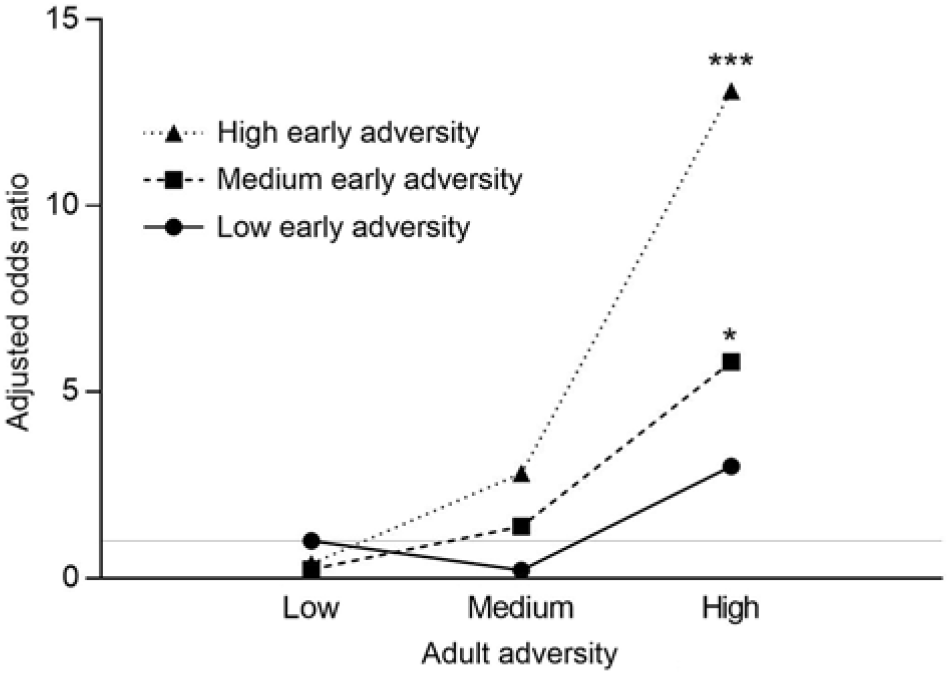
Results for psychological distress paralleled those for self-reported health and chronic conditions. High EAI was associated with higher odds of psychological distress (OR = 2.85, p ≤ 0.05), as was high AAI (OR = 10.22, p ≤ 0.001), controlling for all covariates (Table 4, Model 1). Change in AAI was not associated with the odds of psychological distress (Table 4, Model 2).
Multivariate logistic regression models for psychological distress in adulthood, Panel Study of Income Dynamics (PSID)a (N = 4,202)

*p ≤ 0.05; **p ≤ 0.01; ***p ≤ 0.001.
a Data from the full PSID and the 2014 PSID Childhood Retrospective Circumstances Study Supplement were used.
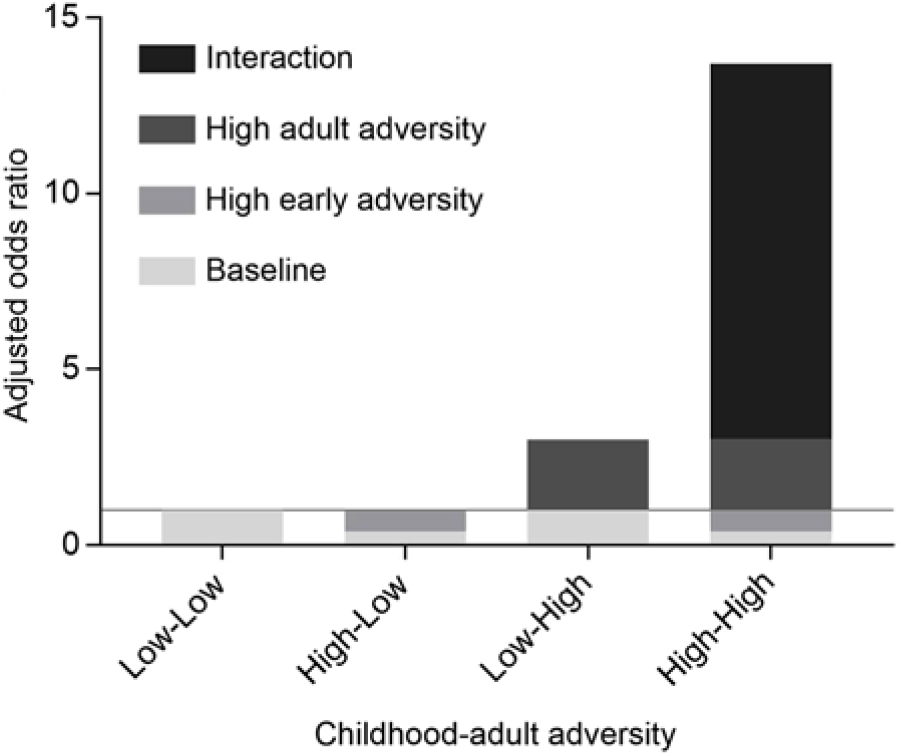
Odds ratios for categories for the composite EAI-AAI variable indicated that, among individuals with low EAI, AAI was not associated with psychological distress. Individuals with medium or high EAI and high AAI had the highest odds of psychological distress in adulthood, adjusting for all covariates (Table 4, Model 3 and Fig. 5). Those with medium EAI and high AAI (OR = 5.80, p ≤ 0.05) and those with high EAI and high AAI (OR = 13.08, p ≤ 0.001) had greater odds of psychological distress than those with low EAI and low AAI. Improvement in AAI was associated with higher odds of psychological distress (OR = 2.32, p ≤ 0.05). Fair or poor self-rated health as a child, current smoking, and no alcohol use were associated with increased odds of psychological distress. The RERI calculated from Model 3 estimates was 10.67 (p > 0.05; 95% CI: −5.37, 26.71). Although an imprecise estimate, this is consistent with an additive interaction between EAI and AAI, such that the odds ratio was 10.67 higher than that expected from the addition of the independent effects of EAI and AAI (Fig. 6). Results from a model that included main effects of EAI and AAI and an interaction term did not indicate a significant interaction term on a multiplicative scale (data not shown).
Early life adversity and adult adversity predict psychological distress, PSID (N = 4202). Both early life adversity (EAI) and adult adversity (AAI) are associated with psychological distress. Odds of psychological distress among people with medium-high (OR = 5.80, p ≤ 0.05) and high-high (OR = 13.08,p ≤ 0.001) levels of adversity are significantly different from odds among people with low-low adversity. ORs are adjusted for sex, race/ethnicity, age, alcohol use, smoking status, physical activity, and childhood health (Table 4).

Additive interaction of early life adversity and adult adversity predicts psychological distress, PSID (N = 4202). The relative excess risk associated with joint exposure to high early life adversity (EAI) and high adult adversity (AAI) is greater than the sum of the independent effects, but does not reach statistical significance. The excess risk due to interaction is 10.67 (RERI = 10.67, p > 0.05). ORs are adjusted for sex, race/ethnicity, age, alcohol use, smoking status, physical activity, and childhood health (Table 4).

Discussion
Our findings demonstrate increased sensitivity to adult adversity among people who experienced high levels of early life adversity, as childhood stressors appear to influence the salience of adult stress through a dose-response relationship. This pattern of synergistic effects on the additive scale, present across all three outcomes, is consistent with the accumulation and dual risk models,Reference McEwen29 within the life course framework. The accumulation of risk model describes a magnification of risk as additional stressors are experienced throughout the life course.Reference Kuh, Ben-Shlomo and Lynch53 Although the dual risk model has historically been understood as a combination of biological or psychological vulnerability and negative experiences,Reference Roisman, Newman and Fraley54, Reference Belsky and Pluess55 in our model, the initial vulnerability results from environmental adversity, emphasizing the effect of early life conditions on plasticity.Reference Francis56
The models of differential susceptibilityReference Ellis and Boyce30 and social mobilityReference Pudrovska and Anikputa22 were not consistent with the patterns we observed. Under the differential susceptibility model, individuals with high early life adversity and low adult adversity should show the best health outcomes. However, we saw no significant crossover effect. At no level of adult adversity did the high EAI group experience better health outcomes than the low EAI group. However, we acknowledge limitations of our ability to fully test the differential susceptibility model. Due to the available data, we were only able to measure lack of adult adversity, not the presence of positive environmental factors. Additional focus on the “positive side of the plasticity equation”Reference Belsky and Pluess55 would allow for a fuller exploration of the effects of early life adversity on developmental plasticity. Without the ability to test the full range of adult circumstances, we cannot definitively reject the theory of differential susceptibility.
We note several limitations to our analysis. The calculation of EAI did not include some of the more severe adversities, such as child abuse and exposure to the criminal justice system. Failure to include more severe stressors and traumas may lead us to underestimate the true impact of childhood adversity. However, we note that our results suggest that even relatively common and moderate stressors can increase the risk of poor health in adulthood. In addition, because many CRCS questions did not include the 0- to 5-year-old period, our analysis was unable to fully evaluate critical periods. For example, questions regarding neighborhood environment were only asked regarding age periods of 6–12 and 13–16 years. Additional information regarding the earliest years of life would have enhanced this analysis, as this early childhood period may have the most influence on the development of vulnerability or resilience.Reference Francis56, Reference Maggi, Irwin and Siddiqi57 The retrospective nature of CRCS also introduces potential misclassification. Recall of childhood circumstances poses a challenge in much of the research in this field, but does not preclude the study of early life conditions using retrospective data. Several studies have concluded that retrospective recall of early life socioeconomic status is reliable and accurate.Reference Krieger, Okamoto and Selby58–Reference Havari and Mazzonna60
Our measurement of adult adversity focused primarily on economic adversity, due to limited data in the PSID on social stressors or positive environments. Therefore, we are unable to identify the full range of adult adversities, and we may be underestimating adversity among people who experience social stressors but do not have financial difficulties. Our measure of change in adult adversity was limited by the inclusion of only two time points (2003 and 2013). Thus, we were unable to assess the impact of multiple transitions (e.g. in and out of employment). Our findings of improvement in adult adversity being moderately associated with fair/poor health and psychological distress may reflect inaccurate estimation of effects of adult adversity change due to these measurement limitations. Further exploring nuanced changes in adult adversity over time may provide further insights into the relationship between economic and social adversity and health.
Finally, our analytic sample for psychological distress was substantially smaller than that for the other two outcomes, because 36.9% of participants did not have data on that outcome, due to the design of the PSID. Therefore, the generalizability of our findings regarding psychological distress is limited.
Our analysis suggests several steps for future research. We would like to examine resilience factors that buffer relationship between early adversity and adult health, such as parenting effort and relationships between parents and children. Previous research has identified maternal warmth as a protective factor, which can reduce the effect of early life stress on adult health.Reference Chen, Miller and Kobor61, Reference Miller, Lachman and Chen62 We also see the opportunity to further explore the nuances of adult adversity using the PSID data. Considering factors such as wealth and debt may provide more information regarding adult circumstances, beyond the poverty-focused economic variables used in the current analysis.
Our findings support the salience of both childhood adversity and adult adversity for physical and mental health in adulthood. Therefore, reductions in early life stress and improvements in adult environments, particularly for those with a history of early life stress, may each have the potential to improve population health and reduce health disparities. Structural changes, rather than interventions focused on individuals, will likely have a more wide-reaching impact.Reference Brown, Ma and Miranda63 For example, improved support for families with young children (e.g. affordable quality childcare), investments in neighborhood safety and social capital, or increased minimum wage could all provide opportunities to improve health by reducing adversity across the life course.
Acknowledgments
We gratefully acknowledge the work of Santa Clara University undergraduate students Madison Camarlinghi, Athena Nguyen, Jessica Wu, and Kyla Yamashita who assisted with the preparation of this paper.
Financial Support
Funding for this project was provided by the National Institute on Aging P01 AG029409 through the PSID small grants program.
Conflicts of Interest
None
Ethical Standards
The authors assert that all procedures contributing to this work comply with the ethical standards of the relevant national guidelines on human experimentation in the United States and with the Helsinki Declaration of 1975, as revised in 2008, and has been approved by the institutional committee at Santa Clara University (Protocol ID: 17-02-923).