Introduction
Because of its heavy burden in terms of morbidity, mortality and impairment (Murray & Lopez, Reference Murray and Lopez1996; Demyttenaere et al. Reference Demyttenaere, Bruffaerts, Posada-Villa, Gasquet, Kovess, Lepine, Angermeyer, Bernert, de Girolamo and Morosini2004; Günther et al. Reference Günther, Friemel, Bernert, Matschinger, Angermeyer and König2007), depression is of eminent importance to public health. Although effective treatment is available, only 29–52% of people suffering from major depression in western industrialized countries seek help during the first year of illness, and those seeking help often do so after a considerable delay of many years (Wang et al. Reference Wang, Angermeyer, Borges, Bruffaerts, Chiu, de Girolamo, Fayyad, Gureje, Haro and Huang2007). Understanding the attitudes and beliefs that facilitate or hinder help-seeking seems necessary to improve the use of available mental health services.
Previous studies have found different beliefs and attitudes related to help-seeking for mental disorders. The notion that certain interventions or professionals are helpful (Wrigley et al. Reference Wrigley, Jackson, Judd and Komiti2005; Jorm et al. Reference Jorm, Medway, Christensen, Korten, Jacomb and Rodgers2000b; Komiti et al. Reference Komiti, Judd and Jackson2006) and aspects of mental health literacy, such as the ability to label a mental disease correctly (Wright et al. Reference Wright, Jorm, Harris and McGorry2007), seem to improve help-seeking whereas beliefs about stigmatization or negative stereotypes of mental diseases are associated in some (Wrigley et al. Reference Wrigley, Jackson, Judd and Komiti2005; Barney et al. Reference Barney, Griffiths, Jorm and Christensen2006), but not all, studies (Jorm et al. Reference Jorm, Medway, Christensen, Korten, Jacomb and Rodgers2000a; Komiti et al. Reference Komiti, Judd and Jackson2006) with negative attitudes towards seeking professional help. However, the appraisal of the role that different attitudes play in psychiatric help-seeking remains fractioned because these studies examine selected beliefs and do not use the context of a comprehensive theoretical model of the formation of help-seeking intentions.
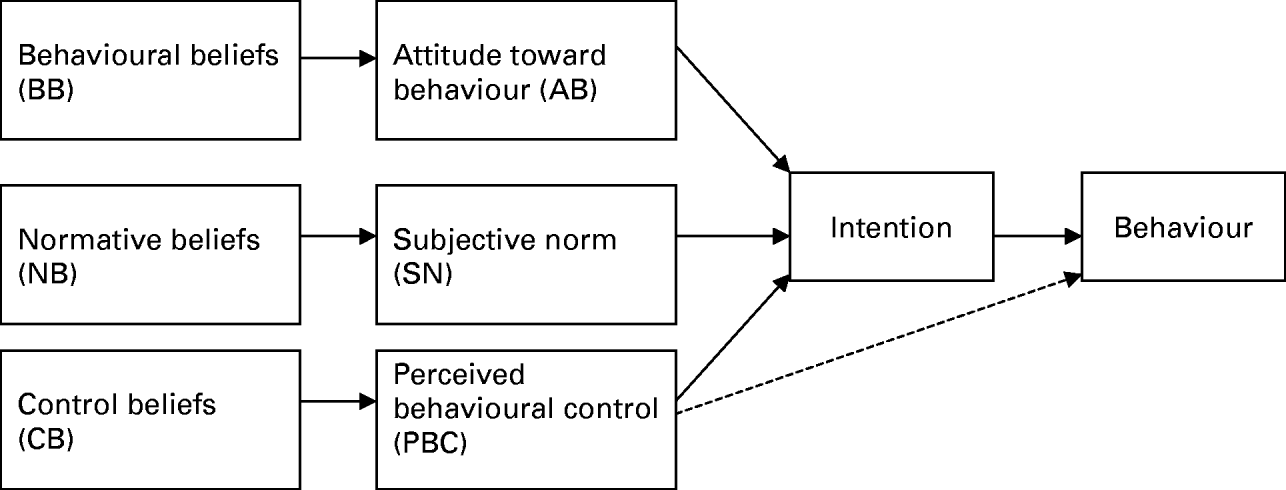
In this study we used the Theory of Planned Behaviour (TPB; Ajzen, Reference Ajzen1991) to analyse the intention to seek psychiatric help for depression in a representative population sample. The TPB has been established in numerous studies to explain health-related behaviours (Godin & Kok, Reference Godin and Kok1996) and found effective in predicting both behavioural intentions and behaviour (Armitage & Conner, Reference Armitage and Conner2001). Fig. 1 shows the components of the theory. The key assumption of the TPB is that behaviour is most accurately determined by behavioural intention. Intention, in turn, can be predicted by three kinds of considerations: beliefs about the likely consequences or other attributes of the behaviour (behavioural beliefs), beliefs about the normative expectations of other people (normative beliefs), and beliefs about the presence of factors that may further or hinder performance of the behaviour (control beliefs) (Ajzen, Reference Ajzen1991). Behavioural beliefs produce a favourable or unfavourable attitude towards the behaviour; normative beliefs result in perceived social pressure or subjective norm; and control beliefs give rise to perceived behavioural control, the perceived ease or difficulty of performing the behaviour. Because many behaviours pose difficulties of execution that may limit volitional control, perceived behavioural control is also hypothesized to exert direct influence on behaviour (broken arrow, Fig. 1) (Ajzen, Reference Ajzen2002). Given a sufficient degree of control over the behaviour, people are expected to carry out their intentions when the opportunity arises. So-called background factors such as age, gender, education and cultural factors, but also values and stereotypes, are viewed as predictive of intention and behaviour only indirectly through the effects they may have on behavioural, normative and control beliefs (Ajzen & Fishbein, Reference Ajzen, Fishbein, Albarracín, Johnson and Zanna2005). Hence the attitudinal measures inherent in the theory should comprehensively explain the behaviour under examination.
The Theory of Planned Behaviour (Ajzen, Reference Ajzen1991; Armitage & Conner, Reference Armitage and Conner2001).

The TPB has not been used before in relation to psychiatric help-seeking. Its predecessor, the Theory of Reasoned Action (TRA; Fishbein & Ajzen, Reference Fishbein and Ajzen1975), has been used in a study of 142 patients in a community-based general practice in Australia to predict the intention to seek help from a mental health professional for ‘a persistent personal problem’ (Bayer & Peay, Reference Bayer and Peay1997). The TRA differs from the TPB by not including perceived behavioural control. In this study, the TRA predicted 34% of the variance of intention. Another study using a large internet-based sample of young adults (Van Voorhees et al. Reference Van Voorhees, Fogel, Houston, Cooper, Wang and Ford2005, Reference Van Voorhees, Fogel, Houston, Cooper, Wang and Ford2006) used items that were related post hoc to TRA constructs to predict acceptance of the diagnosis of depression and perception of need for depression treatment. In both analyses, attitudes towards treatment were found to be more influential than subjective social norms. Unfortunately, this study did not report on any measures of model fit, for example the amount of variance explained by their models. Besides using the more recent TPB, our study differs from this earlier work in being both more general and more specific. First, we use a large representative sample of the general population, thus including respondents of all age groups and also those with no proximity to health services. Second, we use a well-defined situation involving a case vignette depicting major depression and questions on the intention to seek psychiatric help for this problem, thus tailoring the components of the theory very closely to a circumscribed intention.
By applying the TPB to help-seeking, our aim was (1) to find out to what extent the intention to seek psychiatric help can be predicted by the attitudinal components proposed by Ajzen, (2) whether the model can equally predict intentions of people suffering from a depressive syndrome, (3) which model components and related beliefs are of particular importance for psychiatric help-seeking, and (4) whether the inter-relationship between attitudes and intentions is different in depressed persons compared to those without depression.
Method
Subjects
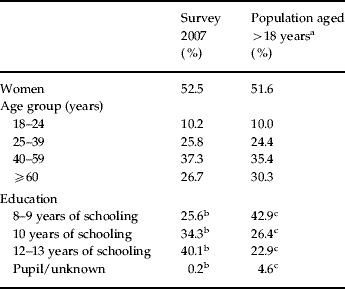
We calculated a sample size that would include a sufficiently large number of respondents suffering from depression. The 4-week prevalence of any depressive disorder (except bipolar disorder) in Germany has been found to be 5.6% (Jacobi et al. Reference Jacobi, Wittchen, Hilting, Hifler, Pfister, Müller and Lieb2004), hence with a desired sample size of 2300 participants, we expected about 130 people to suffer from relevant depressive symptoms. From January to March 2007, a population-based survey was conducted by telephone, involving persons of German nationality aged ⩾18 years, living in private households with conventional telephone connection. The sample was drawn randomly from all registered private telephone numbers and additionally generated numbers, allowing for ex-directory households as well. Numbers were assigned to regions and anonymized. Repeat calls were made on six occasions on different days of the week until a connection dropped out. Target persons within households were selected using the last birthday procedure, seeking an interview with the person who most recently had their anniversary. Thus, 3738 potential interviewees were contacted, of whom 2303 agreed to do the interview, reflecting a response rate of 61.6%. Informed consent was considered to have been given when people agreed to the interview. The fieldwork was carried out by USUMA, Berlin, a company specializing in market and social research. Sociodemographic characteristics of the sample are shown in Table 1. Compared to the general population, the sample contained a slightly higher percentage of young people and people with higher education. For all statistical analyses, data were weighted for age, gender and region.
Characteristics of the sample. Representative population survey (Germany 2007, n=2303)

a Federal Statistical Office (December 2007).
b For comparison: respondents aged >19 years.
c Persons aged >19 years. No data available for younger persons.
Instruments
Vignette and help-seeking intention
As initial stimulus, we presented respondents with a labelled case-vignette of someone suffering from major depression according to DSM-IV. Prior to its use in the study, the unlabelled vignette had been presented to five experts in the field of psychopathology who had all been able to provide the correct diagnosis. For maximum standardization of the stimulus, the case-vignette was pre-recorded with a male and a female voice, and for each interview one of the two recordings was chosen at random to be played to the respondent. Voice gender did not show any effect on our statistical models, so we did not include this as a variable in our final analyses. Participants were asked to imagine that they were suffering from the problems described in the vignette, and that they had seen their general practitioner (GP) for these problems (see Appendix for the text of the vignette). At the end of the vignette, participants were told that their GP could not find any physical abnormalities and wanted to refer them to a psychiatrist because he/she had considered the diagnosis of major depression. This is a usual procedure within the German health-care system (Jacobi et al. Reference Jacobi, Höfler, Meister and Wittchen2002) and enabled a clear focus on psychiatric treatment. Respondents were then asked to rate how likely they were to comply with this recommendation and see a psychiatrist (Intention 1, IN1). Answers were recorded on a seven-point Likert scale, with anchors 1 (not likely at all) and 7 (very likely). The second question at the end of the interview was: ‘All in all, if you had problems like those described in the vignette, would you go and see a psychiatrist?’ (Intention 2, IN2) answered from 1 (definitely) to 7 (definitely not, reverse scoring). The intra-class correlation between both items is 0.55, showing that 45% of the variance is within the respondents, and indicating that intention changes during the interview.
Construction of the TPB questionnaire
Construction of the questionnaire closely followed the guidelines introduced by Ajzen (Reference Ajzen2006) and detailed for studies in health care by Francis et al. (Reference Francis, Eccles, Johnston, Walker, Grimshaw, Foy, Kaner, Smith and Bonetti2004). Attitudes toward the behaviour, subjective norm and perceived behavioural control are measured directly by means of standard scaling procedures (Ajzen, Reference Ajzen2006). The corresponding behavioural, normative and control beliefs are measured using an expectancy-value model (Fishbein, Reference Fishbein1963; Ajzen, Reference Ajzen2001), where each belief is represented by an item on its strength (e.g. how likely a certain outcome is), which is weighted by a second item on its subjective desirability or relevance (e.g. how important a certain outcome is to the respondent). Behavioural, normative and control beliefs relevant for the researched population are elicited by means of a qualitative preparation study. The construction of the items used in this survey is described in detail below.
Attitude, subjective norm and perceived behavioural control
We measured attitude towards the behaviour (AB) using seven-point bipolar adjective items, using the adjectives useless–wise, harmful–beneficial and good–bad (scored reversely) following the statement ‘Seeing a psychiatrist for the problem described would be …’. Cronbach's α for this measure was 0.72. Item scores were added, high values of the resulting sum score indicating a positive attitude towards seeking psychiatric help.
We measured subjective norm (SN) with two items similar to those suggested by Ajzen (Reference Ajzen2006) on a seven-point scale that ranged from 1 (strongly disagree) to 7 (strongly agree): ‘Most people who are important to you think that you should see a psychiatrist with a problem like that’ and ‘With a problem like that, it is expected of you that you see a psychiatrist’ (α=0.70). Scores of both items were again added, higher values of the resulting score equalling a more permissive subjective norm.
Studies on the factorial structure of perceived behavioural control (PBC) have demonstrated two separate factors inherent to the construct, perceived self-efficacy and perceived controllability (Ajzen, Reference Ajzen2002). We therefore used one item to ask about perceived self-efficacy: ‘You are confident that you could go and see a psychiatrist with a problem like that’, and another item to enquire about perceived controllability: ‘Whether you go and see a psychiatrist with a problem like that or not is entirely up to you’, both answered on a seven-point scale from 1 (strongly disagree) to 7 (strongly agree). Internal consistency of this measure was low (α=0.54). In the resulting sum score, higher values indicate high perceived behavioural control.
Behavioural, normative and control beliefs
Following the guidelines of Ajzen (Reference Ajzen2006), we conducted a qualitative elicitation study to obtain those beliefs about the researched behaviour that are relevant to the researched population, using a convenience sample of 29 healthy adults of different age groups and socio-economic background. After presenting the vignette, we asked them to list the advantages and disadvantages of seeing a psychiatrist with the problem described (eliciting salient behavioural beliefs), to indicate important persons of reference whose opinion would influence the decision to seek psychiatric help (eliciting salient normative beliefs), and to list factors that would make seeking psychiatric help easier or more difficult for them (eliciting salient control beliefs). For behavioural, normative and control beliefs, answers were content analysed to extract the most commonly mentioned themes that covered 75% of all answers. According to the expectancy-value model that forms the basis of the TPB belief measures, we transformed each theme into a pair of items for the final questionnaire, combining an item on the perceived likeliness of a certain outcome or precondition with an item on its perceived importance or desirability (Ajzen, Reference Ajzen1991).
Behavioural beliefs (BB) were elicited for five outcomes so generated: to find help for the problem described; a psychiatrist is a competent and trustworthy person to contact with a problem like that; other people think badly of you if you go and see a psychiatrist for this problem; seeing a psychiatrist takes a lot of time and energy; you get medication for the problem from a psychiatrist. As required, each outcome was examined with two items, one assessing belief strength and one outcome evaluation. For example, ‘With a psychiatrist you would find help for the problem described’, answered from 1 (very unlikely) to 7 (very likely) was combined with ‘Finding help for this problem would be to you …’, answered from 1 (not important at all) to 7 (very important). We computed the final BB score by multiplying answers to both items, and adding the results of all item pairs (Ajzen, Reference Ajzen2006). Scoring of each item was chosen to yield the highest product terms for statements hypothesized to be associated with positive attitudes towards help-seeking.
In a similar manner, items for normative beliefs (NB) were elicited with four item-pairs reflecting whether family, friends, people from work or from leisure activities, or the GP think the respondent ‘should go and see a psychiatrist for a problem like that’ (normative belief strength), and whether the opinion of these significant others was considered from 1 (not important at all) to 7 (very important, motivation to comply). An additional pair of items reflected whether important people would in fact see a psychiatrist for the problem described, and again whether this was 1 (not important at all) to 7 (very important) to the respondent, hence our items covered both injunctive and descriptive norms (Ajzen, Reference Ajzen2006). Again, we hypothesized higher scores to be associated with a more permissive subjective norm.
Finally, control beliefs (CB), that is factors that would make seeing a psychiatrist easier or more difficult, were measured by four item-pairs covering the following topics: knowing someone who can recommend a psychiatrist, being able to see the psychiatrist secretly, coverage of psychiatric care by one's health insurance, and long waiting time for an appointment. Along the lines of the expectancy-value model for behavioural and normative beliefs, ‘control belief strength’ was combined with ‘control belief power’: We measured belief strength on seven-point scales describing the beliefs from 1 (very unlikely) to 7 (very likely), and belief power with items asking whether these preconditions would make seeing a psychiatrist easier or more difficult. Higher products of the item-pairs were hypothesized to indicate greater perceived behavioural control.
Depressive symptoms, sociodemographic data
We elicited depressive symptoms during the past 2 weeks using the mood subscale of the Patient Health Questionnaire (PHQ-9, German version), which has been validated for a representative sample of the German population (Martin et al. Reference Martin, Rief, Klaiberg and Braehler2006). Respondents indicate for each of nine depressive symptoms (corresponding to the criteria of DSM-IV) whether, during the previous 2 weeks, the symptom has bothered them: 0=not at all, 1=several days, 2=more than half of the days, or 3=nearly every day. A diagnosis of major depressive syndrome or other depressive syndrome was established according to the PHQ Office Coding Algorithm (Spitzer et al. Reference Spitzer, Kroenke and Williams1999). A major depressive syndrome is diagnosed if ⩾5 of the 9 depressive symptoms are reported to be present for at least ‘more than half the days’ (⩾2), for an ‘other depressive syndrome’ 2–4 symptoms are required. One of the symptoms needs to be depressed mood or anhedonia. We found 62 respondents suffering from a major depressive syndrome, and 74 reporting an other depressive syndrome. Taken together, we established a prevalence of 6.0% for any depressive syndrome during the past 2 weeks in our sample (n=136), which is very close to the 4-week prevalence of depression in Germany reported in other studies (Jacobi et al. Reference Jacobi, Wittchen, Hilting, Hifler, Pfister, Müller and Lieb2004).
Finally, age, gender and academic achievement were recorded. Before starting the fieldwork, we pilot tested the interview on 30 randomly chosen lay-people and changed the wording of ambiguous or unclear items.
Statistical analysis
When observing attitudes towards topics unfamiliar to the general public, the study itself may introduce a certain bias; any particular (factorial) structure of opinions and the relationships of constituents of these opinions are not simply ‘true’ but have probably developed in the course of the interview. The questions themselves may shape or even generate attitudes (Bridge et al. Reference Bridge, Reeder, Kanouse, Kinder and Nagy1977), or attitudes may become more potent when brought to mind by the interview. We took this into account by eliciting intention to seek psychiatric help twice: at the beginning (immediately after presentation of the case-vignette, IN1) and at the end of the interview (IN2). Assuming that answers to IN2 differ from those to IN1 as a result of the interview, we included both questions endogenous to the same predictors in separate path models. We calculated the path models according to the proposed relationship between the composites of the TPB, controlling for sociodemographic variables. The path models were estimated as saturated linear regression models, fully recursive and without any restrictions. Differences in explained variances and differences in effect parameters indicate any interview effect.
In a second step we tested these differences by constraining the parameters effective on IN1 and IN2 to be equal. If these restrictions do not violate the adequacy of the models, we assume that the interview does not meaningfully alter the attitude–intention relationship. We evaluated model fit by means of the overall χ2, the Tucker–Lewis Index (TLI), the Comparative Fit Index (CFI) and the Bayes Information Criteria (BIC) (Schwarz, Reference Schwarz1978; Raftery, Reference Raftery1995). We used the Root Mean Square Error of Approximation (RMSEA) and the Standardized Root Mean Square Residual (SRMR) to check for possible model deviations. Model estimation was carried out using Mplus 5 (Muthén & Muthén, Reference Muthén and Muthén2007). Analyses were conducted separately for respondents without depression (n=2167) and the subgroup of depressed respondents (n=136).
Results
After presentation of the vignette, 68.9% of respondents considered themselves likely to consult a psychiatrist for depression (combining the positive answer categories 5–7 of the seven-point Likert scale), 7.2% were undecided, and 23.9% indicated that they were unwilling to seek psychiatric help (answer categories 1–3). These values changed marginally after having completed the interview (68.4% likely, 11.7% undecided, 20.0% unlikely to see a psychiatrist). Help-seeking intentions of depressed and non-depressed people did not differ significantly before or after the interview.
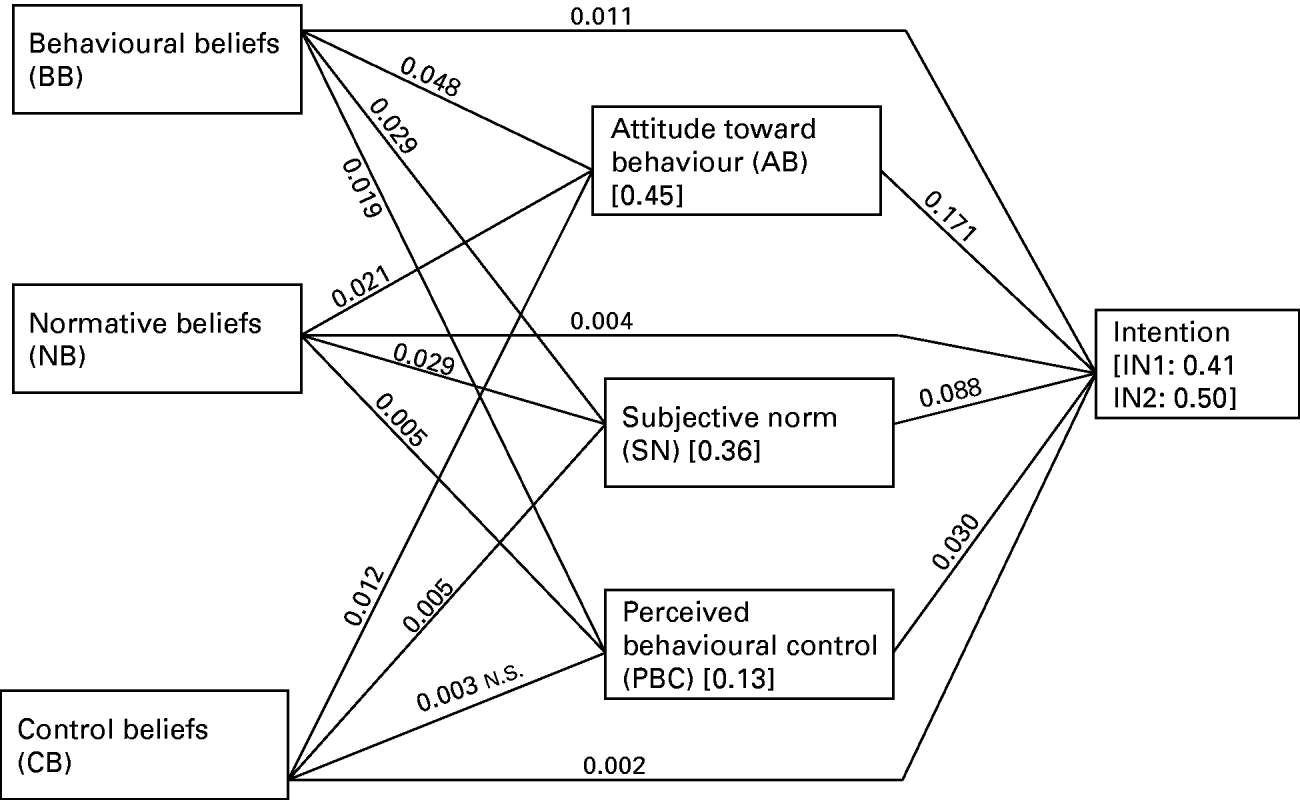
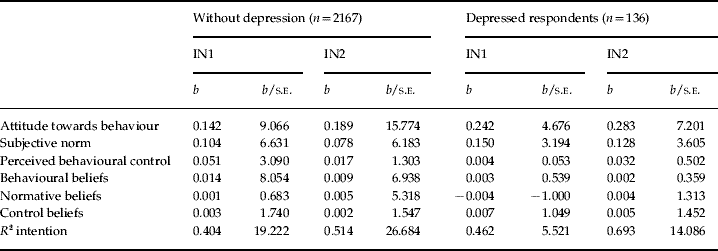
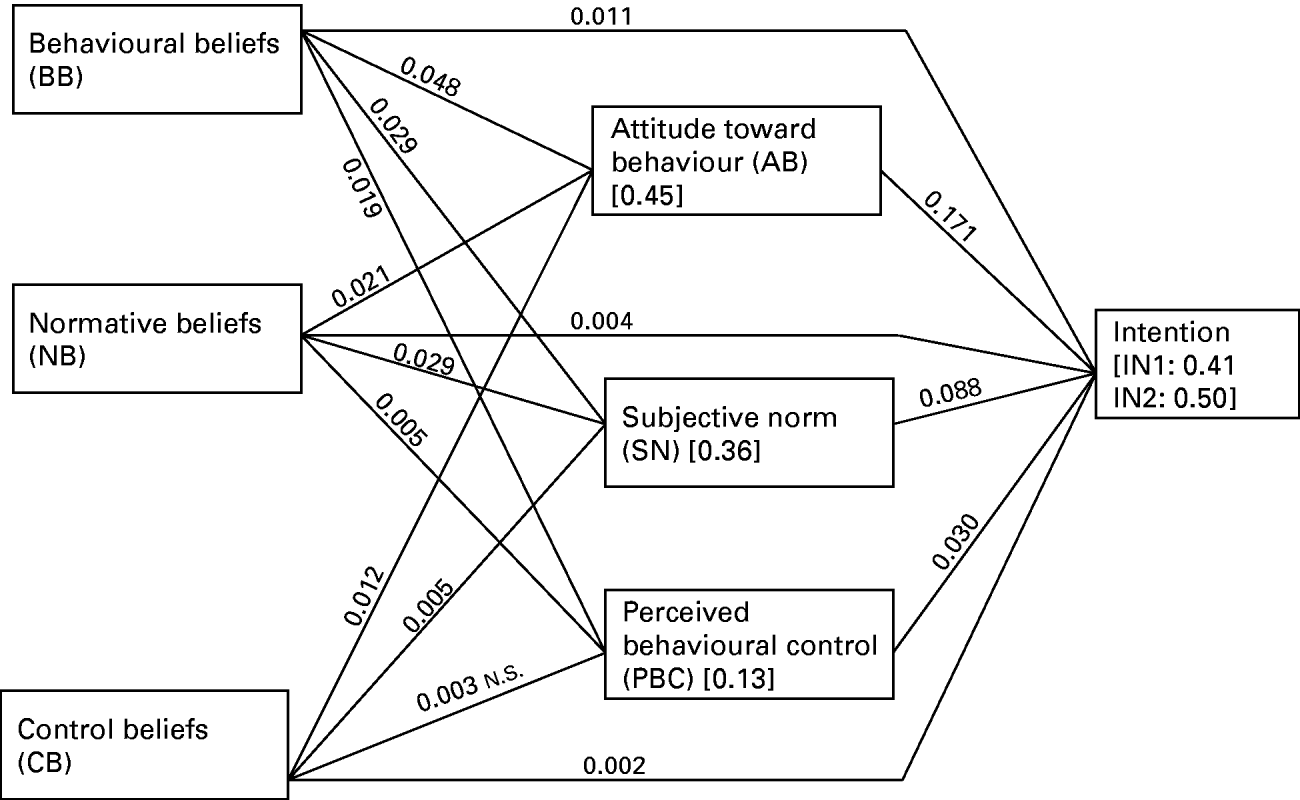
Table 2 shows unrestricted models for both subgroups with and without depressive syndrome, determining intention at the beginning (IN1) and at the end of the interview (IN2) respectively. Differences between the models for IN1 and IN2 can be attributed to the interview. Fig. 2 shows the restricted path model for the subgroup of respondents without depression, adjusted for sociodemographic variables. This model shows a χ2 of 25.376 at six degrees of freedom (six constrained parameters). The TLI (0.964) and CFI (0.996) indicate good model fit. RSMA (0.030) and SRMR (0.009) also indicate that the restrictions do not severely violate the adequacy of the model. The BIC for the restricted model is smaller than for a corresponding model without restrictions (136521.316 v. 136532.488), letting us accept the more parsimonious one.
Path model of the Theory of Planned Behaviour (TPB) for intention to seek psychiatric help for depression, adjusted for age, gender and education. Respondents without depression (n=2167). Non-standardized path coefficients [R 2]. IN1, intention at beginning of interview; IN2, intention at end of interview. n.s., not significant (p>0.05).
Unrestricted path models for intention to seek psychiatric help. Separate models for IN1 and IN2 for depressed respondents and respondents without depression. Non-standardized path coefficients, adjusted for age, gender, education

IN1, Intention at beginning of interview; IN2, intention at end of interview; b, non-standardized path coefficient; s.e., standard error; R 2, explained variance.
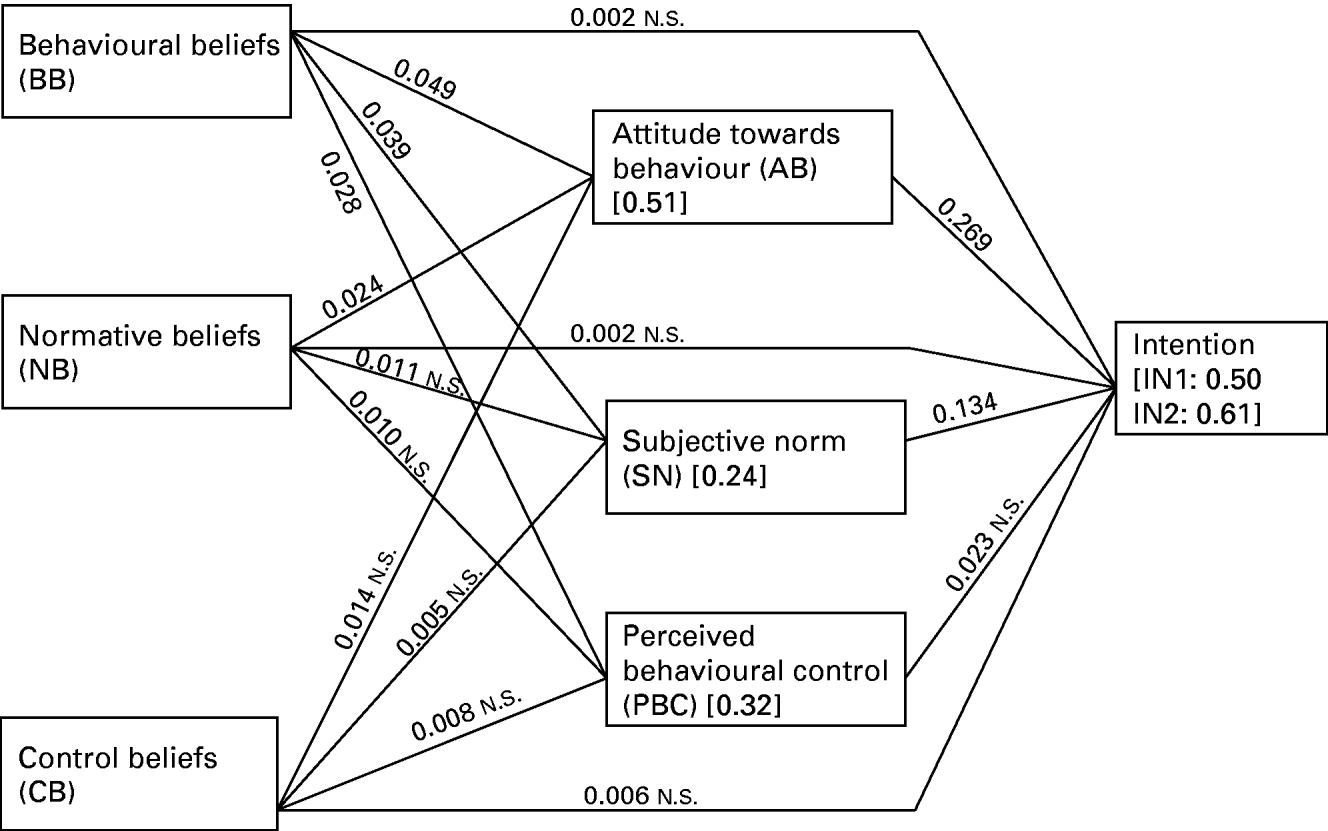
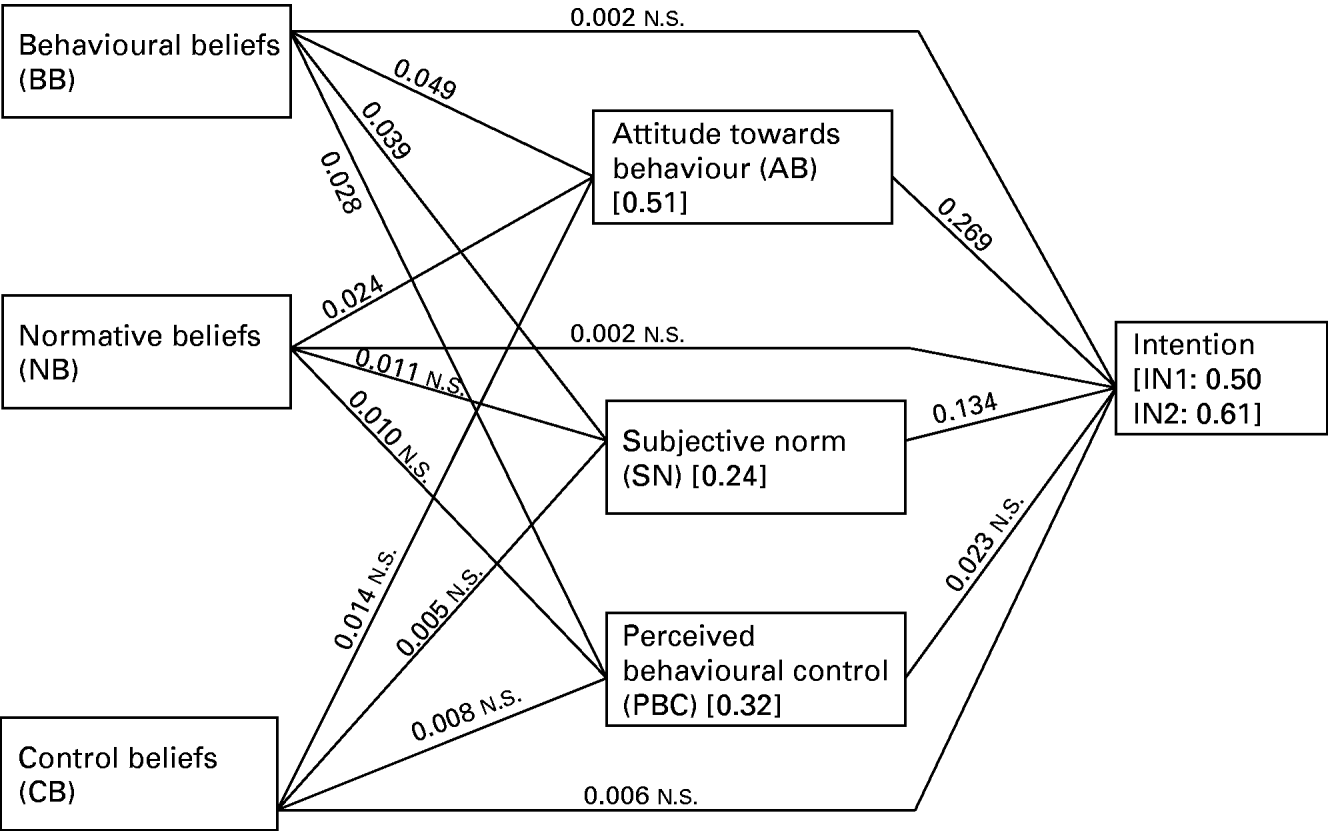
Fig. 3 shows a similar model for the subgroup of depressed patients (n=136). Again, the effects of parameters on IN1 and IN2 were restricted to be equal. Model fit parameters for this model are: χ2(6)=6.437, p=0.376, TLI 0.989, CFI 0.999, RSMA 0.023, SRMR 0.027, indicating an almost perfect model fit. To permit comparison between models for both subgroups, the figures show non-standardized path coefficients.
Path model of the Theory of Planned Behaviour (TPB) for intention to seek psychiatric help for depression, adjusted for age, gender and education. Respondents with depressive syndrome (n=136). Non-standardized path coefficients [R 2]. IN1, intention at beginning of interview; IN2, intention at end of interview. n.s., Not significant (p>0.05).
To allow comparison of coefficients within the models, we additionally report standardized path coefficients (β values). Standardized coefficients are generated by transforming all variables so they have variances of 1. As transformation differs between samples, these values cannot be compared between models for depressed and non-depressed respondents. Moreover, because raw values for IN1 and IN2 differ, standardized coefficients for intention also differ between IN1 and IN2, and we report values for IN2 only. Of the direct attitudinal measures, the intention to seek psychiatric help is most strongly related to positive AB, that is the appraisal of psychiatric help as beneficial, wise or good (non-standardized path coefficient b=0.171, standardized path-coefficient β=0.355). Subjective norm (SN), the anticipated social pressure to seek help, has comparatively less influence (b=0.088, β=0.165), whereas the perception that seeing a psychiatrist is under the person's control (PBC) is related weakest to help-seeking (b=0.030, β=0.043). Ajzen's belief composites (BB, NB, CB) also have a direct influence on intention, which is strongest for behavioural beliefs (b=0.011, β=0.215), followed by normative (b=0.004, β=0.088) and control beliefs (b=0.002, β=0.037).
Personal attitudes towards seeing a psychiatrist (AB) depend most strongly on the subjects' behavioural beliefs (BB; b=0.048, β=0.464) and, to a lesser extent, on beliefs that important others would appreciate seeing a psychiatrist (NB; b=0.021, β=0.243). Beliefs about external factors that would facilitate help-seeking (CB) are of minor importance to help-seeking attitudes (b=0.012, β=0.095). The individual's perceptions of general social pressure to seek psychiatric help (SN) depend both on beliefs about the expectations of significant others (NB; b=0.029, β=0.365) and on personal behavioural beliefs (BB; b=0.029, β=0.311). Control beliefs have little impact (CB; b=0.005, β=0.046). The notion that seeing a psychiatrist is under the person's own control (PBC) is not significantly related to beliefs about external factors that facilitate help-seeking (CB). Instead, it is related to behavioural (BB; b=0.019, β=0.266) and normative beliefs (NB; b=0.005, β=0.079). Overall, the TPB model explains 42% (IN1) and 51% (IN2) of the variance for intention, 45% for AB, 36% for SN, and 13% for PBC.
The model for the subgroup of depressed persons (Fig. 2) yields similar path coefficients (with smaller coefficients frequently being not significant because of the smaller sample size), emphasizing the relative importance of those components in the ‘upper’ part of the model (behavioural beliefs, attitude towards the behaviour). The explanatory power of this model was even stronger, explaining 50% (IN1) and 61% (IN2) of the variance for intention, 51% for AB, 24% for SN, and 32% for PBC.
As the belief composites of the TPB (BB, NB, CB) are aggregates of the expectancy-value products of all belief themes and therefore do not allow conclusions on the particular importance of specific beliefs, we conducted additional regression analyses to relate the individual beliefs elicited in our qualitative study to help-seeking intentions. In two linear regression analyses for depressed and non-depressed respondents, we regressed intention to seek psychiatric help (IN2) on the separate expectancy-value products of all belief themes, adjusting for sociodemographic variables. Because of the large sample of non-depressed respondents, we considered results significant only if p<0.001 (p<0.05 in the smaller sample of depressed respondents). Significant predictors of help-seeking intentions for both depressed and non-depressed persons were the belief to receive help for the problem when seeing a psychiatrist (standardized coefficient, non-depressed/depressed respondents, β=0.27/0.38), the belief that it would consume time and energy to go there (reversely coded, β=0.09/0.20), and the belief that psychiatric care was covered by one's health insurance (β=0.09/0.20). Other beliefs were of significant influence in non-depressed persons only, namely the expectation of the psychiatrist being a competent and trustworthy person (β=0.10), and the anticipated approval of both the patient's family (β=0.15) and the GP (β=0.12).
Discussion
We found willingness to seek psychiatric help for depression largely explained by attitudes and beliefs as conceptualized by the TPB (Ajzen, Reference Ajzen, Kuhl and Beckmann1985, Reference Ajzen1991). The theory assumes that individuals weigh attitude, subjective norm and perceived control idiosyncratically with regard to the researched behaviour, but that these considerations can be made explicit by measuring them, and that these elicited attitudes follow common principles that can be described by statistical models. By applying a TPB model to a large sample of the general population we were able to show that the relationships of the theory's components can be meaningfully described at a population level. The amount of variance explained by our models (41–61%) is comparably high; a meta-analysis of 185 studies using the TPB to explain various behaviours found, on average, 39% of the variance in intention explained by attitudes, social norms and perceived behavioural control (Armitage & Conner, Reference Armitage and Conner2001).
Willingness to seek psychiatric help thus seems to be strongly related to a set of attitudes as described within the framework of the TPB and may accordingly be targeted by interventions to improve help-seeking. As the TPB model did explain a larger amount of variance in intention in the subgroup of depressed persons both at the beginning and at the end of the interview, attitudes and beliefs about help-seeking seem to be more salient in these respondents. The similarity of the attitude–intention relationship found in depressed and non-depressed persons indicates that changing attitudes in healthy people could improve help-seeking in the case of depressive illness.
To judge the relevance of our findings, however, some characteristics of our study need to be discussed. First, we use a hypothetical situation to study behavioural intentions, which raises the question how the attitudes and intentions elicited relate to those surfacing when someone experiences real depressive symptoms and considers seeking psychiatric help. Although the quasi-experimental character of our study poses a limitation here, the similarity of our models for depressed and non-depressed persons indicates that the experience of actual depression does not fundamentally change attitudes to psychiatric help-seeking. Notably, however, we did not elicit ‘real-life’ help-seeking intentions in depressed respondents either, but hypothetical intentions with regard to our vignette. By using a low threshold for depression (‘any depressive syndrome’ in the PHQ-9), some classified as depressive may personally not have felt any need for help. In general, help-seeking behaviour for mental disorders is difficult to operationalize because it comprises a pathway of different actions and encounters rather than a single act or decision (Rogler & Cortes, Reference Rogler and Cortes1993). Here, using a hypothetical situation offers advantages because it enables a detailed description of a situation that leads to a question on a well-defined intention. Tailoring questions on attitudes and expectations closely to a specified situation is important because specific attitudes have been shown to be much more influential to intention and behaviour than general attitudes (Ajzen & Fishbein, Reference Ajzen, Fishbein, Albarracín, Johnson and Zanna2005).
Second, the focus of our study is on psychiatric help, and other frequently used and not necessarily less effective ways to receive help, such as seeing a GP or a psychotherapist, are not examined. As our vignette involved a GP recommending psychiatric treatment, our study does not allow conclusions on the ‘first step’ towards any medical help for depression.
A third concern is the relationship between intentions and actual behaviour. We know very little about attitude–behaviour relationships in help-seeking for mental disorders. Rating selected interventions as helpful for the treatment of depression did predict the use of some (e.g. use of antidepressants), but not all, interventions (e.g. seeing a GP) during a 6-month follow-up study of persons with depressive and anxiety symptoms in Australia, whereas general attitudes towards a depressed person were unrelated to later help-seeking (Jorm et al. Reference Jorm, Medway, Christensen, Korten, Jacomb and Rodgers2000b). However, a review on the prediction of various health-related behaviours with the TPB in 56 studies found 34% of variance in future behaviour explained by the theory (Godin & Kok, Reference Godin and Kok1996). Finding out about the relationship between intention, other components of the TPB and help-seeking behaviour in people suffering from depression necessitates a sophisticated prospective study design accounting for various possible help-seeking pathways and remains a desideratum of future research.
In our study, perceived behavioural control had a minor influence on intention, depicting seeing a psychiatrist as a behaviour largely under volitional control, where no constraints on action are anticipated. Although our findings are limited by the low internal consistency of this construct, they seem plausible in Germany, where the past decade has seen an increase in the number of office-based psychiatrists to about 6/100 000 inhabitants (Berger, Reference Berger2004), and where a public health insurance system offers psychiatric care without waiting lists to the vast majority of people. However, PBC is likely to have more impact on help-seeking intentions in countries with a different health system and a more restricted access to mental health services. Although this interpretation accounts for the perceived minor influence of factors outside the individual (corresponding to the controllability factor of PBC), the limited role of PBC with regard to internal factors (corresponding to its self-efficacy component) remains unexplained. Notably, the influence of PBC on behavioural intention even decreased slightly in depressed respondents, where potentially lower notions of self-efficacy would have been expected to have a stronger impact on help-seeking intentions. Our study thus provides no evidence for a decisive role of perceived control in terms of both controllability and self-efficacy in psychiatric help seeking. However, to further illuminate the role of self-efficacy for help-seeking in depression, future studies should use more detailed measures of this construct.
A particular strength of our study is the examination and quantification of a potential interview effect because the topic of psychiatric help-seeking may be unfamiliar to most people, and the interview itself may have shaped or even generated certain attitudes. In fact, the variance our model explained was greater for intentions elicited at the end of the interview (IN2), when respondents had contemplated the issue of help-seeking in more detail by answering our questions, than for intentions voiced at the beginning (IN1). However, compared to the overall variance explained, this difference was small. Moreover, we could demonstrate that the effects of model parameters on both questions of intention (IN1 and IN2) can be regarded as similar without violating our model assumptions, hence we conclude that doing the interview did not change or generate attitudes, but made present attitudes more potent to explain behavioural intention. Attitudes and their relationships as portrayed by our model do exist ‘outside’ the interview.
Finally, by evaluating the relative importance of the belief themes elicited in our qualitative study, some of them were of surprisingly limited influence on help-seeking intentions, namely those presumably associated with negative stereotypes on psychiatric care or anticipated stigmatization. Neither the anticipation of negative reactions by others, nor the anticipation to receive medication, nor the possibility to see a psychiatrist secretly was significantly related to help-seeking intentions. This is in line with recent studies on the relationship of stigma to help-seeking for mental problems that point towards a limited role of anticipated discriminating reactions of others (Golberstein et al. Reference Golberstein, Eisenberg and Gollust2008; Schomerus et al. Reference Schomerus, Matschinger and Angermeyer2009), but find some influence of personal stigmatizing attitudes or self-stigmatization on help-seeking (Vogel et al. Reference Vogel, Wade and Haake2006; Schomerus et al. Reference Schomerus, Matschinger and Angermeyer2009). Like values and stereotypes, personal stigmatizing attitudes could constitute background factors within the framework of the TPB (Ajzen & Fishbein, Reference Ajzen, Fishbein, Albarracín, Johnson and Zanna2005), affecting intention only indirectly through a potential influence on behavioural, normative and control beliefs.
What can be learned by our study? We see implications for both clinical practice and planning of interventions to improve help-seeking for depression. Turning back to the situation described in our vignette, where a GP recommends specialist help for depression, our study may help to improve referral to specialist mental health services. To advance their patients' willingness to follow such a recommendation, GPs and other professionals should be encouraged to inform their patients thoroughly about the potential benefit of specialist mental health care because the patients' personal evaluation of psychiatric care is most closely related to help-seeking intentions. Additionally, it seems worth discussing the anticipated expectations of significant others, which can either further or hinder willingness to see a psychiatrist. For future interventions, three conclusions seem plausible: first, because we could prove a close attitude–intention relationship for a behaviour specified in some detail, interventions should also target behaviour-specific attitudes rather than general attitudes towards diseases. Second, as the attitude–intention relationship was similar among those with and without depressive syndrome, campaigns among healthy persons are likely to affect future help-seeking, should they become depressed. Third, simple messages probably work best; willingness to seek help seems to be guided much more by considerations of possible benefits than by fear of unwanted consequences, and more by personal evaluations of psychiatric care than by concerns about expectations of others. To improve help-seeking, psychiatric care for depression needs to be promoted as an effective, attractive and accessible option to alleviate suffering.
Declaration of Interest
None.
Appendix
Vignette
Please imagine that you went to your GP because you have problems handling your everyday life. For a few weeks you have been feeling weak and without energy in the morning. Although you feel tired and powerless all day you cannot sleep well, you constantly wake up in the middle of the night and then cannot fall asleep again. You can hardly concentrate on your work. Different from before, you need a lot of time for everything you do and you can hardly manage your normal workload. In the past two weeks you also felt sad and depressed, without having any particular reason for this. There is nothing you can laugh about. You don't feel like anything any more, nothing is of interest to you. Instead you mull over the future the whole time and don't know what will be next. You have the feeling that you are no good and that you do everything wrong.
Try to imagine you had those problems. Imagine that your GP tells you they cannot find any physical problems and your blood test results are OK. They assume that you might suffer from depression, and suggest that you should see a psychiatrist.