




No CrossRef data available.
Article contents
Cardiomyopathy in congenital disorders of glycosylation
Published online by Cambridge University Press: 24 May 2005
Abstract
Congenital disorders of glycosylation are a group of inherited metabolic multisystem disorders characterized by defects in the glycosylation of proteins and lipids. In most cases, neuromuscular disease is present. The purpose of this study was to characterize the cardiological aspects in this disorder.
From the literature, we identified six children with congenital disorders of glycosylation associated with cardiac disease. We then screened for cardiovascular manifestations 20 patients diagnosed with congenital disorders of glycosylation at our own institution.
Of the 6 patients identified in the literature, 4 had hypertrophic cardiomyopathy, while in the other 2 the cardiac diagnosis was unclear. The mean age at cardiac diagnosis was 5 months, with a range from 34 weeks to 24 months. Of the patients, five had died at a mean age of 3.5 months, with a range from 1.5 to 6 months, with one documented cardiac death. Three of our 20 patients (15%) had coexistent cardiomyopathy, and in three additional patients presenting with cardiomyopathy we made the diagnosis of a congenital disorder of glycosylation. In our cohort, dilated cardiomyopathy was found in two-thirds of the patients, with hypertrophic cardiomyopathy in the other third. The mean age at cardiac diagnosis was 19 months, with a range from 0.5 to 84 months. Of these patients, two died in infancy at a mean age of 4 months, specifically at 1.5 and 7 months, due to cardiac disease, with one dying suddenly. The remaining four patients are alive with minor to severe cardiac dysfunction.
We conclude that congenital disorders of glycosylation have to be considered in the differential diagnosis of children presenting with cardiomyopathy, and that all patients with congenital disorders of glycosylation should be screened for an associated cardiomyopathy. Cardiac involvement contributes significantly to morbidity and mortality, and probably to sudden cardiac death in this disorder.
Information
- Type
- Original Article
- Information
- Copyright
- © 2003 Cambridge University Press
Congenital disorders of glycosylation are a rapidly growing family of inherited multisystem disorders1 caused by defects in the biosynthesis of N-linked oligosaccharide chains attached to glycoproteins. Being necessary for the function of many glycoproteins, truncated or missing oligosaccharide side chains often severely affect their function. To date, 12 different congenital disorders of glycosylation have been characterized, based on different molecular defects. About one-third of the patients have molecular defects different from the ones already identified, producing the so-called “congenital disorder of glycosylation – type x”. The clinical presentation is complex and affected children present with a variety of signs or symptoms of multiple organ dysfunction including neurological and cutaneous abnormalities, or multivisceral involvement and cerebellar hypoplasia. The purpose of our study was to evaluate the cardiovascular manifestations in these patients.
Case reports
As our study focusses on the cardiological aspects in congenital disorders of glycosylation, we have summarized the essential information of the patients in Tables 1 and 2. Those requiring details on the different congenital disorders of glycosylation, their biochemical bases, and the clinical phenotypes, should study the previous review from our group.1 In the following section, we briefly comment on the cardiac clinical course of our patients as necessary to illustrate the temporal evolution of the cardiological manifestations.
Table 1. Synopsis of clinical, biochemical and cardiac data (our cases).

First patient
A small pericardial effusion was seen on the first day of life. Two weeks later, there was moderate asymmetric septal hypertrophy, the ventricular septum being measured at 6 mm, our normal values being from 3.5 to 5.5 mm. At 4 weeks of age, the pericardial effusion had increased. By now, there was unequivocal hypertrophic obstructive cardiomyopathy, with asymmetric septal hypertrophy of 9, producing a pressure gradient of 70 of mercury. The electrocardiogram demonstrated left ventricular hypertrophy, with depression of the ST segments and inversion of the T waves. After surgical pericardial drainage, the baby's condition rapidly deteriorated. Despite medical treatment, he remained in low cardiac output and died. Post-mortem examination confirmed the cardiac diagnosis. In addition, significant epicardial bleeding was identified consequential to the pericardial drainage, and may have caused the infant's death. Biochemically, there was no detectable enzymic activity of phosphomannomutase 2, confirming the diagnosis of a congenital disorder of glycosylation type Ia.
Second patient
Mild to moderate pericardial effusion was first seen at 2 months of age, whereas asymmetrical septal hypertrophy was noted 4 months later. At 10 months of age, during acute development of hypertonic dehydration triggered by fever, diarrhea, and diuretic therapy, hypertrophic obstructive cardiomyopathy was noted, with a pressure gradient of 100 mmHg. The ventricular septum was then 12 thick. Electrocardiograms showed transient significant ST elevations as high as 2.5 mV, compatible with the acute phase of myocardial infarction, and troponin levels peaked at 9.5 ng/ml, the normal values being no more than 0.1 ng/ml. After institution of mechanical ventilation, and pharmacologic treatment with propanolol, the pressure gradient across the left ventricular outflow tract decreased to 20 mmHg within 24 h, followed by a marked improvement in the child's cardiovascular status, with permanent cardiac improvement. Biochemical analysis revealed a type I hypoglycosylation pattern of transferrin. Phosphomannomutase activity was undetectable in the leukocytes, confirming the presence of the so-called “type Ia” variant.
Third patient
At 7 weeks of age, the infant presented with signs of congestive heart failure. Dilated cardiomyopathy was diagnosed, with severe left ventricular enlargement, mitral-insufficiency and reduced contractility, the fractional shortening being no more than 10 to 17%. Diagnostic workup at this time excluded any known cause for the cardiomyopathy. Despite adequate therapy, no improvement in cardiac function could be achieved. Isoelectric focusing of serum transferrin revealed a type I pattern of abnormal glycosolation. Analysis of lipid-linked oligosaccharides derived from fibroblasts after metabolic labeling with 3H-mannose showed no structural abnormalities of the dolichol-linked oligosaccharides. At 7 months of age, the infant died suddenly. Consent for a post-mortem examination was not obtained.
Fourth and fifth patients
These two patients are siblings. When the sister was 16 months old, in the post-operative period after repair of cleft palate, ventricular arrhythmias and cardiac arrest necessitated cardiopulmonary resuscitation. The diagnosis was made of dilated cardiomyopathy, with massive left ventricular end-diastolic dilation of 60 mm, almost twice the normal value, and severely impaired systolic function, the shortening fraction being from 7 to 11%. Endomyocardial biopsy revealed myocytic hypertrophy and interstitial fibrosis, excluding myocarditis or known metabolic disease. Despite medical therapy, her cardiac state remained severely compromised. She is now listed for cardiac transplantation. Elevated transaminase levels were noted on several occasions, and reduction of levels of antithrombin III, thyroxin binding globulin, and haptoglobin in the serum prompted testing for a potential congenital disorder of glycosylation, despite the absence of other typical features of the syndrome. A congenital disorder of glycosylation was confirmed, but biochemical analysis excluded any known type.
Her brother, who had reduced exercise tolerance and exertional dyspnoea on occasions, was also found to have dilated cardiomyopathy when he was 7 years old. His cardiac function was only mildly depressed, and his condition is stable on medical treatment. Biochemical analysis has again confirmed the presence of a congenital disorder of glycosylation, but has excluded any known types of the disorders.
Sixth patient
At 5 months of age, this girl developed signs of congestive heart failure. Marked left ventricular enlargement was noted echocardiographically, the left ventricular end-diastolic diameter measuring 44 mm, with reference values of 24 to 31 mm. After institution of decongestive treatment, her cardiac state improved clinically, but echocardiographically but she still has some residual cardiac dysfunction. Electrophoresis of transferrin and other serum glycoproteins demonstrated hypoglycosylation of various proteins. Protein-derived oligosaccharides were found to have a truncation of the biantennary chains. Biochemical analysis excluded any known type of congenital disorders of glycosylation.
Discussion
To date, there has been inadequate recognition of the cardiac involvement in congenital disorders of glycosylation. Taking into account the number of young patients dying suddenly in unclear circumstances with this disorder, this has to change. To our knowledge, our investigation is the first systematically to investigate the cardiological aspects, and to describe the occurrence of dilated cardiomyopathy, in this disorder.
Thus, we have shown that cardiomyopathy is frequent, and has an early onset, in children with congenital disorders of glycosylation, with a significant impact on morbidity and mortality associated with a risk of sudden cardiac death. Given the high variability of the clinical phenotype, it is important to realize that the cardiomyopathy occasionally may dominate the clinical picture. Cardiac involvement also may be variable, ranging from subclinical to severe hypertrophic or dilated cardiomyopathy. By institution of appropriate therapeutic measures, we were able to produce resolution of hypertrophic obstructive cardiomyopathy, along with improvements in the extent of dilated cardiomyopathy, in our patients. Some patients with unrecognized myocardial involvement may experience life-threatening events, including severe myocardial ischemia2 triggered by problems related to extracardiac disease, such as fever, loss of fluids, and difficulties in feeding.
In our experience, there is a high incidence of cardiomyopathy with early onset in this syndrome, most patients being diagnosed within the first months of life. It seems to be associated with a poor prognosis. There is a great variability, nonetheless, in the incidence and pattern of cardiac involvement in the different types of the disease. Hypertrophic cardiomyopathy was associated with the so-called type Ia variant in two of our six patients, whereas dilated cardiomyopathy was associated with the biochemically unidentified type x in the remaining four children.
Whereas the first congenital disorder of glycosylation was discovered 20 years ago,3, 4 only recently was the association with cardiomyopathy recognized.5 Subsequent to this, six cases have been reported in the literature (Table 2, cases 7–12). Whereas the frequent occurrence of pericardial effusions has been documented in previous reports,6–9 other have noted the cardiovascular system to be normal.7 To date, however, there has been no systematic evaluation of the cardiovascular manifestations to correlate them with the underlying biochemical defect. As congenital disorders of glycosylation and cardiomyopathy each are rare disorders, we do not believe that our observations can be explained by coincidence alone.
Table 2. Synopsis of clinical, biochemical and cardiac data (literature review).

Since the first link with cardiomyopathy was noted in 1992,5 all cases reported had hypertrophic cardiomyopathy associated with the so-called type Ia variant. But, since the reports lack sufficiently well-documented clinical and standardized echocardiographic, hemodynamic, or autopsy data, it is difficult to make a precise diagnosis.
The earliest report of hypertrophic cardiomyopathy was probably published by Horslen et al.10 They described a male infant (Table 2, case 7) who died at 15 weeks of age. The first case of hypertrophic obstructive cardiomyopathy was reported by Clayton et al.5 in a male neonate (Table 2, case 8), with death occurring by the age of 11 weeks from severe obstruction to the left ventricular outflow tract. Hutchesson et al.11 reported a 3-week-old boy (Table 2, case 9) with cardiac dysfunction and pericardial effusion who died at 15 weeks of age in respiratory failure. Garcia Silva et al.12 reported a male patient (Table 2, case 10) with a prenatal diagnosis of hypertrophic non-obstructive cardiomyopathy and pericardial effusion made at 34 weeks of gestation. The infant died at 6 weeks of age from septicemia and meningitis.
Two comprehensive studies on congenital disorders of glycosylation have been published recently. Imtiaz and colleagues13 summarized their experience in the United Kingdom with seventeen patients in a study that included the five previously published case reports.5, 10, 11, 14, 15 They described one additional case of probable dilated cardiomyopathy in a 2-month-old boy who died at the age of 6 months (Table 2, case 11). Di Rocco et al.16 found the cardiovascular system to be involved in one of 17 patients from Italy, a 2-year-old boy who was reported to have hypertrophic cardiomyopathy (Table 2, case 12). Information on the clinical outcome was not provided.
Currently, therefore, reliable data on the association with cardiomyopathy, and information on the clinical course and outcome of individuals with congenital disorders of glycosylation, are unavailable. This may lead to underestimation of the prevalence of myocardial involvement. Some reported unclear deaths, or those that occurred under conditions seemingly unrelated to cardiac disease, may have had a cardiac cause due to adverse hemodynamic alterations imposed upon a hitherto unrecognized pre-existing cardiomyopathy.
Only a few reports have focused on the etiology-specific therapy of congenital disorders of glycosylation.1, 17 Whereas mannose therapy in the type Ia variant has not been proven to be of benefit, evidence has been presented for effective treatment with mannose in the type Ib form,18 and with fucose in type Ic.19, 20 Experience in patients with concomitant cardiac disease, however, is thus far unavailable, so it is premature to recommend treatment on such limited data.
Given the progressive decline in cardiac function, and with sudden death being a well-known complication associated with dilated and hypertrophic cardiomyopathy, appropriate cardiac medical treatment is mandatory.21, 22 Therapy is typically supportive, and consists of anticongestive, antiarrhythmic, and antithrombotic treatment for dilated cardiomyopathy, and the use of β-blocking agents, calcium channel blockers, amiodarone and perhaps surgical therapy for hypertrophic cardiomyopathy.
Even if cardiomyopathy is non-obstructive, physicians should be on alert for early medical intervention, and should aggressively treat acute loss of fluid in febrile episodes to prevent potential life-threatening obstruction of the left ventricular outflow tract and myocardial ischemia.
With respect to the etiology of the cardiomyopathy, we speculate that the general hypoglycosylation of glycoproteins in this syndrome may induce alterations of the dystrophin-associated glycoproteins in the sarcolemmal plasma membrane. It remains unclear whether a common pathogenic mechanism is involved leading to the two manifestations of hypertrophic and dilative cardiomyopathy. The “final common pathway” hypothesis suggests different etiologies for these two forms of cardiomyopathy. Whereas hypertrophic cardiomyopathy is a disease of the sarcomere, dilated cardiomyopathy is associated with abnormalities in cytoskeletal proteins.23 Tissue-specific protein expression, or alterations in the dystrophin-associated glycoproteins, may play a major role in maintaining the integrity and mechanical properties of the cell membrane and other critical functions, such as signal transduction and calcium homeostasis.
Two lines of experimental evidence on the molecular level seem to support our observation of two different functional myopathic manifestations. In an animal model of disrupted dystrophin-associated glycoprotein complex, a defect in a gene for δ-sarcoglycan was found to cause both hypertrophic and dilated cardiomyopathy.24 In humans, a mutation in the sarcomeric α-cardiac actin gene was found to be responsible for familial hypertrophic cardiomyopathy, and also for idiopathic dilated cardiomyopathy.25 One way to test this hypothesis would be to study the pattern of glycosylation in the myocardium of affected patients. To our knowledge, this has not yet been undertaken.
Based on the analysis of the literature, supplemented by our own findings, we suggest that all children with cardiomyopathy should be screened for congenital disorders of glycosylation. Conversely, all patients with congenital disorders of glycosylation should examined for associated cardiomyopathy. As treatment might in future be implemented successfully according to the aetiology in some patients with congenital disorders of glycosylation, it is highly important to make a timely diagnosis. Further pooling of reported cases associated with cardiomyopathy is critical to appreciate fully the spectrum of cardiac involvement, and better to define the temporal evolution and outcome of cardiomyopathy in the syndrome. The spectrum of cardiac pathophysiology in congenital disorders of glycosylation may be explained in future once the potential involvement of the dystrophin glycoprotein complex in this disease is better understood.
Testing for congenital disorder of glycosylation can be performed fast, reliably, and inexpensively in an experienced laboratory from a small sample of serum. For more information, please see our web site (http://cdg.uni-muenster.de/).
References
Marquardt T, Freeze HH. Congenital disorders of glycosylation. Glycosylation defects in man and biological models for their study. Biol Chem 2001; 382: 161–177.Google Scholar
Marquardt T, Hülskamp G, Gehrmann J, Debus V, Harms E, Kehl HG. Severe transient myocardial ischaemia causes by hypertrophic cardiomyopathy in a patient with congenital disorder of glycosylation type Ia. Eur J Pediatr 2002; 161: 524–527.Google Scholar
Jaeken J, van Eijk HG, van der Heul C, Corbeel L, Eeckels R, Eggermont E. Sialic acid-deficient serum and cerebrospinal fluid transferrin in an newly recognized genetic syndrome. Clin Chim Acta 1984; 144: 245–247.Google Scholar
Jaeken J, Vanderschueren-Lodeweyckx M, Casaer P, et al. Familial psychomotor retardation with markedly fluctuating serum prolactin, FSH and GH levels, partial TBG deficiency, increased serum arylsulphatase A and increased CSF protein: a new syndrome? Pediatr Res 1980; 14: 179.Google Scholar
Clayton PT, Winchester BG, Keir G. Hypertrophic obstructive cardiomyopathy in a neonate with the carbohydrate-deficient glycoprotein syndrome. J Inher Metab Dis 1992; 15: 857–861.Google Scholar
Hagberg BA, Blennow G, Kristiansson B, Stibler H. Carbohydrate-deficient glycoprotein syndromes: peculiar group of new disorders. Pediatr Neurol 1993; 9: 255–262.Google Scholar
Harding BN, Dunger DB, Grant DB, Erdohazi M. Familial olivopontocerebellar atrophy with neonatal onset: a recessively inherited syndrome with systemic and biochemical abnormalities. J Neurol Neurosurg Psychiatry 1988; 51: 385–390.Google Scholar
Jaeken J, Hagberg B, Strømme P. Clinical presentation and natural course of the carbohydrate-deficient glycoprotein syndrome. Acta Paediatr Scand 1991; 375 (Suppl): 6–13.Google Scholar
Kristiansson B, Stibler H, Conradi N, Eriksson BO, Ryd W. The heart and pericardial effusions in CDGS-I (carbohydrate-deficient glycoprotein syndrome type I). J Inherit Metab Dis 1998; 21: 112–124.Google Scholar
Horslen SP, Clayton PT, Harding BN, Hall NA, Keir G, Winchester B. Olivopontocerebellar atrophy of neonatal onset and disialotransferrin developmental deficiency syndrome. Arch Dis Child 1991; 66: 1027–1032.Google Scholar
Hutchesson AC, Gray RG, Spencer DA, Keir G. Carbohydrate-deficient glycoprotein syndrome; multiple abnormalities and diagnostic delay. Arch Dis Child 1995; 72: 445–446.Google Scholar
Garcia Silva MT, de Castro J, Stibler H, et al. Prenatal hypertrophic cardiomyopathy and pericardial effusion in carbohydrate-deficient glycoprotein syndrome. J Inherit Metab Dis 1996; 19: 257–259.Google Scholar
Imtiaz F, Worthington V, Champion M, et al. Genotypes and phenotypes of patients in the UK with carbohydrate-deficient glycoprotein syndrome type 1. J Inherit Metab Dis 2000; 23: 162–174.Google Scholar
Charlwood J, Clayton P, Johnson A, Keir G, Mian N, Winchester B (1997). A case of carbohydrate-deficient glycoprotein syndrome type 1 (CDGS type 1) with normal phosphomannomutase deficiency. J Inherit Metab Dis 2000; 20: 817–827.Google Scholar
Clayton P, Winchester B, di Tomaso E, Young E, Keir G, Rodeck C. Carbohydrate-deficient glycoprotein syndrome: normal glycosylation in the fetus. Lancet 1993; 341: 956.Google Scholar
Di Rocco M, Barone R, Adami A, et al. Carbohydrate-deficient glycoprotein syndromes: the Italian experience. J Inherit Metab Dis 2000; 23: 391–395.Google Scholar
Freeze HH. Human glycosylation disorders and sugar supplement therapy. Biochem Biophys Res Comm 1999; 255: 189–193.Google Scholar
Niehues R, Hasilik M, Alton G, et al. Carbohydrate-deficient glycoprotein syndrome type Ib. Phosphomannose isomerase deficiency and mannose therapy. J Clin Invest 1998; 101: 1414–1420.Google Scholar
Lühn K, Marquardt T, Harms E, Vestweber D. Discontinuation of fucose therapy in LAD II causes rapid loss of selectin ligands and rise of leukocyte counts. Blood 2001; 97: 330–332.Google Scholar
Marquardt T, Lühn K, Srikrishna G, Freeze HH, Harms E, Vestweber D. Correction of leukocyte adhesion deficiency type II with oral fucose. Blood 1999; 94: 3976–3985.Google Scholar
Schwartz ML, Cox GF, Lin AE, et al. Clinical approach to genetic cardiomyopathy in children. Circulation 1996; 94: 2021–2038.Google Scholar
Badorff C, Lee GH, Lamphear BJ, et al. Enteroviral protease 2A cleaves dystrophin: evidence of cytoskeletal disruption in an acquired cardiomyopathy. Nat Med 1999; 5: 320–326.Google Scholar
Sakamoto A, Ono K, Abe M, et al. Both hypertrophic and dilated cardiomyopathies are caused by mutation of the same gene, delta-sarcoglycan, in hamster: an animal model of disrupted dystrophin-associated glycoprotein complex. Proc Natl Acad Sci USA 1997; 94: 13873–13878.Google Scholar
Mogensen J, Klausen IC, Pedersen AK, et al. Alpha-cardiac actin is a novel disease gene in familial hypertrohic cardiomyopathy. J Clin Invest 1999; 103: R39–R43.Google Scholar
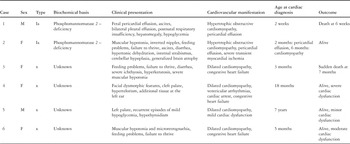
Table 1.
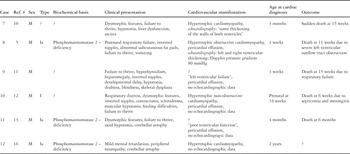
Table 2.
 You have
Access
- 57
- Cited by