




Introduction
Obesity is a chronic and progressive disease characterised by excess or abnormal body fat accumulation, which may initially be asymptomatic but can advance to a stage where it leads to health problems(Reference Busetto, Dicker, Frühbeck, Halford, Sbraccia and Yumuk1,Reference Fitch and Bays2) . The global prevalence of obesity has been rapidly increasing(Reference Langley-Evans, Pearce and Ellis3). According to the World Health Organization (WHO), in 2022, at least 59% of adults aged 18 years and older were classified as overweight or living with obesity(4). Women are more likely to be living with obesity than men(Reference Al Kibria, Swasey, Hasan, Sharmeen and Day5), and there is a growing trend of reproductive health complications related to obesity among women and pregnancy-capable individuals(Reference Langley-Evans, Pearce and Ellis3). Obesity during pregnancy is a significant public health concern due to the increased risk of both short-term and long-term health issues for mothers and their newborns(Reference Ward, Agarwal, Bish, James, Faulks and Pitson6). Additionally, women with obesity may face challenges in breastfeeding due to various hormonal, physical, and psychosocial factors(Reference Lawrence, Lawrence and Lawrence7). As a result, it is recommended that women with obesity aim to lose weight before becoming pregnant to enhance both maternal and infant health(Reference McAuliffe, Killeen, Jacob, Hanson, Hadar and McIntyre8).
Bariatric surgery is an effective treatment option for obesity, providing long-term weight management through various mechanisms(9). These mechanisms include restrictive procedures that reduce stomach capacity and limit food intake, malabsorptive procedures that alter the duodenum and decrease energy absorption, or procedures that combine both restrictive and malabsorptive mechanisms(9). As obesity rates rise, the incidence of bariatric surgery among women of reproductive age is also increasing(Reference Mokhlesi, Vasilevski and Sweet10). In the United States and Australia, up to 80% of individuals who undergo these surgeries are women in their childbearing years(11,Reference Rottenstreich, Elazary, Goldenshluger, Pikarsky, Elchalal and Ben-Porat12) . Weight loss following bariatric surgery can resolve ovulatory issues and improve fertility(Reference Bhandari, Kosta, Bhandari, Reddy, Mathur and Gupta13). As the number of women who become pregnant after bariatric surgery is increasing, maternity care providers need to understand how these weight-loss procedures impact women and their infants, including the need for additional surveillance and biochemical monitoring of nutrient deficiencies during pregnancy and breastfeeding.
Since different types of bariatric surgery can affect nutrient absorption and metabolism(Reference Rottenstreich, Elazary, Goldenshluger, Pikarsky, Elchalal and Ben-Porat12), one of the concerns for women undergoing such a procedure is the increased risk of nutritional deficiencies during pregnancy and breastfeeding(Reference Rottenstreich, Elazary, Goldenshluger, Pikarsky, Elchalal and Ben-Porat12,Reference Maslin, Hart and Shawe14) . The need for vitamins and minerals increases during pregnancy and breastfeeding to prepare mothers for birth and breastfeeding and to ensure the normal development of the foetus(Reference Jouanne, Oddoux, Noël and Voisin-Chiret15). The complex changes associated with bariatric surgery may exacerbate the increased risk of micronutrient depletion that results from the physiological changes of pregnancy(Reference Rottenstreich, Elazary, Goldenshluger, Pikarsky, Elchalal and Ben-Porat12). There has also been concern that nutritional deficiencies associated with bariatric surgery may impact the nutrient profile of breast milk(Reference Baharuddin, Payus, Fahmy, Sawatan, Than and Abdelhafez16). Only limited practical recommendations are available for pregnancy after bariatric surgery(Reference Chapmon, Stoklossa and Benson-Davies17); however, existing guidelines advise monitoring for nutritional deficiencies and taking multivitamin and mineral supplements throughout pregnancy and breastfeeding to ensure adequate nutritional status(Reference Parrott, Frank, Rabena, Craggs-Dino, Isom and Greiman18–Reference Shawe, Ceulemans, Akhter, Neff, Hart and Heslehurst20). A limited review of articles on nutritional status during pregnancy after bariatric surgery showed that various nutritional deficiencies are common among these women(Reference Rottenstreich, Elazary, Goldenshluger, Pikarsky, Elchalal and Ben-Porat12,Reference Chapmon, Stoklossa and Benson-Davies17) . However, these reviews were limited to the pregnancy period and did not include evidence on nutritional status during breastfeeding. Additionally, qualitative studies examining mothers’ experiences with nutrition during pregnancy and breastfeeding were not included. Therefore, the present review aims to compile and synthesise evidence on nutritional status and maternal experiences during pregnancy and breastfeeding following bariatric surgery.
Method
Study design
This research used a scoping review approach, which is particularly useful for addressing broad research questions and highlighting gaps in existing evidence to inform future studies(Reference Tricco, Lillie, Zarin, O’brien, Colquhoun and Kastner21). This review reported by the Preferred Reporting Items for Systematic Reviews and Meta-Analyses extension for Scoping Reviews (PRISMA-Scr)(Reference Tricco, Lillie, Zarin, O’Brien, Colquhoun and Levac22).
Inclusion and exclusion criteria
The inclusion criteria were: (1) full-text articles reporting research on nutritional status during pregnancy and breastfeeding in mothers with a history of bariatric surgery; (2) primary studies with quantitative, qualitative, or mixed methods designs; and (3) publications in English. A time limit was not imposed on this search to ensure all relevant studies were considered. Exclusion criteria included conference abstracts, book chapters, editorials, letters to the editor, guidelines, non-human studies, review articles, or non-English publications.
Exposures and outcomes of interest
The exposure of interest was a history of bariatric surgery before pregnancy, including restrictive procedures, malabsorptive procedures, and procedures combining both mechanisms. The outcomes of interest were nutritional status during pregnancy and breastfeeding after bariatric surgery, including micronutrient deficiencies and biochemical markers, macronutrient and micronutrient intake, dietary adequacy, breast milk composition, and nutrition-related experiences.
Information sources and search strategy
A variety of databases were searched, including MEDLINE, Excerpta Medica Database (Embase), Cumulative Index of Nursing & Allied Health Literature (CINAHL), and Maternity and Infant Care. The selected databases were relevant to the research aim as they index a broad array of literature in medicine, dietetics, nursing, and midwifery. The most recent search was conducted on 25 December 2025.
The search terms and keywords used included: ‘nutritional status’, nutrition*, diet*, micronutrient*, macronutrient*, ‘nutrition assessment’, ‘nutritional requirements’ AND ‘bariatric surg*’, ‘bariatric, metabolic surg’, gastroplasty, ‘gastric bypass’, ‘Roux-en-Y gastric bypass’, ‘gastric band’, ‘sleeve gastrectomy’, ‘stomach stapling’ AND ‘postpartum period’, pregnancy, pre-natal, post-natal, post-partum, pre-natal, breastfeeding, lactation. In addition, the reference lists of all included studies were explored, and Google Scholar was searched to identify any further relevant publications that might have been missed in the initial search.
Selection of sources of evidence
After completing the systematic search, all retrieved records were exported to EndNote to remove duplicates. The remaining citations were then transferred to Covidence for screening and eligibility assessment. Covidence is a web-based tool that facilitates evidence reviews and enables efficient collaboration among multiple reviewers(Reference Babineau23). Two reviewers independently screened the titles and abstracts, excluding studies that did not meet the inclusion criteria. Full-text articles that passed the initial screening were reviewed in detail independently by two researchers. Any discrepancies between the reviewers were resolved through discussion or, if necessary, by consulting a third reviewer.
Data charting
A data extraction form was developed in Microsoft Excel to systematically capture key characteristics of each included study and relevant information on nutritional status during pregnancy and breastfeeding among women with a history of bariatric surgery before pregnancy. The first author charted the data and discussed the results with the co-authors to reach a final consensus. Data extracted from the eligible articles included the first author’s surname, year of publication, study setting, study aims, study population, type of bariatric surgery, use of supplements, time between surgery and pregnancy, pre-pregnancy body mass index (BMI), gestational weight gain, definition of nutrient deficiency, study design, and key findings.
Synthesis of results
Given the inclusion of both qualitative and quantitative studies, a narrative synthesis approach was used to integrate and interpret the diverse data(Reference Popay, Roberts, Sowden, Petticrew, Arai and Rodgers24). The synthesis followed a three-step process: (1) developing a preliminary synthesis; (2) exploring relationships within and across studies; and (3) organising the results into thematic categories(Reference Mays, Pope and Popay25).
Results
The initial search resulted in 1545 studies, of which 120 were duplicates. Upon screening the titles and abstracts, 155 studies were left for full-text screening. After applying the eligibility criteria, 53 were included in this review. The search procedure is shown in the PRISMA chart in Figure 1.
PRISMA literature search and study selection.

A concise summary of the included studies, including surgery type, key outcomes assessed, and main nutritional findings, is presented in Table 1. The general characteristics of the included studies are shown in supplementary Table 1. Most studies were published between 2013 and 2025 (88.6%), and most were conducted in Brazil (n = 15) and European countries (n = 19). Over two-thirds of the studies used retrospective designs (68%) and just under half had small sample sizes (45.3%). Biochemical markers were the most frequently used measures of nutritional status (72.3%), particularly iron-related outcomes, vitamin B12, vitamin D, vitamin A, calcium, and zinc. Fewer studies examined macronutrient intake (n = 8), breast milk composition (n = 3), or nutrition-related experiences (n = 3).
Summary of key evidence on nutritional status during pregnancy and breastfeeding after bariatric surgery

Table 1. Long description
A table summarizing nutritional status during pregnancy and breastfeeding after bariatric surgery. The table has three columns: Evidence area, Key message, and Supporting references. It contains four rows of data. Row 1: Evidence area, Micronutrient deficiencies and biochemical markers; Key message, Anaemia and iron deficiency were common during pregnancy after bariatric surgery. Multiple micronutrient deficiencies were common during pregnancy after bariatric surgery, particularly in ferritin, calcium, folate, vitamin D, vitamin B12, vitamin A, and zinc. Comparative results between women with prior bariatric surgery and controls were mixed; Supporting references, 26-31,33-40,44-50,52-54,56-58,62-64. Row 2: Evidence area, Macronutrient and micronutrient intake; Key message, Protein intake generally met recommendations, but overall macronutrient balance appeared suboptimal, with high fat and saturated fat intake and low carbohydrate and fibre intake. Energy intake findings were mixed. Dietary micronutrient intake was often inadequate, but findings varied by nutrient. Total intake appeared more adequate when supplementation was included; Supporting references, 47,62,63,65-69. Row 3: Evidence area, Diet quality; Key message, Diet quality appeared poor, with inadequate intake of fruit, vegetables, and whole grains; Supporting references, 66,67,69. Row 4: Evidence area, Breast milk composition; Key message, Findings on breast milk composition were limited and mixed, with no clear post-bariatric pattern identified; Supporting references, 29,71,73. Row 5: Evidence area, Nutrition-related experiences; Key message, Women reported difficulty meeting nutritional and fluid needs and described receiving insufficient, generic, or conflicting nutrition advice from healthcare professionals; Supporting references, 74-76.
Narrative synthesis
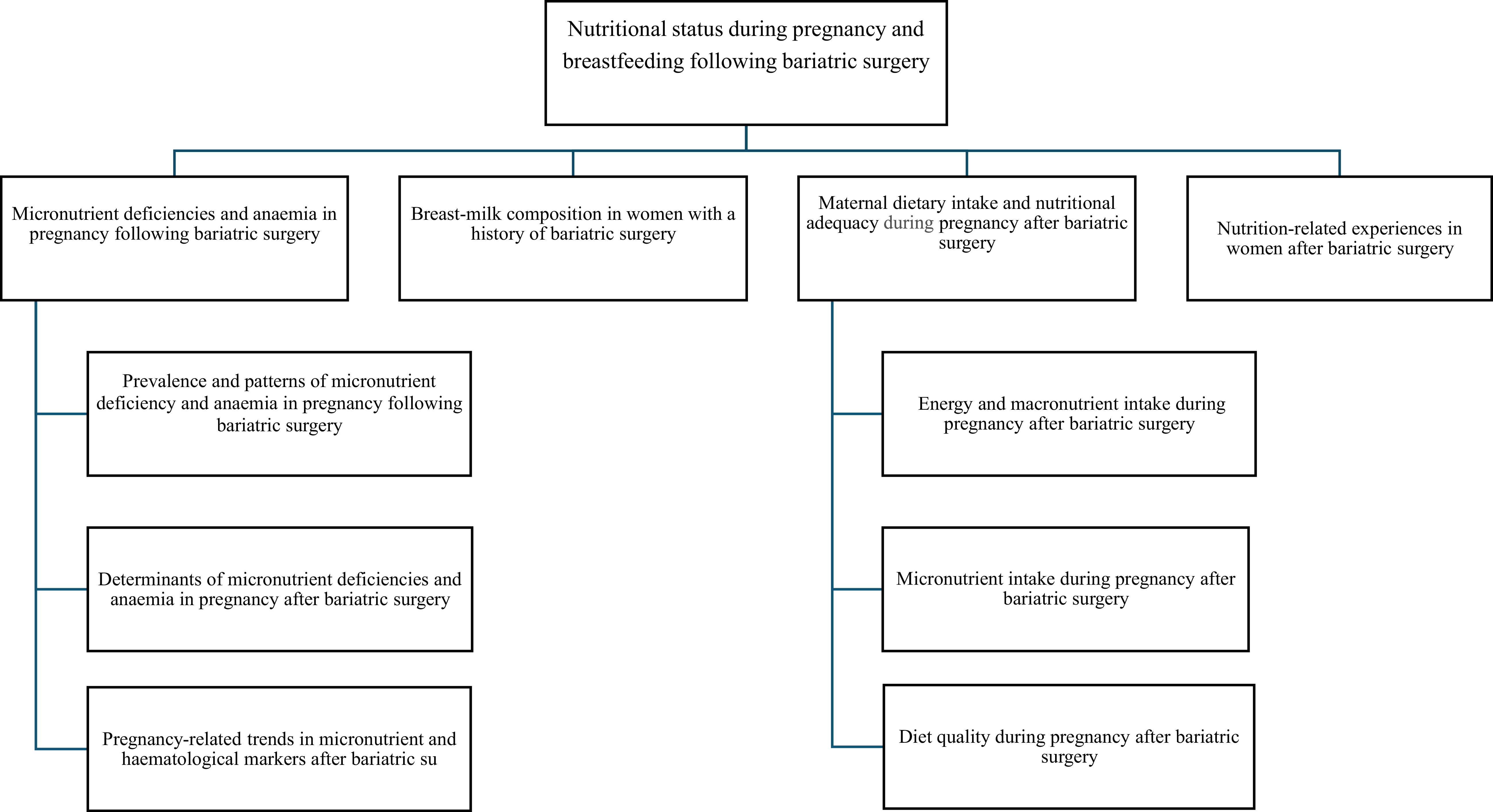
The narrative synthesis identified four primary themes: micronutrient deficiencies and anaemia in pregnancy following bariatric surgery; maternal dietary intake and nutritional adequacy during pregnancy after bariatric surgery; breast milk composition in women with a history of bariatric surgery; and nutrition-related experiences in women after bariatric surgery. Six sub-themes were identified within these categories. These themes and sub-themes are summarised in Figure 2. Detailed study characteristics and study-level findings are provided in supplementary Table 2.
Narrative synthesis of themes and sub-themes identified across included studies.

Micronutrient deficiencies and anaemia in pregnancy following bariatric surgery
Micronutrient deficiencies and anaemia were the most consistently reported biochemical findings across the included studies. Three major sub-themes were identified: (1) prevalence and patterns of micronutrient deficiency and anaemia in pregnancy following bariatric surgery; (2) determinants of micronutrient deficiencies and anaemia in pregnancy after bariatric surgery; and (3) pregnancy-related trends in micronutrient and haematological markers after bariatric surgery.
Prevalence and patterns of micronutrient deficiency and anaemia in pregnancy following bariatric surgery
High rates of iron-related deficiencies and anaemia were reported during pregnancy following bariatric surgery. Anaemia was common during pregnancy after bariatric surgery, with reported prevalence ranging from 61%(Reference Amaral-Moreira, Redezuk, Pereira, Borovac-Pinheiro and Rehder26) to 73%(Reference Chagas, Saunders, Pereira, Silva, Saboya and Ramalho27). In the two studies that reported anaemia patterns, more than half of the affected women had microcytic-hypochromic anaemia(Reference Amaral-Moreira, Redezuk, Pereira, Borovac-Pinheiro and Rehder26,Reference Ben-Porat, Elazary, Sherf-Dagan, Weiss, Levin and Rottenstreich28) , and the majority (71%) had iron deficiency(Reference Amaral-Moreira, Redezuk, Pereira, Borovac-Pinheiro and Rehder26). Evidence on anaemia risk in women with and without bariatric surgery remains inconsistent(Reference Garretto, Kim, Quadro, Rhodas, Pimentel and Crnosija29,Reference Hammeken, Betsagoo, Jensen, Sørensen and Overgaard30) . In contrast, studies comparing pregnancies before and after bariatric surgery found lower anaemia rates after surgery(Reference Hazan, Shimonov, Goldstein and Dayan31,Reference Gadgil, Chang, Richards, Gudzune, Huizinga and Clark32) .
While megaloblastic anaemia was not reported during pregnancy following bariatric surgery, vitamin B12 deficiency was frequently observed across studies. Vitamin B12 deficiency varied widely(Reference Bebber, Rizzolli, Casagrande, Rodrigues, Padoin and Mottin33–Reference Mead, Sakkatos, Sakellaropoulos, Adonakis, Alexandrides and Kalfarentzos36), and some comparative evidence suggested higher deficiency rates or greater need for B12 injections among pregnant women after bariatric surgery(Reference Gadgil, Chang, Richards, Gudzune, Huizinga and Clark32,Reference Mansoori, Bataineh, Momani and Ali37) . Vitamin D deficiency or insufficiency was common despite supplementation(Reference Bretón, Velasco, Cuerda, Motilla, Serrano and Morales34,Reference Heusschen, Berendsen, van Bon, van Laar, Krabbendam and Hazebroek35,Reference Hazart, Le Guennec and Accoceberry38–Reference Medeiros, Matos, Pereira, Saboya and Ramalho42) , although comparative findings were mixed(Reference Gadgil, Chang, Richards, Gudzune, Huizinga and Clark32,Reference Mansoori, Bataineh, Momani and Ali37) .
Vitamin A status, assessed by measuring serum retinol and β-carotene, was evaluated in several studies. Vitamin A deficiency was particularly evident following a Roux-en-Y gastric bypass (RYGB)(Reference Cruz, Matos, Da Cruz, Pereira, Saboya and Ramalho43,Reference Chagas, Saunders and Pereira44) and was sometimes associated with clinical symptoms such as night blindness(Reference Chagas, Saunders and Pereira44). Comparative results between women with prior bariatric surgery and control were limited and mixed(Reference Garretto, Kim, Quadro, Rhodas, Pimentel and Crnosija29,Reference Machado, Pereira, Saboya, Saunders and Ramalho45) . Other deficiencies, including zinc, selenium, thiamine, vitamin C, vitamin B6, vitamin E, vitamin K1, and magnesium, were assessed less frequently but reported in some studies. Detailed prevalence estimates and study-level findings are provided in supplementary Table 2.
Determinants of micronutrient deficiencies and anaemia in pregnancy after bariatric surgery
Several factors were examined as potential determinants of micronutrient deficiencies and anaemia during pregnancy after bariatric surgery, including the type of bariatric procedure, the interval between surgery and conception, gestational weight gain, pre-pregnancy BMI, and the type of supplementation administered. Overall, malabsorptive or combined procedures, particularly RYGB, were more often associated with lower micronutrient levels and a higher prevalence of deficiencies than restrictive procedures(Reference Bechensteen, Sithiravel and Strom-Roum46–Reference Watanabe, Seki and Haruta49), although this pattern was not consistent across all nutrients or studies(Reference Amaral-Moreira, Redezuk, Pereira, Borovac-Pinheiro and Rehder26,Reference Bretón, Velasco, Cuerda, Motilla, Serrano and Morales34,Reference Mansoori, Bataineh, Momani and Ali37,Reference Hazart, Le Guennec and Accoceberry38,Reference Ducarme, Planche, Abet, Desroys du Roure and Ducet-Boiffard50) . The evidence regarding the association between pre-pregnancy BMI or gestational weight gain and vitamin D and vitamin A-related markers were inconsistent across studies(Reference Cruz, de Matos, da Cruz, Pereira, Saboya and Ramalho41–Reference Chagas, Saunders and Pereira44,Reference Cruz, de Matos, da Cruz, Pereira, Saboya and Ramalho51) , whereas no significant association was observed for anaemia(Reference Amaral-Moreira, Redezuk, Pereira, Borovac-Pinheiro and Rehder26,Reference Bretón, Velasco, Cuerda, Motilla, Serrano and Morales34,Reference Stentebjerg, Andersen, Renault, Støving and Jensen52) or other micronutrient deficiencies(Reference Bretón, Velasco, Cuerda, Motilla, Serrano and Morales34,Reference Gascoin, Gerard, Sallé, Becouarn, Rouleau and Sentilhes53) .
The evidence showed that the timing of conception after bariatric surgery was not associated with micronutrient status, except for iron-related outcomes after RYGB. Four studies found that women who conceived at least four years(Reference Nomura, Dias, Igai, Paiva and Zugaib54,Reference Walter, Dolzan, Areias, Bergmann, Rizzolli and Mottin55) or at least 18 months after RYGB(Reference Stentebjerg, Andersen, Renault, Støving and Jensen52,Reference Crusell, Nilas, Svare and Lauenborg56) had a higher risk of iron deficiency or iron-deficiency anaemia compared to those who conceived earlier. Additionally, the late-conception groups required intravenous iron or blood transfusion more frequently than early-conception groups(Reference Stentebjerg, Andersen, Renault, Støving and Jensen52,Reference Nomura, Dias, Igai, Paiva and Zugaib54,Reference Walter, Dolzan, Areias, Bergmann, Rizzolli and Mottin55) . However, this pattern was not observed in all studies, with some reporting no association between surgery-to-conception interval and anaemia(Reference Amaral-Moreira, Redezuk, Pereira, Borovac-Pinheiro and Rehder26,Reference Günakan, Buluş and Tohma57) or other micronutrient deficiencies(Reference Garretto, Kim, Quadro, Rhodas, Pimentel and Crnosija29,Reference Mansoori, Bataineh, Momani and Ali37,Reference Devlieger, Guelinckx, Jans, Voets, Vanholsbeke and Vansant48,Reference Crusell, Nilas, Svare and Lauenborg56–Reference Yau, Parikh, Saunders, Chui, Zablocki and Welcome58) . This finding requires further investigation and should be interpreted in the context of obstetric guidance recommending delayed conception for 12–24 months after bariatric surgery(Reference Ostrowska, Lech, Stefańska, Jastrzębska-Mierzyńska and Smarkusz59). Limited evidence suggested that specialised weight-loss surgery multivitamins may be associated with better micronutrient status during pregnancy after bariatric surgery, including higher haemoglobin, ferritin, and vitamin D levels compared with standard supplements(Reference Heusschen, Berendsen, van Bon, van Laar, Krabbendam and Hazebroek35,Reference Snoek, van de Woestijne, Willemsen, Klaassen, Galjaard and Laven60) .
Pregnancy-related trends in micronutrient and haematological markers after bariatric surgery
Consistent declines in haemoglobin levels during pregnancy were reported, particularly in the second and third trimesters, a pattern that may partly reflect normal physiological haemodilution during pregnancy. Haemoglobin concentrations during pregnancy were often significantly lower than pre-pregnancy levels(Reference Bretón, Velasco, Cuerda, Motilla, Serrano and Morales34,Reference Gimenes, Nicoletti, de Souza Pinhel, de Oliveira, Salgado Júnior and Marchini61) or pre-operative levels(Reference Snoek, van de Woestijne, Willemsen, Klaassen, Galjaard and Laven60,Reference Faintuch, Dias, De Souza Fazio, De Oliveira, Nomura and Zugaib62) . Additionally, haemoglobin levels may decrease significantly from the first trimester to subsequent trimesters in pregnancies following bariatric surgery(Reference Mead, Sakkatos, Sakellaropoulos, Adonakis, Alexandrides and Kalfarentzos36,Reference Hazart, Le Guennec and Accoceberry38,Reference Devlieger, Guelinckx, Jans, Voets, Vanholsbeke and Vansant48) . In contrast, findings regarding ferritin levels were less consistent, with evidence of decline in some cases(Reference Bretón, Velasco, Cuerda, Motilla, Serrano and Morales34,Reference Devlieger, Guelinckx, Jans, Voets, Vanholsbeke and Vansant48) and no significant change(Reference Snoek, van de Woestijne, Willemsen, Klaassen, Galjaard and Laven60–Reference Faintuch, Dias, De Souza Fazio, De Oliveira, Nomura and Zugaib62) in others.
Folate and vitamin B12 showed different patterns during pregnancy following bariatric surgery. Folate levels generally increased during pregnancy compared with pre-pregnancy(Reference Bretón, Velasco, Cuerda, Motilla, Serrano and Morales34) or pre-operative levels(Reference Mead, Sakkatos, Sakellaropoulos, Adonakis, Alexandrides and Kalfarentzos36,Reference Snoek, van de Woestijne, Willemsen, Klaassen, Galjaard and Laven60,Reference Faintuch, Dias, De Souza Fazio, De Oliveira, Nomura and Zugaib62) . In contrast, findings regarding vitamin B12 levels were inconsistent, with evidence of decline in later pregnancy in some cases(Reference Bretón, Velasco, Cuerda, Motilla, Serrano and Morales34,Reference Snoek, van de Woestijne, Willemsen, Klaassen, Galjaard and Laven60) and stability in others(Reference Gimenes, Nicoletti, de Souza Pinhel, de Oliveira, Salgado Júnior and Marchini61,Reference Faintuch, Dias, De Souza Fazio, De Oliveira, Nomura and Zugaib62) .
Trends in vitamin D and calcium levels during pregnancy after bariatric surgery were inconsistent. Calcium levels either declined during pregnancy compared with pre-operative levels(Reference Snoek, van de Woestijne, Willemsen, Klaassen, Galjaard and Laven60) or non-pregnant post-bariatric controls(Reference Cruz, de Matos, da Cruz, Pereira, Saboya and Ramalho51), or remained stable across pregnancy in other studies(Reference Mead, Sakkatos, Sakellaropoulos, Adonakis, Alexandrides and Kalfarentzos36,Reference Gimenes, Nicoletti, de Souza Pinhel, de Oliveira, Salgado Júnior and Marchini61) . Similarly, vitamin D levels showed no consistent pattern, with evidence of stability during pregnancy(Reference Devlieger, Guelinckx, Jans, Voets, Vanholsbeke and Vansant48,Reference Snoek, van de Woestijne, Willemsen, Klaassen, Galjaard and Laven60) , a late-pregnancy decline(Reference Medeiros, Matos, Pereira, Saboya and Ramalho42), or higher levels than non-pregnant post-bariatric controls(Reference Cruz, de Matos, da Cruz, Pereira, Saboya and Ramalho51). Vitamin A concentrations tended to decline during pregnancy after bariatric surgery(Reference Devlieger, Guelinckx, Jans, Voets, Vanholsbeke and Vansant48,Reference da Cruz, Matos, Pereira, Saboya, da Cruz and Ramalho63) . These changes were associated with a higher prevalence of vitamin A deficiency and more frequent night blindness among pregnant individuals than non-pregnant controls(Reference da Cruz, Matos, Pereira, Saboya, da Cruz and Ramalho63).
Maternal dietary intake and nutritional adequacy during pregnancy after bariatric surgery
The second theme focuses on maternal dietary intake and nutritional adequacy during pregnancy following bariatric surgery. This theme comprises three sub-themes: (1) energy and macronutrient intake during pregnancy after bariatric surgery; (2) micronutrient intake during pregnancy after bariatric surgery; and (3) diet quality during pregnancy after bariatric surgery.
Energy and macronutrient intake during pregnancy after bariatric surgery
Energy and macronutrient intake were assessed in relation to pregnancy recommendations, comparisons with women without bariatric surgery, and changes over time from the pre-operative to pregnancy. Mean energy intake during pregnancy after bariatric surgery was reported as lower(Reference Araki, Shani Levi, Abutbul Vered, Solt and Rozen64) or similar(Reference Gagnon, Carreau, Plante, Savard, Lemieux and Weisnagel65) compared to women without bariatric surgery. When compared with pregnancy recommendations, intake was reported as below requirements in some cases(Reference Guthrie, Lee and Kothari66) and within acceptable ranges in others(Reference Dias, de Souza Fazio, de Oliveira, Nomura, Faintuch and Zugaib67). Changes in energy intake over time also showed no clear pattern(Reference Gimenes, Nicoletti, de Souza Pinhel, de Oliveira, Salgado Júnior and Marchini61,Reference Faintuch, Dias, De Souza Fazio, De Oliveira, Nomura and Zugaib62) .
Protein intake generally met or exceeded pregnancy recommendations after bariatric surgery(Reference Faintuch, Dias, De Souza Fazio, De Oliveira, Nomura and Zugaib62,Reference Guthrie, Lee and Kothari66–Reference Guelinckx, Devlieger, Donceel, Bel, Pauwels and Bogaerts68) . However, total fat and saturated fat intake exceeded recommended levels during pregnancy after bariatric surgery(Reference Gagnon, Carreau, Plante, Savard, Lemieux and Weisnagel65,Reference Guthrie, Lee and Kothari66,Reference Guelinckx, Devlieger, Donceel, Bel, Pauwels and Bogaerts68) . Fat quality was also suboptimal, with excessive saturated fat intake and inadequate mono- and polyunsaturated fat intake reported in both post-bariatric pregnancies and controls with obesity. In late pregnancy, polyunsaturated fat intake, including omega-3 and omega-6, was lower among women with prior bariatric surgery than among controls(Reference Jans, Matthys, Bogaerts, Ameye, Delaere and Roelens69). Carbohydrate intake tended to be low during pregnancy after bariatric surgery, with intake reported below recommended levels in some cases(Reference Guthrie, Lee and Kothari66,Reference Guelinckx, Devlieger, Donceel, Bel, Pauwels and Bogaerts68) and lower than in women without bariatric surgery in comparative evidence(Reference Gagnon, Carreau, Plante, Savard, Lemieux and Weisnagel65). Longitudinal evidence was limited to one study, which reported a decline in carbohydrate intake in the second trimester followed by partial recovery in the third trimester(Reference Faintuch, Dias, De Souza Fazio, De Oliveira, Nomura and Zugaib62). Fibre intake was also substantially inadequate during pregnancy after bariatric surgery, with intake reported below recommendations(Reference Guthrie, Lee and Kothari66,Reference Guelinckx, Devlieger, Donceel, Bel, Pauwels and Bogaerts68) and lower than in women without bariatric surgery in comparative evidence(Reference Gagnon, Carreau, Plante, Savard, Lemieux and Weisnagel65). Limited evidence comparing different bariatric procedures showed no clear differences in macronutrient intake by surgery type(Reference Coupaye, Legardeur, Sami, Calabrese, Mandelbrot and Ledoux47,Reference Guthrie, Lee and Kothari66) .
Micronutrient intake during pregnancy after bariatric surgery
Dietary micronutrient intake was assessed in relation to pregnancy recommendations, comparisons with women without bariatric surgery, and changes over time from the pre-operative to pregnancy. Dietary intake of calcium(Reference Faintuch, Dias, De Souza Fazio, De Oliveira, Nomura and Zugaib62,Reference Guthrie, Lee and Kothari66,Reference Guelinckx, Devlieger, Donceel, Bel, Pauwels and Bogaerts68) , zinc(Reference Guthrie, Lee and Kothari66), vitamin A(Reference Guthrie, Lee and Kothari66), vitamin B12(Reference Faintuch, Dias, De Souza Fazio, De Oliveira, Nomura and Zugaib62,Reference Guthrie, Lee and Kothari66) , iron(Reference Guthrie, Lee and Kothari66), and folate(Reference Guthrie, Lee and Kothari66) was below the recommended levels for pregnancy following bariatric surgery. However, iron(Reference Faintuch, Dias, De Souza Fazio, De Oliveira, Nomura and Zugaib62,Reference Guelinckx, Devlieger, Donceel, Bel, Pauwels and Bogaerts68) and folate(Reference Faintuch, Dias, De Souza Fazio, De Oliveira, Nomura and Zugaib62) intake met or exceeded recommendations in others. Importantly, in one study, when supplementation was included, the median intake of all micronutrients met or exceeded the recommended levels(Reference Guthrie, Lee and Kothari66).
Comparative analyses between women with and without bariatric surgery showed mixed results. Overall dietary micronutrient intake was similar between groups(Reference Garretto, Kim, Quadro, Rhodas, Pimentel and Crnosija29,Reference Gagnon, Carreau, Plante, Savard, Lemieux and Weisnagel65) , and inadequate folate, vitamin B12(Reference Jans, Matthys, Bogaerts, Ameye, Delaere and Roelens69), or vitamin A intake(Reference Garretto, Kim, Quadro, Rhodas, Pimentel and Crnosija29) was reported in both post-bariatric and control cohorts. However, total iron and calcium intake appeared higher among women with prior bariatric surgery when supplementation was included(Reference Araki, Shani Levi, Abutbul Vered, Solt and Rozen64).
Longitudinal and subgroup analyses provided limited and mixed evidence on factors influencing micronutrient intake. Micronutrient intake did not show significant changes over time(Reference Gimenes, Nicoletti, de Souza Pinhel, de Oliveira, Salgado Júnior and Marchini61) or by surgery-to-conception interval(Reference Guthrie, Lee and Kothari66). However, malabsorptive procedures were associated with lower folate, vitamin A, and vitamin E intake, while greater dietitian contact was associated with higher vitamin A and vitamin B12 intake from diet and supplements(Reference Guthrie, Lee and Kothari66).
Diet quality during pregnancy after bariatric surgery
Evidence on diet quality during pregnancy after bariatric surgery was limited but suggested poor overall diet quality, particularly inadequate intake of fruit, vegetables, and whole grains(Reference Gagnon, Carreau, Plante, Savard, Lemieux and Weisnagel65,Reference Guelinckx, Devlieger, Donceel, Bel, Pauwels and Bogaerts68) . Diet quality scores were significantly lower in the surgery group compared to women without surgery during the first and second trimesters(Reference Gagnon, Carreau, Plante, Savard, Lemieux and Weisnagel65). Differences by surgical type were also observed, including higher grain intake after restrictive procedures compared with gastric bypass, and a significant increase in fruit intake from the first to the second trimester among women who had undergone gastric bypass(Reference Gagnon, Carreau, Plante, Savard, Lemieux and Weisnagel65,Reference Guelinckx, Devlieger, Donceel, Bel, Pauwels and Bogaerts68) .
Breast milk composition in women with a history of bariatric surgery
Evidence on breast milk composition after bariatric surgery was very limited and mixed(Reference Garretto, Kim, Quadro, Rhodas, Pimentel and Crnosija29,Reference Jans, Devlieger, De Preter, Ameye, Roelens and Lannoo70,Reference Jans, Matthys, Lannoo, Van der Schueren and Devlieger71) . Vitamin A findings were inconsistent, and no clear post-bariatric pattern was observed(Reference Garretto, Kim, Quadro, Rhodas, Pimentel and Crnosija29,Reference Jans, Devlieger, De Preter, Ameye, Roelens and Lannoo70) . Limited evidence suggested possible differences in macronutrient composition, including higher fat, carbohydrate, or energy content among women with a history of bariatric surgery compared with control groups(Reference Jans, Devlieger, De Preter, Ameye, Roelens and Lannoo70,Reference Jans, Devlieger, Roelens, Loccufier and Matthys72) .
Nutrition-related experiences in women after bariatric surgery
Three qualitative studies conducted in Australia explored women’s experiences with nutrition during pregnancy(Reference Guthrie, Kearney, Snape, Sweet, Vasilevski and de Jersey73,Reference Vasilevski, Angel and Mathison74) and breastfeeding(Reference Mokhlesi, Vasilevski and Sweet75) after bariatric surgery. Mothers often struggled to consume sufficient nutrients and fluids to support optimal milk production. Due to their small stomach size, women needed to eat and drink frequently, and to make careful food choices to maximise nutritional value(Reference Mokhlesi, Vasilevski and Sweet75). Across these studies, women described limited access to specialised nutrition care and reported receiving insufficient, generic, or conflicting dietary advice, often due to clinicians’ limited knowledge of post-bariatric nutritional needs during pregnancy or postpartum periods(Reference Guthrie, Kearney, Snape, Sweet, Vasilevski and de Jersey73–Reference Mokhlesi, Vasilevski and Sweet75). Additional challenges included difficulties with swallowing supplement tablets and nausea associated with supplement consumption, and concerns about vitamin A toxicity(Reference Guthrie, Kearney, Snape, Sweet, Vasilevski and de Jersey73).
Discussion
Although a high prevalence of anaemia and micronutrient deficiencies have been reported among pregnant women with a history of bariatric surgery, substantial variability exists across studies. Furthermore, findings from comparative studies between pregnant or breastfeeding women with and without prior bariatric surgery remain inconsistent. These mixed results may be partly explained by variations in the definitions and diagnostic thresholds used for anaemia and micronutrient deficiencies, as well as differences in the timing of biochemical assessments during pregnancy. In addition, in most studies, recommended supplementation regimens and adherence to prescribed micronutrient supplements were not reported. Based on clinical practice guidelines, micronutrient supplementation recommendations following bariatric surgery are often higher than those recommended for pregnant women without a history of bariatric surgery(Reference Chapmon, Stoklossa and Benson-Davies17). Nevertheless, these recommendations are primarily based on expert opinion, and no prospective studies have evaluated their efficacy and safety(Reference Rottenstreich, Elazary, Goldenshluger, Pikarsky, Elchalal and Ben-Porat12). In the current review, women who used specialised weight-loss surgery multivitamins during pregnancy after bariatric surgery had lower rates of micronutrient deficiencies than those using standard supplements(Reference Heusschen, Berendsen, van Bon, van Laar, Krabbendam and Hazebroek35,Reference Snoek, van de Woestijne, Willemsen, Klaassen, Galjaard and Laven60) . Beyond supplementation practices, variation in deficiency rates across studies may also result from heterogeneity in study populations with respect to key determinants of nutritional status during pregnancy after bariatric surgery, such as the type of bariatric procedure and the interval between surgery and conception.
Bariatric procedures are categorised as restrictive or malabsorptive based on their mechanisms for limiting energy intake(9). Various types of bariatric surgeries affect micronutrient absorption differently(Reference Gasmi, Bjørklund, Mujawdiya, Semenova, Peana and Dosa76). While in purely restrictive procedures, such as sleeve gastrectomy, the resected gastric fundus decreases the absorption of nutrients such as iron, zinc, selenium, folate, and vitamin B12, malabsorptive procedures have a greater effect on the absorption of essential vitamins, minerals, and trace elements(Reference Gasmi, Bjørklund, Mujawdiya, Semenova, Peana and Dosa76). Evidence from recent reviews indicated that malabsorptive procedures were associated with lower circulating levels of multiple micronutrients and a higher prevalence of deficiencies during pregnancy following bariatric surgery. Because reduced nutrient absorption can negatively impact pregnancy outcomes, clinical guidelines recommend postponing pregnancy for at least 12 to 24 months following bariatric surgery(Reference Ostrowska, Lech, Stefańska, Jastrzębska-Mierzyńska and Smarkusz59). However, in the current review, the timing of conception did not correlate with micronutrient deficiencies during pregnancy following bariatric surgery. In contrast, in most studies, late-conception groups had a higher risk of iron deficiency anaemia during pregnancy following RYGB compared with those who conceived earlier(Reference Stentebjerg, Andersen, Renault, Støving and Jensen52,Reference Nomura, Dias, Igai, Paiva and Zugaib54–Reference Crusell, Nilas, Svare and Lauenborg56) . This increased risk may result from a progressive decline in iron stores following RYGB, compounded by decreased adherence to prescribed micronutrient supplementation(Reference Crusell, Nilas, Svare and Lauenborg56). Physiological changes during pregnancy may further exacerbate anaemia and other micronutrient deficiencies; therefore, these deficiencies should be interpreted in the context of both prior bariatric surgery and pregnancy-related changes in nutrient absorption and metabolism.
In the current review, consistent declines in haemoglobin levels during pregnancy were reported, particularly in the second and third trimesters. As haemoglobin concentrations normally decrease during pregnancy due to physiological haemodilution(Reference Mead, Sakkatos, Sakellaropoulos, Adonakis, Alexandrides and Kalfarentzos36), this finding is expected. Similarly, a decline in mean vitamin A concentrations during pregnancy has been observed. In addition to the effects of surgery, vitamin A concentrations decline gradually during pregnancy due to haemodilution(Reference Devlieger, Guelinckx, Jans, Voets, Vanholsbeke and Vansant48). These findings highlight the importance of vitamin A during pregnancy after bariatric surgery. However, concerns about the potential teratogenic effects of high-dose vitamin A have constrained its use during pregnancy. Consequently, many prenatal multivitamin formulations either exclude vitamin A or contain amounts that may be insufficient to meet the needs of this population(Reference Bretón, Velasco, Cuerda, Motilla, Serrano and Morales34). In contrast, most studies in this review showed that folate levels generally increased during pregnancy compared with pre-pregnancy(Reference Bretón, Velasco, Cuerda, Motilla, Serrano and Morales34) or pre-operative levels(Reference Mead, Sakkatos, Sakellaropoulos, Adonakis, Alexandrides and Kalfarentzos36,Reference Snoek, van de Woestijne, Willemsen, Klaassen, Galjaard and Laven60,Reference Faintuch, Dias, De Souza Fazio, De Oliveira, Nomura and Zugaib62) . This increase is probably due to both the dose and adherence to supplementation guidelines. Changes in vitamin D and calcium levels during pregnancy following bariatric surgery were inconsistent across studies. Calcium and vitamin D findings should also be interpreted in the context of normal pregnancy physiology. During pregnancy, maternal calcium and vitamin D metabolism adapts to support foetal skeletal development, including increased intestinal calcium absorption and placental calcium transport(Reference Winter, Ireland, Butterfield, Haffner-Luntzer, Horcajada and Veldhuis-Vlug77). Therefore, changes in calcium and vitamin D markers during pregnancy may partly reflect physiological adaptations rather than effects of bariatric surgery alone. Regular biochemical monitoring and reinforcement of adherence to supplementation during pregnancy are essential for women with prior bariatric surgery. In addition to supplementation, adequate dietary intake of nutrients is crucial during pregnancy, when nutritional requirements increase.
While evidence regarding micronutrient intake was mixed across studies, macronutrient intake patterns were consistently reported. Intakes of total fat and saturated fat exceeded recommended levels, whereas carbohydrate and dietary fibre intakes were below the minimum recommended during pregnancy following bariatric surgery. Higher fat intake can increase early satiety after meals, potentially limiting the intake of other macronutrients, including carbohydrates and dietary fibre(Reference Guthrie, Lee and Kothari66). Additionally, individuals may experience reduced tolerance to certain complex carbohydrates and fibre-rich foods after bariatric surgery(Reference Gagnon, Carreau, Plante, Savard, Lemieux and Weisnagel65). In contrast, results showed that protein intake met or exceeded recommendations during pregnancy after bariatric surgery. Women with previous surgery may have been encouraged by health professionals to consume more protein-rich foods during pregnancy(Reference Gagnon, Carreau, Plante, Savard, Lemieux and Weisnagel65), which could partly explain this result. These findings highlight the importance of individualised nutritional care during pregnancy following bariatric surgery. However, evidence from the limited qualitative studies included in the current review indicates that women often experience restricted access to specialised nutrition support and receive inadequate or inconsistent dietary advice during pregnancy and breastfeeding after bariatric surgery(Reference Guthrie, Kearney, Snape, Sweet, Vasilevski and de Jersey73–Reference Mokhlesi, Vasilevski and Sweet75).
Breastfeeding requires additional calories and fluid, and women are advised to increase their nutrition and fluid intake while breastfeeding, which can be challenging for women post bariatric surgery(Reference Suri, Bellini, Bloemhard, Choi, Hoyt-Austin and McCreary78). Due to limited stomach capacity or impaired nutrient absorption after bariatric surgery, it can be difficult or even impossible for individuals to overeat, swallow large pieces of food, or consume certain liquids(Reference Li, Pan, Zhang, Qin and Lei79). These challenges may also affect women’s confidence in their ability to produce sufficient milk, particularly when they receive limited or inconsistent nutrition advice(Reference Mokhlesi, Vasilevski and Sweet75). Only one study examined the breastfeeding experiences of women after bariatric surgery, in which women reported feeling unable to consume sufficient nutrients and fluids to support optimal milk production(Reference Mokhlesi, Vasilevski and Sweet75). However, despite these perceptions, limited quantitative evidence suggests that breast milk macronutrient composition may differ in women with a history of bariatric surgery compared with controls, with higher fat, carbohydrate, and energy content reported, although protein concentrations were below reference values across all groups(Reference Jans, Devlieger, De Preter, Ameye, Roelens and Lannoo70,Reference Jans, Matthys, Lannoo, Van der Schueren and Devlieger71) . Further quantitative and qualitative research is needed to characterise macro- and micronutrient composition of breast milk after bariatric surgery and to better understand women’s breastfeeding experiences and nutritional challenges.
Strengths and limitations
This review summarised the nutritional status of women during pregnancy and breastfeeding following bariatric surgery, drawing on both qualitative and quantitative evidence. Two reviewers independently assessed all relevant studies, with a third available for conflict resolution, ensuring a thorough evaluation. However, several limitations should be acknowledged. This review focused specifically on nutritional status during pregnancy and breastfeeding after bariatric surgery; it did not examine how these nutritional patterns were clinically associated with perinatal outcomes. Studies published in languages other than English were excluded due to language barriers, and reliance on selected databases may have resulted in the omission of relevant literature. Most included studies relied on retrospective data and did not include key baseline or clinical factors that may influence nutritional status after bariatric surgery, including gestational weight gain, the interval between surgery and conception, weight changes before and after surgery, pre-pregnancy BMI, and the type of supplementation prescribed, or adherence to supplementation recommendations. In addition, substantial heterogeneity in study populations and outcomes limited comparability across studies and reduced the strength of conclusions that could be drawn. Most studies lacked appropriate comparison groups, further constraining the interpretation of findings.
Conclusion
In conclusion, this review suggests that anaemia and various micronutrient deficiencies are common during pregnancy following bariatric surgery, although findings from comparative studies between women with and without bariatric surgery were mixed. Evidence showed that malabsorptive procedures were associated with lower circulating levels of multiple micronutrients and a higher prevalence of deficiencies during pregnancy following bariatric surgery. In contrast, the timing of conception was not shown to correlate with micronutrient deficiencies during pregnancy following bariatric surgery. Evidence regarding macronutrient intake showed that intakes of total fat and saturated fat exceeded recommended levels, whereas carbohydrate and dietary fibre intakes were below the minimum recommended during pregnancy following bariatric surgery. In contrast, results showed that protein intake met or exceeded recommendations during pregnancy after bariatric surgery. Evidence on breast milk composition was limited and inconsistent. Although some studies reported differences in macronutrient composition, including fat, carbohydrate, and energy content, the evidence is insufficient to support definitive conclusions due to the small number of studies and methodological variation. Together, these findings underscore the need for individualised nutritional care, regular biochemical monitoring, and multidisciplinary management for women during pregnancy and breastfeeding following bariatric surgery. Although guidelines recommend regular biochemical monitoring during pregnancy after bariatric surgery, the included studies did not provide a consistent or validated algorithm for the frequency of laboratory surveillance. Future research should evaluate trimester-specific monitoring approaches and determine whether surveillance should be tailored according to surgery type, baseline nutritional status, supplementation adherence, and prior deficiencies.
Supplementary material
The supplementary material for this article can be found at https://doi.org/10.1017/S0954422426100535
Authorship
All authors assisted with the conception, review, screening, analysis, and interpretation of the data. All authors reviewed and approved the final manuscript prior to submission.
Financial support
This review was undertaken as part of a PhD scholarship funded by Deakin University.
Competing interests
The authors declare no competing interests.
Ethical standards
As a literature review, no ethical approval is required.




 Open access

