Introduction
Improving maternal health was one of the eight Millennium Development Goals. According to WHO, UNICEF, UNFPA and World Bank estimates there were 358,000 maternal deaths globally in 2008. The Sustainable Developmental Goals (SDGs) were set in 2015 with a target of fewer than 70 deaths per 100,000 live births by 2030. To achieve this target, improvements in maternal health care and a reduction in maternal mortality are necessary. However, in India, persistent inter-state, social group and urban–rural health inequities pose serious barriers to achieving the desired and uniform health outcomes in India (Cowling et al., Reference Cowling, Dandona and Dandona2014; Rai & Tulchinsky, Reference Rai and Tulchinsky2015; Vora et al., Reference Vora, Koblinsky and Koblinsky2015; Dandona et al., Reference Dandona, Dandona, Kumar, Shukla, Paul and Balakrishnan2017; Dwivedi & Pradhan, Reference Dwivedi and Pradhan2017).
As far as the Indian situation is concerned, maternal mortality is on a declining trend. It declined from 240 maternal deaths per 100,000 live births in 2004 to 167 per 100,000 live births in 2016. However, the target level is yet to be achieved. Furthermore, the decline has not been uniform across states and social groups. Scheduled caste and scheduled tribe communities have higher maternal mortality rates than other social groups in India (Radkar & Parasuraman, Reference Radkar and Parasuraman2007; Saroha et al., Reference Saroha, Altarac and Sibley2008; Borooah et al., Reference Borooah, Sabharwal and Thorat2012; Sanneving et al., Reference Sanneving, Trygg, Saxena, Mavalankar and Thomsen2013; Jungari & Bomble, Reference Jungari and Bomble2013; Montgomery et al., Reference Montgomery, Ram, Kumar and Jha2014; Jungari & Chauhan, Reference Jungari and Chauhan2017).
In many cultural settings, men are responsible for important choices relating to the allocation of household resources and health-care-seeking behaviours, and this may have a direct impact on the health of women and newborns (Jayalakshmi et al., Reference Jayalakshmi, Ambwani, Prabhakar and Swain2002; Singh & Arora, Reference Singh and Arora2008; Nyakato & Rwabukwali, Reference Nyakato and Rwabukwali2013; Ghose et al., Reference Ghose, Feng, Tang, Yaya, He and Udenigwe2017). Men’s actions influence the reproductive health of males and females, as well as the health of their children. Despite this, most maternal and child health programmes focus strongly on engaging and educating women and mothers, excluding men.
There has been growing emphasis on the role of men’s participation in reproductive and maternal health around the world since the 1990s; but the desired level of participation has not yet been achieved. The International Conference on Population and Development (ICPD) in Cairo in 1994 (ICPD, 1994), and the Fourth World Conference on Women in Beijing (1995), emphasized men’s role and its importance in reproductive health. These landmark conferences initiated the idea of males’ role in reproductive health matters. Many studies have also shown that men not only act as ‘gatekeepers’, restricting women’s and children’s access to health services, but also through abuse or neglect, men’s actions have a direct bearing on the health of their partners and children (Gallen et al., Reference Gallen, Liskin and Kak1989; Barua et al., Reference Barua, Pande, MacQuarrie and Walia2004).
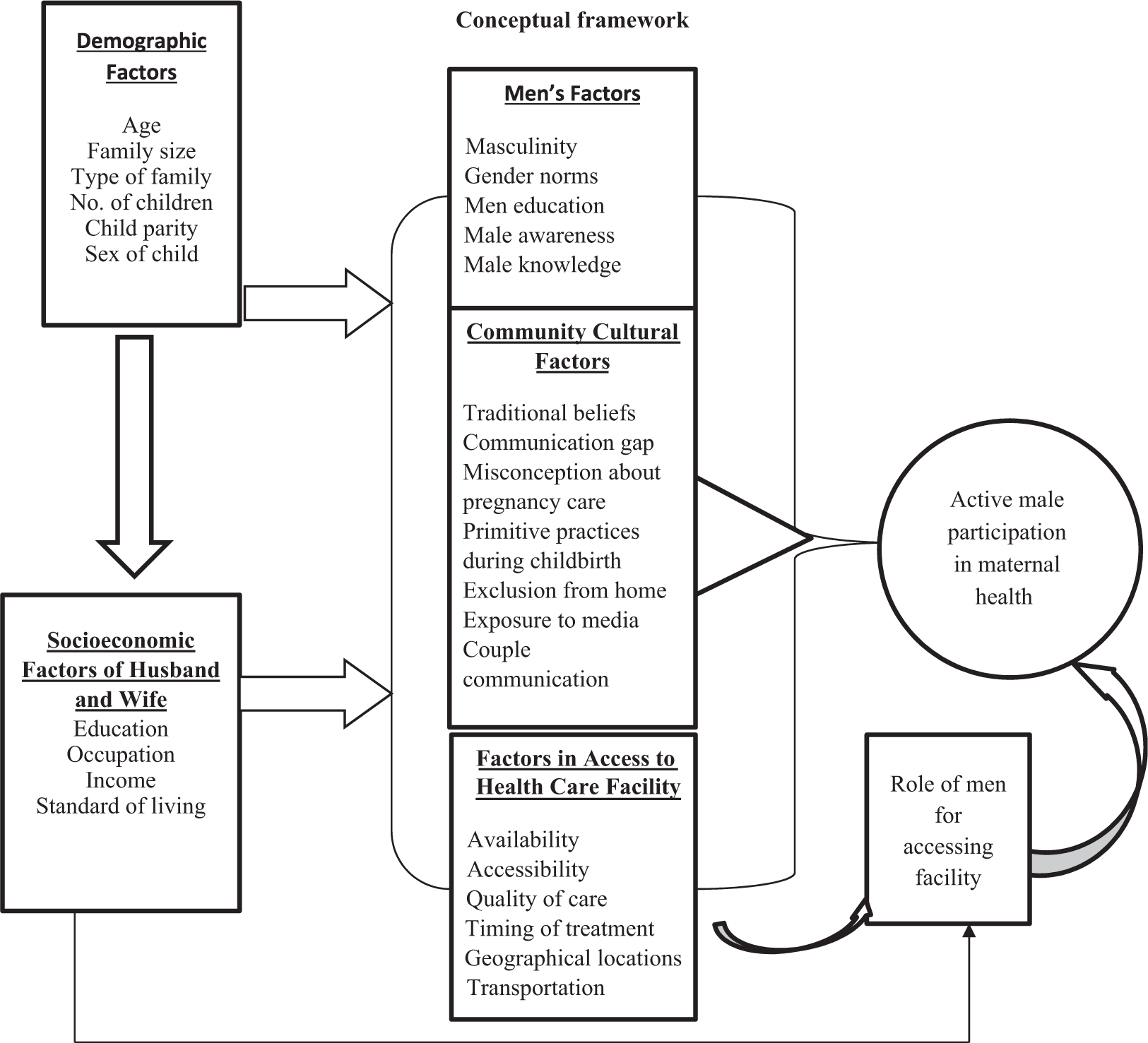
This present study focused on two main issues in selected tribal communities in India: 1) the extent of male participation in maternal health, and more specifically, whether men accompany their partners to ANC, are present during delivery, accompany them to PNC and participate in household work, and their willingness to provide food to women and 2) the roles and opinions of health care providers in male participation in maternal health. The conceptual framework outlined in Figure 1 guided the study objectives.
Conceptual framework showing male participation in maternal health.

Measurement of male participation in maternal health
There are no standard methods to measure men’s participation in maternal health. From the literature it is evident that different researchers have used different methods and variables. Most used three indicators: males accompanying their partners to a health facility for ANC, their presence during delivery and accompanying their wives/partners to a health facility for PNC. Some also used men’s participation in household chores, intra-couple communication on pregnancy and related issues and other actions that help and support women during and after pregnancy (Saha et al., Reference Saha, Singh, Chatterjee Saha and Roy2007; Chattopadhyay, Reference Chattopadhyay2012; Gaikva, Reference Gaikva2012; Story et al., Reference Story, Burgard, Lori, Taleb, Ali and Hoque2012; Rahman et al., Reference Rahman, Islam, Mostofa and Reza2015). However, there is no clear definition or criteria for measuring male participation levels, and each study has adapted to the local context. A few qualitative studies also explored the role of health care providers and communities in active male participation in maternal health (Fotso et al., Reference Fotso, Higgins-Steele and Mohanty2015).
The debate on what should be the standard methodology for precise measurement of male participation in maternal health has received considerable attention in recent years. However, no broad agreement has been reached on the matter. Moreover, trends in male participation in reproductive health research show that community-level factors are given more importance (Mullany et al., Reference Mullany, Hindin and Becker2005; Saha et al., Reference Saha, Singh, Chatterjee Saha and Roy2007).
There is some justification for considering that, at the community level, gender role attitudes may differ from community to community, and culture to culture. Therefore, it is difficult to have a uniform methodology for measuring male participation. Furthermore, studies have constructed composite indices to represent male involvement after considering various dimensions of male participation (Carter & Speizer, Reference Carter and Speizer2005; Iliyasu et al., Reference Iliyasu, Abubakar, Galadanci and Aliyu2010; Ampt et al., Reference Ampt, Mon, Than, Khin, Agius, Morgan and Luchters2015). However, while it is important to consider contextual factors, certain core factors cannot be overlooked. Recently, the mixed-method approach has increased in importance, with researchers often using a combination of quantitative and qualitative techniques to collect and analyse data (Thapa & Niehof, Reference Thapa and Niehof2013), but some have only used qualitative methods (Kululanga et al., Reference Kululanga, Sundby and Chirwa2011; Story et al., Reference Story, Burgard, Lori, Taleb, Ali and Hoque2012).
A mixed-method approach can answer many unexplained factors affecting male participation in maternal health in various socio-cultural settings. Studies in the African region have given slightly more favour to community-level factors (Singh et al., Reference Singh, Lample and Earnest2014; Dumbaugh et al., Reference Dumbaugh, Tawiah-Agyemang, Manu, Ten Asbroek, Kirkwood and Hill2014). Furthermore, recent studies have considered the views of men in order to understand male participation (Kura et al., Reference Kura, Vince and Crouch-Chivers2013; Bishwajit et al., Reference Bishwajit, Tang, Yaya, Ide, Fu, Wang and Feng2017). Other have also examined women’s views, and a few have explored the views of men and women together, showing the differences in the reporting of male participation (Singh & Ram, Reference Singh and Ram2009; Lewis et al., Reference Lewis, Lee and Simkhada2015).
Some researchers have examined the role of community and health care providers in engaging men in maternal health. These indicate that the efforts of health workers to engage men in maternal health have yielded positive results (Turinawe et al., Reference Turinawe, Rwemisisi, Musinguzi, de Groot, Muhangi and de Vries2016; August et al., Reference August, Pembe, Mpembeni, Axemo and Darj2016). Health care providers were found to have adopted various strategies to motivate men to participate in maternal health, which is an important way of preventing the transmission of HIV from men to women (Dunlap et al., Reference Dunlap, Foderingham, Bussell, Wester, Audet and Aliyu2014; Nyondo et al., Reference Nyondo, Choko, Chimwaza and Muula2015). Other studies have explored the association of male participation with birth preparedness (Swain, Reference Swain2015).
Methods
The study used a mixed-method approach, collecting both qualitative and quantitative data. The quantitative results helped to compliment the quantitative results wherever clarity was required.
Study setting
The field work for this study was carried out in nineteen villages in Gadchiroli District, Maharashtra, India, between November 2014 and March 2015. Gadchiroli District was purposively chosen as it has the second highest percentage of tribal population in Maharashtra, with the district having 38% of the total tribal population. It is located on the north-eastern side of Maharashtra State bordering Telangana and Chattisgarh and has been categorized as an underdeveloped tribal district. Most of the district is covered with forest and hills, with forests covering more than 75% of the geographical area.
Sampling design
Multi-stage sampling was applied to obtain the number of respondents. Gadchiroli District has twelve tahsils (blocks). Of these, Etapalli tahsil has the highest tribal population, constituting 82% of its total poulation. Within a tahsil, to obtain the appropriate representation, nineteen villages were selected using Probability Proportional Size sampling, based on the higher percentage of the tribal population. From each selected village, a list of women who had given birth in the last 2 years was obtained from the Auxiliary Nurse Midwives (ANMs), Accredited Social Health Activists (ASHAs) and sub-centres. The 2011 census was used as the framework for selecting the primary sampling units (villages).
Qualitative data collection
Qualitative data were collected using semi-structured in-depth interviews (IDIs) and focus group discussions (FGDs). Fifteen IDIs were conducted: three with women who had given birth in the last 2 years and eight with health care providers such as ANMs, ASHAs, Multipurpose Health Workers (MPWs) and Anganwadi workers. One IDI involved a Sarpanch (village head) and two were with trained/untrained dais (midwives). All interviews were conducted when the respondents had plenty of time for discussion. Five FGDs were conducted in five villages, including three with groups of men whose wives gave birth in the last 2 years and two with men of mixed age groups. The FGDs were conducted in different villages. All the participants were interested in participating in the group discussions. Two researchers conducted the interviews. The first researcher provided the stimulus for the discussion and was the moderator. The second researcher made notes of the discussion. Most of the FGDs lasted 1 to 2 hours. All were conducted in convenient places within the villages where they took place. The qualitative data collection was carried out during November 2014 to March 2015.
The IDIs and FGDs were conducted in Marathi, Hindi and Gondi. All study participants were encouraged to discuss their opinions openly and freely. Two women investigators, who were from the same village as the respondents, were employed to conduct the interviews. This was done so that the respondents would feel free to share their thoughts and opinions.
The discussions and interviews were recorded and transcribed verbatim into Marathi and Hindi. After validation of the transcripts, the narratives were typed and then translated into English. The translated versions were verified for accuracy. This was followed by a thematic analysis. The quotations in the paper are presented without editing for grammar and language use so that the meaning and details were not to be lost in the translation.
Quantitative data collection
An individual questionnaire was used to collect the data. Data collection was undertaken during November 2014 to March 2015. House-to-house visits were made to selected households reach the respondents: eligible men whose wife had given birth in last 2 years. Household information such as type of housing, the main source of drinking water, type of fuel used for cooking, type of toilet facilities, type of family and source of lighting was collected from the respondent. Further, respondents’ personal information such as age, occupation and age at marriage was also collected. Further, male participation in maternal health and male awareness of pregnancy complications were asked. Before starting the main survey, a pre-test was conducted to check the consistency and flow of the questionnaire. Interviews were conducted at the respondent’s home according to their convenience timings. Male investigators collected the data.
Dependent variables
The study outcome was ‘male participation in maternal health care’. This was represented by five core dependent variables: 1) man accompanied wife for ANC care (yes=1 or no=0); 2) man present at delivery (yes=1 or no=0); 3) man accompanied wife to PNC care (yes=1 or no=0); 4) man involved in household chores (yes=1 or no=0); and 5) man provided special food to wife during and after pregnancy (yes=1 or no=0). All the dependent variables were coded as binary and coded as 1 if participated, and 0 if not.
Household-level variables
At the household level the following variables were considered: type of family (joint, nuclear), tribe (Gond, Madiya) and a wealth index derived from the household ownership of the following assets: bicycle, radio, television, electricity, computer, refrigerator, availability of water tap and toilet. A wealth index was created by principal component analysis. The items are similar to those used in the Nation Family Health Survey 2006 (IIPS & Macro International, 2007). The wealth index was categorized into three groups : lowest, middle and highest. The household was categorized as nuclear when it consisted of the couple with or without their (unmarried) children only and joint when it included additional members.
Individual-level variables
Individual-level variables included in the analysis were: type of marriage (love or arranged), age of respondents, level of education and occupation, exposure to media, number of surviving children, education of men (low [illiterate, and able to read and write]; medium [primary and middle-level education]; and high [secondary and tertiary education]), occupation of husband (farmer, agricultural labourer, businessman, working in services and other) and men’s exposure to media (radio, television and print media [newspaper and magazines]; a men was coded as being exposed to media if he was exposed to any of the media during the week prior to the survey).
In addition, men’s pregnancy knowledge was assessed as follows: 1) ‘complete knowledge’ if the respondent had knowledge of three or more complications during pregnancy, delivery and the postnatal period; 2) ‘partial knowledge’ if the respondent had knowledge of two complications during pregnancy, delivery and postpartum period; and 3) ‘no knowledge’ if the respondent did not have any knowledge of any pregnancy complications during pregnancy, delivery and the postpartum period.
Statistical analysis
Quantitative data entry was done using CSPro 4.0 software. All questionnaires were re-edited before data entry. The data were then transferred to SPSS version 21 for analysis and checked to ensure quality. Univariate, bivariate and multivariate techniques were used for analysis of data. Frequency distribution, means and standard deviations were calculated.
Results
Respondent characteristics
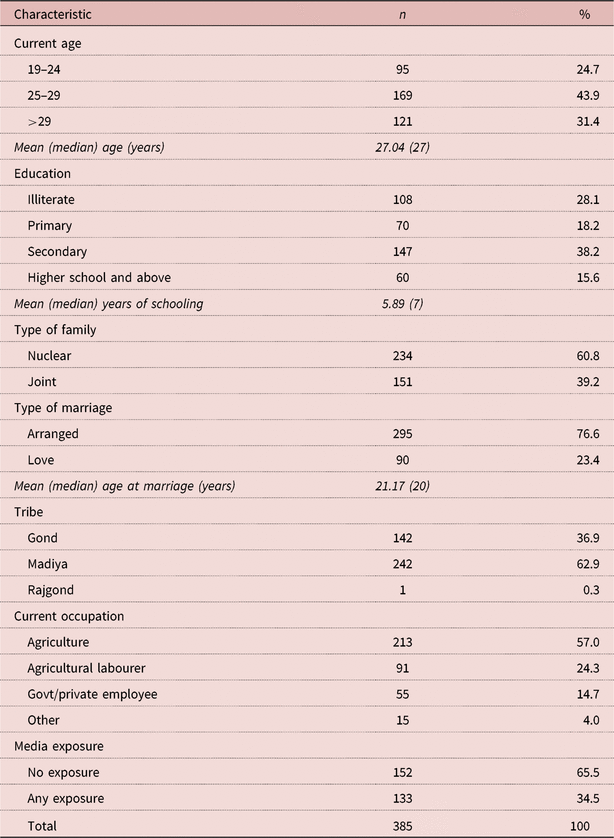
Of the 405 males included in the sample, 385 could be interviewed giving a response rate of about 95%. Table 1 presents the socio-demographic profile of the respondents. Nearly 25% were aged 19−24 years, and 44% aged 25−29 years. Their mean age was 27.04 years. Over a quarter (28.1%) were illiterate. Around 18.2% had completed primary schooling, and 38.2% had studied up to secondary level. The mean years and median years of schooling were 5.89 years and 7 years respectively. Agriculture was the dominant occupation (57% of respondents), and 24.3% were agriculture labourers. Around 60.8% of families were nuclear. Nearly 23.4% of the men had opted for love marriages. The mean age at marriage was 21.17 years with a median age of 20. Nearly 76.6% of the respondents had arranged marriages.
Socio-demographic characteristics of male survey respondents

Men’s participation in maternal health care
Men accompanying wives to ANC
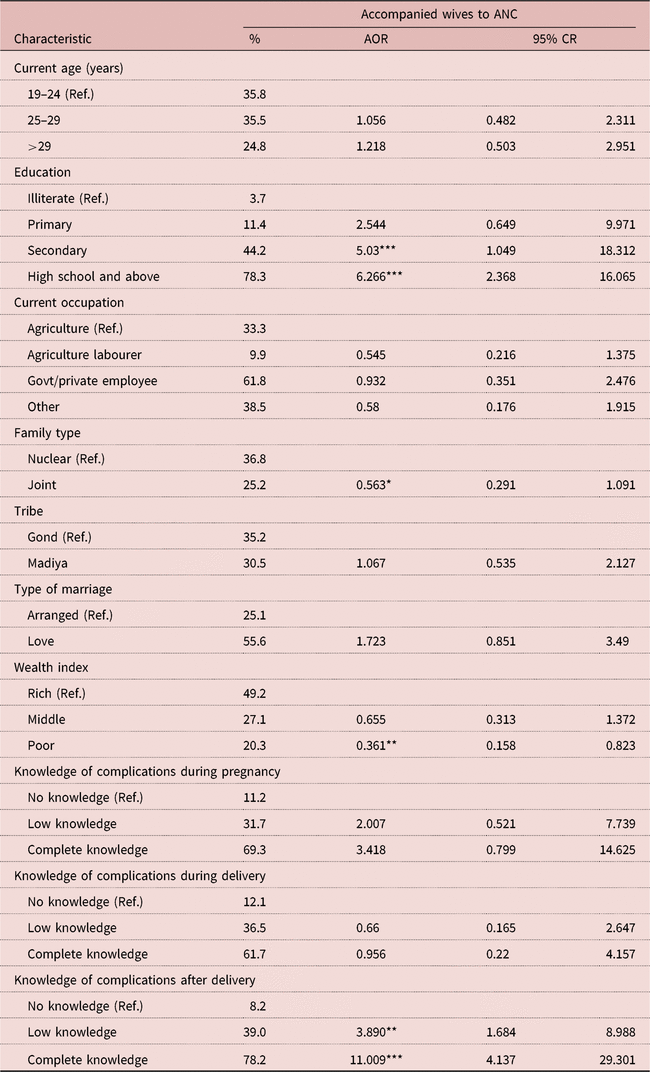
Table 2 presents the percentages of respondent men who accompanied their wives to ANC services by their background characteristics. Overall, 32% accompanied their wives to ANC. In the age groups 19–24 and 25–29 years, 35.8% and 35.5%, respectively, accompanied their wives to ANC. Nearly 38.8% of the men from nuclear families and 25% from joint families accompanied their wives to ANC. A higher proportion of men who had love marriages (55.6%) accompanied their wives to ANC compared with those with arranged marriages (25.1%). Complete knowledge of complications during pregnancy, childbirth and postpartum were positively association with accompanying a wife to ANC. The multivariate results showed a significant association between education, family type, wealth index and the men’s knowledge about complications after delivery and the likelihood of accompanying a wife to ANC. Husbands who were educated to secondary and high school level and above were more likely to accompany their wives to ANC than their less-educated counterparts. On the other hand, husbands from joint families were 0.56 times less likely to accompany their wives to ANC than those from nuclear families. Husbands from poor households were less likely to accompany their wives to ANC (OR 0.361; 95% CI 0.158–0.823) than those in the rich category. Furthermore, husbands with partial and complete knowledge of complications after delivery were significantly more likely (91% and 92% respectively) to accompany their wives to ANC (OR 3.890; 95% CI 1.684–8.988 and OR 11.009; 95% CI 4.137–29.301) than those who had no knowledge.
Binary logistic regression analysis of men according to whether they accompanied their wives to ANC by background characteristics

Ref., reference category.
*p<0.05; **p<0.01; ***p<0.001.
The focus group discussions revealed that men rarely concerned themselves with the maternal health issues of women as they considered them to be women’s personal issues:
Why should we be concerned with pregnancy-related issues when other family and community members, particularly elders, are present to take care of such issues? We are busy in earning for our family only. (Male FGD participant aged 28).
What a woman expects from her husband is not bad, in my case she [my wife] wants me to be with her in all the things, be with her when she doesn’t feel good at night. When she feels nervous she wants to talk with me. And I think as a husband it is our duty to fulfil her expectations. The child is not hers only, the child is ours. (Male FGD participant aged 30).
Men’s presence at place of delivery
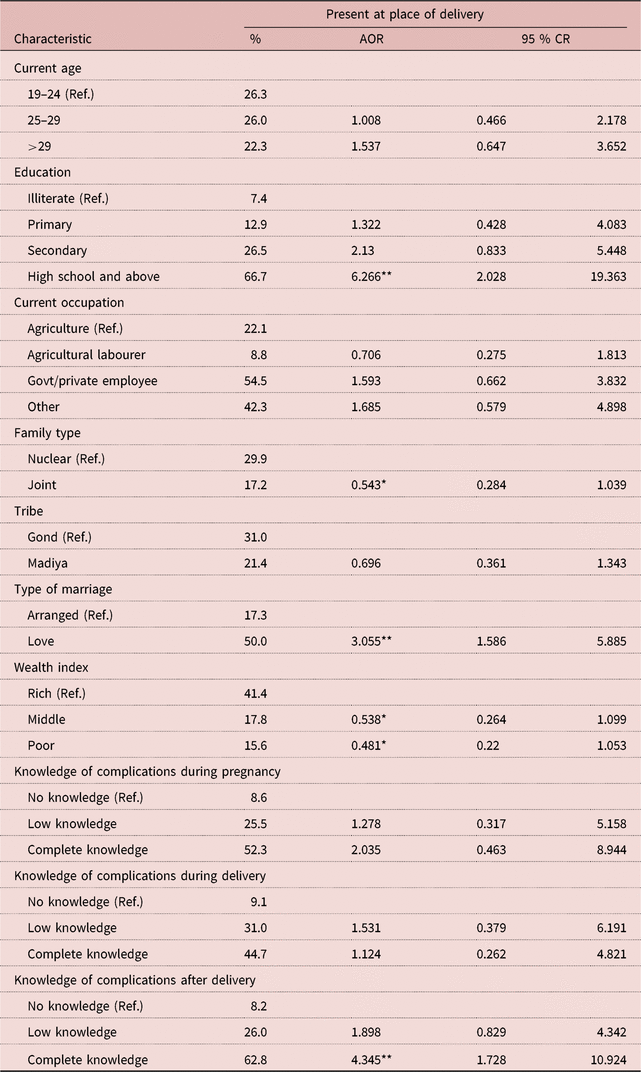
Table 3 shows that, overall, 25% of the husbands were present during their wives’ delivery: 26.3%, 26% and 22.3% for men aged 19–24, 25–29 and >29 years, respectively. Of the men who were present during their wives’ delivery, 7.4% were illiterate whereas 90% were graduates and highly educated. Fifty-four per cent of the men who were present during their wives’ delivery were government or private employees, and 22% were agricultural labourers. About 52.3% of the men with complete knowledge of complications during pregnancy, 25.5% of those with partial knowledge and 9.1% of those without any knowledge of pregnancy-related complications were present during their wives’ delivery. The multivariate results revealed that husbands who had completed high school and above education had a significantly higher likelihood of being present at their wives’ place of delivery (OR 6.266; 95% CI 2.028–19.363). Husbands living in joint families were significantly less likely to be present at the place of delivery than those from nuclear families.
Binary logistic regression analysis of men according to whether they were present at the place of delivery by background characteristics

Ref., reference category.
*p<0.05; **p<0.01; ***p<0.001.
Husbands who had a love marriage were three times more likely to be present at the place of delivery than those who had an arranged marriage. Those from middle (OR=0.538) and poor (OR=0.481) wealth quintiles were significantly less likely to be present at the place of delivery compared with husbands from the rich wealth quintile. On the other hand, husbands with a complete knowledge of complications after delivery were four times more likely to be present at the place of delivery than those who had no knowledge about complications after delivery.
During an informal discussion with the tribal men regarding men’s presence during delivery, the father of a 1-year-old child said:
Sometimes, we are asked to leave the place of delivery; sometimes delivery takes place in the hut that is prepared for delivery. If the women who are assisting with the delivery need help, they ask for it. We are always ready to help them. (Father of a 1-year-old child aged 24 years)
Men’s role was limited to providing external support during childbirth at home. They were willing to help in various ways but would do so only to the extent they were asked to do so by the women who were assisting with the delivery
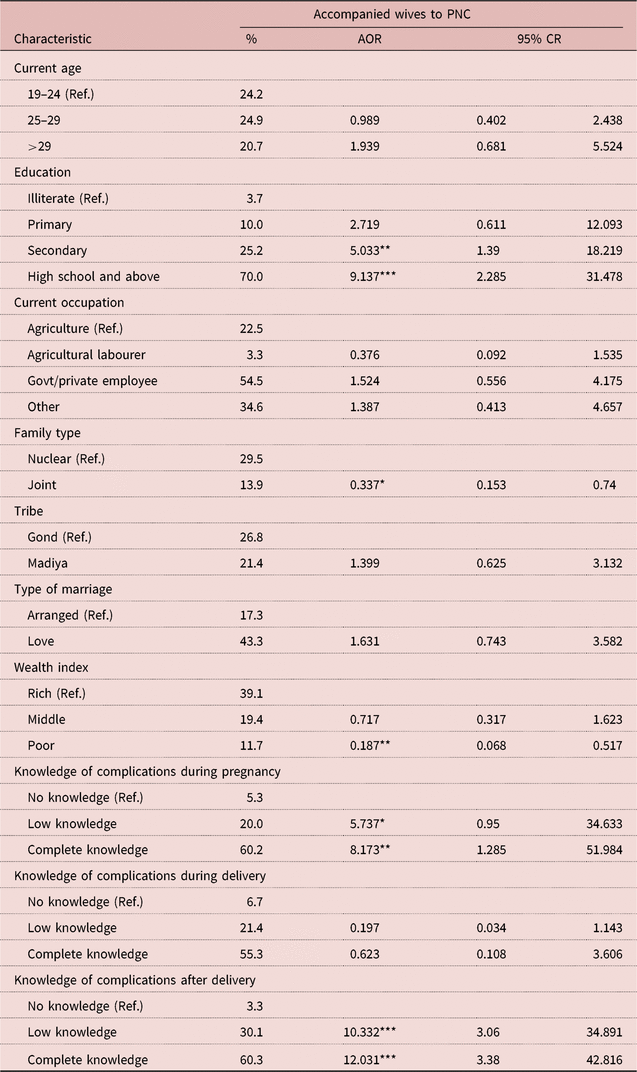
Men accompanying wives to PNC
Overall, 23% of the husbands accompanied their wives to the health care facility for postnatal care (PNC) (Table 4). Nearly 70% of the men who were graduates or highly educated, and 54.5% of those with salaried jobs, did so. Only 13.9% of the men from joint families and 29.5% from nuclear families had accompanied their wives to PNC. Around 43.3% of the men who had love marriages had accompanied their wives to PNC compared with only around 17.3% of the men whose marriages were arranged. Men from the rich wealth index household were significantly more likely to accompany their wives to PNC than men from poorer households. The multivariate findings suggest that there was a significant association between husband’s education and his participation in his wife’s postnatal care. Husbands with a secondary education and higher were significantly more likely to participate in the postnatal care of their wives. The odds of participation in a wife’s postnatal care were lower (AOR: 0.337 CI: 0.153–0.740) for husbands living in a joint family than for those in a nuclear family. The odds were lower (AOR: 0.187; 95% CI: 0.68–0.517) if they belonged to the poor wealth category rather than the rich category. Furthermore, husbands’ knowledge of complications of pregnancy was statistically associated with their participation in their wives’ postnatal care. Husbands who had complete knowledge about complications during pregnancy were eight times more likely to participate in their wives’ postnatal care than those with no knowledge. Similarly, husbands with complete knowledge about post-delivery complications were significantly more likely to participate in their wives’ postnatal care.
Binary logistic regression analysis of men according to whether they accompanied their wives to postnatal care by background characteristics

Ref., reference category.
*p<0.05; **p<0.01; ***p<0.001.
Male participation in household work
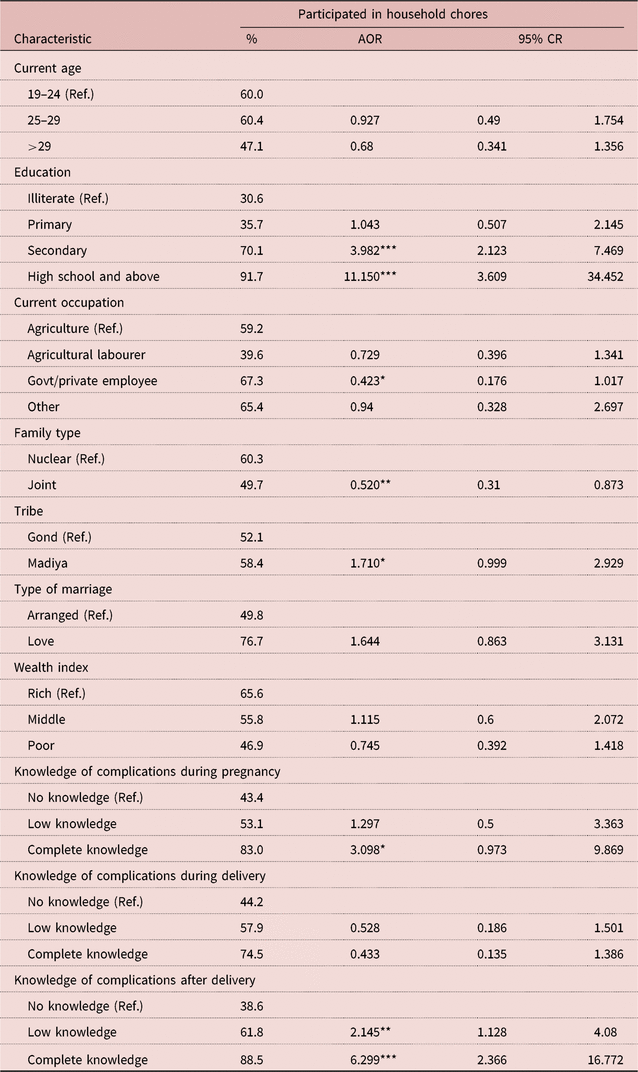
Table 5 shows men’s participation in household chores during and after their wife’s pregnancy by socioeconomic and socio-demographic characteristics. Illiterate men reported only 30.6% participation whereas 91.7% of the men with a high school education and higher said that they were involved in housework. Around 60.3% of men from nuclear families helped with the housework, while only 49.7% of men from joint families did so. Seventy-six per cent of the men who had love marriages were involved in housework. The corresponding percentage for men with arranged marriages was 49%. It is also found that 83% of the men with complete knowledge of pregnancy complications were involved in housework. In comparison, the involvement of men with no knowledge of complications during pregnancy was much less (43%). A similar pattern was also observed among men who had complete knowledge of complications after delivery, of whom 88.5% were more likely to participate in household work as against 38% of those who had no knowledge.
Binary logistic regression analysis of men according to whether they participated in household chores by background characteristics

Ref., reference category.
*p<0.05; **p<0.01; ***p<0.001.
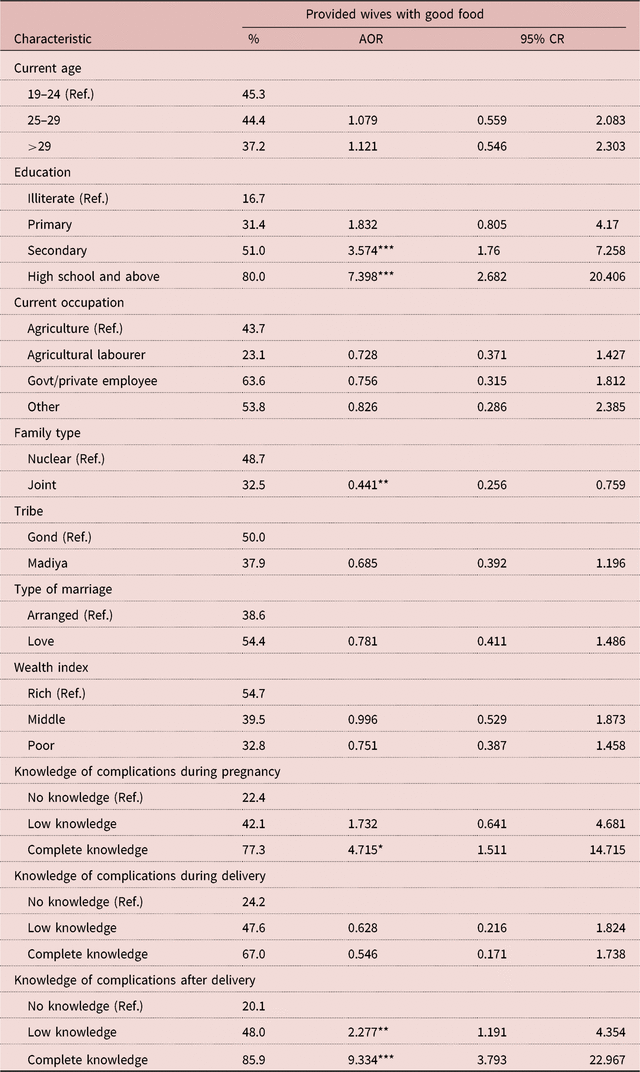
Binary logistic regression analysis of men according to whether they provided their wives with good food during and after pregnancy

Ref., reference category.
*p<0.05; **p<0.01; ***p<0.001.
Further, multivariate analysis shows that the education level of respondents was significantly positively associated with helping in household chores. Husbands engaged in agricultural labour were less likely to help their wives with the household chores (OR 0.423; 95% CI 0.176–1.017) than their counterparts in other occupations. The husbands in couples living in a joint family arrangement were 0.520 times less likely to help their wives than those living in a nuclear family. Married Madiya men are 1.17 times more likely to help their wives with the household chores compared with men living in Gond. Knowledge of complications of pregnancy was also significantly associated with the tendency to help wives with the household chores. Husbands with complete knowledge about complications during pregnancy were more likely (OR=3.098) to help their wives than those with no knowledge. Husbands with low and complete knowledge about complications after delivery were 2.145 and 6.299 times, respectively, more likely to help their wives with household chores compared with their counterparts who have no knowledge.
Men providing special food to their wives
Adequate food for pregnant and lactating women ensures better health outcomes for both mother and child. Men often play an important role in providing their wives or partners with special food as they are the primary earners and decision-makers. They are also the ones who visit the market to purchase food items for the household when their wives are pregnant. Thus, their role in ensuring that their wives get proper and adequate nutrition is important to the context of this study (Table 6). The multivariate results revealed that husbands with secondary education (OR=3.574, p<0.001) and high school and above education (OR=7.398, p<0.001) were significantly more likely to provide good food to their wives. Type of family was also found to be a significant predictor. Husbands living in a joint family were significantly less likely to provide good food to their wives (OR=0.441, p<0.05) than their counterparts in a nuclear family. A significant association was also found with husband’s knowledge of the complications of pregnancy. Husbands who had complete knowledge about pregnancy complications (OR=4.715, p<0.001) were more likely to provide special food to their wives than those with a low knowledge.
Reasons for, and constraints on, male participation
The reasons for non-participation of men in maternal health care seem to be related to perceived gender roles, and socioeconomic, health care system and cultural factors. To gain a greater understanding of these factors in the study population a qualitative approach was used. Some views became clear during the FGDs:
Sir, we want to help our wives and sister or anyone pregnant at home, but how can we help, what exactly we need to do help is unclear, our community men [participants in the FGD] are labourers and have to work all day. That is what we always focused preferred work-related issues than the pregnancy related matters. (Male FGD participant aged 31).
Why should we make things worse? I mean, we men create more problems for women if we were present during delivery of wife. She [my wife] was never comfortable when I go with her to hospital or Anganwadi, she was scared that if something went wrong I would shout at her. (FGD participant aged 29)
I think my participation in accompanying my wife for ANC was not necessary. The hospital is near my house; a helper comes to my home for taking my wife, the ANM informs my wife one day before the ANC check-up. My mother and sister are also at home to see to all pregnancy-related matters. You tell me [pointing to FGD moderator] why is it necessary and important for me to participate. Yes, I give money to my wife and if there’s anything serious, I take her to hospital. (Male FGD participant aged 27)
A woman who had delivered recently expressed her opinion as follows:
He is the only earning member in the household. He does whatever is possible to run the family. I think my husband’s role is to take care of the family and not to interfere in issues related to pregnancy, childbirth. Even I don’t want him to do anything related maternal health. (Female IDI participant aged 24)
However, the qualitative results showed a diversity of opinions. Some of the men stated that they actively participated in maternal health issues. Some considered such issues should be taken care of by women only. However, the major obstacles to male participation in maternal health care were attitudes to gender roles, traditional practices and the pressure on the men to earn a living, and not feel that it is necessary for them to be involved.
Health care providers’ views
The role of health care providers in accommodating, accepting and educating men (husbands) while providing routine maternal care services to pregnant women is crucial. The qualitative approach used in this study, with in-depth interviews with health care providers, sought to determine their attitudes.
It was evident that the tribal respondent men were relatively ignorant when it came to maternal health. This may have been due to their lack of awareness of pregnancy complications and their consequences. The interviewed health care providers were found to be very concerned about the traditional practices prevalent in these tribal communities. They reported that many crude and harmful childbirth practices were still prevalent, and that these can lead to an increased risk of maternal and infant mortality. However, some of the health providers said that they believed the situation was changing. One MPW worker during an in-depth interview said:
I have been working in the surrounding villages for the last 20 years. I have seen so many bad days. These tribal people don’t have money, education or power. Earlier they would die due to lack of health care facilities nearby and lack of roads and transportation. I am seeing the change, they are now better off. They are now coming to hospitals. They are now accepting the doctors and accepting the medicines. The change will come but it will take some more time. (MPW worker aged 56)
An ANM expressed her deep dissatisfaction and concern when discussing the crude practices of community members during childbirth:
I am here for 4 years, working under NRHM [National Rural Health Mission]. I have never seen these kind of practices during childbirth. All home deliveries are conducted by elderly family members. After delivery, the women are not allowed to sleep on bed/khat. They are forced to sleep on floor, which increases the risk of snake bites and infections. They also sleep near the fire so the chances of getting burnt are also very high. Recently one child got burn injuries on his leg while the mother and child were sleeping on the floor. (NRHM Nurse aged 31)
Health workers accepted that male involvement in maternal health has positive health outcomes for both mother and child. Some agreed that increased husband participation in routine maternal health care could lead to the better utilization of family planning services during the post-partum period. However, they also pointed out that the lack of human resources in tribal villages made it difficult to provide information on pregnancy-related issues to men during routine maternal check-ups. During an in-depth interview, an ANM expressed:
Many villages don’t have ANM, only one ASHA and one Anganwadi worker. Most ANMs have to perform multiple duties; so where is the time to speak with husbands, tell them all about women’s health issues. The health care system also needs to be changed according to the time and demand. Government should also give more manpower to do all these things. (ANM, aged 36)
Health providers expressed the opinion that to enhance active male participation in maternal health care among tribal communities, efforts will be needed educate communities about its importance, and that more male frontline health workers should be employed in routine maternal health care matters:
It is difficult to teach or engage men in maternal health issues. They have limited knowledge of pregnancy-related matters; and we also can’t tell things clearly to men because sometimes they don’t like such things to be discussed with them. Maybe we should try it sometime also but men don’t have the time to come with their wives. (ANM aged 26).
The health care providers were also aware of the men’s family responsibilities and agree that it was difficult to accommodate men in maternal health care.
Discussion
This multidimensional study among tribal communities in Maharashtra, India, found that these communities were relatively egalitarian in gender-related matters, with women enjoying more autonomy than their counterparts in mainstream society. However, the respondent tribal men’s participation in maternal health was minimal. Only 22% accompanied their wives to ANC, 25% were present at the time of delivery of their children and 25% accompanied their wives to postnatal care. Participation in household work and support for wives in other aspects were slightly better. However, the results were contrary to the findings of previous studies conducted in India, which reported higher male participation in maternal health of women (Barua, et al., Reference Barua, Pande, MacQuarrie and Walia2004; Singh & Ram, Reference Singh and Ram2009; Chattopadhyay, Reference Chattopadhyay2012). However, these studies were done on the general population, while the present study focused on tribal communities.
The results of the bivariate and multivariate analyses confirm that level of education of the husband, household economic status, type of family (nuclear/joint), occupation of husband, type of marriage and type of occupation are important factors influencing male participation in maternal health. Men with no education were less likely to participate in maternal health. Similar results have been reported in earlier studies (Awasthi et al., Reference Awasthi, Nandan, Mehrotra and Shankar2008; Ditekemena et al., Reference Ditekemena, Koole, Engmann, Matendo, Tshefu and Ryder2012; Thapa & Niehof, Reference Thapa and Niehof2013). With men’s increasing education level, they are more likely to participate in maternal health care. Men from nuclear families were more likely to participate in maternal health care than men from joint families.
Men who had salaried jobs were more likely to be involved in all aspects of maternal health care. Men from rich households showed higher levels of participation in maternal health than those from poorer households. Furthermore, men with knowledge of pregnancy complications (during pregnancy, childbirth and the postpartum period) were more likely to participate in all five aspects of maternal health care. Having knowledge of complications, or knowing possible signs of danger in pregnancy and childbirth, have been previously reported to positively contribute to the supportive behaviours of husbands (Jungari & Paswan, Reference Jungari and Paswan2019).
The study found that the main reason tribal men gave for non-participation in maternal health care was the pressure of earning a living. A significant proportion of the men did not think it was necessary, or did not want to be involved in what they saw as women’s problems. Some of the participants reported that health care providers or systems were unable to accommodate them during antenatal, natal and postnatal check-ups. Similar results has been reported previously in India and elsewhere (Mullany et al., Reference Mullany, Becker and Hindin2006; Kabagenyi et al., Reference Kabagenyi, Jennings, Reid, Nalwadda, Ntozi and Atuyambe2014; Dumbaugh et al., Reference Dumbaugh, Tawiah-Agyemang, Manu, Ten Asbroek, Kirkwood and Hill2014).
The study results showed that gender norms were influential in preventing male participation in maternal health in this tribal community. The qualitative findings demonstrated that gender-role attitudes, and men’s opinion that maternal health is a woman’s issue and that pregnancy and childbirth are natural processes, are responsible for lack of male participation. Thus, programmatic intervention to change these attitudes and behaviours is crucial to increase men’s involvement in women health in these communities. The qualitative results also found that a significant proportion of the respondent women accepted that maternal health was their concern and that their husbands did not have any role in the matter. This is indicative of the inability of men and women to understand the need and benefits of shared responsibilities for maternal health. The study also showed that, often, the health system falls short in educating men on maternal health issues when they visit ANC centres. Health centres are also faced with a shortage of manpower, particularly male, and so are unable to devote time to raising awareness among men. However, the health care providers interviewed in the study were not clear about, or did not have any idea, how to increase male participation in these tribal communities.
In conclusion, men’s participation in maternal health care was found to be low in these tribal community in Maharashtra, India. Men’s participation in maternal health care was not obligatory in these communities. Men with complete knowledge about pregnancy complications were more likely to participate in maternal health issues. Hence, educating husbands about pregnancy complications is a practical way of engaging them in maternal health care. A sensitive husband with adequate information on maternal health will be in a better position to provide financial support, help in household chores, accompany his wife for routine care during pregnancy and provide appropriate nutritional food to his wife. An understanding of the various aspects of local tribal communities’ cultural norms and practices related to maternal health will help devise appropriate strategies to improve the maternal health care situation in tribal areas of India.
Acknowledgments
The authors would like to thank the field workers who helped during data collection, and the health workers and respondents for participating in the study. They also would like to thank anonymous the reviewers for their constructive comments and suggestions.
Funding
This research did not receive any funding.
Conflicts of Interest
The authors have no conflicts of interest to declare.
Ethical Approval
The study was undertaken in a tribal-dominated area. Informed consent was obtained from the respective tribal community head before the survey was administered. Individual respondents’ consent was obtained before interview and freedom to withdraw from the study at any time was assured to respondents. Since the study included exploring the cultural aspects of the tribal community, the study sought appropriate consent from the Gond and Madia tribal community heads to protect their traditional cultural interests. The purpose of the study was explained to the community and each individual before the survey and they were assured that all information collected from them would only be used for the purpose of academic research.