Introduction
With the upward trend of migration worldwide, Heritage Language (HL) maintenance has attracted more attention and gained its place in the sociopolitical spotlight (Montrul, Reference Montrul2010; Polinsky & Scontras, Reference Polinsky and Scontras2019). According to Rothman (Reference Rothman2009), HL refers to “a language spoken at home or otherwise readily available to young children, and crucially this language is not a dominant language of the larger (national) society…. Differently [from monolingual acquisition], there is the possibility that quantitative and qualitative differences in heritage language input, influence of the societal majority language and differences in literacy and formal education can result in what on the surface seems to be arrested development of the heritage language or attrition in adult bilingual knowledge” (p. 156). Kupisch and Rothman (Reference Kupisch and Rothman2018) addressed the importance of conducting research on bilingual children who are exposed to two languages from their very early childhood years, as such studies could reveal the “actual explanation of how and why differences [compared to monolingual speakers’ language acquisition] emerge without resorting to backward assumptions regarding the path of development based solely on endstate experimental data [from adult HL speakers]” (p. 579).
Language Output Quantity and Bilingual Children’s HL Learning
Rothman’s definition of HL (Reference Rothman2009) suggests that language experience plays a fundamental role in bilingual children’s HL development, and this insight has been verified by many recent studies (e.g., Hoff, Reference Hoff2018; Sun & Verspoor, Reference Sun and Verspoor2020; Sun et al., Reference Sun, Ng, O’Brien and Fritzsche2020a). According to the Interaction Approach, learners’ language experience could be generally decomposed into input, interaction, and output (Gass & Mackey, Reference Gass, Mackey, VanPatten, Keating and Wulff2020; Javadi & Kazemirad, Reference Javadi and Kazemirad2020; Mackey & Goo, Reference Mackey, Goo and Chapelle2012). Previous studies on HL learning have addressed the importance of input (Polinsky & Scontras, Reference Polinsky and Scontras2019; Yussof & Sun, Reference Yussof and Sun2020) and interaction (Ramírez-Esparza et al., Reference Ramírez-Esparza, García-Sierra and Kuhl2017) but the contribution of output has not been properly assessed in most cases. For instance, although Lohndal and colleagues (Reference Lohndal, Rothman, Kupisch and Westergaard2019) considered the role of input quality and quantity in HL development in relation to studying heritage grammar, they did not mention the potential contribution of language output. The significance of language output has been more commonly discussed in second language studies and the related hypotheses and approaches. For instance, inspired by Swain’s Output Hypothesis (Swain, Reference Swain, Cook and Seidlhofer1995), Gass and Mackey (Reference Gass, Mackey, VanPatten, Keating and Wulff2020) proposed four specific functions of language output in their Interaction Approach. These are (a) testing hypotheses about structures and meanings of the language, (b) receiving vital feedback for the verification of the hypotheses, (c) forcing a move from meaning-based processing to a syntactic one, and (d) “promot[ing] automaticity” and the “routinization of language use” (ibid., p. 197). As there is no existing theory or hypothesis directly addressing the relation between bilingual children’s language output and HL learning, we borrow the insights of the Output Hypothesis to understand how children’s HL output provides an important avenue for them to “reflect and recognize their language behavior” (Sun et al., Reference Sun, Ng, O’Brien and Fritzsche2020a, p. 821) and eventually influences bilingual children’s HL learning.
Existing studies on bilingual children’s language output and HL learning have indeed revealed the independent role that language output plays in children’s HL learning, over and above the contribution of children’s language input (Bedore et al., Reference Bedore, Peña, Summers, Boerger, Resendiz, Greene, Bohman and Gillam2012; Bohman et al., Reference Bohman, Bedore, Peña, Mendez-Perez and Gillam2010; Gathercole & Thomas, Reference Gathercole and Thomas2009; Hammer et al., Reference Hammer, Komaroff, Rodriguez, Lopez, Scarpino and Goldstein2012; Hoff, Reference Hoff2018). The more the language is used, the better children perform in the HL (e.g., Bedore et al., Reference Bedore, Peña, Summers, Boerger, Resendiz, Greene, Bohman and Gillam2012; Sheng et al., Reference Sheng, Bedore, Peña and Fiestas2013). For instance, Bohman and colleagues (Reference Bohman, Bedore, Peña, Mendez-Perez and Gillam2010) followed 757 Hispanic preschoolers’ Spanish (HL) and English semantic and morphosyntactic development in the United States. Language output was found to be important for both HL and English growth, and its contribution was independent of the contribution of input to learning. More importantly, both children’s semantic and morphosyntactic developments were driven by their language output quantity, indicating the importance of output in various language skills. The authors concluded that output appeared to be the single most important factor in the maintenance of language proficiency of the children. Bedore and colleagues (Reference Bedore, Peña, Summers, Boerger, Resendiz, Greene, Bohman and Gillam2012) also confirmed the importance of output in their study that involved 1029 English–Spanish bilingual preschoolers. These researchers found that children’s current language use was a better predictor than the age of first exposure and was the “most informative predictor of language dominance and proficiency” (Bedore et al., Reference Bedore, Peña, Summers, Boerger, Resendiz, Greene, Bohman and Gillam2012, p. 625). Hoff (Reference Hoff2018) highlighted the unique contribution of language output in her review paper and found that the frequency of child language output predicted expressive vocabulary in Spanish–English bilingual children more than input. In this study, we focused on children’s semantic and morphosyntactic knowledge and explored the impact of HL output on children’s receptive vocabulary, semantic fluency, and receptive grammar.
Language Output Settings and Bilingual Children’s HL Learning
The limited number of studies on bilingual children’s output and HL learning have mainly explored the impact of the quantity of language output, leaving the “how,” or the mechanics of language output, underexplored. In fact, “bilinguals usually acquire and use their languages for different purposes, in different domains of life, with different people” (Grosjean, Reference Grosjean2010, p. 29; Reference Grosjean, Silva-Corvalán and Treffers-Daller2015), and their HL proficiency might be substantially affected by where and with whom they can use the HL. Speaking the HL in various settings with different stakeholders may elicit richer vocabulary and syntactic structures from the interlocutors and, in turn, facilitate bilingual children’s HL development. For instance, in their study on Welsh–English children’s dual language learning, Gathercole and Thomas (Reference Gathercole and Thomas2009) addressed the importance of language exposure in the wider community. A dwindling or unstable bilingual community may result in “more sporadic and scattered” language use (p. 233), and hamper “certain aspects of linguistic system” (p. 216).
HL settings refer to places such as home, school, restaurant, shopping mall, and playground, where bilingual children could speak the HL with others in either monolingual mode or bilingual mode (Grosjean, Reference Grosjean and Nicol2001). Because “code-switching is a ubiquitous feature of speech in bilingual communities” (Ribot & Hoff, Reference Ribot and Hoff2014, p. 333), bilingual children may choose to use their HL or the societal dominant language alone, or mix-use their dual languages in different settings. The following reasons may explain why many bilingual children demonstrate a preference for speaking the societal dominant language (Ribot & Hoff, Reference Ribot and Hoff2014). Firstly, the dominant language is afforded a cultural and pragmatic prestige, and children as young as five years old might be aware of the difference in language status between their HL and the dominant language within the school setting (Gutiérrez-Clellen et al., Reference Gutiérrez-Clellen, Simon-Cereijido and Leone2009). This sense of importance might motivate bilingual children to speak the societal dominant language more. Secondly, children might be more willing to speak the societal language or mix-use their dual languages because they have a greater proficiency in the dominant language. Lastly, bilingual children’s language mode reflects their language input from the immediate environment. For example, parents of bilingual children may be concerned about the utility of languages, thereby choosing to speak the societal dominant language more frequently when conversing with their children from a young age to better prepare them for future education and jobs (Sun, Reference Sun2019; Sun et al., Reference Sun, Yin, Amsah and O’Brien2018a).
The Current Study: Bilingual Children’s Mandarin Learning in Singapore
The current study intends to explore the contribution of language output to bilingual children’s HL learning in Singapore. As an island nation that obtained independence from the British in 1965, Singapore has used its language policy to forge its national identity. Compared to other countries’ more recent plans for HL maintenance (Carreira & Kagan, Reference Carreira and Kagan2018; Lee & Wright Reference Lee and Wright2014), Singapore’s official mother tongue languages—Mandarin, Malay, and Tamil—have been institutionalized for decades (Ministry of Education, 2020). The government has initiated various activities for the maintenance of HLs. For instance, the Speak Mandarin Campaign was launched to promote Mandarin language usage (Lim & Yak, Reference Lim and Yak2013). Despite such great effort, recent years have witnessed a substantial decrease in children’s HL use and proficiency (Sun et al., Reference Sun, Ng, O’Brien and Fritzsche2020a). Instead, English has become the societal dominant language for the younger generation, probably because of its importance in business, education, social media, and interethnic communication within and outside of the nation (Pakir, Reference Pakir1999; Sun et al., Reference Sun, Ng, O’Brien and Fritzsche2020a; Sun et al., Reference Sun, Bornstein and Esposito2021). English is used as the language of curriculum administration in the educational system, while HLs are taught as a subject from preschool education. Contrary to the monolingual and second language findings, parents’ SES has been found to be negatively related to children’s heritage language proficiency in Singapore (Saravanan, Reference Saravanan2001), which is probably due to higher SES parents’ higher English proficiency, more frequent use of English at home, and more positive attitude toward the societal dominant language (Dixon et al., Reference Dixon, Zhao, Quiroz and Shin2012).
The vitality of Mandarin, which is the official HL for 74.3% of the country’s population (Singapore Department of Statistics, 2020), is decreasing if analyzed using the UNESCO Language Vitality and Endangerment (LVE) scales (UNESCO, 2003).Footnote 1 The use of Mandarin in Singapore is dwindling with only 51.5% of Chinese households with children aged 5 to 9 using Mandarin at home (Singapore Department of Statistics, 2015) and the number of households with Primary 1 aged children who speak mostly English at home growing from 55% to 71% between 2009 and 2019 (Straits Times, 2020). Community-wise, the utility of Mandarin is declining as well. Dixon and colleagues (Reference Dixon, Zhao, Quiroz and Shin2012) outlined three main and interrelated community factors that would affect bilingual children’s early heritage language maintenance, which are culture and ethnicity, relative social profiles of the two languages, and community support. Culture and ethnicity-wise, the Chinese ethnic group has been found to use Mandarin or other dialects less frequently than their Malay counterparts at home in Singapore. The latter was found to have a stronger sense of ethnic identity and highly esteemed their culture, language, and religion (Islam), assuming “losing any one of them means losing one’s identity, ethnic values, and connection across the generations (Kamsiah & Ayyub, Reference Kamsiah, Ayyub, Gopinathan, Pakir, Ho and Saravanan1998)” (Dixon et al., Reference Dixon, Zhao, Quiroz and Shin2012, p. 547). The higher social importance of English, given its attributed functions of national unity and economic advancement, may result in less use of Mandarin in many households out of utilitarian concerns. The relative social profiles of English and Mandarin would affect people’s, including young children’s, attitude to the value of maintaining a specific language. Lastly, different ethnic communities are different in the quantity and types of language resources (e.g., language training and cultural activities in the community center) that they are willing or able to provide to their people. The more community support there is, the better heritage language is supposed to be. It is worth noting that contrary to this hypothesis, some studies found that community support had little impact on children’s heritage language learning. For instance, active Spanish use in Miami, Florida, either by local media or by well-respected public figures, such as the mayor and educationist, did not change the decline of Spanish use among children in the neighborhoods (Eilers et al., Reference Eilers, Pearson, Cobo-Lewis, McCardle and Hoff2006). Such counterintuitive findings indicate that other influential factors beyond language input should be explored.
Researchers on early bilingualism in Singapore have noticed the change in parents’ and children’s language use, nevertheless, most existing studies have highlighted the crucial role of language input quantity and quality on children’s HL maintenance (e.g., Dixon et al., Reference Dixon, Zhao, Quiroz and Shin2012; Sun et al., Reference Sun, Yussof, Vijayakumar, Lai, O’Brien and Ong2020b, Reference Sun, Toh and Steinkrauss2020c), leaving the role of children’s HL output underexplored. The current study intends to explore the contribution of Mandarin input and output to English–Mandarin bilingual children’s Mandarin skills in Singapore. All children in this study were of Singaporean Chinese ethnicity and HL learners of Mandarin. They received steady Mandarin input at home or/and through prenursery programs. The findings are intended to benefit both the local and international audience and shed light on HL maintenance in general. As children’s early HL development could be influenced by various cognitive and environmental factors (Sun Reference Sun2019; Sun & Verspoor, Reference Sun and Verspoor2020), we also included these factors in the current study; models that fail to consider these multiple facets might overestimate or underestimate certain aspects and are likely to result in incomplete and even misleading statements (Bronfenbrenner & Morris, Reference Bronfenbrenner, Morris and Lerner2006; Sun et al., Reference Sun, Bornstein and Esposito2021). In the current study, we control children’s input factors, including parental input (De Houwer, Reference De Houwer2007), socioeconomic status (Hoff, Reference Hoff2006), mother’s language ability (Hoff, Reference Hoff2006; Sun, Reference Sun2019), and age of acquisition (Jia et al., Reference Jia, Chen, Kim, Chan and Jeung2014), as these factors have been found to affect the rate of bilingual children’s HL development. Additionally, we controlled children’s English language proficiency (Sun et al., Reference Sun, Roberts and Bus2022), gender (Bornstein et al., Reference Bornstein, Hahn and Haynes2004), nonverbal intelligence, and short-term phonological memory (Sun et al., Reference Sun, Ng, O’Brien and Fritzsche2020a), as these factors may affect bilingual children’s language development as well. The two research questions of the current study are as follows:
Question 1. Where and how do children use Mandarin in Singapore? The settings (“where”) refer to home, school, playground, shopping mall, dining places outside the home, places for holiday, and others. The language mode (“how”) refers to whether children use either English or Mandarin alone, or whether they use both languages interchangeably in different settings.
Hypothesis: As English is the dominant language in Singapore, we speculate that children had fewer settings to speak Mandarin than speak English. Additionally, children might prefer to speak English or mix-use the two languages in these settings.
Question 2. Would bilingual children’s Mandarin language experience, output in particular, contribute to their Mandarin semantic and morphosyntactic knowledge? Mandarin skills have been operationalized as receptive vocabulary, semantic fluency, and receptive grammar.
Hypothesis: Based on previous findings of the importance of language input and output on bilingual children’s HL learning (e.g., Bohman et al., Reference Bohman, Bedore, Peña, Mendez-Perez and Gillam2010), we propose that children’s Mandarin experience matters. Specifically, language output is significantly and positively related to children’s three Mandarin skills.
Method
Participants
Two hundred and two young English–Chinese bilingual preschoolers in Kindergarten 1 (4–5 years old; 89 boys and 112 girls) were recruited to participate in this study. One child with no HL exposure either at home or at prenursery programs was excluded from the sample for analysis. Most of the participants were from the PAP Community Foundation, which is the largest operator of kindergarten and childcare centers in Singapore. We recruited participants based on information provided by teachers and parents and there were two criteria for participant selection: firstly, children should be Mandarin–English bilingual language learners. Those who were exposed to more than two languages at home or recently emigrated from China were excluded. Secondly, participants should have no history of developmental delays or impairment. Socioeconomic status varied among children, but most of them were from middle-class families, whose family income was well above the relative poverty line of the country (>S$2,500; Donaldson et al., Reference Donaldson, Loh, Mudaliar, Kadir, Wu and Yeoh2013).
Data Collection and Measures
The first author of this article obtained ethics approval from the university’s institutional review board. Parents gave their informed consent through consent forms disseminated from preschools. Prior to the language assessments, children also gave their assent to complete the tasks through assent forms. Children’s Mandarin and English competencies (i.e., vocabulary, grammar, and fluency) and cognitive capacities were assessed with standardized measures, while information relating to their bilingual environment at home was collected through a parental questionnaire. The following section provides details of the measures and the questionnaire.
Mandarin and English Receptive Vocabulary
We used the Bilingual Language Assessment Battery (BLAB; Rickard-Liow et al., Reference Rickard-Liow, Sze and Lee2013), a standardized test like the Peabody Picture Vocabulary Test II (Dunn and Dunn, Reference Dunn and Dunn2007), to evaluate children’s Mandarin and English receptive vocabulary. This auditory-picture matching task was created in Singapore and has 3 practice trials and 80 test trials. While listening to recorded words, children were shown four images. They were then asked to choose one of four pictures that best represented their understanding of the word. BLAB is a reliable instrument in the original bilingual norming study (Cronbach’s alphas of .75–.77) (Rickard-Liow et al., Reference Rickard-Liow, Sze and Lee2013).
Mandarin and English Semantic Fluency
A semantic fluency task was used to measure children’s production vocabulary depth. Participants were asked to name as many words as they could, based on a general theme within one minute in Mandarin and English, respectively. The chosen topics for both languages were food and animals, as previous studies have shown their effectiveness in testing child bilinguals’ mother tongue language semantic fluency (e.g., Schwartz, Reference Schwartz2014; Sun et al., Reference Sun, Steinkrauss, Wieling and de Bot2018b). One point was awarded for an appropriate word. Higher scores indicate greater vocabulary depth in children.
Mandarin and English Receptive Grammar
Children’s receptive grammar knowledge was tested using the Mandarin Grammar Receptive Test (MGRT; Bak, Reference Bak2012) and the English Test for Reception of Grammar Version 2 (TROG; Bishop, Reference Bishop2003). During the test, children saw four pictures and heard a spoken sentence simultaneously. They had to choose one of the four images based on their interpretation of the sentence they had heard. In total, there were 3 practice trials and 60 test trials. External validities and internal reliabilities of MRGT and TROG were reported to be good (e.g., MRGT: Cronbach’s =.75).
Nonverbal Intelligence
The Raven’s Coloured Progressive Matrices (CPM) test (Raven & Rust, Reference Raven and Rust2004) is a nonverbal test that has three parts (A, AB, and B) each with 12 items. The children were given an unfinished puzzle and asked to select one of the six options to complete it. CPM is used to assess children’s analogy and inference skills worldwide and is considered a culture-neutral test of nonverbal intelligence.
Phonological Working Memory
Two subtests of the Comprehensive Test of Phonological Processing (CTOPP; Wagner et al., Reference Wagner, Torgesen and Rashotte1999), the digit span and nonword repetition, were used to assess phonological short-term memory. The children were asked to orally repeat the serial digits and nonwords they heard in English. The subtests had 21 and 18 trials, respectively, with each subsequent trial being more complicated as the number of digits or syllables expanded. When the child gave five consecutive incorrect answers, the tests were stopped.
Parental Questionnaire
A parental questionnaire (see Appendix 1) was adapted from other surveys on bilingual children’s learning environment (De Houwer, Reference De Houwer2007; Sun et al., Reference Sun, Steinkrauss, Tendeiro and de Bot2016a; Sun et al. Reference Sun, Yin, Amsah and O’Brien2018a; Unsworth, Reference Unsworth2013) and was used to examine children’s home language and literacy climate in the current study. In comparison to previous questionnaires, the current one concentrated on children’s Mandarin and English learning and usage contexts. The average number of hours that children hear and speak Mandarin and English per week were used to determine children’s current language input and output, while children’s onset ages of speaking Mandarin and English were used to index their cumulative output in the two languages. Children’s home literacy environment was assessed with the number of books in each language that the family possessed, and the number of days that joint reading activities took place each week. Children’s language output outside the home was estimated by the number of places (e.g., restaurant, park) they have used the languages (i.e., English and/or Mandarin).
Data Analysis
All analyses were carried out using Stata version 15.1 (StataCorp, 2017). Multilevel regression with a random intercept was used to predict Mandarin receptive vocabulary, semantic fluency, and receptive grammar. The approach to select variables for inclusion in the regression models involved (a) identifying the relevant constructs for inclusion in the model based on theory and published literature, and (b) consideration of the number of observations per predictor variable and any apparent multicollinearity. Some variations of the models reported here were tested, however, results were largely consistent across different models. As such, we only reported the results of our initially hypothesized model.
One key assumption of traditional (single-level) regression is that observations are independent. In the present case, the children in the dataset were nested within preschool classrooms, meaning that there would likely be variance in the data that is accounted for by shared, but unobserved, preschool classroom characteristics. In line with this, the intraclass correlation coefficients (ICCs) for the three Mandarin language outcome variables, which indicate the proportion of variance attributable to the classroom were 0.12 (vocabulary), 0.09 (fluency), and 0.10 (grammar). Typically, intraclass correlation coefficient (ICC) values greater than 0.05 are indicative of a need for multilevel models, although some suggest that multilevel modeling should be used regardless of ICC values if nesting is identified in the data (e.g., Huang, Reference Huang2018).
Although only 4.1% of the total data points were missing, 19.4% of the cases in our regression analyses contained at least one missing data point. Given this, multiple imputations by chained equations (MICE) as implemented in Stata V.15.1 was used to deal with missing data. Twenty datasets were imputed based on guidelines indicating the number of imputations should match the percentage of missing data (Bodner, Reference Bodner2008; White et al., Reference White, Royston and Wood2011; the percentage of cases with missing data was 19.4%). All imputed variables were treated as continuous due to problems with estimation of the equations when ordinal variables were specified.
Some model information provided by the software was limited due to the use of multiple imputations combined with multilevel regression models. Although Snijders and Bosker’s (Reference Snijders and Bosker1994) model R2 values can be obtained for multilevel regression models, these were unavailable for multiply imputed datasets. Therefore, the range of Snijders and Bosker’s (Reference Snijders and Bosker1994) R2 level 1 values obtained from each of the 20 imputed datasets were reported instead. Snijders and Bosker (Reference Snijders and Bosker1994) defined their multilevel R2 as the “proportional reduction in mean squared prediction error,” and this can largely be interpreted in a similar way to the standard R2 used in single-level models, which indicates the proportion of variance in the outcome explained by all predictors. Standardized beta coefficients were calculated using the formula provided by Hox, Moerbeek, and van de Schoot (Reference Hox, Moerbeek and van2010).
Results
Descriptive Statistics and Correlations
Descriptive statistics for demographics and all variables included in the regression models are provided in Table 1 (further information regarding variable definitions and calculations can be found in Appendix 2). The mean value of the number of places Mandarin is used was notably low (M = 0.68; maximum = 6), indicating that generally, children used English, or a combination of Mandarin and English, in most places. Children’s age of onset of Mandarin output was varied. On average, children started to speak Mandarin at the age of two years old (M = 24.21 months, SD = 11.73 months).
Descriptive statistics of the predictors and the outcome variables

In terms of differences between English and Mandarin environment, there was no difference between the age (in months) at which children began speaking English (M = 22.88, SD = 11.54 months) and Mandarin (M = 24.18, SD = 11.75); t(189) = –1.22, p = .22, nor was there a difference between the age of onset of significant and consistent input in English (M = 16.45, SD = 14.51) and Mandarin (M = 16.92, SD = 14.71); t(197) = –0.42, p = .68. However, children received significantly more hours per week of English input (M = 22.15, SD = 19.61) than Mandarin input (M = 16.84, SD = 15.18; t(199) = 2.89, p < .001, d = .3. Similarly, children’s weekly English output (M = 18.69, SD = 17.31) was significantly higher than their weekly Mandarin output (M = 14.32, SD = 14.64); t(197) = 2.49, p = .01, d = .27. Children also had significantly more English books (M = 2.53, SD = 1.35) than Mandarin books (M = 1.93, SD = 1.30); t(199) = 6.71, p < .001, d = .45 at home, and participated in more joint literacy activities in English (M = 3.1, SD = 2.01) than in Mandarin (M = 1.91, SD = 1.83); t(200) = 7.4, p < .001, d = .62.
In line with the higher levels of English input and output, children’s English proficiency was significantly higher than their respective Mandarin proficiency in all three language skills: receptive vocabulary (M English = 43.43, SD = 8.06, M Mandarin = 35.06, SD = 9.37; t(178) = 9.62, p < .001, d = 0.72), semantic fluency (M English = 14.82, SD = 5.03, M Mandarin = 7.52, SD = 5.07; t(180) = 14.90, p < .001, d = 1.11), and receptive grammar (M English = 41.37, SD = 16.02, M Mandarin = 36.30, SD = 10.82; t(178) = 4.99, p < .001, d = 0.37).
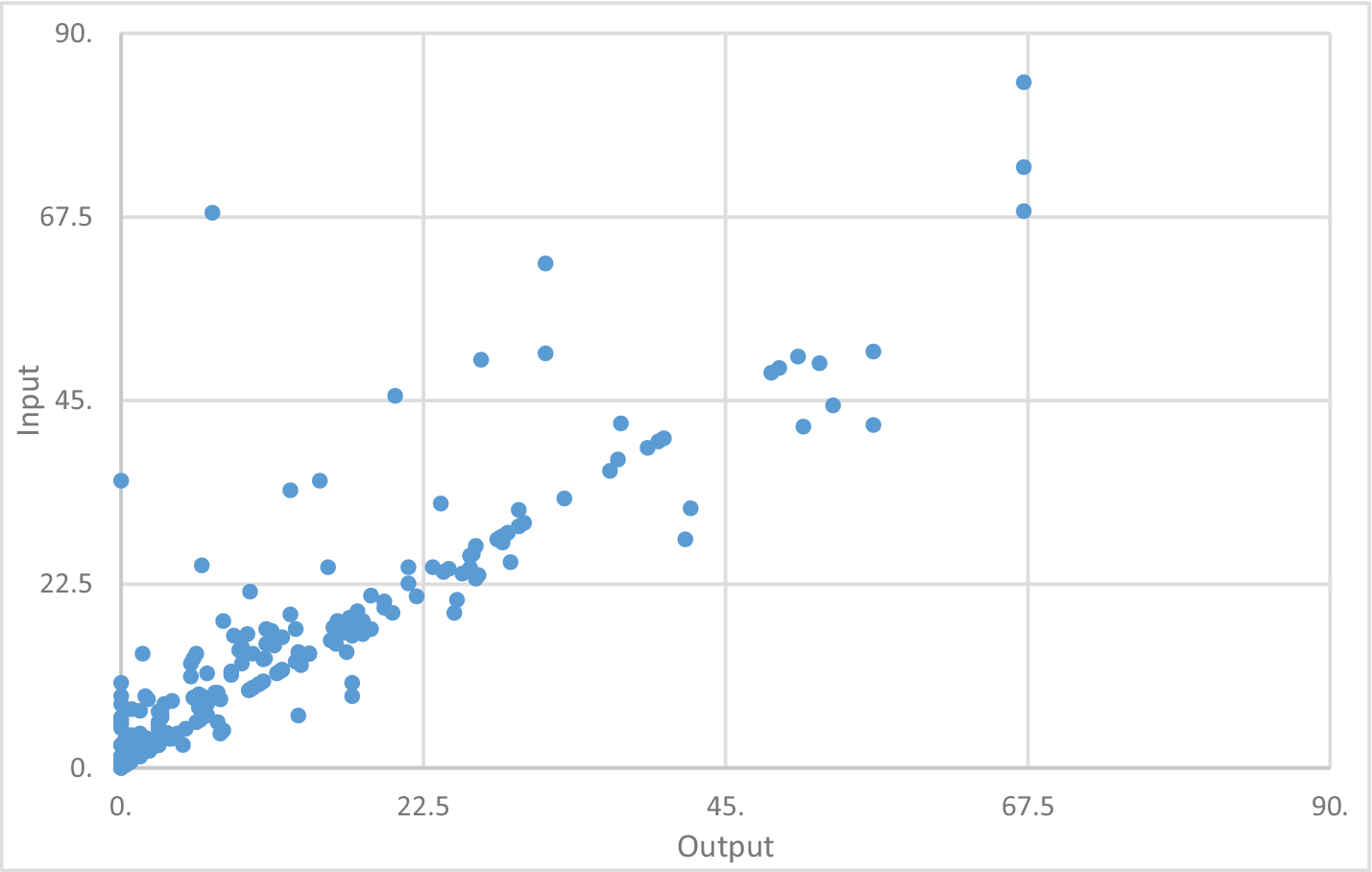
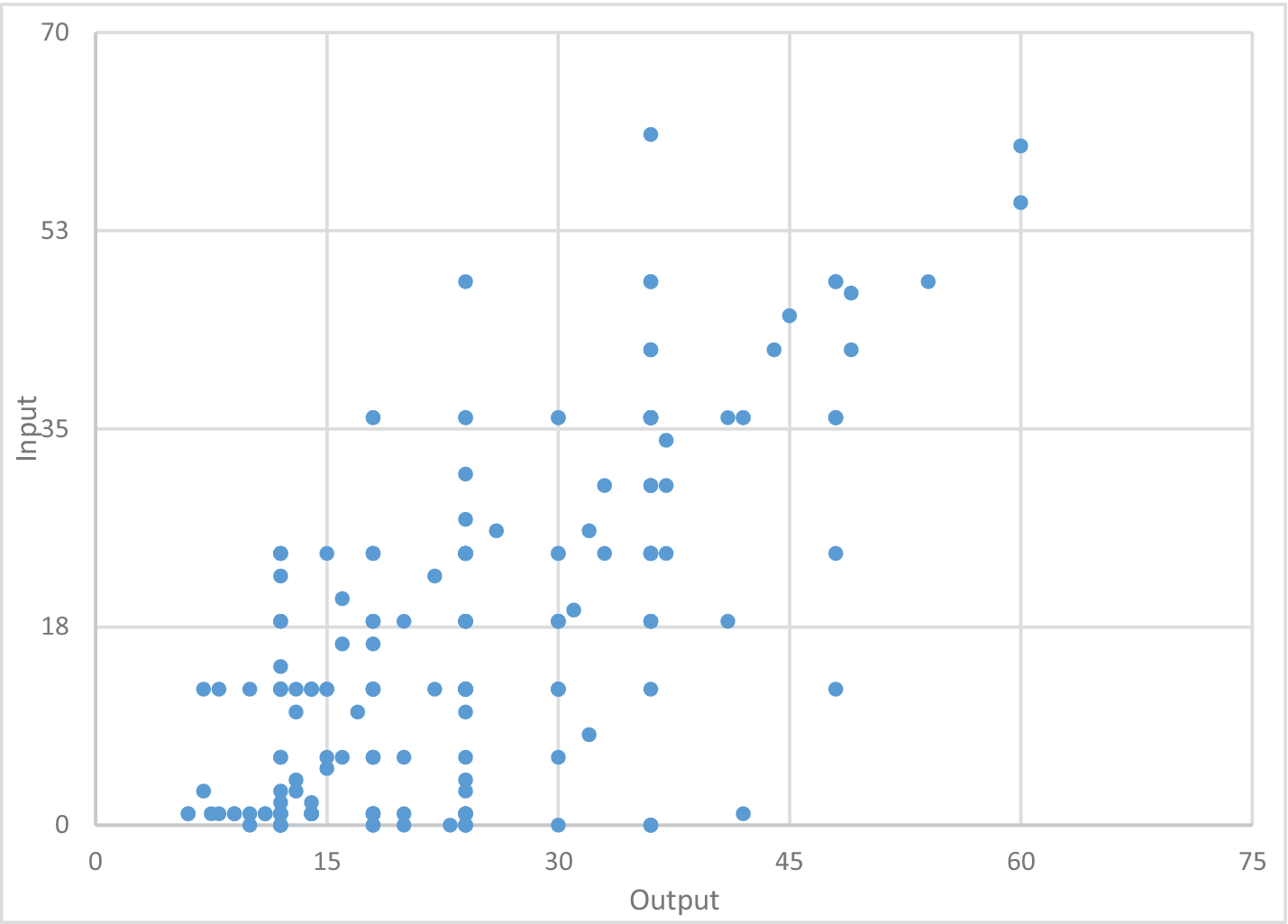
The correlations between the predictor variables included in the regression models are presented in Table 2. When factors were moderately or highly correlated, these variables were either averaged or only one was selected to be included in the regression models to avoid multicollinearity. Specifically, family income, father’s education, and mother’s education were all moderately correlated (e.g., father’s and mother’s education r =.62), and only mother’s education was used as an SES proxy (Paradis, Reference Paradis2011). Similarly, Mandarin weekly input was highly correlated with weekly output (r = .89; see Figure 1), and age of onset of stable Mandarin input was significantly correlated with the age of onset of Mandarin output (r = .69; see Figure 2). The average of input and output was used to represent weekly input and output, while the age of onset of output variable was included because of the focus of this article. Finally, the number of Mandarin reading days per week and Mandarin book number were moderately correlated (r = .51) as were maternal and paternal Mandarin proficiency (r = .53) and therefore only Mandarin book number and maternal Mandarin proficiency were included. The remaining correlations between predictor variables were all far smaller than .5.
Spearman’s rho correlations of the Mandarin output predictors and the control variables

Mandarin input and output (hours per week).

The age of onset of consistent and significant exposure (months).

Mandarin Output in Different Settings
Parental report on bilingual children’s Mandarin and English output in different settings has been summarized in Figure 3. Outside home and school, shopping malls (74% of the answers), playgrounds (73% of the answers), holiday settings (66% of the answers), and dining places (64% of the answers) were the common places where children actively used languages according to the answers. Besides these places, a few parents indicated that their children spoke regularly at enrichment classes after school (e.g., phonics classes over the weekend). In general, there were two patterns for children’s language output, depending on the specific settings. The majority of the children would use Mandarin and English interchangeably at home (62%) and school (74%). However, in the wider community, they predominantly spoke English (i.e., 63% at playgrounds, 54% while shopping, 55% on holiday, and 60% at dining places outside the home), leaving little chance for Mandarin to be used.
The percentages and frequencies that bilingual children used Mandarin alone, English alone, or the two languages interchangeably in different settings.
Note: As the participants were very young in the current study, they might not speak regularly in some of the settings as indicated by the parental questionnaire.

Paired t-tests revealed that there were significant fewer places that children spoke Mandarin only (M = 0.68, SD = 1.27) than English only (M = 2.02, SD = 1.84; t(200) = –7.53, p < .001, d = 0.53), or mixed language (M = 2.08, SD = 1.67); t(200) = –8.38, p < .001, d = 0.59). The results are in line with the previous studies on bilingual children’s language environment (e.g., Dixon et al., Reference Dixon, Zhao, Quiroz and Shin2012; Sun et al., Reference Sun, Yin, Amsah and O’Brien2018a; Sun et al., Reference Sun, Ng, O’Brien and Fritzsche2020a) and in accordance with our hypothesis, reflecting the “weaker language” status of HLs in comparison to children’s English.
The Contribution of Mandarin Output on Bilingual Children’s Mandarin Outcomes
Mandarin Vocabulary
In terms of Mandarin output variables, the number of places where children only speak Mandarin (β = .24, t = 3.98, p < .001), the age of onset of Mandarin output (β = –.28, t = –4.98, p < .001), and the average weekly Mandarin input and output at home (β = .16, t = 2.64, p = .008) were significant predictors of vocabulary (see Table 3). Control variables related to the child internal factors and literacy environment, including nonverbal intelligence (β = .16, t = 2.38, p = .018), maternal Mandarin proficiency (β = .14, t = 2.40, p = .016), and Mandarin book number (β = .24, t = 3.77, p < .001), were also significant predictors of children’s Mandarin receptive vocabulary. The number of places where children only spoke Mandarin and age of onset of Mandarin output, along with Mandarin book number, were the strongest predictors of children’s Mandarin vocabulary. Overall, the model explained 47–54% of the variance in children’s vocabulary skill.
The results of multilevel regressions on Mandarin receptive vocabulary, semantic fluency, and receptive grammar

Note: Two-level linear regression with random intercept (fixed effects). *p < .05, **p < .01, ***p < .001.
a Reference group = boys.
Mandarin Semantic Fluency
The number of places where children only speak Mandarin (β = .28, t = 4.39, p <.001) and the age of onset of Mandarin output (β = –.18, t = –3.08, p = .002) significantly predicted semantic fluency; the number of places the child spoke only Mandarin was the strongest predictor. Control variables, including phonological memory (β = .22, t = 3.66, p < .001), English fluency (β = .14, t = 2.26, p = .024), and maternal Mandarin proficiency (β = .17, t = 2.83, p = .005), were also significant predictors of Mandarin semantic fluency. Overall, the model explained 41–47% of the variance in children’s Mandarin fluency.
Mandarin Grammar
The number of places where children only speak Mandarin (β = .16, t = 2.90, p = .004) as well as the age of onset of Mandarin output (β = –.24, t = –4.54, p < .001) significantly predicted Mandarin receptive grammar. English receptive grammar (β = .45, t = 7.04, p < .001) was the best predictor of Mandarin grammar, as indicated by the standardized beta values. Other control variables, including gender (β = .12, t = 2.35, p = .019) and Mandarin book number (β = .14, t = 2.19, p = .030) were also significant predictors of Mandarin grammar. Overall, the model explained 51–60% of the variance in children’s Mandarin receptive grammar.
Discussion
The current study aimed to explore the contribution of HL experience, particularly the impact of output on bilingual children’s HL competence across different language skills. We focused on Mandarin–English bilingual children’s Mandarin output in Singapore and investigated how they have spoken the language in various life settings. Accounting for children’s Mandarin language input quality (i.e., Mandarin books, mother’s Mandarin proficiency), mother’s educational level, gender, nonverbal intelligence, short-term phonological memory, and English proficiency as control variables, children’s onset age of Mandarin speaking and the number of places they speak Mandarin have been found to play a substantial role in children’s Mandarin learning, with a contribution above and beyond other previously established predictors. In particular, the more settings that children spoke Mandarin alone, and the earlier they started to speak Mandarin, the better their Mandarin proficiency was, across all language skills. This study adds to the literature by (a) eliciting the settings and language mode of bilingual children’s HL output, and (b) conjointly exploring the significance of language output in early bilingual language learning together with a group of well-established predictors. Our findings suggest it is critical to establish a good HL environment beyond home and school, and to involve the wider community for better HL learning in early childhood.
The Settings and Mode of Bilingual Children’s Mandarin Output
The results of the first set of analyses confirmed our hypothesis that children speak Mandarin in extremely limited settings, and they preferred to speak English or use the mixed language of English and Mandarin in the wider community. Such a preference might be due to children’s restricted Mandarin proficiency, their language exposure at home, and the dominant status of English in Singapore. At home, only 18% of them predominantly spoke Mandarin, and the remainder either used English alone (20%) or code-switched (62%). A similar situation was found at school: only 4% of the children mainly spoke Mandarin, and the rest of them used English alone (22%) or used the two languages interchangeably (74%). After years of governmental promotion of the Mandarin language (e.g., with help of the Speak Mandarin Campaign), parents and educators might have gradually realized the importance of HL and tended to use the language. Nevertheless, due to the prestigious role of English and children’s home language exposure, as well as their weaker Mandarin proficiency compared to their English proficiency, children may still predominantly rely on their dominant language (i.e., English) to communicate with others in the wider community. A mix-use of Mandarin and English seemed rare outside the home and school environments as well. Take playgrounds and parks as an example: as much as 63% of the children only used English while playing, while less than 10% of their peers chose to use Mandarin predominantly in these places. Given the significance of language output in children’s HL development, it would be crucial to enhance awareness about the importance of using HL in the whole society, and particularly with young bilingual learners. To promote HL use in the wider community, we need to break the stereotype that only key stakeholders like parents and teachers matter in children’s language development. Children’s HL develops in a piecemeal manner, requiring bottom-up resources from the whole society, where they could speak the HL in different settings to test their language hypotheses and to have diverse input and feedback.
The Significant Contribution of Mandarin Output to Bilingual Children’s Mandarin Skills
In line with the previous findings and our hypothesis, bilingual children’s Mandarin experience made a substantial contribution to their HL outcomes, across the three Mandarin skills. Specifically, the number of the settings where children spoke Mandarin in a monolingual mode was the best predictor for bilingual children’s Mandarin receptive semantic fluency, the second-best predictor for children’s Mandarin vocabulary, and the third-best predictor for children’s Mandarin receptive grammar. Our results echoed Ribot and Hoff’s findings (2014) that bilingual children’s language output mode is significantly related to their HL learning outcome. Mixed language use would influence the total amount of HL language output, potentially resulting in smaller effects on children’s HL maintenance.
Besides language mode, the cumulative output quantity (i.e., indicated by children’s onset age of speaking Mandarin) and the current Mandarin exposure (i.e., indicated by the hours of children’s Mandarin input and output at home per week) also mattered. The cumulative output quantity was the best predictor of their Mandarin receptive vocabulary, the second-best predictor of their receptive grammar, and the third-best predictor of their semantic fluency, while the current Mandarin input and output exposure was significantly associated with children’s Mandarin receptive vocabulary.
Our results are generally in line with the previous findings (Bedore et al., Reference Bedore, Peña, Summers, Boerger, Resendiz, Greene, Bohman and Gillam2012; Bohman et al., Reference Bohman, Bedore, Peña, Mendez-Perez and Gillam2010) that language output could contribute to children’s HL semantic and morphosyntactic learning. As proposed by the Output Hypothesis and the Interaction Approach, language output functions as a facilitator in the virtuous circle of input-output: more HL output from the child could “invite” more input from other interlocutors for meaning and form negotiations. Language output plays an integral role in facilitating the mapping of language input to the corresponding linguistic patterns (Gass & Mackey, Reference Gass, Mackey, VanPatten, Keating and Wulff2020). More language output would also lead to children’s better fluency and automatic processing in their HL. It is worth noting that language experience may influence various Mandarin skills unequally. In contrast to receptive vocabulary, children’s verbal fluency and receptive grammar does not seem to benefit from more weekly language input and output at home after considering other predictors. This finding reminds us of “the limits on the effects of language output” proposed by Gass and Mackey (Reference Gass, Mackey, VanPatten, Keating and Wulff2020, p. 212): only modified output that pushes L2 learners to make the most of their linguistic resources would significantly contribute to their language learning. Our finding implies that such modified output might be more likely to be produced by bilingual children in diverse social linguistic settings (e.g., restaurant and playground). Over more years of HL speaking, there is also a higher chance for bilingual children to produce modified output. Children may hear and use varied syntactic structures with different interlocutors in “novel” situations outside the home, and such language experience would be critical to children’s verbal fluency and morphosyntactic learning. Future studies may verify these preliminary insights with experiments under the guidance of the Output Hypothesis and the Interaction Approach, to explore the features of children’s heritage language output in different social settings and the potential moderation effects of such output features on children’s heritage language learning.
Besides the input and output variables, children’s cognitive factors, literacy environment, and English proficiency also demonstrated significant influences on children’s HL learning. For instance, children’s number of Mandarin books at home significantly predicted children’s receptive vocabulary and grammar, implying the fundamental role that the home literacy environment plays in children’s early HL learning (Sun et al., Reference Sun, Yin, Amsah and O’Brien2018a). Children with better English language skills were found to possess better semantic fluency and receptive grammar in Mandarin, suggesting the potential knowledge transfer between languages at the morphosyntactic level (Sun et al., Reference Sun, Steinkrauss, Wieling and de Bot2018b). No such positive relation has been found between children’s receptive vocabulary in Mandarin and English, being in line with previous findings on child Mandarin–English dual language learners in China (ibid.). Sun and colleagues’ (Reference Sun, Steinkrauss, Wieling and de Bot2018b) finding revealed that at least at the initial stage of L2 learning, a positive relation might be found at the level of vocabulary depth (e.g., paradigmatic knowledge, “an owl is a kind of bird”) but not at the level of vocabulary breadth (e.g., receptive vocabulary size as in the current study). As argued by Snow and Kim (Reference Snow, Kim, Wagner, Muse and Tannenbaum2007), the relations between children’s L1 and L2 vocabulary knowledge could be significantly shaped by children’s onset age of language learning and learning environment. Children might learn words in a language-specific manner (e.g., words about food in L1 vs. words about architecture in L2), given the distributed nature of bilinguals’ dual language input and word knowledge (Grosjean, Reference Grosjean2008).
Limitations, Implications, and Conclusion
There are three major limitations to the current study. First, although the findings provide valuable implications for educational practice and policy, we need to interpret the results of this cross-sectional study cautiously, as the findings are correlational. Future studies might consider following a group of children longitudinally, given the dynamic nature of children’s language development in their early childhood (Sun et al., Reference Sun, Steinkrauss, van der Steen, Cox and de Bot2016b). Experiments are preferred to examine the significant output variables identified in this study. Second, the elicitation of information regarding children’s HL output could be improved as the current study could not tease apart the impact of current language input and output on children’s HL learning. The parental survey has been found to elicit highly correlated input and output values (Bedore et al., Reference Bedore, Peña, Summers, Boerger, Resendiz, Greene, Bohman and Gillam2012), therefore, to better differentiate the impact of language input and output on children’s HL learning, more fine-grained instruments are needed. Future studies might adopt the language diary approach (De Houwer & Bornstein, Reference De Houwer and Bornstein2003) and track children’s language use over several weeks. Researchers could also have children wear an audio recorder for 2 days (i.e., 1 weekday and 1 weekend) to track children’s language input and output at home and in the wider community. The detailed input-output documentation or speech sample would inform us of the dominant language(s) in each household and allow us to classify the child participants based on their input-output pairing at home. For instance, if the family members use HL predominantly at home, children may end up with one of the following three types in terms of language output: (a) using HL predominantly, (b) using social dominant language predominantly, and (c) using the mixed language predominantly. The transcriptions of children’s speech samples could also allow us to explore children’s output quality (e.g., accuracy and complexity) in different settings. Such specific quality information would enable us to provide better suggestions to the stakeholders in the wider community for their scaffolding of children’s HL output. Besides, children’s relative “passivity” in HL (e.g., output/input) can be included as an additional variable, as previous studies have revealed its great power in predicting children’s HL outcomes (e.g., Bedore et al., Reference Bedore, Peña, Summers, Boerger, Resendiz, Greene, Bohman and Gillam2012; De Cat, Reference De Cat2020). Additionally, the current study has not documented children’s code-switching in detail, and it remains unknown how much and in which manners (e.g., intersentential vs. intrasentential codeswitching) these children have code-switched in different settings. The missing information made us unable to distinguish participants who have used Mandarin or English exclusively from those who have only used the languages predominantly in the settings that they have chosen. Future studies may employ both survey and speech samples to investigate children’s code-switching behavior.
Despite these limitations, our findings demonstrated the great potential of good HL experience, output in particular, in children’s HL learning. As the African proverb says, it takes a village to raise a child. This proverb could be similarly used to describe fostering of children’s HL proficiency. Bilingual children should be immersed in a good language environment that motivates them to actively use their HL. Such a language environment is only possible through action and devotion from the wider community in addition to the endeavors of parents and educators. Given the positive relations between home language environment and children’s HL proficiency, parents with decent HL proficiency should use HL as much as they can and encourage their children to start to speak HL at an early age. Besides this, a good literacy environment would be also beneficial to children’s emergent HL development. Society-wise, stakeholders at the places where children usually visit should also be encouraged to speak and respond to children’s HL output. By using more HL at home and in the wider community, children might feel that their HL is cherished and useful, therefore, would be more willing to exert effort to learn it.
Appendix 1
Language Exposure Questionnaire
Part 1 Background

Part 2 Language exposure and usage
1. How old was your child when he/she started to hear Mandarin and English for the first time?
Mandarin: ______ year ______ month English: ______ year ______ month
2. How old was your child when he/she started to receive consistent and significant exposure to Mandarin and English? Consistent and significant exposure refers to regular input from family members or from teachers at childcare/kindergarten.
Mandarin: ______ year ______ month English: ______ year ______ month
3. How old was your child when he/she started to speak Mandarin and English?
Mandarin: ______ year ______ month English: ______ year ______ month
4. How long does each family member speak Mandarin to your child in a normal weekday or weekend (in hours) at home? If no, please put “0” (zero) in the cell.
One normal weekday (e.g., on Wednesday)
Mother: ______ Father: ______ Siblings:______ Grandparent:______ Others:_____
One normal weekend (on Saturday or on Sunday)
Mother: ______ Father: ______ Siblings:______ Grandparent:______ Others:_____
5. How long does each family member speak English to your child in a normal weekday or weekend (in hours) at home?
One normal weekday (e.g., on Wednesday)
Mother: ______ Father: ______ Siblings:______ Grandparent:______ Others:_____
One normal weekend (on Saturday or on Sunday)
Mother: ______ Father: ______ Siblings:______ Grandparent:______ Others:_____
6. How long does your child speak Mandarin to each family member in a normal weekday or weekend (in hours) at home?
One normal weekday (e.g., on Wednesday)
To mother: ____ To father: ____ To siblings:____ To grandparent:____ To others:___
One normal weekend (on Saturday or on Sunday)
To mother: ____ To father: ____ To siblings:____ To grandparent:____ To others:___
7. How long does your child speak English to each family member in a normal weekday or weekend (in hours) at home?
One normal weekday (e.g., on Wednesday)
To mother: ____ To father: ____ To siblings:____ To grandparent:____ To others:___
One normal weekend (on Saturday or on Sunday)
To mother: ____ To father: ____ To siblings:____ To grandparent:____ To others:___
8. Think about the Mandarin media exposure of your child at home in a normal week

9. Think about the English media exposure of your child at home in a normal week

10. Think about the Mandarin exposure of your child at nursery school/kindergarten in a normal week and indicate the duration.
Nursery: From ___ years old to ___ years old, my child has _____ hours of Mandarin exposure at school per week, and I think the Mandarin teacher’s proficiency is (Poor 1 – Fair 2 – Good 3 – Excellent 4)
Kindergarten: From ___ years old to ____ years old, my child has ______ hours of Mandarin exposure at school per week, and I think the Mandarin teacher’s proficiency is (Poor 1 – Fair 2 – Good 3 – Excellent 4)
Note:
“Poor,” meaning the person doesn’t speak Mandarin or can only say a few words.
“Fair,” meaning the person can say simple sentences and ask simple questions in Mandarin.
“Good,” meaning the person can carry out a conversation in Mandarin even if it takes time or with errors.
“Excellent,” meaning the person is a Mandarin native speaker or have the abilities close to a native speaker.
11. Think about the English exposure of your child at nursery school/kindergarten in a normal week and indicate the duration.
Nursery: From ____ years old to _ years old, my child has _____ hours of English exposure at school per week, and I think the English teacher’s proficiency is (Poor 1 – Fair 2 – Good 3 – Excellent 4)
Kindergarten: From ____ years old to ____ years old, my child has _____ hours of English exposure at school per week, and I think the English teacher’s proficiency is (Poor 1 – Fair 2 – Good 3 – Excellent 4)
Note:
“Poor,” meaning the person doesn’t speak English or can only say a few words.
“Fair,” meaning the person can say simple sentences and ask simple questions in English.
“Good,” meaning the person can carry out a conversation in English even if it takes time or with errors.
“Excellent,” meaning the person is a English native speaker or have the abilities close to a native speaker.
12. Think about the Mandarin proficiency of the following members at home
Mother: (Poor 1 – Fair 2 – Good 3 – Excellent 4)
Father: (Poor 1 – Fair 2 – Good 3 – Excellent 4)
Sibling: (Poor 1 – Fair 2 – Good 3 – Excellent 4)
Grandparents: (Poor 1 – Fair 2 – Good 3 – Excellent 4)
Others: (Poor 1 – Fair 2 – Good 3 – Excellent 4)
Note:
“Poor,” meaning the person doesn’t speak Mandarin or can only say a few words.
“Fair,” meaning the person can say simple sentences and ask simple questions in Mandarin.
“Good,” meaning the person can carry out a conversation in Mandarin even if it takes time or with errors.
“Excellent,” meaning the person is a Mandarin native speaker or have the abilities close to a native speaker.
13. Think about the English proficiency of the following members at home
Mother: (Poor 1 – Fair 2 – Good 3 – Excellent 4)
Father: (Poor 1 – Fair 2 – Good 3 – Excellent 4)
Sibling: (Poor 1 – Fair 2 – Good 3 – Excellent 4)
Grandparents: (Poor 1 – Fair 2 – Good 3 – Excellent 4)
Others: (Poor 1 – Fair 2 – Good 3 – Excellent 4)
Note:
“Poor,” meaning the person doesn’t speak English or can only say a few words.
“Fair,” meaning the person can say simple sentences and ask simple questions in English.
“Good,” meaning the person can carry out a conversation in English even if it takes time or with errors.
“Excellent,” meaning the person is a English native speaker or have the abilities close to a native speaker.
14. Where does your child use Mandarin regularly? (You could choose more than one answer)

15. Where does your child use English regularly? (You could choose more than one answer)

16. Has your child read animated e-storybook (i.e., picture book with motion, sound and background music) before?
A. Yes B. No
17. If Yes, does he/she enjoy the animated e-book reading?
A. Dislike a lot B. Dislike C. Neither like nor dislike
D. Like E. Like a lot F. Doesn’t apply
Part 3 Home literacy environment and extra curriculum
-
18. Estimate how many children’s books you have at home (circle one for all languages that apply)

-
19. How many days per week does someone read to your child at home, on average? (circle one per language read)

-
20. About how many times per month does your child go to the library with you or someone else?

-
21. Extracurriculum of language learning

Part 4 Parental information

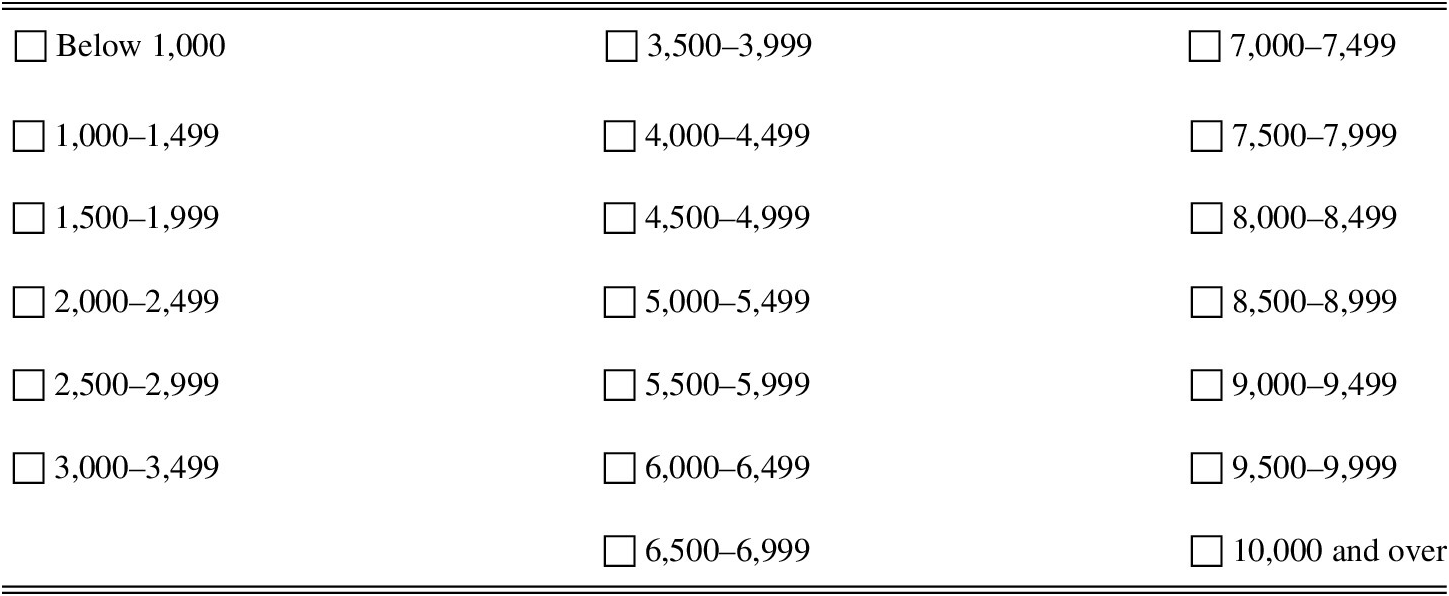
Presently, what is your gross monthly family income for you and your spouse combined?

Appendix 2
The Descriptions of the Variables