Parenting experiences during childhood have important implications for a range of physical health and mental health outcomes (Cicchetti & Toth, Reference Cicchetti and Toth2005; Luthar, Reference Luthar, Cicchetti and Cohen2006; Moffitt & Klaus-Grawe 2012 Think Tank, Reference Moffitt2013; Waldinger & Schultz, Reference Waldinger and Schulz2016). The surprisingly durable effects of experiences during childhood and adolescence is consistent with mounting evidence that such experiences can become biologically embedded in a variety of ways (Brody, Miller, et al., Reference Brody, Miller, Yu, Beach and Chen2016; Hertzman, Reference Hertzman2012), potentially allowing them to exert an influence over inflammatory processes and health outcomes many years later (Beach, Lei, Brody, Dogan, & Philibert, Reference Beach, Lei, Brody, Dogan and Philibert2015; Beach, Lei, Brody, Miller, et al., Reference Beach, Lei, Brody, Miller, Chen, Mandara and Philibert2016; Danese et al., Reference Danese, Moffitt, Pariante, Ambler, Poulton and Caspi2008). For African American youth growing up in challenging environments, some types of parenting may play a central protective role, protecting youth from the full impact of difficult rearing environments, and perhaps from difficulties associated with the transition to adulthood in resource-poor environments (McLoyd, Reference McLoyd1990). In particular, African American youth often confront a challenging transition to productive young adult roles (Young, Reference Young2012). Many confront communities with limited resources, discriminatory hiring practices, and challenges that limit opportunities to obtain stable employment (Furstenberg, Reference Furstenberg2008; Osgood, Foster, Flanagan, & Ruth, Reference Osgood, Foster, Flanagan and Ruth2005), and so experience additional discrimination and economic hardship (Chou, Asnani, & Hofmann, Reference Chou, Asnaani and Hofmann2012; Phelan & Link, Reference Phelan and Link2015). In such contexts, a history of warmer (and less harsh) parenting has been shown to decrease a range of long-term negative outcomes (Brody, Yu, & Beach, Reference Brody, Yu and Beach2016; Luthar, Reference Luthar, Cicchetti and Cohen2006) including hormonal, metabolic, inflammatory, and cardiovascular risk attributable to childhood and adolescent adversity (Brody et al., Reference Brody, Yu, Beach, Kogan, Windle and Philibert2014; Chen & Miller, Reference Chen and Miller2013), decrease the accelerated aging that often accompanies socioeconomic status-related stressors (Brody, Yu, et al., Reference Brody, Miller, Yu, Beach and Chen2016; Geronimus, Hicken, Keene, & Bound, Reference Geronimus, Hicken, Keene and Bound2006), and enhance self-reported health in young adulthood (Beach, Lei, Brody, Kim, et al., Reference Beach, Lei, Brody, Kim, Barton, Dogan and Philibert2016; Danese et al., Reference Danese, Moffitt, Pariante, Ambler, Poulton and Caspi2008). Conversely, harsh parenting may promote inflammation and negative health outcomes (Ehrlich, Miller, Chrousis, & Adam, 2015; Schofield, Conger, Gonzales, & Merrick, Reference Schofield, Conger, Gonzales and Merrick2016).
The body of research linking child–parent relationships to long-term physical health and mental health outcomes strongly suggests the value of attention to parent–child relationships as one foundation of developmental models that explain the emergence in early adulthood of pro-inflammatory and increased depressive proclivities. However, recent theorizing by Miller and Cole (Reference Miller and Cole2012) suggests the possibility of substantial expansion of mediational models linking parent–child relationships to young adult outcomes. Whereas previous models have focused on mediation of parenting effects through psychosocial changes and shifts in various behavioral proclivities, lifestyle choices, or circumstances associated with health outcomes (e.g., Gibbons, et al., Reference Gibbons, Kingsbury, Weng, Gerrard, Cutrona, Willa and Stock2014; Kohen, Brooks-Gunn, Leventhal, & Hertzman, Reference Kohen, Brooks-Gunn, Leventhal and Hertzman2002; McEwen, Reference McEwen1998; Stock, Gibbons, Paterson, & Gerrard, Reference Stock, Gibbons, Peterson and Gerrard2013), or have examined direct effects on inflammation or pro-inflammatory propensities (Beach, Lei, Brody, Miller, et al., Reference Beach, Lei, Brody, Miller, Chen, Mandara and Philibert2016; Cole, Reference Cole2013), Miller and Cole's (Reference Miller and Cole2012) model suggests that parenting, through its effect on the experience of chronic stressors, may also play a role in changing the association between depression and inflammation. As a consequence, youth reared in less supportive and harsher home environments may be qualitatively different in the way inflammation and depression are associated with each other, and not just quantitatively different in overall level of inflammation and depression compared to peers receiving more supportive parenting. Stated differently, youths who experienced harsh parenting may be more likely to become depressed than their peers with more supportive parents, and more provocatively, Miller and Cole (Reference Miller and Cole2012) suggest that their depressive symptoms may be secondary to the effect of inflammation, an effect not present for their peers reared with warmer, less harsh parenting. Further, Miller and Cole (Reference Miller and Cole2012) suggest that the concurrent association of inflammation with depressive symptoms may be greater for youth with less warm, more harsh parents.
Several steps are required, however, before this provocative assertion can be fully accepted. Prior research has not examined likely proximal mediators of parenting effects on depressive symptoms and inflammation such as early young adult romantic partner relationships and experience of stressors in the transition to adulthood. It is possible, therefore, that psychosocial mediators such as increased propensity to encounter stressful experiences or problematic relationships with romantic partners during the transition to adulthood may account for some of parenting's impact on inflammation and depressive symptoms later in young adulthood. These mediators may also help explicate their heightened association with each other for receiving harsher parenting. In addition, it is possible that the hypothesized reprogramming of the connection between inflammation and depressive symptoms is more parsimoniously explained as sensitization to particular stressors due to earlier life experiences, and not as a more general sensitization of inflammation and depression in response to stress. To explore these possibilities further, we provide background on each of the theoretical assertions, and then present an integrated model comprising the parts.
Parenting Effects on Depression
There are a variety of reasons to expect that parenting experiences during childhood will contribute to increased depressive symptoms. A large body of evidence supports expectations of a link between parenting and later experiences of depressive symptoms (Blatt & Homann, Reference Blatt and Homann1992), and several mechanisms potentially explain this association. First, early stress may set the stage for more stress later on, or lead to stress sensitization, including increased severity and greater responsiveness to stress (e.g., Espejo, et al., Reference Espejo, Hammen, Connolly, Brennan, Najman and Bor2007). Second, problems in early parenting experiences may lead to increased difficulty in later romantic and interpersonal relationships (e.g., Eberhart & Hammen, Reference Eberhart and Hammen2006; Simons, Simons, Landor, Bryant, & Beach, Reference Simons, Simons, Landor, Bryant and Beach2014), which may in turn be related to depressive symptoms. Both models have strong potential implications for propensity for depressive symptoms in adulthood (Beach, Reference Beach, Agnew and South2014). Accordingly, African American youth who experience less supportive and more harsh parenting are predicted to experience increased stress during the transition to adulthood in multiple domains (cf. Luthar, Reference Luthar, Cicchetti and Cohen2006; Waldinger & Schultz, Reference Waldinger and Schulz2016), and decreased warmth and more harshness in romantic relationships (Simons et al., Reference Simons, Simons, Landor, Bryant and Beach2014) leading to, and potentially accounting for, increased risk for depressive symptoms.
Parenting Effects on Later Inflammation
Several streams of theorizing and empirical work also suggest that parenting should be consequential for later inflammation. In particular, predictive-adaptive response (PAR) models (e.g., Cole et al., Reference Cole, Conti, Arevalo, Ruggiero, Heckman and Suomi2012; Gluckman, Hanson, & Spencer, Reference Gluckman, Hanson and Spencer2005; Miller & Cole, Reference Miller and Cole2012; Rickard & Lummaa, Reference Rickard and Lummaa2007) suggest that social adversity and perceived threat in childhood or early adolescence will lead to more inflammation in adulthood. This shift is labeled “adaptive” because it is a biological change that prepares youth for life in dangerous or difficult environments, thereby readying them for elevated risk of tissue damage and a context in which enhanced pro-inflammatory potential might be useful in enhancing survival, or at least would have been adaptive in our recent evolutionary past. At a mechanistic level, parenting can be seen as critical in the process leading to the shift to greater inflammation. Specifically, children raised by more warm and less harsh caregivers are likely to be shielded from some of the negative consequences associated with stress in childhood and adolescence. In turn, this decreased impact of stress should result in decreased desensitization of glucocorticoid receptors in the cells that regulate inflammation (cf. Marques, Silverman, & Sternberg, Reference Marques, Silverman and Sternberg2009; Raison & Miller, Reference Raison and Miller2003; Rohleder, Marin, Ma, & Miller, Reference Rohleder, Marin, Ma and Miller2009). To the extent that supportive parenting helps to counter the impact of life stress for youth growing up in challenging environments, supportive parenting may be particularly consequential in predicting long-term biological consequences in such contexts. In contrast, parenting that is harsh may amplify inflammatory profiles later in life (Dube et al., Reference Dube, Fairweather, Pearson, Felitti, Anda and Croft2009; Miller & Chen, Reference Miller and Chen2010).
Parenting Effects on Inflammation Through Young Adult Romantic Partnerships and Stress
In adolescence, quality of relationships with one's parents is more influential than any other single factor in predicting romantic relationship quality (Simons, Simons, & Wallace, Reference Simons, Simons and Wallace2004), in part because they provide a template for youth regarding relationships and how to respond to interpersonal stress. The resulting patterns of warmth and hostility that youth enact in their own emerging relationships in turn influence the quality of their adult relationships (Bryant, Reference Bryant, Crouter and Booth2006; Conger, Cui, Bryant, & Elder, Reference Conger, Cui, Bryant and Elder2000), with a strong direct connection between quality of parenting relationships in childhood and early adult experiences of romantic relationship hostility and warmth (Simons et al., Reference Simons, Simons, Landor, Bryant and Beach2014). In turn, relationship conflict and hostility have been found to prompt elevations in circulating interleukin (IL)-6 and tumor necrosis factor (TNF)-alpha (Kiecolt-Glaser et al., Reference Kiecolt-Glaser, Loving, Stowell, Malarkey, Leme-show, Dickinson and Glaser2005), whereas supportive relationships predict improvements in physical health over time (Barr, Culatta, & Simons, Reference Barr, Culatta and Simons2013; Barr, Sutton, Simons, Wickrama, & Lorenz, Reference Barr, Sutton, Simons, Wickrama and Lorenz2016). Greater parental harshness may also influence the felt stressfulness and so the potential inflammatory impact of romantic partner hostility (Ehrlich et al., Reference Ehrlich, Miller, Rohleder and Adam2015). Similarly, parenting relationships may forecast heightened experiences with stress in young adulthood (Beach, Lei, Brody, Miller, et al., Reference Beach, Lei, Brody, Miller, Chen, Mandara and Philibert2016) by presaging or contributing to difficulties in other social roles, and also by influencing the inflammatory effects of young adult stressors.
Stress and Romantic Partner Relationship Effects on Depression and Inflammation
Strong and substantial literatures have established the impact of romantic relationship problems and acute stressors on depressive symptoms. There is considerable support for concurrent and prospective connections between romantic relationship problems and depression at all stages of relationship development (Beach, Reference Beach, Agnew and South2014; Steinberg & Davila, Reference Steinberg and Davila2008). For example, in a population-based sample in The Netherlands, intimate partner relational problems were associated with increased incidence of dysthymia and major depressive episodes (Overbeek et al., Reference Overbeek, Vollebergh, de Graaf, Scholte, de Kemp and Engels2006), and in a population-based sample of more than 900 married adults who did not meet criteria for 12-month major depressive episode at baseline, intimate partner relational problems were associated with a 2.7-fold increased risk for major depressive episodes during the following 12 months (Whisman & Bruce, Reference Whisman and Bruce1999). At the same time, more recent research has found that married and cohabiting couples exhibit similar connections between problems in romantic relationships and depressive symptoms (Barr et al., Reference Barr, Culatta and Simons2013, Reference Barr, Sutton, Simons, Wickrama and Lorenz2016), suggesting broad generalizability of the effect to multiple relationship types. Similarly, for effects of stress on depression, a substantial literature indicates robust associations between stressful life events and depression (Brown & Harris, Reference Brown and Harris1989; Hammen, Reference Hammen2006), an effect of discrimination on depression (Brody et al., Reference Brody, Chen, Murry, Simons, Ge, Gibbons and Cutrona2006; Gibbons, Gerrard, Cleveland, Wills, & Brody, Reference Gibbons, Gerrard, Cleveland, Wills and Brody2004) and an effect of financial stress on depression (Conger, Congern & Marin, Reference Conger, Conger and Marin2010). Parallel literatures indicate effects of stress on inflammation, including effects of discrimination and financial strain (Brody et al., Reference Brody, Yu, Beach, Kogan, Windle and Philibert2014; Brody, Yu, Miller, & Chen, Reference Brody, Yu, Miller and Chen2015; Cutrona et al., Reference Cutrona, Abraham, Russel, Beach, Burzette, Gibbons and Philibert2015; Simons, Lei, Beach, Barr, et al., Reference Simons, Lei, Beach, Barr, Simons, Gibbons and Philibert2016). Similarly, a strong experimental literature links marital hostility to inflammation (Kiecolt-Glaser et al., Reference Kiecolt-Glaser, Loving, Stowell, Malarkey, Leme-show, Dickinson and Glaser2005; Kiecolt-Glaser, Gouin, & Hantsoo, Reference Kiecolt-Glaser, Gouin and Hantsoo2010).
The Association of Inflammation and Depression
Because similar psychosocial and family precursors have been linked to both inflammation and depressive symptoms, there is reason to expect some relationship between them, at least for some individuals (Raison, Capuron, & Miller, Reference Raison, Capuron and Miller2006). Less clear, however, is whether the association is stable across individuals, or only holds for some (Glassman & Miller, Reference Glassman and Miller2007; Miller & Cole, Reference Miller and Cole2012; Miller, Chen, & Parker, Reference Miller, Chen and Parker2011). If the association of depressive symptoms and inflammation is conditional, it is of particular interest to test the factors that may influence the magnitude of the association (Pasco et al., Reference Pasco, Moylan, Allen, Stuart, Hayley, Byrne and Maes2013). Miller and Cole argue that depression and inflammation may covary more strongly for those who have experienced substantial childhood adversity (cf. Danese et al., Reference Danese, Moffitt, Pariante, Ambler, Poulton and Caspi2008), a circumstance thought to amplify inflammatory cytokine signaling between the brain and the periphery (Irwin & Cole, Reference Irwin and Cole2011). As outlined above, harsh parenting in challenging contexts may predict a shift to a pro-inflammatory response set (Beach et al., Reference Beach, Lei, Brody, Dogan and Philibert2015; Reference Beach, Lei, Brody, Kim, Barton, Dogan and Philibert2016; Ehrlich et al., Reference Ehrlich, Miller, Rohleder and Adam2015), and to the extent that it does, it may also contribute to the development of increased covariation between depressive symptoms and inflammation in the manner described by Miller and Cole (Reference Miller and Cole2012), and do so beyond its effects on likely psychosocial mediators such as future experience with stressors or with romantic partners.
Parenting Effects on African Americans
As outlined by Ehrlich et al. (Reference Ehrlich, Miller, Rohleder and Adam2015), harsh versus supportive parenting helps youth modulate biological reactions to stress, changing activity of the hypothalamus–pituitary–adrenal axis (Flinn & England, Reference Flinn and England1995; Miller, Chen, et al., Reference Miller, Lachman, Chen, Gruenewald, Karlamangla and Seeman2011; Pendry & Adam, Reference Pendry and Adam2007) and in turn its biological impact on immune responses, particularly inflammation, desensitization of glucocorticoid receptors to cortisol, and programming of pro-inflammatory cells (monocytes and macrophages), allowing them greater opportunity to initiate and sustain overly prolonged inflammatory responses (e.g., Marques et al., Reference Marques, Silverman and Sternberg2009; Miller et al., Reference Miller, Chen, Sze, Marin, Arevalo, Doll and Cole2008; Raison & Miller, Reference Raison and Miller2003; Rohleder et al., Reference Rohleder, Marin, Ma and Miller2009), and giving rise to the chronic low-grade inflammation thought to be problematic with regard to long-term health outcomes (Raison & Miller, Reference Raison and Miller2003). In the context of a chronic inflammatory state, pro-inflammatory effects may begin to drive some depressive symptomatology such as feelings of fatigue, sluggish cognitive functioning, and sleep dysregulation (Miller, Maletic, & Raison, Reference Miller, Maletic and Raison2009; Miller et al., Reference Miller, Chen, Sze, Marin, Arevalo, Doll and Cole2008), leading to a shift in which inflammation increasingly drives depressive symptoms. For African American youth, the effect of childhood stressors on inflammation may be intensified (Geronimus, et al., Reference Geronimus, Hicken, Keene and Bound2006, Reference Geronimus, Hicken, Pearson, Seashols, Brown and Cruz2010), increasing the importance of warm and supportive parenting. Supporting this view, Slopen et al. (Reference Slopen, Lewis, Gruenewald, Mujahid, Ryff, Albert and Williams2010) compared the association of retrospective reports of early life adversity and five inflammatory markers (e.g., C-reactive protein and IL-6) in a sample of 177 African American and 822 White adults and found a relationship between adversity and all five biomarkers for the African Americans; however, none of the relationships were significant for the Whites. They concluded by calling for additional longitudinal studies with more African American participants.
Heuristic Model
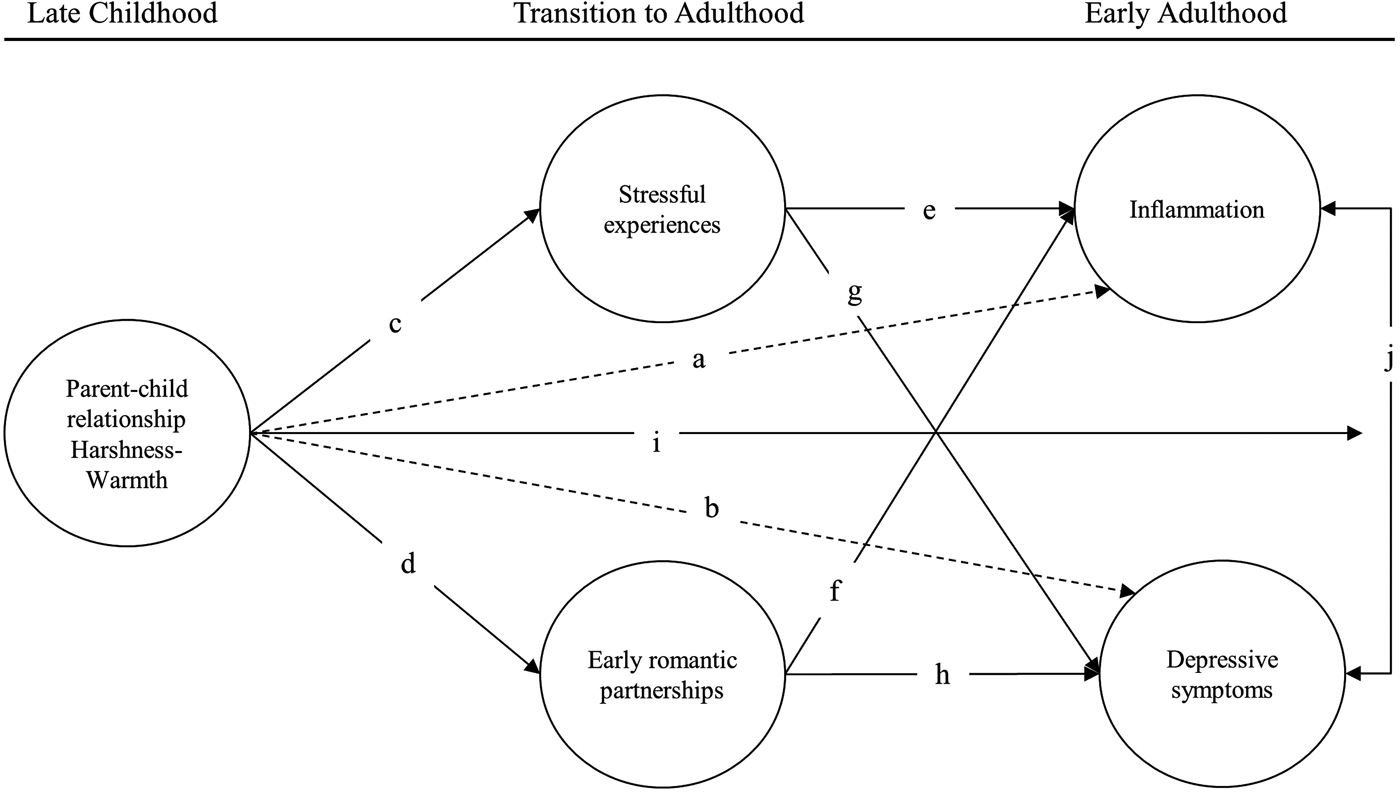
A model that comprises the foregoing elements can be seen in Figure 1. This model suggests that one way in which parent–child relationships influence later depression and inflammation is that parent–child experiences lower in warmth and higher in harshness may directly affect these outcomes (dotted lines a and b). Alternatively, the effect of parenting may be indirect, first influencing the level and experience of stress during early adulthood (Path c) as well as influencing emerging romantic partner relationships (Path d). In turn, experiences of stressors and behavior in close relationships may mediate parent–child relationships effects on depressive symptoms and inflammation (Pathways c, e; d, h; c, g; d, f), driving their covariation. In addition, the model suggests that, for the reasons outlined above, parenting may further influence the association of depressive symptoms and inflammation, leading those with more negative parent–child experiences to demonstrate a stronger than expected (positive) association between inflammation and depressive symptoms, whereas those with more positive parent–child experiences will show a weaker or negative association (Pathway i). Accordingly, line “I” in the figure connecting parenting to outcome covariance (Pathway j), portrays the hypothesis that even after accounting for all direct and mediated pathways, there will still be a significant moderating effect of the sort proposed by Miller and Cole (Reference Miller and Cole2012), indicating that parent–child harshness in childhood has the potential to increase the association of depressive symptoms and inflammation. To the extent this pathway is significant in the final model, it implies a substantial shift, contingent on parenting, in patterns of indirect effects and the extent to which inflammation may drive depressive symptoms.
Theoretical model showing mediated pathways as well as hypothesized additional biological reprogramming of the association between inflammation and depressive symptoms due to the parent–child relationship.

Examining Pro-inflammatory Effects as a Ratio of Pro- to Anti-inflammatory Cytokines
In the current investigation we examine the ratio of pro- to anti-inflammatory cytokines as our index of inflammatory activity. The relative balance between broadly pro-inflammatory cytokines, such as TNF-α, and those with some or substantial anti-inflammatory properties, such as IL-4 and IL-10, is altered in a pro-inflammatory direction in numerous inflammatory diseases. This alteration suggests that it is the ratio, rather than the level of either type in isolation, that is most strongly associated with illness. Specifically, because glucocorticoids inhibit production of pro-inflammatory cytokines, but stimulate production of anti-inflammatory cytokines, the effect of stressors and protective factors on long-term health may be captured best by examining the balance of pro- versus anti-inflammatory cytokines (Elenkov & Chrousos, Reference Elenkov and Chrousos2002), and this approach may provide critical insights into mechanisms underlying various diseases in humans. As described above, family context may influence this balance through its effect on the production of glucocorticoids (i.e., hormones influencing the production of pro-inflammatory cytokines such as IL-12, TNF-α, and interferon [IFN]-gamma), as well as the production of anti-inflammatory cytokines such as IL-10 and IL-4. Thus, chronic stress in the absence of supportive relationships that help to regulate its effects may result in a pro-inflammatory ratio and so a heightened inflammatory response.
Adequate assessment of the balance of pro- and anti-inflammatory cytokines also requires assessment of multiple cytokines that reflect the broad complexity of the whole system. In the current investigation, we use a multiplex system to provide a more robust characterization of cytokine levels and to allow creation of a measure of the pro- to anti-inflammatory cytokine ratio.
Hypotheses
-
1. Parent–child relationships will be related to both depressive symptoms and inflammation. More harshness and less warmth in parent–child relationships will be associated with more inflammation and more depressive symptoms.
-
2. Parent–child relationships will be associated with early young adult compound stress level and this will partially mediate its effects on inflammation and depressive symptoms.
-
3. Parent–child relationships will also predict warmth/hostility in early young adult romantic relationships, and the quality of these romantic relationships will partially mediate parenting's effects on inflammation and depressive symptoms later in young adulthood.
-
4.
-
a. Jointly, early young adult compound stress and early young adult romantic relationships will both significantly mediate the effects of parent–child relationship harshness and warmth on later young adult depressive symptoms and inflammation.
-
b. Direct effects will not account for the moderating effect of parent–child relationship valence on the association between inflammation and depressive symptoms.
-
-
5.
-
a. Explication of the moderating effect of parent–child relationships will show differential strength of pathways from mediators to outcomes as a function of parenting.
-
b. In keeping with Miller and Cole (Reference Miller and Cole2012), there will be a stronger and more positive association between depressive symptoms and inflammation among those who experienced harsher parenting.
-
c. There will be substantially different patterns of indirect effects from young adult mediators to outcomes between those with a history of more harsh versus more warm parent–child relationships.
-
Method
Participants
The first wave of Family and Community Health Study data was collected in 1997–1998 from 889 African American, fifth-grade children (467 from Iowa and 422 from Georgia), their primary caregiver, and a secondary caregiver when one was present in the home. Primary caregivers' mean age was 37 (range = 23 to 80 years), 93% were female, 84% were the target's biological mothers, and 44% identified themselves as single parents. Their educational backgrounds were diverse, ranging from less than a high school diploma (19%) to a bachelor's or advanced degree (9%).
Of the 889 targets interviewed at Wave 1, 687 provided data at Wave 5 (collected in 2007–2008), and 699 (79% of the original sample) provided data at Wave 6 (collected in 2011–2012). Waves 5 and 6 were the assessments used to examine composite stress and romantic relationship quality in early young adulthood. In 2014–2015 a seventh wave of data collection was completed that included blood draws. Given the logistics of scheduling home visits by phlebotomists, only members of the sample residing in Georgia, Iowa, or a contiguous state were identified as eligible. After also excluding persons who were deceased, incarcerated, or otherwise unreachable, we were left with a pool of 545 individuals, 470 (86%) of whom agreed to be interviewed and to provide blood. Of these, 413 have been assayed and were included in these analyses.
Analyses indicated that those individuals who did not participate in Waves 6 and 7 did not differ significantly from those who participated with regard to Wave 1 scores on caregivers' education, household income, family structure, or neighborhood characteristics. Compared to Wave 1, however, a higher percentage of those interviewed at Waves 6 and 7 were female.
Procedures
The protocol and all study procedures were approved by the university institutional review boards. To enhance rapport and cultural understanding, African American university students and community members served as field researchers to collect data from the families in their homes. Prior to data collection, the researchers received 1 month of training in the administration of the self-report instruments. The questions were administered in the respondent's home and took on average about 2 hr to complete. In Wave 1 the instruments were presented on laptop computers. Questions appeared in sequence on the screen, which both the researcher and participant could see. The researcher read each question aloud, and the participant entered an anonymous response using a separate keypad. Some of the instruments administered in Waves 5–7 included questions regarding illegal or potentially embarrassing activities. Hence, in an effort to further enhance anonymity, we used audio-enhanced, computer-assisted, self-administered interviews. Using this procedure, the respondent sat in front of a computer and responded to questions as they were both presented visually on the screen and auditorily via earphones.
In addition to the interview data, at Wave 7 participants were also asked to provide a blood sample. A certified phlebotomist drew five tubes of blood at each participant's home. Two of the tubes were spun immediately to separate serum into three cryovials that were then frozen and stored in a –80 °C freezer until used for the analyses described below. At Wave 7, 63% of the participants had romantic partners. Participants designated as having a romantic partner indicated that they were in a committed relationship (i.e., not dating others), engaged, cohabiting, or married.
Measures
Early parenting
Parenting was assessed using target youth and parent reports when targets were 10.5, on average. The items for the scales were adapted from instruments developed for the Iowa Youth and Families Project (Conger et al., Reference Conger, Conger, Elder, Lorenz, Simons and Whitbeck1992). Hostility/harshness was assessed with eight items from the target and from the parent (e.g., “How often did your [caregiver] push, grab, hit, or shove you?” and “How often does your [caregiver] insult or swear at you?”), each followed by a 4-point scale, from 1 (never) to 4 (always). The parental-warmth measure included nine items, such as “How often in the last 12 months did your [caregiver] let you know [she/he] really cares about you?” each followed by a 4-point scale, from never to always. These items were recoded so that higher scores on all items indicated lack of parental warmth/greater harshness in early life. Scores from the target and the parent were standardized and then averaged to form a measure of the parent–child relationship. The coefficient α value was 0.79 for the target and 0.85 for the parent. Primary caregiver and target reports were correlated significantly (r = .256, p < .001).
Composite stress
We examined three sources of stress at Waves 5 and 6 (when participants were 21 and 24 on average, respectively): racial discrimination, financial stress, and negative life events. The racial discrimination scale consisted of 13 items (Landrine & Klonoff, Reference Landrine and Klonoff1996) that focused on the extent to which respondents experienced discriminatory events, ranging from 1 (never) to 4 (several times) during the preceding year (e.g., “How often has someone yelled a racial slur or racial insult at you just because you are African American?”). Cronbach α for the scale was 0.91. We also measured the occurrence of serious negative life events during the past year using a 5-point scale (Conger & Elder, Reference Conger, Elder, Conger and Elder1994). An example item is “Were you seriously ill or injured in the past 12 months?” Two items assessed financial stress (Conger & Elder, Reference Conger, Elder, Conger and Elder1994): “During the past 12 months, have you had (a) serious money problems or (b) not enough money?” Cronbach α was 0.71. In each case, the scale scores were normalized, and the mean was calculated to create an overall composite stress measure. Factor analysis of the three standardized scale scores comprising the composite contextual stress measure produced factor loadings that were significant and in the expected direction (λ > 0.6). Using Nunnally's (Reference Nunnally1978) reliability formula for composite variables, the reliability for the overall index was 0.95.
Romantic partnership warmth/hostility
The measure was composed of two subscales at Waves 5 and 6. Responses ranged from 1 (never) to 4 (always). To assess warmth in the relationship, we asked three questions concerning the degree to which the partner displayed warm and supportive behaviors (e.g., helped do something important or showed affection) during the past month and three questions concerning the degree to which the respondent displayed the same behaviors toward their partner (Surjadi, Lorenz, Wickrama, & Conger, Reference Surjadi, Lorenz, Wickrama and Conger2011). The Cronbach α values for the scale were 0.85 at Wave 5 and 0.87 at Wave 6. The other scale assessed relationship hostility using the Relationship Hostility Scale (Cui, Lorenz, Conger, Melby, & Bryant, Reference Cui, Lorenz, Conger, Melby and Bryant2005) to allow participants to report how often they had engaged in hostile, aggressive actions toward their romantic partner during the previous month and how often their partner had engaged in these behaviors. This five-item scale consisted of items such as insult or swear at your romantic partner and shout or yell at your romantic partner. The Cronbach α values for the scale were 0.79 at Wave 5 and 0.80 at Wave 6. Actor reports of own and partner's warm and hostile behaviors were combined so that couple-level relationship warmth and hostility included each respondent's report of his or her own and a partner's behavior. Our index was composed of the couple-level standardized score on warmth minus the standardized score on hostility. Larger values indicate more positive, supportive relationships with less hostility.
Depressive symptoms
We used a nine-item measure of depressive symptoms (the University of Michigan Composite International Diagnostic Interview; Kessler & Mroczek, Reference Kessler and Mroczek1994). Respondents were asked to report whether they experienced several symptoms of depression (e.g., “felt sad, empty, or depressed most of the day” and “lost interest in things”) for at least a 2-week period in the past year. Responses ranged from 0 = no to 1 = yes. All respondents were asked all nine items, and items were summed to create a measure of depressive symptoms. The Cronbach α for the scale was 0.85.
Control variables
Gender, diet, exercise, binge drinking, cigarette use, graduating high school, having health insurance, and being married or cohabiting were included as covariates in all multivariate analyses. Covariates have been linked to health and relationship outcomes and so were included to minimize risk of confounding the associations of interest. Gender was self-reported and was controlled in all analyses and examined in exploratory analyses as a potential source of differential response. Demographic controls were education level (0 = less than high school, 1 = high school or more) and married status (0 = others, 1 = married/cohabited). Indicators of recent health status and health behavior were also controlled. These controls included health insurance status coded dichotomously (1 = respondent lacks health insurance). Exercise was measured with two items: “On how many of the past 7 days did you exercise or participate in physical activity for at least 30 min that made you breathe hard such as running or riding a bicycle fast?” and “On how many of the past 7 days did you exercise or participate in physical activity for at least 30 min that did not make you breathe hard, but was still exercise such as fast walking, slow bicycling, skating, pushing a lawn mower, or doing active household chores?” The response categories ranged from 1 (0 days) to 5 (all 7 days). Scores on the two items were averaged to form the exercise measure. Healthful diet was assessed using two items that asked about frequency of fruit and vegetable consumption during the previous 7 days. Responses ranged from 1 (none) to 6 (more than once every day) and were averaged to form the healthful diet variable. Binge drinking was defined as the consumption of three or more drinks of alcohol (1 = never, 6 = several times per week). Respondents reported how many cigarettes they had smoked in the past 3 months (1 = I have not smoked in the last 3 months to 6 = A pack or more a day).
Assessment of pro-inflammatory and anti-inflammatory cytokines
A certified phlebotomist drew five tubes of blood at each participant's home. Two of the tubes were spun immediately to separate serum into three cryovials that were then frozen and stored in a –80 °C freezer until used for the analyses described below.
A traditional enzyme-linked immunosorbent assay was used to measure 17 cytokines. To assess the cytokines simultaneously, we used enzyme-linked immunosorbent blood assays obtained with the Bio-Plex Pro™ Human Cytokine 17-Plex Immunoassay (Bio-Rad, Hercules, CA), a 1 × 96-well kit that includes coupled magnetic beads, detection antibodies, standards, assay buffer, wash buffer, sample diluent, standard diluent, detection antibody diluent, streptavidin-PE, a flat-bottom plate, and sealing tape. The assay detects IL-1β, IL-2, IL-4, IL-5, IL-6, IL-7, IL-8, IL-10, IL-12, IL-13, IL-17, G-CSF, GM-CSF, IFN-γ, MCP-1, MIP-1β, and TNF-α. Using the 17-plex array, we randomly assigned aliquots of blood from participants to one of eight plates. Because IL-2, GM-CSF, and MCP-1 were present at undetectable levels in the vast majority of samples (≥95%), these cytokines were excluded from our index, leaving 14 cytokines to be included. Of the cytokines included, 3 are anti-inflammatory and 11 are pro-inflammatory (see formula below). Full names, intercorrelations, and mean levels for the 14 cytokines used in calculating ratio scores are provided in online-only supplementary Table S.1.
To correct for potential method variance reflecting plate effects rather than the variables of interest, we corrected the 14 cytokines for plate-to-plate variation using linear regression with the eight plates entered as categorical covariates. For all cytokines, we used the residuals after the removal of plate effects in subsequent analyses. Utilizing approaches recommended in the literature to enhance the distribution of scores for assays in which “normal” values are typically undetectable, cytokines with no detectable values were coded as 1, cytokines with detectable values below the upper quartile were coded as 2, and those equal to or above the value defining the upper quartile were coded as 3 (Conraads et al., Reference Conraads, Denollet, De Clerck, Stevens, Bridts and Vrints2006; Taylor et al., Reference Taylor, Holzman, Fichorova, Tian, Jones, Fu and Senagore2013; van Kammen, McAllister-Sistilli, Kelley, Gurklis, & Yao, Reference van Kammen, McAllister-Sistilli, Kelley, Gurklis and Yao1999).
To capture the relative balance of pro-inflammatory to anti-inflammatory activity, cytokines involved in pro-inflammatory responses were summed separately from cytokines involved in anti-inflammatory responses. The following equation was used to calculate the relative balance of pro-inflammatory (numerator) to anti-inflammatory (denominator) cytokines:
 $${\matrix{\hskip -2.5pt(\hbox{IL1} + \hbox{IL5} + \hbox{IL6} + \hbox{IL7} + \hbox{IL8} + \hbox{IL12} + \hbox{IL17}\cr + \,\hbox{GCSF} + {\hbox{IFN}{\rm \gamma}}\, + \hbox{MIP1} + \hbox{TNF})\hskip -50pt} \over \lpar \hbox{IL4} + \hbox{IL10} + \hbox{IL13} \rpar}.$$
Using this ratio, higher scores indicated increasing dominance of the pro-inflammatory response. As expected, levels covaried across all pro- and anti-inflammatory cytokines, with an intraclass correlation of 0.74 between all cytokines.
Plan of analysis
We first examined preliminary descriptive statistics and intercorrelations for all the primary study and control variables, setting the foundation for our specific hypotheses. Then we examined the hypotheses in the order they were introduced above. In order to test the predictions regarding effects of the parent–child relationship on adult depressive symptoms and inflammation, we used Mplus 7.04 (Muthén & Muthén Reference Muthen and Muthen2015) to examine hypothesized direct, mediated, and moderated effects. Because missing data might influence our findings, we use the last observation carried forward approach for imputing missing values. The mediated-moderation model available in Mplus 7.04 (Muthén & Muthén, Reference Muthen and Muthen2015) was used to examine the extent to which the parent–child relationship (at baseline) indirectly influenced adult depressive symptoms and inflammation through young adult relationships and young adult composite stress, as well as whether the effect of the association of adult depressive symptoms and inflammation was amplified by quality of the parent–child relationship. Given that unpartnered respondents had no score on relationship quality, we treated romantic partnership warmth/hostility as an internal moderator in order to lose no observations from the analyses. To do so, we first standardized the overall measure (warmth – hostility) to have a mean of 0 and a standard deviation of 1. Then, as instructed by Mirowsky (Reference Mirowsky, Aneshensel and Phelan1999), we assigned all respondents who were not in a relationship a score of zero.
Finally, we tested the final model for sex differences in all pathways using the multiple group analysis option in Mplus and, absent significant sex differences, we probed for moderation of all pathways from mediators to outcomes by parenting, again using Mplus. We followed this up with an examination of differences in tye indirect pathways from hypothesized mediators to outcomes. To assess goodness of fit, we used the Steiger root mean square error of approximation (Browne & Cudeck, Reference Browne and Cudeck1992) and the comparative fit index (Bentler, Reference Bentler1990). The comparative fit index is truncated to range from 0 to 1 and values close to 1 indicate a very good fit (Bentler, Reference Bentler1990). A root mean square error of approximation smaller than 0.05 indicates a close fit; a root mean square error of approximation between 0.05 and 0.08 suggests a reasonable fit (Browne & Cudeck Reference Browne and Cudeck1992).
In all analyses, we include all individuals regardless of the presence of a romantic partner. Because the presence versus absence of a partner may be consequential, this is explicitly modeled in our analyses even though it is not included explicitly in the heuristic model.
Results
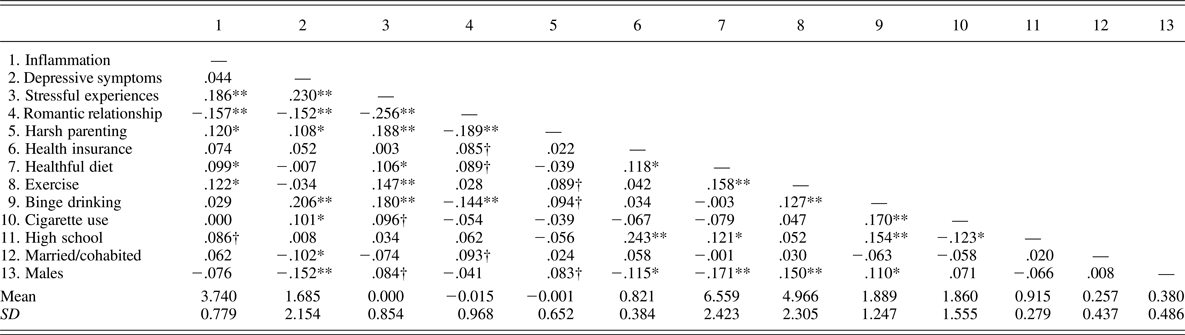
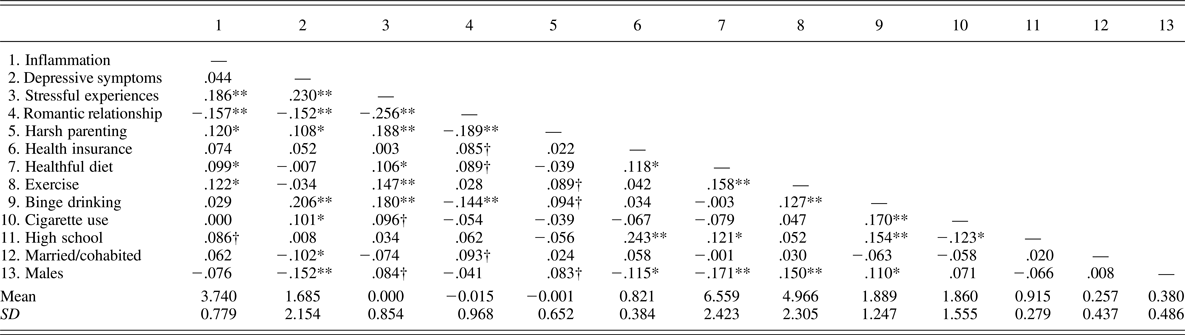
Table 1 provides means, standard deviations, and intercorrelations for all demographic and major study variables. As can be seen in Table 1, there are significant zero order correlations among early harsh parenting and inflammation, depressive symptoms, stress, and romantic relationship quality. In addition, inflammation is related to stress and romantic relationship quality, but not to depressive symptoms. As can also be seen, all control variables show significant or marginal associations with other variables in the model, suggesting the value of retaining them as controls in the analyses.
Correlations, means, and standard deviations among the study variables (n = 413)
Note: N = 413.
†p < .10 (two-tailed tests). *p ≤ .05. **p ≤ .01.
H1: Parent–child relationship at baseline (age 10) will be related to both depressive symptoms and inflammation even after controlling for the impact of control variables
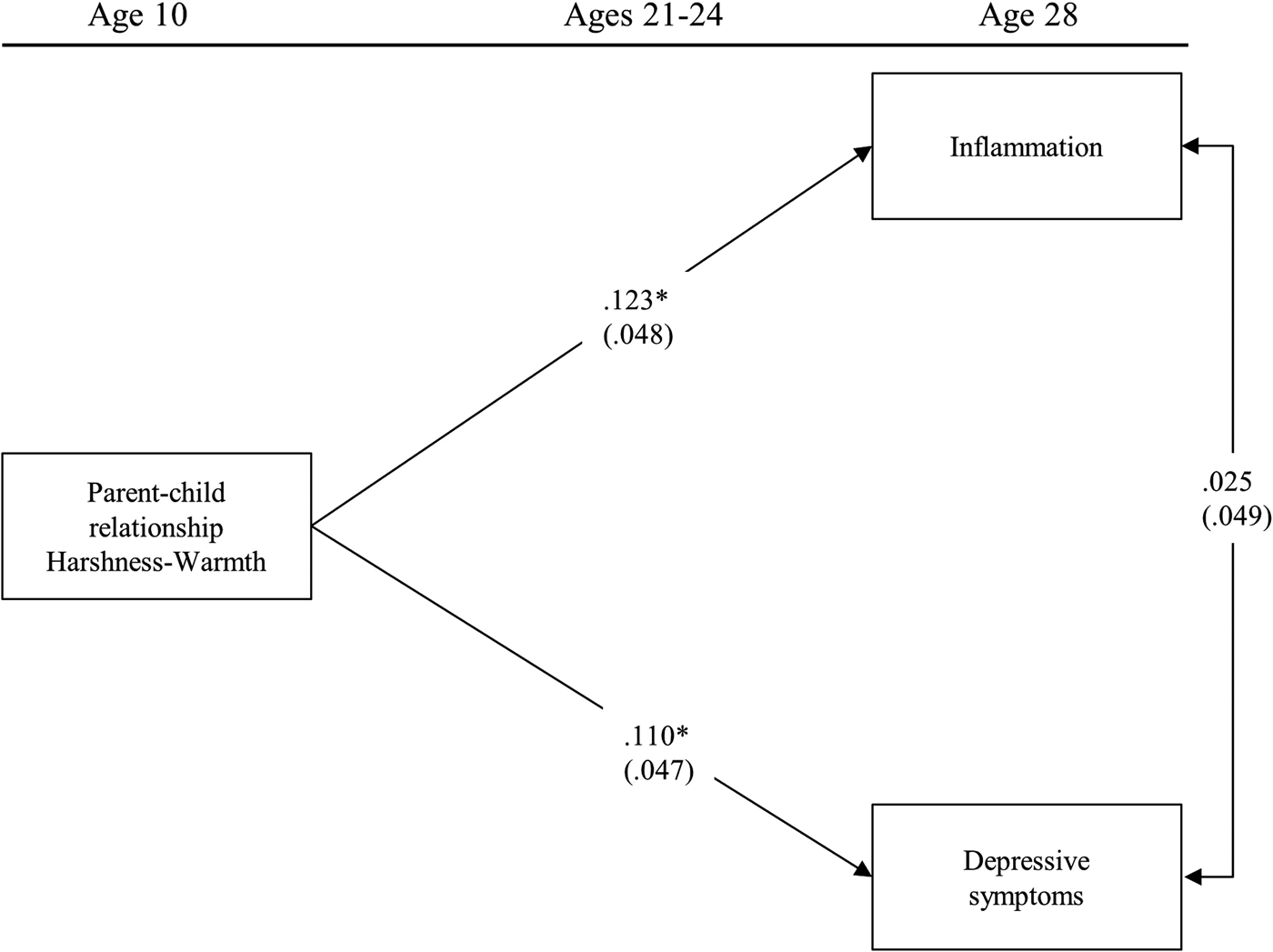
As can be seen in Figure 2, controlling for gender, insurance, diet, exercise, binge drinking, cigarette use, high school, and marital status, the parent–child relationship continued to be significantly correlated with both depressive symptoms (b = 0.110, p = .020) and pro-inflammatory tendencies (b = 0.123, p = .011) in adulthood, increasing both, and indicating that the association is robust to covariates. However, despite a common source of influence, symptoms of depressive symptoms and pro-inflammatory tendencies in adulthood were not significantly associated with each other (b = 0.025, ns).
Direct pathways from parenting to inflammation and depressive symptoms. The model is saturated. Values are standardized parameter estimates (standard errors). Gender, insurance, diet, exercise, binge drinking, cigarette use, high school, and married or cohabited are controlled. N = 413. †p < .10, *p ≤ .05, **p ≤ .01 (two-tailed tests).

H2: The parent–child relationship will be associated with early young adult compound stress level and this will partially mediate its direct effects on inflammation and depressive symptoms
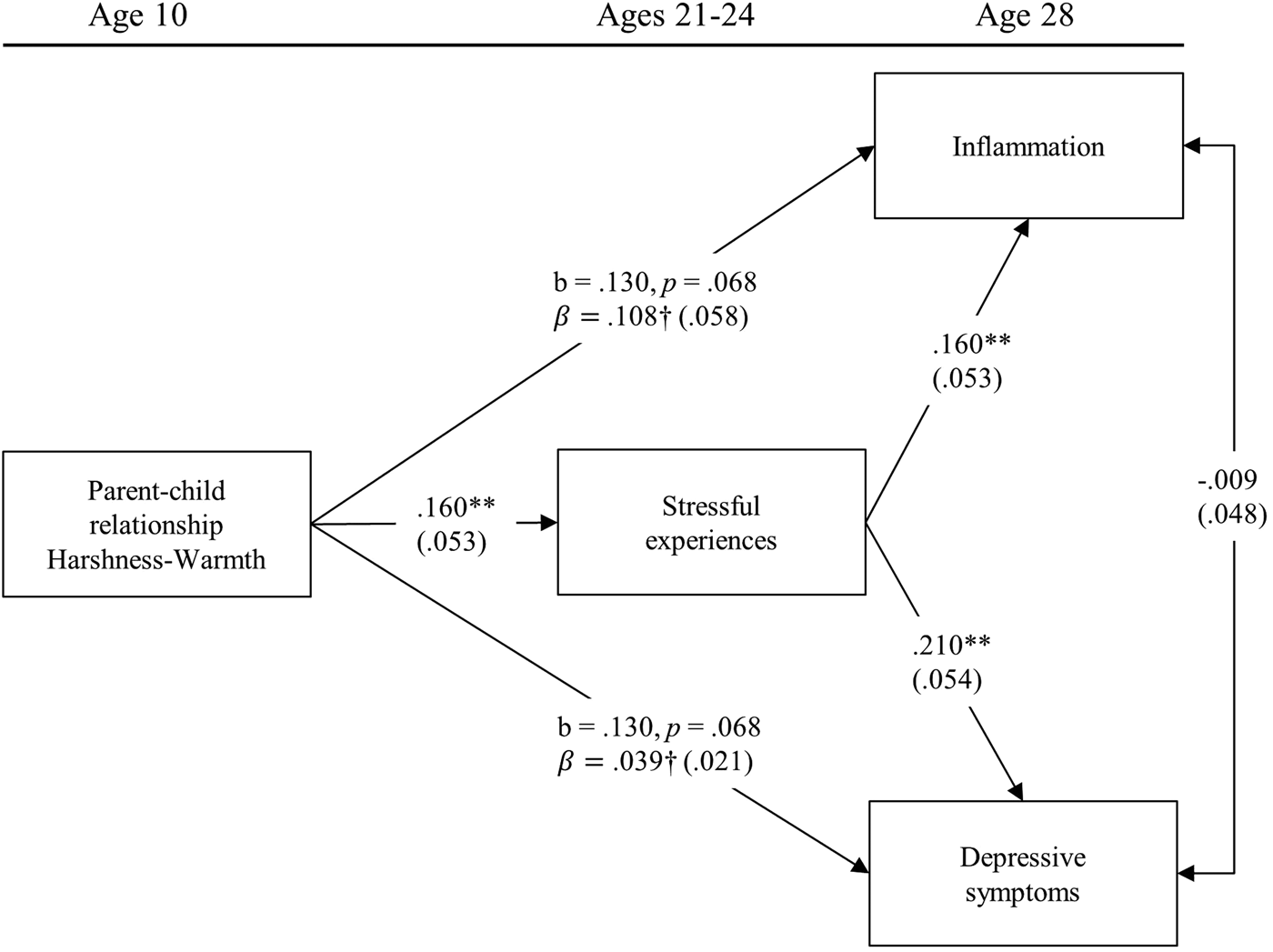
The results of our examination of the mediation of parent–child relationship effects on adult depressive symptoms and inflammation through young adult stress can be seen in Figure 3. As predicted, there was evidence of a significant effect of the parent–child relationship on young adult composite stress (b = 0.160, p = .001). Direct pathways from the parent–child relationship to depressive symptoms and inflammation were marginal after including the hypothesized mediator and so were constrained to be equal. Pathways from composite stress to both adult pro-inflammatory state and adult depressive symptoms were significant (b = 0.160, p = .001 and b = 0.210, p < .001, respectively), suggesting a significant indirect effect of parenting on outcomes through the association with young adult composite stress. Using bootstrapping methods with 1,000 replications, the test of the indirect effect of the parent–child relationship on inflammation through composite young adult stress was significant, indirect effect (IE) = 0.028, 95% confidence interval (CI) [0.009, 0.062], accounting for 20.59% portion of the total variance. Likewise, using bootstrapping methods with 1,000 replications, the test of the indirect effect of the parent–child relationship on depressive symptoms through composite stress was significant, IE = 0.037, 95% CI [0.013, 0.073], accounting for 48.68% of the total variance.
Indirect pathways from parenting to inflammation and depressive symptoms through later composite stress, with direct paths constrained to be equal. χ2 = 0.633, df = 1, p = .426; comparative fit index = 1.000; root mean square error of approximation = 0.000. Values are standardized parameter estimates (standard errors). Gender, insurance, diet, exercise, binge drinking, cigarette use, high school, and married or cohabited are controlled. Unstandardized betas are provided in addition to the standardized parameters. N = 413. Indirect effect on inflammation = 0.028, 95% confidence interval (CI) [0.009, 0.062], 20.588% of the total variance. Indirect effect on depression = 0.037, 95% CI [0.013, 0.073], 48.684% of the total variance. †p < .10, *p ≤ .05, **p ≤ .01 (two-tailed tests).

There was no evidence of multicollinearity among the variables in the model. Diagnostic variance inflation factor scores for all variables were below 10, ranging from 1.02 to 1.16, indicating no evidence of multicollinearity among the study variables.
H3: The parent–child relationship will be associated with the balance of warmth and hostility in early young adult romantic relationships and this will mediate its direct effects on inflammation and depressive symptoms
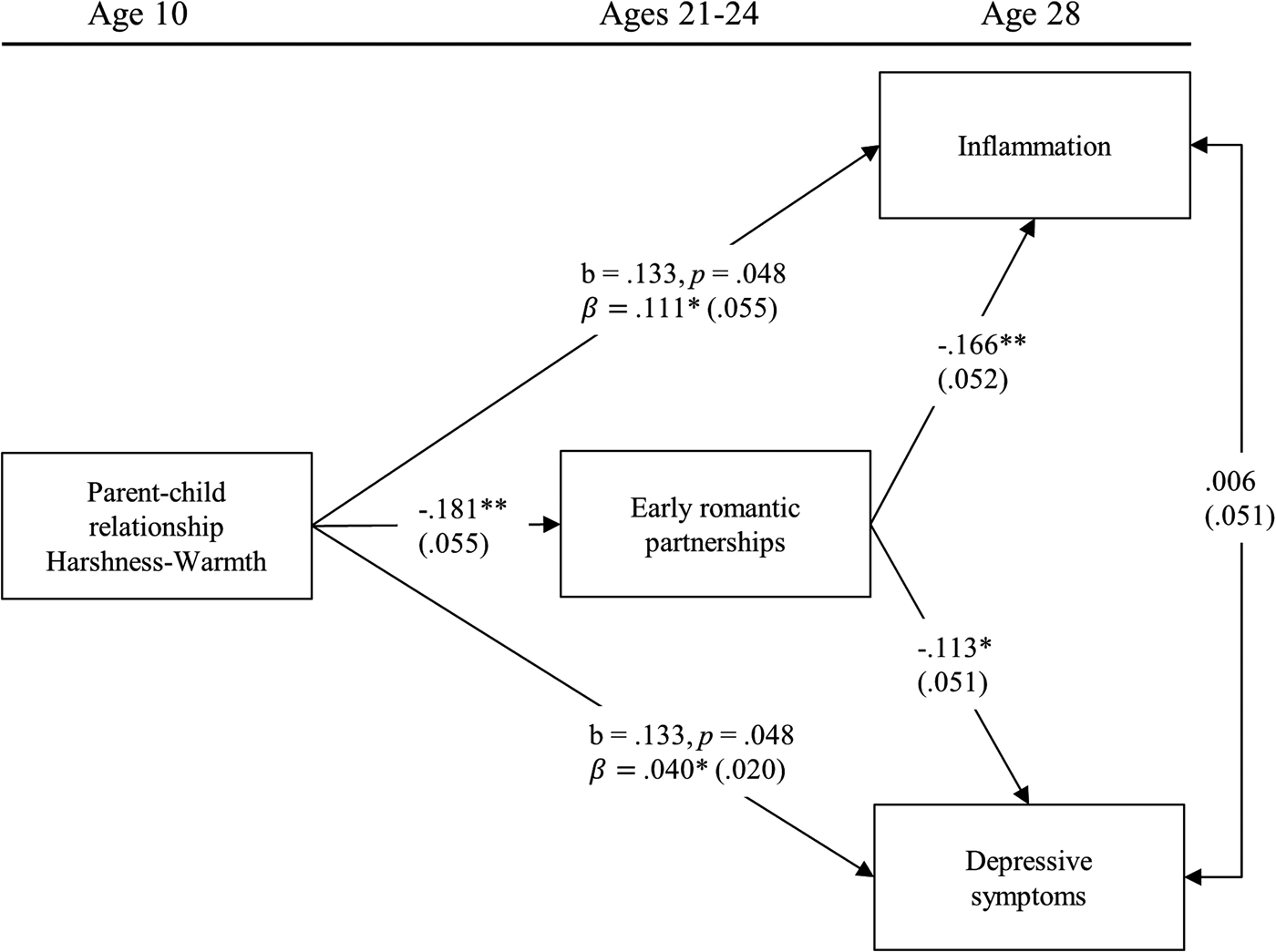
The results of our examination of mediation of the parent–child relationship on adult depressive symptoms and inflammation through young adult romantic relationships can be seen in Figure 4. As predicted, there was evidence of a significant effect of harsh parenting on the warmth and hostility of young adult romantic relationships (b = –0.181, p = .001). In turn, there were significant pathways from romantic relationships to both adult pro-inflammatory state (b = –0.166, p = .001) and adult depressive symptoms (b = –0.113, p = .027), again suggesting a significant indirect effect of parenting on outcomes, but this time through the association with young adult romantic relationships. Using bootstrapping methods with 1,000 replications, the test of the indirect effect of the parent–child relationship on inflammation through a supportive–hostile romantic partner relationship was significant, IE = 0.030, 95% CI [0.009, 0.076], accounting for 21.277% of the total variance. Likewise, using bootstrapping methods with 1,000 replications, the test of the indirect effect of the parent–child relationship on depressive symptoms through young adult romantic partner relationships was significant, IE = 0.020, 95% CI [0.003, 0.050], accounting for 32.786% of the total variance (p < .05). Supplemental analyses conducted to examine effects separately for romantic partner warmth (see online-only supplementary Figure S.2) and hostility (see online-only supplementary Figure S.3) indicate that effects are parallel for the two components, and so supports treating them as a combined variable.
Indirect pathways from parenting to inflammation and depressive symptoms through romantic partner relationships, with direct paths constrained to be equal. χ2 = 1.522, df = 1, p = .217; comparative fit index = 0.994; root mean square error of approximation = 0.036. Values are standardized parameter estimates (standard errors). Gender, insurance, diet, exercise, binge drinking, cigarette use, high school, and married or cohabited are controlled. Unstandardized betas are provided in addition to the standardized parameters. N = 413. Indirect effect on inflammation = 0.030, 95% confidence interval (CI) [0.009, 0.076], 21.277% of the total variance. Indirect effect on depression = 0.020, 95% CI [0.003, 0.050], 32.786% of the total variance. †p < .10, *p ≤ .05, **p ≤ .01 (two-tailed tests).

Again, there was no evidence of multicollinearity among the variables in the model. Diagnostic variance inflation factor scores for all variables were below 10, ranging from 1.01 to 1.06, indicating no evidence of multicollinearity among the study variables.
H4a: Jointly, early young adult compound stress and early young adult romantic relationships will fully mediate direct effects of the parent–child relationship on later young adult depressive symptoms and inflammation
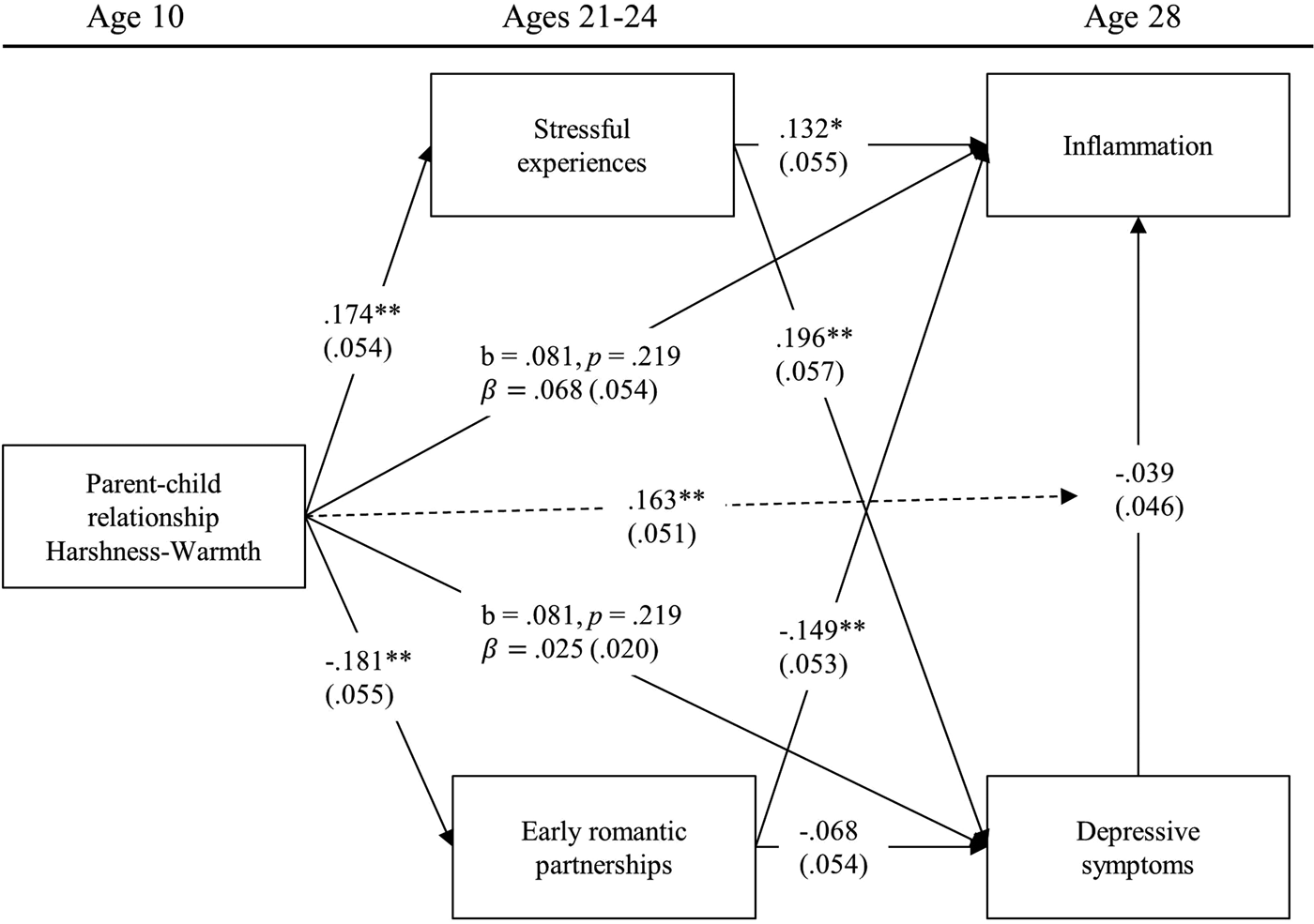
Because both hypothesized sets of mediational pathways were independently significant, we examined their joint effects. As can be seen in Figure 5, both indirect pathways through composite stress remained significant overall: for inflammation, IE = 0.023, 95% CI [0.006, 0.056]; for depressive symptoms, IE = 0.034, 95% CI [0.011, 0.073]. However, only one indirect pathway through young adult romantic relationships remained significant. The indirect pathway to inflammation was significant, IE = 0.027, 95% CI [0.007, 0.074], but the indirect pathway to depressive symptoms was no longer significant.
Full model showing indirect pathways from parenting to outcomes with both mediators and direct pathways from parenting to inflammation and depressive symptoms constrained to be equal, showing full mediation of parenting effects. Parent–child relationship moderates the association of depressive symptoms and inflammation. χ2 = 8.120, df = 4, p = .087; comparative fit index = 0.976; root mean square error of approximation = 0.050. Values are standardized parameter estimates (standard errors). Gender, insurance, diet, exercise, binge drinking, cigarette use, high school, and married or cohabited are controlled. Unstandardized betas are provided in addition to the standardized parameters. N = 413. †p < .10, *p ≤ .05, **p ≤ .01 (two-tailed tests).

Because the difference in chi-square models is itself distributed as a chi-square with degrees of freedom equal to the difference of the nested models, we more stringently tested the hypothesis of full mediation though young adult composite stress and young adult romantic relationship by constraining the direct pathways from parenting to depressive symptoms and inflammation to be zero rather than simply constraining them to be equal. This resulted in a nonsignificant change in chi-square, χ2 (1) = 2.187, ns, supporting full mediation of parenting effects on outcomes.
H4b: Even after fully accounting for the associations due to direct and mediated impacts, early harsh parenting will demonstrate a moderating effect on the relationship between depressive symptoms and inflammation
We also introduced a moderated pathway to test the hypotheses that early harsh parenting would alter the association of inflammation and depressive symptoms even after controlling the effect of shared mediators. As can be seen in Figure 5, the parent–child relationship was a significant moderator (b = 0.163, p = .001), indicating that there is a different association between depressive symptoms and inflammation as a function of the parent–child relationship experiences that is not explained by the mediated effects.
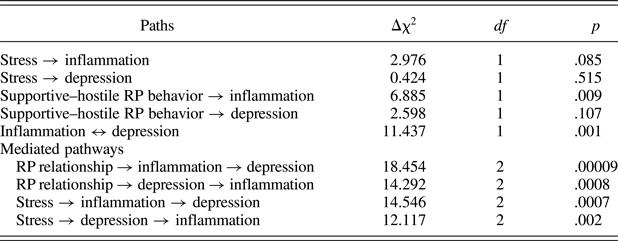
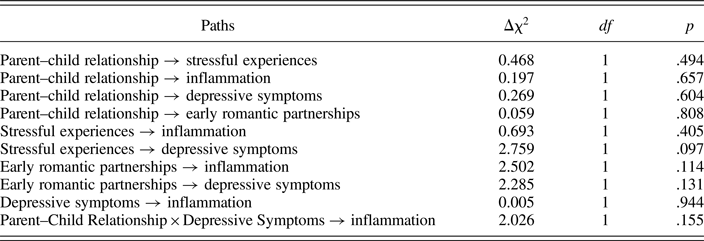
Using the multiple group analysis option in Mplus, we examined the extent to which findings varied by sex. This procedure compares the chi-square for each path when it is constrained to be equal for males and females versus when it is free to differ. Table 2 shows that the change in chi-square was not significant for any of the paths in the final structural model presented in Figure 5, indicating no significant sex differences in the pathways examined. Accordingly, we further probed the moderating effect of parenting using the full sample.
Comparison of the paths in Figure 5 showing no significant difference for males and females
H5a: Explication of the moderating effect will show differential pathways from mediators to outcomes as a function of the parent–child relationship
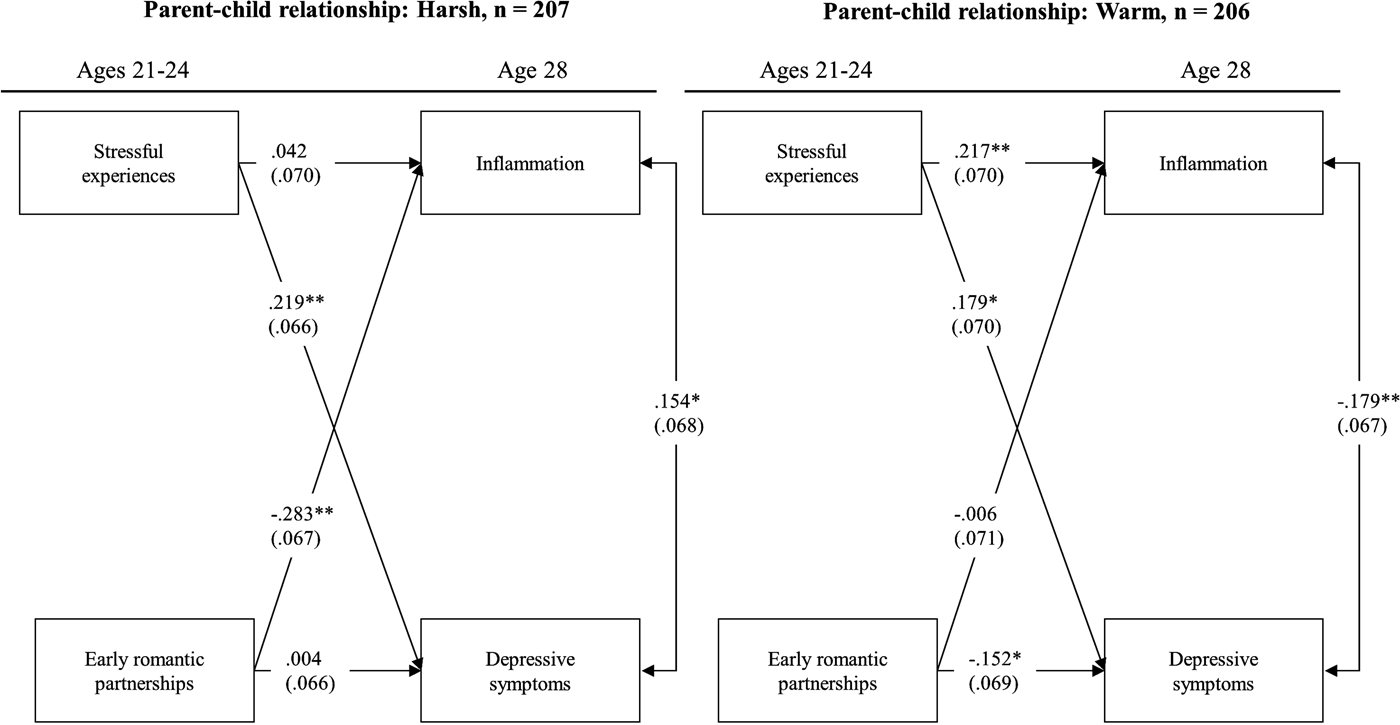
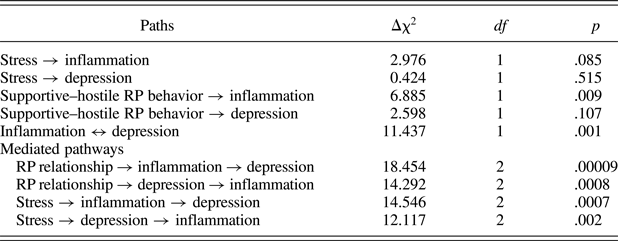
To further clarify the implications of the significant moderating effect of the parent–child relationship on the strength of the association between inflammation and depressive symptoms, we contrasted those above the median on harsh parenting at baseline with those at or below the median. The differing patterns of association can be seen in Figure 6, and the significance of pathway differences for harsh versus warm parenting groups are identified in Table 3. There was a significant association between composite stress and depressive symptoms for both the high harshness (b = 0.219, p = .001) and high warmth (b = 0.179, p = .010) groups, and the strength of this association did not differ significantly between the two groups. However, the effect of romantic partner warmth/hostility was significant only for the high early parenting stress group (b = –0.283, p < .001) and not for the low harsh parenting group (b = –0.006, NS), resulting in a significant difference in this pathway between the two groups, χ2 (1) = 6.885, p = .009. There also were significant associations between stress and inflammation for the warm (low harsh) parenting group (b = 0.217, p = .002) as well as between romantic partner problems and depressive symptoms (b = 0.179, p = .010), and these were not significant for the harsh parenting group; but in neither case was there a significant difference, χ2 (1) = 2.976 and 2.598, respectively, ns.
Comparison of differing patterns of association of young adult stress and young adult romantic partner relationships with inflammation and depression, and differing association of inflammation and depression among those with harsh versus warm parenting experiences. The model is saturated. Values are standardized parameter estimates (standard errors). Gender, insurance, diet, exercise, binge drinking, cigarette use, high school, and married or cohabited are controlled in these analyses. N = 413. †p < .10, *p ≤ .05, **p ≤ .01 (two-tailed tests).

Comparison of the paths for the parent-child relationship high and low in Figure 6
H5b: There will be a stronger positive association between depressive symptoms and inflammation among those who experienced more harsh parenting than among those who experienced more warm parenting
To test the hypothesis that harsh parenting changed the association between inflammation and depressive symptoms, we examined the link for those above the median with those at or below the median on harsh parenting. As can be seen in Figure 6, the associations are substantially different for those high in harsh parenting for whom the association is positive (b = 0.154, p = .023) compared to those with high warmth, for whom the association is negative (b = –0.179, p = .008). In both cases the association is significant, albeit in opposite directions. The difference between the two pathways was also significant, χ2 (1) = 11.437, p = .001.
H5c: There will be substantially different patterns of indirect effects from young adult mediators to outcomes between those with harsh parent–child relationships compared to those with warm parent–child relationships
To test the hypothesis that parenting might change indirect pathways to outcomes by increasing the effect of inflammation on depressive symptoms, we examined all four indirect effect pathways from hypothesized mediators to outcomes. As can be seen in the bottom half of Table 3, all indirect paths differed significantly between the two groups, with models treating inflammation as the mediator being most strongly divergent. Using bootstrap methods with 1,000 replications, the test of the indirect effect of romantic partner relationships on depressive symptoms through inflammation was significantly different for those above versus below the median on parental harshness: for those above the median (harsh), IE = –0.041, 95% CI [–0.113, –0.006], 47.13% of the total variance; for those below the median (warm), IE = 0.004, 95% CI [–0.021, 0.026], 0.65% of the total variance. Likewise, the test of the indirect effect of composite stress on depressive symptoms through inflammation was significantly different: for those above the median (harsh), IE = 0.006, 95% CI [–0.010, 0.043], 2.74% of the total variance; for those below the median (warmth), IE = –0.038, 95% CI [–0.086, –0.007], 14.90% of the total variance. In addition, the indirect effects on depression through inflammation were significantly different. he indirect effect of romantic partner relationships on inflammation through depressive symptoms was significantly different for those above versus below the median: for those above the median (harsh), IE = 0.001, 95% CI [–0.020, 0.037], 0.351% of the total variance; for those below the median (warm), IE = 45.902, 95% CI [–0.003, 0.077], 0.65% of the total variance. In addition, the test of the indirect effect of composite stress on inflammation through depressive symptoms was significantly different for those above versus below the median: for those above the median (harsh), IE = 0.035, 95% CI [0.003, 0.101], 83.33% of the total variance; for those below the median (warmth), IE = –0.033, 95% CI [–0.083, –0.001], 11.66% of the total variance.
Discussion
As expected, we found strong support for the hypothesis that some effects of the parent–child relationship on later inflammation and depression were mediated by early young-adult behavioral proclivities. In particular, because of the association of greater parental harshness and less warmth with later increased likelihood to experience elevated levels of composite stress and decreased warmth, hostility in romantic partner relationships in early young adulthood, the main effect associations with inflammation and depressive symptoms were fully explained. The main effects from parenting to depression and inflammation could be constrained to be zero in the final model without producing significant deterioration in model fit. Accordingly, the mediational model presented in Figure 5 is consistent with a broad prior literature linking parenting to later experiences of stress, as well as with the hypothesis that the parent–child relationship lays the groundwork for development of adult romantic partner relationships. Although this model fits the data well, there was one tell-tale oddity. It was surprising that, despite having a number of predictors in common, depressive symptoms and inflammation were not significantly correlated in adulthood (age 28). In keeping with the hypotheses put forward by Cole and Miller (2012), we wondered if this might reflect higher-order changes attributable to the parent–child relationship in which widespread reprogramming of direction and magnitude of effects between depressive symptoms and inflammation occurred.
Consistent with hypotheses put forward by Cole and Miller (2012), the parent–child relationship also moderated the association of inflammation and depressive symptoms in adulthood. The nonsignificant association between depressive symptoms and inflammation in adulthood observed for the sample as a whole masked two significant correlations in the subpopulations formed by considering separately those with more versus less harsh parenting in childhood. Among those who had harsher parenting experiences, the association between inflammation and depression was significant and positive, indicating that greater inflammation was associated with greater depressive symptoms. However, among those with warmer parent–child relationships, the association was significant and negative, indicating that greater inflammation was associated with fewer depressive symptoms. This pattern suggests substantial shifts in associations among harsh parenting, inflammation, and depressive symptoms, and provides initial support for the hypothesis that parenting may be particularly consequential for understanding adult pro-inflammatory tendencies (Ehrlich, et al., Reference Ehrlich, Miller, Rohleder and Adam2015), as well as supporting Miller and Cole's (Reference Miller and Cole2012) hypothesis that there may be two relatively distinct populations comprising the general population with each showing differing patterns of association between inflammation and depressive symptoms.
Our examination of mediators also allowed us to examine prospective effects of stress on depressive symptoms and inflammation as well as prospective effects of romantic relationships on depressive symptoms and inflammation, potentially adding to previous theorizing. We found that both composite stress in early young adulthood and romantic partner relationship quality served as mediators of parenting's effect on inflammation and depressive symptoms. However, when considered jointly, the indirect pathway from parenting to depressive symptoms through romantic partner relationship quality became nonsignificant, suggesting that some apparent effects on depression that might be attributed to relationship quality when it is considered alone may be better thought of as effects of composite stress, highlighting the potential for stress and relationship quality to influence each other as well as depressive symptoms. Equally interesting is the possibility that examination of subpopulations would show other interesting patterns of indirect effects. The indirect effect of romantic partner relationship quality on depression through inflammation is particularly pronounced among those with more harsh parent–child relationships, and it is made all the more interesting because the effect of romantic relationship quality on inflammation remained robust to the inclusion of composite stressor effects even in the overall model, suggesting that its effect on inflammation is as strong overall as the effect of the composite stress variable composed of financial stress, discrimination, and recent negative life events. Overall then, the results are consistent with the expectation that the Miller and Cole (Reference Miller and Cole2012) model will highlight new facets of the relationship between depressive symptoms and inflammation, substantially expanding mediational models that link experiences in adulthood with later depressive and inflammatory outcomes.
Of particular interest, the introduction of likely mediators of parenting's effect on inflammation and depressive symptoms did not account for moderation of their association by parental harshness. Expected mediating pathways were found, but so were significant shifts in underlying associations due to parenting experiences. Accordingly, at this level the Miller and Cole (Reference Miller and Cole2012) hypothesis was strongly supported. Looking at specific pathways, however, we found that the prospective pathways between composite stress and inflammation for those with harsher parenting was marginal, and was stronger among those reared in “warmer” parenting contexts. This is inconsistent with a broad “stress-sensitivity” effect due to harsh parenting. Conversely, the prospective association of romantic partner relationship and inflammation was significantly different between the two groups, with those experiencing harsher parenting demonstrating a significantly stronger (inverse) association between warmth in the romantic partner relationship and elevated inflammation. This finding is in the direction that would be expected based on Miller and Cole (Reference Miller and Cole2012) and may suggest that, at least when attention is focused on the sensitizing effects of harsh parenting, there may be sensitization primarily to later interpersonal events, including difficulties in romantic partner relationships, and perhaps there is not a tendency toward a more generalized heightened stress sensitivity.
Consistent with predictions by Miller and Cole (Reference Miller and Cole2012), we also observed a substantial shift in the pattern of indirect pathways from stressors to outcomes as a function of differing parent–child relationship experiences. Consistent with theorizing, differences in indirect effects were most prominent for those in which stressor effects on depression were mediated through inflammation, suggesting a role for inflammation in driving depressive symptoms. The indirect effect of romantic partner relationship quality on depressive symptoms through inflammation was significantly greater for those who had experienced harsher parenting. Conversely, the indirect effect of composite stress on depression through inflammation was significantly stronger for those who had experienced warmer relationships with parents, but the effect countered rather than amplified the direct effect of composite stress on depressive symptoms. That is, it appears those with warmer parenting histories were afforded additional protection against depressive symptoms in response to external stressors, and it is a protection not afforded to those with harsher parenting.
Limitations
Although our study overcame some limitations of past research and addressed a novel and exciting theoretical issue, it also suffered from several shortcomings. First, the data set is limited in its ability to probe effects across childhood. Our data set begins at age 10, and it would be of considerable interest to examine parenting relationships at even earlier ages. Many versions of the PAR model emphasize the importance of programming that occurs at even earlier ages (e.g., Miller, Chen, et al., Reference Miller, Lachman, Chen, Gruenewald, Karlamangla and Seeman2011), and it may be that early experience with harsh parenting and harsh environments before age 10 is even more consequential than that measured at age 10. However, this also can be seen as making the current investigation somewhat conservative. Most current theorizing would hypothesize even larger effects if parenting were assessed at younger ages. In addition, because of the relatively strong stability of both context and parenting across childhood, it may be that our assessments at age 10 proved to be relatively strong predictors in part because they actually captured considerable variance in earlier parenting experiences. Second, another limitation is that we were not able to link our assessment of inflammation in adulthood to a later increased risk for illness in middle age or beyond. At the last wave of data collection, our respondents were only 28 years of age. Consequently, they have not yet entered the age of risk for onset of the chronic diseases of aging. As we have noted, however, prior research has established a link between inflammation and onset of chronic illness, and recently Simons, Lei, Beeach, Barr, et al. (Reference Simons, Lei, Beach, Barr, Simons, Gibbons and Philibert2016) found that inflammation completely mediated the impact of socioeconomic strain on the development of chronic illness. Accordingly, an important future direction will be to link parenting to chronic diseases of aging as these emerge, as well as to other specific illnesses, or precursors to illness, and to show that these effects are mediated by inflammation.
Conclusions and implications for future directions
Our study findings might be viewed as containing a combination of encouragement and caution for those interested in parenting's role in health and for PAR theorists. It appears clear that parenting relationships must be considered when investigating the impact of adverse events and negative context on children. A warm relationship with a parent provides considerable beneficial effect on life trajectory, and also appears consequential for the programming of biological reactions to future stressors and the manner in which inflammation and depressive symptoms influence each other. The cautionary note is that the reprogramming that occurs may not unfold in exactly the way that the current models suggest, and it may be necessary to add measures of young adult and later adult relationships to better capture some of the variables likely to drive problematic shifts in inflammation and to promote chronic depressive symptoms in the context of chronic inflammation. Given the complex nature of inflammatory processes, of course, it is likely that other markers of inflammation or other ways of combining those markers could lead to somewhat different conclusions. However, because inflammation is an important marker of health, it will be useful and important to further probe the current results and examine additional biological correlates in future investigations.
It may be taken as somewhat bad news, however, that a “harsher” parenting style has such long lasting effects on an individual's risk for elevated inflammation and depressive symptoms (and their relationship to each other). Early negative parenting elevates both inflammation and depressive symptoms during adulthood and increases the likelihood that problems in adult relationships with a romantic partner will amplify inflammation still further, indirectly amplifying depressive symptoms. This finding suggests, at a minimum, that most interventions focused on relationship quality begin too late. Ideally we would begin our efforts to prevent later romantic relationship problems by helping build warm, supportive parent–child relationships. The current results suggest that if we missed this window of opportunity, we might still focus on enhancing early adult relationships because these may be the more proximal mediators of some of the lasting effects of parenting. These early relationships may be quite consequential for understanding the “weathering” process and its attendant implications for health across adulthood. Underscoring the value of an increased relationship focus is that there is a stronger effect of young adult relationships on inflammation for those with a history of harsher parenting, suggesting that to the extent that effective relationship interventions are developed and offered at this stage of life, they may prove particularly consequential for inflammation and health among those at greater risk.
There also may be clinical implications of the current findings related to rethinking and modifying current “marital models” of depression (Beach, Sandeen, & O'Leary, Reference Beach, Sandeen and O'Leary1990). The current results suggest that those at greater risk for relationship problems, that is, those with a history of harsher parenting experiences, are also more likely to show a pattern of concomitant inflammation, and substantially stronger indirect effects from romantic relationship hostility to inflammation and then to depressive symptoms. If so, it may be that inflammatory processes are helping to drive or maintain their depressive symptoms, and better understanding this mechanism may result in improved intervention. For example, depressed persons whose depressive symptoms are being driven by relationship hostility may be less responsive to standard pharmacological intervention (Hepgul et al., Reference Hepgul, Cattaneo, Agarwal, Baraldi, Borsini, Bufalino and Pariante2016). If confirmed in work with clinical or treatment seeking populations, this would suggest the value of considering alternative pharmacotherapy for such cases, perhaps combining marital therapy or other interpersonally focused intervention with pharmacological agents that have enhanced anti-inflammatory activity.
Supplementary Material
To view the supplementary material for this article, please visit https://doi.org/10.1017/S0954579417001523.