


Highlights
-
• Improved survival for recurrent GBM (rGBM) when bevacizumab is initiated within 6 months of radiation.
-
• Bevacizumab improves quality of life in patients with rGBM.
-
• Treatment practices and outcomes are different when patients are treated with bevacizumab at high vs. low volume centers.
Introduction
Grade 4 gliomas (glioblastoma, isocitrate dehydrogenase [IDH] wild type and grade 4 astrocytoma, IDH mutant) are the most common and lethal primary brain tumors in adults. 1 The established standard of care for newly diagnosed grade 4 glioma involves maximally safe surgery followed by radiotherapy with concurrent and adjuvant temozolomide. Reference Nam and De Groot2 Unfortunately, grade 4 gliomas persist as an incurable disease with a 5-year survival of only 6%. 1,Reference Delgado-López and Corrales-García3 Median progression-free survival (PFS) for grade 4 glioma patients following first-line treatment remains poor, Reference Nam and De Groot2 and there is no current standard of care for recurrent grade 4 glioma.
Bevacizumab, an inhibitor of vascular endothelial growth factor A (VEGF-A), Reference Kim, Umemura and Leung4 received initial Health Canada approval in 2010 based on promising phase II clinical trials showing impressive radiographic response, clinical improvement and reduction in corticosteroid use. Reference Taal, Oosterkamp and Walenkamp5–Reference Kreisl, Kim and Moore7 Phase III trials failed to show an improvement in overall survival (OS), and as a result, most Canadian patients do not have access to this agent through provincial healthcare systems. Reference Wick, Gorlia and Bendszus8 In the province of British Columbia (BC), however, bevacizumab has been approved as second or later line therapy for recurrent glioma since 2011. Bevacizumab is commonly used globally for recurrent glioma, but consensus is lacking on the optimal use of this treatment. This retrospective analysis aims to evaluate bevacizumab treatment practices in recurrent glioma in BC, as well as to assess survival outcomes associated with bevacizumab use.
Methods
Study population and patient selection
We conducted a retrospective cohort study of patients aged 18 or older with radiographically confirmed recurrent grade 4 glioma treated at the 6 provincially regulated tertiary care BC Cancer centers who received bevacizumab alone or in combination with another agent, between January 1, 2011, and December 31, 2019. Bevacizumab dosing is typically standardized at 10mg/kg IV Q 2 weeks. Reference Friedman, Prados and Wen6 Patients were identified using the BC Cancer patient registry and pharmacy data. Only patients with grade 4 glioma/glioblastoma histology on diagnosis (as per the 2007 and 2016 WHO criteria) were included. Because data were collected prior to the 2021 WHO classification of brain tumors into IDH mutant grade 4 astrocytoma and IDH wild type glioblastoma, “glioblastoma” will refer to both IDH mutant and wildtype grade 4 gliomas. Reference Louis, Perry and Wesseling9 Exclusion criteria included histologic or molecular diagnosis other than glioblastoma (including no pathologic diagnosis), previous treatment with bevacizumab as a first-line agent, previous treatment in clinical trials with either cancer vaccination or immunotherapy, declining treatment and loss to follow up.
This study was approved by BC Cancer institutional research ethics review board. The study was conducted according to the ethical standards of the Declaration of Helsinki.
Data collection
Chart review of electronic medical records was performed to collect the following patient characteristic variables: age at diagnosis, sex, number of comorbidities (0, 1, or ≥2), location of treatment in BC, Eastern Cooperative Oncology Group (ECOG) performance status and corticosteroid dose at time of bevacizumab initiation. Where possible, tumor characteristics were collected, including presence of IDH mutation and O6-methylguanine DNA-methyltransferase (MGMT) methylation status. Treatment variables and disease outcome were also collected, including extent of surgical resection, completion of first-line adjuvant radiotherapy with or without concomitant and adjuvant temozolomide, number of treatment lines prior to bevacizumab initiation, type of radiographic progression prior to bevacizumab initiation, whether chemotherapy was used concurrently with bevacizumab, and type of radiographic progression after bevacizumab treatment. Quality of life variables were also collected, including corticosteroid dose reduction while on bevacizumab and time to performance status decline while on bevacizumab, where possible. We evaluated OS from time of bevacizumab initiation (BevOS), which was defined as the time from the first day of treatment with bevacizumab to the date of patient death, as well as progression-free survival on bevacizumab (BevPFS).
Statistical analysis
Data analyses were conducted using IBM SPSS version 27 software (Markham, Canada). Descriptive statistics were used to present the demographical information through counts, percentages, central tendency measures (mean and median), ranges and variations. BevOS and BevPFS were evaluated using the Kaplan-Meier curve, with comparisons made using the log-rank test. Kaplan-Meier curve images were created using SPSS software. Variables potentially influencing survival were identified with Cox multivariate regression analysis. One-way ANOVA and chi-squared tests were used to compare baseline patient and treatment characteristics between groups. A conventional p-value < 0.05 was used to reject the null hypothesis.
Results
Patient characteristics
A total of 272 patients treated at provincial BC Cancer centers for recurrent glioblastoma (rGBM) with bevacizumab alone or in conjunction with chemotherapy, between January 2011 and December 2019, were identified. Two hundred and forty-five patients were retained for analysis (90%). In total, 27 patients were excluded due to lower-grade glioma histology at diagnosis (n = 14), treatment with first-line regimens other than standard of care (n = 9) or loss to follow-up (n = 4). Reference Stupp, Mason and van den Bent10,Reference Perry, Laperriere and O.’Callaghan11
Baseline characteristics are presented in Table 1. Cox multivariate regression analysis revealed a statistically significant association between survival after bevacizumab initiation and baseline age under 65 (p = 0.029) and having had a gross total resection (p = 0.007). Of note, IDH mutational status and MGMT methylation status were not routinely tested before 2016 in the province, and of the 121 patients (49%), with immunohistochemistry analysis of IDH, only 4 (2%) had an IDH1 mutation. O6-methylguanine DNA-methyltransferase (MGMT) methylation status was performed in 79 patients (32%), with 30 patients (12%) exhibiting MGMT methylation. There was no statistically significant correlation between MGMT methylation status and survival after bevacizumab initiation (p = 0.474).
Patient and treatment characteristics

Baseline patient and tumor characteristics at time of diagnosis, and performance status and corticosteroid use at time of bevacizumab initiation. P-value is reflective of Cox multivariate analysis of factors in relation to overall survival after initiation of bevacizumab.
ECOG = Eastern Cooperative Oncology Group; IDH = isocitrate dehydrogenase; MGMT = O6-methylguanine DNA-methyltransferase.
At time of bevacizumab treatment, ECOG was reported for 64% of patients, with only 5 patients having an ECOG of 0. Where Karnofsky Performance Scale scores were used, they were converted to corresponding ECOG scores. Reference Prasad, Kaur, Muthu, Aggarwal, Behera and Singh12 Approximately half of patients (51%) were on greater than 4 mg daily dose of corticosteroids prior to bevacizumab start.
Bevacizumab treatment and survival outcomes
Of the 245 patients reviewed, there were 244 deaths at the time of analysis. After bevacizumab initiation, BevPFS and BevOS were evaluated, with a median follow up of 7 months (range 0 – 106 months). Median BevPFS was 3 months (CI95 2.62 – 3.38) and median BevOS was 7 months (CI95 6.27 – 7.725).
Majority of patients (64%) had additional lines of treatment at recurrence, with a median of 2 treatments (SD = 0.766, including completed adjuvant treatment and re-resections) prior to bevacizumab initiation. For patients where bevacizumab was initiated within 6 months of first-line radiation therapy (with or without concurrent chemotherapy) prior to completion of adjuvant temozolomide, there was improved BevOS of 8 months (CI95 6.77 – 9.23) compared to 6 months (CI95 5.13 – 6.87) for those starting bevacizumab later than 6 months after chemoradiation (p = 0.014) (Figure 1A).
Survival outcomes based on time from radiation (A), type of radiographic progression (B) and addition of chemotherapy (C).

Radiologic reports were used to determine localized versus distant progression prior to bevacizumab initiation. Sixty patients (24%) had distant progression (outside field of radiation) prior to bevacizumab treatment. BevOS was 5 months (CI95 = 3.74 – 6.27) for these patients compared to BevOS of 7 months (CI95 = 6.31– 7.70) for patients with local progression prior to treatment (p = 0.004) (Figure 1B).
Furthermore, addition of cytotoxic chemotherapy (either lomustine or etoposide) to bevacizumab was shown to correlate with improved OS, depending on when chemotherapy was added. BevOS was 6 months when treated with bevacizumab alone (CI95 = 5.2 – 6.8), 7 months when chemotherapy was concurrently administered with bevacizumab at initiation (CI95 = 5.6 – 8.4) and 9 months when chemotherapy was added after progression on single-agent bevacizumab (CI95 = 7.9 – 10.1, p = 0.019, Figure 1C). However, pairwise comparisons showed only a significant difference when comparing the bevacizumab alone treatment group to the group additionally treated with chemotherapy after progression (p = 0.003).
Patient clinical outcomes
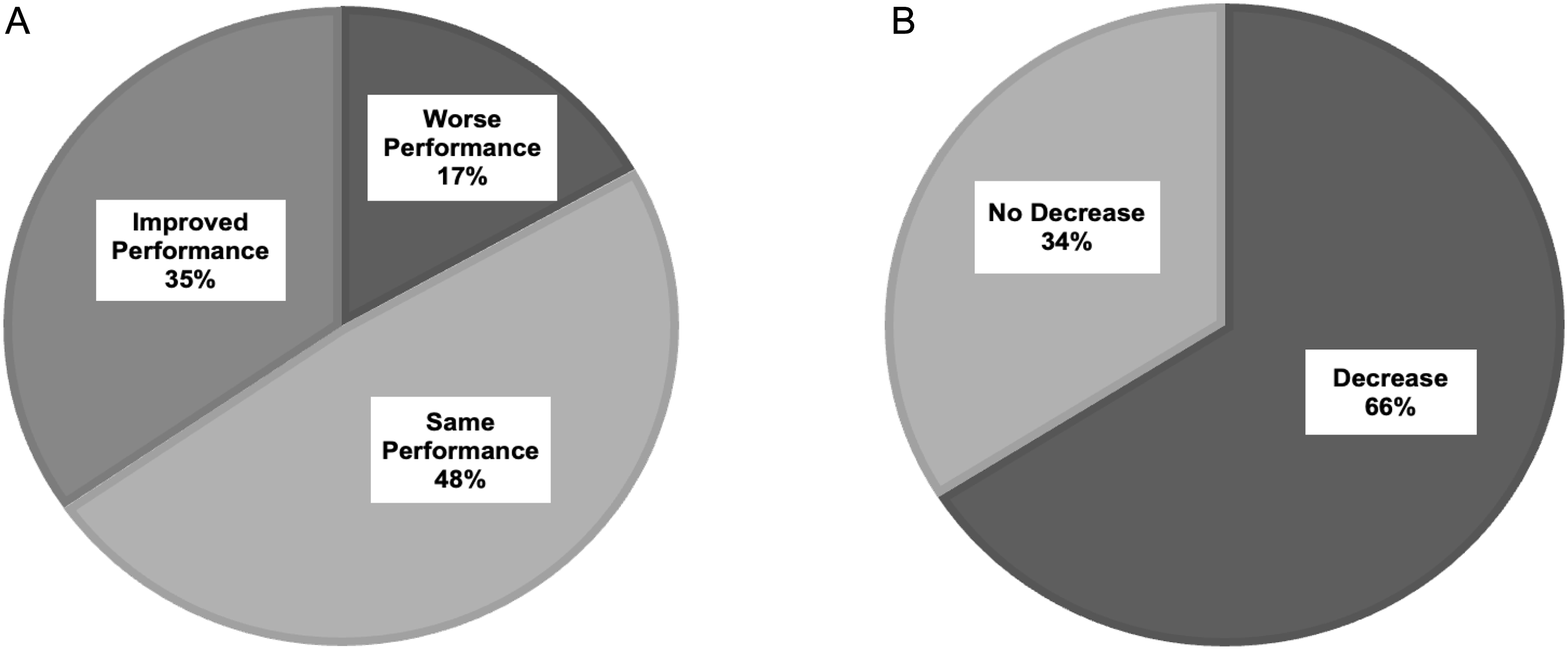
Quality of life on bevacizumab was evaluated by assessing corticosteroid use and ECOG performance status within the first 2 months of bevacizumab treatment as reported in patient charts. Of the 243 patients with physician-reported performance status, the majority of patients had similar (49%) or improved (35%) performance status (Figure 2A). Of the patients who had documented corticosteroid use prior to bevacizumab, 66% decreased their dose after bevacizumab initiation (Figure 2B).
Patient quality of life outcomes. Bevacizumab use was associated with similar or improved performance status (A) and a decrease in steroid use (B) in a majority of patients.

Patient and treatment characteristics and outcomes by center volume
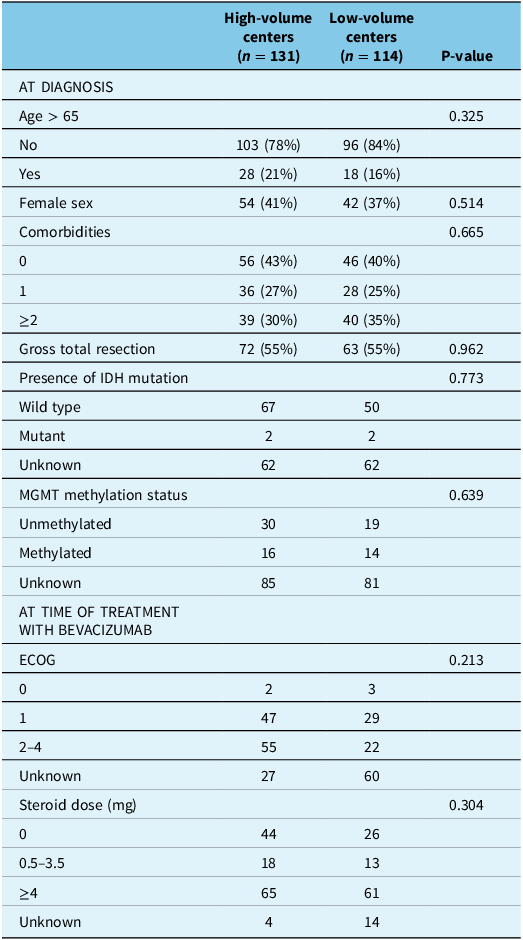
In further analysis, we evaluated bevacizumab treatment patterns and outcomes based on volume of treatment center, with the two centers serving the largest catchment areas in BC and seeing the largest volume of central nervous system tumors defined as high-volume centers, and the remaining four centers defined as low-volume centers. Patient demographics by center volume are represented in Table 2 and show no significant differences.
Patient characteristics by center volume

Baseline patient and tumor characteristics at time of diagnosis, and performance status and corticosteroid use at time of bevacizumab initiation, by center volume. P-value is reflective of Cox multivariate analysis of factors in relation to overall survival after initiation of bevacizumab.
ECOG = Eastern Cooperative Oncology Group; IDH = isocitrate dehydrogenase; MGMT = O6-methylguanine DNA-methyltransferase.
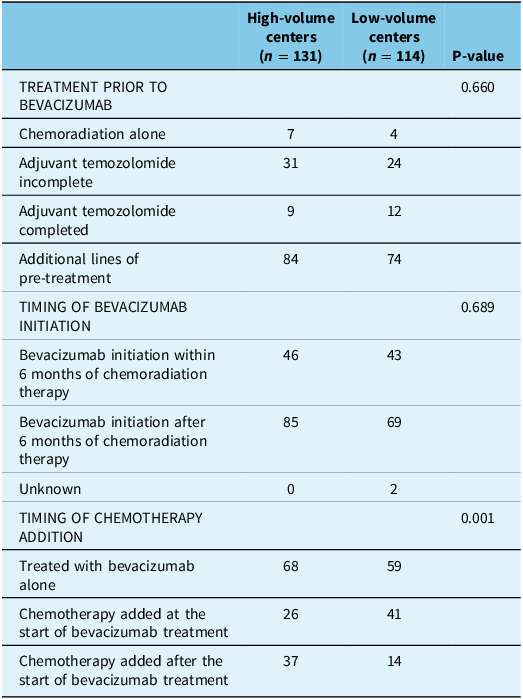
Treatment patterns as they varied by center are represented in Table 3. On average, patients receiving care at lower-volume centers were more likely to be treated with combination chemotherapy and bevacizumab up front (p = 0.001).
Treatment characteristics by center volume

Treatment characteristics by center volume, including any treatments prior to bevacizumab, timing of bevacizumab initiation and presence and timing of chemotherapy addition are shown. P-value is reflective of Cox multivariate analysis of factors in relation to OS after initiation of bevacizumab.
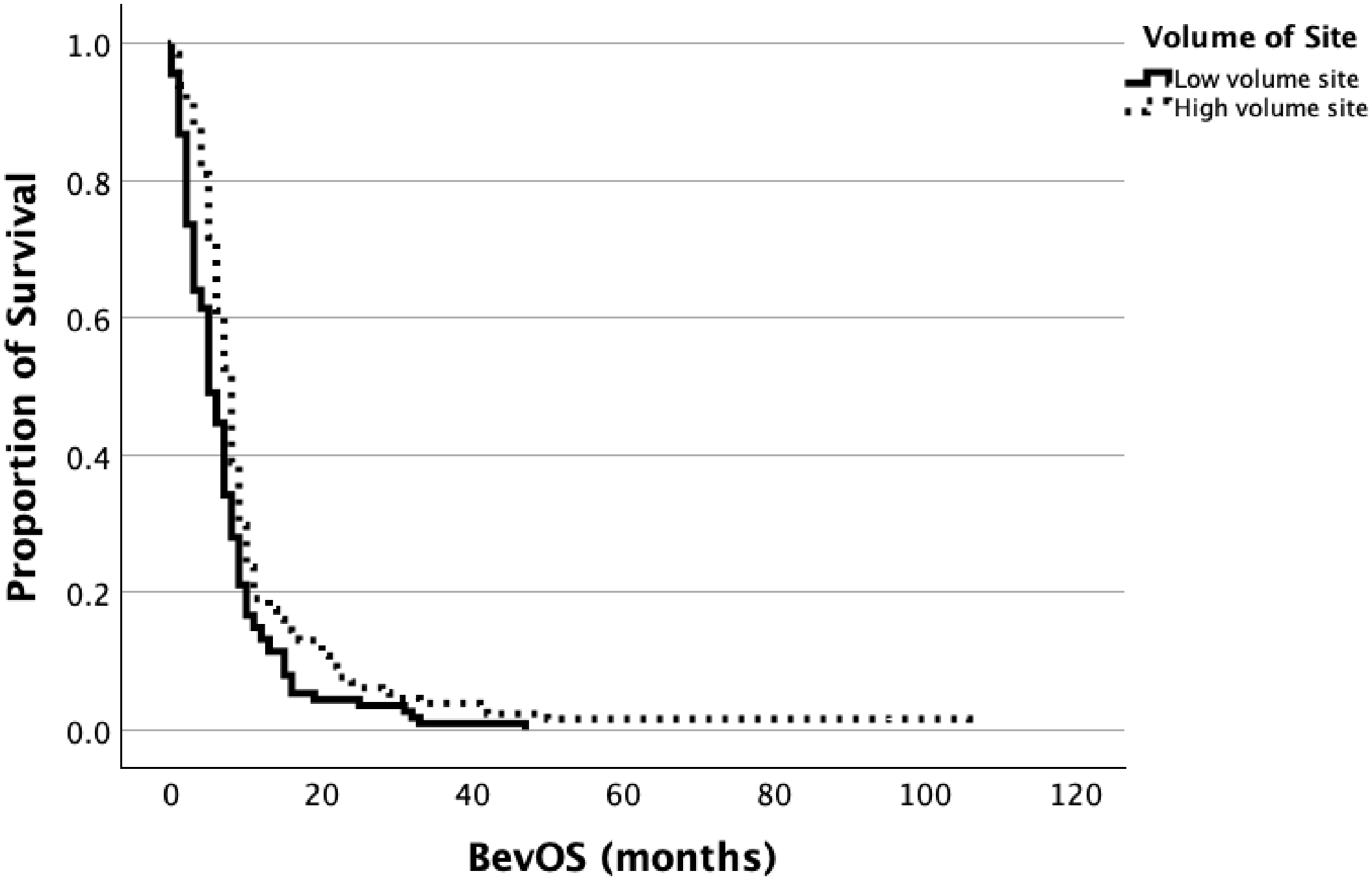
Patients treated at higher-volume centers had a median BevOS of 8 months (CI95 7.25 – 8.75 months), while patients treated at lower-volume centers had a median BevOS of 5 months (CI95 3.89 – 6.10 months, p = 0.004, Figure 3). Of note, median OS from diagnosis was not statistically significantly different between patients treated in high volume (20 months, CI95 18.51 – 21.49 months) and low-volume centers (18 months, CI95 15.89 – 20.11 months; p = 0.065, data not shown).
Survival outcomes based on location of treatment.

Discussion
Recurrent glioblastoma (rGBM) presents a formidable challenge in neuro-oncology, characterized by a dismal prognosis, with cytotoxic chemotherapies providing only a 15% rate of PFS at 6 months. Reference Stupp, Hegi and Mason13 Bevacizumab is a commonly used treatment option for rGBM; however, consensus is lacking on the optimal administration and timing of this treatment. Bevacizumab is provincially fully funded as second or later-line treatment for glioblastoma in BC, and does not require third-party coverage for this indication. Therefore, this retrospective study provides the largest Canadian cohort analysis of the experience and outcomes of patients with rGBM treated with bevacizumab. This study also provides insights into the impact of bevacizumab treatment on quality of life outcomes, as well as practice patterns and survival outcomes in patients treated at high versus low volume cancer centers.
The median PFS of 3 months and median OS of 7 months after bevacizumab initiation observed in this study align with previous studies. Reference Wick, Gorlia and Bendszus8 Similarly, our study has corroborated the previously well-established finding that bevacizumab treatment is associated with improved quality of life measures, including increased ECOG performance status and decreased need for exogenous steroids (Figure 2). Reference Desjardins, Herndon and McSherry14
Notably, we found that initiation of bevacizumab within 6 months of first-line radiation is associated with a longer OS after bevacizumab initiation compared to later initiation, which could suggest the importance of early intervention in patients who do not respond to temozolomide. This is not a previously established phenomenon, with other studies demonstrating no significant survival difference in patients treated with upfront versus delayed bevacizumab initiation. Reference Wiestler, Radbruch and Osswald15,Reference Piccioni, Selfridge and Mody16 One alternative explanation for this seeming improved survival with earlier bevacizumab treatment may be that earlier initiation allows for treatment of pseudoprogression, which is caused by radiation treatment-associated release of pro-inflammatory mediators and cytokines, commonly manifesting within <6 months of treatment. Reference Brandsma, Stalpers, Taal, Sminia and van den Bent17 Bevacizumab’s anti-vasogenic properties allow for early and dramatic improvement of pseudoprogression through reduction of contrast enhancement and edema, or a “pseudoresponse,” where bevacizumab remediates the permeability of tumor-related vascular permeability as well as radiation-induced vascular permeability, thereby reversing pseudoprogression. Reference Thompson, Frenkel and Neuwelt18
The presence of pseudoprogression has been associated with improved survival in other real-world retrospective analyses and is associated with MGMT promoter methylation status. Reference Arevalo, Soto and Rabiei19–Reference Weinstein, Varallyay and Dosa21 O6-methylguanine DNA-methyltransferase (MGMT) methylation status was not tested consistently in our population during the investigated time period, and it is therefore difficult to determine a correlation. However, the extended survival of patients having earlier initiation of bevacizumab may be reflective of a baseline biology predisposing them to improved survival, as they may not have been truly progressing when treatment was initiated. This highlights the need for specialized radiologists with expertise in recognizing pseudoprogression, which could inform treatment decision-making.
Additionally, our results suggest that OS after bevacizumab initiation was improved, where patients had only local progression as compared to those patients who had distant progression prior to bevacizumab initiation (BevOS of 5 months versus 7 months; Figure 1B). Evidence from histologic specimens and rat models suggests that when treated with bevacizumab, glioblastomas adapt to angiogenic inhibition by increasing tumor infiltration and host vessel cooption. Reference de Groot, Fuller and Kumar22,Reference Rubenstein, Kim and Ozawa23 In applying this to our cohort, perhaps those patients with tumors associated with distant progression prior to bevacizumab initiation may have already had increased capacity for infiltration and host vessel cooption – characteristics which may have facilitated distant spread – as compared to tumors with only local progression. In turn, this may have rendered bevacizumab less effective in this group, leading to decreased OS.
This study further analyzed differences in pattern of practice surrounding bevacizumab use and outcomes between low-volume and high-volume cancer centers in BC. One notable finding was a significant difference in survival outcomes after bevacizumab initiation based on treatment center volume. Patients treated at high-volume centers had a median post-bevacizumab OS survival of 8 months, compared to 5 months for those treated at low-volume centers (p = 0.004). A trend toward rural-urban disparities in cancer outcomes has been noted in prior retrospective studies. Reference Bhatia, Landier and Paskett24 This may be due to a greater concentration of specialized oncologists and radiologists, as well as easier access to resources in higher-volume, more academic cancer centers. Reference Afshar, English and Milne25,Reference Xu, Chen, Xu and Qin26 However, this may also be due to demographic differences between lower and higher-volume centers that were not accounted for, such as socioeconomic status, education and other factors associated with living in larger cities compared to less urban areas. Reference Bhatia, Landier and Paskett24–Reference Xu, Chen, Xu and Qin26
In addition, practice patterns varied in that patients were treated more frequently with chemotherapy concurrently with bevacizumab in lower-volume centers than in higher-volume centers, as opposed to the sequential approach seen at high-volume centers. Prior studies evaluating the addition of chemotherapy to bevacizumab in the treatment of rGBM have yielded mixed results. In the recurrent setting, Tonder et al. reported modest disease stabilization when lomustine was added to bevacizumab in bevacizumab-refractory patients, though without clear survival benefit. Reference Tonder, Bartsch and Thaler27 Conversely, Oberheim Bush et al. observed no objective responses and significantly increased toxicity with this combination, concluding it offered no clinical advantage after bevacizumab progression. Reference Oberheim Bush, Butowski, Recht, Henry, Chang and Clarke28 These findings are consistent with the BELOB trial, which demonstrated improved PFS – but not OS – with concurrent bevacizumab and lomustine in rGBM. Reference Taal, Oosterkamp and Walenkamp5 Similarly, in the upfront setting, Chinot et al. found that while adding bevacizumab to standard chemoradiotherapy delayed disease progression, it failed to extend OS and was associated with worse quality of life and cognitive outcomes. Reference Chinot, Wick and Mason29 In our study population, the addition of chemotherapy to bevacizumab was associated with a significant improvement in OS, with a median of 8 months compared to 6 months for bevacizumab alone. The timing of bevacizumab was also suggested to be significant, with patients receiving single-agent bevacizumab upfront followed by eventual addition of chemotherapy having the longest median survival of 9 months. However, subgroup analyses showed only a significant difference when comparing the group treated with bevacizumab alone compared to the group additionally treated with chemotherapy after progression (p = 0.003). This seemingly improved survival with chemotherapy addition is likely explained by a reversal of the causal arrow: those patients that were destined to have improved survival for other reasons (e.g. better premorbid health status, less aggressive tumor characteristics, etc.) simply lived long enough to be treated with multiple lines of therapy, hence the association between chemotherapy addition and longer survival.
Ultimately, this study highlights the heterogeneity in the treatment of glioblastoma, particularly within the context of publicly funded healthcare systems. This variability underscores a broader issue: the absence of a standardized and highly effective approach to managing this very morbid tumor. Addressing these disparities is crucial for improving patient outcomes and ensuring that all glioblastoma patients, regardless of the treatment center, receive the most effective and personalized care possible.
Being a retrospective review of patient data, this study is susceptible to the usual limitations associated with such analyses, including confirmation bias of chart reviews. One limitation to highlight is that, unfortunately, biomarkers such as MGMT methylation status and IDH were not available for at least half of the patients in our study and were therefore not analyzed. This is due to changes in pathology guidelines and changes in public funding of molecular testing through the years the study evaluated. O6-methylguanine DNA-methyltransferase (MGMT) specifically may play a role in tumor angiogenesis, invasion and response to angiogenic inhibitors, and so expression of MGMT may predict response to bevacizumab. Reference Schaub, Schäfer and Mack30–Reference Chahal, Abdulkarim and Xu32 Having this information in future studies could allow for optimized patient selection for the administration of bevacizumab in both high and low-volume centers to improve outcomes for patients with grade 4 glioma.
Conclusion
This retrospective analysis has assessed bevacizumab treatment practices, survival outcomes and quality of life outcomes in rGBM in BC. Major findings included that the addition of chemotherapy to bevacizumab treatment did not improve outcomes, but that initiation of bevacizumab within 6 months of radiation completion was associated with improved survival, suggesting pseudoprogression rather than true disease progression was present at time of bevacizumab initiation. Analysis of patients treated in high versus low-volume centers in BC suggested that patients in higher-volume centers were less likely to receive chemotherapy with bevacizumab treatment, and more likely to have improved survival. Bevacizumab was shown in this study to appear to improve symptoms, preserve quality of life and reduce corticosteroid requirements. Further analysis is needed into the specific demographic and biomarker characteristics of patients treated with bevacizumab to optimize patient selection and improve outcomes in grade 4 glioma.
Author contributions
MC and BT contributed to the study conception and design. Data collection and analysis were performed by MC. The manuscript was written by KP and MC, and all authors contributed to the final manuscript.
Funding statement
The authors did not receive support from any organization for the submitted work.
Competing interests
The authors have no relevant financial or non-financial interests to disclose related to this work. MC has received honoraria from Servier Canada, and RH has received honoraria and consulting fees from Servier Canada and honoraria from Novocure Canada, not related to the submitted work.
Ethical standard
This study was performed in line with the principles of the Declaration of Helsinki. Approval was granted by the BC Cancer Research Ethics Board.
Consent to participate
N/A.
Consent to publish
N/A.
Availability of data and material
The datasets generated and analyzed during the current study are not publicly available due to confidentiality but are available from the corresponding author on reasonable request and pending ethics approval.





Target article
Analysis of Bevacizumab Treatment Practices, Survival and Quality of Life Outcomes in Recurrent Glioblastoma Patients
Related commentaries (1)
Reviewer Comment on Chahal et al. “Analysis of Bevacizumab Treatment Practices, Survival and Quality of Life Outcomes in Recurrent Glioblastoma Patients”