





Introduction
Italian ryegrass has become a problematic weed for crop producers in North Carolina, especially for those who grow winter wheat. Research has shown that Italian ryegrass is highly competitive with wheat and other cereal crops, leading to significant yield losses (Appleby et al. Reference Appleby, Olson and Colbert1976; Ball et al. Reference Ball, Klepper and Rydrych1995; Liebl and Worsham Reference Liebl and Worsham1987; Stone et al. Reference Stone, Cralle, Chandler, Miller, Bovey and Carson1998). Few herbicides are registered for postemergence applications to wheat crops. The lack of diverse herbicide options has led to high selection pressure for herbicide resistance in Italian ryegrass populations (W.J. Everman, personal communication). Selection pressure occurs when an herbicide is applied to any population containing plants that naturally have a gene allowing that plant to survive and continue its life cycle (Powles et al. Reference Powles, Preston, Bryan and Jutsum1996). Repetitive applications of the same herbicides select for these resistant weeds, which produce seed and pass on the resistance trait, leading to entire populations having resistance. Although resistance develops at different speeds, resistance has been observed in as little as three consecutive herbicide applications in rigid ryegrass (Lolium rigidum Gaudin) populations (Gill Reference Gill1995; Powles et al. Reference Powles, Preston, Bryan and Jutsum1996; Tardif et al. Reference Tardif, Holtum and Powles1993). Herbicide resistance in Lolium species has been well documented worldwide, and has become a significant issue predominantly in Australia. Herbicide resistance by the species has also been confirmed in the northwestern United States (Gill Reference Gill1995; Grey and Bridges Reference Grey and Bridges2003; Heap Reference Heap2026; Heap and Knight Reference Heap and Knight1982; Llewellyn and Powles Reference Llewellyn and Powles2001; Stanger and Appleby Reference Stanger and Appleby1989; Tardif et al. Reference Tardif, Holtum and Powles1993).
Herbicide resistance in Italian ryegrass has been confirmed in 17 U.S. states, including North Carolina. Diclofop resistance was first reported in North Carolina wheat fields in 1990 (Heap Reference Heap2026). After diclofop, which inhibits acetyl-CoA carboxylase (ACCase), resistance became prominent across the state, and many growers turned to herbicides that inhibit acetolactate synthase (ALS) to control ACCase-resistant weeds (Chandi et al. Reference Chandi, York, Jordan and Beam2011). Resistance to the ALS herbicide mesosulfuron-methyl was reported in 2004, just 3 yr after the product was registered for use (Heap Reference Heap2026). That same year, multiple resistance was found to the ACCase inhibitors diclofop-methyl and pinoxaden; and the ALS inhibitors imazamox, mesosulfuron-methyl, and pyroxsulam (Heap Reference Heap2026). With all postemergence herbicide options no longer completely effective, North Carolina growers had to rely on applying nonselective herbicides such as glyphosate and paraquat to rotational crops. Glyphosate resistance was confirmed in North Carolina in 2009 (Heap Reference Heap2026). The southern Piedmont region of North Carolina is where a significant portion of the state’s wheat is produced (USDA-NASS 2023). In 2022, an Italian ryegrass population in that region was found to have confirmed four-way multiple resistance to the herbicides clethodim, which inhibits ACCase; nicosulfuron, which inhibits ALS; glyphosate, which inhibits 5-enolpyruvylshikimate-3-phosphate synthase (EPSPS); and paraquat, which inhibits photosystem I (PS I) electron diversion (de Sanctis et al. Reference de Sanctis, Cahoon, Everman, Gannon, Jennings and Taylor2025a; Heap Reference Heap2026).
A statewide survey was performed in the spring of 2012 and 2013 to better understand the distribution of herbicide-resistant Italian ryegrass populations in North Carolina (Jones et al. Reference Jones, Taylor and Everman2021). One hundred fifty-five populations were collected and screened for resistance to the ACCase inhibitors diclofop and pinoxaden, and ALS inhibitors mesosulfuron and pyroxsulam, which resulted in the discovery of, respectively, 155, 8, 18, and 29 resistant populations. Diclofop was the only herbicide for which no susceptible populations were identified (Jones et al. Reference Jones, Taylor and Everman2021).
An updated statewide survey is necessary, as continued reports of herbicide failures are being reported. In addition to concerns about the spread of resistance to postemergence herbicides in wheat production, herbicides that inhibit PS I and EPSPS have increased in usage for spring burndown. Additionally, screening the 2012 populations with these nonselective herbicides will show whether any reduced control existed 10 yr ago before it was more recently detected. An updated survey is also necessary to determine how and where previously screened herbicides have shown an increase in resistance across the state over the past decade of heavy usage. Understanding where areas of resistance are located will aid in making better recommendations for growers experiencing issues with resistant weeds. Data collected and accumulated over time may also aid in predicting where resistance might develop and allow for decisions to be made to prevent that from happening before it is too late.
Materials and Methods
Greenhouse Screening of 2012 Samples with Nonselective Herbicides
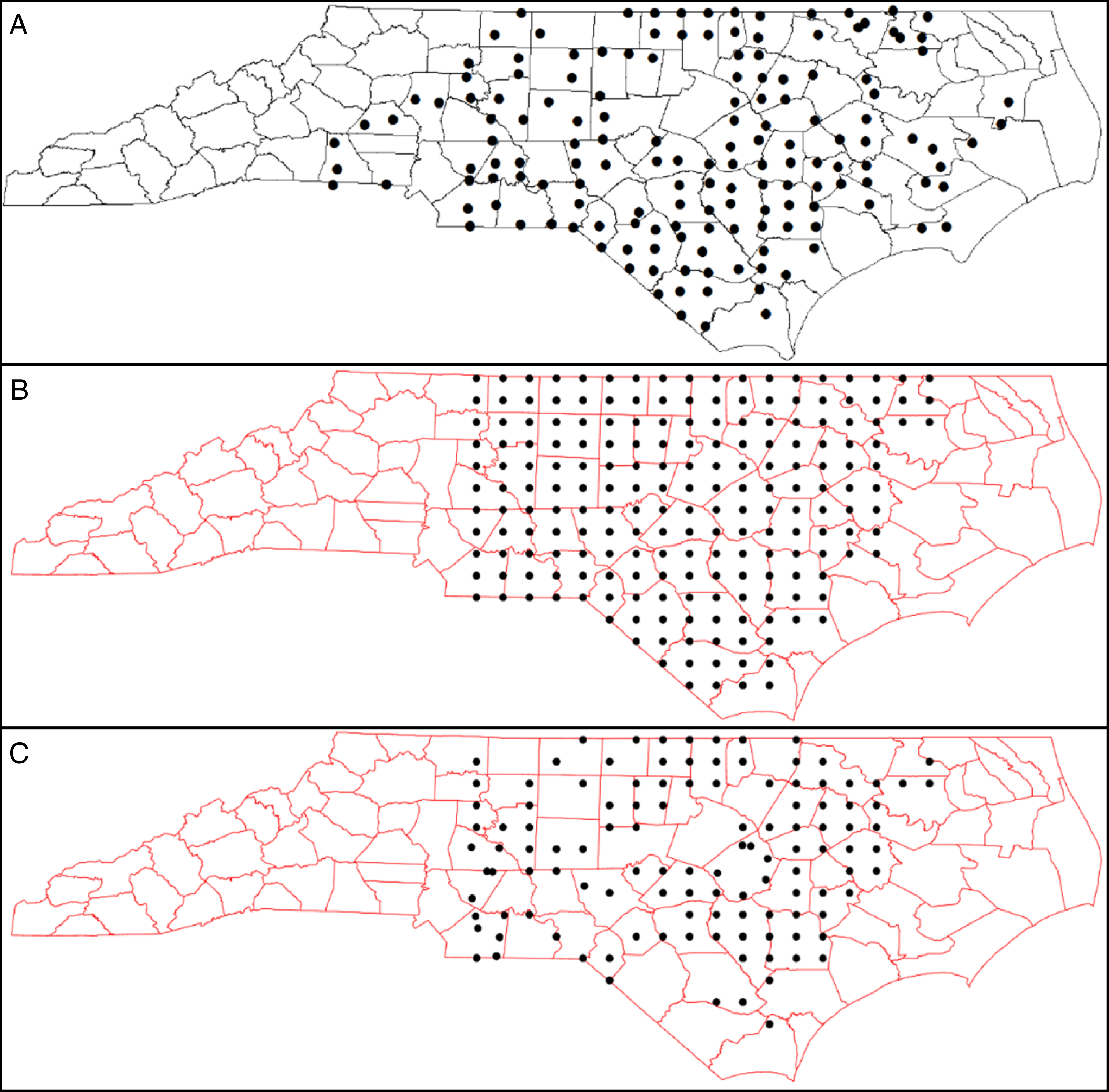
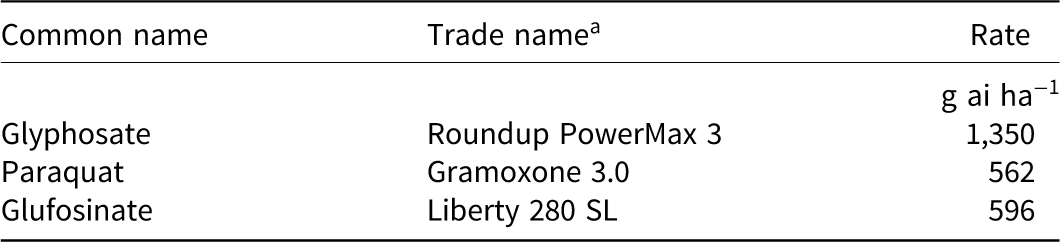
Seeds used for this study were selected from a previous survey conducted in 2012–2013, with samples and collection as described by Jones et al. (Reference Jones, Taylor and Everman2021). Seeds were collected from 155 fields (Figure 1A); however, only 102 of the collections were screened due to lack of germination. Studies were conducted in two separate greenhouses at the North Carolina State University Method Road Greenhouse in Raleigh. Italian ryegrass seeds were sown in 10-cm-square pots filled with Sunshine Mix #1 (Sun Gro Horticulture, Agawam, MA). One seedling was transplanted at the 1-leaf stage into individual cone-tainers measuring 3.8 cm in diameter and 21 cm deep. Supplemental greenhouse lighting consisting of 530 W grow lights (Total Grow Control, Alvin, TX) producing 800 µmol m-−2 s−1. Greenhouse conditions included 12-h photoperiods with a day/night temperature regime of 25/20 C. Once the plants reached the 4-leaf stage (approximately 23 cm), herbicides were applied with a CO2-presurrized sprayer calibrated to deliver 140 L/ha−1 of solution at 207 kPa using XR 11002 VS nozzles (TeeJet Technologies, Glendale Heights, IL). Treatments included a nontreated check, and applications of glyphosate (1,350 g ai ha−1), paraquat (562 g ai ha−1), and glufosinate (596 g ai ha−1) (Table 1). Rates were selected based on the rate recommended on the product labels. Treatments were organized into a completely randomized block design with four replications, and visual ratings were recorded at 14, 21, and 28 d after treatment (DAT). At each rating time, individual plants were given a control rating on a scale of 0% to 100% where 0% represented no control and 100% represented plant death.
Distribution of 155 Italian ryegrass populations collected in North Carolina in 2012 and 2013 (A). Location of predetermined sample points used for Italian ryegrass seed collection routes in 2022 (B), and the 115 populations collected (C).

Herbicides used to control Italian ryegrass populations collected in North Carolina in 2012 and 2013 surveys.

Table 1. Long description
A table comparing herbicide rates for controlling Italian ryegrass. The table has three columns and three rows, excluding the header row. The columns are labeled ‘Common name’, ‘Trade name’, and ‘Rate’. The rows list different herbicides and their respective trade names and rates. Row 1: Glyphosate, Roundup PowerMax 3, 1,350 g ai ha-1. Row 2: Paraquat, Gramoxone 3.0, 562 g ai ha-1. Row 3: Glufosinate, Liberty 280 SL, 596 g ai ha-1.
a Herbicide manufacturers: Roundup PowerMax 3, Bayer Crop Science, St. Louis, MO; Gramoxone 3.0, Syngenta, Greensboro, NC; Liberty 280 SL, BASF, Research Triangle Park, NC.
2022 Sample Collection
Italian ryegrass populations were selected at random by way of observation while surveying fields during a road trip in June 2022. A sampling grid was chosen using an atlas (North Carolina Atlas & Gazetteer, 9th ed, 2010; Delorme, Yarmouth, ME) where points were chosen on a longitudinal spacing of every 13 degree minutes, and a latitude spacing of every 10 degree minutes (Culpepper et al. Reference Culpepper, Whitaker, MacRae and York2008; Jones et al. Reference Jones, Taylor and Everman2021; Poirier et al. Reference Poirier, York, Jordan, Chandi, Everman and Whitaker2014). A total of 202 potential sample locations were distributed across the Piedmont and Coastal Plain regions of North Carolina (Figure 1B). Each sample point was visited, and an effort was made to collect Italian ryegrass seed heads from a wheat field within proximity to that point. If driving down several roads proved unsuccessful in a collection near a given point, that point was dropped, and travel continued to the next predetermined point. A total of 115 individual populations of Italian ryegrass were collected (Figure 1C). According to the U.S. Department of Agriculture (USDA), 194,250 ha of wheat were planted in 2022 with 151,760 being harvested (USDA-NASS 2023). These numbers are significantly smaller than 2012 when 311,610 ha were harvested (USDA-NASS 2012), which explains the reduction in number of sample points between 2012 and 2022. Methods used for collection involved stopping after identifying a field with Italian ryegrass seed heads present in the wheat, recording the sample location and field information on a brown paper sack, and placing the seed heads inside. An effort was made to go at least 30 m into the field to avoid collecting from the field border, with at least 20 seed heads collected from different plants while walking in a zig-zag pattern. Seed collections were taken to Method Road Weed Control Laboratories (Raleigh, NC) where they were left at room temperature in the paper sacks to effectively dry to aid in the threshing process. To thresh the seed from the chaff, seed samples were placed one at a time into a plastic container with a rubber mat with shallow grooves. A handheld piece of wood with the same rubber material attached was used to separate the seeds from the seedhead. A large sieve was then used to separate the seeds and the chaff. After threshing, seed samples were stored in a seed room (5 C) until greenhouse trial initiation.
Greenhouse Screening of 2022 Samples
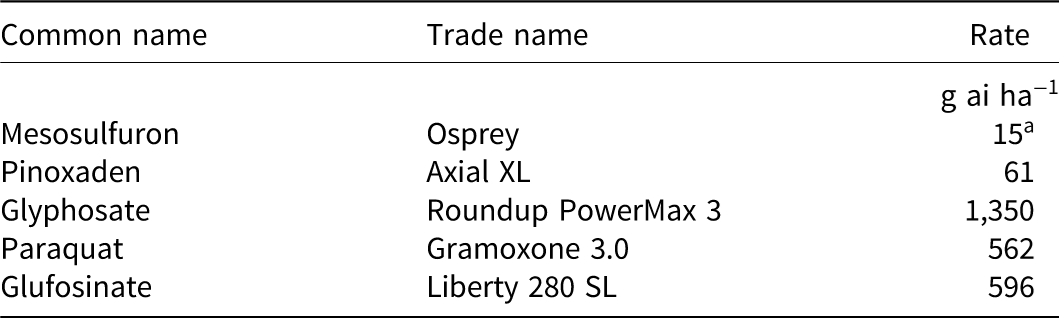
Greenhouse studies were conducted at Alexandria Launchlabs at the Alexandria Center for AgTech – Research Triangle in Durham,, and the North Carolina State University Method Road Greenhouse in Raleigh. Greenhouse lighting consisted of NXT light fixtures (P.L. Light Systems, Hamilton, ON, Canada) producing 800 µmol m−2 s−1 containing alternating 1,000 W high-pressure sodium and 1,000 W metal halide bulbs. Light length of day was 10 h with day/night temperature regime of 25/20 throughout the experiment. Italian ryegrass seeds were sown in 10-cm square pots filled with Sunshine Mix #1 (Sun Gro Horticulture). After the emergence of the first true leaf, one plant was transplanted to an individual cone-tainer (3.8 cm diameter by 21 cm deep) filled with Sunshine Mix #1 potting mixture. Plants were grown to the 4- to 5-leaf stage (18 cm). Treatments were applied using a research track booth sprayer (Devries Gen4 Research Track Sprayer) with TeeJet XR 8002 VS nozzles at 140 L ha−1 of solution at 207 kPa. The trial consisted of six treatments that included a nontreated check and applications of glufosinate (596 g ai ha−1), glyphosate (1,350 g ai ha−1), mesosulfuron (15 g ai ha−1), paraquat (562 g ai ha−1), and pinoxaden (61 g ai ha−1). A nonionic surfactant (Helena Agri-Enterprises, Collierville, TN) at 0.5% v/v plus ammonium sulfate (1,683 g ha−1) were included with mesosulfuron treatments. All herbicide rates (Table 2) were based on the recommended rates listed on the product labels for application to wheat cropping systems, either over-the-top or for preplant burndown (BASF 2023; Bayer 2020, 2021; Syngenta 2014, 2021). Visual control ratings were estimated at 7, 14, 21 and 28 DAT. At each rating time, individual plants were given a control rating on a scale of 0 to 100 where 0 represents no control and 100 represents plant death. Treatments were arranged as a completely randomized design with four replications and was repeated in time. Statistical analysis was performed using SAS software (v. 9.4; SAS Institute, Inc., Cary NC). Analysis of variance was determined using the GLIMMIX procedure. There was were no interactions, so control was averaged across replications and runs for each herbicide treatment.
Herbicide used to control Italian ryegrass populations collected in North Carolina in a 2022 survey.

Table 2. Long description
A table comparing herbicide rates used to control Italian ryegrass. The table has three columns and five rows, including the header row. The columns are labeled ‘Common name’, ‘Trade name’, and ‘Rate’. The ‘Rate’ column is measured in grams of active ingredient per hectare (g ai ha^-1). The rows list different herbicides with their common names, trade names, and corresponding rates. Row 1: Mesosulfuron, Osprey, 15. Row 2: Pinoxaden, Axial XL, 61. Row 3: Glyphosate, Roundup PowerMax 3, 1,350. Row 4: Paraquat, Gramoxone 3.0, 562. Row 5: Glufosinate, Liberty 280 SL, 596.
a Herbicide manufacturers: Osprey and Roundup PowerMax 3, Bayer CropScience, St. Louis, MO; Axial XL and Gramoxone 3.0, Syngenta Crop Protection, Greensboro, NC; Liberty 280 SL, BASF, Research Triangle Park, NC.
b A nonionic surfactant (0.5% v/v) (Induce; Helena Agri-Enterprises, Collierville, TN) and ammonium sulfate (1,683 g ha-1) were included with mesosulfuron applications.
Results and Discussion
Greenhouse Screening of 2012 Samples with Nonselective Herbicides
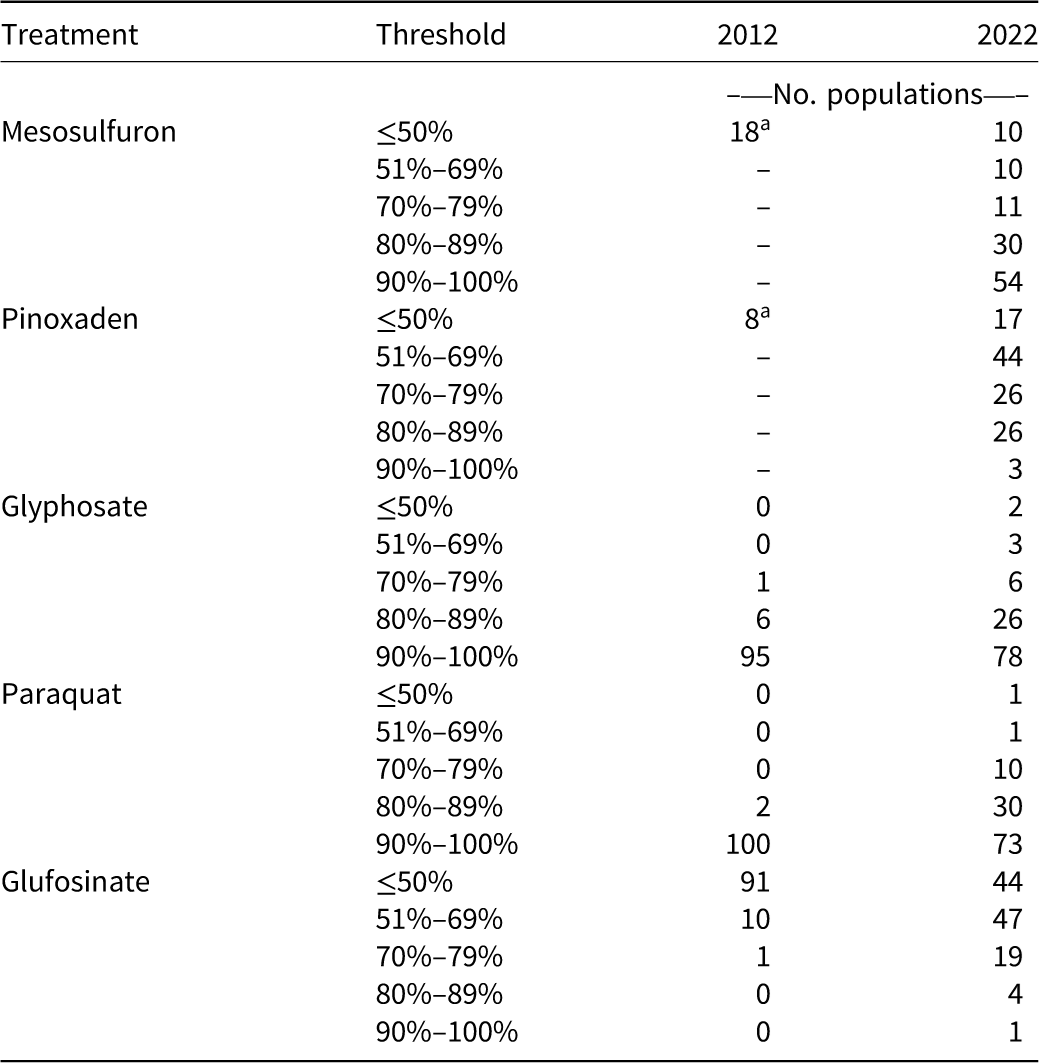
Italian ryegrass populations with an average of ≤50% control are considered to be resistant (Jones et al. Reference Jones, Taylor and Everman2021). Out of the 102 populations tested, none exhibited resistance to glyphosate and paraquat. However, 91 demonstrated putative resistance to glufosinate (Table 3). No populations exhibited <75% overall control when treated with glyphosate (Supplementary Table S1). One of the collections exhibited <80% control, whereas six were controlled by 80% to 89%, and 95 of the populations were controlled by >90%. These percentages suggest that although glyphosate resistance was confirmed prior to 2012, it was still effectively controlling Italian ryegrass populations that were surveyed in North Carolina in 2012.
North Carolina Italian ryegrass population response to postemergence herbicides. Thresholds represent traditional herbicide efficacy scales.

Table 3. Long description
A table comparing the response of Italian ryegrass populations to four herbicides (Mesosulfuron, Pinoxaden, Glyphosate, Paraquat, and Glufosinate) across different efficacy thresholds in 2012 and 2022. The table has five columns: Treatment, Threshold, 2012 No. populations, and 2022 No. populations. The Threshold column represents traditional herbicide efficacy scales, ranging from less than 50 percent to 90 percent to 100 percent. The 2012 and 2022 columns show the number of populations for each threshold. Row 1: Mesosulfuron, Threshold less than 50 percent, 2012 18, 2022 10. Row 2: Mesosulfuron, Threshold 51 percent to 69 percent, 2012 blank, 2022 10. Row 3: Mesosulfuron, Threshold 70 percent to 79 percent, 2012 blank, 2022 11. Row 4: Mesosulfuron, Threshold 80 percent to 89 percent, 2012 blank, 2022 30. Row 5: Mesosulfuron, Threshold 90 percent to 100 percent, 2012 blank, 2022 54. Row 6: Pinoxaden, Threshold less than 50 percent, 2012 8, 2022 17. Row 7: Pinoxaden, Threshold 51 percent to 69 percent, 2012 blank, 2022 44. Row 8: Pinoxaden, Threshold 70 percent to 79 percent, 2012 blank, 2022 26. Row 9: Pinoxaden, Threshold 80 percent to 89 percent, 2012 blank, 2022 26. Row 10: Pinoxaden, Threshold 90 percent to 100 percent, 2012 blank, 2022 3. Row 11: Glyphosate, Threshold less than 50 percent, 2012 0, 2022 2. Row 12: Glyphosate, Threshold 51 percent to 69 percent, 2012 0, 2022 3. Row 13: Glyphosate, Threshold 70 percent to 79 percent, 2012 1, 2022 6. Row 14: Glyphosate, Threshold 80 percent to 89 percent, 2012 6, 2022 26. Row 15: Glyphosate, Threshold 90 percent to 100 percent, 2012 95, 2022 78. Row 16: Paraquat, Threshold less than 50 percent, 2012 0, 2022 1. Row 17: Paraquat, Threshold 51 percent to 69 percent, 2012 0, 2022 1. Row 18: Paraquat, Threshold 70 percent to 79 percent, 2012 0, 2022 10. Row 19: Paraquat, Threshold 80 percent to 89 percent, 2012 2, 2022 30. Row 20: Paraquat, Threshold 90 percent to 100 percent, 2012 100, 2022 73. Row 21: Glufosinate, Threshold less than 50 percent, 2012 91, 2022 44. Row 22: Glufosinate, Threshold 51 percent to 69 percent, 2012 10, 2022 47. Row 23: Glufosinate, Threshold 70 percent to 79 percent, 2012 1, 2022 19. Row 24: Glufosinate, Threshold 80 percent to 89 percent, 2012 0, 2022 4. Row 25: Glufosinate, Threshold 90 percent to 100 percent, 2012 0, 2022 1.
a Numbers derived from Jones et al. (Reference Jones, Taylor and Everman2021). Only populations ≤50% were reported.
Applications of paraquat resulted in 90% to 100% control of all but two populations. Two of the collections were controlled by 80% to 89%, and 100 of the populations exhibited ≥90% control (Supplementary Table S1). These results are not surprising, given that glyphosate was still an effective option for growers in 2012, and paraquat was not used for burndown control of Italian ryegrass. Additionally, sample selection was likely skewed away from populations that were resistant to both glyphosate and paraquat, those that may survive a burndown application, because seeds for this survey were primarily collected from fields where wheat was being grown.
The majority of the Italian ryegrass collections were not affected by glufosinate. Out of 102 populations, 91 exhibited less than 50% control and would be considered resistant to glufosinate (Supplementary Table S1). Ten populations exhibited 51% to 69% control, and one exhibited 70% control. Glufosinate did not control any population by >70%. While additional studies should be conducted to determine actual resistance, this survey highlights the challenges in trying to control Italian ryegrass with glufosinate. In fact, glufosinate is not recommended for control of grass weed species, but a survey was needed to obtain a baseline for control because the herbicide is used in many burndown scenarios that target broadleaf weeds. Examining these historical populations with these nonselective herbicides allows for a comparison of resistance profiles for both sets of Italian ryegrass collections.
Greenhouse Screening of 2022 Samples
Of the 115 seed populations collected in 2022, 45 exhibited putative resistance to glufosinate, 17 to pinoxaden, 10 to mesosulfuron, 2 to glyphosate, and 1 exhibited putative resistance to paraquat (Supplementary Table S2).
Results of control with each herbicide can further be delineated into five different control levels: 90% to 100% control, 80% to 89% control, 70% to 79% control, 51% to 69% control, and ≤50%. These control levels are helpful in interpreting the variability of control for populations yet to be considered resistant.
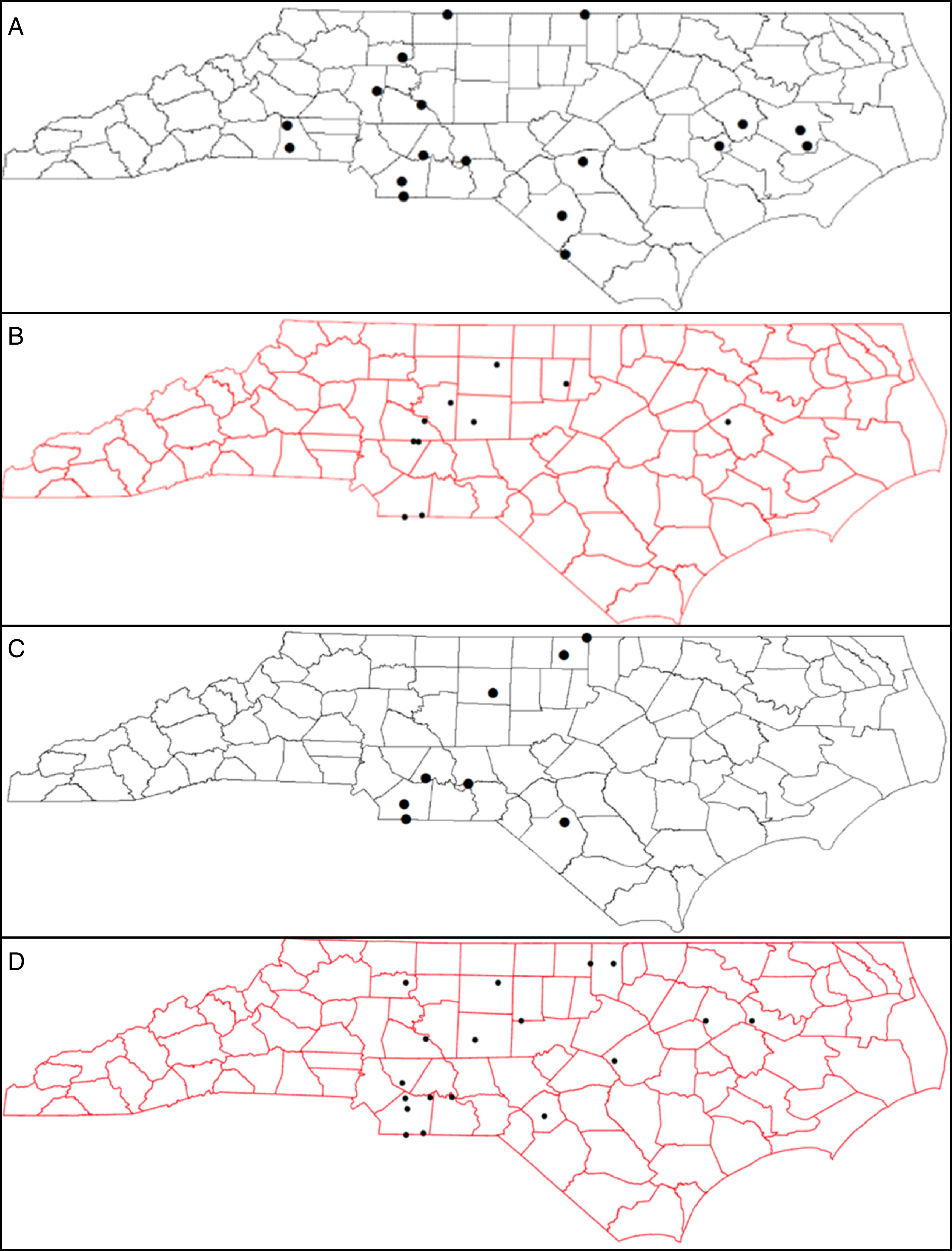
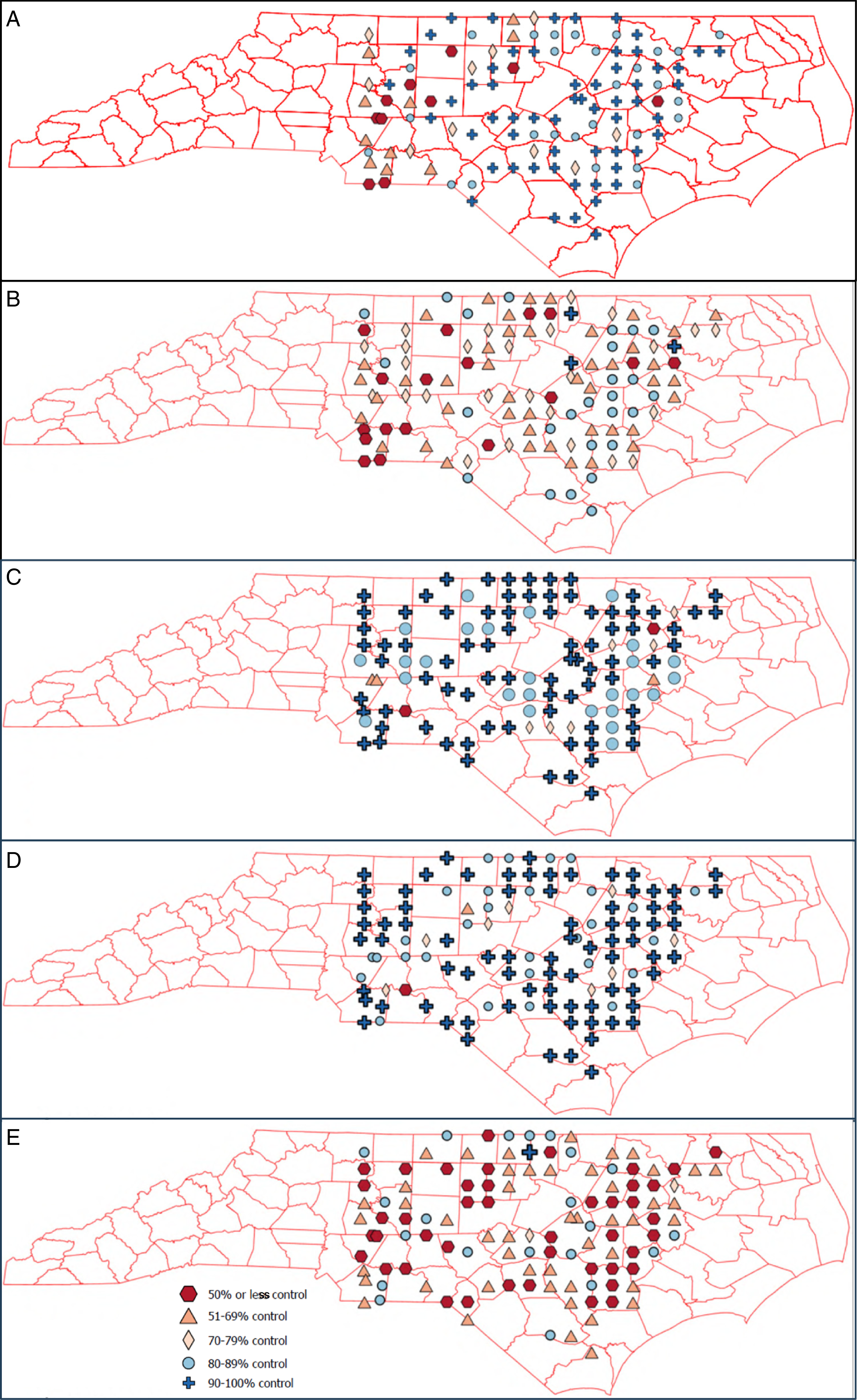
Ten populations were found to have resistance to mesosulfuron (Figure 2B). This is a lower than the 18 resistant populations reported by Jones et al. (Reference Jones, Taylor and Everman2021) in the 2012 survey (Figure 2A). Resistant populations from the 2022 survey were found in Cabarrus, Davidson, Guilford, Orange, Pitt, Randolph, Rowan, and Union counties (Supplementary Table S2). Two resistant populations were found in both Cabarrus and Union counties. Nine of these counties are considered to be in the Piedmont region of North Carolina, while Pitt County is located in the central Coastal Plains region. A key explanation as to why fewer resistant populations were observed in the 2022 survey is that nearly half as many hectares of wheat were planted in 2022 than in 2012 (USDA-NASS 2023), leading to a reduction in the likelihood of selecting seeds from fields with resistant populations in the survey. Aside from the 10 resistant populations, treatment with mesosulfuron resulted in 10 and 11 populations demonstrating 51% to 69% and 70% to 79% control, respectively (Figure 3A). Mesosulfuron provided 80% to 89% control of 30 populations and 90% to 100% control of 54 populations.
Maps of mesosulfuron resistant populations collected in 2012 (A) and 2022 (B). Maps of pinoxaden-resistant populations from 2012 (C) and 2022 (D).

Distribution maps demonstrating control of all Italian ryegrass populations with the herbicides mesosulfuron (A), pinoxaden (B), glyphosate (C), paraquat (D), and glufosinate (E).

The number of populations determined to be resistant to pinoxaden increased from 2012 to 2022. Pinoxaden provided <50% control of 17 populations of Italian ryegrass (Figure 2D). Jones et al. (Reference Jones, Taylor and Everman2021) reported eight populations with pinoxaden resistance (Figure 2C). The increase in pinoxaden-resistant populations is likely due to reduced control with ALS-inhibiting herbicides resulting in a widespread switch to pinoxaden. Although there has been a decrease in weed control with pinoxaden, resistant populations were distributed similarly from 2012 to 2022 with most of the resistant populations being found in the southern Piedmont and parts of the central and northern Piedmont regions. Counties with resistant populations include Anson, Chatham, Edgecombe, Granville, Guilford, Hoke, Johnston, Martin, Person, Randolph, Rowan, Union, and Yadkin (Supplementary Table S2).
Control with pinoxaden can be further delineated to show which populations were within each control range (Figure 3B). Pinoxaden treatment resulted in 51% to 69% control of 44 populations, 70% to 79% control of 26 populations, and 80% to 89% control of 26 populations. Pinoxaden provided control 90% to 100% of just three populations. While only 14% of the populations are considered to be resistant to pinoxaden, 75% were assigned a control rating of <80%. The three locations where >90% control was obtained were collected from Martin, Vance, and Wake counties. Vance and Wake counties both had <810 ha of wheat crops in 2022 (USDA-NASS 2023).
Although there has been an increase in reported failures of Italian ryegrass control with glyphosate (Everman, personal communication), only two populations were found to have resistance in the 2022 survey. While this finding is surprising, it is encouraging because it shows that glyphosate may still be effective when used properly. These two resistant populations were found in Anson and Edgecombe counties (Supplementary Table S2). Glyphosate provided 51% to 69% control of three populations of Italian ryegrass, 70% to 79% control of six, and 80% to 89% control of 26 populations (Figure 3C). Glyphosate provided 90% to 100% control of 79 populations of the weed. Glyphosate is not labeled for postemergence applications to wheat crops but is commonly used for spring and fall burndown purposes and as an over-the-top application to glyphosate-tolerant crops. The use of other postemergence herbicides on wheat might be reducing the selection pressure placed on Italian ryegrass populations, leading to effective control with glyphosate. Paraquat provided >80% control of 91% of the populations tested (Figure 3D). One population in Anson County was determined to be resistant to paraquat. This is the same area where paraquat-resistant Italian ryegrass was first confirmed in North Carolina and is located in the southern Piedmont. One other population in Alamance County was controlled by 51% to 69% (Supplementary Table S2). The 10 populations that demonstrated 70% to 79% control reveal that paraquat is no longer completely effective. Paraquat is not applied postemergence to wheat crops but is an effective burndown product. Results differ from a more localized survey in Union and Stanly counties in 2022, where 11 and 23 populations, respectively, survived applications of the maximum labeled rates of paraquat and glyphosate (de Sanctis et al. Reference de Sanctis, Cahoon, Everman, Gannon, Jennings and Taylor2025a). This evidence supports the idea that a large state-wide survey may not encompass every resistant population found across the entire state; however, it is still useful in identifying regions where herbicide resistance might be more prevalent.
Glufosinate is not widely considered to be effective against grass weeds and is not recommended for control of Italian ryegrass. However, growers often apply glufosinate where glyphosate or paraquat have given unfavorable results when used for burndown purposes, or where weeds persist among emerged crops. This survey included glufosinate as a benchmark to identify how well it controls Italian ryegrass. Forty-five populations exhibited <50% control when glufosinate was applied. And additional 47 populations exhibited 51% to 69% control, and 19 populations exhibited 70% to 79% control (Supplementary Table S2). Only five of the 115 populations were controlled >80% by glufosinate (Figure 3E). Based on these results, growers should not rely on glufosinate as a primary control method for Italian ryegrass.
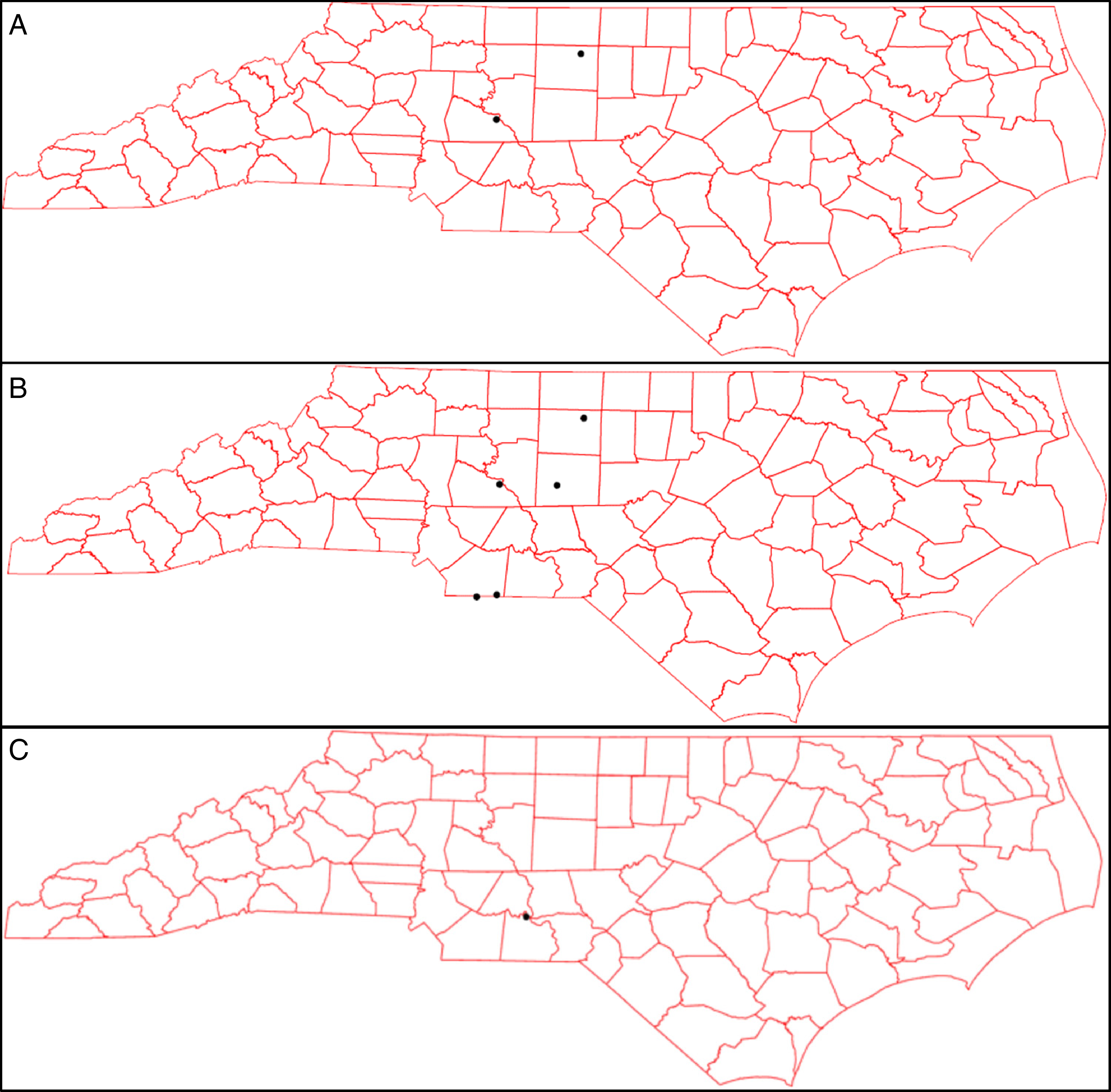
Multiple herbicide resistance was found in a variety of combinations. There was one three-way resistance combination and four two-way resistance combinations. Two populations were found to have three-way resistance to glufosinate, mesosulfuron, and pinoxaden (Figure 4A). These populations were from Guilford and Rowan counties. Five populations from Guilford, Rowan, and Randolph counties exhibited multiple resistance to both mesosulfuron and pinoxaden (Figure 4B). They were Two populations collected in Union County were also resistant to both herbicides. Jones et al. (Reference Jones, Taylor and Everman2021) reported four populations with multiple resistance to both ALS- and ACCase-inhibiting herbicides; however, all four were concentrated in the southern Piedmont region (Richmond, Stanly, and Union counties). While only one additional population was found in the 2022 survey, three of these populations were found north of where they were reported in 2012, showing a spread in distribution of multiple resistance to ALS- and ACCase-inhibiting herbicides. Additional multiple-resistant combinations included five populations with resistance to glufosinate and mesosulfuron, nine with resistance to glufosinate and pinoxaden, and one with resistance to glufosinate and glyphosate.
Locations of multiple-resistant Italian ryegrass populations found in a 2022 survey in North Carolina. A: Distribution of populations with three-way resistance to mesosulfuron, pinoxaden, and glufosinate. B: Distribution of populations with two-way resistance to mesosulfuron and pinoxaden. C: A population with four-way resistance to glufosinate, glyphosate, paraquat, and pinoxaden.

One population demonstrated multiple resistance to glufosinate, glyphosate, paraquat, and pinoxaden (Figure 4C). Located in Anson County, this four-way resistant population was collected in the same region as the population that was confirmed to have four-way resistance to clethodim, glyphosate, nicosulfuron, and paraquat (de Sanctis et al. Reference de Sanctis, Cahoon, Everman, Gannon, Jennings and Taylor2025a; Heap Reference Heap2026). The southern Piedmont region, specifically Union and Anson counties, is a predominate wheat-growing region (USDA-NASS 2023), therefore it is reasonable that more resistant populations can be found there than in other regions of the state. This increased resistance could be due to high selection pressure, and little chemistry rotation. Additionally, the large emphasis on no-till cropping across the Piedmont leaves farmers to rely more heavily on applying herbicides for burndown purposes, adding to the selection pressure.
This research is important because it can be used as an educational tool for growers to know what does not work, and what may still be working in terms of effective weed control in wheat. It has been 10 yr since the previous survey, which adds value because resistance profiles can be tracked over time. This allows for a better understanding of developing resistances in different weed populations to aid in making more informed decisions when it comes to herbicide recommendations. Although herbicides such as glyphosate and paraquat are still effective in controlling Italian ryegrass, it is vital to incorporate other chemical formulations into a rotation to create a well-rounded herbicide program. Glufosinate is not recommended where Italian ryegrass control is needed. The increased resistance to all herbicides shows that a strong preemergence program is necessary to reduce weed competition. Alternative weed control methods should also be considered, such as using cover crops in combination with residual herbicides that can suppress Italian ryegrass growth and seed production. Further research can help broaden the understanding of the effectiveness of herbicides in North Carolina. Additional confirmation of resistance to preemergence herbicides is needed to demonstrate their effectiveness, specifically very-long-chain fatty acid inhibitors and PPO inhibitors. Additional research should include screening for cross resistance to multiple herbicides with the same mode of action, mainly to observe the differences in control among the dims, dens, and fops that constitute the family of ACCase inhibitors.
Practical Implications
Results of this survey have been incorporated into North Carolina Extension presentations to inform growers of the impending threat caused by herbicide-resistant populations of Italian ryegrass. Maps from 2012 emphasizes that resistance has become more predominant due to decades of selection pressure via the use of various herbicides. While some herbicides still remain effective, resistance to others is prevalent, which emphasizes the importance of proper herbicide stewardship and best management practices (Norsworthy et al. Reference Norsworthy, Ward, Shaw, Llewellyn, Nichols, Webster, Bradley, Frisvold, Powles, Burgos, Witt and Barrett2012). Growers are encouraged to “start clean” when planting a crop; however, many growers run no-till operations. This puts heavy pressure on burndown herbicides. Farmers are encouraged to adopt an integrated weed management strategy that includes the use of preemergence herbicides (Bond et al. Reference Bond, Eubank, Bond, Golden and Edwards2014). Research performed in North Carolina by de Sanctis et al. (Reference de Sanctis, Cahoon, Everman, Gannon, Jennings, Taylor, Dean, Forehand and Lee2025b) revealed that Italian ryegrass growth and germination can be suppressed when preemergence herbicides are incorporated with the use of cover crops. Understanding the distributions of known herbicide resistance helps convey these messages to growers and emphasizes how essential it is to act now rather than wait until it is too late.
Supplementary material
To view supplementary material for this article, please visit https://doi.org/10.1017/wet.2026.10137
Acknowledgments
We thank Eric Jones for help with materials and methods; and Ronel Argueta, Colden Bradshaw, Camila Montoya, Edgar Posadas and the North Carolina Cooperative Extension agents for their help in collecting and processing Italian ryegrass seed heads. We also thank Chad Brommer with Harpe Bioherbicide Solutions and Alexandria LaunchLabs in Research Triangle Park for providing greenhouse space to accommodate the surveys.
Funding
This project was funded by the North Carolina Small Grain Growers Association.
Competing Interests
The authors declare They have no competing interests.


 Open access

