Introduction
A growing number of studies relates the consumption of tannin-rich plants by small ruminants with the regulation of their gastrointestinal (GI) nematode populations. This could reduce dependence on conventional chemotherapy, to which many parasite species have developed resistance, and facilitate the sustainable control of GI nematode parasitism (Githiori et al., Reference Githiori, Athanasiadou and Thamsborg2006; Hoste et al., Reference Hoste, Jackson, Athanasiadou, Thamsborg and Hoskin2006). Parasite-infected goats that consume moderate quantities of tannin-containing plants show improved resistance and resilience to parasites, and significant decreases in faecal egg counts (FEC) and parasite burden (Min et al., Reference Min, Hart, Miller, Tomita, Loetz and Sahlu2005; Paolini et al., Reference Paolini, De La Farge, Prevot, Dorchies and Hoste2005; Osoro et al., Reference Osoro, Benito-Peña, Frutos, García, Ortega-Mora, Celaya and Ferre2007a and Reference Osoro, Mateos-Sanz, Frutos, García, Ortega-Mora, Ferreira, Celaya and Ferre2007b). Goats can, however, also experience the anti-nutritional effects of tannins (e.g. Silanikove et al., Reference Silanikove, Gilboa and Nitsan1997; Ben Salem et al., Reference Ben Salem, Ben Salem, Nefzaoui and Ben Saïd2003).
It is widely accepted that the consumption of tannins by parasitized animals may result in either favourable or detrimental net effects depending on whether or not the positive anthelmintic action of these plant secondary metabolites outweighs their negative nutritional cost to the host (Houdijk and Athanasiadou, 2003). Nevertheless, some tannins have also been reported as capable of producing a positive nutritional effect when consumed in moderate concentrations, which is associated with the reduction of dietary protein degradation in the rumen (Barry and McNabb, Reference Barry and McNabb1999; Mueller-Harvey, Reference Mueller-Harvey2006).
Earlier studies (Osoro et al., Reference Osoro, Benito-Peña, Frutos, García, Ortega-Mora, Celaya and Ferre2007a and Reference Osoro, Mateos-Sanz, Frutos, García, Ortega-Mora, Ferreira, Celaya and Ferre2007b) showed that grazing goats on a diet supplemented with tannin-containing heather had a lower FEC and a better performance, in comparison with animals on non-supplemented diets. On the basis of those studies, we hypothesized that the beneficial anthelmintic effect of the consumption of moderate amounts of tannins might not always be accompanied by marked anti-nutritional effects in goats. Two experiments were conducted to test this hypothesis. The first was performed under farm conditions in a less-favoured mountainous region of Spain where grazing animals are raised extensively and form part of the dynamics of the natural ecosystem. The second experiment involved an in vitro assay, with batch cultures of rumen microorganisms, to further investigate the nutritional effects of the inclusion of heather in the diet observed in the first.
Material and methods
Experiments 1 and 2 were performed in accordance with Spanish Royal Decree 1201/2005 for the protection of animals used for experimental and other scientific purposes.
Experiment 1 (in vivo)
Experimental site
This experiment was conducted in a mountainous area (altitude 1000 m) of northwestern Spain (6°53′W, 43°21′N; Sierra de San Isidro, Illano, Asturias) dominated by shrubby heather-gorse vegetation. Improved pastures were established in 2001 by removing the shrubs present and sowing perennial ryegrass (Lolium perenne L.) and white clover (Trifolium repens L.). A plot of approximately 20 000 m2 previously managed homogeneously was divided into two identical plots of approximately 10 000 m2 to accommodate all the animals used in this experiment.
During the experimental grazing season (May to September), the mean monthly rainfall ranged from 48 mm in August to 133 mm in September. The maximum and minimum temperatures were recorded in September (31°C) and May (2°C), respectively, the mean average monthly values ranging between 11.8°C in May and 17.8°C in July.
Animals and experimental design
Forty-eight lactating Cashmere goats (weighing 36.8 ± 1.13 kg at the beginning of the trial), balanced for live body weight (BW) and body condition score (BCS), were randomly assigned, together with their single kids, to one of two treatments: supplementation with heather (+H) and non-supplementation (−H). Each group was confined to one of the two plots of pasture (containing no heather, as explained above) of approximately 10 000 m2 for the whole grazing season. The +H goats were offered, in the morning and once every 3 days, freshly cut heather ad libitum; the −H goats received no supplement. All animals were reared outdoors under farm conditions (i.e. not preventing nematode infection).
Two weeks before the experiment started, all animals were orally treated against GI nematodes with ivermectin (Oramec, Merial, Lyon, France) at about twice the recommended dose (2 mg/kg of BW). The animals were turned out on the pastures on 19 April and left grazing until 10 September.
Sampling procedures and analyses
Pasture: To monitor grass availability, the sward surface height was measured every 10 to 15 days using an HFRO swardstick (Barthram, 1986), taking 200 measurements at random in each plot. The botanical composition of the pasture was assessed in August using a point quadrat (Grant, Reference Grant1981) and recording 200 vertical hits per plot. Pasture samples collected in August were analysed for dry matter (DM; ISO 6496:1999), organic matter (OM; ISO 5984:2002) and crude protein (CP; ISO 5983-2:2005). Neutral and acid detergent fibre (NDF and ADF) and acid detergent lignin (ADL) were determined by the method of Goering and Van Soest (Reference Goering and Van Soest1970) and Van Soest et al. (Reference Van Soest, Robertson and Lewis1991).
Heather
The species composition of the heather offered to the goats was assessed in August by recording 100 random contacts with the HFRO swardstick over the area where the heather was cut. Green shoots of this heather (less than 3 mm in diameter) were collected for chemical analysis. The nutritive quality (DM, OM, CP, NDF, ADF and ADL) was analysed following the same procedures as used to analyse the pasture. The total phenol (TP) and total tannin (TT) contents of the heather offered to the goats were determined using the Folin–Ciocalteu assay in combination with polyvinyl–polypyrrolidone, using tannic acid (Merck, Damstadt, Germany) as the reference standard (Makkar, Reference Makkar2003).
Diet selection
In August, half of the +H animals were randomly chosen and subjected to estimations of the percentage of heather incorporated into the diet using n-alkane markers (Ferreira et al., Reference Ferreira, Oliván, García, Rodrigues and Osoro2005). Samples of pasture, heather and faeces were collected and calculations performed using a least-squares optimization procedure, which minimizes the discrepancies between the actual concentration of alkanes in faeces (adjusted for incomplete faecal recoveries using the recovery values obtained by Ferreira et al. (Reference Ferreira, Oliván, García, Rodrigues and Osoro2005)) and the estimated proportion in the diet.
Parasitological procedures
Approximately once per month between May and September, spot samples of goat faeces were individually collected by rectal grab to assess GI nematode egg excretion. The number of eggs per gram (epg) of faeces (FEC) was estimated using the modified McMaster technique (MAFF, 1978) with sodium chloride as the flotation medium, in which every egg is regarded as equivalent to 15 epg fresh faeces. Faecal cultures were performed for each group by pooling samples from the different individuals as described by MAFF (1978) and the genus of third-stage nematode larvae was identified according to Van Wyk et al. (Reference Van Wyk, Cabaret and Michael2004).
Body weight and body condition score
All animals were weighed and their BCS assessed on a scale of 1 to 5 (1 = emaciated, 5 = fat; Russel, Reference Russel1990), at the beginning and end of the experiment and at monthly intervals.
Ruminal fermentation variables
In August, after an overnight fast, a sample of ruminal fluid was individually collected from each goat via a stomach tube and visually checked to ensure that it did not contain saliva. Immediately afterwards, each fluid was strained through two layers of gauze and 4 ml was acidified with 4 ml 0.2 N HCl for ammonia determination. A further aliquot of 0.8 ml was added to 0.5 ml of a deproteinizing solution (2% metaphosphoric and 0.4% crotonic acids (wt/vol) in 0.5 N HCl) for determination of volatile fatty acid (VFA). All samples (two per animal and parameter to be analysed) were stored at −30°C until analysis. The ammonia concentration was determined by colorimetry and VFA by gas chromatography, using crotonic acid as the internal standard, both in centrifuged samples (Frutos et al., Reference Frutos, Hervás, Giráldez and Mantecón2004).
Mortality rate
Goats were daily checked for clinical signs of illness. When an animal was considered terminally ill, it was humanely euthanized and complete post mortem examination was performed to discard mortality for other causes.
Statistical analysis
Sward height, FEC, BW and BCS data were analysed by repeated measures analysis using the MIXED procedure of the Statistical Analysis System program (SAS, 1999). The first measurement in May was used as the covariate. For FEC, BW and BCS, the animals were nested within the treatment to provide the error term to contrast the effect of heather supplementation. Data on FEC were log-transformed (log10x + 1) to normalize their distribution.
The rumen variables were analysed by one-way analysis of variance (ANOVA), using the GLM procedure. The mortality rate was analysed using the χ 2 test (SAS, 1999).
Significant differences were declared at P < 0.05 and tendencies at P < 0.10.
Experiment 2 (in vivo–in vitro)
Animals and diets
Nine non-lactating Cashmere goats (28.3 ± 2.30 kg BW) were used in this experiment, which was performed at an experimental research station. Animals were individually fed a mixture of alfalfa and grass hays (AGH; 18 g DM/kg of BW) once a day over a 14-day period. They were then switched to a diet containing 71% of the same mixture of hays and 29% heather (AGH + H; 18 g DM/kg of BW) for 12 more days. The heather was collected from the same area as in Experiment 1. These diets (treatments) were designed on the basis of the outcome of diet selection (see results from Experiment 1), to experimentally simulate the −H and +H treatments.
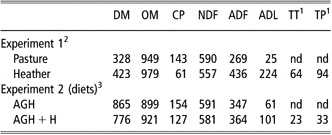
Table 1 shows the chemical composition of the mixture of grass and alfalfa hays and of the heather used in this experiment.
Chemical composition (g/kg of DM, except for DM itself (g/kg of fresh matter)) of feeds and diets used in Experiments 1 and 2

DM = dry matter; OM = organic matter; CP = crude protein; NDF = neutral detergent fibre; ADF = acid detergent fibre; ADL = acid detergent lignin; TT = total tannins; TP = total phenols; nd = not determined.
1g tannic acid equivalents/kg of DM.
2Samples collected in August.
3AGH = alfalfa and grass hays; AGH + H = alfalfa and grass hays (71%) + heather (29%).
In vitro ruminal fermentation
The effect of the diet on in vitro ruminal fermentation was studied in four runs of incubation using a modification of the gas production technique described by Theodorou et al. (Reference Theodorou, Williams, Dhanoa, McAllan and France1994). On day 12 of the experiment, after an overnight fast, ruminal fluid was collected from each animal by stomach tube (as in Experiment 1). The collected samples were transferred to the laboratory in pre-warmed thermos flasks, strained through a double layer of muslin, and kept under CO2 flushing. The nine inocula were mixed to form a single inoculum (run 1). The whole process was repeated on day 14 to obtain the replicate (run 2). When the goats received the heather-containing diet, rumen fluids were again withdrawn on days 24 (run 3) and 26 (run 4).
Samples of the pasture and heather collected in August during Experiment 1, ground through a 1-mm screen, were used to provide two substrates: pasture (P; 100% pasture) and pasture + heather (P + H; 71% pasture and 29% heather). A third substrate (P + H + PEG) was prepared by adding 1 g per flask of a tannin-binding agent (polyethylene glycol, PEG, MW 6000; Fluka Chemie GmbH, Buchs, Switzerland) – which inhibits the effect of tannins (Makkar, Reference Makkar2003) – to the P+H substrate. The large quantity of PEG was chosen because the efficiency of this agent is believed to depend on the tannins/PEG ratio, and to avoid the possibility that too small an amount of this inert compound might be associated with a lack of effect.
Each incubation run included a total of twelve 125 ml sealed serum flasks. Three samples of each substrate (≈500 mg) and three blanks (i.e. buffered rumen fluid without substrate) were incubated at 39°C with 10 ml rumen fluid and 40 ml phosphate–bicarbonate buffer. The buffer solution was prepared as described by Goering and Van Soest (Reference Goering and Van Soest1970), with the exception that no trypticase was added.
Gas production was determined by measuring headspace gas pressure at 24 h post inoculation. Pressure values, corrected for the quantity of substrate OM incubated and gas released from the blanks, were used to generate gas volume estimates using a predictive equation derived from earlier simultaneous pressure and volume measurements (Hervás et al., Reference Hervás, Frutos, Giráldez, Mora, Fernández and Mantecón2005). Immediately afterwards, the fermentations were ended by swirling the bottles on ice. The samples were then centrifuged at 976 × g for 10 min and aliquots of the supernatant collected for ammonia and VFA determinations as in Experiment 1.
In vitro DM disappearance (DMD; g/kg) and in vitro true substrate digestibility (ivTSD) after 24 h of incubation were estimated by filtering the residues using pre-weighed sintered glass crucibles (100 to 60 μm; Pyrex, Stone, UK) and determining the NDF content, as reported in Frutos et al. (Reference Frutos, Hervás, Giráldez and Mantecón2004).
Chemical analyses
All chemical analyses were performed as in Experiment 1.
Statistical analysis
Data for in vitro ruminal variables were analysed by one-way ANOVA, using the GLM procedure of the Statistical Analysis System program (SAS, 1999) to examine the effects of the two main sources of variation, goat diets and substrates, as well as their interaction. The mean value of each set of three flasks per substrate and run was considered as the experimental unit. Significance was set at P < 0.05; trends were declared at P < 0.10.
Results
Experiment 1
Sward height, and pasture and heather botanical and chemical composition
As shown in Figure 1, the available sward height differed significantly between treatments, with greater values being recorded in the pasture used by the +H animals (P < 0.001). Mean sward height gradually fell from 10.2 cm at the beginning of the experiment (May) to 3.7 cm at the end (September) (P < 0.001).
Faecal gastrointestinal nematode egg counts (FEC; eggs/g; solid lines —) and sward height (cm; short-dash lines - - -) over the experimental season in grazing goats whose diets were supplemented – or not – with heather. Mean log-transformed FEC values = 2.20 v. 2.66 eggs/g for supplemented v. non-supplemented animals (s.e.d. = 0.115; P < 0.001), and mean sward heights = 6.8 v. 5.7 cm for supplemented v. non-supplemented animals (s.e.d. = 0.07; P < 0.001) (s.e.d. = standard error of the differences of means).

The botanical composition of the available pasture in August was on average 6.8% white clover, 21.9% perennial ryegrass, 43.1% other grasses (mainly Agrostis capillaris L.) and 27.9% dead matter, with no differences between treatments. The chemical composition of the pasture samples taken in August showed a CP content of 143 g/kg of DM, and values for NDF, ADF and ADL of 590, 269 and 25 g/kg of DM, respectively (Table 1).
The heather offered was mostly composed of Calluna vulgaris (L.) Hull (61%), with 25% Erica umbellata L., 12% E. cinerea L., 1% E. tetralix L. and 1% Daboecia cantabrica (Hudson) C. Koch. Chemical composition analysis showed a lower CP content (61 g/kg of DM) and greater cell wall content (557, 436 and 224 g/kg of DM for NDF, ADF and ADL, respectively), as expected for shrub species. TP and TT contents were estimated to be 94 and 64 g tannic acid equivalents/kg of DM, respectively (Table 1).
Diet composition
The mean percentage of heather incorporated into the diet of the +H animals was 29.1% (±2.06%) in August. The remaining 70.9% corresponded to herbaceous species.
Faecal egg counts and goat mortality
Supplementation with heather reduced the mean FEC (P < 0.001; see Figure 1); values ranged from 15 epg at the beginning of the trial to a maximum of 2653 epg at the end of August. The −H goats with the greatest FEC in the two samplings performed in August died before the September sampling (seven in total), which explains the reduction seen in Figure 1. Supplementation with heather significantly reduced the mortality rate (P < 0.05): at the end of the grazing period, two +H and eight −H does had to be euthanized.
The nematode genera identified were Trichostrongylus, Teladorsagia and Oesophagostomum. Trichostrongylus was the predominant genus (60% to 95%) over the entire experimental period; Teladorsagia and Oesophagostomum were detected in lower percentages (5% to 25%).
Live weight and body condition changes
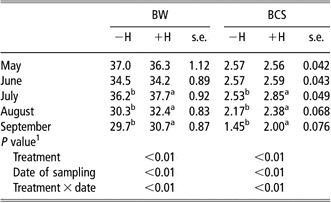
Table 2 shows that heather supplementation was responsible for the smaller losses of live BW (P < 0.01) and BCS (P < 0.01) recorded over the experimental grazing season in the +H animals.
Body weight (BW, kg) and body condition score (BCS) during the experimental grazing period (from May to September) in goats supplemented (+H) or not (−H) with heather

s.e. = standard error of the mean.
1Probability value.
a,bFor each variable, means in a row with a different superscript differ significantly (P < 0.05).
Ruminal fermentation variables
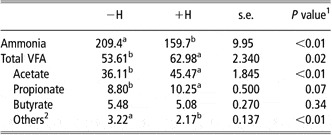
Table 3 shows the ammonia and VFA concentrations in the ruminal fluid of the experimental animals. The rumen ammonia concentration was markedly reduced in the goats receiving tannin-containing heather (P < 0.01). On the contrary, total VFA concentration was significantly greater in these animals (P < 0.05), mainly due to an increase in acetic acid (approximately 26%) but also in propionic acid (approximately 16%). The concentrations of valerate and branched VFAs (referred to as ‘others’ in Table 3), however, decreased. The molar proportions of VFA (data not shown) were also modified by supplementation with heather (P < 0.001), with increases in acetate and reductions in butyrate, valerate and branched VFAs.
Ammonia (mg/l) and volatile fatty acid (VFA, mmol/l) concentrations in the ruminal fluid of grazing goats whose diets were supplemented (+H) or not supplemented (−H) with heather

s.e. = standard error of the mean.
1Probability value.
2Calculated as the sum of valerate, isovalerate, isobutyrate and caproate.
a,bMeans in a row with a different superscript differ significantly (P < 0.05).
Experiment 2
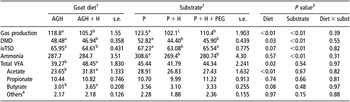
As shown in Table 4, significant differences in gas production, DMD, ivTSD, and ammonia and VFA concentrations were observed due to both goat diet (i.e. including or not heather: AGH v. AGH + H) and substrates incubated. However, no significant interaction (diet × substrate) was found for any in vitro rumen fermentation variables (P > 0.10).
Gas production (ml/g OM), dry matter disappearance (DMD; g/100 g), in vitro true substrate digestibility (ivTSD; g/100 g), ammonia (mg/l) and VFA concentration (mmol/l) in batch cultures after 24 h incubation

s.e. = standard error of the mean.
1AGH = alfalfa and grass hays; AGH + H = alfalfa and grass hays (71%) + heather (29%).
2P = pasture; P + H = pasture (71%) + heather (29%); PEG = polyethylene glycol.
3Probability value.
4Calculated as the sum of valerate, isovalerate, isobutyrate and caproate.
a,b,cFor each source of variation (goat diet or substrate), means in a row with a different superscript differ significantly (P < 0.05).
Cultures with rumen inoculum derived from goats receiving the heather-containing diet (AGH + H) showed slightly lower values of DMD (−3%), ivTSD (−2%) and gas production (−11%) compared with cultures from AGH animals. On the contrary, those incubations (AGH + H) returned greater values of total VFA (23%), mainly accounted for by greater concentrations of acetate (34%) and butyrate (21%). The molar proportions of VFA (data not shown) tended to be modified by the incorporation of heather into the diet (P < 0.10), with increases in acetate and reductions in propionate, and valerate and branched VFAs (referred to as ‘others’ in Table 4).
Differences among substrates (P < 0.01) were observed in terms of gas production, DMD, ivTSD and ammonia concentrations, the greatest values always being found for the P substrate and the lowest for the P + H substrate. When PEG was added to the mixture (P + H + PEG), gas production and ivTSD were significantly increased. However, the addition of PEG did not significantly inhibit the negative effect of heather on DMD and ammonia concentration.
No significant differences among substrates were observed for the concentration of any particular VFA.
Discussion
The control of GI parasites with anthelmintics is becoming increasingly difficult worldwide due to drug resistance and concerns over pesticide residues in the food chain and the general environment (Van Houtert and Sykes, Reference Van Houtert and Sykes1996). Thus, the greater variety of control methods used in combination, the longer we can expect to have effective worm control. The use of tannin-containing plants has proven effective in the control of GI parasite infections, as confirmed in this study where supplementing the diets of grazing goats with tannin-containing heather significantly reduced FEC (see Figure 1). This is in line with previous reports for the same area by Osoro et al. (Reference Osoro, Benito-Peña, Frutos, García, Ortega-Mora, Celaya and Ferre2007a and Reference Osoro, Mateos-Sanz, Frutos, García, Ortega-Mora, Ferreira, Celaya and Ferre2007b). However, the mean FEC values (as high as 2652 epg) were notably different from those found in the above papers, which is almost certainly related to the effect of climatic conditions on parasite infections (Stromberg, Reference Stromberg1997).
Several authors have reported that the intake of low-to-moderate quantities of condensed tannins (CTs) may have beneficial effects on parasitized ruminants. For example, we reported reductions in FEC of up to 75%, compared with control goats, in an experiment that included supplementation with heather containing between 7% and 8.6% tannin (expressed in tannic acid equivalents; Osoro et al., Reference Osoro, Mateos-Sanz, Frutos, García, Ortega-Mora, Ferreira, Celaya and Ferre2007b). Butter et al. (Reference Butter, Dawson, Wakelin and Buttery2000) observed a reduction in FEC when 5% of a commercial extract of quebracho (Schinopsis spp.) CTs was included in a low protein diet. Min et al. (Reference Min, Hart, Miller, Tomita, Loetz and Sahlu2005) reported a great reduction in FEC when does were fed Sericea lespedeza (Lespedeza cuneata) containing 15.2% tannins (using an internal standard from the plant itself as the reference).
In the present study, FEC reduction was achieved with the dietary incorporation of an estimated 29% heather containing 6.4% tannin (which may be considered a low-to-moderate intake of tannins). The lowest dietary tannin threshold needed for anthelmintic effects remains unclear, however. Moreover, it should be remembered that different plants contain tannins with different structures and hence reactivities, so the notion of a ‘low-to-moderate’ content could be misleading. In addition, different research groups use different methods to analyse this large group of phenolic compounds, but the equivalents in which the tannin content are expressed (e.g. tannic acid, internal standards extracted from the plants themselves, etc.) are not always given, which means that comparisons cannot be made (Makkar, Reference Makkar2003; Álvarez del Pino et al., Reference Álvarez del Pino, Hervás, Mantecón, Giráldez and Frutos2005).
A number of investigations have focused on the potential use of CTs to control GI parasitism because these are relatively stable in the digestive tract of ruminants and rarely have toxic effects (Mueller-Harvey, Reference Mueller-Harvey2006). CTs may affect protein nutrition by reducing dietary protein degradation in the rumen, thus enhancing the amount of protein available for digestion in the small intestine (Barry and McNabb, Reference Barry and McNabb1999; Frutos et al., Reference Frutos, Hervás, Giráldez, Fernández and Mantecón2000; Mueller-Harvey, Reference Mueller-Harvey2006). According to Coop and Kyriazakis (Reference Coop and Kyriazakis2001), protein nutrition, and therefore CTs, may influence the development and consequences of parasitism by increasing the resilience and resistance of the host or by directly affecting the parasite populations.
Given the low content of protein in the offered heather (61 g/kg of DM), it seems very unlikely that the anthelmintic effect of its supplementation would be due to a greater availability of protein, although there might be a greater availability of non-degradable protein due to the effect of the tannin (Barry and McNabb, Reference Barry and McNabb1999). A common characteristic of GI parasitism is an increased loss of endogenous protein to the GI tract (Coop and Kyriazakis, Reference Coop and Kyriazakis2001) and some authors have suggested that the inclusion of CTs might be an alternative to providing high protein rations as a means of reducing the consequences of parasitism (Van Houtert and Sykes, Reference Van Houtert and Sykes1996; Butter et al., Reference Butter, Dawson, Wakelin and Buttery2000; Coop and Kyriazakis, Reference Coop and Kyriazakis2001).
The supplementation with tannin-containing heather significantly reduced the goat mortality rate, which is consistent with previous studies reporting the positive effect of tannin consumption on the resilience of goats (Paolini et al., Reference Paolini, De La Farge, Prevot, Dorchies and Hoste2005).
In addition to the effect of heather supplementation and due to the differences observed between treatments in the sward height, it cannot be completely ruled out that the −H goats consumed more contaminated pasture than +H goats. A shorter sward may have larger parasite burdens because it is easier for the parasites to migrate to the top (Niezen et al., Reference Niezen, Charleston, Hodgson, Miller, Waghorn and Robertson1998), so the non-supplemented animals might be at a higher risk of ingestion of nematode infective larvae. Nevertheless, as both experimental plots had the same previous management, they presumably had a similar parasitic status at the start of the trial.
As observed in earlier work (Osoro et al., Reference Osoro, Benito-Peña, Frutos, García, Ortega-Mora, Celaya and Ferre2007a and Reference Osoro, Mateos-Sanz, Frutos, García, Ortega-Mora, Ferreira, Celaya and Ferre2007b), the negative BW gains agree with the relationship established between green sward height and BW change (Merchant and Riach, Reference Merchant and Riach1994). Considerable BW losses were observed after July, when the sward height fell below 6 to 7 cm (see Figure 1), probably due to the limited availability of pasture and the increase in parasite burden during the grazing season (Coop and Kyriazakis, Reference Coop and Kyriazakis2001). However, losses were mitigated by the effect of heather intake. Houdijk and Athanasiadou (2003) reported evidence suggesting that the consumption of CT-rich plants can result in reduced parasitism and improved performance in parasitized small ruminants, which would probably be the outcome of indirect nutritional benefits (e.g. extra protein availability for the parasitized grazing hosts). On the other hand, those authors also suggest that the net benefit in the performance of parasitized hosts might be the result of the anti-parasitic effects of CTs outweighing their anti-nutritional effects.
The performance results found in this study were supported by the nutritional outcomes. Although the results on ruminal fermentation obtained in vitro and in vivo were not exactly the same, as expected, they followed a very similar pattern and support the general conclusion that the dose of tannins ingested with the heather diet was insufficient to adversely affect the majority of the rumen microbial populations in goats adapted to its consumption.
Several authors have indicated that dietary concentrations of <50 g CT/kg DM are nutritionally beneficial (these recommendations originated mainly from feeding trials with Lotus species and cannot be directly applied to other feeds; Mueller-Harvey, Reference Mueller-Harvey2006). However, erroneous generalizations have persisted since the first reviews in the 1960s and 1970s stated that tannins are harmful or toxic to mammals (Mueller-Harvey, Reference Mueller-Harvey2006). The main benefit of tannins in ruminant nutrition stems from their negative effect on proteolysis and the first consequence is a lower concentration of ammonia in the ruminal fluid, as observed in our in vivo and in vitro approaches. The differences between assays 1 and 2 may be due to the fact that, in in vitro studies, lower rumen fluid ammonia concentrations can only be attributed to lower concentrations of protein in the substrate, a reduced deamination of amino acids or a greater rate of uptake by bacteria. In addition, differences may also be explained because in the in vitro experiment 29% of the pasture was replaced by exactly the same amount of heather (while substitution in the in vivo grazing trial was probably incomplete), and because the response of the ruminal microorganisms to tannins may not be exactly the same in vivo and in vitro. The fact that no significant differences in ammonia concentration were observed between substrates P + H and P + H + PEG suggests that other factors, apart from tannins, may also be at work (e.g. the lower nutritive value of P + H compared with P). In the grazing experiment, a significant and negative correlation was found between the percentage of heather incorporated into the diet and the rumen ammonia concentration (r = −0.60; P < 0.05).
As is well known, VFAs are the most important by-products of fermentation and the major energy source of ruminants. The higher concentrations of VFAs for the supplemented goats in both trials (17% and 23%, respectively) are in line with the better performance (BW and BCS) of these animals. The fact that no significant differences were found in total VFA concentration between substrates, but were found when comparing goat diets, suggests an adaptation of rumen microorganisms to the consumption of these phenolic compounds (Smith et al., Reference Smith, Zoetendal and Mackie2005) and a subsequently better digestive utilization of the diet.
The direct effects reported for tannins on rumen VFAs are not consistent and different authors have indicated different results (e.g. Makkar et al., Reference Makkar, Becker, Abel and Szegletti1995; Hervás et al., Reference Hervás, Frutos, Giráldez, Mantecón and Álvarez del Pino2003); these discrepancies probably depend on the amount and type of tannins and on the animal species that ingest them. Results from Experiments 1 and 2 revealed a significant increase in acetate production when heather was present, as well as differences in the fermentation pathways, reflected in the different molar proportions. The increase in acetate and the reduction in gas production may be accounted for by an effect of tannins on acetate-utilizing rumen bacteria, which is probably related to the beneficial and known inhibition of methane-producing microorganisms by these secondary compounds (Tavendale et al., Reference Tavendale, Meagher, Pacheco, Walker, Attwood and Sivakumaran2005). These results support the improved efficiency of ruminal fermentation in animals consuming tannin-containing heather and confirm those reported in a previous grazing experiment performed under similar conditions (Osoro et al., Reference Osoro, Mateos-Sanz, Frutos, García, Ortega-Mora, Ferreira, Celaya and Ferre2007b).
Comparisons of the results for goats adapted v. non-adapted to the consumption of heather (AGH v. AGH + H; Table 4) show the latter to be associated with reductions in gas production, DMD and ivTSD (in accordance with that widely reported for diets containing tannins; Frutos et al., Reference Frutos, Hervás, Giráldez and Mantecón2004; Mueller-Harvey, Reference Mueller-Harvey2006) of a lower magnitude than the improvements in the mean indicators for the utilization of nitrogen or energy (ammonia and VFA concentrations).
In conclusion, the present results suggest there is no substantial nutritional cost counteracting the anthelmintic effect of supplementing the diets of grazing goats with heather, and they therefore support the hypothesis under test. Further research, including the estimation of total pasture and heather intake, would help explain the effects of heather supplementation on nutrition and performance in grazing goats. Eventually, it would also contribute to the development of a sustainable method for controlling GI nematode parasitism in extensive goat production systems.
Acknowledgements
The authors would like to thank the Carbayal Research Station staff for their help in the field work. This work was supported by the Spanish National Institute for Agrarian and Food Research and Technology (INIA, Project RTA2007-00098).