



1 Introduction
1.1 Some history
The study of the consistency strength of regularity properties originated in Solovay’s celebrated work [Reference Solovay19], where he proved the following result.
Theorem [Reference Solovay19]
Suppose there is an inaccessible cardinal, then after forcing (by Levy collapse) there is an inner model of
$ZF+DC$
 where all sets of reals are Lebesgue measurable and have the Baire property.
Following Solovay’s result, it was natural to ask whether the existence of an inaccessible cardinal is necessary for the above theorem. This problem was settled by Shelah [Reference Shelah15] who proved the following theorems.
Theorem [Reference Shelah15]
-
1. If every $\Sigma _3^1$
 set of reals is Lebesgue measurable, then
$\aleph _1$
is inaccessible in L.
-
2. $ZF+DC+$
“all sets of reals have the Baire property” is equiconsistent with
$ZFC$
.


A central concept in the proof of the second theorem is the amalgamation of forcing notions, which allows the construction of a suitably homogeneous forcing notion, thus allowing the use of an argument similar to the one used by Solovay, in which we have “universal amalgamation” (for years it was a quite well known problem). As the problem was that the countable chain condition is not necessarily preserved by amalgamation, Shelah isolated a property known as “sweetness,” which implies
$ccc$
 and is preserved under amalgamation. See more on the history of the subject in [Reference Roslanowski and Shelah14].
1.2 General regularity properties
Given an ideal I on the reals, we say that a set of reals X is I-measurable if
$X\Delta B \in I$
 for some Borel set B, this is a straightforward generalization of Lebesgue measurability and the Baire property.
Given a definable forcing notion
$\mathbb Q$
 adding a generic real
$\underset {\sim }{\eta }$
 (we may write
$\mathbb Q$
 instead of
$(\mathbb Q,\underset {\sim }{\eta })$
 ) and a cardinal
$\aleph _0 \leq \kappa $
 , there is a natural ideal on the reals
$I_{\mathbb {Q},\kappa }$
 associated with
$(\mathbb {Q},\kappa )$
 (see Definition 18), such that, for example,
$I_{Cohen, \aleph _0}$
 and
$I_{Random,\aleph _0}$
 are the meagre and null ideals, respectively. Hence in many cases the study of ideals on the reals corresponds to the study of definable forcing notions adding a generic real. On the study of ideals from the point of view of classical descriptive set theory, see [Reference Kechris and Solecki6, Reference Solecki18]. For a forcing theoretic point of view, see [Reference Roslanowski and Shelah14]. Another approach to the subject can be found in [Reference Zapletal21].
We are now ready to formulate the first approximation for our general problem.
Problem. Classify the definable
$ccc$
 forcing notions according to the consistency strength of
$ZF+DC+$
 “all sets of reals are
$I_{\mathbb {Q},\kappa }$
 -measurable.”
Towards this we may ask: Given a definable
$ccc$
 forcing notion
$\mathbb Q$
 , is it possible to get a model where all sets of reals are
$I_{\mathbb {Q},\kappa }$
 -measurable without using an inaccessible cardinal and for non-sweet forcing notions?
1.3 Saccharinity
A positive answer to the last question was given by Kellner and Shelah in [Reference Kellner and Shelah7] for a proper non-ccc (very non-homogeneous) forcing notion
$\mathbb {Q}$
 , where the ideal is
$I_{\mathbb {Q},\aleph _1}$
 .
In this article we shall prove a similar result for a cccforcing notion, omitting the
$DC$
 but getting an
$\omega _1$
 -sequence of distinct reals. By [Reference Shelah15], the existence of such sequence is inconsistent with the Lebesgue measurability of all sets of reals, hence our forcing notions are, in a sense, closer to Cohen forcing than to Random real forcing.
Our construction will involve the creature forcing techniques of [Reference Roslanowski and Shelah13] and [Reference Roslanowski and Shelah12], and will result in definable forcing notions
$\mathbb {Q}_{\mathbf n}^i$
 which are non-homogeneous in a strong sense: Given a finite-length iteration of the forcing, the only generic reals are those given explicitly by the union of trunks of the conditions that belong to the generic set.
The homogeneity will be achieved by iterating along a very homogeneous (thus non-wellfounded) linear order. By moving to a model where all sets of reals are definable from a finite sequence of generic reals, we shall obtain the consistency of
$ZF+$
 “all sets of reals are
$I_{\mathbb {Q}_{\mathbf n}^i,\aleph _1}$
 -measurable”
$+$
 “There exists an
$\omega _1$
 -sequence of distinct reals.”
It’s interesting to note that our model doesn’t satisfy
$AC_{\aleph _0}$
 , thus leading to a finer version of the problem presented earlier.
Problem. Classify the definable
$ccc$
 forcing notions according to the consistency strength of
$T+$
 “all sets of reals are
$I_{\mathbb {Q},\kappa }$
 -measurable” where
$T\in \{ZF,ZF+AC_{\aleph _0}, ZF+DC,ZF+DC(\aleph _1), ZFC\}$
 , and similarly for
$T'=T+WO_{\omega _1}$
 where T is as above and
$WO_{\omega _1}$
 is the statement “There is an
$\omega _1$
 -sequence of distinct reals.”
Remark. Note that for some choices of T,
$\mathbb Q,$
 and
$\kappa $
 , the above statement might be inconsistent.
We intend to address this problem in [Reference Horowitz and Shelah3] and other continuations.
1.4 On the special properties of
$\mathbb {Q}^2_{\mathbf n}$

We shall focus in this article on two types of forcing notions, namely
$\mathbb {Q}^1_{\mathbf n}$
 and
$\mathbb {Q}_{\mathbf n}^2$
 . In the years following the initial posting of this article online, the forcing
$\mathbb {Q}_{\mathbf n}^2$
 was popularized by [Reference Kellner, Shelah and Tanasie8], where it was reintroduced under the name
$\tilde {\mathbb E}$
 and shown to play an important role in the study of Cichon’s maximum. See [Reference Mejia10] for a systematic presentation and proofs that the forcing has strong FAM limits and ultrafilter limits for intervals. Another attractive feature of
$\mathbb {Q}_{\mathbf n}^2$
 which we shall investigate in the end of this article is the fact that it provides a novel way to add a
$\Pi ^1_2$
 singleton over L, without relying on L-combinatorics (which was crucial for Jensen’s proof).
A remark on notation: 1. Given a tree
$T\subseteq \omega ^{<\omega }$
 and a node
$\eta \in T$
 , we shall denote by
$T^{[\eta \leq ]}$
 the subtree of T consisting of the nodes
$\{ \nu : \nu \leq \eta \vee \eta \leq \nu \}$
 .
2. For T as above, if
$\eta \in T$
 is the trunk of T, let
$T^+:=\{\nu \in T : \eta \leq \nu \}$
 .
2 Norms,
$\mathbb {Q}_{\mathbf n}^{1}$
and
$\mathbb {Q}_{\mathbf n}^{2}$


In this section we shall define a collection
$\mathbf N$
 of parameters. Each parameter
$\mathbf n \in \mathbf N$
 consists of a subtree with finite branching of
$\omega ^{<\omega }$
 with a rapid growth of splitting and a norm on the set of successors of each node in the tree.
From each parameter
$\mathbf n \in \mathbf N$
 we shall define two forcing notions,
$\mathbb {Q}_{\mathbf n}^1$
 and
$\mathbb {Q}_{\mathbf n}^2$
 . We shall prove that they’re nicely definable ccc. We will show additional nice properties in the case of
$\mathbb {Q}_{\mathbf n}^2$
 , such as a certain compactness property and the fact that being a maximal antichain is a Borel property. We refer the reader to [Reference Roslanowski and Shelah13] and [Reference Roslanowski and Shelah12] for more information on creature forcing.
Definition 1.
-
1. A norm on a set A is a function assigning to each $X\in P(A)\setminus \{\emptyset \}$
a non-negative real number such that
$X_1\subseteq X_2 \rightarrow nor(X_1)\leq nor(X_2)$
. -
2. Let $\mathbf M$
be the collection of pairs
$(\mathbb Q,\underset {\sim }{\eta })$
such that
$\mathbb Q$
is a Suslin ccc forcing notion and
$\underset {\sim }{\eta }$
is a
$\mathbb Q$
-name of a real.



Definition 2. Let
$\mathbf {N}$
 be the set of tuples
$\mathbf {n}=(T,nor,\bar {\lambda },\bar {\mu })=(T_{\mathbf n},nor_{\mathbf n},\bar {\lambda }_{\mathbf n},\bar {\mu }_{\mathbf n})$
 such that:
-
a. T is a subtree of $\omega ^{<\omega }$
. -
b. $\bar {\mu }=(\mu _{\eta } : \eta \in T)$
is a sequence of non-negative real numbers. -
c. $\bar {\lambda }=(\lambda _{\eta } : \eta \in T)$
is a sequence of pairwise distinct non-zero natural numbers such that:-
1. $\lambda _{\eta }=|\{m : \eta {}^\frown m \in T\}|$
, so
$T\cap \omega ^n$
is finite and non-empty for every n. -
2. If $lg(\eta )=lg(\nu )$
and
$\eta <_{lex} \nu $
then
$\lambda _{\eta } \ll \lambda _{\nu }$
, where “
$m \ll k$
” means that “k is much larger than m,” for our purposes it suffices to require that
$m \ll k \iff \beth _m \leq k$
. -
3. If $lg(\eta )<lg(\nu )$
then
$lg(\eta ) \ll \lambda _{\eta }\ll \lambda _{\nu }$
. -
4. $lg(\eta ) \ll \mu _{\eta } \ll \lambda _{\eta }$
for
$\eta \in T$
.
-
-
d. For $\eta \in T$
,
$nor_{\eta }$
is a function with domain
$\mathcal {P}^{-}(suc_T(\eta ))=\mathcal {P}(suc_T(\eta ))\setminus \emptyset $
and range
$\subseteq \mathbb {R}_{\geq 0}$
such that:-
1. $nor_{\eta }$
is a norm on
$suc_T(\eta )$
(see Definition 1). -
2. $(lg(\eta )+1)^2 \leq \mu _{\eta }\leq nor_{\eta }(suc_T(\eta ))$
.
-
-
e. $\lambda _{<\eta }:= \Pi \{\lambda _{\nu } : \lambda _{\nu }<\lambda _{\eta }\} \ll \mu _{\eta }$
. -
f. (Co-bigness) If $k\in \mathbb {R}^+$
,
$a_i \subseteq suc_{T_{\mathbf n}}(\eta )$
for
$i<i(*)\leq \mu _{\eta }$
and
$k+\frac {1}{\mu _{\eta }}\leq nor_{\eta }(a_i)$
for every
$i<i(*)$
(where
$i(*) \leq \mu _{\eta }$
), then
$k\leq nor_{\eta }(\underset {i<i(*)}{\cap }a_i)$
. -
g. If $1\leq nor_{\eta }(a)$
then
$\frac {1}{2}<\frac {|a|}{|suc_{T_{\mathbf n}}(\eta )|}$
. -
h. If $k+ \frac {1}{\mu _{\eta }}\leq nor_{\eta }(a)$
and
$\rho \in a$
, then
$k\leq nor_{\eta }(a\setminus \{\rho \})$
.








Definition 3. A. For
$\mathbf n \in \mathbf N$
 we shall define the forcing notions
$\mathbb {Q}_{\mathbf n}^1 \subseteq \mathbb {Q}_{\mathbf n}^{\frac {1}{2}} \subseteq \mathbb {Q}_{\mathbf n}^0$
 as follows:
-
1. $p\in \mathbb {Q}_{\mathbf n}^0$
iff for some
$tr(p) \in T_{\mathbf n}$
we have:-
a. p or $T_p$
is a subtree of
$T_{\mathbf n}^{[tr(p)\leq ]}$
(so it’s closed under initial segments) with no maximal node. -
b. For $\eta \in lim(T_p)$
,
$lim(nor_{\eta \restriction l}(suc_{T_p}(\eta \restriction l)) : lg(tr(p)) \leq l<\omega )=\infty $
. -
c. $2-\frac {1}{\mu _{tr(p)}} \leq nor(p)$
(where
$nor(p)$
is defined in C(b) below).
-
-
2. $p\in \mathbb {Q}_{\mathbf n}^{\frac {1}{2}}$
if
$p\in \mathbb {Q}_{\mathbf n}^0$
and
$nor_{\eta }(Suc_p(\eta ))>2$
for every
$tr(p) \leq \eta \in T_p$
.We shall prove later that
$\mathbb {Q}_{\mathbf n}^{\frac {1}{2}}$
is dense in
$\mathbb {Q}_{\mathbf n}^0$
. -
3. $p\in \mathbb {Q}_{\mathbf n}^1$
if
$p\in \mathbb {Q}_{\mathbf n}^0$
and for every
$n<\omega $
, there exists
$k^p(n)=k(n)>lg(tr(p))$
such that for every
$\eta \in T_p$
, if
$k(n) \leq lg(\eta )$
then
$n\leq nor_{\eta }(Suc_p(\eta ))$
.


-
B. $\mathbb {Q}_{\mathbf n}^i \models p\leq q\, (i\in \{0,\frac {1}{2},1\})$
iff
$T_q \subseteq T_p$
. -
C. a. For $i\in \{0,\frac {1}{2},1\}$
,
$\underset {\sim }{\eta _{\mathbf n}^{i}}$
is the
$\mathbb {Q}_{\mathbf n}^i$
-name for
$\cup \{tr(p) : p\in \underset {\sim }{G_{\mathbb {Q}_{\mathbf n}^i}}\}$
.


-
b. For $i\in \{0,\frac {1}{2},1\}$
and
$p\in \mathbb {Q}$
let
$nor(p):=sup \{a\in \mathbb {R}_{>0} : \eta \in T_p^+ \rightarrow a\leq nor_{\eta }(suc_{T_p}({\eta }))\}=inf \{nor_{\eta }(suc_{T_p}(\eta )) : \eta \in T_p\}$
.


-
D. For $i\in \{0,\frac {1}{2},1\}$
let
$\mathbf {m}_{\mathbf n}^{i}=\mathbf {m}_{i,\mathbf n}=(\mathbb {Q}_{\mathbf n}^{i}, \underset {\sim }{\eta _{\mathbf n}^{i}})$
.


We shall now describe a concrete construction of some
$\mathbf n \in \mathbf N$
 .
Definition 4. We say that
$\mathbf n \in \mathbf N$
 is special when:
-
a. For each $\eta \in T_{\mathbf n}$
the norm
$nor_{\eta }$
is defined as follows: for
$\emptyset \neq a\subseteq suc_T(\eta )$
,
$nor_{\eta }(a)=\frac {log_*(|suc_T(\eta )|)}{\mu _{\eta }^2}-\frac {log_*|suc_T(\eta )\setminus a|}{\mu _{\eta }^2}$
where
$log_*(x)=max \{n: \beth _n \leq x\}$
(where
$\beth _0=1$
and
$\beth _{n+1}=2^{\beth _n}$
). -
b. $\mu _{\eta }=nor_{\eta }(suc_{t_{\mathbf n}}(\eta ))$
.


Observation 4A. There are
$T_{\mathbf n}$
 ,
$(\lambda _{\eta }, \mu _{\eta } : \eta \in T_{\mathbf n})$
 and
$(nor_{\eta } : \eta \in T_{\mathbf n})$
 satisfying the requirements of Definition 2, where the norm is defined as in Definition 4 (hence
$\mathbf n \in \mathbf N$
 is special).
Proof. It’s easy to check that the following
$(T_{\mathbf n}, (\mu _{\eta }, \lambda _{\eta } : \eta \in T_{\mathbf n}))$
 together with the norm from Definition 4 form a special
$\mathbf n \in \mathbf N$
 where
$T_{\mathbf n} \cap \omega ^n$
 ,
$(\mu _{\eta }, \lambda _{\eta } : \eta \in T_{\mathbf n} \cap \omega ^n)$
 are defined by induction on
$n<\omega $
 as follows:
-
a. $T_{\mathbf {n}} \cap \omega ^0 =\{<>\}$
. -
b. At stage $n+1$
, for
$\eta \in T_{\mathbf {n}} \cap \omega ^n$
, by induction according to
$<_{lex}$
, define
$\mu _{\eta }=\beth _{\lambda _{<\eta }}$
,
$\lambda _{\eta }=\beth _{{\mu _{\eta }}^3}$
and the set of successors of
$\eta $
in
$T_{\mathbf n}$
is defined as
$\{\eta {}^\frown (l) : l<\lambda _{\eta }\}$
.


For example, we shall prove the co-bigness property:
Suppose that
$\eta \in T_{\mathbf n}\, (a_i : i<i(*))$
 are as in Definition 2(f). Denote
$k_1=|suc_{T_{\mathbf n}}(\eta )|$
 and
$k_2=max \{|suc_{T_{\mathbf n}}(\eta ) \setminus (a_i)| : i<i(*)\}$
 . Therefore,
$\frac {log_*(k_1)}{\mu _n^2}-\frac {log_*(k_2)}{\mu _n^2}\leq nor_{\eta }(a_i)$
 (so necessarily
$k+\frac {1}{\mu _{\eta }} \leq \frac {log_*(k_1)}{\mu _n^2}-\frac {log_*(k_2)}{\mu _n^2}$
 ). Let
$a=\underset {i<i(*)}{\cup }a_i$
 and
$k_3=|suc_{T_{\mathbf n}}(\eta )\setminus a| \leq i(*)k_2 \leq \mu _{\eta }k_2$
 . Therefore
$\frac {log_*(k_1)}{\mu _{\eta }^2}-\frac {log_*(\mu _{\eta }k_2)}{\mu _n^2} \leq \frac {log_*(k_1)}{\mu _{\eta }^2}-\frac {log_*(k_3)}{\mu _{\eta }^2}=nor_{\eta }(a)$
 . We have to show that
$k\leq nor_{\eta }(a)$
 , so it’s enough to show that
$k\leq \frac {log_*(k_1)}{\mu _{\eta }^2}-\frac {log_*(\mu _{\eta }k_2)}{\mu _n^2}$
 . Recalling that
$k+\frac {1}{\mu _{\eta }} \leq \frac {log_*(k_1)}{\mu _{\eta }^2}-\frac {log_*(k_2)}{\mu _{\eta }^2}$
 , it’s enough to show that
$\frac {log_*(\mu _{\eta }k_2)}{\mu _{\eta }^2}-\frac {log_*(k_2)}{\mu _{\eta }^2} \leq \frac {1}{\mu _{\eta }}$
 .
Case 1:
$k_2 \leq \mu _{\eta }$
 . In this case, it’s enough to show that
$log_*(\mu _{\eta }k_2)-log_*(k_2) \leq \mu _{\eta }$
 , and indeed,
$log_*(\mu _{\eta }k_2)-log_*(k_2) \leq log_*(\mu _{\eta }^2) \leq \mu _{\eta }$
 .
Case 2:
$\mu _{\eta }<k_2$
 . By the properties of
$log_*$
 ,
$log_*(k_2) \leq log_*(\mu _{\eta }k_2) \leq log_*(k_2^2) \leq log_*(k_2)+1$
 , therefore
$\frac {log_*(\mu _{\eta }k_2)}{\mu _{\eta }^2}-\frac {log_*(k_2)}{\mu _{\eta }^2} \leq \frac {1}{\mu _{\eta }}$
 .
Definition 5. For
$\mathbf n \in \mathbf N$
 we define
$\mathbf m=\mathbf {m}_{\mathbf n}^{2}=(\mathbb {Q}_{\mathbf n}^{2},\underset {\sim }{\eta _{\mathbf n}^{2}})$
 by:
-
A) $p\in \mathbb {Q}_{\mathbf n}^{2}$
iff p consists of a trunk
$tr(p)\in T_{\mathbf n}$
, a perfect subtree
$T_p \subseteq T_{\mathbf n}^{[tr(p)\leq ]}$
and a natural number
$n\in [1,lg(tr(p))+1]$
such that
$1+ \frac {1}{n} \leq nor_{\eta }(suc_{T_p}(\eta ))$
for every
$\eta \in T_p^+$
. -
B) Order: Reverse inclusion.
-
C) $\underset {\sim }{\eta _{\mathbf n}^{2}}=\cup \{tr(p) : p\in \underset {\sim }{G_{\mathbb {Q}_{\mathbf n}^{2}}}\}$
. -
D) If $p\in \mathbb {Q}_{\mathbf n}^{2}$
we let
$nor(p)=min \{n : \eta \in T_p \rightarrow 1+\frac {1}{n}\leq nor_{\eta }(suc_p(\eta ))\}$
.





Claim 6.
$\mathbb {Q}_{\mathbf n}^{i} \models ccc$
 for
$i\in \{0,\frac {1}{2},1,2\}$
 .
Proof. First we shall prove the claim for
$\mathbb {Q}_{\mathbf n}^i$
 where
$i\in \{0,\frac {1}{2},1\}$
 . Observe that if
$p\in \mathbb {Q}_{\mathbf n}^i$
 and
$0<k<\omega $
 , then there is
$p\leq q \in \mathbb {Q}_{\mathbf n}^i$
 such that
$nor_{\eta }(Suc_q(\eta ))>k$
 for every
$\eta \in T_q^+$
 . The statement is trivial for
$i=1$
 , so suppose that
$i\in \{0,\frac {1}{2}\}$
 . In order to prove this fact, let
$Y=\{ \eta \in T_p : $
 for every
$\eta \leq \nu \in T_p$
 ,
$nor_{\nu }(Suc_{T_p}(\nu ))>k \}$
 , then Y is dense in
$T_p$
 (suppose otherwise, then we can construct a strictly increasing sequence of members
$\eta _i \in T_p$
 such that
$nor_{\eta _i}(Suc_{T_p}(\eta _i)) \leq k$
 , so
$\underset {i<\omega }{\cup }\eta _i \in lim(T_p)$
 contradicts the definition of
$\mathbb {Q}_{\mathbf n}^i$
 ). Now pick
$tr(p) \leq \eta \in Y$
 , then
$q=p^{[\eta \leq ]}$
 is as required. It also follows from this claim that
$\mathbb {Q}_{\mathbf n}^{\frac {1}{2}}$
 is dense in
$\mathbb {Q}_{\mathbf n}^0$
 (this is a private case where we let
$k=2$
 in the claim).
Now suppose towards contradiction that
$\{p_{\alpha } : \alpha <\aleph _1\} \subseteq \mathbb {Q}_{\mathbf n}^i$
 is an antichain, for every
$\alpha $
 , there is
$p_{\alpha } \leq q_{\alpha }$
 such that
$nor_{\eta }(Suc_{q_{\alpha }}(\eta ))>2$
 for every
$\eta \in q_{\alpha }$
 . For some uncountable
$S\subseteq \aleph _1$
 ,
$tr(q_{\alpha })=\eta _*$
 for every
$\alpha \in S$
 . By the claim below,
$q_{\alpha }, q_{\beta }$
 are compatible for
$\alpha ,\beta \in S$
 , contradicting our assumption.
As for
$\mathbb {Q}_{\mathbf n}^2$
 , given
$I=\{p_i : i<\aleph _1\}\subseteq \mathbb {Q}_{\mathbf n}^{2}\, (\mathbb {Q}_{\mathbf n}^{1})$
 , the set
$\{(tr(p),nor(p)) : p\in I\}$
 is countable, hence there is
$p_*\in I$
 such that for uncountably many
$p_i\in I$
 we have
$(tr(p_i),nor(p_i))=(tr(p_*),nor(p_*))$
 . By the claim below, those
$p_i$
 are pairwise compatible.
Remark. The above argument actually gives
$\sigma $
 -linkedness, though this is not used in the article.
Claim 7.
-
1) $p,q\in \mathbb {Q}_{\mathbf n}^{2}$
are compatible in
$\mathbb {Q}_{\mathbf n}^{2}$
iff
$tr(p)\leq tr(q)\in T_p$
or
$tr(q)\leq tr(p)\in T_q$
. -
2) Similarly, $p,q \in \mathbb {Q}_{\mathbf n}^i$
are compatible in
$\mathbb {Q}_{\mathbf n}^i$
for
$i\in \{0,\frac {1}{2},1\}$
iff
$tr(p) \leq tr(q) \in T_p \vee tr(q) \leq tr(p) \in T_q$
.


Proof. In both clauses, the implication
$\rightarrow $
 is obvious, we shall prove the other direction.
1) First observe that if
$p\in \mathbb {Q}_{\mathbf n}^{2}$
 and
$\nu \in T_p$
 , then
$p^{[\nu ]}\in \mathbb {Q}_{\mathbf n}^{2}$
 and
$p\leq p^{[\nu ]}$
 (where
$p^{[\nu ]}$
 is the set of nodes in p comparable with
$\nu $
 ).
$\square _1$
 If
$tr(p) \leq tr(q) \in T_p$
 then
$T_p \cap T_q$
 has arbitrarily long nodes.
Proof. Let
$\eta =tr(q)$
 , then by the definition of the norm and
$\mathbb {Q}_{\mathbf n}^{2}$
 ,
$\frac {1}{2}<\frac {|suc_{T_p}(\eta )|}{|suc_{T_{\mathbf n}}(\eta )|},\frac {|suc_{T_q}{\eta }|}{|suc_{T_{\mathbf n}}(\eta )|}$
 . Hence there is
$\nu \in suc_{T_p}(\eta )\cap suc_{T_q}(\eta )$
 . Repeating the same argument, we get sequences in
$T_p \cap T_q$
 of length n for every n large enough.
$\square _2$
 Claim: If
$tr(p_1)=tr(p_2)=\eta $
 ,
$p_1,p_2 \in \mathbb {Q}_{\mathbf n}^{2}$
 , and there is
$h<\omega $
 such that
$min \{ nor(p_1), nor(p_2) \} \leq h$
 and
$h<lg(\eta )$
 , then
$p_1$
 and
$p_2$
 are compatible.
Proof. For every
$\nu \in T_{p_1}\cap T_{p_2}$
 , by the co-bigness property,
$min\{nor_{\nu }(suc_{p_1}(\nu )), suc_{p_2}(\nu )\}-\frac {1}{\mu _{\nu }}\leq nor(suc_{p_1}(\nu ) \cap suc_{p_2}(\nu ))$
 . By the definition of
$nor(p_i)$
 (recalling that
$lg(\eta )^2 \leq \mu _{\eta }$
 ),
$1+\frac {1}{h+1} \leq (1+\frac {1}{h+1})+(\frac {1}{(h+1)^2}-\frac {1}{\mu _{\eta }}) \leq (1+\frac {1}{h+1})+(\frac {1}{h}-\frac {1}{h+1}-\frac {1}{\mu _{\nu }})=1+\frac {1}{h}-\frac {1}{\mu _{\nu }} \kern1.5pt{\leq}\kern1.5pt min\{nor(p_1),nor(p_2)\}-\frac {1}{\mu _{\nu }} \kern1.5pt{\leq}\kern1.5pt min\{nor_{\nu }(suc_{p_1}(\nu )),\ suc_{p_2}(\nu )\}-\frac {1}{\mu _{\nu }}$
 . Therefore
$1+\frac {1}{h+1}\leq nor(suc_{p_1}(\nu ) \cap suc_{p_2}(\nu ))$
 , so
$p_1 \cap p_2$
 is as required. Hence,
$\square _3\, p$
 and q are compatible.
Proof. Suppose WLOG that
$tr(p)\leq tr(q) \in T_p$
 and pick h such that
$1+\frac {1}{h} \leq nor(p),nor(q)$
 . By
$\square _1$
 , there is
$\eta \in T_p \cap T_q$
 such that
$h<\lg (\eta )$
 . Now
$p\leq p^{[\eta ]}, q\leq q^{[\eta ]}$
 , and
$(p^{[\eta ]},q^{[\eta ]})$
 satisfy the assumptions of
$\square _2$
 , therefore they’re compatible and so are p and q.
The proof is similar if
$tr(q)\leq tr(p)\in T_q$
 . The implication in the other direction is easy.
2) The proof is similar. First observe that if
$\eta \in lim(T_p) \cap lim(T_q)$
 , then
$lim(nor_{\eta \restriction l}(suc_{T_p}(\eta \restriction l)) : l<\omega )=\infty =lim(nor_{\eta \restriction l}(suc_{T_q}(\eta \restriction l)) : l<\omega )$
 , so by the co-bigness property (Definition 2(f)),
$lim(nor_{\eta \restriction l}(suc_{T_{p\cap q}}(\eta \restriction l)) : l<\omega )=\infty $
 . Now let
$\nu =tr(q) \in T_p \cap T_q$
 , as
$2-\frac {1}{\mu _{tr(p)}} \leq nor(p),nor(q)$
 , it follows from the co-bigness property and Definition 2(g) that
$\nu \leq \eta \in T_p \cap T_q \rightarrow 2<|Suc_{p\cap q}(\eta )|$
 , so
$p\cap q$
 is a perfect tree. It’s easy to see that there exists
$\eta \in p\cap q$
 such that
$nor_{\nu }(Suc_{p\cap q}(\nu ))>2$
 for every
$\eta \leq \nu \in p\cap q$
 (otherwise, we can repeat the argument in the proof of Claim 6, and get a branch through
$p\cap q$
 along which the norm doesn’t tend to infinity). Therefore,
$p^{[\leq \eta ]} \cap q^{[\leq \eta ]} \in \mathbb {Q}_{\mathbf n}^i\, (i\in \{0,\frac {1}{2}\})$
 is a common upper bound. Finally, note that if
$i=1$
 , then for every
$n<\omega $
 there exist
$k^p(n+1),k^q(n+1)$
 as in Definition 3(3). By the co-bigness property, for every
$\eta \in T_p \cap T_q$
 of length
$>max\{k^p(n+1),k^q(n+1)\}$
 ,
$n\leq nor_{\eta }(Suc_{p\cap q}(\eta ))$
 . Therefore, the common upper bound is in
$\mathbb {Q}_{\mathbf n}^1$
 as well.
Claim 8. Let
$I\subseteq \mathbb {Q}_{\mathbf n}^{2}$
 be an antichain and
$A=\cup \{T_q^+ : q\in I\}\subseteq T_{\mathbf n}$
 . The following conditions are equivalent:
-
(a) I is a maximal antichain.
-
(b) If $\eta \in T_{\mathbf n}$
and
$0<n<\omega $
then there is no
$p\in \mathbb {Q}_{\mathbf n}^{2}$
such that:-
(α) $tr(p)=\eta $
. -
(β) $nor(p)=n$
. -
(γ) p is incompatible with every $q\in I$
.
-
-
(c) Like (b), but replacing $(\gamma )$
by-
(γ)' $T_p^+\cap A=\emptyset $
. -
(d) Like (b), but replacing $(\gamma )$
by
-
(γ)'' For every $m>n\, T_p^+\cap A$
is disjoint to
$\{\nu \in T_{\mathbf n} : lg(\nu )\leq m\}$
.
-
-
(e) If $\eta \in T_{\mathbf n}$
and
$n<\omega $
then for some
$m>n$
there is no set T such that:-
(α) $T\subseteq T_{\mathbf n}$
. -
(β) $\eta \in T$
. -
(γ) If $\nu \in T^+$
then
$\eta \leq \nu $
and
$lg(\nu )\leq m$
. -
(δ) If $\eta \leq \nu _1 \leq \nu _2$
and
$\nu _2\in T$
then
$\nu _1 \in T$
. -
(ε) $T\cap A=\emptyset $
. -
(ζ) If $\nu \in T$
and
$lg(\nu )<m$
then
$1+\frac {1}{n} \leq nor_{\nu }(suc_T(\nu ))$
.
-


Proof.
$\neg (a) \rightarrow \neg (b):$
 If p is incompatible with every
$q\in I$
 then
$(p,tr(p),nor(p))$
 is a counterexample to (b).
$\neg (b)\rightarrow \neg (c):$
 If
$(p,tr(p),nor(p))$
 is a counterexample to (b), then it is a counterexample to (c) by the characterisation of compatibility in
$\mathbb {Q}_{\mathbf n}^{2}$
 in Claim 7.
$\neg (c) \rightarrow \neg (d):$
 Obvious.
$\neg (d) \rightarrow \neg (e)$
 : Let
$T=T_p$
 with p being a counter example to
$(d)$
 and let
$\eta =tr(p), n$
 witness
$\neg (d)$
 . We shall check that for every
$m>n$
 ,
$\{ \nu : tr(p) \leq \nu \in T \wedge lg(\nu ) \leq m\}$
 satisfies
$(\alpha )-(\zeta )$
 if
$(e)$
 .
$\neg (e) \rightarrow \neg (a):$
 If
$(\eta , n)$
 is a counterexample, then for every m there is
$T_m$
 satisfying
$(\alpha )-(\zeta )$
 of clause
$(e)$
 . Let D be a non-principal ultrafilter on
$\omega $
 and define
$T:=\{\nu \in T_{\mathbf n} : \nu \leq \eta $
 or
$\{m : m>n, \nu \in T_m\}\in D\}$
 . It remains to show that
$T\in \mathbb {Q}_{\mathbf n}^{2}$
 (as
$T^+$
 is disjoint to A, it follows that I is not a maximal antichain). The proof is similar to Claim 12.
Claim 9. Let
$\mathbf n \in \mathbf N$
 .
-
A) The sets $\mathbb {Q}_{\mathbf n}^1$
and
$\mathbb {Q}_{\mathbf n}^2$
are Borel, the sets
$\mathbb {Q}_{\mathbf n}^0$
and
$\mathbb {Q}_{\mathbf n}^{\frac {1}{2}}$
are
$\Pi _1^1$
. -
B) The relation $\leq _{\mathbb {Q}_{\mathbf n}^i}$
is Borel for
$i\in \{0,\frac {1}{2},1,2\}$
. -
C) The incompatibility relation in $\mathbb {Q}_{\mathbf n}^i$
is Borel for
$i\in \{0,\frac {1}{2},1,2\}$
.


Proof. A. The sets
$\mathbb {Q}_{\mathbf n}^1$
 and
$\mathbb {Q}_{\mathbf n}^2$
 are Borel: We shall first prove the claim for
$\mathbb {Q}_{\mathbf n}^1$
 . Consider
$T_{\mathbf n}$
 as a subset of
$H(\aleph _0)$
 . By definition, if
$p\in \mathbb {Q}_{\mathbf n}^{1}$
 then
$T_p \subseteq T_{\mathbf n}\subseteq H(\aleph _0)$
 . Hence
$S:=\{p\subseteq H(\aleph _0) : p$
 is a perfect subtree of
$T_{\mathbf n} \}\subseteq P(H(\aleph _0))$
 is a Borel subset of
$P(H(\aleph _0))$
 . For every
$n,k<\omega $
 define
$S_{n,k}^{1}=\{p\in S : lg(tr(p))<k$
 and if
$\rho \in T_p$
 and
$k\leq lg(\rho )$
 then
$n\leq nor_{\rho }(suc_p(\rho ))\}$
 . Each
$S_{n,k}^{1}$
 is closed (for fixed
$\rho $
 and n, the condition
$n\leq nor_{\rho }(suc_p(\rho ))$
 is closed, and so we get an intersection of closed sets), hence
$S \cap (\underset {n}{\cap }\underset {k}{\cup }S_{n,k}^{1})$
 is Borel, so it’s enough to show that
$p\in \mathbb {Q}_{\mathbf n}^{1}$
 iff
$p\in S \cap (\underset {n}{\cap }\underset {k}{\cup }S_{n,k}^{1})$
 and
$2-\frac {1}{\mu _{tr(p)}} \leq nor(p)$
 , which follows directly from the definition of
$\mathbb {Q}_{\mathbf n}^1$
 .
In the case of
$\mathbb {Q}_{\mathbf n}^{2}$
 , we replace
$\underset {n}{\cap }\underset {k}{\cup }S_{n,k}^{1}$
 with
$\underset {n,k}{\cup }S_{n,k}^{2}$
 where
$S_{n,k}^{2}=\{p\in S : lg(tr(p))=n \wedge nor(p)=k\}$
 . Each
$S_{n,k}^{2}$
 is Borel and since “being a perfect subtree” is Borel,
$\mathbb {Q}_{\mathbf n}^{2}$
 is Borel.
The sets
$\mathbb {Q}_{\mathbf n}^0$
 and
$\mathbb {Q}_{\mathbf n}^{\frac {1}{2}}$
 are
$\Pi _1^1$
 : The demand “
$\underset {n<\omega }{lim}(nor_{\eta \restriction n}(Suc_p(\eta \restriction n)))=\infty $
 for every
$\eta \in lim(T_p)$
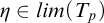 ” is
$\Pi _1^1$
 , and it’s easy to see that
$\{p\in S : tr(p) \leq \eta \in T_p \rightarrow nor_{\eta }(Suc_{T_p}(\eta ))>2\}$
 is Borel.
B. The relation
$\leq _{\mathbb {Q}_{\mathbf n}^i}$
 is Borel for
$i\in \{0,\frac {1}{2},1,2\}$
 : For
$i\in \{0,\frac {1}{2},1,2\}$
 , the relation
$\leq _{\mathbb {Q}_{\mathbf n}^{i}}$
 is simply the reverse inclusion relation restricted to
$\mathbb {Q}_{\mathbf n}^{i}$
 , hence it is Borel.
C. The incompatibility relation in
$\mathbb {Q}_{\mathbf n}^i$
 is Borel for
$\{0,\frac {1}{2},1,2\}$
 : The incompatibility relation is Borel by Claim 7.
Claim 10.
-
A) Assume that $p_l \in \mathbb {Q}_{\mathbf n}^{i}\, (l<n)$
where
$i\in \{0,1\}$
,
$\underset {l<n}{\wedge }tr(p_l)=\rho $
,
$n\leq lg(\rho )$
and for every
$\eta \in p_l^+$
we have
$2\leq k+1\leq nor_{\eta }(suc_{p_l}(\eta ))$
, then
$\{p_l : l<n\}$
have a common upper bound p such that
$tr(p)=\rho $
and
$k\leq nor_{\eta }(suc_p(\eta ))$
for every
$\eta \in T_p^+$
. -
B) Assume that $p_l \in \mathbb {Q}_{\mathbf n}^{2}\, (l<n)$
,
$\underset {l<n}{\wedge }tr(p_l)=\rho $
,
$n\leq lg(\rho )$
and for every
$\eta \in p_l^+\, (l<n)$
we have
$1+\frac {1}{k}\leq nor_{\eta }(suc_{p_l}(\eta ))$
. In addition, assume that
$k\leq lg(\rho )$
and
$k(k+1) \leq \mu _{\eta }$
for every
$\eta \in p_l^+\, (l<n)$
, then
$\{p_l : l<n\}$
have a common upper bound p such that
$tr(p)=\rho $
and
$1+\frac {1}{k+1}\leq nor_{\eta }(suc_p(\eta ))$
.





Proof. A) Suppose first that
$i=0$
 . Let
$p=\underset {l<n}{\cap }p_l$
 , then
$p\subseteq T_{\mathbf n}^{[\rho \leq ]}$
 is a subtree containing
$\rho $
 . If
$\nu \in p$
 then
$\nu \in p_l$
 for every
$l<n$
 , hence
$Suc_p(\nu )=\underset {l<n}{\cap }Suc_{p_l}(\nu )$
 . As
$n\leq lg(\rho ) \leq \mu _{\eta }$
 for every
$\rho \leq \eta \in p$
 , it follows from the properties of the norm in the definition of
$\mathbf n \in \mathbf N$
 that
$k\leq nor_{\eta }(Suc_p(\eta ))$
 . Therefore,
$T_p$
 is a perfect tree, and similarly to the proof of Claim 7, it follows that the norm along infinite branches tends to infinity, hence
$p\in \mathbb {Q}_{\mathbf n}^0$
 . Suppose now that
$i=1$
 . The above arguments are still valid, and in addition, similarly to the argument on
$\mathbb {Q}_{\mathbf n}^1$
 in the proof of claim 7(2), it’s easy to see that by the co-bigness property,
$p\in \mathbb {Q}_{\mathbf n}^1$
 .
Remark. Note that as
$2\leq k+1$
 , it follows from the above arguments that
$2-\frac {1}{\mu _{tr(p)}} \leq nor_{\eta }(Suc_{T_p}(\eta ))$
 for every
$tr(p)\leq \eta \in T_p$
 . In fact,
$k+1-\frac {1}{\mu _{\rho }} \leq nor_{\eta }(Suc_{T_p}(\eta ))$
 , therefore, if
$2<k+1-\frac {1}{\mu _{\rho }}$
 then we also get the claim for
$i=\frac {1}{2}$
 .
B) The proof is similar, the only difference is that now we have to prove the following assertion:
$(*)$
 If
$b_l\subseteq suc_{T_{\mathbf n}}(\eta )$
 for
$l<n\leq \mu _{\eta }$
 ,
$\underset {l<n}{\wedge } 1+\frac {1}{k} \leq nor_{\eta }(b_l)$
 and
$b=\underset {l<n}{\cap }b_l$
 then
$1+\frac {1}{k+1}\leq nor_{\eta }(b)$
 .
The assertion follows from the co-bigness property (Definition 2(f), with
$b_i$
 and
$1+\frac {1}{k}-\frac {1}{\mu _{\eta }}$
 here standing for
$a_i$
 and k there).
Claim 11. Let
$\mathbf n \in \mathbf N$
 . “
$\{p_n : n<\omega \}$
 is a maximal antichain” is Borel for
$\{p_n : n<\omega \}\subseteq \mathbb {Q}_{\mathbf n}^{2}$
 .
Proof. By Claim 8.
Claim 12. Assume
$\{p_n : n<\omega \} \subseteq \mathbb {Q}_{\mathbf n}^{2}$
 ,
$\underset {n}{\wedge }tr(p_n)=\eta $
 and
$\underset {n}{\wedge }nor(p_n) \leq k$
 . Then there is
$p_* \in \mathbb {Q}_{\mathbf n}^{2}$
 such that:
-
(a) $tr(p_*)=\eta $
,
$nor(p_*) \leq k$
. -
(b) $p_* \Vdash _{\mathbb {Q}_{\mathbf n}^{2}} ``(\exists ^{\infty }n)(p_n \in G_{\mathbb {Q}_{\mathbf n}^{2}})$
.”


Proof. Let D be a uniform ultrafilter on
$\omega $
 and define
$T_{p_*}:=\{\nu \in T_{\mathbf n} : \{n : \nu \in p_n\}\in D\}$
 . If
$\nu \in T_{p_*}$
 , then for some n,
$\nu \in T_{p_n}\subseteq T_{\mathbf n}^{[\eta \leq ]}$
 (recalling that
$tr(p_n)=\eta $
 ), hence
$T_{p_*}\subseteq T_{\mathbf n}^{[\eta \leq ]}$
 . Obviously,
$l\leq lg(\eta ) \rightarrow \eta \restriction l \in T_{p_*}$
 as
$\eta =tr(p_n)\in p_n$
 for every n.
$(*)_1$
 If
$\eta \triangleleft \nu \triangleleft \rho $
 and
$\rho \in T_{p_*}$
 , then
$\nu \in T_{p_*}$
 .
Why? Define
$A_{\rho }=\{n : \rho \in p_n\}$
 and define
$A_{\nu }$
 similarly.
$A_{\rho } \in D$
 by the definition of
$T_{p_*}$
 . Obviously
$A_{\rho }\subseteq A_{\nu }$
 , hence
$A_{\nu } \in D$
 and
$\nu \in T_{p_*}$
 .
$(*)_2$
 If
$\nu \in T_{p_*}$
 then
$1+\frac {1}{k}\leq nor_{\nu }(suc_{p_*}(\nu ))$
 .
Remark. Note that no additional assumption will be needed about the continuity of the norm.
In order to prove
$(*)_2$
 , define
$A_{\nu }$
 as above, so
$A_{\nu }\in D$
 . Let
$(b_l : l<l(*))$
 list
$\{suc_{p_n}(\nu ) : n<\omega \}$
 . As
$\{suc_{p_n}(\nu ) : n<\omega \} \subseteq P(suc_{T_{\mathbf n}}(\nu ))$
 , we have
$l(*)\leq 2^{|suc_{T_{\mathbf n}}(\nu )|}=2^{\lambda _{\nu }}<\aleph _0$
 . For
$l<l(*)$
 let
$A_{\nu ,l}:=\{n \in A_{\nu } : suc_{p_n}(\nu )=b_l\}$
 . Obviously this is a finite partition of
$A_{\nu }$
 , hence there is exactly one
$m<l(*)$
 such that
$A_{\nu ,m}\in D$
 and therefore
$b_m \subseteq suc_{p_*}(\nu )$
 and actually
$b_m=suc_{p_*}(\nu )$
 (if
$\eta \in suc_{p_*}(\nu )$
 is witnessed by
$X\in D$
 , then
$X\cap A_{\nu ,m}$
 is a witness for
$\eta \in b_m$
 ). Therefore
$nor_{\nu }(b_m)= nor_{\nu }(suc_{p_*}(\nu ))$
 and for some n we have
$1+\frac {1}{k} \leq 1+\frac {1}{nor(p_n)}\leq nor_{\nu }(suc_{p_n}(\nu ))= nor_{\nu }(suc_{p_*}(\nu ))$
 .
It follows from the above arguments that
$p_* \in \mathbb {Q}_{\mathbf n}^2$
 and
$nor(p_*) \leq k$
 .
We shall now prove that
$(*)_3\, p_* \Vdash _{\mathbb {Q}_{\mathbf n}^{2}} ``(\exists ^{\infty }n)(p_n \in G_{\mathbb {Q}_{\mathbf n}^{2}})$
 .”
Why? Suppose that
$p_*\leq q$
 , then
$tr(q)\in T_{p_*}$
 . By the definition of
$p_*$
 ,
$\{n : tr(q)\in p_n\}\in D$
 . For every such
$p_n$
 ,
$\eta =tr(p_n) \leq tr(q) \in T_{p_n}$
 , so
$p_n$
 is compatible with q and hence with
$p_*$
 .
Claim 12’. For
$\iota \in \{0,\frac {1}{2},1,2\}$
 ,
$\underset {\sim }{\eta _{\mathbf n}^{\iota }}$
 is a generic for
$\mathbb {Q}_{\mathbf n}^{\iota }$
 , i.e.,
$\Vdash _{\mathbb {Q}_{\mathbf n}^{\iota }} ``V[\underset {\sim }{G_{\mathbb {Q}_{\mathbf n}^{\iota }}}]=V[\underset {\sim }{\eta _{\mathbf n}^{\iota }}]$
 .”
Proof. Easy.
3 The iteration
In this section we shall describe our iteration. Although our definition will be general and will follow the technique of iteration along templates as described in [Reference Shelah16], we will eventually use a simple private case of the general construction (see also [Reference Brendle1, Reference Mejia9]). In our case, we’ll have a non-wellfounded linear order L, and the forcing will be the union of finite-length iterations along subsets of L. Dealing with FS-iterations of Suslin forcing will guarantee that the union is well-behaved.
3.1 Iteration parameters
The purpose of Definitions 12 and 13 is to show how our construction fits as a special case in the broader context of the second author’s general method of iterations along templates. However, we shall only use the private case of Definition 13(A), and so a reader who only wants to understand the main results in this article may focus on Definition 13(A).
Definition 12. Let
$\mathbf Q$
 be the class of
$\mathbf q$
 (iteration parameters) consisting of:
-
a. A partial order $L_{\mathbf q}=L[\mathbf q]$
. -
b. $\bar {u}_0=(u_t^0 : t\in L_{\mathbf q})$
such that
$u_t^0 \subseteq L_{<t}$
for each
$t\in L_{\mathbf q}$
(and
$u_t^0$
is well-ordered by (d)). In the main case
$|u_t^0|\leq \aleph _0$
(in our application,
$u_t^0$
is actually empty). -
c. $\mathbf {I}=(\mathbf {I}_t : t\in L_{\mathbf q})$
such that each
$\mathbf {I}_t$
is an ideal on
$L_{<t}$
and
$u_t^0\in \mathbf {I}_t$
. In the main case here,
$\mathbf {I}_t=\{u\subseteq L_{<t} : u $
is finite
$\}$
. -
d. $\mathbf L$
is a directed family of well-founded subsets of
$L_{\mathbf q}$
closed under initial segments such that
$\underset {L\in \mathbf {L}}{\cup }L=L_{\mathbf q}$
and
$t\in L \rightarrow u_t^0 \subseteq L$
(for
$L\in \mathbf {L}$
). -
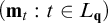
e. $(\mathbf {m}_t : t\in L_{\mathbf q})$
is a sequence such that each
$\mathbf {m}_t$
is a definition of a Suslin ccc forcing notion
$\mathbb {Q}_{\mathbf {m}_t}^i$
with a generic
$\underset {\sim }{\eta _{\mathbf {m}_t}}$
(depending on a formula using
$\mathbf {B}_t(\dots ,\eta _s,\dots )_{s\in u_t^0}$
, see f+g and Definition 13). -
f. Actually, $\mathbf {m}_t=\mathbf {m}_{t,\underset {\sim }{\nu_t }}$
where
$\underset {\sim }{\nu _t}=\mathbf {B}_t(\bar {\eta } \restriction u_t^0)$
is a name of a real and
$\mathbf {B}_t$
is a Borel function (see Definition 13(E) below), i.e.,
$\mathbf {m}_t$
is computed from the parameter
$\underset {\sim }{\nu _t} \in \omega ^{\omega }$
. -
g. For every $t\in L_{\mathbf q}$
,
$\mathbf {B}_t : \underset {i\in u_t^0}{\Pi }\omega ^{\omega } \rightarrow \omega ^{\omega }$
is an absolute Borel function. -
h. For a linear order L, let $L^+:=L \cup \{\infty \}$
which is obtained by adding an element above all elements of L.







3.2 The iteration
Definition and Claim 13: For
$i\in \{1,2\}$
 ,
$\mathbf {q} \in \mathbf Q,$
 and
$L\in \mathbf L$
 we shall define the FS iteration
$\bar {\mathbb {Q}}_L=(\mathbb {P}_t^L, \underset {\sim }{\mathbb {Q}_t^L} : t\in L^+)$
 with limit
$\mathbb {P}_L$
 and the
$\mathbb {P}_t^L=\mathbb {P}_{L,<t}$
 -names
$\underset {\sim }{\eta _t}, \underset {\sim }{\nu _t}$
 by induction on
$dp(L)$
 (where
$dp(L)$
 is the depth of L, recalling that L is well-founded) such that:
- A.
-
a) $\mathbb {P}_L$
is a forcing notion. -
b) $\underset {\sim }{\eta _t}$
is a
$\mathbb {P}_L$
name when
$u_t^0 \cup \{t\}\subseteq L\in \mathbf L$
(so we use a maximal antichain from
$\mathbb {P}_L$
, moreover, from
$\mathbb {P}_{L_1}$
for every
$L_1 \in \mathbf L$
which is
$\subseteq L$
). -
c) $\underset {\sim }{\nu _t}$
is a
$\mathbb {P}_L$
name when
$u_t^0 \subseteq L\in \mathbf {L}$
. -
d) If $L_1,L_2 \in \mathbf {L}$
are linearly ordered,
$L_1 \subseteq L_2$
and each
$\mathbf {I}_t$
has the form
$\{ L\subseteq L_{<t} : L$
is well-ordered
$\}$
, then
$\mathbb {P}_{L_1}\lessdot \mathbb {P}_{L_2}$
.
-
-
B. $p\in \mathbb {P}_t^L$
iff-
a. $Dom(p)\subseteq L_{<t}$
is finite. -
b. If $s\in Dom(p)$
then for some
$u\in \mathbf {I}_s \cap \mathcal {P}(L_{<s})$
and a Borel function
$\mathbf B$
,
$p(s)=\mathbf {B}(\dots ,\underset {\sim }{\eta _r},\dots )_{r\in u}$
and
$\Vdash _{\mathbb {P}_s^L} ``p(s)\in \mathbb {Q}_{\mathbf {m}_s}^{i}$
.” -
c. $\underset {\sim }{\mathbb {Q}_{t}^{L}}$
is the
$\mathbb {P}_{t}^{L}$
-name of
$\mathbb {Q}_{\mathbf {m}_t}^{i}$
using the parameter
$\underset {\sim }{\nu _t}$
.
-
-
C. $\bar {\eta }=(\underset {\sim }{\eta _t} : t\in L_{\mathbf q})$
. Each
$\underset {\sim }{\eta _t}$
is defined as the generic of
$\mathbb {Q}_t^L$
(by a maximal antichain of
$\mathbb {P}_{L}$
whenever
$L\in \mathbf {L}$
and
$u_t^0 \subseteq L \subseteq L_{<t}$
), meaning:
$t\in L \in \mathbf L \rightarrow \Vdash ``\underset {\sim }{\eta _t}$
is a generic for
$\underset {\sim }{\mathbb {Q}_t}$
” defined as usual. -
D. $\bar {\nu }=(\underset {\sim }{\nu _t} : t\in L_{\mathbf q})$
such that for each
$t\in L_{\mathbf q}$
,
$\mathbf {B}_t$
is a Borel function and
$\underset {\sim }{\nu _t}=\mathbf {B}_t(\bar {\eta }\restriction u_t^0)$
. -
E. The order on $\mathbb {P}_L$
is defined naturally.


Proof. Should be clear.
13(A) A special case of the general construction.
Of special interest here is the case where
$\mathbf q \in \mathbf Q$
 satisfies:
-
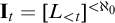
a. $L_{\mathbf q}$
is a dense linear order,
$\mathbf {I}_t=[L_{<t}]^{<\aleph _0}$
for each
$t\in L_{\mathbf q}$
and
$\mathbf {L}=[L_{\mathbf q}]^{<\aleph _0}$
. -
b. $\mathbf {m}_t$
is a definition of
$\mathbb {Q}_{\mathbf {n}_t}^{i}$
where
$i\in \{1,2\}$
(hence a Suslin c.c.c. forcing), not using a name of the form
$\underset {\sim }{\nu _t}$
. -
c. $\mathbf {m}_t \in V$
and
$u_t^0=\emptyset $
for every
$t\in L_{\mathbf q}$
.



13(B)We shall denote the collection of
$\mathbf {q} \in \mathbf {Q}$
 as above by
$\mathbf {Q}_{sp}$
 .
13(C) Hypothesis:From now on we assume that
$\mathbf q \in \mathbf Q$
 satisfies the requirements of
$13(A)$
 .
Definition/Observation 14. Let
$\mathbf q \in \mathbf Q$
 .
-
1. $\{\mathbb {P}_{J} : J\subseteq L_{\mathbf q}$
is finite
$\}$
is a
$\lessdot $
-directed set of forcing notions. -
2. For $J\subseteq L_{\mathbf q}$
, let
$\mathbb {P}_J=\cup \{ \mathbb {P}_{J'} : J' \subseteq J$
is finite
$\}$
and
$\mathbb {P}_{\mathbf q}=\mathbb {P}_{L_{\mathbf q}}$
.



Proof. (1) follows by [Reference Judah and Shelah5].
Claim 15.
-
1) For every $J_1\subseteq J_2\subseteq L_{\mathbf q}$
,
$\mathbb {P}_{J_1}\lessdot \mathbb {P}_{J_2}$
. -
2) If $J\subseteq L_{\mathbf q}$
then
$\mathbb {P}_{J}=\mathbb {P}_{\mathbf q,J}=\cup \{\mathbb {P}_I : I\subseteq J$
is finite
$\} \lessdot \mathbb {P}_{\mathbf q}$
.


Remark. Recall that
$\mathbb P \lessdot \mathbb Q$
 means that
$\mathbb P$
 is a subforcing of
$\mathbb Q$
 and every maximal antichain of
$\mathbb P$
 is maximal in
$\mathbb Q$
 .
Proof.
-
1) Case 1: $|J_2|<\aleph _0$
. Easy by [Reference Judah and Shelah5].Case 2: $J_2$
is infinite. Let
$q\in \mathbb {P}_{J_2}$
, then for some finite
$J_2^* \subseteq J_2$
,
$q\in \mathbb {P}_{J_2^*}$
. Let
$J_1^*=J_1 \cap J_2^*$
. As
$\mathbb {P}_{J_1^*} \lessdot \mathbb {P}_{J_2^*}$
by Observation 14(1), there is
$p\in \mathbb {P}_{J_1^*}$
such that
$p\leq p' \in \mathbb {P}_{J_1^*} \rightarrow p'$
and q are compatible. It suffices to prove that if
$J_1' \subseteq J_1$
is finite and
$J_1^* \subseteq J_1'$
, then
$p\leq p' \in \mathbb {P}_{J_1'} \rightarrow p'$
and q are compatible in
$\mathbb {P}_{J_2^* \cup J_1'}$
(as if
$p\leq p' \in \mathbb {P}_{J_1}$
, then
$p' \in \mathbb {P}_{J_1'}$
where
$J_1'=J_1^* \cup Dom(p')$
). We prove this by induction on
$sup\{|L_{<t} \cap J_1^*| : t\in J_1' \setminus J_1^*\}$
as in [Reference Judah and Shelah5]. -
2) By (1).



Observation 16. Suppose that
$\mathbf q \in \mathbf Q$
 ,
$J\in \mathbf {L}$
 is finite and
$p_1,p_2 \in \mathbb {P}_{J}$
 . If
$tr(p_1(t))=tr(p_2(t))$
 for every
$t\in Dom(p_1)\cap Dom(p_2)$
 (so in particular, they are objects rather than merely names), then
$p_1$
 and
$p_2$
 are compatible.
Proof. By induction on
$|J|$
 . The induction step is a corollary of the compatibility condition for
$\mathbb {Q}_{\mathbf n}^{2}$
 (see Claim 7).
Claim 17. For
$\mathbf q \in \mathbf Q$
 ,
$\mathbb {P}_{\mathbf q} \models ccc$
 .
Proof. Suppose that
$\{p_{\alpha } : \alpha <\aleph _1\} \subseteq \mathbb {P}_{\mathbf q}$
 . For each
$\alpha <\aleph _1$
 there is a finite
$J_{\alpha } \subseteq L_{\mathbf q}$
 such that
$p_{\alpha } \in \mathbb {P}_{J_{\alpha }}$
 . Hence there is
$n_*\in \mathbb {N}$
 such that
$|\{p_{\alpha } : |J_{\alpha }|=n_*\}|=\aleph _1$
 . For each
$\alpha $
 denote
$J_{\alpha }=\{t_{\alpha ,0}<\cdots <t_{\alpha ,n_{\alpha -1}}\}$
 , by cardinality arguments, i.e., the
$\Delta $
 -system lemma, WLOG there is
$u\subseteq n_*$
 such that
$t_{\alpha ,l}=t_l$
 for every
$\alpha <\aleph _1$
 and
$(t_{\alpha ,l} : l\in n_* \setminus u, \alpha <\aleph _1)$
 is without repetitions. As every condition
$p_{\alpha } \in \mathbb {P}_{J_{\alpha }}$
 belongs to an iteration along
$J_{\alpha }$
 in the usual sense, there is
$p_{\alpha } \leq p_{\alpha }' \in \mathbb {P}_{J_{\alpha }}$
 such that
$tr(p_{\alpha }'(t))$
 is an object for every
$t\in J_{\alpha }$
 (so
$J_{\alpha }=Dom(p_{\alpha }')$
 ). Given
$l\in u$
 there are countably many possible values for
$tr(p_{\alpha }(t_l))$
 , hence there is a set
$I=\{p_{{\alpha }_i} : i<i(*)\}\subseteq \{p_{\alpha } : \alpha <\aleph _1\}$
 of cardinality
$\aleph _1$
 such that
$tr(p_{{\alpha }_i}(t_l))$
 is constant for all
$i<i(*)$
 . If
$i<j<i(*)$
 , then
$J_{i,j}:=J_{\alpha _i} \cup J_{\alpha _j} \subseteq L_{\mathbf q}$
 is finite,
$p_{\alpha _i} \in \mathbb {P}_{J_{\alpha _i}} \lessdot \mathbb {P}_{J_{i,j}}$
 and
$p_{\alpha _j} \in \mathbb {P}_{J_{\alpha _j}} \lessdot \mathbb {P}_{J_{i,j}}$
 , so
$p_{\alpha _i}$
 and
$p_{\alpha _j}$
 are compatible in
$\mathbb {P}_{J_{i,j}}$
 (hence in
$\mathbb {P}_{\mathbf q}$
 ) by Observation 16.
4 The ideals derived from a forcing notion
$\mathbb Q$

We shall now define the ideals derived from a Suslin forcing notion
$\mathbb {Q}$
 and a name
$\underset {\sim }{\eta }$
 of a real.
Definition 18.
-
1. Let $\mathbb Q$
be a forcing notion such that each
$p\in \mathbb Q$
is a perfect subtree of
$\omega ^{<\omega }$
,
$p\leq _{\mathbb Q} q$
iff
$q\subseteq p$
and the generic real is given by the union of trunks of conditions that belong to the generic set, that is,
$\underset {\sim }{\eta }=\underset {p\in \underset {\sim }{G}}{\cup } tr(p)$
and
$\Vdash _{\mathbb Q}$
“
$\underset {\sim }{\eta } \in \omega ^{\omega }$
.”Let $\aleph _0 \leq \kappa $
, the ideal
$I_{\mathbb Q,\kappa }^0$
will be defined as the closure under unions of size
$\leq \kappa $
of sets of the form
$\{X\subseteq \omega ^{\omega } : (\forall p\in \mathbb Q)(\exists q\geq p)(lim(q) \cap X=\emptyset )\}$
.Footnote
1
-
2. For $\mathbb {Q}$
as above, we let
$I_{\mathbb Q, <\aleph _0}$
be the set
$\{X\subseteq \omega ^{\omega } : (\forall p\in \mathbb Q)(\exists q\geq p)(lim(q) \cap X=\emptyset )\}$
. -
3. For $(\mathbb Q, \underset {\sim }{\eta })$
and
$\kappa $
as in (1), we shall denote
$I_{\mathbb Q,\kappa }^0$
by
$I_{\mathbb Q,\kappa }$
. -
4. Let I be an ideal on the reals, a set of reals X is called I-measurable if there exists a Borel set B such that $X\Delta B \in I$
. -
5. A set of reals X will be called $(\mathbb Q,\kappa )$
-measurable if it is
$I_{\mathbb Q,\kappa }$
-measurable. -
6. Given a model V of $ZF$
, we say that
$(\mathbb Q,\kappa )$
-measurability holds in V if every set of reals in V is
$(\mathbb Q,\kappa )$
-measurable and
$I_{\mathbb Q,\kappa }$
is a non-trivial ideal.


Remark. In [Reference Horowitz and Shelah3] we shall further investigate the above ideals.
5 Cohen reals
An important feature of
$\mathbb {Q}_{\mathbf n}^{\iota }$
 is the fact that it adds a Cohen real. This fact will be later used to show that
$\mathbb {Q}_{\mathbf n}^{\iota }$
 can turn the ground model reals into a null set with respect to the relevant ideal.
Claim 19. Forcing with
$\mathbb {Q}_{\mathbf n}^{\iota }\, (i\in \{0,\frac {1}{2},1,2\})$
 adds a Cohen real.
Proof. For every
$\eta \in T_{\mathbf n}$
 let
$g_{\eta }: suc_{T_{\mathbf n}}(\eta )\rightarrow \{0,1\}$
 be a function such that
$|g_{\eta }^{-1}\{l\}|>\frac {\lambda _{\eta }}{2}-1\, (l=0,1)$
 (recall that
$\lambda _{\eta }=|suc_{T_{\mathbf n}}(\eta )|$
 ). Define a
$\mathbb {Q}_{\mathbf n}^{\iota }$
 -name
$\underset {\sim }{\nu }$
 by
$\underset {\sim }{\nu }(n)=g_{\underset {\sim }{\eta _{\mathbf n}^{\iota }} \restriction n}(\underset {\sim }{\eta _{\mathbf n}^{\iota }}\restriction (n+1))$
 (recalling
$\underset {\sim }{\eta _{\mathbf n}^{\iota }}$
 is the generic). Clearly,
$\Vdash _{\mathbb {Q}_{\mathbf n}^{\iota }}$
 “
$\underset {\sim }{\nu } \in 2^{\omega }$
 .” We shall prove that it’s forced to be Cohen.
$(*)$
 If
$p\in \mathbb {Q}_{\mathbf n}^{\iota }$
 and
$i=1\rightarrow 2\leq nor_{\rho }(suc_p(\rho ))$
 for every
$\rho \in T_p$
 , then for every
$\eta \in 2^{\omega }$
 , for some
$\rho \in T_p$
 ,
$lg(\rho )=lg(tr(p))+m$
 and if
$lg(tr(p))\leq i<tr(p)+m$
 then
$p^{[\rho ]}\Vdash $
 “
$\underset {\sim }{\nu }(i)=\eta (i)$
 .”
We prove it by induction on m. For
$m=1$
 , as
$|suc_{T_{\mathbf n}}(tr(p))\setminus suc_p(tr(p))|<\frac {|suc_{T_{\mathbf n}}(tr(p))|}{2}-1$
 (by clause (g) of Definition
$2$
 ) and for every
$i\in \{0,1\}$
 we have
$|g_{tr(p)}^{-1}\{i\}|>\frac {\lambda _{tr(p)}}{2}-1$
 , hence there are
$\rho _0,\rho _1 \in suc_p(tr(p))\setminus \{\rho \}$
 such that
$g_{tr(p)}(\rho _0)=0, g_{tr(p)}(\rho _1)=1$
 and by the definition of
$\underset {\sim }{\nu }$
 ,
$p^{[\rho _0]}\Vdash $
 “
$\underset {\sim }{\nu }(tr(p)+1)=0$
 ” and
$p^{[\rho _1]}\Vdash $
 “
$\underset {\sim }{\nu }(tr(p)+1)=1$
 .” Suppose that we proved the theorem for m, then for some
$\rho \in T_p$
 of length
$lg(tr(p))+m$
 the conclusion holds. Now repeat the argument of the first step of the induction for
$p^{[\leq \rho ]}$
 to obtain
$\rho \leq \rho '$
 of length
$lg(tr(p))+m+1$
 as required.
By
$(*)$
 ,
$\underset {\sim }{\nu }$
 is forced to lie in every open dense set, hence it’s Cohen.
Although the following result will not be used in the rest of the article, it exhibits a natural property of the forcings that is of independent interest.
Claim 20. If
A) then B) where
-
A) (a) $p_i \in \mathbb {Q}_{\mathbf n}^{\iota }$
for
$i<m$
.-
(b) $tr(p_i)=\rho $
for
$i<m$
. -
(c) If $\iota \in \{0,1\}$
then
$2\leq nor(p_i)$
for every
$i<m$
. -
(d) If $\iota =2$
then
$2\leq nor(p_i)$
for every
$i<m$
. -
(e) $lg(\rho )<m_*<m$
. -
(f) There is $\rho <\eta \in T_{\mathbf n}$
such that
$\lambda _{<\eta } \leq m_*<m \leq \mu _{\eta }$
(e.g., it follows from the assumption
$m\leq \mu _{\eta } \iff m_* \leq \lambda _{\leq \eta }$
).
-
-
B) There is an equivalence relation E on $\{0,1,\ldots ,m-1\}$
with
$\leq m_*$
equivalence classes such that if
$i<m$
then
$\{p_j : j\in (i/E)\}$
has a common upper bound.






Proof. Let
$\eta \in T_{\mathbf n}^{[\rho \leq ]}$
 be as in clause (f). Let
$k_*=lg(\eta )$
 and define
$\lambda _{\mathbf {n},k}:=\Pi \{\lambda _{\nu } : \nu \in T_{\mathbf n}, lg(\nu )<k\}$
 ,
$T_{\mathbf n, \rho , k}:=\{\nu \in T_{\mathbf n} : \rho \leq \nu \in T_{\mathbf n},lg(\nu )=k\}$
 . Recall that
$\lambda _{\nu }$
 is the size of
$suc_{\mathbf n}(\nu )$
 , hence
$|T_{\mathbf n, \rho , k_*}|$
 is the product of all
$\lambda _{\nu }$
 such that
$\rho \leq \nu $
 and
$lg(\nu )<k_*$
 , which is
$\leq \lambda _{\mathbf {n},k_*}$
 . For each
$i<m$
 let
$\rho _i \in p_i$
 be of length
$k_*$
 , then
$\rho _i \in T_{\mathbf n, \rho , k_*}$
 by the definition of
$T_{\mathbf n, \rho , k_*}$
 and the assumptions on
$p_i$
 . Define
$\rho _{i}^{+}$
 for
$i<m$
 as follows: if
$\lambda _{\eta } < \lambda _{\rho _i}$
 , define
$\rho _{i}^{+}:= \rho _i$
 . Otherwise we let
$\rho _{i}^{+}\in suc_{p_i}(\rho _i)$
 .
Define the equivalence relation
$E:=\{(i,j) : \rho _{i}^{+}=\rho _{j}^{+}\}$
 . Let
$j<m$
 , for every
$i\in (j/E)$
 define
$p_i'=p_{i}^{[\rho _{j}^{+}]}$
 (this is well defined, as
$\rho _{i}^{+}=\rho _{j}^{+}$
 ), then
$tr(p_i')=\rho _{j}^{+}$
 for every
$i \in (j/E)$
 . By the choice of
$\eta $
 , for
$j<m$
 ,
$|j/E|\leq m\leq \mu _{\eta } \leq \mu _{\rho _j^+}$
 (by the choice of
$\rho _j^+$
 and Definition
$2$
 ).
By Claim 10, the set
$\{p_i' : i \in (j/E)\}$
 has a common upper bound, hence
$\{p_i : i \in (j/E)\}$
 has a common upper bound.
By the choice of
$p_i^+$
 , the number of E-equivalence classes is bounded by
$\lambda _{<\eta }$
 . As
$\lambda _{<\eta } \leq m_*$
 , we’re done.
6 Not adding an unwanted real
A crucial step towards our final goal is to prove that the only generic reals in finite length iterations of
$\mathbb {Q}_{\mathbf n}^2$
 are the
$\eta _t$
 s. This will be used later in order to show that
$\omega ^{\omega } \setminus \{\eta _t : t\in L\}$
 is null with respect to the relevant ideal. We intend to strengthen this result dealing with arbitrary length iterations in [Reference Horowitz and Shelah3].
Remark. The claim below will be used in the proof of clause (c)(
$\gamma $
 ) in Main Conclusion 23. For the purposes of that proof, the reader should note that it’s not necessary to construct a family of size
$\mu $
 of pairwise far parameters (where “far” is defined in clause (f) below). As will be seen in the proof of 23(c)
$(\gamma )$
 , by naturally restricting the relevant parameters to appropriate and sufficiently long nodes, we obtain the far pairs needed for the argument.
Claim 21. We have
$p_* \Vdash _{\mathbb {P}}$
 “
$\underset {\sim }{\rho }$
 is not
$(\mathbb {Q}_{\mathbf n}^{\iota }, \underset {\sim }{\eta _{\mathbf n}^{\iota }})$
 -generic over V” when:
-
a) $\iota \in \{1,2\}$
and
$\alpha _* <\omega $
. -
b) $(\mathbb {P}_{\alpha }, \underset {\sim }{\mathbb {Q}_{\alpha }} : \alpha <\alpha _*)$
is an FS iteration with limit
$\mathbb {P}=\mathbb {P}_{\alpha _*}$
. -
c) $\mathbf {n}_{\alpha } \in \mathbf {N}$
is special (note:
$\mathbf {n}_{\alpha }$
is not a
$\mathbb {P}_{\alpha }$
-name). -
d) $\Vdash _{\mathbb {P}_{\alpha }} $
“
$\underset {\sim }{\mathbb {Q}_{\alpha }}={(\mathbb {Q}_{\mathbf {n}_{\alpha }}^{\iota })}^{V^{\mathbb {P}_{\alpha }}}$
.” -
e) $\mathbf {n} \in \mathbf {N}$
is special. -
f) For every $\alpha $
,
$\mathbf {n}$
and
$\mathbf {n}_{\alpha }$
are far (i.e.,
$\eta _1 \in T_{\mathbf n} \wedge \eta _2 \in T_{\mathbf {n}_{\alpha }}\rightarrow \lambda _{\eta _1}^{\mathbf n} \ll \mu _{\eta _2}^{\mathbf {n}_{\alpha }}$
or
$\lambda _{\eta _2}^{\mathbf {n}_{\alpha }} \ll \mu _{\eta _1}^{\mathbf n})$
. Moreover, for every
$\alpha <\alpha _*$
for every l large enough, for some
$m\in \{l,l+1\}$
we have:


If
$\rho \in T_{\mathbf n}, lg(\rho )=l$
 ,
$\nu _1 , \nu _2 \in T_{\mathbf {n}_{\alpha (l)}}$
 and
$lg(\nu _1) < m \leq lg(\nu _2))$
 then
$\lambda _{\mathbf {n}_{\alpha (l)},\nu _1} \ll \mu _{\mathbf {n}, \rho }$
 and
$\lambda _{\mathbf {n}, \rho } \ll \mu _{\mathbf {n}_{\alpha (l)}, \nu _2}$
 .
-
g) $p_* \Vdash _{\mathbb {P}} $
“
$\underset {\sim }{\rho } \in lim(T_{\mathbf n})$
.”


Proof. For
$\eta \in T_{\mathbf n}$
 define
$W_{\mathbf n,\eta }:=\{w : w\subseteq suc_{T_{\mathbf n}}(\eta )$
 and
$i=1\rightarrow lg(\eta ) \leq nor_{\eta }(w)$
 and
$i=2 \rightarrow 2\leq nor_{\eta }(w)\}$
 . For
$n<\omega $
 define
$\Lambda _n=\{\eta \in T_{\mathbf n} : lg(\eta )<n\}$
 , so
$T_{\mathbf n}=\underset {n<\omega }{\cup }\Lambda _n$
 . Define
$S_n:=\{\bar {w} : \bar {w}=(w_{\eta } : \eta \in \Lambda _n \wedge w_{\eta } \in W_{\mathbf n,\eta })\}$
 and
$S=\underset {n<\omega }{\cup }S_n$
 .
$(S, \leq )$
 is a tree with
$\omega $
 levels such that each level is finite and
$lim(S)=\{\bar {w} : \bar {w}=(w_{\eta } : \eta \in T_{\mathbf n})$
 and
$\bar {w} \restriction \Lambda _n \in S_n$
 for every
$n\}$
 . For
$\bar {w} \in lim(S)$
 let
$\mathbf {B}_{\bar {w}}:=\{ \rho \in lim(T_{\mathbf n}):$
 for every n large enough,
$\rho \restriction (n+1) \in w_{\rho \restriction n}\}$
 , so
$\mathbf {B}_{\bar {w}}=\underset {m<\omega }{\cup }\mathbf {B}_{\bar {w},m}$
 where
$\mathbf {B}_{\bar {w},m}=\{\rho \in lim(T_{\mathbf n}) :$
 if
$m\leq n$
 then
$\rho \restriction (n+1) \in w_{\rho \restriction n}\}$
 . We shall prove that
$(*) \Vdash _{\mathbb {Q}_{\mathbf n}^{\iota }} $
 “
$\underset {\sim }{\eta _{\mathbf n}^{\iota }} \in \mathbf {B}_{\bar {w}}$
 ” for every
$\bar {w} \in lim(S)$
 . In fact, for every
$p\in \mathbb {Q}_{\mathbf n}^{\iota }$
 there is a stronger q and
$m<\omega $
 such that
$lim(q) \subseteq \mathbf {B}_{\bar w, m}$
 .
Let
$p\in \mathbb {Q}_{\mathbf n}^{\iota }$
 , we shall prove that for some
$p\leq q$
 and
$m<\omega $
 ,
$q\Vdash \underset {\sim }{\eta _{\mathbf n}^{i}} \in \mathbf {B}_{\bar {w},m}$
 . Let
$\nu \in T_p$
 such that
$lg(\nu )$
 is large enough and let
$m=lg(\nu )$
 . Now q will be defined by taking the subtree obtained from the intersection of
$T_p^{[\leq \nu ]}$
 with
$(\underset {\nu \leq \rho }{\cup }w_{\rho })$
 . By the co-bigness property, q is a well defined condition, and obviously
$q\Vdash \underset {\sim }{\eta _{\mathbf n}^{i}} \in \mathbf {B}_{\bar {w},m}$
 .
By
$(*)$
 it suffices to prove that for some
$\bar {w} \in lim(S)$
 ,
$p_* \nVdash _{\mathbb {P}} $
 “
$\underset {\sim }{\rho } \in \mathbf {B}_{\bar {w}}$
 .”
Proof. Assume towards contradiction that
$p\Vdash $
 “
$\underset {\sim }{\rho } \in \mathbf {B}_{\bar {w}}$
 for every
$\bar {w} \in lim(S)$
 ,” so there is a sequence
$(p_{\bar {w}} : \bar {w} \in lim(S))$
 and a sequence
$(m(\bar {w}) : \bar {w} \in lim(S))$
 such that:
-
a) $p_* \leq p_{\bar {w}}$
. -
b) $p_{\bar {w}} \Vdash \underset {\sim }{\rho } \in \mathbf {B}_{\bar {w},m(\bar {w})}$
.


By increasing the conditions
$p_{\bar {w}}$
 if necessary, we may assume WLOG that:
-
1. $tr(p_{\bar {w}}(\alpha ))$
is an object for every
$\bar {w}$
and every
$\alpha \in Dom(p_{\bar {w}})$
. -
2. If $\iota =1$
and
$\alpha \in Dom(p_{\bar {w}})$
, then
$p_{\bar w} \restriction \alpha \Vdash _{\mathbb {P}_{\alpha }} $
“
$\nu \in p_{\bar w}(\alpha ) \rightarrow nor_{\nu }(Suc_{p_{\bar w}(\alpha )}(\nu )) >2$
.”


If
$\iota =2$
 and
$\alpha \in Dom(p_{\bar {w}})$
 , then for some
$m \ll lg(tr(p_{\bar {w}}(\alpha )))$
 ,
$p_{\bar {w}} \restriction \alpha \Vdash _{\mathbb {P}_{\alpha }} \nu \in p_{\bar {w}}(\alpha ) \rightarrow 1+\frac {1}{m} \leq nor(suc_{p_{\bar {w}}(\alpha )}(\nu ))$
 .
In order to prove (1)+(2), we shall prove by induction on
$\beta \leq \alpha _*$
 that for every
$p \in \mathbb {P}_{\beta }$
 there is
$p\leq q \in \mathbb {P}_{\beta }$
 satisfying (2) and forcing a value to the relevant trunks.
The induction step: assume that
$\beta =\gamma +1$
 . As
$p(\gamma )$
 is a
$\mathbb {P}_{\gamma }$
 -name of a condition in
$\mathbb {Q}_{\mathbf n}^2$
 , there are
$p \restriction \gamma \leq p' \in \mathbb {P}_{\gamma }$
 and
$\rho $
 such that
$p' \Vdash _{\mathbb {P}_{\gamma }} tr(p(\gamma ))=\rho $
 . As
$p' \Vdash _{\mathbb {P}_{\gamma }} p(\gamma ) \in \mathbb {Q}_{\mathbf n}^2$
 and by the definition of
$\mathbb {Q}_{\mathbf n}^2$
 , there is
$p' \leq p''$
 and
$m\leq \mu _{lg(\rho )}$
 such that
$p'' \Vdash _{\mathbb {P}_{\gamma }} \nu \in p(\gamma ) \rightarrow 1+\frac {1}{m} \leq nor(suc_{p(\gamma )}(\nu ))$
 . Now choose
$m \ll m_1$
 , so
$p'' \Vdash _{\mathbb {P}_{\gamma }} $
 “there is
$\nu \in p(\gamma )$
 such that
$lg(\nu )=m_1$
 .” Therefore there are
$p''\leq p^*$
 and
$\nu $
 of length
$m_1$
 such that
$p^* \Vdash _{\mathbb {P}_{\gamma }} $
 “
$\nu \in p(\gamma ) \wedge (\nu \leq \eta \in p(\gamma ) \rightarrow 1+\frac {1}{m} \leq nor(suc_{p(\gamma )}(\eta )))$
 .” By the induction hypothesis, there is
$p^* \leq q' \in \mathbb {P}_{\gamma }$
 satisfying (1)+(2). Now define
$q:=q' \cup (\gamma ,p(\gamma )^{[\nu \leq ]})$
 , obviously q is as required. The proof for
$\mathbb {Q}_{\mathbf n}^1$
 is similar.
Now we shall define a partition of
$lim(S)$
 to
$\aleph _0$
 sets as follows:
Let
$W_{m,u,\bar {\rho }}=\{\bar {w} \in lim(S) : m(\bar {w})=m, Dom(p_{\bar {w}})=u\in [\alpha _*]^{<\aleph _0}, \bar {\rho }=(tr(p_{\bar {w}}(\alpha )) : \alpha \in u)\}$
 . Choose
$(m_*, u_*, \bar {\rho }_*)$
 such that
$W=W_{m_*, u_*, \bar {\rho }_*}\subseteq lim(S)$
 is not meagre. Let
$\bar {u}_* \in S$
 such that W is comeager above
$\bar {u}_*$
 . Let
$l(*)$
 be such that
$\bar {u}_* \in S_{l(*)}$
 .
Denote
$\bar {\rho }^*=(\rho _{\alpha }^{*} : \alpha \in u_*)$
 , let
$(\alpha _n : n<n(*))$
 list
$u_*$
 in increasing order and let
$\alpha _{n(*)}=\alpha _*$
 . Therefore, if
$\bar {u}_* \leq \bar {w} \in W$
 then
$Dom(p_{\bar {w}})=\{\alpha _0,\ldots ,\alpha _{n(*)-1}\}$
 and
$tr(p_{\bar {w}}(\alpha _n))=\rho _{\alpha _n}^*$
 for every
$n<n(*)$
 .
By our assumption,
$\mathbf n$
 is far from
$\mathbf {n}_{\alpha }$
 . As increasing
$\bar {u}_*$
 is not going to change the argument, we may assume that
$l(*)$
 is large enough so
$\underset {\alpha \in u_*}{\wedge }lg(\rho _{\alpha }^*)<l(*)$
 and if
$l<n(*)$
 ,
$\nu \in T_{\mathbf n}$
 ,
$\rho \in T_{\mathbf {n}_{\alpha _l}}$
 and
$lg(\bar {u}_*) \leq lg(\nu )$
 , then
$\lambda _{\mathbf n,\nu } \ll \mu _{\mathbf {n}_{\alpha _l},\rho }$
 or
$\lambda _{\mathbf {n}_{\alpha _l},\rho } \ll \mu _{\mathbf n,\nu }$
 . Note that we don’t have to assume that
$lg(\bar {u}_*)\leq lg(\rho )$
 : For every
$n<n(*)$
 , there is
$m_n$
 as guaranteed by
$(f)$
 , with
$(\mathbf {n}_{\alpha _n}, lg(\nu ),m_n)$
 here standing for
$(\mathbf {n}_{\alpha },l,m)$
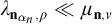
 there. If
$lg(\rho ) \leq m_n$
 , then by taking an arbitrary
$\nu _2$
 of length
$>m_n$
 , it follows from
$(f)$
 that
$\lambda _{\mathbf {n}_{\alpha _n},\rho } \ll \mu _{\mathbf n,\nu }$
 . If
$m_n< lg(\rho )$
 , then by taking an arbitrary
$\nu _2$
 of length
$\leq m_n$
 , we get
$\lambda _{\mathbf {n},\nu } \ll \mu _{\mathbf {n}_{\alpha _n},\rho }$
 .
Recalling
$(f)$
 (and by increasing
$\bar {u}_*$
 if necessary), let
$(m_n : n<n(*))$
 be a series of natural numbers such that
$(\mathbf n, \mathbf {n}_{\alpha _n}, l(*), m_n)$
 satisfy that assumptions of
$(f)$
 (with
$(\mathbf n, \mathbf {n}_{\alpha _n}, l(*), m_n)$
 here standing for
$(\mathbf n,\mathbf {n}_{\alpha },l,m)$
 there).
Let
$\Lambda _m^0=\Lambda _{m+1} \setminus \Lambda _m=\{ \rho \in T_{\mathbf n} : lg(\rho )=m\}$
 and let
$S_m^0=\{\bar {w} : \bar {w}=(w_{\eta } : \eta \in \Lambda _m^0),$
 for every
$\eta \in \Lambda _m^0,\, w_{\eta } \in W_{\mathbf n,\eta } \}$
 .
Recalling that above
$\bar {u}_*$
 , W is nowhere meagre, for every
$\bar {v} \in S_{l(*)}^0$
 there is
$\bar {w}_{\bar {v}} \in W \subseteq lim(\mathbb {S})$
 such that
$\bar {u}_*{}^\frown \bar {v} \leq \bar {w}_{\bar {v}}$
 .
Choose
$p_n, U_n$
 by induction on
$n\leq n(*)$
 such that:
-
1. $p_n \in \mathbb {P}_{\alpha _n}$
. -
2. If $m<n$
then
$p_m \leq p_n \restriction \alpha _m$
. -
3. $U_n \subseteq S_{l(*)}^0$
. -
4. If $m<n$
then
$U_n \subseteq U_m$
. -
5. If E is an equivalence relation on $U_n$
with
$\leq \Pi \{|T_{\mathbf {n}_{\alpha _l},m_l}| : n\leq l<n(*)\}$
equivalence classes, then for some
$\bar {v}_* \in U_n$
,
$\cap \{ \underset {\rho \in T_{\mathbf n,l(*)}}{\cup } w_{\bar {v}_\rho } : \bar {v} \in \bar {v}_*/E\}=\emptyset $
. -
6. If $\bar {v} \in U_n$
then
$p_{\bar {w}_{\bar {v}}} \restriction \alpha _n \leq p_n$
.


Suppose we’ve carried the induction, then for every
$\bar {v} \in U_{n(*)}$
 ,
$p_{\bar {w}_{\bar {v}}}=p_{\bar {w}_{\bar {v} \restriction \alpha _{n(*)}}} \leq p_{n(*)}$
 , hence by the choice of
$p_{\bar {w}_{\bar {v}}}$
 ,
$p_{n(*)} \Vdash \underset {\sim }{\rho } \in \cap \{\mathbf {B}_{\bar {w}_{\bar {v}}, m_*} : \bar {v} \in U_{n(*)}\}$
 . Therefore it’s enough to show that
$\cap \{\mathbf {B}_{\bar {w}_{\bar {v}}, m_*} : \bar {v} \in U_{n(*)}\}=\emptyset $
 . By its definition,
$\mathbf {B}_{\bar {w}_{\bar {v}},m_*}=lim(T_{\bar {v}})$
 where
$T_{\bar {v}}=\{ \eta \in T_{\mathbf n} : $
 if
$m_*<lg(\eta )$
 then
$\eta (m+1) \in w_{\eta \restriction m}$
 for every
$m_* \leq m \}$
 . Therefore, if we show that
$\cap \{T_{\bar {v}} \cap T_{\mathbf n,l(*)+1} : \bar {v} \in U_{n(*)}\}=\emptyset $
 , then it will follow that
$\cap \{lim(T_{\bar {v}}) : \bar {v} \in U_{n(*)}\}=\emptyset $
 . This follows from part (5) of the induction hypothesis, as
$\cap \{ \underset {\rho \in T_{\mathbf n,l(*)}}{\cup } w_{\bar {v}_\rho } : \bar {v} \in U_{n(*)} \}=\emptyset $
 . This contradiction proves the claim.
Carrying the induction: For
$n=0$
 , choose any
$p_0 \in \mathbb {P}_{\alpha _0}$
 and let
$U_0=S_{l(*)}^0$
 . It’s enough to show that
$U_0$
 satisfies
$(5)$
 . Let E be an equivalence relation on
$U_0$
 with
$m_{**} \leq \Pi \{|T_{\mathbf {n}_{\alpha (l)},m_l}| : l<n(*)\}$
 equivalence classes and denote
$\Pi \{|T_{\mathbf {n}_{\alpha (l)},m_l}| : l<n(*)\}$
 by
$m'$
 . For every
$m<m_{**}$
 , denote by
$U_{0,m}$
 the mth equivalence class of E. Suppose towards contradiction that for every
$m<m_{**}$
 there is some
$\eta _m$
 in
$\cap \{\underset {\rho }{\cup }w_{\rho } : \bar {w} \in U_{0,m}\}$
 . For every m there is
$\rho _m$
 such that
$\eta _m \in suc_{T_{\mathbf n}}(\rho _m)$
 . Choose
$\bar {w}=(w_{\rho } : \rho \in T_{\mathbf {n},l(*)})$
 by letting
$w_{\rho }=suc_{T_{\mathbf n}}(\rho ) \setminus \{ \eta _m : m<m_{**} \wedge \rho _m=\rho \}$
 . We shall prove that
$\bar {w} \in U_0$
 . It will then follow that
$\bar {w} \in U_{0,m}$
 for some m, therefore
$\eta _m \in \underset {\rho }{\cup }w_{\rho }$
 , contradicting the definition of
$w_{\rho }$
 . This proves that
$U_0$
 is as required. In order to prove that
$\bar {w} \in U_0$
 , note that for every
$\rho $
 ,
$|suc_{T_{\mathbf n}}(\rho ) \setminus w_{\rho }| \leq |\{m : \rho _m=\rho \}| \leq m_{**} \leq m'=\Pi \{|T_{\mathbf {n}_{\alpha (l)},m_l}| : l<n(*)\} \ll \mu _{\mathbf n, \rho }$
 (the last inequality follows by
$(f)$
 and the choice of
$m_l$
 , recalling that the
$m_l$
 were chosen to satisfy the assumptions of (f) and recalling the definition of the
$\lambda _{\mathbf n, \nu }$
 ). Therefore,
$\bar {w} \in U_0$
 .
Suppose now that
$n=k+1\leq n(*)$
 . Choose
$q_k \in \mathbb {P}_{\alpha _k}$
 such that
$p_k \leq q_k$
 and
$q_k$
 forces a value
$\Lambda _{\bar {v}}^{k}$
 to
$\{\rho \in p_{\bar {w}_{\bar {v}}}(\alpha _k) : lg(\rho )=m_k\}$
 for every
$\bar {v} \in U_k$
 . For every
$\rho \in T_{\mathbf {n}_{\alpha _k},m_k}$
 let
$U_{k,\rho }=\{\bar {v} \in U_k : \rho \in \Lambda _{\bar {v}}^{k}\}$
 . If
$\bar {v} \in U_k$
 , then
$q_k$
 forces the value
$\Lambda _{\bar {v}}^{k}$
 to
$\{\rho \in p_{\bar {w}_{\bar {v}}}(\alpha _k) : lg(\rho )=m_k\}$
 , hence
$U_k=\cup \{U_{k,\rho } : \rho \in T_{\mathbf {n}_{\alpha },m_k}\}$
 . WLOG
$U_{k,\rho }$
 are pairwise disjoint. Now suppose towards contradiction that none of them satisfies requirement (5) of the induction for
$k+1$
 , then each
$U_{k,\rho }$
 has a counterexample
$E_{\rho }$
 , and the union
$\underset {\rho }{\cup }E_{\rho }$
 is therefore an equivalence relation which is a counterexample to
$U_k$
 satisfying (5). Therefore, for some
$\rho $
 ,
$U_{k,\rho }$
 satisfies (5), so choose
$U_n=U_{k,\rho }$
 .
Define
$p_n \in \mathbb {P}_{\alpha _k +1} \subseteq \mathbb {P}_{\alpha _n}$
 as follows:
-
1. $p_n \restriction \alpha _k =q_k$
. -
2. $p_n(\alpha _k)=\cap \{p_{\bar {w}_{\bar {v}}}(\alpha _k)^{[\rho \leq ]} : \bar {v} \in U_n\}$
.


Now for every
$\bar {v} \in U_k$
 ,
$p_{\bar {w}_{\bar {v}}} \restriction \alpha _k \leq p_k \leq q_k$
 , hence
$q_k \Vdash _{\mathbb {P}_{\alpha _k}} \nu \in p_{\bar {w}_{\bar {v}}}(\alpha _k) \rightarrow 1+\frac {1}{m} \leq nor(suc_{p_{\bar {w}_{\bar {v}}}(\alpha _k)}(\nu ))$
 . We shall prove that
$q_k \Vdash _{\mathbb {P}_{\alpha _k}} p_n(\alpha _k) \in \mathbb {Q}_{\mathbf {n}_{\alpha }}^2$
 . As,
$|U_n| \leq |S_{l(*)}^0| \leq 2^{\Sigma \{\lambda _{\mathbf n,\rho '} : \rho ' \in \Lambda _{l(*)}^0\}}<\mu _{\mathbf {n}_{\alpha _k},\rho }$
 (with the last inequality following from (f) and the choice of the
$m_k$
 ’s), the assumptions of Claim 10 hold, the conclusion follows by the proof of Claim 10. A similar argument (using the first part of Claim 10) proves the claim for the case of
$\mathbb {Q}_{\mathbf n}^1$
 .
So
$p_n$
 obviously satisfies requirements 1, 2, and 6.
7 Main measurability claim
We’re now ready to prove the main result. We shall first prove that Cohen forcing (hence
$\mathbb {Q}_{\mathbf n}^i$
 ) turns the ground model set of reals into a null set with respect to our ideal. We will then prove the main result by using a Solovay-type argument. Below, by “Cohen forcing” we refer to finite binary sequences ordered by extension, or equivalently, any countable atomless forcing.
Claim 22. For
$\iota \in \{0,\frac {1}{2},1,2\}$
 we have
$\Vdash _{Cohen} $
 “there is a Borel set
$\mathbf {B} \subseteq lim(T_{\mathbf {n}_*})$
 such that
$lim(T_{\mathbf {n}_*})^V \subseteq \mathbf {B}$
 and
$\mathbf {B}$
 is
$(\mathbb {Q}_{\mathbf {n}_*}^{\iota }, \underset {\sim }{\eta _{\mathbf {n}_*}^{\iota }})$
 -null” (where by “
$(\mathbb {Q}_{\mathbf {n}_*}^{\iota }, \underset {\sim }{\eta _{\mathbf {n}_*}^{\iota }})$
 -null” we mean that for every p there is a stronger q with
$lim(q) \cap \mathbf {B}=\emptyset $
 ).
Proof. Let
$\mathbb {Q}$
 be the set of finite functions with domain
$\{\eta \in T_{\mathbf {n}_*} : lg(\eta )<k\}$
 for some
$k<\omega $
 such that
$f(\rho ) \in suc_{T_{\mathbf {n}_*}}(\rho )$
 .
$(\mathbb {Q}, \subseteq )$
 is countable and for every
$q\in \mathbb Q$
 there are
$q\leq q_1,q_2 \in \mathbb Q$
 which are incompatible, hence is equivalent to Cohen forcing. Let
$\underset {\sim }{f}:=\underset {g\in \underset {\sim }{G}}{\cup }g$
 . For
$f\in S=\Pi \{suc_{T_{\mathbf {n}_*}}(\rho ) : \rho \in T_{\mathbf {n}_*}\}$
 define
$\mathbf {B}_f:= \{\eta \in lim(T_{\mathbf {n}_*}) :$
 for infinitely many n we have
$\eta \restriction (n+1)=f(\eta _n)\}$
 . For every
$n<\omega $
 let
$\mathbf {B}_{f,n}=\{\eta \in lim(T_{\mathbf {n}_*}) : \eta \restriction (m+1)\neq f(\rho )$
 if
$n\leq m$
 and
$n\leq lg(\rho )\}$
 . Clearly,
$\Vdash $
 “
$\underset {\sim }{f} \in S$
 ,”
$\mathbf {B}_f^c=\underset {n<\omega }{\cup }\mathbf {B}_{f,n}$
 , and obviously each
$\mathbf {B}_{f,n}$
 is Borel, hence
$\mathbf {B}_f$
 is Borel. For every
$\eta \in T_{\mathbf {n}_*}$
 let
$w_{\eta }=suc_{T_{\mathbf {n}_*}}(\eta )\setminus \{f(\eta )\}$
 . As in Claim 21,
$\Vdash _{\mathbb {Q}_{\mathbf {n}_*}^{\iota }} $
 “
$\underset {\sim }{\eta _{\mathbf {n}_*}^{\iota }} \in \mathbf {B}_{\bar {w}}$
 ” for
$\bar {w}$
 and
$\mathbf {B}_{\bar {w}}$
 as in that proof. Hence
$\Vdash _{\mathbb {Q}_{\mathbf {n}_*}^{\iota }} $
 “
$\underset {\sim }{\eta _{\mathbf {n}_*}^{\iota }} \notin \mathbf {B}_f$
 ,” so
$\mathbf {B}_f$
 is
$(\mathbb {Q}_{\mathbf {n}_*}^{\iota }, \underset {\sim }{\eta _{\mathbf {n}_*}^{\iota }})$
 -null. Let
$G\subseteq \mathbb Q$
 be generic and let
$g=\underset {\sim }{f}[G]$
 , so
$\mathbf {B}_g$
 is a
$(\mathbb {Q}_{\mathbf {n}_*}^{\iota }, \underset {\sim }{\eta _{\mathbf {n}_*}^{\iota }})$
 -null Borel set in
$V[G]$
 . We shall prove that
$V[G] \models lim(T_{\mathbf {n}_*})^V \subseteq \mathbf {B}_g$
 . Let
$\eta \in lim(T_{\mathbf {n}_*})^V$
 and
$m<\omega $
 , it’s enough to show that in V,
$\Vdash _{\mathbb Q} $
 “for some
$m\leq k$
 and
$\rho \in T_{\mathbf {n}_*}, \underset {\sim }{f}(\rho )=\eta \restriction (k+1)$
 .” Let
$p\in \mathbb {Q}$
 , we can extend p to a function
$p\leq q$
 with domain
$\{\eta \in T_{\mathbf {n}_*} : lg(\eta )<k\}$
 for some
$m\leq k$
 . Now let
$q\leq s$
 be an extension of q with domain
$\{\eta \in T_{\mathbf {n}_*} : lg(\eta ) \leq k\}$
 such that
$s(\eta \restriction k)=\eta \restriction (k+1)$
 . Obviously, s forces the required conclusion, so we’re done.
Main conclusion 23: Let
$i\in \{1,2\}$
 . Let
$V\models CH$
 and suppose
$\aleph _1 < \mu =\mu ^{\aleph _0}$
 . Let L be a linear order of cardinality
$\mu $
 that is homogeneous, i.e., that any two nonempty open intervals are isomorphic (for an example of such a linear order, see, e.g., Section 4 in [Reference Kellner and Shelah7]).Footnote
2
Suppose that
$\mathbf q$
 is as in 13(A) such that
$L_{\mathbf q}=L$
 and
$\mathbf {m}_t=\mathbf {m}$
 for every
$t\in L_{\mathbf q}$
 is a (constant) definition of the forcing
$\mathbb {Q}_{\mathbf n}^i$
 , then:
-
a) $\mathbb {P}_{\mathbf q}$
is a c.c.c. forcing notion of cardinality
$\mu $
. -
b) $\Vdash _{\mathbb {P}_{\mathbf q}} $
“
$2^{\aleph _0}=\mu $
.” -
c) Let $G\subseteq \mathbb {P}_{\mathbf q}$
be generic over V and let
$\eta _t=\underset {\sim }{\eta _t}[G]$
for
$t\in L_{\mathbf q}$
. In
$V[G]$
we have the sets
$X:=\{\eta _t : t\in L_{\mathbf q}\}$
and
$<_X:=\{(\eta _s, \eta _t) : s<_{L_{\mathbf q}} t\}$
. Note that these sets are definable over V:
$\eta \in X$
iff it satisfies “
$\eta $
is
$(\mathbb {Q}_{\mathbf n}^i, \underset {\sim }{\eta })$
-generic over V,” and
$(\eta _s, \eta _t) \in <_X$
iff they satisfy “
$\eta _s$
is not
$(\mathbb {Q}_{\mathbf n}^i, \underset {\sim }{\eta })$
-generic over
$V[\eta _t]$
.” Now let
$V[X^+]$
be the collection of sets hereditarily definable from elements of V and finite sequences of members of
$X^+:=X\cup \{X, <_X\}$
, so
$X, <_X \in V[X^+]$
.Footnote
3
Similarly, for
$Z\subseteq X$
, let
$Z^+:=Z\cup \{X,<_X\}$
. Note that, in
$V[G]$
, if
$y\subseteq H(\aleph _0)$
then
$y\in V[X^+]$
iff
$y\in V[Z^+]$
for some finite
$Z\subseteq X$
.


-
(α) $V[X^+]\models ZF+\neg AC_{\aleph _0}$
and
$lim(T_{\mathbf {n}})^{V[X^+]}=\cup \{lim(T_{\mathbf {n}})^{V[\{\eta _t : t \in u\}]} : u\subseteq L_{\mathbf q}$
is finite
$\}$
. -
(β) $(\mathbb {Q}_{\mathbf n}^i,\aleph _1)$
-measurability holds in
$V[X^+]$
: Every
$A\subseteq lim(T_{\mathbf n})^{V[X^+]}$
is
$I_{\mathbb {Q}_{\mathbf n}^i,\aleph _1}$
-measurable. -
(γ) $V[X^+] \models ``\{\eta _t : t\in L_{\mathbf q}\}=lim(T_{\mathbf {n}})\, mod\, I_{\mathbb {Q}_{\mathbf n}^i,\aleph _1}$
.” -
(δ) In $V[X^+]$
, if
$J\subseteq L_{\mathbf q}$
is a proper initial segment then
$\{\eta _t : t\in J\}\in I_{\mathbb {Q}_{\mathbf n}^i,\aleph _1}$
. -
(ε) In $V[X^+]$
, the ideal
$I_{\mathbb {Q}_{\mathbf n}^i,\aleph _1}$
is non-trivial. -
(ζ) $\aleph _1$
is not collapsed, there is an
$\omega _1$
-sequence of different reals, and if
$V=L$
(here L is the constructible universe) then
$\aleph _1^{L}=\aleph _1^{V[X^+]}$
.


Proof. Clause a) By the definition of
$\mathbb {P}_{\mathbf q}$
 and claim 17, so
$|\mathbb {P}_{\mathbf q}| \leq \Sigma \{ |\mathbb {P}_{\mathbf q,J}| : J\subseteq L$
 is finite
$\} \leq 2^{\aleph _0}+|L|^{<\aleph _0}=2^{\aleph _0}+\mu =\mu $
 .
Clause b) By a) we have
$\Vdash _{\mathbb {P}_{\mathbf q}} ``2^{\aleph _0} \leq \mu $
 ,” and as
$|L|=\mu $
 we have
$\Vdash _{\mathbb {P}_{\mathbf q}} ``\mu =|L|\leq |\{\underset {\sim }{\eta _t} : t\in L\}| \leq 2^{\aleph _0}$
 .” Together we’re done.
Clause c)
$(\alpha )$
 By the definitions of
$V[X^+]$
 and
$\mathbb {P}_{\mathbf q}$
 . In particular,
$\neg AC_{\aleph _0}$
 , as we can use
$(A_n : n<\omega )$
 where
$A_n:=\{\{\eta _{t_l} : l<n\} : t_0<_L\dots <_L t_{n-1}\}$
 . As
$V[X^+]$
 is really just
$HOD(V\cup X^{<\omega })$
 in
$V[G]$
 ,
$V[X^+] \models ZF$
 follows by the standard arguments in the literature.
Clause c)
$(\beta )$
 Let
$A\in V[X^+]$
 be a subset of
$lim(T_{\mathbf {m}_*})$
 . A is definable in
$V[G]$
 by a first order formula
$\phi (x, \bar {a},{c})$
 such that
$c\in V$
 and
$\bar {a}=(\eta _{t_0},\dots ,\eta _{t_{n-1}})$
 is a finite sequence from X. Let
$J=\{s\in L_{\mathbf q} : s\leq t_l$
 for some
$l\}$
 . For
$s\in L\setminus J$
 let
$L_s=\{t_l : l<n\} \cup \{s\}$
 , then
$L_s \in \mathbf {L}_{\mathbf q}$
 hence by 14 we have
$\mathbb {P}_{L_s}\lessdot \mathbb {P}_{L_{\mathbf q}}$
 . Let
$\underset {\sim }{T_s}=TV(\phi (\underset {\sim }{\eta _s},\bar {a},c))$
 , so
$\underset {\sim }{T_s}$
 is a
$\mathbb {P}_{L_{\mathbf q}}$
 -name and actually a
$\mathbb {P}_{L_s}$
 -name.
Let
$(p_{s,i} : i<\omega )$
 be a maximal antichain in
$\mathbb {P}_{L_s}$
 and let
$W_s \subseteq \omega $
 such that
$p_{s,i}\Vdash \underset {\sim }{T_s}=true$
 if and only if
$i\in W_s$
 . Define the
$\mathbb {P}_{\{t_l : l<n\}}$
 -name
$\underset {\sim }{U}:= \{i<\omega : p_{s,i} \restriction \{t_l : l<n\} \in \underset {\sim }{G_{\mathbb {P}_{\{t_l : l<n\}}}}\}$
 .
If
$G_0 \subseteq \mathbb {P}_{\{t_l : l<n\}}$
 is generic over V and
$U=\underset {\sim }{U}[G_0]$
 , then in
$V[G_0]$
 ,
$(lim(p_{s,i}(s)[G_0]) : i \in U)$
 are pairwise disjoint: by Claim
$7$
 , if
$p,q\in \mathbb {Q}_{\mathbf n}^{\iota }$
 are incompatible and
$\eta \in lim(p)$
 , then
$\eta \notin lim(q)$
 (otherwise, WLOG
$lg(tr(p))\leq lg(tr(q))$
 , and both
$tr(p)$
 and
$tr(q)$
 are initial segments of
$\eta $
 , hence
$tr(p)\leq tr(q) \in T_p$
 which is a contradiction by Claim
$7$
 ). Hence it’s enough to show that
$((p_{s,i}(s)[G_0]) : i \in U)$
 is an antichain in
$V[G_0]$
 . Assume towards contradiction that for some
$i \neq j\in U$
 there is a common upper bound q for
$p_{s,i}(s)[G_0]$
 and
$p_{s,j}(s)[G_0]$
 . Therefore there is a
$\mathbb {P}_{\{t_l : l<n\}}$
 -name
$\underset {\sim }{q}$
 and
$r\in G_0$
 such that
$r\Vdash _{\mathbb {P}_{\{t_l : l<n\}}} ``p_{s,i}(s), p_{s,j}(s) \leq \underset {\sim }{q}$
 .” Since
$i,j\in U$
 , we have
$p_{s,i}\restriction \{t_l : l<n\}, p_{s,j}\restriction \{t_l : l<n\} \in G_0$
 , and as
$G_0$
 is directed, there is a common upper bound
$r_1 \in G_0$
 for
$p_{s,i}\restriction \{t_l : l<n\}, p_{s,j}\restriction \{t_l : l<n\}$
 and r. Now let
$r^+:=r_1 \cup \{(s,\underset {\sim }{q})\} \in \mathbb {P}_{L_s}$
 , then obviously
$r^+$
 is a common upper bound (in
$\mathbb {P}_{L_s}$
 ) for
$p_{s,i}$
 and
$p_{s,j}$
 , which contradicts our assumption.
Moreover,
$(p_{s,i}(s)[G_0] : i\in U)$
 is a maximal antichain: If
$q\in {\mathbb {Q}_{\mathbf n}^{\iota }}^{V[G_0]}$
 is incompatible with
$p_{s,i}(s)[G_0]$
 for every
$i\in U$
 , then as before, there are
$r\in G_0$
 and a
$\mathbb {P}_{\{t_l : l<n\}}$
 -name
$\underset {\sim }{q}$
 such that r forces that
$\underset {\sim }{q}$
 is incompatible with
$p_{s,i}(s)$
 for every
$i\in U$
 . As before we can get a member of
$\mathbb {P}_{L_s}$
 that is incompatible with
$(p_{s,i} : i<\omega )$
 , contradicting its maximality. Hence
$(p_{s,i}(s)[G_0] : i\in U)$
 is a maximal antichain in
$V[G_0]$
 .
If
$s_1,s_2 \in L_{\mathbf q}\setminus J$
 , by the homogeneity assumption, there is an automorphism f of
$L_{\mathbf q}$
 over J such that
$f(s_1)=s_2$
 . Therefore the natural map induced by f is mapping
$\bar {a}$
 to itself and
$\underset {\sim }{\eta _{s_1}}$
 to
$\underset {\sim }{\eta _{s_2}}$
 . Hence
$\underset {\sim }{T_{s_1}}$
 is mapped to
$\underset {\sim }{T_{s_2}}$
 . As
$(\hat {f}(p_{s_1,i}) : i<\omega )$
 and
$W_{s_1}$
 have the same properties (with respect to
$\underset {\sim }{T_{s_2}}$
 ) as
$(p_{s_2,i} : i<\omega )$
 and
$W_{s_2}$
 , we may assume WLOG that
$W_{s_1}=W_{s_2}$
 (denote it by W) and
$\hat {f}(p_{s_1,i})=p_{s_2,i}$
 .
Therefore, if
$G_0 \subseteq \mathbb {P}_{\{t_l : l<n\}}$
 is generic and
$i\in \underset {\sim }{U}[G_0]$
 , then there is
$p_i \in {(\mathbb {Q}_{\mathbf n}^{\iota }})^{V[G_0]}$
 and W such that for every
$s\in L\setminus J$
 ,
$p_{s,i}(s)[G_0]=p_i$
 and
$W_s=W$
 (and W can be found in the ground model).
Work now in
$V[G_0]$
 : Let
$B:=\cup \{lim(p_i) : i\in W \cap U\}$
 , so B is a Borel set and we shall prove that
$A=B$
 modulo the ideal: by clauses
$(c)(\gamma )+(c)(\delta )$
 proved below, it’s enough to show that if
$s\in L_{\mathbf q}\setminus J$
 , then
${\eta _s}\notin A\Delta B$
 (note that, by its definition,
$J\in V$
 and hence
$J\in V[X^+]$
 ).
Let
$s\in L_{\mathbf q}\setminus J$
 and
$i\in U$
 , then
$p_{s,i} \in \mathbb {P}_{L_s}/G_0$
 and by the choice of
$p_{s,i}$
 ,
$p_{s,i} \Vdash _{\mathbb {P}_{L_s}/G_0} ``\phi (\underset {\sim }{\eta _s}, \bar {a},c) $
 iff
$\underset {\sim }{T_s}=true$
 iff
$i\in W$
 .” In other words, in
$V[G_0]$
 we have
$p_i \Vdash _{\mathbb {Q}_{\mathbf n}^{\iota }} ``\phi (\underset {\sim }{\eta _s}, \bar {a},c)$
 iff
$i\in W$
 .” Since
$(p_i : i\in U)$
 is a maximal antichain, every
$G\subseteq \mathbb {Q}_{\mathbf n}^{2}$
 generic over
$V[G_0]$
 must contain exactly one of the
$p_i$
 , hence in
$V[G_0]:\, \Vdash _{\mathbb {Q}_{\mathbf n}^{\iota }} ``\phi (\underset {\sim }{\eta _s}, \bar {a},c)$
 iff
$i\in W$
 for the
$p_i$
 such that
$p_i \in \underset {\sim }{G}$
 .” Now
$p_{s,i}(s)=p_i \in \underset {\sim }{G}$
 iff
$\underset {\sim }{\eta _s} \in lim(T_{p_{s,i}(s)})=lim(T_{p_i})$
 , hence we got
$\Vdash _{\mathbb {Q}_{\mathbf n}^{2}} ``\phi (\underset {\sim }{\eta _s}, \bar {a},c)$
 iff
$i\in W$
 where i is such that
$\underset {\sim }{\eta _s} \in lim(T_{p_i})$
 .” Therefore
$\Vdash _{\mathbb {Q}_{\mathbf n}^{\iota }} ``\underset {\sim }{\eta _s} \in A$
 iff
$\underset {\sim }{\eta _s}\in B$
 .”
Clause c)
$(\gamma )$
 If
$\rho \in lim(T_{\mathbf {n}})^{V[X^+]}\setminus \{\eta _t : t\in L_{\mathbf q}\}$
 (recall that
$V[X^+]$
 was defined in the formulation of clause (c) of the claim), then
$\rho \in lim(T_{\mathbf {n}})^{V[\{\eta _t : t\in u\} \cup \{X, <_X\}]}$
 for some finite u. By Claim 21,
$\rho $
 is not
$(\mathbb {Q}_{\mathbf {n}}^{\iota }, \underset {\sim }{\eta _{\mathbf {n}}})$
 -generic over V. Therefore, by the definition of
$I_{\mathbb {Q}_{\mathbf n, \aleph _1}^i}$
 ,
$\Vdash _{\mathbb {P}_{\mathbf q}} ``lim(T_{\mathbf {n}})\setminus \{\underset {\sim }{\eta _t} : t\in L_{\mathbf q}\}\in I_{\mathbb {Q}_{\mathbf n}^i, \aleph _1}$
 .” This is due to the fact that being
$(\mathbb {Q}_{\mathbf n}^i, \underset {\sim }{\eta })$
 -generic over V means avoiding every Borel
$(\mathbb {Q}_{\mathbf n}^i, \underset {\sim }{\eta })$
 -null set from V, and as
$V\models CH$
 , there are
$\aleph _1$
 -many such sets. Why can we use Claim 21? Assume that in Claim 21
$\alpha _*$
 is finite, assumptions
$(a)$
 –
$(e)$
 and
$(g)$
 hold and
$(f)$
 is replaced by
$(h)$
 where:
$(h)\, p_* \Vdash _{\mathbb {P}} \underset {\sim }{\rho } \notin \{\underset {\sim }{\eta _{\alpha }} : \alpha <\alpha _*\}$
 .
There is a condition
$p_* \leq p_{**}$
 and a natural number k such that
$p_{**}\Vdash _{\mathbb {P}} \underset {\sim }{\rho }\restriction k \notin \{\underset {\sim }{\eta _{\alpha }}\restriction k : \alpha <\alpha _*\}$
 and
$p_{**}$
 forces values to
$\underset {\sim }{\rho }\restriction k$
 and
$\underset {\sim }{\eta _{\alpha }}\restriction k\, (\alpha <\alpha _*)$
 , which will be denoted by
$\rho _*$
 and
$\eta _{\alpha }^*\, (\alpha <\alpha _*)$
 . In addition, we shall choose k to be sufficiently large.
For
$\mathbf n \in \mathbf N$
 and
$\eta \in T_{\mathbf n}$
 , let
$\mathbf {n}^{[\eta \leq ]}$
 be the natural restriction of
$\mathbf n$
 to
$T_{\mathbf n}^{[\eta \leq ]}$
 . Now let
$\mathbf {n}_*=\mathbf {n}^{[\rho _* \leq ]}$
 and
$\mathbf {n}_{\alpha }^{*}=\mathbf {n}_{\alpha }^{[\eta _{\alpha }^{*} \leq ]}$
 . By the choice of k,
$\mathbf {n}_*$
 and
$\mathbf {n}_{\eta _{\alpha }}^{*}$
 are far, moreover, they satisfy assumption f of Claim 21, and by iterating
$\mathbb {Q}_{\mathbf {n}_{\alpha }^{*}}^{i}$
 instead, we get the desired conclusion.
Clause c)
$(\delta )$
 By Claim 19, each
$\mathbb {Q}_{\mathbf {m}_t}$
 adds a Cohen real, hence the set of previous generics is included in a null Borel set by Claim 22. More precisely: For
$t\in L$
 , let
$V_{2, t}:=V[G\cap \mathbb {P}_{L_{<t}}]$
 and let
$V_{1,t}$
 be the class of elements from
$V_{2,t}$
 that are hereditarily definable in
$V[G]$
 from elements of V, finite sequences form
$\{ \eta _s : s<t\}$
 and
$\{ \eta _s : s<t \}$
 . As
$\{ \eta _s : s<t\} \subseteq lim(T_{\mathbf n})^{V_{1,t}}$
 , it suffices to show that the Cohen real
$\underset {\sim }{\nu _t}$
 added by
$\underset {\sim }{\mathbb {Q}_t}$
 is Cohen over
$V_{1,t}$
 . As
$\underset {\sim }{\nu _t}$
 is Cohen over
$V^{\mathbb {P}_J}$
 for every finitie
$J\subseteq L_{<t}$
 , it suffices to show that every nowhere dense tree
$T\in V_{1,t}$
 belongs to
$V^{\mathbb {P}_J}$
 for some finite
$J\subseteq L_{<t}$
 (and so
$\nu _t \in lim(T)$
 ). Suppose then that
$A=\underset {\sim }{A}[G] \in V_{1,t}$
 is a real, so there are
$t_0<t_1<\cdots <t_{n-1}<t$
 , a formula
$\phi $
 and some
$a\in V$
 such that A is definable in
$V[G]$
 using
$\phi (x, a, \eta _{t_0},\dots ,\eta _{t_{n-1}})$
 . We claim that
$A\in V^{\mathbb {P}_J}$
 for some finite
$J\subseteq L_{<t}$
 . As
$A\in V[G\cap \mathbb {P}_{L_{<t}}]$
 and
$\mathbb {P}_{L_{<t}} \lessdot \mathbb {P}_{\mathbf q}$
 ,
$\underset {\sim }{A}$
 is a
$\mathbb {P}_{L_{<t}}$
 -name and
$A=\underset {\sim }{A}[G_t]$
 , where
$G_t=G\cap \mathbb {P}_{L_{<t}}$
 . Let
$p\in G_t$
 force the above facts, and WLOG
$\{t_0,\ldots ,t_{n-1}\} \subseteq Dom(p)$
 . Now if
$q\in \mathbb {P}_{L_{<t}}$
 is above p and forces “
$i\in \underset {\sim }{A}$
 ,” then this is also forced by
$q\restriction Dom(p)$
 . In order to prove this fact, note that we can find for every
$n<\omega $
 an automorphism
$\pi _n$
 of
$L_{<t}$
 such that
$\pi _n$
 is the identity over
$Dom(p)$
 and such that the sets
$\pi _n(Dom(q) \setminus Dom(p))$
 are pairwise disjoint. Letting
$q_n:=\pi _n(q)$
 , each
$q_n$
 forces “
$i\in \underset {\sim }{A}$
 .” It follows that this is forced by
$q\restriction Dom(p)$
 as well: Suppose not, then there is some
$q'$
 above
$q\restriction Dom(p)$
 forcing “
$i \notin \underset {\sim }{A}$
 .” But then there is some
$n<\omega $
 such that
$(Dom(\pi _n(q)) \setminus Dom(p)) \cap Dom(q')=\emptyset $
 . It follows that
$q'$
 and
$\pi _n(q)$
 are compatible, a contradiction. Therefore,
$q\restriction Dom(p)$
 forces “
$i\in \underset {\sim }{A}$
 .” The proof for the case of “
$i\notin \underset {\sim }{A}$
 ” is similar. It follows that
$\underset {\sim }{A} \in V^{\mathbb {P}_{Dom(p)}}$
 , as required.
Clause c)
$(\epsilon )$
 We shall prove that, in
$V[X^+]$
 ,
$X=\{ \eta _t : t\in L\} \notin I_{\mathbb {Q}_{\mathbf n}^i, \aleph _1}$
 and so the ideal is non-trivial. So let
$\bar Z =(Z_{\alpha } : \alpha <\omega _1) \in V[X^+]$
 be a sequence of
$(\mathbb {Q}_{\mathbf n}^i, \underset {\sim }{\eta })$
 -null sets and let
$Z=\underset {\alpha <\omega _1}{\cup }Z_{\alpha }$
 , it suffices to show that
$\eta _t \notin Z$
 for every large enough
$t\in L$
 . Let
$p_* \in G$
 force the above-mentioned facts about
$\underset {\sim }{\bar Z}$
 and let
$(t_l : l<n) \in L^n$
 be an increasing sequence containing
$Dom(p_*)$
 and all
$t\in L$
 relevant for
$\underset {\sim }{\bar Z}$
 . Let
$t\in L$
 such that
$t_{n-1}<t$
 , we shall prove that
$\eta _t \notin Z$
 . Let
$\alpha <\omega _1$
 and suppose that
$\underset {\sim }{q_1}$
 is a
$\mathbb {P}_{\{s_l : l<k\}}$
 -name for a member of
$(\mathbb {Q}_{\mathbf n}^i)^{V[\eta _{s_l} : l<k]}$
 with
$(s_l : l<k) \in (L_{<t})^k$
 . Then there are
$p' \in \mathbb {P}_{\mathbf q}$
 above
$p_*$
 and
$\underset {\sim }{q_2}'$
 such that
$\underset {\sim }{q_2}'$
 is a
$\mathbb {P}_{\{s_l' : l<m\}}$
 -name,
$p'$
 forces “
$\underset {\sim }{q_1} \leq \underset {\sim }{q_2'}$
 and
$lim(q_2') \cap \underset {\sim }{Z_{\alpha }}=\emptyset $
 ” and WLOG
$\{t_0,\ldots ,t_{n-1}\} \subseteq \{s_0,\ldots ,s_{k-1}\} \subseteq \{s_0',\ldots ,s_{m-1}'\}$
 . There is an automorphism
$\pi $
 of L that is the identity over
$\{s_0,\ldots ,s_{k-1}\}$
 such that
$\pi (\{s_0',\ldots ,s_{m-1}'\}) \subseteq L_{<t}$
 , so we may assume WLOG that
$\{s_0',\ldots ,s_{m-1}'\} \subseteq L_{<t}$
 . It follows that
$\eta _t \notin Z_{\alpha }$
 , and therefore,
$\eta _t \notin Z$
 .
Clause c)
$(\zeta )\, V\models AC$
 , therefore there is an
$\omega _1$
 -sequence of distinct reals in V.
$\mathbb {P}_{\mathbf q} \models ccc$
 , therefore
$\aleph _1$
 is not collapsed, and that sequence is as required in
$V[X^+]$
 as well. If
$V=L$
 , then
$\aleph _1^L=\aleph _1^{V[X^+]}$
 follows from ccc.
8 An Application to
$\Pi ^1_n$
singletons

We conclude the article with an easy application of
$\mathbb {Q}^2_{\mathbf n}$
 that is of independent interest. By a classical result of Jensen [Reference Jensen4], there exists a forcing
$\mathbb P \in L$
 that adds a
$\Pi ^1_2$
 singleton over L. Jensen’s construction relies heavily on structural properties of L such as diamond. Thanks to the explicit definability of
$\mathbb {Q}^2_{\mathbf n}$
 and its property of adding a unique generic real, we are able to get a
$\Pi ^1_2$
 singleton over L almost “for free.” As we saw, the existence and the relevant properties of
$\mathbb {Q}_{\mathbf n}^2$
 are already established in
$ZFC$
 , and the only extra assumption needed for our new construction of a
$\Pi ^1_2$
 singleton is that the ground model reals are constructible. Our construction easily generalizes to other models of set theory, in which case if the ground model reals are
$\Sigma ^1_n$
 then the new singleton will be
$\Pi ^1_n$
 . Below we shall only deal with lightface definitions, so
$\Sigma ^1_n$
 will always mean “lightface
$\Sigma ^1_n$
 .”
Throughout the rest of this section, fix a computable
$\mathbf n \in \mathbf N$
 (e.g., the one from Observation 4A).
Claim 24. Let
$\mathbb Q=\mathbb {Q}^2_{\mathbf n}$
 and let
$G\subseteq \mathbb Q$
 be generic over V. Suppose that
$(\omega ^{\omega })^V$
 is lightface
$\Sigma ^1_n$
 definable in
$V[G]$
 , then letting
$\eta $
 be the canonical generic real added by
$\mathbb Q$
 , the singleton
$\{ \eta \}$
 is a lightface
$\Pi ^1_n$
 singleton.
Proof.
$\eta $
 is
$\mathbb Q$
 -generic over V iff
(*) For every maximal antichain
$I\subseteq \mathbb Q$
 from V, there exists
$p\in I$
 such that
$\eta \in lim(p)$
 .
As “I is a maximal antichain in
$\mathbb Q$
 ” is a lightface Borel statement by Claim 11, and as
$(\omega ^{\omega })^V$
 is lightface
$\Sigma ^1_n$
 in
$V[G]$
 , it follows that (*) is a lightface
$\Pi ^1_n$
 statement in
$V[G]$
 . By the uniqueness of the generic real (Claim 21), (*) defines a
$\Pi ^1_n$
 singleton in
$V[G]$
 .
The assumptions of Claim 24 hold in L for
$n=2$
 . By the following result of Steel, canonical inner models for Woodin cardinals satisfy the assumptions for
$n>2$
 .
Theorem 25. Let
$\mathbb Q$
 be a Borel ccc forcing. Let
$n>2$
 and let
$\mathcal {M}_{n-2}$
 be the least inner model with
$n-2$
 Woodin cardinals, then
$(\omega ^{\omega })^{\mathcal {M}_{n-2}}$
 is lightface
$\Sigma ^1_n$
 -definable in
$\mathcal {M}_{n-2}^{\mathbb Q}$
 .
Proof. See the proof of Theorem 3.4 in [Reference Steel20].
By Shoenfield’s absoluteness theorem, the minimal possible complexity of a nonconstructible singleton is
$\Pi ^1_2$
 . In order to obtain a similar optimality result over
$\mathcal {M}_{n-2}$
 , we shall use the following absoluteness result due to Woodin.
Theorem 26. Let
$\mathbb Q$
 be a Borel ccc forcing. Let
$n>2$
 and let
$\mathcal {M}_{n-2}$
 be as in the previous theorem, then for every
$\Sigma ^1_n$
 formula
$\phi (x)$
 and
$a\in (\omega ^{\omega })^{\mathcal {M}_{n-2}}$
 ,
$\mathcal {M}_{n-2} \models \phi (a)$
 iff
$\mathcal {M}_{n-2}^{\mathbb Q} \models \phi (a)$
 .
Proof. See, e.g., Section 4 in [Reference Steel20] or Lemma 1.17 in [Reference Mueller, Schindler and Woodin11].
Putting everything together we get the main result of this section.
Theorem 27. Let
$\mathbb Q=\mathbb {Q}_{\mathbf n}^2$
 .
-
a. Suppose that $V\models ZFC+$
“all reals are constructible,” then
$\mathbb Q$
adds a
$\Pi ^1_2$
singleton over V. In particular,
$\mathbb Q$
adds a new
$\Pi ^1_2$
singleton over L and over any forcing extension of L not adding new reals. -
b. Let $n>2$
and let
$\mathcal {M}_{n-2}$
be the least inner model with
$n-2$
Woodin cardinals, then
$\mathbb Q$
adds a new
$\Pi ^1_n$
singleton over
$\mathcal {M}_{n-2}$
. -
c. Clause (b) is optimal in the following sense: If $\mathbb P \in \mathcal {M}_{n-2}$
is a Borel ccc forcing, then
$\mathbb P$
doesn’t add a new
$\Sigma ^1_n$
singleton over
$\mathcal {M}_{n-2}$
.


Proof. Clauses (a) and (b) follow from Claim 24, with clause (a) using the fact that
$\mathbb R \cap L$
 is
$\Sigma ^1_2$
 definable and clause (b) using Theorem 25. Clause (c) follows from Theorem 26 (note that if
$\phi (x)$
 was a
$\Sigma ^1_n$
 formula witnessing otherwise, then
$\exists x \phi (x)$
 is
$\Sigma ^1_n$
 and holds in
$\mathcal {M}_{n-2}$
 by Theorem 26, leading to a contradiction).
9 Open questions
As our model doesn’t satisfy
$AC_{\aleph _0}$
 , it’s natural to ask whether we can improve the result getting a model of
$AC_{\aleph _0}$
 or even
$DC$
 . Hopefully in [Reference Horowitz and Shelah3] it will be shown that assuming the existence of a measurable cardinal, we can get a model of
$DC(\aleph _1)$
 . This leads to the following question.
Problem 1. Can we improve the current result and get a model of
$DC$
 without large cardinals?
A very recent work in preparation [Reference Shelah17] answers this question in the affirmative.
As the current result gives measurability with respect to the ideal
$I_{\mathbf n,\aleph _1}$
 , it’s natural to ask the following question.
Problem 2. Can we get a similar result for the ideal
$I_{\mathbf n,\aleph _0}$
 ?
This problem will be addressed in [Reference Golshani, Horowitz and Shelah2].



