Introduction
Fertility intention is a key immediate determinant of fertility behaviour (Schoen et al., Reference Schoen, Kim, Nathanson, Fields and Astone1997, Reference Schoen, Astone, Kim, Nathanson and Fields1999; Quesnel-Vallée & Morgan, Reference Quesnel-Vallée and Morgan2003; Hagewen & Morgan, Reference Hagewen and Morgan2005). Studies investigating the determinants of fertility intentions have generally focused on background demographic characteristics, including age and parity, as the key determinants of the intention to have children. However, an important question that has been understudied in the literature is how these contextual background factors influence an individual’s fertility intentions. This study aimed to address this gap in the literature by applying the Theory of Planned Behaviour (Ajzen, Reference Ajzen2005) to examine the hypothesis that an individual’s background characteristics are external factors influencing fertility intentions largely indirectly through their attitude to having children, perceived norms related to social pressures for having a child and perceived behavioural control over the factors that may constrain them from having a child. The hypothesis has been tested using recent and appropriate data from a large-scale fertility intention survey conducted in Iran, where the fertility rate has been under the replacement level over the last two decades – estimated at 1.6 children per woman in 2013 (Erfani, Reference Erfani2013). The aim was to further improve our understanding of the factors shaping a person’s fertility intention and decision-making.
Theoretical framework
Based on the Theory of Planned Behaviour (Ajzen, Reference Ajzen2005), which is the extension of the theory of reasoned action (Ajzen & Fishbein, Reference Ajzen and Fishbein1980), ‘…a person forms an intention to engage in a certain behaviour. This intention remains a behavioural disposition until, at the appropriate time and opportunity, an attempt is made to translate the intention into action,’ (Ajzen, Reference Ajzen2005, p. 99). This theory is based on the assumption that people usually behave in a rational manner, where they take in available information and implicitly or explicitly consider the implications of their actions. In the case of fertility behaviour, a large proportion of births occurring in countries with low fertility, including Iran, can be classified as ‘intended’ and resulting from ‘reasoned action’ (Ajzen & Fishbein, Reference Ajzen and Fishbein1980; Klobas, Reference Klobas2010). It is appropriately suggested that ‘fertility is purposive behaviour that is based on intentions, integrated into the life course and modified when unexpected development occur’ (Schoen et al., Reference Schoen, Astone, Kim, Nathanson and Fields1999, p. 799). Therefore, a person’s intention to perform or not to perform a behaviour is the most important immediate determinants of that action (Ajzen, Reference Ajzen2005, p. 117).
According to the Theory of Planned Behaviour, the intention to have or not have a child is determined by three immediate determinants (Ajzen, Reference Ajzen2011; Ajzen & Klobas, Reference Ajzen and Koblas2013). The first is attitude towards having a child, which refers to the perceived positive and negative consequences of having a child for different aspects of a person’s life. The second immediate determinant is subjective norm for having a child, which refers to the perceived external social pressures, resulting from the expectations of salient referent individuals or groups, combined with a person’s motivation to comply with the referents in question. Past studies indicate that parents (Barber, Reference Barber2000), friends (East et al., Reference East, Felice and Morgan1993) and partners (Thomson, Reference Thomson1997) are key normative referents for the decision to have a child. The third immediate determinant is perceived control over having a child, which refers to a person’s perceptions of whether s/he is able to have a child, given the availability of resources and obstacles that can facilitate or interfere with having a child. As argued by Ajzen and Madden (Reference Ajzen and Madden1986, p. 455), people may believe that childbearing behaviour is completely under their control if they decide at will to have or not to have a/another child. On the other hand, the more the performance of childbearing depends on the existence of appropriate opportunities or on possession of adequate resources (e.g. time, money and husband’s co-operation), the less the childbearing behaviour is under a person’s volitional control.
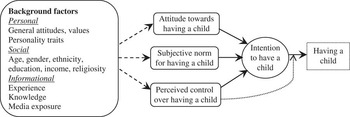
Therefore, as a general rule, it is more likely that a person will form an intention to have a child, if there are more favourable attitudes and subjective norms with respect to having a child, and there is greater perceived control over the factors that may constrain the person from having a child. As Ajzen and Klobas (Reference Ajzen and Koblas2013, p. 206) noted, fertility intentions are expected to result in having or not having a child, to the extent that a person has actual control over having a child. Thus, actual behavioural control moderates the impact of intention on behaviour. Since it is very difficult or impossible to identify the factors influencing actual control, they suggest using perceived control as a proxy for actual control. Figure 1 illustrates the theory, applied to fertility intentions.
Theory of Planned Behaviour applied to fertility intentions (Ajzan, 2005, p. 135).

Individuals’ background factors, including personal, social and informational factors, in turn influence these three immediate determinants of fertility intentions (see Fig. 1). In the Theory of Planned Behaviour, background variables are considered ‘external’ variables as they are outside the cognitive structure related to making a specific decision (Ajzen, Reference Ajzen2005, p. 135). These variables often define the ‘context’ within which a decision is made, and include many of the circumstances that demographers have shown to be associated with fertility intentions and behaviour. For example, age and parity or the number of live children have been shown to be a particularly important background factors for the prediction of fertility intentions (Morgan, Reference Morgan1981, Reference Morgan1982; Yamaguchi & Ferguson, Reference Yamaguchi and Ferguson1995).
Studies investigating the impact of attitudes to childbearing, perceived norm and perceived behavioural control on fertility intentions are limited. A few recent studies, using data from Gender Generations Surveys for European countries, showed that attitudes to having children and perceived norms influenced the intention to have a first child, but perceived control had no significant impact (Koropeckyj-Cox & Pendell, Reference Koropeckyj-Cox and Pendell2007; Billari, et al., Reference Billari, Philipov and Testa2009; Klobas, Reference Klobas2010). Childbearing intentions have also been shown to be affected significantly by peers (South & Baumer, Reference South and Baumer2000) and social networks (Buhler & Fratczak, Reference Buhler and Fratczak2007). Recent studies have indicated that fertility intentions are associated with economic resources in America (Aassve, Reference Aassve2003) and financial constraints in Singapore (Call, Reference Call2008). Yet, these studies did not directly investigate the influence of perceptions of behavioural control on fertility intentions due to the lack of access to appropriate data and absence of developed indicators directly measuring perceived behavioural control and the other direct determinants in the Theory of Planned Behaviour. The data in the 2012 Tehran Survey of Fertility Intentions (TSFI) partly addresses this gap in the literature.
After reviewing a large number of studies, Ajzen (Reference Ajzen2005, p. 100) concluded that ‘when appropriately measured, behavioural intentions account for an appreciable proportion of variance in actual behaviour.’ However, it should be noted that timing of childbearing is an important factor in fertility decision-making (Miller & Pasta, Reference Miller and Pasta1995; Schoen et al., Reference Schoen, Astone, Kim, Nathanson and Fields1999). This is why whenever the timing of fertility has been specified in measuring fertility intentions, more powerful predictions of fertility intentions have been found (Philipov et al., Reference Philipov, Liefbroer and Klobas2015). Fertility intentions are usually measured as the intention to have a child within the next two or three years. This helps increase the ‘stability’ of fertility intentions over time (Ajzen, Reference Ajzen2005, p. 102). Clearly, an individual’s fertility intentions can change over time because of the disruptive effect of unforeseen events. The more time passes, the greater the likelihood that unforeseen events will create modifications in people’s fertility intentions. Therefore, it can be expected that a person who intends to have a/another child within the next one to three years is more likely to do so, compared with one intending to have a/another child within the next 6 years.
The certainty of an intention, which is closely connected to stability of fertility intentions, also plays a significant role in predicting the power of fertility intentions (Morgan, Reference Morgan1982; Thomson & Brandreth, Reference Thomson and Brandreth1995). Fertility intentions with greater certainty have been shown to be stronger predictors of fertility behaviours (Schoen et al., Reference Schoen, Astone, Kim, Nathanson and Fields1999). In fact, the more certain an individual is in the stated intention to have a/another child, the more probable it is that the fertility intention will be actualized in the future, relative to less-certain fertility intentions (Miller & Pasta, Reference Miller and Pasta1995; Thomson & Brandreth, Reference Thomson and Brandreth1995). Other evidence has shown that the certainty level of fertility intentions varies by the fertility decision-maker’s age and parity (Morgan, Reference Morgan1981). As Morgan showed (1981, p. 268), uncertainty in fertility intentions is related to age and parity in a ‘consistent fashion’, where willingness to revise uncertain intentions downward should increase with parity and age. This is particularly the case among those who state an ‘uncertain’ fertility intention or ‘undecided’ timing of fertility intentions in the surveys of fertility intentions. Appropriate data collected in the TSFI allow this study to take into account the timing and certainty of intentions in examining the following proposed hypothesis.
According to the Theory of Planned Behaviour illustrated in Fig. 1, it can be hypothesized that people who view childbearing as a detrimental factor for their personal life, disagree with peers who believe they should have a/another child and believe their childbearing decision is not contingent on the presence of external opportunities and resources required for having a/another child, are less likely to intend to have a/another child in the future. An investigation of the proposed hypothesis will provide researchers and policymakers with insightful information about the formation of fertility intention.
Research questions
This study examines the conceptual framework, illustrated in Fig. 1, for the case of fertility intentions among young married couples in the low-fertility context of Tehran. However, the direct influence of perceived behavioural control, illustrated by the broken line in the figure, is not the focus of this study. The analyses presented in this study are guided by the following three research questions.
-
1) Do the three immediate factors, namely attitudes, norms and perceived behavioural control, influence fertility intentions simultaneously? If yes, does this influence remain when background factors are adjusted for? This question aims to examine the importance of Theory of Planned Behaviour in explaining fertility intentions, and the relative effect of immediate and background factors.
-
2) Is the effect of immediate factors parity-specific? Particularly, is the relative effect of attitudes, norms and perceived behavioural control different for the intention to have a first or second child and the intention to have a child of any order? (Due to small variations in fertility intentions of persons with two or more children, the parity-specific analysis of fertility intentions is limited to those who have one or no child.) The underlying assumptions are that the intention to have a first birth is likely to be influenced by normative pressures to become a parent in the Iranian context, where only 5% of married women remain childless by the end of their reproductive ages (Erfani, 2015a). Moreover, intention to have a second child is more likely to be affected by attitudes or perceived behavioural control, which take into account economic and ideational considerations.
-
3) If immediate factors influence fertility intentions, on which factors do they in turn depend? This question empirically explores the association between a set of distant background factors and the immediate determinants of fertility intentions.
Methods
The research used data from the Tehran Survey of Fertility Intentions (TSFI), conducted in July–August 2012 in the nation’s capital. The survey was administered face-to-face by 30 trained and experienced female and male interviewers among a representative sample of 2267 married women aged 15–35 years and married men living with women under the age of 36 who resided in Tehran’s 22 residential districts. Respondents were selected from households in which a married woman under the age of 36 was living, with both spouses present to ensure a family context for fertility decision-making. It was also done to select people who think about their fertility intentions largely based on their current and near future situations. This contrasts with unmarried young and married adults who frame their fertility intentions mainly based on social norms and achieved childbearing, respectively (Edmonston et al., Reference Edmonston, Lee and Zheng Wu2010, p. 300). Thus, the future fertility rate depends largely on the fertility intentions of the selected samples.
A three-stage stratified cluster random sampling design was used to identify eligible married women and men, residing in Tehran’s 22 residential districts. In the first stage, enumeration areas were selected in each residential district, and in the second stage residential clusters were chosen in each selected enumeration area. The selections in both stages were done based on the probability proportion to population size. The sampling frame for the selection of enumeration areas and residential clusters was taken from the 2011 Census of Iran. In the third stage, fifteen households were selected in each cluster by the systematic random sampling method. The first household to be interviewed in each cluster was selected by a table of random numbers; and the remaining households were identified by an appropriate sampling interval calculated by dividing the total number of households in the selected cluster by fifteen. From each selected household one eligible woman or man was then asked to participate in the survey. To validate the representativeness of the study sample, the demographic characteristics of samples were compared with those of the population of Tehran, as enumerated in the 2011 Census (Statistical Center of Iran, 2011). The results (not shown) indicated that the study samples are closely representative of the population of the city of Tehran. The rationale for focusing on Tehran was two-fold. First, the population of Tehran constitutes about one-sixth of the Iranian population and encompasses all of the country’s socioeconomic and ethnic groups; therefore, the study population represents a heterogeneous group of married individuals. Second, Tehran has one of the lowest levels of fertility in the country. The TSFI is the only comprehensive survey of fertility intentions that has ever been conducted in Iran. The survey questionnaire was designed with seven modules to collect a wide range of data regarding background characteristics of respondents and their partners, their complete histories of live births and fertility preferences, fertility intentions and contraceptive use, respondents’ fertility plans, spousal relations and gender division of household labours, sexual behaviour and satisfaction, values and attitudes and evaluations of current family and population policies. The data are quite appropriate for examining the proposed conceptual model. The survey was granted ethical approval by Nipissing University’s Research Ethics Board in June 2012.
The dependent variable was a person’s fertility intention, measured by two survey questions in the TSFI: 1) ‘Would you intend to have a/another child in the future?’ If the answer was ‘Yes’, respondents were asked: 2) ‘When do you intend to have your (next) child?’ Of these two questions, a measure of fertility intention was developed with four categories: 1) want a/another child soon (within the next 1–3 years); 2) want a/another child later (within the next 4 or more years); 3) unsure/undecided; 4) want no (more) children. The preliminary analysis showed that the effects of covariates on the fertility intentions of people in the first and second categories (i.e. wanting a child soon and later) were almost identical. Therefore, the first two categories were collapsed into one category, labelled ‘want a/another child’. The ‘unsure’ category also included those women who stated they were infecund at the time of the interview.
It should be noted that the fertility intention of women who were pregnant at the time of the interview was also asked. However, the two survey questions on intention for having another child were rephrased to refer to intention to have another child after the one that they were expecting. In all analyses, the current pregnancy was counted as equivalent to a living child. Also, sterilized women were classified as wanting no more children.
Since fertility intention is a categorical variable with three categories, different multinomial logistic regression models have been developed to model the net effect of the immediate determinants of fertility intentions. For the dependent variable, the category ‘want a (more) child(ren)’ is the reference group for the categories of ‘unsure’ and ‘want no (more) children’.
The independent variables include the three immediate determinants of fertility intentions (i.e. attitudes towards childbearing, perceived norms and perceived behavioural control) and socioeconomic background factors. Among immediate factors, the attitude to childbearing was measured by a summated rating scale based on factor analysis of six relevant items that evaluate the consequences of having a child for the respondent’s personal and social life. Specifically, the respondent was asked ‘If you were to have a/another child during the next three years, irrespective of whether you really wish to have a child or not, to what extent would it be better or worse for: your financial situation (0.625); the joy and satisfaction you get from life (0.771); what people around you think of you (0.581); the close relation between you and your spouse (0.706); the care and security you may get in old age (0.645); and certainty in your life (0.756). Factor loadings, shown in parentheses above, indicate strong correlations between the six items and the latent attitude factor. All six items were measured on five-point Likert scales scored from ‘much better’ (1 point), ‘better’ (2 points), ‘neither better nor worse’ (3 points), ‘worse’ (4 points) to ‘much worse’ (5 points), where greater values denote more negative attitudes towards childbearing. The standardized distribution of the weighted, summated rating scale, produced by factor analysis, ranges from −2.1 to +3.0, where larger positive values denote more negative attitudes to childbearing. Factor analysis indicates that all six items loaded on one strong factor. The reliability measure of Cronbach’s alpha (=0.77) and the statistics produced by factor analysis (cumulative variance=47%, eigenvalue=0.8, KMO=0.80) show acceptable reliability and validity for the extracted latent factor measuring attitudes towards childbearing.
The second immediate determinant, namely perceived norms, was measured by a summated rating scale developed by factor analysis of three items, evaluating the extent of perceived normative pressure detected within an individual’s network of ‘relevant others’, including parents, relatives and friends. In the survey, respondents were asked ‘Although you may feel that the decision to have a/another child is yours (and your spouse’s) alone, it is likely that others have opinions about what you should do. I’m going to read out some statements about what other people might think about you having a/another child during the next three years. Please tell me to what extent you agree or disagree with these statements.’ The three items (with factor loading) included: ‘Most of your friends think that you should have a/another child’ (0.945); ‘Your parents think that you should have a/another child’ (0.937); ‘Most of your relatives think that you should have a/another child’ (0.963). The three items were measured by five-point Likert scales scored from ‘strongly agree’ (1 point), ‘agree’ (2 points), ‘disagree’ (3 points) to ‘strongly disagree’ (4 points), where greater values denote lower normative pressure for having a/another child. The extracted standardized distribution of the weighted, summated rating scale ranges from −1.6 to +1.1, with Cronbach’s alpha equal to 0.94 and other results from factor analysis (i.e. cumulative variance=89.9%, eigenvalue=2.7, KMO=0.76) indicating that the scale of normative pressure was highly reliable and valid.
Due to the lack of data in the survey, perceived behavioural control was measured indirectly by a proxy survey question, asking respondents ‘Which of the following family policies, if implemented, would be most likely to positively influence your decision to have a [another] child?’ Out of a list of pronatalist family polices, as passed by the Supreme Council of Cultural Revolution (SCCR, 2012) and then sent to the parliament and the government as a bill for their approval, six policies, selected and read for the respondents in the survey, included: 1) free monthly food basket, containing meat, dairy and so on, for pregnant women or those with children under 2 years; 2) monthly payments to unemployed women with young children; 3) free compulsory health insurance, for mother and the child from the beginning of pregnancy until the second birth day of the child; 4) raising the period of maternity leave to 9 months and that of unpaid leave to 21 months per child; 5) monthly child bonus payment; 6) making housekeeping count as an occupation and creating pension insurance for married women who are housewives. Respondents had the option to choose two policies influencing their decision to have a/another child. Therefore, six dummy variables (1, yes; 0, no) were developed to measure the view of respondents on each of the six policies, where ‘yes’ means that the respondent believes that s/he will have a/another child if a given policy is implemented, ‘no’ indicates that the given policy has no positive effect on her/his decision to have a/another child. An index of perceived behavioural control was developed by summing the six dummy variables. The index scores range from 0 to 2, where the higher values indicate less control on requisites for childbearing decision-making (i.e. resources and requirements), and 0 means high perceived behavioural control. The index was standardized in order to be able to compare the magnitude of the effects of three immediate factors. According to the Theory of Planned Behaviour, it can be assumed that people who believe their fertility decision-making is contingent upon at least one of the six policy initiatives have less perceived control over their fertility behaviour, compared with those who believe that any of these policies has no effect on their fertility intentions to have a/another child. Therefore, the smaller the respondent’s score on the index of perceived behavioural control is, the more likely s/he intends to have no more children in the future. It should be noted that these six polices have mainly focused on economic resources that can empower women, particularly housewives, who are in the majority in Iran, in their childbearing decision-making. However, the individual’s control on other requisites of childbearing decision-making, such as housing, educational services, child care, spousal relation and so on, has not been included in this study because of the lack of data in the survey.
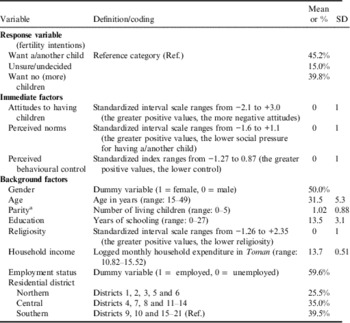
A group of background factors were used in the analyses to adjust for the effects of the three immediate factors on fertility intentions. Background demographic variables included gender, age, parity or number of living children, and social and economic background factors included religiosity, education, household income, employment status and the residential district in the city of Tehran. The definitions and coding of background variables are shown in Table 2. Among the background factors, religiosity is the only composite variable, measured on two four-point Likert scales: ‘How important would you say religion is in your life?’ with categories: 1, very important; 2, fairly important; 3, a little important; 4, not very important; and ‘To be religious, a person does not need to pray five times a day’, with categories: 1, strongly disagree; 2, disagree; 3, agree; 4, strongly agree. The principal factor extracted from factor analysis of these two scales was used to measure the degree of religiosity in the analysis.
According to the Theory of Planned Behaviour (Fig. 1), the direct effect of background factors on fertility intentions should be absent if all variables are empirically and properly measured by appropriate data. In this study, it cannot be assumed that these ideal conditions exist due to data limitations in the survey. In particular, this study did not measure the ‘personal’ and ‘informational’ background factors in Fig. 1 due to data limitation. Thus, the selected background factors included in this study may have both a direct and an intermediate effect on the fertility intention. Nonetheless, some nested statistical models were developed to examine the gross and net effect of background factors and the immediate determinants.
This study used two types of statistical analyses to examine the conceptual model depicted in Fig. 1. First, multinomial and binary logistic regression models were used to examine the gross and net effect of immediate factors on fertility intentions in the whole sample and in the subsample of respondents having one child. To compare the relative effects of immediate factors between respondents having one or no child, categories of ‘unsure’ and ‘want no (more) children’ in the dependent variable were collapsed into one category, labelled ‘want no (more) children/unsure’. This dummy variable was created for the lack of variation in the fertility intention of childless people and it was used in binary logistic regression models. In a second group of models, Ordinary Least Square (OLS) regression models were applied to examine the impact of background factors on attitudes, norms and perceived behavioural control. All analyses were conducted in the whole sample, and in a subset of sample of respondents who were childless or had only one child.
Results
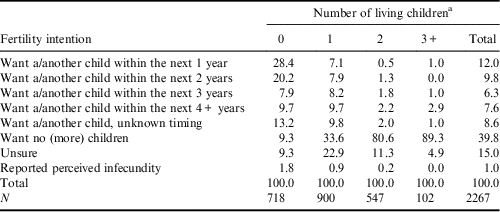
Table 2 shows the definitions and descriptive statistics of the responses and the immediate and background variables used in the analysis. The results indicate that while 45% of respondents want a/another child in the future, more than half either want no more children (40%) or are unsure (15%). Table 1 also shows that eight out of ten young married adults in Tehran who have two children want no more children, whereas 82% of childless individuals want a child. Moreover, one in every ten childless individuals wants to stay childless. The fertility intention of respondents with one child is interesting: while 43% want to have another child in the future, 23% are unsure and have not decided yet, and 34% want to stop childbearing.
Percentage distribution of respondents by fertility intention and timing, according to number of living children: Tehran, Iran, 2012
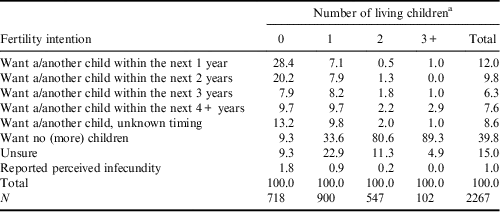
a Includes pregnancies at the time of the interview.
In terms of timing of fertility intentions, Table 1 shows that most young married individuals wanting a child intend to have the child within the next three years in Tehran. Results by parity show that while 70% of childless individuals wanting a child intend to do so within the next 3 years, 58% of persons with one child who want to have a second child, intend to do so within the next three years.
Variable definitions and descriptive statistics (N=2267)
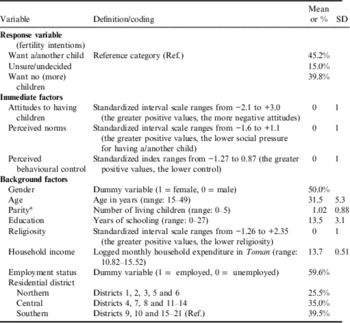
a Includes pregnancies at the time of the interview.
Immediate determinants of fertility intentions
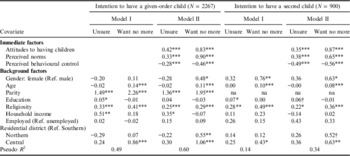
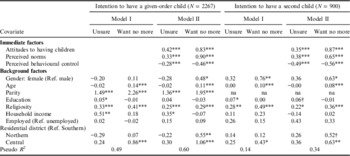
Table 3 presents the regressions of fertility intentions on immediate factors and selected background variables in the study sample and among those having one child. In all models, wanting a/another child is the reference group. The first models examine the relationship between background factors and the outcome variable, while the second models add the immediate factors in the analysis. The second full models examine if attitudes, norms and perceived behavioural control mediate the relationship between background factors and fertility intentions.
Estimated coefficients from the multinomial logistic regression model assessing associations between selected covariates and being unsure or wanting no more children relative to wanting a/another child in the study sample (N=2267) and among those having one child (N=900), Tehran, Iran, 2012
Ref.=reference category; na=not applicable.
†p<0.10; *p≤0.05; **p≤0.01; ***p≤0.001.
The multivariate results in the second models indicate that attitudes, perceived norms and perceived behavioural control are consistently and significantly associated with fertility intentions. As expected, people with greater negative attitudes towards having a/another child within the next years, lower normative pressures for having a/another child and higher perceived behavioural control are more likely to want no more children or be unsure rather than want a/another child in the future. These results, therefore, provide a positive response to the first research question and indicate that attitudes, norms and perceived behavioural control have an independent effect on fertility intentions, even after adjusting for the effect of background factors. Moreover, a comparison of results associated with background variables in the first and second models shows that the effect of background factors generally reduces when adjusting for the effects of three immediate variables. This indicates that attitudes, norms and perceived behavioural control partially mediate the effect of background factors on fertility intentions. (Note that, as discussed earlier in this paper, lack of certain background factors, suggested in Theory of Planned Behaviour, in the analysis and imperfect measurement of perceived behavioural control, can be the reasons for the remaining effect of some of the background factors even when controlling for the effect of immediate factors in the second models.)
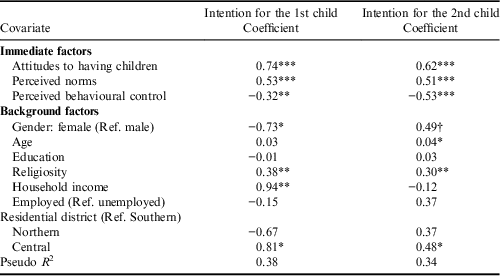
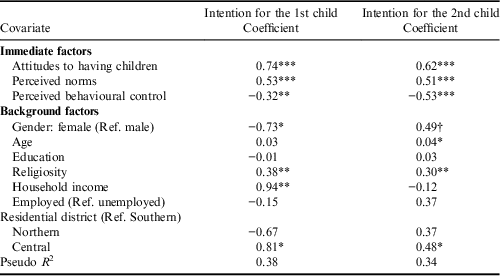
Comparing the relative magnitudes of the effects of immediate factors, it is found that in the case of ‘unsure’ intentions for having a birth of any order in the study sample, the dominating factor is attitudes, with a larger regression coefficient (0.42), while normative pressure has the greatest impact on the intention to have no (more) children (0.90), relative to attitudes and perceived behavioural control (see Table 3). Further results in Table 4 show the relative effects of immediate factors on the intention to have a first or second child. Attitudes to childbearing, followed by normative pressure, with the largest coefficients (0.74 and 0.53 respectively), have the greatest impacts on the intention to have no first child or be unsure, whereas the intention to have no second child or be unsure is affected most by attitudes and perceived behavioural control (0.62 and 0.53) than by normative pressure (0.38). In response to the second research question, these results indicate that the effects of immediate factors are parity-specific.
Estimate coefficients from logistic regression models predicting the intention to not have a first or second child or to be unsure among young married adults with no child (N=718) or one child (N=900), Tehran, Iran, 2012
Ref.=reference category.
The dependent variable has two categories: 0, want a child; 1, want no (more) children or unsure.
†p<0.10; *p≤0.05; **p≤0.01; ***p≤0.001.
Factors associated with immediate determinants of fertility intentions
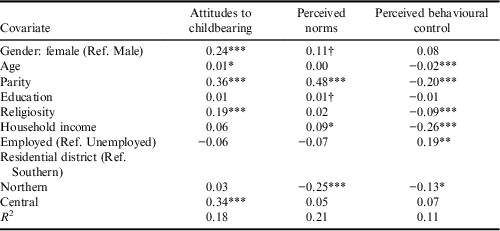
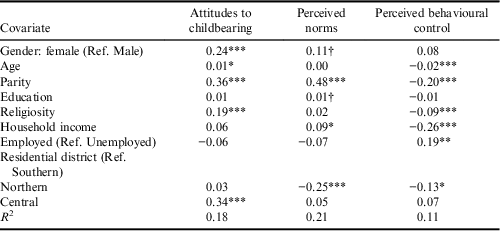
The second part of the multivariate analysis, illustrated in Table 5, includes ordinary least square regression models in which attitudes, perceived norms and perceived behavioural control are dependent variables, and background factors are explanatory variables. The results concerning attitudes show that women rather than men, higher age, greater number of living children, lower religiosity and living in central rather than southern poor residential districts are significantly associated with more negative attitudes towards having a/another child within the next three years. Education, household income and employment status are not significantly associated with attitudes. In general, attitudes towards having a/another child are associated with a mixed set of influential factors, with a greater share of demographic factors.
Estimated coefficients from ordinary least square regression model measuring the effect of background factors on immediate determinants of fertility intentions in the study sample (N=2267), Tehran, Iran, 2012
Ref.=reference category; na=not applicable.
†p<0.10; *p≤0.05; **p≤0.01; ***p≤0.001.
With regard to perceived norms, the results indicate that only parity, household income and residential districts are significantly associated with subjective norms. In fact, with increasing number of living children and household income, social pressures from ‘relevant others’ that push individuals to have a/another child decrease. In addition, living in wealthy northern rather than poor southern districts is associated with higher social pressure for having a/another child.
Finally, perceived behavioural control, in addition to being linked with age, parity and religiosity, is largely associated with economic factors, namely household income, employment status and residential districts. The results show that higher household income and living in wealthier northern districts are associated with higher perceived behavioural control, while being employed rather unemployed is significantly associated with lower control.
Discussion and Conclusion
Contrary to the literate linking individuals’ background factors to family intentions, this study aimed to investigate the hypothesis that fertility intentions are directly determined by three immediate factors, namely attitudes towards having a/another children, perceived norms and perceived behaviour control, which mediate the effects of background variables. This study was based on Ajzen’s Theory of Planned Behaviour and analysed data from the 2012 Tehran Survey of Fertility Intentions, conducted in a sample of young married adult women and men in the city of Tehran, with the lowest-low fertility rate.
The multivariate results examined three research questions. First, attitudes, perceived norms and perceived behavioural control are concurrent immediate determinants of fertility intentions, even when background factors are adjusted for. Though it was not the focus of this study, other findings showed that the direct effect of background factors on fertility intentions reduced when adjusting for the effect of immediate determinants.
Second, the study showed that the relative effect of immediate factors varied by intentions to have a given-order birth. In particular, attitudes and perceived behavioural control were more relevant for intentions to have a second birth. In contrast, perceived norm and attitudes emerged as more relevant for the intentions to become a parent.
Third, a complex set of demographic, ideational and socioeconomic background factors were associated with attitudes, perceived norms and perceived behavioural control. While attitude was influenced largely by demographic factors, namely gender, age and parity, perceived behavioural control was mainly influenced by economic factors, including household income, employment status and place of residence. These results are consistent with evidence from Europe (Miller & Pasta, Reference Miller and Pasta1995; Billari et al., Reference Billari, Philipov and Testa2009). With regard to employment, the study found that being employed rather than unemployed was significantly associated with lower perceived behavioural control over having children. Part of the reason for this result is that employed persons (especially women) usually postpone marriage and childbearing due to the longer time they spend in post-secondary education. Therefore, they were typically recently married individuals who were at the very early stages of their family formation at the time of the survey, and hence their childbearing behaviour could have been affected by policy initiatives, especially those related to maternity leave or leave of absence, and child benefits, compared with unemployed individuals who started family formation earlier in their life.
Further, perceived norms were associated with a few numbers of demographic and socioeconomic factors, including number of living children, income and place of residence. Specifically, normative pressures from peers pushing individuals to have a/another child decreases with rising number of living children and household income, and decreases with living in wealthy northern rather than poor southern districts. This is partly due to the fact that individuals who have already achieved their intended number of children are most likely at the end of their reproductive ages, with an established employment and income and hence want no more children. In contrast, people living in northern districts largely had no or one child at the time of the interview, because they typically postpone childbearing to continue their schooling after marriage (Erfani, Reference Erfani2015b). Therefore, they are more likely to feel a greater pressure from relevant others to have a/another child.
The results of this study are particularly helpful to policymakers and legislators in Iran who are currently revisiting the existing family laws and population control policies towards supporting and encouraging families to have more children. Any new pronatalist family laws and population policies need to be developed based on the understanding of the determinants of low fertility intention. As the results suggest, low intentions for having children in Iran are related to perceived costs and negative consequences of childbearing for different aspects of personal life, normative pressures from peers discouraging childbearing and a large family, and lack of perceived control over resources and opportunities required for having a child, resulting from economic constraints. Although perceived costs of having a child and access to resources for childbearing can be influenced by general and specific policies, it is hard to change normative pressure, discouraging large families, by short-term policies as it is rooted in recent cultural and ideational changes in Iran, including the growth of materialistic values and individualism (Ministry of Culture, 2001, 2003), childless or one-child families (Khalajabadi-Farahani & Kazemipour, Reference Khalajabadi Farahani and Kazemipour2011; Erfani, Reference Erfani2015a), delaying marriage and family formation and divorce (Karimi, Reference Karimi2011), abortion incidence (Erfani & McQuillan, Reference Erfani and McQuillan2008; Erfani, Reference Erfani2011, Reference Erfani2016) and premarital sex and cohabitations (Mohammadi et al., Reference Mohammadi, Alikhani, Khalajabadi Farahani and Bahonar2007; Farahani et al., Reference Farahani, Cleland and Mehryar2011; Khalajabadi Farahani & Cleland, Reference Khalajabadi Farahani and Cleland2015). These are obstacles to the government’s interventions to raise fertility that cannot easily be avoided by legislating new pronatalist laws and policies.
Acknowledgments
This study was supported by two 4A research grants received from the Social Science and Humanities Research Council of Canada. The 2012 Tehran Survey of Fertility Intentions was funded by Population Studies and Research Center for Asia and Pacific, Ministry of Science, Research and Technology (Tehran, Iran) and Nipissing University (Ontario, Canada). Earlier versions of this article were presented at the 2013 XXVII IUSSP International Population Conference (Busan, South Korea) and the 2014 Annual Meeting of the Population Association of America (Boston, USA).