


Introduction
During the Late Iron Age and Early Medieval period in southern Scandinavia (c. 900–1100 ce), the tradition of cremating the dead together with animals and with a multitude of artefacts was increasingly replaced by inhumation in wooden coffins with few or no objects accompanying the deceased (Kleiminger Reference Kleiminger1993; Theliander Reference Theliander2005). This transformation is traditionally related to a period of Christianization and the development of burial practices in western and central Europe, which, within a few centuries, resulted in a Christian way of burial within churchyards (Tesch Reference Tesch, Tesch, Kyhlberg and Weman2017). The Christian conversion of Scandinavia is a well-studied and debated process. It is generally argued to have been a complex development, including royal policy, missionary activity, internal societal shifts, and the broader influence of Christian Europe (Gräslund Reference Gräslund2001; Sundqvist Reference Sundqvist2024). The process of religious change also varied in pace and methods across regions. Older research tends to emphasize the roles of kings and magnates, who allegedly used the new faith to legitimize their power in the region. More recent scholars stress local agency but do not work comparatively on a regional level (Gräslund Reference Gräslund and Nilsson2010; Lidén Reference Lidén1995; Ljung Reference Ljung2016; Nordeide Reference Nordeide, Schjødt, Lindow and Andrén2020; Skre Reference Skre and Lidén1995; Sundqvist Reference Sundqvist2024, 14–17; Tesch Reference Tesch, Tesch, Kyhlberg and Weman2017; Theliander Reference Theliander2005). Common for both strands, however, is a search for patterns in which standardization and regularity are key and thus a tendency to ignore the significant variations and differences in the archaeological material, or what we may call a checklist approach (for a critique, see Lund Reference Lund2013). Such a general view of the Christianization process is not necessarily incorrect; there is much merit in previous research that has increased our understanding of the period significantly. Nonetheless, the research has suffered from being top-down and from understanding the process retrospectively from what it came to be, rather than exploring changes as they unfolded (Lund Reference Lund2013; cf. de Jong Reference de Jong, Stausberg and Engler2016, 653; Lund et al. Reference Lund, Furholt and Austvoll2022). The retrospective methodology is problematic because it is teleological and tends to favour periods with a large body of written sources over pre- and protohistoric periods, using the later phases as lenses through which the previous periods are studied (Amundsen & Fredriksen Reference Amundsen and Fredriksen2014, 82–4). Furthermore, this methodology presents changes and variations in the material as a one-way process, an evolution towards the ideal in terms of the more standardized Christianity of the twelfth century and onwards.
The focus on the process of Christianization has also promoted a dual view of burial practices as either heathen or Christian. It has been suggested that the period was characterized by parallel systems of faith, where elements of Norse religion were absorbed or tolerated in Christian practices (Hultgård Reference Hultgård and Nilsson1992; Tesch Reference Tesch, Tesch, Kyhlberg and Weman2017). Indeed, many burial grounds from the period show great complexity that is often dismissed as ‘pagan resistance’ or ‘poor understanding of the proper Christian doxa’: for example, different ways of employing fire, placing the human body on a layer of charcoal, deposition of animal teeth, adding wooden sticks or stones and wrapping the body in bark. There are also variations in the treatment of bodies, as well as reuse and rearrangement of older burials, variation in the superstructure, spatial orientation and organization which contradict the evolutionary and hybrid narrative (e.g. Andersson Reference Andersson2011; Fahlander Reference Fahlander2020a; Jonsson Reference Jonsson2009; Kivikero Reference Kivikero2011; Lund Reference Lund2013; Nordeide & Gulliksen Reference Nordeide and Gulliksen2007).
The dualist view of these burials has resulted in classification problems and the omission of actions that do not fit Christian dogma (Fahlander Reference Fahlander, Aspöck, Müller-Scheessel and Klevnäs2020b; Gilchrist Reference Gilchrist2020). In recent years, some scholars have sought to overcome this by applying less binary concepts, such as religious hybridity or syncretism (Hultgård Reference Hultgård and Nilsson1992; Tesch Reference Tesch, Brieske and Ruhmann2015). These concepts do, however, tend to become black boxes in which any divergence from Christian ideals is simply explained away as hybrid or syncretic practices (cf. Johnson Reference Johnson, Stausberg and Engler2016, 763). This masks the variability in burial practices of the period and prevents a deeper understanding of how death and dead bodies were understood during this complex period of Scandinavian proto-history. To understand better the changing ontologies of death, the afterlife and religion in southern Scandinavia, such practices may actually be seen as coherent and integrated parts of the burial practices of the intermediate period instead of being dismissed as pagan traits or anomalies.
In this text, we approach the burials of the in-between period from the bottom up, discussing the complexity of practices involved in the burial rituals analysed without pre-defined religious concerns. Instead of asking what kind of Christianity these burials represent, we investigate the ontology of death during the intermediate period. The study thus employs a relational perspective that focuses on a wider set of practices and materialities in relation to the physical bodies of the deceased in their graves. We will, in particular, analyse two categories of practices that are particular to this period: the use of wood in various forms and the presence of animal bones in the burials. These aspects tend to be referred to as heathen inclusions, but the similarities with pagan practices are only superficial; for example, charcoal is not the same as cremation, and the animal bones are not cremated and consist mainly of teeth (cf. Nordin & Kjellin Reference Nordin and Kjellin2023).
A relational perspective on death and burial
It has been argued that the period between the tenth and twelfth centuries can be categorized as protohistoric, as there are few textual sources from the period (Theliander Reference Theliander1998). Without getting into the complexity of source criticism, the few contemporary texts typically relate to other aspects of societal life than what is indicated by archaeological information (Andrén Reference Andrén1997; Price Reference Price2002, 49–63). For instance, the texts do not mention anything about the deposition of animal teeth or the use of wooden sticks in inhumation burials. Instead of leaning towards general religious symbolism, we here employ a bottom-up perspective to study these and other aspects of the graves as relational assemblages. In recent years, similar ontological and relational perspectives have been successfully employed in burial studies (e.g. Crellin Reference Crellin2017; Fahlander Reference Fahlander2020a; Reference Fahlander2024; Fowler Reference Fowler2013; Lund Reference Lund2017; Reference Lund2022; Ratican Reference Ratican2024). Ontology, defined as the study of reality or being, has seen diverse applications within archaeology. Metaphysical approaches are generally characterized by a move beyond ‘the social’ to interrogate instead the fundamental nature of matter (Alberti Reference Alberti2016). In this text, we focus more specifically on the anthropological approach, ‘The ontological turn’, which emphasizes relational perspectives, challenging the notion of human exceptionalism and acknowledging the potential agencies of non-human objects and beings. In practice, this ontological perspective pays attention to things that may seem familiar and, rather than dismissing them using modern Western rationales, it explores alternative agencies and meanings (Holbraad & Pedersen Reference Holbraad and Pedersen2017; see also Alberti Reference Alberti2016; Barad Reference Barad2003, 826; Fahlander Reference Fahlander2018a). The challenge lies in taking the peoples of the past seriously and recognizing that certain actions and expressions are both logical and rational depending on how their worlds are constituted (see also Willerslev Reference Willerslev2013). As such, the ontological perspective, as formulated by Holbraad and Pedersen (Reference Holbraad and Pedersen2017), resonates with the bottom-up perspective in the way that both prioritize the empirical evidence above general pre-conceived concepts and ways of classification.
Such an ontological perspective is especially suited to analyse the burial practices of the conversion period. Looking at Late Iron Age and Early Medieval textual evidence from northern Europe, the presence of fantastic beings in poems such as the Old Norse Hymeskvaði or the Anglo-Saxon Deor indicates an ontology quite different from the modern one (Davidson Reference Davidson1993; Heusler & Munksgaard Reference Heusler and Munksgaard1937). The ninth-century Old Saxon poem Heliand situates parts of the New Testament in a Saxon ontology, including transforming Jesus and his disciples as Christ and his warrior-companions among fantastic creatures (Murphy Reference Murphy1992). A Scandinavian Christian example is Gesta Hammaburgensis ecclesiae Pontificum, which contains several fantastic beings and elements. Supernatural events and entities are also frequent in the twelfth/thirteenth-century Old Norse corpus, which partly recounts events from the time prior to and during Christianization (Merkelbach & Knight Reference Merkelbach and Knight2020). Aspects of such ontologies can also be traced in archaeology. Gilchrist (2008; Reference Gilchrist2020, 137), for example, points out how protective amulets, odd objects and ‘antique’ items such as Roman coins, quartz stones, fossils, cattle teeth, snails and animal bones were placed in high to late medieval burials of Christians in Britain. Effros (Reference Effros2002, 143, 186) emphasizes family- and ancestor-oriented practices such as funerary meals, libations, animal sacrifices and ritual fires in graves by relatives who have been Christians for several generations. Similar ‘odd’ materials and practices were also found in Scandinavia around the end of the first and beginning of the second millennia ce, as discussed here. This alterity of the early Christian period calls for an ontological perspective to understand the attitudes towards death, dead bodies and burial practices during this period that goes beyond typical Old Norse and Christian doctrines. By instead focusing on ‘what there is’, we can reach a deeper understanding of the period’s notions of death and eschatology. The main point of such an ontological, bottom-up approach is to study burials as meaningfully compiled assemblages where materials other than the human body can be of importance (e.g. alternative understandings of the animacies and efficacies of wood, stone, minerals, animal teeth, etc.). Further, the interplay between the treatment of bodies and other materials provides insights into the changing conceptions of human and non-human relationships during this period, and it opens up exploration of aspects of corporeality as part of the change of faith (Pluciennik Reference Pluciennik, Tarlow, Hamilakis and Pluciennik2002; Sørensen et al. Reference Sørensen, Fahlander, Hjørungdal, Lund, Reiter, Hedeager, Prescott and Kristiansenin press). Thus, the materialities in the burial assemblage are not there merely as passive symbols or metaphors, but aim to affect, for example, to restrict, aid, or define the dead in different ways. By examining the burial customs of the conversion period from such an ontological perspective, we will explore some of the most recurrent aspects and practices in inhumation burials to reach a deeper understanding of the views of death and burial and their relations to ontologies of faith in southern Scandinavia. Because the change of faith was an irregular process that manifested at different speeds and in different ways in different regions, the burial practices are also varied and heterogeneous. Some burial grounds show unbroken continuity from pre-Christian cremations to inhumation in wooden coffins, while others seem to start afresh. Some of these sites continue into more formal enclosed Christian burial grounds (Sw. gravgårdar), and subsequently the building of a church and the establishment of churchyards. Consequently, it is difficult to quantify the extent of certain practices and differentiate between earlier and later burials, as stratigraphic sequences are often blurred in these contexts. In addition, the level of detail in the documentation, especially concerning the older excavations, is also often inadequate for a detailed analysis. An exhaustive list of sites or calculated proportions of different practices is hence not possible. In the following, we have instead focused on a selection of recently excavated burial sites as well as a few well-documented older excavations of the early part of the period, whose practices are pan-regional, that is, found at more than a handful of sites in various regions of southern Scandinavia (Fig. 1).
Burials in between faiths: stone, wood, coal, bark and animal bones
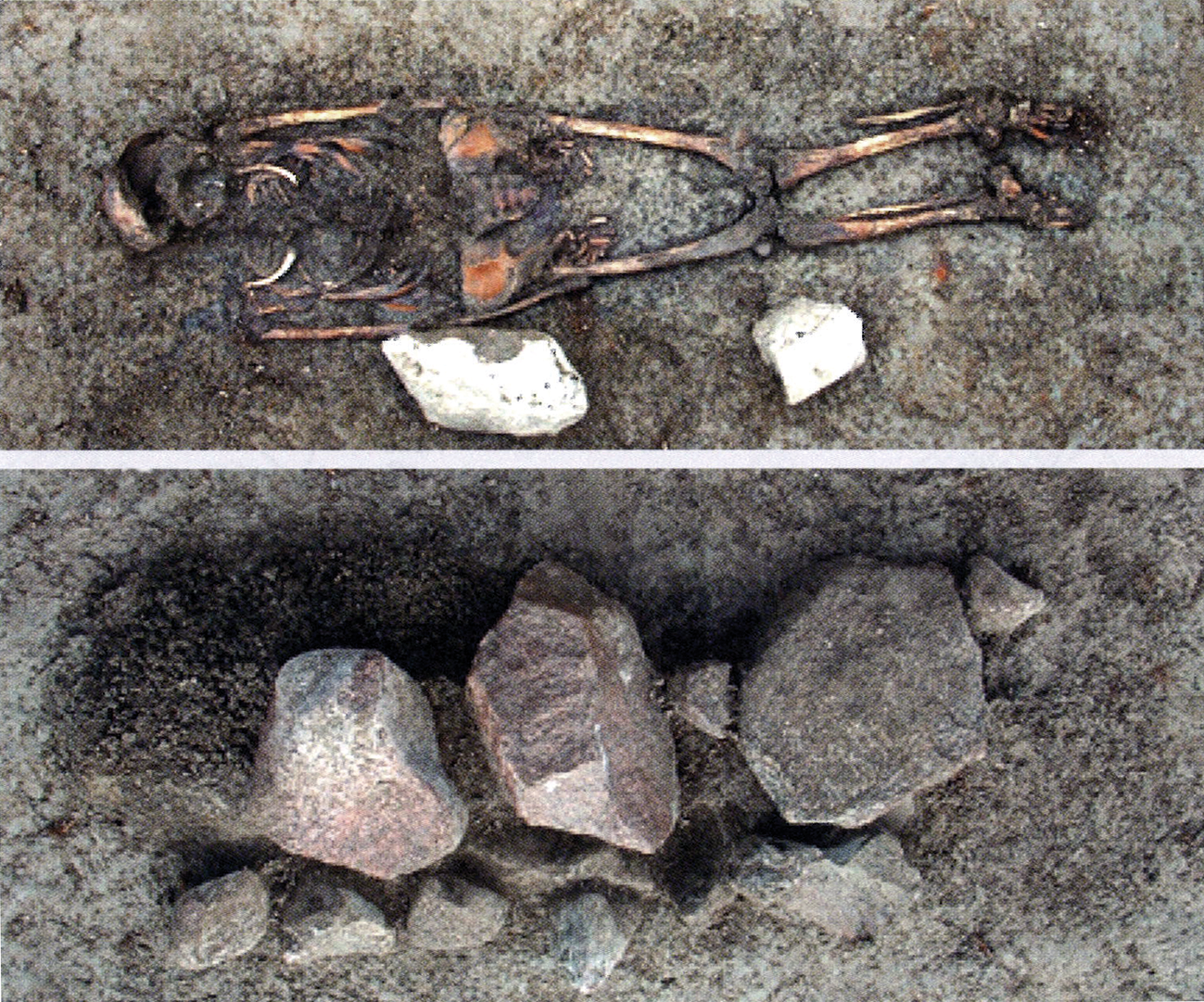
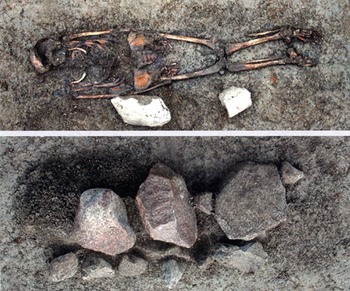
As mentioned in the introduction, burial practices in southern Scandinavia comprise a variety of aspects that do not fit either Old Norse or Christian praxis. For instance, there are several instances of the use of fire in tenth- and eleventh-century inhumation burials. At Broby Bro and Rissne in Uppland, fire has been lit on some of the coffin lids (e.g. Runer & Sillén Reference Runer and Sillén2014, 43, 53; see also Andersson Reference Andersson2011, 23; Holback Reference Holback2016; Holloway Reference Holloway and Murphy2008). Another aspect of early Christian inhumations in Scandinavia is the rather large amounts of stone that have been added to cover the coffins (Fig. 2). Some cases comprise up to 0.8 m thick layers of stones, which is far beyond any practical means to secure the dead from interference. At Skälby, not far from Broby, there are two coffin burials placed inside substantial stone cists, one of which is a metre deep, covered by a cairn and a mound (Andersson Reference Andersson, Tesch, Kyhlberg and Weman2017, 217–21; see also Dahlström & Olsen Reference Dahlström and Olsen2020). There are also examples of the reuse of older cremation graves for later inhumation burials. At Broby Bro (Uppland), there are several cases where thousand-year-old graves have been emptied of the cremated bones and backfilled with large boulders. The kerbs were also modified or new ones added, while situating the dead in wooden coffins asymmetrically within the new monument (Fahlander Reference Fahlander, Aspöck, Müller-Scheessel and Klevnäs2020b; see also Lindkvist & Prata Reference Lindkvist and Prata2024). Valsta is another example in Uppland of a reused Viking Age cremation mound that was rebuilt c. 200–300 years later to enclose three stone-lined cists, presumably containing inhumation burials (Andersson Reference Andersson1997). These examples have been interpreted as a way for early Christians to relate to pagan ancestors (Thäte Reference Thäte2007). This, however, resonates poorly with the treatment of the original grave and the manner of removal of the original bones. For example, parts of the stone packings were reused for the new burial, and fragments of cremated bones were left scattered alongside fragments of the burial urn. In one instance, the centrally positioned stone orb was simply cast aside. Another example of a different type of relation to older graves is found at Gårdskäl in Södermanland. In a burial ground from the conversion period, four stone cists were placed around the edges of an older cremation grave, much like the petals of a flower. Because of the small size of the cists, they have been interpreted as Christian burials of children (Vinberg Reference Vinberg2016). Besides regional variability, there are most likely also varying temporal aspects of these ‘in-between’ practices, which unfortunately are rarely possible to capture due to the lack of datable artefacts and the large time-span of the 14C determinations (but see Dahlström & Olsen Reference Dahlström and Olsen2020). The intermediate period is characterized by several such ‘odd’ practices and materials with substantial regional variability. In order to keep the discussion focused, we will pay particular attention here to two recurring practices that are the least discussed: the use of wood (in the form of charcoal, bark and trunks) and the deposition of animal remains.
Map of southern Scandinavia with the mentioned sites marked with red dots. (Map: authors.)

One example from Kyrsta, Uppland, showing the sometimes excessive use of stones to cover the early Christian inhumation graves. The grave was covered by three large boulders (lower) superimposing the body of an adult man (top), buried without grave goods in a wooden coffin, oriented east–west, dated to ce 880–1030 (Emanuelsson & Sjöling Reference Emanuelsson, Sjöling and Notelid2007, 378). (Photograph: Emelie Schmidt Wikborg, SAU.)
Charcoal
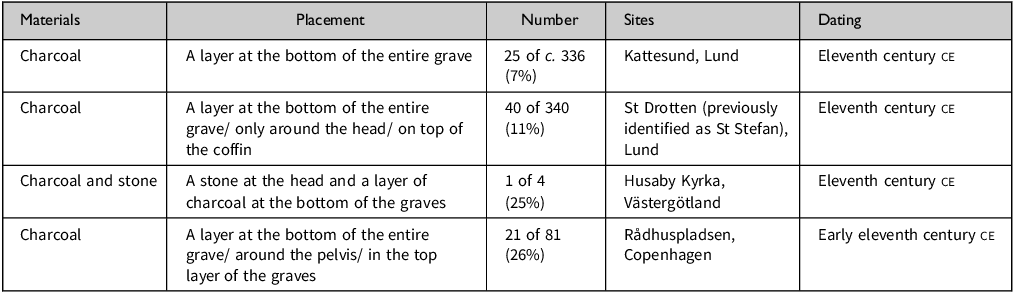
A practice particular to the in-between period is the deposition of charcoal in the graves. A recurring feature is the presence of a layer of charcoal several centimetres thick at the bottom of the grave covering the sediment surface on which the coffin was placed. In other instances, the charcoal covered only the area around the head of the deceased, and in one grave in St Drotten in Lund the charcoal was also found along the side of the grave. This indicates that charcoal was filled into the grave not only before the coffin was placed in the grave, but also afterwards, and on top of the coffin after it had been lowered into the grave (see Table 1) (Dahlström Reference Dahlström2013; Dahlström & Olsen Reference Dahlström and Olsen2020; Jonsson Reference Jonsson2009, 271–92; Mårtensson Reference Mårtensson1981, 61–2; Theliander Reference Theliander2005, 226, 277).
Presence of charcoal found in coffin burials of the ninth–eleventh century in southern Scandinavia.
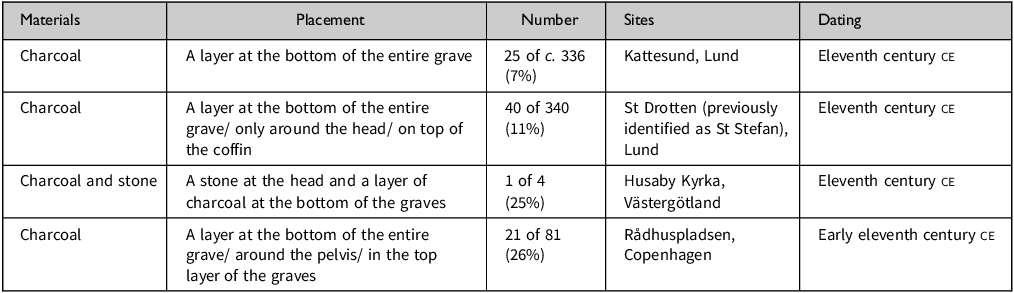
Table 1 Long description
A table detailing the presence of charcoal in coffin burials in southern Scandinavia. The table has five rows and five columns. The columns are labeled Materials, Placement, Number, Sites, and Dating. Row 1: Materials, Charcoal; Placement, A layer at the bottom of the entire grave; Number, 25 of c. 336 (7 percent); Sites, Kattesund, Lund; Dating, Eleventh century C E. Row 2: Materials, Charcoal; Placement, A layer at the bottom of the entire grave/only around the head/on top of the coffin; Number, 40 of 340 (11 percent); Sites, St Drotten (previously identified as St Stefan), Lund; Dating, Eleventh century C E. Row 3: Materials, Charcoal and stone; Placement, A stone at the head and a layer of charcoal at the bottom of the graves; Number, 1 of 4 (25 percent); Sites, Husaby Kyrka, Västergötland; Dating, Eleventh century C E. Row 4: Materials, Charcoal; Placement, A layer at the bottom of the entire grave/around the pelvis/in the top layer of the graves; Number, 21 of 81 (26 percent); Sites, Rådhuspladsen, Copenhagen; Dating, Early eleventh century C E.
By using Bayesian statistics, it has been demonstrated that the 81 graves excavated at Rådhuspladsen, Copenhagen, were constructed within a time-span of only 20 years during the earliest phase of Christianity in this area. These graves, dating to the early eleventh century ce, contained charcoal around the pelvis and in the top layers of the graves (Dahlström Reference Dahlström2013; Dahlström & Olsen Reference Dahlström and Olsen2020).
In the sample, the proportion of graves containing charcoal ranges between 7% and 26%. The percentage is significantly higher at Rådhuspladsen and Husaby Kyrka, where the comparison is limited to eleventh-century ce graves. In contrast, the graves with charcoal at St Drotten are compared to early medieval graves in general, and those from the Kattesund cemetery are compared with graves from the entire medieval period. The charcoal graves are thus a distinct feature among the eleventh-century graves. The presence of charcoal has, by some scholars, been interpreted as traces of purely functional actions, pointing to the absorbing qualities of charcoal, and its potential use for soaking up fluids from the decaying body (Kieffer-Olsen Reference Kieffer-Olsen1993, 166). Although ash and charcoal in relation to burials are often associated with the Old Norse practice of cremation, these substances were also part of Christian traditions and rituals, such as the burning of incense and the use of ash to mark penance (Thompson Reference Thompson2004, 240–41). It has also been suggested that the charcoal could delineate the grave and, at the same time, function to preserve the body (Holloway Reference Holloway, Buckberry and Cherryson2010; Jonsson Reference Jonsson2009, 122–7). Yet these perspectives overlook the group of graves in which the charcoal was found only in the head or pelvis area. If absorption was the primary purpose of using charcoal, surely other parts of the body would have required it as well. Other, less discussed aspects, are the ability of charcoal to persist over time, which was an appreciated property in twelfth-century French burials (Madsen Reference Madsen1990, 122; Nordin n.d.). In contrast to wood, charcoal persists and does not decompose, an ability that resonates with other depositions in the graves, such as animal teeth. It also has agentic abilities such as antiseptic and alkaline properties, as well as a proven effect against insect infestations, larval and fungal growth (Johansen Reference Johansen2026 with references).
Wooden sticks
Another common wooden feature in eleventh-century graves is wooden sticks, so-called burial rods. The practice is known from early Christian western and central Europe, where they have been interpreted as remains of heathen practices, as pilgrim staffs, as walking staffs and as ceremonial tokens (Jonsson Reference Jonsson2009, 111–12 with references). As we shall see, however, their size, shape and numbers contradict these interpretations (Gilchrist & Sloane Reference Gilchrist and Sloane2005, 172–5).
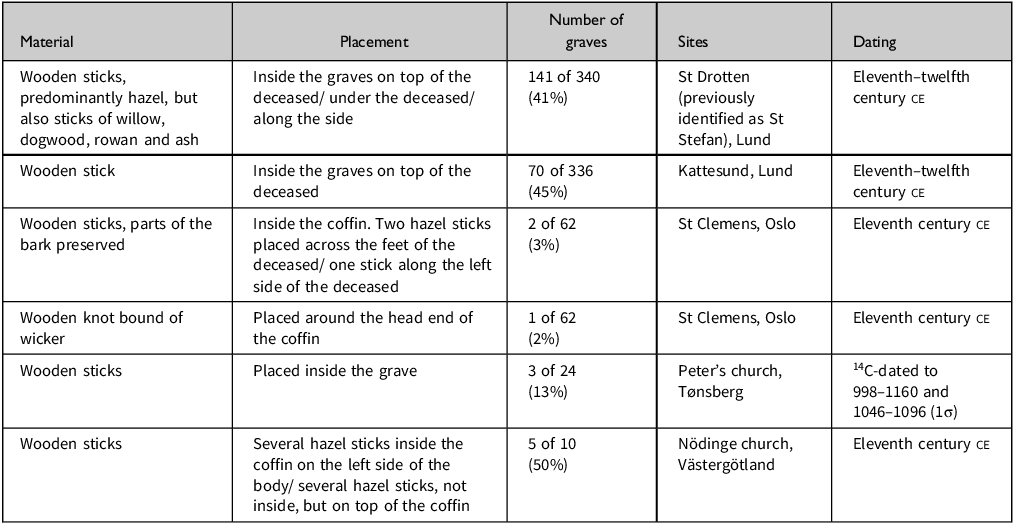
The sticks are a recurring feature in south Scandinavian graves (see Table 2). Generally, they contain only one stick, but one grave at St Drotten in Lund had five, and one had no fewer than seven sticks placed in the grave (Jonsson Reference Jonsson2009, 119; Mårtensson Reference Mårtensson1981, 54). The percentage of graves with sticks at the early medieval cemeteries varied from 3% to 45%. The sticks are predominantly of hazel, but sticks of willow, dogwood, rowan and ash also appear in the graves. Some were cut down during the winter season, while others were cut in the summer (Brendalsmo Reference Brendalsmo1989, 21–33; Jonsson Reference Jonsson2009, 118; Mårtensson Reference Mårtensson1981, 54–7, 138). The occurrence of hazel sticks is linked to the earliest phases of these cemeteries, as for instance in St Clemens in Oslo (Nordeide & Gulliksen Reference Nordeide and Gulliksen2007, 11–12).
Presence of wooden sticks found in burials of the tenth–twelfth century in southern Scandinavia.
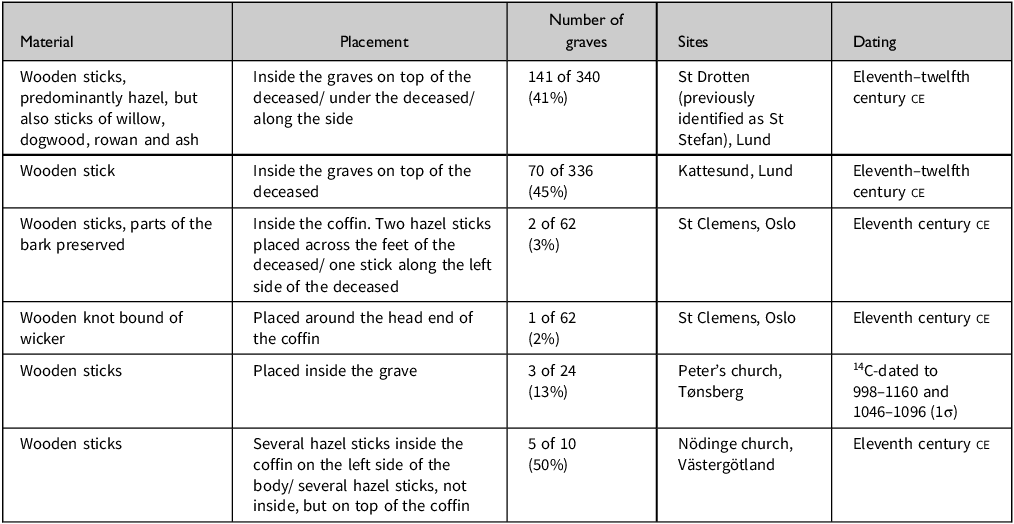
Table 2 Long description
The table has six columns: Material, Placement, Number of graves, Sites, and Dating. It contains data on the presence of wooden sticks in graves from various sites in southern Scandinavia. The rows detail the material of the sticks, their placement in the graves, the number of graves with sticks, the sites where these graves are located, and the dating of these graves. Row 1: Wooden sticks, predominantly hazel, but also sticks of willow, dogwood, rowan, and ash. Inside the graves on top of the deceased/under the deceased/along the side. 141 of 340 (41 percent). St Drotten (previously identified as St Stefan), Lund. Eleventh-twelfth century C E. Row 2: Wooden stick. Inside the graves on top of the deceased. 70 of 336 (45 percent). Kattesund, Lund. Eleventh-twelfth century C E. Row 3: Wooden sticks, parts of the bark preserved. Inside the coffin. Two hazel sticks placed across the feet of the deceased/one stick along the left side of the deceased. 2 of 62 (3 percent). St Clemens, Oslo. Eleventh century C E. Row 4: Wooden knot bound of wicker. Placed around the head end of the coffin. 1 of 62 (2 percent). St Clemens, Oslo. Eleventh century C E. Row 5: Wooden sticks. Placed inside the grave. 3 of 24 (13 percent). Peter’s church, Tønsberg. 14 C-dated to 998-1160 and 1046-1096 (1 sigma). Row 6: Wooden sticks. Several hazel sticks inside the coffin on the left side of the body/several hazel sticks, not inside, but on top of the coffin. 5 of 10 (50 percent). Nödinge church, Västergötland. Eleventh century C E.
The placement of the sticks varies. For instance, in St Clemens in Oslo, a solid pine rod was placed in grave 133, and a knot bound of wicker was placed on top of the head end of grave 65 (Eide Reference Eide1974, 205). In another grave (145), two shorter sticks were placed in a cross of the feet of the corpse of an elderly woman (Eide Reference Eide1974, 205). The varying percentages of graves containing sticks indicate that the phenomenon was widespread, but not an obligatory element in every grave. Further, there is no detectable correspondence between the presence or absence of burial rods in the grave and the age or gender of the buried, and thus they cannot be linked to any specific social group in the cemeteries.
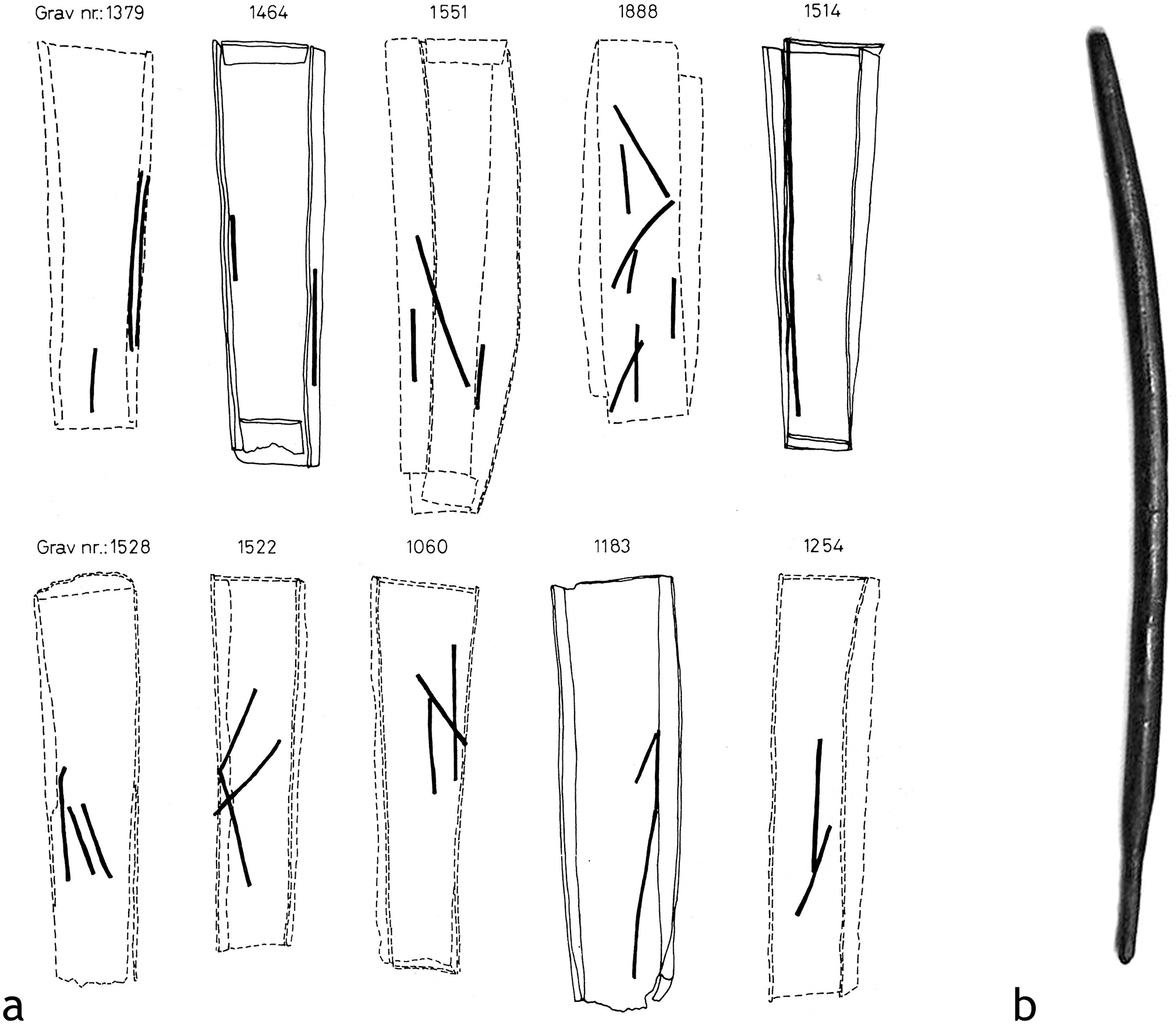
The sticks are predominantly found in eleventh-century graves and some in graves dated more broadly to the eleventh–twelfth centuries ce. In the majority of the graves, the sticks were placed inside the coffin directly on top of the body of the deceased. In St Clemens in Oslo, they were predominantly placed on the left side of the body, whereas in St Drotten in Lund, the sticks were placed on top of the deceased inside the grave (Brendalsmo Reference Brendalsmo1989, 23; Jonsson Reference Jonsson2009, 119; Mårtensson Reference Mårtensson1981, 54; Nordeide & Gulliksen Reference Nordeide and Gulliksen2007, 6; Fig. 3a). As they were placed before the closing of the coffin, they must have been put there before or during the funeral rites at the cemetery. In other instances, however, the sticks were placed not inside, but underneath the coffin, in some cases on top of a charcoal layer (Brendalsmo Reference Brendalsmo1989, 23; Mårtensson Reference Mårtensson1981, 61). In Nödinge kyrka in Västergötland, the 10 eleventh-century graves had a different orientation from the twelfth century church and the later graves and thus most likely are placed in relation to an older church building (Lorentzon Reference Lorentzon1991, 112–13). Several of these graves contained hazel sticks placed not inside the coffins, but on top of or next to them. The size of the sticks varied, but they were typically 60–100 cm long, although a few can be almost 2 m (Fig. 3a & 3b).
(a) Different positions of sticks in graves from St Stefans (modified from Mårtensson Reference Mårtensson1981, 57); (b) hazel stick from St Clemens, Lund, grave 252, KM 66166.818 (Kulturen, Lund).
Wooden wrappings and containers
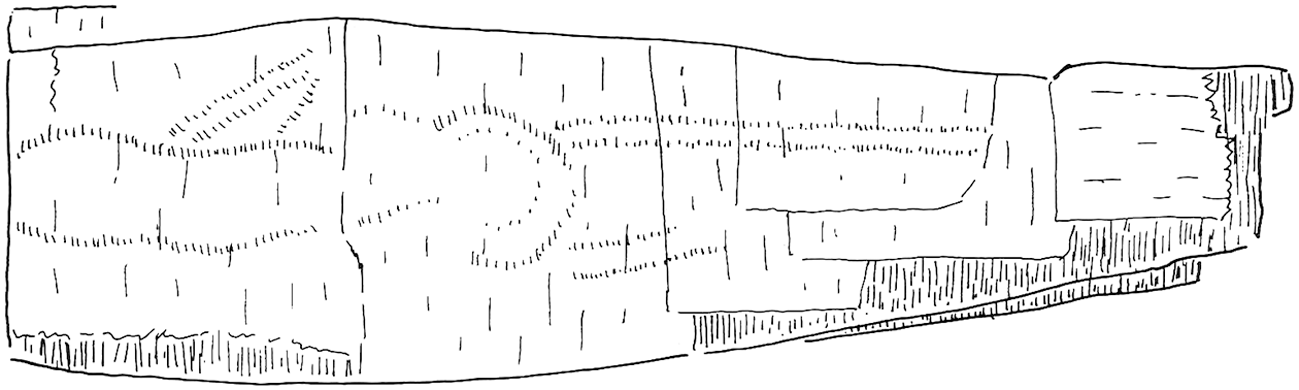
Burials in these early Christian cemeteries utilize a range of containers, extending from simple shroud-wrapped interments without coffins to those featuring various wooden containers. Trapezoid coffins built of wooden planks dominate, but even hollowed trunks were used as coffins, for instance at Grødbygård cemetery in Bornholm and at St Clemens in Oslo (Lund Reference Lund2013; Nordeide & Gulliksen Reference Nordeide and Gulliksen2007; Wagnkilde Reference Wagnkilde2000). In Nödinge, the coffins were not plank-built structures, but were made of birch bark, and thus may be described as wrappings rather than coffins (Fig. 4). The buried were all osteologically determined as younger women, including a teenage girl (Lorentzon Reference Lorentzon1991; Theliander Reference Theliander2005, catalogue no. 2). A particular set of slender coffins was found among 21 of the earliest (first half of the eleventh century) graves from St Clemens in Oslo (Nordeide & Gulliksen Reference Nordeide and Gulliksen2007). These were very narrow, making it difficult for the excavators to understand how it had been possible to squeeze a human being into such a confined space (Eide Reference Eide1974, 203). Four of the graves from the same phase had trunk coffins made of a pine tree with a diameter of 45 cm. The trunks were split in the middle and hollowed out (Eide Reference Eide1974, 203). Another trunk coffin was in the shape of a trug of 15×60 cm. The preservation conditions for wood were good and could testify to the lack of a lid on several of the coffins, including some of the trunks, which instead were covered with a thick layer of bark (Eide Reference Eide1974, 203–4). One burial (no. 125) lacked a coffin; instead, the deceased had been wrapped in birch bark (Eide Reference Eide1974, 204). Similarly, layers of bark were used as some type of coffin in Nödinge (Lorentzon Reference Lorentzon1991, 113–14; Fig. 4).
The ash-bark coffin-like wrapping structure from Nödinge (modified from Lorentzon Reference Lorentzon1991, 114).
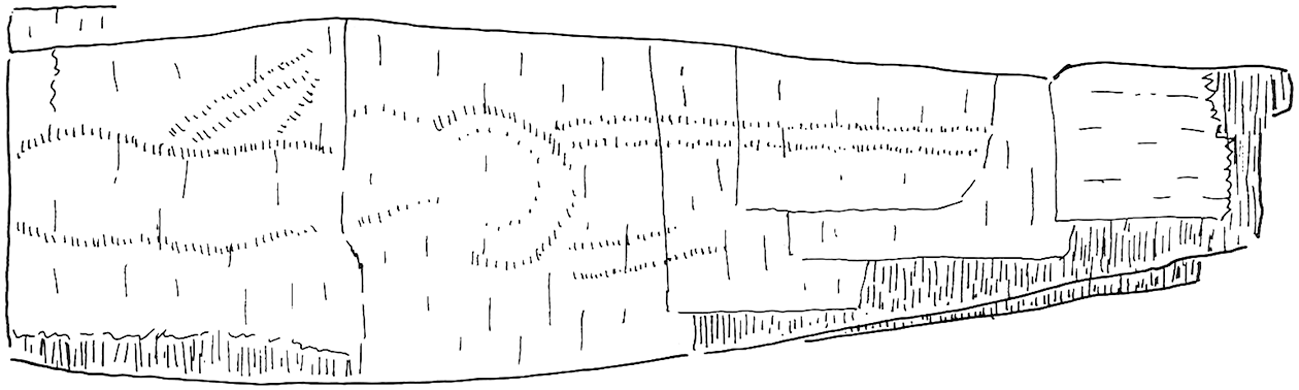
These graves thus included different types of engagement with wood in the graves in relation to the deceased’s body (for parallels from prehistory, see Cooper et al. Reference Cooper, Garrow, Gibson and Giles2019; Fahlander Reference Fahlander2018b; Lund & Fredriksen Reference Lund, Fredriksen, Hedeager, Prescott and Kristiansenin press). The wood may have originated from trees and bushes obtained in close vicinity to the cemeteries and the settlements. Such engagements contrast with the long and complex biographies of many of the objects included in graves from previous centuries, where grave goods included what appeared to be personal possessions. Thus, the early Christian graves seem to have employed more local use of the environs, an engagement with materials accessible in the near surroundings used as part of everyday life. This change may indeed have symbolic and functional causes, but, as we will discuss further on, the different kinds of wood may also be employed in the burial rituals because of their agentive properties.
Animal bones and teeth
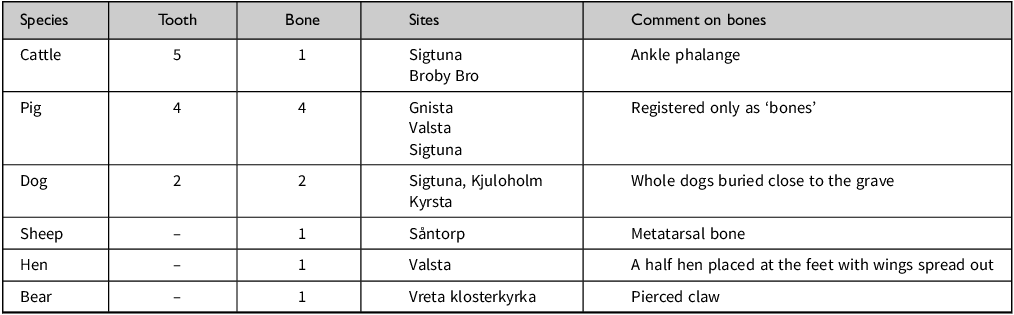
The deposited animal bones and teeth in some of the early period graves show some interesting similarities to the wooden remains. While cremated animal bones were an indispensable part of Late Iron Age cremation burials in Scandinavia, unburned bones are less common. They generally occur in one out of ten cremation graves (Fahlander Reference Fahlanderforthcoming), although in some burial grounds can amount to 40% (Fahlander Reference Fahlanderforthcoming; Lucas & Lucas Reference Lucas and Lucas2017). In south Scandinavian conversion inhumations, there are no cremated animal bones, but unburned bones and teeth are found in varying degrees (see Table 3). Because of the poor level of recognition in many early excavations, it is not possible to establish the general proportion of graves with animal bones during the period of Christianization. However, among the 10 burial grounds with recorded faunal remains discussed here, between 3% and 21% of the early Christian burials contain one or more pieces of animal bone (median 10%). Unfortunately, the bones are rarely determined to species, but tend to be registered only as ‘animal bone’, ‘animal teeth’ or ‘animal claw’. Among those which are determined to a species, the most common are teeth from cows, but also pigs and sheep, and there are also a few examples of whole hens and dogs buried in or beside the coffin. Regrettably, finds of animal bone when excavating early Christian burial grounds tend to be dismissed as unintentional, simply a result of digging through cultural layers. One reason for this interpretation is probably because animal bones do not comply with Christian doxa and are consequently not considered to be a part of a proper burial. The poor level of preservation of unburned bones is another taphonomic factor. It is thus conceivable that there are, in fact, a greater number of early Christian graves with animal bones that are not registered. Indeed, recent and more thorough excavations show that animal bones are recurrent in graves of the conversion period throughout southern Scandinavia. It can be noted that there are no predator teeth in the material; the only example in the cases discussed here is a pierced bear claw. Because the animal bones and teeth in the graves are from common farm animals, they are likely to have local and mundane origins like the aforementioned hazel sticks, charcoal, bark and trunks.
Types of unburned animal bone found in coffin burials of the ninth–eleventh centuries in southern Scandinavia.
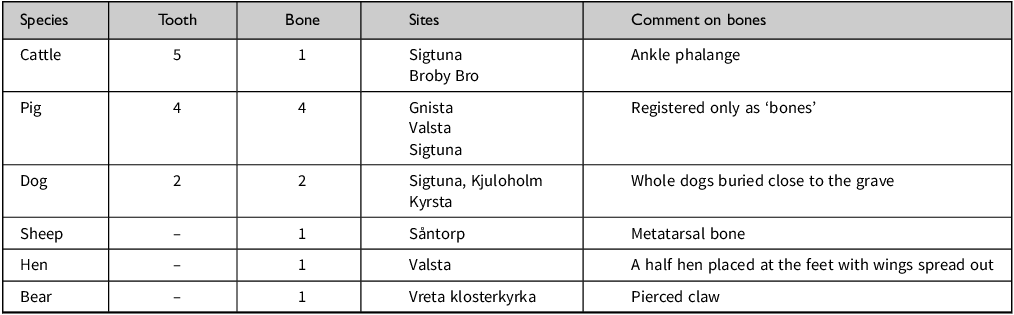
Table 3 Long description
The table presents data on unburned animal bones found in coffin burials from the ninth to eleventh centuries in southern Scandinavia. It has six rows and four columns. The columns are labeled Species, Tooth, Bone, Sites, and Comment on bones. The rows list different species: Cattle, Pig, Dog, Sheep, Hen, and Bear. For Cattle, there are 5 teeth and 1 bone found in Sigtuna, Broby, Bro, with a comment on ankle phalange. For Pig, there are 4 teeth and 4 bones found in Gnista, Valsta, Sigtuna, registered only as bones. For Dog, there are 2 teeth and 2 bones found in Sigtuna, Kjuloholm, Kyrsta, with whole dogs buried close to the grave. For Sheep, there is 1 bone found in Såntorp, noted as a metatarsal bone. For Hen, there is 1 bone found in Valsta, described as a half hen placed at the feet with wings spread out. For Bear, there is 1 bone found in Vreta klosterkyrka, noted as a pierced claw.
To understand the purpose of the deposition of animal bones, the manner of deposition can offer a hint. The exact context is not always registered, which excludes some material from more detailed analysis. The sample does, however, contain a few cases with more detailed information. In Gnista, Uppland, for example, a tooth of a pig was found on the cheek of an adult man buried in a coffin and oriented east–west (Hennius et al. Reference Hennius, Sjöling and Prata2016, 181; Fig. 5). At Valsta (Norrsunda 57), a tooth of a pig was instead found under the head of a buried adult male (Hed Jacobsson Reference Hed Jakobsson2017, 79). There are also finds from more urban areas, such as Sigtuna, Uppland, where two tusks from a pig were placed on top of the coffin of a five-year-old child (Ljung et al. Reference Ljung, Zachrisson and Kjellström2024, 213). In another Sigtuna grave, there were two dog teeth placed above the pelvis of an adult woman. The same position was also the case of another young woman, but with unspecified animal bones and an ankle phalange from cattle (Ljung et al. Reference Ljung, Zachrisson and Kjellström2024, 204). At Broby Bro, a cow tooth and a quartz pebble were placed on top of the coffin lid of an adult male grave (Andersson Reference Andersson2011, 23). There are also examples outside Uppland, such as Vreta klosterkyrka in Östergötland, where a pierced bear claw was found between the ribs of an infant (Hedvall & Konsmar Reference Hedvall and Konsmar2021, 15, 56; Fig. 4). Even though the claw most likely is a pendant, it was probably not worn by the infant, considering the choking hazard. At Kyrsta, in one of ten coffin burials, a woman was buried with a dog by her feet (Emanuelsson & Sjöling Reference Emanuelsson, Sjöling and Notelid2007, 384). Dogs are also found at the Kjuloholm burial ground in Finland, where a dog was buried in a layer between two human burials (Cleve Reference Cleve1978, 39, 89). A dog was also found buried on top of a coffin at Humlegården (Ö 2B) in Sigtuna (Ekvall Reference Ekvall2024).
A pig tooth was placed on the cheek of the buried adult man in Grave 8 (Hennius et al. Reference Hennius, Sjöling and Prata2016, 181). (Photograph: Bengt Backlund, Stiftelsen Upplandsmuseet.)
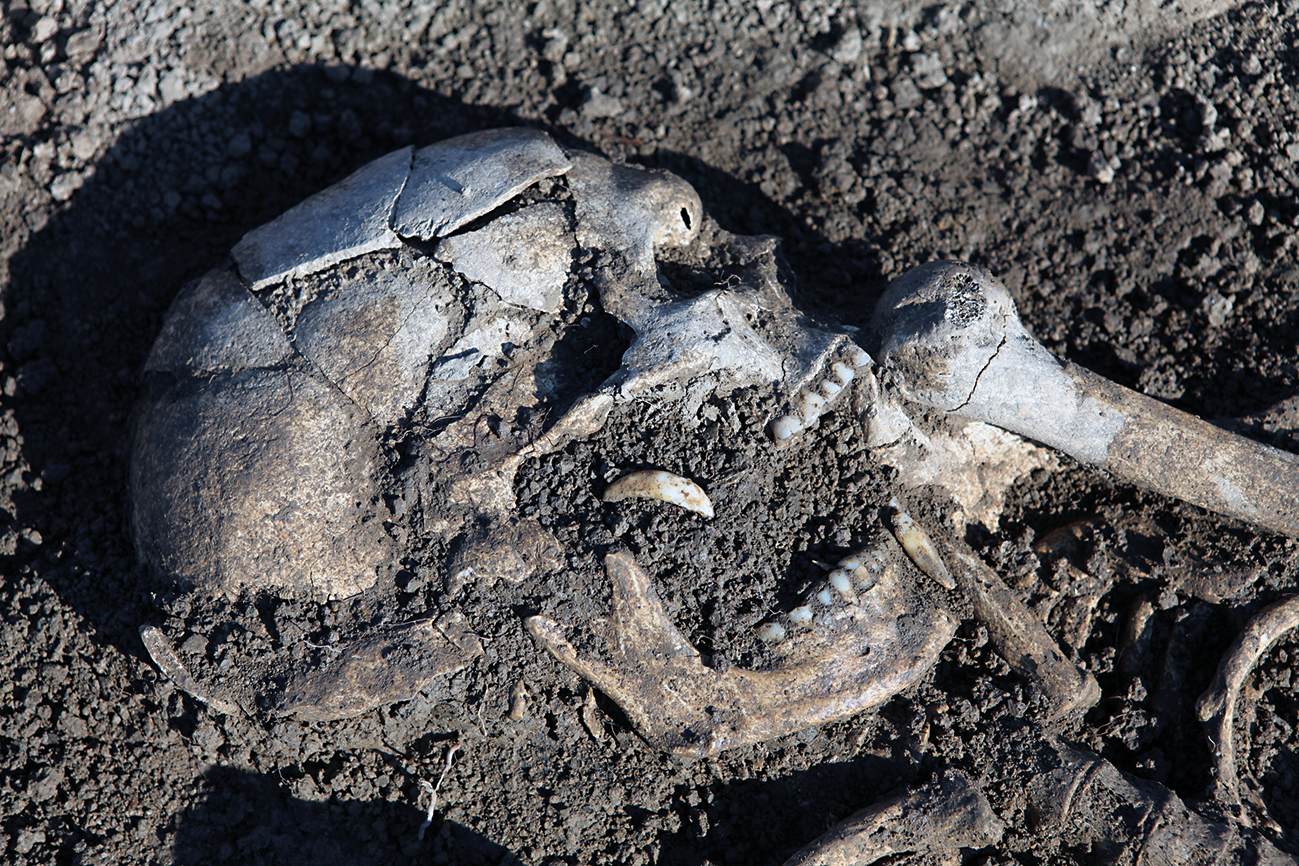
Although the sample is limited, the examples of deposited animal bones show that there are three recurrent areas for depositing animal bone in coffin burials: around the pelvis (women), the head (males) and on top of the coffin lid (both sexes). In this case, it is not likely that the bones and teeth were primarily sacrifices or symbolic food for the afterlife. The positioning around vulnerable areas of the body rather indicates a possible prophylactic purpose. That odd objects in presumably Christian burials are apotropaic, to ward off evil, is indeed the most common interpretation, although not a particularly precise one (Gilchrist 2008; Reference Gilchrist2020; Haperen Reference Haperen2017, 181). The efficacies of bone are well attested in both Old Norse and Christian contexts. For example, in Grimnesmál (stanza 40), the bones of the giant Ymer became the mountains of the world and animal bones were commonly used in ritual contexts such as burials, depositions and building offerings (Carlie Reference Carlie2004, 107, 109; Fahlander Reference Fahlander2024; Heusler & Munksgaard Reference Heusler and Munksgaard1937). Christian beliefs in the power of bones are also manifest in western and central Europe in the use of relics from saints from the fourth century and onwards (Kjellström Reference Kjellström2017; see also Rampton Reference Rampton2021, 154). The purposes of placing animal remains in the graves may or may not share such presumed generative aspects. The most interesting aspect in this case is rather the strategic positions of the animal bones around vulnerable areas of the body, similar to the deposited charcoal.
In the following, we will discuss these aspects together in order to get closer to an understanding of the presence of these phenomena and how they may relate to the social and religious life of their time; and more importantly, how they were part of the way life and death were perceived and dealt with.
Discussion: a natural selection?
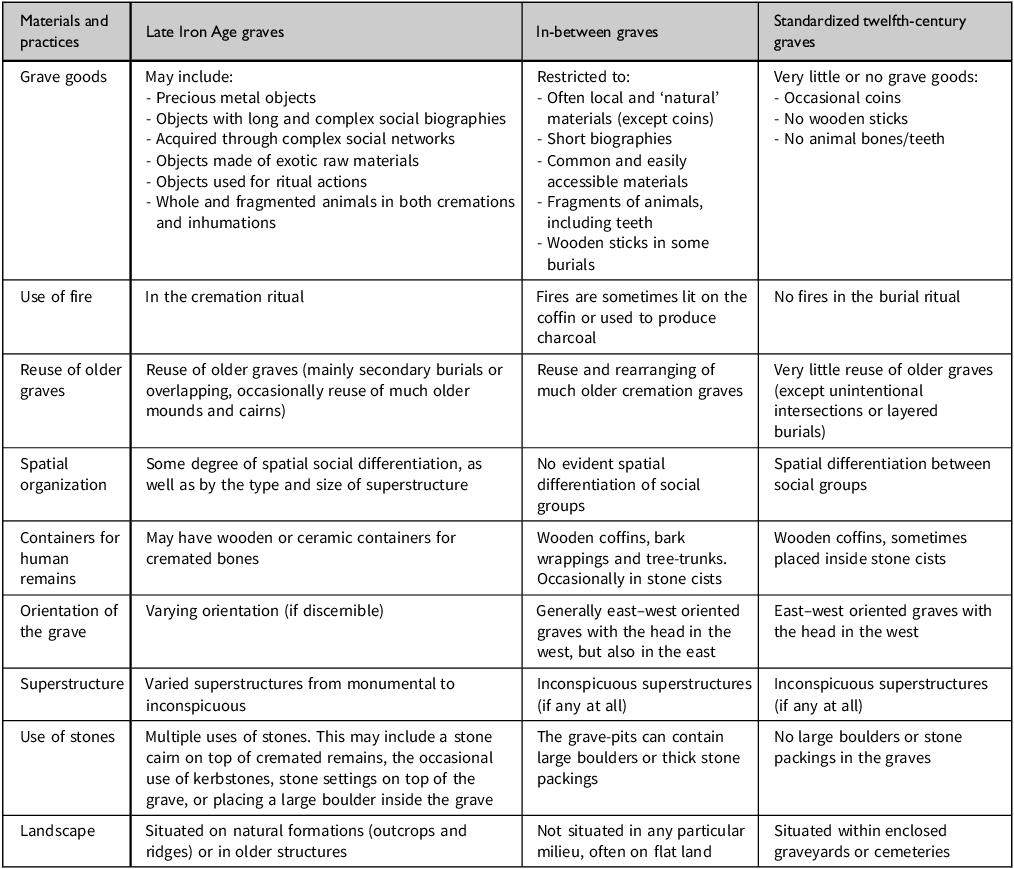
From the above, it is clear that the difference between Old Norse and early Christian graves lies not only in the transition from cremation to inhumation. The type of grave interments also changes from a certain amount of grave goods to very few interments in the graves. Whereas the Late Iron Age graves in many cases contained grave goods of precious metal objects and artefacts acquired through long-distance trade and plunder (i.e. Price Reference Price2014), the inhumation graves of the in-between period show a shift from the exotic to the local. The materials in the in-between period graves were not produced through complex technologies and did not have long and complex social biographies before entering the grave. Rather, the boulders and stones, trunks, wooden coffins, the birch-bark wrappings, hazel sticks and animal bones were likely obtained near the settlement areas where the deceased had lived and died. While the Old Norse burials included processed materials and artefacts (e.g. glass, slag and metal), the early Christian graves focus on ‘natural’ materials (e.g. wooden sticks, bark, stones and animal bones). To be fair, wood in the form of planks for the coffin, charcoal and sticks is also processed, but not to the same extent as the majority of the Viking Age grave goods and their materials. It might hence be more precise to formulate the difference in degree of processing, in networks for acquisition and in terms of biotic (biological/organic) and abiotic (inorganic, synthetic or technical) materials. Another distinction is that the early Christian graves mainly deal with impersonal materials, in contrast to the heirlooms and personal belongings of the Old Norse graves (see e.g. Glørstad & Røstad Reference Glørstad and Røstad2021; Lund 2017; Reference Lund2026, 65–83). Hence, artefacts in the latter graves can often be related to both sex and status, while the early Christian graves show little of such distinctions. For example, what we can tell from the examples discussed here is that there are no obvious relations between the use of wood, stone and animal bones that can be related to any particular observable social or biological category, such as age, sex, or status (besides the location of animal bones). Even though the early period graves show a lot of regional variability, the customs of using charcoal, sticks, various materials for containers of the body and including parts of animals in the graves can be found across regions of south Scandinavia, from Bornholm, Zealand, and Scania in the south to Nödinge, Tønsberg and Oslo further north (Fig. 1). Examples are also found both in the urbanized areas and in the countryside. In Table 4, we have summarized some similarities and differences between the different burial customs. We have focused on the actual properties of materials and processes in the burial ritual.
Tendencies in the use of materials, treatment of objects and choices for grave goods in burials of the Late Iron Age (400–1050) to the Early Medieval Period (1050–1300) in southern Scandinavia. Information from e.g. Fahlander Reference Fahlander2016; Gräslund Reference Gräslund and Nilsson2010; Kieffer-Olsen Reference Kieffer-Olsen1993; Lund Reference Lund2013; Nordeide Reference Nordeide, Schjødt, Lindow and Andrén2020; Price Reference Price2014; Tesch Reference Tesch, Tesch, Kyhlberg and Weman2017.
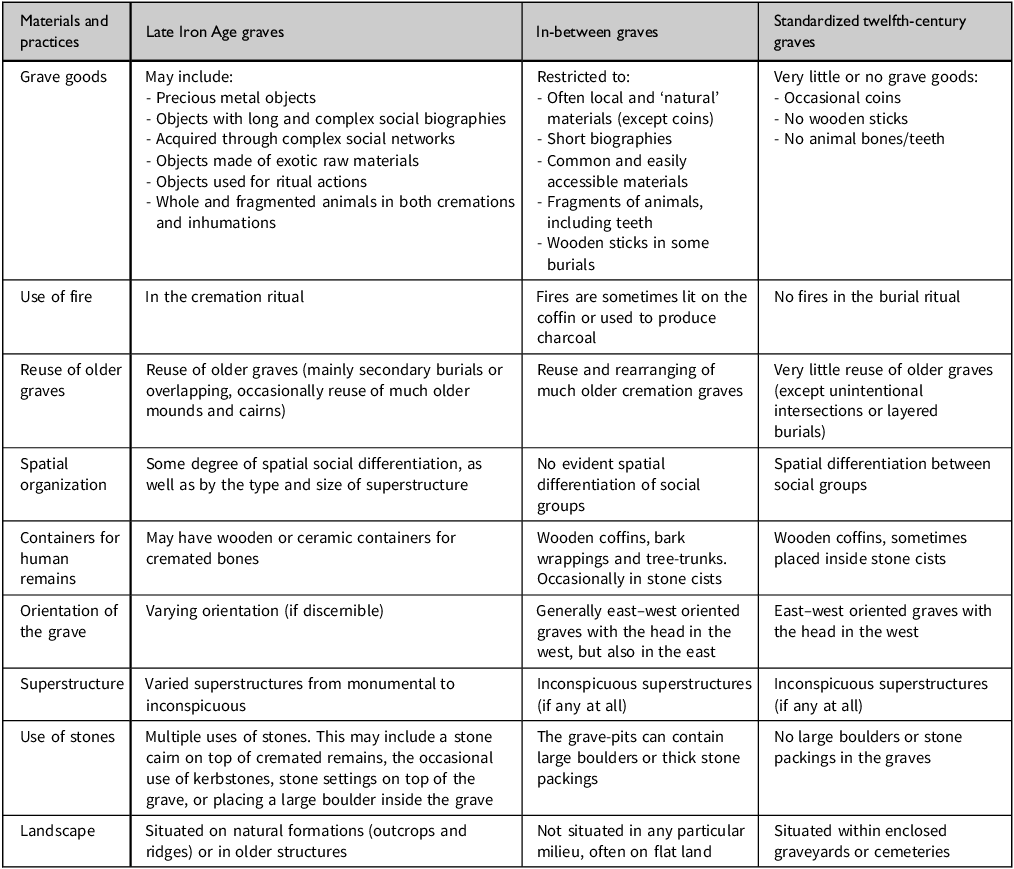
Table 4 Long description
The table has four rows and eight columns. The columns are labeled Materials and practices, Late Iron Age graves, In-between graves, and Standardized twelfth-century graves. The rows are labeled Grave goods, Use of fire, Reuse of older graves, Spatial organization, Containers for human remains, Orientation of the grave, Superstructure, Use of stones, and Landscape. Row 1: Grave goods. Late Iron Age graves may include precious metal objects, objects with long and complex social biographies, objects made of exotic raw materials, objects used for ritual actions, and whole and fragmented animals in both cremations and inhumations. In-between graves are restricted to often local and natural materials, short biographies, common and easily accessible materials, fragments of animals, including teeth, and wooden sticks in some burials. Standardized twelfth-century graves have very little or no grave goods, occasional coins, no wooden sticks, and no animal bones or teeth. Row 2: Use of fire. In the Late Iron Age graves, fire is used in the cremation ritual. In the in-between graves, fires are sometimes lit on the coffin or used to produce charcoal. In the standardized twelfth-century graves, no fires are used in the burial ritual. Row 3: Reuse of older graves. Late Iron Age graves reuse older graves mainly for secondary burials or overlapping, occasionally reuse of much older mounds and cairns. In-between graves reuse and rearrange much older cremation graves. Standardized twelfth-century graves have very little reuse of older graves except unintentional intersections or layered burials. Row 4: Spatial organization. Late Iron Age graves have some degree of spatial social differentiation, as well as by the type and size of superstructure. In-between graves have no evident spatial differentiation of social groups. Standardized twelfth-century graves have spatial differentiation between social groups. Row 5: Containers for human remains. Late Iron Age graves may have wooden or ceramic containers for cremated bones. In-between graves use wooden coffins, bark wrappings, and tree trunks, occasionally in stone cists. Standardized twelfth-century graves use wooden coffins, sometimes placed inside stone cists. Row 6: Orientation of the grave. Late Iron Age graves have varying orientation if discernible. In-between graves are generally east-west oriented with the head in the west, but also in the east. Standardized twelfth-century graves are east-west oriented with the head in the west. Row 7: Superstructure. Late Iron Age graves have varied superstructures from monumental to inconspicuous. In-between graves have inconspicuous superstructures if any at all. Standardized twelfth-century graves have inconspicuous superstructures if any at all. Row 8: Use of stones. Late Iron Age graves use multiple uses of stones, including a stone cairn on top of cremated remains, occasional use of kerbstones, stone settings on top of the grave, or placing a large boulder inside the grave. In-between graves have grave-pits that can contain large boulders or thick stone packings. Standardized twelfth-century graves have no large boulders or stone packings in the graves. Row 9: Landscape. Late Iron Age graves are situated on natural formations or in older structures. In-between graves are not situated in any particular milieu, often on flat land. Standardized twelfth-century graves are situated within enclosed graveyards or cemeteries.
The table shows that, besides a general change from cremation to inhumation, variations in materials and superstructures are also evident. The in-between period graves present a distinct break with traditions, rejecting certain types of objects, materials, and practices, as well as an overall less emphasis on individual identity. Valuables that would be economically and resource-intensive to acquire are rarely placed in the graves. Instead, we find natural, readily available materials, which everyone can acquire at hand, and which are, except for the stones, easily degradable. Objects were still put into the graves, but not as food for the dead or personal items to use in the afterlife. The local and natural materials in the in-between period graves rather suggest a different ontology of what the dead were believed to need and experience in the grave or the afterlife. Further, the in-between burial practices stressed social relations in a very different manner. Whereas Viking Age grave goods were the result of social relations connecting vast interregional networks, the use of local materials in the in-between graves could be conducted by persons without extensive interregional networks.
The main question is what kind of ontology lies behind these changes and what effects and affects they wanted to attain? It is important to note that very few of the in-between period practices fit particularly well with either Old Norse or Christian religious eschatology. For example, the thick layers of stone on top of the coffins do not comply with the idea of resurrection on the day of judgement. In fact, it can be argued that inhumations covered by extraordinarily large boulders were put there to keep the dead in their graves (Gardeła Reference Gardeła2011). The deposition of charcoal, wooden sticks and animal bones is also difficult to associate either with the religious concepts of death and afterlife in the previous and following periods, or with evidence of religious syncretism or hybridization. In addition, the burial practices do not seem to be determined by personal aspects of the deceased’s identity either, which they do in the later formalized churchyards, where individuals of different sexes and status were often spatially segregated. There is thus little evidence for a selection of who was to be buried according to these and other ways.
Rather than seeking origins, social or symbolic connotations in the materials, more productive questions are what these practices and materials may reveal about the views of death and the afterlife. For example, were the dead expected to continue some sort of existence in the grave? Was it considered necessary to maintain the integrity of the corpses? What was the purpose or the functions of the new types of wrappings and the deposited materials in the graves? These constitute fundamental questions in any burial analysis. There are, nonetheless, aspects of the burial practices of the in-between period that may offer a hint. One is the recurrent pattern of placing charcoal and animal bone/teeth around the head and pelvis areas of the deceased. These are sensitive areas with natural bodily openings, which suggests that the practice could have functioned to protect the integrity of the corpse, not only from the living but from supernatural forces. Another is the effective use of charcoal as a separator between the coffin and the deceased and the soils and sediment of the grave.
It is common to interpret the shift to inhumation and the absence of burial interments as a teleological intermediate stage leading to Christian orthodoxy. This is certainly true to some extent, but it misses the interesting aspects of the use of wood, stone and animal bone in the graves. Several scholars, including Gilchrist, have interpreted the natural materials in medieval Christian graves in western and central Europe as magic paraphernalia (Gilchrist Reference Gilchrist2008). Indeed, in the early Middle Ages, magic was not a phenomenon on the margins of society, but rather integrated ‘into virtually all aspects of life’ (Rampton Reference Rampton2021, 30). Yet these notions on magic do not fully explain the phenomenon found in the Scandinavian in-between graves. The problem with concepts such as magic is that they tend to terminate the interpretation prematurely (Nyord Reference Nyord2020, 1). It too becomes a black box that rather prevents than allows for a deeper understanding of the ontologies of death during the in-between period. As we suggest here, there are no evident ways of separating magic, religion, or social aspects in the burial practices of the in-between period. Instead, we can explore the actual properties and agencies of these materials and practices and what they may tell us about the needs of the dead. From an ontological perspective, the same materials do not necessarily have to be perceived as equivalent. It may be properties of the material that are the starting point for categorization and how they are used in different contexts (Conneller Reference Conneller2011; Ingold Reference Ingold2012). For example, in anthropology and ethnography, the concept of animacy and agency usually stems from the physical properties of the object, such as material, colour, texture or shape. For instance, a knife can be deposited in a grave because of its material (iron) or because of its function (sharp edge). Some materials also have sensory, affective and generative properties, such as a shiny and reflecting surface, while others, such as quartz and rock crystal, can generate light and electricity when processed (Fahlander Reference Fahlander2024). In other cases, indirect aspects are in focus, such as origin, age, uniqueness/unusualness or the way the object emerged, which can make it seem extra potent (Gilchrist Reference Gilchrist2020, 138).
To begin with, the thick layers of stone, a material that does not perish and is of significant weight, can protect the corpse from both animals and humans. However, it must have been evident that the wooden coffin, sooner or later, would degrade and collapse under the weight, and the stones would compromise the integrity of the body of the deceased. This suggests that the grave may not have been considered an eternal resting place for the dead. A belief that the resurrection was near can also justify such a practice, but the layers of stone would present an obstacle for the dead to rise. In contrast, the later standardized twelfth-century graves were only covered by soil. The choice of animal teeth over bone in general also expresses a concern with longevity, as teeth degrade more slowly than spongious bones. The deposition of charcoal in the graves may also relate to such prevailing ability, as it will generally degrade much more slowly than unprepared wood.
The new forms of wrapping, wooden coffins, trunks and birch bark may also be based on agentic abilities. Trees are not merely loaded with symbolism but are in some ontologies considered animate entities. A cut-down tree, for example, is not immediately transformed into dead matter, but can, under certain conditions, continue some of its biological processes. The life of trees normally exceeds the human lifespan, while in the short term, some trees shed and grow leaves (regenerate) according to the season. They also make sounds in the wind, consume water, float, and move rocks and stones about by their growing roots, etc. (Fahlander Reference Fahlander2018b). Wooden planks and sticks are not the same as trees but still embody a form of ‘tree-ness’. The choice of materials for the in-between burials may thus draw upon some of these generative abilities of trees. This is especially apparent for the trunk burials and bark wrappings that can be understood as being buried ‘within a tree’. That the trunk had its bark left supports such an interpretation, as it is the bark that transports water and nutrition from the root to the branches and thus keeps the tree alive. The hazel sticks also have interesting agentic properties, for example, the potential to strike root and sprout spontaneously when driven into moist soil, which may have been alluded to or explored in the graves.
A similar type of reasoning is also valid for the animal remains in the graves. The species, age and sex of the animal can be significant, as well as whether it is domesticated or wild, if it lives in the air or in water, and whether it walks on land or underground. Other aspects are what the animal in question does, what physical and behavioural characteristics it has, which affect how an animal is perceived by humans. Finally, it can also be important which bone was deposited. For example, is a tooth equivalent to a vertebra from a cow? From a material point of view, teeth differ from bones in general by their shape and materiality. They are also a type of bone that can be removed without killing the animal in question (cf. Parker Reference Parker2023, 11). For instance, a recipe from the medieval text De Taxone Liber calls for removing a badger’s huge teeth while it is still alive and using the teeth as a protective device (Rampton Reference Rampton2021, 371). If this indeed was the case, the animal could provide a link between the dead and the living for as long as it lives. In fact, if the animal was placed on top of the grave, it could explain some of the recurrent animal bones found in the upper layers.
Potentially, the bones and teeth were placed in the graves to enhance the dead with cow and pig abilities or properties, as is the case in ethnographic examples (cf. Hill Reference Hill, Baltus and Baires2018). In general, however, although canine teeth and claws can be associated with protection, this is hardly the case for a cow’s tooth. Even though it is difficult to assess the function of animal bone in the in-between burials, their presence still informs us about the perception of death, afterlives and dead bodies. For example, the position of animal bones at sensitive areas of the body indicates that some of the dead were considered vulnerable in their graves and perhaps even still retained a certain awareness after death. Without informed sources, these aspects are complicated and difficult to establish archaeologically, but taken together, the inclusion of these materials in the graves suggests that there were attempts to secure the dead bodies for a certain amount of time. This is indicated by the stone packings protecting the graves’ integrity until the wooden coffins decay. There are also indications of a concern for the human body with the use of charcoal and animal bone, particularly around vulnerable areas such as the pelvis and the head, as well as under and on top of the coffin. The hazel sticks are less evident to understand, but their capacity to sprout comprises a certain vitality and ability, which may have served a purpose to vitalize or sustain a continued existence of the dead.
To summarize, what we find in the tenth- to eleventh-century inhumations cannot satisfactorily be understood from either a pagan or a Christian ontology. It seems likely that the new types of burials are responding to Christian practices in western and central Europe, but there are few traces of hybridization or syncretism; it is rather a set of particular practices which emerged for various reasons in southern Scandinavia around the turn of the millennium. Most profound in this change of burial practices is not necessarily inhumation, as such burials had been in use alongside cremation for the larger part of the Iron Age in the previous millennium. It is rather the way in which the dead are anonymized, bringing very few items with them, and the use of wrappings and coffins for the corpse that is also sheltered by large amounts of stone. The wooden sticks and animal bones/teeth might be magical in general or more precisely protective, which resonates with the general attempts to protect the integrity of the inhumated bodies rather than to sustain a continued life in the grave—perhaps not for eternity, but for a foreseeable time.
Summary and conclusions
This study investigates the transformative period of in-between period burial practices in southern Scandinavia (c. tenth to eleventh century), a phase traditionally framed as a transition from Old Norse paganism to standardized Christianity. Instead of a teleological, retrospective and top-down perspective, the study employs a bottom-up approach that challenges binary categorization, but stresses the affects and purposes of the actions and materials in the burial ritual. The study highlights a shift from the deposition of exotic, technologically complex grave goods characteristic of the Viking Age burials toward the use of local, biotic and ‘natural’ materials in the early graves in the Christian tradition. Key practices identified include various types of wrappings (wood, hollowed-out trunks and bark) of the body, the inclusion of hazel sticks within and beside coffins, and the strategic deposition of charcoal and unburned animal teeth and bones, often concentrated around the head and pelvis. The study shows that the in-between burials were not constructed as standardized Christian burials as they appear in churchyards of the twelfth century and onwards, but indicate a particular ontology of death and dead bodies, which differs from both older and younger burials.
These in-between burial practices can thus not be dismissed as mere syncretism, hybridization or a poor understanding of Christian belief. Instead, they represent a distinct way of burying the dead in ways that centre on the integrity and protection of the deceased’s body. This is substantiated by the recurring placement of charcoal and animal teeth and bones around vulnerable bodily areas, which suggests a prophylactic or apotropaic intent, aiming to shield the dead from malevolent forces. The use of wooden wrapping in different forms and, in particular, the presence of hazel sticks testifies to living, organic materials actively engaged in the burial rituals and simultaneously a presence of life-giving potentials in the grave. Ultimately, the early part of the conversion period in Scandinavia fostered a unique set of situated rituals characterized by the de-individualization of the deceased and an intimate engagement with the immediate environment through local, easily accessible, and potentially potent materials.
Acknowledgements
A part of this study was made possible by funding from the Swedish Research Council (Vetenskapsrådet 2025-00575).




 Open access

