


Foreword
It is not an overstatement that the world water resources are on the verge of, or even already in a state of bankruptcy. Although the situation differs much between locations, more and more regions are facing structural, and deepening water shortage. Main causes have been identified: relentless economic and demographic growth, external shocks of climate change, and long-time mismanagement of the resource. Against this grim background, the authors of Water Allocation and Rights: How Institutions Help Adapt to a Growing Global Water Shortage undertook a pioneering and rigorous study identifying the key institutional mechanisms for allocation of scarce water resources, and making a start with evaluating their performance. In doing so, this Element takes a prominent position in a series of recent work on institutional regulation of water quantity and quality (e.g. Rouillard et al., Reference Rouillard, Babbitt, Challies and Rinaudo2022; Madani, Reference Madani2025; Dinar et al., Reference Dinar, Nemati and Pillarisetty2026).
While other published works tend to be only descriptive, the authors of this Element develop an analytical framework to support assessing the performance of three types of formal and informal water allocation schemes and of the frame in which they operate: regulatory (permits, rights, and regulations), economic (prices, markets, and subsidies), and collective-action arrangements (such as collective indigenous actions and local water-user committees). The analytical framework is applied to nine detailed case studies of countries known to be in the forefront of institutional reforms, and a comparative analysis of legal frames across nearly 100 countries. Different from many other studies, the authors give special attention to how the case countries enhanced their allocation arrangements step by step over the past decades. This systematic approach allows the authors to compare and link policy and operational practices into one set of results. Having such a rich and organized spectrum of cases and policy development paths yields results that provide much more insight into the possible evolution of existing yet still inefficient allocation institutions towards more efficient and just ones.
In short, this Element provides a unique technical contribution to the comparative study of water allocation institutions. It is written for a wide audience, including scholars, policymakers and water managers, to consider ways that can improve the performance of water institutions. The Element demonstrates the importance of more rigorous analytical approaches to consider enhancing the institutional tools we use to manage our dwindling water resources.
1 Introduction
1.1 Water Allocation: Learning from Ongoing Experience
1.1.1 Water Allocation and the Rising Challenge of Water Insecurity
Water allocation, as the activity of matching water availability (supply) with water uses (demand), is becoming ever more important. Water allocation and rights arrangements determine who has access to water and under which conditions (Hellegers and Leflaive, Reference Hellegers and Leflaive2015; OECD, 2015; Rouillard et al., Reference Rouillard, Babbitt, Challies and Rinaudo2022). Water allocation is especially important in situations of water shortage. The unprecedented demographic and economic growth since the 1950s worldwide, combined with degrading water catchments and climate change, has led to a rapidly expanding demand for water against constant or dwindling supply. While in 2010 about 16% of the world population was reckoned to experience water stress, by mid-century this will increase to nearly 60% (Sadoff et al., Reference Sadoff, Hall, Grey, Aerts, Ait-Kadi, Brown, Cox, Dadson, Garrick, Kelman, McCornick, Ringler, Rosegrant, Whittington and Wiberg2015) and this does not account for the damage to water-dependent ecosystems and species. In many river basins and aquifer systems this has spurred users to compete intensely for increasingly scarce water, often to the point that extraction has turned unsustainable, with, for example, groundwater drawdown exceeding recharge levels. Thus, many countries have started taking measures to enhance sustainability and equity without losing economic prosperity.
Water shortage is relative: it refers to the ratio between water demand and supply. Water shortage may arise where water resources are in demand but limited in absolute terms (e.g. southern Spain, Middle East), and in regions where renewable water resources per capita are actually very high but demand even higher (e.g. the Netherlands, Australia, and parts of Mexico). The challenge of water allocation becomes more complicated as current knowledge of water resource systems is based on historical data of climate patterns that are changing and the frequency of extreme weather events such as droughts and floods is going to increase. As the risk of crossing tipping points increases, the hydrological cycle becomes even more unpredictable.
Societies have historically applied three broad strategies to address water shortage. First, infrastructure and technology to store and channelize water flows, combined with improved technology for demand-side management and use efficiency. Second, landscaping interventions to better retain and distribute water (contouring, wadi creation, meandering of rivers, land-use change, etc.). Third, institutional measures to support allocations during periods of seasonal or peak shortage (e.g. the principle of priority of use). Institutional instruments focus on the rules-in-use that govern the interactions among water actors, and that shape the resulting collective actions and their outcomes (cf. Ostrom, Reference 93Ostrom2005). These institutional measures are the subject of this Element.
The interest in water allocation institutions has been growing considerably since the 1990s (Rosegrant and Binswanger, Reference Rosegrant and Binswanger1994; Bruns et al., Reference Bruns, Ringler and Meinzen-Dick2005; ADB, 2009). Several countries have been developing or reforming their water allocation laws, policies, and institutions (Hellegers and Leflaive, Reference Hellegers and Leflaive2015; Rey et al., Reference 94Rey, Pérez-Blanco, Escriva-Bou, Girard and Veldkamp2019). Spain, Chile, Australia, Mexico, and South Africa, and later China, Jordan, and Indonesia, among others, started introducing often novel institutional arrangements to address water shortage. Many other countries are currently considering more expanded allocation arrangements (Grafton et al., Reference Grafton, Libecap, McGlennon, Landry and O’Brien2011; OECD, 2015; Marston and Cai, Reference Marston and Cai2016).
As the effects of these new allocation institutions become visible, unintended consequences and subsequent responses also emerge. Also, many countries show a gap between the formal institutional arrangements and the actual water allocation practice, partly due to the continuation of colonial laws, weak governance, and limited administrative capacity (Hellegers and Leflaive, Reference Hellegers and Leflaive2015; Al-Amin et al., Reference Al-Amin, Evers and Hermans2024). Thus, water allocation is on the policy agenda of many countries, which are re-examining how they can combine higher productivity with higher sustainability, better equity, and more resilience.
1.1.2 Scope and Analytical Approach
Water allocation reforms have provided useful lessons but cannot lead to universal blueprints for good allocation institutions. Rather, there is a need for context- and location-specific configurations of allocation institutions and instruments adjusted by operational experience to organically design water allocation arrangements. So what lessons are emerging for institutional pathways towards more sustainable water allocation regimes?
We address this question in this Element, focusing on domestic, not transboundary or global, water quantity issues. Flood management and water quality issues are addressed only if they relate directly to water availability for allocation purposes. Similarly, we focus on allocation within a blue water budget and do not enter the debates on green water embedded in soil or vegetation or on atmospheric water transport (e.g. Mazzucato et al., Reference Mazzucato, Okonjo-Iweala, Rockström and Shanmugaratnam2024).
Although abstract theoretical reflections about water allocation institutions and rights are important, we take a scientifically pragmatic and contextual approach more suited to the context and contested nature of water allocation. This Element is informed by analysis of existing academic and professional literature and official reports and documents. A comprehensive review was made of the legal and regulatory frames regarding water rights and allocation across the Global South with special attention to quasi-property rights and equity (Müller et al., Reference Müller, Bosch, Gupta and Karg2024). Representative countries were selected as case studies for in-depth reviews. For these, analysis of scientific literature and official documents was complemented by interviews with government, academic, and user representatives and field visits (2022–2025).
The country cases were chosen to reflect key circumstances worldwide, regarding relative water shortage, hydrology, economic development, former and current allocation regimes, and transition challenges. In some countries the analysis covered one or two regions (or river basins) that are not intended to represent the country but that are broadly considered more illustrative or advanced in the implementation of the new allocation policies. The countries are Spain (Júcar basin), the Netherlands (western lowlands and eastern high sand soils), Australia (Murray–Darling basin), China (Yellow River and water trade pilots), Indonesia (Brantas basin and South Sulawesi), Chile (central Regions), Mexico (Lerma-Chapala) and, to a lesser extent, Jordan (Jordan Valley) and Belgium (Flanders Region). More detailed write-ups of country cases and the list of interviewees and background documents are available in Alaerts et al. (Reference Alaerts, Godinez Madrigal and Hermansforthcoming).
1.2 Conceptual Framework for Water Allocation Institutions
1.2.1 Institutional Instruments for Water Allocation
We see institutions as the formal and informal rules that guide interactions among actors, or the (implicit) agreements that help to organize and coordinate activities among multiple parties (Ostrom, Reference 93Ostrom2005, p. 3). Different types of institutional instruments may co-exist: regulatory, economic, and collective action (Dinar et al., Reference Dinar, Meinzen-Dick and Rosegrant1997; Meinzen-Dick, Reference 91Meinzen-Dick2007; Garrick, Reference Garrick2015).
Regulatory Approaches: Permits, Rights, and Regulations
Regulatory approaches generally put water in the public domain and focus on the role of the State and its instruments of law, regulation, and public administration. Important allocation instruments are property rights, water use permits, concessions, contracts, administrative allocation mechanisms and the human right to water and sanitation and increasingly the rights of nature (Bruns et al., Reference Bruns, Ringler and Meinzen-Dick2005; Dellapenna and Gupta, Reference Dellapenna and Gupta2021). Recent scholarship attributes renewed attention to customary law systems and justice principles (Bosch and Gupta, Reference Bosch and Gupta2021). Such approaches necessitate thinking about just planetary boundaries (focusing on how much water one can extract from the system without causing significant harm to humans and ecosystems and without destabilizing the water system) and policies, notably the equitable allocation of water and all actions in land and water management that affect de facto allocation (Gupta et al., Reference Gupta, Prodani, Bai, Gifford, Lenton, Otto, Pereira, Rammelt, Scholtens and Tàbara2024).
Economic Approaches: Prices, Markets, and Subsidies
Economic approaches use principles of utility and economic value to allocate scarce water resources over competing users (e.g. Rosegrant and Binswanger, Reference Rosegrant and Binswanger1994; Hellegers and Perry, Reference Hellegers and Perry2006; Garrick, Reference Garrick2015). The idea is to allocate water to those uses where its marginal value is highest (Garrick and Hahn, Reference Garrick and Hahn2021). However, water is no ordinary economic good, and it cannot be treated like a simple commodity. Water is vital to all life and has for some functions no substitute. This is recognized by the human right to water and sanitation and increasingly by the rights of nature. Water use, in addition, is associated with many externalities and must contend with market imperfections (Hellegers and Perry, Reference Hellegers and Perry2006). Countries, therefore, have been establishing more sophisticated but limited economic and market-based instruments to allow economic development while safeguarding sustainability and equity.
Collective-Action Approaches: Platforms and User Committees
Collective-action approaches start from a community perspective, whereby the central role of water in a community stimulates the emergence of various groups, committees, and platforms around water management, as well as cultural norms and practices related to water use and protection (Ostrom, Reference Ostrom1990; Boelens, Reference Boelens2008). In many cases, these local practices have evolved over thousands of years (Dellapenna and Gupta, Reference Dellapenna and Gupta2009) into (semi)formal water institutions that remain operational at local scale and have been scaled up or are increasingly nested within regional or national allocation frames. Such collective action can be effective but it may be driven by short-term economic interests of its members at the expense of other users and the environment; local power dynamics may disadvantage vulnerable community members; and new entrants may face a barrier to participating.
These three types of institutional water allocation instruments co-exist to create synergy, even though they may appear distinct and at points incongruent. Elements and instruments associated with all three approaches are combined in the water allocation institutions of most countries, as a sort of ‘institutional tripod’ (Meinzen-Dick, Reference 91Meinzen-Dick2007).
1.2.2 Water Allocation in Practice: Actors in Arenas
When it comes to institutions, theory almost always diverges from practice. Where policies do not build on practice, they have to be translated into specific contextual operational decisions. Water allocation can be agreed and formalized in theory, but water allocation in practice is typically different from the spreadsheets that are officially announced. Historical property rights, confidential contracts that assign water rights, temporary exceptions, locally agreed flexibility, informal practices, faulty monitoring, illegal diversions, unaccounted water losses, black markets, corruption, all contribute to this gap.
In practice, different actors continuously interact in so-called allocation arenas to produce water allocation outcomes: how water is shared and who is entitled to which water resources, when, where, and under which conditions. Different actors collectively shape certain allocation decisions – sometimes in a coordinated and/or formalized decision process, sometimes through an emergent process (Hermans and Cunningham, Reference Hermans and Cunningham2018). This is influenced by formal institutions. It is also influenced by the physical and socio-economic context in which water allocation takes place. This includes hydrology, climate and infrastructure, or demographics or economic activity.
1.2.3 Outcomes of Water Allocation: Performance and Trade-Offs
Although linking water allocation outcomes to specific (combinations of) institutional instruments is difficult, assessing overall water allocation outcomes and exploring their dynamics can inform us about the performance of water allocation institutions in their specific contexts.
Performance
Performance here refers to how well institutional instruments meet their objectives. For a large part, institutional performance can be assessed by recognizing an institution as functional and legitimate.
Functionality means that an institutional system delivers the outcomes that approximate the ‘common good’ (Scharpf, Reference Scharpf1997, pp. 14–15) or public interest. For water allocation, these are outcomes related to water security for human needs and economic development, nature, biodiversity, and future uses.
Legitimacy refers to the endorsement and the trust that users put in the institutions; being especially important where the interpretation of the ‘common good’ of public interest is controversial and involves distributional effects (Scharpf, Reference Scharpf1997). Legitimacy includes aspects of fairness and distributional justice, procedural justice, and mechanisms for enforcement and dispute resolution.
Additional performance measures for institutions relate to their efficiency: The effort required to use and maintain its functionality and legitimacy, in institutional economics often referred to as transaction costs (see Garrick, Reference Garrick2015), and longer-term resilience, or adaptive capacity as their ability to maintain performance under changing conditions (Gupta et al., Reference Gupta, Termeer, Klostermann, Meijerink, Van den Brink, Jong and Bergsma2010).
The performance of water allocation institutions has an important temporal dimension, given the fluctuations in water supply (due to seasonal variation, land-use change, and climate change) and demands. With climate change, peaks in supply and demand are likely to occur more often in future, complicating the design of allocation institutions. Adaptability to longer-term changes relates to notions of resilience/adaptive capacity of institutions.
Trade-Offs
In practice, decision-making on the different performance dimensions for water allocation will impose trade-offs, where an allocation arrangement offers better outcomes on certain objectives, at the expense of others. The question of who makes such trade-offs and why is critical.
The following trade-offs often come into consideration, where the word ‘versus’ does not reflect an antithesis but a political priority in the overall, net effect:
1. Shorter-term economic development versus longer-term sustainability. Economic development and job creation are prime objectives of all governments and basic expectations of the citizenry. Simultaneously, concerns about environmental and social sustainability have grown globally. In some countries and river basins this concern was translated into environmental legislation only after all water had already been appropriated by existing productive users. Although in a longer-term perspective, economic and environmental goals should be met simultaneously, for many water managers and users, water has turned so scarce and the environment so degraded that henceforth water allocation implies a trade-off between (economically) productive uses and environmental sustainability, and scholars argue that economic goals must be met within just water boundaries and ambient water quality standards (Gupta et al., Reference Gupta, Prodani, Bai, Gifford, Lenton, Otto, Pereira, Rammelt, Scholtens and Tàbara2024).
2. Long-term security versus flexibility and adaptivity. Institutions are relatively stable structures that provide longer-term security to water users. However, they also need to be sufficiently adaptive and flexible, to be able to respond to changing circumstances. For example, a water permit that is renewable every six years allows for flexibility but may be a shaky basis for large new investments and longer-term land-use planning by governments. But long-term permits may prevent adaptive allocation.
3. Security for one or a few users versus equitable access by all. As the value of water increases, some users wish to monopolize water to increase future security of access for their growing business or for speculative motives. This can happen through purchase (‘water grabbing’), hoarding (not releasing water), or storing (where upstream regions may store water in reservoirs or farmers may wish to store enough water in their field as insurance against failing rain or delivery from a reservoir). This can affect the rights of others to access water. Water pricing may lead to more secure allocation to the richer users at the cost of poorer water users. In the same vein, the drivers of economic efficiency such as scale and free movement of goods and capital may have similar consequences: Though lowering product prices (which is socially beneficial) they often do not take into account equity and distributional effects.
1.2.4 Water Allocation Regimes: Dynamics and Levels
Dynamics and Regimes
In scholarship on environmental resource and water management, the term regime is used to refer to complex dynamic systems that evolve over time (Young, Reference Young2010). Water allocation regimes refer to the complex of prevalent water allocation institutions, consisting of a mix of (in)formal rights, rules, and regulations, comprising formal laws as well as the informal values and preferences in society (e.g. Bruns et al., Reference Bruns, Ringler and Meinzen-Dick2005; Garrick et al., Reference Garrick, Whitten and Coggan2013; Bosch et al., Reference Bosch, Gupta and Verrest2021).
Over time, societal actors collectively shape these regimes and act as ‘system builders’ for large water management systems such as in the Netherlands and China (Disco and Van Der Vleuten, Reference Disco and Van Der Vleuten2002; Ball, Reference Ball2017). We use a socio-ecological-technical system view of regimes, considering a regime to consist of the institutional systems for water allocation and the physical and social systems that shape water availability and use at a certain moment in time. Regimes evolve, influenced by context and institutional path dependence. Customs, laws, and administrative bodies within political structures (whether centralized or decentralized, autocratic or democratic, capitalist or not) determine the water allocation regime.
Scales, Levels and Nested Systems
Typically, water allocation institutions and regimes are multilevel, nested, and pluri-centric systems. They operate from international, transboundary to national, regional, and local levels.
Water allocation occurs at different spatial scales with the smaller ones nested in the larger. At the national or river basin scale, national policies and spatial planning as well as river basin committees assign large water volumes to specific uses and users. At this broad scale, water functions relate to, for instance, supporting regional development, maintenance of groundwater aquifers and water levels, sediment removal and river engineering to facilitate shipping, flushing of saline water intrusion in deltas, and so on. The water volumes and infrastructure are large, expensive, and have technical lifetimes of decades if not centuries.
Within this national system, water needs to be allocated at regional scale, say, of a sub-basin or large drainage area where large users must divide the available water to water supply companies, irrigation districts, power generators, factories, hospitals, aquatic and terrestrial ecosystems, and so on. Demand tends to fluctuate hourly, weekly, or seasonally. Water has a recognizable value for its different competing users, which allows allocation decisions to be informed by approximating values.
Within these regions, at local scale individual end users are making daily decisions; they may meet each other physically and participate in local social and economic activities. Their demand for water – for livelihood and economic purpose – is also variable in time, and the value of water to them can be directly translated in financial terms but may also reflect cultural customs, religious beliefs, or be a matter of survival.
These scales are intimately interconnected – hydraulically, infrastructurally and institutionally. Still, decisions differ between the scales, and each scale requires its own appropriate institutional management and allocation arrangement.
1.2.5 Conceptual Framework
The components above combine to shape water allocation regimes as conceptualized in Figure 1. Its layout combines visualizations for institutional analysis (Ostrom, Reference 93Ostrom2005) with those for multi-actor systems (Hermans and Cunningham, Reference Hermans and Cunningham2018) and socio-hydrology systems (Di Baldassarre et al., Reference Di Baldassarre, Wanders, AghaKouchak, Kuil, Rangecroft, Veldkamp, Garcia, Van Oel, Breinl and Van Loon2018). On the left, it shows three types of institutional instruments that policymakers may use to formally shape and influence water allocations. Combined with physical and socio-economic context factors, these instruments influence practices in water allocation arenas where water actors interact to produce allocation outcomes. The performance of these outcomes involves trade-offs among multiple objectives. The outcomes shape a dynamic trajectory, whereby water allocation regimes change over time based on longer-term feedback loops.
Conceptual framework for water allocation institutions.

These water allocation institutions work at different, interlinked levels, forming multilevel and dynamic allocation regimes.
1.3 Overall Argument
The issue of water allocation has always been important and will become more important in the coming years. This Element analyses recent experience with water allocation and rights in selected countries in a longer-term perspective, to inform designs for improved water allocation institutions.
We analyse how countries, in practice, combine different institutional instruments in different socio-hydrological conditions, to create different outcomes. Formal institutions, policies, and regulations play an important role in this, but are always blended with what happens on the ground, at national, regional, and local levels.
Although we critically analyse past and existing regimes, criticism of past choices and structures is not the point. Rather, our analysis aims to understand how certain configurations of instruments, contextual factors, and actions in arenas are leading to particular outcomes, with benefits as well as limitations. Similarly, our reflections and recommendations are intended to inform discussions and actions towards future pathways for water allocation institutions that provide a better fit with contemporary needs and ambitions in different countries.
We begin by describing the three distinct instruments – regulatory, economic, and collective action – to enhance understanding of how these have been applied and have functioned, often in combination with other instruments. We then provide more broadly based descriptions of allocation regimes in selected countries to better understand the configurations of instruments and their dynamics. We end with reflections and suggestions for future pathways towards water allocation institutions that can help countries shape the next stage in their water system building journey.
2 Regulatory Instruments: The Role of Permits
2.1 Permits and Regulation for Water Allocation
2.1.1 Water (Property) Rights
Regulatory instruments emphasize the public nature of water to regulate access and rights to water (Dellapenna and Gupta, Reference Dellapenna and Gupta2009). Historically, water was governed by customary practices codified into water law. Water was generally seen as public (when it concerned a navigable river), private (when landowners had riparian water rights to use water adjacent to or under the land; Hodgson, Reference Hodgson2016), or as community water (when the resource was shared). Such systems are evolving into a system where the state allocates water through permits, concessions (for large users such as water utilities), contracts (e.g. with large companies such as mining or energy), and payments (e.g. by households who pay for water supply), although property-rights systems continue to exist worldwide.
With rising water demand, there is a need to reallocate water. Many countries are putting water into the public domain and trying to move away from riparian water property rights; this can affect the rights of farmers or Indigenous peoples to use their own water. Hence, property-rights holders are resisting such expropriation (Clark and O’Donnell, Reference Clark and O’Donnell2022), Indigenous Peoples and local communities are also protesting (Hodgson et al., Reference Hodgson, Rothe, Espinosa Flor, Troell and Kiersch2024), and their right to self-determination is currently being corrected in countries such as Bolivia, Kenya, Mali and Peru (Troell and Keene, Reference Troell and Keene2022), while challenges remain in Australia, the USA, South Africa, and Canada (Hartwig et al., Reference Hartwig, Osborne and Jackson2020; Moggridge and Thompson, Reference Moggridge and Thompson2021). While this shift away from property rights is still underway, the system of permits is being institutionalized except when water abstraction is relatively small (Hodgson, Reference Hodgson2016; see Figure 2).
Use of permit-like systems in the Global South, Australia, the Netherlands, and Spain. Because water laws in some federal countries are developed at both national and state levels, the map shows water use permit aspects depending on where the relevant legal authority lies.
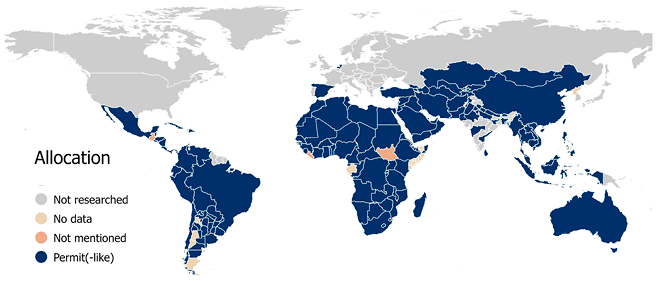
This section focuses on the role of permits (including concessions) in water allocation as stated in water laws (acts, decrees or equivalent).
2.1.2 Allocation Instruments in Water Laws
As mentioned earlier, beyond property rights, water laws allocate water through permits, concessions, contracts and payments (Bosch and Gupta, Reference Bosch and Gupta2021; see Tables 1a and 1b). Our analysis of water allocation instruments in more than 110 countries shows that permits are the most popular allocation instrument (Figure 2).
| Instrument | Description |
|---|---|
| Riparian rights | Institutionalized rights to water bodies, linked to, and cannot be separated from, land ownership. Such allocation benefits small farmers but also hampers access for landless people and redistribution. Although this system persists in common law countries such as the United States, India, and Canada, it has been replaced elsewhere (Teclaff, Reference Teclaff1972; Caponera and Nanni, Reference Caponera and Nanni2019; Dellapenna, 2021). |
| Prior appropriation | Grants water rights based on ‘first in time, first in right’. Used in the US and Canada, allowing non-landowners (e.g. mining and industry) to divert and beneficially use water, specifying the location, volume, and use can be seen as a form of property right (Dellapenna, Reference Dellapenna2011; Saxer, Reference Saxer2010). |
| Customary water rights | Involve collective governance of water rooted in long-standing local norms, rules, and practices that predate colonization and were influenced by religious or Indigenous beliefs. Many rights persist but were partly replaced by colonial private water ownership creating plural legal systems (Ramazzotti, Reference Ramazzotti1996; von Benda-Beckmann et al., Reference von Benda-Beckmann, von Benda-Beckmann, Spiertz, von Benda-Beckmann, Spiertz, Pradhan, von Benda-Beckmann, Kadka and Haq1997; Burchi, Reference Burchi2005; Dellapenna and Gupta, Reference Dellapenna and Gupta2009; Bosch et al., Reference Bosch, Gupta and Verrest2021). |
| Concessions and leases for public uses | Grant rights to manage and provide water to large users such as water supply companies. This is becoming more common because international financial institutions promote private sector actors in the water sector in the Global South (Petrova, Reference Petrova2006; Moyo, Reference Moyo2011). |
| Instrument | Description |
|---|---|
| Permits for private and productive usesFootnote * | Legal water use entitlements with defined conditions (purpose, temporal, spatial, quality, etc.). They include a bundle of rights (e.g. use, transfer, sale, exclusion) that can resemble property rights (Hodgson, Reference Hodgson2016) and imply de facto privatization (McKenzie, Reference McKenzie2009; Snyder and Utley, Reference 96Snyder and Utley2009; Bosch and Gupta, Reference Bosch and Gupta2021). |
| Exemption for small domestic withdrawals | Formal water allocation does not apply to small withdrawals for household uses (Hodgson, Reference Hodgson2016) or require only manual water abstraction. |
| Investor-State contracts | Contracts between foreign investors/companies and governments, enabling foreign contractors to undertake energy, mining, and other large-scale activities regulated by contract law and Multilateral and Bilateral Investment Agreements (Chaisse and Polo, Reference Chaisse and Polo2015; Bosch and Gupta, Reference Bosch and Gupta2022), limiting State jurisdiction. |
| Reserve or minimum flow | State water allocation for maintaining a minimum transport or ecological flow in water bodies (Hodgson, Reference Hodgson2016). While the former is easy to monitor, the latter is more complicated. |
* We use ‘permit’ to refer to all State-granted authorizations for water use including ‘concessions’ to ‘authorizations’ and ‘licences’. For example, in Mexico (Art. 3) ‘concessions’ are granted ‘for the exploitation, use or development of national waters and their inherent public goods, to individuals or legal entities of a public or private nature’, and ‘assignations’ are granted to municipalities, states, or federal districts ‘for the exploitation, use or development of national waters […] for urban or domestic public water services […]’.Footnote 1 Nicaragua uses different terms based on volume and purpose, while Sierra Leone distinguishes by water source. Public and private uses are also labelled differently across regions.
2.2 Types and Conditions of Water Allocation Permits
2.2.1 Permit Types and Characteristics
Countries commonly differentiate permits based on (1) Purpose: The intended use of water, such as irrigation, industrial, mining transportation, stream-flow reduction activities (e.g. afforestation), and environmental purposes such as aquifer recharge; (2) Water source: The abstraction source, surface or groundwater; (3) Quantity or scale of use: The water volume, differentiating between small- and large-scale users; (4) Geographic location: The location of the water use, such as arid regions or river basins; (5) Timing and abstraction methods: Some permits are based on specific timing, seasons, water use patterns, or discharge and involved water treatment; and (6) Permit attributions: The rights and responsibilities they grant, for instance, related to duration, transferability, compensation, and legal action (Bosch et al., Reference Bosch, Gupta and Verrest2021); for example, Argentinian provincesFootnote 2 distinguish between basins or aquifers with known water availability and those without, where only short-term permits are issued.
Different permit types may allow governing water (re)allocation more flexibly by facilitating differentiated granting criteria and conditions (see Subsection 2.3.2 and Section 5). However, this may imply a more complex permit regulation framework, requiring accurate registration, differentiated monitoring, and enforcement.
2.2.2 Conditions for Functional Permit Systems
Although water (re)allocation is highly context-specific, we outline some conditions for functional and legitimate permit systems.
Knowing the amount of available water resources and providing clear legal definitions facilitate implementation and enforcement, creating certainty and predictability of rights, and permits are no exception (Dellapenna and Gupta, Reference Dellapenna and Gupta2009). Specifying the water use rights and conditions (or permit holder responsibilities) helps guide effective enforcement, avoids conflicts, and facilitates reallocation (Hodgson, Reference Hodgson2006; Marston and Cai, Reference Marston and Cai2016), providing a frame to plan for housing, energy generation, food production, and industrial development, among other long-term water uses. These definitions should align with principles of equitable water allocation, for instance, including permit exemptions for domestic and hygiene uses, ensuring that water is available for the most important uses rather than only the most profitable uses, favouring those furthest behind, and outlining conditions for suspensions, cancellation, or revocation. These permit exemptions require accurate estimates of water needs to meet basic human needs and stay within ecosystem boundaries, protecting environmental needs.
Strong enforcement and monitoring help uphold these conditions and ensure compliance. This requires generating and processing diverse data and gaining user acceptance, but it can be costly, hindering water reallocation (Borghesi, Reference Borghesi2014; Marston and Cai, Reference Marston and Cai2016). Collaborative action (Section 4) can support cost reduction via data sharing, and it can foster community acceptance via open dialogues between users and authorities (Whateley et al., Reference Whateley, Josset, Gibson, Lowrie and Schuler2025).
Adequate administrative capacity is essential for functional permits, from application and issuance to compliance checks and the suspension, cancellation, or revocation of permits. In countries with fragmented water users and limited administrative capacity, effective permit systems can be difficult to implement (Marston and Cai, Reference Marston and Cai2016; Caponera and Nanni, Reference Caponera and Nanni2019). Limited capacities risk perpetuating or reinforcing tensions between individual rights and a basin’s sustainability, marginalizing Indigenous peoples, local communities, and the needs of nature (O’Donnell et al., Reference O’Donnell, Clark and Killean2024).
Transparent, accessible and robust permit application processes and registration are required to ensure a clear water budget, showing who uses how much water, where, and for what purpose (Marston and Cai, Reference Marston and Cai2016). The absence of accessible registries has led to an (over)allocation that complicates environmental assessments and the prioritization of uses (Rey et al., Reference 94Rey, Pérez-Blanco, Escriva-Bou, Girard and Veldkamp2019). Transparent information-sharing practices, facilitated by collaborative action, support coordination among actors, enhancing adaptability (Rey et al., Reference 94Rey, Pérez-Blanco, Escriva-Bou, Girard and Veldkamp2019), and reduce information asymmetries (Donoso, Reference Donoso, Lago, Mysiak, Gómez, Delacámara and Maziotis2015).
Finally, conditions to enable flexible water (re)allocation are key to adapting to hydroclimatic variability and increasing water demands. For instance, permits can be defined as shares of available resources rather than fixed volumes, aligning with changing hydroclimatic conditions (Rey et al., Reference 94Rey, Pérez-Blanco, Escriva-Bou, Girard and Veldkamp2019; Section 5). Also, permit transfer mechanisms can enhance adaptability in scarcity-prone regions but require clear legal frameworks and procedures, especially when incorporating economic instruments such as trading (Borghesi, Reference Borghesi2014; Marston and Cai, Reference Marston and Cai2016; Section 3).
2.3 Performance and Trade-Offs of Permits Use: Quasi-Property Rights in Water
Permit conditions may sometimes be difficult to meet, and permit systems may lead to unintended consequences. While laws try to substitute property-rights systems through permits to keep water in the public domain and avoid creating private property rights (Dellapenna and Gupta, Reference Dellapenna and Gupta2021), such water use entitlements may lead to ‘quasi-property rights’ (Hodgson, Reference Hodgson2006). While the State retains formal ownership of water, the bundle of rights – such as use, transfer, compensation, and exclusion – granted to permit holders resembles private property attributes, sometimes effectively privatizing water resources (Bosch et al., Reference Bosch, Gupta and Verrest2021). This may cause an undue loss of a State’s ability to redistribute water in times of need.
Permits may grant different types of rights to permit holders, influencing the outcomes of water allocation. For example, permits may include the right to (Bosch et al., Reference Bosch, Gupta and Verrest2021) (1) use water for a specified duration, with renewal options; (2) transfer permits to others; (3) challenge the State for compensation for permit withdrawal; and (4) resort to legal action when such permits are withdrawn. These rights may grant the holder significant control over allocated water (Bosch et al., Reference Bosch, Gupta and Verrest2021; Bosch and Gupta, Reference Bosch and Gupta2023). As water is a public and merit good, State control of it in the public domain means that public authorities have a responsibility to promote the public interest (see Section 2.1.1) and regulate and/or limit private control over water. The latter can undermine efforts to uphold the human right to water, perpetuate or exacerbate inequalities, exclude marginalized communities (Bosch and Gupta, Reference Bosch and Gupta2023; O’Donnell et al., Reference O’Donnell, Clark and Killean2024), and ignore nature’s rights. Tables 2a and 2b show how these rights are included in permits across selected countries, and we discuss how they may influence the outcomes for water allocation.
| Country | Use of permits | Temporal | Alienation | Compensation | Legal action |
|---|---|---|---|---|---|
| Australia | Yes (water entitlements, licences, allocations, and approvals) | Most states mention that the duration needs to be specified in the permit; not all mention renewal possibilities | Variety across statesFootnote *, although trading exists in the Murray–Darling Basin involving QLD, NSW, VIC, SA, and ACT (Water Management Act 2007) | Most Australian states include compensation possibilities. NSW Water Management Act (2000) does not mention compensation in case of limiting water use rights | Variety across states. Objection normally not mentioned. Appeal possibilities frequently mentioned (e.g. NSW, QLD, SA). Suing and dispute settlement possibilities somewhat mentioned |
| Chile | Yes (water use right, now concession) | Perpetual, now max. 30 years and renewable (max. 30 years) | Yes (without authorization, market-based) | Yes (expropriation, even to maintain drinking water supply and water preservation) | Objection and dispute settlement are possible. Suing not mentioned |
| China | Yes (water withdrawal permit) | Not mentioned | Not mentioned (although pilot studies of trading exist – Section 3) | Not mentioned | Not mentioned; only dispute settlement options are mentioned |
| Indonesia | Yes (permit) | Not mentioned | No (untransferable, although informal alienation exists – Section 5) | Not mentioned (only if harm when implementing IWRM) | Suing possible. Objection, appeal, and dispute settlement not mentioned |
* For example, NSW allows transfers of entitlements and licences; approvals are not mentioned; in QLD permits are non-transferrable; SA allows transferring entitlements if authorized by the Ministry.
ACT: Australian Capital Territory, Australia; BAL: Besluit Activiteiten Leefomgeving (Decree Activities Environment) – Articles 6.36 and 16. 3, the Netherlands; ELUs: Existing Lawful Use, South Africa; NSW: New South Wales, Australia; QLD: Queensland, Australia; SA: South Australia, Australia; VIC: Victoria, Australia.
| Country | Use of permits | Temporal | Alienation | Compensation | Legal action |
|---|---|---|---|---|---|
| Jordan | Yes (water abstraction licence) | Not mentioned (drilling licences – not abstraction – are valid for one year); renewal is possible | Yes if approved by the responsible authority | Yes | Not mentioned |
| Mexico | Yes (concession and assignation for public use) | 5–30 years, renewable for similar period | Yes (without authorization if use remains the same and does not affect third parties) | Yes | Objection, dispute settlement, and suing are possible. Appeals are not possible |
| Netherlands | ‘No’ for smaller but ‘Yes’ for larger abstractions (Omgevingsvergunning and BAL permits) | To be defined in the permit with possible extension | Not mentioned | Not mentioned (although revoking is possible) | Not mentioned |
| South Africa | Yes (licence, ELUs) | 40 years (licence), renewable | Yes (temporary – but superseded by use-it-or-lose it) | Yes | Objection, appeal, and dispute settlement possible. Suing not mentioned |
| Spain | Yes (concession) | Max. 75 years (no renewal is mentioned) | Yes if authorized by the granting entity | Yes (expropriation) | Not mentioned |
2.3.1 Temporal Rights: Long-Term Security or Flexibility
Temporal rights refer to a permit’s duration and renewal options. Permit duration varies across the analysed countries from one year to 75 years, with the most frequent limit of 10 years, followed by 5, 30, and 25 years, up to indefinite or unspecified periods, meaning they are granted in perpetuity or for as long as the use continues. The maximum legal duration does not imply that permits are actually issued for this period: for instance, Spain can grant concessions for up to 75 years,Footnote 3 but they are commonly granted for 25 years.Footnote 4 Also, although difficult, temporal conditions can be changed: for example, Chile’s perpetual water use rights have been reformed (2020) to limit the duration to 30 years,Footnote 5 renewable for up to 30 years after authorization; however, this change is only valid for newly established rights, and thus regularized former rights remain perpetual.
The duration highlights the trade-off between the State’s need for flexibility and the permit holders’ desire for security. Longer permits provide stability for investments in housing and productive activities, but they reduce the State’s ability to adapt allocations to evolving water needs and priorities, and/or changing environmental conditions. Conversely, shorter permits allow greater flexibility but might discourage long-term planning.
An attempt to address this is setting differentiated duration schemes, for instance, based on (a) the water source (e.g. Georgia allows groundwater permits for 25 years and surface water for 20 years, whereas Vietnam does the opposite); (b) the presence of a river basin management plan (e.g. longer permits if a plan exists); (c) the volume of water abstracted (e.g. El Salvador grants shorter periods for smaller volumes); (d) the type of use (e.g. agricultural, industrial); and (e) the investment size (e.g. longer permits for large infrastructure in Armenia and Brazil). Regular reviews, like in South Africa,Footnote 6 may be a good control measure. However, the transaction costs are high, considering the need to assess changing water availability and demand, and to process applications, issuance, and transfers.
2.3.2 Alienation Rights
Alienation rights refer to permit transferability between users (including sale, inheritance). Alienation is possible (i) without State authorization, (ii) with State authorization, or (iii) in exceptional cases. States commonly allow water permits to be transferred if authorized, with some exceptions not requiring authorization, such as inheritance (e.g. Mozambique, Tunisia). Permits tied to land or infrastructure are often transferred automatically to the new owner, although in Burundi, land buyers must validate water rights transfers within six months to retain them. In most cases, a transfer is conditional on maintaining the use-permit specifications. Total or partial transference of permits is also possible.Footnote 7
The design intention of laws is not always supported by policies or reflected in practice. For example, the South African Water Act (Section 25) allows temporal entitlements transfer, maintaining the original purpose of water use and after approval of the Water Authority. However, it has been superseded by a ‘use-it-or-lose-it’ policy to prevent trading (van Koppen and Schreiner, Reference van Koppen and Schreiner2018).
Transferring permits involving trading is less common and transforms permits into an economic instrument (Section 3). In India’s Arunachal Pradesh and Maharashtra, temporary or permanent transfers occur in regulated markets, requiring the authority’s approval. The market-driven models of Australia and Chile allow for more freely traded permits, implicitly creating the risk of high-economic-value uses prevailing over broader public-interest uses, unless adequate regulatory measures are taken (Sections 3 and 5). However, to prevent spatial-temporal impacts on the environment and water sources, traded permits should not change its purpose, duration, abstraction point and volume.
Finally, only a few countries do not address alienation or explicitly prohibit it, leaving open questions about adaptability in emergencies or prolonged water stress. For instance, Indonesia’s Law on Water Resources does not allow the (partial or full) transfer or lease of permits,Footnote 8 although informal practices exist (Section 5).
Alienation allows flexible water reallocation, but transfers without State approval resemble private property and the government loses the ability to align water use with public policy. Reclaiming these rights often implies cancelling permits, potentially triggering compensation claims and legal challenges.
With tradeable permits also comes the challenge of administering transfers. This involves a significant effort to maintain an accurate and transparent registry to ensure insight into who holds which water rights.
2.3.3 Compensation
In most cases, permit holders are entitled to compensation if their rights are restricted or reduced when the State reallocates water to other uses and users; a right associated with private property (e.g. Saxer, Reference Saxer2010). This reinforces the quasi-property nature of permits (Hodgson, Reference Hodgson2016) and can hinder reallocation efforts, especially when States lack the financial capacity to provide compensation; this can make States hesitant to reallocate water when needed. In Spain, this has limited water reallocation from farmers to urban water supply, as the law allows compensation in such circumstances. Governments may avoid legal battles because of their high costs, time-consuming nature, and potentially large compensation payouts.
This could be avoided by identifying conditions for, and the extent of, compensation. For example, Armenia and Bolivia do not grant compensation in cases of natural disasters or resource depletion; some Argentinian provinces compensate concession holders (a stronger permit type) but not permit holders (a weaker permit type); and Indian states offer compensation for reallocating water to higher-priority uses. Such schemes may not only offer different levels of monetary compensation but also add to regulatory complexity.
2.3.4 Legal Action
Legal action, though rarely mentioned in water laws, protects permit holders to ensure stability in their water use, allowing them to contest cancellations or revocations (or seeking compensation) (Bosch and Gupta, Reference Bosch and Gupta2023). This can limit the State’s ability to reclaim or redistribute water resources when needed. Legal actions such as appeals or lawsuits vary widely. While some countries allow appeals, only a few allow suing authorities (none explicitly prohibits this). Litigation over water rights can be lengthy, costly, and resource-intensive, delaying government’s efforts to manage water effectively but also allowing redress for State misuse of power. To avoid such litigation, governments could adopt clearer rules and streamline dispute resolution processes.
2.4 Permits and Adaptation to Longer-Term Changes
Permits operate across multiple scales, linking national frameworks to local realities. While typically defined at national or state levels, permits are implemented and enforced locally – often by river basin agencies or local offices of centralized authorities. This means that reallocation decisions are made in context-specific ways, responding to local water uses, users and conditions. This multi-scalar structure presents both opportunities and challenges for harmonizing top-down regulation with bottom-up needs, particularly in balancing consistency with flexibility.
2.4.1 Permits that ‘Stick but Are Not Stuck’
Permits safeguard the rights of permit holders, focusing on their security. However, flexible and adaptable water management is needed to face uncertain water availability and rising demand. A viable solution involves designing permits that are ‘“sticky” (i.e. persistent) but not “stuck” (i.e., unresponsive to changing conditions)’ – offering legal security while remaining responsive to shifts in availability and demand (Jordan and Matt, Reference Jordan and Matt2014; UN Environment, 2019, p. 287). Achieving this balance can take many forms, but it requires, among others, prioritizing essential uses (e.g. human right to water), setting clear and enforceable permit conditions, revising rights for big users, incorporating ‘non-use’ clauses – with penalization for wasting water – and allowing transferability – benefiting higher priority uses. Fine-tuning these permit conditions, considering context, is crucial to achieve a dynamic balance between legal security and adaptive water (re)allocation. Differentiated permits – varying in duration, compensation, and terms – can support more responsive governance. Yet, this flexibility comes at a cost: it requires robust systems for registration, monitoring, and enforcement, increasing the administrative burden. Ultimately, navigating this dilemma demands not just financial investment but also strong social coordination and institutional capacity.
2.4.2 Adjusting Permit Systems to Balance Trade-Offs over Time
Balancing short-term economic development with longer-term environmental sustainability presents a fundamental challenge in water allocation. Regulatory instruments such as permits are often designed to support economic growth by enabling access to water for productive uses – especially in cases where markets drive permit transferability (e.g. Australia, Chile). However, if such allocation is not within a water ‘budget’, such instruments risk sidelining ecological needs and the sustainability of the water cycle, and exacerbating inequalities due to information asymmetries and monopolization (Borghesi, Reference Borghesi2014). Addressing this dilemma requires rethinking how permits are granted, prioritized, and regulated to ensure both environmental integrity and social equity. For instance, in Australia, an extensive buy-back effort took place to safeguard sufficient allocations for environmental uses (Lane-Miller et al., Reference Lane-Miller, Wheeler, Bjornlund and Connor2013), while Indigenous communities rely on reform, negotiation, or purchase (Poirier and Schartmueller, Reference Poirier and Schartmueller2012; Hartwig et al., Reference Hartwig, Osborne and Jackson2020). In Chile, the 1981 Water Code was reformed in 2022 to prioritize the human rights to water and sanitation, as well as ecosystem protection (Ministry of Public Works, 2022).
Although water reallocation can enhance flexibility, it is not inherently equitable. An inclusive development and adaptive governance perspective involve ensuring access for marginalized communities, addressing power imbalances, and safeguarding ecosystems (Bosch, Reference 82Bosch2023). To enhance legitimacy, frameworks can include social-environmental criteria that guide how permits are granted. For example, Kazakhstan, Paraguay and Uruguay incorporate conditions such as community approval or environmental impact assessments into their permitting processes, and EU Member States and Australia require extensive consultation for the approval of water management plans.
2.4.3 Permit Systems (Re)design
Poor permit design may create unintended consequences, undermining the original goal of water management in the public interest (Bosch, Reference 82Bosch2023). ‘Use-it-or-lose-it’ clauses help to reallocate water unused for two to three years but can also incentivize inefficient use. Thus, monitoring and enforcement are important conditions for a functional allocation system. Commonly, States can suspend, cancel, and revoke permits which may allow for more equitable and effective use (Müller et al., Reference Müller, Bosch, Gupta and Karg2026). During emergencies, non-use, or non-compliance, where no compensation is involved, these are useful but are only short-term fixes. Long-term functionality requires a more strategic approach. Therefore, permit system (re)design calls for institutional support from collaborative action (Section 4) that engages users and other actors in decision-making to define socially legitimate priority uses and enhance monitoring compliance (e.g. Kissling-Näf and Kuks, Reference Kissling-Näf and Kuks2004). Meanwhile, pricing and market mechanisms (Section 3) can guide water demand behaviour and enable more efficient reallocation (e.g. Borghesi, Reference Borghesi2014) – if carefully designed and regulated to avoid deepening inequalities. Ultimately, permit systems must integrate fairness and efficiency not as opposing goals, but as complementary principles – where such instruments are shaped by social dialogue and equity considerations, fostering sustainable and inclusive water governance.
2.5 Conclusions
Water has been placed in the public domain in most countries, with use commonly regulated through conditional and temporary permits, among other regulatory instruments. Permits can provide transparent and adaptable frameworks for allocation. However, their effectiveness depends on alignment with national legal and cultural traditions and on strong governance capacity to administer them.
Quasi-property rights emerge when permits grant extensive bundles of rights – such as long duration, weakly regulated transferability, or generous compensation – which can constrain a State’s ability to reallocate water sustainably. At the same time, clear registries, transparent information, and effective monitoring are essential to implement and enforce permit systems fairly and accountably. Furthermore, countries are increasingly recognizing Indigenous and customary rights and safeguarding ecosystem needs to prevent social exclusion and ecological harm. Scholars are calling for safe and just water boundaries which can enable the determination of water budgets within which allocation must take place (Gupta et al., Reference Gupta, Prodani, Bai, Gifford, Lenton, Otto, Pereira, Rammelt, Scholtens and Tàbara2024).
Ultimately, fair and effective water allocation through permits requires careful design that balances security with flexibility, growth with sustainability, and fairness with efficiency, while being complemented by economic instruments and collective action to ensure governance that is both adaptive and equitable.
3 Economic Instruments: Prices and Markets
3.1 The Role and Purpose of Economic Instruments
Economic and market-based instruments aim to achieve certain economic, social or environmental objectives by applying market mechanisms, creating – mostly financial – incentives and disincentives to influence behaviour in supply and demand contexts. Such instruments are transparent and efficient (Rosegrant and Binswanger, Reference Rosegrant and Binswanger1994) but may be inequitable with a disproportionate effect on poorer households unless these are compensated.
Economic and market-based instruments encompass measures of a financial and fiscal nature, and in principle all actions and transactions where a value is attributed to water or where money is exchanged. Importantly, such transactions occur not just in formal administrative settings but also in customary regimes. Examples are informal or formal groundwater markets, such as those in India, Bangladesh or Yemen. In such cases, local communities, farmers, or small businesses may trade groundwater by mutual agreements based on reciprocity, with minimal involvement from formal water management authorities.
This section describes the types and the conditions of various economic instruments and practices with water pricing and water markets in a number of representative countries.
3.2 Types and Preconditions of Economic Instruments
3.2.1 Types of Economic Instruments for Water Allocation
Different market-based instruments exist, such as water pricing (Subsection 3.3), water markets, insurance, and tradeable permits (Subsection 3.4). Governments may also use subsidies and/or taxes to achieve their objectives, encouraging water-saving or higher-water-use efficiency. Subsidies, preferably combined with regulatory and restrictive measures to create a carrot-and-stick effect, often achieve some of their goals. Subsidies for water supply and sanitation are substantial: globally they total around US$320 billion a year (excluding China and India), mostly to expand service provision to meet human rights, although they require careful design and targeting (World Bank, 2019). However, especially in agriculture, they may simultaneously cause market distortions, a Jevon’s (rebound) effect, and negative externalities, notably in the form of environmental degradation (Hellegers et al., Reference Hellegers, Davidson, Russ and Waalewijn2022).
3.2.2 Valuing Water
There is often a large discrepancy between the price, cost, and value of water (Alaerts, Reference Alaerts, LeFlaive, Dominique and Alaerts2022; Grafton et al., Reference Grafton, Manero, Chu and Wyrwoll2023). The price (tariff, rate, charge) is what the user must pay. The cost relates at least to the expenditure for service delivery and infrastructure, but ideally it should also account for the replacement cost of the scarce resource. However, this has often been a matter of considerable public debate and protest. Water is necessary for many processes, lending it an intrinsic economic, social, environmental, or other value. The economic value of water takes into account its utility, scarcity and the costs associated with using, managing and preserving it. The value of water can be high, depending on how cultures view it, though its price may be kept low (or nil) for social purposes; both value and price can be disconnected from the actual cost of providing water services or mitigating water-related risks. Inevitably, the shorter-term economic value for individual water users may differ from that for other stakeholders or the public interests of society at large, with concerns such as food security, sustainability and equity.
For allocation decisions at a large spatial scale between different main purposes or regions (e.g. to support regional development or to direct river water for sediment flushing and pushing back saline intrusion in estuaries such as in China and the Netherlands; Section 5) a longer-term economic analysis of options may be more compelling than a shorter-term financial analysis, as benefits and costs pertain to much longer time spans and public long-term interest must prevail over the shorter-term interests of individuals. Economic models for allocation between main withdrawal nodes and systemic activities are being explored for large multifunctional waterways such as the Yellow River (e.g. Di et al., Reference Di, Wu, Wang and Huang2020), Mississippi (e.g. Kenney et al., Reference Kenney, Hobbs, Mohrig, Huang, Nittrouer, Kim and Parker2013), and the Rhine delta (e.g. NZKG, 2021).
However, this is not straightforward as the value of water fluctuates over time, location, and use. For example, a smallholder rice farmer in Indonesia will value water availability very highly during the days when his plot needs to be inundated and during specific times during the growth season; during other periods water is of limited value to him. The crop with the lowest return to water is not necessarily the one to be sacrificed if water is restricted, since farmers plant crops for a variety of reasons: some for a financial return on land instead of water and others for sustenance and sometimes to lay the land fallow for regeneration or for environmental objectives. Moreover, consumers need a variety of foods. As a result, no single value of irrigation water use exists and farmers value water differently (Hellegers and Davidson, Reference Hellegers and Davidson2010).
Water valuation can play a key role in making explicit the trade-offs intrinsic to decision-making and priority setting, especially when it concerns societal needs such as food security and stability, which are not revealed in the marketplace. The value of valuing water, then, lies not only in its quantitative assessment (as values are typically disputed, partial, incommensurable, and imperfect) but also in the process it offers to engage stakeholders across different perspectives and interests in water use (Hellegers and van Halsema, Reference 88Hellegers and Van Halsema2019).
3.2.3 Additional Requirements for the Use of Economic Instruments for Water Allocation
Economic instruments work under assumptions that do not fully hold in an environment where multiple market failures exist, and their introduction may lead to a number of unintended consequences. Water authorities require an understanding of the objectives they hope to achieve, the performance of different economic instruments, and the preconditions that must be met to enable them to function.
Regulatory Framework and Administrative Support System
The application of economic instruments requires an adequate political and legal framework and administrative resources to implement and enforce the policy. For effective irrigation charging, legally defined and enforceable water entitlements and a basis for allocation are required, as well as a clear and viable monitoring and enforcement system (Cornish et al., Reference Cornish, Bosworth and Perry2004). In irrigation, economic and market-based instruments offer advantages if applied properly, but they are not widely used because they are difficult to deploy effectively. For instance, volumetric pricing is generally advocated; however, this is conditional upon comprehensive reliable flow metering – which is expensive – and a comprehensive updated registry of abstraction points, strong governance and enforcement.
Infrastructure and Metering Equipment
Trading of water depends on the presence of large canals, reservoirs and pumping facilities to allow water to be transferred from the seller to the buyer; without such extensive infrastructure, trading remains confined to neighbouring water users. Also, water meters are required to account for the water that reaches a user.
For urban tap water supply and bulk water supplied through pipes, water meters are commonly advocated. Monitoring these meters and collecting the charges is comparatively easy as meters are spatially concentrated and standardized, although in poorer countries corrupt practices and under-reporting are still common. However, for irrigation and other bulk water withdrawals from open watercourses, it is technically challenging to install, operate and monitor water meters as these are often gravity-fed.
For irrigation in some cases, area pricing outperforms volumetric pricing when implementation costs are included (Tsur, Reference Tsur2005). The question is whether the welfare gains due to the increased efficiency resulting from the shift from area-based pricing to volumetric pricing are sufficient to cover the cost of water metering as this leads to significant transaction costs. Their introduction is usually conditional upon the size of efficiency gains relative to the extra costs involved (Davidson et al., Reference Davidson, Hellegers and Namara2019).
3.3 Water Prices: Performance and Price Elasticity
3.3.1 Performance and Price Elasticity
The market price of water reflects the economic value of water in a flexible and transparent way. Water prices can take various forms. Whereas a tax or levy is a mandatory payment collected by governments from individuals or businesses to cover the costs of general government services, a charge or tariff is a payment required in return for well-specified services.
In the context of water allocation, economic and market-based instruments generally serve multiple purposes: (1) sustainable financial management of the water managing administration (i.e. cost recovery and generating a stable agency income), (2) efficient water resource management from the perspective of the State or society (i.e. balancing supply and demand for water, increasing the productivity of water consumed), and (3) reallocation of water from lower to higher priority uses and other macroeconomic concerns, such as pollution charging and benefit taxation, which are, however, seldom addressed through pricing alone (Cornish et al., Reference Cornish, Bosworth and Perry2004).
To what extent these purposes will be met depends on the price sensitivity of the user and the type of usage. The price elasticity of water usage refers to how sensitive the demand for water is to changes in its price (the percentage change in the quantity of water demanded in response to a percentage change in price). A low-price elasticity (‘inelastic’) means demand does not change much when prices go up. Often, in the short run, the price of water is likely to be inelastic since users cannot quickly change their production or consumption habits/processes or install recycling equipment; in the long run, however, users may become able to adopt more water-efficient technologies or change behaviour, leading to greater elasticity.
3.3.2 Water Pricing in Agriculture
Commonly, the price of irrigation water is often significantly smaller than the value of irrigation water. Even if the current price of water triples, it may hardly affect demand as was shown in a comparison of the price, costs, and value of irrigation water in areas in Egypt, Morocco, Ukraine, Indonesia and India (Hellegers and Perry, Reference Hellegers and Perry2006). Here, it is important to distinguish between paying for the water itself and paying for water services, such as the costs associated with extraction, treatment, and delivery, including operation and maintenance costs. In many cases, even these service costs are not fully recovered in the price, let alone the cost of the water resource itself (Hellegers and Perry, Reference Hellegers and Perry2006).
The large gap between the price and value of irrigation water means that a considerable increase in the price of water is needed to balance supply and demand, which would reduce farm economic welfare substantially. Raising water charges in agriculture causes deep political and social controversy. It may trigger farmer protests, and even political crises because water is seen as a basic right, a cultural resource, and a livelihood necessity, and because it may result in upward pressures on food prices for urban and rural households alike. Religious and other characteristics of water have prompted opposition to water pricing.
Earlier enthusiasm for water pricing as the main/sole instrument has waned, reflecting the gap between theory and practice, and the desire to avoid controversies (Dinar and Saleth, Reference Dinar, Saleth, Folmer and 85Tietenberg2005). Further, where canal water turns expensive farmers shift to groundwater if that is weakly regulated (Molle and Berkoff, Reference Molle, Berkoff, Molle and Berkoff2007). Bosworth et al. (Reference Bosworth, Cornish, Perry and van Steenbergen2002) argue that the impact of water charges on efficiency has remained almost entirely elusive. Combining pricing with regulation (e.g. capping of allocations/quota), subsidies (notably for water-saving technologies), and awareness campaigns appears to be more successful (Section 5).
For Spain, Berbel and Gómez-Limón (Reference Berbel and Gómez-Limón2000) found that the response to price, generally, is weak; yet, importantly, a price of about 2 €ȼ/m3 does make farmers aware of scarcity, though agricultural productivity is such that a structural water price above 30 €ȼ/m3 would undermine farm viability. More recently, Valle-Garciá et al. (Reference Valle-García, Gutiérrez-Martín and Montilla-López2024) found that combining pricing and allocation quotas does yield an impact, while Aldaya et al. (Reference 81Aldaya, Gutiérrez-Martín, Espinosa-Tasón, Ederra and Sánchez2023) stress that irrigators’ demand response to pricing strongly depends on local conditions, crop choice, markets and social-economic factors, even within a single region.
3.3.3 Prices in Urban Water Supply
In urban water supply, price elasticity appears very dependent on location, conditions, and prior awareness. For example, in the Netherlands where fresh water abundance is part of the national identity, elasticity has been close to zero during the past decades (Witteveen+Bos, 2023). In neighbouring Flanders, a small but significant effect exists, likely because the public has been aware of local water shortages since the 1980s (VITO, 2023). Flanders applies a block-rate tariff with a base use at a low (social) cost of 30 m3/yr per housing unit plus a same amount per person per year, and a higher tariff for higher use, which has some effect in discouraging water use for swimming pools, garden watering, car washing, and so on.
Elasticity for drinking and industrial water in the western United States used to be significant until the 1970s when use volumes were ‘very high’ and could easily be limited (Billings and Agthe, Reference Billings and Agthe1980). However, when use is already low, elasticity tends to turn close to zero. In water-short Spain, average per capita water consumption is high at 133 l/d compared with other European countries, which is likely related to the comparatively low tariff (WNE, 2024). Price elasticity is low in the short term but differs markedly between climatic regions depending on water scarcity and is greater after a few years when households are able to adapt (Hoyos and Artabe, Reference Hoyos and Artabe2017). In the city of Valencia in the Júcar basin (Section 5), tap water consumption is particularly high at 178 l/(cap d), but was found to be very elastic at −0.8 compared to −0.3 across the country (Maldonado-Devis and Almenar-Llongo, Reference Maldonado-Devis and Almenar-Llongo2021).
Across Europe, elasticity averages are low in some countries (0.0 to −0.25) but high in others (up to −0.5). Still, in many countries these assumptions are not, or are only partially, valid, and in general such analyses should be carried out locally (JRC, 2015). Price increases should be accompanied by sustained awareness campaigns, and the combination with enforceable allocation rules and awareness raising may be more effective to curtail water demand. Nonetheless, although a tariff increase may not necessarily cause an immediate reduction in use, the opposite is also true: a low tariff may send a signal that water has a low value and need not be saved.
3.4 Water Markets and Performance Trade-Offs
Water markets for water allocation allow market mechanisms to define the water price, facilitating decision-making and adaptation by water users. Trading, in principle, can bring water to places where it helps generate higher values for users and society. Trading among neighbouring farmers or users in local, informal settings has been common for centuries as the demand curve over time of users drawing from the same irrigation canal or river is not necessarily fixed. Trading was often based on reciprocity, including in-kind contributions (a share of the crop, for instance), social recognition or otherwise (e.g. Bruns and Meinzen-Dick, Reference Bruns and Meinzen-Dick2001).
Formal trading systems have been established only since the 1980s as competition among users (irrigators, cities, industries and jurisdictions) led to chaotic situations and systematic neglect of weak users such as the environment or vulnerable communities (Rosegrant and Binswanger, Reference Rosegrant and Binswanger1994).
Australia established trading facilities to complement the regulatory function of its state water and environment departments in 1991. This system is efficient and sophisticated in terms of regulation, with trades taking place through large private brokerages and law offices. Spain established river basin authorities and adopted permit trading in 1998. Western US states were the first to operate formal trade systems since the early twentieth century, but state water departments strictly regulate auctions and trades. China started water trading pilots in 2012 and established a central China Water Exchange (CWEX) in 2019.Footnote 9 Chile has had tradeable water rights since 1981 (Bauer, Reference Bauer1997) but started to regulate such trades more stringently after 2022. Its active internet-based trading platform, AguaCircular,Footnote 10 was set up in 2014 by private initiative (Section 5).
Trading relies on the presence of a comprehensive and transparent system of enforceable water entitlements, irrespective of their possible adjustment (capping) by the water management authority to reflect actual water availability. Major differences exist between temporary (weekly or seasonal) trades of allocations and permanent trades of formal entitlements, with the latter being much more expensive and rarer. While in most countries a water right is attached to a land right, Australia has unbundled the titles to land and water, which allows farmers on marginal lands to sell both separately, at a higher price (Sections 2 and 5). Obviously, most trades are temporary, and prices peak during episodes of particular water shortage when they may be so high that the proceeds of the water sale well exceed the cost to some farmers or industries to maintain production.
The risks of water trades are well recognized (speculative or monopolistic behaviour, a lack of space for the environment and vulnerable communities, and so on). When mitigated by regulations, a formal trading system may enhance water productivity, and farmers, industries, and environmental actors may be supportive (Wheeler and Xu, Reference Wheeler, Xu and Wheeler2021; ACCC, 2023). Importantly, Spain, Australia, and the western US states have mechanisms (Rights Exchange Centers in Spain, and governmental buy-backs and regular trades in general) in place to restore aquifers and safeguard aquatic ecosystems (Section 5). In Spain, the water authorities regularly offer to buy water to create reserves and redirect water to the environment; however, at the offered price these efforts do not always find buyers or are resisted by regional governments (Estrela Monreal et al., Reference Estrela Monreal, Nieto and Ferrer2014).
Under normal meteorological conditions, trade volumes are modest, however, even in Australia’s Murray–Darling Basin where they concern less than 5% of total annual flow for temporary transactions and less than 1% for permanent ones (Table 3); they are much higher during deep drought. These volumes appear adequate to create the amount of flexibility and security needed by the users and the water-dependent economy. While Australia and Chile have open and unconstrained transaction platforms, Spain and China award their water administrations significant control over the approval and initiation of potential trades requiring long time lags, during which the water demand side and the supply offers may change drastically, undercutting the whole proposition (a ‘hysteresis’ effect).
| Country/Basin | Tariff (USȼ/m3) | Trade Price (USȼ / m3); Trade Volume | Collection rate |
|---|---|---|---|
| SpainFootnote a: Júcar basin (2015) | 5–100 | 20–30 (temporary); ≈ 1% of total water use | Moderate to high |
| AustraliaFootnote b: Murray–Darling Basin (2019) | 20–50 | 7 (temporary)–80 (permanent); ≈ 7,000 million m3 ≈ 1–3% of total use1 ≈ US$1 billion | High (Victoria) to moderate (northern part of basin) |
| ChinaFootnote c: 29 pilots for trading (2019) | 0.5–10 | 2–5 (irrigation)–15 (industry); ≈ 1,250 million m3 | Moderate to high |
| IndonesiaFootnote d: Brantas basin (2022) | 0 (irrigation), 1 (water supply), 2 (industry) | Only informal within Irrigation Associations (WUAs) | Low |
| NetherlandsFootnote e (2024) | 0 (surface water), 0.5–4 (deep groundwater) | Only informal and in re-use schemes | Moderate to high |
| FlandersFootnote f (Belgium) (2024) | 1–10 depending on aquifer and volume | Only informal and in re-use schemes | Moderate to high |
| ChileFootnote g: basins in centre of country (2024) | 5–35 (irrigation service delivery and land tax) | 15–30 | Moderate to high |
| IndiaFootnote h: West Bengal groundwater (2015) | 0.1–1 (≈ irrigation pumping cost) | 1–5 (irrigators) | High |
a Garrido et al. (Reference Garrido, Rey, Calatrava, De Stefano and Llamas2012), www.chj.es.;
c Svensson et al. (Reference Svensson, Garrick and Jia2019) and Zheng et al. (Reference Zheng, Liu and Zhao2021).;
d Min Public Works and Perum Jasa Tirta I (Pers. comm. 2023).;
g www.aguacircular.cl.s;
h Lountain et al. (Reference 90Lountain, Crase, Cooper and Wheeler2021).
Note: 1During very dry events, this may rise to 10–30% (ACCC, 2023).
Water markets face imperfection challenges when (1) an undetected monopoly exists, (2) a significant externality arises, (3) the market is for a public good, which is one that is non-excludable and non-rivalrous, (4) the information in the market proves asymmetrical between buyer and seller; and (5) the property rights in the market are not well established or enforceable (Hanemann, Reference Hanemann, Martínez-Cortina, Rogers and Ramón Llamas2006; Davidson et al., Reference Davidson, Hellegers and Namara2019). Grafton et al. (Reference Grafton, Libecap, Edwards, O’Brien and Landry2012) compared the markets of the Murray–Darling Basin and the US West in 2010, concluding that both generate significant benefits to stakeholders, yet they strongly recommend putting stronger safeguards in place to protect environmental uses from encroaching consumptive ones; such measures have been taken since. Nonetheless, despite such challenges, well-designed trading systems can enhance security and adaptability. If combined with proper regulations, they are also able to address environmental sustainability goals and equity concerns.
A Comparison of Tariffs and Trade Prices
Although the conditions of water use and markets vary between and within countries, the literature, statistical offices and field interviews help indicate the values and bandwidth of prices for bulk water abstraction and irrigation water (Table 3). The price for tap water is not included in Table 3 but we note that it is significantly (10–100 times) higher than the costs other users pay and is influenced heavily by water quality and service delivery costs that often impose the costs of water treatment on consumers rather than those who polluted the water. Table 3 offers the indicative price a user has to pay to withdraw water under normal conditions, the indicative price of traded water, the total volume traded in a normal year, and an interpretation of how well the tariff is collected.
In the selected representative countries water prices are neither very expensive nor free; only in the Netherlands can water be withdrawn freely except for very large volumes of groundwater (exceeding 150,000 m3/yr). However, in response to growing local shortage, several provinces will lower this threshold in 2026 by a factor of 3 and increase the tariff by 10.Footnote 11 The figures show that water in some countries is comparatively expensive affecting production prices (notably Spain and Australia), and in others it is comparatively cheap (the Netherlands and Indonesia).
3.5 Adaptation and Longer-Term Dynamics
3.5.1 Australia: Security and Adaptability in the Murray–Darling Basin
The concept of water entitlements and capped allocations that are tradeable has gradually taken root. After a slow start in the late 1990s the Millennium Drought (2000–2009) forced many water users to exploit the opportunities created by the system. Since 2009 significant volumes have been bought by the autonomous State Environmental Water Holders to restore environmental allocations. The Australian Competition and Consumer Commission concluded that the system currently works to reasonable satisfaction of national economic goals, of most users and of sustainability requirements, although several challenges remain notably in the northern part of the basin where the landscape and agronomic practices tend to be less conducive (ACCC, 2023).
Agricultural statistical data show that the cap and trade system influences cropping patterns (partly by substitution) (Figure 3). The production of water intensive rice (2 crops/yr, using 10 times more water per kg crop than, e.g., almonds) responds immediately to rising water price, and farmers make more money from selling their water. Almonds are a relatively water-efficient, investment-heavy, and currently high-value horticultural crop, and their production has remained stable thanks to water purchases (an almond tree typically takes 7–8 years to reach maturity). Dairy too is investment-heavy because of the livestock; though it is more vulnerable, growing fodder on site with irrigation can be substituted by bought fodder, so production sees only a modest decrease during drought.
Production of selected crops in the Murray–Darling Basin between 2006, in the middle of the Millennium Drought, and 2020, after another two years of medium-stress water shortage
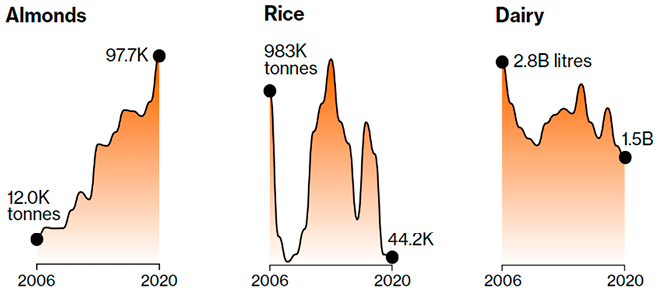
3.5.2 Spain: Building Institutional Confidence
To mitigate water shortage and conflict, many Spanish regions are implementing the arrangement of water use licences (capped allocations) and trades managed through the River Basin Authorities, but in other regions (notably the south and south-east) access to water remains heavily contested (Section 5). Still, where institutional experience has been built up, many water users say they prefer the market function over administrative quotas as the former implies that a reduction in water access may lead to financial compensation (Alaerts et al., Reference Alaerts, Godinez Madrigal and Hermansforthcoming). Critically, the process of jointly developing this system of licences, allocations, pricing, trading, and returning water to the environment has allowed all stakeholders to visualize the consequences of different scenarios, prepare for adjustments, and agree on protocols to resolve most of the conflicts institutionally, which builds mutual trust and confidence; the few remaining issues (such as last-minute ad-hoc interpretation of the priority rule in period of distress) merit political decision. Without these protocols, water shortage episodes in the past used to be intensely conflictual and chaotic, leaving lobbies and politicking to find quick fixes, which were usually unsatisfactory.
A case that illustrates how a combination of market-based instruments and confidence allowed an adaptive response to a drought crisis is the water trade from the Tajo basin to Taibilla in the Alicante region (Figure 4; Estrela Monreal et al., Reference Estrela Monreal, Nieto and Ferrer2014). In 2004, a prolonged dry summer was forecast, creating deep stress in the city of Alicante. The I.C. Canal de las Aves in the Tajo basin near Aranjuez agreed to a two-month transfer of part of its water to the Mancomunidad de los Canales del Taibilla near Alicante at a price of 0.23–0.28 €/m3. To release the water, farmers undertook water-saving measures to reserve water in an upstream reservoir on the Tajo, while the Alicante region also started saving water to reduce demand. As weather conditions unexpectedly improved, the water-saving measures sufficed to ward off the crisis, and water transfer was not needed. This case suggests that such trade was acceptable and functional to both parties; that the water in reserve offered a needed sense of security to avoid panicky reactions; and that nonetheless, both parties took helpful pre-emptive water-saving measures.
Map reflecting the proposed water transfer from the Aves in the Tajo basin to Taibilla near Alicante in the Segura basin (2004)
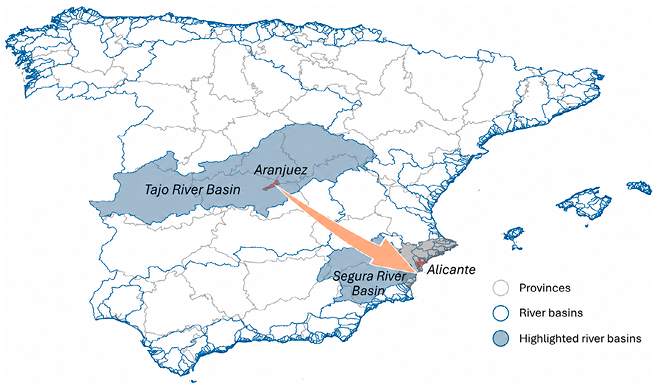
3.6 Conclusion
Economic and market-based instruments can influence water use efficiently and transparently if important but sometimes challenging conditions are met. However, the value, cost and price of water are often disconnected; thus, effective policies require that explicit valuation is used to reveal trade-offs and distinguish short-term (financial) user interests from long-term societal and environmental goals.
Water pricing signals scarcity, supports cost recovery, and encourages conservation. In practice, however, its effectiveness is often limited – particularly in agriculture – because demand is relatively inelastic, prices are politically sensitive, and users’ capacity to adapt is constrained. Besides, there are other policy instruments that can signal value of water. Thus, pricing works best when combined with other institutional instruments.
Water trading enhances flexibility, efficiency, and productivity by reallocating water to higher-value uses, but its benefits depend on transparent, updated registries – of permits, allocations, and contracts – and well-regulated safeguards against monopolization, speculation, and ecological or social harm. Poorly regulated markets risk deepening inequalities and undermining sustainability.
Economic and market-based instruments rely on strong legal frameworks, infrastructure to allow the transfer of water flows, extensive and reliable flow measurement systems, and substantial institutional capacity. Without these, high transaction costs, market failures, and technical challenges undermine their viability.
4 Collective Action Instruments: Platforms and Networks
4.1 Collective Action in Water Allocation
4.1.1 Platforms, Self-Organization, and Voluntary Networks
Water users’ platforms operate as forums where individuals and organizations with varying water needs and interests can come together to deliberate, negotiate and implement legitimate solutions (Carr, Reference Carr2015). Water user associations (WUAs), irrigation unions, watershed committees and catchment collectives are examples of collaborative platforms that have offered spaces for dialogue and negotiation between competing interests, thwarted water hoarding, resolved internal conflicts, fostered legitimate representation, and, in some cases, prevented environmental degradation (Meinzen-Dick and Nkonya, Reference Meinzen-Dick, Nkonya, Van Koppen, Giordano and Butterworth2007).
4.1.2 Historical Collective-Action Water Platforms
Water user associations and collective water management platforms have long-standing historical roots in many places. Notable early examples include the Tribunal de las Aguas de Valencia (Spain), the Subak system in Bali (Indonesia), and the Dutch regional Water Authorities (‘waterschappen’) – each evolving over centuries as community-based solutions to collective-action problems. While these platforms formalized into national and local institutions, other collective-action institutions remained informal or were marginalized by state-driven modernization (Boelens, Reference Boelens2008; Komakech et al., Reference Komakech, Van Der Zaag and Van Koppen2012).
Since the 1990s, there has been a re-emergence of participatory platforms in many countries. Many governments have established WUAs, Irrigation Committees and Catchment Committees to enhance efficiency and user ownership (Meinzen-Dick, Reference 91Meinzen-Dick2007; Molle, Reference Molle2008). However, critics argue that these reforms were motivated more by fiscal concerns, aiming to reduce public expenditure and shift responsibility for water infrastructure to local users (van Koppen et al., Reference 97van Koppen, Giordano and Butterworth2007). In practice, countries such as India and Mexico saw a decline in state investment in irrigation as WUAs were institutionalized, placing increasing pressure on communities to manage complex systems with limited resources (Roy and Shah, Reference Roy, Shah, Llamas and Custodio2002; Wester et al., Reference 98Wester, Merrey and De Lange2003).
4.2 Types and Conditions of Platforms
4.2.1 Types and Characteristics of Collective-Action Institutions
Collective-action platforms can be typified by their scale (local to macro), level of formalization (informal to formal), and governance origin (bottom-up vs. top-down). In addition to these types, platforms also vary in key characteristics, such as decision-making rules, boundary definition, enforcement mechanisms, and dispute resolution processes (Table 4).
| Type | Sub-category | Characteristics | Examples |
|---|---|---|---|
| Scale | LocalFootnote a | Users interact directly; short-term water-sharing decisions | WUAs in Mexico, Indonesia and others, Juntas de Vigilancia (Chile), Comunidades de regantes (Spain), CBOs in India and Sub-Saharan Africa |
| Scale | MesoFootnote b | Regional coordination across sectors and jurisdictions | Dutch Water Authorities, Spain’s Confederaciones’, Catchment Mngt Agencies South Africa |
| Scale | MacroFootnote c | Large, often state-led or basin-wide platforms | Australia’s Basin Community Committees and Indonesia’s TKPSDA (Coordination Teams for River Basin MgmtRBM) |
| Formalization | InformalFootnote d | Based on custom, no legal recognition | Subaks (Bali) |
| Formalization | Semi-formalFootnote e | Recognized by state, retains autonomy | Tribunal de las Aguas and Comunidades de regantes (Spain) |
| Formalization | FormalFootnote f | Legally mandated with enforcement and budget powers | Mexico’s WUAs |
| Governance Modality | Bottom-upFootnote g | User-initiated, consensus-driven, often voluntary | Farmer irrigation groups (Nepal, India) |
| Governance Modality | Top-downFootnote h | Created or supported by state for policy implementation | WUAs in Mexico and Indonesia |
| Governance Modality | Private | Associations of private organizations (water operators and industrial water users) | ANEAS & MexBev (Mexico), ANDESS, AB Chile (Chile), Vewin, FWS, VEMW (Netherlands). |
a Wester et al. (Reference Wester, Hoogesteger and Vincent2009) and Alaerts (Reference Alaerts2020).;
b Mostert (Reference Mostert2017) and Fornés et al. (Reference Fornés, López-Gunn and Villarroya2021).;
c Transparency, Government of Australia, and National Water Resources Council of Indonesia.;
d Lansing and de Vet (Reference Lansing and de Vet2012).;
e Maass and Anderson (Reference Maass and Anderson1978).;
f Wester et al. (Reference Wester, Hoogesteger and Vincent2009).;
g Pahl-Wostl (Reference Pahl-Wostl2015).;
h Wester et al. (Reference Wester, Hoogesteger and Vincent2009) and Alaerts (Reference Alaerts2020).
Different Scales
At the local scale, institutions operate where users can interact face-to-face, and decisions often reflect short-term livelihood needs. At the meso scale, basin, sub-basin, or catchment committees often require more formal coordination and technical expertise and they negotiate trade-offs between competing uses (agriculture, urban, and environmental). At the macro-scale, platforms cover entire river basins or national water systems. These include ministerial bodies or intergovernmental commissions, sometimes with consultative elements. They tend to operate at a higher level of technical and political complexity.
Degree of Formalization
A second categorization is the level of formalization, ranging from informal or customary institutions rooted in traditional or indigenous water management practices and governed by customary laws, to semi-formal or formal WUAs. Semi-formal associations are recognized by the state but maintain operational autonomy and incorporate hybrid structures combining state oversight with local self-governance.
The level of formalization also determines how these platforms interact with other governance instruments. For instance, formal platforms may be linked to regulatory tools (e.g. permit systems or compliance mechanisms), while informal ones may require external facilitation to connect with broader policy frameworks and resolve disputes or reinforce sanctions when social pressure is insufficient (Redicker et al., Reference Redicker, Adhikari, Guug, Narasimhan and Foster2026).
Governance Modality
A third categorization of platforms is its governance model. Bottom-up water-user platforms are primarily voluntary initiatives by local stakeholders, where water users organize themselves to address shared challenges. These platforms are usually characterized by consensus through deliberation (Pahl-Wostl, Reference Pahl-Wostl2015) and have high social legitimacy, but they sometimes lack official authority. A second type concerns more top-down platforms, encouraged and supported by water authorities. These are often more effective because they combine a legal mandate with local representativeness, but they may sometimes have questionable functionality such as China’s River Chief System (Moore and Yu, Reference 92Moore and Yu2020) or lack social legitimacy such as Mexico’s WUAs (Wester et al., Reference Wester, Hoogesteger and Vincent2009).
Note that associations of private organizations can also influence water allocation. In Mexico, ANEAS represents drinking water and sanitation operators and offers advocacy, training, and policy dialogue. Chile’s ANDESS and the Netherlands’ Vewin perform a similar role. Similarly, industries using water as a main resource such as beverage industries, also have their own platforms for advocacy and policy dialogue, such as MexBev in Mexico, AB Chile, FWS in the Netherlands, and the Australian Beverage Council.
4.2.2 Conditions for Collective Action
Considering all types and configurations of institutions and platforms by scale, level of formalization, and governance model, there is no evidence that one configuration is better than another. Rather, for collaborative platforms to flourish, certain minimum conditions are essential.
Investing in local capacities is a cornerstone for the success of collaborative platforms (Meinzen-Dick and Nkonya, Reference Meinzen-Dick, Nkonya, Van Koppen, Giordano and Butterworth2007). Ensuring that local stakeholders have the necessary skills, knowledge, and organizational resources is fundamental for long-term platform sustainability. This requires both financial investments and a long-term commitment to capacity development (Alaerts and Kaspersma, Reference Alaerts and Kaspersma2022). This can be supported by public awareness campaigns and information provision. A study by Cisneros (Reference Cisneros2019) examined water governance partnerships in Ecuador, highlighting the importance of local capacity development. It found that investing in local stakeholders’ abilities to manage water resources led to more resilient and effective governance structures. This approach minimized top-down directives and fostered a sense of ownership among community members.
Political commitment is essential to overcome institutional resistance and to gain legitimacy and support (Molle et al., Reference Molle, Berkoff, Molle and Berkoff2007). Institutional resistance is a common obstacle, particularly when existing power structures are threatened by more inclusive and decentralized decision-making processes. Rap et al. (Reference Rap, Molle, Ezzat El-Agha and Abou El Hassan2019) argue in the case of Egypt that failure to overcome this resistance necessarily implies weak WUAs inevitably incapable of solving internal and external conflicts.
Ensuring stakeholder buy-in ensures the legitimacy and operational effectiveness of externally initiated platforms. Ballester and Mott Lacroix (Reference Ballester and Mott Lacroix2016) examine participatory processes in the Ebro Basin and the Tucson Active Management Area and suggest that the quality of stakeholder engagement significantly influences the outcomes of water governance. These case studies underscore that platforms engaging a broad spectrum of stakeholders are more likely to achieve legitimacy and operational success. Without the active participation of diverse stakeholders, platforms face challenges in implementing their decisions and enforcing agreements, which can lead to inefficiencies and conflicts over resource allocation.
A robust legal framework is indispensable for the success of collaborative platforms, particularly in granting them the authority to establish rules, resolve disputes, and impose sanctions where necessary (Ostrom, Reference Ostrom1990). Formal recognition of these platforms through legal channels provides them with the legitimacy required to operate effectively. Buelow et al. (Reference Buelow, Delsault and Brower2025) conducted a study in Aotearoa, New Zealand, finding that formal legal recognition and clear statutory mandates significantly impact the legitimacy and effectiveness of water management platforms. Platforms require not only legal recognition and capacity development but also real authority to make decisions. In Indonesia, meaningful empowerment of WUAs emerged only after sustained administrative reforms in 2002 granted them formal mandates and resources (Alaerts, Reference Alaerts2020).
Trust among the members of a platform, reinforced by social cohesion and capable leadership, is fundamental to sustaining collective action. This largely depends on the way in which platforms assign roles, responsibilities, and rights among members. In the Netherlands, for example, the Regional Water Authorities follow the principle of belang–betaling–zeggenschap – ‘stake, payment, influence’ – which links influence in decision-making to one’s stake and financial contribution. Community-based organizations with socially cohesive and culturally aligned memberships, as well as consistent leadership, have proven more effective than fragmented or transient groups, as in the case of Nepal (Meinzen-Dick et al., Reference Meinzen-Dick, Pradhan and Zhang2022).
Institutional flexibility is critical. As climate variability, demographic shifts and infrastructure degradation intensify, platforms and institutions must be able to adapt their rules and practices. This involves iterative learning, feedback mechanisms, and space for renegotiation. Their roles in the monitoring and enforcement of peer-control, civic observatories, and citizen science are important (Wehn et al., Reference Wehn, McCarthy, Lanfranchi and Tapsell2015). Platforms and institutions should empower stakeholders not just to speak, but to co-create rules, participate in monitoring, and share responsibility for sanctions.
These conditions show that collective action is not automatic but depends on trust, reciprocity, monitoring, enforcement and social capital (Meinzen-Dick and Nkonya, Reference Meinzen-Dick, Nkonya, Van Koppen, Giordano and Butterworth2007); heterogeneous groups can cooperate under the right institutional design, challenging the view that homogeneity is always necessary.
4.3 Performance of Collective-Action Institutions
Well-functioning collective-action platforms offer several benefits. First, they improve the accuracy of water demand assessments by engaging directly with those who use water on a daily basis – farmers, industrial operators, municipal suppliers, and others – thereby generating a more granular and context-specific understanding of water needs (Langsdale and Cardwell, Reference Langsdale and Cardwell2022). However, they may have a less than sound information base on groundwater supplies. Second, they enhance community understanding of water-related challenges and foster innovation. By bringing together diverse perspectives and knowledge bases, these platforms enable experimentation and learning-by-doing (Meinzen-Dick and Nkonya, Reference Meinzen-Dick, Nkonya, Van Koppen, Giordano and Butterworth2007). Third, platforms reinforce ownership of governance. When stakeholders participate meaningfully in decision-making, they are more likely to respect agreements, resolve conflicts constructively, and share accountability. This reduces tensions and strengthens long-term legitimacy (Coward, Reference Coward1990). Fourth, collaborative platforms can improve monitoring and compliance because of their presence in the field. Stakeholder involvement in oversight activities fosters transparency and increases collective vigilance against over-exploitation or misuse (Mostert et al., Reference Mostert, Craps and Pahl-Wostl2008). Fifth, platforms can reduce transaction and operational costs. Although collective action entails coordination efforts, regular meetings, and consensus building, efficiency gains often outweigh these costs thanks to shared decision-making, lower enforcement burdens, and increased voluntary compliance (Hamm et al., Reference Hamm, PytlikZillig, Herian, Tomkins, Dietrich and Michaels2013). Effective platforms streamline communication and reduce the bureaucratic load on state agencies.
Literature explores the design and effectiveness of these platforms. Scholars debate whether higher levels of formality correlate with increased effectiveness (Verzijl and Dominguez, Reference Verzijl and Dominguez2015), whether bottom-up governance models perform better than top-down ones (Meinzen-Dick, Reference 91Meinzen-Dick2007), whether adaptive governance makes platforms more resilient to socio-environmental change (Pahl-Wostl, Reference Pahl-Wostl2015), whether institutional design can mitigate power imbalances and support the inclusion of marginalized communities (Boelens, Reference Boelens2008), and how digital tools may enhance transparency and participation (De Stefano and Hernandez-Mora, Reference 84De Stefano and Hernandez-Mora2018).
Considering such unknowns, expectations of what collaborative platforms can achieve should be realistic, especially in cases of water over-exploitation, power asymmetry, and the exclusion of some user groups. User self-regulation can only do so much with the tools and institutional framework bestowed upon users in complex contexts. An incorrect appraisal of the issues driving a water allocation problem can render any collaborative, self-regulated user platform or institution fruitless (Pahl-Wostl, Reference Pahl-Wostl2019).
4.4 Trade-Offs Associated with Platforms for Water Allocation
4.4.1 Long-Term Security Versus Adaptability and Flexibility
A core tension in water governance concerns ensuring long-term security while maintaining the institutional flexibility needed to respond to shocks and changes. Centralized state systems may offer regulatory certainty and stability, but they are often slow to adapt. Conversely, user platforms – especially those based on deliberation and consensus – can be more quickly responsive, but they may lack the legal mandate or capacity to institutionalize decisions over time.
Recent scholarship argues in favour of adaptive capacity in the face of climate change, but it warns that flexibility without institutional memory or long-term planning can lead to fragmented or reactive governance. Therefore, a balance between bottom-up and top-down approaches is encouraged. Garrick and Villamayor-Tomás (Reference Garrick, Villamayor-Tomás, Thiel, Blomquist and Garrick2019) similarly note that polycentric systems, while theoretically more adaptive, require coordination mechanisms and feedback loops to avoid decision gridlock. For platforms to contribute meaningfully to long-term water security, they must strike a balance between adaptability and rule consistency, possibly through hybrid models that combine user flexibility with periodic administrative ratification.
4.4.2 Short-Term Economic Development Versus Longer-Term Sustainability
This trade-off involves reconciling short-term economic growth with longer-term ecological integrity. Water platforms often face pressure to prioritize short-term economic benefits – such as irrigation expansion or industrial supply – over long-term sustainability goals, particularly in regions with weak environmental regulation. For instance, De Stefano and López-Gunn (Reference De Stefano and Lopez-Gunn2012) show how groundwater-user platforms in Spain’s Mancha Occidental basin were unable to prevent aquifer depletion due to competing economic interests and political reluctance to enforce environmental caps. Similarly, in Chile WUAs have struggled to balance agricultural production with maintaining minimum environmental flows (Bauer, Reference Bauer2015).
These cases suggest that without explicit ecological mandates – and mechanisms to enforce them – user platforms may contribute to, rather than mitigate, environmental degradation. Embedding environmental representation within platforms, as seen in some Australian Community Basin Councils, Indonesian TKPSDA, and Dutch Water Authorities, may be one way to institutionalize sustainability goals (Tan et al., Reference Tan, Bowmer and Mackenzie2012).
4.4.3 Fair Distribution Versus Economic Efficiency
A third trade-off exists between fairness in water access and the pursuit of economic efficiency. Economically efficient allocation often favours larger users who can exploit economies of scale, invest in infrastructure, or are better resourced. Meanwhile, equitable access may require caps, redistributive rules, or differentiated tariffs that can limit overall efficiency. Within platforms, unequal bargaining power and elite capture can skew outcomes unless deliberate efforts are made to ensure voice and representation. Boelens and Zwarteveen (Reference Boelens and Zwarteveen2005) argue that platforms should not only reflect existing rights and entitlements but also actively reshape them to achieve more just outcomes. This may include quotas for marginalized users, rotating leadership, or participatory budgeting mechanisms. While such approaches can increase administrative complexity, they are essential to avoid institutionalizing exclusion under the guise of efficiency.
4.5 Collective Action and Adaptation to Longer-term Changes
4.5.1 Comparative Overview of Water-User Platforms
Tables 5a and 5b compare water-user platforms or institutions across 10 countries. It synthesizes the institutional types, their strengths, and the challenges they face, drawing from recent literature and grounded case studies through semi-structured interviews. It illustrates how diverse institutional settings – ranging from ancient customary institutions to modern basin authorities – perform under varying socio-political, legal, and ecological conditions. By capturing both strengths and challenges, the table supports broader reflections on the conditions under which collaborative platforms for water allocation can function effectively and equitably.
4.5.2 Theoretical Pathways towards Improvement
Considering the sobering limitations of platforms, the theory of collective action on collaborative water governance has also developed concepts and principles that delineate idealistic pathways including adaptability, inclusivity, and multilevel coordination. Adaptive governance allows institutions to adjust to evolving hydrological, economic, and social conditions (Alaerts and Kaspersma, Reference Alaerts and Kaspersma2022). Additionally, ensuring equitable public participation and power-balancing mechanisms are critical to preventing elite capture and maintaining legitimacy (Schlager and Heikkila, Reference Schlager and Heikkila2011). For multilevel coordination, the concept of polycentric governance argues for decision-making that is distributed across multiple levels to enhance resilience (Ostrom, Reference Ostrom2010). Finally, hybrid governance approaches that combine market incentives, state regulations, and community-driven accountability mechanisms can provide more sustainable and effective water allocation systems (Grafton et al., Reference Grafton, Libecap, McGlennon, Landry and O’Brien2011). Although reaching these may prove difficult, as there will always be imperfections and weaknesses, thus, the task is to design the arrangement that offers more strengths than weaknesses.
The political economy structure of many water allocation regimes is notably resistant to change (Molle, Reference Molle2009). Traditional power structures and vested interests often resist transitions towards collaborative approaches to water governance (Pahl-Wostl, Reference Pahl-Wostl2019). Institutional architectures often fail to provide collaborative platforms with a sufficient mandate and legitimacy to create enforceable rules and impose sanctions (Ostrom, Reference Ostrom2010). This institutional inertia, coupled with insufficient support for building organizational capacity in local communities, has hindered the development of collaborative platforms.
Once established, platforms themselves are, of course, also fairly resistant to change. Taking up new tasks, halting others, and agreeing on new structures of representation and deliberation are all challenging. In other cases, platforms and WUAs may evolve into so-called empty institutions. Structures that exist in form, as part of a country’s official water management structures, but that no longer function (cf. Ho, Reference Ho2016). Although platforms are an indispensable part of water allocation institutions, they also need to adapt to meet contemporary challenges, as seen in Section 5.
| Country | Platform/Institution | Strengths | Challenges | Key Sources |
|---|---|---|---|---|
| Spain | Tribunal de las Aguas; Confederaciones Hidrográficas | Historic legitimacy, transparency, equity; effective local dispute resolution | Illegal extraction, environmental degradation, water competition | (Maass and Anderson, Reference Maass and Anderson1978; Rouillard et al., Reference Rouillard, Babbitt, Pulido-Velazquez and Rinaudo2021) |
| Indonesia | WUAs | Improved local participation, fostered ownership of irrigation systems, and flexible mechanisms for conflict resolution and routine maintenance | Weak legal mandates, dependence on inconsistent state support, limited technical and managerial capacity, risks of elite capture, and difficulties addressing basin-scale coordination | (Alaerts, Reference Alaerts2020) |
| Netherlands | Regional Water Authorities | Long history, legal authority, user financial contributions, and adaptability | Adapting to the modern climate and equity concerns | (Mostert, Reference Mostert2017) |
| Mexico | River Basin Councils | Forums for stakeholder dialogue | Elite capture, illegal water markets, and historical simulation of participation | (Wester et al., Reference 98Wester, Merrey and De Lange2003, Reference Wester, Sandoval Minero and Hoogesteger2011; Godinez Madrigal, Reference Godinez Madrigal2022) |
| Chile | Irrigation User Associations | Equitable allocation under market system | Power imbalances from privatized rights; urban-agriculture conflict | (Bauer, Reference Bauer2015) |
| Country | Platform/Institution | Strengths | Challenges | Key Sources |
|---|---|---|---|---|
| USA | Watershed Councils; Groundwater Agencies | Multi-stakeholder engagement; Sustainable Groundwater Management Act (California) initiatives | Agricultural overuse, urban-agriculture conflict, inequality exacerbated by water markets | (Koebele et al., Reference Koebele, Méndez-Barrientos, Nadeau and Gerlak2024) |
| China | Water User Associations; River Chief System | Pollution control progress, institutional promotion | Limited local autonomy due to top-down hierarchy; inefficiencies vs. traditional systems | (Wang and Wu, Reference Wang and Wu2018; Gao et al., Reference Gao, Bracken and Herdt2023) |
| Australia | Catchment Management Authorities | Community engagement | Trade-offs with Indigenous equity and environmental concerns due to agricultural pressures | (Tan et al., Reference Tan, Bowmer and Mackenzie2012) |
| South Africa | Catchment Management Agencies | Inclusive policy goals, focus on equity | Legacy of apartheid, mistrust, legal challenges, and institutional fragility | (Meissner et al., Reference Meissner, Funke and Nortje2016; Stuart-Hill and Meissner, Reference Stuart-Hill and Meissner2018) |
| Jordan | Water User Associations | Local involvement in the context of limited water availability context | Tribal dominance, elite capture, donor dependence, and limited collaboration capacity | (Mustafa et al., Reference Mustafa, Altz-Stamm and Scott2016) |
4.6 Conclusion
Collective-action platforms for water allocation offer an instrument to involve diverse stakeholders in decision-making and help to create more sustainable, transparent and resilient water allocation systems. Yet, platforms are not a panacea. Collaborative processes and their outcomes can sometimes create or worsen inequities and be ineffective at addressing socio-environmental challenges.
Platforms have the potential to play a critical role in addressing the limitations of other types of institutional instruments. In contexts where water markets or permit systems are constrained by weak governance or inequities, collaborative platforms provide a venue for negotiation and adaptive problem-solving. For instance, Spain’s Confederaciones Hidrográficas integrate participatory governance with regulatory oversight to address illegal water use and balance environmental and economic objectives.
The integration of platforms with other instruments is particularly vital in regions facing severe water stress and socio-political complexities. In South Africa’s Catchment Management Agencies aim to redress historical inequities by combining stakeholder engagement with regulatory measures, though resource constraints and institutional challenges persist (Meissner et al., Reference Meissner, Funke and Nortje2016).
Looking ahead, the success of water allocation regimes will depend on the ability of policymakers to integrate collaborative platforms with pricing, permits and other tools in a manner that is context-sensitive and adaptive. Investments in capacity development, legal frameworks, and cross-sectoral coordination will be essential to realizing the full potential of these integrated approaches.
5 Country Cases
This section offers short condensed descriptions of representative country cases, exploring the dynamics of water allocation and rights regimes over the recent past. Three countries are described in some detail considering the extent of policy learning and transition, namely Spain, Australia, and China. Experiences in Mexico, Chile, Indonesia, and the Netherlands are described succinctly. More, and more complete case descriptions and analyses are available in Alaerts et al. (Reference Alaerts, Godinez Madrigal and Hermansforthcoming).
5.1 Spain: From Private Water Ownership to a Concession-Based System
5.1.1 Context
Spain’s mountainous territory and fertile valleys, combined with a low annual precipitationFootnote 12 and warm climate, have made it highly suited to canalized and pumped irrigation. Agriculture has always been a potent and productive economic sector absorbing 80% of all water, turning Spain into ‘Europe’s orchard’ (Sanchis-Ibor et al., Reference Sanchis-Ibor, Pulido-Velazquez, Valero De Palma, García-Mollá, Rouillard, Babbitt, Challies and Rinaudo2022; Serrano et al., Reference Serrano, Cazcarro, Martín-Retortillo and Rodríguez-López2024). Administratively, Spain comprises 17 semi-autonomous regions.
In the early twentieth century, the government invested extensively in infrastructure to store and transport water, mostly to augment supply and boost economic productivity. By 1990, nearly all rivers and aquifers were heavily overused: rivers ran dry, ecosystems and fisheries disappeared, many town water supplies became subject to temporary disruptions, and many regions suffered irreconcilable water conflicts.
5.1.2 Administration, Permitting, and Rights
The country has a centuries-old legal tradition regarding water rights, where irrigation institutions were introduced during the Roman and Umayyad reigns. The 1866 and 1879 laws codified the private character of water abstractions. Following a growing recognition that over-extraction was exacerbating conflict and degrading the environment, the 1985 Water Act placed water resources into the public domain, with legacy private groundwater rights to be gradually phased out; in 2000, Spanish legislation transposed the EU Water Framework Directive to protect the aquatic environment.
Water management is based on 15 large river basinsFootnote 13 managed by semi-autonomous River Basin Authorities (Confederaciónes Hidrograficas) (Ministerio de Medio Ambiente, 2000). Currently, water is allocated using a hybrid arrangement where users have to obtain a conditional water-use licence (concesión) that is entered into the Registry, but where administrative decisions and local stakeholder platforms also take prominent roles.
As a social measure, each citizen may extract up to 7,000 m3/yr of groundwater per parcel, without a concession, for free – a fairly large amount (Ministerio de Medio Ambiente, 2000). Within the River Basin Authority, consolidated water-user nodes are nested (Subsection 5.2.4).
A fundamental principle of the licensing system is legal certainty for the licensee. However, this increases the system’s rigidity (Estrela Monreal et al., Reference Estrela Monreal, Nieto and Ferrer2014). To increase flexibility (1) licences are conditional and lapse after a long but limited time (still often 75 years but being reduced to 20–30 years), and (2) water-market instruments were introduced in 1999 (Subsection 5.2.3). The River Basin Authority reduces (‘caps’) the licence to variable allocations depending on the hydrological and demand forecasts and the priority schedule, in consultation with water users; this may even be on a weekly basis during very dry summer spells. It also supervises (and sometimes initiates) transfers between users and between basins, and joins investments with users to save water.
A schedule with 10 levels helps set operational priorities; the highest preference is drinking water production, with irrigation in second place. Environmental water needs stand above any priority: they set ex ante constraints on the quantity that can be allocated. Still, the implementation of this policy remains challenging. Across the basins, there is little consistency in calculating desired environmental flows, as reliable simulation data are lacking for most river stretches; it is now considered appropriate to apply a step-wise trial-and-error approach to find out what works best. The competition between agricultural, urban, and environmental interests remains intense and keeps shifting.
5.1.3 Economic and Market-Based Instruments
A combination of subsidies, pricing and regulation spurs investment in water saving (agriculture, industry), recycling (industry, cities) and desalination. These instruments, together with trading that was introduced in 1999, allow for the reallocation of water volumes to new users and help moderate the effects of severe drought episodes. Since 2001, Rights Exchange Centers or ‘water banks’, have facilitated trades between users and for sustainability purposes (Section 3). Even though total water volumes traded are only 0.5–5.0% of annual consumptive use, water trades help to alleviate water shortages and help reallocate water for environmental goals (Section 3; Estrela Monreal et al., Reference Estrela Monreal, Nieto and Ferrer2014).
All uses incur a significant fee that reflects the cost of infrastructure; irrigators pay a fee both to the River Basin Authority for bulk water supply and to their own Irrigation Community to cover local delivery costs. The high water price and awareness campaigns have made users conscious of shortages.
5.1.4 Collective Action
Water allocation inside the irrigation areas is managed by local Irrigation Communities (Juntas or Comunidades de Regantes) (Figure 5). The local Irrigation Communities have the responsibility to manage and distribute water internally within their territory based on a collaborative agreement. The Water Tribunal of the Valencia Plain, for example, is a millennium-old collaborative committee of water users that seeks agreement on system management, water allocation, and the resolution of disputes (Section 4; Figure 5). All irrigation areas in Spain are now obliged by law to establish a similar institution. Because of the joint decision-making and social peer control, discipline within such a scheme is high. Occasionally, agreements must be enforced, and although the Junta itself has no formal enforcement authority, its relations with local government generally allow it to call upon local law enforcers.
Left: a nineteenth-century depiction, of the weekly Water Tribunal meeting in a porch of the València Cathedral. Right: the same event in 2023, staged for tourists – the meeting proceeds in another building

At the larger scale of the river basin, the Confederaciones Hidrograficas are large technical administrations that rely on formalized consultation among water users. Many key decisions, such as on water distribution from reservoirs, are taken by internal commissions with strong user representation. As many issues of water shortage or excess are very local, even small farmers dispose of the WhatsApp numbers of the Confederacion’s technical staff, to ensure swift contact (see Figure 6).
Irrigation water supply in the Acequia Real irrigation system of the Júcar river basin (Spain). Each plot has a pressurized pipe outlet with a valve and meter that is operated remotely by the central control operator of the Junta. A farmer can request an irrigation delivery over the internet or by phone; the operator schedules delivery based on the farmer’s remaining water budget and water availability in the days after the call. Metering and payment are internet based

5.1.5 Regime Dynamics, Outcomes and Performance
In its reforms since the 1980s, Spain chose to build on both its legal traditions and the its legacy of collective action, creating strong river basin administrations and capped concessions with a supplementary role for water markets. Starting from the pre-1985 situation when essentially all water was directed at productive purposes and river systems were structurally over-exploited, the implementation of the water reforms has taken several decades, and the tension between productivity and sustainability has not been definitively resolved. Overall, the policy – with conjunctive infrastructural improvement – arguably proved effective: despite substantial water restrictions, agricultural production value has improved slightly or did not decline from the high levels that were achieved in the 1950–1980 period of intensifying water use, while in many locations environmental values and aquifers were being restored or better protected (INE, 2025). Whereas until the 1980s it was common for many town water supplies to be unreliable during the summer for lack of water, this is no longer the case.
Compliance with policy differs per region. It is reasonable in the eastern (e.g. the Júcar basin with Valencia) and northern basins. In the Júcar basin, irrigation water use has been curtailed drastically to reallocate it to new entrants and to environmental uses: for example, the allocation to the large irrigator Acequia del Júcar dropped from 700Mm3 annually in 1985 to 220 Mm3 in 2020 with the remainder directed at recharge of aquifers and lagoons (Sanchis-Ibor et al., Reference Sanchis-Ibor, Pulido-Velazquez, Valero De Palma, García-Mollá, Rouillard, Babbitt, Challies and Rinaudo2022). Also, combining trading and subsidies, some Júcar water is now directed from the mouth of the river to the more southern, arid area of Vinalopó-Alicante (Sevilla and Torregrosa, Reference Sevilla and Torregrosa2011). On the other hand, an initiative to direct Júcar water through trade to the neighbouring drier Segura basin was rejected based on the argument that first the over-allocation in the ‘own’ Júcar basin had to be addressed (Sanz Cavero et al., Reference Sanz Cavero, Viu, La Roca Cervigón and Sánchez Gallardo2023). Still, further measures are needed to secure long-term sustainability (Sanchis-Ibor et al., Reference Sanchis-Ibor, Pulido-Velazquez, Valero De Palma, García-Mollá, Rouillard, Babbitt, Challies and Rinaudo2022).
In the Andalucía and Segura regions, despite intense water saving, overall use remains locally too high, damaging the emblematic Coto Doñana (Andalucía) and Tablas de Daimiel (La Mancha) wetlands and drawing down aquifers; as one of the consequences, these regions also suffer from among the highest rates of land subsidence in Europe (Esteban et al., Reference Esteban, Dinar, Calvo, Albiac, Calatrava, Herrera, Teatini, Tomás, Ezquerro and Li2024).
Regional politics also interfere. The Castilla-La Mancha Region, upstream of the Júcar, keeps allowing groundwater extraction despite court orders, which affects the Júcar aquifer (Esteban et al., Reference Esteban, Dinar, Albiac, Calera, García-Mollá and Avellá2016). In the north of Spain, the Aragón Region refuses to share water with the downstream Catalunya Region to serve the Barcelona conurbation; both depend on the Ebro River basin (Marti, Reference Marti2000). Legal disputes over intra- and inter-basin transfers and calls for greater regional autonomy in water management reflect a governance landscape defined as much by tension as by cooperation (Martínez-Dalmau et al., Reference Martínez-Dalmau, Gutiérrez-Martín, Kahil and Berbel2023).
5.2 Australia: Market and Regulation to Reconcile Private and Public Interests
5.2.1 Context
Australia is a vast continent with most of its comparatively small population concentrated along the eastern and southern coastlines. Rainfall and evapotranspiration vary by region and season and are subject to 5- to 10-year weather cycles such as ENSO.Footnote 14 The Millennium Drought of 1999–2009 had a devastating effect. Long dry periods are alternated with tropical cyclones that flood large areas. To mitigate this, much effort was directed at infrastructure for water storage and canalization in the twentieth century.
The Murray–Darling Basin (MDB) is the largest and agriculturally most developed basin. The basin crosses five states and produces about half of the country’s agricultural output (Figure 7). Its reservoirs can store eight years of consumptive use. Australia is a federal country with substantial powers resting at the state level. Water is under state authority, but the Commonwealth (federal level) sets the regulatory principles and assumes complementary management roles. The Commonwealth notably finances the environmental water reserves, and it has key oversight authority over the MDB through the Murray–Darling Basin Authority (MDBA).
The Murray–Darling Basin and its major sub-basins, sprawling the States of Queensland (QLD), New South Wales (NSW), the Australian Capital Territory (ACT), Victoria (VIC), and South Australia (SA)

5.2.2 Administration, Permits and Rights
Before 1991, the water sector was only lightly regulated. In the southern state of Victoria, in particular, several parties invested in canalized irrigation and groundwater wells starting in the 1920s. This spurred a strong sense of private, land-related entitlement to water. Reform began in 1991 and was consolidated through the Council of Australian Governments (COAG) Water Reform Framework, responding to a fragmented and environmentally damaging system marked by competition among states, sectors, and users – often at the expense of ecosystems and First Nations’ interests. Successive milestones include the National Water Initiative (NWI, 2004), the Commonwealth Water Act (2007), and the Murray–Darling Basin (MDB) Plan (2012). The NWI is currently being renewed (APC, 2024).
By the early 1990s, the MDB was recognized as over-exploited. Historically, users held private water titles, but these were progressively restricted (‘attenuated’) after 1994 regarding the allowable withdrawal under the entitlement and hydro-meteorological conditions, transferring greater authority to state administrations; during dry periods in certain valleys, the annual allowance may go as low as 10% of the entitlement. In response to ecological degradation, the Commonwealth launched a A$30 billion (US$19.8 billion) programme in 2007 to buy back water entitlements and restore flows for First Nations and environmental purposes. Complementary initiatives, such as the Sustainable Rural Water Use and Infrastructure Program (2016), recover water savings through infrastructure upgrades and improved efficiency.
Water entitlements and land rights were legally unbundled, allowing users to hold water as a distinct tradeable asset. Each year, states define sustainable diversion limits – after setting aside water for ecological functions – and determine allocation volumes based on hydrological forecasts.
5.2.3 Economic and Market-Based Instruments
Trading is now highly developed, with water prices intended to reflect relative scarcity and value. In most states and in the Commonwealth, environmental rights and their trading are in the hands of independent State Environment Water Holders. Water users can trade water as (part of) their allocation or their permanent entitlement; they may opt to carry over part of it to the following year. Mandatory Water Resources Plans per sub-basin must be submitted to and accredited by the Commonwealth, and they must account for all entitlements. Sub-regional Water Corporations process water calls and trade applications, and they can deliver water within 10–20 days of the call.
Water management, trade, and pricing are assessed by several independent regulatory agencies.Footnote 15 Water tariffs remain cheap compared to, for example, Spain and the Middle East: governments finance most infrastructure also for irrigation. On the other hand, trade prices are substantial (Section 3). The tariff structure is such that a significant portion is fixed; thus, unused water must also be paid for.
Water trading started in earnest during the Millennium Drought, but it has expanded significantly over the past decade to comparatively large volumes and transaction values. Still, further regulations to ensure price transparency and the avoidance of market manipulation are being initiated (ACCC, 2023).
5.2.4 Collective Action
While most outcomes of collective action are resulting from formal political deliberation processes and for the MDB through the Basin Ministerial Council, collaboration among users is prominent within irrigation districts where Irrigation Corporations and similar institutions are run or supervised by the water users. Importantly, in most sub-basins, empowered Basin Officials Committees and Basin Community Committees advise on local policies and matters.
5.2.5 Regime Dynamics, Outcomes, and Performance
The social and economic malaise of the 1980s triggered reforms and deregulation across all sectors, and the country embarked in the 1990s on a transition to an elaborate hybrid water management system in which water markets and strong administrative regulation operate conjunctively. This transition has proved time-consuming, and its implementation is still being rolled out in more remote areas. Because of this long implementation time, the transition is sensitive to changing political majorities in the Commonwealth and state legislatures. For example, the buy-back programme to restore environmental and Indigenous allocations, launched in 2007, was suspended between 2014 and 2022 when a conservative majority was in power.
Overall, most water users, states, regulators, and academics confirm that water trading has been delivering an economic and social impact while helping to ensure better sustainability, adaptability to climate and market shifts, and securing public and equity interests (ACCC, 2023; Section 3). Importantly, the enforcement and penalty system has been reasonably effective over the past decade in reducing infractions.
Nonetheless, some Inspectorates and several scholars are critical of different aspects, pointing out weaknesses of which some are currently being addressed (Grafton et al., Reference Grafton, Libecap, Edwards, O’Brien and Landry2012; Alexander and Rickards, Reference Alexander and Rickards2021; Wheeler, Reference Wheeler2022). In several sub-basins, challenges remain to ensure the comprehensive application of the regulations, equity, ecological resilience, and the effective participation of Indigenous communities.
In particular, implementation gaps remain: in the northern MDB and other basins outside the MDB, only around half of the abstraction points have certified meters (ACCC, 2023). Some Water Resource Plans in New South Wales (NSW) and Queensland are also still in the process of being accredited, limiting basin-wide consistency.
In the northern MDB, farmers historically engaged in floodplain harvesting – collecting runoff and rainfall in large on-farm storages – which has been difficult to monitor and long fell outside formal allocation frameworks. The MDB once contained over 650,000 farm dams, holding roughly 9% of its total surface water capacity (Evans, Reference Evans2007; Srikanthan et al., Reference Srikanthan, Barua and Hafeez2015). The lack of transparency over these practices and reservoir release operations by regional water corporations led to widespread community tension and state-to-state conflicts (Waldman et al., Reference Waldman, Rangarajan, Whitley and Gross2023). These flows did not show up in formal allocation processes. In response, floodplain harvesting in NSW is now getting more strictly regulated.
The comprehensive allocation and metering, then, are preconditions for the operation of water markets. While the administration of this trade arrangement comes with significant transaction costs, it appears more effective than the situation prior to 1991. Importantly, the arrangement affords a market-conform compensation to users who decide to discontinue their water use.
5.3 China: Navigating the Trade-Off between Fast Economic Growth and Longer-Term Sustainability
5.3.1 Context
China features hydrological conditions that are highly diverse; the west and north tend to be dry to arid and partly mountainous, while the eastern and southern regions comprise expansive, low-lying plains that are wetter. Its population is now highly urbanized at 67%.Footnote 16 Its industry is highly diversified and developing fast, while agriculture remains key for food security; 60–70 million ha is irrigated (van Dijk and Geurtsen, Reference van Dijk and Geurtsen2023). Overall, of all consumptive water use, agriculture is taking about 60%, industry 17%, and cities 10%; the remainder being assigned to ecosystems (Ministry of Water Resources [MWR] China, 2021). The country is crossed from west to east by the Yellow River, Huaihe, Haihe, and Yangtze.
The spatial distribution of China’s water resources is extremely uneven (Cheng et al., Reference Cheng, Hu and Zhao2009), contributing to stark regional and seasonal water scarcity. Severe flooding alternates with droughts; extensive hydraulic infrastructure has helped to mitigate this imbalance since the Han dynasty (around 2,000 years ago). Heavy investment in irrigation expansion, started in the 1950s, was driven often by political aims rather than technical expertise, sometimes aggravating water shortage and causing, for instance, the Yellow River to run dry before it reached its estuary, starting in the 1970s.
The adoption of integrated water management in the late 1990s (Water Law of 2002) has remedied many deficiencies and, for example, ensured the allocation of adequate volumes in the Yellow River to flush sediment and restore the estuary (Jia, Reference 89Jia2024). The Chief River System also needs freshwater flows to perform other essential functions at a macro spatial scale, especially in the eastern Plains: facilitating navigation, flushing out sediment, and repelling saline intrusion. Water allocation, thus, has substantial and specific challenges at nested spatial scales, including inter-basin water transfers.
5.3.2 Administration, Permits and Rights
The country has a unitary political and administrative structure, with the Communist Party’s goals often superseding civil ones. The State owns all water, and individuals cannot exert a right. The MWR sets policy and manages the main infrastructure, i.a. through its River Conservancy Commissions, one per main river (though called Commissions, they are in effect executive central-government units). Groundwater management is fragmented.
For a very large river like the Yellow River, the Yellow River Conservancy Commission sets a river basin plan and decides on annual (and when necessary, monthly and ten-day) allocations for, and instructions to, the provinces and large users, taking into account weather forecasts, reservoir volumes, demand, and other parameters. The State Council has capped the aggregate consumptive water use of each main river, but it is unclear how well this is enforced (Yellow River China, n.d.). The Commission issues water use permits to these aggregate, region-wide users, which then have to further allocate within their jurisdictions. Unused rights remain valid. Before issuing an entitlement to a new entrant, its impact on third parties and the environment must be assessed, and existing water must be ‘freed up’: an existing user must forego their right, or water must be ‘created’ through water-saving investments or recycling.
At the province, prefecture, and county or municipality levels, Water Resources Bureaus are in charge of local allocation; they issue use permits to municipalities, industries, power generators, irrigation districts (WUAs and collectives), and so on. Within these networks, water is further allocated and distributed by these drinking water utilities, WUAs and others.
5.3.3 Economic and Market-Based Instruments
Generally, water fees are charged, but they tend to be too low to incentivize water saving. Given average income levels, end users often pay significant tariffs for their water (Section 3). On the other hand, the overall caps on rivers, combined with other policy pressures, lead to several investments in water recycling. To protect declared environmental sites, minimum flows are defined.
Although market-based trading in principle runs counter to communist ideology, pilots have been initiated after the Interim Measures for Water Allocation (2008)Footnote 17 to help address deep water shortage and competition in several regions. The government allowed market-based instruments in a hybrid arrangement to flexibly respond to local fluctuations in water availability and market prices. These measures offer more security to users, implicitly favouring historical users over new ones; however, the different administrations may adjust rights in ways that are not transparent (Mu et al., Reference Mu, Liu and Chen2022). Pilot regions in seven provinces now arrange for trading. Gansu and Ningxia provinces, both arid, are at the forefront of these developments (IWRA, 2023).
To enhance transaction volumes and transparency – key for a functional market – the national China Water Market Exchange was established in 2016 (CWE, 2025). It identifies three types of transactions: inter-regional trade (Type 1), individual withdrawal trade (Type 2), and irrigation rights trade (Type 3). The trading has been limited to the pilot regions and has remained modest, but it has intensified after 2022 (Figure 8). Many transactions, notably local ones, also outside the pilot areas, go unrecorded. Concerns exist regarding the low level of prices offered, and the requirement that transactions must be approved administratively – a source of interference that causes such delays that demand and conditions may have completely changed by the time of approval (‘hysteresis effect’). Overall, this market-based allocation has enhanced flexibility, security, and economic productivity, but environmental interests have not benefited (Di et al., Reference Di, Wu, Wang and Huang2020).
Water trade frequency on China’s Water Market Exchange. Left: volumes traded (in 10,000 m3). Right: number of transactions. Yellow: Total; Red: Type 1; Blue: Type 2; Green: Type 3. Inter-regional trades concern are few but concern large quantities whereas irrigation-related trades concern small volumes but are increasingly numerous and popular

The expansive network of waterways also allows to trade water from faraway distances, such as the over-1,000 kilometre-long South-to-North Water Transfer Project, which has allowed the water-scarce North China Plain (with the Beijing–Tianjin conurbation) to ‘buy’ water from irrigation regions in the wetter southFootnote 18 (Jia, Reference 89Jia2024).
5.3.4 Collective Action
Collective action takes place primarily through the decisions of the Party, as it claims to represent the interests of the whole citizenry. Collective action at a local scale used to be common especially with respect to the local management of irrigation canals, drainage, and flood protection (Ball, Reference Ball2017), but this was discouraged with the onset of communism. Starting in the 1990s, farmers were again encouraged to organize in structured WUAs to enhance productivity and improve water management; their performance remains chequered, however, with unsatisfactory performance attributed to the absence of supportive conditions and the politicization of WUA leadership in China’s centralized political system (e.g. Wang and Wu, Reference Wang and Wu2018).
5.3.5 Regime Dynamics, Outcomes and Performance
China has a millennium-old tradition of public administration in water management, which was consolidated in the modern era under the communist regime. Under Deng Xiaoping’s political course (1978–1989), China’s policy prioritized economic development and political stability while slowly recognizing sustainability limits and complementing administrative decision-making with market-based instruments; this has created much wealth at a rapid pace while halting further degradation of the environment. The 1990s witnessed a shift to an institutionally more diversified and integrated approach, culminating in the 2002 Water Law. The country’s political regime, however, is now showing a higher interest in water infrastructure and supply expansion at the expense of demand management, and a prevailing suspicion towards market-based and bottom-up, collective-action instruments.
According to some scholars, 66% of China’s irrigation water consumption is still considered unsustainable, exceeding local renewable water availability (Rosa et al., Reference Rosa, Chiarelli, Tu, Rulli and D’Odorico2019). Chinese coastal cities are suffering from widespread land subsidence, mostly attributable to the over-extraction of local groundwater, which in turn is triggered by the overuse of rivers upstream (Ao et al., Reference Ao, Hu, Tao, Hu, Wang, Li and Fang2024). Environmental flows are set aside, but the environment remains severely stressed, although major progress has been achieved after the 1980s (MEE, 2024).
5.4 Mexico
Mexico’s ecological diversity mirrors the uneven distribution of water and economic activity. The south, with high water availability (11,768 m³/(cap year)), remains largely agricultural, housing 23% of the population and contributing 20% of GDP. In contrast, the industrialized and urbanized north and centre, where 77% of the population resides and 80% of GDP is generated, face constrained water availability (1,650 m³/(cap year)) (Conagua–Semarnat, 2016).
Throughout much of the twentieth century, water policy was shaped by the ‘hydraulic mission’ – the belief that every drop should serve a productive use before reaching the sea (Wester et al., Reference Wester, Hoogesteger and Vincent2009). This ideology underpinned widespread dam and well construction up to the 1980s (McCulligh and Tetreault, Reference McCulligh and Tetreault2017; Godinez Madrigal et al., Reference Godinez Madrigal, Van Der Zaag and Van Cauwenbergh2018), when irrigation and utilities were still centrally managed by the federal administration. As a result, as early as 1947, some aquifers were protected from use because of over-exploitation (Reis, Reference Reis2014).
By the late 1980s, neoliberal reforms shifted governance towards market-based approaches (Wilder, Reference Wilder2010), promising greater efficiency but remaining mute on inequalities, emerging urban–rural water conflicts, and environmental impacts. The 1992 National Water Law, also inspired by principles of Integrated Water Resources Management (IWRM), transformed governance (Molle, Reference Molle2008). The reform established that water is national property but can be concessioned for use, granting entitlements without transferring ownership. Management of irrigation districts was transferred to WUAs (Rap, Reference Rap2006). Municipal water utilities, decentralized in 1983, were opened to private participation (Herrera and Post, Reference Herrera and Post2014). Basin councils (Consejos de Cuenca) were established to foster participatory planning across sectors (Caire-Martinez, Reference 83Caire-Martinez2004).
The National Water Commission (CONAGUA) calculates water availability, issues concessions, imposes restrictions on over-exploited aquifers, and develops infrastructure and the National Water Plan. Concessions are granted for 10–30 years and are fixed, rather than adjusted to fluctuating availability. Initially, water users needed to regularize their current water use. Users, however, could obtain a concession that was larger than their actual use, leading to abuse. For groundwater, concessions were initially only needed for over-exploited aquifers, but in the 2010s CONAGUA required users to regularize these uses as well. All concessions are recorded in the Public Registry of Water Rights (REPDA) and are subject to use-based charges and renewal fees; more than 500,000 concessions are now registered. CONAGUA established norms to estimate water availability in main rivers, which are then used to allocate water through concessions. However, the gauging network is limited to large rivers, creating a considerable mismatch between official estimates and field reality. In 2012, the Constitution was amended to include the human right to water, but legislation is still lacking.
Informal temporary transfers within irrigated areas have been common. While formally not transferable for ‘profit’, the transfer of rights was introduced in the late 1990s to allow for administrative reallocation in aquifers where concessions had been frozen (Reis, Reference Reis2014). Concessions can now be transferred administratively. Intra-sectoral transfers – e.g. between farmers – need only the approval of the council of irrigation districts; inter-sectoral transfers require CONAGUA’s approval. Theoretically, REPDA keeps track of these transfers. In practice, most intra-sectoral transfers are not recorded. Water banks appear to function only as a service window (Agular Amilpa, Reference Agular Amilpa2013). Groundwater is transferred the most (≈2.5 billion m3 per year) compared to surface water (≈865 million m3 per year excluding transfers for energy production) (Agular Amilpa, Reference Agular Amilpa2013). Most transfers (≈73%) occur from agriculture to industry. Water prices for extraction vary by sector and volume but do not reflect limited availability and often exclude agriculture, where farmers typically do not pay volumetric fees (Wilder and Romero Lankao, Reference Wilder and Romero Lankao2006). The national energy utility has a special tariff for agricultural use that creates a massive subsidy for farmers to tap groundwater.
Participatory water governance is formally promoted through Basin Councils (Consejos de Cuenca), WUAs, Aquifer Committees, and Technical Groundwater Committees (COTAS). The nationwide Irrigation Management Transfer in the 1990s aimed to democratize water governance (Wester et al., Reference Wester, Hoogesteger and Vincent2009). The WUAs regulate water-right transfers, schedule deliveries, and resolve conflicts. User participation is, however, constrained by vague legal mandates, limited financial resources, and weak empowerment. In several regions such as Jalisco and Puebla, water defence collectives have emerged to protest against over-extraction and inequitable water access.
Despite supporting strong agricultural and economic growth and protecting some ecosystems and aquifers, many water bodies are ending up overused. Agricultural and smaller uses remain largely unmetered, and users rarely report extractions. Enforcement capacity is minimal. Thus, actual withdrawals keep diverging from formal concessions. Transfers are bureaucratic and poorly monitored, and are oftentimes illegally ceded to industrial users. Though subsidies improved efficiency, they often boosted water use. Incentives often don’t align with sustainability, but instead reward overuse and contribute to inequities between well-capitalized users and smallholders. Overall, access to affordable water remains uneven, livelihoods dependent on irrigation remain insecure, and ecosystems and aquifers are under growing pressure (Herrera, Reference Herrera2017).
5.5 Chile
Water resources and people are distributed unevenly across Chile. The average water availability (2016) in the sparsely populated northern regions (with the Atacama desert) is as low as 510 m³/(cap year), in the central regions – home to almost half of the national population – it is about 3,100 m³/(cap year), while in the southern, more remote regions it ranges 7,000–2,000,000 m³/(cap year) (DGA, 2016).
Chile contains 101 river catchments and 137 aquifers forming 375 ‘hydrogeological sectors of common use’ (Sectores Hidrogeológicos de Approvechamiento Común - SHACs). Rivers are typically short and steep, offering significant hydroelectric potential. Groundwater resources are facing increasing pressure: 47% of SHACs face restrictions on new water extractions (DGA, 2016). Water availability has been strained by a growing population, as well as La Niña cycles and recurring dry spells, with that between 2010 and 2022 the longest on record (Garreaud et al., Reference Garreaud, Boisier, Rondanelli, Montecinos, Sepúlveda and Veloso-Aguila2020).
Whereas water was managed until the 1970s by an expansive technical administration (Bauer, Reference Bauer1997), Chile’s 1980 Constitution was inspired by a neoliberal agenda. However, the Chilean Water Code (1981) specifies that water resources are national goods for public use. The country’s water governance is decentralized, with local and regional governments responsible for the management and sustainable use of water resources. National policy has traditionally prioritized investments in irrigation infrastructure and conservation agriculture. Agriculture accounts for about 78% of total withdrawals, though government plans aim to reduce this to 60% by 2030.
The General Water Directorate (Dirección General de Aguas, DGA) grants water-use rights that are fixed, rather than adjusted to seasonal availability; they are tradeable and mortgageable economic goods decoupled from land ownership (Bauer, Reference Bauer1997). Rights used to be registered at local Real Estate Offices only, though they are now increasingly recorded centrally; regulation and monitoring are still fragmented and very light compared to, for example, Spain and Australia. This institutional design enhanced allocative efficiency and investment but also entrenched inequalities in water access and environmental degradation (Budds, Reference Budds2020). Bauer (Reference Bauer2015) found that even in arid northern basins less than 5% of water rights were traded.
Weak measures for easy and transparent transfers and trading have resulted in market failures due to, for example, information asymmetries, market freezing, and a lack of trust. This has resulted in an entrenched system of ‘water as an asset’ at the expense of water as a common good, leaving rural and Indigenous communities particularly vulnerable in times of drought. Mounting criticism from various actors (social movements, environmental NGOs, and academic voices) throughout the 2000s and 2010s, catalysed by droughts, exposed these weaknesses. The system struggled to adapt to scarcity and climate variability, leaving regulators with limited tools to regulate and reallocate water in the public interest (Budds, Reference Budds2020).
In 2022, the Water Code was amended to incorporate the human right to water and sanitation, strengthen environmental protection, and curtail the perpetuity of private concessions by introducing time limits and conditionality based on use and ecological priorities. Although the permit duration is limited for newly established water rights, previous rights that are regularized will continue to be perpetual. The reform also strengthens DGA oversight (including cadastre/monitoring); restricts new rights in depleted areas; tightens conditions on non-use or misuse of rights (including expiration in certain cases); lends environmental authorities and courts more powers to protect instream needs; and – as early as 2005 – imposes a fee on unused rights. Since 2005, the DGA has also required specification of the intended use of the water right.
Collective-action platforms play pivotal roles. Day-to-day allocation on rivers and canals is handled by autonomous WUAs such as the Juntas de Vigilancia, Asociaciones de Canalistas, and Comunidades de Aguas; they distribute flows proportionally to right holders and maintain works.
The water market has provided flexibility, particularly during severe droughts, by enabling trading between sectors. For example, water can be transferred from annual crops to higher-value perennial export crops, with those who give up water being compensated. Still, key weaknesses remain: the small regulatory and enforcement capacity, the vulnerability of aquifers and ecosystems, and the constrained information as no centralized market information and price-revealing mechanism exists – although private initiatives such as Agua Circular started in 2014 to address that gap. In contrast, the spot market is more effective as it is managed by the WUAs that publish the trading rate, who is offering and who is demanding water. Partnerships are being fostered between civil society organizations, the private sector, and government agencies. Such collaborations have supported wetland restoration, conservation projects, and the strengthening of water governance capacities.
While markets sometimes enabled flexible reallocation (e.g. around Santiago), they also externalized social and ecological costs, leaving Indigenous and smallholder users relatively exposed. As aquifers are depleted, those without capital to drill deeper wells are left without reliable supplies (Budds, Reference Budds2009). Industrial-scale users, by contrast, maintain their access due to their seniority in water rights and investment capacity. Even after the 2022 reforms, many small-scale users still face precarious water access during droughts (Rivera and Donoso, Reference Rivera and Donoso2025). Conflicts over water allocation have erupted during prolonged droughts. Disputes among agricultural users, between agriculture and mining, and between citizens and private utilities have reached judicial courts and sparked public protests (Budds, Reference Budds2009; Bauer, Reference Bauer2015). The lack of strong State mechanisms to reallocate water during scarcity and the perception of unfair distribution have intensified social tensions.
Overall, Chile’s water allocation regime reflects an archetype of market dominance with emergent state intervention, in transition towards a more equitable and sustainable model.
5.6 Indonesia: Combining Weak Formal Institutions with Reliance on Collective Action
This middle-income country forms a large, sprawling tropical archipelago. Sixty percent of the population (150 million) lives on the main island of Java, which is experiencing a major relative water shortage and groundwater over-exploitation. Agricultural irrigation for rice and sugar cane remains by far the largest water user on Java (World Bank, 2021). At the same time, urbanization has grown relentlessly and currently encompasses 70% of the island’s population (Pravitasari et al., Reference Pravitasari, Indraprahasta, Rustiadi, Rosandi, Stanny, Wulandari, Priatama and Murtadho2024).
Environmental priorities long took a back seat to economic growth. Rapid population increase, urban expansion, deforestation, intensive drainage, and climate change have driven water demand beyond sustainable limits since the late twentieth century (World Bank, 2021). A major consequence has been the over-pumping of coastal aquifers, causing widespread land subsidence in Jakarta, Semarang, and Cirebon – aggravating recurrent flooding from rivers and the sea (World Bank, 2021).
Policies before 1999 prioritized infrastructure development, but the 2001 National Water Reform decentralized part of water management and assigned users a greater responsibility in management (Alaerts, Reference Alaerts2020). New key institutions were established to allocate scarce water among competitive uses: (1) River Basin Administrations (RBAs; administrative Balais and incorporated PJTs), under the Ministry of Public Works, (2) Water Resources Coordination Teams (TKPSDA) that bring water users and main stakeholders together to represent the ‘demand side’ and help negotiate allocation of water, and (3) collaborative irrigator institutions, that manage canal systems and help distribute the water within their area (WUAs, and Irrigation Commissions).
The RBAs prepare annual allocation plans. However, they have no protocols to routinely collaborate with water users (cities, irrigators, industry, environment, etc.) to deal with changing conditions and varying demand, and they lack staff and measuring equipment to monitor actual water withdrawals. The RBA issues water-use permits, against a fee, to industries and water supply utilities, valid for two years only. Permit holders must self-report their withdrawals, though they mostly lack reliable metering equipment; the fee is so low that it does not incentivize savings. The Water Law sets the priority schedule for allocation, but definitions and implementation lack specification; while water for household functions gets top priority, State-owned industries enjoy priority over most other uses, and small-scale farmers enjoy a basic free allocation. Permits for groundwater withdrawal are disconnected from water management policies, being issued instead by provincial Mining Administrations.
Water users pay a modest withdrawal fee to the river basin operator (Perum Jasa Tirta or PJT). However, obtaining a permit takes years and is laborious and expensive, so many users forego the application. In practice, when reservoirs run low at the end of the dry season, paying permit holders tend to get priority over other users; small-scale farmers have few means to enforce their rights. Other ministries and local governments may well thwart formal allocation plans, for example, by subsidizing or donating pumps to farmers when river water levels drop.
Water remains a public resource managed by the State, and use permits are non-tradeable. Indonesia’s long tradition of community irrigation management – exemplified by Bali’s Subak system – helped inspire the 2001 reform, which established thousands of WUAs. Many function effectively as dynamic, locally rooted organizations; others struggle with limited capacity or elite capture (Alaerts, Reference Alaerts2020; Section 4). WUAs have boosted irrigation reliability and rice yields but often prioritize productivity over sustainability.
Informal, negotiated ‘water-sharing’ arrangements are widespread, allowing farmers or neighbouring WUAs to exchange turns or compensate each other in kind. Such reciprocity helps them adapt to seasonal variation and local conditions. Coordination among WUAs has improved water distribution and predictability (ADB, 2017). For example, in Central Java, district irrigation departments routinely consult WUAs on allocation (Suhardiman and Giordano, Reference Suhardiman and Giordano2014); on Java, upstream and downstream user associations along the Sampean and Citanduy Rivers have agreed to share water seasonally based on soil suitability, crop type, and rainfall, often with one party foregoing water against compensation (Alaerts, Reference Alaerts2020).
Despite progress, sustainability remains weak. Around 80% of Java’s water bodies are moderately to heavily polluted, biodiversity continues to decline, and coastal aquifers are severely depleted (World Bank, 2021). While the reform improved allocation efficiency, institutional capacity in government agencies lags behind local collective-action initiatives. Efforts to strengthen cooperation between agencies and communities are growing but hindered by limited capacity and governance challenges.
Overall, Indonesia’s water allocation regime reflects a pragmatic blend of state regulation and local collective action. Although imperfect, the gradual, learning-oriented implementation of reform has enhanced irrigation performance and adaptability in the face of growing water stress.
5.7 The Netherlands: A ‘Wet’ Country Facing Relative Water Shortage
The Netherlands is a small but densely populated country. Situated in the low-lying delta of the Rhine, Meuse and Scheldt rivers, and benefiting from a moderate, rainy climate,Footnote 19 for centuries it had to manage an excess of water, investing in flood protection, large-scale drainage, and land reclamation (polder development). The western part consists of flat, peaty and clayey land with very high groundwater tables, while the southern and eastern parts are mostly sandy and lie above the level of the crossing large rivers.
After the 1950s, industry and services started powering the economy, and cities expanded rapidly. Comparable to China, the main rivers perform important functions: they carry one-third of all freight in the country; they must adduct freshwater to push back saline seawater intrusion; and freshwater must be supplied to maintain high groundwater tables to avoid the degradation and subsidence of peatland, and to protect the wooden foundations of about 1 million homes from rot (Deltares, 2020). Environmental sustainability was already incorporated into water policy in the 1980s, and no need exists to buy back or reallocate water to these functions, although this water is increasingly subject to competition from farmers and urban services.
The country disposes of water management institutions with a record of efficiency and capability: the national government sets overall rules and its executive DG Water Management (Rijkswaterstaat) manages the coast and main rivers. The 21 Regional Water Authorities manage all local surface water issues, water levels in often minute polder and ditch compartments, drainage, and wastewater management. The nine Provinces are in charge of groundwater and spatial planning, and 11 water supply companies treat and distribute tap water. Permits must be obtained only for large surface or groundwater abstractions (>150,000m3/yr) as water is considered plentiful; the State has only an ‘effort obligation’ to meet any demand. Water supply utilities are obliged to supply tap water to each household. Tap water consumption is high at 125 l/(cap day) compared to, for example, the neighbouring, comparable Flanders Region (Belgium), where it is around 90 l/(cap day) (VMM, 2021).
A four-level priority order for extraordinary droughts assigns the highest allocation priority to the integrity of dikes, then to vulnerable ecosystems, water supply, and horticulture, while annual crops, resilient nature, and industry come last. As an unintended consequence, Water Authorities observe that some farmers are now converting annual-crop land to horticulture to secure water access,Footnote 20 in effect reducing the space for the future adaptability of the system. To avoid micro-managing allocation, Water Authorities have started assigning an aggregate withdrawal cap to sub-areas and allowing these users to agree among themselves on a withdrawal schedule. A sequence of very dry years (2018, 2019, 2020, 2022, 2026) is now pushing the country to adopt a new water management paradigm.
Competitive tensions are emerging in a number of locations. Although the law does not provide a formal right or title to water, in one instance, 1,400 farmers are preparing a lawsuit against water supply utilities, deriving their ‘right’ from their historical use. In the same vein, some water utilities can no longer expand production and thus delay connecting new industries or housing developments; this awards existing customers a de facto ‘right’ based on historical precedent.
The Netherlands is a country that has just started to transition from a ‘wet’ country to one that must simultaneously take measures to achieve more secure water allocations. The Regional Water Authorities and provinces have started preparing steps to manage this relative water shortage through landscaping, and technical and institutional measures: besides more water recycling, permits will henceforth be required for all medium-sized and smaller withdrawals, with monitoring and the enforcement of strict use conditions; and withdrawal fees are being steadily raised. Regarding withdrawals, thus far, the Authorities and provinces can only issue ad hoc local temporary withdrawal bans. At the same time, the citizenry is being made aware of water shortage, and the existing collective-action mechanisms are being expanded (e.g. with a Drought Roundtable – Droogtetafel) and refocused. While trading is unfeasible the sharing of water through exchanging and scheduling is locally encouraged.
6 Towards More Effective, Just and Sustainable Water Allocation Institutions
6.1 Water Allocation Institutions to Address Water Shortage
6.1.1 A Global and Growing Challenge with Different Faces
Though located on the ‘Blue Planet’, more and more countries are facing structural and expanding water shortage. Even in countries with traditional water abundance, increasing and competing demands have created imbalances between water availability and demands. Along with infrastructural instruments, landscape measures, and suasive policy instruments – public awareness, education, labelling, and so on – institutional instruments for water allocation and rights play a key role in facing this growing water shortage.
Where water is plentiful relative to its demand, allocation and rights are moot: The Netherlands, until 2018, only faced sporadic shortages. Therefore, its legal and regulatory systems were not designed for more frequently recurring shortages. With the recurrent shortages in recent years, conflicts over access and rights to water are growing.
Where competition is arising, societies must decide how to achieve their different policy goals as best as they can by finding synergies and resolving the trade-offs between economic productivity, social justice and environmental sustainability. Functional water allocation and rights arrangements are an essential part. However, country analysis also shows that weaker parties may stand disadvantaged: vulnerable and poorer communities, Indigenous Peoples, biodiversity and ecosystems, and aquifers. Also, the physical nature of water courses such as rivers and canals shapes part of the competition on unequal terms: tail-enders in river and irrigation systems sit in less advantageous positions, and the presence of natural or grey infrastructure sometimes offers privileged access to users who happen to own land in those places. Finally, water rights are also partly shaped by complementary resources such as electric power and diesel notably in the case of groundwater or where water needs to be transported over a distance.
6.1.2 Institutions to Dynamically Share Water Shortage
The analysis of the country cases suggests that the term ‘water allocation’ is, in a sense, a misnomer, at least when understood as the distribution of fixed goods over a fixed number of users: it rather aims at managing a dynamic competition for limited water availability while safeguarding essential uses. It, thus, pertains to the sharing of water shortage as a dynamic phenomenon influenced by the availability of physical water resources, the nature of water demands, and the instruments and infrastructures that can increase (physical) access. This means that water allocation entails a continuous effort by all to accommodate the shortfall between the availability of, the access to, and the competing demand for water resources.
In industrialized economies, the ensuing environmental deterioration and an intensifying competition for scarce water started to force governments to establish more elaborate allocation arrangements. In The Netherlands, the goal of a sustainable environment was already enshrined in law by the 1980s, before water competition started calling for allocation arrangements; ‘environmental water’ reserves or priority allocations are relatively easily incorporated into the new allocation mechanisms. In contrast, in Spain, China, and Australia, allocation arrangements in the 1980s and early 1990s initially considered only productive uses; only after public pressure and the political endorsement of social and environmental sustainability, water for sustainability needed to be reallocated by governments from private users. This necessitated new and sometimes contentious measures such as buy-backs and water banks. With national policy goals aiming at economic development and job creation, environmental sustainability and social equity were often neglected. Countries such as Chile and Mexico do possess allocation and water trading arrangements already for decades, but critics admit that the benefits for the environment have not kept pace with those for the economy.
6.2 Institutional Instruments for Water Allocation
Institutional instruments (regulatory, economic and collective action) provide mechanisms to distribute water among manifold users with competing interests aiming at satisfying their needs with limited water availability. If designed and implemented well within a policy mix, they help strike a broadly acceptable balance between the main trade-offs: (1) providing security of access to water over prolonged periods of 10–30 years whilst still allowing flexibility to adapt to changes in the environment; (2) supporting economic activity, livelihoods, and jobs within safe and just local to global planetary boundaries and ensuring equitable allocation of water within these boundaries; and (3) encouraging a wide spectrum of water uses within a framework of priority of uses, while avoiding subsequent speculative behaviour and monopolization by water users. The introduction of institutional measures is complex, time-consuming, and sometimes contested, but when shaped to meet requirements of functionality (effective in meeting the above functions) and legitimacy (by means of a process and outcome that are accepted by users as just and fair), helps manage and reduce demand, competition and conflict, and avoids excessive investment costs for supply infrastructure.
6.2.1 Three Classes of Instruments Are Functional and Legitimate When Well-Designed …
Regulatory measures on rights and permits are key to any allocation arrangement (Section 2); they enunciate the principles and frames to award rights and entitlements in the form of concessions, use permits, licences, and so on. However, property rights and permits have created path dependency and reallocating is very complex as it involves expropriation. Whereas such new entitlements often imply conferring property-like rights, over the past three decades many jurisdictions have attempted to gradually ‘attenuate’ this via administrative decisions, for example, (temporary and variable) caps aligned with water availability and other constraining circumstances. Increasingly, rights and use permits are subject to conditions, notably purpose and location of use, duration, conditions for granting permits and extending them, forfeiture or penalty in case of non-use or non-compliance, and conditions for transferability and trading. The secure access to water over long time periods is a central desire of all water users and finding the balance between the determination of ‘reasonable’ time periods and the need to retain adaptability is a fundamental challenge that different countries may shape differently. The art is to devise ‘rules that stick’ yet do not make society ‘get stuck’ (UN Environment, 2019).
Economic and market-based instruments are flexible and applied widely (Section 3). Importantly, formally levying a fee or charge requires the existence of a system to award the formal right or permit for water use. Although the charges are often also intended to discourage (high) water consumption and create an incentive for investment in water-saving technologies, the record is mixed. Formalized trading systems of water (use) rights have become mainstream in some countries. From Chile to China and Australia, trading aims at providing flexibility while retaining a reasonable degree of security – in terms of water access or of income. Also at local spatial scales, voluntary trading of water among users is reported often: farmers in countries such as Indonesia may swap their access to water with neighbours. Formalized trading is conditional upon strong governance in the country. Informal trading systems require trust and communication among users, as well as mechanisms for peer control and enforcement. However, trading has also led to hoarding and externalizing social and environmental issues.
Collective action contains the voluntary negotiated mechanisms that often build on informal forms of organization among local water users (Section 4). Traditionally, and sometimes still, regions with weaker formal governance must predominantly rely on the self-organization of local communities. In many countries, though, collective-action mechanisms have increasingly been formalized and scaled, for instance in the recognized role of Irrigation Committees in Chile, Spain, Indonesia, and so on. Also the Platforms for Drought Management in the Netherlands, where mostly government agencies coordinate and negotiate allocation priorities, are an example of a collective-action institution. Collective action mechanisms typically work alongside formal regulatory and administrative instruments and strengthen these. Governments should notably empower and finance local water committees, develop their capacity and monitor their performance.
Collective-action institutions too face constraints and weaknesses. For example, dominating social groups may capture the institution disadvantaging weaker groups, and WUAs may focus solely on their own benefits, unable to resolve competition with other similar institutions and with environmental prerogatives.
6.2.2 … But Implementation Is the Challenge
The instruments described do work but none perfectly, and they tend to be most functional when well-targeted and applied in combination. In the studied countries, these instruments are being applied together – albeit in very different ways and mixes. Crucially, the establishment of a water budget is a precondition for allocation systems. Revisiting existing property-rights systems is also critical. A formalized, comprehensive, and updated permit or rights system creates transparency and security for users, allowing them to claim their water entitlements and invest in the future, and also makes possible the application of many other instruments. For instance, only when a water user has a formalized and registered permit or right is it possible for the water agency to levy fees on the water use, and only when local WUAs have a status that is formally recognized in State law or regulation can they become effective as part of nested institutions.
Spatial and temporal scales influence which mix of allocation instruments is better suited. Macro scales concern more planning, technical and infrastructural issues and usually a smaller number but larger use points; they require more formalized instruments. Micro-scales are more likely to consist of a multitude of scattered small users each responding to quickly fluctuating conditions; they also allow informal collective action. As the China and Netherlands cases illustrate, these scales are nested and institutionally, infrastructurally, and hydraulically connected. Also, short-term (days or hours) and longer-term (seasons, years, or permanent) reallocations differ in nature and, thus, in suitable instrument.
Trading of water rights rests on the premise that the permit owners are connected to each other and to the water manager, and that any transaction can be monitored to ensure compliance with its terms and with general permit conditions. However, establishing such a permit and rights system is institutionally complex and administratively demanding, requiring notably: a formal water budget; a comprehensive Registry or Water Cadastre that is to be continually updated; a set of rules, protocols, and (internet) platforms for the application for, and approval of permits; a functional but sizeable water administration, including for the monitoring users’ compliance with permit conditions; a reliable water flow measurement system to monitor abstractions and flows; a mechanism to resolve conflicts; and independent Regulatory Offices.
The management of common-property resources such as water is particularly vulnerable to deviant behaviour such as free-ridership, tampering with meters, hoarding, and outright water theft. The country cases demonstrate that allocation is more functional and legitimate where governance – including the rule of law, implementation capacity, and social cohesion – is stronger and where trust exists among all users and between the users and the government. Trust rests on the ability to verify compliance with agreements. Arguably, it is easier to develop trust when sharing river or canal water, as abstractions and their effect on the remaining water are visible to all, than when sharing groundwater, where wells can be hidden and their effect on the remaining water is hard to reveal.
6.3 Allocation Institutions that Have Impact: Transition Pathways
The country cases describe how all countries are grappling with allocation and rights systems. Most countries appear to be in continual transition, adapting step-wise to evolving demands and circumstances, and as experience with past regulations and practices is gained.
6.3.1 Water Allocation and Rights Is a Wicked Problem; Perfection Is Elusive
Water allocation displays characteristics of a wicked problem. Wicked problems are important to many (if not everyone), are complex, socially contested, and have uncertain outcomes (Head, Reference Head2008). It takes time to agree on a solution; however, by that time circumstances and preferences have already shifted again (Rittel and Webber, Reference Rittel and Webber1973). For instance, models to inform water allocation are typically based on historical time-series data that are no longer reliable future predictors given climate change. Wicked problems typically have multiple solution paths. Agreeing among all stakeholders on the diagnosis of water shortage and its causes, on the resolution of trade-offs between relevant policies (e.g. on economic development, food security, environmental integrity, etc.) and on the allocation arrangement takes ample time and needs periodic adaptation as well as preparation for a wide range of futures. The solution to such problems is not a matter of right or wrong but of identifying a (shifting) balance between advantages and disadvantages. Critically, also within a country, the local specifics may be such that what works well in one region at one time may be less suitable in another, or at a different juncture.
The country analyses suggest that allocation regimes are always a mixture of agreed rules and, often ad hoc, political decisions. During periods of low competition or when political priority is given to long-term sustainability, rules can be agreed upon among different interest groups on how to share water, though not all issues can be identified and resolved by rules agreed to upfront. However, once a deep drought hits, vested-interest groups lobby in order to have political decisions override the rules in their favour. The cases of Spain and Australia show that the enactment of a comprehensive legal and regulatory framework is not enough to achieve effective, swift, and full implementation across the nation. In Australia, the allocation and rights system is implemented well only in the southern part of the Murray–Darling Basin; in the northern part significant challenges remain albeit they are reported to be gradually resolved. In Spain, although in several river basins the allocation system is being implemented (e.g. in the Júcar basin), in the southern basins it is applied but not consistently, leading to repeated clashes with not only environmental advocacy groups but also the national government.
The contentiousness of allocation – especially during severe drought episodes – is exacerbated by the very uncertainty engendered by the complexity of any changes to the current situation. The Spanish experience suggests that this can be substantially mitigated by preparing well: unpacking the complexity into smaller parts of more comprehensible and manageable size with clear rules and resolution mechanisms clarified and negotiated upfront. Making this process more transparent is helpful to lower the uncertainty and perception of (risk of) unfair treatment. This, then, avoids panicky reactions when decisions must be made in crisis time, and it allows the political decision-making to concentrate on the residual issues that merit political attention.
6.3.2 The Performance of an Allocation and Rights Arrangement Is Hard to Assess
The nature and wickedness of allocation regimes render performance assessment and causal attributions tenuous. An allocation arrangement has manifold consequences in the economic, social and political realms, and, in turn, is affected by numerous factors. Any assessment needs to evaluate the impact on the ground in terms of function and legitimacy, and against stated policy aims.
A major challenge is that water impacts on several policy goals that may compete against each other: for example, prioritizing agriculture may support food security and rural incomes but reduce fish catch, fish income, and disadvantage drinking water supply, industrial production and environment. In addition, given the historical evolution, it is valuable to compare the current (and likely future) performance with the previously prevailing situation and identify issues where progress was made (or not). In the same vein, inter-country analysis is also informative about what practices are suitable for which conditions and societal priorities, and what may be realistically achievable. All arrangements come necessarily with strengths and weaknesses, and comparative analyses should take both into account.
6.3.3 Evolution of Water Allocation Regimes Is Characterized by (Re)balancing Trade-Offs
The evolution of water allocation regimes over time tends to be a process of balancing trade-offs by (re)balancing the use of three types of institutional instruments.
All water allocation instruments are likely to have a mix of intended and unintended consequences. Examples abound: a charge on non-use of a water permit (‘use-it-or-lose-it’) may incentivize a user to let the water flow even if it is not used productively; giving priority to irrigating horticultural crops (say, fruit or nut trees) over annual crops (say, corn or rice) may encourage farmers to convert their fields to horticulture; and subsidizing the installation of water-saving irrigation equipment may allow farmers to expand their irrigated land (and increase their water demand) rather than saving it for river restoration (Jevon’s paradox). Such consequences cannot be fully avoided but smart design, suasive policies, and proper implementation of the regulations can reduce them. These unintended consequences often combine with shifting priorities for key outcomes, such as the growing priority assigned for instance to environmental uses in several countries, or growing concerns over fairness and justness.
Overly hierarchical and top-down regulatory systems are over time counter-balanced by the introduction of more market or collective-action elements. This can take the form of a formal recognition or even establishment of local collective-action networks, such as in the case of Indonesia. Or, in other cases, it is visible in the emergence of informal parallel systems, such as (elements of) a shadow allocative system in Mexico or Jordan. Unforeseen emerging longer-term effects of markets are over time balanced by more regulatory interventions, for instance, for environmental safeguards, as in Australia and Spain.
6.3.4 Path Dependence in Water Allocation Regimes
To be functional, water allocation and rights systems are highly dependent on local context and on their prior development path. The local context concerns physical parameters such as landscape, hydrometeorology, and so on; economic and social parameters such as income levels and agricultural and industrial sector structure; and the political environment, such as country political culture and State structure. This local specificity does not pertain only to the macro-scale of countries but also to meso- and micro-scales of river basins and irrigation areas. Thus, no single ‘golden’ model can be derived that would be the optimal arrangement for all countries. Instead, allocation goals, principles, and instruments can be combined to assemble an arrangement appropriate for a particular country in a particular time frame.
Country political culture and State structure matter as the ‘institutional environment’ determining the arrangement. For example, both Australia and Spain have been facing substantial relative water shortage for the past decades; however, as Australian society has had a stronger penchant towards private initiative, it developed an elaborate and sophisticated water market with a moderate administration role; Spain, with a long, more legalistic and administrative tradition, thus established powerful river basin authorities with a less prominent role for water trading. Bauer (Reference Bauer1997) describes how Chile at the onset of the 1970s possessed a large and expensive but not very effective irrigation administration, which in 1981 was replaced by the policy instituting low-regulated markets for water use rights to address competition and conflict; as this proved not fully satisfactory over the years, the arrangement was substantially amended in 2022. Communist China and free-market Chile under Pinochet (1973–1990) are both adopting water trading albeit in the former with stricter administrative and political control and in the latter with more leeway for the users. Neither system appears to function optimally but both are reportedly creating a positive impact on economic performance but are debated for matters of being socially and environmentally just and sustainable.
In the Netherlands, consensual decision-making, collective action and strong administrative capacity have a centuries-long tradition (albeit aimed more to protect from flooding), and this is now being reflected in current measures to address water shortage, avoiding the formalization of permits and rights and staying clear of water trading; whether this will remain satisfactory will depend on future evolution of water shortage and political preferences.
While path dependence is always there, we also see clear risks of lock-ins and the costs associated with changing pathways. Once a country is developing on a certain pathway, it is not easy to change. For instance, once moving from a fairly informal networked system to more formalized systems, with permits and especially markets, the new direction appears quite difficult to go back on – but not impossible. Formalized systems create more formalized and hence fixed rights and claims that are difficult and expensive to reverse. At the same time, also more informal collective-action systems create power and vested interests that are sometimes very difficult to ‘break’, especially if they have become deeply rooted at local and operational levels.
6.3.5 Transition Pathways: Formalized and Collective-Action Institutions
Moving forward, more countries will be facing deepening relative water shortage, requiring more effort to design and implement institutional water allocation policies and measures. The country experiences emphasize that putting in place effective arrangements is crucial but very demanding. Most systems are based on the issuance of water use permits of some sort; they assume strong formal governance and come at high cost for administration, control, and enforcement. Alternatively, collective action and its associated mechanisms of peer control, although equally imperfect but then on other accounts, can also be effective through private-citizen engagement to complement the State’s role; however, the State must be able and willing to nurture and empower such institutions. Moreover, while collective-action instruments are ‘cheap’ in terms of State budgets and staffing, they are not necessarily cheap for society. To function well, they require that water users spend large amounts of time in negotiations and discussions.
These two requirements of cost and governance present a major decision point to nations and a tipping point: whether to start or keep relying predominantly on a formalized system dominated by permits, licences, and/or formal market arrangements, or – during a transition stage or structurally – build more on collective-action and community-based arrangements. Arguably, formalized permit and rights systems will be preferred by many societies and by many government officials because of the sense of control they continue to convey – even if not covering all water allocation functions across a territory and even if their implementation costs and difficulties are acknowledged by most. However, most countries may be advised to take a direction of simultaneously strengthening collective-action measures.
Acknowledgements
This Element is a result of a multi-year project, the ‘Water Allocation and Rights Study’ that was funded by the Dutch Ministry of Infrastructure and Water Management, under a grant to IHE Delft, University of Amsterdam and Wageningen University (IENW/BSK-2022/276785). As authors of this Element, we formed the core of this project, but we surely did not do the work alone.
We gratefully acknowledge important contributions by our colleagues, especially Nora Van Cauwenbergh, Pieter van der Zaag, Ifan Taufani, Aljoscha Karg, and Chris Seijger. We also benefited from various discussions with Niels Vlaanderen from the Dutch Ministry of Infrastructure and Water Management, and Maarten Gischler from the Ministry of Foreign Affairs. Furthermore, our study benefited from MSc thesis research by Gibran Zarzar, Karolyn Díaz, and Nijs de Zoete.
We are also thankful to the colleagues who have co-organized and participated in various workshops and conferences on water allocation institutions. These include different online workshops with international experts, a session at the 10th World Water Forum in Bali, a conference co-organized with Water Authority Vechtstromen and University of Twente, and discussions with policymakers and experts of the Dutch Delta Programme, the European Commission CIS Working Group on Water Scarcity and Droughts, the FAO Water Tenure team, GWP, and the Water Integrity Network. And of course, we thank many key informants and interviewees, for country cases and also for more general insights.
Finally, we are grateful to the authors and peer reviewers of papers for a special issue on Water Allocation and Rights with the journal Water Policy. As the articles for this special issue and this Element took shape in parallel, we could not reference many of these articles-under-development in this Element, but readers are well advised to look up this special issue online, for a treasure trove of recent research on institutions for water allocation.
Research funded by the Dutch Ministry of Infrastructure and Water Management, the Netherlands (IENW/BSK-2022/276785, Project 111078)
IHE Delft
Guy Alaerts was Professor at IHE Delft Institute for Water Education, the Netherlands, 1986–2020, and formerly Head of the Department of Environmental Engineering, as well as Vice Rector. He studied civil and chemical engineering, and business administration. Along his career he conducted extensive research on water supply and sanitation, nature-based systems, river basin management, irrigation management, and institutional development. Between 1996 and 2016 he was Principal Water Resources, Loan Manager, and Programme Leader at the World Bank, Washington, DC. He has published extensively in academic and professional media on technology, finance and policy.
IHE Delft
Jonatan Godinez Madrigal is a researcher and environmental scientist specializing in water management, transitions, and conflict transformation. Currently based at the IHE Delft Institute for Water Education, he is deeply committed to advancing innovative solutions to global water challenges. His interdisciplinary expertise spans sociology, hydrology, and integrated water resources management, focusing on bringing marginalized visions of vulnerable communities to the fore in knowledge production and decision-making processes. With a strong academic foundation and a passion for applying scientific knowledge to real-world problems, he has contributed to numerous international projects, blending technical research with a people-centred approach. A skilled collaborator and advocate for capacity building, he actively works to empower communities and institutions through knowledge-sharing and education. He obtained a PhD in Water Management and Governance from TU Delft. His research was awarded by the Royal Holland Academy of Sciences with the Best Interdisciplinary Doctoral Research in 2023. His contributions to this Element reflect his unwavering belief in the transformative power of science and collaboration to create a better, more sustainable future for all.
IHE Delft & Delft University of Technology
Leon Hermans is an associate professor working on water and environmental policy analysis at IHE Delft, an academic institute for water education under the auspices of UNESCO, and at TU Delft, Faculty of Technology, Policy and Management. His main interest is in developing policy analysis methods and approaches that support joint learning in water transformation and adaptation processes, linking shorter- and longer-term developments and bringing stakeholders together across sectors and scales. He (co-)leads international projects on new tools and approaches to support transformative pathways planning, on water allocation institutions under climate change, nature-based solutions for flood protection, and on impact evaluation of water partnerships. He obtained a PhD in Policy Analysis from TU Delft. After his PhD, he worked as international civil servant for the Food and Agriculture Organization of the United Nations for its Water Service at the FAO headquarters in Rome, Italy (2003–2006), before continuing his academic career in Delft. He published among others on institutional change and methods for participatory institutional analysis, and co-authored on books Actor & Strategy Models (Wiley, 2018) and Policy Analysis of Multi-Actor Systems (TU Delft Open, 2022).
University of Amsterdam
Andrea B. Müller is a postdoctoral researcher at the University of Amsterdam’s Faculty of Social and Behavioral Sciences. Currently, her research focuses on water (re)allocation and quasi-property rights, aiming to improve understanding of water governance at both global and local levels. She is trained as a biochemical engineer and holds a PhD in water resources management from the Technical University of Dresden and the United Nations University. Her work includes developing and conducting sustainability and risk assessments for water reuse systems in water-scarce regions, addressing issues that are increasingly relevant due to climate change and resource pressures. Andrea has been involved in projects related to water resources management, stakeholder engagement, and the science-policy interface. She wishes to contribute to an interdisciplinary perspective that combines technical expertise and policy considerations for practical solutions for governing and managing water resources sustainably.
University of Amsterdam
Hilmer Bosch is a postdoctoral researcher with the Global Commission on the Economics of Water at the Faculty of Social and Behavioral Sciences at the University of Amsterdam. He has over seven years of research experience on water, including water allocation and reallocation, water property rights, and water justice with a specific focus on the Global South. He holds degrees from the University of Strathclyde (MSc Environmental Entrepreneurship), IHE-Delft Institute for Water Education (MSc Water Management and Governance), and a PhD from the Amsterdam Institute for Social Science Research at the University of Amsterdam.
University of Amsterdam & IHE Delft
Joyeeta Gupta is Professor of Environment and Development in the Global South at the University of Amsterdam and also Professor at the IHE Delft Institute for Water Education. With over 30 years of experience in water law and governance, she received the Netherlands’ highest academic recognition, the Spinoza prize in 2023 and holds a European Research Council Advanced Grant for climate research. She was co-chair of UNEP’s Global Environment Outlook-6: Healthy Planet, Healthy People (2016–2019) and has just completed her tenure as co-chair of the Earth Commission (2019–2024). The Earth Commission has published over 20 scientific articles, including in Nature, presented results at the World Economic Forum (2023, 2024), and released the final report with The Lancet Planetary Health Commission. In 2023, she was appointed by the UN Secretary General as co-chair of the Ten High-Level Representatives of Civil Society, Private Sector and Scientific Community to Promote Science, Technology and Innovation for the SDGs (2024–2025). She was also appointed as Commissioner for the Global Commission on the Economics of Water, which launched its landmark report in September 2024.
Wageningen University and Research
Petra Hellegers is a professor and chair of the Water Resources Management group at Wageningen University and Research in the Netherlands. She has extensive experience in the economic analysis of water (allocation) issues and in studying the role of economic instruments in irrigation water management, nationally and internationally (among others in Egypt, India, Morocco, Mozambique, Ukraine, and Yemen). She leads a group of approximately 20 staff members and more than 30 PhD candidates working in the field of agricultural water management, water governance, and contested knowledges.
Frank Biermann
Utrecht University
Frank Biermann is Research Professor of Global Sustainability Governance with the Copernicus Institute of Sustainable Development, Utrecht University, the Netherlands. He is the founding Chair of the Earth System Governance Project, a global transdisciplinary research network launched in 2009; and Editor-in-Chief of the new peer-reviewed journal Earth System Governance (Elsevier). In April 2018, he won a European Research Council Advanced Grant for a research program on the steering effects of the Sustainable Development Goals.
Aarti Gupta
Wageningen University
Aarti Gupta is Professor of Global Environmental Governance at Wageningen University, The Netherlands. She is Lead Faculty and a member of the Scientific Steering Committee of the Earth System Governance (ESG) Project and a Coordinating Lead Author of its 2018 Science and Implementation Plan. She is also principal investigator of the Dutch Research Council-funded TRANSGOV project on the Transformative Potential of Transparency in Climate Governance. She holds a PhD from Yale University in environmental studies.
Michael Mason
London School of Economics and Political Science (LSE)
Michael Mason is Associate Professor in the Department of Geography and Environment at the London School of Economics and Political Science (LSE). At LSE he is also Director of the Middle East Centre and an Associate of the Grantham Institute on Climate Change and the Environment. Alongside his academic research on environmental politics and governance, he has advised various governments and international organisations on environmental policy issues, including the European Commission, ICRC, NATO, the UK Government (FCDO), and UNDP.
About the Series
Linked with the Earth System Governance Project, this exciting new series will provide concise but authoritative studies of the governance of complex socio-ecological systems, written by world-leading scholars. Highly interdisciplinary in scope, the series will address governance processes and institutions at all levels of decision-making, from local to global, within a planetary perspective that seeks to align current institutions and governance systems with the fundamental 21st Century challenges of global environmental change and earth system transformations.
Elements in this series will present cutting edge scientific research, while also seeking to contribute innovative transformative ideas towards better governance. A key aim of the series is to present policy-relevant research that is of interest to both academics and policy-makers working on earth system governance.
More information about the Earth System Governance project can be found at: www.earthsystemgovernance.org.
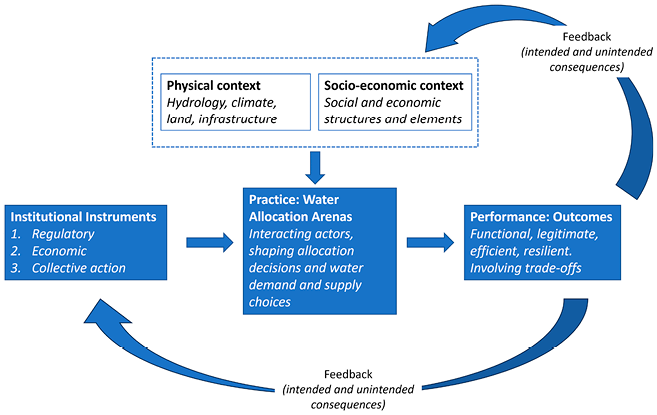
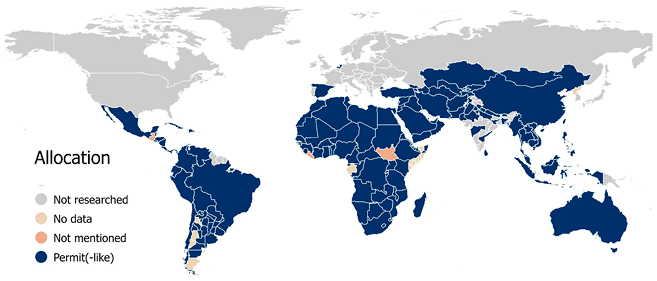
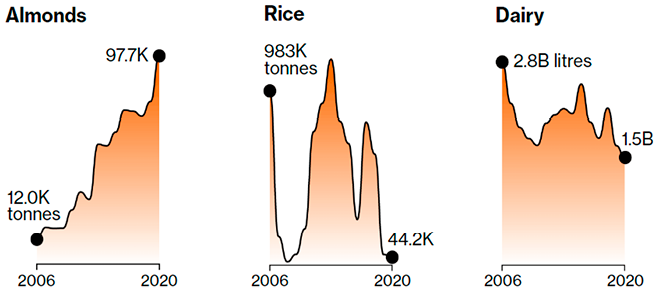
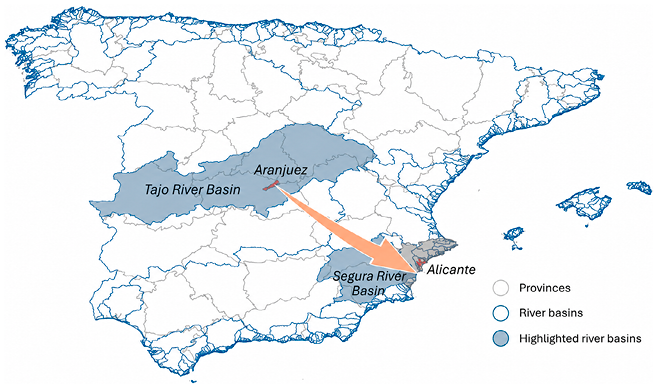

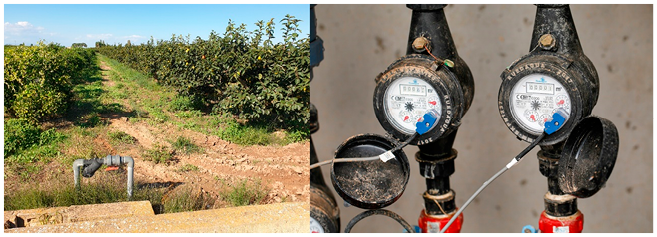
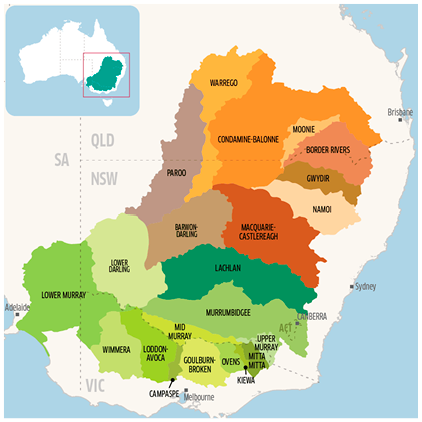
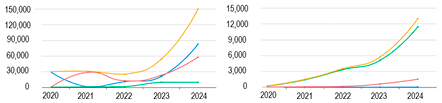

 Open access