


Introduction
The second half of the 20th century signified a paradigm shift in how contemporary societies perceive history and engage with their collective pasts: The “mnemonic turn” (Olick Reference Olick2023) changed both socio-political commemorative practices and scholarly research. The mnemonic turn was initially driven by the Allies’ imperative in post-World War II (WWII) Europe to address wartime atrocities, establish transitional justice mechanisms, and foster a peaceful democratic future across Europe and worldwide (Gensburger and Lefranc Reference Gensburger and Lefranc2020; Koposov Reference Koposov2017). Over time, democracies also recognized the importance of addressing crimes beyond Nazi-fascist atrocities committed during WWII. The focus expanded to acknowledge the “difficult pasts” of colonialisms (Mälksoo Reference Mälksoo2023c; Sierp Reference Sierp2020), authoritarian and totalitarian regimes in and beyond Europe (Subotić Reference Subotić2019; Villalón Reference Villalón2017), and other violent events (Buckley-Zistel et al. Reference Buckley-Zistel, de Wolff, Erll, Frank, Hannig, Mannitz and Reiss2024; Wagner-Pacifici Reference Wagner-Pacifici2017).
This mnemonic progression, however, was also challenged by counter-responses from anti-democratic actors, which promoted their alternative societal values and representations of the past, as sedimented in their agendas, aimed at whitewashing violent actions, and longing to restore an imperial heartland (Koposov Reference Koposov2017). In response to these challenges, measures were adopted within democratic societies to identify and condemn such democratic regressions. This was reflected in the development of legal frameworks to prevent Holocaust denial in the 1980s in Europe as a response to antisemitism (see Koposov Reference Koposov2017), along with more recent European Union’s (EU) official condemnation of totalitarian pasts and their contemporary glorification (Sierp Reference Sierp2026; Verovcek Reference Verovšek2020, Reference Verovšek2021b; Zavershinskaia and Spera Reference Zavershinskaia and Spera2024).
Scholars followed suit. The constant change of symbolic frameworks parallels a shift in perspective, stressing the subjectivity, inconsistency, and asynchrony of collective memory (Olick and Robbins Reference Olick and Robbins1998). This perspective considers the emergence and interaction of multiple memory cultures over a given period, subject to changing interpretations and their counter-representations (Assmann Reference Assmann2013; Foucault Reference Foucault2019), as well as practices of their legitimation and delegitimation (Olick Reference Olick2016), reflected in multivocal processes of remembering and forgetting and related transformations of temporal regimes (Kubik and Bernhard Reference Kubik and Bernhard2014b). Thus, the mnemonic turn in scholarship associated with the emergence of Memory Studies (MS) has enabled a more nuanced understanding of contemporary socio-political commemoration, including its components and practices.
Nevertheless, despite advancements in understanding collective memory and its importance in driving political processes, it is necessary to highlight several problematic issues concerning conceptualizations used in MS. In particular, the distinction between memory policies, memory laws and memory politics remains especially challenging. This reflects either in “conceptual reduction” of memory policies to only some of their vectors, such as memory laws, or in “conceptual stretching” (Sartori Reference Sartori1970), whereby memory policies and memory politics are equated with one another.
This ambivalent conceptualization can be explained by several factors. First, developments within MS itself have contributed to this problem. These include the relatively recent mnemonic turn in scholarship (Gensburger and Lefranc Reference Gensburger and Lefranc2020; Mälksoo Reference Mälksoo and Mälksoo2023b; Neumayer Reference Neumayer and Mälksoo2023) and the multidisciplinary nature of MS that has encouraged the well-recognized conceptual stretching of many memory-related concepts, beginning with the notion of memory itself (Bachleitner Reference Bachleitner and Mälksoo2023; Meyer Reference Meyer, Erll, Nünning, Sara and de Gruyter2008; Neumayer Reference Neumayer and Mälksoo2023; Verovšek Reference Verovšek2020). Second, and equally important, is the limited engagement of policy studies with the conceptualization of memory policies (Bachleitner Reference Bachleitner and Mälksoo2023; McQuad and Gensburger Reference McQuaid and Gensburger2023; Meyer Reference Meyer, Erll, Nünning, Sara and de Gruyter2008), partially due to the fact that a significant amount of MS is developed outside of political science (Bernhard and Kubik Reference Bernhard, Kubik, Bernhard and Kubik2014; Sierp Reference Sierp2026; Sierp and Wüstenberg Reference Sierp and Wüstenberg2015). This limited focus has left the policy dimension of collective memory largely underexamined from a policy-studies perspective. It is this gap that we seek to address by structuring our literature review around the following questions: What place do memory policies occupy within memory politics research? What trends and dynamics emerge from current scholarship on memory policies?
To highlight the issue and enhance conceptual clarity on memory policies, we situate our systematic literature review within the broader context of memory politics. Drawing on our expertise, we conduct an unstructured scoping review of memory politics research, focusing primarily on multilingual edited volumes and monographs (in English, German, Italian, and French) (see also Sierp Reference Sierp2025) to inform the literature review. This allows us to first establish how the nexus between memory politics and memory policies is addressed in existing memory politics scholarship. We then present our systematic literature review using PRISMA (Page et al. Reference Page, McKenzie, Bossuyt, Boutron, Hoffmann, Mulrow and Shamseer2021) in the methodological section. Subsequently, we reconstruct the dynamics of the memory policies presented in the English-language literature (identified 92 research articles on memory policies) – including their character, policy cycles, and the mnemonic (policy) entrepreneurs involved – thereby deepening our understanding of memory policy-making as a dynamic process from a public policy perspective (Moran et al. Reference Moran, Goodin and Rein2008). Finally, we conclude by summarizing our findings, discussing the study’s limitations, and outlining directions for future research on memory policies.
Conceptual stretching of memory policies
It can be argued that the general distinction between politics and policy has long been analytically clarified. While politics refers to the dynamic process of competing for power, influence, and the reconciliation of conflicting interests (Lasswell Reference Lasswell1950), broadly speaking, policy is the specific process designed by a government to address a particular public problem (Easton Reference Easton1979; Lasswell Reference Lasswell1950; Moran et al. Reference Moran, Goodin and Rein2008).
Nonetheless, an initial scoping review of memory politics research indicates that this boundary becomes increasingly indistinct when discussing the nexus between memory politics and memory policies. Memory politics is generally understood as an abstract process involving the facilitation of particular interpretations of the past, whether through political symbolism, the streamlining of narratives in political speeches, the fostering or mitigation of memory activism, the development of educational initiatives, or the commemoration of collectively significant events for present purposes (Mälksoo Reference Mälksoo and Mälksoo2023b). While the broad manifestations of memory politics are well documented, the memory policy-making processes underlying the implementation of many memory practices mentioned – the legitimization of political symbolism, the establishment and routinization of commemorative practices, the introduction of educational curricula, and the enactment of memory laws – remain insufficiently examined and are at times conflated with memory politics itself.
In particular, while seminal theoretical contributions focus on general conceptual and methodological developments within the field (Assmann Reference Assmann2011; Olick et al. Reference Olick, Vinitzky-Seroussi and Levy2011), the mnemonic transformations of the twentieth century in Europe and beyond also stimulated increasing empirical interest in how memory regimes evolve and how societies transition after the fall of totalitarian and authoritarian regimes, wars, and other episodes of excessive violence. However, even within this body of literature, scholars focus primarily on broader transformations of commemorative practices (Kubik and Bernhard Reference Kubik and Bernhard2014b; Olick Reference Olick2016), and the development of transitional justice frameworks, including memory laws and the other vectors, as tools shaping political culture (Buckley-Zistel et al. Reference Buckley-Zistel, de Wolff, Erll, Frank, Hannig, Mannitz and Reiss2024; Lebow et al. Reference Lebow, Kansteiner and Fogu2006; Rousso Reference Rousso1998), as well as on the emergence of counter-memories and subsequent memory disputes or “mnemonic standoffs” (Wertsch Reference Wertsch2021) at times resulting in “memory wars” (Koposov Reference Koposov2017), rather than on the conceptualization of memory policies that facilitate such transitions.
Still, it would not be accurate to claim that the aforementioned scholarly strand completely omits discussion of memory policies. For instance, some early contributions have already attempted to differentiate between Vergangenheitspolitik (policy for the past), understood as a sociopolitical process of memory formation, and Geschichtspolitik (politics of history), referring to politically charged interpretations of the past (Wolfrum Reference Wolfrum1999; on which see Meyer Reference Meyer, Erll, Nünning, Sara and de Gruyter2008; Sierp and Wüstenberg Reference Sierp and Wüstenberg2015). At the same time, especially in the post-Cold War period, some memory politics literature found in edited volumes (Assmann and Conrad Reference Assmann and Conrad2010; Mälksoo Reference Mälksoo2023a; Müller Reference Müller2002; Neumayer Reference Neumayer and Mälksoo2023; Wüstenberg and Sierp Reference Wüstenberg and Sierp2020) and mentioned in the recent literature reviews on memory politics research (Sierp Reference Sierp2025), at times conflates particular memory vectors, such as memory laws, with broader memory policies, and at other times equates memory politics with memory policies (see critisim in Meyer Reference Meyer, Erll, Nünning, Sara and de Gruyter2008). As a result, rather than clarifying the nexus between memory politics and memory policies, these approaches tend to either multiply memory policies’ conceptual reduction or further contribute to their conceptual stretching.
Despite the remaining ambiguity in terminology, an increasing number of studies are shifting their focus to memory policies as an object of analysis. As a result, a growing body of recent literature on memory politics has the potential to help remedy the ambiguity surrounding the nexus between memory politics and memory policies. Such works emphasize, on the one hand, the necessity of broadening the analytical scope of memory policies in order to avoid reducing them to specific memory tools, and, on the other hand, highlight the need to specify them more precisely in order to circumvent their conceptual stretching into the more abstract notion of memory politics. In doing so, these studies facilitate a more concrete understanding of both the otherwise ambiguous concept of memory politics and its practical implementation through memory policies.
First, it is important to highlight theoretical works that address the role of agency in memory politics. For example, by reviewing the existing literature on mnemonic agency at both national and transnational levels, Neumayer (Reference Neumayer and Mälksoo2023) and Wüstenberg and Sierp (Reference Sierp and Wüstenberg2015) advocate for a more nuanced approach to memory policies. This approach considers the influence of various actors on the framing and promotion of specific policies and evaluates their advantages and drawbacks. Complementary, McQuaid and Gensburger (Reference McQuaid and Gensburger2023) argue that states increasingly “administer memory” through public policies, pointing toward an alternative approach to the study of collective memory. From this perspective, collective memory should be studied not simply by examining grassroots commemorations from below or official practices from above, but by investigating its structured administration and circulation across multiple governance levels.
The conceptualization of memory (or mnemonic) entrepreneurs contributes, to some extent, to clarifying the nexus between memory politics and memory policies, shifting the discussion from abstract transformations in political culture to concrete examples of mnemonic entrepreneurs, their strategies, and their facilitation of memory policies (Gensburger and Lefranc Reference Gensburger and Lefranc2020; Neumayer Reference Neumayer and Mälksoo2023). For instance, by applying the framework of Foreign Policy Analysis to memory policy, Bachleitner (Reference Bachleitner2019, Reference Bachleitner and Mälksoo2023) examines foreign memory policies and the role of diplomats who, in this context, act as mnemonic entrepreneurs, showcasing the intricacies of negotiating memory policies and the subsequent effects of these processes. Hilmar (Reference Hilmar, Wüstenberg and Aline2022) investigates the capacity of Memory Organizations to advance their respective agendas. Finally, scholars (Trujillo Reference Trujillo, Wüstenberg and Sierp2022; Wüstenberg Reference Wüstenberg2018) also analyze the development of national and transnational memory policies, emphasizing the role of memory activism in shaping their agenda, driven by grassroots initiatives, including research activities, protests, occupations, and lobbying.
Second, the conceptual framework of memory policies has also been developed in research on sociopolitical transformations after WWII, which has shaped the character of this conceptualization. Within this strand of scholarship, Gensburger and Lefranc (Reference Gensburger and Lefranc2020) made a significant contribution to conceptualizing memory policies as efforts to foster a responsible approach to the past. Distinguishing memory policies from traditional public policies aimed at institutionalizing responses to everyday social demands, they argue that memory policies pursue a broader agenda: influencing emotions and shaping perceptions in order to cultivate a peaceful democratic future through the process of “learning lessons” from the past (Gensburger and Lefranc Reference Gensburger and Lefranc2020). From this perspective, memory policies appear as a relatively recent development emerging in the aftermath of WWII, centered on promoting respectful, shared engagement with a “difficult past.”
The work of other researchers (Apollonio Reference Apollonio2025; Guisan Reference Guisan2012; Sierp Reference Sierp and Mälksoo2023; Verovšek Reference Verovšek2020), particularly in the context of European integration, supports the central argument concerning the historical evolution and moral objectives of certain memory policies, underscoring that such values must also be consolidated through multifaceted processes of negotiation, decision-making, and law-making. For instance, Sierp (Reference Sierp and Mälksoo2023, Reference Sierp2026) and the other scholars (Neymayer Reference Neumayer2018, Reference Neumayer and Mälksoo2023; Verovšek Reference Verovšek2020, Reference Verovšek2021b) analyze vigorous debates between Western members and representatives from post-communist states in the European Parliament regarding the centrality of the Holocaust and the accommodation of post-communist agendas within EU memory policies.
More recently, in connection with the intensification of conflict dynamics worldwide, the international relations branch of scholarship has begun to address both foreign and domestic memory policies shaped by regressive dynamics, not only in democratic societies but also in hybrid regimes and authoritarian states, where such policies are often aimed at facilitating ontological security. While Ejdus (Reference Ejdus and Mälksoo2023) primarily focuses on the theoretical conceptualization of these policies to foster ontological security and their role in conflict dynamics, Mälksoo (Reference Mälksoo2021, Reference Mälksoo and Mälksoo2023b) analyses the evolution of Russia’s and Ukraine’s mnemonic positioning in response to Russia’s aggression. Bachleitner (Reference Bachleitner2021, Reference Bachleitner and Mälksoo2023), in turn, examines the divergent trajectories of memory politics in Germany and Austria related to the processing of WWII, evaluating the motivations of political agents, their aims and effects, and the long-term consequences reflected in contemporary migration policies in both countries. Similar dynamics have also been explored by other scholars at both the national (Mast and Šuber Reference Mast and Šuber2024) and the supranational EU levels (Sierp Reference Sierp and Mälksoo2023). Nevertheless, despite contributing to understanding the general logic of some regressive memory policies, this body of scholarship remains predominantly centered on European cases, which limits its capacity to fully capture the broader global diversity of memory policy dynamics (see also criticism in Sierp Reference Sierp2026).
Methods
The PRISMA (Page et al. Reference Page, McKenzie, Bossuyt, Boutron, Hoffmann, Mulrow and Shamseer2021) approach was chosen to complement the initial scoping review, aiming to confirm evidence of conceptual stretching and reduce potential researcher bias stemming from incomplete literature selection. We restricted our sample to peer-reviewed English-language research articles to ensure methodological consistency, as English functions as the lingua franca of MS and major anglophone databases such as Scopus, Web of Science (WOS), and EBSCO offer limited coverage of edited volumes and monographs compared to the extensive corpus of peer-reviewed research articles. That said, we also flag the limitations that might follow from this restricted selection: the reduced coverage of non-article research (e.g., edited volumes and monographs) in anglophone databases may skew our sample toward research articles capturing more recent developments, at the expense of scholarship published in slower-to-appear monographs and edited volumes; the reliance on the anglophone context and the restrictive keywords derived from the minimal definition of memory policies specified below could result in some important pieces and trends in other languages being overlooked. Nevertheless, we believe that despite these limitations, our study, supported by the initial scoping review, could evidence some early insights on memory policy literature and its gaps, prompting further necessary research to investigate these dynamics.
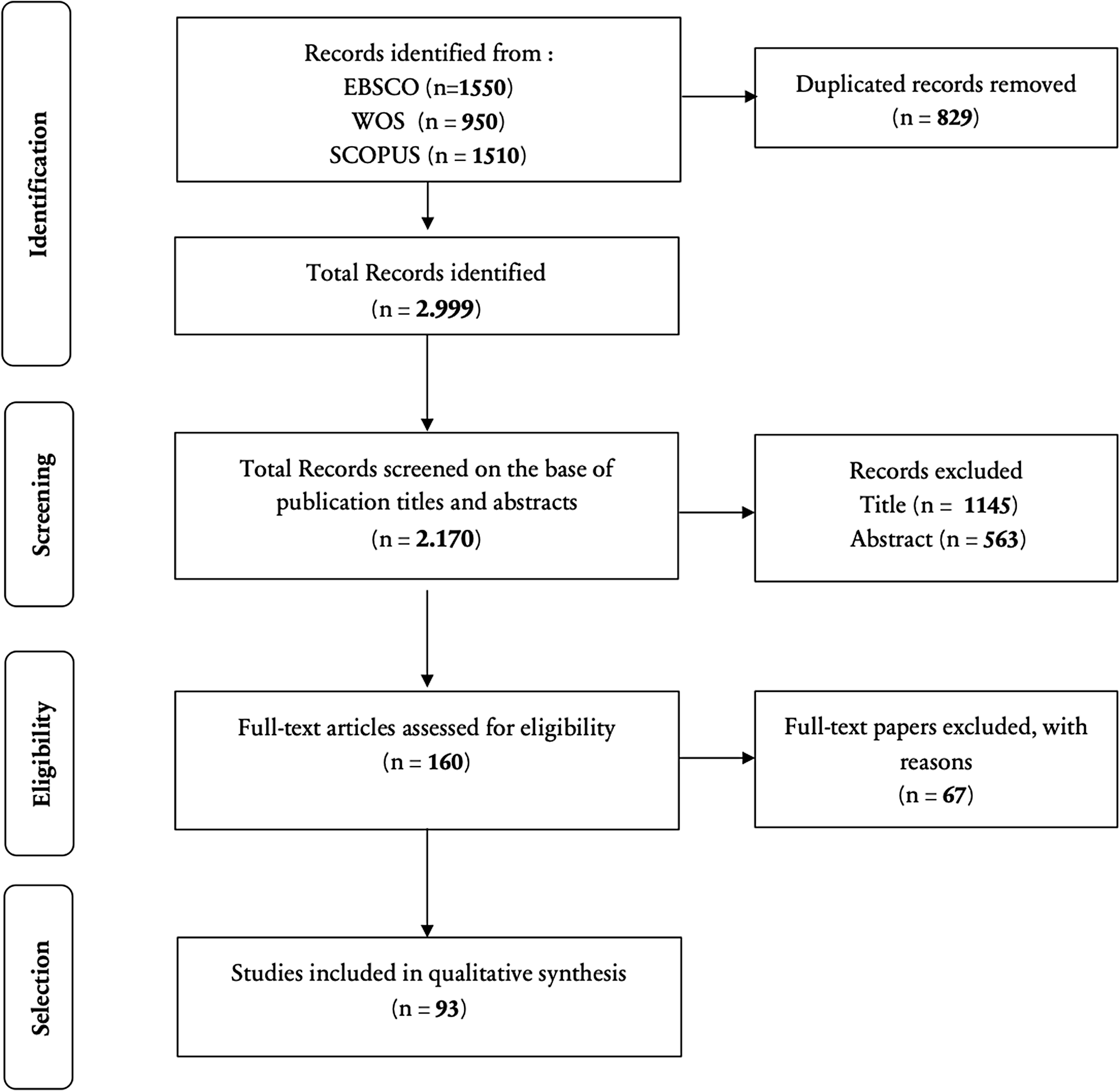
We initiated our selection (see Figure 1) by identifying research published up to April 1, 2025, using keyword combinations related to memory policies that we, reliant on the scoping review above, minimally defined as processes of elaborating and implementing decisions, instruments, and actions aimed at administering the collective representation of the past for present purposes across three databases, establishing keyword combinations: “public polic*” AND memor* OR commemor* OR mnemonic* OR remembr*; memory law*; memory polic*. The use of the word stem and asterisk (*) facilitated the inclusion of all existing variations (such as memor* for memory, memorial, memorialization, etc.). The use of quotation marks allowed us to specify the search, excluding unrelated content related to the “public” or “policy” words. We included only the research that contained keyword combinations in the title, abstract, or keywords of the records, totalling 2999 items. Afterwards, we uploaded this content to the Zotero software to automatically filter out 829 duplicates.
Data sampling according to PRISMA.
Source: Adapted from Page et al. Reference Page, McKenzie, Bossuyt, Boutron, Hoffmann, Mulrow and Shamseer2021, p. 19.

The corpus of 2170 items was manually reviewed by examining their titles, abstracts, and content to identify references to memory policies. During title and abstract screening, we adopted a more holistic approach, overcoming the limitations of the minimal definition of memory policies, to detect research on memory policies, thereby excluding only works not directly focusing on memory issues. 1447 documents were filtered out, considering the title, leaving 723 items for abstract review, excluding works from the natural sciences and non-peer-reviewed content. We retained 160 items for full-text assessment, removing documents unrelated to memory policy dynamics, foreign-language works, and any remaining duplicates that had not been automatically filtered out. We identified 93 peer-reviewed research articles on memory policies (thereafter “the corpus”; see Annex 1). The main inclusion criterion was the presence of a clear discussion of a memory policy at the core of the article. The remaining articles are marked with an asterisk [*] next to the publication year.
As regards the analysis, the first problem was to identify the articles that dealt with “memory policy” in the corpus. As in the case of migration policy, where some scholars distinguish between regulatory policy (policy on immigrants) and inclusion policy (policy for immigrants) (Hammar Reference Hammar1985) based on the policy goal, we do consider each country discussed to have a specific memory policy based on the author’s evaluations of different acts or laws, aiming at different goals. Thus, we consider each country as a possible locus of multiple policy acts. For each policy act discussed in the corpus, we thus extrapolate: the goal, entrepreneur, target, and beneficiary. Notably, we do not assess the policies per se, but we rely on the assessment scholars did on those policies.
We thus allocate the policy discussed in each article to one of the traditional policy goals as defined in the MS literature:
-
• Facilitate democratic peace: fostering democratic transformations (Bachleitner Reference Bachleitner and Mälksoo2023; Gensburger and Lefranc Reference Gensburger and Lefranc2020; Sierp Reference Sierp and Mälksoo2023);
-
• Restore justice: supporting transitional justice processes (Neumayer Reference Neumayer and Mälksoo2023);
-
• Cultivate the heartland: reinforcing collective identity as a form of restorative practice of ontological security (Ejdus Reference Ejdus and Mälksoo2023);
-
• Whitewash the past: interpreting the past to undermine democratic norms and/or facilitate authoritarian practices (Bachleitner Reference Bachleitner and Mälksoo2023; Mälksoo Reference Mälksoo2023a).
Notably, we would like to clarify that despite the seeming compatibility between the first two and also the last two policy goals, we decided to separate them for the following logical reason. The first (facilitate democratic peace) and third (cultivate the heartland) goals are focused on fostering collective identity formation in a broader sense. This includes, for instance, progressive policy-making based on lessons learned or regressive longing for reconnecting with hereditary territories for fostering future cohesion. The second (restore justice) and fourth goals (whitewash the past), reflect a slightly different dynamic, focusing attention on the persons (victims and perpetrators) affected by the event/dynamic in question. For example, this reflects in attempts and decisions connected to amnesties for political prisoners after a regime change, or regressive attempts to hide a criminal past.
We also recorded two important dimensions of variation: the goal and the regulatory nature of the policy. As regards the first dimension, the policy goals can be interpreted as either progressive (the first two) or regressive (the latter two): progressive policies aim to innovate (value 1) by expanding the memory agenda, and regressive policies seek to uphold the nativist status quo (value −1) by reducing the memory agenda. As this assumption draws on the initial scoping review above, which predominantly concentrates on post-WWII and post-Cold War contexts, the innovative aspect of memory policies discussed lies in breaking with past fundamentalist mnemonic regimes (e.g., totalitarianism) and facilitating transformation towards more pluralist ones (Kubik and Bernhard Reference Kubik, Bernhard, Bernhard and Kubik2014a).
Regarding the second dimension, we categorized policies based on their functional nature. Following the distinction put forward by Lowi (Reference Lowi1964) – Distributive, Redistributive, Regulatory, and Constituent policies – amended by Edelman (Reference Edelman1985) with symbolic policies, we classify a memory policy either as regulatory (value −1) or declaratory (value 1), using the term recently popularized (Larsen and Wirtz Reference Larsen and Wirtz2025). The latter is defined by its communicative intent – it serves as a public statement of values, positions, or official narratives without necessarily triggering legal enforcement mechanisms. In contrast, a regulatory policy (Lowi Reference Lowi1964) moves beyond rhetoric to establish specific rules, prohibitions, or mandates that govern behavior. To account for the complexity of transitional justice, we introduced an intermediate mixed category (value 0). This captures mechanisms that are primarily declaratory in nature (such as truth commission reports) but possess certain regulatory functions (such as the power to subpoena or the imposition of specific administrative requirements) (see Annex 2).
In order to help the reader navigate the material, we will use some widely adopted terms in this literature, such as “memory law” as memory vectors that declare or regulate a specific interpretation of the past, and “memory war” for transnational disputes over the interpretations of history adopted by states (Koposov 2020*, Reference Koposov2022*), “mnemonic emancipation” as the recontestation of symbolic national independence (Mälksoo Reference Mälksoo2021*), and “memory activism” for grassroots demands to confront certain past issues (Wüstenberg Reference Wüstenberg2019*).
Memory policy research and its trends
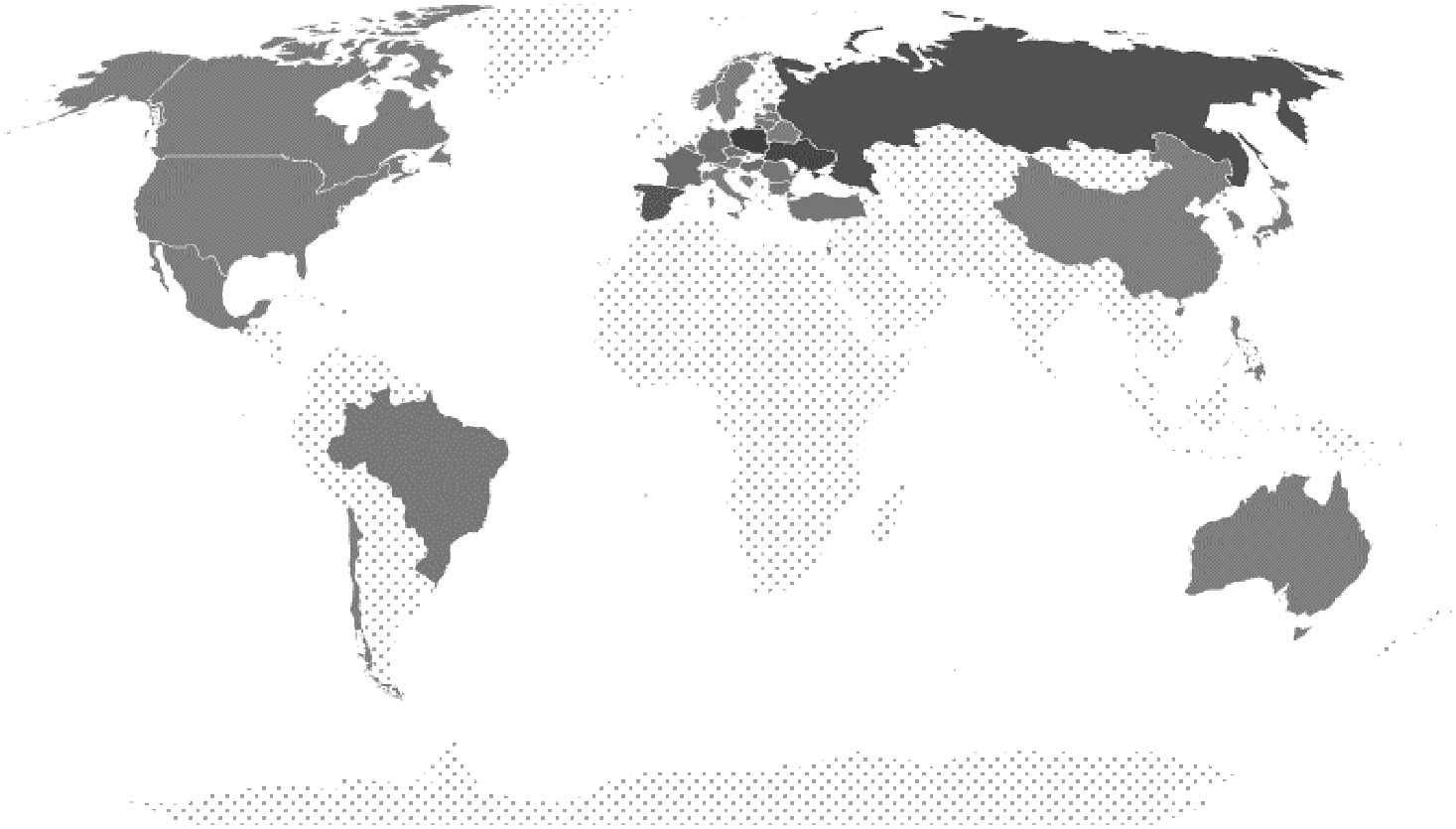
As already highlighted in the scoping literature review, also most of the corpus is published in social sciences (n = 51) and legal journals (n = 42). Considering the importance of geographical context and temporal characteristics (Gensburger and Lefranc Reference Gensburger and Lefranc2020; Sierp and Wüstenberg Reference Sierp and Wüstenberg2015), we classified the articles according to the country(ies) and country cluster(s) (Kubik and Bernhard Reference Kubik and Bernhard2014b; Neumayer Reference Neumayer2018; Villalón Reference Villalón2017) such as Western Europe and post-communist Europe, as well as Latin America, Northern America (Figure 2). Most of the articles (63.4%, n = 59) cover mnemonic dynamics in post-communist Europe, predominantly Poland (n = 23), Ukraine (n = 20), and Russia (n = 17). Western Europe accounts for the 37.6% (n = 35) of the corpus. The most frequently discussed countries in this region are Spain (n = 15), the EU (n = 9), and France (n = 7). Approximately 14% (n = 9) of the articles focus on Asia, with a predominant concentration on Israel (n = 6) and Turkey (n = 4). Lastly, 8.6% (n = 8) covers the rest of the globe: Latin America (n = 5), North America (n = 2), and Oceania (n = 1) (see online appendix, Dataset 1).
Geographical scope.
Source: Authors’ elaboration using Excel®, powered by Bing, color by number of articles per country (single countries only).

Furthermore, since memory policies relate to the legitimation of a particular event (Wagner-Pacifici Reference Wagner-Pacifici2017), we categorized the articles according to their focus on the event(s) sedimented through the institutional practices discussed. The most frequent events discussed in the articles are WWII (n = 36), communism (n = 35), the Spanish Civil War and the dictatorship of Francisco Franco (n = 14), the Armenian genocide (n = 13), colonialism (n = 10), and the Holocaust (n = 7). These events are addressed by countries following geographical division, with Western and post-communist European countries being at the center of the stage (see Figure 3).
Network map of country – event correlation.
Source: Author’s elaboration, shape and color by clusters (Americas white down-triangle, Western Europe dark gray circle, post-communist European countries black diamond s, Asia light gray up-triangle, events are square black).

WWII, the focal event in the corpus, is discussed in relation to the mnemonic dynamics in post-communist Europe (Russia, Ukraine, Poland, etc.). For instance, articles analyze the Russian state’s gradual adoption of repressive memory laws glorifying the Soviet WWII victory. These laws criminalized alternative historical interpretations (e.g., the 2014 Yarovaya Act) and normalized the invasion of Ukraine by framing it as a legitimate struggle against “revived Nazism” (Gustafsson and Mälksoo Reference Gustafsson and Mälksoo2024*). A second crucial event is the Francoist past. Articles usually focus on transitional dynamics in Spain and the process of democratization (Shevel Reference Shevel2011*). Third is the recognition of the Armenian genocide by various countries, mostly Europeans (Fittante Reference Fittante2024b*; Kebranian Reference Kebranian2020*), or the denialism by Turkey (Baranowska Reference Baranowska2023*). Similar for colonialism, there is the perspective of Western European countries as well as those of former colonies (Maddison Reference Maddison2019*; Oliveira Reference Oliveira2024*). The Holocaust is mostly addressed from the perspective of anti-denial laws of Germany and France (Koposov Reference Koposov2022*; Wüstenberg Reference Wüstenberg2019*), but the institutional incorporation of Mizrahi cultural trauma is also present (Kook and Solomon Reference Kook and Solomon2023*).
Notably, also in our corpus, the concept of memory policy remains vague, used to describe various phases, forms, and mechanisms of mnemonic institutionalization. For instance, some authors connect it to memory activism, primarily discussing the initial, agenda-setting phase, as seen in the contextualization of grassroots efforts for mnemonic recognition of Mizrahi Jews in Israel (Kook and Solomon Reference Kook and Solomon2023*; Tirosh Reference Tirosh2022*) or attempts by right-wing groups to set the agenda for institutionalizing their mnemonic interpretations (Rudling Reference Rudling2024*; Wüstenberg Reference Wüstenberg2019*). Others treat memory policies focusing predominantly on the formulation phase and the disputes among members of parliament over a certain “difficult past” (Le Boulay Reference Le Boulay2023*; Maddison Reference Maddison2019*).
The majority of the articles emphasize the adoption phase, discussing memory law-making (n = 80). Here another ambivalence arises over the sociological and legal definitions of “memory law,” adding further ambiguity to memory policies and their constituents. During the initial scoping review, we already distinguished an aggregative definition of memory laws as vectors of memory policies: documents that codify the interpretation of the past established as official at a given moment, and that remain prone to change due to unstable, top-down and bottom-up dynamics of memory conflict (Koposov Reference Koposov2017; Rousso Reference Rousso1987). During the systematic literature review, we distinguished in the corpus, alongside this aggregative definition, a minimal definition of memory laws as legally binding documents sanctifying and regulating the official state-vision of the past (Gliszczyńska-Grabias et al. Reference Gliszczynska-Grabias, Baranowska and Wójcik2018*). Overall, drawing on these aggregative or minimal definitions, authors frequently concentrate on outlining the main characteristics of memory laws, specifically discussing their declarative and punitive aspects (Koposov Reference Koposov2022*; Lucksted Reference Lucksted2022*), for instance, comparing the punitive nature of memory laws concerning Holocaust denial with the declarative recognition of the Armenian genocide (Gliszczyńska-Grabias et al. Reference Gliszczynska-Grabias, Baranowska and Wójcik2018*). More rarely articles discuss also the implementation phase, detailing the establishment of commemorative practices, such as the construction of monuments (Aas Reference Aas2012*) or the celebration of significant events (Gonzales Reference Gonzales2009*; Hayday Reference Hayday2010*; Makhalova Reference Makhalova2019*). Finally, some authors emphasize the evaluation phase, within the framework of memory wars (Koposov Reference Koposov2022*; Mälksoo Reference Mälksoo2021*).
Reconstructing memory policies
Confirming our assumption on the outcomes of the initial scoping review, the systematic literature review of the corpus demonstrated that the conceptualization of memory policies remains ambivalent. Our objective, therefore, is to reconstruct the complexity of memory policies from a policy-oriented perspective (Moran et al. Reference Moran, Goodin and Rein2008) by rebuilding them from the components identified across 93 articles (see online appendix, Dataset 2). In other words, this process includes identifying these memory policies and reconstructing them, considering policy goals, targets, beneficiaries, and entrepreneurs outlined by the authors.
Policy goals
We first identified memory goals per country, considering the different aspects put forward in the articles or the scholarly interpretation (see Annex 2). The article by Koposov (Reference Koposov2020*) was excluded from further analysis because it addresses the general scholarly discussion of memory laws and does not mention concrete country-specific mnemonic institutionalization. We thus continued with the remaining 92 articles. Subsequently, we identified the specific acts, the policy entrepreneurs, as well as policy targets and beneficiaries and, where applicable, the range of options considered during agenda-setting and policy formulation, as described by the authors.
“Facilitate democratic peace” (goal 1) encompasses progressive memory policies for fostering broader democratic integration, drawing on a “lessons learned” approach (Bachleitner Reference Bachleitner and Mälksoo2023; Gensburger and Lefranc Reference Gensburger and Lefranc2020; Sierp Reference Sierp and Mälksoo2023). The authors (Le Boulay Reference Le Boulay2023*; Verovšek Reference Verovšek2021a*) suggest that this is pursued through the demands of EU bodies on EU member states for peaceful and democratic European integration. From a non-European perspective, we may also observe the Canadian institutional efforts to promote the development of democratic collective identity (Hayday Reference Hayday2010*). In addition, the agenda of such policies is also realized through the promotion of transnational peaceful collaboration between various nations (Aas Reference Aas2012*). Counteracting democratic regressions is another key component of these policies outlined by the authors (Brudholm and Schepelern Johansen Reference Brudholm and Schepelern Johansen2019*). According to some authors (e.g., Fittante Reference Fittante2023*, Reference Fittante2024a*, Reference Fittante2024b*), among such policies, the process of recognition of the Armenian genocide is specific, combining the broader EU “lessons learned” approach with opportunistic agendas of some member states. For instance, Latvia raised the question of communist responsibility (Fittante Reference Fittante2023*), and in Italy and Sweden, the anti-Turkey stance of some national political actors on the far-right spectrum was a clear trigger (Fittante Reference Fittante2024a*; Reference Fittante2024b*). Overall, the memory policies that “facilitate democratic peace” are driven by policy entrepreneurs, whose efforts are generally concentrated on facilitating democratic peace within and beyond society, which acts as a mnemonic target and beneficiary.
As for goal 2, “restore justice,” authors demonstrate analogous progressive dynamics, albeit with a somewhat distinct agenda and a combination of actors, primarily aimed at reinstating the social status of victims, amplifying the voices of subaltern groups, and framing perpetrators. Such policies reflect, for instance, grassroots, activist, and political calls to restore victims’ right to memory, compensate them for crimes committed against them during WWII and various dictatorships worldwide (Barton Hronešová and Hasić Reference Barton Hronešová and Hasić2024*; Ferreira Reference Ferreira2021*; Holl and Wachau Reference Holl and Wachau2024*), and restore justice by removing remnants of the perpetrator’s past, such as communist symbolism (Gnatiuk and Glybovets Reference Gnatiuk and Glybovets2020*). Moreover, as for the Armenian genocide recognition, the agenda of post-communist memory policies can be integrative: the reconciliation within Ukrainian society is combined with demands for mnemonic emancipation from Russian expansionism (Mälksoo Reference Mälksoo2021*). Overall, the authors imply that memory policies aimed at “restoring justice” embody a multivocal interaction between institutional and subaltern policy entrepreneurs. Importantly, institutional agendas do not always align with the objectives of subaltern groups, and their recognitions may remain ongoing, as those of Bosniaks (Barton Hronešová and Hasić Reference Barton Hronešová and Hasić2024*) or Mizrahi (Kook and Solomon Reference Kook and Solomon2023*; Tirosh Reference Tirosh2022*).
Goal 3 “cultivate heartland” (Ejdus Reference Ejdus and Mälksoo2023) is characterized by a regressive counter-agenda-setting that focuses on nostalgic longing for the imperial heartland which is opposite to “facilitate democratic peace” detailed above. For instance, authoritarian states promote celebrating victory in WWII in combination with the denial of the roles played by other nations in fighting Nazi-fascism and calls for the criminalization of alternative interpretations (Belavusau Reference Belavusau2024*; Gustafsson and Mälksoo Reference Gustafsson and Mälksoo2024*; Lucksted Reference Lucksted2022*). This also exemplifies the selective glorification of the imperial heartland, combined with the silencing of their “difficult pasts” connected to unresolved conflicts, an unwillingness to address injustices, and national crimes, such as those promoted by illiberal governments in Hungary, Poland, and Israel (Bán Reference Bán2023*; Gliszczyńska-Grabias Reference Gliszczyńska-Grabias2023*; Gutman Reference Gutman2016*). Agenda-setting and the formulation of these policies are influenced by the government policy entrepreneurs in both authoritarian and democratic countries. The formulation phase might nominally reflect negotiations among various parties, but it is, in fact, a simulation. In particular, despite the target of such policies nominally being society as a whole – to restore the lost national glory – the main beneficiaries are anti-democratic political actors themselves, and the adoption of memory policies is rather a matter of symbolic policy to maintain ontological security (Mälksoo Reference Mälksoo2021*; see also Ejdus Reference Ejdus and Mälksoo2023).
Goal 4, “whitewash the past” suggests the existence of memory policies directly aimed at reversing the “restore justice” progressive approach by regressive whitewashing of past crimes (Bachleitner Reference Bachleitner2021; Mälksoo Reference Mälksoo2023). The authors of the corpus argue that such an agenda is expressed by far-right and conservative entrepreneurs, in democracies, above all those facing democratic regression. For instance, they observe that such entrepreneurs attempted to establish a specific memory policy aimed at emphasizing an exclusively positive view of the past, thereby silencing committed crimes. This phenomenon is exemplified by the memory policy promoted during the governance of the far-right Law and Justice party in Poland, which emphasized a solely positive Polish role and Polish WWII martyrdom (Gliszczyńska-Grabias Reference Gliszczyńska-Grabias2023*), as well as by certain initiatives of French and Australian political figures that advocated for the inclusion of positive aspects of colonialism during parliamentary discussions of various memory laws (Ledoux Reference Ledoux2013*; Maddison Reference Maddison2019*). Whitewashing the criminal past also involves masquerading the extent of the perpetrations. For instance, European far-right parties often adopt ambivalent strategies within institutional responses to WWII, such as victim-centrism in the German case (Wüstenberg Reference Wüstenberg2019*) or calls for indiscriminate amnesty in the Spanish case (Akarçay and Sütçüoğlu Reference Akarçay and Sütçüoğlu2020*). Additionally, policies may welcome democratic regression by whitewashing dictatorial pasts, as in Brazil during the Bolsonaro era (Oliveira Reference Oliveira2024*), but sometimes glorifying the dictatorial past as during the Bongbong Marcos government in the Philippines (Pangalangan et al. Reference Pangalangan, Fernandez and Rosselle Tugade2018*). Authors confirm that although society is ostensibly a target of memory policies to whitewash the past, their beneficiaries were predominantly far-right and ultra-conservative actors and their supporters. Notably, policy entrepreneurs employ whitewashing either to evade accountability by promoting ambiguous imitative expressions or to institutionalize their regressive version as the legitimate and sole interpretation of the past.
An interpretative framework
Moving from the act-specific policy as described in the corpus, we now move to the overall country policy. We thus define memory policy as the bundle of acts and tools put forward by a country to deal with its past, made of different historical events with their own commemorative practice, history and actors. Each country thus received an average score that accounted for the different policy components. Figure 4 illustrates the distribution of countries according to the two analytical dimensions introduced: goals and function. As for the former the relationship with the past (x-axis) ranges from −1 (status-quo maintenance) to 1 (innovative), as for the latter (y-axis), it ranges from −1 (regulatory) to 1 (declaratory) (value 1).
Scatter plot on relation to the past and policy nature.

This clusterization has a direct impact on the country’s capacity to trigger memory wars or, more often, to induce “mnemonic standoffs” across different societies (Wertsch Reference Wertsch2021). This occurs when the institutionalization of a specific interpretation of the past in a particular policy incites discontent in another society, occasionally escalating into memory wars between states (Koposov Reference Koposov2017), leading to the reformulation or development of entirely new memory policies.
In the first quadrant (I), there are countries featuring progressive and declaratory policies. Countries positioned here, according to the authors, expand the mnemonic framework of society by recognizing marginalized or contested historical experiences, typically through symbolic approaches. Examples include the EU and its member states adopting resolutions recognizing genocides or introducing commemorative practices that broaden the dominant understanding of historical events (Fittante Reference Fittante2024b*). These policies lack coercive mechanisms and rely instead on consensus-building. However, also these policies may be contentious, the Norwegian attempt to establish a transnational commemoration of WWII resulted in a mnemonic standoff with the Soviet Union, (Aas Reference Aas2012*), the EU policies to prevent mnemonic regression received fierce resistance from far-right parties in the EU parliament (Brändström et al. Reference Brändström, Bynander and Hart2004*; Wüstenberg Reference Wüstenberg2019*), the recognition of the Armenian genocide worsened diplomatic relations with Turkey (Seckinelgin Reference Seckinelgin2023*).
In the second quadrant (II), there are countries using regulatory mechanisms to sustain democratic mnemonic transformations. These include many transitional justice frameworks that combine recognition of past injustices with legal or administrative tools – such as reparations, rehabilitation, or sanctions against denial. Policies in this quadrant move beyond symbolic acts and deploy enforceable tools to reshape public memory: Spain adopted regulatory measures for reparations to victims and criminalization of the dictatorship (Ferreira Reference Ferreira2021*), Austria, Germany and France sanction Holocaust denialists (Brändström et al. Reference Brändström, Bynander and Hart2004*; Rhein-Fischer and Wójcik Reference Rhein-Fischer and Wójcik2023*). These policies are inherently contentious: transitional justice memory policies in post-communist countries provoked memory wars with Russia, as successor of the Soviet Union (Mälksoo Reference Mälksoo2021*), the decision of the High Representative for Bosnia and Herzegovina to called off restrictions regarding the application of the genocide to crimes committed towards Bosniaks produced turmoil both internally and externally with Serbia (Barton Hronešová and Hasić Reference Barton Hronešová and Hasić2024*), the South Korean request for colonial-era damage compensation has led to ongoing litigation with Japan (Kim Reference Kim2022*).
The third quadrant (III) encompasses memory policies that favor the (nativist) status quo and the restoration of “the glorious past,” regulating memory with a nativist interpretation of the past. These policies are interpreted by scholars as typical of non-democratic regimes, where historical narratives become tools of state control: The Russian 2014 Yarovaya Act criminalizes and sanctions alternative interpretations of WWII (Mälksoo Reference Mälksoo2021*). In the USA, this is related to attempts to glorify the Confederate past, as reflected in the agenda-setting of some states, such as Georgia (Leib et al. Reference Leib, Webster and Webster2000*). In Turkey, Seckinelgin (Reference Seckinelgin2023*) connects this dynamic to Recep Tayyip Erdoğan’s neo-Ottoman turn, which involves the implementation of memory policies to facilitate the stabilization of this framework. The nativist approach of these memory policies triggers memory wars, as in the case of China with Japan (Gustafsson and Mälksoo Reference Gustafsson and Mälksoo2024*), or in Russia and Belarus with other European countries (Belavusau Reference Belavusau2024*).
Notably, some countries occupy a position on the fringe between the status quo and innovation, such as Spain, Hungary, Poland, Brazil, and the Philippines. This is due to a shift toward more conservative governmental and political actors, and the subsequent transformation of their mnemonic agendas, which closely relates to dynamics described in the MS literature on transitions: a movement from dictatorship to democratization, followed by backsliding (Kubik and Bernhard Reference Kubik, Bernhard, Bernhard and Kubik2014a). For instance, in Spain, Ferreira (Reference Ferreira2021*) describes the trajectory from the Francoist dictatorship, through democratization following Francisco Franco’s death, to contemporary attempts by far-right actors to deconstruct this agenda by glorifying the Francoist past. In Poland and Hungary, this pattern relates to the post-communist transition, where the rise of conservative governments has led to a shift in agendas and the implementation of regressive memory policies focused on glorifying a perceived heartland lost during communism and the subsequent transition (Gliszczyńska-Grabias Reference Gliszczyńska-Grabias2023*). Brazil and the Philippines follow a similar trajectory: after progressive transformations following periods of dictatorship, recent developments point to a regression, with memory policymaking increasingly oriented toward the glorification of past dictatorial practices (Holl and Wachau Reference Holl and Wachau2024*; Pangalangan et al. Reference Pangalangan, Fernandez and Rosselle Tugade2018*).
The fourth and last quadrant (IV) includes memory policies read as regressive in their orientation, but primarily declaratory in character. These are typically associated with far-right actors within democratic systems who attempt – often unsuccessfully – to shift public narratives through symbolic initiatives, informal resolutions, or commemorative events. Because these actors lack the institutional power to transform memory regimes through law, their interventions remain largely performative. Examples include far-right attempts in Australia or Mexico to legitimize nativist interpretations of the past or to challenge established commemorative norms and whitewash the nativist practices of racist discrimination and colonialist extortion (Gonzales Reference Gonzales2009*; Maddison Reference Maddison2019*; Wüstenberg Reference Wüstenberg2019*).
Discussion and conclusion
This paper offers an analysis of the evolving field of memory policy research by integrating an initial scoping review with a systematic literature review of memory policies and their subsequent analytical framework from a policy studies perspective. This approach enables us to identify key trends and limitations in the existing scholarship, evident in both the conceptual stretching of memory policies towards memory politics and their reduction to also ambivalent memory law-making. Building on this, we contribute to the further conceptualization of memory policies by reconstructing them through components identified within a policy studies framework – a need also highlighted by other scholars in the field (Bachleitner Reference Bachleitner and Mälksoo2023; Meyer Reference Meyer, Erll, Nünning, Sara and de Gruyter2008; McQuad and Gensburger Reference McQuaid and Gensburger2023; Sierp and Wustenberg Reference Sierp and Wüstenberg2015).
The initial scoping review enabled us to locate the conceptualization of memory policies within the broader field of memory politics research. It suggests that memory policies receive only peripheral attention, as scholars tend to focus instead on broader socio-cultural transformations or on the theoretical and methodological development of MS as an emerging multidisciplinary field. When addressed in this context, memory policies are often either used interchangeably with the more abstract notion of memory politics or reduced to specific vectors such as memory laws. At the same time, alongside these limitations, partly linked to the recency and multidisciplinarity of the field, we identify important advances, particularly in political science (especially within international relations) and political sociology (notably in studies of social mobilization and European integration), which seek to disentangle the concept of memory policy from related notions. These contributions also emphasize the need for further conceptual clarification, especially from a policy studies perspective, a task to which we also aim to contribute with this paper.
As the initial scoping review focused primarily on multilingual edited volumes and monographs, we supplemented it with a systematic literature review of English-language, peer-reviewed research articles on memory policies using the PRISMA approach to reduce researcher bias. Regarding the main trends, first of all, the review delineated important trends in the geographical focus of the discussed acts. The country cluster most frequently examined in scholarly research on memory policies is post-communist Europe, notably Russia, Ukraine, and Poland, reflecting the ongoing “memory wars” over the legacies of WWII and communism, and Western Europe, with similar foci. The cases from Asia, Latin America, and Oceania receive comparatively less scholarly attention, and several regions remain unexamined, for instance, the entire African continent. Second, in terms of an event discussed, the articles predominantly concentrate on “difficult pasts” of WWII, communism, colonialism, and the Armenian genocide, illustrating that memory policies are most prominent in contexts where addressing past violence is central.
The systematic literature review also confirms our conclusions from the initial scoping review regarding both the conceptual stretching and reduction of memory policies. Although the mnemonic turn has generated a rich body of scholarship on the institutionalization of collective memory, transitional justice, and commemorative practices, the term memory policy is used inconsistently, ranging from its broad equation with memory politics to narrower interpretations focused on memory law-making. Consequently, the need to apply a policy studies perspective to memory policy remains acute.
We addressed this limitation by analyzsing memory policies, focusing on the components mentioned in 93 peer-reviewed articles. Drawing on the authors’ assumptions, we conclude that the dynamics of memory policies and their policy goals are shaped by interactions among the mnemonic (policy) entrepreneurs involved, particularly in the initial development of their policy cycles. This also influences whether the policies develop in a progressive or regressive manner. Furthermore, the later development of these dynamics is shaped by interactions among the policies themselves, which can range from harmonious coexistence to mnemonic standoffs, and even to “memory wars” leading to their re-elaboration or potential revocation, ultimately returning to the initial phase of the policy cycle and fostering new agenda development.
Finally, we acknowledge several limitations of our study, which is based on a literature review. First, the initial scoping review drew on our knowledge of the field, as well as on Sierp’s (Reference Sierp2025) representative overview of memory politics research, from which we drew both literature and methodological guidance (particularly the focus on edited volumes and monographs). To mitigate this limitation, we complemented it with a systematic literature review of peer-reviewed research articles using PRISMA. However, this stage was also subject to constraints. Operationally, the selected databases primarily index research articles and offer limited coverage of other publication types. Linguistically, our reliance on anglophone databases further narrowed the scope. Conceptually, our minimal definition of memory policies, along with the corresponding keyword strategy designed to avoid overly broad results, may also have restricted the corpus. As a result, some relevant research such as the Latin American perspective may have been underrepresented. Nevertheless, the two-step review approach demonstrates a degree of robustness, as the systematic review revealed overlaps in authors and topics with the initial scoping review, thereby reinforcing its findings.
Furthermore, as our research draws on published studies rather than original policy analysis, our reconstruction inevitably reflects gaps in the existing scholarship. For instance, regions such as Africa remain largely unaddressed, despite their potential to offer important insights into memory policies related to colonial legacies and to broaden conceptualizations of the field. Additionally, although we reconstruct key dynamics of memory policies across different contexts, we do not establish causal relationships concerning their origins or transformations.
However, our primary aim was to highlight the persistent “conceptual stretching” of memory policies and to emphasize the value of a policy studies perspective. Future research could address these limitations by expanding both the conceptual, linguistic and publication scope of analysis on memory policies and its specific vectors, such as detangling the ambivalency of memory laws.
Supplementary material
The supplementary material for this article can be found at https://doi.org/10.1017/S0143814X26101305
Data availability statement
Replication materials are available in the Journal of Public Policy Dataverse as RIS file, at https://doi.org/10.7910/DVN/CVYX5O
Acknowledgements
We extend our sincere gratitude to our colleagues who participated in the Political Science Seminar series at the University of Padua. Their insightful feedback and constructive comments have significantly enriched this work.
Funding statement
This study was part of the GIVO project (Give voice to our memories. Den zor amare paramisienghe), funded by the European Education and Culture Executive Agency under grant agreement No. 101196471.
Competing interests
The author declares that she has no relevant or material financial interests that relate to the research described in this paper.
Ethical standards
Ethical approval for this study was obtained from the Department of Political Science, Law, and International Studies Ethical Board (protocol 2025 Tit. III Cl. 13 Fasc. 19.17).
Generative AI tools
The authors have used Chat GPT 5.2 to improve readability from the draft version and Open Writefull version 2025.11.0 (#820) for English consistency.
CRediT
Matteo Bassoli: Conceptualization, Formal analysis, Visualization, Funding acquisition, Methodology, Project administration, Resources, Supervision, Writing – original draft, Writing – review & editing;
Polina Zavershinskaia: Data curation, Formal analysis, Visualization, Writing – original draft, Writing – review & editing.


 Open access

