Introduction
Functional cognitive, social and behavioral difficulties associated with childhood acquired brain injuries (ABIs) can persist into adulthood and negatively impact post-high school outcomes including educational and vocational attainment and independent living (Anderson et al., Reference Anderson, Brown, Newitt and Hoile2009, Reference Anderson, Godfrey, Rosenfeld and Catroppa2012; Babikian et al., Reference Babikian, Merkley, Savage, Giza and Levin2015). During primary and secondary education, students with ABI demonstrate reduced academic success and need for formal and informal academic support related to persistent deficits in higher level cognitive functioning (Anderson et al., Reference Anderson, Brown, Newitt and Hoile2011, Reference Anderson, Godfrey, Rosenfeld and Catroppa2012; Slomine et al., Reference Slomine, McCarthy, Ding, MacKenzie, Jaffe, Aitken, Durbin, Christensen, Dorsch, Paidas and Group2006). Research in adult attainment after childhood ABI has largely addressed more severe ABIs. After high school, about half of children with ABI will attend job training or college (Todis & Glang, Reference Todis and Glang2008). Individuals with a history of childhood ABI are significantly less likely to obtain a university degree and significantly less likely to be employed, often pursuing part-time, unskilled employment (Anderson et al., Reference Anderson, Brown, Newitt and Hoile2009, Reference Anderson, Brown, Newitt and Hoile2011; De Netto & McKinlay, Reference De Netto and McKinlay2020). These low rates of post-high school achievement are believed to be negatively impacted by low rates of provision of transition support and vocational training, despite best-practice guidelines, federal education laws and demonstrated improved outcomes with the provision of supports (Anderson et al., Reference Anderson, Godfrey, Rosenfeld and Catroppa2012; Rumrill et al., Reference Rumrill, Wehman, Cimera, Kaya, Dillard and Chan2016; Slomine et al., Reference Slomine, McCarthy, Ding, MacKenzie, Jaffe, Aitken, Durbin, Christensen, Dorsch, Paidas and Group2006; Todis & Glang, Reference Todis and Glang2008; Wehman et al., Reference Wehman, Chen, West and Cifu2014).
Several factors appear to influence the heterogeneity of vocational outcomes for students with ABI. More severe injuries, later age at injury, positive family interactions, higher socioeconomic status and higher levels of preinjury functioning appear to positively influence post-high school experiences (Anderson et al., Reference Anderson, Godfrey, Rosenfeld and Catroppa2012; Todis et al., Reference Todis, Glang, Bullis, Ettel and Hood2011; Todis & Glang, Reference Todis and Glang2008; Tucker & Degeneffe, Reference Tucker and Degeneffe2017). Strengths in social-behavioral skills appear to positively impact vocational outcomes (Maclennan & Maclennan, Reference Maclennan and Maclennan2008; Nybo et al., Reference Nybo, Sainio and Müller2005; Todis & Glang, Reference Todis and Glang2008). While several factors positively influence outcomes, areas of deficits post-injury might negatively impact post-secondary education and vocation. For example, studies have hypothesized that deficits in self-awareness might impact the pursuit of higher level post-high school experiences, skewing research results; individuals with intact or less impaired self-awareness might choose not to pursue post-secondary education or professional work positions and demonstrate increased success in supported employment, while individuals with significant self-awareness deficits might pursue more challenging, though typical, post-high school experiences with decreased success (Nybo et al., Reference Nybo, Sainio and Müller2005; Todis et al., Reference Todis, Glang, Bullis, Ettel and Hood2011; Todis & Glang, Reference Todis and Glang2008). Similarly, individuals with more severe ABIs might receive more support and guidance in selecting post-high school goals than individuals with milder injuries, and therefore demonstrate increased success (Anderson et al., Reference Anderson, Brown, Newitt and Hoile2009).
Objective research on post-high school outcomes for individuals who experienced a childhood ABI is complicated by a variety of factors. Receipt of post-secondary educational supports (e.g., university accommodations) and rehabilitation services appear to support better outcomes, but access to these services is challenging and limited (Childers & Hux, Reference Childers and Hux2020; De Netto & McKinlay, Reference De Netto and McKinlay2020; Rumrill et al., Reference Rumrill, Wehman, Cimera, Kaya, Dillard and Chan2016; Todis et al., Reference Todis, Glang, Bullis, Ettel and Hood2011; Venville et al., Reference Venville, Mealings, Ennals, Oates, Fossey, Douglas and Bigby2016). Support is most often provided to individuals with more severe ABIs and positively influencing outcomes, while individuals with mild ABIs do not receive services and demonstrate lower rates of post-secondary attainment compared to their peers (Anderson et al., Reference Anderson, Godfrey, Rosenfeld and Catroppa2012; Rumrill et al., Reference Rumrill, Wehman, Cimera, Kaya, Dillard and Chan2016; Todis et al., Reference Todis, Glang, Bullis, Ettel and Hood2011). Some studies note that rates of post-secondary attainment might not accurately depict the experiences of students with ABI, such as the receipt of informal academic supports and requiring a longer time than their peers to achieve outcomes (De Netto & McKinlay, Reference De Netto and McKinlay2020; Maclennan & Maclennan, Reference Maclennan and Maclennan2008; Todis et al., Reference Todis, Glang, Bullis, Ettel and Hood2011; Todis & Glang, Reference Todis and Glang2008). Similarly, early studies investigating independent living skills after ABI have found that most individuals with ABI live independently in adulthood, often with a spouse, although the provision and intensity of supports and services for these individuals since their injury have not yet been described (Nybo et al., Reference Nybo, Sainio and Müller2005; Wood & Rutterford, Reference Wood and Rutterford2006). Further research is needed to sensitively measure the supports and challenges impacting the outcomes of this population. Additional investigation is needed to expand on previous studies using larger sample sizes of individuals with a history of childhood ABI, particularly mild ABI, to describe and determine predictors of post-high school outcomes (Myers et al., Reference Myers, Eagan-Brown, Conway, Nagele, Vaccaro, Kendi and Zonfrillo2017). Knowledge of post-high school experiences and the impact of preinjury, injury and post-injury factors can inform interventions, transition supports and vocational services for individuals with ABI (Childers & Hux, Reference Childers and Hux2020; De Netto & McKinlay, Reference De Netto and McKinlay2020; Todis et al., Reference Todis, Glang, Bullis, Ettel and Hood2011; Venville et al., Reference Venville, Mealings, Ennals, Oates, Fossey, Douglas and Bigby2016).
BrainSTEPS
BrainSTEPS (Strategies Teaching Educators, Parents and Students) is a nationally recognized consultation, service delivery and training program available to schools, families and students in PA and Colorado. The overall purpose of BrainSTEPS is to ensure students with brain injury are identified and receive an appropriate education that is individualized for each student’s needs. Children in public and private schools, grades PreK-12th grade, who sustain all severities of ABI can be referred at the time of hospital or rehabilitation discharge or they may also be referred to BrainSTEPS if new difficulties arise in the academic setting long after a brain injury occurred. Parents, doctors, community-based therapists, teachers and other school staff can make referrals for students to BrainSTEPS. To maximize the number of students that receive a referral to BrainSTEPS, training is conducted with school personnel, including school nurses and school psychologists to actively monitor for signs and symptoms that are associated with ABIs. Most students referred to BrainSTEPS experience mild traumatic brain injuries (TBIs) (69.9%) resulting from sports (59.9%) (Myers et al., Reference Myers, Eagan-Brown, Conway, Nagele, Vaccaro, Kendi and Zonfrillo2017). Following submission of a student referral to the program, the team leader from the student’s regional educational Intermediate Unit contacts the parent to secure written permission to begin the school-based consultation and training process. Once permission is obtained, the team leader establishes contact with the school to set up a meeting. The BrainSTEPS team works to create an appropriate educational plan to support the student’s academic and behavior needs with the majority of BrainSTEPS consultation and training taking place during the initial 6-months post-referral. BrainSTEPS teams typically include the student, parent and relevant school staff to the student’s needs (e.g., teacher, speech-language pathologist, psychologist, transition coordinator, training and consultation consultant, community medical rehabilitation provider). BrainSTEPS is not a special education program, rather it aims to connect students to related services in their school or district, as appropriate, that could support their academic progress post-ABI. The support received by students from BrainSTEPS is individualized, but most often is in the form of consultation with school personnel and communication with schools and families (Myers et al., Reference Myers, Eagan-Brown, Conway, Nagele, Vaccaro, Kendi and Zonfrillo2017). Consultation can include providing information on or helping implement services in the following areas: identification and assessment of students’ needs, school re-entry planning, education plan (e.g., Individualized Education Plan) development, intervention selection and implementation, long-term monitoring. The majority of student consultation and training for school staff occurs during the initial referral year, although the frequency of general education teacher education and other activities is not currently matched to specific students. However, annually, the program aims to contact both the school professional listed on the student’s BrainSTEPS referral form and the parent/guardian via email or phone for all BrainSTEPS students until graduation to track academic progress and current educational needs. The annual follow-up surveys help to ensure the identification of any new cognitive or behavioral deficits that may emerge over time for the student, thought to be due to the earlier brain injury. If new deficits are reported, the local BrainSTEPS team resumes consultation and training for the student and their school. Previous descriptive findings on BrainSTEPS emphasize the need for long-term school-based supports to assist students with varying severities of ABI in the return-to-school and educational processes, but did not investigate outcomes of students post-high school (Myers et al., Reference Myers, Eagan-Brown, Conway, Nagele, Vaccaro, Kendi and Zonfrillo2017).
Current study
By describing and analyzing outcome data from BrainSTEPS, this retrospective study aims to answer the following research questions: 1) What are the educational placements and high school graduation rates of children with ABI that participate in the BrainSTEPS and what factors influence educational experiences? and 2) What is the post-high school participation in education, vocation and independent living of individuals who experienced an ABI during childhood that participated in BrainSTEPS and what factors influence post-high school participation? Experiences include educational placement in high school post-injury, current vocation, highest level of education pursued post-injury and current living situation. It is hypothesized that individuals with a history of childhood ABI will be enrolled in special education and have low rates of high school graduation. Additionally, it is hypothesized that individuals with a history of childhood ABI will demonstrate lower levels of post-high school attainment than expected for their age, influenced by preinjury functioning, injury factors and post-injury educational experiences. The results of this study will address gaps in the existing literature and inform evidence-based practices regarding post-high school participation for individuals with a history of childhood ABI who participated in BrainSTEPS.
Methods
Participants
A total of 519 follow-up surveys were completed on individuals with a history of childhood ABI. This paper focuses on analyzing the 190 individuals in post-high experiences reported on in the surveys. The additional 329 individuals, not reported in this paper, were currently enrolled in primary or secondary education and were excluded from this analysis due to the focus on post-high school experiences. For the 190 individuals engaged in post-high school experiences, age at the time of injury ranged from 4 to 19 years of age, with most individuals in BrainSTEPS experiencing their ABI during high school. Most individuals experienced concussions (i.e., mild TBIs; 80.0%), and the most common mechanism of injury was sports (57.9%). Most individuals were enrolled in regular education before their ABI. At the time of the survey, the average age was 19.90 years (range = 17.83–25.3) with an average post-injury time of 4.30 years (range = .5–16.8). Complete demographic information is reported in Table 1.
Demographic and injury characteristics

* The column ‘Whole Sample’ includes individuals with concussion (mild TBI), moderate-severe TBI, non-traumatic ABI and those who did not have reported severity.
a 3.1% (6) responses missing for whole sample; 2.6% (4) responses missing for concussion sub-sample; 3.4%(1) responses missing for moderate-severe TBI subsample
b 2.1% (4) responses missing for whole sample; 1.3% (2) responses missing for concussion subsample
c 2.1% (4) responses missing for whole sample; 1.3% (2) responses missing for concussion subsample
d 1.1% (2) responses missing for whole sample; 2.6% (4) responses missing for concussion subsample
e 1.5% (3) responses missing for whole sample; 3.4% (1) responses missing for moderate-severe TBI subsample
f 3.2% (6) responses missing for whole sample; 1.3% (2) responses missing for concussion subsample; 3.4% (1) responses missing for moderate-severe TBI subsample
g 3.1% (6) responses missing for whole sample
h 5.2% (10) responses missing for whole sample
Data collection procedures
Data for this study were collected in a clinical setting by BrainSTEPS team members and employees administering a follow-up survey via electronic and phone surveys approximately 10–15 min in length with data entered into the BrainSTEPS database. At the time of this annual follow-up survey, there were 3,798 students who had been enrolled in the BrainSTEPS, representing active (i.e., currently receiving BrainSTEPS support), inactive (i.e., no longer receiving BrainSTEPS support) and graduated (i.e., engaged in post-high school experiences). Follow-up surveys with parents and school staff are intended to occur annually to serve as an ongoing monitoring system, but over the years, the follow-up surveys were inconsistently administered by teams statewide due to a lack of funding for time spent conducting the surveys. However, data for this study were collected between March 2017 and September 2018 under a pilot project that was financially supported by the Pennsylvania Department of Health to increase survey response rates. The pilot enabled the program to contract three follow-up assistants responsible for making phone calls to caregivers who had students in the BrainSTEPS database. Follow-up assistants, including two undergraduate students and one master’s student, were trained on data collection procedures (e.g., use of phone script) by the project coordinator and were practiced survey administration prior to contacting caregivers. The funding that was available supported the follow-up process for seven of the 30 BrainSTEPS teams statewide. The seven teams were selected by the BrainSTEPS project director based on knowledge of active students and teams and to be regionally dispersed across the state of Pennsylvania. The participants of this study were followed by one of the seven BrainSTEPS teams for an ABI during the primary and/or secondary education and whose caregivers responded to the survey. No caregivers were surveyed more than once. Survey questions are included in Appendix 1.
A data use agreement was established between the Brain Injury Association of Pennsylvania (BIAPA) and Case Western Reserve University (CWRU). Data were extracted from the follow-up surveys and were de-identified by BrainSTEPS and BIAPA prior CWRU investigators’ use for analysis. This study was granted exempt status by CWRU’s Institutional Review Board.
Follow-up survey data included close-ended response options. Data codes for all closed-ended response variables were established by CWRU investigators and initially coded by the first author, a doctoral student in communication sciences. All codes were confirmed by a master’s student in speech-language pathology with 100% agreement. Coded levels of categorical variables are available in Appendix 2.
Data analysis
All data were analyzed using JASP 0.9.20 for Windows (JASP Team, 2020). Frequencies and percentages were used to describe categorical variables. Means, standard deviations and ranges were reported for continuous variables. Chi-square tests were used to analyze relationships between categorical variables, and point-biserial correlations were used to analyze relationships between continuous variables and categorical variables. Results were considered statistically significant when the 2-tailed p value was less than .05.
Demographic and injury characteristics included 1) age at the time of injury, 2) grade at the time of injury, 3) type of injury (i.e., concussion, nontraumatic, traumatic moderate-severe), 4) mechanism of injury (i.e., other (e.g., virus, tumor, near drowning), velocity/falls, MVA, sports), 5) age at the time of survey, 6) time since injury and 7) educational placement before injury.
For research question 1 investigating educational placement and high school graduation rates, the following outcome variables were evaluated, including 1) educational placement at the time of referral to BrainSTEPS and 2) year of high school graduation. The variables of age at injury, grade at injury, type of injury, mechanism at injury and educational placement before injury were examined for their relationships with the outcome variable educational placement at the time of referral. Educational placement before injury and at the time of referral originally included 13 levels, but the categories were aggregated to create two levels (i.e., regular education, special education), as detailed in Appendix 2.
For research question 2 investigating post-high school participation, the following outcome variables were evaluated, including 1) current vocation, 2) highest level of education pursued and 3) current living situation. The variables of age at injury, grade at injury, time since injury, type of injury, mechanism at injury, age at the time of survey and educational placement at the time of referral to BrainSTEPS were examined for their relationships with these outcome variables.
After the descriptive statistics and planned analyses were conducted, exploratory post hoc analyzes were conducted to more meaningfully examine the impact of severity on educational and post-high school experiences. The following two subgroups of TBI were used in the post hoc analyses: 1) individuals who sustained a concussion and 2) individuals who sustained a moderate-severe TBI. Post hoc analyses were not able to be conducted with the third and last subgroup of individuals with non-TBI due to a small sample size (n = 4).
Results
Educational experiences
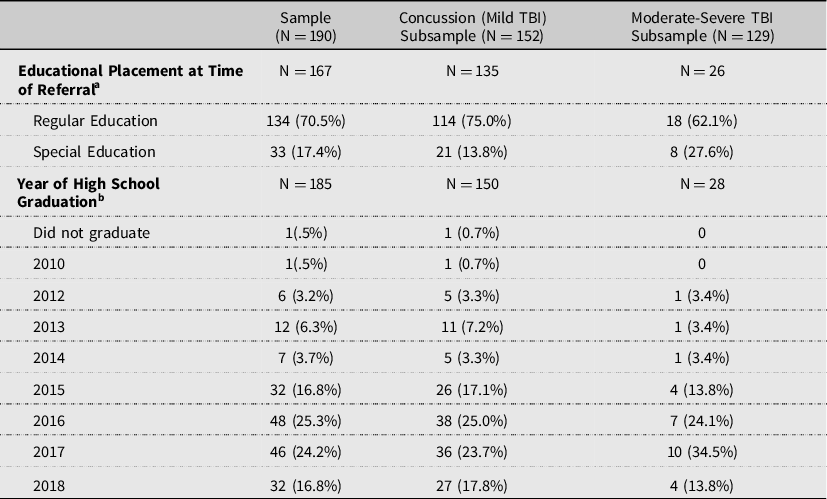
Most individuals (78.4%) remained in regular education post injury at the time of referral, although a decrease in regular education enrollment was observed (91.6% in regular education preinjury). Over two-thirds of the sample (67.02%) were receiving some type of support or accommodation in their educational placement post-injury (e.g., enrolled in regular education with accommodations, special education itinerant). One student dropped out of high school, failing to graduate, while all other students graduated within the last 4 years. Frequencies are reported in Table 2.
Frequencies of educational outcomes

a 12.1% (23) responses missing for whole sample; 11.2% (17) responses missing for concussion subsample; 10.3% (3) responses missing for moderate-severe subsample
b 2.6% (5) responses missing for whole sample; 1.3% (2) responses missing for concussion subsample; 3.4% (1) responses missing for moderate-severe subsample
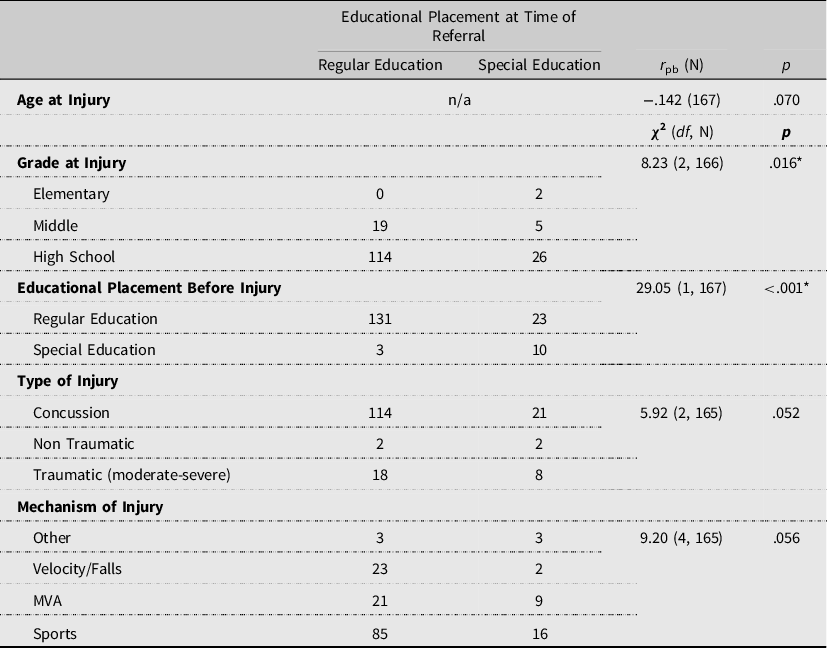
Significant relationships with educational placement at the time of referral were observed between grade at injury and educational placement before injury, χ2 (2, 166) = 8.23, p = .016 and χ2 (1, 167) = 29.05, p < .001, respectively. Individuals who experienced their injury at a younger grade were more likely to be enrolled in special education at the time of referral to BrainSTEPS. Individuals who were enrolled in regular education preinjury were more likely to be enrolled in regular education post-injury. Frequencies and statistics are reported in Table 3. In the post hoc analysis of subsamples, the relationship with educational placement at time of referral remained significant with educational placement before injury for both the concussion group and the moderate-severe TBI group, χ2 (1, 135) = 24.37, p < .001 and χ2 (1, 26) = 4.875, p = .027, respectively. All other relationships were not significant, but a trend was noted in special education enrollment based on type/severity of ABI. A greater percentage of individuals with moderate-severe TBIs (44.44%) and non-TBIs (50.00%) were enrolled in special education, compared to the 18.24% of individuals with concussions or mild TBIs.
Educational experiences frequencies and statistics

* = statistically significant
Post-High school participation
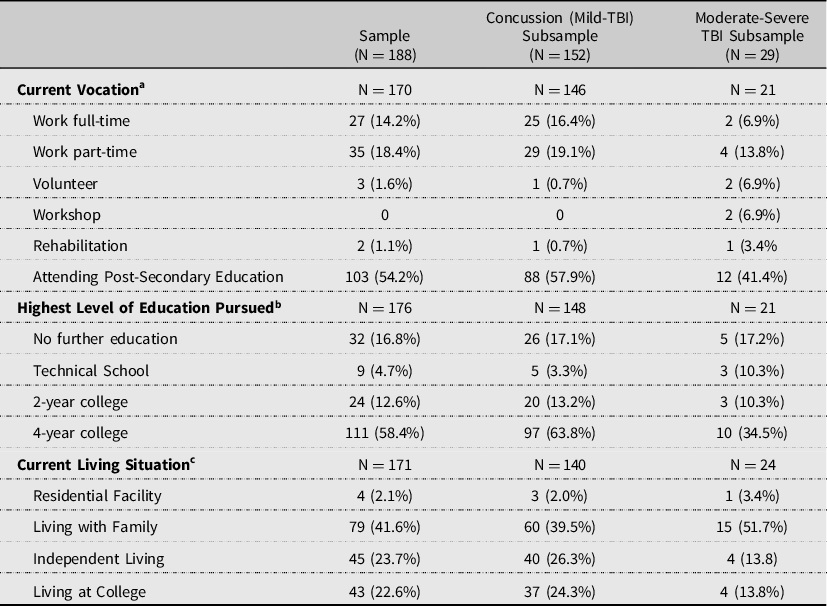
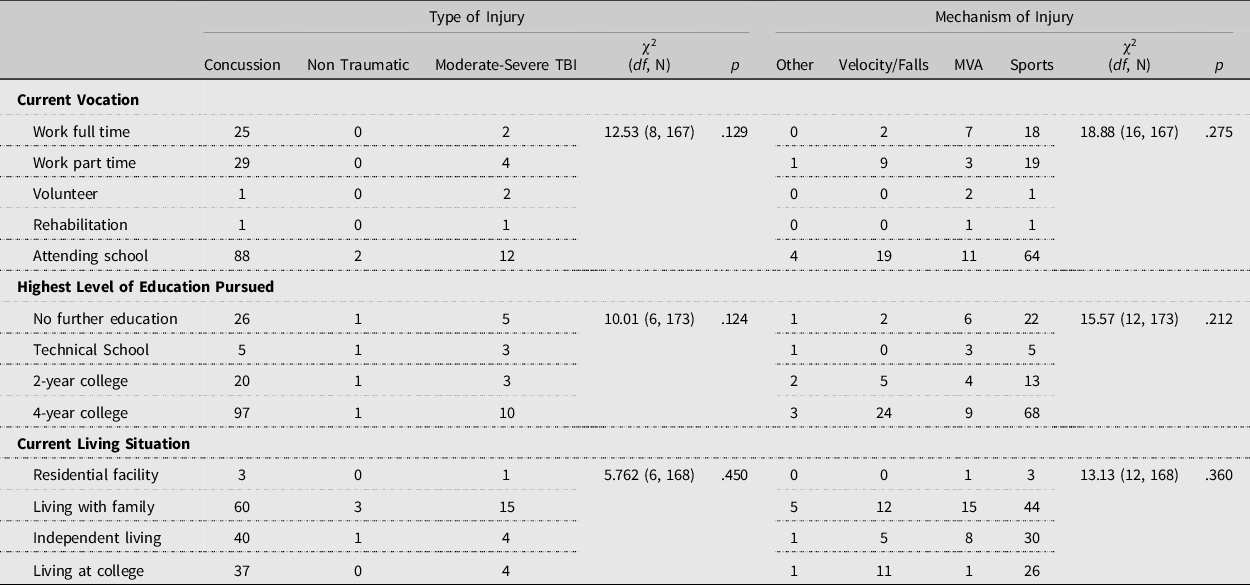
At the time of survey, over half of the individuals (54.2%) were attending post-secondary education, with 58.4% of students having pursued, at any point, a four-year college education as their highest level of education. No individuals were pursuing multiple vocations at the same time (e.g., working part-time and attending post-secondary education). Most individuals were living with family or living at college. Frequencies are reported in Table 4.
Frequencies of post-high school outcomes

a 10.5% (20) responses missing for whole sample; 5.3% (8) responses missing for concussion subsample; 27.6% (8) responses missing for moderate-severe subsample
b 7.4% (14) responses missing for whole sample; 2.6% (4) responses missing for concussion subsample; 17.2% (5) responses missing for moderate-severe subsample
c 10% (19) responses missing for whole sample; 7.9% (12) responses missing for concussion subsample; 7.9% (12) responses missing for moderate-severe subsample
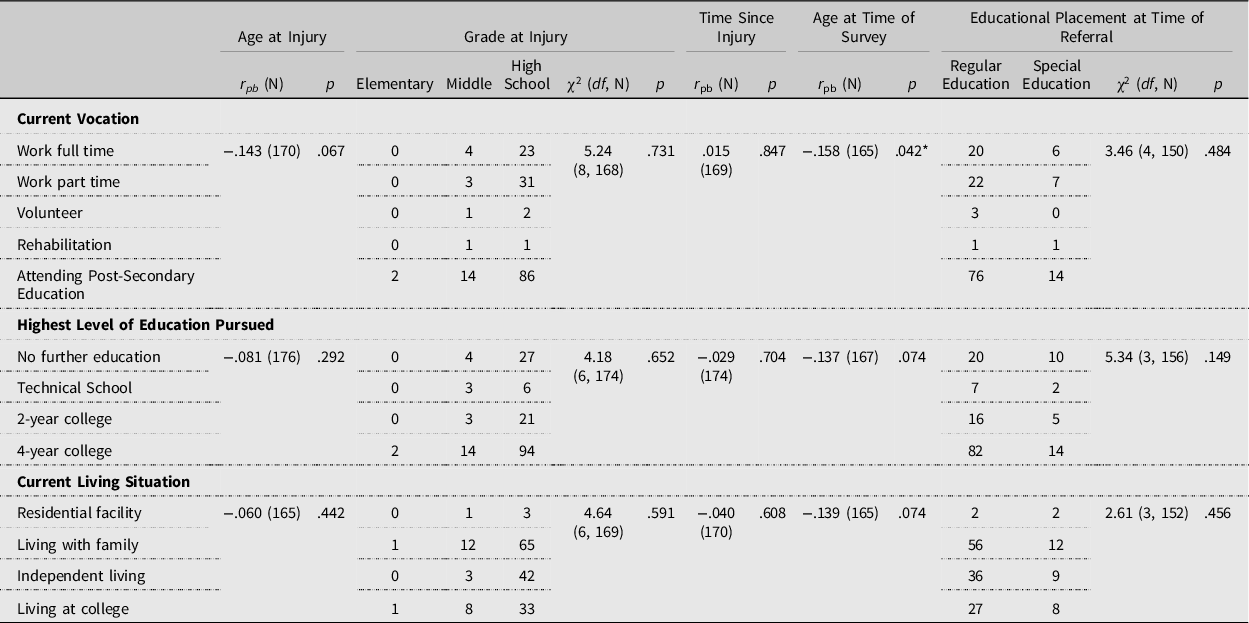
The relationship between age at survey and current vocation was the only significant relationship observed when examining the entire sample, r pb = −.158, p = .042. Frequencies and statistics are reported in Table 5. In the post hoc analysis of subsamples, no significant relationships were found for the concussion or moderate-severe TBI groups, yet some trends were observed. A greater percentage of individuals with concussions (mild TBIs) were pursuing four-year college education (65.54%) than individuals with moderate-severe TBIs (47.62%). Similarly, a greater percentage of individuals who were enrolled in special education (45.16%) were pursuing four-year college educations, compared to those who were enrolled in regular education (65.6%). Lastly, a greater percentage of individuals who were enrolled in special education (51.85%) were attending post-secondary education than other vocations (e.g., full-time or part-time work), compared to individuals who were enrolled in regular education (64.41%).
Post-High school outcomes frequencies and statistics

Post-high school outcomes frequencies and statistics

Discussion
The results of this retrospective analysis describe the educational and vocational outcomes or attainment of individuals who experienced an ABI during childhood and participated in an elementary and secondary school-based brain injury support program. For this sample, most injuries were concussions and occurred during high school, consistent with data from the Centers for Disease Control and Prevention indicating high incidence of ABI for this age group, but different than previous estimates of 25% to 52% of childhood ABIs occurring in high school (Faul et al., Reference Faul, Xu, Wald and Coronado2010; Zhang et al., Reference Zhang, Sing, Rugg, Feeley and Senter2016). As previous research has largely focused on post-high school outcomes for individuals with moderate-severe ABI, comparisons for the results of this study extrapolate information from studies of more severe injuries or research available on mild brain injuries/concussions in younger groups (e.g., high school students). Most individuals were recent high school graduates and generally a short time post-injury, different than most previous studies examining long-term outcomes that focus on individuals later in adulthood in acute and chronic stages of recovery (Nybo et al., Reference Nybo, Sainio and Müller2005; Todis & Glang, Reference Todis and Glang2008; Wood & Rutterford, Reference Wood and Rutterford2006). Although the distribution is likely due to the age of the program (BrainSTEPS was established 14 years ago), the results were seemingly impacted by the skew of demographic characteristics and should be interpreted with caution.
The premorbid special education enrollment rates of this sample (7.4%) were less than the national rate of 13% for students with disabilities (U.S. Department of Education, 2018). Although most students remained in regular education after injury, about 70% of all students (i.e., concussion, non-TBI, moderate-severe TBI) were receiving academic supports or accommodations in their educational placement (special education or regular education), consistent with a previous study indicating 74.2% of students with moderate and severe ABI received special education services (Todis & Glang, Reference Todis and Glang2008). With a mostly mild TBI sample (i.e., concussion), this result expands on the findings in the moderate-severe ABI population that students with all severities of ABI are requiring more support to participate in the regular education curriculum and that special education enrollment rates are not accurate in determining the level of need for students with ABI (Todis & Glang, Reference Todis and Glang2008). Although formal special-education services might not be necessary for all students with ABI, documentation of formal and informal supports within regular education is essential to inform students’ primary and secondary educational plans, plan for supports needed in post-secondary and vocational environments and to better understand the types and intensities of supports students with ABI are utilizing to support their educational successes.
As only one individual was reported to have dropped out of high school, the high school graduation rates of this sample were higher than expected when compared to national averages and previous studies of individuals with ABI (Anderson et al., Reference Anderson, Brown, Newitt and Hoile2011; De Netto & McKinlay, Reference De Netto and McKinlay2020; Todis & Glang, Reference Todis and Glang2008; U.S. Department of Education, 2018). For students with a history of an ABI of any severity, Anderson et al. (Reference Anderson, Brown, Newitt and Hoile2011) reported 74% high school graduation rate, while Todis & Glang (Reference Todis and Glang2008) reported a 96% high school graduation rate. Although the high rate of high school graduation could be attributable to the mostly mild (concussion) nature of the sample, the only individual to drop out of high school experienced a concussion. Instead, this trend could be related to the supports and services provided or coordinated by BrainSTEPS that supports high school completion.
The significant relationships observed with educational placement at the time of referral to BrainSTEPS (i.e., 1) grade at the time of injury; 2) educational placement before injury), this should be interpreted with caution due to the skew of the sample toward high-school aged injuries and the inconsistencies with previous studies (i.e., significant changes in educational placement pre- and post-injury are often associated with increased enrollment in special education, while this sample maintained regular education enrollment) (Babikian et al., Reference Babikian, Merkley, Savage, Giza and Levin2015; Slomine et al., Reference Slomine, McCarthy, Ding, MacKenzie, Jaffe, Aitken, Durbin, Christensen, Dorsch, Paidas and Group2006). Yet, the finding that individuals with a younger age at injury were more likely to be enrolled in special education underscores the long-term needs after childhood ABI and supports the implementation of long-term monitoring of these children throughout their education. Practitioners working with children with ABI years after the injury should be aware of the increased needs of these students, while also acknowledging that, given supports and services, they can participate in school and vocations similar to their peers who are typically developing.
The rates of post-secondary education (81.8% having pursued at any point) and the particularly high rates of pursuing a four-year college education (63.1%) for this study were unexpectedly high compared to national statistics and previous study estimates of about 40% of individuals with ABI pursuing post-secondary education at any point after injury (Anderson et al., Reference Anderson, Brown, Newitt and Hoile2011; De Netto & McKinlay, Reference De Netto and McKinlay2020; Todis et al., Reference Todis, Glang, Bullis, Ettel and Hood2011; U.S. Bureau of Labor and Statistics, 2020). Nationally, 66.2% of all high schoolers, including students in both regular and special education with or without ABI, enrolled in college for the fall following graduation (U.S. Bureau of Labor and Statistics, 2020). The high rates noted in this sample were consistent across subgroup analyses based on severity. This analysis did not include measures of post-secondary success or need for supports, but, based on the sample’s need for academic support in high school, it is hypothesized that students with ABI would need similar supports to complete a college workload (Childers & Hux, Reference Childers and Hux2020; Maclennan & Maclennan, Reference Maclennan and Maclennan2008; Todis et al., Reference Todis, Glang, Bullis, Ettel and Hood2011; Venville et al., Reference Venville, Mealings, Ennals, Oates, Fossey, Douglas and Bigby2016). Although the BrainSTEPS program cannot be directly attributed to the high rates of post-secondary educational pursuit, the support and services provided by BrainSTEPS could positively influence the choice to pursue post-secondary education and the student’s success during post-secondary education. Coordination and provision of transition support could be a vital component of success for adults with a history of childhood ABI and should be considered by educational and vocational specialists.
Rates of current employment in full or part time work (36.5%) were higher than expected, with relationships consistent across analyzed severity subgroups. Most studies analyzing a range of severities of ABI showed rates of skilled and unskilled employment between 28% and 36% and rates of unemployment between 34% and 68% (Anderson et al., Reference Anderson, Brown, Newitt and Hoile2009, Reference Anderson, Brown, Newitt and Hoile2011; Nybo et al., Reference Nybo, Sainio and Müller2005). When considering employment rates with rates of enrollment in post-secondary education, individuals in this sample demonstrate post-high school participation more similar to typical peers than expected (Anderson et al., Reference Anderson, Brown, Newitt and Hoile2011). Since few studies have previously investigated living situations for individuals with a history of childhood ABI made comparisons with this sample challenging. Most of the individuals in this sample were living with family, at college or independently, and although there is a paucity of research on independent living outcomes for this age group, these results are consistent with a study by Wood and Rutterford (Reference Wood and Rutterford2006) with older adults where 60% of the sample was married or cohabitating. Without measures of the support required for vocational participation and completion of activities of daily living, the analyses are limited (De Netto & McKinlay, Reference De Netto and McKinlay2020; Tucker & Degeneffe, Reference Tucker and Degeneffe2017). Despite this, vocational support staff or specialists should be aware of and prepared to support individuals with ABI as they are pursuing post-secondary education and vocation similar to their peers who are typically developing.
The finding of only one significant relationship for post-high school participation (i.e., age at survey to current vocation) in the sample was surprising, but could be attributed to the skewed distribution of the sample (e.g., most injuries occurred in high school and were concussions). Although there are few studies and some variation in results, younger age at injury, grade at injury and greater ABI severity have been associated with lower rates of post-high school attainment (Anderson et al., Reference Anderson, Brown, Newitt and Hoile2009, Reference Anderson, Brown, Newitt and Hoile2011; Todis et al., Reference Todis, Glang, Bullis, Ettel and Hood2011; Todis & Glang, Reference Todis and Glang2008; Venville et al., Reference Venville, Mealings, Ennals, Oates, Fossey, Douglas and Bigby2016). These predictors could be confounded by the relationship of prior enrollment in special education. Studies have found prior enrollment in special education to also be associated with lower post-high school attainment, but receipt of special education services has also been associated with younger age and grade at the time of injury and greater severity of injury (Slomine et al., Reference Slomine, McCarthy, Ding, MacKenzie, Jaffe, Aitken, Durbin, Christensen, Dorsch, Paidas and Group2006; Todis et al., Reference Todis, Glang, Bullis, Ettel and Hood2011). Conversely, studies that have found increased time since injury associated with higher post-high school attainment hypothesize that individuals with ABI need more time and supports to achieve outcomes, compared to typical peers, affecting outcome data (Childers & Hux, Reference Childers and Hux2020; De Netto & McKinlay, Reference De Netto and McKinlay2020; Rumrill et al., Reference Rumrill, Wehman, Cimera, Kaya, Dillard and Chan2016; Todis et al., Reference Todis, Glang, Bullis, Ettel and Hood2011; Tucker & Degeneffe, Reference Tucker and Degeneffe2017; Venville et al., Reference Venville, Mealings, Ennals, Oates, Fossey, Douglas and Bigby2016).
The lack of significant relationships and qualitative differences based on severity and within the concussion and moderate-severe TBI subgroups was generally surprising. Results of analyses of both subgroups followed the trends observed in the broader sample; frequencies and percentages of variables were similar between concussion and moderate-severe TBI subgroups. The moderate-severe TBI subgroup presented with greater variance in the reported variables and outcomes, potentially indicating that experiences for individuals with more severe TBIs are more varied. One possible explanation for the similarities among these subgroups is the influence of BrainSTEPS. Individuals in the moderate-severe TBI group might be experiencing better outcomes due to the supports and services provided by BrainSTEPS, although the understanding of these results is limited due to the small number of participants in the moderate-severe TBI group. Uniquely, this study supports that individuals with concussions or mild TBIs can present with long-term needs, similar to the individuals with a history of moderate-severe TBIs included in this sample. The heterogeneous results of this study, in light of its limitations and in comparison to previous studies, highlight the need for further investigation of post-high school participation, the influence of supports and services and more rigorous evaluation of services provided to individuals with a history of childhood ABI.
Limitations & future directions
As previously mentioned, the distribution of the sample’s demographic information likely limited the analyses and ability to generalize results. Due to the retrospective and clinical nature of this study, survey design and available database information limited some analyses. Response-bias of the caregivers who were recruited (from only 7 of 30 BrainSTEPS teams with high engagement) and chose to respond to the online and phone survey could have impacted results (Mazor et al., Reference Mazor, Clauser, Field, Yood and Gurwitz2002). Surveys were administered at only one time point and only requested information based on the individual’s current status, not allowing insight on previous post-high school experiences or the ability to explain some oddities in the data (e.g., enrollment in special education before injury but regular education at time of referral to BrainSTEPS). Collection of additional demographic information and information on supports and services, specifically vocational preparation and transition supports to post-secondary education and employment, would have allowed for a more robust analysis. Additionally, qualitative information about individuals’ decisions to pursue specific post-high school opportunities and how individuals perceive experiencing an ABI has impacted their post-high school experiences would provide further insight on how strengths and areas of need post-ABI contribute to post-high school attainment. As this was a subanalysis of individuals who participated in a school-based brain injury support program, it is likely not representative of all students with brain injury and could include sampling bias. While these results can be used to determine potential needs of students not in a return to school program, the findings more easily generalize to students participating in such a program. Longitudinal studies with more detailed participant information for inclusion of confounding factors would likely better identify long-term outcomes and provide insight on the need for and the impact of supports in post-secondary experiences. Lastly, it was challenging to align the results of this mostly mild/concussion sample with past research due to the emphasis on more severe ABIs and heterogeneous nature of the sample (e.g., broad range in time post-injury and age at injury). Future analyses based on time post-injury (e.g., less than 1 year post-injury vs greater than 1 year post-injury) could highlight the differences in acute management of brain injury, compared to chronic management, to better inform clinical practices. Yet, this study begins to establish an evidence base to better support adults with a history of childhood ABI and future studies should further contribute to this area.
Implications for practice and policy
The results of this study are uniquely applicable to post-high school educational and vocational practices and related policy. This study supports that individuals with a history of any severity of childhood ABI have varied post-high school participation and attainment. The individuals in this sample, who participated in a formal ABI support program (BrainSTEPS), largely experienced concussions during high school. Individuals with a younger age at injury were more likely to be enrolled in special education during their primary and secondary education. At the time of the study, post-high school, the individuals were participating in educational, vocational and living activities as expected for their age (e.g., pursuing four-year college educations, living with family). Given the general success of the individuals in this sample, ABI support programs should continue to be implemented and monitored to better determine their impact on individuals with childhood ABI, compared to individuals with ABI who do not receive such supports. As individuals with ABI prepare for post-high school, educational and vocational specialists in both the high school and post-secondary education settings need to be aware of and prepared to positively support the heterogeneous educational and post-high school outcomes of students with ABI. Policies that ensure individuals with ABI receive appropriate transition supports, as well as academic and behavior supports throughout their education, is essential to support academic and vocational attainment and independence into adulthood. Additionally, programs and policies working with individuals with childhood ABI in post-high school settings should collect client and programmatic data to improve the understanding of long-term outcomes after childhood ABI and the factors that support positive outcomes.
Conclusions
With a larger sample size than many previous studies conducted on ABI, the results of this study provide unique insight on educational and post-high school attainment for individuals in post-high school experiences after experiencing a childhood ABI who participated in state-wide school-based brain injury support program, BrainSTEPS. The mostly mild injuries represented in this sample emphasize the continued needs of some individuals who experience concussions or mild ABIs into adulthood. Additional research is needed to continue investigating the impacts of ABI on educational and post-high school outcomes, particularly in children with concussions and complicated-mild ABIs. Broader measures of educational and post-secondary attainment, including the use of educational and vocational supports and services, are essential in understanding the needs of these individuals and to inform the provision of long-term supports and services.
Acknowledgements
The authors thank Libby Crook, Mad Farnham and Nora Hassan for their contribution in data coding and analysis and Dr. Drew Nagele for his suggestions on this manuscript.
Financial Support
BrainSTEPS was created in 2007 by the Pennsylvania Department of Health. The program is jointly funded by the PA Department of Health and PA Department of Education, Bureau of Special Education via the PaTTAN network. BrainSTEPS is implemented by the Brain Injury Association of Pennsylvania.
Conflicts of Interest
Brenda Eagan-Johnson is the Project Director of BrainSTEPS and receives compensation in the form of a salary. Monica Vaccaro is the director of Programs for the Brain Injury Association of Pennsylvania and receives compensation in the form of a salary. Angela Ciccia has grant funding (CDC, CE003164) that includes evaluation of BrainSTEPS that was awarded after completion of the data presented in this manuscript.
Ethical Standards
The authors assert that all procedures contributing to this work comply with the ethical standards of the relevant national and institutional committees on human experimentation and with the Helsinki Declaration of 1975, as revised in 2008.
Supplementary Material
To view supplementary material for this article, please visit https://doi.org/10.1017/BrImp.2021.10