Implications
Understanding the regulation of milk fat synthesis is central to the development of nutritional strategies to enhance the nutritional value of milk, decrease milk-energy secretion and improve the energy balance of lactating ruminants. Studies in lactating cows have provided evidence that decreases in milk fat synthesis are related to increases in ruminal outflow of specific trans fatty acids that exert anti-lipogenic effects. Diets that cause milk fat depression in cows increase milk fat synthesis in goats with indications that interspecies differences are related to the impact on ruminal lipid metabolism and mammary specific regulation of cellular processes and key lipogenic enzymes. Molecular-based techniques have provided an insight into the molecular mechanisms underlying the nutritional regulation of mammary lipogenesis in ruminants. It is anticipated that future studies will elucidate a direct cause and effect and facilitate the development of several innovations to optimize milk fat content and composition including genomic-based selection of ruminant livestock.
Introduction
Changes in the demand for milk fat during recent decades have resulted in the restructuring of major global milk markets, leading to protein commanding a higher premium than fat within milk payment systems (Lock and Shingfield, Reference Lock and Shingfield2004). Fat is the major energy constituent in milk and represents a significant proportion of the total energy requirements for lactation in ruminants. Producing milk with a fat content more in line with market requirements could be expected to improve the economic returns from milk production enterprises and decrease the impact on the environment. Lowering milk energy content offers a major competitive advantage within milk purchase agreements, where payments are based on volume rather than the output of milk constituents. Several studies have also provided evidence to indicate that decreases in milk fat content may improve energy balance and the efficiency of nutrient utilization in cows during early lactation (Moore et al., Reference Moore, Hafliger, Mendivil, Sanders, Bauman and Baumgard2004; Shingfield et al., Reference Shingfield, Beever, Reynolds, Gulati, Humphries, Lupoli, Hervás and Griinari2004; Kay et al., Reference Kay, Roche, Moore and Baumgard2006) or periods of limited nutrient availability (Kay et al., Reference Kay, Mackle, Bauman, Thomson and Baumgard2007). However, realizing these benefits is dependent on developing on-farm strategies to accurately manipulate milk composition and milk fat secretion.
Feeding diets containing plant oils, fish oil or marine algae or rations rich in rapidly fermented carbohydrates results in the production of milk containing a low-fat content, a phenomena often referred to as milk fat depression (MFD). Decreases in milk fat output during diet-induced MFD typically occur within a few days, and in more severe cases milk fat yield can be lowered by more than 50%, with little or no change in the yields of milk, milk protein or lactose (AbuGhazaleh et al., Reference AbuGhazaleh, Schingoethe, Hippen and Kalscheur2004; Roy et al., Reference Roy, Ferlay, Shingfield and Chilliard2006; Shingfield et al., Reference Shingfield, Reynolds, Hervás, Griinari, Grandison and Beever2006a). Secretion of all fatty acids is decreased during diet-induced MFD, but the reductions in the output of fatty acids synthesized de novo are disproportionately greater (Bauman and Griinari, Reference Bauman and Griinari2003).
Fat is an important component contributing to the processing attributes and organoleptic properties of milk and dairy products from ruminants (Palmquist et al., Reference Palmquist, Beaulieu and Barbano1993; Chilliard and Ferlay, Reference Chilliard and Ferlay2004). During recent decades, increasing emphasis has been placed on the contribution of ruminant-derived foods on the development or prevention of chronic human diseases including cancer, cardiovascular disease and insulin resistance. Milk and dairy products are the main source of 12:0 and 14:0 in the human diet and also provide a major contribution to total 16:0 and trans fatty acids (TFA) consumption in industrialized countries (Givens and Shingfield, Reference Givens and Shingfield2006). Production of ruminant milk with a fatty acid profile more in line with public health recommendations has the potential to improve long-term human health without requiring substantial changes in consumer eating habits. Numerous studies have demonstrated that the use of specific forage species, forage conservation methods and dietary lipid supplements can be used to alter milk fat composition in ruminants (Dewhurst et al., Reference Dewhurst, Shingfield, Lee and Scollan2006; Chilliard et al., Reference Chilliard, Glasser, Ferlay, Bernard, Rouel and Doreau2007; Glasser et al., Reference Glasser, Ferlay and Chilliard2008a). Furthermore, plant oils and oilseeds in the diet also decrease methanogenesis in ruminants (Machmüller et al., Reference Machmüller, Soliva and Kreuzer2003; Martin et al., Reference Martin, Rouel, Jouany, Doreau and Chilliard2008; Beauchemin et al., Reference Beauchemin, McGinn, Benchaar and Holtshausen2009). Due to the interrelationship between diet composition, rumen metabolism and mammary lipogenesis, on-farm feeding regimens for decreasing greenhouse gas emissions or altering milk fatty acid composition can also be expected to influence milk fat content (Chilliard et al., Reference Chilliard, Martin, Rouel and Doreau2009) depending on diet composition and ruminant species.
Understanding the role of diet on milk fat synthesis and the underlying mechanisms regulating mammary lipogenesis in ruminants is central to the formulation of diets and/or supplements for strategic changes in milk fat content and composition. Numerous reviews have considered the effect of nutrition on milk fat synthesis in ruminants (Bauman and Griinari, Reference Bauman and Griinari2003; Chilliard et al., Reference Chilliard, Glasser, Ferlay, Bernard, Rouel and Doreau2007; Shingfield and Griinari, Reference Shingfield and Griinari2007), whereas several appraisals have considered possible molecular mechanisms underlying diet-induced changes in mammary lipogenesis and fat secretion (Bauman et al., Reference Bauman, Perfield, Harvatine and Baumgard2008; Bernard et al., Reference Bernard, Leroux and Chilliard2008; Harvatine et al., Reference Harvatine, Boisclair and Bauman2009a). In the following sections, the role of TFA formed during ruminal metabolism of dietary unsaturated fatty acids, lipogenic precursor supply and products of intermediary metabolism on milk fat secretion are examined. Recent evidence on factors regulating mammary lipogenic enzyme activity and gene expression in ruminants is also considered within the context of highlighting areas for further investigation and providing an insight into the possible causes for variable milk fat secretion responses to changes in diet composition between ruminant species.
Background
Decreases in milk fat synthesis are common in cows fed diets containing: (i) high proportions of concentrates, (ii) fish oil and marine algal lipids or (iii) ionophores (Bauman and Griinari, Reference Bauman and Griinari2001 and Reference Bauman and Griinari2003). Even though certain attributes of a diet are important in the establishment of MFD, there is considerable interaction between the composition of the basal diet, amount and source of dietary lipid supplement and feeding frequency (Chilliard et al., Reference Chilliard, Glasser, Ferlay, Bernard, Rouel and Doreau2007; Shingfield and Griinari, Reference Shingfield and Griinari2007).
A number of theories have been proposed to explain diet-induced MFD. The major theories have attributed the decreases in milk fat synthesis during diet-induced MFD to (i) reductions in the supply of acetate and 3-hydroxy-butyrate for de novo fatty acid synthesis in the mammary gland, (ii) elevated insulin secretion stimulating the preferential partitioning of fatty acids towards adipose tissue at the expense of the mammary gland or (iii) direct inhibition of mammary lipogenesis by TFA formed during the biohydrogenation of dietary unsaturated fatty acids in the rumen. Several reviews have provided a comprehensive treatise of the historical background of diet-induced MFD and a critical evaluation of the main theories proposed to explain the decreases in milk fat synthesis (Bauman and Griinari, Reference Bauman and Griinari2001 and Reference Bauman and Griinari2003; Griinari and Bauman, Reference Griinari and Bauman2003).
Early studies reported that decreases in milk fat output for cows fed diets causing MFD were associated with an increase in milk trans 18:1 concentrations (refer to Bauman and Griinari, Reference Bauman and Griinari2001). However, post-ruminal infusions of trans-9 18:1 had no effect on milk fat synthesis in lactating cows (Rindsig and Schultz, Reference Rindsig and Schultz1974) indicating a much more complicated cause and effect. Use of more advanced gas-chromatography methods for the analysis of milk fat composition provided the first indications that MFD was related to 18:1 isomer profiles rather than absolute increases in milk trans 18:1 content per se (Griinari et al., Reference Griinari, Dwyer, McGuire, Bauman, Palmquist and Nurmela1998). Following reports that diet-induced MFD was associated with an increase in milk trans-10 18:1 content (Griinari et al., Reference Griinari, Dwyer, McGuire, Bauman, Palmquist and Nurmela1998; Piperova et al., Reference Piperova, Teter, Bruckental, Sampugna, Mills, Yurawecz, Fritsche, Ku and Erdman2000) and trans-10, cis-12 conjugated linoleic acid (CLA) inhibits milk fat synthesis (Baumgard et al., Reference Baumgard, Corl, Dwyer, Sæbø and Bauman2000), the biohydrogenation theory of MFD was proposed (Bauman and Griinari, Reference Bauman and Griinari2001), which states that ‘under certain dietary conditions the pathways of biohydrogenation are altered to produce unique fatty acid intermediates which are potent inhibitors of milk fat synthesis’. Of all the hypotheses developed to explain diet-induced MFD, the biohydrogenation theory appears to be the most robust and offers a more convincing explanation for MFD over a wider range of diets. However, increases in ruminal outflow of trans-10, cis-12 CLA, do not explain the decreases in milk fat synthesis in all cases of diet-induced MFD, with the implication that additional biohydrogenation intermediates and/or mechanisms must be involved (Shingfield and Griinari, Reference Shingfield and Griinari2007).
Ruminal lipid metabolism
Ruminant diets typically contain between 20 and 40 g lipid/kg dry matter (DM). Even though the diet contains a high proportion of unsaturated fatty acids, ruminant meat and milk contain much higher levels of saturated fatty acids due in part, to extensive biohydrogenation of dietary unsaturated fatty acids in the rumen. Following ingestion, ester linkages in triacylglycerides (TAG), phospholipids and glycolipids are hydrolyzed by the action of bacterial lipases and the non-esterified fatty acids (NEFA) released into the rumen are adsorbed onto feed particles and biohydrogenated or incorporated directly into bacterial lipids. Numerous in vitro and in vivo studies have allowed the major pathways of ruminal biohydrogenation to be elucidated (Harfoot and Hazlewood, Reference Harfoot and Hazlewood1988; Palmquist et al., Reference Palmquist, Lock, Shingfield and Bauman2005; Jenkins et al., Reference Jenkins, Wallace, Moate and Mosley2008). Metabolism of linoleic acid (LA; cis-9, cis-12 18:2) and linolenic acid (LNA; cis-9, cis-12, cis-15 18:3) is considered to involve at least two distinct populations of ruminal bacteria that under normal conditions is thought to proceed via isomerization of the cis-12 double bond resulting in the formation of a conjugated 18:2 or 18:3 fatty acid, respectively. Conjugated products are transient and are sequentially reduced to 18:0 as the final end product via trans-11 18:1. The final reduction step is considered rate limiting and therefore trans 18:1 intermediates can accumulate and flow out of the rumen. On most diets, biohydrogenation of LA and LNA varies between 70% and 95% and 85% and 100%, respectively (Doreau and Ferlay, Reference Doreau and Ferlay1994; Glasser et al., Reference Glasser, Schmidely, Sauvant and Doreau2008c), indicating that with the exception of diets containing marine oils, 18:0 is the major fatty acid leaving the rumen.
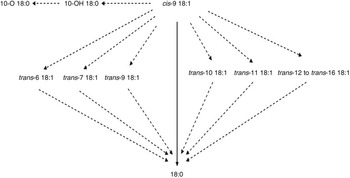
Fewer studies have examined the fate of oleic acid (OA; cis-9 18:1) in the rumen. Incubations with mixed or pure cultures of rumen bacteria demonstrated that OA can be biohydrogenated to 18:0 (Harfoot and Hazlewood, Reference Harfoot and Hazlewood1988), whereas more recent studies indicated that metabolism of OA in vitro results in the formation of oxygenated fatty acids (10-OH 18:0 and 10-O 18:0) and numerous trans-18:1 intermediates with double bonds at positions Δ6-Δ16 (Mosley et al., Reference Mosley, Powell, Riley and Jenkins2002; Jenkins et al., Reference Jenkins, AbuGhazaleh, Freeman and Thies2006; McKain et al., Reference McKain, Shingfield and Wallace2010; Figure 1). Direct comparisons indicate that the extent of biohydrogenation of OA is also lower compared with LA and LNA and typically varies between 58% and 87% (Loor et al., Reference Loor, Ueda, Ferlay, Chilliard and Doreau2004 and Reference Loor, Ueda, Ferlay, Chilliard and Doreau2005d; Doreau et al., Reference Doreau, Laverroux, Normand, Chesneau and Glasser2009).
Putative pathways describing cis-9 18:1 metabolism in the rumen (adapted from Mosley et al., Reference Mosley, Powell, Riley and Jenkins2002; Jenkins et al., Reference Jenkins, AbuGhazaleh, Freeman and Thies2006; McKain et al., Reference McKain, Shingfield and Wallace2010). Arrows with solid lines highlight the major biohydrogenation pathway, whereas arrows with dashed lines describe the formation of minor fatty acid metabolites.

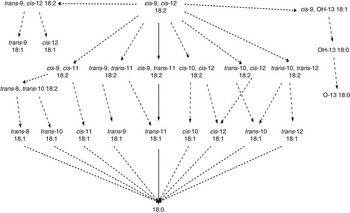
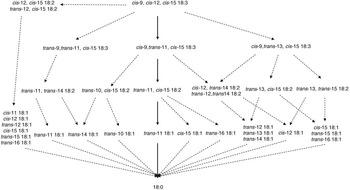
Ruminal biohydrogenation of dietary unsaturated fatty acids in lactating cows results in the formation of a wide and diverse range of fatty acid intermediates that following digestion and absorption can be incorporated into milk fat (Piperova et al., Reference Piperova, Sampugna, Teter, Kalscheur, Yurawecz, Ku, Morehouse and Erdman2002; Shingfield et al., Reference Shingfield, Ahvenjärvi, Toivonen, Ärölä, Nurmela, Huhtanen and Griinari2003; Loor et al., Reference Loor, Ueda, Ferlay, Chilliard and Doreau2004). The occurrence of numerous isomers of trans 18:1, 18:2 and 18:3 fatty acids containing one or more trans double bonds indicate that the metabolic pathways often used to describe ruminal biohydrogenation are an over simplification of the actual intermediates formed in the rumen. Characterizing the biohydrogenation process in more detail represents a major challenge, owing to the limited number of studies reporting sufficiently comprehensive determinations of ruminal fatty acid outflow and because changes in the production of intermediates to oils rather than pure fatty acids in the diet have been examined. Consequently, it is often difficult or impossible to elucidate unequivocally the metabolic origins of a specific minor biohydrogenation intermediate. Nevertheless, recent in vitro and in vivo studies have provided additional insight into possible biochemical pathways accounting for the formation of specific intermediates during the metabolism of LA (Figure 2) and LNA (Figure 3).
Putative pathways describing cis-9, cis-12 18:2 metabolism in the rumen (adapted from Harfoot and Hazlewood, Reference Harfoot and Hazlewood1988; Hudson et al., Reference Hudson, Morvan and Joblin1998; Wallace et al., Reference Wallace, McKain, Shingfield and Devillard2007; Shingfield et al., Reference Shingfield, Ahvenjärvi, Toivonen, Vanhatalo, Huhtanen and Griinari2008a). Arrows with solid lines highlight the major biohydrogenation pathway, whereas arrows with dashed lines describe the formation of minor fatty acid metabolites.

Putative pathways describing cis-9, cis-12, cis-15 18:3 metabolism in the rumen (adapted Harfoot and Hazlewood, Reference Harfoot and Hazlewood1988; Destaillats et al., Reference Destaillats, Trottier, Galvez and Angers2005; Wąsowska et al., Reference Wąsowska, Maia, Niedźwiedzka, Czauderna, Ramalho Ribeiro, Devillard, Shingfield and Wallace2006 and Shingfield et al., Reference Shingfield, Ahvenjärvi, Toivonen, Vanhatalo, Huhtanen and Griinari2008a). Arrows with solid lines highlight the major biohydrogenation pathway, whereas arrows with dashed lines describe the formation of minor fatty acid metabolites.

Fish oil or marine algal oil rich in long chain polyunsaturated fatty acids (PUFA) in the diet are known to inhibit the complete biohydrogenation of C18 unsaturated fatty acids resulting in an increase in ruminal trans 18:1 and trans 18:2 outflow (Shingfield et al., Reference Shingfield, Ahvenjärvi, Toivonen, Ärölä, Nurmela, Huhtanen and Griinari2003; Kim et al., Reference Kim, Huws, Lee, Wood, Muetzel, Wallace and Scollan2008; Lee et al., Reference Lee, Shingfield, Tweed, Toivonen, Huws and Scollan2008). Incubations with rumen micro-organisms have shown that eicosapentaenoic acid (EPA; cis-5, cis-8, cis-11, cis-14, cis-17 20:5) and docosahexaenoic acid (DHA; cis-4, cis-7, cis-10, cis-13, cis-16, cis-19 22:6), cause trans 18:1 to accumulate (AbuGhazaleh and Jenkins, Reference AbuGhazaleh and Jenkins2004), but it is possible that other 20 and 22 carbon unsaturated fatty acids also contribute to the effects of fish oil on ruminal lipid metabolism. Even though numerous studies have demonstrated that EPA and DHA are extensively metabolized in the rumen, the mechanisms responsible and intermediates formed are not known. Due to a lack of substantive data there is a need to characterize the biochemical pathways of ruminal EPA and DHA metabolism and the biohydrogenation intermediates formed to provide further insight into the causes of MFD on diets containing marine lipids.
Mammary lipogenesis
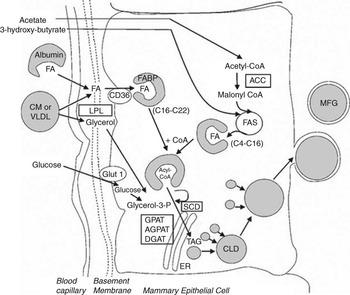
Bovine and caprine milk typically contains between 30 and 50 g fat/kg depending on diet, stage of lactation and genotype (Chilliard et al., Reference Chilliard, Ferlay, Rouel and Lamberet2003; Givens and Shingfield, Reference Givens and Shingfield2006). The same nutritional, physiological and genetic factors also contribute to variations (40 to 110 g/kg) in ovine milk fat content (Pulina et al., Reference Pulina, Nudda, Battacone and Cannas2006). Milk fat globules are essentially comprised of TAG (96% to 98% of total milk lipids) and small amounts of 1,2-diacylyglycerides and monoacylglycerides (0.02%), free fatty acids (0.22%) and retinol esters (Jensen, Reference Jensen2002). Milk TAG are thought to contain more than 400 individual fatty acids, but quantitatively saturated fatty acids of chain lengths from 4 to 18 carbon atoms, cis-9 16:1, OA, trans 18:1 and LA are the most abundant (Jensen, Reference Jensen2002). Fatty acids incorporated into milk TAG are derived from two sources, uptake of preformed fatty acids from peripheral circulation and fatty acid synthesis in mammary secretory cells (Figure 4). Depending on breed, stage of lactation and diet, fatty acid synthesis de novo in the bovine contributes to proportionately 0.60 on a molar basis or 0.40 by weight to total fatty acid secretion in milk (Bauman and Davis, Reference Bauman and Davis1974).
Synthesis of milk fat in the bovine mammary epithelial cell (adapted from Bernard et al., Reference Bernard, Leroux and Chilliard2008). Abbreviations: ACC, acetyl-CoA carboxylase; AGPAT, 1-acyl glycerol 3-phosphate acyl transferase; CD36, cluster of differentiation 36; CLD, cytoplasmic lipid droplet; CoA, coenzyme A; CM, chylomicron; DGAT, diacylglycerol acyltransferase 1; ER, endoplasmic reticulum; FA, fatty acid; FABP, fatty acid binding protein; FAS, fatty acid synthase; Glut 1, glucose transporter 1; GPAT, glycerol-3 phosphate acyl transferase; LPL, lipoprotein lipase; MFG, milk fat globule; SCD, stearoyl-CoA desaturase; TAG, triacylglyceride; VLDL, very low density-lipoprotein.

Mammary epithelial cells synthesize short- and medium-chain fatty acids using acetate and 3-hydroxy-butyrate as substrates. Fatty acid synthesis de novo accounts for all 4:0 to 12:0, most of the 14:0 (ca. 95%) and about 50% of 16:0 secreted in milk, whereas all 18 carbon and longer chain fatty acids are thought to be derived from circulating plasma lipids (Chilliard et al., Reference Chilliard, Ferlay, Mansbridge and Doreau2000). De novo fatty acid synthesis has an absolute requirement for acetyl-CoA, the presence of two key enzymes, acetyl-CoA carboxylase (ACC, E.C. 6.4.1.2) and fatty acid synthetase (FAS, E.C. 2.3.1.85) and a supply of NADPH reducing equivalents (Barber et al., Reference Barber, Clegg, Travers and Vernon1997). Both 3-hydroxy-butyrate and acetate contribute equally to the initial four carbon unit. Acetate is converted to acetyl CoA in the cytosol and used to extend the chain length of synthesized fatty acids via the malonyl-CoA pathway, whereas 3-hydroxy-butyrate is incorporated directly following activation to butyryl CoA (Figure 4). Conversion of acetate to malonyl-CoA, catalyzed by ACC, is considered to be the rate-limiting step (Bauman and Davis, Reference Bauman and Davis1974). Recent studies have reported that expression of acyl-CoA synthetase short-chain family member ACSS2 gene increases in mammary tissue of cows during lactation, and that the changes in transcript abundance correspond with increases in mammary acetyl CoA synthesis suggesting that the protein encoded by this gene supplies activated acetate for de novo synthesis in the bovine (Bionaz and Loor, Reference Bionaz and Loor2008b). Long chain fatty acids containing 16 or more carbon atoms inhibit mammary fatty acid synthesis in bovine or caprine mammary epithelial cells in vitro with the effects being more potent during incubations with fatty acids containing a longer carbon chain and/or higher degree of unsaturation (Barber et al., Reference Barber, Clegg, Travers and Vernon1997). The inhibitory effects on ACC enzyme activity offer an explanation for the decreases in the proportions of 8 to 14 carbon fatty acids in milk following an increase in the supply of long chain fatty acids at the mammary gland derived either from the diet or mobilization of body fat (Chilliard et al., Reference Chilliard, Ferlay, Mansbridge and Doreau2000). Secretion of 16:0 and all longer fatty acids in milk are derived from the TAG fractions of circulating very low-density lipoproteins (VLDL) and chylomicrons or plasma albumin bound NEFA. Fatty acids are imported into the mammary secretory cell following the action of mammary lipoprotein lipase (LPL, E.C. 3.1.1.34). Both VLDL and chylomicrons are anchored to mammary endothelium by LPL that acts on TAG contained within the lipoprotein core to release NEFA. Studies using rodent models suggest that the VLDL receptor (VLDLR) is an essential component of mammary LPL activity (Tacken et al., Reference Tacken, Hofker, Havekes and van Dijk2001). Expression of VLDLR has been shown to be upregulated in the bovine mammary gland throughout lactation, particularly during the first month postpartum (Bionaz and Loor, Reference Bionaz and Loor2008b).
In vitro studies with cultured mammalian cell lines and use of fatty acid transport protein transgenic and knock out mouse models have allowed a number of candidate proteins involved in the uptake of long chain fatty acids by various tissues to be elucidated including acyl-CoA binding proteins (ACBP), fatty acid binding proteins (FABP), fatty acid transport proteins (FATP; gene name: solute carrier family 27, SLC27), fatty acid translocase (FAT/CD36) and long chain acyl-CoA synthetases (ACSL) (Doege and Stahl, Reference Doege and Stahl2005). FABP and ACBP are the main intracellular fatty acid transporters in non-ruminant cells enabling the selective targeting of long-chain fatty acids for metabolism in specific organelles (Doege and Stahl, Reference Doege and Stahl2005). Long-chain fatty acids are esterified to CoA esters in the inner surface of the plasma membrane before entering intracellular metabolic pathways. Activation of fatty acids occurs primarily via an ATP-dependent mechanism involving the action of ACSL isoforms (Watkins et al., Reference Watkins, Maiguel, Zhenzhen and Pevsner2007). Measurements in lactating cows have shown that several ACSL (ACSL1, 3, 4 and 5) and FABP (FABP 1, 3, 4, 5 and 6) isoforms are transcribed in mammary tissue (Bionaz and Loor, Reference Bionaz and Loor2008a) and demonstrated that the expression of ACSL1, FABP3, FABP4 and FABP5 increases several-fold during lactation, whereas changes in the relative abundance of ACBP mRNA are much lower suggesting a minor role in mammary lipogenesis in the bovine (Bionaz and Loor Reference Bionaz and Loor2008b). Passive diffusion is thought to play only a minor role in the transport of fatty acids across cell membranes compared with protein-mediated uptake, which in non-ruminants involves CD36 and SLC27A (Doege and Stahl, Reference Doege and Stahl2005). Studies in cows have revealed the occurrence of transcripts encoding for CD36 (Bionaz and Loor, Reference Bionaz and Loor2008b) and several SLC27A isoforms (1, 2, 3, 5 and 6; Bionaz and Loor, Reference Bionaz and Loor2008a) in mammary tissue and demonstrated that CD36 and SLC27A6 mRNA abundance increases during the first months of lactation (Bionaz and Loor, Reference Bionaz and Loor2008b). Even though the mechanisms responsible for the transport of fatty acids across the capillary endothelium and interstitial space are not well characterized (Barber et al., Reference Barber, Clegg, Travers and Vernon1997; Bernard et al., Reference Bernard, Leroux and Chilliard2008), it has been suggested that SLC27A6, ACSL1 and FABP3 are involved in the coordinate regulation of channelling fatty acids towards milk fat TAG synthesis in the bovine mammary gland (Bionaz and Loor, Reference Bionaz and Loor2008a).
Long-chain fatty acids entering the mammary secretory cell can be desaturated but there is no evidence that preformed fatty acids are elongated (Chilliard et al., Reference Chilliard, Ferlay, Mansbridge and Doreau2000). Mammary epithelial cells contain the stearoyl-CoA desaturase (SCD) complex (E.C. 1.14.99.5), often referred to as Δ-9 desaturase, an enzyme that catalyses the oxidation of fatty acyl CoA esters resulting in the introduction of a cis double bond between carbon atoms 9 and 10. The SCD catalyzed reaction involves cytochrome b5, NAD(P)-cytochrome b5 reductase and molecular oxygen and the CoA ester of fatty acids as a substrate (Palmquist et al., Reference Palmquist, Lock, Shingfield and Bauman2005). Activity of SCD in the ruminant mammary gland is thought to occur as a mechanism to maintain and regulate the fluidity of milk to ensure efficient ejection from the mammary glands (Timmen and Patton, Reference Timmen and Patton1988). Stearoyl and palmitoyl-CoA are the preferred substrates for SCD with 18:0 to OA being the predominant precursor:product of SCD in the bovine mammary epithelial cell (bMEC) (Palmquist et al., Reference Palmquist, Lock, Shingfield and Bauman2005; Bernard et al., Reference Bernard, Leroux and Chilliard2008). Between 49% and 60% of 18:0 available for mammary TAG synthesis is desaturated with the extent of endogenous conversion accounting for ca. 60% of the OA secreted in milk (Enjalbert et al., Reference Enjalbert, Nicot, Bayourthe and Moncoulon1998; Mosley and McGuire, Reference Mosley and McGuire2007; Glasser et al., Reference Glasser, Ferlay, Doreau, Schmidely, Sauvant and Chilliard2008b). Activity of SCD also contributes to approximately 90% of cis-9 14:1 and 50% to 56% of cis-9 16:1 in bovine milk fat (Mosley and McGuire, Reference Mosley and McGuire2007). A number of other saturated acyl CoA also serve as substrates for SCD including 10:0, 12:0, 14:0, 15:0 and 17:0 (Bauman and Davis, Reference Bauman and Davis1974; Shingfield et al., Reference Shingfield, Chilliard, Toivonen, Kairenius and Givens2008c). Endogenous synthesis via the action of SCD on trans-11 18:1 is responsible for 64% to 97% of cis-9, trans-11 CLA (Palmquist et al., Reference Palmquist, Lock, Shingfield and Bauman2005; Shingfield et al., Reference Shingfield, Ahvenjärvi, Toivonen, Vanhatalo and Huhtanen2007; Glasser et al., Reference Glasser, Ferlay, Doreau, Schmidely, Sauvant and Chilliard2008b) and virtually all the trans-7, cis-9 CLA secreted in bovine milk (Palmquist et al., Reference Palmquist, Lock, Shingfield and Bauman2005). Experiments with 13C-labelled trans-11 18:1 have estimated that 25% or 32% is desaturated to cis-9, trans-11 CLA in the bovine (Mosley et al., Reference Mosley, Shafii, Moate and McGuire2006) and caprine (Bernard et al., Reference Bernard, Mouriot, Rouel, Glasser, Capitan, Pujos-Guillot, Chardigny and Chilliard2010) mammary gland, respectively.
De novo fatty acid synthesis, uptake of long chain fatty acids and the formation of SCD products contribute to fatty acid pool available for TAG synthesis. Esterification of fatty acids to glycerol proceeds via the glycerol-3-phosphate pathway. Synthesis of TAG in the mammalian mammary epithelial cell is initiated by acylation at the sn-1 position catalyzed by glycerol-3 phosphate acyl transferase (GPAT, E.C. 2.3.1.15). Esterification of fatty acids to sn-2 is catalyzed by 1-acylglycerol 3-phosphate acyl transferase (AGPAT, E.C. 2.3.1.51), whereas diacylglycerol acyltransferase 1 (DGAT1, EC 2.3.1.20) catalyzes the transfer of an acyl moiety from acyl-CoA to sn-1,2 diacylglycerol as the final step in TAG synthesis. Eight isoforms of AGPAT are expressed in bovine mammary tissue, with AGPAT6, AGPAT1 and AGPAT3 being the most abundant accounting for 60%, 18% and 10% of total AGPAT mRNA, respectively (Bionaz and Loor, Reference Bionaz and Loor2008a). Expression of AGPAT6 is the most affected by stage of lactation being some 15-fold higher in mammary tissue of cows on day 60 of lactation compared with day 15 pre partum (Bionaz and Loor, Reference Bionaz and Loor2008a).
Despite the sequential addition to the glycerol backbone, fatty acids are not randomly distributed during the synthesis of TAG. Medium and long chain saturated fatty acids (10:0 to 18:0) account for a between 56% and 62% of fatty acids esterified at sn-1 and sn-2, with the distribution of 16:0 being equal, whereas 18:0 is preferentially esterified at sn-1 and 8:0, 10:0, 12:0 and 14:0 at sn-2 (Jensen, Reference Jensen2002). Relatively high molar proportions (44%) of short chain saturated fatty acids (4:0, 6:0 and 8:0) and OA (27%) are located at sn-3 in milk fat TAG (Jensen, Reference Jensen2002). The esterification of fatty acids with a relatively low melting point at sn-3 is thought to be important in the regulation and maintenance of-milk fat fluidity (Hawke and Taylor, Reference Hawke and Taylor1995).
Role of substrate supply on mammary lipogenesis
Production of volatile fatty acids (VFA) in the rumen is the main form in which energy yielding substrates enter the blood in ruminant animals. Most of the propionate and butyrate absorbed across the rumen wall is metabolized in the liver and only acetate enters peripheral blood in appreciable amounts (Seal and Reynolds, Reference Seal and Reynolds1993). Owing to the importance as a carbon source for de novo fatty acid synthesis in the mammary gland early theories attributed diet-induced MFD to a decrease in acetate supply. Diets causing MFD often alter rumen fermentation characteristics increasing the ratio of glucogenic : lipogenic precursors that are not always accompanied by a decrease in acetate yield, whereas the extent of decreases in molar acetate proportions are not in direct proportion to the magnitude of MFD (Bauman and Griinari, Reference Bauman and Griinari2001). Continual intraruminal infusions of acetate and butyrate have been reported to enhance milk fat secretion, whereas propionate tends to decrease milk fat synthesis in lactating cows (Rulquin et al., Reference Rulquin, Hurtaud, Lemosquet and Peyraud2007). However, the findings from these studies cannot be considered as direct evidence that MFD is caused by a shortage of short chain fatty acid precursors, but simply indicate that in the absence of other changes, increases in acetate and butyrate supply stimulate mammary lipogenesis. Even though diets causing MFD often induce changes in molar VFA proportions, such changes do not occur in isolation and are also accompanied by alterations in ruminal outflow of biohydrogenation intermediates and end products. For example, increases in the proportion of concentrates in the diet from 400 to 910 g/kg DM in cows fed grass hay were reported to lower milk fat content from 34.5 to 22 g/kg, but MFD under these circumstances was associated with numerical, but non-significant 13% and 27% decreases in net production rates of acetate and butyrate in the rumen (Sutton et al., Reference Sutton, Dhanoa, Morant, France, Napper and Schuller2003). Due to the interrelationship between diet induced changes in rumen fermentation characteristics and ruminal biohydrogenation the contribution of reduced supply of acetate and butyrate to the decrease in milk fat synthesis during MFD remains uncertain. Recent investigations also indicate that the short chain fatty acids acetate, propionate and butyrate through their binding to and activation of two G-protein-coupled cell surface receptors (bGPR-41 and bGPR-43) are involved in second messenger signalling pathways in bMEC but do not alter cell proliferation (Yonezawa et al., Reference Yonezawa, Haga, Kobayashi, Katoh and Obara2009). These findings indicate that the supply of VFA may also play an important regulatory role on mammary metabolism further highlighting the challenges in discriminating between the effects of decreases in substrate supply and increases in ruminal TFA outflow in the etiology of diet induced MFD.
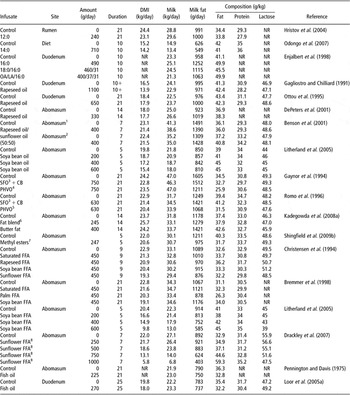
In addition to short chain fatty acids, medium and long chain fatty acids contribute to the pool of fatty acids available for incorporation into milk fat TAG in mammary secretory cells. Abomasal infusions of pure fatty acid substrates, plant oils, mixtures of free fatty acids and fish oil have been used to investigate the role of increases in long chain fatty acid supply on mammary lipogenesis. Often lipid in the diet or oils and fatty acids administered at the rumen or abomasum elicit an increase in milk fat synthesis in the lactating cow, but not in all cases, due to negative effects on DM intake and milk yield (Table 1). However, infusion of partially hydrogenated vegetable oils at the abomasum have been shown to decrease milk fat secretion in lactating cows in the absence of changes in milk yield (Gaynor et al., Reference Gaynor, Erdman, Teter, Sampugna, Capuco, Waldo and Hamosh1994; Romo et al., Reference Romo, Casper, Erdman and Teter1996).
Effect of administration of lipid supplements at the rumen, abomasum or duodenum on mammary lipogenesis in lactating cows

DMI = dry matter intake; NR = not reported; CB = cocoa butter; FFA = free fatty acid; PHVO = partically hydrogenated vegetable oil; OA = oleic acid (cis-9 18:1); LA = linoleic acid (cis-9, cis-12 18:2); SFO = sunflower oil.
1Infusions in cows of mean 55 days in lactation.
2Infusions in cows of mean 111 days in lactation.
3Sunflower oil rich in OA.
4Mixture (93:7, on a weight basis) of shortening rich in trans fatty acids and corn oil.
5Mixture (90:10, on a weight basis) of partially hydrogenated soyabean oil and safflower oil.
6Blend of fat comprised of (g/kg): cocoa butter (590), olive oil (360) and palm oil (50).
7Mixture of methyl esters containing (g/kg): cis-9 18:1 (94.5), cis-12 18:1 (33.5), trans-10 18:1 (373), trans-11 18:1 (374) and trans-12 18:1 (26.6) as major components.
8Prepared from OA enriched sunflower oil.
Role of intermediary metabolism on mammary lipogenesis
It has long been recognized that MFD in the bovine alters nutrient partitioning in favour of non-mammary tissues, adipose in particular (Bauman and Griinari, Reference Bauman and Griinari2003; Griinari and Bauman, Reference Griinari and Bauman2006). A higher lipogenic activity in adipose coupled with a simultaneous increase in circulating plasma glucose and insulin concentrations led to the development of the ‘glucogenic-insulin’ theory of MFD (refer to Bauman and Griinari, Reference Bauman and Griinari2003). However, analysis of available experimental data indicated that this theory could only explain a small proportion of the overall decrease in milk fat synthesis during diet induced MFD (Griinari and Bauman, Reference Griinari and Bauman2006). Furthermore, it was argued that the energy spared for milk fat synthesis during short-term MFD would be partitioned toward fat stores, rather than the changes in adipose tissue metabolism induced by a propionate-glucose-insulin cascade being the cause of a shortage of precursors for mammary lipogenesis. Recent studies have shown that decreases in milk energy secretion during acute (Harvatine et al., Reference Harvatine, Perfield and Bauman2009b) or chronic (Thering et al., Reference Thering, Graugnard, Piantoni and Loor2009) MFD in cows is associated with increased transcription of one or more genes involved in adipogenesis in subcutaneous adipose tissue consistent with the increased utilization of acetate, glucose and long chain fatty acids for lipogenesis and esterification in non-mammary tissues. It has also been suggested that specific TFA biohydrogenation intermediates may inhibit adipose tissue leptin expression or prevent increased secretion of this hormone in response to starch or LA intake in lactating cows and goats (Bonnet et al., Reference Bonnet, Delavaud, Bernard, Rouel and Chilliard2009), but the role of lowered circulating levels of leptin in the regulation of lipogenesis in mammary or adipose tissue remains unclear. Nevertheless, available data do not exclude the possibility that an increase in propionate and glucose supply combined with a decrease in acetate and butyrate availability may contribute to the decreases in milk fat synthesis during diet-induced MFD (Rulquin et al., Reference Rulquin, Hurtaud, Lemosquet and Peyraud2007).
Role of TFA on mammary lipogenesis in ruminants
Following the identification of exogenous trans-10, cis-12 CLA as a potent inhibitor of mammary fatty acid synthesis in the lactating cow (Baumgard et al., Reference Baumgard, Corl, Dwyer, Sæbø and Bauman2000). A number of studies have been conducted to characterize the anti-lipogenic effects of trans-10, cis-12 CLA in lactating ruminants. Abomasal infusions of relatively pure preparations supplying between 1.25 and 14.0 g/day over 4- or 5-day periods have established that trans-10, cis-12 CLA decreases milk fat synthesis in a dose-dependent curvi-linear manner in the lactating cow (de Veth et al., Reference de Veth, Griinari, Pfeiffer and Bauman2004; Shingfield and Griinari, Reference Shingfield and Griinari2007). Administration of 1.25 to 5.0 g of trans-10, cis-12 CLA/day typically results in similar decreases in the output of preformed fatty acids and fatty acids synthesized de novo, often in the absence of changes in milk fat SCD product and precursor concentration ratios. However, infusion of trans-10, cis-12 CLA/day in higher amounts (7.0 to 14.0 g/day) causes a disproportionately larger reduction in the secretion of fatty acids synthesized de novo, effects that are also accompanied by significant decreases in milk fat SCD desaturase indices. Observations from several studies indicate that anti-lipogenic potential of trans-10, cis-12 CLA supplied as calcium salts of a mixture of CLA isomers in the diet is lower immediately in cows post partum compared with established lactation (Bernal-Santos et al., Reference Bernal-Santos, Perfield, Barbano, Bauman and Overton2003; Moore et al., Reference Moore, Hafliger, Mendivil, Sanders, Bauman and Baumgard2004; Gervais et al., Reference Gervais, Spratt, Leonard and Chouinard2005). Lowered inhibition of mammary lipogenesis does not appear to be related to variations in mammary supply and incorporation of trans-10, cis-12 CLA in milk fat (Bernal-Santos et al., Reference Bernal-Santos, Perfield, Barbano, Bauman and Overton2003; Moore et al., Reference Moore, Hafliger, Mendivil, Sanders, Bauman and Baumgard2004; Castañeda-Gutiérrez et al., Reference Castañeda-Gutiérrez, Overton, Butler and Bauman2005); or due to specific changes in plasma glucose, insulin, leptin or NEFA concentrations (Castañeda-Gutiérrez et al., Reference Castañeda-Gutiérrez, Overton, Butler and Bauman2005; Kay et al., Reference Kay, Roche, Moore and Baumgard2006). It has been suggested that the coordinated reduction in the expression of genes encoding for key lipogenic enzymes in mammary tissue as a direct response to trans-10, cis-12 CLA may be prevented due to the attenuation of cellular signalling systems at the onset of lactation (Bernal-Santos et al., Reference Bernal-Santos, Perfield, Barbano, Bauman and Overton2003; Moore et al., Reference Moore, Hafliger, Mendivil, Sanders, Bauman and Baumgard2004).
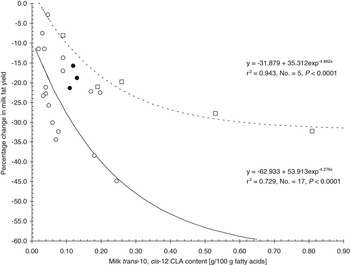
In contrast, intravenous administration of 0.2 g trans-10, cis-12 CLA/day over a 48 h interval (Schmidely and Morand-Fehr, Reference Schmidely and Morand-Fehr2004) or 10 h duodenal infusions supplying 2.0 g/day of trans-10, cis-12 CLA over a 72 h period (Andrade and Schmidely, Reference Andrade and Schmidely2006) have been shown to have relatively minor or no effect on mammary lipogenesis in goats. Further studies have shown that lipid encapsulated (Lock et al., Reference Lock, Rovai, Gipson, de Veth and Bauman2008) or calcium salts (Shingfield et al., Reference Shingfield, Rouel and Chilliard2009a) of a mixture of CLA isomers containing trans-10, cis-12 CLA in the diet lowers milk fat secretion from 8.0% to 49.3% depending on the level of supplementation in the goat. Indirect comparisons of the relationship between the relative decreases in milk fat output and milk fat trans-10, cis-12 CLA content in mid-to-late lactation cows and goats fed diets supplemented with calcium salts of a mixture of CLA isomers suggest that the sensitivity of mammary lipogenesis to the inhibitory effects of trans-10, cis-12 CLA is several-fold lower in the caprine than bovine (Shingfield et al., Reference Shingfield, Rouel and Chilliard2009a; Figure 5). No studies thus far have examined the effects of post-ruminal infusions of trans-10, cis-12 CLA in the ovine. However, lipid encapsulated supplements comprised of cis-9, trans-11 CLA and trans-10, cis-12 CLA in the diet have been shown to decrease milk fat synthesis in the sheep (Lock et al., Reference Lock, Teles, Perfield, Bauman and Sinclair2006; Sinclair et al., Reference Sinclair, Lock, Early and Bauman2007).
Relationship between the percentage decrease in milk fat yield with milk fat trans-10, cis-12 conjugated linoleic acid (CLA) content in response to rumen protected CLA supplements in lactating cows (○), goats (□) and sheep (●). The data in lactating cows derived from 11 studies evaluating responses to calcium salts of CLA during early or established lactation (Appendix 1). Measurements in lactating goats determined in two experiments examining the effects of calcium salts of CLA (Shingfield et al., Reference Shingfield, Rouel and Chilliard2009a) or lipid encapsulated CLA in the diet (Lock et al., Reference Lock, Rovai, Gipson, de Veth and Bauman2008). Values for lactating sheep are derived from two studies investigating the impact of lipid encapsulated CLA supplements (Lock et al., Reference Lock, Teles, Perfield, Bauman and Sinclair2006; Sinclair et al., Reference Sinclair, Lock, Early and Bauman2007). Fitted lines indicates the relationship between milk fat trans-10, cis-12 CLA content and relative changes in milk fat yield in cows (solid line) and goats (dotted line) based on comparisons between treatment groups and corresponding controls from reports in the literature.

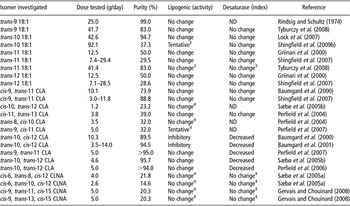
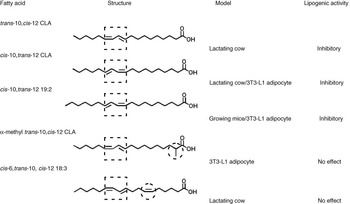
Relatively few additional TFA have been synthesized to a purity >90% and tested for anti-lipogenic activity in lactating cows (Table 2). Due to the lack of pure materials, the effects of lipid supplements containing several positional or geometric isomers on milk fat synthesis have also been evaluated. This approach is valuable in eliminating the involvement of one or more specific biohydrogenation intermediates in the regulation of mammary lipogenesis, but is less informative when infusions cause a reduction in milk fat synthesis. Experiments involving the infusion of mixture of CLA isomers at the abomasum have provided evidence that trans-9, cis-11 CLA (Perfield et al., Reference Perfield, Lock, Griinari, Saebo, Delmonte, Dwyer and Bauman2007) and cis-10, trans-12 CLA (Sæbø et al., Reference Sæbø, Sæbø, Griinari and Shingfield2005b) inhibit milk fat synthesis in the lactating cow, but further studies are required to confirm these findings and characterize the changes in milk fat over a range of doses. Investigations with lactating ruminants, experiments with animal models and cultured adipocytes have provided an insight into the structural components associated with anti-lipogenic activity. Available data indicate that for a fatty acid to exhibit anti-lipogenic activity several structural features are required: (i) free carboxyl group on the first carbon atom; (ii) cis-trans or trans-cis conjugated double bond system; and (iii) trans or cis double bond on carbon 10 relative to the carboxyl group (Park et al., Reference Park, Storkson, Liu, Albright, Cook and Pariza2004; Shingfield and Griinari, Reference Shingfield and Griinari2007). There are also data indicating that monoenoic fatty acids with a cis or trans double bond on carbon 10 may alter LPL activity and lipolysis of TAG in fully differentiated 3T3-L1 adipocytes (Park et al., Reference Park, Storkson, Liu, Albright, Cook and Pariza2004). A recent experiment also reported that trans-10 18:1 decreases the expression of ACACA, ACSS2, FABP3, FASN, LPL and SCD (−41.4%, −16.1%, −92.1%, −60.1%, −251.9% and −99.7%, respectively, relative to the control) in bMEC (Kadegowda et al., Reference Kadegowda, Bionaz, Piperova, Erdman and Loor2009). Studies in 3T3 L1 adipocytes (Granlund et al., Reference Granlund, Larsen, Nebb and Pedersen2005) and lactating cows (Sæbø et al., Reference Sæbø, Perfield, Delmonte, Yurawecz, Lawrence, Brenna and Bauman2005a) have also demonstrated that the inhibitory effects associated with a trans-10, cis-12 conjugated bond system are attenuated or completely abolished when double bonds or methyl groups are introduced between carbon atoms 1 and 10 of the fatty acid moiety (Figure 6).
Summary of trans fatty acids evaluated for anti-lipogenic activity and effects on milk fat desaturase indexFootnote 1 in lactating cows

CLA = conjugated linoleic acid; CLNA = conjugated linolenic acid; ND = not determined.
Observed inhibitory effects on lipogenesis are defined as tentative for isomers that have been administered as part of a mixture of fatty acids at the abomasum preventing a direct cause and effect to be established.
1 Defined as changes in milk fat concentration ratios of product/substrate for stearoyl-CoA desaturase.
2 Relative abundance of constituent methyl esters implicated trans-10 18:1 responsible for the observed reduction in milk fat synthesis.
3 No change relative to treatments supplying 45.5 g/day of cis-9 18:1.
4 Based on comparisons with infusion treatments supplying the same amount of trans-10, cis-12 CLA as the test fatty acid preparations.
Structural features of trans fatty acids known to be associated with anti-lipogenic activity in a range of biological models. Numerous studies have demonstrated that trans-10, cis-12 conjugated linoleic acid (CLA) exerts anti-lipogenic activity in numerous mammalian species (Bauman and Griinari, Reference Bauman and Griinari2003), whereas experiments in lactating cows (Sæbø et al., Reference Sæbø, Sæbø, Griinari and Shingfield2005b) and 3T3-L1 adipocytes (Griinari et al., Reference Griinari, Granlund, Pedersen, Delmonte, Shingfield and Sæbø2005) have provided evidence that cis-10, trans-12 CLA inhibits lipogenesis. Studies in growing mice also suggest that a cis, trans or trans, cis conjugated bond system with the first double bond being located 10 carbon atoms from the carboxyl group of the fatty acid moiety are prerequisites for anti-lipogenic activity that account for the reduction of body fat in response to a mixture of conjugated nonadecadienoic acids in the diet (Park and Pariza, Reference Park and Pariza2001). Observations in lactating cows (Sæbø et al., Reference Sæbø, Perfield, Delmonte, Yurawecz, Lawrence, Brenna and Bauman2005a) or 3T3 L1 adipocytes (Granlund et al., Reference Granlund, Larsen, Nebb and Pedersen2005) have also demonstrated that the introduction of a cis double bond or a methyl group between the trans-10, cis-12 conjugated double bond system and the carboxyl group reduces or abolishes the anti-lipogenic effects of trans-10, cis-12 CLA.

Role of ruminal biohydrogenation on mammary lipogenesis in the bovine
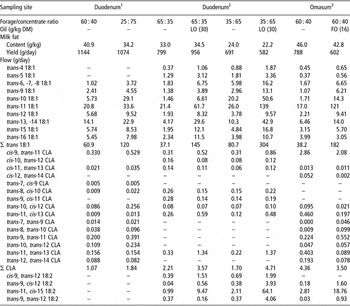
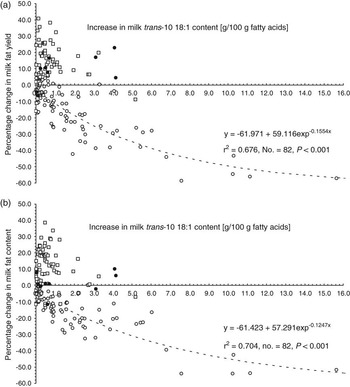
Trans-10, cis-12 CLA formed during the isomerization of LA (Wallace et al., Reference Wallace, McKain, Shingfield and Devillard2007) is the only biohydrogenation intermediate to have been infused at the abomasum over a range of doses and shown unequivocally to inhibit milk fat synthesis in the bovine. Often increases in ruminal trans-10, cis-12 CLA production have been considered as the cause of MFD, but direct measurements indicate that ruminal outflow of trans-10, cis-12 CLA in lactating cows is less than 1.5 g/day (Shingfield and Griinari, Reference Shingfield and Griinari2007; Table 3). Considerations of the enrichment of trans-10, cis-12 CLA in bovine milk (0 to 0.12 g/100 g fatty acids) on diets causing MFD also indicate that increases in the supply of trans-10, cis-12 CLA at the mammary gland contribute to between 0% and 52% of the observed reductions in milk fat secretion (Shingfield and Griinari, Reference Shingfield and Griinari2007). Diets causing MFD are known to alter ruminal lipid metabolism resulting in a shift towards the formation of trans-10 18:1 at the expense of trans-11 18:1 (Bauman and Griinari, Reference Bauman and Griinari2001; Loor et al., Reference Loor, Ferlay, Ollier, Doreau and Chilliard2005b; Shingfield and Griinari, Reference Shingfield and Griinari2007). Over a wide range of diets causing MFD, increases in milk fat trans-10 18:1 concentrations have been consistently reported (Figure 7a and b). However, abomasal infusion of 42.6 g/day of relatively pure (95%) trans-10 18:1 in free fatty acid form in lactating cows over a 4-day period was shown to enrich the concentration of this TFA in milk from 0.47 to 1.11 g/100 g fatty acids but have no effect on milk fat secretion with the implication that trans-10 18:1 does not exert anti-lipogenic effects (Lock et al., Reference Lock, Tyburczy, Dwyer, Harvatine, Destaillats, Mouloungui, Candy and Bauman2007). Owing to the relatively low recovery in milk fat it has been postulated that the associated increases in milk fat trans-10 18:1 content to post-ruminal infusions were too small to allow a reliable detection of the effects on mammary lipogenesis (Kadegowda et al., Reference Kadegowda, Piperova and Erdman2008b). Furthermore, under certain conditions, ruminal outflow of trans-10 18:1 in cows has been reported to be 90 g/day or higher (Shingfield and Griinari, Reference Shingfield and Griinari2007), whereas trans-10 18:1 concentrations in bovine milk during MFD approach or exceed 10 g/100 g fatty acids (Figure 7a and b). A recent experiment demonstrated that post-ruminal infusions of a mixture of 18:1 fatty acid methyl esters providing 92.1 g/day of trans-10 18:1 in lactating cows over a 5-day period resulted in 21.3% and 19.5% reductions in milk fat content and output, respectively (Shingfield et al., Reference Shingfield, Sæbø, Sæbø, Toivonen and Griinari2009b). Even though no direct cause and effect could be established, the lack of MFD associated with other constituent methyl esters implicated trans-10 18:1 as the most probable candidate responsible for the inhibitory effects on milk fat synthesis. Further studies are required using relatively pure preparations at equal or in higher amounts to allow unambiguous conclusions on the role of trans-10 18:1 on mammary lipogenesis in ruminants.
Changes in the flow of trans fatty acid biohydrogenation intermediates at the omasum or duodenum of lactating cows in response to diets causing a reduction in milk fat synthesis

DM = dry matter; CLA = conjugated linoleic acid; FO = fish oil; LO = linseed oil.
1Data derived from Kalscheur et al. (Reference Kalscheur, Teter, Piperova and Erdman1997) and Piperova et al. (Reference Piperova, Sampugna, Teter, Kalscheur, Yurawecz, Ku, Morehouse and Erdman2002).
2Data derived from Loor et al. (Reference Loor, Ueda, Ferlay, Chilliard and Doreau2004 and Reference Loor, Ferlay, Ollier, Doreau and Chilliard2005b).
3Data derived from Shingfield et al. (Reference Shingfield, Ahvenjärvi, Toivonen, Ärölä, Nurmela, Huhtanen and Griinari2003).
Association between increases in milk fat trans-10 18:1 content and corresponding changes in milk fat yield (a) or milk fat content (b) in lactating cows (○), goats (□) and sheep (●). Each point represents comparisons between treatment groups and corresponding controls calculated from studies reported in the literature (Appendix 2) in cows (n = 82), goats (n = 63) and sheep (n = 9). Fitted lines indicate the relationship between an increase in milk fat trans-10 18:1 content and relative changes in milk fat yield or milk fat content determined in lactating cows. No obvious associations between these parameters were observed for data derived from studies in lactating goats and sheep.

Few biohydrogenation intermediates of known (trans-10, cis-12 CLA) or putative (trans-9, cis-11 CLA, cis-10, trans-12 CLA) anti-lipogenic activity have been identified. Collective increases in ruminal outflow of these fatty acid metabolites are unable to explain all of the reduction in milk fat synthesis over a range of diets causing MFD in lactating cows (Shingfield and Griinari, Reference Shingfield and Griinari2007; Table 3). A number of studies have attempted to identify additional biohydrogenation intermediates involved in the regulation of milk fat synthesis based on the evaluation of changes in specific fatty acids in milk and changes in milk fat secretion. Over a range of diets causing MFD a close inverse relationship has been identified between milk trans-9, cis-11 CLA concentrations and milk fat secretion (Shingfield et al., Reference Shingfield, Reynolds, Lupoli, Toivonen, Yurawecz, Delmonte, Griinari, Grandison and Beever2005; Roy et al., Reference Roy, Ferlay, Shingfield and Chilliard2006; Shingfield et al., Reference Shingfield, Reynolds, Hervás, Griinari, Grandison and Beever2006a). In all cases, enrichment of trans-9, cis-11 CLA in milk fat has been shown to be highly correlated with increases in trans-10 18:1 concentrations. There are no reports on ruminal cis-10, trans-12 CLA outflow or enrichment of this CLA isomer in milk fat in cows fed diets causing MFD.
Principle component analysis of the relationship between milk fatty acid composition and milk fat yield confirmed that MFD in lactating cows is associated with increases in milk trans-10 18:1 and trans-10, cis-12 CLA concentrations, but also highlighted that the changes in trans-7 18:1 and trans-7, cis-9 CLA content were consistent with a possible role in the regulation of mammary lipogenesis (Kadegowda et al., Reference Kadegowda, Piperova and Erdman2008b). However, there are no data on the anti-lipogenic activity of these additional biohydrogenation intermediates, but the available evidence indicates that a cis-trans or trans-cis conjugated double bond system with a trans or cis double bond on carbon 10 relative to the carboxyl group are prerequisites of a fatty acid for anti-lipogenic activity (refer to Figure 6) that would not support a role for trans-7 18:1 or trans-7, cis-9 CLA as milk fat inhibitors.
The biohydrogenation theory attributes the causal mechanism underlying diet-induced MFD to increased formation of specific biohydrogenation intermediates that directly inhibit milk fat synthesis. However, it is possible that alterations in ruminal lipid metabolism during diet-induced MFD and associated changes in the relative abundance of preformed fatty acids available for milk fat TAG synthesis may also have a direct or indirect effect on the regulation of mammary lipogenesis (Shingfield and Griinari, Reference Shingfield and Griinari2007). It is well established that endogenous synthesis of OA via the action of SCD on 18:0 in the mammary gland is an important point of regulation in milk TAG synthesis and maintenance of milk fat fluidity. In addition to fatty acid chain length, degree of unsaturation and the presence of a cis or trans double bond, the maintenance of milk fat globule fluidity also requires that most fatty acids are esterified at specific positions in milk fat TAG to ensure that milk fat has a melting point at or below 39°C (Timmen and Patton, Reference Timmen and Patton1988). Under certain conditions, decreases in the availability of 18:0 for endogenous OA synthesis combined with an increase in trans 18:1 at the mammary gland have been proposed as a possible mechanism to explain part of the decrease in milk fat secretion during diet-induced MFD (Loor and Herbein, Reference Loor and Herbein2003; Loor et al., Reference Loor, Doreau, Chardigny, Ollier, Sebedio and Chilliard2005a; Gama et al., Reference Gama, Gamsworthy, Griinari, Leme, Rodrigues, Souza and Lanna2008). In a recent experiment, decreases in milk fat secretion to fish oil in the diet were reported to be associated with increases in mean milk fat melting point (Gama et al., Reference Gama, Gamsworthy, Griinari, Leme, Rodrigues, Souza and Lanna2008) that was considered to be an important component of MFD due to compromized exportation of TAG from the mammary epithelial cell. Studies in lactating cows have demonstrated that trans-7 18:1, trans-11 18:1 and trans-12 18:1 serve as substrates for SCD in the bovine based on concomitant increases in the concentration of cis-9 containing 18:2 products in milk (Palmquist et al., Reference Palmquist, Lock, Shingfield and Bauman2005; Shingfield et al., Reference Shingfield, Ahvenjärvi, Toivonen, Vanhatalo and Huhtanen2007 and Reference Shingfield, Chilliard, Toivonen, Kairenius and Givens2008c). Therefore for an increase in the mean melting point of long chain fatty acid precursors to occur, decreases in ruminal 18:0 outflow must be accompanied by collective increases in TFA that cannot be desaturated by SCD in the ruminant mammary gland. Studies involving incubations with rat liver microsomes demonstrated that isomers of trans 18:1 with double bonds at Δ4 to 7 and Δ11 to 15 but not Δ8 to 10 can serve as substrates for SCD in vitro with the extent of conversion being dependent on double-bond position (Mahfouz et al., Reference Mahfouz, Valicenti and Holman1980; Pollard et al., Reference Pollard, Gunstone, James and Morris1980) with the implication that trans-8 18:1, trans-9 18:1 and trans-10 18:1 are not desaturated in the ruminant mammary gland. Although post-ruminal infusions of trans-9 18:1 (Rindsig and Schultz, Reference Rindsig and Schultz1974; Tyburczy et al., Reference Tyburczy, Lock, Dwyer, Destaillats, Mouloungui, Candy and Bauman2008) have been shown to have no effect on lipogenesis in the lactating cow, under the specified conditions of these experiments the supply of 18:0 at the mammary gland remained unchanged, and therefore these observations do not provide a rigorous test of the possible role of lowered milk fat fluidity in the etiology of diet-induced MFD. Short-term abomasal infusions of sterculic oil (Griinari et al., Reference Griinari, Cori, Lacy, Chouinard, Nurmela and Bauman2000; Corl et al., Reference Corl, Baumgard, Dwyer, Griinari, Phillips and Bauman2001; Kay et al., Reference Kay, Mackle, Auldist, Thomson and Bauman2004), trans-9, trans-11 CLA (Perfield et al., Reference Perfield, Lock, Griinari, Saebo, Delmonte, Dwyer and Bauman2007) and trans-10, trans-12 CLA (Sæbø et al., Reference Sæbø, Sæbø, Griinari and Shingfield2005b; Perfield et al., Reference Perfield, Delmonte, Lock, Yurawecz and Bauman2006) as well as administration of Co-EDTA in the rumen (Shingfield et al., Reference Shingfield, Toivonen, Vanhatalo, Huhtanen and Griinari2006b and Reference Shingfield, Ärölä, Ahvenjärvi, Vanhatalo, Toivonen, Griinari and Huhtanen2008b) have reported that acute decreases in the ratio of product to substrate concentrations for SCD in milk fat are not associated with MFD. Furthermore, it is not clear whether the implied inhibition of SCD activity is truly analogous to changes in ruminal biohydrogenation leading to simultaneous increases in the supply of TFA that are not desaturated and decreases in 18:0 availability at the mammary gland. It is conceivable that compensatory mechanisms may operate allowing the mammary gland to accommodate short-term reductions in SCD activity, and that these differ from the adaptations to chronic increases in the average melting point of milk fat precursors. Even though increases in trans 18:1 and decreases in 18:0 leaving the rumen are characteristic responses to fish oil in the diet, it remains possible that specific intermediates formed during the metabolism of constituent PUFA may also contribute to MFD in cows fed diets containing marine lipids (Shingfield and Griinari, Reference Shingfield and Griinari2007).
Recent investigations based on two different experimental approaches have also provided evidence to suggest that the availability of short and medium chain fatty acids may be an important regulatory component of mammary lipogenesis in the bovine. Comparisons of the flow of fatty acids at the duodenum and secretion of fatty acids in milk in cows fed diets causing MFD indicated that the secretion of 18 carbon fatty acids in milk was independent of the absorption of 18 carbon fatty acids in the small intestine and varied according to mammary output of 4:0 to 16:0 (Glasser et al., Reference Glasser, Doreau, Ferlay, Loor and Chilliard2007). A meta-analysis based on data derived from 39 experiments also inferred an upper limit in the concentration of 18 carbon fatty acids that could be incorporated into milk fat (ca. 52%) and that the effects of lipid supplements on the secretion of fatty acids synthesized de novo was an important component of the overall lipogenic response (Glasser et al., Reference Glasser, Ferlay, Doreau, Schmidely, Sauvant and Chilliard2008b). Abomasal infusion of milk fat or a mixture of plant oils supplying the same amount of 18 carbon fatty acids but different amounts of 4:0 to 16:0 were recently reported to elicit different milk fat responses in lactating cows (Kadegowda et al., Reference Kadegowda, Piperova, Delmonte and Erdman2008a; Table 1). Administration of butter fat increased milk fat content and secretion (14% and 21%, respectively), whereas the infusion of the same amount of 18 carbon fatty acids but only 50% of 16:0 and no additional amounts of 4:0 to 14:0 had no effect. Overall, it appears that several adaptive mechanisms may operate allowing the mammary gland to accommodate for the direct and indirect effects of changes in milk fat precursor supply, with some indications that once exceeded may contribute to lowered rates of milk fat synthesis during diet-induced MFD.
Role of ruminal biohydrogenation on mammary lipogenesis in small ruminants
In contrast to the bovine, the occurrence of MFD is not common in small ruminants, even when goats (Chilliard et al., Reference Chilliard, Ferlay, Rouel and Lamberet2003 and Reference Chilliard, Glasser, Ferlay, Bernard, Rouel and Doreau2007; Gagliostro et al., Reference Gagliostro, Rodriguez, Pellegrini, Gatti, Muset, Castañeda, Colombo and Chilliard2006) or sheep (Pulina et al., Reference Pulina, Nudda, Battacone and Cannas2006; Reynolds et al., Reference Reynolds, Cannon and Loerch2006) are fed starch rich diets containing plant oils or marine oils. Owing to a lack of data on the flow of fatty acids at the duodenum of lactating small ruminants, understanding the reasons underpinning the differences in lipogenic response between small ruminants and the bovine has to be based on an evaluation of diet-induced alterations in the concentration of specific fatty acids in milk and the associated changes in milk fat secretion. Comparisons reported several years ago indicated marked differences in the relationship between changes in milk fat secretion and increases in milk fat trans-10 18:1 content in response to lipid supplements between goats and cows (Bernard et al., Reference Bernard, Leroux and Chilliard2006). Within the range of milk trans-10 18:1 concentrations observed in goats (0 to 5.2 g/100 g fatty acids) almost all milk fat yield responses are positive, whereas the converse is true in cows (Figure 7a). Recent experiments in lactating sheep, resulting in a wide range in milk trans-10 18:1 concentrations (0 to 4.2 g/100 g fatty acids) also highlight differences in lipogenic responses to changes in diet composition between sheep and cows (Figure 7a and b).
Comparisons across ruminant species reveal that increases in milk trans-10 18:1 concentrations are some three-fold higher in cows compared with goats and sheep and highlight that the secretion of trans-10 18:1 in the milk of small ruminants is not accompanied by substantial decreases in milk fat synthesis as reported for cows (Figure 7). These observations suggest that ruminal biohydrogenation pathways in sheep and goats are less susceptible to diet-induced changes causing a shift from trans-11 18:1 to trans-10 18:1 compared with the cow and that mammary cells in the caprine and ovine are less sensitive to the anti-lipogenic activity of specific TFA biohydrogenation intermediates relative to the bovine.
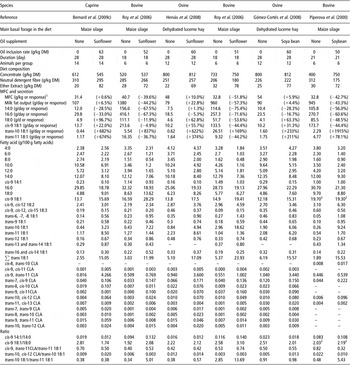
Detailed analysis of trans 18:1 and CLA isomers in ovine (Gómez-Cortés et al., Reference Gómez-Cortés, Frutos, Mantecón, Juárez, de la Fuente and Hervás2008; Hervás et al., Reference Hervás, Luna, Mantecón, Castañares, de la Fuente, Juárez and Frutos2008) and caprine (Bernard et al., Reference Bernard, Shingfield, Rouel, Ferlay and Chilliard2009c) milk produced on starch rich diets containing plant oils enriched in LA provide further insight into possible differences between ruminant species when the changes in milk fatty acid composition are compared with data from studies in cows fed similar diets that result in MFD (Table 4). Relative to the bovine, reductions in the secretion of 4:0 to 16:0 are lower and the output of all 18 carbon fatty acids, including 18:0 and OA are increased in the caprine and ovine. Furthermore, responses in goats and sheep were characterized by: (i) no significant change or a decrease in milk fat cis-9 14:1/14:0 and cis-9 18:1/18:0 concentration ratios compared with an increase in these desaturase indices in cows; (ii) minor increases in the trans-10 18:1/trans-11 18:1 ratio relative to several-fold increases in the cow; and (iii) an increase in the trans-10, cis-12 CLA/ trans-10 18:1 ratio, whereas this ratio was unchanged or decreased in cows. Relative to sheep, lipogenic responses to plant oil supplements rich in LA in goats are characterized by greater decreases in 16:0 secretion in milk, higher increases in milk 18:0 output, larger reductions in milk fat desaturase ratios, lower concentrations of trans-9, cis-11 CLA and a trend towards higher milk fat trans-9, trans-11 CLA enrichment. Indirect comparisons of changes in milk fat composition to diets of similar composition (Table 4) combined with comparisons of changes in milk fat secretion to rumen protected sources of trans-10, cis-12 CLA (Figure 5) and the relationship between increases in trans-10 18:1 and changes in milk fat synthesis (Figure 7a) suggest that small ruminants differ from cows with respect to both ruminal lipid metabolism and the regulation of mammary lipogenesis. Ruminal biohydrogenation pathways appear to be more stable and robust to alterations due to diet in small ruminants compared with the cow that may reflect differences between species related to eating behavior, rumination, buffering of rumen pH, rumen digestion kinetics and transit rates (Chilliard et al., Reference Chilliard, Ferlay, Rouel and Lamberet2003; Pulina et al., Reference Pulina, Nudda, Battacone and Cannas2006; Bernard et al., Reference Bernard, Shingfield, Rouel, Ferlay and Chilliard2009c) resulting in less exposure of the mammary gland to TFA that may inhibit milk fat synthesis. This is supported by a recent experiment demonstrating that supplements of fish oil and soya bean oil (30 and 109 g/day) to goats grazing fresh grass enhanced milk fat content (mean response 8 g/kg) and milk trans-11 18:1 concentrations (mean response 11.9 g/100 g fatty acids) in the absence of large changes (mean response 0.9 g/100 g fatty acids) in milk trans-10 18:1 content (Gagliostro et al., Reference Gagliostro, Martinez, Rodriguez, Cejas, Cano, Gatti, Muset, Castaneda and Chilliard2009), whereas fish oil and sunflower oil causes MFD in lactating cows fed maize silage based diets and increases in milk fat trans-10 18:1 and trans-9, cis-11 CLA concentrations (Shingfield et al., Reference Shingfield, Reynolds, Hervás, Griinari, Grandison and Beever2006a).
Milk fatty acid secretion and composition responses to the inclusion of plant oils containing cis-9, cis-12 18:2 into starch-rich diets in the caprine, ovine and bovine

DM = dry matter; MFC = milk fat content; CLA = conjugated linoleic acid.
1Response calculated as a percentage of the control.
2Refers to total cis 18:1.
Nutritional regulation of ruminant mammary lipogenic gene expression
In order to synthesize milk components, the mammary gland requires efficient transcriptional, translational and secretory mechanisms involving the coordinated and concerted action of multiple genes. Studies on the nutritional regulation of molecular mechanisms underlying changes in milk fat secretion in ruminants have initially been based on candidate gene approaches that focus on a few of the major lipogenic genes and measurements of mammary transcript abundance based on northern-blot or reverse transcriptase-PCR and/or enzyme activity (Piperova et al., Reference Piperova, Teter, Bruckental, Sampugna, Mills, Yurawecz, Fritsche, Ku and Erdman2000; Delbecchi et al., Reference Delbecchi, Ahnadi, Kennelly and Lacasse2001; Ahnadi et al., Reference Ahnadi, Beswick, Delbecchi, Kennelly and Lacasse2002). Milk fat synthesis involves several biochemical pathways involved in fatty acid uptake, de novo fatty acid synthesis, desaturation and esterification (Figure 4) and there is an increasing body of evidence that various fatty acids including TFA alter the expression of one or more key genes that encode for enzymes involved in mammary lipogenesis.
De novo fatty acid synthesis
Inclusion of plant oils and oilseeds decreases the secretion of medium chain fatty acids (10:0 to 16:0) synthesized de novo in the bovine and caprine (Chilliard et al., Reference Chilliard, Glasser, Ferlay, Bernard, Rouel and Doreau2007). Indirect comparisons between species indicate that the reductions in milk 10:0 to 16:0 output in goats fed grass hay based diets supplemented with linseed oil (Bernard et al., Reference Bernard, Leroux, Faulconnier, Durand, Shingfield and Chilliard2009b) or maize-silage-based diets supplemented with sunflower-seed oil (Bernard et al., Reference Bernard, Bonnet, Leroux, Shingfield and Chilliard2009a) of 27% and 32%, respectively, are lower than corresponding decreases of 46% and 69% reported in cows fed diets of similar composition (Roy et al., Reference Roy, Ferlay, Shingfield and Chilliard2006). Feeding diets that cause MFD (Piperova et al., Reference Piperova, Teter, Bruckental, Sampugna, Mills, Yurawecz, Fritsche, Ku and Erdman2000; Ahnadi et al., Reference Ahnadi, Beswick, Delbecchi, Kennelly and Lacasse2002; Peterson et al., Reference Peterson, Matitashvili and Bauman2003) or administration of trans-10, cis-12 CLA at the abomasum (Baumgard et al., Reference Baumgard, Matitashvili, Corl, Dwyer and Bauman2002) or intravenously (Harvatine and Bauman, Reference Harvatine and Bauman2006; Gervais et al., Reference Gervais, McFadden, Lengi, Corl and Chouinard2009) results in 30% to 59% decreases in the output of 4:0 to 16:0 in milk that are associated with a decrease in mammary ACACA and FASN mRNA abundance and/or activity of the transcribed proteins in cows. In goats, diets causing 18% to 32% decreases in the output of fatty acids synthesized de novo in milk do not result in significant changes in mammary ACACA or FASN expression or ACC and FAS activity (Bernard et al., Reference Bernard, Rouel, Leroux, Ferlay, Faulconnier, Legrand and Chilliard2005b, Reference Bernard, Bonnet, Leroux, Shingfield and Chilliard2009a and Reference Bernard, Leroux, Faulconnier, Durand, Shingfield and Chilliard2009b). Mammary abundance of ACACA and FASN mRNA in the bovine and caprine is known to be positively related with the output of 4:0 to 16:0 in milk (Bernard et al., Reference Bernard, Leroux and Chilliard2008) suggesting that variation in the expression of ACACA and FASN is an important component in the regulation of de novo fatty acid synthesis in both ruminant species. Furthermore, positive associations between ACACA and FASN mRNA abundance and activity of ACC and FAS in cows (Piperova et al., Reference Piperova, Teter, Bruckental, Sampugna, Mills, Yurawecz, Fritsche, Ku and Erdman2000) and goats (Bernard et al., Reference Bernard, Leroux and Chilliard2008 and Reference Bernard, Leroux and Chilliard2009a) would tend to implicate that the regulation of both genes in ruminant species occurs during transcription.
Fatty acid uptake
Plant oils and oilseeds in the diet consistently enhance mammary secretion of long chain fatty acids in goats, whereas the effects in cows are much more variable. In the bovine, plant oils increase the output of long chain fatty acids on grass hay based diets (Roy et al., Reference Roy, Ferlay, Shingfield and Chilliard2006), whereas inclusion in starch-rich diets that result in MFD either have no effect (Roy et al., Reference Roy, Ferlay, Shingfield and Chilliard2006) or decrease the secretion of preformed fatty acids in milk (Piperova et al., Reference Piperova, Teter, Bruckental, Sampugna, Mills, Yurawecz, Fritsche, Ku and Erdman2000; Ahnadi et al., Reference Ahnadi, Beswick, Delbecchi, Kennelly and Lacasse2002; Peterson et al., Reference Peterson, Matitashvili and Bauman2003). These findings tend to imply that variation in the availability and uptake of fatty acids from the peripheral circulation may contribute to differences in lipogenic responses to changes in diet composition between ruminant species. Indirect comparisons of milk fat secretion responses to calcium salts of a mixture of CLA isomers in the diet (Figure 5) suggest that the inhibitory effects of trans-10, cis-12 CLA on fatty acid uptake and incorporation of long chain fatty acids in milk fat TAG are lower in goats compared with cows (Shingfield et al., Reference Shingfield, Rouel and Chilliard2009a). In spite of the relatively large increases in the secretion of preformed fatty acids to plant oils in goats these changes are not accompanied by elevated mammary LPL transcript abundance and/or activity (Bernard et al., Reference Bernard, Leroux, Bonnet, Rouel, Martin and Chilliard2005a and Reference Bernard, Rouel, Leroux, Ferlay, Faulconnier, Legrand and Chilliard2005b; Bernard et al., Reference Bernard, Bonnet, Leroux, Shingfield and Chilliard2009a and Reference Bernard, Leroux, Faulconnier, Durand, Shingfield and Chilliard2009b). Studies in cows have shown that mammary LPL mRNA abundance is decreased compared with control treatments during MFD on high-concentrate diets containing 10 g/kg DM of sunflower oil (ca. −30%; Peterson et al., Reference Peterson, Matitashvili and Bauman2003), total mixed rations comprised of grass silage, maize silage and rolled barley supplemented with 37 g fish oil/kg DM (ca. −70%; Ahnadi et al., Reference Ahnadi, Beswick, Delbecchi, Kennelly and Lacasse2002), high-concentrate diets containing 15 and 30 g/kg DM of fish oil and soya bean oil, respectively, (ca. −60%; Harvatine and Bauman, Reference Harvatine and Bauman2006) or in response to intravenous administration (ca. −25%; Harvatine and Bauman, Reference Harvatine and Bauman2006; ca. −36%. Gervais et al., Reference Gervais, McFadden, Lengi, Corl and Chouinard2009) or abomasal infusion (ca. −48%; Baumgard et al., Reference Baumgard, Matitashvili, Corl, Dwyer and Bauman2002) of trans-10, cis-12-CLA. Observations thus far would tend to suggest that mammary mRNA and potential activity of LPL is not rate limiting for the uptake of long chain fatty acids in the caprine, but under certain circumstances may contribute to a reduction in milk fat synthesis in the lactating cow. The variable effect of diet on the changes in mammary LPL expression would tend to implicate other factors including substrate availability, arterial TAG concentration (Gagliostro et al., Reference Gagliostro, Chilliard and Davicco1991; Drackley et al., Reference Drackley, Overton, Ortiz-Gonzalez, Beaulieu, Barbano, Lynch and Perkins2007) and/or mammary LPL partitioning (Chilliard et al., Reference Chilliard, Ferlay, Rouel and Lamberet2003) and the location of long chain fatty acids in milk fat TAG as being more important in the regulation of mammary lipogenesis in the bovine.
Fatty acid desaturation
Relatively few studies have investigated the role of diet on the regulation of SCD gene expression and activity. Two SCD isoforms have been identified and characterized in the bovine, SCD1 and SCD5 that result from the expression of two genes. Prior to the characterization of the bovine SCD5 gene (Lengi and Corl, Reference Lengi and Corl2007), only one SCD isoform was thought to be present in this species and therefore the gene was simply referred to as SCD. Studies in cows have shown that feeding high concentrate diets containing sunflower oil (Peterson et al., Reference Peterson, Matitashvili and Bauman2003) or fish oil and soya bean oil (Harvatine and Bauman, Reference Harvatine and Bauman2006) and causing MFD is not associated with altered mammary SCD mRNA abundance. However, expression of SCD in the bovine mammary gland has been shown to be significantly downregulated in response to dietary supplements of rumen protected fish oil (Ahnadi et al., Reference Ahnadi, Beswick, Delbecchi, Kennelly and Lacasse2002) or following abomasal (Baumgard et al., Reference Baumgard, Matitashvili, Corl, Dwyer and Bauman2002) or intravenous (Gervais et al., Reference Gervais, McFadden, Lengi, Corl and Chouinard2009) infusions of trans-10, cis-12 CLA. Recent studies also indicate that intravenous administration of trans-10, cis-12 CLA has no effect on mammary SCD5 expression in lactating cows (Gervais et al., Reference Gervais, McFadden, Lengi, Corl and Chouinard2009).
Experiments in goats have shown that supplementing diets based on grass hay with OA enriched sunflower-seed oil (Bernard et al., Reference Bernard, Rouel, Leroux, Ferlay, Faulconnier, Legrand and Chilliard2005b), sunflower-seed oil or linseed oil decreases SCD activity (Bernard et al., Reference Bernard, Leroux, Faulconnier, Durand, Shingfield and Chilliard2009b) but has no effect on mammary SCD transcript abundance. In contrast, inclusion of sunflower-seed oil and linseed oil in maize silage-based diets was reported to have no effect on SCD mRNA or activity in caprine mammary tissue (Bernard et al., Reference Bernard, Bonnet, Leroux, Shingfield and Chilliard2009a). Other experiments in goats have shown that supplementing grass hay-based diets with formaldehyde treated linseed decreases mammary SCD mRNA (Bernard et al., Reference Bernard, Rouel, Leroux, Ferlay, Faulconnier, Legrand and Chilliard2005b), whereas the inclusion of soya beans in lucerne hay-based diets had no effect on mammary SCD transcript abundance (Bernard et al., Reference Bernard, Leroux, Bonnet, Rouel, Martin and Chilliard2005a). Overall, these observations highlight the importance of interactions between the composition of the basal diet and lipid supplement in the goat with the implication that specific PUFA escaping metabolism in the rumen or specific biohydrogenation intermediates may inhibit SCD activity via transcriptional or post-transcriptional regulatory mechanisms.
Post-ruminal infusions in lactating cows have established that in amounts above 5 g/day, trans-10, cis-12 CLA typically decreases milk fat desaturase ratios and also demonstrated that trans-9, trans-11 CLA and trans-10, trans-12 CLA modify milk fat composition consistent with the inhibition of SCD (Table 2). In vivo (Baumgard et al., Reference Baumgard, Matitashvili, Corl, Dwyer and Bauman2002; Gervais et al., Reference Gervais, McFadden, Lengi, Corl and Chouinard2009) and in vitro (Peterson et al., Reference Peterson, Matitashvili and Bauman2004; Kadegowda et al., Reference Kadegowda, Bionaz, Piperova, Erdman and Loor2009) studies indicate that trans-10, cis-12 CLA decreases SCD transcription in the bovine. Similarly, administration of trans-10, cis-12 CLA at the duodenum was reported to lower milk fat desaturase ratios in the absence of significant changes in milk fat secretion in goats (Andrade and Schmidely, Reference Andrade and Schmidely2006). In some experiments with goats, lipid supplements in the diet have been shown to reduce milk fat desaturase ratios but to have no effect on SCD activity (Bernard et al., Reference Bernard, Leroux and Chilliard2008, Reference Bernard, Bonnet, Leroux, Shingfield and Chilliard2009a, Reference Bernard, Leroux, Faulconnier, Durand, Shingfield and Chilliard2009b and Reference Bernard, Shingfield, Rouel, Ferlay and Chilliard2009c). It is possible that milk fat desaturase ratios are regulated by factors other than SCD activity, including differential uptake, turnover and utilization of fatty acid substrates in mammary tissue. Furthermore, measurements of SCD activity in vitro are made under optimal conditions and may not be a true reflection of the activity in vivo, since the SCD enzyme is known to be regulated by post-translational events and/or cofactors (Bernard et al., Reference Bernard, Leroux and Chilliard2008). For example, in vitro incubations have shown that trans-10, cis-12 CLA decreases SCD activity in the human hepatoblastoma cell line, HepG2, in the absence of changes in SCD gene transcription, mRNA or protein (Choi et al., Reference Choi, Park, Pariza and Ntambi2001). Several experiments in goats have provided evidence to support the involvement of post-translational mechanisms in the regulation of SCD activity in ruminants. Inclusion of cis-9 18:1 enriched sunflower oil (Bernard et al., Reference Bernard, Rouel, Leroux, Ferlay, Faulconnier, Legrand and Chilliard2005b), sunflower oil or linseed oil (Bernard et al., Reference Bernard, Leroux, Faulconnier, Durand, Shingfield and Chilliard2009b) in the diet of goats fed grass hay-based diets has been shown to lower mammary SCD activity measured ex vivo but have no effect on mammary SCD mRNA abundance.
Role of peripheral tissues
Owing to differences in lipogenic response to changes in diet composition between ruminant species, the possible contribution of non-mammary tissues in the regulation of mammary lipogenesis has been examined. Studies characterizing milk fat secretion responses to plant oils in the diet in mid- (Bernard et al., Reference Bernard, Rouel, Leroux, Ferlay, Faulconnier, Legrand and Chilliard2005b, Reference Bernard, Bonnet, Leroux, Shingfield and Chilliard2009a and Reference Bernard, Leroux, Faulconnier, Durand, Shingfield and Chilliard2009b) or late-lactation goats (Bernard et al., Reference Bernard, Leroux, Bonnet, Rouel, Martin and Chilliard2005a) offer no support that increases in milk fat synthesis are accompanied by changes in lipogenic gene expression and/or enzyme activity in hepatic or perirenal adipose tissue. An absence of altered lipogenic activity in adipose tissue in goats is consistent with treatments having minimal effects on energy balance or plasma insulin and glucose concentrations that are known to be key components in the regulation of lipogenesis (Chilliard et al., Reference Chilliard, Ferlay, Mansbridge and Doreau2000).
It has been long recognized that MFD in the lactating cow results in the preferential partitioning of nutrients towards non-mammary tissues including adipose tissue (Bauman and Griinari, Reference Bauman and Griinari2001). Recent studies in cows have shown that acute or chronic decreases in milk fat secretion are associated with the upregulation of one or more adipogenic genes in subcutaneous adipose tissue. Abomasal infusion of 7.5 g of trans-10, cis-12-CLA/day over a 4-day period resulting in a 38% decrease in milk fat secretion was shown to increase the expression of FABP4, LPL, FASN and SCD, thyroid hormone responsive spot 14 (S14), sterol response element-binding protein 1 (SREBP1) and peroxisome proliferator-activated receptor-γ (PPARG) genes in subcutaneous adipose tissue (Harvatine et al., Reference Harvatine, Perfield and Bauman2009b). Supplementing maize and lucerne-based diets with 10 g fish oil and 25 g soya bean oil/kg DM over a 21-day period resulting in an overall 25% decrease in milk fat output was also found to result in the increased transcription of adipose differentiation-related protein (ADFP), lipin1 (LPIN1), LPL and SCD genes in subcutaneous adipose tissue (Thering et al., Reference Thering, Graugnard, Piantoni and Loor2009). These observations are consistent with energy spared for milk fat synthesis during MFD being partitioned towards fat stores, whereas the increase in the expression of one or more genes involved in lipid synthesis in adipose tissues may be an indirect response to energy repartitioning and/or direct effects of long chain fatty acids on gene transcription via their binding with nuclear receptors. However, this interpretation may be an over simplification of a more complicated cause and effect since post-ruminal infusions of rapeseed oil were found to decrease adipose tissue fatty acid synthesis and lipogenic enzyme activity in mid-lactation cows (Chilliard et al., Reference Chilliard, Gagliostro, Fléchet, Lefaivre and Sebastian-Porroche1991).
Nutritional regulation of the ruminant mammary transcriptome
Further advances in molecular techniques have resulted in the development of transcriptomic tools enabling simultaneous changes in the expression of thousand of genes in a wide range of biological samples to be determined. Feeding high-concentrate diets containing soya bean oil was reported to induce MFD in cows and preliminary analysis of mammary biopsies using a bovine oligonucleotides microarray revealed that the reductions in milk fat synthesis were associated with the downregulation of FASN, ACACA, SCD, LPL, FABP3 and ACSL1 expression (Loor et al., Reference Loor, Piperova, Everts, Rodriguez-Zas, Drackley, Erdman and Lewin2005c). A recent experiment also reported that reductions in milk fat synthesis in cows fed maize silage and lucerne silage-based diets containing 10 g fish oil and 25 g soya bean oil//kg DM were associated with changes in the expression of several genes involved in lipid metabolism, molecular transport and carbohydrate metabolism (Invernizzi et al., Reference Invernizzi, Thering, Bionaz, Graugnard, Piantoni, Everts, Lewin, Savoini and Loor2009) and provided evidence that the changes in mammary lipogenesis are related to the effects on mammary gene networks mediated via different transcription factors/nuclear receptors.
Supplementing high-forage diets with rapeseeds or high-concentrate diets with sunflower oil were shown to increase milk fat synthesis in the goat (Ollier et al., Reference Ollier, Leroux, Bernard, de la Foye, Rouel and Chilliard2009). Inclusion of sunflower oil altered the concentrations of most fatty acids in milk characterized by relatively large increases in trans 18:1 and 18:2 isomers, whereas rapeseeds resulted in marked reductions in the concentrations of fatty acids synthesized de novo and enhanced 18:0 and OA content, in the absence of substantial changes in trans 18:1 and CLA isomers. Despite marked differences in milk fatty acid composition and milk fat secretion, none of the experimental treatments induced significant changes in mammary abundance of transcripts encoding for specific genes involved in lipid metabolism. However, a two-way hierarchical clustering highlighted different global mammary expression profiles across diets, suggesting that all experimental treatments could be discriminated based on the expression profile of a broad set of genes. Differential mammary transcriptome responses to lipid supplements in the bovine and caprine is consistent with the known differences in milk fat secretion responses and expression of candidate lipogenic genes between ruminant species.
It has been suggested that owing to the co-ordinate decrease in mammary mRNA encoding for enzymes and proteins in lipogenic pathways during MFD in the bovine, alterations in transcriptional activation of lipogenic genes involves a common regulatory mechanism (Baumgard et al., Reference Baumgard, Matitashvili, Corl, Dwyer and Bauman2002; Peterson et al., Reference Peterson, Matitashvili and Bauman2003; Harvatine and Bauman, Reference Harvatine and Bauman2006). Within the class of transcription factors known as master regulators of lipid synthesis are the SREBP family (Eberlé et al., Reference Eberlé, Hegarty, Bossard, Ferre and Foufelle2004) and peroxisome proliferators-activated receptors (PPARs) (Clarke, Reference Clarke2001). Several studies have demonstrated the involvement of SREBP1 and/or PPAR during diet-induced changes in mammary lipogenic gene expression in lactating cows (Peterson et al., Reference Peterson, Matitashvili and Bauman2004; Harvatine and Bauman, Reference Harvatine and Bauman2006; Bionaz and Loor, Reference Bionaz and Loor2008b), or in response to 3- to 5-day intravenous infusions of trans-10, cis-12 CLA (Harvatine and Bauman, Reference Harvatine and Bauman2006; Gervais et al., Reference Gervais, McFadden, Lengi, Corl and Chouinard2009) with the implication that these transcription factors are central elements in the overall regulation of milk fat synthesis. Two isoforms of SREBP1 (a and c) can be differentially expressed in various tissues. SREBP1c the major isoform expressed in mammary tissue predominately regulates the transcription of genes encoding for enzymes involved in fat synthesis. The SREBP pathway involves complex interactions with multiple proteins such as: SREBP cleavage activating protein (SCAP), site 1 and 2 proteases (S1P and S2P) and two insulin-induced genes (INSIG1 and 2) to activate target lipogenic genes including LPL, ACACA, FASN and SCD (refer to Bernard et al., Reference Bernard, Leroux and Chilliard2008).
A recent study examining the expression of genes associated with lipid synthesis and secretion throughout the lactation cycle (Bionaz and Loor, Reference Bionaz and Loor2008b) demonstrated that SREBP1 is constantly regulated suggesting that this transcription factor is ubiquitous for the regulation of milk fat synthesis and point towards a concerted role for PPARG, PPARGC1A (PPARG coactivator) and INSIG1 genes. Elsewhere, a role for PPARG in regulating bovine milk fat synthesis was supported based on incubations of MAC-T cells with rosiglitazone, a specific PPARG agonist, that leads to a coordinated upregulation in the expression of genes involved in the importation of fatty acids (e.g. CD36), de novo synthesis (e.g. ACACA, FASN, SREBP1) and TAG synthesis (e.g. LP1N1, SCD) (Kadegowda et al., Reference Kadegowda, Bionaz, Piperova, Erdman and Loor2009). In contrast, the expression of the PPARs in mammary tissue was reported to be unchanged in cows fed diets causing MFD or in response to 4-day abomasal infusions of trans-10, cis-12 CLA (Harvatine et al., Reference Harvatine, Boisclair and Bauman2009a).
An additional potential mechanism involved in the regulation of milk fat synthesis was disclosed following the identification of changes in the expression of S14 in mammary tissue of cows fed diets causing MFD or receiving intravenous infusions of trans-10, cis-12 CLA (Harvatine and Bauman, Reference Harvatine and Bauman2006). Even though the exact biochemical function is not known, S14 encodes for a nuclear protein that is closely associated with the regulation of fatty acid synthesis in adipose (Harvatine and Bauman, Reference Harvatine and Bauman2006) and mammary tissue (Zhu et al., Reference Zhu, Anderson, Mucha, Parks, Metkowski and Mariash2005; Anderson et al., Reference Anderson, Zhu, Metkowski, Stack, Gopinath and Mariash2009) in rodents. Collectively, these observations suggest that S14 may be an important component of the mechanism involved in the decrease in mammary lipogenesis in ruminants fed diets inducing MFD or in response to trans-10, cis-12 CLA. Furthermore, AMP-activated protein kinase (AMPK) has been implicated in the phosphorylation and inactivation of the ACC protein where activation of AMPK leads to a reduction in the level of transcription factors SREBP1 and HNF4a in the rodent liver (Anderson et al., Reference Anderson, Rudolph, McManaman and Neville2007). A recent experiment also demonstrated a role of AMPK in the inhibition of fatty acid synthesis in mammary epithelial cells. Incubation of MAC-T cells with 5-Aminoimidazole-4-carboxamide ribonucleoside (AICAR), which activates AMPK, resulted in the inactivation of ACCα and modified lipogenic expression characterized by a downregulation of LPL, GPAT and PPARG and increase in FASN, FABP3 and SREBP1 mRNA abundance (McFadden and Corl, Reference McFadden and Corl2009).
Future perspectives
The initial steps leading to changes in cellular signalling in response to fatty acids, PUFA and TFA in particular, have not been elucidated but it is probable that other molecules including fatty acid metabolites and proteins are involved. Nutritional regulation of molecules, which have an impact on lipogenesis must be studied in mammary tissue to elucidate a direct cause and effect. Several candidate molecules involved in the regulation of lipid synthesis in rodents have not been investigated in ruminants. These include: (i) protein kinase B (PKB/Akt) with evidence that Akt1-mediated inhibition of GSK3 enhances the stability of SREBP1 since phosphorylation of SREBP1 by GSK3 enhances the ubiquitination and degradation of SREBP in the nucleus (Anderson et al., Reference Anderson, Rudolph, McManaman and Neville2007); (ii) extracellular signal-related kinase (Erk) based on observations that DHA suppresses the expression of SREBP1 in hepatocytes, changes that are mediated via Erk-dependent and 26S proteasome pathways (Botolin et al., Reference Botolin, Wang, Christian and Jump2006); and (iii) endoplasmic reticulum stress-regulated kinase (PERK) based on data in knock out mice models indicating that the PERK deletion in murine mammary epithelium inhibits SREBP1 activation and the sustained induction of lipogenic enzymes (Bobrovnikova-Marjon et al., Reference Bobrovnikova-Marjon, Hatzivassiliou, Grigoriadou, Romero, Cavener, Thompson and Diehl2008). Examination of alterations in the expression of these genes should provide further insight into events upstream of SREBP1 mediated regulation of lipogenic gene expression.
It could be expected that the development of in vitro functional systems of lipid synthesis and secretion combined with the availability of pure TFA isomers would allow further progress in the identification of the inhibitors and activators of fat synthesis and provide a more complete understanding of the differences underlying the regulation of mammary lipogenesis between ruminant and non-ruminant species. Several in vitro systems have been developed to allow the role of specific fatty acids on the regulation of mammary lipogenesis to be investigated that include: (i) dispersed bMEC (Hansen et al., Reference Hansen, Tornehave and Knudsen1986; Hansen and Knudsen, Reference Hansen and Knudsen1987) or primary bMEC (Matitashvili and Bauman, Reference Matitashvili and Bauman2000); (ii) bovine mammary epithelial cell lines: MAC-T (Jayan and Herbein, Reference Jayan and Herbein2000; Peterson et al., Reference Peterson, Matitashvili and Bauman2004; Kadegowda et al., Reference Kadegowda, Bionaz, Piperova, Erdman and Loor2009); and BME-UV (McFadden et al., Reference McFadden, Mullarky and Corl2008) or cloned bMEC (Liu et al., Reference Liu, Degner and Romagnolo2006; Yonezawa et al., Reference Yonezawa, Haga, Kobayashi, Katoh and Obara2008); and (iii) tissue explants (Matitashvili et al., Reference Matitashvili, Baumgard and Bauman2001). Development of in vitro systems offers the advantage that the effects of relatively small amounts of specific TFA can be evaluated under controlled conditions, but mammary epithelial cells and cultured mammary explants have a short lifetime, whereas modified cell lines often have abnormal characteristics and a low-secretory activity in vitro. Nevertheless, use of these approaches has allowed the underlying mechanisms responsible for the inhibitory effects of trans-10, cis-12-CLA on de novo lipogenesis to be deciphered, at least in part, in primary culture of bMEC (Matitashvili and Bauman, Reference Matitashvili and Bauman2000), mammary epithelial cell lines (Peterson et al., Reference Peterson, Matitashvili and Bauman2004; McFadden et al., Reference McFadden, Mullarky and Corl2008; Kadegowda et al., Reference Kadegowda, Bionaz, Piperova, Erdman and Loor2009) and mammary explants (Matitashvili et al., Reference Matitashvili, Baumgard and Bauman2001). Trans-10, cis-12 CLA reduces ACACA and FASN gene expression in MAC-T cells (Peterson et al., Reference Peterson, Matitashvili and Bauman2004; Kadegowda et al., Reference Kadegowda, Bionaz, Piperova, Erdman and Loor2009) but only the FASN gene is downregulated in BME-UV (McFadden et al., Reference McFadden, Mullarky and Corl2008). Experiments using the MAC-T cell line have demonstrated that the inhibitory effect of trans-10, cis-12-CLA acts through inhibition of the proteolytic activation of SREBP1, but not SREBP1 expression, resulting in a reduction in the transcriptional activation of lipogenic genes (Peterson et al., Reference Peterson, Matitashvili and Bauman2004). However, studies based on incubations with MAC-T (Kadegowda et al., Reference Kadegowda, Bionaz, Piperova, Erdman and Loor2009) and BME-UV (McFadden et al., Reference McFadden, Mullarky and Corl2008) have reported that trans-10, cis-12 CLA decreases SREBP1 gene expression. Further investigations with MAC-T cells have shown that trans-10, cis-12 CLA has no effect on DGAT1 transcription, increases DGAT2 and LPAAT expression and decreases DGAT activity (Sorensen et al., Reference Sorensen, Kazala, Murdoch, Keating, Cruz-Hernandez, Wegner, Kennelly, Okine and Weselake2009).
Thus far, only two trans-18:1 isomers have been tested in vitro. Incubation of trans-10 18:1 with bovine MAC-T cells decreased ACACA, FASN and SCD transcript abundance (Kadegowda et al., Reference Kadegowda, Bionaz, Piperova, Erdman and Loor2009), whereas trans-11 18:1 enhanced SCD mRNA in bMEC (Matitashvili and Bauman, Reference Matitashvili and Bauman2000) and increased SCD activity, but decreased ACC and FAS activity in bovine MAC-T cell lines (Jayan and Herbein, Reference Jayan and Herbein2000). Due to the limited number of studies in ruminants, inferences on the potential anti-lipogenic activity of TFA have also been drawn based on studies involving incubations with adipocytes and hepatocytes in vitro (refer to Shingfield and Griinari, Reference Shingfield and Griinari2007). However, trans-10, cis-12 CLA is known to increase the basal metabolic rate, energy expenditure, fatty acid mobilization, fatty acid oxidation and apoptosis and reduce preadipocyte proliferation and/or differentiation in adipose tissue in rodents, effects that are inconsistent with the effects on mammary lipogenesis in the cow (Bauman et al., Reference Bauman, Perfield, Harvatine and Baumgard2008), highlighting the fact that the lactating ruminant remains a specific model for the examination of cellular signal factors and molecular mechanisms involved in the lipogenic responses to specific TFA.
Conclusions
Trans-10, cis-12 CLA formed during metabolism of LA in the rumen is known when infused at the abomasum to inhibit milk fat synthesis in a dose-dependent manner in the cow. Examination of milk fat responses to dietary supplements containing trans-10, cis-12 CLA suggest that the sensitivity to the anti-lipogenic effects is several-fold lower in the caprine than bovine. Post-ruminal infusions in lactating cows have provided evidence that trans-9, cis-11 CLA, cis-10, trans-12 CLA and trans-10 18:1 in high amounts inhibit mammary lipogenesis. However, collective increases in ruminal outflow of specific anti-lipogenic CLA isomers in the lactating cow do not entirely explain the decreases in milk fat synthesis during diet-induced MFD. Indirect comparisons indicate that diets causing MFD in the bovine typically increase milk fat secretion in the caprine, whereas limited data in sheep suggest that the responses in the ovine are more similar to the caprine than the bovine. Differences in milk fat secretion responses to changes in diet composition between cows and small ruminants appear to be related to both differences in ruminal lipid metabolism and formation of specific biohydrogenation intermediates and the relative sensitivity of mammary lipogenic processes between ruminant species. Application of molecular approaches has offered an insight into the molecular mechanisms underlying milk fat secretion responses in the bovine, and to a lesser extent in the caprine, and provided evidence that the effects of diet on milk fat synthesis are mediated via alterations in mammary lipogenic gene transcription. Future experiments examining changes in the mammary transcriptome should provide a more comprehensive insight into the role of specific metabolites on milk fat synthesis in ruminant species.
Appendix 1
References cited for evaluating the relationship between decreases in milk fat secretion and increases in milk fat trans-10, cis-12 conjugated linoleic acid concentrations in lactating cows during early or established lactation
Bernal-Santos G, Perfield JW, Barbano DM, Bauman DE and Overton TR 2003. Production responses of dairy cows to dietary supplementation with conjugated linoleic acid (CLA) during the transition period and early lactation. Journal of Dairy Science 86, 3218–3228.
Castañeda-Gutiérrez E, Overton TR, Butler WR and Bauman DE 2005. Dietary supplements of two doses of calcium salts of conjugated linoleic acid during the transition period and early lactation. Journal of Dairy Science 88, 1078–1089.
de Veth MJ, Gulati SK, Luchini ND and Bauman DE 2005. Comparison of calcium salts and formaldehyde-protected conjugated linoleic acid in inducing milk fat depression. Journal of Dairy Science 88, 1685–1693.
Giesy JG, McGuire MA, Shafii B and Hanson TW 2002. Effect of dose of calcium salts of conjugated linoleic acid (CLA) on percentage and fatty acid content of milk fat in midlactation Holstein cows. Journal of Dairy Science 85, 2023–2029.
Huang Y, Schoonmaker JP, Bradford BJ and Beitz DC 2008. Response of milk fatty acid composition to dietary supplementation of soy oil, conjugated linoleic acid, or both. Journal of Dairy Science 91, 260–270.
Moore CE, Hafliger HC, Mendivil OB, Sanders SR, Bauman DE and Baumgard LH 2004. Increasing amounts of conjugated linoleic acid (CLA) progressively reduces milk fat synthesis immediately postpartum. Journal of Dairy Science 87, 1886–1895.
Moore CE, Kay JK, Collier RJ, VanBaale MJ and Baumgard LH 2005. Effect of supplemental conjugated linoleic acids on heat-stressed Brown Swiss and Holstein cows. Journal of Dairy Science 88, 1732–1740.
Odens LJ, Burgos R, Innocenti M, VanBaale MJ and Baumgard LH 2007. Effects of varying doses of supplemental conjugated linoleic acid on production and energetic variables during the transition period. Journal of Dairy Science 90, 293–305.
Perfield JW, Bernal-Santos G, Overton TR and Bauman DE 2002. Effects of dietary supplementation of rumen-protected conjugated linoleic acid in dairy cows during established lactation. Journal of Dairy Science 85, 2609–2617.
Piperova LS, Moallem U, Teter BB, Sampugna J, Yurawecz MP, Morehouse KM, Luchini D and Erdman RA 2004. Changes in milk fat in response to dietary supplementation with calcium salts of trans-18:1 or conjugated linoleic fatty acids in lactating dairy cows. Journal of Dairy Science 87, 3836–3844.
Selberg KT, Lowe AC, Staples CR, Luchini ND and Badinga L 2004. Production and metabolic responses of periparturient Holstein cows to dietary conjugated linoleic acid and trans-octadecenoic acids. Journal of Dairy Science 87, 158–168.
Appendix 2
References cited to evaluate the relationship between increases in milk fat trans-10 18:1 concentrations and associated changes in milk fat content and secretion in lactating cows
AbuGhazaleh AA 2008. Effect of fish oil and sunflower oil supplementation on milk conjugated linoleic acid content for grazing dairy cows. Animal Feed Science and Technology 141, 220–232.
AbuGhazaleh AA, Felton DO and Ibrahim SA 2007. Milk conjugated linoleic acid response to fish oil and sunflower oil supplementation to dairy cows managed under two feeding systems. Journal of Dairy Science 90, 4763–4769.
AbuGhazaleh AA and Holmes LD 2007. Diet supplementation with fish oil and sunflower oil to increase conjugated linoleic acid levels in milk fat of partially grazing dairy cows. Journal of Dairy Science 90, 2897–2904.
AbuGhazaleh AA, Schingoethe DJ, Hippen AR and Kalscheur KF 2003. Milk conjugated linoleic acid response to fish oil supplementation of diets differing in fatty acid profiles. Journal of Dairy Science 86, 944–953.
AbuGhazaleh AA, Schingoethe DJ, Hippen AR and Kalscheur KF 2003. Conjugated linoleic acid and vaccenic acid in rumen, plasma and milk of cows fed fish oil and fats differing in saturation of 18 carbon fatty acid profiles. Journal of Dairy Science 86, 3648–3660.
AbuGhazaleh AA, Schingoethe DJ, Hippen AR and Kalscheur KF 2004. Conjugated linoleic acid increases in milk when cows fed fish meal and extruded soybeans for an extended period of time. Journal of Dairy Science 87, 1758–1766.
AlZahal O, Odongo NE, Mutsvangwa T, Or-Rashid MM, Duffield TF, Bagg R, Dick P, Vessie G and McBride BW 2008. Effects of monensin and dietary soybean oil on milk fat percentage and milk fatty acid profile in lactating dairy cows. Journal of Dairy Science 91, 1166–1174.
Bell JA, Griinari JM and Kennelly JJ 2006. Effect of safflower oil, flaxseed oil, monensin, and vitamin E on concentration of conjugated linoleic acid in bovine milk fat. Journal of Dairy Science 89, 733–748.
Boeckaert C, Vlaeminck B, Dijkstra J, Issa-Zacharia A, Van Nespen T, Van Straalen W and Fievez V 2008. Effect of Dietary Starch or Micro Algae Supplementation on Rumen Fermentation and Milk Fatty Acid Composition of Dairy Cows. Journal of Dairy Science 91, 4714–4727.
Castañeda-Gutiérrez E, de Veth MJ, Lock AL, Dwyer DA, Murphy KD and Bauman DE. Effect of supplementation with calcium salts of fish oil on n-3 fatty acids in milk fat. Journal of Dairy Science 90, 4149–4156.
Chilliard Y, Martin C, Rouel J and Doreau M 2009. Milk fatty acids in dairy cows fed whole crude linseed, extruded linseed or linseed oil, and their relationship with methane output. Journal of Dairy Science, 92, 5199–5211.
Cruz-Hernandez C, Kramer JKG, Kennelly JJ, Glimm DR, Sorensen BM, Okine EK, Goonewardene LA and Weselake RJ 2007. Evaluating the conjugated linoleic acid and trans 18:1 isomers in milk fat of dairy cows fed increasing amounts of sunflower oil and a constant level of fish oil. Journal of Dairy Science 90, 3786–3801.
Donovan DC, Schingoethe DJ, Baer RJ, Ryali J, Hippen AR and Franklin ST 2000. Influence of dietary fish oil on conjugated linoleic acid and other fatty acids in milk fat from lactating dairy cows. Journal of Dairy Science 83, 2620–2628.
Flowers G, Ibrahim SA and AbuGhazaleh AA 2008. Milk fatty acid composition of grazing dairy cows when supplemented with linseed oil. Journal of Dairy Science 91, 722–730.
Franklin ST, Martin KR, Baer RJ, Schingoethe DJ and Hippen AR 1999. Dietary marine algae (Schizochytrium sp.) increases concentrations of conjugated linoleic, docosahexanoic and transvaccenic acid in milk of dairy cows. Journal of Nutrition 129, 2048–2052.
Gama MAS, Gamsworthy PC, Griinari JM, Leme PR, Rodrigues PHM, Souza LWO and Lanna DPD 2008. Diet-induced milk fat depression: Association with changes in milk fatty acid composition and fluidity of milk fat. Livestock Science 115, 319–331.
Givens DI, Kliem KE, Humphries DJ, Shingfield KJ and Morgan R 2009. Effect of replacing calcium salts of palm oil distillate with rapeseed oil, milled or whole rapeseeds on milk fatty acid composition in cows fed maize silage based diets. Animal 3, 1067–1074.
Griinari JM, Dwyer DA, McGuire MA, Bauman DE Palmquist DL and Nurmela KVV 1998. Trans-octadecenoic acids and milk fat depression in lactating dairy cows. Journal of Dairy Science 81, 1251–1261.
Harvatine KJ and Bauman DE 2006. SREBP1 and thyroid hormone responsive spot 14 (S14) are involved in the regulation of bovine mammary lipid synthesis during diet-induced milk fat depression and treatment with CLA. Journal of Nutrition 136, 2468–2474.
Hurtaud C and Peyraud JL 2007. Effects of feeding camelina (seeds or meal) on milk fatty acid composition and butter spreadability. Journal of Dairy Science 90, 5134–5145.
Kliem KE, Aikman PC, Humphries DJ, Morgan R, Shingfield KJ and Givens DI. Effect of replacing calcium salts of palm oil distillate with extruded linseeds on milk fatty acid composition in Jersey and Holstein cows. Animal, in press.
Loor JJ, Doreau M, Chardigny JM, Ollier A, Sebedio JL and Chilliard Y 2005a. Effects of ruminal or duodenal supply of fish oil on milk fat secretion and profiles of trans-fatty acids and conjugated linoleic acid isomers in dairy cows fed maize silage. Animal Feed Science and Technology 119, 227–246.
Loor JJ, Ferlay A, Ollier A, Doreau M and Chilliard Y 2005b. Relationship among trans and conjugated fatty acids and bovine milk fat yield due to dietary concentrate and linseed oil. Journal of Dairy Science 88, 726–740.
Offer NW, Marsden M, Dixon J, Speake BK and Thacker FE 1999. Effect of dietary fat supplements on levels of n-3 poly-unsaturated fatty acids, trans acids and conjugated linoleic acid in bovine milk. Animal Science 69, 613–625.
Offer NW, Marsden M and Phipps R 2001. Effect of oil supplementation of a diet containing a high concentration of starch on levels of trans fatty acids and conjugated linoleic acids in bovine milk. Animal Science 73, 533–540.
Palmquist DL and Griinari JM 2006. Milk fatty acid composition in response to reciprocal combinations of sunflower and fish oils in the diet. Animal Feed Science and Technology 131, 358–369.
Peterson DG, Matitashvili EA and Bauman DE 2003. Diet-induced milk fat depression in dairy cows results in increased trans-10, cis-12 CLA in milk fat and coordinate suppression of mRNA abundance for mammary enzymes involved in milk fat synthesis. Journal of Nutrition 133, 3098–3102.
Piperova LS, Sampugna J, Teter BB, Kalscheur KF, Yurawecz MP, Ku Y, Morehouse KM and Erdman RA 2002. Duodenal and milk trans octadecenoic acid and conjugated linoleic acid (CLA) isomers indicate that postabsorptive synthesis is the predominant source of cis-9-containing CLA in lactating dairy cows. Journal of Nutrition 132, 1235–1241.
Piperova LS, Teter BB, Bruckental I, Sampugna J, Mills SE, Yurawecz MP, Fritsche K, Ku K and Erdman RA 2000. Mammary lipogenic enzyme activity, trans fatty acids and conjugated linoleic acids are altered in lactating dairy cows fed a milk fat-depressing diet. Journal of Nutrition 130, 2568–2574.
Pottier J, Focant M, Debier C, De Buysser G, Goffe C, Mignolet E, Froidmont E and Larondelle Y 2006. Effect of dietary vitamin E on rumen biohydrogenation pathways and milk fat depression in dairy cows fed high-fat diets. Journal of Dairy Science 89, 685–692.
Rego OA, Alves SP, Antunes LMS, Rosa HJD, Alfaia CFM, Prates JAM, Cabrita ARJ, Fonseca and Bessa RJB, 2009. Rumen biohydrogenation-derived fatty acids in milk fat from grazing dairy cows supplemented with rapeseed, sunflower, or linseed oils. Journal of Dairy Science 92, 4530–4540.
Rego OA, Regalo SMM, Rosa HJD, Alves SP, Borba AES, Bessa RJB, Cabrita ARJ and Fonseca AJM 2008. Effects of grass silage and soybean meal supplementation on milk production and milk fatty acid profiles of grazing dairy cows. Journal of Dairy Science 91, 2736–2743.
Roy A, Ferlay A, Shingfield KJ and Chilliard Y 2006. Examination of the persistency of milk fatty acid composition responses to plant oils in cows given different basal diets, with particular emphasis on trans-C18:1 fatty acids and isomers of conjugated linoleic acid. Animal Science 82, 479–492.
Shingfield KJ, Ahvenjärvi S, Toivonen V, Ärölä A, Nurmela KVV, Huhtanen P and Griinari JM 2003. Effect of dietary fish oil on biohydrogenation of fatty acids and milk fatty acid content in cows. Animal Science 77, 165–179.
Shingfield KJ, Reynolds CK, Hervás G, Griinari JM, Grandison AS and Beever DE 2006. Examination of the persistency of milk fatty acid responses to fish oil and sunflower oil in the diet of dairy cows. Journal of Dairy Science 89, 714–732.
Troegeler-Meynadier A, Nicot MC and Enjalbert F 2007. Effects of fat source and dietary sodium bicarbonate plus straw on the conjugated linoleic acid content of milk of dairy cows. Archives of Animal Nutrition 61, 406–415.
Whitlock LA, Schingoethe DJ, AbuGhazaleh AA, Hippen AR and Kalscheur KF 2006. Milk production and composition from cows fed small amounts of fish oil with extruded soybeans. Journal of Dairy Science 89, 3972–3980.
Whitlock LA, Schingoethe DJ, Hippen AR, Kalscheur KF, Baer RJ, Ramaswamy N and Kasperson K.M 2002. Fish oil and extruded soybeans fed in combination increase conjugated linoleic acids in milk of dairy cows more than when fed separately. Journal of Dairy Science 85, 234–243.
References cited to evaluate the relationship between increases in milk fat trans-10 18:1 concentrations and associated changes in milk fat content and secretion in lactating goats
Andrade PVD and Schmidely P 2006. Influence of percentage of concentrate in combination with rolled canola seeds on performance, rumen fermentation and milk fatty acid composition in dairy goats. Livestock Science 104, 77–90.
Bernard L, Shingfield KJ, Rouel J, Ferlay A and Chilliard Y 2009. Effect of plant oils in the diet on performance and milk fatty acid composition in goats fed diets based on grass hay or maize silage. British Journal of Nutrition 101, 213–224.
Chilliard Y, Glasser F, Ferlay A, Bernard L, Rouel J and Doreau M 2007. Diet, rumen biohydrogenation and nutritional quality of cow and goat milk fat. European Journal of Lipid Science and Technology 109, 828–855.
Mele M, Serra A, Buccioni A, Conte G, Pollicardo A and Secchiari P 2008. Effect of soybean oil supplementation on milk fatty acid composition from Saanen goats fed diets with different forage:concentrate ratios. Italian Journal of Animal Science 7, 297–311.
Nudda A, Battacone G, Usai MG, Fancellu S and Pulina G 2006. Supplementation with extruded linseed cake affects concentrations of conjugated linoleic acid and vaccenic acid in goat milk. Journal of Dairy Science 89, 277–282.
References cited to evaluate the relationship between increases in milk fat trans-10 18:1 concentrations and associated changes in milk fat content and secretion in lactating sheep
Gómez-Cortés P, Frutos P, Mantecón AR, Juárez M, de la Fuente MA and Hervàs G 2008. Milk production, conjugated linoleic acid content, and in vitro ruminal fermentation in response to high levels of soybean oil in dairy ewe diet. Journal of Dairy Science 91, 1560–1569.
Gómez-Cortés P, Frutos P, Mantecón AR, Juárez M, de la Fuente MA and Hervás G 2008. Addition of olive oil to dairy ewe diets: Effect on milk fatty acid profile and animal performance. Journal of Dairy Science 91, 3119–3127.
Gómez-Cortés P, Frutos P, Mantecón AR, Juárez M, de la Fuente MA and Hervás G 2009. Effect of supplementation of grazing dairy ewes with a cereal concentrate on animal performance and milk fatty acid profile. Journal of Dairy Science 92, 3964–3972.
Hervás G, Luna P, Mantecon AR, Castañares N, de la Fuente MA, Juárez M and Frutos P 2008. Effect of diet supplementation with sunflower oil on milk production, fatty acid profile and ruminal fermentation in lactating dairy ewes. The Journal of Dairy Research 75, 399–405.
Luna P, Bach A, Juárez M and de la Fuente MA 2008. Influence of diets rich in flax seed and sunflower oil on the fatty acid composition of ewes’ milk fat especially on the level of conjugated linoleic acid, n-3 and n-6 fatty acids. International Dairy Journal 18, 99–107.
Mele M, Buccioni A, Petacchi F, Serra A, Banni S, Antongiovanni M and Secchiari P 2006. Effect of forage/concentrate ratio and soybean oil supplementation on milk yield, and composition from Sarda ewes. Animal Research 55, 273–285.