





1. Introduction
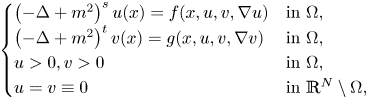
We consider the following generalized pseudo-relativistic Schrödinger system:

where $(-\Delta +m^{2})^{s}$ is the generalized pseudo-relativistic Schrödinger operator, $\Omega$
 may be bounded domain, unbounded domain, $\mathbb {R}^{N}_+$
 , $\mathbb {R}^{N}$
 or a coercive epigraph domain $\Omega$
 in $\mathbb {R}^{N}.$

System (1.1) is closely related to the pseudo-relativistic Schrödinger equations:

where $c$ denotes the speed of the light, $m>0$
 represents the particle mass, $\Psi (t, x)$
 is a complex-valued wave field and $f:[0, 1)\to \mathbb {R}$
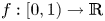 is a nonlinear function describing the dynamics of the system consisting of identical spin-$0$
 bosons whose motions are relativistic (see [Reference Lieb and Thirring32, Reference Lieb and Yau33]), such as boson stars. If we consider the standing waves solution $\Psi (t, x)=e^{i\omega t}u(x)$
 to (1.2), where $\omega \in \mathbb {R}$
 is the frequency and $u(x)$
 is real-valued, then equation (1.2) becomes a static semi-linear elliptic equation:

Recall that the pseudo-relativistic operators $(-\Delta +m^{2})^{s}$ in $\mathbb {R}^{N}$
 is defined by (see [Reference Ambrosio1, Reference Carmona, Masters and Simon7])

where $s\in (0, 1)$ , $P.V.$
 stands for Cauchy principal value, and

$K_{\nu }$ denotes the modified Bessel function with order $\nu$
 , which solves the equation

and satisfies the following integral representation

It is easy to verify that $K_{\nu }(r)$ is a real and positive function satisfying $K'_{\nu }(r)<0$
 for all $r>0$
 , $K_{\nu }=K_{-\nu }$
 for $\nu <0$
 . Moreover, for $\nu >0$
 , it holds that (see [Reference Erdélyi, Magnus, Oberhettinger and Tricomi26–Reference Fall and Felli28, Reference Guo and Peng31])

Hence there exists a small $r_0>0$ and two constants $C_0>c_0>0$
 such that

Next, for $\nu >0$ , we can also derive that

Hence there exists a large $R_\infty >0$ and two constants $C_\infty >c_\infty >0$
 such that

Let

Then it is easy to verify that for any $u \in \mathcal {L}_s(\mathbb {R}^{N})\cap C_{\text {loc }}^{1,1}(\mathbb {R}^{N})$ , the integral on the right-hand side of the definition (1.4) is well-defined. Hence $(-\Delta +m^{2})^{s}u$
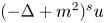 makes sense for all functions $u \in \mathcal {L}_s(\mathbb {R}^{N})\cap C_{\text {loc}}^{1,1}(\mathbb {R}^{N})$
 . We would like to mention that the generalized pseudo-relativistic operators $(-\Delta +m^{2})^{s}$
 can also be expressed equivalently via the extension method. For more details, we refer to [Reference Fall and Felli27, Reference Fall and Felli28] and the references therein.
Besides its physical background, we see that the generalized pseudo-relativistic operators $(-\Delta +m^{2})^{s}$ become the fractional Laplacian $(-\Delta )^{s}$
 as $m\rightarrow 0+$
 , which is a nonlocal pseudo-differential operator defined by (see e.g. [Reference Chang and Gonzàlez8, Reference Chen, Li and Li10, Reference Chen, Li and Ma11, Reference Chen, Li and Zhang13, Reference Chen and Qi15, Reference Dai and Qin22, Reference Liu and Ma35, Reference Peng36])

where $0< s<1$ , $C_{N,s}=(\int _{\mathbb {R}^{N}}(({{1-\cos (2\pi y_{1}))}/{|y|^{N+2s}})\,\textrm {d}y})^{-1}$
 . Fractional Laplacian $(-\Delta )^{s}$
 is well-defined for any $u\in C^{1,1}_{loc}(\mathbb {R}^{N})\cap \dot {L}_{s}(\mathbb {R}^{N})$
 with the function spaces

It can also be defined equivalently through Caffarelli and Silvestre's extension method (see [Reference Brandle, Colorado, de Pablo and Sanchez3]).
Due to its various applications in fluid mechanics, molecular dynamics, relativistic quantum mechanics of stars (see [Reference Caffarelli and Vasseur6, Reference Constantin18]), in conformal geometry (see [Reference Chen, Li and Ma11]) and in probability and finance (see [Reference Bertoin2, Reference Cabré and Tan4]). Problems involving fractional operators have attracted more and more attention in recent years. Note that the equations with general pseudo-relativistic Schrödinger operator $(-\Delta +m^{2})^{s}$ with $m\geq 0$
 are inhomogeneous in general. Therefore scaling invariance does not hold for this kind of problem. To overcome this difficulty, there are two basic approaches in the literature. One approach is to define the operators $(-\Delta +m^{2})^{s}$
 via the extension method and reduce the nonlocal problem into a local one in higher dimension space. Another way is to use the integral representation formulae of solutions [Reference Chen, Li and Ma11, Reference Chen, Li and Ou12]. By establishing the equivalence between the fractional order equation and its corresponding integral equation (with Bessel kernel if $m > 0$
 , Riesz kernel if $m = 0$
 ), one can apply the method of moving planes (spheres) in integral forms, the method of scaling spheres or regularity lifting methods to study various properties of solutions. These two methods have been applied successfully to study the problems involving fractional operators $(-\Delta )^{s} (0< s<1)$
 , and a series of fruitful results have been achieved (see [Reference Brandle, Colorado, de Pablo and Sanchez3–Reference Caffarelli and Silvestre5, Reference Chen and Li9, Reference Chen, Li and Ou12, Reference Chen and Liu14, Reference Chen and Wu16, Reference Cheng, Huang and Li17, Reference Dai, Fang, Huang, Qin and Wang19–Reference Dai, Liu and Qin21, Reference Dai and Qin24, Reference Dipierro, Soave and Valdinoci25, Reference Frank, Lenzmann and Silvestre29, Reference Guo and Liu30, Reference Liu, Guo and Zhang34, Reference Silvestre37] and the references therein). The disadvantage of the approaches mentioned above is that one needs to impose some additional conditions on the solutions. Recently, Dai et al. [Reference Dai, Qin and Wu23] established a direct method for the general pseudo-relativistic Schrödinger operators.
The present paper aims to extend the direct method of moving planes for a generalized fractional pseudo-relativistic nonlinear Schrödinger system. The nonlinearities depend not only on $u$ but also depend on $\nabla u.$
 We first establish maximum principles such as narrow region principle and decay at infinity, then combine these results with the direct method of moving plane. We derive the symmetry and monotonicity of solutions to the pseudo-relativistic Schrödinger system in various domains, including bounded domain, unbounded domain and epigraph $\Omega$
 in $\mathbb {R}^{N}.$
 And then, we derive Liouville-type results in $\mathbb {R}^{N}$
 and $\mathbb {R}^{N}_+$
 .
In the following, we denote $({\partial u}/{\partial x_{1}},{\partial u}/{\partial x_{2}},\ldots,{\partial u}/{\partial x_{N}})$ by $\mathbf {p}$
 and $({\partial v}/{\partial x_{1}},{\partial v}/{\partial x_{2}},\ldots,{\partial v}/{\partial x_{N}})$
 by $\mathbf {q}$
 ,
We say a function $f(x, u, v,\mathbf {p}): \, \Omega \times \mathbb {R}\times \mathbb {R}\times \mathbb {R}^{n}\rightarrow \mathbb {R}$ is locally Lipschitz in $u$
 , uniformly in $\mathbf {p}$
 and locally uniformly in $x$
 : for any $M>0$
 and any compact subset $K\subset \bar {\Omega }$
 , there exists $C_{K,M}>0$
 such that, $\forall \, u_1,u_2\in [-M, M]$
 , $\forall \, x\in K$
 and $\forall \, \mathbf {p}\in \mathbb {R}^{N}$
 ,

We assume the following conditions on the nonlinearity $f$ and $g$
 :

More precisely, we first concerned the generalized pseudo-relativistic Schrödinger system (1.1) in bounded domain and unbounded domain, the main results are as follows.
Theorem 1.1 Let $\Omega \subset \mathbb {R}^{N}$ be a bounded domain which is convex in $x_1$
 -direction and symmetric about $\{x\in \mathbb {R}^{N} \mid x_{1}=0\}$
 . Suppose that $u\in C^{1,1}_{loc}(\Omega )\cap C(\bar {\Omega })$
 , $v\in C^{1,1}_{loc}(\Omega )\cap C(\bar {\Omega })$
 solve system (1.19), $f(x, u, v,\mathbf {p}), g(x, u, v,\mathbf {q})$
 are Lipschitz continuous with respect to $u,v$
 . If $f(x,u,v,\mathbf {q})$
 , $g(x,u,v,\mathbf {q})$
 satisfy conditions $\mathbf {F_1}$
 and

Then $u(x_1, x')$ and $v(x_1, x')$
 are strictly increasing in the left half of $\Omega$
 in $x_1$
 -direction and

Moreover, if

then we have

To state our monotonicity and symmetry results for unbounded domain $\Omega$ , we need to impose a growth condition on $f(x,u,v,\mathbf {p})$
 and $g(x,u,v,\mathbf {q})$
 : for some $\beta _{1}, \beta _{2}>0$
 , there exists a positive constant $C$
 such that


Theorem 1.2 Let $\Omega$ be a unbounded domain in $\mathbb {R}^{N}$
 which is convex in $x_1$
 -direction and symmetric with respect to $\{x\in \mathbb {R}^{N} \mid x_1 = 0\}$
 . Suppose that $u\in C^{1,1}_{loc}(\Omega )\cap C(\bar {\Omega })\cap \mathcal {L}_{s}(\mathbb {R}^{N})$
 , $v\in C^{1,1}_{loc}(\Omega )\cap C(\bar {\Omega })\cap \mathcal {L}_{t}(\mathbb {R}^{N})$
 solve the system (1.19) and $f, g$
 are Lipschitz continuous with respect to $u,v$
 . If $f(x, u, v,\mathbf {p}), g(x, u, v,\mathbf {q})$
 satisfy $\mathbf {F}_{\mathbf {1}}$
 , (1.13), (1.15), (1.16) and $u(x), v(x)$
 satisfy the following asymptotic properties:

and

where $C$ is the constant in assumption (1.15). Then we have
(i) If there exists a line $\mathcal {L}$
 parallel to $x_{1}$-axis satisfying $\mathcal {L}\cap \Omega \neq \emptyset$ such that $\mathcal {L}\cap \Omega ^{c}\neq \emptyset$, then $u(x_1, x')$, $v(x_1, x')$ are strictly increasing in the left half of $\Omega$ in $x_1$-direction and
\[ u(x_1, x')\leq u({-}x_1, x'),\quad v(x_1, x')\leq v({-}x_1, x'), \quad \forall \ x_1<0, \ (x_1,x')\in \Omega. \]
(ii) If any line $\mathcal {L}$
parallel to $x_{1}$-axis such that $\mathcal {L}\cap \Omega \neq \emptyset$ must satisfy $\mathcal {L}\cap \Omega ^{c}=\emptyset$, then there exists $\mu _{0}\leq 0$ such that $u(x_1, x'), v(x_1, x')$ are strictly increasing in $\Omega \cap \{x_{1}<\mu _{0}\}$ in $x_1$-direction and
\begin{align*} \text{if} \ \mu_{0}=0, \quad u(x_1, x')& \leq u({-}x_1, x'),\ v(x_1, x')\leq v({-}x_1, x'),\\ & \qquad \forall \ x_1<0, \ (x_1,x')\in \Omega, \end{align*}\begin{align*}\text{if} \ \mu_{0}<0, \quad u(x_1, x')& =u(2\mu_{0}-x_1, x'),\ v(x_1, x')=v(2\mu_{0}-x_1, x'),\\ & \qquad \forall \ x_1<\mu_{0}, \ (x_1,x')\in \Omega. \end{align*}






Secondly, we concerned with the following generalized pseudo-relativistic Schrödinger system in $\mathbb {R}^{N}$ :

where $s,t\in (0,1)$ and $m>0$
 . Then we derive the following Liouville-type result in $\mathbb {R}^{N}$
 .
Theorem 1.3 Liouville theorem in $\mathbb {R}^{N}$

Assume that $u \in \mathcal {L}_{s}(\mathbb {R}^{N})\cap C_{loc}^{1,1}(\mathbb {R}^{N})$ , $v \in \mathcal {L}_{t}(\mathbb {R}^{N})\cap C_{loc}^{1,1}(\mathbb {R}^{N})$
 be a pair of nonnegative solutions to generalized pseudo-relativistic Schrödinger system (1.19), $f(x, u, v,\mathbf {p}), g(x, u, v,\mathbf {q})$
 are Lipschitz continuous about $u,v$
 and satisfy assumption $\mathbf {F_1}$
 and (1.14). Suppose that $(u,v)$
 are bounded and $f,g$
 satisfy

then we have

Thirdly, we consider the generalized pseudo-relativistic Schrödinger system (1.19) in a coercive epigraph $\Omega$ . We say a domain $\Omega \subseteq \mathbb {R}^{N}$
 is coercive epigraph if there exists a continuous function $\varphi : \mathbb {R}^{N-1}\rightarrow \mathbb {R}$
 satisfying

such that $\Omega =\{x=(x',x_N)\in \mathbb {R}^{N}|x_N>\varphi (x')\}$ . Our main result for generalized pseudo-relativistic Schrödinger system (1.19) in a coercive epigraph $\Omega$
 is as follows.
Theorem 1.4 Assume that $u\in \mathcal {L}_{s}(\mathbb {R}^{N})\cap C^{1,1}_{loc}(\Omega )\cap C(\bar {\Omega })$ , $v\in \mathcal {L}_{t}(\mathbb {R}^{N})\cap C^{1,1}_{loc}(\Omega )\cap C(\bar {\Omega })$
 be a pair of nonnegative solution to system (1.1), $f(x, u, v,\mathbf {p}), g(x, u, v,\mathbf {q})$
 are Lipschitz continuous with respect to $u,v$
 . Further suppose that $f,g$
 satisfy condition $\mathbf {F_{1}}$
 and

Then $(u,v)$ are strictly monotone increasing with respect to the $x_{N}$
 -axis.
Finally, we shall consider the generalized pseudo-relativistic Schrödinger system (1.1) in $\mathbb {R}^{N}_{+}$ . By applying theorem 1.4, we prove the following result.
Theorem 1.5 Liouville theorem in $\mathbb {R}^{N}_{+}$

Assume that $u \in \mathcal {L}_{s}(\mathbb {R}^{N})\cap C_{loc}^{1,1}(\mathbb {R}^{N}_{+})$ , $v \in \mathcal {L}_{t}(\mathbb {R}^{N})\cap C_{loc}^{1,1}(\mathbb {R}^{N}_{+})$
 be a pair of nonnegative solutions of

where $f(x, u, v,\mathbf {p}), g(x, u, v,\mathbf {q})$ are Lipschitz continuous about $u,v$
 and satisfy condition $\mathbf {F_{1}}$
 , (1.21) with $x_N\geq \min _{\mathbb {R}^{N-1}}\varphi =0$
 . Suppose that

Then we have

Our paper is organized as follows. In § 2, we establish the narrow region principle for the generalized pseudo-relativistic Schrödinger system (1.1) and give the decay at infinity. The proof of theorem 1.1 and theorem 1.2 will be provided in §§ 3 and 4, respectively. In § 5, we prove the Liouville-type results for the generalized pseudo-relativistic Schrödinger system in $\mathbb {R} ^{N}$ . In the last section, we study the strictly monotone and Liouville-type results for the generalized pseudo-relativistic Schrödinger system in a coercive epigraph domain $\Omega$
 and the half-space $\mathbb {R}^{N}_+,$
 respectively.
2. Narrow region principle and decay at infinity
This section establishes the narrow region principle and study the decay at infinity for a anti-symmetric system. These principles are crucial in applying the direct method of moving planes for the pseudo-relativistic Schrödinger system.
We first introduce the following notations. For arbitrary $\lambda \in \mathbb {R}$ , let

be the moving planes, and let

be the region to the left of the plane, and set

be the reflection of $x$ about the plane $T_{\lambda }$
 . Let $(u,v) \in \{\mathcal {L}_{s}(\mathbb {R}^{N})\cap C_{loc}^{1,1}(\mathbb {R}^{N})\}\times \{\mathcal {L}_{t}(\mathbb {R}^{N})\cap C_{loc}^{1,1}(\mathbb {R}^{N})\}$
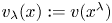
 be a pair of nonnegative solutions to the pseudo-relativistic Schrödinger system (1.19), we denote the reflected functions by $u_{\lambda }(x):=u(x^{\lambda })$
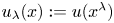 and $v_{\lambda }(x):=v(x^{\lambda })$
 . Moreover, we define

to be the comparison between the values of $u(x), u(x^{\lambda })$ and $v(x), v(x^{\lambda })$
 . Evidently, $U_{\lambda }$
 and $V_{\lambda }$
 are anti-symmetric functions. From now on and in the following of the paper, we always use the same $C$
 denotes a constant whose value may be different from line to line, and only the relevant dependence is specified.
Proposition 2.1 Narrow region principle
Let $\Omega$ be a bounded open set in $\Sigma _{\lambda }$
 which is contained in the region between $T_{\lambda }$
 and $T_{\Omega }$
 , where $T_{\Omega }$
 is a hyper-plane that is parallel to $T_{\lambda }$
 . Let $d(\Omega ):=dist(T_{\lambda },T_{\Omega })$
 . Suppose that $(U_{\lambda },V_{\lambda })\in \{\mathcal {L}_{s}(\mathbb {R}^{N})\cap C_{loc}^{1,1}(\Omega )\}\times \{\mathcal {L}_{t}(\mathbb {R}^{N})\cap C_{loc}^{1,1}(\Omega )\}$
 , $U_{\lambda }$
 , $V_{\lambda }$
 are lower semi-continuous on $\bar {\Omega }$
 , and satisfy

where $c_{1}(x), c_{2}(x), c_{3}(x), c_{4}(x)$ are uniformly bounded from below about $d(\Omega )$
 and $c_{2}(x), c_{4}(x)<0$
 . We assume $\Omega$
 is narrow in the sense that, $d(\Omega )\leq {r_{0}}/{4m}$
 , $r_{0}$
 is given by (1.8), and there exists $C_{N,s}>0$
 and $C_{N,t}>0$
 such that

Then we have either

These conclusions hold for unbounded open set $\Omega$ if we further assume that

Proof. Without loss of generalities, we may assume that

and hence $\Omega \subseteq \{x\in \mathbb {R}^{N}\,|-d(\Omega )< x_{1}<0\}$ .
If $U_{\lambda }$ or $V_{\lambda }$
 is not nonnegative in $\Omega$
 , we assume there exists a $\bar {x}\in \bar {\Omega }$
 such that

Otherwise, the same arguments as follows can also yield a contradiction for the case that $V_{\lambda }(\bar {x})<0$ .
First, we will prove that

One can further deduce from (2.3) that $\bar {x}$ is in the interior of $\Omega$
 . It follows that

Let

where $(x)^{\prime }=(x_2,x_3,\ldots,x_N)$ , then $m|y-\bar {x}|< r_0,$
 for all $y\in D$
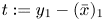
 . Denote $t:=y_{1}-(\bar {x})_{1}$
 , $\tau :=\left |y^{\prime }-(\bar {x})^{\prime }\right |$
 . Using (1.8), we have

where we have used the substitution $\rho :=\tau /t$ and $\sigma _{N-1}$
 denotes the area of the unit sphere in $\mathbb {R}^{N-1}$
 . Since $c_{1}(x)$
 has lower bound, it follows from (2.4), (2.7) and (2.8) that

By (2.3), we have

Since $c_{2}(x)<0$ , we deduce from (2.9) that $V_{\lambda }(\bar {x})<0$
 . We can infer from the lower semi-continuous of $V_{\lambda }$
 that there exists some $\tilde {x}$
 such that

By using the similar arguments as used in (2.7) and (2.8), we can also get

Note that

By Taylor expansion, we have

where $x^{0}=(0, \bar {x}_{2}, \ldots, \bar {x}_{N}) \in T_{\lambda }$ . Hence, we obtain that

for sufficiently small $\delta _{\bar {x}}.$
Thus a combination of (2.11), (2.12), and the assumption (2.4) deduces that

which contradicts (2.3). Thus, equation (2.6) holds.
Subsequently, if there is some point $\bar {x}\in \Omega$ such that

Without loss of generality, we assume

Otherwise, the same arguments as follows can also yield a contradiction for the case that $V_{\lambda }(\bar {x})=0$ .
Now we must have

If not, we can directly calculate that

Combining the above inequality with (2.3) and $c_{2}(x)<0$ , we derive that

By (2.5), we have $V_{\lambda }(\bar {x}) = 0$ .
So, we get

which implies that $U_{\lambda }=0$ almost everywhere in $\Sigma _{\lambda }$
 and hence $U_{\lambda }=0$
 almost everywhere in $\mathbb {R}^{N}$
 .
Similarly, we have

And it turns out that $V_{\lambda }=0$ almost everywhere in $\mathbb {R}^{N}$
 .
This finishes the proof of proposition 2.1.
Remark 2.2 It is easy to see from the proof of proposition 2.1, the assumptions ‘$U_{\lambda }$ , $V_{\lambda }$
 are lower semi-continuous on $\bar {\Omega }$
 ’ and ‘$U_{\lambda }\geq 0$
 and $V_{\lambda }\geq 0$
 , in $\Sigma \setminus \Omega$
 ’ can be weakened into: ‘if $U_{\lambda }<0$
 somewhere in $\Sigma _{\lambda }$
 , then the minimum negative $\inf _{\Sigma _{\lambda }}U_{\lambda }(x)$
 is attained in $\Omega$
 ’ and ‘if $V_{\lambda }<0$
 somewhere in $\Sigma _{\lambda }$
 , then the minimum negative $\inf _{\Sigma _{\lambda }}V_{\lambda }(x)$
 is attained in $\Omega$
 ’, the same conclusions are still correct.
In order to carry on the direct method of moving planes in $\mathbb {R}^{N}$ , we need to the decay at infinity for the solutions to generalized pseudo-relativistic Schrödinger system. We have
Proposition 2.3 Decay at infinity
Let $\Omega$ be an unbounded open set in $\Sigma _{\lambda }$
 . Assume $U_{\lambda }\in \mathcal {L}_{s}(\mathbb {R}^{N})\cap C_{loc}^{1,1}(\Omega )$
 , $V_{\lambda }\in \mathcal {L}_{t}(\mathbb {R}^{N})\cap C_{loc}^{1,1}(\Omega )$
 , $(U_{\lambda },V_{\lambda })$
 is a pair of solutions to

with

where $c_{i}(x)\ (i=1,2,3,4)$ have lower bounds, $c_{2}(x)<0$
 , $c_{4}(x)<0$
 and

If there exists a constant $R_{0}>0$ (depending only on $c_{1}(x)$
 , $c_{2}(x)$
 , $c_{3}(x)$
 , $c_{4}(x)$
 , $m$
 , $N$
 , $s$
 and $t$
 , but independent of $U_{\lambda }$
 , $V_{\lambda }$
 and $\Sigma _{\lambda }$
 ) such that, if $\hat {x}\in \Omega$
 satisfying

then $\left |\hat {x}\right |\leq R_{0}$ .
Proof. Without loss of generalities, we may assume that, for some $\lambda \leq 0$ ,

Note that $U_{\lambda }\in \mathcal {L}_{s}(\mathbb {R}^{N})\cap C_{loc}^{1,1}(\Omega )$ , $V_{\lambda }\in \mathcal {L}_{t}(\mathbb {R}^{N})\cap C_{loc}^{1,1}(\Omega )$
 and $\hat {x}\in \Omega$
 satisfying

We assume that

Otherwise, the same arguments as follows can also yield a contradiction for the case that $V_{\lambda }(\hat {x})=\min _{\bar {\Omega }} V_{\lambda }(x)<0$ .
By using similar arguments as in the proof of (2.7), we have

Note that $\lambda \leq 0$ and $\hat {x}\in \Omega$
 , it follows that

where $\bar {x}:=(2\left |\hat {x}\right |+(\hat {x})_{1},(\hat {x})^{\prime })$ , $(\hat {x})^{\prime }=((\hat {x})_{2},\ldots,(\hat {x})_{N})$
 .
Thus we derive that, if $|\hat {x}|\geq {R_{\infty }}/{3m}$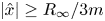 ($R_{\infty }$
 is same as (1.10)),

where $\omega _{N}:=|B_{1}(0)|$ denotes the volume of the unit ball in $\mathbb {R}^{N}$
 . Then we can deduce from (2.17), (2.19), and (2.20) that

where $A_{1}(\hat {x})=({2c_{N,s}c_{\infty }\omega _{N}m^{({N-1})/{2}+s}})/({3^{({N+1})/{2}+s} \left |\hat {x}\right |^{s+1/2-{N}/{2}}\textrm {e}^{3m\left |\hat {x}\right |}})$ . From (2.18), we infer that there exists a $R_{1}$
 sufficiently large such that, for any $|x|>R_{1}$
 ,

and

Therefore, take $R_{0}:=\max \{{R_{\infty }}/{3m},R_{1}\}$ , if $|\hat {x}|>R_{0}$
 , both (2.21), (2.22), and (2.23) are established. Combine with (2.21), we get

Next, we will prove that $|\hat {x}|\leq R_{0}$ .
If not, then it follows from (2.21), (2.22), and $c_{2}(x)<0$ that

Using the lower semi-continuous of $V_{\lambda }$ that there exists some $\bar {x}$
 such that

Through a computation similar to (2.7), we have

Similar to (2.20), (2.21), combine with $\min _{\bar {\Omega }}(c_{1}(x)+m^{2s}) \min _{\bar {\Omega }}(c_{3}(x)+m^{2t})\geq \min _{\bar {\Omega }}c_{2}(x)\min _{\bar {\Omega }}c_{4}(x)$ . We have, if $|\hat {x}|>R_{0}$
 ,

That is impossible. So we have $|\hat {x}|\leq R_{0}$ .
This completes the proof of proposition 2.3.
Remark 2.4 We point out that in both propositions 2.1 and 2.3, we actually only need $(-\Delta +m^{2})^{s} U_{\lambda }(x)+c_{1}(x)U_{\lambda }(x)+c_{2}(x)V_{\lambda }(x)\geq 0$ and $(-\Delta +m^{2})^{t} V_{\lambda }(x)+c_{3}(x)V_{\lambda }(x)+c_{4}(x)U_{\lambda }(x)\geq 0$
 holds for $x\in \{x\in \Omega |U_{\lambda }(x)<0\}$
 or $x\in \{x\in \Omega |V_{\lambda }(x)<0\}$
 , not for all $x\in \Omega$
 ; For simplicity and convenience, we assume it hold for all $x\in \Omega$
 .
3. Proof of theorem 1.1
In this section, we will use the direct method of moving plane to prove the strictly monotonicity and symmetry of nonnegative solutions to generalized pseudo-relativistic Schrödinger system (1.19) in a bounded domain.
Choose an arbitrary direction to be the $x_{1}$ -direction and keep the notations $T_{\lambda }$
 , $\Sigma _{\lambda }$
 , $x_{\lambda }$
 , $U_{\lambda }$
 and $V_{\lambda }$
 defined in § 2.
Proof. Since $\Omega$ is bounded, we may assume that $\Omega \subset \{|x_1|\leq 1\}$
 and $\partial \Omega \cap \{x_1=-1\}\neq \emptyset$
 . Our goal is to show that $U_{\lambda }>0$
 and $V_{\lambda }>0$
 in $\Sigma _{\lambda }\cap \Omega$
 for any $\lambda \in (-1,0)$
 .
We carry out the direct method of moving planes procedure in two steps.
Step 1. We shall show that there exists $\epsilon >0$ small enough such that, for any $-1<\lambda \leq -1+\epsilon$
 ,

Suppose (3.1) is not true, there exists a sequence $\{\lambda _{k}\}\subset (-1,0)$ satisfying $\lambda _k\rightarrow -1$
 as $k\rightarrow +\infty$
 such that

Otherwise, the same arguments as follows can also yield a contradiction for the case that

Consequently, there exists $x^{k}\in \Sigma _{\lambda _{k}}\cap \Omega$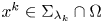 such that

It follows directly from (3.2) and (3.3) that ${\partial U_{\lambda }}/{\partial \lambda }|_{\lambda =\lambda _k}(x^{k})\leq 0$ , and hence $(\partial _{x_1}u)[(x^{k})^{\lambda _k}]\leq 0$
 . Note that $x^{k}$
 is the interior minimum of $U_{\lambda _k}(x)$
 , then one has $\nabla _{x}U_{\lambda _k}(x^{k})=0$
 , i.e.,

By the assumption (1.13) in theorem 1.1, we have

where

and

Similarly, we can get $(-\Delta +m^{2})^{s}U_{\lambda _{k}}(x^{k})=c_{3}(x^{k})V_{\lambda _k}(x^{k})+c_{4}(x^{k})U_{\lambda _k}(x^{k})$ , where

and

Since $u,v \in C(\mathbb {R}^{N})$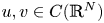 with compact supports and $f(x, u, v, \mathbf {p})$
 , $g(x, u, v, \mathbf {q})$
 are Lipschitz continuous about $u,v$
 , so $c_{i}(x) (i=1,2,3,4)$
 are uniformly bounded independent of $k$
 . By using the assumption $\mathbf {F_{1}}$
 , we know $c_{i}(x)$
 satisfy the condition of proposition 2.1.
Note that $\Sigma _{\lambda _{k}}\cap \Omega$ is a narrow region for $k$
 large enough and $U_{\lambda },V_{\lambda } \not \equiv 0$
 . From (3.5)–(3.9) and the Narrow region principle proposition 2.1, one can derive that, for $k$
 sufficiently large,

which yields a contradiction with (3.2). Hence there exists an $\epsilon >0$ small enough such that, (3.1) holds for any $-1<\lambda \leq -1+\epsilon$
 .
Furthermore, suppose there exist $\hat {\lambda }\in (-1,-1+\epsilon ]$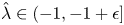 and $\hat {x}\in \Sigma _{\hat {\lambda }}\cap \Omega$
 such that

For simplify, here we assume that $U_{\hat {\lambda }}(\hat {x})=0$ . On the one hand, similar to (3.5), we can infer from the assumption (1.13) in theorem 1.1 that

On the other hand, we can deduce from (2.15) that

Then it follows from (3.11), (3.12) and $c_{2}(x)>0$ that $V_{\hat {\lambda }}(\hat {x})=0$
 . Combing (3.11) and the definition of $(-\Delta +m^{2})^{s}$
 , we can derive that $U_{\lambda }=V_{\lambda }=0$
 a.e. in $\mathbb {R}^{N}$
 . Since $\Omega$
 is convex in $x_1$
 -direction and symmetric about $T_{0}$
 , $u,v$
 satisfy system (1.1), one has $U_{\lambda }\geq 0$
 , $V_{\lambda }\geq 0$
 in $\Sigma _{\lambda }\setminus \Omega$
 , $U_{\lambda }\not \equiv 0$
 or $V_{\lambda }\not \equiv 0$
 in $\Sigma _{\lambda }\setminus \Omega$
 for any $\lambda \in (-\infty,0)$
 . That is a contradiction. Therefore, we have, for any $-1<\lambda \leq -1+\epsilon$
 ,

Step 2. Step 1 provides a starting point, from which we can now move the plane $T_\lambda$ , as long as (3.13) holds, to its limiting position. To this end, let us define

Our goal is to show that $\lambda _{0}=0$ .
To prove it, we use the contraction and suppose $\lambda _{0}<0$ , then we can infer from (1.1) that $U_{\lambda _{0}}>0$
 , $U_{\lambda _{0}}>0$
 in $(\Omega ^{\lambda _{0}}\setminus \Omega )\cap \Sigma _{\lambda _{0}}$
 ($A^{\lambda }$
 denotes the reflection of a set $A$
 about $T_{\lambda }$
 ), then we must have

Otherwise, we assume that there exists $x_{0}\in \Sigma _{\lambda _{0}}\cap \Omega$ such that $U_{\lambda _{0}}(x_{0})=0$
 (the same arguments as follows can also yield a contradiction for the case that $V_{\lambda _{0}}(x_{0})=0$
 ). Then from step 1, we have

By the definition of $(-\Delta +m^{2})^{s}$ , we have

This contradicts (3.16). Hence (3.15) must hold.
Thanks to (3.15), so there exists a compact subset $K\subset \subset \Omega ^{\lambda _{0}}\cap \Sigma _{\lambda _{0}}$ and a constant $c>0$
 such that

and $(\Sigma _{\lambda _{0}}\cap \Omega )\setminus (K\cap \Omega )$ is a narrow region. Since the continuity of $w_{\lambda }$
 about $\lambda$
 , then there exists a sufficiently small $0<\epsilon <\min \{-\lambda _{0},\lambda _{0}+1\}$
 such that, for any $\lambda \in [\lambda _{0},\lambda _{0}+\epsilon ]$
 ,

and $(\Sigma _{\lambda _{0}+\epsilon }\cap \Omega )\setminus (K\cap \Omega )$ is also a narrow region.
Next, we will show that

If (3.20) is not valid, we may assume that there exists a $\tilde {\lambda }\in (\lambda _{0},\lambda _{0}+\epsilon ]$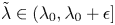 (depending on $\epsilon$
 ) such that

Consequently, there exists $\tilde {x}\in (\Sigma _{\tilde {\lambda }}\cap \Omega )\setminus (K\cap \Omega )$ such that

Then we can infer from (3.5)–(3.9) and Narrow region principle proposition 2.1 that

which yields a contradiction with (3.21). As a consequence, we have, for any $\lambda \in [\lambda _{0},\lambda _{0}+\epsilon ]$ , (3.20) holds. Furthermore, it follows from (3.16) and (3.17) that

and hence, for any $\lambda \in [\lambda _{0},\lambda _{0}+\epsilon ]$ ,

This contradicts the definition of $\lambda _{0}$ . Thus $\lambda _{0}=0$
 .
By choosing $(x_1,x')$ , $(\bar {x}_1,x')\in \Omega$
 with $0>x_1>\bar {x}_1$
 and $\lambda =({x_{1}+\bar {x}_{1}})/{2}$
 , then we get

and hence $u(x_{1},x')$ and $v(x_{1},x')$
 are strictly increasing in the left half of $\Omega$
 in $x_{1}$
 -direction. Moreover, if $f(x_1, x', u, p_1, p_2,\dots, p_n)= f(-x_{1}, x', u, -p_1, p_2,\dots, p_n)$
 , then $\hat {u}(x_{1},x'):=u(-x_{1},x')$
 and $\hat {v}(x_{1},x'):=v(-x_{1},x')$
 also solves system (1.1). Thus we have derived that

Equation (3.26) is equivalent to

Combining this with $u(x_1, x')\leq u(-x_1, x')$ , $u(x_1, x')\leq u(-x_1, x')$
 yields that

we see $u$ and $v$
 are symmetric in the $x_1$
 direction about $\{x\in \mathbb {R}^{N} \mid x_{1}=0\}$
 . This completes the proof of theorem 1.1.
4. Proof of theorem 1.2
In this section, we will use the direct method of moving plane to prove the strictly monotonicity and symmetry of nonnegative solutions to generalized pseudo-relativistic Schrödinger system (1.19) in an unbounded domain.
Choose an arbitrary direction to be the $x_{1}$ -direction and keep the notations $T_{\lambda }$
 , $\Sigma _{\lambda }$
 , $x_{\lambda }$
 , $U_{\lambda }$
 and $V_{\lambda }$
 defined in § 2.
We carry out the direct method of moving planes procedure in two steps.
Proof. Step 1. We show that, for sufficiently negative $\lambda$ ,

If (4.1) does not hold, then

Let's suppose $\inf _{\Sigma _{\lambda }}U_{\lambda }<0$ . The same arguments as follows can also yield a contradiction for the case that $\inf _{\Sigma _{\lambda }}V_{\lambda }<0$
 . Then there exists a sequence $\lambda _k\rightarrow -\infty$
 as $k\rightarrow +\infty$
 such that

for every $k=1,2,\dots$ . Moreover, for every $k=1,2,\dots$
 , $\inf _{\Sigma _{\lambda _{k}}\cap \Omega }U_{\lambda _{k}}$
 is attained at some $x^{k}\in \Sigma _{\lambda _{k}}\cap \Omega$
 , that is,

Using the assumption (1.13), $F_{1}$ , $F_2$
 , (1.15), (1.16) and the asymptotic property (1.17), we have, for $k$
 large enough, at any points $x\in \Sigma _{\lambda _{k}}\cap \Omega$
 where $U_{\lambda _{k}}(x)<0$
 ,

and hence

Similarly, we can infer from the asymptotic property (1.17) that

Combining (4.5), (4.6) and (4.6) the assumption $F_{1}$ , $F_2$
 , we know $c_{i}(x) (i=1,2,3,4)$
 satisfy the condition of proposition 2.3. By the Decay at infinity proposition 2.3, it is easy to deduce, and there exists a $R_{0}>0$
 such that

This will lead to a contradiction provided that $\lambda _{k}\leq -R_{0}$ as $k\rightarrow \infty$
 . Thus (4.1) holds.
Since $u(x), v(x)\rightarrow 0$ as $|x|\rightarrow +\infty$
 and $x\in \Sigma _{0}$
 , we can actually deduce that $U_{\lambda }\not \equiv 0$
 or $V_{\lambda }\not \equiv 0$
 in $\Sigma _{\lambda }$
 for any $\lambda \leq -R_{0}$
 by choosing $R_{0}$
 larger. Then, similar to (3.13) in step 1 in the proof of theorem 1.1, we can also get

Step 2. Step 1 provides a starting point, from which we can now move the plane $T_\lambda$ , as long as (4.8) holds, to its limiting position. To this end, let us define

It follows from step 1 that $-R_{0}\leq \lambda _{0}\leq 0$ . One can easily verify that

Case (i). There exists a line $\mathcal {L}$ parallel to $x_{1}$
 -axis satisfying $\mathcal {L}\cap \Omega \neq \emptyset$
 such that $\mathcal {L}\cap \Omega ^{c}\neq \emptyset$
 . In this case, we will show that

Now suppose on the contrary that $\lambda _{0}<0$ . Note that $U_{\lambda _{0}}\not \equiv 0$
 or $V_{\lambda _{0}}\not \equiv 0$
 in $\Sigma _{\lambda _{0}}$
 , then from the step 1 in the proof of theorem 1.1, we can derive that

Next, we will show that the plane $T_{\lambda }$ can be moved a little bit further from $T_{\lambda _{0}}$
 to the right. More precisely, we will show that there exists a $\varepsilon >0$
 , such that for any $\lambda \in [\lambda _{0},\lambda _{0}+\varepsilon ]$
 , it holds

To prove (4.12), we shall use the Narrow region principle proposition 2.1 and the Decay at Infinity proposition 2.3.
Suppose (4.12) is not true, for convenience, we assume that there exists a sequence $\{\lambda _{k}\}\subset (\lambda _{0},0)$ satisfying $\lambda _k\rightarrow \lambda _{0}$
 as $k\rightarrow +\infty$
 such that

Moreover, for every $k=1,2,\dots$ , $\inf _{\Sigma _{\lambda _{k}}\cap \Omega }w_{\lambda _{k}}$
 can be attained at some $x^{k}\in \Sigma _{\lambda _{k}}\cap \Omega$
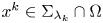 , that is,

We can deduce the proof of proposition 2.3 that $V_{\lambda _{k}}(x^{k})<0$ , and hence there exists some $x^{j}\in \Sigma _{\lambda _{k}}\cap \Omega$
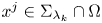 such that $V_{\lambda _{k}}(x^{j})=\inf _{\Sigma _{\lambda _{k}}\cap \Omega }V_{\lambda _{k}}=\inf _{\Sigma _{\lambda _{k}}}V_{\lambda _{k}}<0$
 . Through direct calculation, we get

where $c_i(x)$ is the same as (3.6)–(3.9). Now we shall show that $\{x^{k}\}$
 is bounded.
If $\{x^{k}\}$ is not bounded, then up to a subsequence (still denote by $\{x^{k}\}$
 ), $|x^{k}|\rightarrow +\infty$
 as $k\rightarrow +\infty$
 . By the assumption (1.15) and (1.16), we have, for $k$
 large enough,

From (2.21) and (2.26) in Decay at infinity proposition 2.3, we infer that

where $A_{1}(x)$ is the same to proposition 2.3, the last equation holds because of the assumption (1.18). This leads to a contradiction. Thus there exists $R_{\ast }>0$
 such that $|x^{k}|< R_{\ast }$
 .
In fact, since $\lambda _{0}<0$ , one can infer from (1.1) that $U_{\lambda _{0}}>0$
 , $V_{\lambda _{0}}>0$
 in $(\Omega ^{\lambda _{0}}\setminus \Omega )\cap \Sigma _{\lambda _{0}}$
 ($A^{\lambda }$
 denotes the reflection of a set $A$
 about $T_{\lambda }$
 ), and hence (4.11) yields that $U_{\lambda _{0}}>0$
 , $V_{\lambda _{0}}>0$
 in $\Omega ^{\lambda _{0}}\cap \Sigma _{\lambda _{0}}$
 . So there exists a compact subset $K\subset \subset \Omega ^{\lambda _{0}}\cap \Sigma _{\lambda _{0}}$
 and a constant $c>0$
 such that

and $(\Sigma _{\lambda _{0}}\cap \Omega \cap B_{R_{\ast }}(0))\setminus (K\cap \Omega \cap B_{R_{\ast }}(0))$ is a narrow region. Hence we choose sufficiently small $0<\varepsilon <\min \{-\lambda _{0},\lambda _{0}+1\}$
 such that, for any $\lambda \in [\lambda _{0},\lambda _{0}+\varepsilon ]$
 ,

and $(\Sigma _{\lambda _{0}+\varepsilon }\cap \Omega \cap B_{R_{\ast }}(0))\setminus (K\cap \Omega \cap B_{R_{\ast }}(0))$ is also a narrow region. Inequality (4.19) imply $x^{k}\in (\Sigma _{\lambda _{0}+\varepsilon }\cap \Omega \cap B_{R_{\ast }}(0))\setminus (K\cap \Omega \cap B_{R_{\ast }}(0))$
 . From the Lipschitz continuous of $f,g$
 with respect to $u,v$
 , we have $c_{i}(x^{k})$
 are uniformly bounded. Since $(\Sigma _{\lambda _{k}}\cap \Omega \cap B_{R_{\ast }}(0))\setminus (K\cap \Omega \cap B_{R_{\ast }}(0))$
 is a narrow region. We can infer from the assumption of $c_{i}(x)$
 and Narrow region principle proposition 2.1 that

which yields a contradiction with (4.14). Thus we have derived (4.12).
From step 1 in the proof of 1.1, we have either $U_{\lambda }>0$ , $V_{\lambda }>0$
 , or $U_{\lambda }=V_{\lambda }\equiv 0$
 in $\Omega \cap \Sigma _{\lambda }$
 . Furthermore, since $U_{\lambda _{0}}>0$
 in $\Omega \cap \Sigma _{\lambda _{0}}$
 , by continuity, choosing $\varepsilon >0$
 smaller if necessary, we actually have

This contradicts the definition of $\lambda _{0}$ . Thus $\lambda _{0}=0$
 . The strict monotonicity follows from $U_\lambda >0$
 and $V_\lambda >0$
 in $\Sigma _\lambda \cap \Omega$
 for any $\lambda <\lambda _0$
 .
Case (ii). Any line $\mathcal {L}$ parallel to $x_{1}$
 -axis such that $\mathcal {L}\cap \Omega \neq \emptyset$
 must satisfy $\mathcal {L}\cap \Omega ^{c}=\emptyset$
 . We will show that either $\lambda _{0}=0$
 or $\lambda _{0}<0$
 and $U_{\lambda _{0}}=V_{\lambda _{0}}\equiv 0$
 in $\Sigma _{\lambda _{0}}$
 .
Assume that $\lambda _{0}<0$ but $U_{\lambda _{0}}\not \equiv 0$
 or $V_{\lambda _{0}}\not \equiv 0$
 in $\Sigma _{\lambda _{0}}$
 . Then, similar to (4.11), we can derive that

Next, similar to (4.21), we can show that, there exists $\varepsilon >0$ small enough such that

which contradicts the definition of $\lambda _{0}$ . As a consequence, $\lambda _{0}=0$
 is correct. This completes the proof of theorem 1.2.
5. Proof of theorem 1.3
In this section, we shall prove theorem 1.3. For this purpose, we first establish a maximum principle for the anti-symmetric system in an unbounded domain.
Lemma 5.1 For any function $\phi \in C^{1,1}(\mathbb {R}^{N})$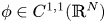 with $\|\phi \|_{C^{1,1}(\mathbb {R}^{N})}<+\infty$
 and any $r>0$
 , set $\phi _r(x):=\phi (\frac {x}{r})$
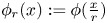 . Then,

where $C>0$ is a constant depending on $N$
 , $s$
 and $\|\phi \|_{C^{1,1}(\mathbb {R}^{N})}$
 , but independent of $r$
 .
The proof of lemma 5.1, please refer to lemma 2.10 in [Reference Dai, Qin and Wu23].
For simplicity reason, in this section, we will use $\Sigma$ to stand for $\Sigma _\lambda$
 , use $T$
 to stand for $T_\lambda$
 , and use $(U,V)$
 to stand for $(U_\lambda,V_\lambda )$
 , that is

Proposition 5.2 Maximum principles for anti-symmetric system in a unbounded domain
Assume that $U \in \mathcal {L}_{s}(\mathbb {R}^{N})\cap C_{loc}^{1,1}(\mathbb {R}^{N})$ , $V \in \mathcal {L}_{t}(\mathbb {R}^{N})\cap C_{loc}^{1,1}(\mathbb {R}^{N})$
 are bounded from above, $U({x^{\lambda }})=-U(x)$
 and $V({x^{\lambda }})=-V(x)$
 in $\Sigma$
 , where ${x^{\lambda }}$
 is the reflection point of $x$
 with respect to $T$
 . Suppose that

where $c_{2}(x)<0$ , $c_{4}(x)<0$
 , $c_{1}(x)$
 and $c_{3}(x)$
 satisfy

meanwhile

Then, we have

Proof. Suppose that (5.4) is false, then we have

We may assume

The same arguments as follows can also yield a contradiction for the case that $\sup _{\Sigma } V(x)>0$ .
Since $U$ is bounded from above, we have

Noting that $\Sigma$ is unbounded domain, hence $\sup _{\Sigma } U(x)$
 may not be attained. So, there exists sequences $x^{k}\in \Sigma$
 and $0<\beta _k<1$
 with $\beta _k\rightarrow 1$
 as $k\rightarrow \infty,$
 such that

Now we denote

Let $d_k:=dist(x^{k}, T)$ and

Then we see that $\psi \in C_0^{\infty }(\mathbb {R}^{N})$ and $|(-\Delta +m^{2})^{s}\psi (x)|\leq C$
 for all $x \in \mathbb {R}^{N}$
 . Moreover, $(-\Delta +m^{2})^{s}\psi (x)$
 is monotone decreasing with respect to $|x|$
 and

Set

where ${x}^{\lambda }=(-x_1, x_2,\ldots, x_N)$ is the anti-symmetry point of $x$
 with respect to $x_1$
 direction.
Obviously $\tilde {\psi _k}-\psi _k$ is anti-symmetric with respect to $T$
 . Let $\varepsilon _k=(1-\beta _k)M$
 , we have

We denote

Then $U_k$ is also anti-symmetric with respect to $T$
 .
Noting that for any $x\in \Sigma \setminus B_{d_k}(x^{k})$ , $U(x)\leq M$
 and $\tilde {\psi _k}(x)=\psi _k(x)=0$
 , we have

Hence the supremum of $U_k(x)$ in $\Sigma$
 is achieved in $B_{d_k}(x^{k})$
 . Consequently, there exists a point $\overline {x}^{k}\in B_{d_k}(x^{k})$
 such that

By the choice of $\varepsilon _k$ , it is easy to verify that $U(\bar {x}^{k})\geq \beta _k M>0$
 .
Next, we will evaluate the upper and lower bound of $(-\Delta +m^{2})^{s}U_k(\bar {x}^{k})$ . In fact, we can obtain from (5.2) and lemma 5.1 that

On the other hand, combine with the following facts

and

We can derive the following lower bound

Combining (5.7) and (5.8), we derive

Now we choose $k$ large enough such that $\beta _{k}>\frac {1}{2}$
 , then we have

which implies

If we take the limit $k\rightarrow +\infty$ , apply the fact of $c_{2}<0$
 and

we deduce that

Since $V$ is bounded from above, we have

Hence, there exists sequences $x^{l}\in \Sigma$ and $0<\beta _l<1$
 with $\beta _l\rightarrow 1$
 as $l\rightarrow \infty$
 such that

By using the similar arguments as above, we can get the following upper bound

where


and

Similar to (5.8), we can also derive the following lower bound

Combine (5.12) and (5.13), we have

If we take the limit $k\rightarrow +\infty$ , by (5.10), we have

Next, let us choose $l$ large enough such that $\beta _{l}>\frac {1}{2}$
 , then (5.12) becomes

Let $k,l\rightarrow \infty$ in (5.15) and (5.16), we get

Hence,

Taking the limit $k,l \rightarrow +\infty$ , we have

The left inequality used the fact $c_{1}, c_{2}>0$ and

That is impossible. So we have

Proof of theorem 1.3. Let $T$ be any hyper-plane, $\Sigma$
 be the half space on one side of the plane $T$
 and $x_{N}$
 be any given direction in $\mathbb {R}^{N}$
 . Set

and

where $x^{\lambda }$ is the reflection of $x$
 with respect to $T$
 . We shall show that $u$
 and $v$
 are symmetric with respect to any hyper-plane $T$
 .
From the assumption in theorem 1.3, we have $U \in \mathcal {L}_{s}(\mathbb {R}^{N})\cap C_{\text {loc}}^{1,1}(\mathbb {R}^{N})$ and $V \in \mathcal {L}_{t}(\mathbb {R}^{N})\cap C_{\text {loc}}^{1,1}(\mathbb {R}^{N})$
 are bounded. By a direct calculation, we get

and

where $\xi _{1}, \xi _{2}$ are the values between $u(x)$
 and $u_{\lambda }(x)$
 , $\eta _{1}, \eta _{2}$
 are the values between $v(x)$
 and $v_{\lambda }(x)$
 . Since $f(x, u, v,\mathbf {p}), g(x, u, v,\mathbf {q})$
 are Lipschitz continuous with respect to $u,v$
 , we have $c_i(x)$
 (i=1,2,3,4) are bounded. By the assumptions of theorem 1.3, we have

and

It follows from proposition 5.2 that

In a similar way, we can also prove that $U\leq 0, V\leq 0$ in $\mathbb {R}^{N}\setminus \Sigma$
 . Hence

This implies that $u$ and $v$
 are symmetric with respect to $T$
 for any $\lambda$
 . Since the $x_{N}$
 -direction can be chosen arbitrarily, (5.19) suggests $u$
 and $v$
 are radially symmetric about any point. It follows that

The proof of theorem 1.3 is completed.
6. Proof of theorems 1.4 and 1.5
In this section, by using the direct method of moving plane, we shall first prove the strict monotonicity for system (1.1) in coercive epigraph domain.
Proof of theorem 1.4. Without loss of generality, we assume

First, let us introduce the following notations


And denoting the reflection of $x$ about the moving plane $T_{\lambda }$
 by $x^{\lambda }:=(x_{1}, x_{2}, \ldots, 2 \lambda -x_{N})$
 . $U_\lambda (x), V_\lambda (x)$
 are defined as in § 2.
Next, we carry out the moving planes procedure in two steps.
Step 1. We show that, for $\lambda >0$ sufficiently closing to $0$
 ,

First, we shall prove that

If (6.2) does not hold, for simplicity, we assume that there exists a sequence $\{\lambda _{k}\}$ and $x^{k}\in \Sigma _{\lambda _{k}}\cap \Omega$
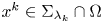 satisfying $\lambda _{k}>0$
 and $\lambda _k\rightarrow 0$
 as $k\rightarrow +\infty$
 such that

It follows directly from (6.3) that ${\partial U_{\lambda }}/{\partial \lambda }|_{\lambda =\lambda _k}(x^{k})\leq 0$ , and hence $(\partial _{x_{n}}u) [(x^{k})^{\lambda _k}]\leq 0$
 . Note that $x^{k}$
 is the interior minimum of $U_{\lambda _k}(x)$
 , then one has $\nabla _{x}U_{\lambda _k}(x^{k})=0$
 , i.e.,

Through a direct calculation, we get

where $c_i(x)$ is same to (3.6)–(3.9). Due to the Lipschitz continuous of $u,v$
 , we have $c_{i}(i=1,2,3,4)$
 are bounded. We can also infer from $\mathbf {F_{1}}$
 that $c_{2}(x)<0, c_{4}(x)<0$
 and $-c_{1}(x)+m^{2s}\geq 0$
 , $-c_{3}(x)+m^{2t}\geq 0$
 . Since $\Omega$
 is a coercive epigraph, $\Sigma _{\lambda }\cap \Omega$
 is always is a bounded narrow region for $k$
 large enough. In addition, one can easily obtain from system (1.1) that

By the assumption of theorem 1.4 and applying the Narrow region principle proposition 2.1, we can conclude the assertion (6.1).
Step 2. We continue to move the plane $T_{\lambda }$ along the $x_{N}$
 -axis until its limiting position as long as (6.1) holds. More precisely, let

We shall show that

If $\lambda _{0}<+\infty$ , we shall show that the plane $T_{\lambda _0}$
 can be moved upward a little bit more, that is, there exists an $\varepsilon >0$
 small enough such that

which contradicts the definition (6.7) of $\lambda _{0}$ .
Indeed, by the definition of $\lambda _{0}$ , we have

Since $u,v>0$ in $\Omega$
 and $u=v \equiv 0$
 in $\mathbb {R}^{N}\setminus \Omega$
 , we have $U_{\lambda _{0}}>0, V_{\lambda _{0}}> 0$
 for any $x\in \Omega ^{\lambda _{0}}\setminus \Omega$
 , where the notation $\Omega ^{\lambda }$
 denotes the reflection of a given set $\Omega$
 with respect to the plane $T_{\lambda }$
 . Then, we obtain from proposition 2.1 that

Now we choose $\varepsilon _1>0$ sufficiently small such that $(\Sigma _{\lambda _{0}+\varepsilon _1}\setminus \overline {\Sigma _{\lambda _{0}-\varepsilon _1}})\cap \Omega$
 is a bounded narrow region. By the fact that $U_{\lambda _{0}}(x)>0, V_{\lambda _{0}}(x)>0$
 for $x\in \Omega ^{\lambda _{0}}\cap \Sigma _{\lambda _{0}}$
 and the continuity of $U_{\lambda _{0}}$
 and $V_{\lambda _{0}}$
 , there exists $c_0>0$
 such that

Therefore, we can choose $0<\varepsilon _2<\varepsilon _1$ sufficiently small such that

for every $\lambda _0\leq \lambda \leq \lambda _0+\varepsilon _2$ . Since $(\Sigma _{\lambda }\setminus \overline {\Sigma _{\lambda _{0}-\varepsilon _1}})\cap \Omega$
 is also a bounded narrow region. From the assumption $\mathbf {F}_{\mathbf {1}}$
 , we know $c_{i}(x)$
 satisfy the condition of Narrow region principle proposition 2.1. Thus we can deduce from proposition 2.1 that

and hence

which contradicts the definition of $\lambda _{0}$ (6.7). Thus, we have $\lambda _0=+\infty$
 . Hence, $u$
 and $v$
 are increasing with respect to the $x_{N}$
 -axis. This completes the proof of theorem 1.4.
Now we are in the position to prove that the Liouville-type theorem for generalized pseudo-relativistic Schrödinger system (1.22) in $\mathbb {R}^{N}_{+}.$
Proof of theorem 1.5. We first show that if there exists $x_{0} \in \mathbb {R}_{+}^{N}$ such that $u(x_{0})=0$
 . Then, we have

Note that, $u$ is a nonnegative solution of system (1.1) and $u(x_{0})=0$
 , so we have $\nabla u(x_{0})=0$
 . On one hand, if $u(x) \not \equiv 0,$
 we have

On the other hand, since ${\partial f}/{\partial v}>0$ , we have

This is a contradiction, which implies that $u(x) \equiv 0$ in $\mathbb {R}_{+}^{N}$
 . Combining this truth with the first equation in (1.1), we must have $f(x, 0, v, \nabla u)=f(x, 0, v, 0)=0$
 . Hence, if $u(x)\not \equiv 0$
 ,

We can deduce that $v(x) \equiv 0$ in $\mathbb {R}_{+}^{N}$
 . Thus, we have

If there exists $x_{0} \in \mathbb {R}_{+}^{N}$ such that $v(x_{0})=0$
 , we can use the same arguments as above to yield a contradiction by using the fact of ${\partial g}/{\partial u}>0$
 and $g(x,0,0,0)=0$
 .
In the following, we always assume that $u(x)>0$ and $v(x)>0$
 . Then, we carry out the moving planes procedure in two steps.
Step 1. We shall show that, for $\lambda >0$ sufficiently closing to $0$
 ,

Combining the assumption (iii) of theorem 1.5 with $u>0$ , $v>0$
 , we have

Then similar to the proof of theorem 1.4, by applying proposition 2.1, we get (6.15).
Step 2. We continue to move the plane $T_{\lambda }$ along the $x_{N}$
 -axis until its limiting position as long as (6.15) holds. More precisely, let

Now we show that

If (6.17) is not true. Similar to the proof of theorem 1.4, we can derive either

or

If (6.19) is true, by the similar argument as proof of theorem 1.4, we will show that the plane $T_{\lambda _{0}}$ can be moved upward a little more, which contradicts the definition (6.16) of $\lambda _{0}$
 . Hence, (6.18) is true. It reveals that

and

That is a contradiction with $u,v>0$ . So (6.17) holds.
Therefore, $u$ and $v$
 are increasing concerning the $x_{N}$
 -axis. In terms of the assumption $\lim _{|x|\rightarrow +\infty }(u(x),v(x))=(0,0)$
 , we know that is impossible. So $u(x)= v(x) \equiv 0 \text { in } \mathbb {R}_+^{N}$
 .
We complete the proof of theorem 1.5.
Acknowledgments
Yuxia Guo was supported by NSFC (No. 11771235, 12031015). Shaolong Peng is supported by the NSFC (No. 11971049).
Data Availability Statements
All data generated or analysed during this study are included in this published article.



