

INTRODUCTION
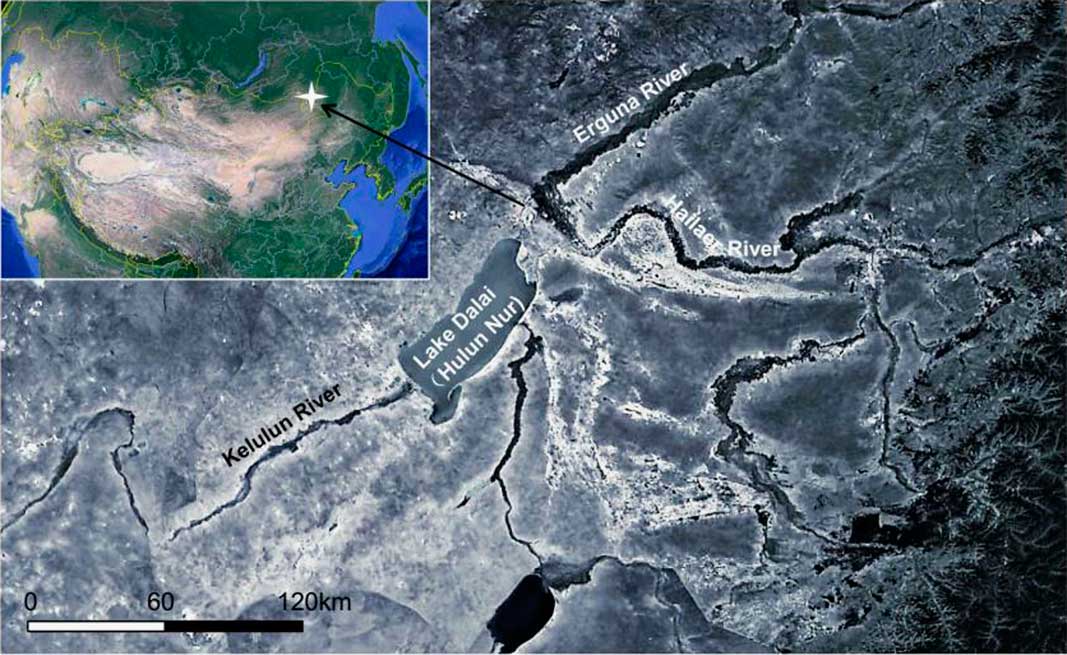
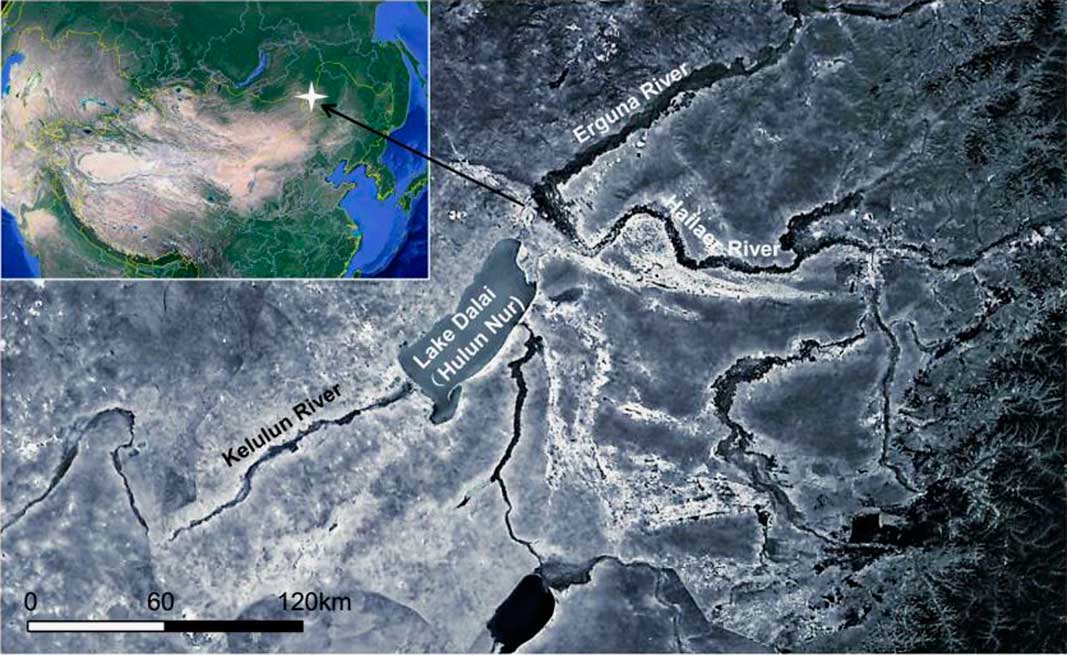
Zhalai Nur is one of the key areas for late Quaternary sediments and paleo-fauna in NE China. According to reports on the regional geology, late Quaternary deposits are widely distributed in this area (Figures 1 and 2). Both outcrops and drill cores reveal that the thicknesses of late Pleistocene sediments are 12–16 m (unpublished data from The Geological Report on the Mining Wells by Zhalai Nur Coal Mining Company, 1991).
Location of the Zhalai Nur coal mining pit (117°41′23″–117°44′40″E, 49°22′14″–49°25′55″N) and the surrounding geographical and landscape features. The white areas were formerly occupied by a river that deposited the Late Pleistocene sediments. It is possible that the Kelulun River, which presently ends at Lake Dalai [Hulun Nur], was connected with the present-day Erguna River and formed the very large paleo-Mudenaya River, and the paleo-rivers from the southeast joined it.
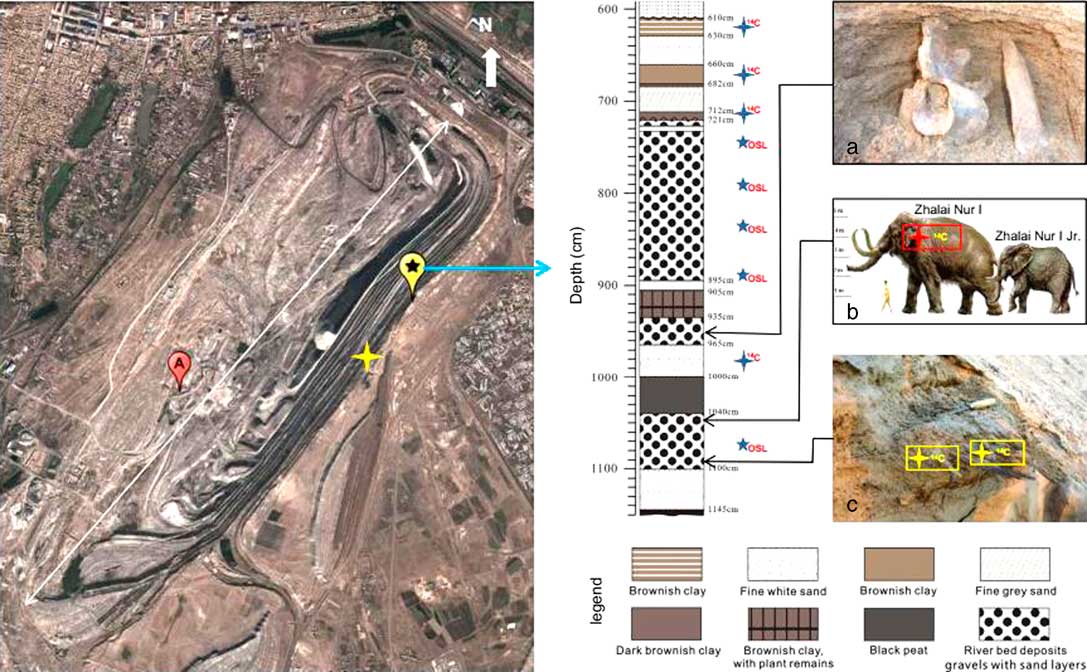
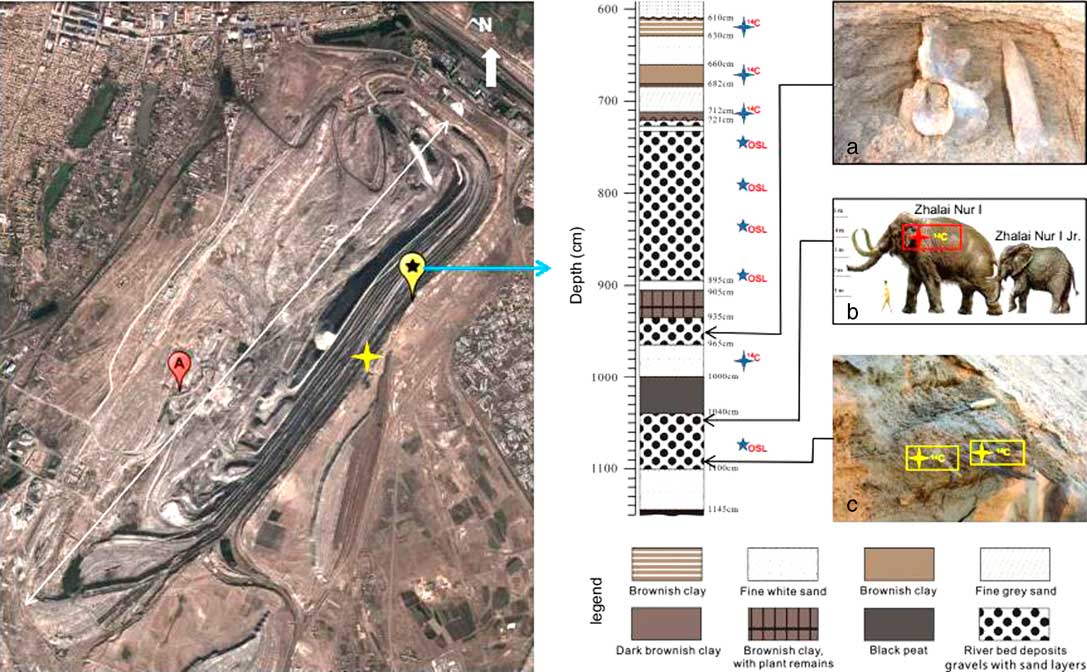
Zhalai Nur coal mining area and the studied sections. Left: the yellow balloon with a star marks the section studied, which has a geographic position of 49°26′18.83″N, 117°44′12.43″E. On the other hand, the site where the fossil skeleton was found is indicated by a red balloon with an A at 49°26’N, 117°43’E. The distance between these sites is approximately 1600 m. A yellow cross marks the position of the section in 2012. Center: the studied section; for the description of the sediments, see Figure 3. Right: a: the Coelodonta antiquitatis and Bubalus sp. fossils found during the field work in 2013; b: the mammoth fossils were found in the gravel layer; c: the tree branches found in the lower part of the section.
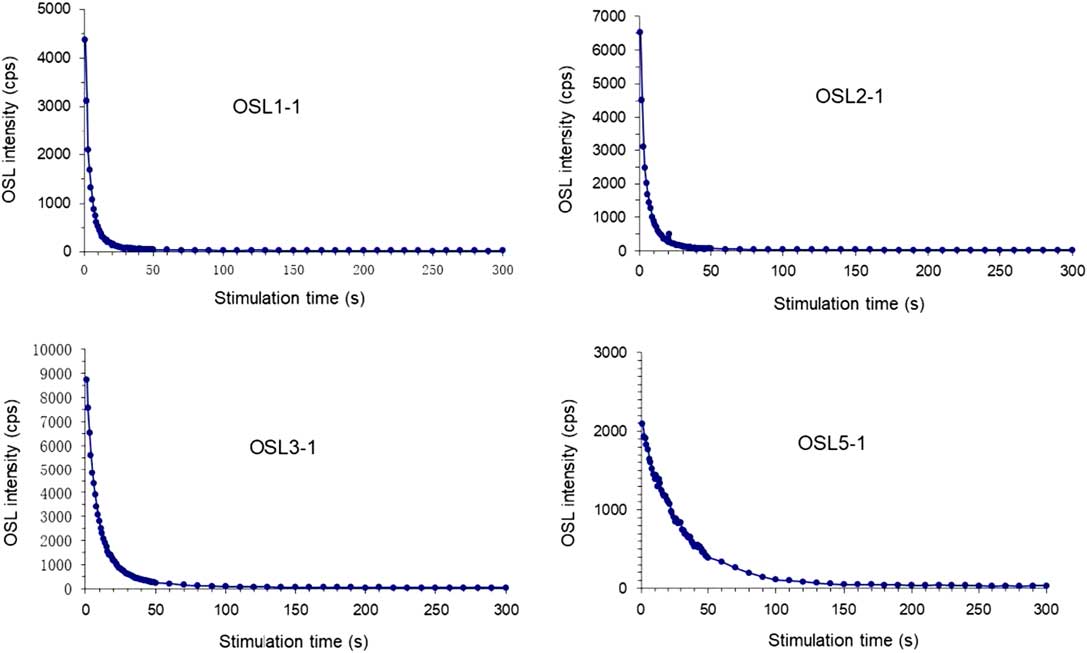
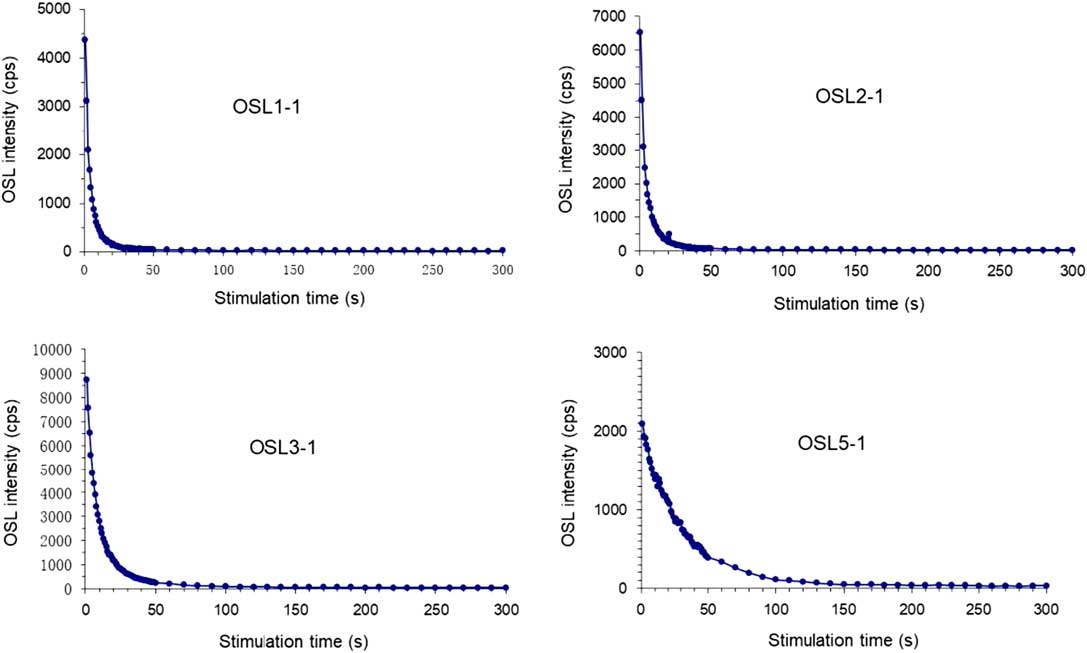
OSL decay curves of fine quartz grains for samples. All measured luminescence signals are the results of regeneration dose with preheating condition of 260°C for 10 s after bleached its natural luminescence, and stimulation time is 300 s. Test results (also stimulation time is 300 s) show that the IRSL signals are lower than the background of the equipment.
The Zhalai Nur coal mining site, which has been exploited for a long time, includes a large above-ground pit that is presently more than 4 km long and 1.2 km wide. The Late Pleistocene deposits are exposed in the pit walls.
After the first fossil human cranium was discovered in the sediments in 1933, more than 16 have been found just within the mining area, and all these specimens were collected and stored in the Zhalai Nur museum. Besides human fossils, various kinds of fossils of large mammals, including Mammuthus sp., Coelodonta antiquitatis, Bison sp., Equus caballus, Equus hemionus Pallas, Cervus sp., Gazella prjewalskyi Bucher, Canis lupus L., Marmota sp., Ochotona sp., and Capreolus manchuricus have often been found in this deposit (Li Reference Li1984). The main species are comparable to the Mammuthus-Colelodonta-Bubalus fauna described from the Sonnen Plain in northeastern China (Even the Mammuthus-Coelodonta fauna has been well-defined in Eurasia, our statistical analyses found that the ratios among mammoth sp:Coelodota antiquitatis:Bubalus sp.:Bison sp≈1:1.5:1.5:96 in NE China, where the member components were obviously different from the other places in Eurasia, and also, the species numbers were much more larger than other areas. Therefore, we would prefer to name it a Mammuthus-Coelodonta-Bubalus fauna instead of a Mammuthus-Coelodonta fauna. A more detailed discussion will be presented in a separate paper), which is just beyond the XinAn Mountains to the east (Zhang Reference Zhang2009). Based on a detailed investigation and correlation, we recognized that all the fossils of large mammals, such as mammoths, were extracted from the fluvial gravel accumulations in the lower part of the section. In total, three mammoth skeletons have been excavated from the Zhalai Nur coal mine (Li Reference Li1984; Liu and Li Reference Liu and Li1984). The skeleton found in 1984 has recently been examined in detail and was assigned to M. trogontherii and named “Zhalainuoer III” (Larramendi Reference Larramendi2015).
The mammoth skeletons, especially the skeleton found in 1984 in Zhalai Nur, are among the largest and most complete mammoth skeletons found in China (Larramendi Reference Larramendi2015). However, since the 1980s, only a few papers (Li et al. Reference Li, Liu, Xu, Li and Wang1982, Reference Li, Liu and Xu1984b; Liu and Li Reference Liu and Li1984) have been published on these mammoth and few further detailed studies has been conducted, except for some sedimentology and environmental studies (Hu et al. Reference Hu, Ji, Wang and Zhu1995) and recent morphological and osteological measurements (Larramendi Reference Larramendi2015). In this paper, using the AMS 14C dating techniques, the mammoth fossil sample, other mammalian fossils and plant remains have been directly dated and the strata chronology also was established by OSL datings independently.
SAMPLES AND METHODS
Section Preparation and Sampling
After detailed field investigations, two sections along the eastern edge of the coal mining pit were prepared in 2012 and 2013 (Figure 2). The section preparing process can be described as follows: first select an outcrop where sedimentary boundaries are clear and then, dig into the sediments to prepare a 1.5-m-wide, fresh, clean profile. Samples were taken at 5-cm intervals except the thin layers (less than 5 cm) for various analyses after a detailed description and measurement on the section. In this paper, we examine the section prepared for study in 2013. In total, this section is approximately 11.45 m thick. To investigate the chronology of the gravel layer that contains fossils of large mammals and the ages of the mammoth fossils, here we focus on the lower part of the section, which extends from 6 m depth to the bottom of the gravel layer.
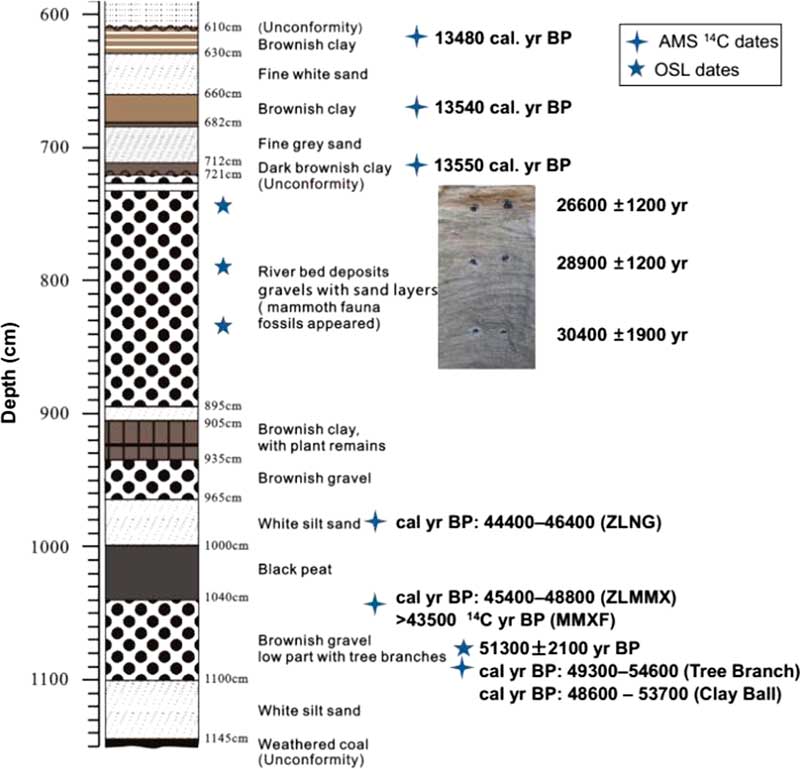
The stratigraphy of the studied profile is shown in Figure 2. Based on the measured field properties, there is a depositional hiatus between the lower part of the riverbed sediments and the weathered coal that occurs at a depth of 1145 cm. There is also an unconformity within the upper part of the riverbed sediment at 721 cm that separates coarse riverbed gravels from the overlying silts and clays, which were deposited in a shallow swamp.
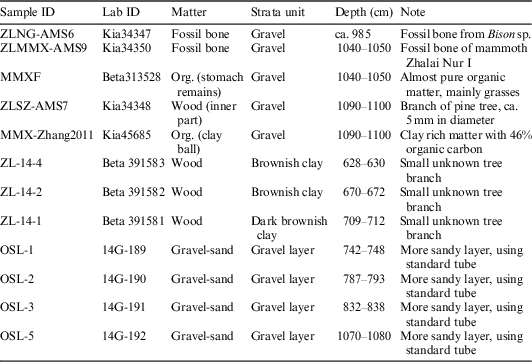
In total, seven samples were collected for AMS 14C dating (see Figure 2). These samples were selected from materials that included tree branch (sample ZLSZ-AMS7) and clay balls (MMX-Zhan2011) found at a depth of 1090–1100 cm within the section, a fossil bone from Bison sp. (ZLNG-AMS6) at a depth of ca. 985 cm, and a fossil mammoth bone from Zhalai Nur I (ZLMMX-AMS9) and its stomach remains or vegetation remains (MMXF—recognized and collected during the mammoth skeleton excavation, our pollen and molecular fossil analyses also proved that it is food remains from the mammoth; a paper will be published separately) found in the gravel layer. The exact position of the latter two samples could not be determined exactly because the fossils are large; based on stratigraphic correlation, we place this sample at the top part of the sub-gravel layer, at an approximate depth of 1040–1050 cm. Other plant samples found at depths of 709–712 cm (ZL-14-1), 670–672 cm (ZL-14-2), and 628–630 cm (ZL-14-4) were also dated by AMS 14C methods. Four OSL samples collected at depths of 1075 cm (OSL-5), 835 cm (OSL-3), 790 cm (OSL2) and 745 cm (OSL-1) were measured.
AMS 14C Sampling
For AMS 14C dating, the fossil bones, plant remains and other organic matters were selected and packed separately. During the process all the possible contaminations should be avoided.
OSL Sampling
After the section was prepared, from the gravel layer select the parts where the sand content is high for OSL sampling. All samples collected for OSL dating were obtained by hammering steel tubes (20-cm-long cylinders with a diameter of 5 cm) into a freshly section (Figure 2). The tubes were immediately covered and sealed with aluminium foil. They were then wrapped with plastic bags and tape to avoid light exposure.
AMS 14C Dating
Chemical preparation of bones
At first, using~2–5 mg powdered sample material, bone preservation quality is assessed by infra-red spectroscopy. If the collagen content is >5 wt% (fresh bone contains about 20–27wt% collagen), then the solid material of crushed sample (0.5–2 mm) is defatted with acetone, rinsed with demineralized water and subsequently demineralized in HCl (ca. 0.12M). The demineralized bone material then is treated with 1% NaOH (20°C, 1 hr) and again with 0.12M HCl (20°C, 1 hr) to remove mobile humic acids. The collagen is dissolved overnight as gelatin in H2Odem at 85°C and with HCl 0.001M (pH=3). The non-soluble fraction, including a possible contamination, is filtered on a 0.45 µm pore silver filter (pre-combusted). After the gelatin solution is freeze-dried, it is combusted following the method described by Longin (Reference Longin1971).
Chemical preparation of plant and organic matter
The plant (tree branch) and organic matter were ground to fine powders. The residual material was then extracted with HCl 0.12M, 1% NaOH at 60°C and again HCl 0.12M. The combustion to CO2 of the alkali residues was performed in a closed quartz tube together with CuO and silver wool at 900°C. The sample CO2 was reduced with H2 over about 2 mg of Fe powder as catalyst, and the resulting carbon/iron mixture was pressed into a pellet in the target holder.
Sample clean processing
The combustion of gelatin, cleaned plant and organic matter samples to CO2 was performed in a closed quartz tube together with CuO and silver wool at 900°C. The sample CO2 was reduced with H2 over about 2mg of Fe powder as catalyst, and the resulting carbon/iron mixture was pressed into a pellet in the target holder.
Physical measurement
The 14C concentration of the samples was measured by comparing the simultaneously collected 14C, 13C, and 12C beams of each sample with those of Oxalic Acid standard CO2 and coal background material. Conventional 14C ages were calculated according to Stuiver and Polach (Reference Stuiver and Polach1977) with a δ13C correction for isotopic fractionation based on the 13C/12C ratio measured by our AMS-system simultaneously with the 14C/12C ratio. For determination of the measuring uncertainty (standard deviation σ), both the counting statistics of the 14C measurement and the variability of the interval results that, together, make up one measurement. The larger of the two is adopted as measuring uncertainty.
The AMS 14C dates were generated by the Leibniz Laboratory for Radiometric Dating and Stable Isotope Research at Kiel University in Germany, as well as by Beta Analytic Inc. in Miami in the United States. For the purpose of correlating AMS 14C and OSL dates, the AMS 14C ages were calibrated into calendar years using the calibration curves by Reimer et al. (Reference Reimer, Bard, Bayliss, Beck, Blackwell, Bronk Ramsey, Buck, Cheng, Edwards, Friedrich, Grootes, Guilderson, Haflidason, Hajdas, Hatté, Heaton, Hogg, Hughen, Kaiser, Kromer, Manning, Niu, Reimer, Richards, Scott, Southon, Turney and van der Plicht2013), using CALIB rev 7.1 (Stuiver et al. Reference Stuiver, Reimer, Bard, Beck, Burr, Hughen, Kromer, McCormac, van der Plicht and Spurk1998).
OSL Sample Preparation
In the laboratory, the sediments at each end of the tube were removed and used for dose rate measurements. The non-light-exposed materials in the middle parts of the tubes were pretreated for equivalent dose (De) processing and measurement.
OSL Dating
The samples were extracted under subdued red light, and pretreated with HCl 9.7N and H2O2 6.8N to remove the carbonate and organic material, respectively. The samples were then refined to a fine silt (4–11 μm) fraction, using sedimentation procedures based on Stokes’ Law. This polymineral size-fraction was then immersed in H2SiF6 (1.3N) for 5 days with ultrasonic bathing to obtain the quartz component. The “purity” of the isolated quartz was checked by IR stimulation. Figure 3 presents the OSL decay curves of all samples. The detected luminescence signals are the regenerative dose response signals with preheat condition of 260°C for 10 s.
OSL Measurement Equipment and Procedures
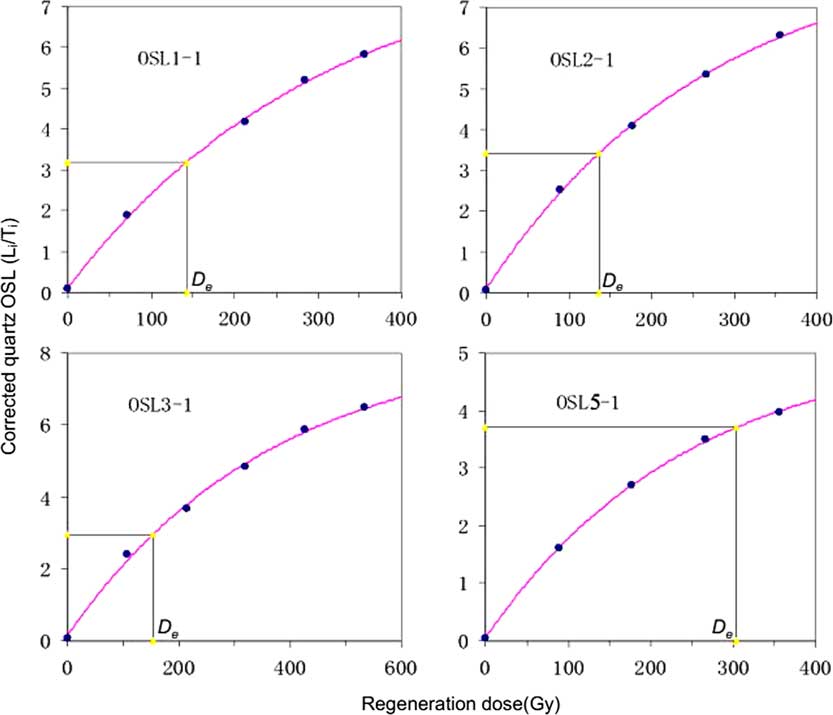
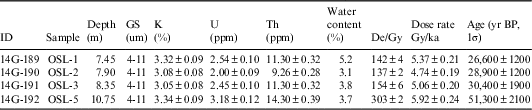
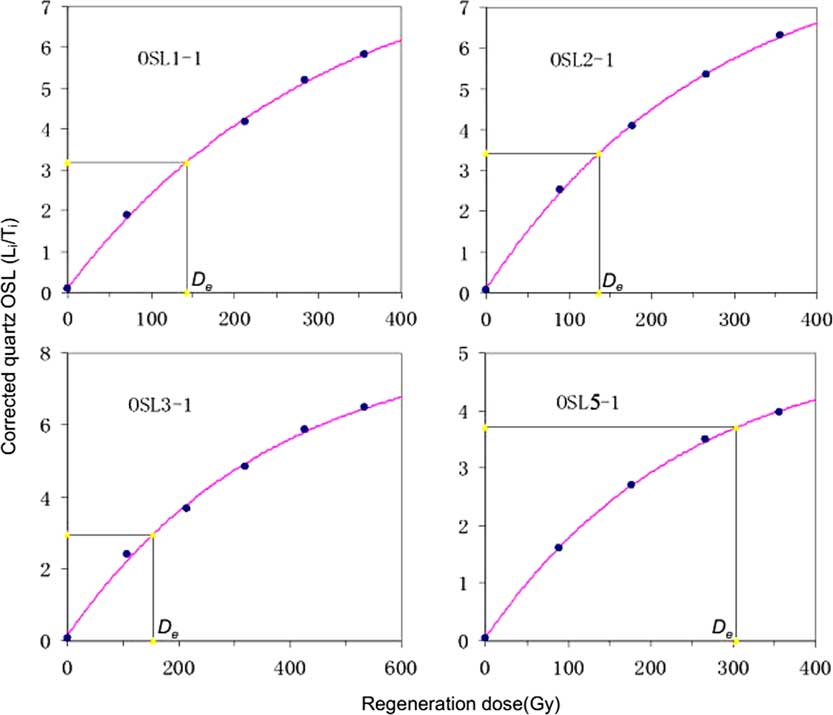
Using a Daybreak 2200 OSL reader (US) equipped with a combined blue (470 nm) and infrared (880 nm) LED unit, and a 90Sr/90Y beta source for irradiations, purified fine-grained quartz particles with diameters of 4–11 μm were selected for dating. For fine-grained samples, a simplified multiple aliquot regenerative-dose (MAR) protocol (Murray and Wintle Reference Murray and Wintle2000; Wang et al. Reference Wang, Lu and Zhao2006) was applied to measure the effective dose and 5–6 aliquots were measured for each sample (Figure 4). After completing each natural and regenerative dose OSL (Li) measurement, the test dose was released, and the test dose OSL signal (Ti) was applied to monitor the sensitivity change. The effective dose value was then determined using the ratio (Li/Ti) between the natural/regenerative dose OSL (Li) and the test dose OSL signal (Ti). The radiation dose absorbed by the samples was determined based on the estimated amount of ionizing radiation generated by α, β, and γ decay of radionuclides (238U, 232Th, and 40K) in the actual samples and in the surrounding sediments. The concentrations of uranium, thorium and potassium were measured by the neutron activation method (China Institute of Atomic Energy, Beijing). The contribution from cosmic rays was evaluated according to the recommendations of Prescott and Hutton (Reference Prescott and Hutton1994). The water contents of all the samples were measured for the dose rate calculations. According to the dating report, the growth curve shows no saturation has been reached yet, therefore, the OSL dating results were believed reliable. The OSL measurements were carried out in the OSL laboratory in the Institute of Hydro-Environmental Geology (IHEG) of the Chinese Academy of Geology (CAG), China. (Table 1)
The quartz OSL growth curves of samples. The results show that De determinations (see Table 3) are not affected by the saturation of quartz signal, implying the dating results are reliable.
Data from the samples selected for AMS 14C and OSL dating.

RESULTS
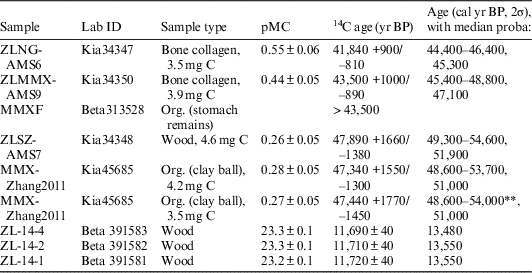
Tables 2 and 3 show the AMS 14C dating results provided by both Beta Analytic and the Leibniz Laboratory for Radiometric Dating and Stable Isotope Research in Kiel, as well as the OSL dates provided by IHEG. Except for the measurement performed on the stomach remains taken from the mammoth fossil Zhalai Nur I (sample MMXF), which only indicated that the sample is older than 43,500 14C yr BP, all of the other samples yielded quantitative age estimates.
AMS 14C dates obtained from fossils, plant remains, tree branches, and clay balls found in the gravel layer, as measured in Kiel and by Beta Analytic.
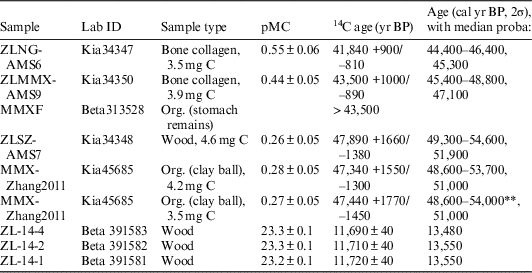
*This δ13C includes the effects of fractionation during graphitization and in the AMS-system and, therefore, cannot be compared with δ13C values obtained per IRMS on CO2. **Second independent measurement.
OSL dating results by IHEG.

DISCUSSION
The fossil of Zhalai Nur mammoth was dated to 43,500 +998/–888 14C yr BP (Kia34350, ZLMMX-AMS9). This new age estimate is almost 10,000 years older than the previously published date, which was 33,800±1700 14C yr BP (PV-170, Li et al. Reference Li, Liu, Xu, Li and Wang1982, Reference Li, Liu and Xu1984; Li Reference Li1984; Liu and Li Reference Liu and Li1984). Our test results show that the fossil bone contained~12 wt% collagen, indicating it is well preserved. AMS 14C dating on the stomach remains performed by Beta Analytic gave an age of ≥43,500 yr BP (Beta313528, MMXF), supporting the age measured in Kiel. Based on these dates, it can be concluded that Zhalai Nur I is as old as 43500 +998/–89 14C yr BP. The tree branch that we collected from the lower part of the section was dated to 47,900 +1700/–1400 14C yr BP. The clay balls found in the same position as these tree branches were dated twice independently and yielded two similar ages of 47300 +1600/–1300 and 47,400 +1800/–1500 14C yr BP (Kia45685, MMX-Zhang2011). These clay balls contain a large amount of organic carbon (ca. 46%), due to the great abundance of plant remains, and are assumed to be like the tree branches in that they are suitable for dating by the reliable AMS 14C method. The fossil of Bison sp. collected from the gravel deposits above the tree branches was dated to 41800 +900/–800 14C yr BP (Kia34347, ZLNG-AMS6). All these dates are consistent with the stratigraphy, and no conflicts exist. Therefore, the dates are acceptable and believable. However, some of the dates are very close to the limit of radiocarbon (14C) dating (Kia35350, with 0.44±0.05 pMC; Kia34348, with 0.26±0.05 pMC and Kia45685, with 0.28±0.05 and 0.27±0.05 pMC). In this range, the background correction for the measurements becomes crucial. For Kia34350, the uncorrected 14C was measured to 0.59 pMC with a background correction of 0.14 pMC; for Kia45685, the uncorrected 14C was measured to 0.41 and 0.43, with background corrections of 0.13 and 0.15, respectively. A preliminary study has indicated that different organic materials may give different background ages (Huels et al. Reference Huels, van der Plicht, Brock, Matzerath and Chivall2017); for example, wood may contain lower amounts of apparent 14C than bone collagen (in some cases, up to a factor of 2). For bone collagen, this variation may lead to an underestimation of the necessary background correction. If a higher background correction of 0.30 is used, the apparent 14C concentration of Kia34350 becomes 0.29, which is close to the apparent 14C concentration of sample Kia45685. This result means that the age of the mammoth should be even older. Thus, the AMS 14C age of the mammoth could be treated as the youngest age at this 14C level. Thus, cross checks and constraints from other, independent dating techniques become crucial for determining the ages of these materials.
The OSL dates measured on the fine grains (4–11 μm) gave ages of 51,300±2100 yr BP (OSL-5), 30,400±1900 yr BP (OSL-3), 28,900±1200 yr BP (OSL-2), and 26,600±1200 yr BP (OSL-1), proceeding from the lower to the upper part of the gravel deposits. In particular, the OSL age derived from sample OSL-5, which was collected from just above the sediments containing the tree branches and clay balls, is similar to the AMS 14C ages of the tree branches and clay balls (see Table 1). Therefore, the dates can be considered to be reasonable.
It is well-known that the OSL dating of water-lain samples is relatively complex and difficult (Olley et al. Reference Olley, Caitcheon and Murray1998, Reference Olley, Caitcheon and Roberts1999). One of the reasons is that the elemental contents of U and Th are abnormally high in coarse materials, which may lead to underestimate the real age of the sample (Murray et al. Reference Murray, Olley and Caitcheon1995; Li Reference Li2001). On the other hand, the laboratory test has shown that the equivalent dose (De) of the individual discs is highly variable, and this situation may have resulted in the large error of De (Murray et al. Reference Murray, Olley and Caitcheon1995; Olley et al. Reference Olley, Caitcheon and Murray1998, Reference Olley, Caitcheon and Roberts1999; Li Reference Li2001).
Several observations support our conclusion that the OSL dates obtained from the fine-grained fraction (4–11 μm) and the AMS 14C dates are acceptable and reliable. First, the OSL dates are consistent with the stratigraphy and do not contain reversals (Figure 5). Second, the OSL date from the bottom of the gravel layer is similar to the three AMS dates from the same stratigraphic position. Third, the AMS 14C dates from fossil Bison sp. and mammoth bones fit well into the OSL chronological framework and support the accuracy and reliability of the age of Zhalai Nur I (43,500+998/–890 14C yr BP or 47,100±1730 cal yr BP).
Chronology of the strata found in the lower part of the Zhalai Nur section.
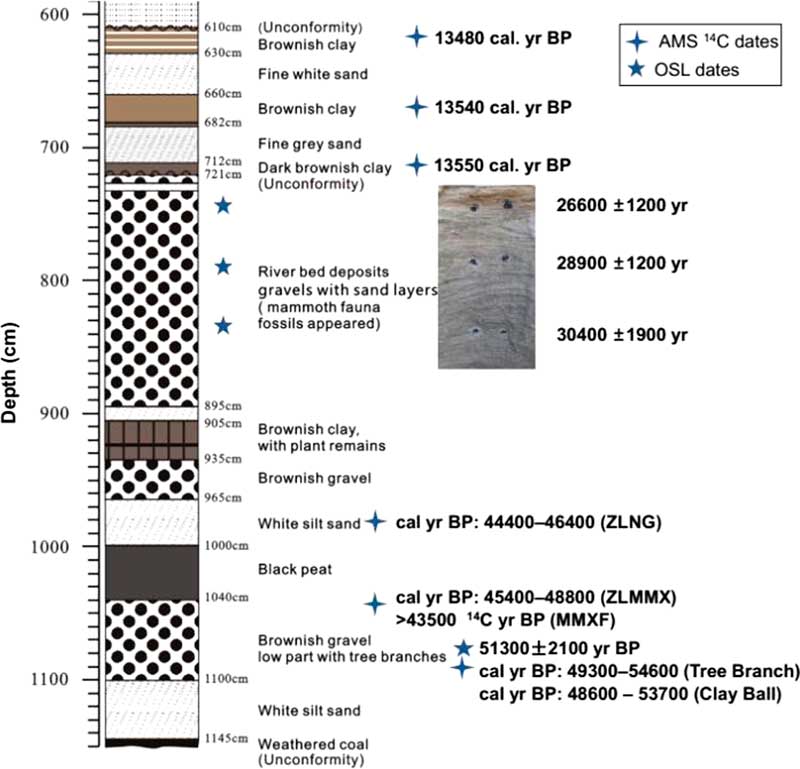
The AMS dates of samples from above the gravel layer show that these sediments are younger than 13,550 cal yr BP, taking into considering the dating error of OSL and a very low average sedimentation rate of the gravel layer, there more likely existed a hiatus between the end of MIS3 and the early late glacial, indicating that a lengthy break in sedimentation occurred between the deposition of the two layers. Field investigation shows that there are no signs that strong erosion occurred on the top of the gravel layer; therefore, between approximately 26,000 cal yr BP and 13,560 cal yr BP, there was no deposition or material accumulation at the location of this section. Our investigations have shown that no sediments were deposited during this period at several other places in northeastern China, especially in the Sonnen Plain. These observations indicate that, during the Last Glacial Maximum (LGM), most of the permafrost surface in northeastern China received no material accumulation.
Based on Figure 1, the relics of former fluvial and alluvial features, especially the large river channels, can be easily identified. Geological investigation has revealed the presence of vast Quaternary deposits and complex, cross-cutting paleo-river channels in the area. These observations demonstrate that, during the late Pleistocene, most likely during MIS3, large rivers were present in the area, and it was at least much wetter than present. The area was occupied by rivers and swamps, grass grew well and there were large forests on the nearby hills and mountains. Such landscapes and ecological niches were suitable for large mammals such as M. trogontherii, a mammoth with a shoulder height of 389 cm and a body mass of 10.4 tons (Larramendi Reference Larramendi2015), because of the plentiful food and mild environment.
CONCLUSIONS
The extensive outcrops in the Zhalai Nur mining area provide ideal records for investigating the history of environmental change and the processes by which the present arid landscape formed. Previous investigations have shown that the late Quaternary deposits, including the lower fluvial materials formed by riverine activity, in which the largest fossil mammoth known from northeastern Eurasia was found, are very important for understanding not only paleoclimate changes but also the relationship between environmental change and the evolution of animals, particularly mammals.
Previous studies revealed that it is difficult to date samples from arid-hyperarid areas because of the low organic carbon content in the sediments and rework of the older matters (Zhang et al. Reference Zhang, Ming, Lei, Zhang, Fan, Chang, Wuennemann and Hartmann2006, Reference Zhang, Fan, Chang, Zhang, Lei, Yang, Lei and Yang2008). With the improved measurement ability of the new accelerator mass spectrometry techniques and pretreatment process to remove contaminants from well-preserved, very old bone fossils and plant remains (Bronk et al. Reference Bronk Ramsey, Higham, Bowles and Hedges2004; Hajdas et al. Reference Hajdas, Bonani, Thut, Leone, Pfenninger and Maden2004; Pigati et al. Reference Pigati, Quade, Wilson, Jull and Lifton2007; Jocobi et al. Reference Jacobi, Higham and Ramsey2006; Huels et al. Reference Huels, van der Plicht, Brock, Matzerath and Chivall2017), the measurement precision of±0.1 pMC required to obtain finite AMS age determinations for very old samples (>50,000 yr BP) can be achieved, even near the upper limit of the 14C method (ca. 55,000 yr BP) (Pettitt et al. Reference Pettitt, Davies, Gamble and Richards2003; Higham et al. Reference Higham, Jacobi and Ramsey2006; Jacobi et al. Reference Jacobi, Higham and Ramsey2006, Reference Jacobi, Rose, MacLeod and Higham2009). Advanced OSL dating also provides an independent absolute dating technique that can be used to check and constrain the AMS 14C dates for samples that approach the upper limit of the method.
The OSL ages yielded by fine grains (4–11 μm) and the AMS 14C dates are in agreement. The dating results show that the gravel layer in the studied section, which represents the riverbed deposits that occur over the whole area, was deposited between 52,000 and 26,000 yr BP. At the same time, these results provide the best estimate of the age of the Zhalai Nur I mammoth (43,500+1000/–890 14C yr BP or 47,100 cal yr BP). In addition, the stratigraphic and sedimentary features indicate that the paleo-river systems were well developed, and a forest flourished in the drainage before and during the period when the mega-mammalian animals occupied the area, which contrasts with the modern desert landscape. These features also imply that the mammoth lived near the river, where there was dense grass cover and which was not very far from the forest. This niche contrasts with the present arid and dry environment. Our study demonstrates that a sedimentary hiatus exists between the end of MIS3 and the early late glacial, or it indicates that there was no accumulation of material over vast areas in northeastern China during the LGM. This finding raises the question of what living conditions the mammoth experienced, and this question needs to be studied in detail in the future.
ACKNOWLEDGMENTS
We express our gratitude to Dr. Hua Zhao for her help during the process of obtaining the OSL dates, as well as to Drs. A. J. T. Jull and Christine Hatté for their reviews and detailed comments on the manuscript and two anonymous reviewers for their comments and suggestions that improved the paper greatly. This study was supported by a NSFC (Key Project No. 41030102 and 41361008) and Yunnan Provincial government Leading Scientist Program (Grant No. 2015HA024).