Introduction
Besides inadequate resources especially in low- and middle-income countries (LMICs), several factors have been identified that contribute to the treatment gap that ranges from 35% in high-income countries (HICs) to about 70% in LMICs (World Health Organization, 2010), including: (1) lack of knowledge of the symptoms of mental illness and how to access treatment (2) prejudicial attitudes and (3) anticipated or acts of discrimination against people who have mental illnesses (Ganasen et al., Reference Ganasen, Parker, Hugo, Stein, Emsley and Seedat2008; Clement et al., Reference Clement, Schauman, Graham, Maggioni, Evans-Lacko, Bezborodovs, Morgan, Rüsch, Brown and Thornicroft2015; Hanisch et al., Reference Hanisch, Twomey, Szeto, Birner, Nowak and Sabariego2016; Thornicroft et al., Reference Thornicroft, Mehta, Clement, Evans-Lacko, Doherty, Rose, Koschorke, Shidhaye, O'Reilly and Henderson2016). In particular, low levels of mental health literacy remain a major hindrance to help seeking and treatment in LMICs and hence the need for innovative interventions to increase mental health literacy (Ganasen et al., Reference Ganasen, Parker, Hugo, Stein, Emsley and Seedat2008).
A UK-based study involving 12–13-year-old secondary school students demonstrated that education alone was more effective than contact intervention in younger persons with lived experience of mental illness in increasing mental health knowledge, reducing knowledge-based stigma, enhancing emotional wellbeing and resilience and improving help seeking attitudes (Chisholm et al., Reference Chisholm, Patterson, Torgerson, Turner, Jenkinson and Birchwood2016) as measured by Mental Health Knowledge Schedule (MAKS) (Evans-Lacko et al., Reference Evans-Lacko, Rose, Little, Flach, Rhydderch, Henderson and Thornicroft2011). Another study from the same country using data from a face-to-face survey of a nationally representative sample of adults followed annually from 2009 to 2015 found significant improvement in MAKS scores with higher impact on attitudes of the target age group (25–45) than those aged over 65 or under 25 (Henderson et al., Reference Henderson, Robinson, Evans-Lacko, Corker, Rebollo-Mesa, Rose and Thornicroft2016). A study conducted in Portugal to evaluate the effectiveness of a school-based intervention program in promotion of mental health literacy among young people found that the experimental group had significantly higher improvements in mental health literacy compared with the control group and this change was moderated by various socio-demographic characteristics (Campos et al., Reference Campos, Dias, Duarte, Veiga, Dias and Palha2018). A recent systematic review of the available evidence for effective interventions found conflicting results and recommended further research in order to identify the most effective interventions (Mehta et al., Reference Mehta, Clement, Marcus, Stona, Bezborodovs, Evans-Lacko, Palacios, Docherty, Barley, Rose, Koschorke, Shidhaye, Henderson and Thornicroft2015). The WHO designed and recommended the mhGAP-Intervention Guide (IG) for use in low-resource settings (World Health Organization, 2010) as a tool that can be used for psycho-education as an intervention. This is done at two levels: general and on a face-to-face basis to increase mental health awareness and knowledge either for the general public without mental illness, relatives and caregivers of people with mental illness or people with mental illness. Although the WHO mhGAP-IG was a product of wide expert consultation from different countries in the world and in particular LMICs, it still recommends adaptation to the local context. The adaptation process of the mhGAP-IG protocol helps to overcome and resolve concerns of any community cultural expressions and concept of mental disorder (World Health Organization, 2010). These concerns have been observed in several publications and may be attributed to the often observed low level of mental health literacy (Hugo et al., Reference Hugo, Boshoff, Traut, Zungu-Dirwayi and Stein2003; Ganasen et al., Reference Ganasen, Parker, Hugo, Stein, Emsley and Seedat2008; Atilola, Reference Atilola2015; Mutiso et al., Reference Mutiso, Musyimi, Nayak, Musau, Rebello, Nandoya, Tele, Pike and Ndetei2017; Spedding et al., Reference Spedding, Stein, Naledi and Sorsdahl2018). However, we have demonstrated statistically significant concordances of mhGAP-IG syndromes and Diagnostic and Statistical Manual of Mental Disorders (DSM)-IV/International Classification of Diseases (ICD)-10 disorders across a wide range of community stakeholders (including traditional and faith practitioners) (Mutiso et al., Reference Mutiso, Musyimi, Rebello, Gitonga, Tele, Pike and Ndetei2018a) thus demonstrating these cultural expressions can be overcome.
This study therefore aims to determine the feasibility of using mhGAP-IG as the intervention tool on one-on-one contact with participants with specific mental disorders in order to increase knowledge of mental disorders in clinical facilities located in a rural Kenyan setting. We used the MAKS (Evans-Lacko et al., Reference Evans-Lacko, Rose, Little, Flach, Rhydderch, Henderson and Thornicroft2011) to measure the change in mental health knowledge in people with priority mental disorders independently confirmed using DSM-IV/ICD-10 criteria (Van Vliet and de Beurs, Reference Van Vliet and de Beurs2007).
Methods
Study site
This study was conducted in Makueni County in southeast Kenya, which lies astride the highway between the capital, Nairobi and Mombasa, the biggest port in East Africa. The county is sparsely populated, with approximately 1 million residents (51% female, 49% male), a population density of 124.9 people per km2 and a total of 186, 478 households. It has one of the poorest economies in Kenya (Government of Makueni County, 2018). It has neither a psychiatrist nor a clinical psychologist.
At the time of the study, Makueni County had one referral hospital, six sub-county hospitals, 21 health centers, 113 dispensaries and 11 private clinics (Government of Makueni County, 2017b). In consultation with the county officials, five dispensaries, nine health centers, five sub-county hospitals and the county referral hospital were selected as representative study sites for the entire county.
Study design
The study was a longitudinal continuous recruitment design. A one group pre-/post-intervention was developed and implemented. Assessments were done at baseline and 3 months.
Measures
Researcher-designed socio-demographic questionnaire
This measure was given at baseline. We used data from this tool to create the wealth index (Smits and Steendijk, Reference Smits and Steendijk2015). To do this, we used factor scores derived through principal component analysis (PCA) as the weights of items in its asset index (Vyas and Kumaranayake, Reference Vyas and Kumaranayake2006). Factor scores are a measure of the strength of association of an item with the first principal component. The presence of electricity in one's home, ownership of items (refrigerator, TV, bicycle, motorcycle, cellphone, radio and motor vehicle); how food is cooked in their house (gas stove, kerosene stove, electric stove, charcoal and wood); the type of residence (tenant, own house, stay with family and other) and the wall material in the residence they live in (mud, plastered mud, iron sheets, wood and brick/stone) were used in constructing each participant's wealth index. The wealth index is classified into five quintiles with first quintile representing the lowest level of wealth and fifth being the highest. This classification has been used in other studies in LMICs including Kenya (Howe et al., Reference Howe, Hargreaves and Huttly2008; Mutiso et al., Reference Mutiso, Pike, Musyimi, Rebello, Tele, Gitonga, Thornicroft and Ndetei2018b).
Mental health knowledge schedule
Stigma-related and disorder-specific mental health knowledge was assessed using the MAKS (Evans-Lacko et al., Reference Evans-Lacko, Little, Meltzer, Rose, Rhydderch, Henderson and Thornicroft2010). MAKS is a 12-item scale, scored on a 5-point Likert scale from ‘strongly disagree’ to ‘strongly agree.’ A strongly agree response to a correct statement is scored at 5 points while 1 point reflects a strongly disagree response with a correct statement. The first six items assess stigma-related mental health knowledge areas, i.e. help-seeking, recognition, support, employment, treatment and recovery and the next six items inquires about knowledge of mental illness conditions.
Item 6 is reverse coded since strongly agreeing with the statement implies poor mental health knowledge. A MAKS total score is calculated for items 1–6 with a higher total score indicating greater mental health knowledge and the highest possible score being 30. Items 7–12 are scored similarly to items 1–6 and assess knowledge about specific psychiatric disorders by measuring correct identification of disorders. Participants are presented with the following words – depression, stress, schizophrenia, bipolar disorder, drug addiction and grief – and then asked to what extent each word is a mental illness. They rate each word on a 5-point Likert scale from ‘strongly disagree’ to ‘strongly agree.’ Items 8 (stress) and 12 (grief) are reverse coded because strong agreement that these are mental illnesses indicates lower mental health knowledge. The MAKS was found to have adequate test–retest reliability (0.71 Lin's concordance statistic) and moderate internal consistency (Cronbach's α = 0.65) in a British sample (Evans-Lacko et al., Reference Evans-Lacko, Little, Meltzer, Rose, Rhydderch, Henderson and Thornicroft2010). The MAKS has been used in a variety of mental health knowledge and stigma-related studies globally including Kenya (Evans-Lacko et al., Reference Evans-Lacko, Henderson and Thornicroft2013; Li et al., Reference Li, Li, Thornicroft and Huang2014; Martensson et al., Reference Martensson, Jacobsson and Engstrom2014; Chisholm et al., Reference Chisholm, Patterson, Torgerson, Turner, Jenkinson and Birchwood2016; Mutiso et al., Reference Mutiso, Musyimi, Nayak, Musau, Rebello, Nandoya, Tele, Pike and Ndetei2017).
MINI Plus
The MINI Plus (Sheehan et al., Reference Sheehan, Lecrubier, Sheehan, Amorim, Janavs, Weiller, Hergueta, Baker and Dunbar1998) is a brief structured diagnostic psychiatric interview for DSM-IV/ICD-10 psychiatric disorders (Van Vliet and de Beurs, Reference Van Vliet and de Beurs2007). The MINI Plus has good psychometric properties (Sheehan et al., Reference Sheehan, Lecrubier, Sheehan, Amorim, Janavs, Weiller, Hergueta, Baker and Dunbar1998). It can be administered by trained lay people and extensively used in LMICs including Kenya (Mutiso et al., Reference Mutiso, Musyimi, Rebello, Gitonga, Tele, Pike and Ndetei2018a; van Heyningen et al., Reference van Heyningen, Honikman, Tomlinson, Field and Myer2018).
Study procedures
WHO mhGAP-IG adaptation
The mhGAP-IG (World Health Organization, 2010) gives guidelines for context adaptation to each individual local context where it is used. In our case, the adaptation process was conducted by a working group composed of Kenyan psychiatrists, clinical psychologists, nurses, a clinical officer, a sociologist and a linguist, who went through all the statements in mhGAP-IG to ensure they were linguistically and culturally appropriate in the Kenyan context without changing the original meaning. Any discrepancies were discussed by the original group until a consensus was achieved. The adapted version was then translated by a linguist to the Kamba dialect and by another linguist back to English. This process went back and forth until the back translated and the original versions totally agreed. The adapted English and Kamba versions were piloted with traditional healers (THs), faith healers (FHs) and nurses and clinical officers who found no ambiguities or difficulties in understanding the instrument. These versions were then adopted.
Trainings
We conducted three sets of trainings as listed below:
(a) Screening staff [community health workers (CHWs), FHs and THs]. The adapted mhGAP-IG manual provided the framework for 5 full days of residential training for two subgroups: (1) FHs and THs and (2) CHWs. The trainings were conducted by a clinical psychologist, a public health physician and a nurse. The trainings covered each of the symptoms of the five key disorders on the mhGAP-IG. Teaching methods included PowerPoint presentations, case discussions combined with group activities, mock consenting, screening and referral processes. They were trained on screening for mental disorders using the mhGAP-IG and how to make referrals for independent confirmatory tests. Overall 60 CHWs, 51 FHs and 59 THs were trained.
(b) Independent research assistants: The same team of trainers conducted a 1 week residential training for 20 research assistants, one from each for the 20 study sites. They had been competitively recruited from the community by the research team. They were trained on study procedures including, but not limited to; administration of study instruments, scoring of MINI Plus and were trained to refer the positive confirmed diagnoses to nurses and clinical officers for clinical interventions using the mhGAP-IG.
(c) Nurses and clinical officers: A total of 40 primary health-care workers (nurses and clinical officers) working in the 20 facilities were trained on the mhGAP-IG intervention for the priority mental disorders. In some cases, other health workers would also screen patients in the health facilities during their routine work and refer them to their colleagues who had received training on mhGAP-IG interventions.
Participants’ recruitment
Participants were recruited by trained CHWs attached to the 20 facilities and FHs or THs and nurses and clinical officers operating in the catchment areas who screened them for suspected mental health disorders and referred to health facility for confirmatory diagnosis by independent research assistants. Only those above 18 years and who gave informed consent were recruited for the study.
DSM-IV/ICD-10 confirmatory test
Participants who screened positive on MINI Plus were referred to a trained nurse or clinical officer for mhGAP intervention. This was done by trained research assistants based in the facilities.
The mhGAP interventions
Trained nurses and clinical officers offered the required mhGAP-IG interventions to the patients depending on the condition for which they had been referred to by the independent research assistants. The intervention was either in form of psycho-education only or a combination of psycho-education and pharmacotherapy. It is important to emphasize that irrespective of the condition the patient was referred for, psychoeducation and mental health advocacy was offered as part of the intervention. Psychoeducation entails the definition of mental illness, causes, symptoms and treatment options available. The length of intervention varied with the type and severity of the condition(s) and whether there were any comorbidities. On average the interventions lasted between 20 and 45 min. After intervention patients were given a return date which was 3 months later during which a repeat MAKS was administered. Figure 1 summarizes the study procedures.
Recruitment and study steps’ flow chart.

Other measures
For the purpose of this paper, we report specifically on changing levels of mental health as measured by MAKS and how it is related to social-demographics and the DSM-V/ICD-10 diagnoses. We exclude clinical and psychosocial outcomes that were also studied over the 3 month follow-up. These are being reported separately.
Statistical analysis
Descriptive statistics were run to determine socio-demographic characteristics of the sample as well as selected items of MAKS. Paired sample t tests were used to assess the differences pre- and post-intervention on the individual item scores as well as the total scores. In order to assess who might have benefited from the intervention, we used linear mixed model with socio-demographic characteristics as fixed effects and time as both fixed and random effects. Scores of participants who were lost to follow-ups were imputed using five randomly generated scores based on their baseline MAKS scores, gender, age, marital status, level of education, employment status, wealth index and the type of diagnosis at baseline. Sensitivity analysis was done using complete cases only. All the analyses were done using STATA version 14.
Results
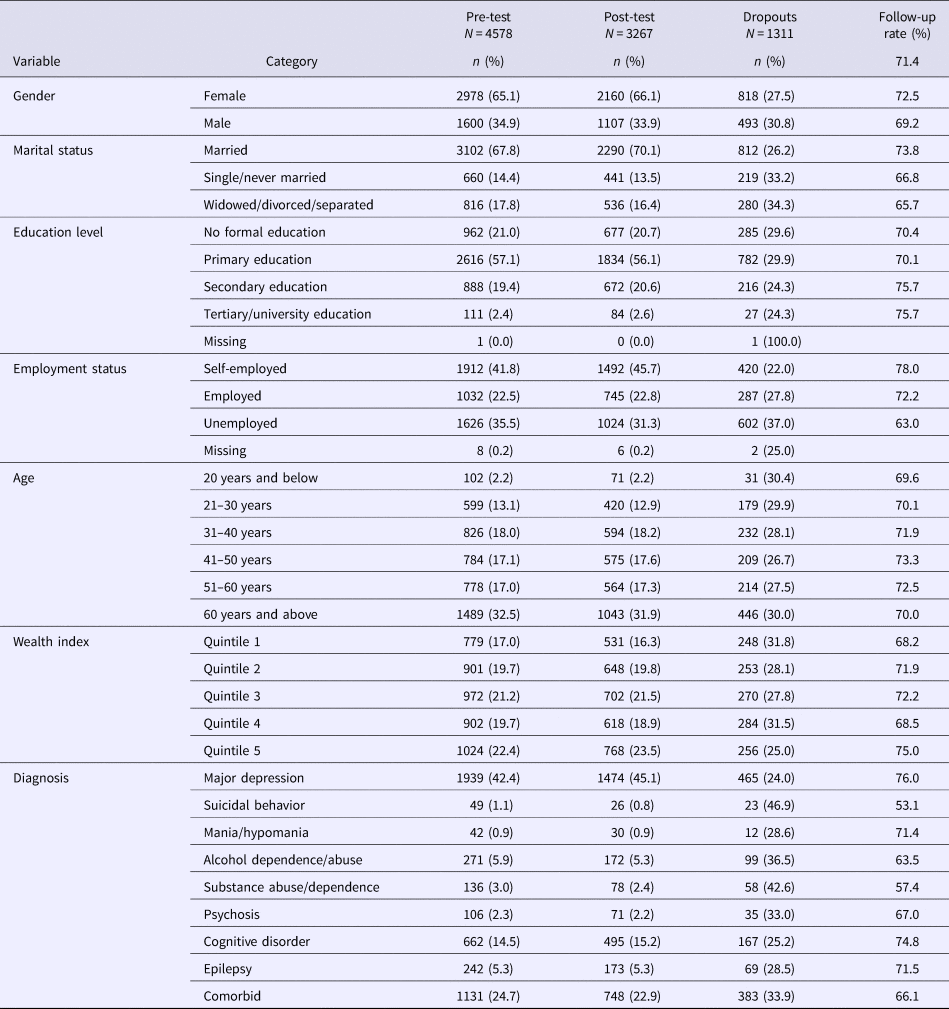
Table 1 summarizes the social-demographics, wealth index and DSM-IV/ICD-10 diagnoses at pre- and post-intervention, and the follow-up rates for each variable at 3 months. A total of 4578 participants completed the pre-test survey of whom 3267 completed the post-test 3 months later. The average follow-up rate was 71.4% (range 53–78%). The lowest follow-up rates were for suicide behavior (53.1%), substance abuse dependence (57.4%), alcohol abuse/dependence (63.5%) and un-employed (63%). The follow-up rates above the overall average were in self-employed (78%), major depression (76%), secondary and tertiary education (75.7% each), quintiles 4 and 5 (75% and 76% respectively) and cognitive disorder (74.8%).
Demographic characteristics of participants, dropouts and follow-up rates

More than 50% of the participants were females, married and had only primary level education. The 60+ year olds formed the largest age group. The self-employed were the most common on the employment status. The wealth index was similar across age groups. Depression was the commonest single diagnosis (42.4% and 54.1% pre- and post-test). Those who had more than one diagnosis constituted the second most common group (24.7% and 22.9% pre- and post-test) followed by cognitive disorders (dementia) at 14.5% and 15.2% pre- and post-test. Suicidal behavior and mania/hypomania were the least common. We conducted the statistical tests based on gender, marital status, level of education, employment status, diagnosis age and baseline MAKS scores to determine whether loss to follow-up differed by groups and those who were widowed/separated/divorced; unemployed participants; diagnosed of suicide (46.9%), alcohol abuse (36.5%), substance abuse (42.6%) and psychosis (33%) and high-baseline MAKS scores were likely to be lost to follow-up.
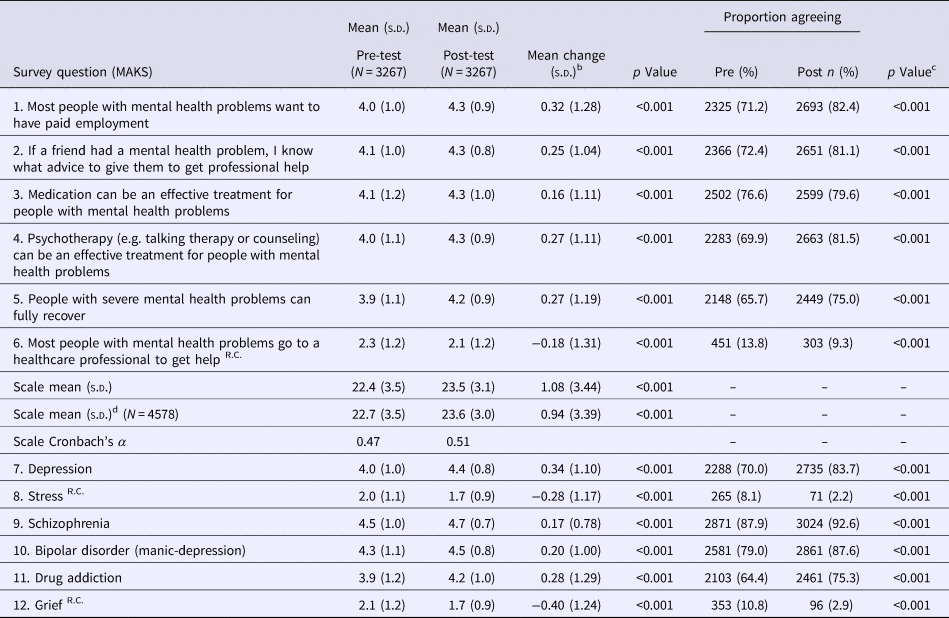
Table 2 summarizes comparison of mean pre-test and post-test scores and overall percentage change of those agreeing (slightly and strongly) on the 12 items of MAKS. In all of them there was a significant change (p < 0.001) between the pre and end-post-test main scores. Sensitivity analysis revealed that no significant differences between the complete cases and imputed values were observed.
Comparisons of mean pre-test and post-test scoresa and proportion of agreeing for mental health schedule (MAKS) items pre and post intervention

R.C., Denotes reverse coded items.
a 1 = strongly disagree, 2 = disagree, 3 = neither agree nor disagree, 4 = agree slightly, 5 = agree strongly.
b Paired t test.
c McNemar's χ2 test.
d Missing values were imputed using multiple imputation using of five randomly generated numbers based on the baseline MAKS scores and socio-demographic characteristics for 1311 participants (28.6%).
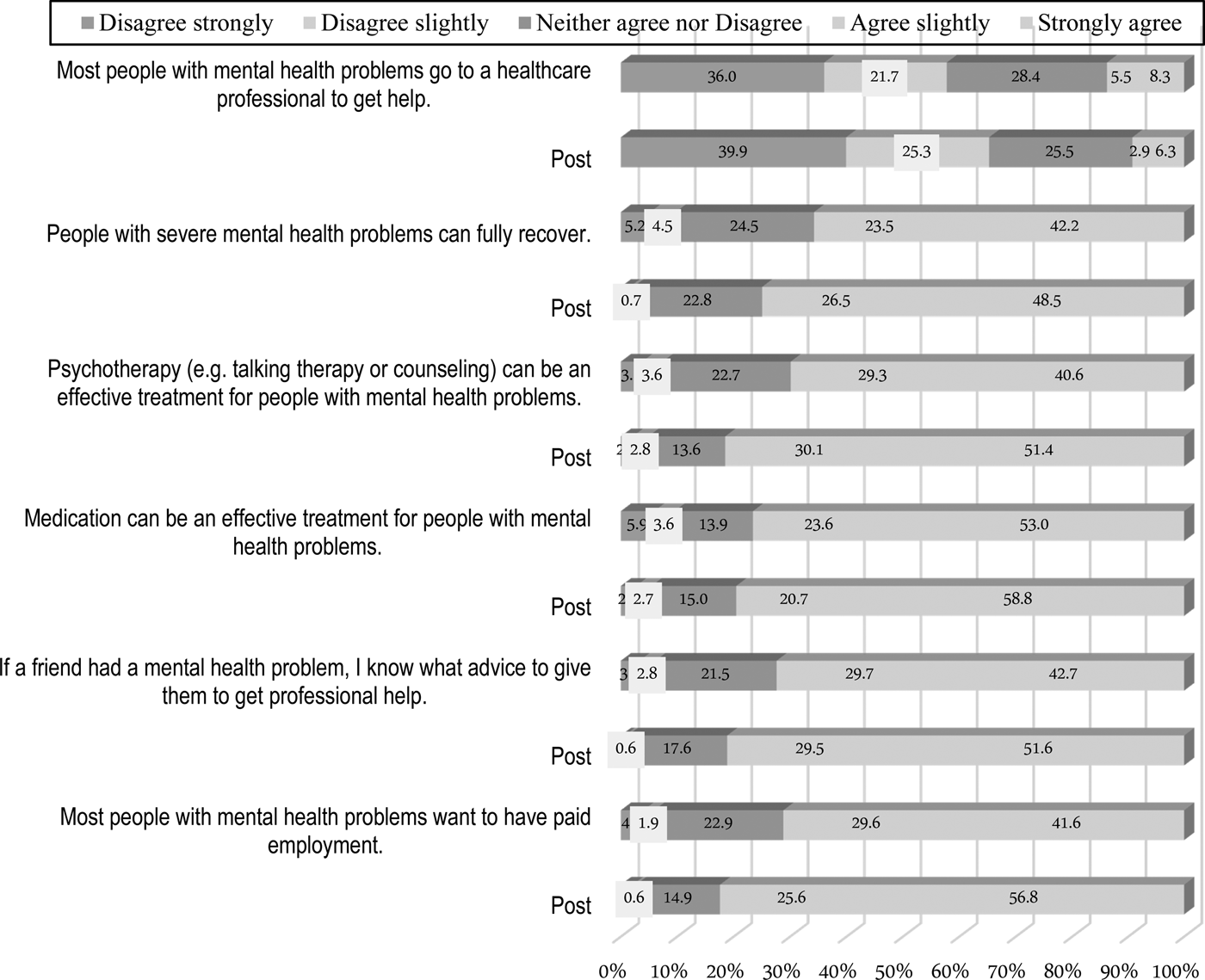
Figures 2 and 3 give details on changing patterns on the 6 item Likert scale for each of the MAKS variables. Across the table, there was an overall shift from ‘not agreeing at all’ toward ‘agreeing and strongly agreeing.’ The only reverse in both Tables 2 and 3 was in the statement for item 6: ‘Most people with mental health problems go to a healthcare professional to get help’ from 13.8% to 9.3%..
Percentage of responses to individual items before and after intervention on the first six items of MAKS.

Percentage of responses to individual items before and after intervention on the last six items of MAKS.

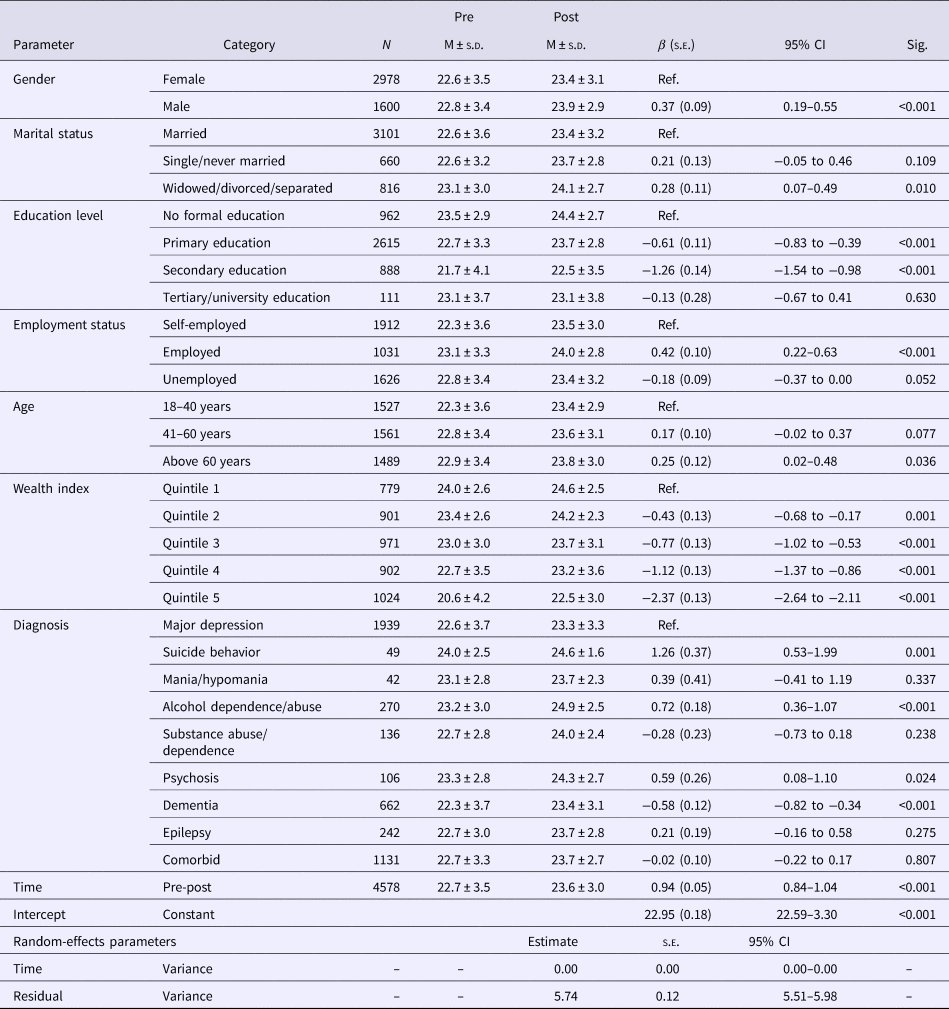
Linear mixed model assessing predictors of mental health knowledge post interventiona

a Results from a single mixed model adjusting for all variables: Ref., reference category; s.e., standard error; β, beta coefficient is then the average difference in MAKS scores between the category for the reference group and the category for which the comparison group and 95% CI, 95% confidence interval.
Table 3 summarizes the predictors of the outcomes on mental health knowledge. The socio-demographic and economic indicators which were predictors of improvements in mental health literacy (p < 0.05) included male gender, the married and single as opposed to widowed, divorced or separated, employed status rather than self-employed, self-employed rather than un-employed (no job) and low wealth index. Age was not a predictor. Participants who were diagnosed with suicide, alcohol dependence and psychosis had significantly higher improvements in mental health literacy as compared with those diagnosed with depression (p < 0.05). However those diagnosed with cognitive disorders had significantly less improvements in literacy as compared with those diagnosed with depression (p < 0.001). No significant differences were found between those diagnosed with mania/hypomania; substance abuse; epilepsy; comorbid and those diagnosed with depression.
Discussion
Socio-demographic characteristics and follow-up rates
The involvement and interest of stakeholders from the community engagement stage through the high turn up for voluntary screening all the way to follow-up as summarized in Figure 1 suggests a community not only interested in awareness but also ready to seek help. The socio-demographic patterns in this study are on a population that had undergone community awareness on mental health; had volunteered to participate in screening and subsequent diagnostic process and agreed to participate in the mhGAP-IG intervention at the health facilities. These socio-demographic characteristics, therefore, do not reflect the general population in the same communities. For the same reasons the patterns of the DSM-IV/ICD-10 do not reflect those found on non-clinical population and more specifically reflect the mental disorders specified in the mhGAP-IG for adults. It is also worth noting that the 60+ represented the most common age group in a country where there is a pyramid population structure (Review, 2018). This is a reflection that this was a clinical population that was self-selecting.
The 3-month follow-up in this study is longer than the 2 week follow-up in a UK study among adolescents (Chisholm et al., Reference Chisholm, Patterson, Torgerson, Turner, Jenkinson and Birchwood2016) that used MAKS. The UK study did not use the mhGAP-IG as the intervention. The mhGAP-IG is meant for low-resource settings. The post-intervention test was unlikely to be affected by recent memories of the answers given 3 months earlier and therefore minimized the ‘recency effects’ (Morrison et al., Reference Morrison, Conway and Chein2014). Therefore, the responses obtained at 3 months reflect real change or non-change between the pre- and post-test points.
We regard the 71.4% follow-up rate at 3 months as not only satisfactory but encouraging for the following reasons in the context in which the study was conducted: the average distance between a homestead and the nearest health facility is 5 km or much further in many cases (Government of Makueni County, 2017a). This means people have to walk or pay for public transport. Furthermore, the person with the mental disorder has to be accompanied by at least one relative and therefore have to incur transport costs for at least two people, including the costs of meals and other incidentals. This is a trip that lasts at least half a day, meaning setting aside economic activities to go to seek health services. Although the consultation fees , costs for the drugs and any intervention were waived and paid for by the County Government for this study, they still had to pay for any laboratory tests if they were suspected to have co-morbid physical conditions. Given that 65% of the study community live on less than 1 USD a day, the economic barrier for accessing health services can be highly prohibitive (Government of Makueni County, 2017a). It is therefore not surprising that the best follow-up rates were associated with being self-employed (doing own business thus flexible with their time planning), employed, wealth index quintiles 4 and 5 and higher education (secondary and tertiary) that is a reflection of higher chances of being employed or self-employed. By extrapolation, it may be that economic factors in patients and their caregivers is as influential as lack of human resources in contributing to the high treatment gap associated with LMICs (Patel et al., Reference Patel, Chisholm, Parikh, Charlson, Degenhardt, Dua, Ferrari, Hyman, Laxminarayan and Levin2016) as already implied in one of our Kenyan studies (Ndetei et al., Reference Ndetei, Pizzo, Khasakhala, Maru, Mutiso, Ongecha-Owuor and Kokonya2009).
We have demonstrated in one of our studies that the concept of ‘recovery’ and the need for continued visit to a health facility is contextually defined by the patient and not necessarily by the clinician (Mendenhall et al., Reference Mendenhall, Kohrt, Norris, Ndetei and Prabhakaran2017). The patients balance the severity of symptoms against other concurrent physical symptoms or economic considerations and other priorities of life thus may decide that symptoms, no matter how severe, are no longer a priority. Therefore, the lost to follow-up of 28.6% may not necessarily imply recovery.
Changing patterns on MAKS scores
Overall, there was significant increase in the mean scores (p < 0.001) for each of the 12 MAKS variables as well as the increase in average percentages on agreement on each of the 12 MAKS variables (p < 0.001). As already explained the patients had already been exposed to mhGAP-IG during the community entry in group situations and also during screening by the various service providers. It is therefore not surprising that they had some awareness at pre-intervention period. However, there were significant differences between the two tests, separated by intervention given immediately after the pre-test. We would like to believe that the intervention played a key role in these differences. Characteristic of our intervention is that we used mhGAP-IG on a face to face contact for each of the patients who took part in this study. We not only provided psychosocial and biological interventions as prescribed by the mhGAP-IG, but also the opportunity to increase mental health literacy and awareness, talk about stigmatization and their human rights, just as prescribed by the mhGAP-IG. It is not surprising that the scores to the statement that ‘Most people with mental health problems go to a healthcare professional to get help’ decreased from 13.8% to 9.3% signifying that the participants acknowledged following the intervention that some of the symptoms that they have been having are indeed symptoms of mental illness only that they did not go for help.
Unlike other studies (Henderson et al., Reference Henderson, Robinson, Evans-Lacko, Corker, Rebollo-Mesa, Rose and Thornicroft2016), we found that males had significantly higher increase in mental health knowledge as compared with females. This would be a positive finding if increase in knowledge leads to reduction in stigma and help seeking. It has been suggested that men are particularly affected by stigma in terms of being deterred from seeking treatment (Addis and Mahalik, Reference Addis and Mahalik2003; Galdas et al., Reference Galdas, Cheater and Marshall2005). Our findings therefore suggest that mhGAP-IG intervention in increasing knowledge in mental health was effective even in men and presumably reduction in stigma.
In our study, participants with lower wealth index had significantly more improvements in mental health knowledge as compared with those with higher wealth index. This is in contrast with the findings of Henderson and colleagues who found that higher wealth index was associated with more knowledge as compared with those with the lowest wealth index (Henderson et al., Reference Henderson, Robinson, Evans-Lacko, Corker, Rebollo-Mesa, Rose and Thornicroft2016). While we do not have an explanation for this finding in Kenya, it is nevertheless encouraging because the mhGAP-IG was meant to target the low-resource settings in (Fosu, Reference Fosu2015).
Participants who were diagnosed with suicide, alcohol dependence and psychosis had significantly higher increase in mental health knowledge as compared with those diagnosed with depression. We may attribute this to the dramatic presentations of these conditions because of their outwardly disturbed behavior that often precipitates a crisis. An explanation helps to portray these conditions as manageable mental issues rather than a weak character for suicide and alcohol dependence (Judd et al., Reference Judd, Cooper, Fraser and Davis2006; Peluso Éde and Blay, Reference Peluso Éde and Blay2008) or supernatural explanation for psychosis (Bhikha et al., Reference Bhikha, Farooq, Chaudhry and Husain2012). These positive improvements in the various mental disorders have also been found in HICs (Pescosolido et al., Reference Pescosolido, Martin, Long, Medina, Phelan and Link2010; Livingston et al., Reference Livingston, Milne, Fang and Amari2012). This is as opposed to dementia/cognitive deficits which have a slow and insidious onset and regarded as a natural and normal process of aging. However, the MAKS, a quantitative instrument and the mhGAP-IG essentially a clinical instrument, cannot give us the explanations for these responses, thus the need for mixed methods approach. The fact that after intervention grief and stress were not regarded as mental illness would suggest that the participants had accurate information and understanding of what a mental disorder is, rather than normal reactions to situations in grief and stress.
Our study has demonstrated that face-to-face contact during mhGAP-IG intervention within people living with mental disorders was effective in improving mental health knowledge and increasing the levels of recognition and familiarity in some of the mental health conditions. From our search, we could not find another study that used mhGAP-IG to increase literacy and reduce perceived discrimination – hence no other similar studies to compare with ours. However, the results are in line with other findings from HICs (Chisholm et al., Reference Chisholm, Patterson, Torgerson, Turner, Jenkinson and Birchwood2016; Hanisch et al., Reference Hanisch, Twomey, Szeto, Birner, Nowak and Sabariego2016; Hansson et al., Reference Hansson, Stjernswärd and Svensson2016; Henderson et al., Reference Henderson, Robinson, Evans-Lacko, Corker, Rebollo-Mesa, Rose and Thornicroft2016) which had not used the mhGAP-IG. This suggests that mhGAP-IG is comparable in efficacy with other interventions to increase mental health knowledge and awareness.
The high follow-up rate despite high potential economic barriers points to a population determined to achieve a certain level of functional ‘recovery.’ Recovery and therefore reduction of treatment gap needs to be re-defined to different contexts, i.e. a universal definition of recovery may not be necessary or practical.
Conclusions
The mhGAP-IG may be a feasible tool to increase mental health knowledge in low-resource countries where there are no mental health specialists. Our study lends evidence that the WHO Mental Health Action Plan 2013–2020 and reduction of the treatment gap may be accelerated by use of mhGAP-IG through improving knowledge about mental illness and potentially subsequent help seeking for early diagnosis and treatment.
Strengths of the study
The main strengths of this study include a relatively large sample size and a longer (3 months) interval between pre-test and post-test hence reducing the recency bias. Others include the use of existing community resources and WHO recommended mhGAP-IG as an intervention tool and therefore replicable and sustainable.
Limitations of the study
We did not have a control group which would have enabled us to convincingly associate the increase in MAKS scores with the intervention. Second, we included only those patients who screened positive on the priority mental disorders in the mhGAP-IG which was our primary tool. Third, this study was conducted in only one geographical site which had been sensitized to mental health awareness. However, whenever a study is done in a community, there is the need for community entry, engagement, awareness and the opportunity to interrogate the purposes of the study and any questions for informed community consent. Furthermore, our primary concern was the increase in mental health literacy at 3 month follow-up over the baseline following the intervention. Fourth, we did not include a qualitative approach that would have enabled us to probe the quantitative responses in MAKS. Finally, we do not know the sustainability of this knowledge over much longer follow-up although most studies including those in HICs had follow-ups shorter than 3 months.
Data
Data for this study will be made available upon written request to the corresponding author detailing the specific parts of the data to be shared and the intended purpose.
Acknowledgments
The authors are grateful to all the participants for their cooperation and willingness to participate in the study. We are also grateful to the Government of Makueni County led by the Governor, Prof Kivutha Kibwana and his Ministry of Health officials for supporting and facilitating this study. We also acknowledge Grace Mutevu, Ruth Ruhara and Darius Nyamai from the AMHRTF for editorial support.
Financial support
This work was supported by Grand Challenges Canada (GCC), Grant #0739-05.
Conflict of interest
None.
Ethical standards
Maseno University Ethics Review Committee granted approval. The authors assert that all procedures contributing to this work comply with the ethical standards of the relevant national and institutional guides on the care and use of laboratory animals.