We report the results from a number of production and comprehension experiments, which we ran with children and adults in Italian. The experiments tested a notoriously difficult domain in syntax: the domain of object relatives (ORs) in comparison with subject relatives (SRs).
It is a well-known and widely described that ORs like (1) are harder than SRs like (2) in various respects for both children and adults.
(1) OR: The girl that the father is hugging __
(2) SR: The girl that __ is hugging the father
For children, ORs are both difficult to comprehend and difficult to produce (Adani, Reference Adani2011; Adani, van der Lely, Forgiarini, & Guasti, Reference Adani, van der Lely, Forgiarini and Guasti2010; Arosio, Adani, & Guasti, Reference Arosio, Adani and Guasti2006, Reference Arosio, Adani, Guasti, Brucart, Gavarrò and Solà2009; Belletti, Reference Belletti and Svenonius2009a; Belletti & Contemori, Reference Belletti, Contemori, Costa, Castro, Lobo and Pratas2010; Brown, Reference Brown1972; Contemori & Garraffa, Reference Contemori and Garraffa2010, for recent contributions on Italian; Correa, Reference Correa1995; de Villiers, de Villiers, & Hoban, Reference de Villiers, de Villiers, Hoban and Tager-Flusberg1994; Friedmann et al., Reference Friedmann, Belletti and Rizzi2009; Friedmann & Novogrodsky, Reference Friedmann and Novogrodsky2004; Gordon, Hendrick, & Johnson, Reference Gordon, Hendrick and Johnson2004; Håkansson & Hansson, Reference Håkansson and Hansson2000; McKee, McDaniel, & Snedeker, Reference McKee, McDaniel and Snedeker1998; Tavakolian, Reference Tavakolian and Tavakolian1981, for some items of a rich and long lasting literature); for adults, ORs are slower to parse (e.g., De Vincenzi, Reference De Vincenzi1991; Warren & Gibson, Reference Warren and Gibson2002). We report results from experiments run with children aged 3 years, 4 months (3;4) to 8;10 and adults.
Two main aspects of our results are particularly significant. First, the production of headed ORs is typically avoided by both adults and children in Italian, in the different experimental conditions utilized; the kinds of ORs that are most avoided are the standard ones, with a gap in the merge position of the relative head and a lexical subject in the preverbal position. ORs with a gap are often replaced by (clitic) resumptive ORs, as exemplified by the production in (3), thus confirming previous findings from elicited production (Guasti & Cardinaletti, Reference Guasti and Cardinaletti2003). However, the privileged way to avoid the production of an OR that has emerged in our data is by replacing it with a different structure, which we will refer to as a passive (POR; Belletti Reference Belletti and Svenonius2009a, Reference Belletti, Ferré, Prévost, Tuller and Zebib2011); both adults and children tend to transform the elicited (active) OR into a SR in the passive, as illustrated in the production in (4).
Target OR:
(Vorrei essere) il bambino che i genitori fotografano/disegnano.
“(I would rather be) the child that the parents are photographing/drawing.”
(3) Sentence produced:
Vorrei essere la bambina che i genitori la stanno disegnando.
“I would like to be the child that the parents are drawing her-CL.” (B.L. 5;11)
Target sentence:
(Vorrei essere) il bambino che la mamma/ragazza abbraccia.
“(I would rather be) the child that the mother/girl is hugging.”
(4) Copular passive:
Quello che viene abbracciato dalla mamma.
“The one that is hugged by the mother.” (B.G. 6;3)
This strategy is adopted overwhelmingly by adults, and children tend to approach the adults’ level of production as they grow older. This result confirms the one from a first pilot study (Utzeri Reference Utzeri2007), which used similar elicitation designs, adapted from Novogrodsky and Friedmann (Reference Novogrodsky and Friedmann2006). The second significant aspect of our results is a new finding on the comprehension of ORs: the comprehension of PORs of various kinds (copular, reduced, and “si fa”/causative passives) has been tested for the first time, and it has been compared to the comprehension of (active) ORs, both with a gap and with a resumptive clitic pronoun in children aged 6;5–8;10. Children have turned out to be more accurate in comprehending ORs with a resumptive clitic pronoun than ORs with a gap, and PORs with “si fa”/causative have been comprehended more accurately than those with copular and reduced passives. The most interesting result in the new comprehension study is that all kinds of PORs tested have been better comprehended than (active) ORs, both those with a gap and those with a clitic resumption, by children ages 6;5–8;10, when they are known to be mature enough to master different passive structures well (Fox & Grodzinsky, Reference Fox and Grodzinsky1998).
ELEMENTS OF BACKGROUND
ORs in children and adults
In Friedmann et al. (Reference Friedmann, Belletti and Rizzi2009) a featural approach to the syntactic principle relativized minimality (RM; Rizzi, Reference Rizzi1990, Reference Rizzi and Belletti2004; Starke, Reference Starke2001; for aphasia, see Grillo, Reference Grillo2008) has been assumed to interpret the difficulty that children experience in their development of an adequate mastery of ORs and the slower processing of the same structure by adults. The present section provides a brief summary of Friedmann et al.'s (Reference Friedmann, Belletti and Rizzi2009) approach that will serve as the background for the interpretation of the results presented in this article, as will be discussed in detail in the Discussion. An illustration of the approach proposed in Belletti (Reference Belletti and Svenonius2009a, Reference Belletti, Ferré, Prévost, Tuller and Zebib2011) is also provided in the following section because it will be assumed in the interpretation of the ample use of PORs made by adults and their growing use made by children in development, which is revealed by the production experiments as well as by the results from children's comprehension. For all relevant further details, the reader is referred to the quoted references.
Based on results on (mainly) comprehension experiments in Hebrew-speaking children (3;7–5;0), Friedmann et al. (Reference Friedmann, Belletti and Rizzi2009) have proposed that the difficulty in the processing of ORs that children show, and which contrasts with their good mastery of SRs from the younger ages, can be attributed to the operation of the same syntactic locality principle, RM, which is known from theoretical work in syntax to constrain syntactic computations in general (similar to principles of minimal search as in Chomsky, Reference Chomsky, Martin, Michaels and Uriagereka2000, Reference Chomsky and Kenstowicz2001). Consider the classical schematic formulation of the RM principle in (5).
- (5)

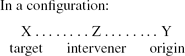
a local relation between X and Y cannot be established if Z intervenes, and Z is a position of the same type as X (Rizzi, Reference Rizzi1990, Reference Rizzi and Belletti2004).
Same type = sharing relevant features
Friedmann et al. (Reference Friedmann, Belletti and Rizzi2009) have proposed that if the target position X shares a feature labeled [NP], the lexical restriction with the element in the intervener position Z, so that the [NP] feature of the intervener is properly included in the feature set specification of the target, the resulting structure may be too hard for children to process.Footnote 1 In contrast, adults can process the inclusion relation, thus expressing the developmental difference with children; the processing of the somewhat more complex inclusion relation, however, may result in a slower parsing by adults of the structures involving the relation. The approach singles out ORs with a lexical head and an intervening lexical (preverbal) subject as the hardest structures to process, as is revealed by the experimental results discussed in Friedmann et al. (Reference Friedmann, Belletti and Rizzi2009).
As an illustration, let us adopt the notation in Friedmann et al. (Reference Friedmann, Belletti and Rizzi2009) and assume that a feature [R] is present on the target position X in the complementizer phrase, which functions as the attractor of the relative head; in headed (object) relatives, the attracting [NP] feature is also contained in the target position X. Hence, in headed ORs with a lexical subject in the relative clause, the proper inclusion of the [NP] feature of the lexical subject (the intervener Z) within the feature set of the target is inevitably created, as is illustrated in (6b), for the Hebrew example (6a). In contrast, in free ORs where no [NP] feature is contained in the target because there is no lexical head, there is no proper inclusion of the features of the intervener within the feature set of the target, even if the intervener is a lexical subject, as is illustrated in (6d) for the Hebrew example (6c). Wh is the operator feature assumed for free relatives in place of the feature [NP]. Free ORs are properly parsed by Hebrew children in contrast with headed ORs, a crucial finding presented in Friedmann et al. (Reference Friedmann, Belletti and Rizzi2009).
- (6)
According to the RM principle, identity of feature specification between the target and the intervener leads to straightforward ungrammaticality, whereas complete disjunction in feature specification leads to a grammatical computation. Applying the principle to characterize development in the terms of Friedmann et al. (Reference Friedmann, Belletti and Rizzi2009), no development is expected in the ability to compute the two extreme set theoretic relations of identity and disjunction, with identity yielding straightforward ungrammaticality and disjunction yielding good grammatical processing; development may be expected, and is found in the capacity to compute the inclusion relation, which causes difficulties in child grammar, as described. However, although adults have the capacity to process the inclusion relation, they do so at some cost, their often mentioned slower parsing of headed ORs across an intervening lexical subject, in which syntactic intervention is modulated through the feature distinction determining inclusion.Footnote 2
PORs in children and adults
Given this background, Belletti (Reference Belletti, Ferré, Prévost, Tuller and Zebib2011) has proposed that an optimal way to satisfy the locality principle of RM may be one in which intervention is not just modulated in featural terms but is rather altogether absent. As headed ORs across an intervening lexical subject inevitably create the feature inclusion situation, as described in (6b), appeal to a computation whereby the optimal satisfaction of the locality principle becomes possible may be favored. This is precisely the way in which appeal to passive in the computation of a headed OR across an intervening lexical subject can be interpreted, assuming an analysis of passive involving the operation called smuggling in Collins (Reference Collins2005). According to this analysis, the passive computation implies an operation that moves a chunk of the verb phrase containing (at least) the verb (past participle) and the internal argument/direct object to a position higher in the clausal structure, above the external argument within the verb phrase (for further detail and discussion, see Belletti & Contemori, Reference Belletti, Contemori, Costa, Castro, Lobo and Pratas2010; Belletti & Rizzi, Reference Belletti, Rizzi, Berwick and Piattelli Palmarini2010). Thus, movement of the internal argument/direct object into the subject position of the clause of a passive sentence does not directly occur from the object position across the intervening external argument in its merge position inside the verb phrase, because this derivation would be problematic for locality. Rather, the reordering of grammatical functions implied in passives is obtained in two steps: movement of the relevant verbal chunk just described and then movement of the internal argument into the clausal subject position. In no step of the derivation is locality violated nor is intervention featurally modulated in any way. The schematic derivation described is illustrated in (7).
- (7)
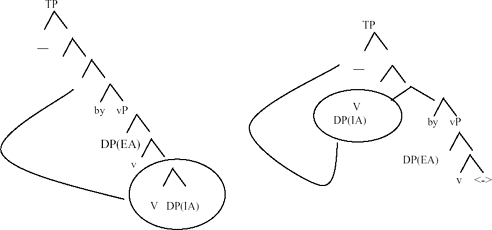
Headed ORs across an intervening lexical subject can thus be transformed into PORs with a derivation that can be considered optimal from the point of view of the satisfaction of RM. As an efficient mastery of passive/smuggling develops around age 4 or 5, children can access PORs only relatively late, whereas adults can have easy access to the computation.Footnote 3 This point will be taken up again in detail in the Discussion. We now move to the description of our experimental studies and the presentation of the results.
STUDY 1: PRODUCTION
The first study in based on data gathered in one experiment carried out in Italian, eliciting SR and OR clauses. We will first describe the method, and then we present the main results.
Methods
Participants
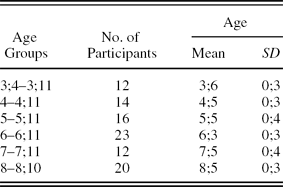
Ninety-seven Italian-speaking children aged 3;4–8;10 participated in the elicited production study. The children came from two public schools in Siena and Chianciano Terme, Italy. Children were divided into six age groups. Table 1 shows the number and the age mean of each age group. Ten adults aged 20–30 volunteered as control participants.
Description of the participants
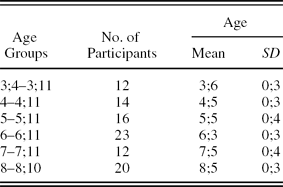
Note: Ages are in years;months.
Materials
Relative clause production was tested using two preference production tasks, adapted from Novogrodsky and Friedmann (Reference Novogrodsky and Friedmann2006). A picture description task adapted from Friedmann and Novogrodsky (Reference Friedmann and Szterman2006) was also used. The three tasks are described in the following sections.
ELICITATION TASK 1
In the first task, the experimenter presented two options and asked the participants to choose one. Ten items elicit SRs, the head of the expected SR is singular, and the verb (and object determiner phrase [DP]) of the relative clause is also singular.
Two conditions for SRs are included: an object and a verb change condition. In the object change condition, the child has to choose the object of the action, (8), and in the verb change condition, she has to choose the verb expressing the action, (9).
(8) Elicitation of a SR: Object change condition
Ci sono due bambini, Un bambino mangia la cioccolata, l'altro bambino mangia il gelato. Quale bambino ti piacerebbe essere? Inizia con: “Vorrei essere il bambino . . .”
There are two children. One child is eating chocolate, the other child is eating ice cream. Which child would you rather be? Start with “I would rather be . . .”
Target sentence:
Vorrei essere il bambino che mangia la cioccolata/il gelato.
“(I would rather be) the child who is eating chocolate/ice cream.”
(9) Elicitation of a SR: Verb change condition
Ci sono due bambini. Un bambino trova una palla, l'altro bambino compra una palla. Quale bambino ti piacerebbe essere? Inizia con: “Vorrei essere il bambino . . .”
There are two children. One child is finding a ball, the other child is buying a ball. Which child would you rather be? Start with “I would rather be . . .”
Target sentence:
Vorrei essere il bambino che trova/compra una palla.
“(I would rather be) the child who is finding/buying a ball.”
In the first task, six items were included that elicit ORs with a singular head and a plural subject (and verb) within the relative clause.
Three items belong to a subject change condition, (10), and three to a verb change condition, (11). In the first condition, the child has to choose one of the two characters performing an action, and in the second condition, the child has to choose one of the two actions performed by the same character.Footnote 4
(10) Elicitation of an OR with singular head and subject (and verb) of the relative plural: Subject change condition
Ci sono due bambini, i maestri fotografano un bambino e i nonni fotografano l'altro bambino. Quale bambino ti piacerebbe essere? Inizia con: “Vorrei essere il bambino . . .”
There are two children. The teachers are photographing one child, the grandparents are photographing the other child. Which child would you rather be? Start with “I would rather be . . .”
Target sentence:
Vorrei essere il bambino che i maestri/nonni fotografano.
“(I would rather be) the child that the teachers/grandparents are photographing.”
(11) Elicitation of an OR with singular head and subject (and verb) of the relative plural: Verb change condition
Ci sono due bambini, gli amici cercano un bambino e gli amici trovano l'altro bambino. Quale bambino ti piacerebbe essere? Inizia con: “Vorrei essere il bambino . . .”
There are two children. The friends are looking for one child, the friends are finding the other child. Which child would you rather be? Start with “I would rather be . . .”
Target sentence:
Vorrei essere il bambino che gli amici cercano/trovano.
“(I would rather be) the child that the friends are looking for/are finding.”
ELICITATION TASK 2
The structure of the second task resembles that of the first one with the other possible number condition implemented, hence with a plural head and a singular subject/object within the relative clause. Ten SRs and 10 ORs were elicited with a plural head and a singular subject (and agreeing verb) within the relative clause.
Similar to the previous task, we had two conditions for SR (an object change and a verb change condition) and two conditions for OR (a subject change and a verb change condition).Footnote 5 To illustrate, (12) gives a example of elicitation of a SR in the object change condition and (13) gives an example of elicitation of an OR in the verb change condition.
(12) Elicitation of a SR: Object change condition
Ci sono due gruppi di bambini. Dei bambini mangiano la cioccolata, dei bambini mangiano il gelato. Con quali bambini ti piacerebbe stare? Inizia con: “Vorrei stare con i bambini . . .”
“There are two groups of children. Some children eat chocolate, the other children eat ice cream. With which children would you rather stay? Start with “I would rather stay with . . .”
Target sentence:
Vorrei stare con i bambini che mangiano la cioccolata/il gelato.
“(I would rather stay with) the children who are eating chocolate/ice cream.”
(13) Elicitation of an OR: Verb change condition
Ci sono due gruppi di bambini. Il nonno cerca i bambini e il nonno trova gli altri bambini. Con quali bambini ti piacerebbe stare? Inizia con: “Vorrei stare con i bambini . . .”
“There are two groups of children. The grandpa looks for the children and the grandpa finds the other children. With which children would you rather stay? Start with “I would rather stay with the children . . .”
Target sentence:
(Vorrei stare con i bambini) che il nonno cerca/trova.
“(I would rather stay with) the children that the grandpa is looking for/finding.”
The results of the two number conditions (singular head/subject plural and plural head/subject singular) will be presented separately.
ELICITATION TASK 3
The third task, adapted from Novogrodsky and Friedmann (Reference Novogrodsky and Friedmann2006), aims at eliciting 20 SRs and 20 ORs as description of pictures. The task was only used to test children. Pairs of pictures, each featuring two figures, were presented. One picture showed one of the figures carrying out an action on the other, and the second picture showed the same figures with the roles reversed. An example is given in Figure 1.Footnote 6
An example of Elicitation Task 3. [A color version of this figure can be viewed online at http://journals.cambridge.org/aps]

The experimenter described the two scenes using simple sentences, then asked each child a question about one of the figures in order to elicit either a SR, (14), or an OR, (15).
Experimenter: In these pictures there are two rabbits. In one picture the rabbit is pushing the penguin, and in the other picture the penguin is pushing the rabbit. Which rabbit is this (pointing to the first picture)? Start with “This is the rabbit . . .”
(14) Target SR:
Il coniglio che spinge il pinguino.
“(This is the rabbit) that is pushing the penguin.”
Experimenter: and now which rabbit is this (pointing to the second picture)? Start with “This is the rabbit . . .”
(15) Target OR:
Il coniglio che il pinguino spinge.
“(This is the rabbit) that the penguin is pushing”
For this task, we concentrate on results for PORs and resumptive ORs produced by children.Footnote 7
Coding
Tasks 1, 2, and 3 were administered to children in individual sessions in a separate, quiet room in their school. Adults were similarly tested in a testing room at the university. All the responses of the participants were recorded and transcribed after each session. Unintelligible utterances were discarded.
Sometimes, when the children produced a declarative sentence instead of a relative clause, the experimenter invited the child to describe the situation again, beginning with “I would rather be/I would rather stay with . . .” If a relative clause was finally produced, that was the response taken into account.
Target SRs, such as in (16), were counted as correct. For ORs, we counted as correct those ORs with a gap, a preverbal, a postverbal, or a null subject within the relative clause, (17). Furthermore, we counted as target productions those ORs with a clitic pronoun, (18), or a DP, (19), resuming the head of the relative clause. Although resumption is only a colloquial and rather substandard relativization strategy in standard Italian (Belletti & Contemori Reference Belletti, Contemori, Costa, Castro, Lobo and Pratas2010; Guasti & Cardinaletti Reference Guasti and Cardinaletti2003; Utzeri, Reference Utzeri2007), it is used in the informal language and attested cross-linguistically in children's production.Footnote 8
(16) SR:
(Vorrei essere il bambino)Footnote 9 che fotografa l'uomo/la donna.
“(I would rather be the child) who is photographing a man/woman.”
(17) OR with gap:
(Vorrei stare con i bambini) che il (dottore/l'infermiera)Footnote 10 visita (dottore/l'infermiera).
“(I would rather stay with the children) that (the doctor/the nurse) is examining (the doctor/the nurse).”
(18) OR with resumptive clitic pronoun:
(Vorrei essere il bambino) che (i genitori) lo fotografano/disegnano (i genitori).
“(I would rather be the child) that (the parents) are photographing/drawing him-CL (the parents).”
(19) OR with resumptive DP:
(Vorrei essere il bambino) che i (maestri/nonni) fotografano il bambino.
“(I would rather be the child) that the (teachers/grandparents) are photographing the child.”
Results
In this section we present the main results of the production tasks. First, we compare the number of SRs and ORs produced by children and adults. Second, we illustrate the qualitative analysis of the productions when SRs and ORs are expected, respectively. In particular, we describe in detail the use of passive by children and adults as an alternative to the production of an active OR and we provide a qualitative analysis of the correct ORs produced by children, focusing on resumptive ORs. Third, we summarize and discuss the main results of the elicitation tasks.
SR and OR clauses: Quantitative analysis
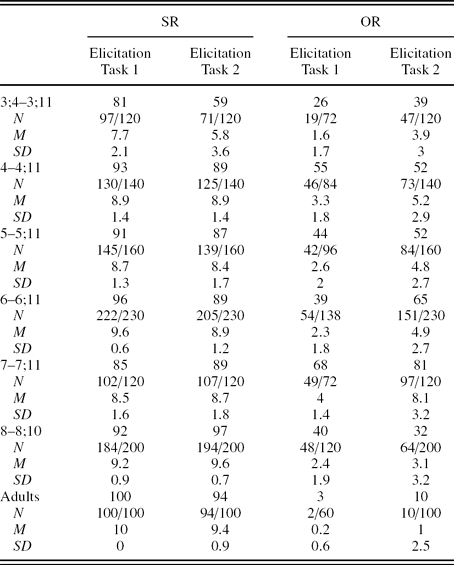
In this section we compare the number of SRs and ORs correctly produced by the participants. In Table 2, we present the results, grouped by type of sentence, task, and participants’ groups.
Percentages, means, and standard deviations of the target subject relatives (SRs) and object relatives (ORs) produced by children and adults during Elicitation Task 1 (singular head) and Elicitation Task 2 (plural head)
The total number of target SRs and ORs produced by children and adults has been transformed into proportions and then converted with angular transformation. The results have then been analyzed with a repeated measures analysis of variance (ANOVA). The main factors are Sentence Type and Task, and each of them has two levels: SR versus OR and Elicitation Task 1 versus Elicitation Task 2. Group was used as a between-subjects factor.
The analysis reveals a main effect of Sentence Type, F (1, 106) = 213.522, p < .0001, partial η2 = 0.668; Group, F (1, 106) = 1940.595, p < .0001, partial η2 = 0.948; and positive interactions between Sentence Type and Task, F (1, 106) = 7.810, p < .006, partial η2 = 0.069.
The Bonferroni post hoc test shows that adults differ significantly from 4-year-old (p < .040), 6-year-old (p < .004), and 7-year-old (p < .0001) children. Furthermore, a significant difference emerges among the 3-year-old group and 4-year-old (p < .006), 6-year-old (p < .0001), 7-year-old (p < .0001), and 8-year-old (p < .041) children.
Pairwise comparisons also show that the interaction between Sentence Type and Task is due to a significant difference between SR and OR in Elicitation Task 1, F (1, 106) = 188.370, p < .0001, partial η2 = 0.640, and in Elicitation Task 2, F (1, 106) = 102.900, p < .0001, partial η2 = 0.493. Moreover, a significant difference emerges between ORs produced in Elicitation Task 1 and SRs produced in Elicitation Task 2, F (1, 106) = 161.321, p < .0001, partial η2 = 0.603, and between ORs in Elicitation Task 2 and SRs in Elicitation Task 1, F (1, 106) = 124.718, p < .0001, partial η2 = 0.541. ORs for the two tasks differed significantly, with a higher number of ORs produced in Elicitation Task 2 than in Elicitation Task 1, F (1, 106) = 4.683, p < .033, partial η2 = 0.042.
As clearly emerges in Table 2, adults’ performance in the two tasks is very accurate for SRs but very low for ORs. As we will see in the qualitative analysis of the results, adults prefer to produce PORs to a high extent when an OR is expected.
In the next section, we present the qualitative analysis of productions when a SR or an OR was expected.
SR clauses: Qualitative analysis of the responses
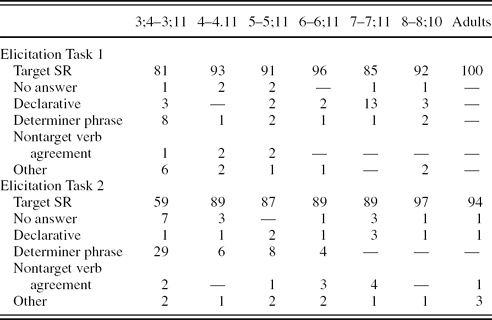
Table 3 presents the percentages of responses given when a SR is expected (but not always produced) in Preference Task 1 (singular head) and in Preference Task 2 (plural head), respectively. Data are grouped by task and group of participants.
Percentages of subject relatives (SRs) produced by children and adults in Elicitation Task 1 (singular head) and Elicitation Task 2 (plural head) out of the total expected relatives
The following sentences are examples of a declarative clause, (20), a DP, (21), a SR with nontarget verb agreement, (22), and a sentence labeled as “other,” (23), produced by children when a SR is expected.
Target answer:
(Vorrei essere) il bambino che fotografa un uomo/donna.
“(I would rather be) the child who photographs a man/woman.”
(20) Fotografa la donna
“Pro photographs the woman” (F.T. 4;9)
(21) La signora
“The lady” (R.S. 4;7)
Target answer:
(Vorrei essere) il bambino che fotografa/disegna il nonno.
“(I would rather be) the child that is photographing/painting the grandpa.”
(22) Che disegnano il nonno.
“pro that are painting the grandpa” (V.L. 4;6)
Target answer:
(Vorrei essere) il bambino che il papà/vicino pettina.
“(I would rather be) the child that the father/neighbor is combing.”
(23) Vorrei essere la bambina la mamma.
“I would rather be the child the mum.” (A.G. 4;5)
As illustrated in Table 3, 3-year-old children produced a high number of DPs in the plural head condition when they did not produce the target sentence. This pattern was not observed in the older children.Footnote 11
In the next section we present the types of productions used by participants when an OR is expected. Furthermore, we will focus on the use of passive as the preferred strategy adopted by adults and older children in place of an active OR. The use of passive will be analyzed in both elicitation Preference Tasks 1 and 2 (head singular/subject plural and head plural/subject singular conditions) and Elicitation Task 3 (picture description).
OR clauses: Qualitative analysis of the responses
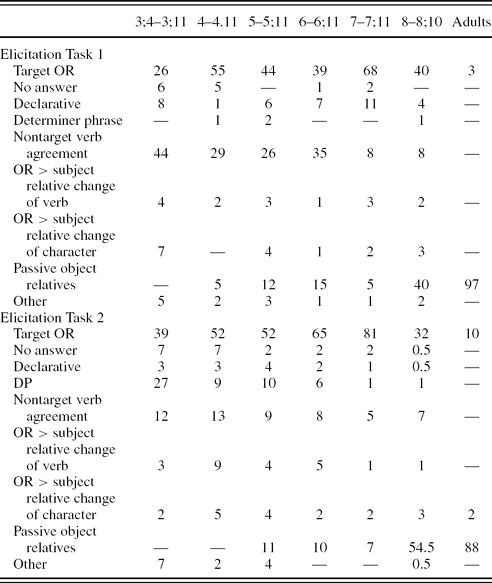
Table 4 provides the productions of both children and adults when an OR is expected. Data are grouped by task and group of participants.
Percentages of object relatives (ORs) produced by children and adults in Elicitation Task 1 (singular head/subject plural) and Elicitation Task 2 (plural head/subject singular) out of the total expected relatives
The following sentences are examples of a declarative clause, (24), a DP, (25), and an OR with nontarget verb agreement, (26), produced by children when an OR is expected. In sentences (27)–(29), examples of ORs transformed into SRs in different ways (change of character, i.e., the child identifies him/herself with a different character of the story than the child; verb change; passive) are given. Participants transform an OR into a SR either by changing the characters they identify themselves with, (27), changing the verb in the relative clause, (28), or producing a passive sentence, (29). Relative clauses with PORs, such as (29), will be analyzed further in Table 5, Table 6, Table 7, and Table 8.
Target sentence:
(Vorrei stare con i bambini) che l'elefante solleva/bagna.
“(I would rather stay with) the children that the elephant is lifting/spraying.”
(24) Declarative clause: L'elefante porta i bambini.
“The elephant is carrying the children.” (C.V. 5;4)
(25) DP: L'elefante
“The elephant” (V.T. 3;8)
(26) OR with nontarget verb agreement: Quelli che portano l'elefante.
“Those who carry the elephant.” (E.P. 4;10)
(27) OR > SR change of character: L'elefante che bagna i bambini.
“The elephant that is spraying the children.” (A.S. 4;2)
(28) OR > SR verb change: Che stanno sopra l'elefante.
“Those who are on top of the elephant.” (M.R.4;3)
(29) OR > SR passive: Quelli che vengono sollevati.
“Those who are lifted.” (F.C. 5;11)
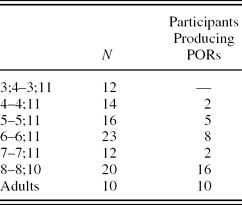
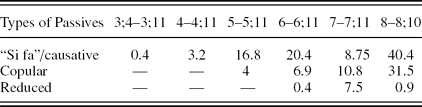
Percentages of passive object relatives produced by children and adults in Elicitation Task 1 (singular head/subject plural) and Elicitation Task 2 (plural head/subject singular) out of the total object relatives expected in the two elicitation tasks
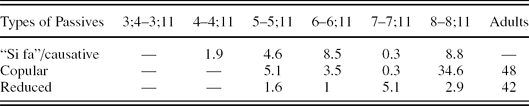
Total number (N) of participants in each age group who adopt passive object relatives (PORs) in Elicitation Task 1 (singular head/subject plural) and Elicitation Task 2 (plural head/subject singular)
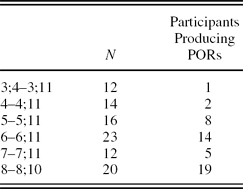
Percentages of passive object relatives produced by children in Elicitation Task 3 (picture description task)
Total number (N) of participants in each age group who adopt passive object relatives (PORs) in Elicitation Task 3 (picture description task)
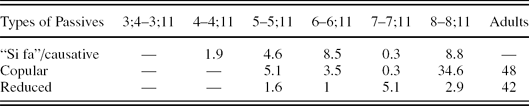
Adults produce ORs only in very few cases, less often than children (Belletti, Reference Belletti, Ferré, Prévost, Tuller and Zebib2011). The very low production of ORs strongly contrasts with their ceiling level performance on SRs, as illustrated in Tables 2, 3, and 4. Instead of ORs, Italian adults and older children prefer to produce PORs. As shown by the children's productions in (30)–(32), different kinds of passives may be used. The number of PORs produced by both groups of participants is illustrated in Table 5. Data are grouped by type of passives and group of participants. Results of the two tasks are collapsed, because they show a similar trend.
Target sentence:
(Vorrei stare con i bambini) che l'elefante solleva/bagna.
“(I would rather stay with) the children that the elephant is lifting/spraying.”
(30) “Si fa”/Causative passive:
Quelli che si fanno bagna’ dall'elefante.
“The ones that are sprayed by the elephant.” (M.C. 6;9)
(31) Copular passive:
I bambini che vengono sollevati dall'elefante.
“The children that are lifted by the elephant.” (B.L. 6;1)
(32) Reduced passive:
Quelli sollevati dall'elefante.
“The ones lifted by the elephant.” (C.C. 6;4)
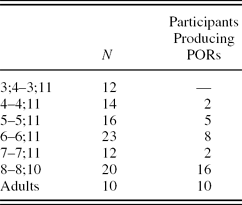
As shown in Table 5, the use of passive is not uniform through the age groups. In Table 6, we present the total number of children taking part in the study and the number of participants in each group who produced at least one POR in one of the two tasks.
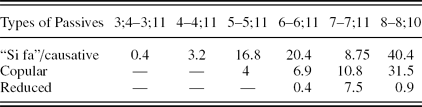
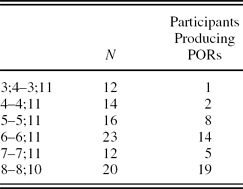
In Table 7, we present the percentages of PORs produced, collected with the additional picture description task (Elicitation Task 3).Footnote 12 In Table 8 we illustrate the number of children who produced PORs instead of an active OR in the same task.
In the following section, we present the qualitative analysis of correct ORs produced by adults and children.
Qualitative analysis of target ORs: ORs with a gap and resumptive ORs
The ORs produced include ORs with a gap and resumptive ORs. Although resumptive ORs are frequently produced by children of all age groups, they are never attested in the adults’ elicited production, because adults mainly produced PORs. Adults can therefore be excluded from this analysis.
Notice that, although resumption is not a standard relativization strategy in Italian, it is relatively common at a colloquial/substandard level, with a clitic as the resumptive element (for Italian see, Guasti & Cardinaletti, Reference Guasti and Cardinaletti2003; Utzeri, Reference Utzeri2007). Resumptive relatives are attested cross-linguistically in both child and adult grammars (de Villiers et al., Reference de Villiers, de Villiers, Hoban and Tager-Flusberg1994; Labelle, Reference Labelle1990, Reference Labelle1996; Pérez-Leroux, Reference Pérez-Leroux1995). In this section we illustrate the types of resumptive relatives attested in the corpus.
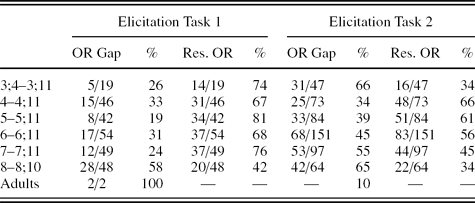
Table 9 shows the percentages of ORs with a gap and resumptive ORs out of the total number of ORs produced by children. The data are presented by type of task and age group. In the following productions, we present an example of an OR with a gap, (33), an OR with a resumptive DP, (34), and an OR with a resumptive clitic, (35).
Target sentence:
(Vorrei stare) con i bambini che l'elefante bagna/solleva.
“(I would rather stay) with the children that the elephant is spraying/lifting.”
(33) OR with gap:
Coi bambini che bagna l'elefante.
“With the children that the elephant is spraying” (P.V. 6;8)
Target sentence:
(Vorrei stare) con i bambini che il papà fotografa/abbraccia.
“(I would rather stay) with the children that the father is photographing/hugging.”
(34) OR with resumptive DP:
I bambini che il babbo abbraccia i bambini
“The children that the father is hugging the children” (F.P. 5;3)
Target sentence:
(Vorrei essere) il bambino che i genitori fotografano/disegnano.
“(I would rather be) the child that the parents are photographing/drawing.”
(35) OR with resunptive clitic pronoun:
Vorrei essere la bambina che i genitori la stanno disegnando.
“I would like to be the child that the parents are drawing her-CL.” (B.L. 5;11)
Number and percentages of object relatives (ORs) with gap and resumptive (Res.) ORs in Elicitation Task 1 (singular head/subject plural) and Elicitation Task 2 (plural head/subject singular) versus the total target ORs produced
In Example (35) the resumptive pronoun used by the child is a third person clitic pronoun. However, in some cases, children also produced ORs with the first person clitic pronoun “mi,” (36). The first person clitic pronoun seems to indicate a direct identification of the child with the character of the action.
Target sentence:
Vorrei essere il bambino che i maestri/nonni fotografano.
“(I would rather be) the child that the teachers/grandparents are photographing.”
(36) Sentence produced:
Quello che mi fotografano i nonni.
“The one that the grandparents are photographing me.” (G.D. 6;1)
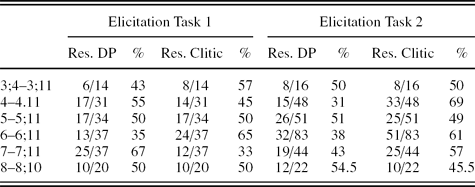
As Table 9 clearly shows, the production of resumptive ORs is fairly frequent in children. The percentage of ORs with a gap is generally lower than the number of ORs with resumption in most of the age groups’ productions. The relative head is resumed either by a clitic pronoun or by a full lexical DP, corresponding to the relative head.Footnote 13Table 10 shows in detail the distribution of the resumptive ORs in Elicitation Tasks 1 and 2, with respect to the element resuming the head of the relative clause: a clitic pronoun or a full DP.
Number and percentages of object relatives (ORs) with resumptive (Res.) determiner phrase (DP) and clitic in Elicitation Task 1 (singular head/subject plural) and Elicitation Task 2 (plural head/subject singular) versus the total resumptive ORs produced
In Table 10, the number of resumptive DPs seems to be still high in the older age groups, a rather unexpected result, because ORs with a full DP are typically used by younger children and should be abandoned by this age (de Villiers et al., Reference de Villiers, de Villiers, Hoban and Tager-Flusberg1994; Guasti & Cardinaletti, Reference Guasti and Cardinaletti2003; Labelle, Reference Labelle1990, Reference Labelle1996; Pérez-Leroux, Reference Pérez-Leroux1995; Utzeri, Reference Utzeri2007).
Table 11 provides the number of resumptive ORs produced by older children in the picture description task, in order to determine whether the wide use of resumptive DPs in the preference task could be considered a task-related effect.
Number and percentages of object relatives (ORs) with resumptive (res.) determiner phrase (DP) and with res. clitic produced by older children in the picture description task versus the total res. ORs produced

We conducted a repeated measures ANOVA to compare the number of resumptive DPs produced in the preference tasks (Table 10) and in the picture description task (Table 11) by children aged 5;0–8;10. The main factor was Task, and Group was used as a between-subjects factor. The total number of ORs with resumptive DPs have been transformed into proportions and then converted with the angular transformation, prior to the analysis.
The analysis revealed a main effect of Group, F (1, 69) = 3.298, p = .025, η2 = 0.125. Furthermore, a main effect of Task approaches significance, F (1, 69) = 3.842, p = .054, η2 = 0.053, with the number of ORs with resumptive DPs produced in the preference tasks higher than the number of ORs with resumptive DPs produced in the picture description task. In the next section we discuss the main findings of the production study.
Interim discussion: Elicited production
The statistic analysis reveals that the production of SRs is significantly more accurate than the production of ORs, for all groups of participants,Footnote 14 and that the higher production of SRs with respect to ORs emerges in both Preference Tasks 1 and 2.
A developmental effect can be observed when the children's age groups are compared, with 3-year-old children overall less accurate than 4-, 6-, 7-, and 8-year-old children.
Overall, however, we observed a certain degree of variability in the performance of the participants and the groups, as shown by the means and standard deviations for the correct SRs and ORs (Table 2).
Furthermore, a clear result emerges from our data: that adults differ significantly from some of the children. The analysis of the productions when an ORs is expected shows that the difference between children and adults is due to the massive use of the passive in the latter group with respect to the former.
In our results, passive is also attested in children. It gradually emerges around the age of 5 and is adopted consistently by a subset of children in each age group.Footnote 15 The number of children adopting PORs, relative to the size of the age group, remains rather constant until the age of 8. In 8-year-old children, it drastically increases, and more than half of the participants use it (Table 6). It is interesting that the production of PORs becomes the most widespread strategy as an alternative to active ORs in adults, resulting in a significantly lower production of ORs in adults with respect to children.Footnote 16
When ORs are produced by children, the percentage of ORs with a gap is generally lower than the number of ORs with resumption in the majority of age groups. Furthermore, among the number of resumptive ORs, the number of resumptive clitics is generally higher than that of resumptive DPs from age 4.
In Preference Tasks 1 and 2, despite the prevalence of clitics over full DPs, the latter are still produced to a high extent by the older children.Footnote 17 As one may expect, the resumptive DP strategy decreases more in 7- and 8-year-old children's ORs, because it is not an available strategy in the adult language, not even at the substandard level. We also compared the results of the two preference tasks with the different picture description elicitation task to find out whether the presence of resumptive DPs in older groups might be related to the type of task administered to the children. In the additional task (picture description), the difference between the number of ORs with resumptive DPs produced in the two tasks approached significance. We then suggest that the high production of full DPs in the preference production task can be interpreted as a task-related effect.Footnote 18
In the following sections, we move to our second study, which investigates the comprehension of PORs in Italian children aged 6;5–8;10.
STUDY 2: COMPREHENSION
Method
Participants
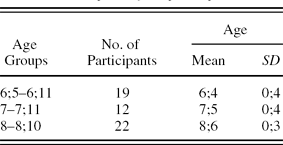
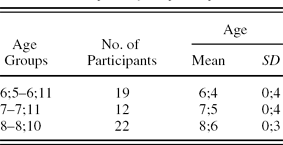
Fifty-three Italian-speaking children aged 6;5–8;10 participated in the comprehension study. The children, who came from a public school in Chianciano Terme (Italy), were divided into three age groups. The participants in Study 2 form a subset of those who participated in the elicited production study. Table 12 shows the number and the age mean of each age group.
Description of the participants
Materials
Comprehension of ORs and PORs was tested with a binary picture comprehension task adapted from Friedmann and Novogrodsky (Reference Friedmann and Novogrodsky2004). The aim of the test is to observe whether (and from which age) children comprehend those relatives that they appear to master in production (e.g., different types of PORs and ORs with a gap and with the resumptive clitic).
We included in the task items testing ORs with a gap and a preverbal subject within the relative clause, (nonstandard) ORs with a resumptive clitic pronoun, and three types of PORs (copular, reduced, and “si fa”/causative).
Each subject was presented with two pictures and was asked to choose the one that matched the sentence read by the experimenter. The first of each pair of pictures showed a figure carrying out an action on another figure, whereas the second picture showed the same figures with the roles reversed. An example of a picture is given in Figure 2.Footnote 19
An example of a picture from the binary picture comprehension task. [A color version of this figure can be viewed online at http://journals.cambridge.org/aps]
Comprehension of 60 sentences was tested: 12 right-branching ORs, (37), 12 right-branching ORs with the resumptive clitic, (38), and 36 right-branching PORs. PORs included 3 different types of verbal passive: 12 items with a “si fa”/causative passive, (39), 12 items with a copular passive, (40), and 12 items with a reduced passive, (41).
(37) Mostrami la bambina che la giraffa lava.
“Show me the child that the giraffe is washing.”
(38) Mostrami la bambina che la giraffa la lava.
“Show me the child that the giraffe is washing her-CL.”
(39) Mostrami la bambina che si fa lavare dalla giraffe.
“Show me the child that is washed by the giraffe.”
(40) Mostrami la bambina che è lavata dalla giraffe.
“Show me the child that is washed by the giraffe.”
(41) Mostrami la bambina lavata dalla giraffe.
“Show me the child washed by the giraffe.”
All of the sentences were semantically reversible, and the noun phrases were always animate. They were presented in random order.
Coding
The experiment was administered to children in individual sessions in a separate, quiet room in their school. All responses of the participants were transcribed during each session. Each child heard the sentence and was asked to point to the picture matching the sentence. No time limit was set, and when the child requested, the experimenter repeated the sentence.
Results
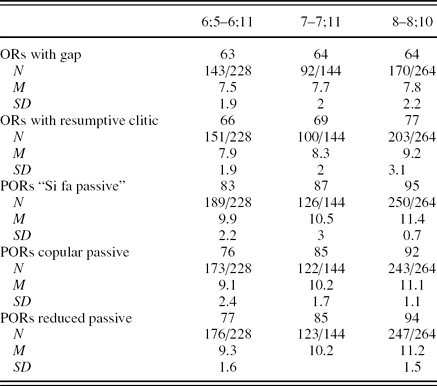
Table 13 shows the total number of correct responses scored by the three age groups in the comprehension task. The percentages, the row scores, the means, and the standard deviations are grouped by age group and type of condition.
Number and percentages of object relatives (ORs) and passive object relatives (PORs) correctly comprehended by children in the three age groups
The total numbers of correct ORs and PORs comprehended by children have been transformed into proportions and then converted with the angular transformation. The data have then been analyzed with a repeated measures ANOVA. The main factor was Sentence Type, which had five levels. Group was used as a between-subject factor.
The analysis revealed a main effect of Sentence Type, F (2, 49) = 32.214, p < .0001, partial η2 = 0.397, and a main effect of Group, F (2, 49) = 10.967, p < .0001, partial η2 = 0.309, but no interaction between the two variables.
The pairwise comparisons showed a significant difference between ORs with a gap and ORs with clitics, F (1, 52) = 10.340, p < .002, partial η2 = 0.166; ORs with a gap and ORs with “si fa”/causative, F (1, 52) = 85.492, p < .0001, partial η2 = 0.622; ORs with a gap and ORs with copular passives, F (1, 52) = 46.744, p < .0001, partial η2 = 0.478; and ORs with a gap and ORs with reduced passives, F (1, 52) = 57.461, p < .0001, partial η2 = 0.525. In addition, children were significantly less accurate on ORs with clitic than on ORs with “si fa”/causative, F (1, 52) = 55.311, p < .0001, partial η2 = 0.515; copular, F (1, 52) = 23.676, p < .0001, partial η2 = 0.317; and reduced passives, F (1, 52) = 34.924, p < .0001, partial η2 = 0.402. Finally, children were more accurate on ORs with “si fa”/causative passive than on ORs with copular, F (1, 52) = 4.967, p < .039, partial η2 = 0.081, and reduced passives, F (1, 52) = 34.924, p < .030, partial η2 = 0.087.
The Bonferroni post hoc test revealed that the main effect of Group was due to a significant difference between the 6-year-old group and the 8-year-old group (p < .0001), and a difference between the 7-year-old group and the 8-year-old group approached significance (p < .054).
Interim discussion: Comprehension
The results of the comprehension task revealed that 6- and 7-year-old children were overall less accurate than 8-year-old children. Moreover, all groups were more accurate on PORs than on ORs with either a gap or a resumptive clitic.
It was interesting that we found a difference between ORs with a gap and ORs with a clitic pronoun, with children being more accurate on the latter with respect to the former. In addition, a gradient of accuracy emerged on the comprehension of POR, with children being more accurate on PORs with causatives than on copular and reduced passives.
The results on ORs with a gap are in line with previous studies on Italian (Arosio et al., Reference Arosio, Adani and Guasti2006), suggesting that, up to the age of 8, children still find ORs with a gap difficult to understand. In addition, our study tested for the first time ORs with resumptive clitics in Italian, showing that their comprehension is more accurate than that of ORs with a gap in children aged 6;5–8;10.Footnote 20
A clear result has emerged: Children from 6;5 to 8;10 find PORs easier than active ORs with either a gap or resumptive clitics. The comprehension of PORs is significantly more accurate than ORs independently of the kind of passive used, “si fa”/causative, copular, or reduced. Instead, within the three kinds of passives, PORs with “si fa”/causative seem easier for children than both copular and reduced passives.
The results of the comprehension task are in line with the elicited production data presented in this study, showing that a POR is less difficult to comprehend at 6;5–8;10 because it is increasingly preferred in production. Furthermore, the gradient of difficulty observed in comprehension, with “si fa”/causative passive easier than copular and reduced passives, reflects findings of elicited production, where “si fa”/causative passive is the first type of passive that emerges in children's POR, followed by copular and reduced constructions.Footnote 21
GENERAL DISCUSSION
We concentrate our discussion on what we assume to be the two most significant aspects of our results: first, the overwhelming preference for PORs in the adults’ productions when an OR is elicited and children approach the adults’ behavior as they grow older; and second, PORs are also preferred in comprehension by children, at the age at which they can master passive. We also briefly comment on other aspects of the results, in particular, that resumptive ORs are frequently produced by children and that they are better comprehended than ORs with a gap. We start the discussion from this last point.
Resumptive ORs
As shown in Table 9, children of all ages often produce resumptive relatives in place of the standard ORs, which, in Italian, have a gap in the merge position of the relative head. When resumption is realized through a clitic pronoun, the strategy used by children corresponds to a colloquial/informal, slightly substandard way of forming an OR in current standard Italian. Beside this kind of resumptive ORs, children of all ages also frequently adopt a form of resumption that is not possible in current standard Italian, not even at the substandard level: they use a lexical DP corresponding to the relative head. As shown in Table 10, resumption through a clitic or through a full DP is quite balanced in our results from the preference tasks. Resumption through a clitic is instead clearly much preferred to DP resumption in the picture description task. From the comparison of the results of the preference and the picture description tasks, we tend to conclude that the relatively significant presence of DP resumption in the preference tasks is mainly an artifact of the design. As noted, DP resumption is extremely low in the older children of our groups on the picture description task. Given the task-related shape of the data on DP resumption, we do not make any explicit hypothesis on what exactly the phenomenon could correspond to in the children's productions. In part, it could be a real form of resumption, a repetition of the head of the relative clause, a possibility that some languages do allow as a grammatical option. As has been occasionally but repeatedly noted in the literature, this is a strategy that especially young children tend to adopt in their first productions of ORs (see de Villiers et al., Reference de Villiers, de Villiers, Hoban and Tager-Flusberg1994; Guasti & Cardinaletti, Reference Guasti and Cardinaletti2003; Labelle, Reference Labelle1990, Reference Labelle1996; Pérez-Leroux, Reference Pérez-Leroux1995; Utzeri, Reference Utzeri2007). In this respect, the developmental path of the picture description task looks coherent with previous results, from different languages. However, because it is not always the case that the resumptive DP in the relative clause realizes an exact copy of the relative head (especially in the preference tasks, see Note 13), one cannot be sure of what kind of computation children are actually implementing in cases of this sort. Hence, considering both the task-related shape of the results pointed out and the heterogeneous form of the resumptive DP just noted, we do not attempt any speculation in regard to DP resumptive ORs and leave the issue open.
The situation is different with clitic resumption, a possible option in colloquial/informal Italian, as noted.Footnote 22 In this case, we can simply assume that children are using a relativization strategy that is available in the language, possibly implemented with a doubling derivation, with movement of the relative head and stranding of the clitic inside the relative clause (see Belletti, Reference Belletti2009b, chapter 11, for a discussion and below for more on this). Given the colloquial, informal level of clitic resumptive ORs, it is no surprise that children adopt this strategy to a nonnegligible extent. We may also note that the results from comprehension in older children 6;5–8;10 where ORs with clitic resumption are better comprehended than ORs with a gap are in line with the production results. However, the preference for PORs in adults and, developmentally, in children, again in both production and comprehension, is the most significant aspect of the results, which draws the main divide between PORs on the one side and (active) ORs with or without a resumptive clitic on the other. We take up the issue in the following section.
PORs in production
The production of PORs in both of the adopted designs presented in this article is much more than a tendency; it is a strong result for adults and a very clear developmental path for children. In essence, adults produce very few target ORs and produce instead around 90% PORs in all tasks; children tend to approach the adults’ performance, as is clearly shown by the significant number of PORs in the older children. Because passive is known to develop relatively late (around age 5), it is no surprise that it may be utilized to a greater extent by the children of the oldest group. However, children of all ages in the picture description task and children from age 4 on in the preference tasks do produce a few PORs, indicating that their attempt at avoiding the production of an (active) OR in a way that the intended meaning be preserved, as is the case in PORs, starts from very early on.
Following Belletti (Reference Belletti and Svenonius2009a, Reference Belletti, Ferré, Prévost, Tuller and Zebib2011) and Belletti and Contemori (Reference Belletti, Contemori, Costa, Castro, Lobo and Pratas2010), we interpret the emergence of the use of passive in the relative clause when an OR is elicited as a most suitable way to avoid the disturbing intervention of the preverbal subject, which inevitably occurs in the establishment of the dependency between the relative head and the gap in its merge object position within the relative clause. The presence of the intervening lexical subject would be problematic for locality, expressed through a featural approach to the RM principle (Rizzi, Reference Rizzi1990, Reference Rizzi and Belletti2004), along the lines proposed in Friedmann et al. (Reference Friedmann, Belletti and Rizzi2009) and as has been illustrated in the Introduction section. The intervention situation is schematized in (42)Footnote 23:
- (42)

Assuming a derivation of passive in the terms proposed in Collins (Reference Collins2005), intervention by the subject is altogether avoided in passive sentences. Given the assumed derivation, a crucial step is involved in passive: the operation that takes a chunk of the verb phrase containing (at least) the verb and the direct object and moves it across the verb phrase internal subject DP, smuggling in Collins’ terminology. Movement of this chunk of the verb phrase has the direct consequence that it allows movement of the object into the relative head position in the complementizer phrase, without any violation of locality, because there is no intervention of the subject from the moved/smuggled position (for further discussion, see Belletti & Rizzi, Reference Belletti, Rizzi, Berwick and Piattelli Palmarini2010). The relevant steps of this assumed derivation are summarized in (43):
- (43)

Locality is then the fundamental principled reason that leads to passive in the production of headed ORs across an intervening preverbal lexical subject, the type of ORs elicited in the tasks reported in this work.
A natural question may be asked at this point, given the account just described in combination with our background analytical assumptions based on Friedmann et al. (Reference Friedmann, Belletti and Rizzi2009)Footnote 24: because Italian adults appear to be able to process ORs, why are they so consistent in not producing them in the elicitation conditions utilized in our experiments, which are very simple and do not impose any particular processing load? As a resort to production of a POR in place of an active OR has not turned out to be a task-related effect in the older children in our studies (see discussion surrounding Tables 7 and 8), we assume that the same must be true for adults. Moreover, in a recent further adaptation of the preference task, which has been administered only to adults, presented in Belletti and Chesi (Reference Belletti and Chesi2011), overwhelming resort to PORs has been further confirmed (contrasting with the presence of ORs in adults’ spontaneous production, also studied comparatively; Belletti & Chesi, Reference Belletti and Chesi2011). Thus, the question appears to be even more natural and relevant: Why do adults avoid the production of (active) ORs so systematically, and why do they do so consistently through use of passive? At this point, we do not have a firm answer to this question and can only offer a speculation; we suggest that the adults’ performance may be ultimately influenced by the experimental situation in which it occurred, a situation that, we assume, favors adoption of the optimal computation (see Belletti & Chesi, Reference Belletti and Chesi2011, for further elaboration on this point). According to the account defended here, such optimal computation is precisely the one that eliminates intervention (Belletti, Reference Belletti, Ferré, Prévost, Tuller and Zebib2011), hence a computation involving passive has precisely this property.
PORs in comprehension
The coherence of the results of our comprehension experiment with children with those found in production is especially interesting and neat. We decided to test children not earlier than age 6, because we wanted to be reasonably sure that the children were at an age at which they could master passive fairly well. They did understand all three types of PORs tested. Comprehension increases with age, and it becomes almost perfect in the age range 8;0–8;10; it is, however, already very good at age 6, as Table 13 clearly indicates. The interesting aspect of our results here is the comparison between the almost perfect comprehension of PORs with the comprehension of (active) ORs both with a gap and with a resumptive clitic, which is much lower, for all age groups. We interpret this result as a clear indication that, once again, the hardest structures to process are those where intervention by the subject is at stake.Footnote 25 The passive structures, in which, according to the analysis illustrated in the preceding section, no intervention occurs are those that are best understood.
As we saw, in the production experiments, the overwhelmingly adopted way to realize an OR clause is through the production of a POR; in comprehension, where the structures to parse are given by the experimenter, the clear preference for PORs over active ORs emerges from the significantly better understanding of the former compared to the latter. Coherently with the production results where clitic resumption in (active) ORs was often used by children, the comprehension results have confirmed a preference for resumptive (active) ORs over ORs with a gap. Adopting a derivation of resumptive relatives through movement of the relative head from a “big DP” containing both the relative head and the clitic pronoun, and stranding of the clitic within the relative clause (Belletti, Reference Belletti2005; Cecchetto, Reference Cecchetto2000), one may speculate that the presence of the clitic within the original DP containing the relative head could constitute a possible featural modulating factor to which the locality principle may be sensitive, the possibly ameliorating effect that use of the resumptive clitic appears to yield over object relativization with a gap, in both production and comprehension (see Note 20 for comparative considerations). However, it is crucial that we note once again that ORs both with and without resumption are disfavored compared to the much preferred ORs through passive, in which intervention is eliminated (not just modulated).
In connection with preference for PORs, our comprehension results have shown a preference for what we have referred to as “si fa”/causative passive over both copular and reduced passives in children. Further work and more data are needed for a better evaluation of the nature of this result. We note for now that the comprehension results in this connection are once again coherent with the production data from our experiments, where the “si fa”/causative form of passive is the first type of passive structure to emerge in the children's production of PORs. Reduced passives are absent in the younger ages, whereas they are very much adopted in adults’ productions, instead. A potentially intriguing and new developmental issue is opened by the new findings of the present work in this respect.
CONCLUSION
The main result of our work is twofold: first, PORs have been confirmed to be the most privileged strategy to avoid the production of an OR in the assumed experimental conditions, adopted by both adults and children, and this strategy is developmentally preferred, because older children tend to adopt it more than younger children; second, a parallel result is found in comprehension, with the comprehension of different kinds of PORs giving consistently significantly better results than the comprehension of (active) ORs, both with a gap and with a resumptive clitic pronoun. Following previous work, we have proposed that PORs may acquire this privileged status because they represent a suitable way, possibly an optimal way (Belletti, Reference Belletti, Ferré, Prévost, Tuller and Zebib2011), to avoid the intervention of the lexical subject in the establishment of the dependency between the lexical head and its merge position as the object of the relative clause. This is so because the smuggling derivation of passive à la Collins (Reference Collins2005) primarily yields a computation in which no intervention arises in the movement of the object into the subject position of the clause and into the position of the relative head in the complementizer phrase.
A featural approach to RM, along the lines adopted here, proposed in Starke (Reference Starke2001) and Rizzi (Reference Rizzi and Belletti2004), and elaborated to account for development in Friedmann et al. (Reference Friedmann, Belletti and Rizzi2009), leads us to expect that other ways should be available to modulate intervention in the computation of an OR clause. In particular, a mismatch in features between the relative head and the intervening lexical subject may ameliorate in principle the processing of a headed OR clause. In the number mismatch conditions created in the production tasks designed in this work, this has not turned out to be the case, because PORs have been the preferred production selected in all conditions anyway, by both adults and older children. Number mismatch has, however, been shown to facilitate the comprehension of ORs with an intervening lexical subject in various experimental conditions (Adani, Reference Adani2011; Adani, et al., Reference Adani2010; Arosio, Adani, & Guasti, Reference Arosio, Adani, Guasti, Brucart, Gavarrò and Solà2009; Contemori & Marinis, in press). Gender mismatch as well has been shown to facilitate the comprehension of OR clauses in Hebrew, with interesting comparative results with Italian where no such facilitation emerges (Belletti, Friedmann, Brunato, & Rizzi, Reference Belletti, Friedmann, Brunato and Rizzi2012). Mismatch in animacy can also facilitate the comprehension of ORs (Arosio, Guasti, & Stucchi, Reference Arosio, Guasti and Stucchi2010). However, forthcoming results from an adaptation of the preference tasks presented here, recently run in Italian with mismatch in the animacy feature of the relative head and the lexical subject, have shown that the animacy mismatch condition does not affect the production of ORs, with PORs remaining the overwhelmingly preferred option for adults (Belletti & Chesi, Reference Belletti and Chesi2011). Hence, one can speculate that in (elicited) production, speakers tend to adopt the computation that completely eliminates intervention, thus yielding the much preferred massive production of PORs. In comprehension, where the structures to be parsed are given, parsing of the OR structure is modulated according to levels of intervention, expressed in terms of feature distinction between the relative head and the intervening subject.Footnote 26
In conclusion, the main contribution of the results presented in this work has been the clear indication that passive in relatives may have a significant effect in enhancing both the production and the comprehension of OR clauses in both adults and children. Coherent with the assumed intervention account, PORs are much preferred over other possible structures, including resumptive OR clauses, and often overwhelmingly so.
ACKNOWLEDGMENTS
We thank Naama Friedmann for her comments, her generosity in making all of her experimental material available to us, and ultimately for inspiring the research presented here. Thanks also to our reviewers who contributed to making a better and more readable article.