Introduction
Chronic rhinosinusitis with nasal polyps is defined as symptomatic inflammation of the nose and paranasal sinuses that lasts for more than three consecutive months, associated with the presence of nasal polyps.Reference Fokkens, Lund, Mullol, Bachert, Alobid and Baroody1 The prevalence of chronic rhinosinusitis with nasal polyps in the general population is estimated to be 1–4 per cent.Reference Settipane, Peters and Chiu2 This has direct and indirect costs, and is associated with an important decrease in quality of life. This is especially true for the elderly, who often have co-morbidities and disabilities that require more individual and costly care.Reference Renteria, Mfuna Endam and Desrosiers3
According to the most recent guidelines,Reference Fokkens, Lund, Mullol, Bachert, Alobid and Baroody1 all patients with chronic rhinosinusitis with nasal polyps should undergo conservative medical treatment initially; a surgical approach is generally considered only after maximal medical treatment failure. Functional endoscopic sinus surgery (FESS) is currently considered the surgical ‘gold standard’, as it allows nasal polyps removal to their root, and enables the correction of the nasal polyps anatomical predisposing factor, with the concurrent improvement of post-operative topical therapy outcomes.Reference Tsikoudas, Barnes and White4 The sinus ostia is opened in order to reduce the recurrence rate. However, nasal polyps recurrence after FESS is almost 35 per cent at six months post-operatively, with 20 per cent of patients requiring revision surgery within five years.Reference DeConde, Mace, Levy, Rudmik, Alt and Smith5,Reference Hopkins, Slack, Lund, Brown, Copley and Browne6 In addition, this surgical procedure requires general anaesthesia and hospitalisation, with potentially long waiting lists in many ENT centres.Reference Bajaj, Sethi, Carr and Knight7 Furthermore, some elderly patients are not keen to undergo general anaesthesia surgical procedures or have absolute contraindications.
Recently, several studies have described surgical procedures performed under topical and local anaesthesia in an out-patient clinic setting, with promising results.Reference Albritton, Casiano and Sillers8–Reference Scott, Sowerby and Rotenberg11 These procedures are described as minimally invasive alternatives to traditional FESS, with a substantial cost reduction and a prompt symptomatic improvement in selected patients.
In recent years, we have utilised a minimally invasive surgical procedure that aims to reduce surgical complication rates, peri-operative pain and discomfort, and long waiting lists. It is carried out in a day-surgery setting with local anaesthesia and conscious sedation, only in highly selected patients. This paper reports our experience, showing the efficacy and the tolerability of this procedure in older adults.
Materials and methods
This retrospective study was approved by the local research ethics boards and was carried out in accordance with the principles of the Helsinki Declaration. Data were obtained from consecutive patients who underwent the minimally invasive surgical procedure from January 2017 to October 2018 at the Campus Bio-Medico University of Rome (Italy). Informed consent was obtained from all patients before including them in the study.
Inclusion criteria included all patients aged 60 years or more. The patients had all been diagnosed with chronic rhinosinusitis with nasal polyps, and had previously been treated unsuccessfully with medical therapy (topical corticosteroids and saline irrigations) for at least three months. Pre-operative diagnostic investigations, consisting of a comprehensive history, physical examination using nasal endoscopy, and computed tomography scanning, had been carried out.
Based on our inclusion and exclusion criteria, we enrolled 30 patients: 11 (36.6 per cent) had previously been treated with FESS, while 19 (63.4 per cent) were primary cases. Twenty-two patients (73.3 per cent) suffered from bilateral nasal polyps, whereas the remaining 8 (26.7 per cent) were treated for unilateral nasal polyps.
The clinical charts of these patients were retrospectively reviewed and the following clinical data were collected: patient demographics (age, sex); history of previous treatments (topical steroids, FESS); patient-reported intra- and post-operative pain; patients’ overall satisfaction; pre- and post-operative 22-item Sino-Nasal Outcome Test (SNOT-22) scoresReference Kennedy, Hubbard, Huyett, Patrie, Borish and Payne12 and endoscopic (modified Lund–Kennedy) scores;Reference Psaltis, Li, Vaezeafshar, Cho and Hwang13 surgical complications; and histological examination findings.
Intra- and post-operative pain or discomfort associated with the procedure was evaluated using a visual analogue scale (VAS), with 0 corresponding to ‘no pain’ and 10 corresponding to ‘extreme pain’. A VAS score of 8 or more was considered as severe pain. Patients’ satisfaction of the procedure was also evaluated using a VAS, with 0 corresponding to ‘no satisfaction’ and 10 corresponding to ‘extreme satisfaction’. Pre- and post-operative SNOT-22 scores were collected retrospectively to measure symptom severity.
Endoscopic scores (modified Lund–Kennedy) were calculated to assess the objective improvement. Inferior turbinate congestion, nasal polyposis and the presence of mucus were classified as follows: 0 = none, 1 = mild and 2 = severe. For nasal polyps, 0 was assigned for the absence of nasal polyps, 1 for the presence of polyps within the middle meatus, and 2 for the presence of polyps beyond the middle meatus. Regarding the presence of mucus, 0 was given if there was no mucus, 1 if the nasal secretions were mucous or clear and watery, and 2 if they were mucous or purulent and dense. Inferior turbinate congestion was scored as absent (0), mild (1) or severe (2). Both nasal cavities were evaluated separately and the scores were added together to determine the overall endoscopic score.
Surgical procedure
The procedure was performed in a dedicated out-patient surgery setting with cardiorespiratory monitoring. It was conducted adjacent to the operating theatres in case of any anaesthesia or surgery-related emergency requiring anaesthetist assistance.
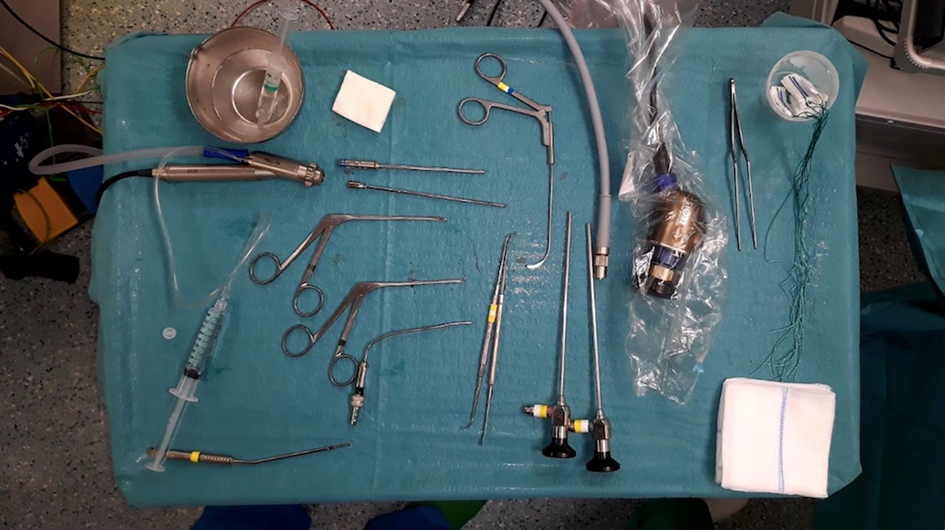
Patients underwent polypectomy using an electric-powered microdebrider with sterilisable straight and curved blades. Nasal polyps within the nasal cavity, middle meatus and sphenoethmoidal recess were removed. A radiofrequency volumetric inferior turbinate reduction was conducted depending on turbinate hypertrophy grade. A middle turbinate volume reduction was conducted in order to reach deeper nasal polyps in the middle meatus. In patients previously treated with FESS, we performed a mucosal revision of maxillectomy and ethmoidectomy, in order to refine the previously opened ostium and better reach deeper nasal polyps. The surgical equipment used for the procedure is shown in Figure 1.
Surgical equipment used to perform minimally invasive surgery.

Surgical procedures began with the introduction of cottonoids soaked in anaesthetic solution (2 per cent mepivacaine with adrenaline (1:100 000 concentration)) into the nasal fossa, with the aid of a speculum. The surgical procedure started after 10 minutes, to allow the anaesthetic solution to take effect. Then, the cottonoids were specifically placed at the lateral nasal wall, middle meatus, axilla and septum during the procedure, under endoscopic view. Sedation was not routinely used, but patients were allowed to have orally administered bromazepam (2.5 mg/ml), if desired.
At the end of the surgical procedure, small pieces of absorbable haemostatic sponge were placed in contact with mucosa in order to expedite haemostasis. The estimation of blood loss was performed through direct measurement of blood in microdebrider and suction reservoirs. Patients were observed for 3 hours after the procedure to ensure there were no immediate complications, and were discharged immediately after, on the same day.
After the procedure, all patients were placed on the same medical therapy: only nasal saline irrigations were used during the first month; thereafter, both topical corticosteroids and saline irrigations were used.
Statistical analysis
The results were collected and stored in a Microsoft Excel® spreadsheet. Statistical analyses were performed using the statistical package Stata, version 13 (StataCorp, College Station, Texas, USA). Graphs were prepared using Prism 6.0 software for MacBook Air (GraphPad, La Jolla, California, USA).
Dichotomous variables were reported as counts and percentages, and continuous variables as means ± standard deviations, or as medians ± interquartile ranges if the values were not normally distributed. The D'Agostino and Pearson normality test was used to verify whether the SNOT-22 and endoscopic score data were normally distributed. Parametric (student's t-test) and non-parametric (Wilcoxon's signed rank test) tests were used to compare SNOT-22 scores and endoscopic scores, respectively. Statistical significance was defined as p < 0.05.
Results
The study comprised 30 patients (26 men and 4 women), with a median age of 69 years (interquartile range = 62–73 years), and a median follow-up duration of 7.3 months (interquartile range = 4.3–17.5 months). All procedures were successfully completed and none of the patients needed a revision procedure.
Comprehensive polypectomy and inferior turbinate reduction was performed in 30 patients (100 per cent); middle turbinate plasty was carried out in 4 (13.3 per cent), and mucosal revision of maxillectomy and ethmoidectomy was conducted in 6 (20 per cent). The procedure time ranged from 10 to 20 minutes, depending on patients’ discomfort and disease extension.
Only in two patients (6.6 per cent) was increased bleeding (more than 5 cc) observed, at the middle turbinate level; this was easily controlled during the procedure. In nearly all patients, bleeding was less than 5 cc as a consequence of limited nasal polyps vascularisation and the absence of sinus dissection during the procedure. No further complications were detected during the intra- and post-operative periods. No nasal packing was required at the end of the procedure in light of the limited bleeding. All patients returned to their usual daily activities the day after surgery.
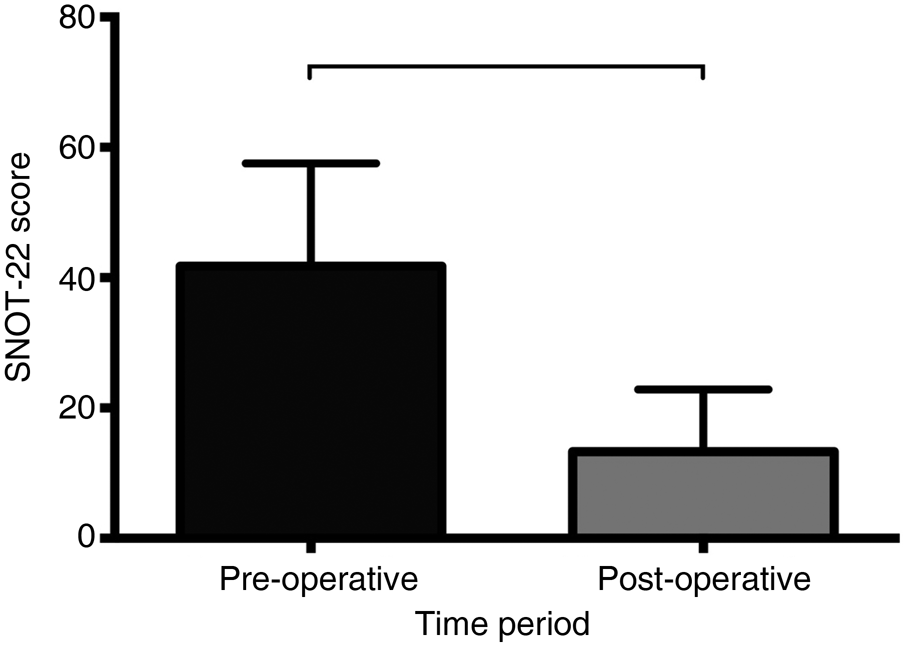
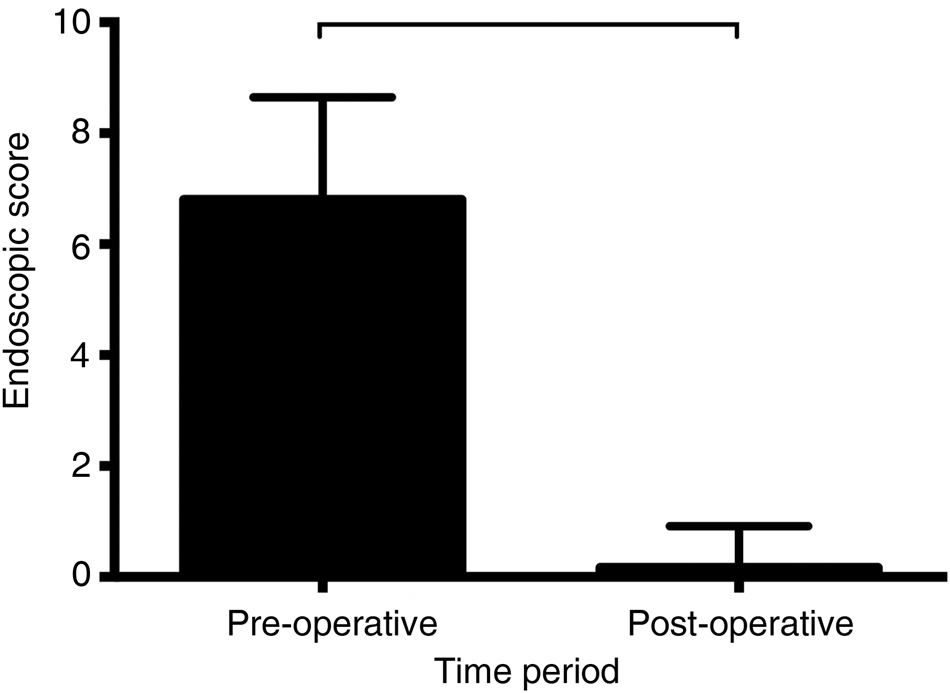
All patients reported post-operative symptomatic improvement: the mean pre-operative SNOT-22 score was 41.8 ± 15.8, while the mean post-operative score was 13.3 ± 9.5 (p < 0.001) (Figure 2). Accordingly, the mean endoscopic score (Figure 3) decreased from 6.8 ± 1.8 pre-operatively to 0.2 ± 0.7 post-operatively (p < 0.001). The improvements in SNOT-22 scores (mean reduction of −28.5) and endoscopic scores (mean reduction of −6.6) were normally distributed among patients (p > 0.05).
Sino-Nasal Outcome Test-22 (SNOT-22) scores at baseline and after minimally invasive surgery (p < 0.001).

Endoscopic scores (range of 0–12) at baseline and after minimally invasive surgery (p < 0.001).

In 14 patients (47 per cent), significant symptomatic improvement (mean SNOT-22 score reduction of −27.9, p < 0.001) and endoscopic improvement (mean modified Lund–Kennedy score reduction of −6.2, p < 0.001) were maintained after long-term follow up (at least one year).
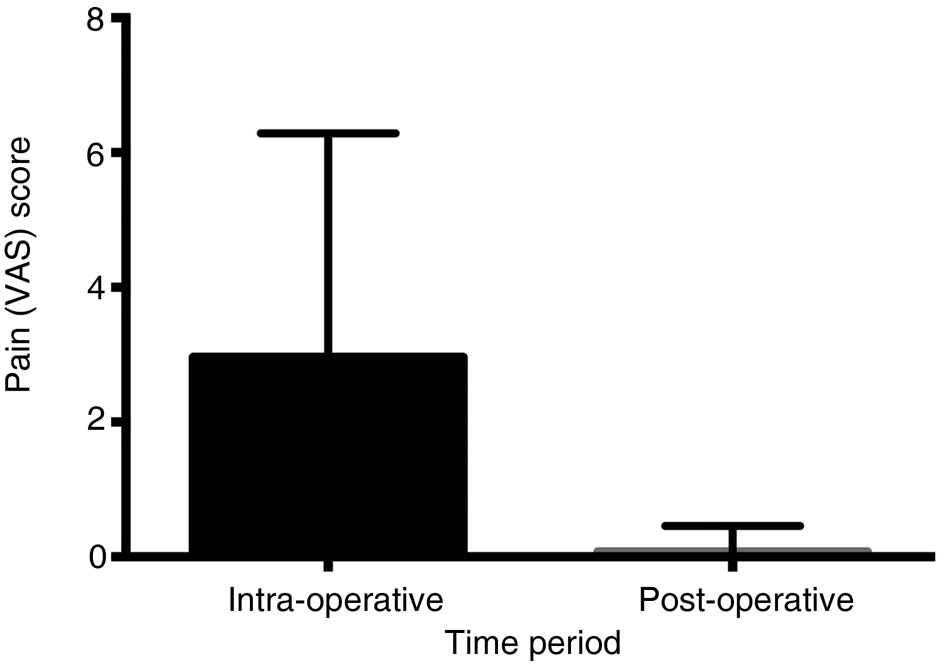
The mean intra-operative pain (VAS) score was 2.9 ± 3.2. Only 13.3 per cent of patients (n = 4) reported severe pain (VAS scores of 8 or more). The mean post-operative pain (VAS) score was 0.1 ± 0.4, with the majority of patients (96.7 per cent, n = 29) reporting no pain (VAS score of 0) (Figure 4). The patients’ overall satisfaction score for the procedure was 9.0 ± 1.3, and only one patient was mildly satisfied (VAS score of 5).
Pain scores (based on 10-point visual analogue scale (VAS)) reported by patients during and after minimally invasive surgery.

Regarding the histological assessment of nasal polyps, all samples were typified by chronic lymphocytic infiltrate. Only in 12 patients (40 per cent) were the samples associated with moderate or marked eosinophil infiltrate related to an atopic state. In the remaining patients (60 per cent), eosinophils were absent or limited.
Discussion
Nowadays, the majority of sinus surgery procedures are performed in an operating theatre setting, under general anaesthesia. In line with the trend of minimally invasive treatment, numerous surgical procedures have recently shifted to an in-office setting. This has several benefits, particularly for patients (lower risk related to local rather than general anaesthesia) and the healthcare system (substantial cost reduction).Reference Tang, Lobo, D'Anza, Woodard and Sindwani14,Reference Coates and Carrie15
Minimally invasive procedures for the treatment of chronic rhinosinusitis with nasal polyps are usually performed in patients who have previously undergone FESSReference Gan, Habib, Hathorn and Javer10 and the sinus dissection has already been carried out. From this perspective, nasal polyps represent the only pathological condition, and no further anatomical predisposing factor (e.g. septal deviation, concha bullosa) needs to be corrected. In addition, previous sinus dissection allows the microdebrider to reach even the deepest portions of the nasal cavities, resulting in a more comprehensive polypectomy. On the other hand, our data suggest that ‘naïve’ patients could also benefit from this more conservative surgery, achieving a significant reduction of symptoms, as shown by the SNOT-22 scores and confirmed by the objective endoscopic scores.
Accordingly, Kilty et al.Reference Kilty, Lasso, Mfuna-Endam and Desrosiers16 (2018) conducted a case–control study to compare an endoscopic polypectomy performed in clinic with FESS conducted under general anaesthesia in an operating theatre setting. They found that the outcome, based on a reduction in symptoms assessed by SNOT-22 scores, was not inferior for the minimally invasive procedure compared to FESS.
If bone abnormalities need to be corrected with a more invasive procedure, a minimally invasive surgical procedure could be suggested as a bridge treatment to ameliorate patient symptoms when waiting list times are long, resulting in a concurrent economic benefit. A recent Canadian study used an economic model to compare the cost–benefit ratio for endoscopic polypectomy in clinic and FESS.Reference Rudmik, Smith and Kilty17 The authors found that a minimally invasive procedure could be a cost-effective strategy for select patients suffering from chronic rhinosinusitis with nasal polyps.
The literature suggests that patients selected for less invasive surgery are those with primarily nasal obstruction complaints, with the least facial pain.Reference Kilty, Lasso, Mfuna-Endam and Desrosiers16 In addition, we have to consider patients who want to avoid general anaesthesia, despite the higher probability of needing a revision procedure.Reference Larsen and Tos18 Nasal polyps have a high tendency to reoccur, even after an invasive surgical approach, leading to a significant reduction in the FESS success rate (50–70 per cent).Reference Wynn and Har-El19,Reference Deal and Kountakis20
Brescia et al.,Reference Brescia, Barion, Pedruzzi, Cinetto, Giacomelli and Pendolino21 in relation to this issue, found a lower nasal polyps recurrence rate in the elderly population compared to young patients after classic FESS. Although a greater eosinophil proportion in histological samples has been associated with an increase in nasal polyps recurrence,Reference Lou, Meng, Piao, Wang, Zhang and Bachert22–Reference Honma, Takagi, Nakamaru, Homma, Suzuki and Fukuda24 the lower recurrence rate in the elderly does not seem related to the nasal polyps eosinophilic component.Reference Brescia, Barion, Pedruzzi, Cinetto, Giacomelli and Pendolino21 For this reason, the limited amount of eosinophil in our samples could be evaluated optimistically,Reference Tsuzuki, Hashimoto, Okazaki, Nishikawa and Sakagami25 but is not necessarily associated with a low nasal polyps recurrence rate given that this association is still controversial in the elderly population.Reference Li, Cheng, Wang and Zhou26
Unfortunately, to date, no prospective studies have evaluated the long-term outcomes of minimally invasive procedures. Further studies are needed to quantify the long-term nasal polyps recurrence rate after minimally invasive surgery. Nevertheless, the possibility of a revision procedure should not be seen as an insuperable issue. Minimally invasive procedures, unlike FESS, are easily repeatable, with a minimum complication rate, as suggested by our data. In addition, the minimal intra-operative pain means that an extended polypectomy is possible. Furthermore, patients have not reported pain or discomfort post-operatively, in contrast to FESS.Reference Finkensieper, Poller, Wittekindt, Meissner and Guntinas-Lichius27,Reference Rezaeian28
Accordingly, 93.3 per cent of our sample was extremely satisfied (VAS scores of at least 8) by the procedure, as a consequence of: minimal pain, the short duration of the procedure and admission period (day-surgery), and optimal and prompt symptomatic improvement. Moreover, the absence of nasal packing and the immediate return to daily activities represent crucial benefits.Reference Yu, Kang, Kim and Lim29,Reference Dadgarnia, Meybodian, Karbasi, Baradaranfar, Atighechi and Zand30 This aspect has a central role in common clinical practice, because the operative decision is partly related to patients’ desire: all healthcare systems have become patient-customised, giving a greater role to the subjective evaluation of patient satisfaction.Reference Eren, Tugrul, Dogan, Ozucer and Ozturan31 Nevertheless, we have to consider that older patients typically show greater post-operative satisfaction compared to younger counterparts,Reference Kim, Cha, Kwon and Kim32 probably because of their worse and longer pre-operative condition.
Finally, it should not be underestimated that elderly patients often have co-morbidities and disabilities (especially diabetes mellitus and cardiac disorders) that increase the risks related to general anaesthesia, forcing them to undergo minimally invasive surgery. There is also a higher rate of surgery-related complications in the geriatric population than in the adult population.Reference Colclasure, Gross and Kountakis33,Reference Ban, Kwon and Lee34
Based on our experience, younger patients could also benefit from minimally invasive surgery. But in our opinion, these two populations should be distinguished based on the different indications for minimally invasive surgery and the different clinical settings required.
• Functional endoscopic sinus surgery is currently considered the surgical ‘gold standard’ for chronic rhinosinusitis with nasal polyps
• It is an invasive procedure that requires general anaesthesia and hospitalisation, often with long waiting lists
• Some elderly patients cannot undergo general anaesthesia procedures because of co-morbidities
• A minimally invasive surgery is proposed, to reduce complication rates, peri-operative pain and discomfort, and long waiting lists
• Minimally invasive surgery can yield remarkable subjective and objective improvements, with no pain or discomfort in the elderly
• The proposed procedure is safe, repeatable, and allows shorter waiting lists with potential economic return
The main limitation of this study is clearly the small sample size, as well as the retrospective assessment of each outcome. Nevertheless, our results are optimistic and particularly homogeneous among patients, as shown by the normal distribution of subjective (SNOT-22 score) and objective (endoscopic score) improvements. Furthermore, our data are consistent with the literature, especially when considering the SNOT-22, which has proven to be a good measure for assessing the long-term outcomes of minimally invasive procedures and of FESS.Reference Caulley, Lasso, Rudmik and Kilty9
Further prospective studies are needed to assess: the quality of the procedure with wider samples, and the long-term outcomes of this minimally invasive procedure with a more homogeneous follow-up period. In our opinion, these studies should lead to the establishment of specific guidelines that could guide patient selection for minimally invasive surgical procedures. Such guidelines would ensure the adequate treatment of each patient, avoiding unnecessary costs and patient discomfort, particularly for the elderly population.
Conclusion
Our study confirms that minimally invasive surgery is a reasonable choice for the treatment of chronic rhinosinusitis with nasal polyps in older adults. It can yield remarkable subjective and objective improvements, with no intra- and post-operative pain or discomfort. Moreover, it represents a safe, repeatable procedure that can shorten long waiting lists, with a potential economic return.
Competing interests
None declared