Understanding the impact of interparental conflict is an important public health concern by virtue of its prevalence and significant threat to children's mental health (Cummings & Davies, Reference Cummings and Davies2010; Grych & Fincham, Reference Grych and Fincham2001). Expressions of unresolved anger and verbal hostility between parents are common and, in many families, daily occurrences (Cummings, Goeke-Morey, & Papp, Reference Cummings, Goeke-Morey and Papp2003). The proportion of parents who report experiencing physical aggression from a romantic partner within the last year is estimated to be as high as 49% (Slep & O'Leary, Reference Slep and O'Leary2005). Even the most conservative epidemiological rates of family violence report that 16% of parents experience violence in their relationship (Straus, Reference Straus and Martinez2001). Exposure to frequent or intense levels of interparental conflict in turn increases children's risk for a wide array of psychological problems, including internalizing symptoms (e.g., depression, anxiety), externalizing problems (e.g., aggression, conduct problems), social impairments (e.g., poor peer relations), and academic difficulties (Grych & Fincham, Reference Grych and Fincham2001). The magnitude of risk conferred by frequent exposure to interparental hostility and discord is nearly twice the size of the risk associated with divorce (Grych & Fincham, Reference Grych and Fincham2001). Moreover, children who experience interparental aggression and violence are five to seven times more likely to exhibit significant psychological problems (Cummings & Davies, Reference Cummings and Davies1994).
Toward addressing the high societal premium placed on better understanding the risk faced by children from high conflict homes, developmental psychopathology offers a valuable guide in delineating the generative mechanisms underlying their vulnerability. For example, in applying the concept of developmental cascades (Masten & Cicchetti, Reference Masten and Cicchetti2010), cumulative experiences with interparental conflict can be characterized as part of an unfolding process that engenders patterns of child reactivity and coping in subsequent stressful family contexts that in turn set the stage for individual differences in psychological adjustment. As a conceptual application informed by the concept of developmental cascades, emotional security theory (EST) was originally developed by Davies and Cummings (Reference Davies and Cummings1994) to address the question of how and why conflict and hostility between parents is associated with children's trajectories of mental health. The central tenet of EST is that maintaining safety and security within the emotion-laden context of interparental conflict is a prominent goal for children. Within this framework, repeated exposure to parents' conflicts containing hostility, violence, and unresolved endings creates a toxic environment, making achieving and maintaining emotional security a difficult task for children. Concerns about security in the interparental relationship are further posited to reflect an underlying latent goal system, the functioning of which can be inferred from three measureable classes of response processes: (a) emotional reactivity, characterized by intense, dysregulated, and protracted distress in the face of parents' conflicts; (b) regulation of exposure, characterized by elevated avoidance of or involvement in interparental discord; and (c) internal representations of the implications interparental difficulties have for the welfare of the self and family. In the final parts of the dynamic cascade, prolonged difficulties achieving a sense of safety and security in the interparental relationship are theorized to increase children's vulnerability to developing psychopathology.
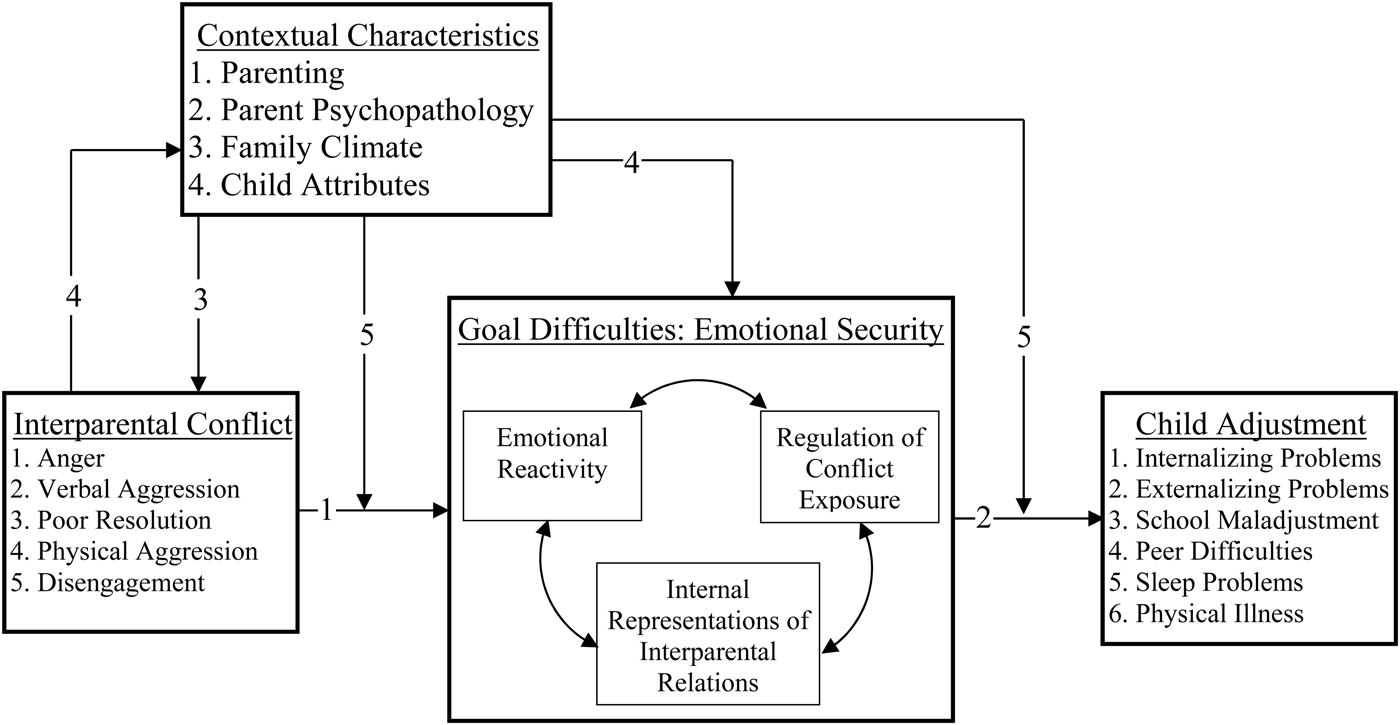
Over the past 20 years, the integration of EST within a developmental psychopathology lens has provided a fruitful framework for research articulating the role of emotional security as a mediator of interparental conflict and child problems. The concepts of equifinality and multifinality have proved to be important tools in developing and testing core hypotheses (Cicchetti & Rogosch, Reference Cicchetti and Rogosch1996). In defining the notion that a single outcome can result from multiple factors, equifinality has been critical in facilitating advances in identifying the multiple characteristics of interparental conflict (e.g., negative escalation, disengagement) that serve as particularly potent predictors of children's insecurity in the interparental relationship (see Path 1 in Figure 1; e.g., Cummings, George, McCoy, & Davies, Reference Cummings, George, McCoy and Davies2012; Davies, Martin, & Cicchetti, Reference Davies, Martin and Cicchetti2012; Harold, Shelton, Goeke-Morey, & Cummings, Reference Harold, Shelton, Goeke-Morey and Cummings2004). In a complementary fashion, research addressing Path 2 of Figure 1 has been facilitated by the concept of multifinality, as defined by the observation that multiple outcomes can result from a common agent or pathway. Thus, in the second part of our proposed unfolding developmental cascade, emotional insecurity been linked theoretically and empirically to a wide array of psychological and physical difficulties (e.g., Buehler, Lange, & Franck, Reference Buehler, Lange and Franck2007; Davies, Manning, & Cicchetti, Reference Davies, Manning and Cicchetti2013; El-Sheikh, Cummings, Kouros, Elmore-Staton, & Buckhalt, Reference El-Sheikh, Cummings, Kouros, Elmore-Staton and Buckhalt2008; P. Keller & El-Sheikh, Reference Keller and El-Sheikh2011; Rhoades, Reference Rhoades2008).
An illustration of the state of the theoretical and empirical literature on the primary constructs and pathways in the original formulation of emotional security theory.

The utility of developmental psychopathology in theory and research on emotional security is also reflected in our characterization of the emotional security cascade as operating within an open developmental system that is shaped by the transactional interplay among family, ecological, and child characteristics (Cicchetti, Reference Cicchetti1993; Davies & Cicchetti, Reference Davies and Cicchetti2004). The remaining paths in Figure 1 specifically illustrate the assumption that “contextual” characteristics in the form of parenting (e.g., responsiveness), parent psychopathology (e.g., depression, alcohol problems), systemic family processes (e.g., cohesion, enmeshment), and child attributes (e.g., temperament, personality) shape pathways of insecurity in a transactional manner. As part of this reciprocal process, these factors are theorized to dynamically serve in any number of roles as (a) distal predictors of security processes by virtue of their association with interparental conflict (i.e., Path 3), (b) more proximal mediators of associations between interparental conflict and child emotional security (i.e., Path 4), and (c) moderators of mediational pathways between interparental conflict, emotional security, and child adjustment (i.e., Path 5). Informed by this open systems conceptualization of EST, specific empirical tests of these predictions have provided support for the significance of family, ecological, and child attributes as predictors and moderators of the mediational role of emotional security (e.g., Cummings, Schermerhorn, Davies, Goeke-Morey, & Cummings, Reference Cummings, Schermerhorn, Davies, Goekey-Morey and Cummings2006; Davies, Harold, Goeke-Morey, & Cummings, Reference Davies, Harold, Goeke-Morey and Cummings2002; Kouros, Merrilees, & Cummings, Reference Kouros, Merrilees and Cummings2008). As a testament to the incremental utility of EST, longitudinal research has also repeatedly documented the mediational role of emotional insecurity in explaining links between destructive interparental conflict and children's psychological and physical problems, even after taking into account alternative mechanisms postulated by other theories (e.g., Cummings et al., Reference Cummings, Schermerhorn, Davies, Goekey-Morey and Cummings2006; Davies et al., Reference Davies, Harold, Goeke-Morey and Cummings2002; Harold et al., Reference Harold, Shelton, Goeke-Morey and Cummings2004; Kouros et al., Reference Kouros, Merrilees and Cummings2008; Sturge-Apple, Davies, Winter, Cummings, & Schermerhorn, Reference Sturge-Apple, Davies, Winter, Cummings and Schermerhorn2008).
Although gaps remain in testing hypotheses outlined in the original formulation (e.g., Cummings & Davies, Reference Cummings and Davies1996; Davies & Cummings, Reference Davies and Cummings1994; Davies, Winter, & Cicchetti, Reference Davies, Winter and Cicchetti2006), the number of novel questions yet to be examined is quickly dwindling following two decades of research. There is now an urgent need to conceptually cultivate new growing points to guide future applications of EST. Moreover, in spite of the large number of empirical tests of hypotheses derived from EST, careful inspection of the literature reveals that we still know very little about the inner workings of emotional security in the context of interparental conflict. Relative to other constructs and pathways outlined in Figure 1, emotional security, in and of itself, has been the subject of very little conceptual refinement or modification.
Consistent with the mission of this special issue, the objective of this article is to provide an innovative conceptual heuristic to guide future work on EST. Toward this goal, we address how our reformulation of EST (EST-R) affords an opportunity to successfully resolve some of the challenges posed by reliance on the original formulation of EST that are hindering future advances in knowledge. Consistent with emphasis on multidisciplinary approaches in developmental psychopathology (Cicchetti & Cohen, Reference Cicchetti, Cohen, Cicchetti and Cohen1995), the first section of the paper will describe how the integration of security within the ethological and evolutionary framework of EST-R may advance existing conceptualizations by characterizing the architecture and operation of emotional security as a distinct behavioral system. Building on this evolutionary account of the emotional security system, we proceed to describe a new taxonomy for identifying individual differences in the ways children attempt to preserve emotional security, with the goal of substantially increasing precision in the identification of specific configurations of experiential precursors and developmental sequelae. In accord with a major theme of developmental psychopathology to advance knowledge across multiple ecologies and levels of analysis (Cicchetti, Reference Cicchetti2010; Masten Reference Masten2006), the final part of the article will highlight the significant theoretical leverage EST-R has over EST by addressing its broader scientific applicability to multiple familial and extrafamilial contexts and its potential clinical and public policy implications. Given this early stage in the development of EST-R, we fully acknowledge that some of our conceptual proposals are highly speculative. However, in accord with the “conceptual, opinion-driven, and innovative” emphasis of this special issue, our goal in this paper is to spur a new generation of fruitful directions for research, even if it occurs at some expense to the conservative goal of minimizing scientific risk and uncertainty.
The Composition of Emotional Security: The Role of the Social Defense System (SDS)
Empirical work over the past decade has made substantial headway in delineating emotional security in the interparental relationship as a significant phenomenon distinct from parent–child attachment security processes within attachment theory (see Cummings & Davies, Reference Cummings and Davies2010; Davies et al., Reference Davies, Winter and Cicchetti2006). However, theory has lagged substantially behind empirical work in accounting for how and why emotional security is distinct from attachment security (Waters & Cummings, Reference Waters and Cummings2000). Difficulty in disentangling the two constructs is perhaps not surprising given recent characterizations of emotional security. For example, emotional security in the interparental relationship has been portrayed as serving as a secure base for children and a metaphorical “bridge between the child and the world” (Cummings et al., Reference Cummings, Schermerhorn, Davies, Goekey-Morey and Cummings2006, p. 134; also El-Sheikh et al., Reference El-Sheikh, Cummings, Kouros, Elmore-Staton and Buckhalt2008). This common use of shared terminology is further instantiated in describing the behavioral responses used to define both attachment and emotional insecurity. For example, procedures for evaluating attachment quality through observing children's emotionality, strategies for regulating their proximity to caregivers, and negative appraisals of parents resemble, at least on the surface, the three component processes of EST (i.e., emotional reactivity, regulation of exposure to conflict, and negative representations of the interparental relationship). Additional substantive overlap is evidenced by the shared focus on defining both types of security in contexts involving parents or primary caregivers in the family. Thus, without some additional theoretical clarification, it is difficult to keenly decipher how attachment and emotional security differ.
Rooted in an ethological and evolutionary framework that is supported by a growing corpus of psychobiological and animal research, EST-R is uniquely poised to address this significant conceptual gap (Davies & Sturge-Apple, Reference Davies and Sturge-Apple2007; Davies, Sturge-Apple, & Martin, Reference Davies, Sturge-Apple, Martin, Lansdale, McHale and Booth2013). The fundamental and novel thesis underlying EST-R is that children's strategies for maintaining a sense of security while navigating the physical and social world are governed largely by a set of evolved behavioral control systems or ethological modules, each defined by an integrated set of processing algorithms, neurobiological processes, and psychological and behavioral repertoires that uniquely function to promote survival and reproduction within various developmental and ecological niches. Thus, each behavioral system may be distinguished based on three features: (a) the systems' external or observed goal; (b) the ecological conditions that organize the activity of each system; and (c) a unique repertoire of affective, cognitive, and behavioral response strategies. Consistent with broader evolutionary frameworks, a primary assumption guiding the delineation of each system is that its external goal is defined by its original, specific function in regulating the ongoing relationship between organism and environment in ways that ultimately contributed to survival and reproduction within ancestral environments (Hilburn-Cobb, Reference Hilburn-Cobb, Atkinson and Goldberg2004). In turn, the degree of correspondence between current environments and the selective pressures and conditions of ancestral environments is proposed to play a significant role in the genesis and developmental course of behavior (Konner, Reference Konner2010).
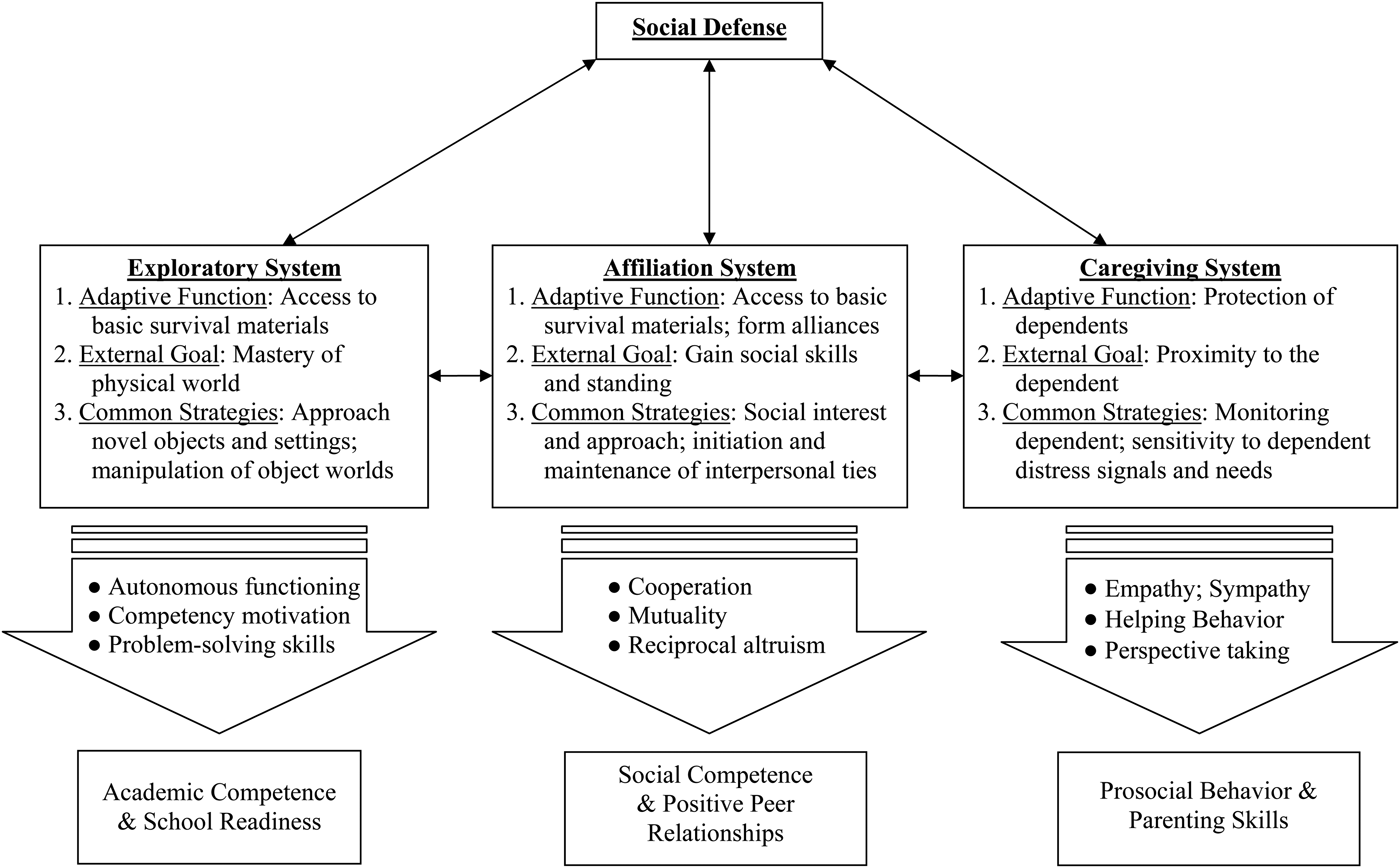
Within this framework, EST-R can authoritatively distinguish between emotional and attachment security based on their evolutionary origins as distinct behavioral systems (see Figure 2). Specifically, EST-R posits that children's concerns about security in the face of interparental conflict are largely organized by the SDS. The SDS is a concept that initially stemmed from early ethological descriptions of the fear/wariness system (e.g., Bowlby, Reference Bowlby1969, Reference Bowlby1988; Harlow, Reference Harlow1959), with further theoretical advances occurring largely outside of the developmental literature (i.e., Gilbert, Reference Gilbert1993; Öhman, Reference Öhman1986; Öhman & Mineka, Reference Öhman and Mineka2001; Sloman & Gilbert, Reference Sloman and Gilbert2000). Consistent with this work, our conceptualization of the SDS assumes that the high cost of conflict between members of social groups throughout humans' phylogenetic history put selective pressure on the development of a behavioral system capable of efficiently identifying social signals indicative of the potential for threat (e.g., yelling, dominant posturing) and responding by organizing behavioral strategies to avoid or defuse interpersonal threat (Davies & Sturge-Apple, Reference Davies and Sturge-Apple2007). Moreover, despite obvious differences between the family structures of today and those of our evolutionary past (e.g., extended family units, clans), most, if not all, contemporary families are headed by dominant adults who carry disproportionate power in shaping the structure, stability, and safety of the family unit. Because relationship difficulties between these adults can have threatening implications for children and the family as a whole, the SDS and its goal of protecting oneself from interpersonal harm is posited to organize children's response patterns to interparental conflict.
A model illustrating how the social defense system impacts children's competence in multiple domains by altering the operation of ethological systems that organize approach motives and behaviors.
In contrast, ethological perspectives on attachment theory within the developmental literature propose that the attachment system evolved out of a phylogenetic history in which ecological conditions were characterized by a high risk of infant mortality (e.g., predation, mammalian infant dependency, infanticide). In these contexts, inclusive fitness increased for those individuals who successfully adopted a strategy of maintaining proximity to and garnering protection from a primary caregiver (Bowlby, Reference Bowlby1969; Chisholm, Reference Chisholm1996). Thus, although the social defense and attachment systems share the broad adaptive advantage of protection from harm, the SDS' goal of protecting oneself from harm by combatant caregivers during conflict is qualitatively distinct from and, in many cases, antithetical to the attachment system and its goal of increasing accessibility to caregivers. Because each system is defined by a different external goal, the specific contexts that elicit prioritization of the social defense and attachment systems in organizing behavior are also thought to be relatively distinct. The attachment system is viewed as increasing in salience under conditions of internal (e.g., fatigue, sickness) or external (e.g., aloneness, darkness, quickly approaching or looming stimuli) cues to danger or threat. Although the stimulus characteristics of interparental discord may, on the surface, resemble an external threat cue that would stimulate the attachment system, EST-R contends that the attachment goal of increasing proximity to caregivers is unlikely to be the primary motive underlying children's behavior in contexts in which attachment figures are exhibiting frightened and frightening behaviors that will, if anything, inhibit the child's motivation to approach and seek their support. Under these conditions, we posit that protecting oneself from harm should be prioritized as a predominating goal, manifested in the relatively high salience of SDS as an organizer of children's responses to interparental conflict.
Finally, the social defense and attachment systems may be further distinguished by their specific behavioral strategies, affective mechanisms, and ways of processing information in serving their distinct external goals. For the attachment system, clinging, seeking comfort, verbal bids for support, behavioral signals of distress, and regular monitoring of the whereabouts of the parent are all potential means toward increasing accessibility to a supportive caregiver (Bowlby, Reference Bowlby1969; Hilburn-Cobb, Reference Hilburn-Cobb, Atkinson and Goldberg2004). Conversely, minimizing the threat accompanying interparental conflict substantially increases the probability of fear, vigilance (e.g., heightened perceptual–cognitive sensitivity to threat cues), freezing, distress, flight (e.g., escape) and cutoff behaviors (e.g., covering eyes), camouflaging (e.g., inhibiting verbal and overt emotional distress), social deescalation strategies (e.g., coy behavior, ingratiation, pacifying parents), long-term demobilization (e.g., fatigue, hopelessness, helplessness, dysphoria), intervention (e.g., mediation, support), and, in some cases, fight (e.g., dominant posturing) behaviors (Davies & Sturge-Apple, Reference Davies and Sturge-Apple2007; Gilbert, Reference Gilbert1993). Although many of the behavioral strategies (e.g., distress, coy behavior) can be flexibly enlisted by either system, important differences exist in how they are expressed within the individual's broader pattern of behavior. Thus, consistent with the organizational perspective in developmental psychopathology, no behavior can be fully understood without evaluating its meaning and functioning within the larger developmental context of children's response processes (Davies & Cicchetti, Reference Davies and Cicchetti2004). For example, distress behaviors regulated by the attachment system not only commonly serve the function of drawing the attention of the attachment figure but also occur within a broader context of behaviors that increase proximity (e.g., comfort seeking, clinginess, approach behaviors). In the case of the SDS, distress is accompanied by a wider pattern of behaviors that reflect fear, vigilance to threat, and efforts to avoid or mediate conflicts between parents.
From the process-oriented objective of examining emotional security as a risk mechanism in pathways between interparental conflict and children's health outcomes, EST-R's evolutionary lens provides a much-needed conceptual framework from which to better understand empirical findings distinguishing between the mediational roles of children's security in the parent–child and interparental subsystems. However, distinguishing between emotional and attachment security does not, by itself, address the existing limitations of EST in advancing an understanding of the processes underlying children's vulnerability to interparental conflict. Without further theoretical direction, these ethological distinctions could merely produce unnecessary complexity and data reduction challenges by expanding the search for signs of insecurity. For example, EST-R has actually expanded the array of reaction patterns (e.g., social deescalation, demobilizing, camouflaging behaviors) that subserve the underlying goal of preserving security in the interparental relationship. Thus, in the next section, we address how our adoption of an ethologically guided, pattern-based approach to identifying individual differences in emotional security overcomes significant barriers hindering new conceptual and empirical advances.
Pattern-Based Approach to Individual Differences in Emotional Security
The original formulation of EST places conceptual emphasis on the hypothesis that indicators within and across the three component processes are interdependent and intercorrelated. Consequently, researchers have predominantly relied on a variable-based measurement approach which aims to create a single, linear composite of insecurity based on the aggregation of multiple dimensions of conflict reactivity (e.g., anger, fear, involvement, avoidance). In an effort to then expand the conceptual scope of EST, the primary research agenda over the past two decades has largely consisted of searching for properties of interparental conflict, contextual characteristics, and forms of child outcomes that could elucidate the mediational role of emotional security (see Figure 1). Although placing a linear, aggregate assessment of emotional insecurity within multivariate models has generated significant scientific advances, continuing to utilize this approach as the predominant research agenda poses significant problems for future research. We specifically argue that unfettered proliferation of substantive breadth without balanced consideration for increasing precision and novelty in the characterization of emotional security as a construct in its own right runs the risk of failing the defining objective of EST: to achieve a precise and systematic identification of the processes that account for the wide array of problems faced by children in high-conflict homes.
At one level of analysis, the mechanistic, additive approach relies on a shared colloquial lexicon and common wisdom for identifying inherently negative response patterns and ultimately imparting meaning by designating them as signs of insecurity (see LeDoux, Reference LeDoux2012). Equipped with this broad definition of insecurity as consisting of intrinsically negative response processes, the only sustainable research direction is to examine emotional security within models that are increasingly expansive in scope. Any potential benefits of identifying family or contextual conditions that may inform an understanding of emotional security occur at the cost of delineating the precursors, dynamics, and implications of security with pinpoint accuracy. The resulting complexity of the findings is increasingly unstable and difficult to replicate. Therefore, the primary conclusion that we can generate with any sort of certainty is that toxic family environments and children's inherently negative “liabilities” (e.g., difficult temperament) increase their vulnerability to virtually all impairments in health by engendering inherently negative responses to interparental conflict.
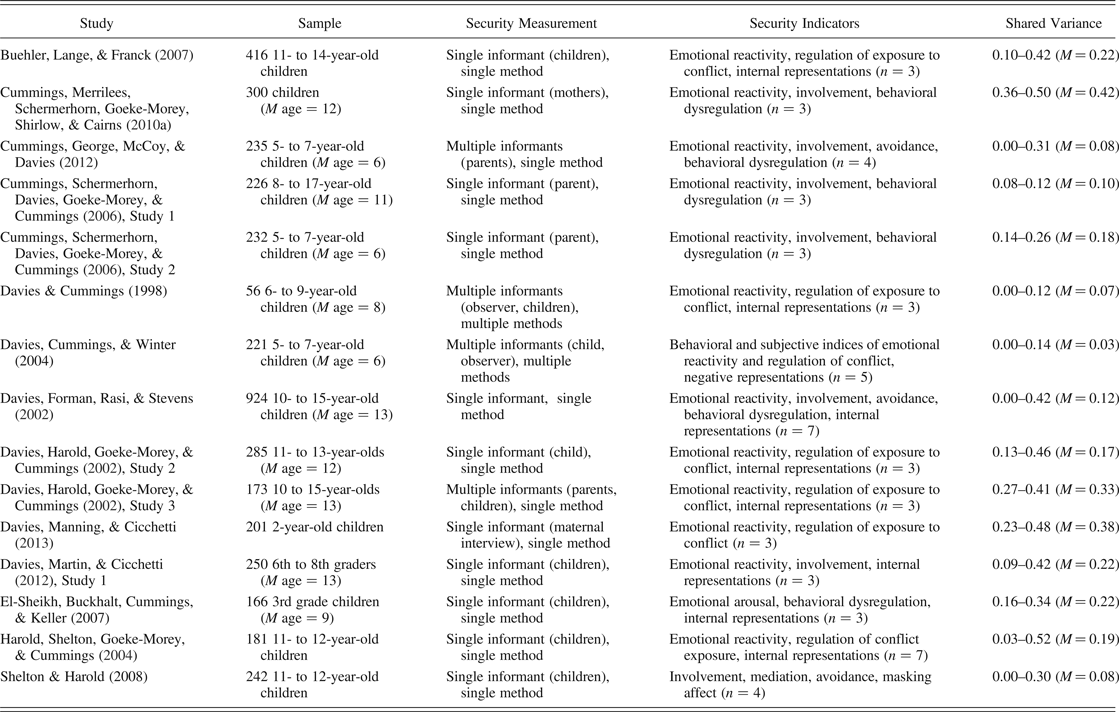
At another level of analysis, relying on linear correspondence among various forms of conflict reactivity results in a loss of precision by masking important individual differences in emotional security. Associations among indicators of emotional security are typically modest in magnitude. For example, a review of 15 studies in Table 1 indicates that the mean shared variance among the measures is only 17% when weighted for the number of indicators in each study. The conventional conceptual definition of emotional security and its derivative measurement approach results in simple aggregates of individual variations in children's responding, in effect equating the meaning of virtually any combination of “negative” behaviors, emotions, and appraisals (e.g., children's fearful distress, sadness, anger, aggression, avoidance, involvement, negative appraisals of the implications interparental conflict has for themselves, their parents, and their families). This highlights a concerning disconnect between the operational definitions of emotional security used in prior research and EST's conceptual assumption that emotional security is a dynamic, nonlinear control system that can flexibility organize an array of behaviors to defend against the threat posed by interparental conflict. Moreover, existing measurement approaches used in testing EST are at odds with the organizational principle of developmental psychopathology that the meaning of morphologically identical responses to conflict cannot be deciphered unless examined in relation to children's larger constellation of responses (Cummings & Davies, Reference Cummings and Davies1996; Davies & Cicchetti, Reference Davies and Cicchetti2004). For example, depending on the broader organization of reactions, expressions of modest levels of fearful distress may reflect children's confidence in parents to effectively manage conflict and threat or an effortful attempt to dampen vulnerable emotional displays as a way to guard against palpable threats posed by the interparental difficulties.
Analysis of the magnitude of interrelationships among security indicators in previous studies of emotional security theory
To counteract the risk of conceptual dispersion, EST-R proposes a move toward a new generation of research based on pattern-based taxonomies for capturing individual differences in the nature and magnitude of interrelationships between multiple dimensions of children's reactivity to interparental conflict. This approach is consistent with the value developmental psychopathology has placed on advancing the organizational perspective by utilizing pattern-based strategies for capturing higher order coherency in children's adaptation (Cicchetti & Rogosch, Reference Cicchetti and Rogosch1996). Although research on pattern-based responses to family discord is limited, there is some empirical basis for distinguishing between qualitatively distinct patterns of child reactions to interparental conflict that bolsters the potential of our taxonomy (Cummings, Reference Cummings1987; Davies & Forman, Reference Davies and Forman2002). However, even these novel studies have stopped short of addressing the underlying concerns, taking a more descriptive empirical approach to classifying children based on differences in the form of their behavior without regard for potential variations in function. Integrating functional utility consists of identifying the specific strategy or tactic used by children to manage and defuse the threat accompanying interparental conflict. Thus, although the SDS is universally designed with the external goal of neutralizing interpersonal threat, an ethological approach assumes that humans adopt a limited number of distinctive “subroutines,” or strategies for achieving this overarching goal, that were exquisitely designed, over evolutionary history, to manage and defuse specific configurations of recurring interpersonal conflict and threat (Crittenden, Kozlowska, & Landini, Reference Crittenden, Kozlowska and Landini2010; Del Giudice, Ellis, & Shirtcliff, Reference Del Giudice, Ellis and Shirtcliff2011). Because interpersonal threats in our ancestral past are proposed to assume a finite quantity of forms, EST-R regards the specific reaction patterns to interparental conflict, based on an analysis of both form and function, to converge around a limited number of central tendencies. In the following sections, we describe the four basic social defense strategies children are proposed to adopt in the context of interparental conflict.
Secure pattern
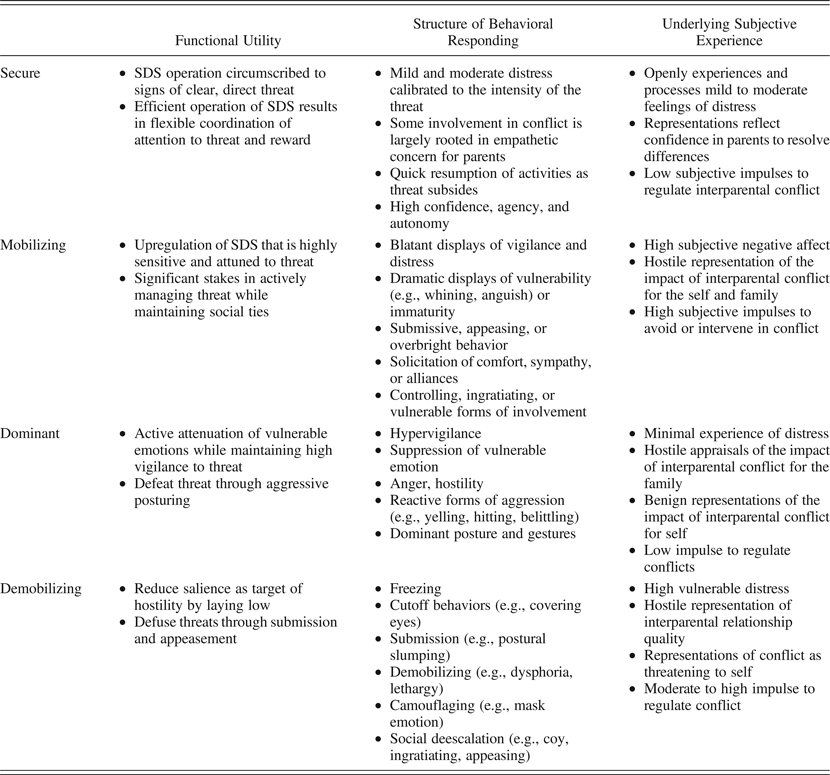
Given the ubiquity and cost of competition and conflict throughout evolution, the external goal of the SDS in defusing or neutralizing conspecific threat is likely to be adaptive for all individuals. As a result, the SDS of children adopting a secure profile is actually operative but functions in relatively circumscribed instances of clear, direct threat. This results in the SDS assuming low saliency as an organizer of behavior in interparental contexts (Davies & Sturge-Apple, Reference Davies and Sturge-Apple2007; Gilbert, Reference Gilbert2001). Hence, the functional utility of the secure profile lies in its efficient coordination of SDS resources to contend with interparental challenges, balanced by sustaining open attention to social and exploratory opportunities as threats in the relationship subside. Thus, in the context of interparental conflict and anger, secure children possess an underlying confidence that the dispute will be effectively managed and regulated in a way that maintains family harmony. At a phenotypic level, this confidence is reflected in mild, well-regulated displays of negative affect, open acknowledgement and processing of subjective distress, minimal impulses to regulate their exposure to the conflict, and internal representations that reflect optimism that parents will manage the conflict in a way that does not undermine their functioning (see Table 2). Exquisite attunement of the SDS system to the properties of the interparental threat further insures that any distress and involvement is well regulated and relatively brief, allowing secure children to resume other critical goals and activities in the wake of interparental discord.
Synopsis of the functional utility, form of behavior, and underlying subjective experiences of the social defense system (SDS) profiles of security
Mobilizing pattern
In contrast to the secure pattern, the mobilizing profile is proposed to serve the function of investing considerable resources toward actively defending oneself under the expectation of interpersonal threat as common and pervasive, while remaining vigilant for limited opportunities to capitalize on any small manifestation of resources within the family (Trower, Gilbert, & Sherling, Reference Trower, Gilbert, Sherling and Leitenberg1990). Because of the high sensitivity and saliency of the SDS, children who adopt a mobilizing profile hold significant stakes in vigorously managing interparental difficulties. For mobilizing children, blatant, demonstrative displays of vigilance, distress, and vulnerability not only reflect their substantial emotional investment in the family but are also theorized to serve as a strategy for potentially garnering sympathy, worth, or attention within the kinship network. Further reflecting the utility of the pattern, actively managing threat in a vulnerable manner, such as through submissive, appeasing or overbright behavior, controlling forms of involvement that are vulnerable in nature (e.g., assuming caretaking role), or attempts to solicit sympathy, comfort, and alliances, may increase the likelihood that a mobilizing child will have access to acknowledgement and support in the family, even in high-conflict homes (Davies & Sturge-Apple, Reference Davies and Sturge-Apple2007; Gilbert, Reference Gilbert, Sloman and Gilbert2000). The high emotional entanglement of mobilizing children in the interparental relationship is also reflected in subjective experiences characterized by considerable negative affect, pessimistic appraisals of the impact of interparental conflict on the family and their own welfare, and considerable impulses to regulate interparental difficulties through fight (e.g., intervention) or flight strategies.
Dominant pattern
Children's enlistment of a dominant strategy in the service of the SDS is theorized to serve as a means of directly engaging and overcoming interpersonal threat in the interparental relationship (Dixon, Reference Dixon1998; Hilburn-Cobb, Reference Hilburn-Cobb, Atkinson and Goldberg2004). To sharpen the functional activity of defeating threats through aggressive and hostile displays, expressions of vulnerability (e.g., fear, worry, sadness) are minimized in relation to the accentuation of dominance, control, and hostility. Thus, the predominant behavioral response pattern reflects demanding, dogmatic, coercive, controlling behaviors (e.g., rigidly and selfishly assert own agenda), and affective indifference designed to preserve or regain power in the family (e.g., callous, apathetic responses to parents; reflexively discounting parental ideas), and interpersonal hostility. By the same token, these children are theorized to possess response systems that are finely tuned to identify and respond to threat, resulting in dominant–insecure children still expressing tell-tale signs of a sensitive SDS (i.e., wariness, vigilance, and sensitivity to threat). As a part of intensifying and sustaining dominant strategies under threatening conditions, children are proposed to adopt a dismissing attitude characterized by the tendency to downplay the emotional significance of interparental and family relationships in their lives (Dixon, Reference Dixon1998; Gilbert, Reference Gilbert1993). In accordance, EST-R proposes that this style will be manifested in subjective experiences of minimal distress, little or no impulse to regulate conflicts, and relatively benign (i.e., invulnerable) representations of the impact of interparental conflict on the self in spite of the acknowledgment of the negative repercussions it has on other aspects of the family unit (Davies & Sturge-Apple, Reference Davies and Sturge-Apple2007).
Demobilizing pattern
Demobilizing strategies, also labeled “involuntary defeat strategies” in the ethology and evolutionary literature, reflect a response of last resort thought to serve the function of “laying low” in social contexts (Gilbert, Reference Gilbert2001; Gilbert & Allan, Reference Gilbert and Allan1998; Marks & Nesse, Reference Marks and Nesse1994; Sloman, Farvolden, Gilbert, & Price, Reference Sloman, Farvolden, Gilbert and Price2006). This strategy is often marked by keenly masking forms of distress and anxiety that are disruptive or blatant in social interactions. With its lay-low function, demobilizing strategies may be expressed in a wide array of behaviors, including freezing, vigilance, quiet disengagement (e.g., becomes quiet, gingerly moves away from parents; subtly and effortfully turns back to them), forms of appeasing behavior (e.g., head down; gaze aversion, sudden unexplainable and intense smiling when parent attention is directed toward them), sadness, anhedonia, helplessness, fatigue, postural slumping, or downtrodden behaviors. High- (e.g., tenseness, freezing, gingerly moving away) and low-arousal behaviors (e.g., postural slumping, fatigue) may both serve the function of reducing children's exposure to concurrent or future threat. Therefore, because children who are high in this demobilizing profile can exhibit primarily high-arousal behaviors, primarily low-arousal behaviors, or a combination of both, the key does not lie in discriminating between the degree of arousal in the behaviors, but rather whether it fits the criterion for reducing their salience as targets of interpersonal hostility.
Proof of concept
Although no published study to date has used evolutionary theory as a guide to distinguish patterns of children's reactivity to interparental conflict, research has garnered preliminary support for the existence of these profiles. For example, using cluster analytic techniques across two independent samples and methodological designs, Davies and Forman (Reference Davies and Forman2002) identified three consistent patterns of responding to interparental conflict resembling EST-R profiles, including (a) a “secure” profile of responding characterized by well-regulated and mild distress, empathetic concern, and positive representations of interparental relationships; (b) a “preoccupied” style comparable to a mobilizing profile of prolonged, intense distress, involvement, avoidance, and negative internal representations of interparental conflict; and (c) a “dismissing” pattern analogous to a dominant strategy of behavioral distress and aggression in conjunction with low levels of subjective distress and negative appraisals. In addition, research on children's reactions to interadult anger simulations has documented the existence of an unresponsive pattern that closely resembles our proposed demobilizing profile (e.g., Cummings, Reference Cummings1987; Maughan & Cicchetti, Reference Maughan and Cicchetti2002).
Despite some evidence for the existence of the SDS profiles, no definitive conclusions can be drawn from prior studies because of the narrow focus on identifying only a subset of profiles, the exclusive reliance on the morphology of response behaviors to identifying patterns without consideration of their functional utility, and the use of measurement batteries that lack the precision to distinguish between functionally distinct response patterns. Thus, a more systematic evaluation of proof of concept for our theory requires development of a coding system that can effectively capture and distinguish between the SDS profiles based on consideration of both form and function. As a first step in this direction, our ongoing efforts to develop and implement such a coding system with families of preschoolers based on the parameters in Table 2 have yielded promising results. Observations of children's reactions to conflicts between their parents could be reliably coded into both a categorical classification scheme (36% secure, 30% mobilizing, 18% dominant, and 16% demobilizing) and four continuous 9-point rating scales, with higher scores reflecting greater correspondence between the specific SDS pattern and children's patterns of responding (M = 4.40, SD = 1.88 for secure; M = 3.50, SD = 2.48 for mobilizing; M = 2.24, SD = 2.20 for dominant; and M = 2.98, SD = 2.58 for demobilizing). Although some additional work is needed before the system can be disseminated, these findings offer some initial support for the potential utility of our approach.
Developmental Origins and Precursors of the Security Profiles in EST-R
Identifying the myriad of family and developmental precursors of children's reactivity to interparental conflict with any degree of specificity remains a significant challenge in the literature. Open-systems principles of developmental psychopathology have facilitated an appreciation of children's security as a complex product of multiple, diverse, and interacting developmental factors (Masten, Reference Masten2006), but EST has struggled to make progress in identifying the correspondence between distinctive sets of family and developmental conditions and differences in the way children attempt to preserve their security. From our perspective, the predominant focus in EST and existing theories of interparental conflict does not provide a sufficient theoretical frame for identifying how specific patterns of children's conflict reactivity develop over time as a function of the interplay between their experiential histories in the family and their intrapersonal attributes. For example, carving out a seemingly “angry” pattern of responding to conflict from the expansive constellation of children's possible responses based on its physical characteristics offers minimal direction in selecting among a number of operative explanatory mechanisms, including social contagion, shared genetic makeup, social learning theory process (e.g. vicarious learning), or the blockage of an array of ill-defined goals that might give rise to anger (Crockenberg & Langrock, Reference Crockenberg, Langrock, Grych and Fincham2001; Jenkins, Reference Jenkins2000; Reference Jenkins2002). Thus, the pragmatic approach of searching for patterns based solely on the form of reactivity commonly relegates the use of theory to post hoc interpretations. In contrast, the search for functional utility in EST-R identifies specific patterns of child reactivity based on their provision of an adaptive solution to overcoming specific profiles of interparental and family adversity. Therefore, the melding of form and function facilitate the formulation and testing of a priori hypotheses regarding the precise response patterns to conflict underlying distinctive constellations of family and developmental factors. In the following sections, we illustrate how EST-R is designed to achieve this objective.
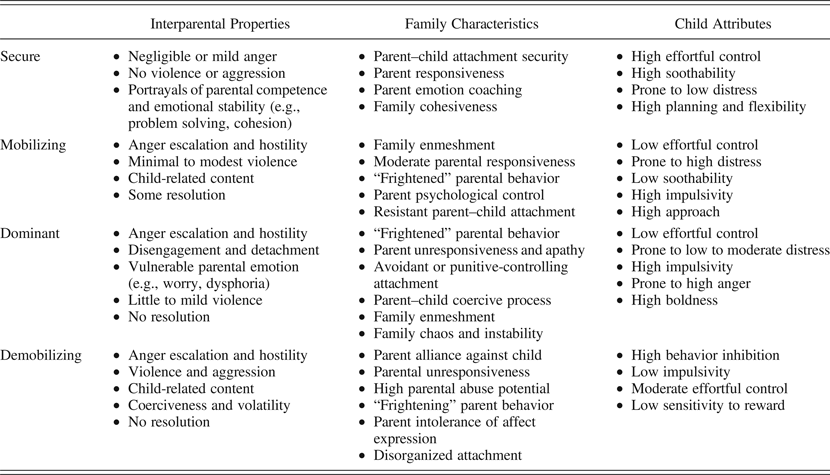
With the functional pattern characterized by the efficient and circumscribed operation of the SDS, a secure profile is likely to develop in family contexts characterized by the occurrence of minimal, manageable interpersonal threats. As Table 3 shows, the underlying confidence in parents to manage their own difficulties is specifically posited to evolve from witnessing well-managed parental disputes (e.g., minimal anger, resolution) within a family context that is sufficiently resilient to intermittent interparental conflict (Davies & Sturge-Apple, Reference Davies and Sturge-Apple2007). These family systems are likely to be characterized by harmony, child trust in parents as sources of support in times of distress (i.e., secure attachment and representations), and low incidence of parental vulnerability (e.g., psychopathology). Likewise, temperamental attributes of the child reflecting effortful control and a high threshold for negative affect are theorized to be constitutional differences that bias the operation of the SDS toward developing a secure profile (e.g., Davies & Windle, Reference Davies and Windle2001).
Brief synopsis of precursors of the social defense system (SDS) profiles of security profiles
As a strategy to systematically monitor and manage threat in a way that sustains some connectedness in the family, the mobilizing profile is theorized to be rooted in familial and intrapersonal processes that immerse children in interparental problems (see Table 3). At the interpersonal level, a confluence of parent–child enmeshment (e.g., psychological control, resistant attachment, family enmeshment), blurred boundaries between interparental and parent–child subsystems marked by child-rearing disagreements and escalating conflict, and some, albeit inconsistent, cohesiveness in the family are conceptualized as emotionally coaxing or pulling children into conflicts. High stakes in guarding against threat and cultivating connectedness evident in the mobilizing profile may be further amplified by temperamental dispositions to exhibit high sensitivity to punishment (e.g., high distress proneness) and reward (e.g., impulsivity, approach). As part of the mobilizing pattern, perseveration on conflicts between parents may also reflect effortful control impairments that undermine the ability to inhibit prepotent negative responses in favor of a more balanced, contextually-sensitive response.
A dominant profile is posited to develop in family ecologies characterized by three primary parameters: (a) moderate hostility, (b) adult disengagement and indifference, and (c) an indistinct power hierarchy. The first two classes of characteristics are proposed to engender two trademark features of dominance including “analgesic” responses to stress (i.e., blunting subjective worry and fear in response to threat) and efforts to downplay the significance of family relationships (Davies & Forman, Reference Davies and Forman2002; Dixon, Reference Dixon1998; Gilbert, Reference Gilbert2001; Gilbert & Allan, Reference Gilbert and Allan1998). These responses are expected to evolve into the use of dominant posturing in coping with interparental conflict when significant collapses in family structure lead to obscured guidelines for accessing family resources and inconsistent consequences for violations in conduct (Sloman et al., Reference Sloman, Farvolden, Gilbert and Price2006). Ill-defined power hierarchies are most commonly reflected in hostile detachment in the interparental relationship, family disengagement, low parental investment in the lives of children (e.g., apathy, passivity), and frightened forms of adult psychopathology (e.g., anxiety). Likewise, temperamental dispositions characterized by proneness to distress, poor effortful control, and impulsivity further amplify the risk of utilizing dominance strategies (see Table 3).
Finally, because the functional utility of the demobilizing profile is rooted in its ability to reduce children's salience as targets of hostility, EST-R postulates that tendencies to exhibit this profile evolve from exposure to very dire, agonic family niches replete with adult aggression, intimidation and oppression, and limited opportunities for solace in the face of threat (Blanchard, McKittrick, & Blanchard, Reference Blanchard, McKittrick and Blanchard2001; Dixon, Reference Dixon1998; Gilbert, Reference Gilbert2001; Honess & Marin, Reference Honess and Marin2006). Without any source of solace (i.e., social support) in the family, the “last resort” strategy of demobilization serves two functional roles: (a) reducing the salience of children (i.e., conspecific subordinates) in the face of possible threats by hostile, rejecting, and cold caregivers (i.e., aggressive dominants) and (b) inhibiting children's motivation to explore and acquire resources in competitive, threatening, and impoverished family contexts in which access to limited resources are unlikely, unpredictable, and accessed at substantial risk (Bracha, Reference Bracha2004; Sloman, Atkinson, Milligan, & Liotti, Reference Sloman, Atkinson, Milligan and Liotti2002; Sloman et al., Reference Sloman, Farvolden, Gilbert and Price2006). Thus, we hypothesize that demobilizing tendencies will be associated with high levels of interparental anger escalation, violence, and disengagement that occur in a broader context of frightening forms of parent functioning (e.g., antisocial personality disorder), disorganized parent–child attachment patterns, high parental abuse potential and intolerance of emotional expressiveness (see Table 3). Early dispositions to experience high sensitivity to punishment, wariness to novelty, and low approach tendencies in the face of reward are also theorized to serve as temperamental precursors to demobilizing styles (Ellis, Jackson, & Boyce, Reference Ellis, Jackson and Boyce2006; Korte, Koolhaas, Wingfield, & McEwen, Reference Korte, Koolhaas, Wingfield and McEwen2005; Sih & Bell, Reference Sih and Bell2008). However, in highlighting that not all negative experiences are necessarily linked with demobilizing patterns, EST-R further proposes that the skillful ability to downregulate reflexive, automatic expressions of overt distress may also be supported by some relatively intact capacities for effortful control (Davies, Cicchetti, Hentges, & Sturge-Apple, in press; Sih & Bell, Reference Sih and Bell2008).
Illustrating the promise of our new taxonomy, preliminary research findings support distinctive patterns of family and developmental precursors to the EST-R profiles. For example, patterns of child reactivity fitting the secure profile have been associated with interparental harmony, parent–child attachment security, family cohesion, and low family adversity (Cummings & El-Sheikh, Reference Cummings, El-Sheikh, Cummings, Greene and Karraker1991; Davies & Forman, Reference Davies and Forman2002; Maughan & Cicchetti, Reference Maughan and Cicchetti2002). Likewise, children exhibiting high levels of distress, hypervigilance, and involvement characteristic of a mobilizing pattern commonly experienced multiple signs of family enmeshment (e.g., parent psychological control), interparental hostility, and high levels of psychological investment in their families (Davies & Forman, Reference Davies and Forman2002). In addition, children who displayed a response pattern resembling a dominant profile experienced elevated levels of intense, poorly resolved interparental conflict, family disengagement, and avoidant parent–child attachment (Cummings & El-Sheikh, Reference Cummings, El-Sheikh, Cummings, Greene and Karraker1991; Davies & Forman, Reference Davies and Forman2002; Maughan & Cicchetti, Reference Maughan and Cicchetti2002).
Developmental Cascades and Sequelae of Security Profiles in EST-R
Although research has documented an array of negative physical and mental health sequelae associated with conventional measures of emotional insecurity derived from EST, we still know very little about the unfolding cascade of processes that serve as architects of these pathways. According to traditional conceptualizations of EST, “excessive” concerns about security are proposed to assume a nondescript pathogenic meaning and, as a result, produce an expansive catalogue of inherently undesirable outcomes (Cummings & Davies, Reference Cummings and Davies2010; Davies & Cummings, Reference Davies and Cummings1994). From a developmental psychopathology perspective, the utility of EST-R ultimately hinges on (a) its ability to more precisely characterize the developmental cascades of individuals who differ in their overall level and form of security and (b) its capacity to increase precision and novelty in identifying distinctive patterns of adjustment (Cicchetti & Aber, Reference Cicchetti and Aber1998; Masten & Cicchetti, Reference Masten and Cicchetti2010). In advancing these objectives, we now turn to demonstrating how distinctions between the functions of the SDS profiles may offer greater depth and pinpoint accuracy in identifying trajectories of specific patterns of psychological functioning.
The cascading effects of SDS on other ethological modules
Stable individual differences in these proposed patterns of SDS functioning in contexts of interparental conflict are proposed to impact the development of competencies and mental health outcomes through a variety of evolutionary mechanisms. Patterns of adjustment between secure profiles and the other three SDS patterns can be distinguished from each other based on theoretical analysis of how they differentially affect the development of cognitive, emotional, and social skill sets that promote fitness. Prolonged concerns for security are specifically expected to tip the balanced allocation of psychobiological resources toward investing in immediate personal safety at the cost of investing in mastery of the physical and social environment. Conversely, the efficient operation of SDS is proposed to afford children more opportunities to devote efforts toward developing specific social and intellectual competencies (Davies, Sturge-Apple, & Martin, Reference Davies, Sturge-Apple, Martin, Lansdale, McHale and Booth2013; Ford, Reference Ford, Courtois and Ford2009).
In contrast, EST-R posits that the defensive nature of highly sensitive security systems is particularly likely to inhibit approach behaviors organized by other ethological systems (e.g., exploration, affiliation, caregiving; see Figure 2). First, emotional insecurity may indirectly shape trajectories of intellectual and academic competence by affecting the functioning of the exploratory system and its goal of mastering the physical world. Greater efficiency in the operation of the SDS specifically paves the way for the successful working of the exploratory system as evidenced by intrinsic motivation and behavioral efforts to approach, manipulate, and understand the workings of the physical world (Bernier, Carlson, & Whipple, Reference Bernier, Carlson and Whipple2010; Davies, Sturge-Apple, & Cicchetti, Reference Davies, Sturge-Apple and Cicchetti2011; Sroufe, Reference Sroufe2005). Over time, greater engagement in the physical world is proposed to promote autonomous functioning, resourceful and flexible problem solving (e.g., executive functions, attention), and perceived efficacy in academic and intellectual contexts (Blair & Diamond, Reference Blair and Diamond2008; Davies Woitach, Winter, & Cummings, Reference Davies, Woitach, Winter and Cummings2008).
Second, children who are proficient in preserving safety in the interparental relationship are theorized to have greater opportunities to elaborate strategies for achieving the affiliative system goals of garnering access to survival materials and social standing through the formation and maintenance of cooperative alliances (Irons & Gilbert, Reference Irons and Gilbert2005; Markiewicz, Doyle, & Brendgen, Reference Markiewicz, Doyle and Brendgen2001). The affiliative system is specifically designed to lubricate and sustain social interactions through the regulation of affect expressions (e.g., warmth, trust), behavioral displays (e.g., smiling, touch), shared attention (e.g., turn taking), and active listening (e.g., eye contact; Depue & Morone-Strupinsky, Reference Depue and Morrone-Strupinsky2005; Davies & Sturge-Apple, Reference Davies and Sturge-Apple2007; Furman, Reference Furman, Collins and Laursen1999). Acquisition and refinement of these skills engenders broader patterns of companionship, cooperation, mutualism, and reciprocal altruism that are proposed to be key building blocks for social competence and harmonious, mutually beneficial peer relationships (Deater-Deckard & Petrill, Reference Deater-Deckard and Petrill2004; Lindsey, Cremeens, Colwell, & Caldera, Reference Lindsey, Cremeens, Colwell and Caldera2009).
Third, although the caregiving system is still relatively underdeveloped during childhood and adolescence, its adaptive function in protecting dependents requires the development of sensitivity and responsiveness to others' needs early in the lifespan. Security is theorized to provide the basis for the elaboration of caregiving strategies by equipping children with affect-regulation tools and supporting their attunement to their social environment. In childhood, enactment of care in the form of empathy, perspective taking, and prosocial (helping behavior) hinges on successfully regulating intense distress responses to witnessing anguish and pain in others (Eisenberg & Eggum, Reference Eisenberg, Eggum, Decety and Ickes2009). Provided that children's own security needs do not predominate, the development of close (e.g., best friendships, romantic affiliations) relationships during adolescence and early adulthood offer further opportunities to practice and refine the caregiving strategies that are ultimately critical to developing competent prosocial skills and altruism (Davies, Sturge-Apple, Woitach, & Cummings, Reference Davies, Sturge-Apple, Woitach and Cummings2009).
Toward greater precision in identifying mental health sequelae
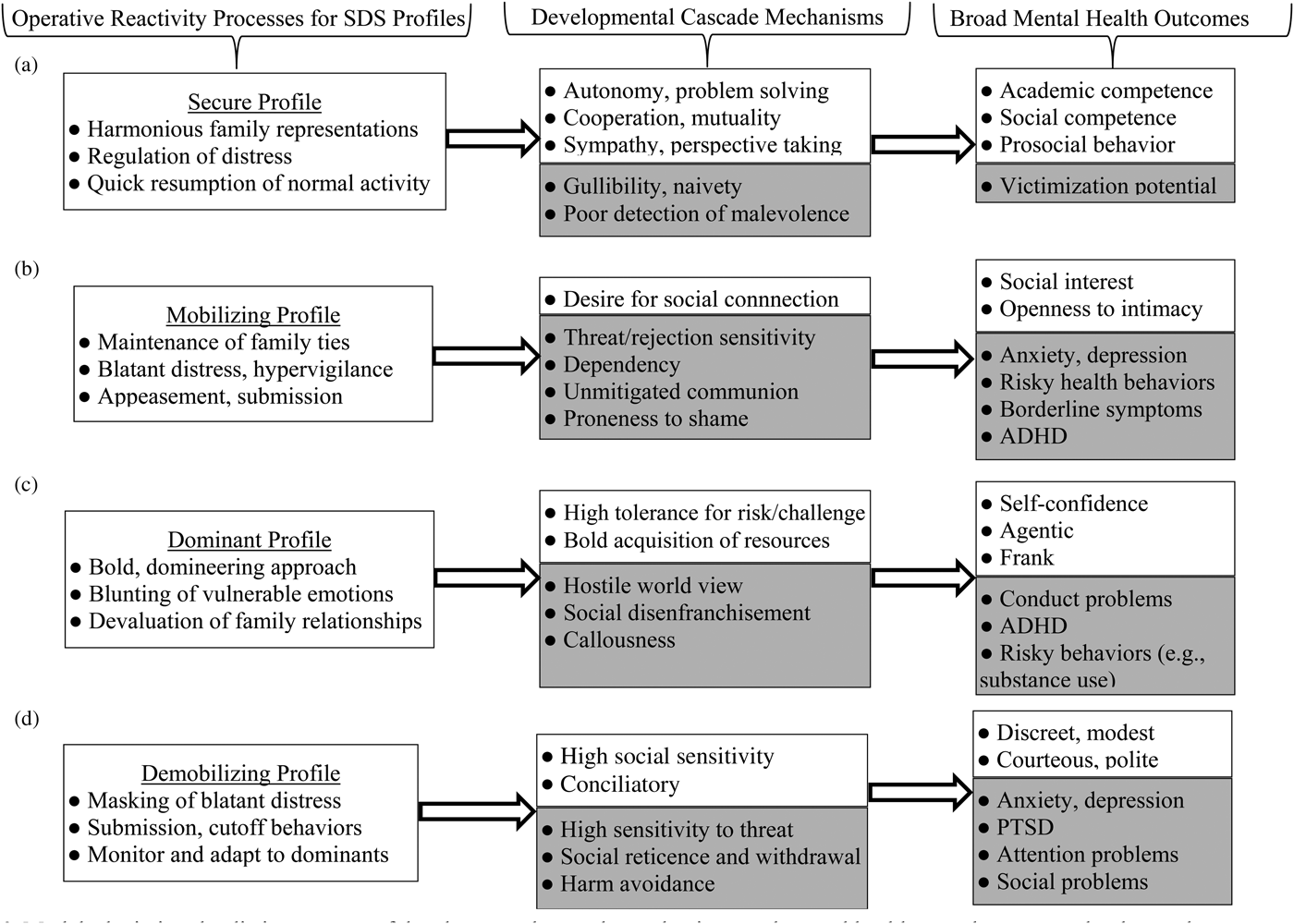
Despite the multiple advantages theorized to result from an efficient SDS, a key question is whether higher levels of security engender only healthy forms of adjustment. The original formulation of EST asserts that higher levels of security should be associated with either benign or salubrious developmental outcomes based on the tacit assumption that security is an inherently positive or desirable condition (Cummings & Davies, Reference Cummings and Davies2010; Davies & Cummings, Reference Davies and Cummings1994). However, through its evolutionary lens, EST-R raises the possibility that higher levels of security may still confer some developmental costs. By allocating limited psychobiological resources to social defense, children with secure profiles are proposed to have relatively rudimentary systems for quickly identifying emerging threats in their social environments and the potential array of negative consequences for themselves and others (see Figure 3a). Consequently, children adopting a secure profile may be more likely to exhibit relatively optimistic views of interpersonal relationships in the family at the risk of exhibiting naivety and gullibility in more challenging and stressful contexts. Although research has yet to examine the potential “dark” side of security in the interparental relationship, a plausible hypothesis is that higher security may lead to impairment in the ability to detect cheating or malevolent intent in others and modestly higher rates of victimization in specific contexts (e.g., new social networks), particularly in relation to specific insecure profiles (e.g., a dominant pattern).
Models depicting the distinct pattern of developmental cascade mechanisms and mental health sequelae proposed to be products of each social defense system (SDS) profile.
Although evolutionary conceptualizations emphasize that an acute awareness of the potential for threat in the family, preoccupation with interparental contexts, and the expression of submissive and appeasing behaviors are adaptive strategies for reducing harm in the face of conspecific threat (Gilbert, Reference Gilbert2001; Wakefield, Reference Wakefield1999), the resulting mobilizing pattern of defending against threat is proposed to result in significant developmental costs. By virtue of the accompanying hypervigilance to social stimuli, self-consciousness, proclivity to experience shame, unmitigated communion, unstable sense of self, and ingratiating and appeasing behaviors, the mobilizing pattern of responding to conflict may increase risk for experiencing a distinctive higher order pattern of heightened anxiety, depression, inattention and hyperactivity, borderline personality symptoms, and impulsive and attention-seeking risk (e.g., substance use) behaviors (see Figure 3b). However, against this backdrop of pathogenic processes, mobilizing patterns may confer a unique portfolio of relative strengths. We specifically hypothesize that the substantial motivation to engage in interpersonal relationships will engender a broader personality style characterized by moderate levels of communion, social interest, and openness to intimacy.
In serving the functional goal of directly defeating the threat posed by interparental conflict, dominant tendencies to blunt the experience of vulnerable emotions and downplay the value of close relationships are proposed to coalesce into externalizing symptoms by breeding hostile views of the interpersonal world, social disenfranchisement, callousness, and the rigid, reflexive use of aggressive behaviors. However, the landscape is not uniformly bleak for children with dominant profiles. The direct, domineering approach to defending against threat in the family may provide a training ground for the elaboration of daring, audacious strategies to acquire and expand privileged access to resources and to boldly explore new objects and settings. If these bold behavioral patterns for engaging in the broader social and physical worlds become increasingly organized, they may help to counteract the risk associated with a dominant profile by crystallizing into some advantageous attributes characterized by self-confident, agentic, adventurous, and assertive personality traits (see Figure 3c).
Finally, with its function of laying low in the context of threat, children adopting demobilizing strategies likely bear the most significant mental and physical health burdens of any of the SDS profiles. Given the tendency to adopt existing ways of processing and responding to threat in new and challenging contexts, Figure 3d depicts how a demobilizing profile may set in motion a developmental cascade marked by high sensitivity to social threats, social reticence, withdrawal, and harm-avoidant strategies in subsequent stressful contexts. Consequently, children with demobilizing profiles are proposed to exhibit an increased likelihood of anxiety, depression, posttraumatic stress symptoms, attention difficulties, and social problems. However, further ethological analysis of the implications of demobilizing patterns for other behavioral systems suggests that its pernicious impact may be considerably more broad and deep (Gilbert, Reference Gilbert2006; Sloman, Price, Gilbert, & Gardner, Reference Sloman, Price, Gilbert and Gardner1994). As the trademark of a demobilizing pattern of responding to interparental conflict, the excessive operation of the SDS is likely to substantially tax the functioning affiliative, exploratory, and caregiving systems. As a result, we propose that demobilizing tendencies should be associated with ample impairments in social skills, prosocial behavior, agency, and problem-solving abilities (Davies & Sturge-Apple, Reference Davies and Sturge-Apple2007; Gilbert, Reference Gilbert2001; Sloman et al., Reference Sloman, Atkinson, Milligan and Liotti2002). By the same token, it is also important to note that demobilizing patterns may confer some, albeit limited, developmental benefits that extend beyond its proximate function of reducing threat. High sensitivity to punishment and the tendency to acquiesce in difficult situations may give rise to cooperative, modest, conciliatory, and courteous orientations in social situations.
Although we are proposing that each SDS profile may be related to a relatively distinctive set of developmental consequences, the concept of multifinality in developmental psychopathology highlights the likelihood that there will be considerable variability in the outcomes of children who exhibit similar patterns of responding to interparental conflict (Cicchetti & Rogosch, Reference Cicchetti and Rogosch1996). Even within the class of mental health outcomes associated with any single SDS profile, the pathways outlined in Figure 3d are regarded as statistically probabilistic rather than certain. In accepting the principles of developmental psychopathology (Cicchetti, Reference Cicchetti1996), EST-R acknowledges that variability in children's developmental trajectories is attributable to the transactional interplay between dynamic child attributes in the context of dynamic interpersonal ecologies. Thus, although a systematic conceptual account of the specific parameters that serve as sources of heterogeneity in the mediational role of specific security profiles is premature at this early theoretical stage, a critical future direction is to articulate how the SDS operates within an open system in which familial and extrafamilial factors may alter the calibration of children's conflict reactions and their developmental sequelae (Keller & Nesse, Reference Keller and Nesse2006). However, at this juncture we believe our reformulation produces more proximal advantages in its potential to expand the utility of emotional security in advancing an understanding of children's ways of defending against threat in multiple contexts and applications. Therefore, in the final sections of the article, we address how an ethological and evolutionary framework may facilitate progress in both substantive and clinical areas of developmental psychopathology.
Expanding the Utility of EST-R: Translational Implications for Science
Accompanying the increasing theoretical precision and depth afforded by EST-R is the potential to foster multiple zones of scientific growth focused on the significance of the SDS system across multiple interpersonal contexts. The original formulation of EST defined emotional security as inextricably tethered to the context of interparental discord. Relying solely on signs of behavioral and psychological reactivity to interparental problems precludes attempts to expand the study of safety and security goals to broader interpersonal contexts. Conversely, in EST-R, the significance of interparental conflict is derived from its potential as a source of threat in stimulating the SDS to organize strategies to defend against the interpersonal risk. If the SDS organizes specific strategies that were designed over evolutionary time to defuse various configurations of threat across social networks, it stands to reason that it should be readily applicable to other forms of interpersonal threat. From this perspective, patterns of interpersonal discord, hostility, competition, or rejection across multiple relationships and social contexts are theorized to undermine children's safety and predictable access to resources and, in the process, shape children's specific profiles of security. Thus, by considering children's emotional security in relation to individual differences in the function and organization of the SDS, EST-R has the potential to significantly expand the scope of inquiry to multiple contexts. To illustrate the potential utility of our reformulation for multiple ecologies and levels of analysis in developmental psychopathology (Cicchetti, Reference Cicchetti2010; Masten Reference Masten2006), we provide a brief and selective overview of the potential of EST-R to inform an understanding of children's coping with other family relationships, peer dynamics, and community discord.
Family relationships
The experience of conflict, anger, and aggression in the family unit is not confined to the interparental relationship. Children are commonly witnesses and targets of anger and aggression by parents and siblings (Margolin & Gordis, Reference Margolin and Gordis2000). For example, in a nationally representative survey in the United States, 94% of parents reported using physically violent tactics with their preschool children in the past year, with rates remaining relatively high for children in early (i.e., 51%) and middle (31%) adolescence (Straus, Reference Straus and Martinez2001). Likewise, the majority of children also experience violence in the context of sibling relationships across childhood and adolescence (Straus, Reference Straus and Martinez2001). Moreover, in milder forms, threat expressed through conflict and anger is an inevitable occurrence in both parent–child and sibling relationships (Bush & Peterson, Reference Bush, Peterson, Peterson and Bush2013; Dunn & Munn, Reference Dunn and Munn1985). Despite empirical evidence that these family relationships can serve as sources of threat that may organize children's defense strategies, traditional approaches to understanding the processes by which parent–child and sibling discord impact children's mental health and adjustment have predominantly focused on social learning and attachment frameworks (e.g., McElhaney, Allen, Stephenson, & Hare, Reference McElhaney, Allen, Stephenson, Hare, Lerner and Steinberg2009; Gass, Jenkins, & Dunn, Reference Gass, Jenkins and Dunn2007; Volling & Blandon, Reference Volling, Blandon, Moore and Lippman2005).
As a preliminary attempt to examine the applicability of the SDS profiles to family relationships beyond the interparental dyad, we coded child SDS strategies in videotaped discussions of problematic disagreements between mothers and fathers and their early adolescent children. Based on the analysis of both the form and function of children's behavior in response to parental conflict tactics, the results indicated that all four SDS patterns were relatively common, both in terms of a categorical classification scheme (38% secure, 32% mobilizing, 14% dominant, and 17% demobilizing) and 9-point continuous scales reflecting the degree of correspondence between the child's behavioral patterns and each SDS profile (M = 4.83, SD = 2.37 for secure; M = 4.69, SD = 2.44 for mobilizing; M = 3.56, SD = 2.57 for dominant; and M = 3.59, SD = 2.42 for demobilizing). The comparison of these data with our earlier results from observations of preschooler responses to interparental conflict yielded very similar proportions of children in the fourfold categorical classification of social defense across the two samples. Intersample variation in the prevalence of the SDS profiles was minimal, ranging from 1% to 4% in spite of differences in the developmental period of the children (i.e., adolescence vs. preschool) and the context of the family threat (i.e., parent–child vs. interparental). Thus, although extreme care should be taken in interpreting these data, they provide some initial, preliminary support for the hypothesized prevalence and potential validity of identifying SDS patterns across multiple family and developmental contexts.
Peer relationships
Exposure to threat is certainly not limited to the family. Children commonly contend with substantial interpersonal challenges in peer and school settings (Asher & Coie, Reference Asher and Coie1990; Juvonen & Graham, Reference Juvonen and Graham2001). Observational studies have documented the rate of children engaging in an average of five to eight conflicts with peers during free play episodes, while bullying behavior was observed to occur approximately once every 7 min (Craig & Pepler, Reference Craig and Pepler1998; Laursen & Pursell, Reference Laursen, Pursell, Rubin, Bukowski and Laursen2009). Approximately 75% of children and teens within the United States reported being the victim of bullying within the past 6 months (Glew, Fan, Katon, & Rivara, Reference Glew, Fan, Katon and Rivara2008; Nansel et al., Reference Nansel, Overpeck, Pilla, Ruan, Simons-Morton and Scheidt2001). Ubiquitous exposure to peer hostility, physical, verbal, or relational aggression, nonverbal supplanting (i.e., taking over a privileged play space, blocking access to a privileged space or toy), and peer rejection (e.g., ignoring a play bid) supports the utility of considering individual differences in children's social defense profiles.
As a first foray into applying EST-R to identify children's strategies for coping with peer threat (i.e., conflict, competition, rejection), we observed a racially and ethnically diverse group of 144 boys, aged 6 to 12, as they engaged in an unstructured play session. The boys were divided into small groups of six to eight same-age peers as part of a larger study of the developmental consequences of multiple risk factors conducted within the context of a summer day camp for underprivileged youth (Cicchetti & Manly, Reference Cicchetti, Manly, Brody and Sigel1990). Trained coders observed each boy interacting within his peer group for 40 min and recorded any instances of interpersonal threat toward him. Coders then observed each boy's behavior during and directly following each instance of threat, taking into account the organization of their behavioral response in relation to the function of each of the four social defense strategies outlined by EST-R. Preliminary observations provided some initial support for the fourfold scheme outlined across both categorical classifications (37% secure, 23% mobilizing, 18% dominant, and 22% demobilizing) and continuous ratings of each child's resemblance to a prototypic example of each of the four SDS strategies (M = 5.46, SD = 1.95 for secure; M = 3.80, SD = 1.97 for mobilizing; M = 3.30, SD = 2.15 for dominant; and M = 3.38, SD = 1.92 for demobilizing).
Community and political turmoil
Given that exposure to crime, violence, and conflict within the larger community represents another common source of threat for youth in the world (e.g., Lambert, Nylund-Gibson, Copeland-Linder, & Ialongo, Reference Lambert, Nylund-Gibson, Copeland-Linder and Ialongo2010; MacDonald, Deatrick, Kassam-Adams, & Richmond, Reference MacDonald, Deatrick, Kassam-Adams and Richmond2011; Quota, Punamäki, & Sarraj, Reference Quota, Punamäki and El Sarraj2008), EST-R also has the potential to be applied to these broader ecological contexts. For example, in a large-scale study of violence exposure among US urban youth, as many as 85% of youth endorsed having witnessed community violence and almost 70% reported being directly victimized (Cooley, Turner, & Beidel, Reference Cooley, Turner and Beidel1995). Because of the common focus on relatively privileged Western samples, the incidence of threat and danger in the community faced by the vast majority of children in the world is likely to be substantially underestimated (Crittenden, Reference Crittenden1999).
Although research has yet to specifically examine the applicability of the taxonomy of SDS profiles for understanding individual differences in how children cope with community and political turmoil, there is consistent evidence that children struggle to maintain a sense of safety and security in these contexts. For example, in surveys of families exposed to community and political violence, children commonly report feelings of fear and concern for their physical safety and that of their family (e.g., Barber, Reference Barber2008; Feerick & Prinz, Reference Feerick and Prinz2003). Likewise, children's concerns about their security in the community has been shown to mediate the link between exposure to sectarian (i.e., Protestants vs. Catholics) and nonsectarian violence and their behavior problems (Goeke-Morey et al., Reference Goeke-Morey, Cummings, Ellis, Merrilees, Schermerhorn and Shirlow2009). Subsequent research by Cummings and colleagues has demonstrated that children's emotional security in the family and in the community each serve as unique mediators between violence exposure and their adjustment problems (e.g., Cummings, Goeke-Morey, Schermerhorn, Merrilees, & Cairns, Reference Cummings, Goeke-Morey, Schermerhorn, Merrilees and Cairns2009; Cummings et al., Reference Cummings, Merrilees, Schermerhorn, Goeke-Morey, Shirlow and Cairns2010a, Reference Cummings, Merrilees, Schermerhorn, Goeke-Morey, Shirlow and Cairns2010b). As a future scientific direction, EST-R may provide greater specificity and richness than EST in differentiating between the developmental precursors and pathways associated with distinct patterns of social defense in the context of violence.
Translational Implications of EST-R for Clinical Initiatives
Although it is premature to offer authoritative recommendations for treatment and public policy at this early stage of research, future knowledge generated by EST-R may have important translational implications for developmental psychopathology (Cicchetti & Toth, Reference Cicchetti and Toth2006). For the sake of succinct illustration, we focus on the utility of EST-R as a guide in reducing the vulnerability of children exposed to interparental conflict. However, it is important to note that our rough and tentative blueprints for clinical translation should be applicable, with some adaptation, to multiple interpersonal contexts of threat (e.g., family, peers, community). If EST-R proves to be successful in generating greater precision in identifying ecological and developmental conditions underlying specific SDS profiles and their developmental costs, it may help to inform an understanding of treatment targets and therapeutic tools for protecting children against interpersonal discord.
As a fundamental clinical premise, EST-R strongly cautions against the dangers of using one size fits all, child-focused programs for altering children's coping patterns toward a singular standard of “healthy” adjustment. Our theory posits that children's SDS strategies are exquisitely designed to serve as adaptive solutions to configurations of threat cues that resemble those in our ancestral past. Because mobilizing, demobilizing, and dominant patterns of reactivity to conflict reflect effective ways of defending against specific configurations of family discord, interventions exclusively focused on enhancing children's security or coping skills in the face of interparental conflict may counterintuitively render children ill equipped to contend appropriately with protracted discord in their families. Thus, any intervention specifically targeting children's reactivity to interparental conflict should be implemented in tandem with a broader, family-wide intervention initiative that systematically alters the interparental and family sources of threat. Our pattern-based taxonomy underscores that interparental conflict is part of a broader constellation of family characteristics that serve to calibrate children's SDS toward specific ways of defending against threat. With a theoretical focus on protection and defense of children in emotion-laden family contexts, multicomponent interventions are needed that simultaneously improve family and child functioning (e.g., Johnston, Roseby, & Kuehnle, Reference Johnston, Roseby and Kuehnle2009) through integration of therapeutic tools from trauma, attachment, and family therapy programs (Coatsworth, Santisteban, McBride, & Szapocznik, Reference Coatsworth, Santisteban, McBride and Szapocznik2011; Lieberman, Van Horn, Ippen, Reference Lieberman, Van Horn and Ippen2005; Scheeringa, Weems, Cohen, Amaya-Jackson, & Guthrie, Reference Scheeringa, Weems, Cohen, Amaya-Jackson and Guthrie2011).
Although developing hybrid programs for reducing and managing family threats may ultimately provide an effective means of improving the welfare of children and their families, the resulting myriad of potential therapeutic targets and tools have the potential drawback of fostering clinical packages that are sprawling, dispersive, and unfeasible in scope. Without further theoretical and empirical guidance, any number of interparental, parent, or child processes could be targeted in such interventions. As knowledge on EST-R progresses, it has the potential to address these challenges in several ways. First, the distinct patterns of experiential histories theorized to underlie the qualitatively different patterns (e.g., mobilizing, demobilizing) of defending against threat can provide direction in sensitively identifying and targeting putative family and developmental conditions that give rise to specific forms of insecurity.
Second, EST-R emphasizes that the SDS, as a primary organizer of security responses, responds in a circumscribed manner to interpersonal threat cues (e.g., hostile expressions, aggression, disengagement). Consistent with this thesis, findings from two studies converge to support the hypothesis that exposure to destructive, but not constructive, interparental conflict increased children's risk of problems by specifically undermining their emotional insecurity in the interparental relationship (Davies et al., Reference Davies, Martin and Cicchetti2012). Thus, for treatment efforts to allay children's concerns about security in the family, theory and initial empirical work highlight the potential value of prioritizing the reduction of destructive, threatening family processes as a primary clinical objective. We do not mean to imply that enhancement of happiness and warmth is not an important part of the clinical approach. Rather, our point is that an emphasis toward eliminating threat relative to promoting happiness and bliss in the family will yield more clinical “bang for the buck” in high-conflict homes requiring SDS-driven interventions.
Third, our suggestion to focus on reducing threatening family processes should also not be misinterpreted to suggest that there is no place for targeting strengths and domains of competence in formulating treatment approaches. As Table 3 and Figure 3 highlight, EST-R proposes that each SDS strategy is part of a broader developmental profile with unique aptitudes and competencies in temperament, personality, and adjustment. Thus, any trauma- or attachment-based intervention component would do well to tailor the program to enhance and capitalize on the unique pattern of psychological strengths characterizing each profile.
However, limitations in time, resources, and the authority to intervene in family matters commonly prohibit practitioners from identifying and altering the complex transactions among children's coping strategies and the specific dynamics of their family systems. Under these conditions, how can we foster the mental health of children if EST-R advises against solely focusing on modifying children's patterns of coping with interparental conflict? Our recommendation is to consider interrupting the proliferation of downstream pathogenic processes that mediate associations between insecure profiles and child adjustment problems through three main approaches. To counteract the tendency for children to utilize old defensive strategies, developed within the family, as a way of interpreting, processing, and responding to novel, challenging, or complex settings outside the family, the first approach is geared toward encapsulating insecure response patterns to family settings. For example, toward the goal of increasing safety, predictability, and comfort in school and extracurricular contexts, administrative resources may be dedicated to (a) reducing interpersonal conflict and competition (e.g., cooperation-supporting reward contingencies; clear, consistent rules of conduct); (b) fostering flexible patterns of appraising, interpreting, and coping with extrafamilial relationships in ways that are tailored to the unique features and circumstances of the relational context; and (c) maximizing the accessibility of resources for all children (i.e., balanced adult attention and access to toys/school supplies; Webster-Stratton, Reid, & Hammond, Reference Webster-Stratton, Reid and Hammond2001; Webster-Stratton, Reid, & Stoolmiller, Reference Webster-Stratton, Reid and Stoolmiller2008).
Given that all insecure profiles are theorized to reflect dispositions to heavily prioritize defense over other important fitness goals (e.g., mastery of the social and physical environment), the second approach might consist of enhancing the operation of approach-oriented, ethological systems. Figure 2 is partly designed to provide a useful guidepost for intervention approaches. For example, elaboration of the affiliative and caregiving systems may be supported through social competence training and coaching, organizing interpersonal (e.g., peer) activities around cooperative achievement of a superordinate goal, and in vivo pairing with competent peers (e.g., Bierman & Furman, Reference Bierman and Furman1984; Bierman et al., Reference Bierman, Domitrovich, Nix, Gest, Welsh and Greenberg2008). Likewise, programs promoting language and literacy skills (e.g., Bierman et al., Reference Bierman, Domitrovich, Nix, Gest, Welsh and Greenberg2008) and executive functioning, such as working memory and inhibitory control skills (Diamond & Lee, Reference Diamond and Lee2011; Thorell, Lindqvist, Bergman, Bohlin, & Klingberg, Reference Thorell, Lindqvist, Bergman, Bohlin and Klingberg2008), may be utilized to enhance autonomous functioning, competency motivation, and problem-solving skills with the potential to prevent or weaken pathogenic cascades of insecurity.
Finally, our third proposed approach hinges on selectively tailoring different components from the first two approaches in order to maximally address the distinctive needs and strengths of children exhibiting specific SDS profiles. Table 3 and Figure 3 are designed to highlight some of the underlying advantageous and disadvantageous characteristics associated with each of the SDS profiles. For example, children with mobilizing tendencies are proposed to exhibit high levels of communion and interest in social connection but often possess poor social skills, difficulty regulating affect, and limited friendship networks to aid them in navigating the social world. Therefore, they may disproportionately benefit from an intervention program with a relatively heavy emphasis on social skills exercises, emotion regulation training, and pairing with a competent peer.
Conclusions
Consistent with the future-oriented theme of this special issue, our aim in this article was to demonstrate how EST-R may advance an understanding of developmental psychopathology by articulating how consideration of both form and function of children's patterns of defending against interpersonal threat may inform the study of developmental cascades. Framed within an ethological and evolutionary perspective, the incremental value of EST-R lies in more sharply targeting the context of the assessment of children's psychological reactivity within well-defined milieus of interpersonal threat and distinguishing between their qualitatively different patterns of coping based on consideration of both its form and its functional utility in overcoming specific configurations of threat. EST-R may specifically move the field toward a new generation of research by providing a blueprint for more fine-grained efforts to identify trademark developmental antecedents and health trajectories associated with specific forms of defending against threat not only in models of interparental conflict but also in understanding children's risk and resilience in contexts of family (e.g., parent–child, sibling) difficulties, peer discord, and community turmoil. Although authoritative recommendations for treatment and public policy will require more systematic empirical work, EST-R may ultimately be useful from a clinical perspective by informing approaches to (a) identifying children and families most in need of intervention programs, (b) delineating targets and goals of public health initiatives, and (c) assisting in the development of treatment packages.