Introduction
Over the last decade and a half, scientists have increasingly recognized intestinal microbial communities (microbiota) as a distinct organReference Foxman, Goldberg and Murdock1 within the body that impacts multiple aspects of human physiology, including susceptibility to pathogens, multiple components of energy metabolism, and even function of the nervous system.Reference Bäckhed, Ley, Sonnenburg, Kim, Covington, Pamer, Torres-Fuentes, Schellekens, Dinan, Sharon, Sampson and Geschwind2 The individual members of intestinal microbiota are highly adapted to the human host — they network with one another and their host environment for survival.Reference Coyte, Schluter and Foster3 Exposure to antibiotics can disrupt intestinal microbiota and compromise its functionality. One of the best-characterized examples of such an antibiotic-associated complication is infection with Clostridium difficile (now also known as Clostridioides difficile).Reference Oren and Rupnik4 Since the infection is caused by antibiotic exposure, it is not surprising that antibiotic-based treatments often fail to cure it. However, repair of the damaged microbiota by transplantation using gut microbiota from healthy donors has emerged as a highly successful treatment of C. difficile infection (CDI). This treatment, which is commonly known as “fecal microbiota transplantation” (FMT), involves administration of microbiota contained in donor stool. Despite its remarkable success in clinical practice, however, its future is uncertain.
The Food and Drug Administration (FDA) classifies stool for use in FMT as a biological product and a drug under traditional statutory definitions. In practice, however, the FDA exercises enforcement discretion, allowing physicians to use FMT for treatment of CDI that does not respond to standard (antibiotic) therapies without requiring them to submit an investigational new drug application (IND).5 Importantly, most of the donor-derived microbiota products are currently provided by so-called “stool banks.” Some experts in the field believe that FMT could simply be a transitional treatment available only until a micro-biota-based drug is formally approved by the FDA.Reference Ossorio, Zhou and Lietzan6 Others do not think that FMT will or should be abandoned as an approach for restoring full functionality of intestinal microbiota and treating serious and sometimes fatal diseases, such as recurrent CDI (rCDI) that cannot be cured with antibiotics alone. There are at least two possible reasons why FMT might only be available for a temporary time period. One is that it is clinically inferior to a newly approved microbiota-based drug. The second is that FDA no longer permits the sale of products now sold by stool banks for treatment purposes. This article explores both of these possibilities. In part II, we briefly describe the history of FMT including its present use and the use of fecal microbiota products from stool banks. In part III we characterize the range of microbiota-based products that are being developed to treat CDI and describe the drugs farthest along in the pipeline for new drug approval. In part IV we describe FDA's current regulatory stance for FMT and other gut microbiota-based therapies and in part V, we explore the challenges of that stance for those therapies. Finally, in parts VI and VII, we examine FDA's regulatory options for FMT prior to and after a new drug for rCDI is approved, including terminating its enforcement discretion policy, and the likely impact of those options on patients and research and innovation. In laying out these options we consider the implications of orphan drug designation, market and data exclusivity, and off-label use of newly approved drugs.
There are at least two possible reasons why FMT might only be available for a temporary time period. One is that it is clinically inferior to a newly approved microbiota-based drug. The second is that FDA no longer permits the sale of products now sold by stool banks for treatment purposes. This article explores both of those possibilities.
I. Background
The Origins and Rise of CDI and FMT
The therapeutic potential of fecal microbiota in treatment of gastrointestinal ailments was recognized as early as 4th century China. The first report of fecal enema use in Western medicine was published in 1958 by Eiseman et al.,Reference Eiseman, Silen and Bascom7 shortly after introduction of antibiotics into common clinical practice. Specifically, they treated patients who developed pseudomembranous enterocolitis, a condition that is now known to be caused by CDI, usually as a complication of antibiotic use. These early investigators recognized that vulnerability to the infection was triggered by disruption of the indigenous gut microbes, which normally provide colonization resistance against C. difficile. Fecal enema treatments using material from healthy donors had a brief period of uptake on hospital surgical wards in the late 1950s and early 1960s.Reference Segal8 However, in 1958, introduction of vancomycin, an antibiotic with potent activity against C. difficile, greatly diminished the need for the seemingly desperate treatment that involved fresh donor feces.
Prior to 2000, a trickle of case reports and case series continued to describe cures for rCDI that did not respond to antibiotics alone. These cures consisted of using different routes of administration of fecal material.Reference Aas, Gessert, Bakken, Persky and Brandt9 Notably, some investigators also reported promising results using a limited assemblage of cultured intestinal bacteria for treatment of rCDI.Reference Tvede and Rask-Madsen10
The importance of indigenous intestinal microbes in providing colonization resistance against potential pathogens also received some attention in other medical settings, e.g., care for patients with immune deficiencies, especially those receiving chemotherapy and radiation, which weakened their gut barrier. Investigators suspected that the high burden of antibiotics experienced by these patients paradoxically contributed to common occurrence of life-threatening bloodstream infections. Specifically, they demonstrated that disruption of the normal intestinal microbial community structure suppressed the gut microbiota-mediated colonization resistance toward outside pathogens, while allowing certain residual members of the gut microbiota to translocate and enter the bloodstream. Protection against bloodstream infections in this setting by administration of healthy donor microbiota was demonstrated in animal models and attempted on a limited basis in human patients.Reference van der Waaij, Vossen and Altes11 Despite their early promise, these approaches failed to advance. Instead, physicians have relied on ever more potent and broad-spectrum antibiotics in an ensuing arms race against microbial evolution and the rise of multi-drug resistant organisms (MDROs). During this time, some clinicians also reported potential utility of fecal transfer in treatment of conditions such as ulcerative colitis, which is associated with an altered composition of intestinal microbiota that is commonly referred to as “dysbiosis.”Reference Bennet, Brinkman, Borody, Warren and Leis12 These provocative reports generated some interest, but little investment in further research followed given the limited available tools for investigations.
Over the past decade, however, the use of donor fecal material administration as a therapeutic approach gained momentum due to the rise in incidence, morbidity, and mortality associated with rCDI. The new strains of C. difficile have become more infectious and more virulent alongside growth in use of increasingly more broad-spectrum and potent antibiotics.Reference Kelly and LaMont13 Importantly, emergence of this challenge coincided with development of high-throughput DNA sequencing and computational technologies, which enabled characterization of complex microbial communities without reliance on traditional culture techniques. These investigations have led to new views on the relationship between the intestinal microbes and the host. These microbes became recognized as highly specialized members of organized microbial communities, uniquely adapted to the human host and thus an integral part of the human body.Reference Ochman, Worobey and Kuo14 The traditional medical paradigm of infectious disease, where a single microbial species acts as a pathogen has expanded to include diseases resulting from dysfunction of the entire host microbial community.Reference Relman15 In this context, the old treatment of fecal transfer became a testable therapeutic approach to accomplish tissue repair.
Indeed, administration of healthy donor fecal slurry via colonoscopy into a patient suffering from rCDI was shown to result in prompt and sustained engraftment of donor intestinal bacteria.Reference Khoruts, Dicksved, Jansson, Hamilton, Weingarden and Unno16 These results marked a new page for the old remedy. Almost immediately, the older name for the treatment generally known as “fecal bacteriotherapy” was questioned and a group of clinicians collectively termed it “fecal microbiota transplantation” or “FMT.”Reference Bakken, Borody and Brandt17 The “transplantation” paradigm was invoked deliberately in recognition of the organ-like complexity and functionality of intestinal microbiota and its engraftment into the host. Notably, recently two members of the original group of clinicians suggested that FMT be renamed IMT (Intestinal Microbiota Transplantation) citing a number of factors, including common description of the treatment as “fecal transplant,” which is technically incorrect and potentially derisive.Reference Khoruts and Brandt18
Given the urgent need for an effective treatment to deal with the C. difficile epidemic, rapid advances followed making FMT more suitable for mainstream medicine. Investigators established initial protocols for donor selection based on health screening and laboratory testing and learned to separate the microbiota from stool and cryopreserve it in a frozen suspension.Reference Hamilton, Weingarden and Sadowsky19 These developments led to acceleration of FMT adaptation worldwide and laid foundations for potential commercialization of FMT-based products. Historically, if a physician decided to perform an FMT, he or she would task the patient with finding a potential donor, attempt to determine whether the donor was suitable, prepare the fecal slurry, and administer it in some fashion. All these steps were time-consuming and resource-intensive for physicians who were not being appropriately reimbursed, which greatly limited access for most patients. However, the possibility of cryobanking the donor microbiota (or storing it in a “stool bank”), removed the many barriers and allowed entry of FMT into mainstream medicine.
In 2013, the first randomized study comparing FMT to vancomycin alone, the chief standard antibiotic in treatment of rCDI infection, was published in the New England Journal of Medicine and demonstrated the clear superiority of FMT.Reference van Nood, Vrieze and Nieuwdorp20 This result was confirmed in subsequent randomized, controlled trials, showing superiority of FMT over standard antibiotic therapies, including the most selective agent, fidaxomicin.Reference Cammarota, Masucci, Ianiro, Kelly, Khoruts, Staley, Hvas, Dahl Jørgensen and Jørgensen21 Also, just as the early investigators hypothesized, FMT was shown to be a powerful approach to repair antibiotic-injured microbiota and restore its normal composition and functionality. Engraftment of donor bacteria now has been demonstrated in a multitude of studies and more recent reports have extended these results to show transfer of the donor enteric virome (the population of intestinal viruses, primarily bacteriophage) as well.Reference Broecker, Russo, Klumpp, Zuo, Wong and Lam22 Multiple non-mutually exclusive mechanisms have been proposed for the efficacy of FMT, ranging from restoration of secondary bile acid metabolism, which is inhibitory to the C. difficile lifecycle, to bacteriophage-mediated pathogen control, to stimulation of the host mucosal immunity.Reference Khoruts, Sadowsky, Ott, Waetzig and Rehman23
Major professional societies have embraced FMT as the treatment of choice, following failure of antibiotic regimens, for rCDI.Reference Surawicz, Brandt, Binion, McDonald, Gerding and Johnson24 Studies also support the position that FMT is preferable to surgical colectomy in patients with fulminant CDI,Reference Fischer, Sipe, Cheng, Hocquart, Lagier and Cassir25 a form of the disease associated with high short-term mortality rates. In addition, FMT has become recognized as a potential treatment approach for a multitude of other clinical indications and is undergoing clinical trials. Some of these conditions are associated with severe antibiotic-induced microbiota injury and represent rather obvious therapeutic targets, e.g., patients receiving intensive chemotherapy, patients with multi-system organ failure in critical care units, hematopoietic stem cell transplant recipients, etc. In addition, there is a great degree of interest in FMT as an approach toward chronic intestinal dysbiosis, a state of altered microbial community structure that is stable, but somehow detrimental to the host. Such states are thought to contribute to many common diseases, ranging from inflammatory bowel disease to obesity to autism. Indeed, the efficacy of FMT in some of these conditions, e.g., ulcerative colitis, is already supported by a number of randomized controlled trials.Reference Moayyedi, Surette, Kim, Paramsothy, Kamm, Kaakoush, Costello, Hughes and Waters26
The Emergence of the “Stool Banks” and OpenBiome
Following publication of protocols for donor selection, preparation, and cryopreservation of donor microbiota,27 some academic groups established local programs for FMT material manufacture; the effort required, however, was prohibitive for most clinical practices. OpenBiome, a non-profit organization established in 2012 by a post-doctoral associate at the Massachusetts Institute of Technology has emerged as a free-standing stool bank and a dominant supplier of frozen FMT material to clinical practices across the US.Reference Smith, Kelly and Alm28 OpenBiome's current annual sales is ~ 10,000 units. The existence of this material now ensures that the majority of patients suffering with rCDI can find physicians who are able to administer FMT.
Nevertheless, many patients who should qualify for FMT in accordance with the current professional society treatment guidelines continue to experience barriers. One major reason for this is the ambiguous legal status of FMT. While FDA's enforcement discretion policy has permitted OpenBiome and hospital-based stool banks to supply stool to physicians for treatment of rCDI without an IND,29 in the absence of formal FDA approval of stool as a drug, many health care organizations have felt unsure about purchasing FMT material from an outside stool bank and have chosen to avoid incorporating FMT into their practices.
II. Development of Microbiota-based Therapeutics
The Spectrum of Microbiota Therapeutics Under Development: From FMT to Defined Microbial Consortia
While physicians continue to perform FMT using fecal microbiota preparations from OpenBiome and local stool banks, and in a minority of cases using raw fecal material from patient-directed donors, development of intestinal microbiota-based therapeutics is proceeding along several philosophically distinct pathways. On one extreme end of the spectrum, which is in line with the fundamental FMT paradigm, the goal is to deliver the complete and healthy intestinal microbiota into the colon to achieve a donor-like normalization in the intestinal microbial community structure of the recipient. Each lot of these FMT preparations, i.e., “complete community” products is unique to the specific donor and to a specific donation. At the other extreme, the goal is to develop consortia of extremely well-characterized cultivated microbial strains, which are intended to deliver specific beneficial functionalities for a target disease. Each lot of such defined products has a precise composition of individual microbial species, i.e., a “defined consortia.” There are also intermediate strategies, where only a certain fraction of fecal microbiota from individual donors, e.g., the bacterial spore fraction, constitutes the product.Reference Khanna, Pardi and Kelly30 This intermediate version of a micro-biota-based therapeutic retains the donor/donation lot variability. One commonly considered approach to achieve compositional homogeneity of donor-based products (and improve commercial viability from the standpoint of production efficiency) is to pool many donations together, although the clinical benefit of pooling remains unclear and there is a potential for increased risk of infectious disease.
The two extremes — complete community versus defined microbial consortia — represent fundamentally different scientific frameworks underlying micro-biota-based therapeutics development.Reference Petrof and Khoruts31 Advocates of the complete community approach point out the formidable complexity of intestinal microbiota, which consists of all three domains of life (i.e., archaea, bacteria, and eukaryotes), contains hundreds of bacterial species and rich diversity of viruses, and functions as an intact community. Importantly, the composition of microbiota in each individual is unique and relative abundances of different microbial taxa fluctuate rapidly. Attempts to replicate the full functionality of intestinal microbiota using defined microbial consortia may be unrealistic. With respect to safety, one can argue that the donor microbiota has undergone decades of testing in the individual donor, even though that does not guarantee similar behavior of transplanted microbiota in different recipients, some of whom may have immune deficiencies or other host factors that affect microbiota composition and function. Nevertheless, researchers and clinicians have noted that FMT, at least when material from well-screened and tested donors is used, appears thus far to be safe. Importantly, the FDA's enforcement discretion policy has allowed the practice of FMT without mandated systematic collection of safety data in the vast majority of patients. Therefore, this opinion is based on limited observational case series, several carefully conducted open-label trials, a few randomized controlled trials,Reference Scheeler32 as well as collective experiences of many individual physicians using FMTs in their clinical practices.
In contrast, proponents of defined microbial consortia emphasize the potential safety benefit associated with compositional certainty, at least with respect to infectious disease.33 In addition, there is a potential for greater therapeutics potency if the defined consortium is designed to target a specific mechanism that needs to be engaged to treat a specific disease.34 One common objection to FMT cited by developers of defined consortia – the aesthetic “yuck” factor – has arguably been solved with freeze-dried, encapsulated preparations of purified microbiota.Reference Staley, Hamilton and Vaughn35
A full consideration of pros and cons of each of these approaches is beyond the scope of this manuscript, but it is likely that both are valid, especially in consideration of individual target disease states. For example, a complete community approach might be ideal when the main goal is prompt healing of an antibiotic-decimated microbiota, as is generally the case in rCDI or patients undergoing intensive chemotherapy for leukemia. On the other hand, in some disease states it may be desirable to engineer microbial communities with a particular functionality and increase the relative abundance of certain microorganisms that can perform specific chemical transformations. It is also possible that the two approaches could be merged to form a hybrid approach that would integrate defined microbial consortia within the complete community preparations, although no such formulation is currently in development to our knowledge.
The Race for New Drug Approval
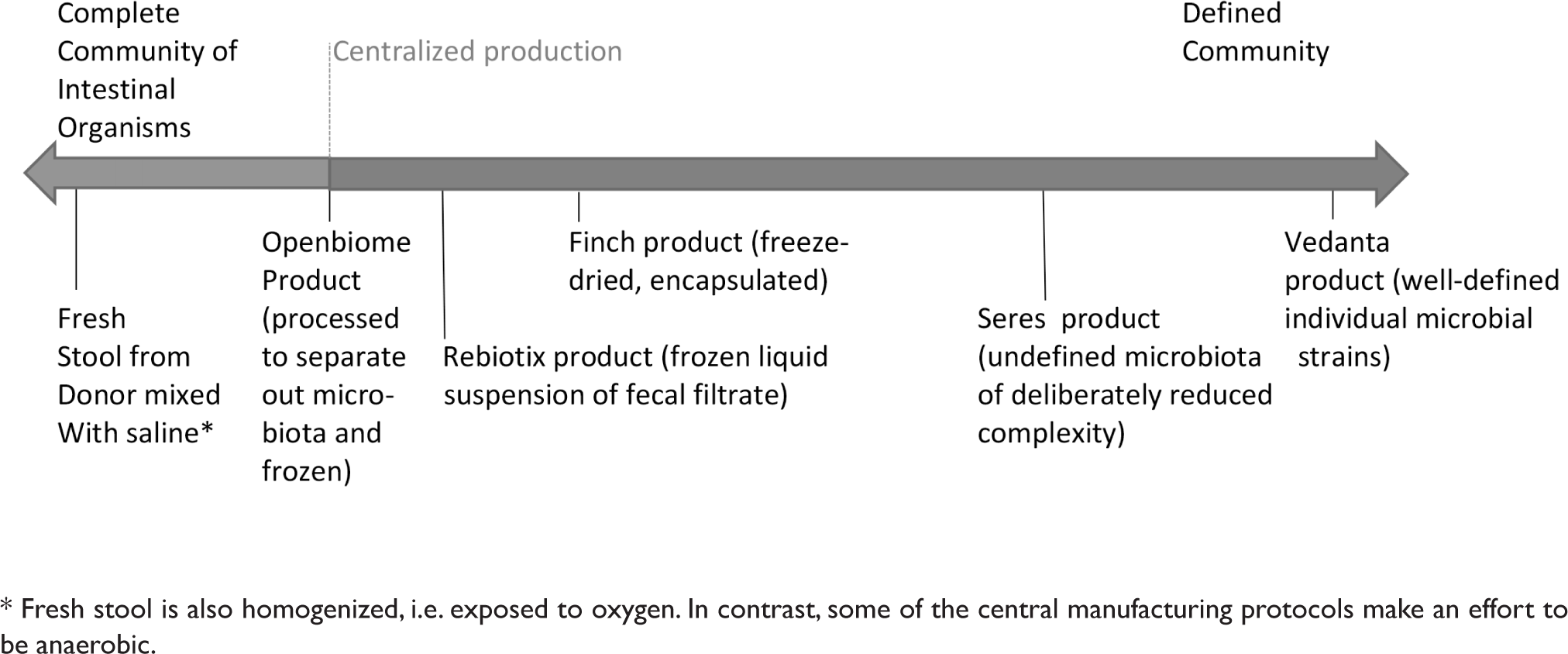
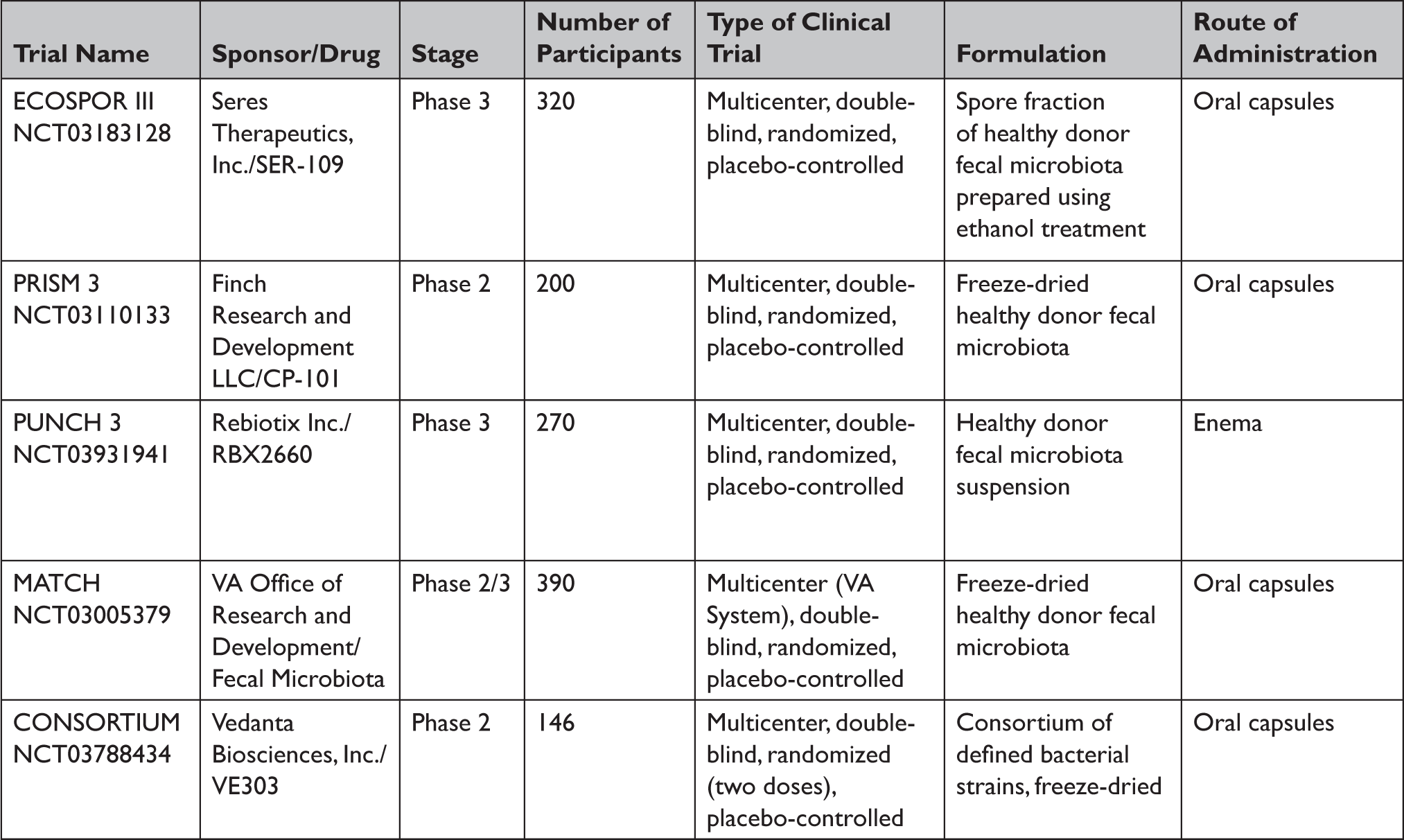
There are several stool-based products for prevention or treatment of rCDI unresponsive to standard antibiotic therapy that are in the clinical trials phase of the IND process, four in late-stage trials. Figure 1 illustrates the range of these products on a spectrum of complete community products at one end and defined consortia products on the other.
Spectrum of Microbiome-Based Products for Treatment of rCDI

The products include:
RBX2660, a suspension of unselected intestinal microbiota derived from human stool, including spore and non-spore forming microbes, which is administered by enema.Reference May36 The product is manufactured by Rebiotix (recently acquired by Fer-ring Pharmaceuticals37) and is currently in Phase 3 of the clinical trials process.38 RBX2660 is a complete community product.
SER-109, an orally administered preparation of encapsulated spores prepared from human donor microbiota treated with ethanol, intended to treat rCDI. The preparation is designed to “repair the underlying cause of recurrent CDI-dysbiosis.”39 The product is manufactured by Seres Therapeutics and is also in Phase 3 of the drug development process. SER-109 is sourced from human donors, but has markedly reduced diversity and an altered physiologic state induced during manufacturing, i.e., spores versus vegetative cells.40
VE303, an orally administered microbiome therapeutic, produced from “pure, clonal cell banks.”41 This process yields a standardized drug product in powder form and bypasses “the need to rely on direct sourcing of fecal donor material of inconsistent composition.”42 The product was developed by Vedanta Biosciences and is in Phase 2 of clinical trials. It is composed of “a defined consortium of live bacteria designed to restore colonization resistance against gut pathogens, including C. difficile.”43
CP101, an orally administered “full spectrum [or complete community] microbiota product” developed by Finch Therapeutics44 in collaboration with the University of Minnesota. It is an encapsulated preparation of freeze-dried micro-biota, currently in Phase 2 of the clinical trials process.
Encapsulated fecal microbiota, manufactured by the University of Minnesota Microbiota Therapeutics Program and sponsored by and tested in the Veterans Administration system. The product is a freeze-dried preparation similar in formulation to Finch CP101, but different in the proportion of the cryoprotectant and dose of bacteria per capsule. The product is in Phase 2/3 of clinical trials.
Current Clinical Trials

Each of the commercial products has obtained either Orphan Drug status (VE30345), Breakthrough Therapy Designation (CP10146), or both (SER-10947 and RBX266048). RBX2660 has also obtained “Fast track status.”
In order to obtain FDA designation as an orphan drug, the sponsor must provide documentation to demonstrate that: (i) The disease or condition for which the drug is intended affects fewer than 200,000 people in the United States or, if the drug is a vaccine, diagnostic drug, or preventive drug, the persons to whom the drug will be administered in the United States are fewer than 200,000 per year.49 For a drug or preventative intended for diseases or conditions affecting 200,000 or more persons per year in the United States, there must be no reasonable expectation that the costs of research and development for the drug for the indication can be recovered by sales of the drug in the United States.50 The annual incidence of CDI in the U.S. is approximately 500,000, and only about 100-150,000 individuals develop recurrence, about one-third of whom will develop multiple recurrences.Reference Lessa, Mu, Bamberg, Ma, Brensinger and Wu51 Thus, the incidence of rCDI easily meets the 200,000 limit for orphan drug status.
It is highly unlikely that the drug sponsors would argue that the R&D costs of development of their drug would not be recouped. The Orphan Drug Act has been increasingly employed by a variety of manufacturers who are relying on orphan drug status and market exclusivity to charge “astronomical prices” for their drug products.Reference Thomas and Caplan52
Breakthrough therapy designation is for drugs that treat “a serious or life-threatening condition and preliminary clinical evidence indicates that the drug may demonstrate substantial improvement on a clinically significant endpoint(s) over available therapies.”53 Available therapies are FDA-approved therapies already on the market. The designation is intended to expedite the drug review process. rCDI likely meets the criteria of a serious or life-threatening condition but the evidence is still uncertain as to whether these drugs are superior to antibiotics currently approved for treatment of rCDI. The RBX2660 Phase 2 results were equivocal when the product was compared to placebo following completion of antibiotic therapy, having not met the primary endpoint.54 The SER-209 product failed in Phase 2 when compared to placebo in a similar trial design.
Fast track status is given to a product with an IND that is intended to treat a serious condition and fill an unmet medical need. A serious condition is one that may affect survival or day -to -day functioning, or “if left untreated may progress from a less severe condition to a more serious one.” FDA defines filling an unmet medical need as providing a “therapy where none exists or providing a therapy which may be potentially better than available therapy.” rCDI and FMT would likely meet these criteria.
Fast track status is given to a product with an IND that is intended to treat a serious condition and fill an unmet medical need. A serious condition is one that may affect survival or day -to -day functioning, or “if left untreated may progress from a less severe condition to a more serious one.”55 FDA defines filling an unmet medical need as providing a “therapy where none exists or providing a therapy which may be potentially better than available therapy.”56 rCDI and FMT would likely meet these criteria.
III. Current FDA Regulatory stance for FMT and microbiota-based therapies
The Law: Statutory Characterization as “Biologic Drug”
While FDA is currently exercising enforcement discretion for stool product from stool banks used for FMT to treat rCDI, the agency has declared that stool is a “biological product,”57 which comes under the broader umbrella of drugs. Similarly, each of the microbiota based therapies described above would be a biologic. As a biologic, these products are subject to a regulatory pathway that differs in some notable ways from the drug pathway. According to FDA, “[m]ost biologics … are complex mixtures that are not easily identified or characterized”58 by common laboratory methods. In addition, some of the components of a biological product may not be known. This is in contrast to “chemically synthesized small molecular weight drugs, which have a well-defined structure and can be thoroughly characterized.”59 FDA's authority to regulate biologics comes not only from the Food, Drug and Cosmetic Act, because most biologics are also considered drugs, but also from the Public Health Service Act.60 While both drugs and biologics must obtain an IND, undergo clinical trials and submit a marketing application to FDA, drug sponsors must submit a new drug application (NDA) and biologic sponsors must submit a biologics license application (BLA). If approved, the biologic sponsor will receive a biologics license.
In addition to demonstrating safety and efficacy through clinical trials, to obtain a license the biologic sponsor must control the source and nature of the raw materials and establish that the “product, the manufacturing process, and the manufacturing facilities” meet applicable “safety, purity and potency” standards.61 Because of the difficulty characterizing the identity and structure of biological products, FDA relies heavily on the manufacturing process to ensure the product's consistency.62 The agency also considers “the storage and testing of cell substrates that are often used to manufacture biologics” and requires a potency assay because of the complexity and heterogeneity of biological products.63 In addition, because changes in the manufacturing process prior to or after issuance of a biological license may lead to changes in the biological molecule that may affect the product's safety or effectiveness, unless the sponsor can demonstrate that the biologics produced before and after the changes are comparable, FDA may require additional clinical studies to ensure “the product's continued safety, identity, purity and potency.”64 Such comparability studies may include:
a combination of analytical testing, biological assays (in vitro or in vivo), assessment of pharmacokinetics and/or pharmacodynamics and toxicity in animals, and clinical testing (clinical pharmacology, safety, efficacy), with the usual progression of complexity from analytical to animal studies to human pharmacokinetics and/or pharmacodynamics to clinical safety and efficacy studies.65
Because of the importance of the manufacturing process for biologics, FDA conducts inspections of biologic manufacturing facilities before a product is approved and after approval on a regular basis. It also monitors the safety of biologics after approval once they are on the market. If FDA becomes aware that a biological product poses a threat to public health, the PHS Act allows the agency to immediately suspend the manufacturer's biologic license.
FDA Policy: Scope and Application of Enforcement Discretion
In Heckler v. Cheney (1985), the Supreme Court established that “FDA generally has ‘absolute discretion’ over whether to prosecute or enforce FD&C Act violations through civil or criminal processes” under section 702, the Act's general enforcement provision.Reference Armstrong and Staman66 Lower courts have followed this ruling unless the statutory provision at issue mandates FDA's enforcement action.67
In May of 2013 the FDA established that FMT constitutes a drug and a biologic,68 and therefore can only be administered in the context of a formal clinical trial under an IND. Following an outcry from physicians, professional organizations, and patient advocates that this mechanism would make FMT inaccessible for many patients in need, just two months later, in July 2013, the FDA said that it would exercise “enforcement discretion,” allowing physicians to administer FMT as a treatment for CDI that fails to respond adequately to standard therapies, the only requirement being informed consent.69
IV. Challenges of the Biologic Regulatory Pathway for Microbiota-based Therapies
Production and Regulation for Complete Community Microbiota Therapeutics
The current regulatory pathway for marketing complete community therapies, e.g. products used by OpenBiome and developed by Rebiotix and Finch, as drugs and biologics poses numerous challenges for sponsors and manufacturers, some of which can be addressed, while others remain challenges. Microbiota-based products constitute an entirely new class of therapeutics for which there is extremely limited data on pharmacokinetics and pharmacodynamics, and pre-clinical animal models provide very limited usefulness due to microbiota-host evolutionary co-adaptation. While FDA generally requires such data for an IND submission, the Agency has not, as far as we know, required it for this class of product. This is likely because neither researchers nor FDA have established how to measure or characterize the pharmacokinetic and pharmacodynamics properties of these substances and we do not have appropriate animal models for predicting microbiome changes in humans. Furthermore, the lot-to-lot variability in microbial composition along with uncertainties about the core functionalities of complete community microbiota products far exceed any previous biologic products regulated by the FDA. Nevertheless, the requirements for their production can be accommodated to some extent within the framework of Good Manufacturing Practices (GMPs). By adopting GMPs in production protocols, manufacturers can document all steps in the production process of these therapeutics and retain lot samples for possible later retesting. Standardization of the dose is already possible by quantification of live bacteria, but may be further strengthened in the future by incorporation of microbiome-based diagnostics that may include diversity metrics and specific functional attributes of the microbiota products. It is worth noting that such standardization is possible only with centralized stool banks or drug models, but not for individual practitioners preparing FMT material.
A critical part of FMT product manufacturing is the donor program itself. The current criteria for donor selection, proposed by a physician-organized FMT Working Group, include detailing general health, obtaining a history of medication usage (including antibiotics), physical examination, and a series of laboratory blood and stool tests for infectious disease, metabolic health, and autoimmunity risk. The FMT donor program has many parallels to that developed in transfusion medicine,Reference Jørgensen, Hvas and Dahlerup70 although there are many technical and logistic differences. At this time there are no diagnostic tests based on metagenomic characterization of the donor microbiome that can be used to screen donor material for use in FMT. In part, this is due to the novelty of microbiome analytic technologies that need careful standardization and validation. In addition, Clinical Laboratory Improvement Amendments71 (CLIA)-certified facilities that can perform such analyses are only beginning to emerge, even as the technologies are constantly being updated. Moreover, there is no consensus on what constitutes healthy microbiota. Data from the Human Microbiome Project demonstrated a broad range of microbial assemblages in healthy individuals that have similar core physiologic functionalities.Reference Turnbaugh and Gordon72 However, the compositional attributes of microbiota responsible for many of the key physiologic functions that are beneficial to the host, e.g., colonization resistance against pathogens, metabolic benefits to the host (e.g., protection against obesity), and immune fitness, remain largely unknown.
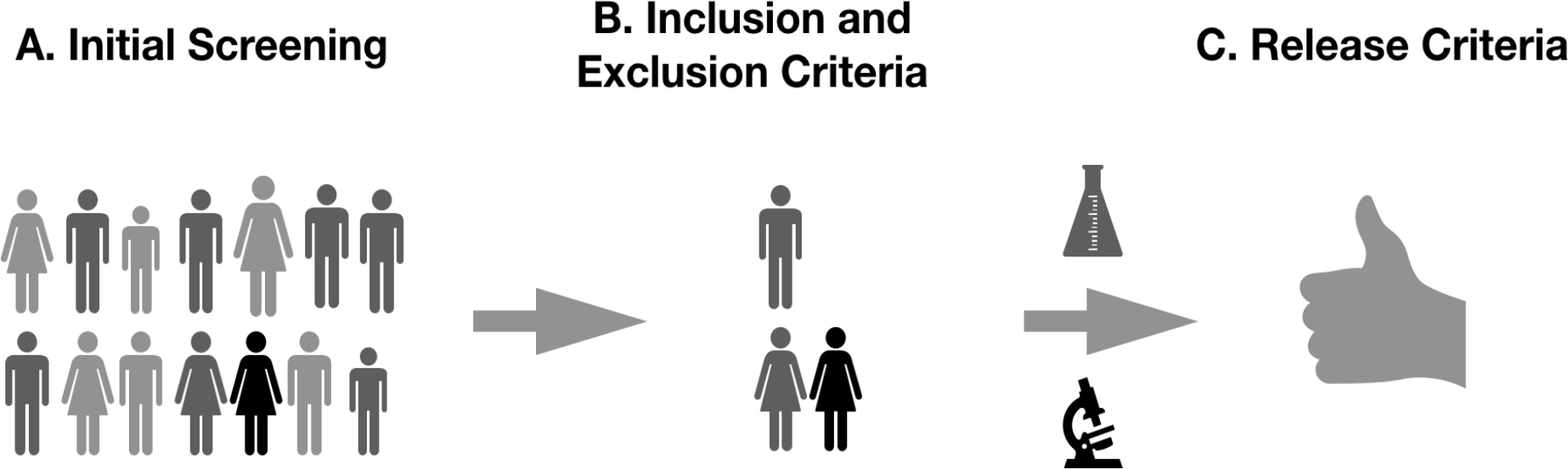
Outline of typical stool bank work-flow in a GMP facility
A. During initial screening potential participants complete an extensive questionnaire that evaluates their health. The questionnaire includes a section that is similar to that used in blood donation. In addition, the questionnaire evaluates history of antibiotic use and general, metabolic, immune, gastrointestinal, neurologic, and psychiatric health. B. Participants who pass the screening are evaluated in person with a detailed history, physical exam, and a series of laboratory blood and stool tests. Individuals who satisfy the entry inclusion and exclusion criteria are allowed to donate stool in a supervised bathroom. The stool is processed in the manufacturing facility where the microbiota is separated from non-microbial material and frozen. Additional laboratory tests for infectious disease are performed on the donated material. C. The microbiota is held in the manufacturing facility until a number of infectious disease tests are repeated on the donor at least two weeks after the original donation. The quality assurance department reviews all data collected up to this point, including laboratory testing of the donor, the donation, and the final treatment material. It is possible to satisfy the original inclusion and exclusion criteria, but fail the release criteria, which include additional laboratory tests for safety and potency.

Given the rapid pace of development in the micro-biome field, it is essential that the regulatory framework for FMT products is able to rapidly incorporate new tests and technologies, once they are properly validated, and enable mechanisms for prompt implementation of protocol updates. This is routinely done in modern transfusion medicine, which is stringently regulated, but is not typically done for approved drugs. In fact, we are unaware of any drug for which this is done. Thus, for the FMT based products, it is not clear what criteria will be used to determine if new diagnostic tests will be required, how they will be introduced, and whether new clinical trials will be required to validate methodological modifications, e.g., a new method for homogenation of stool and separation of microbiota, a new cryopreservative, etc. Current FDA regulations and draft guidance indicate that for biologic products, if a manufacturer makes changes to the production process after receipt of a biologic license that have a “substantial” or “moderate” potential to have an “adverse effect” on product quality, the company may not market the “new” biologic until FDA has approved or at least reviewed, the change.73 A problem for regulators will be what type of data will be sufficient to assess comparability of the pre- and post-change product. Since we do not yet have recognized parameters for measuring or determining the safety of changes in pharmacokinetics or pharmacodynamics of microbiota based therapies, lengthier clinical trials may be required.
An example of a potential scenario that regulators would need to address is finding that a large majority of previously eligible donors test positive on a newly introduced pathogen test. In such a scenario, would the approval of the new biologic be revoked? How will regulators know that those who test negative do not have uniquely different microbiota, or whether the products made from the newly exclusive pool of donors would be comparable in efficacy to previous products?
A current example of FDA concerns, which apply to all biotherapeutic products, is the potential for the spread of antibiotic resistance genes. This is a critical issue for microbiota-based therapeutics development given the growing threat of MDROs, poignantly illustrated recently by infectious complications with an MDRO in two immunosuppressed patients following FMTs.74 For the moment, the FDA is addressing this concern by requiring negative culture-based testing for common MDROs, such as vancomycin-resistant enterococci, methicillin-resistant Staphylococcus aureus, carbopenem-resistant Enterobacteriaceae, and bacteria containing extended spectrum-beta lactamases in the donated stool, in all INDs for FMT-associated clinical trials. The FDA is also requiring exclusion of individuals who may have greater risk of colonization by MDROs, such as health care workers engaged in direct patient care.
It is highly likely that more comprehensive approaches to test for antibiotic resistance gene burden (the “resistome”) based on metagenomic characterization or another molecular-based platform will be developed and could be introduced once validated. However, several new challenges would immediately arise, including making a determination for what will constitute acceptable resistome levels. Notably, antibiotic resistance genes are present even in the gut microbiome of ancestral human populations that have never been exposed to antibiotics;Reference Rampelli, Schnorr, Consolandi, Clemente, Pehrsson and Blaser75 therefore, absolute absence of such genes would be unreasonable. If an acceptable resistome level were defined with a validated microbiome-based test, it would be important to rapidly introduce such a diagnostic into the manufacturing workflow to enhance product safety. It is not clear how FDA would respond to such a scenario as the current regulations and guidance documents do not address changes in donors. Both blood and blood products and human cells, tissues, and cellular and tissue-based products are outside the scope of the referenced regulatory documents.76 Would the agency require new clinical trials or assume that the change would be minor so that the changes could be immediately introduced?77 The FDA has the authority to work one-on-one with companies to ensure that products are safe and effective but the uncertainty of future requirements is a burden for manufacturers of this new type of biologic product.
Another important challenge in complete community product development is ensuring the product's potency. The current approach is to simply define a dose in terms of viable bacteria. Additional metrics in the future may include microbial community characteristics, such as diversity and even presence of specific predicted functionalities. Simple metrics may be sufficient for products used for restoration of antibiotic-decimated microbiota. However, conditions associated with chronic dysbiosis, such as autism or inflammatory bowel disease, will likely require more detailed functional characterization of donor microbiota that will depend on better mechanistic understanding of disease pathogenesis to estimate the potency of the products. Addressing these issues requires considerable research and incorporation of microbiome-based analyses, which will need to be validated. Ultimately, these additional tests will need to be incorporated into the protocols for donor selection and manufacturing, and require clear guidelines from FDA on how rationally selected, indication-specific FMT products will be distinguished from those that are more generic.
An additional consideration in the development of new complete community microbiota therapeutics dependent on human donors, is a population-wide drift in the composition of microbiota toward lesser diversity due to environmental pressures that include widespread use of antibiotics and dietary changes.Reference Blaser78 The intestinal bacterial microbiota in populations living an ancestral lifestyle, such as Amazonian Amerindians or certain African tribes, have greater diversity relative to those in healthy Western cohorts. Similarly, decreasing bacterial diversity over time has been described in immigrants from developing countries who have come to the US.Reference Vangay, Johnson and Ward79 These changes correlate with greater incidence of many disease conditions, including autoimmunity, allergies, obesity, inflammatory bowel disease, colon cancer, and others. Therefore, if these trends continue, it is conceivable that fecal microbiota produced from future generation donors will have a different risk/benefit ratio relative to current preparations despite identical production protocols. It is likely that advances in microbiome science will allow development of metagenomics-based predictive indices that will allow classification of microbiota into various risk categories, e.g., obesity, autoimmunity, cancer, etc. Rapid incorporation of such testing could mitigate such concerns In addition, mandatory post-approval monitoring of outcomes with the use of FMT products may be an important measure to consider in an optimal regulatory regime.
Production and Regulation of Defined Microbial Consortia
Regulating defined microbial consortia as therapeutics is easier in a number of ways, e.g., they have the advantage of greater compositional certainty and manufacturers are likely to have better control over potential risks, specifically exclusion of pathogens. Development of such consortia is also more attractive to the pharmaceutical industry because of greater strength of intellectual property.80 However, the research and development investment into generating such consortia are formidable. The intestinal microbes are notoriously difficult to grow in isolation because of their extreme specialization as members of a larger microbial community, and optimal growth conditions vary for each individual species. Therefore, while some developers have embarked on cultivating libraries of individual bacterial strains, others are pursuing this work using bioreactors to culture complex microbial communities that try to simulate the microbe-microbe interactions in the intestine.Reference Petrof, Gloor and Vanner81 There is also a potential for a drift away from the desired functionality of the chosen microbial strains in defined consortia products, which need to be grown in culture, if such functionality imposes a metabolic cost to the organism outside its natural habitat. Thus, given the existence of various epigenetic mechanisms capable of modulating gene expression, regulators need to consider that even identical genetic sequence cannot guarantee equivalent potency of the strain without a relevant functional assay.
Importantly, compositional certainty and control over production does not necessarily translate into greater safety of therapeutic products. For example, in considering the challenge of antibiotic resistance mentioned above, the regulator can easily require that none of the microbial strains in the product contain antibiotic resistance genes. However, unlike FMT with complete community microbial products, which results in rapid normalization of a microbiome decimated by antibiotics, a product composed of a defined, but limited microbial assemblage of micro-organisms cannot by itself lead to full normalization of the gut microbiome. Instead, the intestinal micro-biota will continue to gather additional members from the patient's environment, which may be enriched for MDROs given their increased presence in health care facilities. Notably and not surprisingly, patients with rCDI have a greatly increased abundance of antibiotic resistance genes and FMT decreases their presence, a benefit that is yet to be demonstrated with any defined microbial products.Reference Millan, Park and Hotte82 Interestingly, an antibiotic conditioning step is commonly employed to facilitate engraftment of microbial therapeutics, a treatment that is more destructive to the microbiome than the defined therapeutic can possibly repair by itself.
Another factor that needs to be considered in predicting therapeutic potency of defined consortia microbial therapeutics is the composition of a patient's indigenous microbiota at the time of treatment. This is necessary as the potential for engraftment of different probiotic bacterial strains is highly variable in human volunteers.Reference Zmora, Zilberman-Schapira, Suez, Suez, Zmora and Zilberman-Schapira83 Similar variability should be anticipated for any products composed of limited microbial assemblages. While achieving a stable, donor-like microbiota composition is a reasonable and measurable objective with FMT using complete community products, the trajectory of microbiome modulation and the ultimate microbiome composition following treatment with defined microbial consortia is far less obvious. Therefore, while all therapeutics targeting the microbiota (including antibiotics) may have long-term side effects not captured by current study designs, there is arguably a greater degree of uncertainty over long-term effects of treatment with defined microbial consortia as compared with treatment with complete community microbials. Given our limited current knowledge about the functional potential of various microbiome configurations, it seems prudent that regulators such as the FDA consider potential long-term complications, e.g., increased inflammation, obesity, intestinal cancer, and others, which cannot be detected in short-term outcome studies and devise effective post-approval mechanisms for mandatory data capture to address these concerns.
Ultimately, arguments alone cannot resolve the various pros and cons of different pathways of microbiota therapeutics development. These have to be settled through clinical trials. Thus far, the FDA has required commercial developers to conduct only placebo-controlled trials. Notably, the commercial FMT-inspired products have underperformed in terms of efficacy in treatment of rCDI relative to open-label FMT trials using protocols most commonly employed in the clinical community.Reference Tariq, Pardi and Bartlett84 The reasons for relative underperformance are unclear, but may be associated with dose, formulation (e.g., less than complete microbiota), and route of administration. Given the remarkable success of FMT for this indication and its acceptance by many as the standard of care,Reference Allegretti85 regulators should consider requiring formal clinical trials comparing new commercial products to FMT with products from a stool bank such as OpenBiome, which has standardized the screening of donors and stool and has incorporated GMPs into its stool preparation process.86 Understanding the differences, if they exist, is also critical for development of better commercial products.
V. FDA Regulatory Options for Stool-Based Products for FMT and Implications for Patients, Research, and Innovation Prior to Emergence of an FDA-Approved Product
Status Quo: FDA Continues to Exercise Enforcement Discretion Until a New Drug is Approved
FDA's enforcement discretion policy has had both positive and negative effects on the evaluation and development of complete community FMT products. On the one hand, the relatively light regulatory burden for conducting research under the enforcement discretion regime, comprised mainly of local IRBs, facilitated a remarkably rapid transition from what used to be a crude procedure that involved preparation and administration of raw, homogenized stool to easily administered purified, cryopreserved micro-biota, centrally manufactured from rigorously tested universal donors. Academic clinical investigators have been able to perform a multitude of studies, comparing fresh and frozen/thawed microbiota,Reference Lee, Steiner and Petrof87 routes of administration,Reference Kao, Roach, Silva, Allegretti, Fischer and Sagi88 and even dose assessment in treatment of rCDI.Reference Staley, Hamilton and Vaughn89 Furthermore, academic researchers have been able to make preliminary assessments of clinical safety and efficacy of FMT in different higher risk rCDI patient groups, e.g., those with inflammatory bowel disease, advanced liver disease, and organ transplant recipients.Reference Newman, Rank, Vaughn, Fischer, Kao, Kelly, Kelly, Ihunnah and Fischer90 Importantly, these higher risk patients are disproportionately represented within the rCDI population, but are excluded in formal clinical trials conducted by commercial developers under IND clinical trial protocols.Reference Kelly, Fischer and Grinspan91
On the other hand, the majority of FMTs performed in the US for treatment of rCDI thus far have not been accompanied by data collection. Thus, it is likely that the enforcement discretion policy that allowed liberal clinical practice of FMT for rCDI has resulted in an enormous missed opportunity to collect pragmatic clinical outcome data in tens of thousands of patients. A voluntary NIH-funded FMT National Registry led by the American Gastroenterological Association (AGA) has been able to capture only a tiny fraction of FMTs being administered.Reference Kelly, Kim and Laine92 Most physicians in practice have no interest in assuming responsibilities of a sub-investigator, which is required for participation in the Registry. These responsibilities include securing local IRB approval for systematic data reporting and timely data entry. Physicians already feel over-burdened with a multitude of administrative tasks, including wrangling with patient insurance companies over choices of FDA-approved drugs, and few will accept additional responsibilities without the necessary support.
Many questions and challenges need to be pursued in the development of next-generation FMT products, e.g., donor material selection, formulation, optimal delivery systems, and even nutrition management of the recipients. These require intensive research investments and rigorous prospective clinical trials.93 Currently the commercial developers are struggling to recruit rCDI patients into randomized, placebo-controlled trials with their products, ostensibly because of FDA's continuing to exercise its enforcement discretion for stool banks. But, because of the investments already made into initial clinical trials using specific formulations described within the approved INDs, the leading products are outdated first-generation preparations that have not benefited from continued research and modification. This may be a major reason for their underperformance when compared with common clinical FMTs.Reference Tariq, Pardi, Bartlett, Khoruts and Sadowsky94 The companies are racing toward approval of complete community products because they expect these to succeed, at least in treatment of rCDI, and provide them with greater opportunities for attracting investment capital. However, it is far from clear that these companies are committed to serious investment into further FMT research, mainly because of the relatively weak intellectual property over the active ingredient of FMT — donor-derived microbiota. Most microbiome therapeutics companies are investing much more capital into development of consortia of selected microbial strains, which at the minimum would have much stronger intellectual property.
Elimination of Enforcement Discretion
If the FDA were to stop exercising its enforcement discretion now and no longer allow physicians to access stool from OpenBiome for treatment/prevention of rCDI, patients would have several immediate options for potentially effective treatment: 1) Participate in one of the clinical trials currently enrolling patients (assuming that the patient resides in the vicinity of a trial site, meets the stringent inclusion/exclusion criteria, and is willing to risk being in the placebo arm); 2) obtain stool from a friend or relative and find a physician who is willing to do the procedure; 3) receive treatment from a local clinical practice that prepares and administers FMT products; or 4) do the procedure themselves without the assistance of a physician. A fifth option, expanded access or compassionate use, is not addressed herein but is discussed by Ossorio & Zhou in this issue.95
A letter from OpenBiome (Nov. 2018) to stakeholders on the future of stool banks asked for their comments on a proposal the stool bank was considering submitting to FDA in anticipation of FDA ending its enforcement discretion policy.96 The letter indicated that FDA may take this action as sponsors of “three late stage clinical trials” for stool-based therapies for CDI have been having difficulty recruiting subjects to their trials due in part to widespread access to FMT under the agency's enforcement discretion policy. The action would also be consistent with FDA draft industry guidance indicating that FDA proposes to terminate its enforcement discretion policy for stool provided by stool banks.97 In the letter, OpenBiome proposed an alternative to FDA ending its enforcement discretion in toto, allowing access to stool product from Open-Biome if the patient could not “feasibly” participate in one of the three ongoing clinical trials. Consistent with FDA's March 2016 guidance, access would still be permitted to hospital stool banks and to stool that is obtained under the supervision of the physician performing the FMT. A patient would be able to “feasibly” participate in one of the trials if, among other things, the patient lived within 50 miles or one hour travel time to the trial site and the patient met the study's inclusion criteria.98 OpenBiome received numerous comments on its proposal, some supportive, others highly critical. Because of lack of a consensus on the proposal, OpenBiome did not submit the proposal to FDA.
Criticisms of the proposal included comments from a number of physicians who have performed FMT on their patients using stool product from OpenBiome. In fact, the proposal from OpenBiome, along with a press release that the companies going through clinical trials had formed a lobbying group (the Micro-biome Therapeutics Innovation Group or MTIG99) prompted over 40 FMT practitioners to send a letter to FDA expressing their concerns about the possibility of FDA limiting access to “stool bank” material. The letter forcefully expressed their view that such a policy would be highly problematic. The physicians argued that limiting access to “banked FMT material” would be “ethically unacceptable” and fly in the face of “fundamental principles” of human subject research set forth in The Belmont Report. They viewed a policy that would limit access to an available and effective therapy while “forcing patients into clinical trials” as significantly flawed.100
The signatories of the letter to FDA were especially aggrieved that FDA would adopt such a policy in order to benefit the commercial entities attempting to market a stool-based drug and asserted that the burden of recruitment “should fall on the trial sponsor and the investigator, not on the patient.” The authors of the letter also expressed some skepticism that the micro-biota-based therapies going through the clinical trial process would be superior to patient receipt of “complete microbial communities” from healthy donors.
Some physicians independently pointed to the requirement that participation in clinical trials must be voluntary — not based on coercion or done out of desperation. Some patients, even if eligible, may not wish to participate in a clinical trial as such trials typically involve extra physician visits, answering questionnaires, and being put through additional tests. Not all patients have the time, energy, or desire to participate, especially patients who have been suffering from the unrelenting symptoms of rCDI. In particular, patients already severely traumatized by recurrent infection may dread the idea of being given a placebo. Some patients may not wish to participate in clinical trials simply because they do not trust researchers.
An ongoing concern expressed by patients and FMT practitioners about an FDA policy that would limit access to stool product from OpenBiome has been the potential that such a policy would increase the number of “do-it-yourself” or DIY FMTs. Estimates of DIY efforts have been as high as 10,000/year.Reference Goodman101 The practice has been greatly assisted by information readily available on the internet through word of mouth. There are also dozens of websites and YouTube videos that tell patients how to perform the procedure easily and inexpensively from home, e.g., Motherboard has a site called “The World of Do-It-Yourself Fecal Transplants” with directions on how to do the procedure at home using donor stool, saline, a blender, and an enema bag. The site states that “FMT has found a cult following outside the mainstream” with “a plethora of supportive forums and Facebook groups like ‘Fecal Bacteriotherapy is The Bomb,’ as well as a number of websites explaining how to prepare your at-home poop enema.”Reference Goodman, Hurst and Pattibiomed102 These sites have thousands of viewers.
A challenging part of the DIY procedure can be finding a healthy and willing donor, and from a public health perspective, there are significant risks to the DIY option. The biggest risk comes from inadequate donor screening and testing for infectious diseases and potential pathogens. However, additional non-infectious risks, e.g. obesity, diabetes, autoimmunity, neuropsychiatric disorders, etc., also may be increased due to less stringent donor selection relative to those established by the stool banks. In one reported case, a woman who transplanted stool from her healthy but overweight daughter also became obese.Reference Alang and Kelly103 These additional public health risks posed by lack of donor screening, should be taken into account in FDA's decision as to whether to prohibit the use of stool from stool banks to treat CDI.
VI. FDA Regulatory Options for FMT After an FDA-Approved Product
Use of Orphan Drug and Biologic Exclusivities as Frameworks for Determining the Future of FMT
Once a new drug is approved, it will be eligible for data exclusivity as a biologic and market exclusivity if it is an orphan drug. When this occurs, FDA, if it has not already made a decision to end its enforcement discretion policy for FMT performed using stool bank-sourced material, will likely reconsider the policy. The application of the exclusivity “guarantees” to the reference biologic or first orphan drug/biologic granted a BLA, would not, as a strict legal matter, affect Open-Biome's or other stool banks’ ability to continue to operate, assuming they are not applying for an IND, as the IND process would trigger the above referenced exclusivities. However, because of the unique situation presented by having a “natural” product, i.e., stool, that is not vying for approval as a biologic, we consider the possibility that FDA would treat the stool bank product as it would a “second-in-line” orphan drug or a biosimilar, and discuss how that would affect the future of FMT performed with stool product from stool banks.
orphan drug market exclusivity
Approval of a stool-based (complete community or defined consortia) biologic with an orphan designation will essentially prevent other manufacturers from receiving approval of the same drug for the same disease or condition until seven years from the date of the first applicant's approval.104 Under this framework, FDA would not permit OpenBiome to continue to sell its product if it is being used for the “same indication” and if it is considered to be the “same drug” as the newly approved biologic/drug. Since the OpenBiome product is being used for the same indication as each of the biologics vying for approval, i.e., to prevent or treat rCDI, the primary issue would be whether the OpenBiome product is considered the “same drug” as the approved drug/biologic. For purposes of the “drugs” under discussion here, which are composed of large molecules, “same drug” is defined by FDA regulations as:
a drug that contains the same principal molecular structural features (but not necessarily all of the same structural features) and is intended for the same use as a previously approved drug, except that, if the subsequent drug can be shown to be clinically superior, it will not be considered to be the same drug.105
Clinically superior means that the drug has a signifi-cant therapeutic advantage over and above that provided by an approved drug (that is otherwise the same drug) in one or more of the following ways:
(i) Greater effectiveness than an approved drug (as assessed by effect on a clinically meaningful endpoint in adequate and well controlled clinical trials). Generally, this would represent the same kind of evidence needed to support a comparative effectiveness claim for two different drugs; in most cases, direct comparative clinical trials would be necessary; or
(ii) Greater safety in a substantial portion of the target populations, for example, by the elimination of an ingredient or contaminant that is associated with relatively frequent adverse effects. In some cases, direct comparative clinical trials will be necessary; or
(iii) In unusual cases, where neither greater safety nor greater effectiveness has been shown, a demonstration that the drug otherwise makes a major contribution to patient care.106
If we apply the criteria for “same drug” and “clinically superior” to OpenBiome's product as a “second in line” therapy, the ability of the stool bank to continue to market its product to physicians for rCDI would likely depend on:
1. the characteristics of the first drug approved, i.e., will it be a complete community microbiota product, e.g., RBX2660 (Rebiotix); product of reduced diversity, e.g., SER-109 (Seres); or “defined consortia,” i.e., VE303 (Vedanta). (Since CP101 does not have orphan drug designation it would not be granted market exclusivity.)
2. whether the OpenBiome product is more effective than the approved drug or makes a major contribution to patient care.
If RBX2660 were to be the first product approved by FDA, it is possible that the OpenBiome product would be considered similar enough to constitute the “same drug.” However, if either SER-109 or VE303, therapies based on highly manipulated microbiota or “defined consortia,” respectively, were to be approved first, there is a persuasive argument that the OpenBiome product would not be the “same drug” as it is a complete community gut microbiota therapy, which ultimately may make a significant difference in effectiveness.
If the OpenBiome product were considered to be the “same drug” as RBX2660, the final question for regulators to consider would be whether the Open-Biome product is “clinically superior” to the Rebiotix product. Thus far, FMT with donor stool has appeared to be superior in efficacy to the Rebiotix and SER-109 products, although no direct comparisons with the OpenBiome product have been made.107 In addition, or alternatively, OpenBiome advocates could argue that their product makes a major contribution to patient care, referencing the criteria for “clinically superior.”
FDA has granted New Drug Applications (NDAs) or Biologic License Applications (BLAs) for competitor orphan drugs under each of the three reasons listed above for clinical superiority. While the latter designation is supposed to be made in “unusual cases” FDA has granted several NDAs to competitor drugs on the basis that the second product “makes a major contribution to patient care.” Criteria that FDA uses to make this decision may include whether the competitor treatment is offered at a more “convenient treatment location, duration of treatment; patient comfort; improvements in drug efficacy; advances in the ease and comfort of drug administration; longer periods between doses; and potential for self administration … when applicable to severe or life threatening diseases.”Reference Karst108 Since administration by colonoscopy is likely to be superior to delivery by enema,Reference Hota, Sales, Tomlinson, Dubberke, Lee and Orenstein109 Open-Biome could argue that its product's route of delivery increases efficacy of the therapy.
Thus, if FDA were to apply the criteria for orphan drug status in considering whether to allow OpenBiome to sell its product for rCDI after one of the drug entities was approved, there are very good legal arguments as to why it should be permitted to stay on the market using a modified version of the orphan drug framework.
Furthermore, from a public policy or public health perspective, the availability of stool from a stool bank may be preferable for some patients. The position that the OpenBiome product is not a “biosimilar product” and should not be removed from the market is also defensible in light of congressional and executive branch efforts to control the costs of drugs — of which biologics are among the very highest.
biologic data exclusivity
In addition to the orphan drug designation, each of the microbiota based drugs, as discussed above, would meet the criteria for a biologic and, if it were to be the first approved by FDA, i.e., the “reference product,” it would be granted twelve years of “data exclusivity.” Data exclusivity differs from the market exclusivity granted to orphan drugs as it does not prevent a competitor product from submitting a NDA or a BLA to FDA during the period of exclusivity. Rather, it “prohibits FDA from allowing another manufacturer of a highly similar biologic to rely on the Agency's prior finding of safety, purity and potency for the innovator product” for the designated time period.Reference Thomas110 Thus, the exclusivity only comes into play if a competitor product applies for a biosimilar license and wants to use the data on file from the reference product.
A competitor drug, referred to as a biosimilar, is one that is “highly similar” to the reference product (notwithstanding minor differences) in clinically inactive components and one that has “no clinically meaningful differences” from the reference drug in terms of “safety, purity, and potency.”111 Among other things, the “biosimilar” license applicant must demonstrate that the biosimilar product and the reference product utilize the “same mechanism(s) of action for the proposed condition(s) of use — but only to the extent the mechanism(s) are known for the reference product” and the same route of administration, dosage form, and strength. Under this framework, one could argue that the OpenBiome product would not be “biosimilar” to either a biologic that is based on the complete community or defined consortia approach. If the approved biologic is a therapy that includes donor characteristics and is made up of the entire community of microorganisms found in stool, e.g., RBX2660 or LLC/CP-101, the OpenBiome product would not meet the requirements of a biosimilar as it would be given to the patient using a different route of administration (colonoscopy v. enema or capsule). If the approved product is based on a “defined consortium” there also would be an argument that the OpenBiome product is not “biosimilar” in that it likely would not have the same mechanism of action as the reference drug (or more precisely, would likely have more mechanisms of action than the reference product). Therefore, the OpenBiome product would not be bound to the same marketing restrictions as biosimilars.
Furthermore, from a public policy or public health perspective, the availability of stool from a stool bank may be preferable for some patients. The position that the OpenBiome product is not a “biosimilar product” and should not be removed from the market is also defensible in light of congressional and executive branch efforts to control the costs of drugs — of which biologics are among the very highest.
Enforcement Discretion Termination After a New Drug is Approved
shut down of stool banks: impact on patients and innovation
If FDA decides not to continue its enforcement discretion policy, OpenBiome could respond by closing and no longer providing its product to clinicians or researchers. One of the immediate impacts on patients would likely be the cost to patients of the new drug compared to FMT. FDA approval of FMT products (complete community or defined consortia) is likely to force insurance companies to provide coverage for them. However, if the cost is substantial, it is also likely that insurers will limit coverage. Because most FMTs are administered to elderly individuals, who are more likely to develop rCDI, Medicare coverage of these products is particularly important. FMT would be covered by Medicare Part B, since it is administered by a physician as part of a colonoscopy. The current costs of FMT via colonoscopy include the costs of the procedure, estimated at between $2,100 and $3,764, with an average cost of $3,081,Reference Anderson112 plus the cost of the transplanted product obtained from a stool bank. OpenBiome recently increased the price of its liquid suspension fecal microbiota product to $1595 and of its frozen capsules to $1950 per dose.113 Many Medicare administrators now cover FMT for rCDI and have designated a payment code (HCPCS code114) to cover “preparation with instillation of fecal microbiota by any method, including assessment of donor specimen.”115 Under Medicare Part B, patients would likely pay 20% of the allowable costs of the colonoscopy plus the stool product or $935.20 on average.
Any of the drugs in the pipeline, if approved, would be covered under Medicare Part D and most commercial prescription drug coverage plans. For FDA-approved drugs covered by Part D, the manufacturer is essentially free to set its own price, which is generally what the manufacturer believes the market will bear. Many private and Medicare Part D plans have formularies and place drugs on their formularies into tiers. The first tier is the least expensive drug; it is typically a generic drug and the copayment required is the least of all the tiers. As the tier level increases, the drugs become more expensive and the plan requires that patients pay a higher co-payment. Drugs in the highest tier are referred to as specialty tier drugs. Specialty, or tier-four drugs, usually require patient coinsurance rather than a flat co-payment. This can approximate 30% of the drug cost. Some plans will also require prior authorization by the insurer before they will cover the cost of the drug.116 These rules require many physicians to spend significant amounts of time in communication with insurers obtaining prior approval for their patients to take drugs the physicians believe are best for them.
It is difficult to determine what the out-of-pocket costs would be for Medicare patients for any of the newly-approved microbiota-based drugs as under the Part D benefit design there are “variable cost-sharing requirements” for beneficiaries over the year of coverage.Reference Doshi, Pettit and Li117 For example, once a patient pays a certain amount out of pocket, co-payments may be reduced for the remainder of the year. Newly approved biologics are likely to be “specialty tier” drugs. According to the Kaiser Family Foundation, “Medicare Part D beneficiaries can pay thousands of dollars out of pocket for specialty tier drugs … Median annual out-of-pocket costs in 2019 for … specialty tier drugs range[d] from $2,622 … to $16,551.”Reference Cubanski, Koma and Neuman118 Some specialty tier drugs are not covered by Medicare. For these drugs, annual out of pocket costs for patients in 2019 were estimated to be between $26,209 and $145,769, depending on the drug.119 While we cannot predict what patients will pay for a new microbiota-based biologic, it is very likely that it will be significantly more than they have had to pay for FMT with stool from OpenBiome or other stool bank.
The increase in cost for patients associated with one of the new FDA-approved biologics may push some patients to attempt to find a physician who will perform an FMT with donor stool from a family member or friend or attempt the DIY approach to FMT. For patients who wish to receive the drug via a colonos-copy, they will first have to find a physician willing to perform the procedure, including preparation of the stool for infusion, and a willing donor. In its most recent draft guidance document, FDA would permit this practice as long as the donor and stool are appropriately screened and tested under the direction of the physician performing the procedure and the patient is told the risks, including the fact that the procedure has not been approved by FDA.120 The number of physicians performing FMT has expanded significantly over the last six years121 likely due to the availability of stool product from OpenBiome, which is neatly packaged and stringently tested for pathogens. If stool product from a stool bank is not available there likely will be many fewer physicians willing to perform the procedure as they will be required to screen donors, test stool, and prepare the stool for administration, the last of which, is not a particularly pleasant task. Although Medicare does provide coverage for FMT for rCDI, the reimbursement is not sufficient to cover the costs of the rigorous donor screening necessary to ensure the donor does not have an infectious disease or other condition that possibly could be transferred to the recipient.Reference Craven, Parvathy and Tat-Ko122 Donor screening and testing could run up to $3,000 or more123 to be comparable to the stool bank standards. Furthermore, blending stool may require specialized equipment, such as a biological hood certified for Biosafety Level 2 operation. Also, physicians have argued that they are not adequately compensated for the time it takes to do each of these tasks.
The second challenge for some patients will be finding a willing donor. In comments on FDA's March, 2016 industry draft guidance document indicating that it was the intent of the agency to prohibit the use of stool from stool banks for the clinical use of FMT for rCDI, patients expressed concern that finding a donor, especially when they are very sick and do not have family members available, is nearly impossible and that when a donor is identified there is no guarantee that the donor will be medically suitable. Physicians commenting on the draft guidance indicated that “hospital and local laboratories, especially in rural areas, do not have the facilities to conduct the same type of screening as stool banks, are not trained on the specifics of donor testing for FMT, and are often unable to screen donors quickly and efficiently.Reference Hoffmann, Palumbo and Ravel124 These commenters further pointed out that “screening is expensive, not reimbursed by all payers, and hardest on poor patients who cannot afford the out-of-pocket costs.”125
Another option for patients may be through local clinical practices that collect and administer FMT products. The most recent FDA draft industry guidance indicates that FDA would continue to allow establishments that prepare “FMT products solely under the direction of licensed health care providers for the purpose of treating their patients”126 to continue to provide stool for rCDI. Because such local practices are not regulated, however, there is no centralized information about the number of hospital stool banks in the country. Most are at academic medical centers, but not all have them. Whether these practices will continue to operate their FMT protocols if FDA approves a new stool-based drug is uncertain.
If stool banks are forced to close, it will also very likely limit or halt research and innovation on complete community FMT products. Physicians and other researchers will be less able to obtain stool from other sources and will likely not want to take the time and effort required to prepare the donor stool for administration to research subjects. If, however, OpenBiome or other stool banks are permitted to remain open to provide stool for research purposes, research on complete community products may continue. The closing of stool banks once a new biologic is approved may also affect research on drugs in the pipeline and on new approaches to drug development. For example, if a defined consortia-type biologic is approved, the complete community drugs may progress more quickly through clinical trials as they will not have to compete with stool banks for patients/research subjects. Alternatively, if a complete community drug is approved first, it may spur research on alternative defined consortia-type biologics.
ind requirement imposed for stool banks
If FDA terminates its enforcement discretion policy for stool banks, for purposes of this paper, we assume that OpenBiome would not pursue a traditional IND for approval as a biologic. As a non-profit, it would have to raise significant investment funds to do so and such an effort would be at odds with the company's mission, i.e., to provide “safe and affordable” stool product for patients suffering from [rCDI].”127 Also, OpenBiome has collaborated with Finch Therapeutics, a for-profit company, to “develop CP101, a freeze-dried oral FMT capsule.” It seems unlikely that it would want to compete with its collaborator for FDA approval. However, the requirement that stool banks obtain an IND in order to provide their stool product to physicians for rCDI could lead OpenBiome and/or new stool banks to operate under an “ongoing” observational clinical trial. The inclusion criteria for participation in the trial could be very broad permitting any patient with rCDI for whom a treating physician believes an FMT would be beneficial to “enroll.” Physicians participating in such a trial would be required to report adverse events and data on effectiveness to the stool bank, which would have to submit regular reports to FDA. Some physicians may balk at the additional paperwork required, but such an observational study would allow capture of data that is currently not being collected by stool banks. Moreover, it would likely provide data that is not being obtained from the IND studies being conducted for FMT products that are moving forward in traditional clinical trials as a result of the strict inclusion and exclusion criteria for the studies. Kelly and others128 recently published an article indicating that these trials do not reflect the population that needs the procedure. In fact, only 25% of rCDI patients qualifying for FMT by clinical criteria were eligible for the existing clinical trials; some of the exclusion criteria included immunosuppressive medications, inflammatory bowel disease, and co-existing irritable bowel syndrome with diarrhea. Furthermore, approximately one half of the remaining patients were not willing to participate in clinical trials.
Operating under an IND for an ongoing observational trial, stool banks might be able to provide an alternative engine for FMT research, which continues to hold great potential for further therapeutic benefit. It is possible that OpenBiome will refocus its mission or other stool banks will continue research and product innovation following termination of the enforcement discretion policy. Unconstrained by the goal of product approval and marketing, these groups could focus on fundamental questions of mechanism, formulation, and optimal delivery. Funding this work will be challenging, although the FDA allows cost recovery associated with drug manufacturing for research purposes; thus the non-profit model pioneered by Open-Biome in large-scale production of FMT therapeutics may remain at least partially viable.
Creative solutions may be necessary to address the anticipated challenges to research by non-profit stool banks or academic institutions that will arise following arrival of one or multiple microbiota-based products on the market. Given the novelty of all therapeutics targeting the microbiota and greater appreciation of the importance of their long-term effects, such research will be important. As stated above, it will allow for collection of now unreported data. Mandatory reporting requirements, however, can create barriers to appropriate use of such therapeutics and generate resentment in the clinical community. Therefore, data collection mechanisms need to strike the right balance between administrative burden and valuable information. The required effort involved in mandated data collection could be included in determination of the price of microbiota-based products, whether manufactured by a pharmaceutical company, a stool bank, or a local provider.
Off-Label Use and Risks to Patients
Finally, it is not clear what effects approval of complete community FMT products such as those developed by Rebiotix and Finch, will have on research beyond rCDI. Unless strict prohibitions for off-label use accompany approval, it should be expected that physicians will use these products for a multitude of non-CDI conditions. The success of FMT in treatment of rCDI has generated unsubstantial hopes that the same approach can similarly cure other diseases, ranging from irritable bowel syndrome to Parkinson's disease. Such hopes are already being exploited in medical tourism and probably some clinical establishments in the US. Every high volume clinical FMT provider is familiar with the intense pressure from patients and referring physicians to consider this treatment for non-CDI indications, and the current FDA guidelines requiring INDs for such treatments have been reasonably effective in ensuring that such attempts are accompanied by data collection. If this requirement is removed as the result of the approval of an FMT product and the associated unrestricted off-label use, use of these products for unproven indications is likely to rise exponentially. One only needs to consider the large and growing probiotics industry, which has been very successful in marketing and generating sales for products despite lack of much safety and efficacy data for virtually any condition. Widespread availability of complete community approved biologics could limit attempts to perform clinical trials for non-CDI indications by complicating patient/subject recruitment. Such research remains critically important. It is highly unlikely that FMT treatment protocols patterned after CDI-specific regimens will be effective for conditions not associated with acute antibiotic-induced dysbiosis because, as explained above, there is a fundamental difference between trying to normalize a decimated microbiota versus modifying the functionality of an established, intact microbiota. One should also not dismiss the potential risks outside a research context, including exacerbation of the target condition. However, it is likely that the efficacy for various non-CDI indications could be substantially improved with optimization of FMT administration, incorporation of rational and personalized donor microbiota selection, and appropriate nutritional support of transplanted microbiota. Yet, the risk of this needed FMT research becoming neglected is great if the industry shifts its investments entirely into defined microbial consortia in the post-approval era.
VII. Conclusion
The human intestinal microbiota has now become a new frontier of therapeutics, and researchers and clinicians anticipate that it will play important roles in human physiology and disease pathogenesis. Importantly, it is not encoded in human germline DNA and its composition and activity are determined by environmental factors. Therefore, the FDA has determined that it is not “human” tissue and that all therapeutics that contain live microorganisms intended to modify the function of intestinal microbiota, including stool-based products for FMT, should be regulated as drugs/biologics. Nevertheless, many uncertainties remain as to how the drug paradigm should be best applied to this class of therapeutics. The intestinal microbiota is dynamic in composition and functionality. The microbial assemblages that comprise an individual person's microbiota are highly variable and unique to individual human hosts; therefore, the degree of engraftment of administered microorganisms or their impact on the recipient's microbiota is also likely to be highly variable. While there are excellent reasons to favor highly defined products, there are also compelling reasons to argue for superiority of complete community healthy donor microbiota, at least in some common situations. Ultimately, the various pros and cons of different products can only be resolved by well-designed clinical trials.
FMT has emerged as the first true representative of microbiota therapeutics and has proven to be highly effective in treatment of rCDI, a complication of profound antibiotic-induced suppression and disruption of the patient's indigenous microbiota. It has been widely adapted into clinical practice over the recent years under the FDA's enforcement discretion policy, which allows its administration without collection of systematic data on its safety, efficacy, or long-term physiologic effects. The rapid adaptation of FMT has been driven by the large demand from patients with serious and often life-threatening rCDI, and enabled by availability of FMT products mainly from OpenBiome, the major stool bank in the US. Termination of the enforcement discretion policy at this time might accelerate ongoing placebo-controlled trials being conducted by several commercial developers and facilitate formal approval of one or more microbiota-based products. However, doing so will likely impair access to FMT for many patients who have no other treatment option available to them. It may also force many patients into less safe DIY protocols, which are viable options that are not available for other drugs. Similarly, many uncertainties exist with respect to treatment options for patients after approval of micro-biota-based products.
The fact is that microbiome science remains young and is rapidly changing. It is critical that the regulation of this area of therapeutics development remains nimble and recognizes the potential of new scientific insights and rapid innovation. It would be highly unfortunate if approval of one or several microbiota-based products would result in stifling further research because of market exclusivity, off label use, or other regulatory limitations. It remains unclear whether large stool banks will continue to exist following product approval. However, it is certainly conceivable that stool banks could play important roles in facilitating further research and next-generation product development. Systematic data collection is essential for moving this field forward, and ensuring data accumulation may require development of novel regulatory mechanisms or modifications to existing regimens as proposed in this article.130