Almost 10% of the US population is estimated to be labeled with a penicillin allergy. Reference Norton, Konvinse, Phillips and Broyles1 However, >90% of such allergies are found to be incorrect after antibiotic challenge and/or skin testing. Reference Norton, Konvinse, Phillips and Broyles1–Reference Ponvert, Perrin and Bados-Albiero4 The most immediate effect for a patient with an antibiotic allergy is to constrain available antibiotic options when treating bacterial infections, thus leading to greater use of alternative agents that may be less effective and may have broader spectra of activity.
A substantial body of evidence indicates that patients diagnosed with penicillin allergies experience worse health outcomes and accrue greater healthcare costs than similar patients without allergy. Reference Macy and Contreras5–Reference Picard, Bégin and Bouchard7 These outcomes were characterized by a systematic review of this body of evidence in 2018, demonstrating that compared to nonallergic controls, patients with penicillin allergies more frequently received second-line agents and experienced prolonged length of stay, greater readmission rates, greater antibiotic costs, as well as increased frequency of infections by drug-resistant pathogens. Reference Wu, Langford and Schwartz8
Although the prevalence of antibiotic allergy is greatest among adults, many allergy labels are acquired during childhood, a period when antibiotic prescribing rates are high. Reference Fleming-Dutra, Hersh and Shapiro9 Although the effect of penicillin or β-lactam allergy labels has been well studied in adult populations, few studies have examined the impact of these allergy labels on child health and economic outcomes. Reference Wu, Langford and Schwartz8 Previous studies examining hospitalized cohorts of children report that pediatric patients labeled with penicillin allergies frequently receive broader-spectrum antibiotics and experience longer hospital stays with higher overall costs. Reference Lucas, Arnold and Sommerfield10,Reference Sousa-Pinto, Araújo, Freitas and Delgado11 However, these studies have important limitations including relatively small sample sizes, inconsistent approaches to adjust for confounding variables that may differ between allergic and nonallergic controls, and none have been conducted in the United States.
Therefore, we first sought to characterize the epidemiology of antibiotic allergy labels among hospitalized pediatric patients, especially for β-lactams and penicillin. Second, we sought to determine the impact of β-lactam allergy labels with regard to antibiotic use, clinical outcomes, and healthcare costs.
Methods
Study design and setting
This retrospective cohort study included pediatric patients hospitalized at Intermountain Healthcare facilities from 2007 to 2017. During this period, the Intermountain Healthcare system was comprised of 22 hospitals, including Primary Children’s Hospital (PCH), which is an academic freestanding children’s hospital. PCH has 289 licensed beds and serves as the tertiary-care pediatric referral center for Utah, Idaho, and portions of 3 other states. PCH has had an antibiotic stewardship program since 2010, which utilizes a review of all antimicrobials with audits, feedback, and prior approval for selected agents, including carbapenems and fluoroquinolones. However, no other Intermountain Healthcare facilities with pediatric patients have a stewardship program. There were no initiatives to remove allergy labels as a stewardship objective during the study period.
Study population
The study population included patients ages 30 days to 17 years hospitalized during the study period at any one of the 22 Intermountain Healthcare hospitals. Patients <30 days old were excluded because antibiotic allergies in this age range are extremely rare. Because the objective of the study was focused on determining the impact of antibiotic allergy labels on prescribing patterns and associated outcomes, only patients who received ≥1 dose of an antibiotic during their hospitalization were included.
Exposure
The cohort was assembled via query of the electronic data warehouse for all patients who received ≥1 dose of an antibiotic during their hospitalization. Antibiotics prescribed were identified based on extraction from the medication administration record. The study cohort was subdivided into nonallergic and antibiotic allergy groups based on the exposure variable of β-lactam allergy (defined to include penicillins, cephalosporins, and carbapenems) active in the allergy field of the electronic medical record for the admission. This label typically includes the specific antibiotic agent, but it may also be entered more broadly as a class of agents. For patients with β-lactam allergy, only the index admission with the allergy noted was included. Likewise, nonallergic children were also only included once. Patients with β-lactam allergies were matched 1:1 to nonallergic patients based on age (within 1 year for those ≥ 12 months, and within 3 months for those < 12 months), sex, clinical service line diagnosis Reference Parker, Charns and Young12 (eg, general pediatrics, gastrointestinal, hematology/oncology, pulmonary, cardiovascular, general surgery, orthopedics, otolaryngology, and other), admission date (within 90 days), academic children’s hospital (PCH) or other Intermountain Healthcare hospital admission, and the presence or absence of at least 1 chronic, comorbid condition Reference Feudtner, Feinstein, Zhong, Hall and Dai13 ) using nearest neighbor matching.
Outcomes
The prevalence of antibiotic allergy was characterized across the study population by age as well as category of antibiotic, with specific attention to allergies to β-lactam antibiotics, including penicillins, cephalosporins, and carbapenems. The primary study outcome was a comparison between patients with β-lactam allergies and matched nonallergic patients in the odds of receipt of non–β-lactam antibiotics including the following categories: antipseudomonal fluoroquinolones, clindamycin, carbapenems, vancomycin, and macrolides. These were examined individually and as an aggregate broader-spectrum category. Additional study outcomes included a comparison of number of days of antibiotic therapy per 1,000 patient days, length of stay (in days), 30-day readmission rate, total antibiotic costs, and total hospitalization costs. Intermountain Healthcare has a robust microcosting system that allows acquisition of both fixed and variable medical costs. Additional outcomes assessed included examining differences in the outcomes described above when comparing the effect of penicillin allergy versus cephalosporin allergy individually. An additional subanalysis was performed, limited to patients at PCH to determine whether outcomes differed based on hospital setting.
Statistical analysis
We compared characteristics of patients with β-lactam allergy to controls using χ2 tests and t tests as appropriate. Multivariable log-transformed linear and logistic regression models were used to compare outcomes between patients with and without β-lactam allergies. Models were adjusted for age, sex, race\ethnicity (non-Hispanic White, Hispanic, vs other) clinical service line diagnosis, insurance status (public vs other), academic children’s hospital (PCH) versus other Intermountain Healthcare hospital admissions, and the presence or absence of at least 1 chronic, comorbid condition. All analyses were performed in SAS version 9.4 software (SAS Institute, Cary, NC).
Results
Demographics and epidemiology of antibiotic allergy label
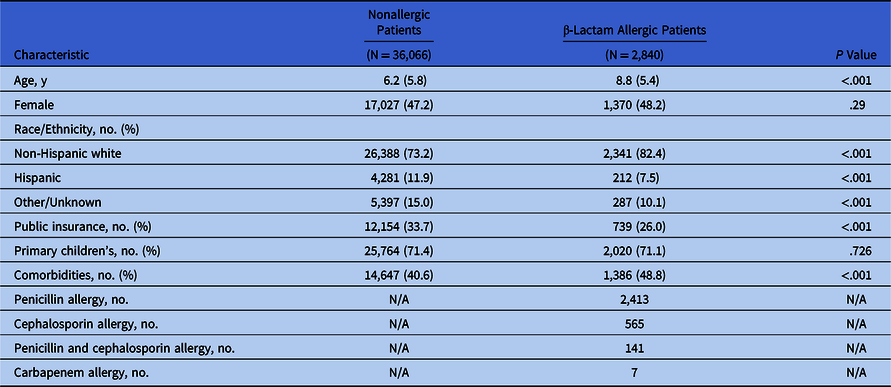
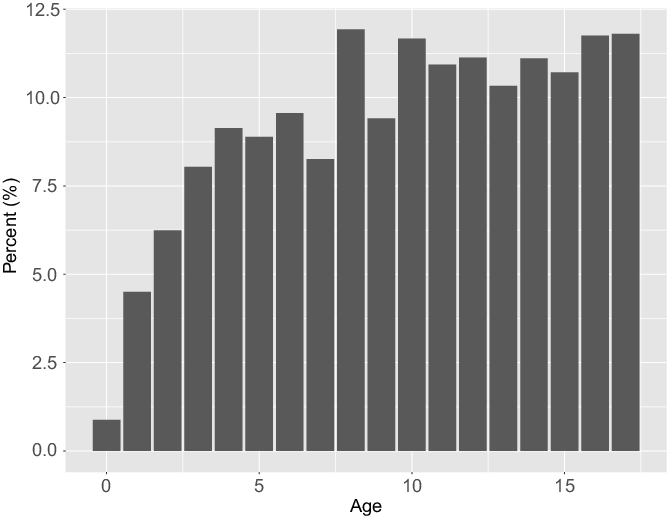
In total, 38,906 patients aged 30 days to 17 years who received at least 1 dose of an antibiotic during an inpatient admission were identified between 2007 and 2017. Among all included patients, 3,369 (8.7%) patients were labeled with antibiotic allergies, according to the categories of β-lactams (2,840, 7.3%), sulfa derivatives (484, 1.24%), fluoroquinolones (33, 0.08%), and nitrofurantoin (12, 0.03%). Of the 2,840 patients with β-lactam allergy, 2,413 (85.0% of β-lactam allergy group) were labeled with penicillin allergy, 565 (19.9%) were labeled with cephalosporin allergy, 141 (5.0%) were labeled with both penicillin and cephalosporin allergies, and 7 (0.25%) were labeled with carbapenem allergies (Table 1). The percentage of patients with β-lactam allergy was stable across the study period, ranging from 6.7% to 9.9%. Compared to nonallergic patients, patients with β-lactam allergy were older (median age, 8.8 years vs 6.2; P < .001), more likely to be non-Hispanic white (82.4% vs 73.2%; P < .001), more likely to have comorbidities (48.8% vs 40.6%; P < .001), and less likely to have public insurance (26.0% vs 33.7%; P < .001) (Table 1). The prevalence of antibiotic allergy for hospitalized patients by each year of age increased from 0.9% among those 1 year or less and reached >10% by middle and late adolescence (Fig. 1). Overall, 71% of patients with β-lactam allergy received a β-lactam antibiotic compared with 87% of patients who did not have an allergy. This varied substantially, however, based on whether the patient had a penicillin versus a cephalosporin allergy. Only 6% of patients with penicillin allergy received a penicillin antibiotic, while 66% of such patients received a cephalosporin. 27% of cephalosporin-allergic patients received a penicillin antibiotic, while 27% received a cephalosporin.
Demographics and Characteristics of All Patients Without Antibiotic Allergy Labels (“Non-Allergic Patients”) and Those With β-lactam Allergy Labels (“β-lactam Allergic Patients”)a

a P values were calculated using χ2 and t tests as appropriate.
Prevalence of β-lactam allergy labels by age for hospitalized patients.

Comparison of allergic patients to matched nonallergic patients
Unadjusted analyses
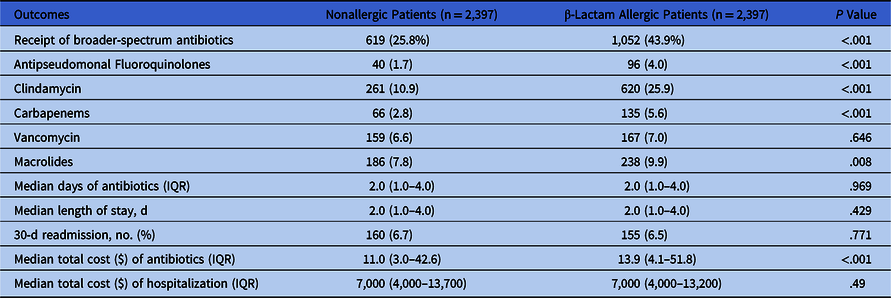
Of the 2,840 patients with β-lactam allergy, 2,397 (84.4%) were matched 1:1 to a nonallergic patient on the basis of age, sex, race, clinical service line diagnosis, admission date, academic children’s hospitalization, and presence of a comorbid condition (Table 2). In unadjusted analyses, there were substantial differences in antibiotic exposure between patients with and without β-lactam allergy: allergic patients were more likely to receive broader-spectrum antibiotics overall (43.9% vs 25.8%; P < .001) as well as specific categories, including antipseudomonal fluoroquinolones, clindamycin, and carbapenems (Table 2). There were no differences in receipt of vancomycin. In addition, there were no differences in days of antibiotic therapy, nor in clinical outcomes including length of stay and 30-day readmission between patients with and without β-lactam allergy (Table 2). Allergic patients also had higher total antimicrobial costs, though there were no differences in total costs of hospitalization (Table 2).
Univariate Comparisons of Outcomes Between Patients Without Antibiotic Allergy Labels (“Non-Allergic Patients”) and Those With β-Lactam Allergy Labels (“β-lactam Allergic Patients”)a

Note. IQR, interquartile range.
a Receipt of individual broader-spectrum antibiotics are listed by class. P values calculated using χ2 and t tests as appropriate.
Adjusted analyses
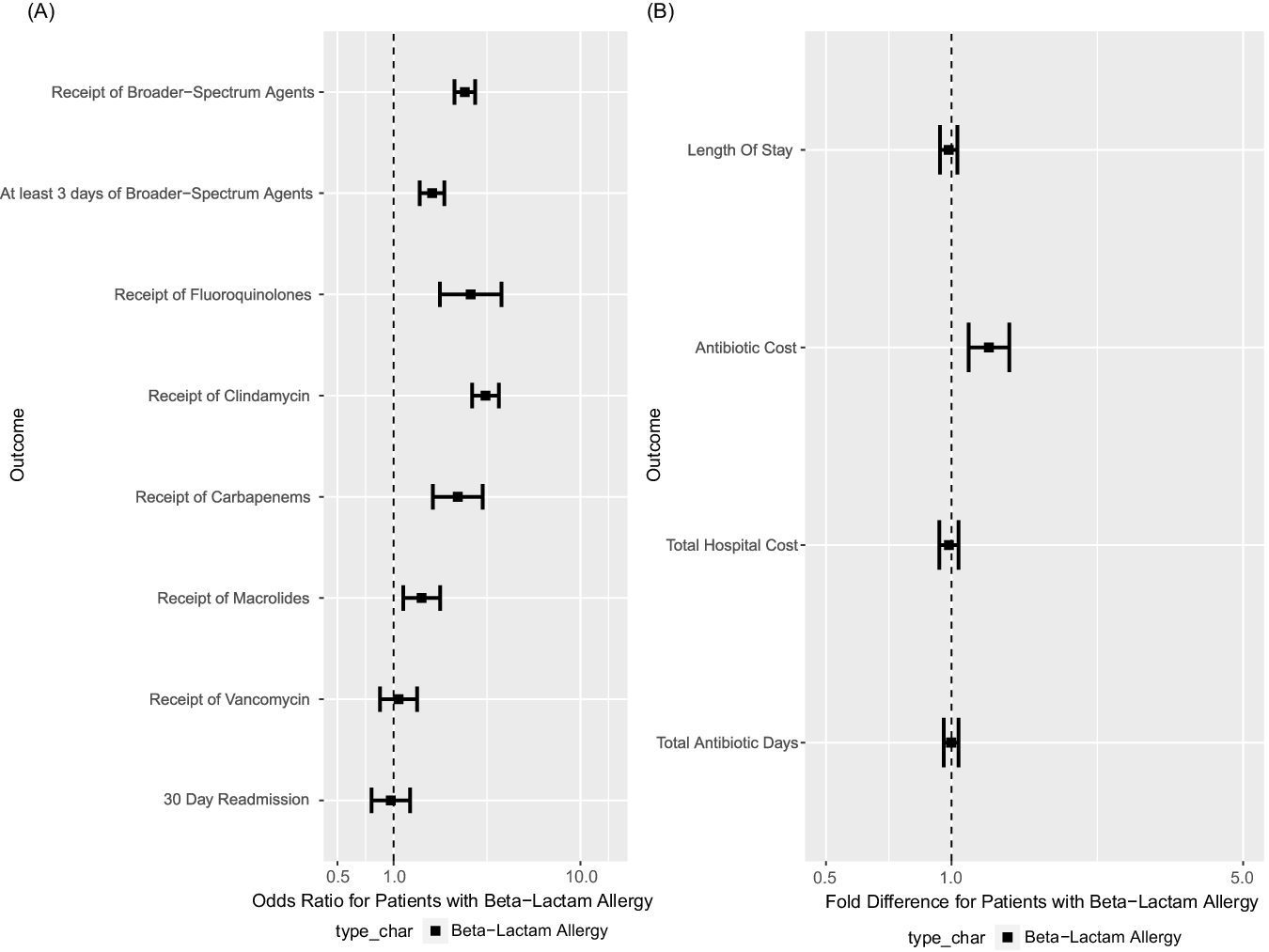
Similar findings emerged with adjusted analyses (Fig. 2; Supplemental Table 1 online). Patients with β-lactam allergy had higher odds of receiving broader-spectrum antibiotics (OR, 2.4; 95% CI, 2.12–2.73) both in composite and by individual antibiotics; β-lactam allergic patients were more likely to receive antipseudomonal fluoroquinolones (OR, 2.58; 95% CI, 1.77–3.78), clindamycin (OR, 3.10; 95% CI, 2.63–3.66), and carbapenems (OR, 2.20; 95% CI, 1.62–2.99) than matched controls (Fig. 2 A). We detected no difference between patients with and without β-lactam allergy in receipt of vancomycin (OR, 1.06; 95% CI, 0.84–1.33), nor in total antibiotic days expressed as medians (Fig. 2 A and B). In adjusted analyses, there were no differences in clinical outcomes, including 30-day readmission rate and length of hospital stay between patients with and without β-lactam allergy (Fig. 2 A and B). The overall antibiotic costs were higher among patients with β-lactam allergy by a 1.23-fold change (1.10–1.38, 95% confidence interval); however, total hospital costs did not differ (Fig. 2B). Finally, outcomes were unchanged in the subanalysis limited to patients hospitalized at PCH (Supplemental Table 2 online).
Results from multivariable logistic regression models for each indicated outcome. Odds ratios (A) and log transformed fold-difference (B) comparing patients with β-lactam allergy versus those without are shown, after adjustment for patient age, sex, race, public insurance, hospital location, primary diagnosis (as defined by service line), and presence of any comorbidities.

Comparison between cephalosporin and penicillin allergy
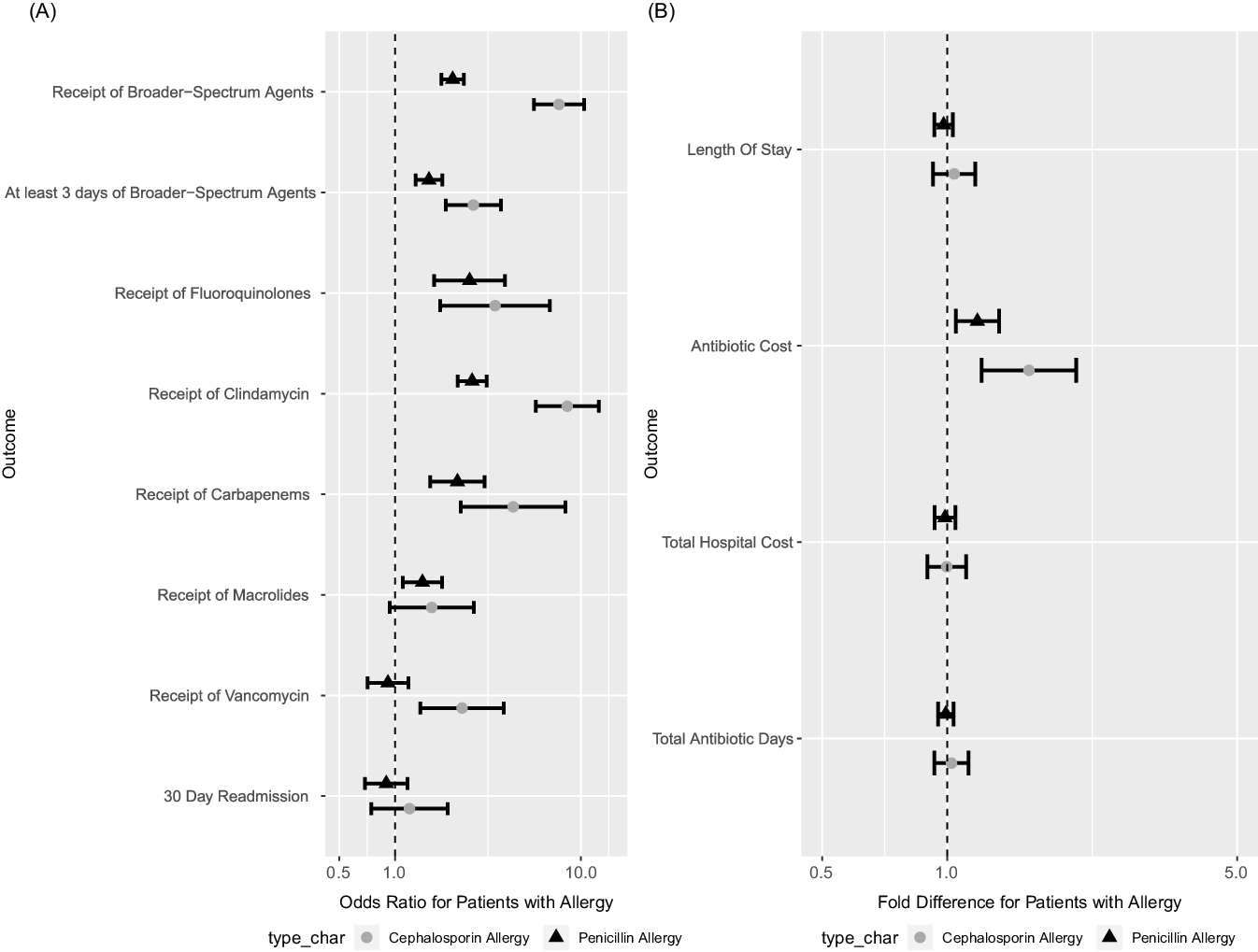
Among patients with β-lactam allergy, we observed differences in antibiotic use when comparing those with penicillin versus cephalosporin allergy (Fig. 3; Supplemental Table 1 online). Compared to penicillin allergy, the odds of receipt of any broader-spectrum antibiotic for patients with cephalosporin allergy was higher (OR, 7.63; 95% CI, 5.59–10.41 vs OR, 2.04; 95% CI, 1.78–2.35), as well as for receipt of vancomycin and clindamycin (Fig. 3 A). We did not observe other major differences in clinical or economic outcomes when comparing these subgroups (Fig. 3B).
Results from multivariable logistic regression models for each indicated outcome. Odds ratios (A) and log transformed fold-difference (B) comparing patients with penicillin allergy versus cephalosporin allergy are shown, after adjustment for patient age, sex, race, public insurance, hospital location, primary diagnosis (as defined by service line), and presence of any comorbidities.

Discussion
In this study, we analyzed the impact of β-lactam allergy labels for a cohort of hospitalized pediatric patients compared to a group of matched, nonallergic controls with several notable findings. First, the prevalence of β-lactam allergies increased steadily with increasing age with a prevalence among late adolescents that approaches the prevalence reported in adults. Second, patients who are labeled with a β-lactam allergy were administered broader-spectrum antibiotics and experienced higher costs of antibiotic therapy during their hospitalizations than nonallergic controls. This effect was even more pronounced for those with a cephalosporin allergy label compared with penicillin. Finally, unlike other studies conducted primarily in adults, we did not detect any differences in the length of stay, readmission rates, or total number of days of antibiotics between allergic and nonallergic controls.
Our cohort demonstrated overall rates of β-lactam allergy labels and penicillin allergy labels similar to those previously reported in the literature for pediatric patients. Reference Norton, Konvinse, Phillips and Broyles1 The median age of β-lactam allergic patients was 9 years, compared to ~6 years among nonallergic patients. Indeed, on analyzing the age of our patients at initial hospitalization, the data demonstrated that the proportion of patients with a β-lactam allergy label generally increased by age, approaching prevalences reported among adult populations by age 17. This trend reflects the phenomenon of allergy label acquisition over time, a result shared by a recently described Australian retrospective pediatric cohort. Reference Lucas, Arnold and Sommerfield10 Because childhood is a time of relatively high rates of antibiotic prescribing, many of the coincident clinical manifestations (eg, rash during viral infection) or nonallergic adverse effects of antibiotics (eg, diarrhea) may be interpreted as an allergic reaction leading to an allergy label early in life. Although we did not find direct negative effects on clinical outcomes for pediatric patients labeled with allergy (as opposed to adult studies) because a large number of allergy labels are acquired during childhood, pediatric populations nonetheless represent an ideal target for allergy “de-labeling” efforts, with lifelong implications for antibiotic stewardship. Multiple approaches to allergy de-labeling have been previously described, including questionnaires to identify the lowest-risk patients, as well as skin testing and oral challenges to provide allergy “de-labeling” at the point of care. Reference Vyles, Chiu and Routes14,Reference Abrams, Atkinson, Wong and Ben-Shoshan15
In this study, β-lactam allergic patients had higher prevalence of comorbid conditions than nonallergic controls. One likely explanation for this finding is that children with greater medical complexity have more interactions with the healthcare system, resulting in higher rates of antibiotic prescribing or prescribing of other medications. Also, β-lactam allergic patients were more likely to be non-Hispanic white and to utilize private or commercial insurance rather than public insurance. The implications of these findings are unclear, but potentially suggest the possibility of differential thresholds for assigning diagnoses based on race or other factors, which has been shown previously in pediatrics and warrants further investigation. Reference Fleming-Dutra, Shapiro, Hicks, Gerber and Hersh16,Reference Gerber, Prasad and Localio17
In this study, patients with β-lactam allergy were more likely to receive broader-spectrum antibiotic therapy when compared to nonallergic patients, both in composite and individually. This difference in antibiotic exposure has been shown in most similar studies including a systematic review, Reference Macy and Contreras5–Reference Wu, Langford and Schwartz8,Reference Lucas, Arnold and Sommerfield10,Reference Sousa-Pinto, Araújo, Freitas and Delgado11,Reference Krah, Jones, Lake and Hersh18 and it is generally hypothesized to be the unique driving factor behind many of the negative outcomes reported in patients with antibiotic allergies compared to controls. For example, vancomycin is known to be inferior in the definitive treatment of Staphylococcal bacteremia when compared to antistaphylococcal penicillins or first-generation cephalosporins. Reference Kim, Kim and Kim19–Reference Lee, Choe and Song21 Fluoroquinolone and clindamycin prescription have been demonstrated to be associated with increased risk of Clostridioides difficile. Reference Wieczorkiewicz, Lopansri and Cheknis22,Reference Johnson, Samore and Farrow23 Unnecessary fluoroquinolone use may also drive increases in fluoroquinolone resistance among gram-negative isolates, with potential increases in attributable mortality. Reference Suzuki, Perencevich and Livorsi24,Reference Hecker, Son and Murphy25 Notably, in this study, a high percentage of patients in the β-lactam allergy group actually received β-lactam antibiotics, which was primarily driven by patients labelled with penicillin allergy receiving cephalosporins. This finding both highlights the low cross-reactivity between these classes, as well as that clinicians perceive this cross-reactivity as low risk.
Our study demonstrated that among allergic patients, broader-spectrum antibiotic selection was most pronounced for clindamycin, followed by antipseudomonal fluoroquinolones and carbapenems. Other studies have also shown a substantial increase in use of vancomycin for allergic patients. Although in adjusted analyses we did not observe differences in vancomycin use between allergic and nonallergic patients, vancomycin use was greater in the subgroup with cephalosporin allergy specifically. The explanation for more pronounced differences between patients with cephalosporin allergy and penicillin allergy in use of broader-spectrum antibiotics and antibiotic costs is uncertain. One potential explanation is that physicians may choose to prescribe cephalosporins (still within the β-lactam category) for patients with penicillin allergy, whereas use of non–β-lactams are preferred for those with cephalosporin allergy. This in turn may be responsible for the additional observation of higher antibiotic costs in this group. These findings suggest that patients with cephalosporin allergy may be among the most important targets for delabeling interventions.
Despite these differences, we did not observe differences in several clinical and economic outcomes including length of stay, readmission, or total hospital costs between patients with and without β-lactam allergy. This differs from the findings of multiple prior studies, largely conducted among adults, although some pediatric studies have reported similar results. Reference Macy and Contreras5,Reference Sousa-Pinto, Cardoso-Fernandes, Araújo, Fonseca, Freitas and Delgado26 Possibly, the clinical impact of allergy labels is indeed more significant in adults than for children, in part due to higher rates of comorbid conditions or disease severity among hospitalized patients. Nonetheless, even if most of the harms associated with allergies occur during adulthood, because antibiotic allergies are often assigned during childhood, our study demonstrates the importance of recognizing the problem of allergy overdiagnosis and implementation of delabeling interventions.
Our study has a number of important strengths. To limit confounding, this study had a large sample size (2,397 matched cases) across a broad geographic area, at both the community and tertiary-care or academic hospital level, as well as robust matching criteria: age, sex, race, clinical service line diagnosis, admission date, academic children’s hospital or other hospital admission, and comorbid conditions. At this time, this is the largest study of clinical and economic outcomes related to β-lactam allergy labels among hospitalized pediatric patients in the United States.
Our study has several limitations. Although it included a large number of hospitalizations, our cohort was derived from within a single healthcare system (Intermountain Healthcare) in the western United States; therefore, the generalizability of our findings outside of this region is uncertain. We relied on the electronic medical record for the presence or absence of allergy labels, without further verification or characterization of the nature of the allergy in question. Thus, cutaneous reactions, anaphylaxis, or intolerance could not be distinguished, which may have led to excess misclassification of some patients as allergic who were in fact not truly allergic. In turn, this aspect may have only blunted the magnitude of differences between groups. Our data included readmission rates as a marker of clinical outcomes, and other important clinical outcomes may have differed between allergic and nonallergic patients, such as outpatient treatment failures not resulting in readmission that we did not capture. In addition, other potentially important clinical outcomes that may differ between these groups that we did not incorporate include drug-related adverse events and the incidence of certain infections such as C. difficile, methicillin-resistant S. aureus, and vancomycin-resistant Enterococcus. Many patients in the study population only received antibiotics for a short period (2 days or less), which may represent empiric courses; this, in turn, could have blunted the effect sizes for clinical outcomes between allergic and nonallergic patients. Additionally, our study did not include microbiologic data that could be used to confirm the presence of an infection. Allergic patients with confirmed infections might be more susceptible to worse clinical outcomes due to differences in antibiotic selection than nonallergic controls. Finally, although we used matching techniques and regression models to account for confounding variables that may have differed between groups, residual confounding may still exist.
In summary, in a large cohort of hospitalized pediatric patients, the prevalence of allergy increased by age, and important differences exist between allergic and nonallergic controls in terms of antibiotic prescribing patterns and associated antibiotic costs. The high prevalence of antibiotic allergy by adolescence suggests that allergy labels are often acquired during childhood. Therefore, delabeling interventions during this period have the potential to improve clinical outcomes throughout the lifespan. Future interventions focused on education and delabeling during pediatric hospitalizations and outpatient settings are important areas for further investigations.
Supplementary material
To view supplementary material for this article, please visit https://doi.org/10.1017/ice.2020.424
Acknowledgments
Financial support
This study was supported by the Agency for Healthcare Quality and Research (grant no. K08HS023320) and by the University of Utah Study Design and Biostatistics Center, with funding in part from the National Center for Research Resources and the National Center for Advancing Translational Sciences, National Institutes of Health (grant no. 8UL1TR000105 formerly UL1RR025764).
Conflicts of interest
The authors have indicated they have no potential conflicts of interest to disclose.