Food plays a vital role in the human experience, from providing basic sustenance to creating unique social practices that govern familial, political, or religious experiences; reconstitute identities; or forge social relationships. Foodways, defined as “the food itself and all of the activities, rules, contexts, and meanings that surround the production, harvesting, processing, cooking, serving, and consumption of those foods” (Peres Reference Peres2017:423), leave material traces. This materiality of foodways includes the pots, tools, and features used to prepare and serve foods, the botanical and zoological remains, and the depositional context of those remains (e.g., midden, cached pot, structured burial; for examples, see Fritz Reference Fritz2019; Pauketat et al. Reference Pauketat, Kelly, Fritz, Lopinot, Elias and Hargrave2002; Peres Reference Peres2017; VanDerwarker Reference VanDerwarker1999; VanDerwarker et al. Reference VanDerwarker, Bardolph, Margaret Scarry and Wilson2017). Deciphering this record, however, can prove difficult because the consumption and use of different types of plants or animals takes place within a variety of contexts and for a variety of purposes falling along a spectrum from “everyday” domestic consumption to marked “ritual” use. As Nelson and colleagues (Reference Nelson, Peles and Melton2020:29) suggest, attempting to place “specific eating events along such a spectrum” can lead to the somewhat arbitrary distinction of “ordinary and extraordinary,” where archaeological “interpretations can be elusive” when deposits reflect characteristics of both categories—or sometimes neither. Those remains and contexts that “blur the line” between domestic and ritual can be difficult to examine and interpret, requiring a reframing of archaeological thinking traditionally reliant on typological analysis. In our case study described here, botanical and zoological remains from Cahokia's Spring Lake Tract neighborhood document practices in which the “ordinary” is intertwined with the “extraordinary,” elucidating the ways in which communal practices that include commensality (following Pollock Reference Pollock2015) blur dichotomous expectations.
Practice-based approaches to relational ontologies underscore the limitation of binary categories to contend with the dynamic complexities of social life; for this reason, they must be bolstered by a focus on context and assemblage-specific analyses (see Baires and Baltus Reference Baires and Baltus2017). Such assemblage-based analyses, which foreground the relational qualities of everyday lives, demonstrate the multiscalar nature of human and other-than-human interactions in the creation of histories (conceptualized as relations between individuals and between individuals and groups, à la Robb and Pauketat [Reference Robb and Pauketat2013]). When examining non-Western pasts, this approach recognizes that multiple subjectivities contribute to the fabric of certain historical contexts, emphasizing the interconnectedness and animacy of persons, places, things, and time. Previous archaeological methods of categorizing and typologizing artifacts and ecofacts according to material or (assumed) function becomes limiting; the interrelated nature of the world as described in Indigenous scholarship (e.g., Burkhart Reference Burkhart2019; Cordova Reference Cordova, Moore, Peters, Jojola and Lacy2007) calls for an analytical framework highlighting networks of materials, persons, and practices “as integral parts of relationalities” (Robb and Pauketat Reference Robb and Pauketat2013:28). Such “relationalities” recognize the existence of multiple networks that intersect to afford moments that then build histories (see Ingold Reference Ingold2006; see also Robb and Pauketat Reference Robb and Pauketat2013). For this reason, we draw on the related concepts of Place-Thought (Watts Reference Watts2013) and locality (Burkhart Reference Burkhart2019) to consider the ways that plants and animals—as agentic beings—participated in activities alongside human actors in one neighborhood at Cahokia. As described by Vanessa Watts (Reference Watts2013:21), “Place-Thought is based upon the premise that the land is alive and thinking and that humans and non-humans derive agency through the extensions of these thoughts.” Similarly, locality refers to the ways in which “being, meaning, and knowing are rooted in the land” (Burkhart Reference Burkhart2019:xiv). Ways of knowing the world, and therefore proper ways of engaging with its occupants, emerge from specific places on the landscape. Acts of building, terminating, and replacing structures are moments of community restructuring, and it is important to consider the involvement of these plants and animals as knowledgeable agents in and of place in these processes of re-relating. The following analysis of botanical and zoological remains recognizes the beingness of these entities as they were known and knowing parts of daily living (see Kimmerer Reference Kimmerer2013). Their being together in varying assemblages likely contributed to the significance of certain events—such as building termination—for the human participants.
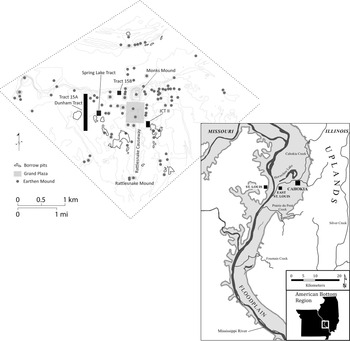
Important to the consideration of these remains is the active contributions that these plants and animals made to Cahokian life and how local histories (human, plant, animal, and land) were interwoven in new ways in contexts simultaneously “ordinary” and “extraordinary.” Inhabitants of Cahokia, one of Native North America's largest cities north of the Rio Grande (Figure 1), drew sustenance from a diversity of plants and animals that shared the dynamic landscape of the American Bottom floodplain and surrounding uplands. Often, analyses of botanical and zoological remains focus on subsistence and political economy—such as the potential for crops like maize to support large populations, or the presence of choice cuts of meat as indicative of status difference. Only recently have studies turned their focus to the unique choices people made to incorporate “magic plants” (Parker and Simon Reference Parker, Simon, Koldehoff and Pauketat2018; see also Barrier Reference Barrier, Carmody and Barrier2019; Fritz Reference Fritz2019) and other unique biota into their lives. This article presents new data on botanical and zoological remains at the Spring Lake Tract (SPLT) neighborhood of Cahokia, occupied between the tenth and thirteenth centuries. We discuss the relationships propagated among occupants of the Spring Lake Tract with and through the plants and animals consumed and used in the context of terminating important structures in this neighborhood during the late twelfth century.
Map of Cahokia in the American Bottom, with an inset of the site of Cahokia and the Spring Lake Tract highlighted.

Plants and Animals at Cahokia
Archaeological deposits at Cahokia and in the surrounding Richland Uplands to the east (see Figure 1) demonstrate the significant contributions of cultivated crops as well as wild plants collected (perhaps even cared for or propagated) from the surrounding marsh, floodplain, and wooded upland environments (Simon and Parker Reference Simon and Parker2006; VanDerwarker et al. Reference VanDerwarker, Wilson and Bardolph2013). The diversity of preserved plant and animal remains indicates a food system that relied on grown, gathered, and hunted sustenance, supported by an intimate knowledge of cultivation practices. The Terminal Late Woodland (TLW) period (AD 900–1050) on the cusp of Cahokia's urbanization saw the introduction of domesticated maize (Zea mays) while it was incorporated into an already reliable horticulture system based on Eastern Agricultural Complex (EAC) plants such as erect knotweed (Polygonum erectum), maygrass (Phalaris caroliniana), sunflower (Helianthus annuus), marshelder (Iva annua), and chenopodium (Chenopodium berlandieri; Fritz Reference Fritz2019; Simon Reference Simon2014; see also Fritz and Smith Reference Fritz and Smith1988). EAC seed masses, as well as overall ubiquity and quantity of these cultigens, continued to outweigh those of maize during this TLW / Early Lohmann transition (Simon and Parker Reference Simon and Parker2006). Although maize did become a prominent fixture in Mississippian diets, it took time to develop a crop with reliable outcomes. Local groups also incorporated it into their subsistence systems at differing rates (Fritz Reference Fritz2019:69). Using isotopic evidence, Emerson and colleagues (Reference Emerson, Hedman, Simon, Fort and Witt2020) substantiate the relatively sudden introduction and increase of maize at Cahokia, although Cahokians did not abandon the native starchy and oily seed crops cultivated by generations of women farmers (see Fritz Reference Fritz2019; Lopinot Reference Lopinot, Pauketat and Emerson1997). Perhaps, as Gayle Fritz (Reference Fritz2019:85) suggests, the continued focus and reliance on EAC crops (e.g., maygrass [see also Nelson et al. Reference Nelson, Peles and Melton2020]) indicates a social and cosmological significance that tied new Cahokians, through food, to a long history of “planting, harvesting or fertility in general.” For example, maygrass made its way from the American Bottom to sites occupied by Cahokian colonists in southern Wisconsin and northern Illinois (quite far outside the plant's natural range) (Fritz Reference Fritz2019:85; see also Egan-Bruhy Reference Egan-Bruhy2003). Perhaps in bringing these familiar cultigens with them, early Cahokian colonists provided a continued connection to place and history through foods and food-related practice; transplanted Cahokians transplanted their most productive crop plants to similar ecosystems. Maygrass was ultimately tied to a sense of history and home. Other EAC crops such as sunflower and squash were also intimately connected to important personages and narratives embodied in the female flint-clay figurines found at and around Cahokia; depictions include such crops emerging from and wrapping around the bodies of these persons (see Fritz Reference Fritz2019).
Horticultural and gathered plant products were supplemented by animal inhabitants of the earth, water, and sky. Key contributors were white-tailed deer (Odocoileus virginianus), which remain as occupants of the site to this day, small and medium mammals such as beaver (Castor canadensis), muskrat (Ondatra zibethicus), rabbit (Sylvilagus floridanus) and squirrel (Sciurus carolinensis), numerous bird species, and large channel fish (Kuehn Reference Kuehn and Pauketat2013; Miracle Reference Miracle and Pauketat1998). Shellfish were collected from the streams that crosscut the river valley as well as from the Mississippi itself (Kuehn Reference Kuehn and Pauketat2013; Miracle Reference Miracle and Pauketat1998). Although most of the animals were consumed as food, many were also equally significant for their skins, plumage (e.g., Trumpeter Swan [Cygnus buccinator]), or potential for use in other ways. For example, whelk shells (Busycon sp.), originating from the Gulf Coast, were crafted into vessels and beads worn or buried in mortuary contexts (see Baires Reference Baires2017; Marquardt and Kozuch Reference Marquardt and Kozuch2016). Additionally, some of these animal remains became part of personal or corporate bundles (as described in Pauketat Reference Pauketat2013a:47–58) with their own agentic powers “derived from the embedded relational quality” of the objects housed together in a tightly wrapped package (Pauketat Reference Pauketat2013a:47; see also Holder Reference Holder1958; La Flesche Reference La Flesche1995; Zedeño Reference Zedeño2008). Pauketat (Reference Pauketat2013a, based on Holder Reference Holder1958) hypothesizes that these corporate bundles of special persons (which perhaps included animal bones, shells, and plants) were likely stored in the alcoves of unique T- and L-shaped buildings located in Cahokia's neighborhoods. It is likely that these bundled beings participated in the creation of the living world where diverse “relationships [were] entangled and mediated spatially and materially” (Pauketat Reference Pauketat2013a:58).
The unique relationships Cahokians had with animals and plants existed on a continuum of practice that recruited botanical and zoological materials for a multitude of purposes that blurred the boundary of daily subsistence and powerful ritual (see, for example, Pauketat et al. Reference Pauketat, Kelly, Fritz, Lopinot, Elias and Hargrave2002). This is particularly visible in contexts at Downtown Cahokia, where neighborhood communities lived at the margins of the Grand Plaza, in the shadows of Woodhenge, and surrounded by scores of earthen mounds, all of which organized community life and conveyed a shared sense of identity (see Watts Malouchos and Betzenhauser Reference Watts Malouchos, Betzenhauser, Malouchos and Betzenhauser2021 for a review; Betzenhauser and Pauketat Reference Betzenhauser and Pauketat2019; Pauketat Reference Pauketat1998, Reference Pauketat2013b). Embracing field and garden crops of maize and EAC native seeds alongside the consumption of deer, freshwater shellfish, fish, and other local mammals, birds, and amphibians (e.g., frogs) was a hallmark of the Cahokia Mississippian world (see Fritz Reference Fritz2019) repeated in figurines and pottery.
In addition to these plants and animals obtained for sustenance were the aforementioned “magic plants,” such as black nightshade (Solanum ptychanthum), tobacco (Nicotiana rustica), jimsonweed/Datura (Datura stramonium), and morning glory (Ipomoea sp.; Parker and Simon Reference Parker, Simon, Koldehoff and Pauketat2018). These “magic plants” appear in what would be considered both ritual and “non-specialized, domestic contexts” prior to AD 1000. After AD 1000, this group of plants continues to be used as part of household medicine and ritual, while also signifying “association with group or corporate ceremonialism or religious practices” (Parker and Simon Reference Parker, Simon, Koldehoff and Pauketat2018:122). In the emergence of urban Cahokia, these plants became increasingly associated with newly specialized politico-religious buildings such as T- and L-shaped structures as well as large rectangular structures termed “medicine lodges,” “shrines,” or “council houses” built in local neighborhoods (Parker and Simon Reference Parker, Simon, Koldehoff and Pauketat2018; see also Emerson Reference Emerson1997; Pauketat Reference Pauketat2013b).
Along with these potentially potent flora, significant communal/public buildings were marked by incorporation of certain conifer woods—bald cypress (Taxodium distichum) and Eastern red cedar (Juniperus virginiana)—selected for unique qualities of color and scent. Wood of a third coniferous taxon, pine (Pinus sp.), has also been recovered almost exclusively from Cahokia and satellite Mississippian communities. Among the three, only Eastern red cedar trees are considered native to the American Bottom, growing commonly in xeric habitats such as exposed bluff edges. A large amount of archaeobotanical data from the Cahokia region strongly suggests that the use and distribution of Eastern red cedar during the Mississippian period was “influenced, if not controlled, by Cahokian politico/religious elites” (Parker Reference Parker2015:4). In outlying communities linked to the Cahokia power center, cedar was used for interior screens and partitions or as furniture within public/ritual buildings, instead of as primary structural timbers (Parker Reference Parker2015; see also Emerson Reference Emerson1997; Simon Reference Simon2002). Recovery of cedar from interior hearth features implies that the wood was burned in ritual fires for its purifying smoke, a practice that continues among many Native American groups (see Dorsey Reference Dorsey1894; Hudson Reference Hudson1976; Mooney Reference Mooney1900).
The nearest living stands of pine, on the other hand, are small areas of shortleaf pine on dry bluffs, ravine edges, and rocky outcroppings approximately 150 km to south of Cahokia (Mohlenbrock and Voigt Reference Mohlenbrock and Voigt1974:56). However, like red cedar and bald cypress, shortleaf pine also occurs in the Ozark region on the western side of the Mississippi River. Because that region is known as the source of raw materials such as hematite, galena, fire clay, and basalt used in production of Mississippian specialty items, it is possible that conifer wood for special uses was imported from the same or nearby areas in the Ozarks. Like pine, cypress has rarely been recovered archaeologically in the American Bottom, with the exception of the Mississippian platform mound centers of Mitchell and East St. Louis and a few other locations within Cahokia proper (Parker Reference Parker2015; see Lopinot Reference Lopinot, Lopinot, Kelly, Milner and Paine1991; Simon Reference Simon2002). The circumscribed temporal and spatial associations for bald cypress, more than the other two specialty conifers, denotes a material that was rare, valuable, and restricted in usage. Cypress does not grow farther north than Union County, Illinois, about 170 river km to the southeast of the American Bottom and Cahokia. Floating logs upriver may have been laborious, but it was also the only practical means of acquiring the wood (Parker Reference Parker2015; see Lopinot Reference Lopinot, Lopinot, Kelly, Milner and Paine1991; Mohlenbrock Reference Mohlenbrock1986:86; Simon Reference Simon2002). The use of an immense bald cypress log as a monumental marker post at the Mitchell site is undoubtedly the most well-known example from the American Bottom region (see Simon Reference Simon2002). Otherwise, documented recovery of cypress wood in structural remains has been rare. As Mary Simon (Reference Simon2002) suggests, bald cypress may have been selectively incorporated into residences for high-status individuals and ritual buildings. Because of the concerted effort required to import the wood upriver to Cahokia, it was never utilized as the primary structural material, but instead as internal support posts or other similar features (Lopinot Reference Lopinot, Lopinot, Kelly, Milner and Paine1991; Parker Reference Parker2015; Simon Reference Simon2002).
Although cypress and red cedar were both sacred to Mississippians (see Pauketat Reference Pauketat2013b for further review), logs from the latter served as large, upright marker posts, wall posts in specialized buildings, and perhaps most famously, in the creation of Cahokia's Woodhenge—a series of free-standing posts that mark the solstices and equinoxes. These special sacred conifer woods are present together with maize, maygrass, erect knotweed, and other EAC cultigens in the features at the Spring Lake Tract of Cahokia described in detail below. And although we recognize that some plants served a special purpose (e.g., tobacco for smoking and purification), the plants they are often found in association with (see Barrier Reference Barrier, Carmody and Barrier2019; Fritz Reference Fritz2019; Parker and Simon Reference Parker, Simon, Koldehoff and Pauketat2018) are those EAC cultigens that were part of daily use in “domestic” and “special” contexts alike. These relationships and the experiences afforded through the combination and deposition of plants and animals (magic/ritual, everyday, and otherwise) are of interest in the SPLT neighborhood because they signify the termination of both household structures and public buildings in this densely populated community.
The Spring Lake Tract and Cahokian Neighborhood Organization
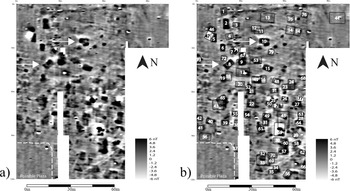
Named for one of the neighborhood's nearby borrow pits (see Moorehead's 1923 map [Fowler Reference Fowler1997:Figure 3.8]), the Spring Lake Tract sits on the periphery of the Downtown Cahokia Precinct, which comprises the Grand Plaza and Monks Mound (see Figure 1). The SPLT neighborhood, although in view of the monumental landscapes of Cahokia, was built into a lowland area flanked on the north, south, and southwestern edges by one intentionally infilled and two open borrow pits (Baires et al. Reference Baires, Baltus and Malouchos2017). Structure density estimates were generated from a magnetometry survey conducted in 2015, which documented a range of overlapping buildings that fall within expected building sizes and shapes for all four chronological periods: TLW (AD 900–1050), Lohmann (AD 1050–1100), Stirling (AD 1100–1200), and Moorehead (AD 1200–1275; see Baires et al. Reference Baires, Baltus and Malouchos2017). Organizationally, the neighborhood seems to fluctuate between courtyard arrangements of structures (TLW and Stirling phases) and cardinally oriented buildings (Lohmann and Moorehead phases); a magnetically “quiet” area in the southwestern corner of the geophysical survey area suggests a plaza adjacent to one of the open borrows (Figure 2). There was a reduction in the number of SPLT buildings identified as Stirling phase, a period of occupation that coincided with the co-optation of residential space for the construction of Woodhenge immediately northwest of the SPLT. Perhaps the effects of this construction also impacted the residential potential of the SPLT, a “rezoning,” so to speak, for powerful practices and people, similar to that noted for the Stirling phase in general along Cahokia Creek (Pauketat Reference Pauketat2003, Reference Pauketat2013b).
Magnetometry map of Spring Lake Tract anomalies numbered arbitrarily; anomaly 10 corresponds to Feature 2a/2b, anomaly 8 corresponds to Feature 6, and Feature 4 is not visible as a magnetic anomaly due to strong signature of Feature 6.

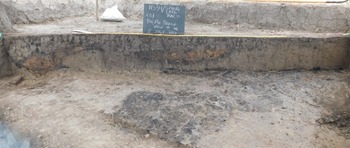
Profile of Feature 4 superimposed over Feature 6. Burned thatching visible in foreground and at base of profile; pit with burning in center of profile.

Overall, the SPLT largely parallels broader settlement and population patterns seen in other Cahokian neighborhoods (see Betzenhauser and Pauketat Reference Betzenhauser and Pauketat2019; Pauketat Reference Pauketat1998, Reference Pauketat2013a) apart from the Moorehead phase occupation. Rather than being largely depopulated like the ICT-II to the east, or abandoned like the East St. Louis Precinct to the west (Brennan et al. Reference Brennan, Betzenhauser, Lansdell, Plocher, Potter, Blodgett, Emerson, Koldehoff and Brennan2018; Collins Reference Collins1990; Emerson Reference Emerson1997), the SPLT experienced an increase in building activity during the Moorehead phase. This suggests that people did not leave this locale at the same rate as other Cahokian neighborhoods. Instead, people seem to have reinvested in this neighborhood by building new households while others were leaving the city. This reinvestment may coincide with the reoccupation of previously public areas in Tracts 15A and 15B.
Excavations in 2016 and 2017 at the SPLT were conducted with the goals of ground truthing the magnetometry results and determining the nature of occupation in this area as it related to the borrow pits and surrounding low-lying landscapes. We focused on how inhabitants shaped their neighborhoods through practices of terraforming (literally shaping their world through earth-moving activities; see Randall and Sassaman Reference Randall and Sassaman2017) and intrasite organization to investigate the nature of urban land use and change over time at Cahokia. Examining intrasite organization of Cahokia precinct neighborhoods provides insight into the “elemental characteristics of districts” as they speak to social order and urban planning (see Betzenhauser and Pauketat Reference Betzenhauser and Pauketat2019:134). These aspects of the built landscape govern practices of daily life that exist on multiple scales. Of interest here is the intersection of public and domestic space in neighborhood communities, the building termination practices employed in both types of buildings, and the role of botanical and zoological materials in the closing of these structures. For example, extensive archaeological excavations at and around Greater Cahokia demonstrate that public and religious structures “embodied spiritual energies” through architectural alignments, material offerings, and plastered-clay or otherwise prepared floors (Betzenhauser and Pauketat Reference Betzenhauser and Pauketat2019:135). These energies were at times managed upon termination of building use through practices including thorough cleaning, intentional deposition, and/or burning (Baires and Baltus 2012; Baltus Reference Baltus, Koldehoff and Pauketat2018; Baltus and Wilson Reference Baltus and Wilson2019).
Uniquely shaped (T, L, and circular) buildings and oversized structures characterize the specialized architecture of Cahokian religious-politics; some were isolated behind small screens, but more commonly, they were embedded in neighborhood areas (see Betzenhauser and Pauketat Reference Betzenhauser and Pauketat2019; Collins Reference Collins1990; Emerson Reference Emerson1997; Pauketat Reference Pauketat1994, Reference Pauketat1998). These neighborhood communities became places where multiple human and other-than-human actors existed, and where building styles and arrangements embodied an established Cahokian ideal (for a summary, see Betzenhauser and Pauketat Reference Betzenhauser and Pauketat2019). Of particular interest in the SPLT were the overlapping practices of ritual and daily engagements with plants and animals in this neighborhood. Here, we focus on three buildings terminated late in the twelfth-century Stirling phase. Each of these buildings provide a temporally sensitive moment of building closure that relied on the engagement of animal remains with a range of plants, and in some cases, specialized pottery (e.g., Ramey Incised) or other artifacts of similar cultural significance.
The Features
Our excavations in the SPLT revealed the remains of three buildings and their associated internal features all dating to the Lohmann, Stirling, and Moorehead phases (see Figure 2). The first building was a large (3.4 × 6 m), relatively isolated (based on the geophysical data), rectangular structure with its long axis oriented east-west (Feature 2a). This building had a large central support post (18 cm diameter extending 37 cm below floor) and a deep basin (~70 cm); it was reconstructed once, as demonstrated by repeated sets of wall trenches. Feature 2a was built on top of an earlier (Lohmann phase) T-shaped building (Feature 2b) oriented north-south, with its alcove facing west. Feature 2b had a large internal pit feature (Feature 13) near the alcove, which had almost all of a single Lohmann phase red-slipped jar broken and placed in the fill. Notably, the large, central support post of Feature 2a was placed through the center of this early pit feature, suggesting that the rectangular 2a building immediately replaced and intentionally cited the decommissioned T-shaped building.
When the final iteration of Feature 2a was dismantled during the late Stirling phase, clean gray clay was used to line the basin edges and to fill in patches across the floor; basket loads of charcoal and burned clay (possibly from cleaned-out hearths elsewhere in the neighborhood) were emptied onto the floor in the western portion of the building. Large pieces of burned limestone were left on the floor in the eastern portion, and the basin was filled—seemingly in one episode—with large flakes and cores of mostly Burlington chert, large pieces of pottery (including fragments of extremely large jars and Ramey Incised pottery), deer bone, plant remains, three complete projectile points (Cahokia, Madison, and Bayou Goula [AD 1150–contact] style points), and other material such as galena, broken sandstone palettes, abraders, and a sandstone block pipe fragment. Copper and hematite flecks were sprinkled into the wall trenches, and a heavily utilized celt was placed in the southern wall trench. The variety and amount of material—especially in regard to pottery and faunal material—suggest that a public commensal event was part of the “closing down” process of this building, a process that also involved special pigments and soils as well as at least one nonlocal projectile point (from the lower Mississippi River Valley) made on local (Grover gravel) chert.
The second set of structures, both partially excavated, are located to the southwest of Features 2a/2b and date to the twelfth-century Stirling phase and possibly early Moorehead phase. Feature 6 was a rectangular structure with an estimated size of >3.4 × >4.2 m; its long axis is aligned southwest-northeast, seemingly oriented to a courtyard group based on the geophysical survey (see Figure 2). This structure had a slightly shallower basin than Feature 2a (~65 cm) and a clay bench along the northern wall. A layer of burned grass with at least one slender pole (likely roof material) lay across the floor, which had been completely cleaned apart from a single Ramey Incised sherd under the burned thatch (which dates the burning event to the twelfth-century Stirling phase). After burning, the basin was then filled with a fairly homogenous gray clay and a few small artifacts. Oxidized soils around this burned thatch layer indicate in situ burning, although no burned structural elements were recovered from the excavation portion of the structure (roughly the northwestern third). The cleaning-out of a structure and placement of single objects on the floor prior to burning fits a termination pattern identified by Baltus and Wilson (Reference Baltus and Wilson2019) during the Stirling phase; this action suggests that such buildings were for special use and/or were the location of extradomestic activities.
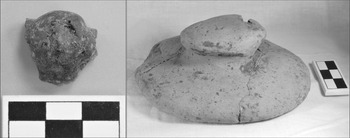
The terminated Feature 6 was partially superimposed by a square, cardinally oriented structure with a shallow basin (Feature 4). Due to the burning associated with Feature 6, Feature 4 does not appear as a clear anomaly in the geophysical data. Although only partially excavated, Feature 4 is estimated to be roughly 3.5 × 4 m with a 45 cm deep basin. A pit located near the approximate center of the floor of Feature 4 had been aboriginally excavated almost to the level of the burned thatch on the floor of Feature 6 (Figure 3). Extensive burning took place within this pit, with a thin clay lens capping it prior to basin infilling. Additional episodes of burning appear to have taken place in this area after the basin was filled. Artifacts recovered from upper burned zones in the basin of Feature 4 include objects that are relatively rare in the American Bottom, such as a clay pottery trowel, a clay human-head-effigy adorno, and a fragment of mica (Figure 4). Although no artifacts clearly diagnostic of the thirtheenth-century Moorehead phase were recovered from this building, a similar human head effigy has been recovered from Late Stirling/Moorehead phase contexts elsewhere at Cahokia (east Palisade and Tract 15B [Pauketat Reference Pauketat1998]); likewise, pottery trowels tend to be found more commonly after AD 1200 (Betzenhauser et al. Reference Betzenhauser, Brennan, Lansdell, Harken and Potter2019; Collins Reference Collins1990; McGill Reference McGill2014). Finally, the reorientation of buildings to cardinal directions is a pattern noted around the beginning of the thirteenth century at and around Cahokia, which suggests that this building was potentially built on the cusp of or early in the Moorehead phase.
Pottery trowel and human-head-effigy adorno. Feature 4, Spring Lake Tract, Cahokia.

The Botanical Remains
Analyzed botanical remains (Tables 1, 2, and 3) were recovered through two methods: samples hand collected in the field during excavation of Features 2a/b, 4, and 6 or from feature sediments processed via water flotation. Flotation samples were processed using an SMAP-type machine with 1.5 mm (1/16-inch) window screen to collect heavy fraction and a nylon paint filter bag, which has an approximately 0.5 mm mesh to collect light fraction (Jocelyn Turner, personal communication 2021). Hand-collected samples were sorted into categories (wood, nutshell, seed, etc.) and each category, other than seeds, was weighed, and the number of fragments counted. Within each sample, an attempt was made to identify at least five wood fragments—or all wood, if there were fewer than five—as well any nonwood floral materials, including unusual items such as woven plant fibers.
Botanical Remains from Feature 2, Spring Lake Tract, Cahokia.

a Unidentified samples removed from table but included in total amount.
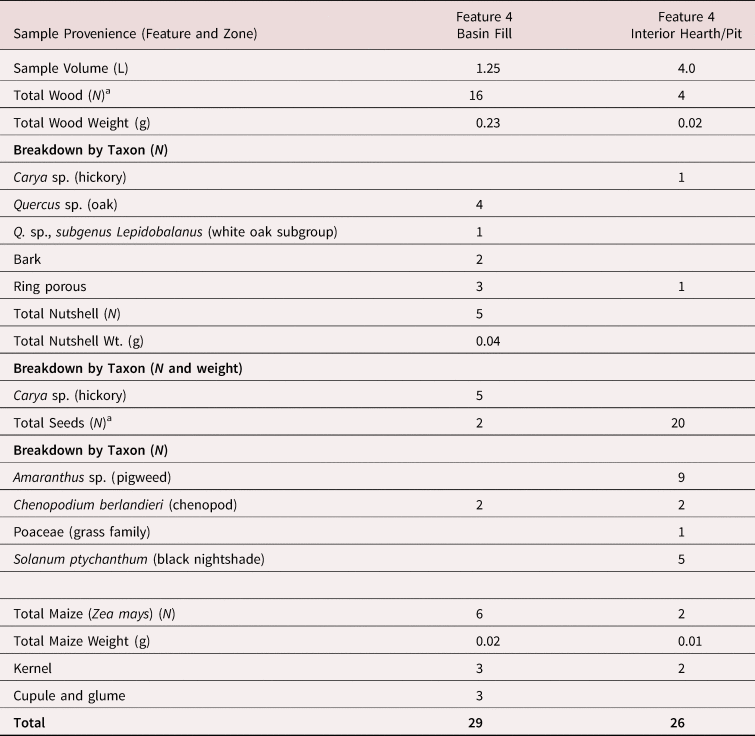
Botanical Remains from Feature 4, Spring Lake Tract, Cahokia.

a Unidentified samples removed from table but included in total amount.
Each flotation sample (light and heavy) was initially separated into two size fractions using a No. 10 geological sieve (2 mm mesh). With a standard binocular microscope at low magnification (7×–10×) all carbonized materials in the large (2 mm) fraction were extracted, and each category (nutshell, wood, etc.) was weighed, and the number of items counted. An attempt was made to identify all nonwood items, as well as 20 randomly selected wood fragments—or all wood, if there were fewer than 20 in the large fraction. Each small fraction (<2 mm) of a flotation sample was examined carefully at 10×–30×, and any seeds, maize fragments, monocot stems, and other items were extracted and identified if possible. Seed, nut, and wood identifications were based on morphological characteristics, with reference to modern comparative specimens and standard pictorial guides (e.g., Hoadley Reference Hoadley1990; Martin and Barkley Reference Martin and Barkley1961; http://www.plants.usda.gov/java/factSheet). All identifications were carried to the lowest possible taxon, usually to the genus level. Scientific nomenclature and general floristics information follows Mohlenbrock (Reference Mohlenbrock1986).
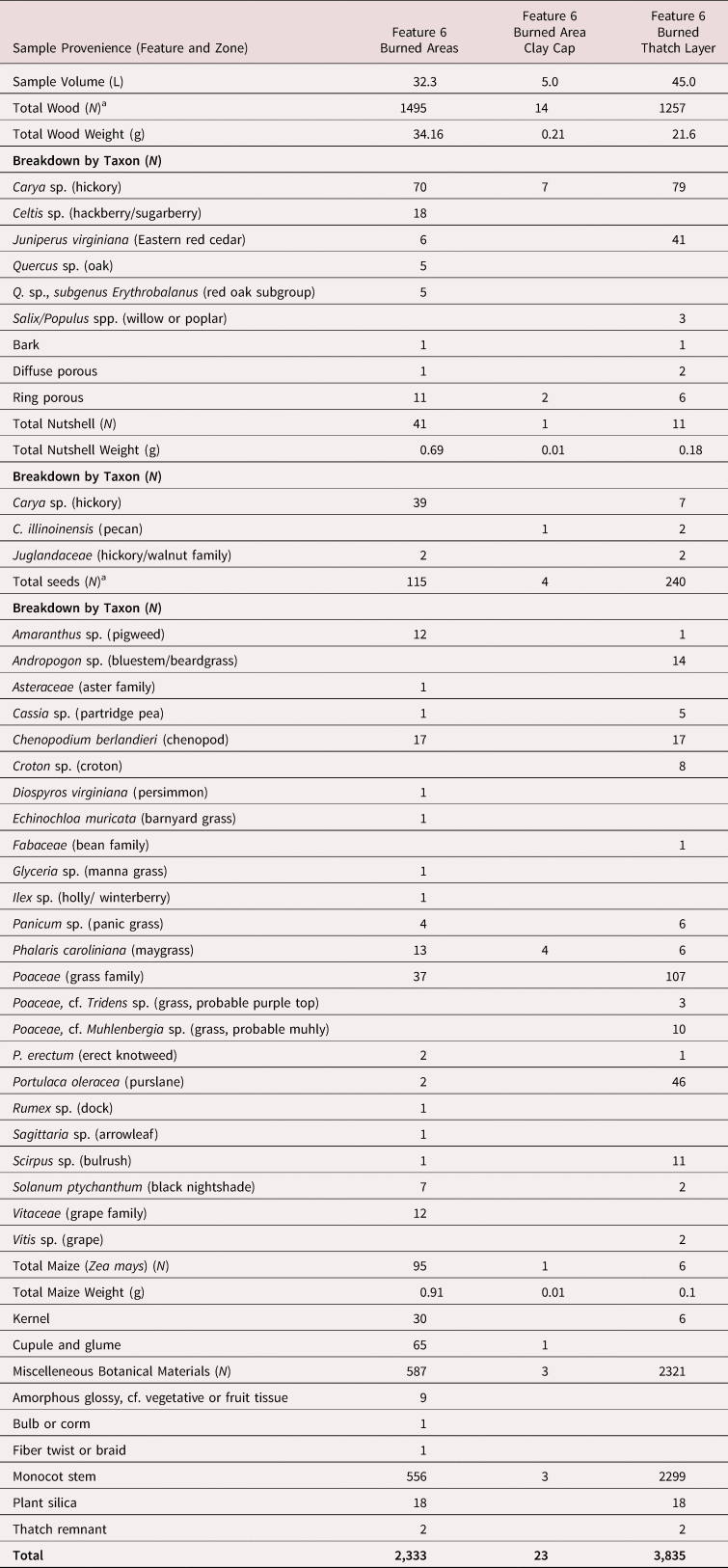
Generally, the botanical remains recovered from the SPLT neighborhood include a variety of plants often recorded in Cahokian botanical samples (see Fritz Reference Fritz2019; Parker and Scott Reference Parker and Scott2007; Parker and Simon Reference Parker, Simon, Koldehoff and Pauketat2018; Pauketat et al. Reference Pauketat, Kelly, Fritz, Lopinot, Elias and Hargrave2002) and are indicative of a food procurement strategy that assembles grown and gathered plants, and ancient and introduced cultigens. For example, EAC crops (e.g., erect knotweed, maygrass, chenopodium) are present across all three features. However, maygrass seeds are by far numerically dominant, at 79% of EAC cultigens, whereas chenopod and knotweed together comprise the remaining 21%. Maize fragments (kernel, cupule, glume) are also present, with maize kernels accounting for just over 10% (N = 93) of the identified seed sample across the three features. Nutshell of hickory (Carya sp.), walnut (Juglandaceae) and pecan (C. illinoinensis), although occurring in all three features, are not abundant. The relatively low quantity of nut remains in this assemblage corresponds to a pattern observed at other floodplain Cahokia sites, likely indicating that harvested nuts were most often transported from upland forest sources. It is possible, according to Fritz (Reference Fritz2019:82), that some pecan trees were left standing in the floodplain. However, most oaks and hickories were likely removed for increasing Mississippian settlement and agriculture, with nuts consequently imported from areas such as the Richland Creek uplands (see also Johannessen Reference Johannessen, Bareis and Porter1984; Lopinot and Woods Reference Lopinot, Woods and Margaret Scarry1993; Simon and Parker Reference Simon and Parker2006).
Across all three features, the seeds identified represent an array of edible, medicinal, and “magic plants” deposited during the closing of each of the features (for descriptions of magic plants, see Barrier Reference Barrier, Carmody and Barrier2019; Parker and Simon Reference Parker, Simon, Koldehoff and Pauketat2018). Notably, black nightshade (Solanum ptychanthum) is present in each feature, representing less than 10% of the total seed assemblage in Features 2 and 6, but 18% of total seed assemblage in Feature 4. As described in detail by Parker and Simon (Reference Parker, Simon, Koldehoff and Pauketat2018:137–139), black nightshade exemplifies a plant that may serve multiple purposes and have variable effects on the human body depending on context of use. In domestic households, nightshade may have simply been used as a medicine. A highly toxic alkaloid (solanine) is present in young plant tissues such as flowers, new leaves, unripe fruit, and stems. This can cause abdominal pain, nausea, vomiting, diarrhea or constipation, excess salivation, drowsiness, reduced circulatory or respiratory effectiveness, loss of consciousness, and—in high doses—death (Parker and Simon Reference Parker, Simon, Koldehoff and Pauketat2018:137). According to ethnographic sources, black nightshade was used as both a medicinal and ceremonial plant by southeastern Native American groups (see Moerman Reference Moerman1986). In the Mississippian period, black nightshade use “cannot presently be determined, but contexts of recovery, including frequent association with tobacco seeds, suggest that the two substances may have been combined” (Parker and Simon Reference Parker, Simon, Koldehoff and Pauketat2018:138). It is possible that these plants functioned in a “complementary manner” in ritual practice to cause altered states through physical purging (black nightshade) and hallucination (tobacco; Parker and Simon Reference Parker, Simon, Koldehoff and Pauketat2018:138; see also Wagner Reference Wagner and Winter2000). Black nightshade seeds have been recorded from Lohmann-phase T-shaped buildings (such as Feature 2b), large rectangular Stirling-phase public buildings (such as Feature 2a), ritual precincts such as those at the Sponemann and Pfeffer sites, and from Cahokia neighborhoods such as ICT-II (see Parker and Simon Reference Parker, Simon, Koldehoff and Pauketat2018:139; see also Collins Reference Collins1990; Lopinot Reference Lopinot, Lopinot, Kelly, Milner and Paine1991; Parker Reference Parker, Kelly, Ozuk and Williams2007). In the examples of specialized communal or ritual structures, nightshade and tobacco seeds co-occurred with those of morning glory, a third medicinal plant, along with red cedar wood. Notably, for the SPLT buildings, neither tobacco nor morning glory were identified.
Of additional note is the presence of a solitary Ilex sp. seed recovered from the burned area of Feature 6 (see Table 3). Based on the rare occurrence of this taxon at sites across the American Bottom (single seeds have been recovered from the George Reeves [Terminal Late Woodland II] component at the Range site, from the Upper Mississippian Reeves site located in northern Illinois, and from the Emerald site in the Richland Uplands), this seed was likely a product of incidental dispersal from either of two native shrubs—Ilex decidua (swamp holly) or Ilex verticillata (winterberry). Neither would have been common in the American Bottom or anywhere else, but they are still defined by Mohlenbrock (Reference Mohlenbrock1986) as Illinois native plants.
Botanical Remains from Feature 6, Spring Lake Tract, Cahokia.

a Unidentified samples removed from table but included in total amount.
Several other plant taxa represented by seeds across all three features were likely used for overlapping purposes, such general food consumption and medicinal uses. For example, partridge pea (Cassia sp.), purslane (Portulaca oleracea), dock (Rumex sp.), arrowleaf (Sagittaria sp.), and persimmon bark (Diospyros virginiana) all have documented medicinal uses (King Reference King1984; Moerman Reference Moerman1998; see Tables 1–3 for distribution of species across features). Interestingly, several plant species that grow locally in wet ground and/or shallow water were present in both Features 2a and 6, accounting for just 2% of the total seed assemblage across both features. These include barnyard grass (Echinochloa muricata), manna grass (Glyceria sp.), dock, arrowleaf, bulrush (Scirpus sp.), and smartweed (Persicaria sp.; King Reference King1984; Moerman Reference Moerman1998). These backwater habitat-loving plants are rarely recorded archaeologically in Mississippian Cahokian contexts, and it is uncertain as to what kind of subsistence role (if any) they played (Parker Reference Parker2015). Perhaps it is a coincidence that these species show up in the botanical samples discussed, but it is worth noting that the SPLT neighborhood was buffered on the north, south, and west sides by borrow pits; two of these likely held water for the better part of a year. Compared to other neighborhood locales at Cahokia, SPLT was situated near a lower swale where water and watery places (e.g., borrow pits) would have made ideal homes for the species mentioned above. Perhaps the neighborhood's inhabitants were simply incorporating the available plants into their everyday lives, but depositional context (burned areas of Feature 6; basin fill of Feature 2a) suggests that they might have been intentional participants—ambassadors of locality—in the closing of these two buildings.
Fruits such as grape (Vitis sp.) and persimmon (Diospyros virginiana) were represented in both Feature 2a and Feature 6. Persimmon has been recovered from other late Stirling phase burned structures at Cahokia (Lopinot Reference Lopinot, Lopinot, Kelly, Milner and Paine1991) as well as from marker post pits in Tract 15A to the northwest of SPLT (Dunavan Reference Dunavan and Pauketat1998). More unusual for the site, honey locust (Gleditsia triacanthos) was also recovered from the basin of Feature 2a; the pods of the honey locust may have been used for their sweet interior, although medicinal uses have also been documented in the Southeast (Hamel and Chiltoskey Reference Hamel and Chiltoskey1975; Taylor Reference Taylor1940).
Of additional note are the wood types present across all three features (see Tables 1–3). Hickory is by far more abundant by fragment count—5% to 7% for Features 2a, 4, and 6, followed by Eastern red cedar with 4% and 1.7%, respectively, in Features 2a and 6. Bald cypress is present in the Feature 2a assemblage and accounts for nearly 4% of identified wood, but it does not occur in either Feature 4 or 6. The occurrence of the two conifers, Eastern red cedar and bald cypress, is exceptional for this small grouping of features, but it is also typical for certain Cahokia contexts. Pine, though of an unknown species, is perhaps equally significant as a third conifer wood that has been recovered rarely outside of unique Cahokian contexts. Association of all three conifers—bald cypress, pine, and Eastern red cedar—in Feature 2a is significant, underscoring the special nature of this large Mississippian public building.
The Zoological Remains
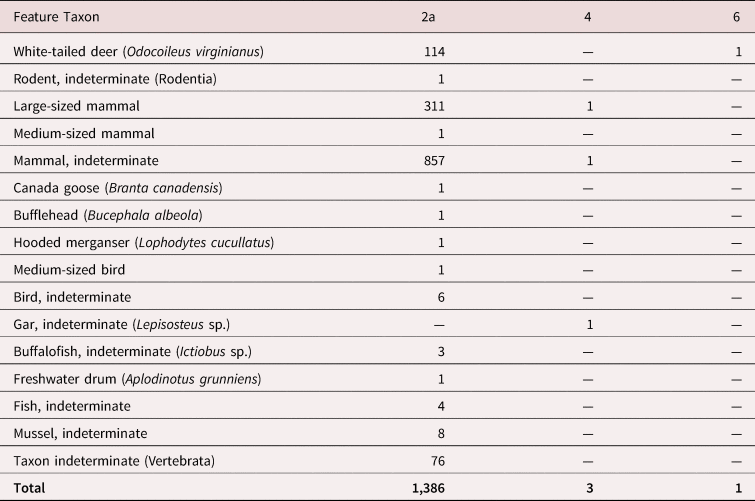
Zoological analysis was conducted by Steve Kuehn of the Illinois State Archaeological Survey, and it followed standard analytical methods utilized by the survey. All materials larger than 2 mm were examined individually to record bone element, side of the body (if applicable), section of the element, and taxonomic classification. Relative age (e.g., adult or juvenile) was recorded, when possible, based on epiphyseal fusion, tooth eruption, or occlusal wear. Bone was examined for exposure to heat, and butchery marks were recorded. Number of identified specimens (NISP) and minimum number of individuals per taxon (MNI) are based on comparison of repeating or multiple elements, relative age, and overall size, and are calculated for each feature (Kuehn Reference Kuehn2019). A total of 1,390 faunal remains were recovered from Features 2a, 4, and 6 at the SPLT (Table 4).
Faunal Remains from Features 2a, 4, and 6, Spring Lake Tract, Cahokia.

Bone preservation at the SPLT neighborhood was less than ideal, although sufficient to facilitate comparison with the botanical remains. Most faunal materials were recovered from the basin fill of Feature 2a; large amounts of seemingly articulated deer bone were noted in this feature in the field, seemingly deposited in clusters throughout the basin. A total of 1,386 specimens were obtained from Feature 2a alone, with 114 identified as white-tailed deer. Most of the Feature 2a deer remains are categorized as mid utility, although this is likely skewed by the quantity of rib, vertebrae, and scapulae present, indicative of consumption of trunk portions. None of the deer bones exhibit butchery marks or evidence of modification. Considered in terms of food utility index values (FUI), the Feature 2a deer remains reflect greater proportions of higher-yielding trunk (70.2%) and upper limb (27.2%) portions—more than double the percentages expected for a standard deer (29.0% and 11.5%, respectively; Kuehn Reference Kuehn2019). This is consistent with the deer portions likely consumed in a commensal gathering. In addition to deer, the Feature 2a assemblage included waterfowl such as Canada goose (Branta canadensis), bufflehead (Bucephala albeola), and hooded merganser (Lophodytes cucullatus), and large river fish such as buffalofish (Ictiobus sp.) and freshwater drum (Aplodinotus grunniens). Faunal remains are limited in Features 4 and 6, consisting of gar (Lithobates sp.), indeterminate mammal bone, a deer scapula, and a possible deer tibia (see Table 4).
The composition of the Feature 2a faunal assemblage overall suggests a commensal gathering deposit: (1) there is limited taxonomic diversity among the identifiable specimens (deer, waterfowl, fish), (2) the taxa recognized are suggestive of selective procurement of higher-yielding faunal resources, and (3) the deer remains consist almost exclusively of meat-rich trunk and upper limb elements, which are typically associated with feasting events and ceremonial activity (Kelly Reference Kelly, Pauketat and Emerson1997, Reference Kelly2000, Reference Kelly, Dietler and Hayden2001; Pauketat et al. Reference Pauketat, Kelly, Fritz, Lopinot, Elias and Hargrave2002; see also Kuehn Reference Kuehn2019). The composition of the SPLT assemblage is consistent with a Cahokian context; the limited diversity and paucity of specimens (particularly from Features 4 and 6) is likely due to preservation bias. The composition of the Feature 2a assemblage, and the specific deer portions represented, argue for special consumption beyond that associated with typical domestic household refuse.
Discussion
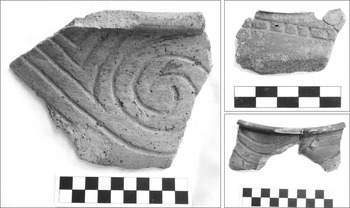
Numerous details regarding the structures excavated in the SPLT suggest that they differ from a “typical” household (at least compared to most structures in the ICT-II [Lopinot Reference Lopinot, Lopinot, Kelly, Milner and Paine1991] and at other peripheral Cahokian neighborhoods). Each building demonstrates care in termination and includes either burning (Features 4 and 6) or an event that included commensality (Feature 2a). Given the unique nature of T-shaped buildings at Cahokia—and their clear association with extradomestic activities—the immediate replacement of Feature 2b with a large rectangular building that cites its location suggests that this building was also a location in which powerful activities took place beyond those expected of a regular domicile. The termination of this replacement building (Feature 2a) contains abundant materials suggestive of a commensal event. One such line of evidence, the pottery, was consistent with Cahokian assemblages, comprising mostly jars and bowls, with smaller numbers of seed jars and other vessels such as incised beaker fragments. More than one-third of the jars were identifiable as Ramey Incised—a specialized jar type that resonates with iconographic significance (Pauketat and Emerson Reference Pauketat and Emerson1991) and that has in some instances been used to decoct yaupon holly (Ilex sp.) in the production of the highly caffeinated (and potential emetic) Black Drink (Miller Reference Miller2015). Decorative motifs on the Ramey jars from the large rectangular building (2a) included nested arcs, a ladder, and the classic swirl (Figure 5). The morphological characteristics of these vessels suggest that they were made in the latter part of the Stirling phase, placing the termination of this building after AD 1250. The ceramics present in Features 4 and 6 include a variety of vessels typically associated with domestic practice: globular jar forms with everted rims and dark or plain slips. Red-slipped seed jars, at least one beaker, and very few Ramey jars were also found in the fill of Feature 6. The ceramics from these two features differ from those present in Feature 2a in that they indicate a more diverse assemblage associated with daily practices and use. A clear-cut dichotomy between “mundane” daily use and “ritual” (as suggested by the termination of these buildings) activities within this neighborhood is therefore called into question.
Sample of Ramey jar motifs. Feature 2a, Spring Lake Tract, Cahokia.

Incorporating Indigenous knowledge and frameworks into the ways we examine the uses of plants and animals in North American contexts, the relationships among these actors (human and otherwise) become complementary and causal to one another. Through an understanding of both humans and other-than-humans as extensions of the land—whose power, agency, and purpose are rooted in place (Burkhart Reference Burkhart2019; Watts Reference Watts2013)—we can approach the events that took place with the termination of the Spring Lake Tract structures as in part created by, for, and with the botanical and animal remains in relation to the persons (human and nonhuman) who inhabited these places (Cahokia, but also that neighborhood, those structures). These actors have agency that perhaps “directly influence[d] how humans organize themselves” (Watts Reference Watts2013:23) in the households and public buildings of these communities. For example, the presence of black nightshade across all three features may support a heterogenous use of this plant ranging from medicinal to ceremonial, but the presence of black nightshade (most likely in ripe-berry form) in Feature 6 perhaps structured the environment in which that building's termination required the placement of a single Ramey vessel sherd on the floor prior to burning. Without the nightshade and its particular—possibly cleansing—qualities, this termination would have taken on a different form. The agentic qualities of nightshade along with those of that vessel contributed to the meaning and intention of this closure event, in which fire and grass thatch were likewise active agents. Burning and nightshade perhaps equally contributed to the cleansing of participants, human and otherwise.
But it is not just the “special” or potentially medicinal plants that are significant in this assemblage. Notably, maygrass comprises the overwhelming majority of EAC cultigens across the three features, whereas maize makes up only roughly one-third of all seeds present. This is not to suggest that maize was not an important part of the assemblage. Rather, it held significance in the context of the SPLT building terminations. In fact, in early practices of structure burning in the American Bottom, maize and/or nuts were often an addition to buildings prior to burning (Baltus and Wilson Reference Baltus and Wilson2019). These foods underscore the ways in which time and tradition are not only interwoven into place and practice but contribute to a specific experience of spatial reorganization of the neighborhood. Similarly, the coordination of a significant amount of Ramey ceramics with mid-utility portions of deer created the context of commensality that closed the large public building to use. Following a similar logic, the use of red cedar in building construction of Features 2a and 6 as well as bald cypress in Feature 2a also actively contributed to the qualities and purposes of these places; these materials (agents in their own right) maintained communication between humans and the land, creating this neighborhood that simultaneously served “everyday” and “ritual” purposes. To drop those qualifiers and consider this neighborhood from the perspective of Place-Thought requires a recognition of the participatory consciousness of things that have their own societies with particular values and ethics (Watts Reference Watts2013:25; see also Bell et al. Reference Bell, Conroy, Wheatley, Michaud, Maracle, Pelletier, Filion and Johnson2010). These contexts in which foodstuffs are assembled together in “extra powerful” places elevate the lived experiences of those foods as participants in the cleansing and reassembling of neighborhood relations. In these moments and through these events, these plants and animals are themselves reconstituted as “extraordinary” in the “ordinary.”
Conclusion
Examining the events that took place in Features 2a, 4, and 6 through a lens that recognizes the intentionality of all actors in these spaces allows the archaeologist to more fully recognize “the power lurking in places one would not have otherwise looked” (Witmore Reference Witmore and Smith2019:4; see also Cipolla Reference Cipolla2018). Foodways involve practices, materials, and agents whose roles overlap in the production of histories as they are tied to place. This is an important concept when thinking through how sustenance—simultaneously spiritual and physical—comes to participate in the processes of community making. In this article, we examined the roles of plants and animals in the closing events that took place in the Spring Lake Tract neighborhood. The botanical remains present include a relatively diverse sample of plants and their attendant uses, ranging from the special properties of red cedar and bald cypress to historically significant plants such as maygrass and those plants such as barnyard grass that thrive in backwater environments—a particular place-ness that characterizes the locality of SPLT (à la Burkhart Reference Burkhart2019).
Time, place, and community are bound together through the construction, reconstruction, and termination of a powerful public building—its use marked by unique materials and its end celebrated through intentional deposits of foodstuffs and other significant materials. The large proportions of meaty deer elements combine with large (often cosmologically powerful) vessels in a celebration to feed human bodies but also to sustain a community and a place. Likewise, the termination of Feature 6—a building in most other ways “ordinary”—was marked by thorough cleaning and burning, its location clearly cited by the construction of Feature 4 and its attendant burning episodes. Both features contained their own small but unique and intentional deposits, including both commensables and medicinals, and even some plants, which themselves defy strict dichotomous categorization.
Overall, the botanical and zoological assemblages from the SPLT provide another view of Cahokian community practice at the neighborhood scale. The presence of a diverse set of plant species from rare woods to black nightshade suggests the integration of daily and ceremonial practices across these three features. The closing commensal event at Feature 2a highlights the significance of this integration with the presence of maygrass, nightshade, Eastern red cedar, and bald cypress commingled in this depositional context. In this article, we advocate for an archaeological framework that considers the historical connections of these entities (plants and animals) to their place of use and deposition to understand how community values and identities may shift over time. By engaging in an assemblage-based consideration of the floral and faunal remains from the Spring Lake Tract, we can interrogate the ways plants and animals became active participants in those events that blur the rigid lines of domesticity and ritual in the (re)construction of community at Cahokia.
Acknowledgments
Thank you to our 2016 and 2017 IFR field school students. Additionally, we are grateful for the thoughtful feedback of the reviewers.
Funding Statement
This project was funded by the Institute for Field Research, and a Connecticut State University Research Grant.
Data Availability Statement
All data is available to researchers upon request made to Melissa R. Baltus or Sarah E. Baires. Data is housed at the University of Toledo, Ohio, and Eastern Connecticut State University.
Competing Interests
The authors declare none.