





Management Implications
This research examines the prolonged effects of imazapyr soil residue and offers vital management implications for field practitioners involved in invasive plant control and riparian restoration. It highlights the persistent nature of imazapyr in soils, which can negatively affect non-target native vegetation, particularly foundational riparian tree species such as Salix laevigata (red willow) and Populus spp. (cottonwoods), even multiple years after application. This has direct relevance for managing invasive species like Arundo donax (giant reed), as the study shows that while imazapyr remains an effective tool for large-scale removal, its long-term residues can hinder the growth and establishment of desirable native plants used in restoration.
Practitioners should consider delaying revegetation for multiple years after imazapyr application if sensitive species are to be used to minimize damage, although this risks reinvasion by invasive species. Alternatively, selecting species with higher tolerance to imazapyr residues can improve revegetation success. Integrated strategies, such as using lower herbicide concentrations during optimal application times and combining herbicides with known synergistic properties, such as glyphosate and imazapyr, may reduce the residual impact while maintaining effective invasive species control. This work underscores the importance of balancing aggressive invasive species management with the need to ensure the long-term success of habitat restoration, providing actionable guidance for field practitioners.
Introduction
Herbicides are an effective and relatively low-cost restoration tool commonly used to manage invasive plants. For many plant species that readily resprout or those with perennating organs, herbicide application is the most feasible and effective treatment method. Herbicide application causes less habitat disturbance compared with mechanical or physical removal methods (Liebman et al. Reference Liebman, Mohler and Staver2001), but can still have undesirable effects on the surrounding environment. For example, residues from some herbicides persist in soils and can hinder the growth and establishment of desirable vegetation (Rice et al. Reference Rice, Toney, Bedunah and Carlson1997; Schroeder et al. Reference Schroeder, Reichenborn, Lehnhoff, Hooper, Velasco-Cruz, Weinstein and Faist2024). Soil residence times differ among herbicides (Rasool et al. Reference Rasool, Rasool and Gani2022), and plant species exhibit variable tolerance to residues (Boutin and Rogers Reference Boutin and Rogers2000), causing difficulty in determining appropriate timelines for revegetation activities following herbicide application (McManamen et al. Reference McManamen, Nelson and Wagner2018).
Giant reed (Arundo donax L.) is a major weed in riparian and wetland habitats in Mediterranean and tropical climates, especially in California rivers, where it occupies tens of thousands of hectares and often occurs in large monocultures with wide-ranging ecosystem impacts (Lambert et al. Reference Lambert, Dudley and Saltonstall2010b). The flammability of A. donax biomass increases fuel loads and fire risk and frequency in riparian zones (Coffman et al. Reference Coffman, Ambrose and Rundel2010; Lambert et al. Reference Lambert, Dudley and D’Antonio2010a). Large monocultures have high transpiration rates, stressing water resources and co-occurring native vegetation, particularly in dryland systems (Giessow et al. Reference Giessow, Casanova, Leclerc, MacArthur, Fleming and Giessow2011; Watts and Moore Reference Watts and Moore2011). Studies have also shown that A. donax is associated with population reductions in, and even exclusion of, a wide range of animal species (Hardesty-Moore et al. Reference Hardesty-Moore, Orr and McCauley2020; Herrera and Dudley Reference Herrera and Dudley2003; Kisner Reference Kisner2004; Maceda-Veiga et al. Reference Maceda-Veiga, Basas, Lanzaco, Sala, de Sostoa and Serra2016).
Plants can grow up to 6-m tall (Perdue Reference Perdue1958) with massive, shallow rhizomes and roots (Barco et al. Reference Barco, Maucieri and Borin2018). This species reproduces only asexually through rhizomes and is predominately redistributed during flooding events that uproot and transport fragments throughout the floodplain (Saltonstall et al. Reference Saltonstall, Lambert and Meyerson2010). Once rhizomes settle, rapid growth facilitates dominance within the redeveloping riparian plant community (Jiménez-Ruiz et al. Reference Jiménez-Ruiz, Hardion, Del Monte, Vila and Santín-Montanyá2021). Although various management approaches can be employed, mechanical removal of whole plants and rhizomes is only feasible for small-scale projects. Generally, chemical treatment with systemic herbicides is required to kill belowground structures and is currently the only feasible approach for moderate to large monocultures or in sensitive habitats where physical removal would cause significant disturbance and adversely affect native vegetation and wildlife (Bell Reference Bell, Brock, Wade, Pysek and Green1997; Goolsby et al. Reference Goolsby, Moran, Martínez Jiménez, Yang, Canavan, Paynter, Ota and Kriticos2023).
Glyphosate and imazapyr are the two most commonly used herbicides for controlling problematic riparian and wetland invaders, including A. donax (Spencer et al. Reference Spencer, Tan, Liow, Ksander and Whitehand2009), common reed [Phragmites australis (Cav.) Trin. ex Steud.] (Derr Reference Derr2008; Mozdzer et al. Reference Mozdzer, Hutto, Clarke and Field2008), and salt cedar (Tamarix spp.) (Duncan and McDaniel Reference Duncan and McDaniel1998). Imazapyr has gained favor over glyphosate for controlling A. donax owing to a higher level of control with fewer repeat applications (Bell Reference Bell2011), contributing to its broad use in agricultural and wildland settings. Imazapyr is highly water soluble and degrades rapidly in aquatic solution but can persist in soil for months to years depending on site characteristics (Douglass et al. Reference Douglass, Nissen, Meiman and Kniss2016; Mallipudi et al. Reference Mallipudi, Stout, DaCunha and Lee1991). Climate, soil texture and moisture, microbial activity, wind erosion, and herbicide application techniques may all influence imazapyr residence times (AMEC Geomatrix 2009; Jenkins et al. Reference Jenkins, Wehtje, Morgan, Bollinger and Young2000; Moyer et al. Reference Moyer, Coen, Dunn and Smith2010). The preemergence properties of imazapyr provide the added benefit of reducing secondary weed colonization after monocultural stands of target species have been removed (Douglass et al. Reference Douglass, Nissen, Meiman and Kniss2016; Isbister et al. Reference Isbister, Lamb and Stewart2017; Melanie and Kirkman Reference Melanie and Kirkman2010; Sebastian et al. Reference Sebastian, Nissen, Sebastian, Meiman and Beck2017). There is little published information on native plant sensitivity to residues and none that we know of for riparian tree species that readily establish from cuttings, a commonly employed technique as part of active revegetation efforts.
We observed herbicide damage and growth deficiencies in riparian trees planted as part of an experimental forest within a large restoration area where A. donax was treated using imazapyr 2 yr earlier. We installed trees as pole cuttings with the assumption that sufficient time had passed for herbicide residues to fully break down based on label recommendations and literature accounts (Douglass et al. Reference Douglass, Nissen, Meiman and Kniss2016; Peoples Reference Peoples1984; Shaner Reference Shaner2014), but some cuttings began to show signs of herbicide damage within the first year. Glyphosate was also used for treatments, and although it can have some residual activity (Cornish and Burgin Reference Cornish and Burgin2005), all information suggests that it breaks down within a few days or binds to soil, making it biologically unavailable. The goal of this study was to evaluate the relative susceptibility to and differential impacts of imazapyr residues on the growth of riparian tree species (Salix and Populus spp.).
Materials and Methods
Study Region
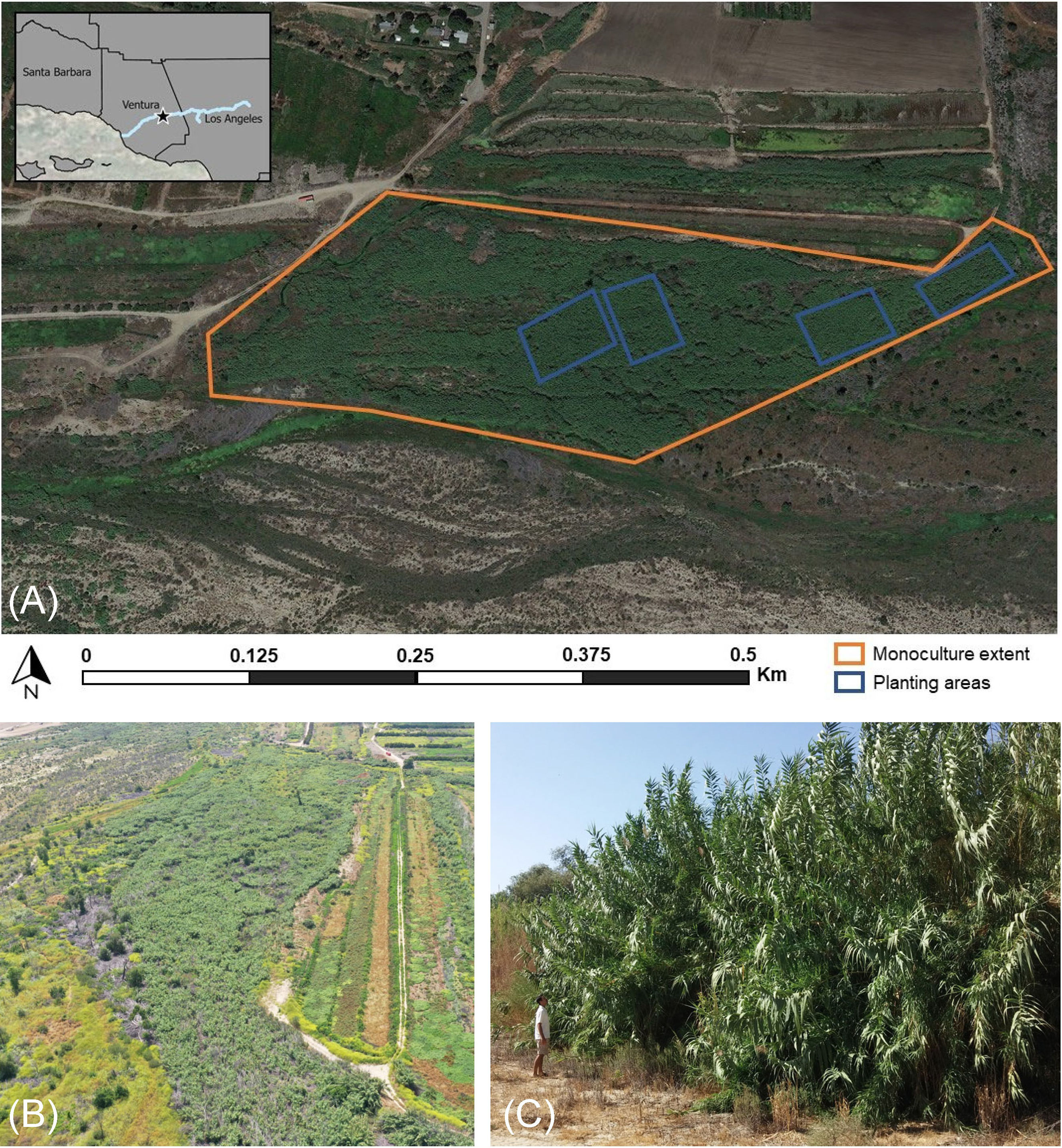
The Santa Clara River (Ventura and Los Angeles counties, CA) is regionally significant as the largest river in southern California without significant flood control structures or a hardened streambed, thus retaining a relatively natural hydrology. The river originates in the San Gabriel Mountains in Los Angeles County and flows westward over 160 km before emptying into the Pacific Ocean near Ventura, CA (Figure 1A). Progression through multiple geological basins results in perennially flowing stretches interspersed with intermittently dry reaches where water flows through the subsurface (Beller et al. Reference Beller, Grossinger, Salomon, Dark, Stein, Orr, Downs, Longcore, Coffman, Whipple, Askevold, Stanford and Beagle2011). The riparian zone is threatened by non-native invasive vegetation, levee modification, poor water quality, and urban development pressure leading to a designation as one of the most threatened rivers in the nation (American Rivers 2006). Invasive A. donax dominates plant communities in much of the floodplain and is dispersed throughout the active river channel and onto higher terraces during flood events. A major program to eliminate A. donax populations and restore impacted habitat is ongoing on riparian properties throughout the floodplain (Bennett et al. Reference Bennett, Lambert, Carey and Braman2022; Parker et al. Reference Parker, Remson and Verdone2014). The study site is located mid-river in Fillmore, CA (34.392°N, -118.885°W) along a perennially wet reach (Downs et al. Reference Downs, Dusterhoff and Sears2013, Reference Downs, Lambert, Williams and Braman2024) where A. donax removal and restoration of willow–cottonwood (Salix–Populus) woodland and other riparian habitat is occurring across 114 ha. This study focuses on a 7-ha portion of the larger restoration area that was previously dominated by expansive, near monocultural stands of A. donax that required intensive removal efforts due to their size, density, and rigorous growth (Figure 1). Vegetation surrounding this focus area consists of willow–cottonwood forest with wetland components and agricultural fields bordering the northern, upslope edge of the riparian zone. Soils in the floodplain are heterogeneous, with composition influenced by infrequent scouring and deposition associated with floods during the winter rainy season. In the study area, shallow soils (30 cm) consist primarily of loam and sandy loam, but deeper profiles can contain sand and cobble substrates (Stillwater Sciences et al. 2021). The last flood scouring event occurred in 1978; however, the study area routinely experiences mild surface flows that can remove leaf litter every few years.
(A) Study site location along the Santa Clara River in Ventura County, CA. (B) Aerial photo (facing west) of the giant reed (Arundo donax) monoculture at the study site before treatment. (C) Arundo donax stand in the restoration site.

Arundo Removal
Arundo donax control began in November 2019 using a track loader–mounted flail mower to masticate aboveground biomass. Masticated plant material was left in place to dry and decompose, creating a thick litter layer that aided in inhibiting weed colonization and slowing soil moisture evaporation. Mowed plants were then allowed to resprout and grow to a height of 1.5 to 2 m before herbicide treatment. Herbicides were applied by contractors experienced with A. donax control in southern California. Beginning in May 2020, plants were sprayed with a foliar application of 3.5% imazapyr (3.8 kg ha−1) and 1.5% glyphosate (4.4 kg ha−1) solution using backpack sprayers and a tow-behind spray rig (Intelli-Spray, Coolum Beach, Queensland, Australia). This herbicide mix followed a pesticide recommendation issued by California Department of Fish and Wildlife, as well as published studies on effective rates for A. donax control (Bell Reference Bell2011; Spencer et al. Reference Spencer, Tan, Liow, Ksander and Whitehand2009). Treatments occurred over a 6-d period. The following year, resprouting was very low, and any resprouts were treated using cut-and-daub where a 50% glyphosate/50% imazapyr mix was applied directly to cut stems, negating any herbicide drift onto the soil or nearby vegetation.
Revegetation
In November 2022, cuttings were collected from mature red willow (Salix laevigata Bebb), Fremont cottonwood (Populus fremontii S. Watson), black cottonwood (Populus trichocarpa Torr. & A. Gray), and Fremont × black cottonwood (P. × parryi Sarg.; hereafter Populus hybrids) trees that did not exhibit signs of pest or pathogen infestation. Cutting length was standardized to 60 cm, and basal diameters ranged from 1 to 3 cm. The basal ends of cuttings were dipped in rooting gel (Clonex® Rooting Gel, Hydrodynamics International, Lansing, MI, USA) and planted into tree pot containers (D40H Deepot Cells, Stuewe and Sons, Tangent, OR, USA) using a standard potting mix consisting of 85% container blend and 15% washed sand (Agromin, Oxnard, CA, USA). Pots were maintained at the study site in shallow, 10-cm water troughs for 4 mo until sufficient root structure had developed for outplanting.
In April 2023, cuttings of S. laevigata, P. fremontii, P. trichocarpa, and Populus hybrids (1,688 individuals) were installed in an experimental plot within the 7-ha focus area where A. donax had been previously removed. Cuttings were installed in four planting areas that were selected to meet the criteria of having relatively uniform topography and no remnant native vegetation (i.e., 100% A. donax cover before treatment; Figure 1). Surface elevation varied by 1.8 m across planting areas and depth to groundwater varied by 81 cm (as observed in 8 piezometers distributed throughout the study area), possibly influencing soil moisture content and level of saturation that each cutting experienced. It was also possible that herbicide application was not uniform across the study area owing to variation among applicators and subtle differences in A. donax density. To account for these potential sources of environmental variation, an equal number of cuttings from each species was randomly assigned to planting locations within each planting area. Cuttings were installed at a depth of ca. 0.3 m with 2.5-m spacing between cuttings. Each cutting was watered thoroughly following installation and a layer of mulch was placed around the stem to facilitate soil moisture retention. Trees were irrigated once per week until the end of August; however, soil moisture remained high over the study period owing to water releases from an upstream reservoir. Of the 1,688 cuttings planted, 941 survived (323 S. laevigata, 183 P. fremontii, 261 P. trichocarpa, and 174 Populus hybrids) past the first year and were subsequently used to assess herbicide residue damage.
Imazapyr Damage Surveys
In June 2024 (peak of growing season), tree height was measured to the nearest centimeter, and individuals were assessed for presence/absence of imazapyr damage. Characteristic morphological deformities including fasciculation (leaf clustering/tufts), foliar necrosis (darkening and wilting), and foliar chlorosis (yellowing) are indicative of imazapyr damage (Supplementary Figure S1). Trees classified as “damaged” exhibited at least two of these traits during monitoring events, as determined by two independent (i.e., double-blind) observers. Trees that showed no signs of damage were used as the control group, as no trees were planted outside herbicide-treated areas that could serve as true controls. It is unclear why these trees were not affected in the same way as trees showing signs of damage, and we acknowledge that there is the possibility that these trees were also affected to some extent that was not accounted for in the results. However, unaffected trees appeared to have healthy growth and development.
To assess potential imazapyr residual impacts on other native plants across the 114-ha restoration site more broadly, we recorded instances of any plant species with clear signs of imazapyr damage during annual vegetation monitoring (each July) or any time a plant with damage was encountered during routine restoration activities.
Statistical Analyses
All statistical analyses were conducted in R v. 4.4.1 (R Core Team 2024). A Pearson’s chi-square test of independence was calculated to examine the relationship between species and presence of herbicide damage. A post hoc analysis was performed based on the test residuals, with the Bonferroni correction applied to account for multiple comparisons. Tree height was used as a response variable to assess whether imazapyr damage influenced tree growth and whether this influence varied among species. We ran a linear mixed-model analysis using the lme4 package (Bates et al. Reference Bates, Mächler, Bolker and Walker2015). We included tree height as the response variable and designated herbicide damage (presence/absence), tree species, and their interaction as fixed effects. Planting area was included as a random effect to account for potential environmental differences among planting areas that could influence tree growth. Model assumptions of homoscedasticity and normality of residuals were assessed visually. Significant differences were evaluated by ANOVA, followed by pairwise comparisons with Tukey adjustments using the glht function from the multcomp package (Hothorn et al. Reference Hothorn, Bretz and Westfall2008).
Results and Discussion
Species-Specific Susceptibility to Imazapyr Soil Residues
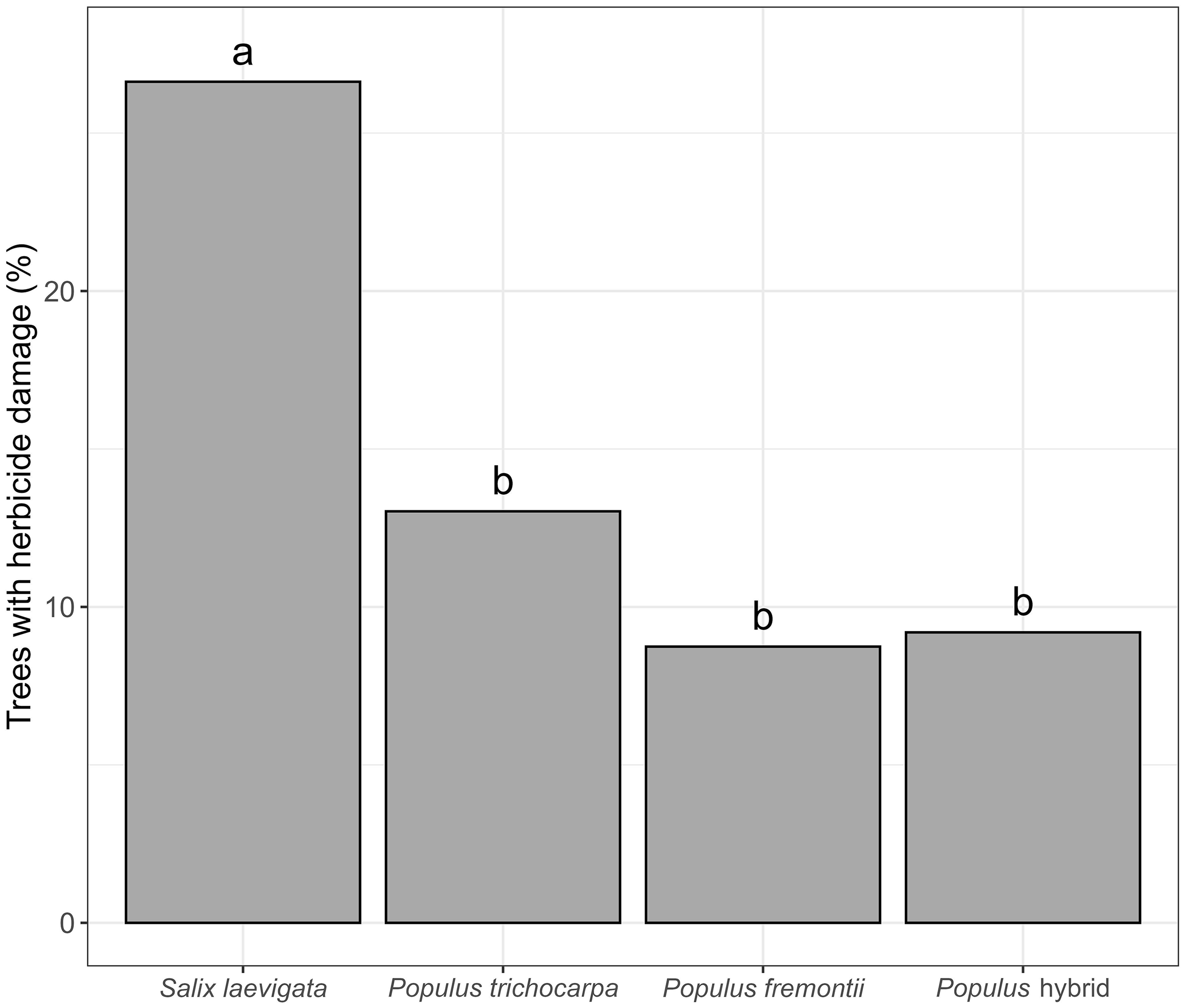
The percentage of trees affected by imazapyr soil residues significantly differed among species (χ2 = 41.68, df = 3, 941, P < 0.001; Figure 2). Salix laevigata was most commonly affected, with 26.6% of individuals exhibiting signs of herbicide damage (Figure 2). Of the Populus species, P. trichocarpa (13.0%) had higher rates of damage than Populus hybrids (9.2%) and P. fremontii (8.7%). As far as we know, this is the first documented instance of long-term residues affecting riparian forest revegetation efforts. Establishing riparian trees from cuttings is a primary method for restoring riparian forests in the western United States (Williams et al. Reference Williams, Lambert and Stella2025), thus unintended residues from persistent herbicides raise concerns for potential negative effects on revegetation efforts that may compromise project outcomes. Salicaceae species comprise the majority of cover and abundance in these systems (Bennett et al. Reference Bennett, Lambert, Carey and Braman2022; Hultine et al. Reference Hultine, Bush, West and Ehleringer2007) and appear to be especially sensitive to residues. For example, we observed many planted and naturally recruiting species, including trees, shrubs, and forbs, throughout this area that did not exhibit signs of herbicide damage (Table 1). Although we did not directly measure residual imazapyr concentrations in soils, it is likely that even trace levels not affecting most plants can alter establishment, growth, and survival of some species (Douglass et al. Reference Douglass, Nissen, Meiman and Kniss2016; Felsot et al. Reference Felsot, Bhatti, Mink and Reisenauer1996). Variation in herbicide sensitivity among closely related species has been well documented in weed populations (Degennaro and Weller Reference Degennaro and Weller1984; González-Torralva et al. Reference González-Torralva, Cruz-Hipolito, Bastida, Mülleder, Smeda and De Prado2010; Santos et al. Reference Santos, Vargas, Christoffoleti, Agostinetto, Mariani and Dal Magro2014) and among crop plant cultivars (Zimdahl Reference Zimdahl1976) and has guided practices in these fields. Understanding how herbicides affect native plants during revegetation efforts is equally important for improving restoration outcomes.
Percentage of trees exhibiting herbicide damage among the four foundation tree species planted as part of riparian restoration after Arundo donax removal. Statistically significant differences among the species are indicated by unique letters as determined by post hoc tests performed on chi-square test residuals with the Bonferroni correction applied to account for multiple comparisons.

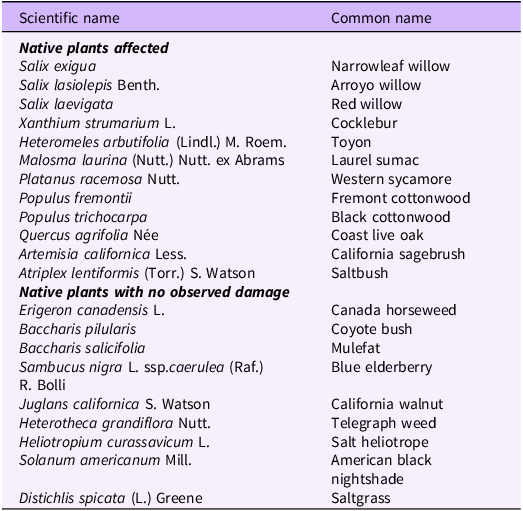
Native plants observed in the restoration site to be affected or unaffected by imazapyr residues a .

Table 1. Long description
This image displays a two-column botanical reference table under a purple header with two main categories: Scientific name on the left and Common name on the right. The table lists various native plant species, categorized into those that are affected by a specific condition or pest and those that show no observed damage.
The top section of the table lists twelve Native plants affected. It includes three willow species (Salix exigua, Salix lasiolepis Benth., and Salix laevigata), corresponding to the Narrowleaf willow, Arroyo willow, and Red willow, respectively. Other trees and shrubs in this category include Cocklebur (Xanthium strumarium L.), Toyon (Heteromeles arbutifolia), Laurel sumac (Malosma laurina), Western sycamore (Platanus racemosa Nutt.), Coast live oak (Quercus agrifolia Née), California sagebrush (Artemisia californica Less.), and Saltbush (Atriplex lentiformis). Additionally, two cottonwood species are listed: Fremont cottonwood (Populus fremontii) and Black cottonwood (Populus trichocarpa).
The bottom section outlines nine Native plants with no observed damage. This group comprises broadleaf plants, shrubs, trees, and grasses, including Canada horseweed (Erigeron canadensis L.), Coyote bush (Baccharis pilularis), Mulefat (Baccharis salicifolia), Blue elderberry (Sambucus nigra L. ssp. caerulea), California walnut (Juglans californica S. Watson), Telegraph weed (Heterotheca grandiflora Nutt.), Salt heliotrope (Heliotropium curassavicum L.), American black nightshade (Solanum americanum Mill.), and Saltgrass (Distichlis spicata (L.) Greene).
a It is possible that unaffected species were growing in areas without residues, but these species were widespread and generally near species that did display damage.
Imazapyr Residuals Differentially Affected Species Growth
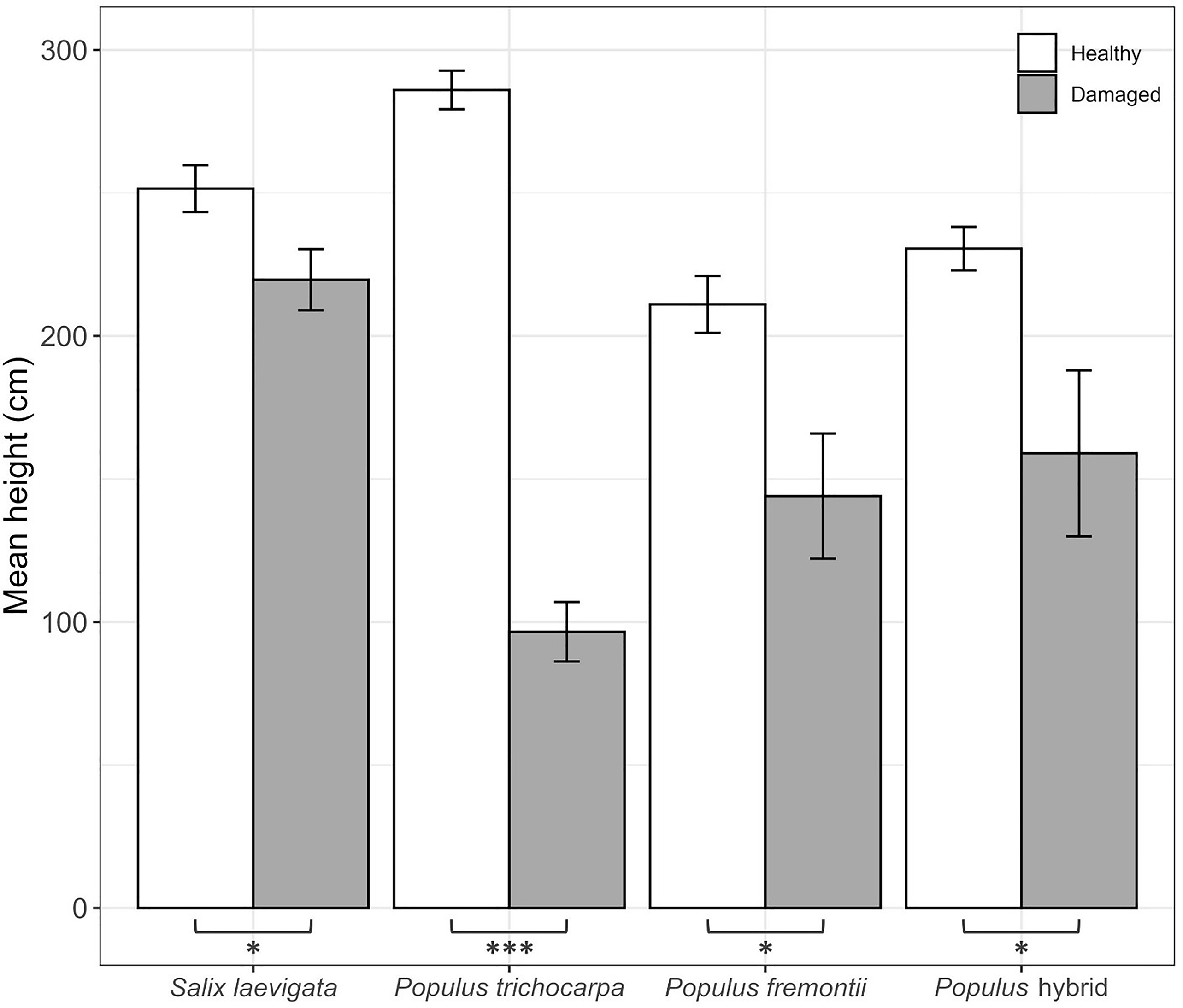
Trees with herbicide damage were, on average, 28.5% percent shorter than healthy trees (F(1, 932.4) = 59.43, P < 0.001), indicating herbicide residue damage significantly affected tree growth. However, imazapyr soil residues had different effects on growth among species (i.e., a significant interaction; F(3, 931.8) = 15.90, P < 0.001; Figure 3). Healthy P. trichocarpa were the tallest trees, but most strongly affected by residues, as damaged trees exhibited a 66.2% reduction in height compared with their healthy counterparts (Figure 3). Healthy S. laevigata grew taller than P. fremontii and Populus hybrids (Figure 3), and damaged S. laevigata trees were the least affected of all species (12.7% decline in growth), despite being the most common species to show signs of damage (Figure 2). The decline in growth due to soil residues was similar for Populus fremontii (31.8%) and Populus hybrids (31.1%) and intermediate to that of other species. Imazapyr residual damage appeared to have a strong effect on all species, but the fastest-growing species (P. trichocarpa) was most impacted, which could indicate that higher rates of root uptake of soluble compounds associated with rapid growth also facilitates uptake and translocation of co-occurring residues (Espeby et al. Reference Espeby, Fogelfors and Milberg2011). Our results show that long-term herbicide residuals can significantly impact native plant establishment and growth, potentially delaying plant community development and associated benefits for wildlife, as well as compromising project success.
Height of healthy trees and trees damaged by imazapyr soil residues. Bars represent mean height and error bars depict ±1 SE. Heights of healthy and damaged trees were significantly different for all species. Asterisks below bars represent significant differences between healthy and damaged trees: *P < 0.05; **P < 0.01; ***P < 0.001.

Prolonged Effects of Imazapyr Soil Residues
More than 16% of cuttings exhibited signs of herbicide damage despite planting occurring more than 2 yr after the last imazapyr application, thus demonstrating a prolonged soil residence time and potential high sensitivity of Salicaceae species when even trace residues are present. Although the standard half-life reported for imazapyr in soils is 25 to 142 d (Shaner Reference Shaner2014), Douglass et al. (Reference Douglass, Nissen, Meiman and Kniss2016) reported half-lives up to 259 d in coarse soils with low organic matter under no-light conditions. These authors also found that imazapyr soil residuals can hinder the growth of highly sensitive species for more than 3 yr after application. Our findings support their observations of long-term imazapyr soil residues limiting growth, and show that Salix and Populus spp. are among those species that are highly sensitive.
It is important to note that the total quantity of herbicide applied affects residue duration in soil and time required to drop below non-phytotoxic levels (Walker Reference Walker1983). The long soil residual observed in this study is likely related to the amount of herbicide applied to effectively control A. donax, especially where it occurs in extensive monocultures. Stands can be dense (>28 stems m−2) and reach more than 6 m in height (Goolsby and Moran Reference Goolsby and Moran2019; Spencer et al. Reference Spencer, Liow, Chan, Ksander and Getsinger2006), often requiring multiple retreatments over several years to attain complete control (Bell et al. Reference Bell, Berry, Prentice-Dekker, McKelvey and Steele2016; Lawson et al. Reference Lawson, Giessow and Giessow2005). Site logistics often cause difficulty in determining precise herbicide application metrics across large, heterogenous project areas (Bell Reference Bell2011). We were therefore unable to determine spatially explicit concentrations of active ingredient applied by contractors within discrete portions of the study area, but given the density and continuity of A. donax across this site, maximum dosage per acre was likely reached in some areas, despite applicators following herbicide mixing recommendations provided by the California Department of Fish and Wildlife. Regardless, our findings suggest that successfully treating large A. donax monocultures with imazapyr will result in some degree of persistent imazapyr residues that will interfere with or delay revegetation efforts.
There are still some means by which practitioners can address issues associated with imazapyr soil residues. Simply delaying revegetation efforts for multiple years could minimize non-target effects, but long-term delays in planting can increase the likelihood of reinvasion or type conversion to an undesirable alternative habitat state (Allen Reference Allen1998; Guillozet et al. Reference Guillozet, Smith and Guillozet2014; Suding et al. Reference Suding, Gross and Houseman2004). Non-target effects could also be mitigated by selecting species that are more tolerant of imazapyr in earlier planting stages, as susceptibility can be highly species specific (Melanie and Kirkman Reference Melanie and Kirkman2010). In fact, we observed many species that showed no signs of herbicide damage, despite other species being highly sensitive (Table 1). In addition to these mitigation measures, modifying application mixes and timing can help reduce the amount of imazapyr required for treatment. For example, practitioners can prioritize herbicide application in fall, when treatments are more effective at lower concentrations due to A. donax phenology (Spencer et al. Reference Spencer, Ksander, Tan, Liow and Whitehand2011). Using glyphosate only in fall applications is another viable approach (San Martín et al. Reference San Martín, Gourlie and Barroso2019) if more retreatments over longer time frames is an acceptable alternative (Bell Reference Bell2011). Including glyphosate in addition to imazapyr at lower application rates could similarly allow for successful treatment, as Bell (Reference Bell2011) reported synergistic effects when applying both herbicides together. It is ultimately important for practitioners to understand the benefits and drawbacks of different approaches to A. donax treatment and subsequent revegetation to determine appropriate techniques for specific projects.
Observations of Other Native Plants
This study area is part of a larger restoration program on more than 114 ha of riparian habitat, including extensive areas where A. donax was present at varying densities and other weeds were managed in abandoned agricultural fields using a onetime, low-dose application of imazapyr (1.5%) as a preemergence treatment. More than 2 yr after treatment, we continued to document residual effects on a range of native species either planted or naturally colonizing these areas while other species appeared to be unaffected (Table 1). This list is meant to highlight riparian plant species that may be sensitive to imazapyr residues and serve as a starting point for further evaluation into potential sensitivity. It is possible that plants listed as unaffected were established in localized areas without residues, but we made an effort to include only species within close proximity to others observed with damage. All plants within the Salicaceae family appear to be highly sensitive, and specifically, we have seen high levels of impacts and mortality in narrowleaf willow (Salix exigua Nutt.), possibly because of its highly rhizomatous growth habit compared with the other Salix species. Two widespread and important plants for wildlife, mulefat [Baccharis salicifolia (Ruiz & Pav.) Pers.] and coyote brush (Baccharis pilularis DC), appeared unaffected by residues within the study area.
Conclusions
This study investigated the effects of imazapyr soil residues on foundational riparian tree species planted for woodland restoration. While previous studies examined residual imazapyr effects on herbaceous and shrub species grown from seed in controlled settings, this is the first to evaluate long-term impacts on trees installed from cuttings in a natural environment. Herbicide impacts were widespread, with residues lasting longer than expected based on available literature and management recommendations. Revegetation efforts must consider herbicide application rates and timing to avoid negative effects on plant growth and project success. Species-specific differences in susceptibility to residues and growth impacts were observed, highlighting the importance of selecting appropriate species and waiting periods for planting. Depending on project timelines, alternative herbicides or species may be necessary. Although imazapyr can cause long-term effects on non-target vegetation, it remains one of the most effective options for controlling aggressive invasive species. Therefore, practitioners must account for potential imazapyr legacy effects when planning treatment methods and revegetation efforts.
Supplementary material
To view supplementary material for this article, please visit https://doi.org/10.1017/inp.2026.10052
Acknowledgments
We thank S. Cancelmo, D. Schneider, M. Baxter, H. Hennigan, C. Valdez, J. Spiegelman, E. Jones, F. DiMundi, and K. Crane for help with planting and data collection.
Funding statement
Funding was provided in part by the Thelma Hansen Fund, University of California Agriculture and Natural Resources.
Competing interests
The authors declare no competing interests.


 Open access

