Introduction
Alfalfa (Medicago sativa L.) is one of the oldest and most important perennial forage plants (Annicchiarico et al., Reference Annicchiarico, Nazzicari, Li, Wei, Pecetti and Brummer2015). Alfalfa has a significant place in the crop rotation because it improves the physical properties and biogenicity of the soil, influences the microbiological process, increases nitrogen content, and generally soil fertility. As a perennial plant, alfalfa is characterized by a wide genetic variation for adaption to specific growth conditions (Annicchiarico and Pagnotta, Reference Annicchiarico and Pagnotta2012). However, alfalfa is very sensitive to low pH, its growth and development are strongly affected by soil acidity and Al toxicity (Khu et al., Reference Khu, Reyno, Brummer and Monteros2012; Yang et al., Reference Yang, Rao and Horst2013). Also, alfalfa is susceptible to the fungal disease spring black stem and leaf spot (SBSLS) caused by Phoma medicaginis var. medicaginis Malbr. and Roum. This disease damages all plant parts: roots, crowns, stems, leaves, flowers, pods and seeds. The greatest negative effects are determined for above-ground plant parts (Leyronas et al., Reference Leyronas, Broucqsault and Raynal2004; Hwang et al., Reference Hwang, Wang, Gossen, Chang, Turnbull and Howard2006). Acid soils are a major barrier for agricultural production due to the direct effects of pH on root environment and plant growth. In acid soil, plants become stressed, and the state of stress becomes evident from such symptoms as low growth rate, weak tillering, crop thinning (Goulding, Reference Goulding2016; Wang et al., Reference Wang, Ren, Huang, Wang, Zhou and An2016). Soil pH affects all plant growth stages, resistance to diseases, stand file, yield and quality (Tomić et al., Reference Tomić, Stevović, Đurović, Bokan, Popović and Knežević2018). Plants depend on their root system for their survival in the nature and for their yield and nutritional quality in agriculture. The root systems are complex, and a variety of traits have been identified over the past decade as contributing to adaption to low fertility and toxic soils (Idupulapati et al., Reference Idupulapati, John, Stephen and Walter2016). Phenotyping characterization of root adaptation to soil with fertility and mobile Al toxicity is enabling plant breeders to develop cultivars that not only yield more but also contribute to yield stability and nutritional security in the face of climatic variability (Idupulapati et al., Reference Idupulapati, John, Stephen and Walter2016). Several scientists from different regions of the world emphasized a problem of susceptibility of alfalfa to soil acidity (Popović et al., Reference Popović, Tucak, Čupić and Kovačević2009; Rousk et al., Reference Rousk, Brookes and Bååth2009). Planting Al-tolerant cultivars is the most promising approach to improve alfalfa production on acid soils (Rahman et al., Reference Rahman, Lee, Ji, Kabir, Jones and Lee2018). Recurrent selection based on field performance has been used to develop acid soil-tolerant germplasm (Khu et al., Reference Khu, Reyno, Han, Zhao, Bouton, Brummer and Monteros2013). Field screening for mobile Al resistance would seem to be the most desirable approach because it best approximates the intended cropping environment (Haling et al., Reference Haling, Simpson, Culvenor, Lambers and Richardson2011). However, in practise reliable ranking of accessions in the field has been difficult. This is mainly because mobile Al levels are not uniform, and environmental factors may interact with soil mobile Al to mask the expression of Al resistance. Thus, it is necessary to combine field with greenhouse screening techniques based on physiological traits of mobile Al resistance (Rao, Reference Rao and Pessarakli2014). However, cultivars respond diversly to different screening methods and differ in the degree of tolerance to soil acidity (Stevović et al., Reference Stevović, Đurović, Đukić, Lazarević and Tomić2010). One of these methods is the selection of alfalfa varieties that show tolerance to soil acidity and high concentration of aluminium in the soil (Stevović et al., Reference Stevović, Đurović, Đukić, Lazarević and Tomić2010).
In Lithuania, acid soils (pH ≤ 5.5) account for 25.0 and 39.5% of soils in the eastern and western parts, respectively (Marcinkonis and Tripolskaja, Reference Marcinkonis and Tripolskaja2008; Staugaitis and Vaišvila, Reference Staugaitis and Vaišvila2015). Ecologically sensitive automorphic moderately podzolized sod-podzolic soil on moraine loam (till) predominate in West Lithuania. This soil is very acid (pHKCl 3.9–4.2) in the whole profile to the 160 cm depth and the concentration of toxic mobile Al is very high both in the topsoil and subsoil (100–300 mg/kg) (Motuzas et al., Reference Motuzas, Buivydaitė, Vaisvalavilčius and Šleinys2009; Repsiene and Karcauskiene, Reference Repsiene and Karcauskiene2016). For the first time, when conducting studies on the selection of alfalfa material in a naturally acidic soil in the climatic conditions of Western Lithuania, we assessed the direct reaction of the selected material to aluminium ions. The selected material will be used for various crossings and further selection process in order to develop cultivars tolerant to aluminium ions.
The aim of this research is to investigate and compare the morphological traits of the selected alfalfa genotypes under acid soil conditions in the field that showed different tolerance to lower pH values under laboratory conditions (filter-based screening method) in the previous research.
Materials and methods
Experimental materials
Experimental material consisted of the 30 most promising genotypes (19 cultivars and 11 breeding populations) of alfalfa. These genotypes were selected from 200 accessions by a filter paper-based screening method in the selection cycle (C1) under laboratory conditions (Pan et al., Reference Pan, Zhu and Cheng2008). The following cultivars of various geographic origin were used in the experiment: ‘Antanė’, ‘Birutė’, ‘Žydrūnė’, ‘Malvina’ from Lithuania, ‘Jõgeva 118’ from Estonia, ‘Skriveru’ from Latvia, ‘Ludelis’ and ‘Europe’ from France, ‘Mriia odes'ka’ from Ukraine, ‘Romagnola’ from Italy, ‘Janu’ from the Netherlands, ‘Jitka’ from the Czech Republic, ‘Alina’ from Romania, ‘8701’ from Denmark, ‘AJ 2024’ from Japan, ‘AJC 437’ from Kazakhstan, ‘PGR 10249’ from Nebraska, USA ‘59–109’ and ‘AR 140’ from Russia, and 11 breeding populations from Lithuania.
Filter-based screening method under laboratory conditions in the selection cycles C1 and C2
Over the period of 2015–2016, the collection of 200 accessions of alfalfa was assessed to determine their tolerance to mobile Al toxicity and the most promising (30) accessions were selected by a filter paper-based screening method, under laboratory conditions (selection cycle C1). The most promising accessions of alfalfa were characterized by the best seed germination and longer hypocotyls and roots at 16 mm AlCl3 concentration.
After selection cycle C1, the seeds of the most promising 30 accessions were additionally tested in two ways: (1) the seeds of the accessions were sown in acid soils with different mobile Al concentrations under field conditions in 2018; (2) the seeds of the accessions were grown and harvested from different acid soils. The seeds of 30 accessions were used to determine their tolerance to Al toxicity under laboratory conditions using a filter paper-based screening method in 2019 (selection cycle C2).
The screening procedure was derived from Pan et al. (Reference Pan, Zhu and Cheng2008) with some modifications. Well-developed seeds of alfalfa of similar size were scarified, then surface sterilized in the solution of 10% NaClO (sodium hypochlorite) for 30 min and rinsed three times in distilled water. The seeds were sown in 90 mm sterile Petri dishes containing two pieces of sterilized filter paper and 7 ml of sterilized 50 mm CaCl3 (pH 4.5) with seven concentrations of AlCl3 (aluminium chloride): 0, 2, 4, 8, 16, 32 and 64 mm. Thirty seeds were placed on the filter paper with three replicate dishes per treatment. The experiment was repeated twice. Petri dishes were incubated in the dark for 4 days at 25°C temperature. After 4 days, the photoperiod was adjusted for 3 days to 12/12 h (day/night) at 25/20°C temperature, respectively. After 7 days, germinated seeds were counted, the root and hypocotyl lengths of the seedlings were measured.
The root and hypocotyl tolerance index (%) was calculated as the maximum root and hypocotyl length in Al stress culture divided by the root and hypocotyl length in the control treatment at 0 mm AlCl3.
Site and soil description and experimental design
Accessions of alfalfa were grown at the Vėžaičiai Branch of Lithuanian Research Centre for Agriculture and Forestry (in the western part of Lithuania, 55°70′ N, 21°49′ E). The soil of the experimental site was Bathygleyic Dystric Retisol (WRB IUSS Working Group, 2014), with a texture of loam consisting of 8.0% clay, 45.1% silt and 46.9% sand. The soil was high in mobile phosphorus and mobile potassium content (212 ± 26.0 and 218 ± 5.9 mg/kg soil, respectively), with pH 4.7 ± 0.02. The mobile aluminium content in the soil was 4 ± 2.8 mg/kg soil, total nitrogen content –0.13 ± 0.00%. The mobile Al concentration in the experimental site increased gradually from 1.8 to 23.4 mg/kg. In order to determine the effect of the causative factor, i.e. mobile aluminium, and to the discover the patterns in morphological traits of alfalfa, the soil was divided into seven groups according to the concentration of mobile Al: 1.8–2.7; 3.2–4.0; 7.2–7.9; 9.2–11.3; 12.6–14.7; 18.8–20.5 and 20.9–23.4 mg/kg.
The seeds of alfalfa accessions (30) were sown on the 24th of April in 2018, in a randomized block design with four replications. Phosphorus (P) fertilizer was applied once before sowing at a rate of P60. Each accession was sown at a rate of 0.2 g scarified seed per 1 m in two 3-metre-long rows with a special hand-sowing machine Plomatic 1R (Wintersteiger, Austria). The distance between the rows of line was 0.5 m, between different accessions 1.0 m. The field area of sowing of one accession was 1.5 m2.
Over the 2019–2020 period, the biological and morphological traits were evaluated in alfalfa accessions: wintering (W), spring regrowth (SR) was measured (cm) 2 weeks after resumption of vegetation, measuring plant height (cm), leafiness (L), stem thickness (ST) and plant vigour (PL), were measured on a scale of 1–9 (9 being the best value), plant height (HF) before flowering (cm) in each treatment plot was measured for 30 plants in four replications. Stem number (SN) was counted (stems/m2). The seed yield (SY) was measured in each plot from the soils with different mobile Al concentrations. The total seed yield was measured within a total area of 1.5 m2 per plot. The measured values were converted into kg/ha.
SBSLS was evaluated in 2019 and 2020. The disease severity was evaluated during the growing season, from May to July by scale: 0.0, 0.1, 1.0, 5.0, 10.0, 20.0, 40.0, 60.0, and 80.0%. The disease was estimated visually by scoring each treatment plot in the four replications.
The area under the disease progress curve (AUDPC) of SBSLS was calculated as the total area the graph of disease severity against time, from the first scoring to the last:

where t is time in day of each reading, y is the percentage of affected foliage at each reading, n is the number of readings (Simko and Piepho, Reference Simko and Piepho2012).
Soil samples for chemical analyses were collected from 0 to 20 cm layer with a drill from each treatment's four replicated plots. Soil agro-chemical characteristics were determined by the following methods: the soil pHKCl – by potentiometric method in the extraction of 1 M KCl according to ISO 10390:2005 (soil quality – determination of pH); total nitrogen (Ntot) content – by the Kjeldahl method; mobile phosphorus (P2O5) and potassium (K2O) – by the Egner−Riehm−Domingo (A-L) method, organic carbon (Corg) – by the dry combustion Dumas method, mobile aluminium (Al3+) content – by the ISO 14254:2018 (soil quality – determination of exchangeable acidity using barium chloride solution as extractant).
The experimental plots were sprayed with the herbicide Basagran 480 (a.i. bentazon 480 g/l) 2 l/ha when after germination alfalfa had reached the height of 10 cm in 2018. The insecticide Mavrik 2 F (a.i. tau-fluvalinate 240 g/l) 0.15–0.20 l/ha was applied when pests had reached harmful levels.
Meteorological conditions
In 2018, the growing season started on the 13th of April. The amount of precipitation through the year reached 84% of the standard climate norm (SCN). During the growing season, the amount of precipitation was by 8% lower and in the summertime – by 35% lower compared to the SCN. The period from the middle of May till the middle of June and the month of July were especially dry; soil moisture in the depth of 0–20 cm was lower than the optimal moisture for the plants, respectively: 12.9–17.0% and 13.2–15.8%. The plant growing season ended on the 24th of November.
In 2019, the plant growing season started on the 20th of April. The amount of precipitation through the year reached 102% of the SCN. During the growing season, the amount of precipitation was by 9% lower and in the summertime – by 34% lower compared to the SCN. In the months of June, July and August, soil moisture in the depth of 0–20 cm was lower (by 9.7–12.4%) than the optimal moisture for the plants. The plant growing season ended on the 26th of November.
In 2020, the plant growing season started on the 25th of April. The amount of precipitation through the year reached 91.8% of the SCN. During the growing season, the amount of precipitation was by 25.2% lower and in the summertime – by 2.6% lower compared to the SCN. Soil moisture at the 0–20 cm depth in the months of May and June was lower (by 11.3–15.4%) than the optimal moisture for the plants. The plant growing season ended on the 1st of December.
Statistical analysis
The length of roots and hypocotyls of alfalfa accessions depending on the differences in mobile Al concentrations was calculated, one-way analysis of variance (ANOVA) was used followed by Fisher's least-significant difference tests; P < 0.05 was considered significant. A two-way ANOVA was performed to determine the effects of factors in two separate pairs (mobile Al × year for each morphological trait). All data presented are the mean values of three independent sets of experiments (± bars denote standard error, s.e.). The correlations between experimental data were investigated using a linear regression analysis. All statistical analyses and cluster analysis were performed using the statistical program SAS Enterprise Guide, version 7.13 (SAS Institute Inc., USA).
Results
The accessions of alfalfa differed in resistance to aluminium toxicity under the filter-based screening method. Aluminium toxicity significantly influenced root and hypocotyl growth at different AlCl3 concentrations in the selection cycle C1. The root tolerance index was significantly lower by 16.6, 22.0, 19.2 and 4.7%, respectively at 2, 4, 8 and 16 mm (AlCl3) aluminium concentrations, compared to the hypocotyl tolerance index. The roots and hypocotyls did not elongate at 32 and 64 mm AlCl3 concentrations (Figs 1(a) and (b)). The accessions of alfalfa showed higher resistance to aluminium toxicity in the selection cycle C2 – the growth of roots and hypocotyls was faster. The root tolerance index was higher by 12.9, 6.0, 5.3 and 2.7%, respectively at 2, 4, 8 and 16 mm AlCl3 concentrations in the selection cycle C2, compared to the selection cycle C1 (Fig. 1(a)). Also, the hypocotyl tolerance index was higher by 6.5, 1.2 and 12.7%, respectively at 2, 4 and 16 mm AlCl3 concentrations, compared to the hypocotyl tolerance index in the selection cycle C1 (Fig. 1(b)). In contrast to the selection cycle C1, the elongation of roots and hypocotyls was faster at 32 and 64 mm AlCl3 concentrations in the selection cycle C2. The root tolerance index was higher by 9.5 and 7.1%, respectively at 32 and 64 mm AlCl3 concentrations, and the hypocotyl tolerance index was higher by 20.0% and 17.7%, respectively at 32 and 64 mm AlCl3 concentrations, compared to the selection cycle C1 (Figs 1(a) and (b)).
The root and hypocotyl tolerance index (a and b) in the selection cycles C1 and C2.

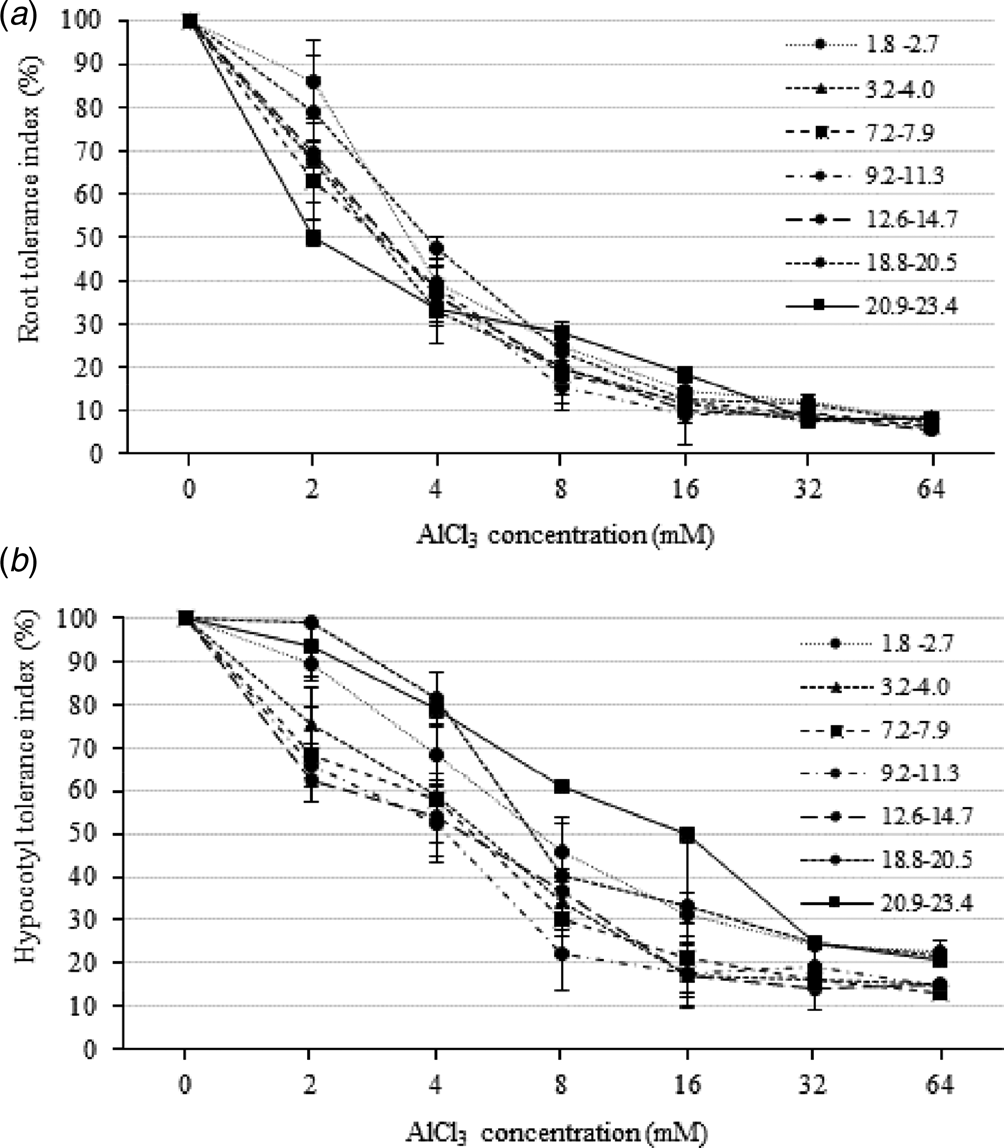
The accessions of alfalfa in the selection cycle C2 were distinguished by resistance to mobile Al under laboratory conditions. All these accessions were grown in an acid soil with different aluminium concentrations. In the soil with 1.8–4.0 mg/kg and 7.2–23.4 mg/kg mobile Al concentrations, the root tolerance index was similar at 8, 16, 32 and 64 mm AlCl3, and ranged from 15.7 to 28.3%, from 9.2 to 18.6%, from 7.8 to 12.0% and from 5.8 to 8.5%, respectively (Fig. 2(a)). The accessions of alfalfa grown in the soil with a high concentration of mobile Al (18.8–23.4 mg/kg) differed by longer hypocotyls. The average tolerance indexes of hypocotyls were 50.5, 41.5, 24.8 and 21.3%, respectively at 8, 16, 32 and 64 mm AlCl3 (Fig. 2(b)). The hypocotyl tolerance index of alfalfa accessions grown in the soil with 20.9–23.4 mg/kg mobile Al concentration was by 21.0, 25.5 and 4.6% higher, respectively at 8, 16 and 32 mm AlCl3 concentrations, compared to alfalfa grown in the soil with 1.8–4.0 mg/kg mobile Al concentration in the selection cycle C2 (Fig. 2(b)). The accessions of alfalfa grown in the soil with a low concentration of mobile Al (1.8–2.7 mg/kg) had similar hypocotyl tolerance index at 16, 32 and 64 mm AlCl3 compared to the accession grown in 18.8–20.5 mg/kg Al concentrations (Fig. 2(b)).
Comparison of the root and hypocotyl tolerance index (a and b) in the selection cycle C2 under different mobile Al (mg/kg) concentrations in the soil.

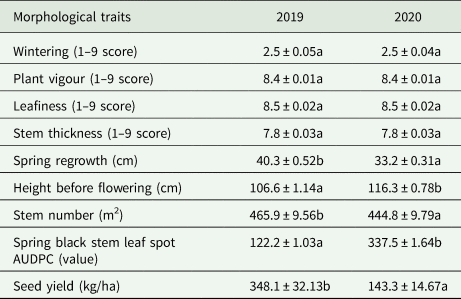
The results of the analysis of variance are presented in Table 1. The data show that significant (P < 0.05) influence in concentrations of mobile Al were determined for biological and morphological traits, such as wintering, plant vigour, leafiness, stem thickness and stem number (Table 1). The similar data of traits, such as wintering, plant vigour, leafiness and stem thickness showed that accessions of alfalfa were less influenced by mobile Al toxicity in experimental year (Table 2). The significant (P < 0.05) influence of experimental year was determined by spring regrowth, height before flowering, spring black stem leaf spot and seed yield (Table 1). Also, the significant differences of these traits were determined between experimental year (Table 2). The mobile Al and year interaction effect was also highly significant (P < 0.05) for spring black stem leaf spot and seed yield. These interactions showed that accessions of alfalfa significantly differed in resistance to disease and seed yield.
The analysis of variance for alfalfa experiment with seven mobile aluminium (Al) concentrations

Note: DF, degree of freedom; SS, sum of squares; MS, mean square; P ≤ 0.05.
Comparison of morphological traits of alfalfa between years

Note. Means in each row with different letters are significantly different at P ≤ 0.05; ±s.e., standard error; AUDPC value, the area under the disease progress curve.
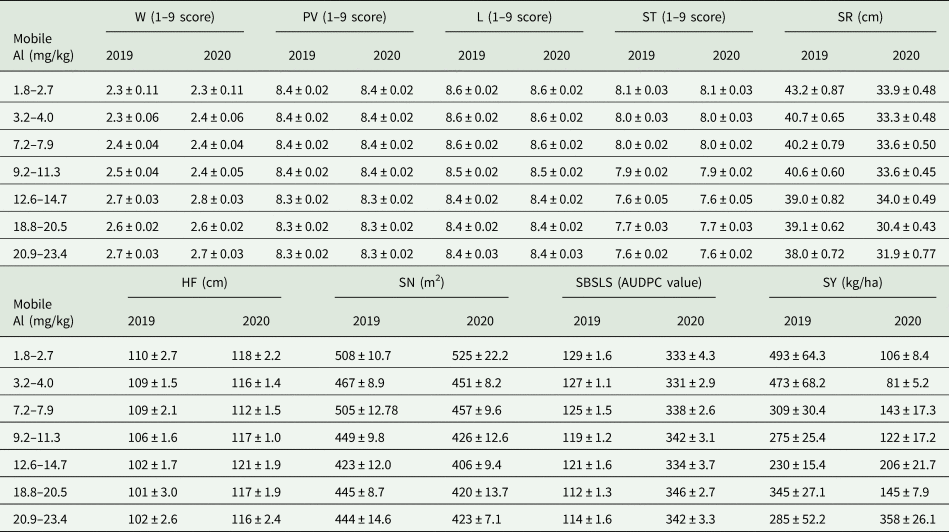
The wintering of alfalfa was very similar (2.5 scores) in both experimental years (Table 2). Although the plants of alfalfa were wintering similarly in the soil with 1.8–4.0 mg/kg mobile Al concentration (2.3 score), the crops of alfalfa were slightly thinned in 2019 (Table 3). More sparse crops of alfalfa were observed in 2020, when alfalfa was grown in the soil with 7.2–23.4 mg/kg mobile Al concentration. The concentration of mobile Al and the experimental year had statistically significant (P < 0.05) effect on the height of alfalfa (Table 1). According to the average data, the height of alfalfa at spring regrowth was 1.2 times greater in 2019 compared to that in 2020 (Table 2). In 2019, the height of alfalfa at spring regrowth was the greatest (43.2 cm) in the soil with 1.8–2.7 mg/kg mobile Al concentration compared to the soil of different acidity. In 2020, the height of plants at spring regrowth was quite similar irrespective of the mobile Al concentration in the soil; however, in the soil with 18.8–20.5 mg/kg mobile Al concentration it was 1.1 times lower compared to the soil with 1.8–2.7 mg/kg mobile Al concentration (Table 3). In 2020, the height of alfalfa plants before flowering time was similar irrespective of mobile Al concentrations in the soil. Significant differences were determined in the soil with 7.2–7.9 and 12.6–14.7 mg/kg mobile Al concentrations, where the heights of alfalfa plants differed by 1.1 times (Table 3).
Morphological traits of alfalfa under different mobile aluminium (Al) concentrations in the soil

Note: Differences between mobile Al concentrations, P ≤ 0.05; ± s.e., standard error; W, wintering; PV, plant vigour, L, leafiness; ST, stem thickness; SR, spring regrowth, height after resumption of vegetation; HF, height before flowering; SN, stem number; SBSLS, spring black stem leaf spot; AUDPC value, the area under the disease progress curve; SY, seed yield.
Stem density of alfalfa depended on the accession's resistance to mobile Al toxicity. The number of stems was significantly (P < 0.05) influenced by mobile Al toxicity (Table 1). The number of stems of alfalfa was 1.05 times higher in 2019, compared to that in 2020 (Table 2). Significantly greater differences between the number of stems were obtained in the soil with 1.8–2.7 mg/kg and 7.2–7.9 mg/kg mobile Al concentrations. In 2019, the number of stems was 1.2 times lower in the soil with 12.6–14.7 mg/kg mobile Al concentration, compared to the soil with 1.8–2.7 mg/kg mobile Al concentration. In 2020, the number of stems was 1.3 times lower in the soil with 12.6–14.7 mg/kg mobile Al concentration, compared to the soil with 1.8–2.7 mg/kg mobile Al concentration (Table 3).
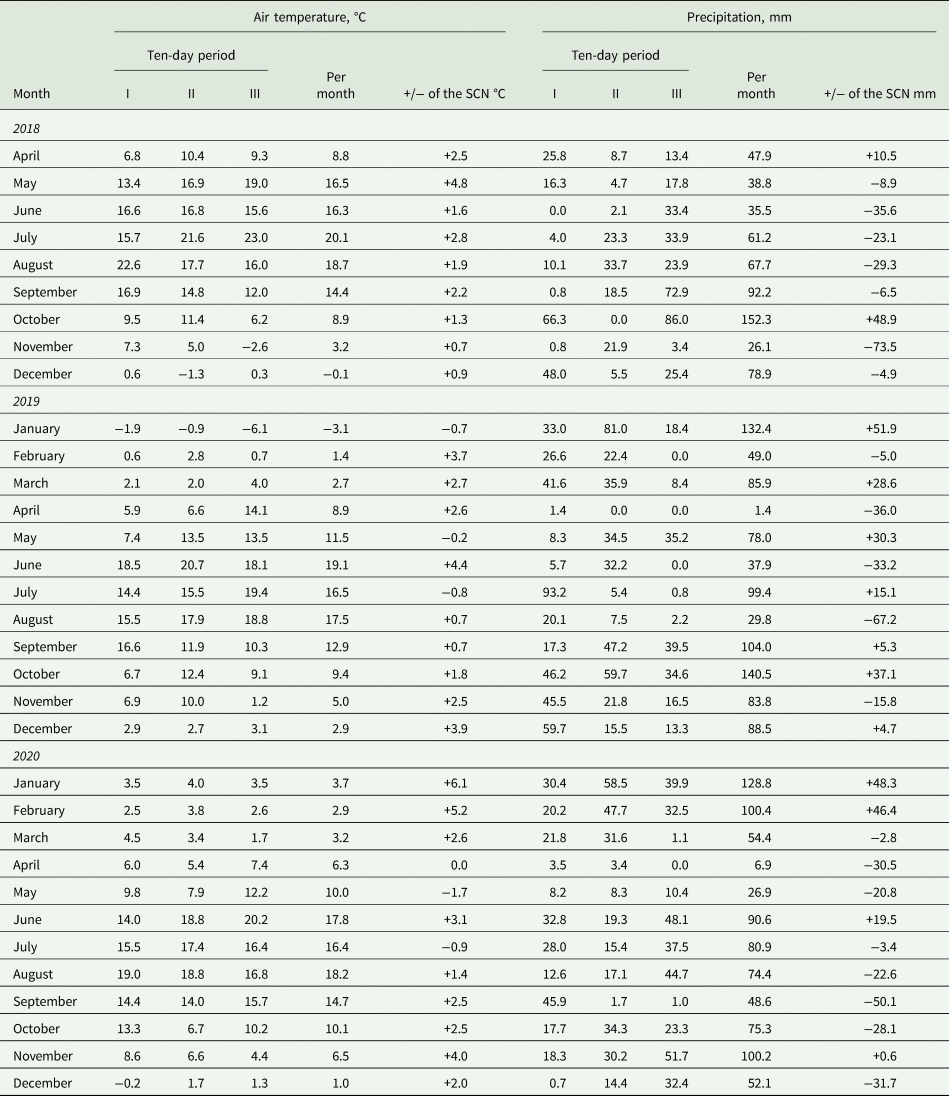
The incidence of spring black steam and leaf spot (Phoma medicaginis var. medicaginis Marlb. & Roum) (SBSLS) was significant (P < 0.05) for crops of alfalfa in the experimental years. In 2019, the disease spread more slowly because the weather conditions were dry and warm (Table 4), the average AUDPC value was 122.2 (Table 2). In an acid soil with a lower mobile Al concentration (1.8–7.9 mg/kg), the AUDPC value of SBSLS ranged from 125.3 to 128.9, and in the soil with 9.2–23.4 mg/kg concentration of mobile Al the AUDPC value ranged from 112.0 to 121.2 (Table 3). In 2020, SBSLS spread very quickly, because the weather conditions were very rainy and warm and the AUDPC value was 2.8 times higher (average AUDPC value 337.5) than in 2019 (Table 2). The AUDPC value of SBSLS was similar in acid soil with lower and high mobile Al concentrations and ranged from 331.4 to 346.1 (Table 3).
The amount of precipitation (mm) and mean air temperature (°C) during the experimental period (data from the Vėžaičiai Automatic Meteorological Station)

Note: I – during the first ten-day period of the month; II – during the second ten-day period of the month; III – during the third ten-day period of the month; SCN – standard climate norm.
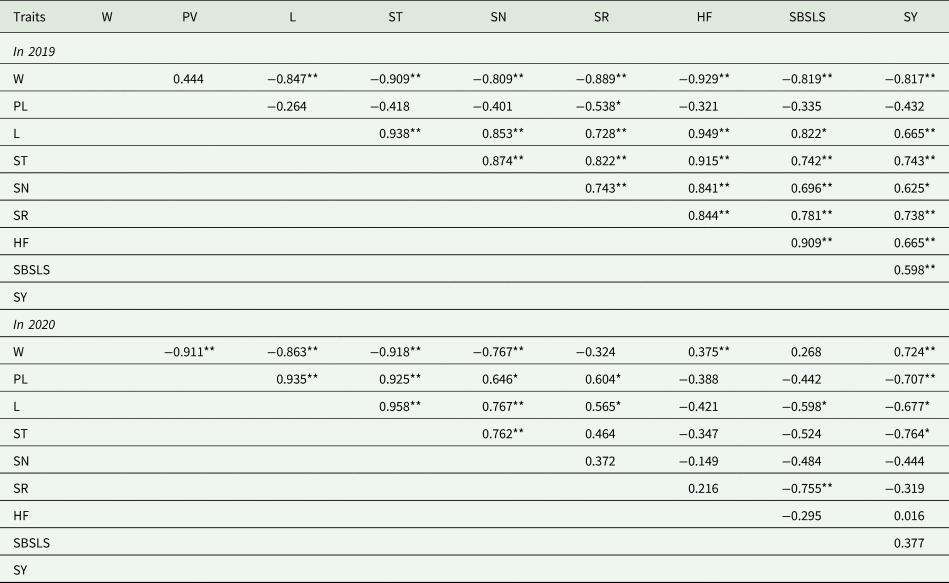
The seed yield depended on the weather conditions. In 2019, the weather conditions were favourable for the seed yield because it was very hot and dry. A positive correlation was found between the seed yield and SBSLS (r = 0.598, P < 0.01) (Table 5). The experimental year significantly (P < 0.05) influenced the seed yield which was 2.4 times greater compared to 2020 (Table 2). Also, the seed yield was significantly (P < 0.05) affected by the interaction between the year and mobile Al (Table 1). In 2019, the average seed yield was 348.1 kg/ha (Table 2). In 2019, the seed yield was 194.5 kg/ha lower in the soil with a high concentration of mobile Al (7.2–23.4 mg/kg), compared to the soil with a lower concentration of mobile Al (1.8–4.0 mg/kg). In 2020, the seed yield varied in the soil with different concentrations of mobile Al and ranged from 80.5 to 358.0 kg/ha, average seed yield was 143.3 kg/ha (Tables 2 and 3).
Correlation analysis between morphological traits of alfalfa

Note: *Significant at P ≤ 0.05, **Significant at P ≤ 0.01; W, wintering; PV, plant vigour, L, leafiness; ST, stem thickness; SR, spring regrowth, height after resumption of vegetation; HF, height before flowering; SN, stem number; SBSLS, spring black stem leaf spot; SY, seed yield.
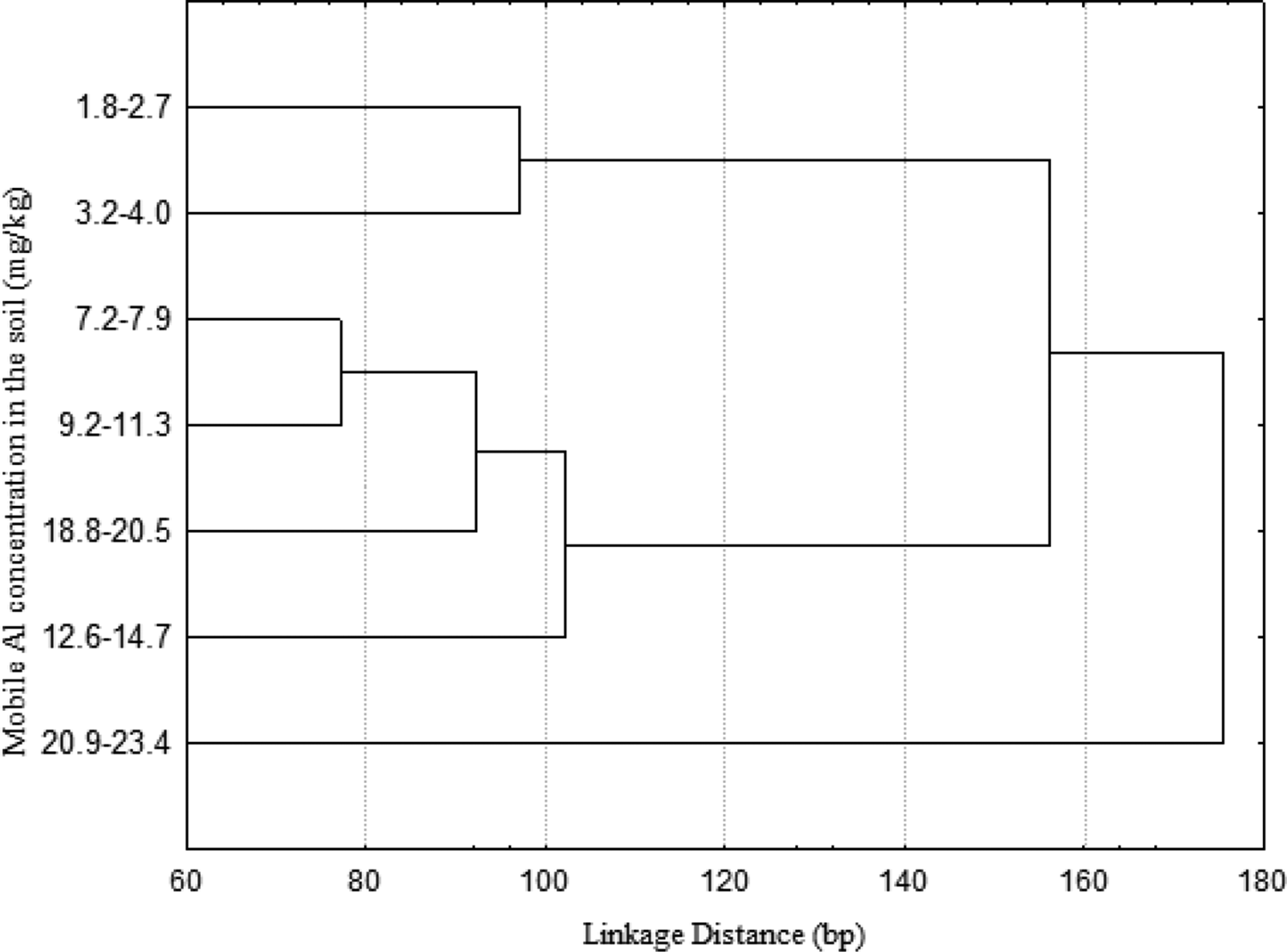
The correlation analysis between biological, morphological traits is presented in Table 5. The correlation analysis showed that morphological traits of alfalfa strongly affected one another. In 2019, warm and hot weather conditions had a positive effect on the growth and development of alfalfa as well (Table 4). The correlation coefficients ranged from r = 0.696, P < 0.01 to r = 0.949, P < 0.01. In 2019, plant wintering depended on the weather conditions over the winter period (Table 4). Also, Al toxicity together with the weather conditions in winter strongly affected plant development and spread of disease in spring and other traits. Negative correlation coefficients were determined between wintering and all biological, morphological traits and ranged from r = −0.809, P < 0.01 to r = −0.929, P < 0.01 (Table 5). Also, biological, and morphological traits of alfalfa positively correlated with seed yield and ranged from r = 0.625, P < 0.05 to r = 0.743, P < 0.01. In 2020, plant wintering negatively and positively influenced biological and morphological traits. Plant wintering depended on the weather conditions and Al toxicity over winter season too (Table 4). The correlation between biological, morphological traits was the significant negatively and positively r = −0.667, P < 0.01 to r = −0.918, P < 0.01, and r = 0.646, P < 0.05 to r = 0.958, P < 0.01 (Table 5). Cluster analysis showed the diversity of biological and morphological traits of alfalfa. All soil groups with different mobile Al concentrations were classified into three clusters (Fig. 3).
A dendrogram of cluster analysis of morphological traits and resistance to mobile Al in the selection cycle C2.

Discussion
Soils in Lithuania tend to acidify, especially in the eastern and western regions. Bathygleyic Distric Retisol (WRB, 2014) prevailing in Western Lithuania is acid, low in organic matter and contains a high level of toxic Al (Repsiene and Karcauskiene, Reference Repsiene and Karcauskiene2016). In Lithuania, alfalfa is less widespread than red clover and white clover. Yet, the area under this perennial legume tends to increase, as alfalfa is very suitable for organic production (Slepetys and Slepetiene, Reference Slepetys and Slepetiene2020). Alfalfa has never been grown in acid soils predominant in Lithuania. Previous studies have shown that alfalfa performs poorly in an acid soil because it is sensitive to mobile aluminium toxicity. The toxicity of mobile Al ions is the main factor that reduces the productivity of crops grown in acid soils (Kochian et al., Reference Kochian, Hoekenga and Piñeros2004; Fageria et al., Reference Fageria, Baligar and Li2009). Studies have shown that more tolerant accessions of alfalfa are grown by selecting during the early juvenile stage of alfalfa in laboratory conditions and later growing in acid soils (Buhaiov et al., Reference Buhaiov, Horenskyy and Liatukienė2018). In our studies, 200 alfalfa accessions were evaluated at the juvenile stage, from which 30 genotypes best performing in the soil, with 16.0 mm AlCl3 concentration under laboratory conditions were selected. The accessions of alfalfa grew and developed rapidly in the selection cycles C1 and C2 under all Al concentrations. Other authors evaluated and determined that the seedlings with high and medium aluminium tolerance at 7.5 mm AlCl3 can be selected as promising material for aluminium tolerance breeding (Buhaiov et al., Reference Buhaiov, Horenskyy and Liatukienė2018). Pan et al. (Reference Pan, Zhu and Cheng2008) found that root elongation was inhibited more than the hypocotyl elongation. The relative hypocotyl inhibition rates reached 40–60% at 8 mm AlCl3, while the relative root length inhibition rates were 80–95% at the same concentration. The filter-based screening method showed the possibility to select Al resistant seedlings more efficiently compared to the other methods described in the literature (Barone et al., Reference Barone, Rosellini, LaFayete, Bouton, Veronesi and Parrott2008; Pan et al., Reference Pan, Zhu and Cheng2008).
In 2019, the weather conditions were favourable for the spread and development of SBSLS, but due to the hot weather, the disease developed slowly and had little effect on the seed yield of alfalfa. The obtained correlations showed the trend of genetic variability within alfalfa accessions and among them. Alfalfa grew in an acid soil with different amounts of mobile aluminium, but the seed yield and biological and morphological characteristics varied in the soil with 7.2–23.4 mg/kg mobile Al concentration. In 2020, crops of alfalfa wintered favourably but the plant vigour, leafiness and number of stems were affected. In a rainier year 2020, the biological and morphological traits of alfalfa such as leafiness, vigour, stem number and stem thickness determined greater above-ground mass and crop stability. However, under the rainy weather conditions the crops lodged, and the seed yield of alfalfa in the soil with 1.8–4.0 mg/kg mobile Al concentration was low. Conversely, high mobile Al concentration (12.6–23.4 mg/kg) in the soil conditioned low above-ground mass of alfalfa but the crops were not lodged, and the seed yield was the greatest. Literature indicates that alfalfa seed yield is unstable and highly dependent on the weather conditions during the flowering and ripening stages (Slepetys and Slepetiene, Reference Slepetys and Slepetiene2020). Seed yield had positive correlation with pod yield and raceme length (Basafa and Taherian, Reference Basafa and Taherian2009). Bodzon (Reference Bodzon2004) suggests that seed yield per plant depends on the number of pods per raceme and seeds per pod. The seed yield variability among the alfalfa cultivars was detected. Bolaños-Aquilar et al. (Reference Bolaños-Aquilar, Huyghe, Julier and Ecalle2000) reported that the number of seeds and the relationships between seed yield, seed yield and the number of fertile stems, number of seeds per pod and number of inflorescences per plant were also high and positive. Other studies have reported the effects of canopy structure on the seed yield of alfalfa mainly as an effect of row spacing and plant density (Bolaños-Aquilar et al., Reference Bolaños-Aquilar, Huyghe, Ecalle, Hacquet and Julier2002).
A cluster analysis for nine biological and morphological traits was carried out to measure the genetic distance among seven soil groups with different mobile Al concentrations tested. Touil et al. (Reference Touil, Guesmi, Fares, Zagrouba and Ferchivhi2009) divided 35 populations of alfalfa based on nine morphological traits into three groups which significantly differed in morphological traits. In our study, cluster 1 included accessions of alfalfa, grown in the soil with 1.8–4.0 mg/kg mobile Al concentration. In this group, cultivars and populations of alfalfa were distinguished by biological and morphological traits such as wintering, leafiness, stem thickness, height at the beginning of flowering and number of stems. Cluster 2 included four groups of soil with 7.2–20.5 mg/kg mobile Al concentration. In this group, the cultivars and populations of alfalfa were distinguished by biological and morphological traits such as wintering, plant height at spring regrowth, height at the beginning of flowering. Also, leafiness, thickness and vigour of populations and cultivars were similar compared with cluster 1. Cluster 3 included only the soil with a higher mobile Al concentration (20.9–23.4 mg/kg). In this group, alfalfa cultivars and populations were most distinguished by biological and morphological traits such as resistance to spring black stem leaf spot, seed yield and resistant to aluminium toxicity under laboratory conditions, using a filter-based screening method. The hypocotyl tolerance index was the highest in all AlCl3 concentrations. However, the biological and morphological traits of cultivars and populations, such as the height of plants at the spring regrowth and height at the beginning of flowering, leafiness, thickness, and vigour were similar to those of cluster 2.
The data of biological and morphological traits’ analysis showed similarities and differences that are very useful in selecting new alfalfa accessions for the development of cultivars resistant to acid soils. Development of new alfalfa cultivars or populations is a difficult and very long process in which mainly all the available germplasm of large number of individual plants in a nursery are evaluated. In each of the several cycles of selection the superior plants have been selected and intercrossed to generate new populations with improved important agronomic traits (resistance to disease, higher forage and seed yield and nutritional values and other traits) (Tucak et al., Reference Tucak, Popović, Čupić, Krizmanić, Španić, Šimić and Megalič2014). The recurrent selection is more effective when new populations are formed from the older cultivars more tolerant to acid soil, and the new genotypes selected from these cultivars are tolerant to aluminium. Sensitive alfalfa accessions develop very poorly, and their pods fall down. The development of flowers, elements of flowers, pods as well as seed productivity of alfalfa are the main indicators of the stability of alfalfa in acid soils (Buhaiov et al., Reference Buhaiov, Horenskyy and Liatukienė2018). In this study, the cluster analysis showed that cultivars and populations of alfalfa, grown in the soil with 1.8–4.0 mg/kg mobile Al concentration had the best biological and morphological trait values, compared to the other Al concentrations. Selection of promising genotypes resistant to acid soil would be very slow. The hypocotyl and root tolerance index was similar to that of other genotypes grown in the soil with 7.2–20.5 mg/kg mobile Al concentration. Selection of these genotypes would be possible in the future, because these genotypes differed in their seed yield, number of stems, resistance to diseases and other traits.
Conclusions
The selection would be very possible of cultivars and populations of alfalfa grown in the soil with 20.9–23.4 mg/kg mobile Al concentrations, because these genotypes showed significant differences in biological and morphological traits, especially the seed yield, resistance to spring black stem leaf spot and to mobile aluminium under laboratory conditions in the selection cycle C2. These genotypes could be used to select individual genotypes and cross each other to develop new genotypes resistant to acid soil in the future and which would be selected by promising biological and morphological traits, including seed yield, resistance to diseases and many other traits.
Acknowledgements
The paper presents research findings, obtained through the long-term research programme ‘Genetic determination of the traits of agricultural and forest plants, development of modern cultivars’ implemented by Lithuanian Research Centre for Agriculture and Forestry.
Financial support
This work funded by Research Council of Lithuania and by the long-term research programme ‘Genetic determination of the traits of agricultural and forest plants, development of modern cultivars’ implemented by Lithuanian Research Centre for Agriculture and Forestry.
Conflict of interest
The authors have no conflict of interest to declare.
Ethical standards
Not applicable