The South China Sea (SCS), the second largest semi-enclosed sea in the world, has long been fraught with complicated maritime and territorial disputes, the most notorious of which is the dispute over the sovereignty of the Spratly Islands. The Spratly Islands are a group of hundreds of islandsFootnote 1 and are claimed, in whole or in part, by five states or six parties, namely Brunei, China, Malaysia, the Philippines, Chinese Taipei (Taiwan),Footnote 2 and Vietnam. The protracted dispute over the sovereignty of the Spratly Islands gives rise to a tangled web of national maritime zones abutting this group of islands in the centre of the SCS, which boasts valuable living resources and speculatively contains a large amount of oil and gas.Footnote 3
The seemingly intractable sovereignty dispute over the Spratly Islands and its related maritime boundaries disputes have given rise to a rich literature on the SCS and the Spratly Islands. As it is crystal clear that there is no immediate settlement of the sovereignty question in prospect, the solution most frequently suggested so far is that states should embark on a joint petroleum development scheme or schemes according to which claimant states will put aside their territorial claims to engage in a co-operative undertaking in the exploration and exploitation of hydrocarbon resources.Footnote 4 On the face of it, such a solution is attractive, apparently given the increasing energy demand of countries in the region and the ostensible lure of the oil and gas potential of the SCS. In fact, there was high hope for such a solution with the conclusion of the Joint Marine Seismic Undertaking (JMSU) between the national oil companies of China, the Philippines, and Vietnam in 2005. But the enthusiasm soon subsided when what was once hailed as a “historic event” or “a breakthrough” in the co-operation among the parties to the Spratly Islands disputeFootnote 5 ended in oblivion.Footnote 6
On the other hand, inadequate attention has been paid to the question of fisheriesFootnote 7 in comparison with the joint development of petroleum resources. This is unfortunate given the fact that living resources in the SCS are widely recognized to be abundant as opposed to the speculative “best guesstimates” of petroleum resources. Fisheries issues in the SCS should have received more scholarly attention as they can be paradoxically a source of both political tension and revenue for economic development. This article hopes to make one attempt to remedy this omission. To that end, the article is structured in four parts. Part I presents certain factual elements relating to fisheries in the SCS to set the context for the discussion. Part II discusses the principles in the United Nations Convention on the Law of the Sea (UNCLOS)Footnote 8 that are relevant to fisheries issues in the SCS. Part III highlights some salient features of the existing fisheries arrangements in disputed areas. Some observations on the appropriate fisheries arrangement in the SCS and the merits of embarking on fisheries co-operation in the SCS are made in Part IV, which is followed by a conclusion.
It is appropriate, by way of introduction, to make some caveats with regard to the present discussion. First, given the limited space, the article does not discuss the arguments of the parties to the Spratly Islands dispute;Footnote 9 nor does it explore the possible venues and mechanisms to settle the dispute. Second, the study is based on the premise that some features of the Spratly Islands satisfy the requirements of Article 121 UNCLOS to have their own exclusive economic zone and continental shelf, thus leaving no high seas in the SCS, or at least in the waters in and around the Spratly Islands. In fact, it is perfectly plausible to make such an argumentFootnote 10 given the open texture of Article 121,Footnote 11 under which contradictory interpretations are tenable.Footnote 12 Most importantly, it is politically improbable that all the parties to the Spratly Islands dispute will limit the potential maritime zones of the Islands and leave the rest of the SCS as the high seas,Footnote 13 given that the real interest behind ownership of these Islands is marine resources.Footnote 14
I. The factual background
Factual elements relevant to a discussion on fisheries in the SCS include the biological characteristics of the SCS, the socioeconomic significance of fisheries in the SCS region, and the political climate of the region.
Biologically speaking, the SCS, flushed by several large rivers, is considered as one of the world's most productive fishing grounds.Footnote 15 It is noteworthy that most of the fishery resources in the SCS are either highly migratory or transboundary stocks,Footnote 16 such as scad, mackerel, and tuna.Footnote 17 These species are also the common commercial stocks,Footnote 18 with tuna being the most valuable and sought-after species in and around the SCS.Footnote 19
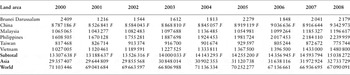
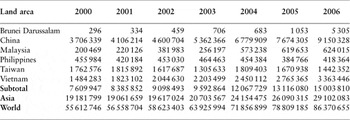
The socioeconomic importance of fisheries to the East Asian countries, particularly the parties to the Spratly Islands dispute,Footnote 20 cannot be overestimated. In fact, fish has been, and continues, providing an important source of protein for countries in the region.Footnote 21 The already high annual per capita fish consumption in China and Southeast Asia is estimated to increase from 33.6 million and 18 million tons in 2005 by 4.5−5.5 million and 3 million tonnes respectively by 2015.Footnote 22 Fisheries have always been of great social importance to the East Asian countries, creating jobs for a large portion of the population living in the coastal subregion. Economically speaking, fishery exports are an important source of foreign currency for coastal states (see Tables 1 and 2).
Marine fish capture production (in tonnes) in marine areas of six parties to the Spratly Islands dispute in comparison with Asia and the world between 2000−2008.Footnote 1

1 Compiled from Global Capture Production 1950–2008, online: http://www.fao.org/fishery/statistics/global-production/query/en, query made on 15 July 2010. nb: “F” means FAO estimate from available source of international or calculation based on specific assumptions.
Export value (in thousand US$) of six parties to the Spratly Islands dispute in comparison with Asia and the world between 2000−2006.Footnote 2

2 Compiled from Commodities 1976–2006, online: http://www.fao.org/fishery/statistics/global-commodities-production/query/en, query made on 15 July 2010.
In 2002, the Association of South-East Asian Nations (ASEAN) and China signed the Declaration on the Conduct of Parties in the SCSFootnote 23 with a view to enhancing peace, stability, economic growth, and prosperity in the region.Footnote 24 China also acceded to the Treaty of Amity and Co-operation one year later.Footnote 25 The overall political atmosphere for co-operation between ASEAN member countries and China now seems more favourable than ever. However, friction may wax and wane but it never ceases.
The waters around the Spratly Islands, given their abundant fishing resources, have long been traditional fishing grounds for fishermen from China, Chinese Taipei (Taiwan), Vietnam, Malaysia, and the Philippines. It is not surprising that skirmishes have occurred between these fishermen. On the other hand, just as in other marine disputed areas, the parties to the Spratly Islands dispute are trying to enforce laws and regulations in the Spratly Islands areas which they consider to be under their jurisdiction. These enforcement activities have sometimes given rise to violent incidents, involving excessive use of force and resulting in casualties.Footnote 26 More frequent is the arrest of fishermen from other states,Footnote 27 not necessarily parties to the Spratly Islands dispute.Footnote 28 Such arrests are themselves a source of diplomatic controversies.Footnote 29 Worse still, they elicit retaliatory measures by other parties, which in turn may cause more controversies and tensions in the SCS as shown by the string of events in early 2010. These events concerned the Chinese decision to regularly dispatch patrol vessels to the SCS in order to protect and assist its fishing vessels against continued arrest and other types of harassment by other countries.Footnote 30 From the very first dispatch by Chinese authorities in April 2010,Footnote 31 Vietnam voiced a strong protest, considering it a violation of Vietnam's sovereignty over the Spratly Islands.Footnote 32 More dramatic is the scenario from the other side of the SCS, where Chinese patrol vessels met with confrontation from the Malaysian navy in the waters claimed by the latter.Footnote 33
It is noted that fisheries incidents are not related only to waters in the Spratly Islands area. In the absence of an agreement on the geographical extent of the Spratly Islands and their maritime zones, the national jurisdiction zones of coastal states abutting the Spratly Islands are not clearly delimited. As a consequence, fishermen of one country sometimes unknowingly operate in areas that unquestionably belong to another state.
The present state of affairs not surprisingly gives rise to unsustainable fishing practices.Footnote 34 Indeed, depletion has been witnessed from the declining yields of some important fish stocks in the region.Footnote 35 Though such depletion occurs as a result of various factors, it is no exaggeration to say that overexploitation is one of the main reasons. Indeed, marine scientific research in part of the SCSFootnote 36 has revealed evidence of such overexploitation.Footnote 37 Philippine and Vietnamese scientists, based on the results of their joint marine scientific research expeditions in the SCS over a decade, note that most of the fish and marine organisms have started to disappear in the Spratly Islands area.Footnote 38
II. The legal framework governing fisheries in the SCS
UNCLOS provides the legal framework for coastal states’ management of fisheries. All but one of the parties to the Spratly Islands dispute are parties to the Convention and hence are bound by its provisions. The exception is Taiwan, which is not recognized as a state and therefore technically cannot participate in the Convention.Footnote 39 Nevertheless, Taiwan is bound by those provisions of UNCLOS which are considered reflective of customary international law.Footnote 40 The fisheries regime of UNCLOS relevant in this context is the coastal state's sovereign rights in the exclusive economic zone (EEZ),Footnote 41 and it is useful to look into UNCLOS provisionsFootnote 42 which are applicable to the management of fisheries in the SCS.
In the EEZ, the coastal state has “sovereign rights for the purpose of exploring and exploiting, conserving and managing”, inter alia, the living resources.Footnote 43 The coastal state, however, does not enjoy unfettered rights in exploring and exploiting the living resources within its EEZ but has to fulfil a number of duties. The overarching core obligations in respect of fisheries management in the EEZ are contained in Articles 61 and 62 of UNCLOS, which are arguably part of customary international law.Footnote 44 The former generally imposes on the coastal state the obligation to establish the allowable catch for each stock within its EEZFootnote 45 as well as to take conservation and management measures so that the living resources are not endangered by overexploitation,Footnote 46 and that the population of harvested species is maintained and restored at levels which can produce the maximum sustainable yield.Footnote 47 The latter requires the coastal state to promote the objective of optimum utilization of the living resources in its EEZ.Footnote 48
In addition to the above “unilateral measures” to be adopted by the coastal state, UNCLOS also envisages separate co-operative regimes for different stocks traversing several maritime zones. The rationale for these regimes is the fact that fish are, by their nature, mobile and do not respect national boundaries. It follows that the conservation and development of fish stocks is only effective through co-operation among the states concerned. Relevant to the discussion here is the obligation in respect of the so-called “transboundary” fish stocks,Footnote 49 stipulated in Article 63(1) of UNCLOS. Article 63(1) reads:
Where the same stock or stocks of associated species occur within the exclusive economic zones of two or more coastal States, these States shall seek, either directly or through appropriate sub-regional or regional organizations, to agree upon the measures necessary to coordinate and ensure the conservation and development of such stocks without prejudice to the other provisions of this Part.
As seen from the biological characters of the SCS, many high-landing stocks, such as tuna, are transboundary. Thus, assuming arguendo that all national jurisdictional zones in the SCS are delimited, the coastal states bordering the SCS are still under an obligation to conserve and develop transboundary stocks as stipulated in Article 63(1) of UNCLOS.
What is the nature of this obligation, then? It is submitted that the wording of Article 63(1) suggests that no “imperative” is intended with regard to the agreement on the measures to conserve and develop the transboundary stocks. Though the word “shall” denotes “imperative duties and obligations, positive or negative”,Footnote 50 the word “seek” very much waters down the “obligatory nature” in that provision. The travaux préparatoires of the Convention supports this interpretation. It is recalled that an informal proposal by Argentina to replace the word “seek” with the phrase “be obliged” in the draft provision corresponding to the present Article 63(1) at the Eighth Session in 1979 of the Third United Nations Conference on the Law of the Sea (UNCLOS III) was rejected.Footnote 51 Thus, the obligation under Article 63(1) of UNCLOS is in fact an obligation to negotiate in good faith, the so-called pactum de negotiando.Footnote 52 The legal implications of this obligation to negotiate will be dealt with later. Suffice it to say that, with regard to transboundary stocks, which are also one type of shared natural resources, the obligation to negotiate is arguably an obligation under customary international law, which stems from a duty to take into account another state's interests in exploiting such resources.Footnote 53
That being said, it should be noted that Article 63(1) is only a brief provision and nothing further is said about what are the possible conservation and development measures with regard to transboundary fish stocks. It is noted that the conservation and development measures applied to transboundary stocks are without prejudice to other provisions of Part V on the EEZ. This provision is interpreted as relating to the conservation duties under Articles 61 and 62 of UNCLOS.Footnote 54 In other words, the conservation and development measures under Articles 61 and 62 are also applicable with regard to transboundary stocks. Furthermore, in combining with the obligation not to endanger a given stock by overexploitation, the word “development” in Article 63(1) suggests a long-term strategy of maintaining the stock as a viable resource.Footnote 55
There is another provision in UNCLOS that is applicable to fisheries management in the SCS, that is Article 74(3). This provision strictly does not address fisheries but the conduct of states in undelimited EEZs in general. Before discussing Article 74(3), it should be noted that Article 74(3) in particular and Article 74 in general share the same drafting history with their counterparts in Part VI on the continental shelf of UNCLOS, i.e. Articles 83(3) and 83 respectively.Footnote 56 As such, it is permissible to cross-reference the obligations under the latter in the discussion of the former.Footnote 57
The crux of the obligations under the common paragraph 3 of Articles 74 and 83 is pronounced in the first sentence,Footnote 58 which reads as follows:
Pending agreement as provided for in paragraph 1, the States concerned, in a spirit of understanding and cooperation, shall make every effort to enter into provisional arrangements of a practical nature and, during this transitional period, not to jeopardize or hamper the reaching of the final agreement.
The word “shall” again indicates the duties of states “pending agreement” on delimitation,Footnote 59 though the phrase “make every effort” may, as rightly pointed out by Nandan, Rosenne, and Grandy, “leave room for interpretation by the States concerned, or by any dispute settlement body”.Footnote 60 It is generally agreed that the quoted sentence contains two separate obligations, namely the duty to “make every effort to enter into provisional arrangements of a practical nature” and the duty to “make every effort … not to jeopardize or hamper the reaching of the final agreement”.Footnote 61 The first obligation is again a pactum de negotiando,Footnote 62 which will be discussed later.Footnote 63
The second obligation, i.e. the duty to “make every effort … not to jeopardize or hamper the reaching of the final agreement”, is also known as the duty of mutual restraint.Footnote 64 This duty of mutual restraint should not be equated with an absolute moratorium on all activities in the disputed area.Footnote 65 The drafting history of the common paragraph 3 of Articles 74 and 83 shows that the proposals for a moratorium on economic activities in overlapping maritime zones never acquired consensus.Footnote 66 In fact, an absolute moratorium is unreasonable given the fact that the very idea of the EEZ and the continental shelf is resource exploitation, and that maritime delimitation is not a matter that can be resolved overnight.Footnote 67 Furthermore, a rule on a moratorium would be dangerous as it could be abused by a state acting in bad faith to make an extravagant claim in defining the overlapping area with a view to getting the other state to make greater concession in the final delimitation solution.Footnote 68 On other hand, under this duty, certain activities are expressly excluded from the disputed areas because these activities “jeopardize or hamper the reaching of the final agreement”.
But common paragraph 3 of Articles 74 and 83 stops short of explaining what kind of activity might fall into the prohibited category. Nor is there any indication about the possible basis for determining whether or not a particular activity may hamper or jeopardize the reaching of the final agreement. The jurisprudence of international courts and tribunals is most instructive in this regard.Footnote 69 The issue was addressed for the first time in the Guyana/Suriname Arbitration.Footnote 70
In the Guyana/Suriname Arbitration, the Arbitral Tribunal was requested by Suriname to determine that Guyana had breached its legal obligations not to jeopardize and hamper the reaching of a maritime boundary agreement under common paragraph 3 of Articles 74 and 83 of UNCLOS by authorizing its concession holder to drill an exploratory well in the disputed area.Footnote 71 In entertaining Suriname's submission, the Tribunal confirmed that the obligation of mutual restraint is not intended to exclude all activities in a disputed area.Footnote 72 In the context of hydrocarbon exploration and exploitation, there is, in the Tribunal's opinion, a substantive legal difference between exploitation activities and exploratory drilling on the one hand, and certain other exploration activities, notably seismic testing, on the other.Footnote 73 The difference hinges on the fact that the former cause permanent physical change to the marine environment while the latter do not.Footnote 74 On the basis of assessing how the activity in question impacts on the marine environment, the Tribunal could determine whether or not a particular activity was consistent with the duty under common paragraph 3 of Articles 74 and 83. In particular, those activities which do not lead to a permanent physical change are not considered as jeopardizing or hampering the reaching of a final agreement and hence it is permissible to conduct them unilaterally.Footnote 75 By contrast, activities which lead to permanent physical change are considered as jeopardizing or hampering the reaching of a final agreement and can only be conducted pursuant to an agreement between the parties.Footnote 76 The rationale for making such a determination on the basis of whether or not permanent change occurs is that a permanent change to the marine environment by the unilateral act of one party may have an impact on “the other party's rights in a permanent manner”.Footnote 77
But the above ruling was rendered in the context of petroleum exploration and exploitation where it is fairly easy to ascertain when the seabed is physically changed. The situation is different with regard to living resources as their renewable character makes it difficult to measure a change. The renewable character of the living resources also appears to tilt the mutual restraint duty toward a non-prohibition of fishing in disputed areas.Footnote 78 On the face of it, the International Court of Justice's (ICJ) dictum in the Icelandic Fisheries Jurisdiction cases appeared to support the proposition that fishing is permissible in disputed waters when the Court indicated as a provisional measure that the UK and Germany could continue to fish in Iceland's claimed exclusive fishing zone to which the UK and Germany objected. But closer reading of the judgment reveals that the Court also imposed a catch limitation upon the UK and GermanyFootnote 79 to take into account the need to conserve the fish stocks in the area under dispute given Iceland's exceptional dependency upon coastal fisheries for its livelihood and economic development.Footnote 80 Thus, a contrario, the Court in the Icelandic Fisheries Jurisdiction cases did imply that fishing activity at a certain level in the disputed area might impair the respective rights of the states concerned.Footnote 81 In a different context, but with similar effect, the International Tribunal for the Law of the Sea in the Southern Bluefin Tuna cases also used the catch limitations as a measure to halt the depletion of the southern bluefin tuna stock,Footnote 82 which was presumably to protect the rights claimed by Australia and New Zealand.Footnote 83 In the light of these dicta, it could be argued that states do not enjoy unfettered rights to exploit living resources in disputed waters. In fact, the renewable and non-renewable distinction between living and non-living resources is a matter of degree if one regards the different levels of fish catch as corresponding to the various phases in a petroleum exploration and exploitation continuum. It is now widely recognized that unsustainable overfishing can cause stock to deplete and consequently to collapse,Footnote 84 which is arguably equal to permanent damage to the seabed. Thus, the standard of the Guyana/Suriname Arbitration can be applied, according to which unsustainable overfishing can be considered as hampering or jeopardizing the reaching of the final agreement. At the end of the day, what amounts to unsustainable overfishing and constitutes a breach of the duty of mutual restraint is a scientific question. In the case of the SCS, if the conclusion by the Vietnamese and Philippine scientists regarding the depletion of fish stocks in the SCS were correct, it could be argued that the parties having their vessels fish in the SCS were in breach of their obligation not to hamper or jeopardize the reaching of final agreement.
It is worth emphasizing another aspect of the duty of mutual restraint. This duty generally operates to circumscribe activities that are conducted in the disputed area. Exploration and exploitation are, by the economic nature of the area involved, the most popular but not the sole activities conducted by the parties to the dispute. The duty of mutual restraint also applies to another type of activity common in disputed maritime zones, that is, enforcement activities. The claimant states, more often than not, try to enforce their laws and regulations in the disputed area in order to bolster their claims. Law enforcement in disputed waters is a neglected issue in the law of the sea scholarshipFootnote 85 and there is no immediate answer to the question of whether or not it is permissible for states to undertake enforcement measures in the disputed areas.Footnote 86 It is true that the ICJ ruled that Iceland should refrain from applying administrative, judicial, or other sanctions, or any other measures against ships registered in the United Kingdom and Germany, their crews, or other related persons, because of their having engaged in fishing activities in the waters around Iceland outside the twelve-mile fishery zone.Footnote 87 But that order of the Court must be read in its historical circumstances. The case was brought to the Court at a critical moment in the development of the law of the sea, when the limit of a coastal state's rights to the marine living resources beyond twelve nautical miles of the territorial sea was still controversial. It is also observed, at least with hindsight, that the Court ordered such a provisional measure on the basis of anticipating its judgment on the meritsFootnote 88 that Icelandic regulations were not adverse to the United Kingdom and Germany.Footnote 89 The fundamental principle governing enforcement jurisdiction is that states cannot enforce law in the territory of another state without the consent of the latter,Footnote 90 and that enforcement activities, given jurisdiction is territorial, are limited to the territory of the state concerned unless an international law rule provides otherwise.Footnote 91 Though the limits of national maritime zones are now clearly determined by UNCLOS, the Convention itself lacks a compulsory mechanism to enforce those limits.Footnote 92 It is unreasonable to expect states to refrain from exercising their jurisdiction in the disputed area in the absence of a conventional rule to the contrary.Footnote 93
On the other hand, enforcement action, regardless of its place, is subject to certain limits. The most important relates to the limit on the use of force in enforcement measures. Use of force is not ruled out in enforcement activities, but it is exceptional. The Guyana/Suriname Arbitral Tribunal, relying on previous cases, opined that “in international law force may be used in law enforcement activities provided that such force is unavoidable, reasonable and necessary”.Footnote 94 And, in using force in law enforcement activities, “[c]onsiderations of humanity must apply in the law of the sea, as they do in other areas of international law”.Footnote 95 These considerations dictate that “all efforts should be made to ensure that life is not endangered”.Footnote 96 Furthermore, force used in law enforcement activities is different from military action, which constitutes a threat of use of force in contravention of the United Nations Charter, UNCLOS, and general international law.Footnote 97 Such a threat of force in disputed areas is also considered as “jeopardizing the reaching of a final delimitation agreement”Footnote 98 and hence violates the duty of “mutual restraint”. In the case of the SCS, it is clear that violent actions resulting in casualties, as in the past, were a breach of the duty of mutual restraint. Confrontation between the navies of the parties to the Spratly Islands dispute may amount to a threat of the use of force, thus also violating the duty of mutual restraint under Articles 74(3) and 83(3) of UNCLOS.
It is now appropriate to return to the common pactum de negotiando of Article 63(1) and Articles 74(3) and 83(3) mentioned earlier. This obligation, according to McNair, is a valid one and a refusal to perform it amounts to a breach of the obligation.Footnote 99 The existence of this obligation in international law was confirmed in the Lake Lanoux Arbitration:
[O]ne speaks, although often inaccurately, of the “obligation of negotiating an agreement”. In reality engagements thus undertaken by States take very diverse forms and have a scope which varies according to the manner in which they are defined and according to the procedures intended for their execution; but the reality of the obligations thus undertaken is incontestable and sanctions can be applied in the event, for example, of an unjustified breaking off of the discussions, abnormal delays, disregard of the agreed procedures, systematic refusal to take into consideration adverse proposals or interests, and, more generally, in cases of the violation of the rules of good faith.Footnote 100
The main tenet of this obligation is that it entails an obligation to negotiate “in good faith”. The obligation to negotiate in “good faith” does not require the conclusion of a treaty.Footnote 101 As the Permanent Court of International Justice opined in Railway Traffic between Lithuania and Poland, “[t]he obligation to seek agreement in good faith does not entail a duty to agree at all costs”.Footnote 102 On the other hand, as good faithFootnote 103 “consists in a sincere and honest desire, as evidenced by genuine efforts, to fulfil the substance of the mutual agreement”,Footnote 104 the obligation is not without legal substance. At first, it presupposes that states concerned must make genuine attempts to negotiate.Footnote 105 A refusal by one party to enter into negotiation at the invitation of the other party can be considered a breach of this obligation.Footnote 106 As stated by the Arbitral Tribunal in the Lake Lanoux Arbitration:
International practice reflects the conviction that States ought to strive to conclude agreements: there would thus appear to be an obligation to accept in good faith all communications and contacts which could, by broad comparison of interests and by reciprocal good will, provide States with the best conditions for concluding agreements.Footnote 107
Moreover, the obligation to negotiate in good faith requires the parties to make concessions from their original negotiating positions. The ICJ in the North Sea Continental Shelf cases made this point clearly:
[T]he parties are under an obligation to enter into negotiations with a view to arriving at an agreement and not merely to go through a formal process of negotiation as a sort of prior condition for the automatic application of a certain method of delimitation in the absence of agreement; they are under an obligation so to conduct themselves that the negotiations are meaningful, which will not be the case when one of them insisted upon its own position without contemplating any modification of it. Footnote 108
This obligation is particularly important and clearly enhances the chance of a successful conclusion of negotiations. In the context of the negotiation for a provisional arrangement in a disputed maritime area, the principle of “good faith” and consequently the obligation of making concessions imply that parties to the disputes moderate their claims. In other words, the parties are required to take “a conciliatory approach to negotiations, pursuant to which they would be prepared to make concessions in the pursuit of a provisional arrangement”.Footnote 109
Though the duty to negotiate is a true legal obligation, it is submitted that both paragraph 1 of Article 63 and common paragraph 3 of Articles 74 and 84 are very brief and provide little guidance as to the required contents of agreements concluded thereunder. It is suggested that we look into state practice to ascertain how states discharge the duty to negotiate, especially in the context of disputed areas. Indeed, subsequent state practice is considered as providing “the best and most reliable evidence … as to what [the] correct interpretation is”.Footnote 110
III. State practice in managing fisheries in disputed areas: some salient features of the existing agreements
This section examines agreements relating to fisheries in disputed areas since they are directly relevant to our discussion here.Footnote 111 But it is not intended to present here a full account of the existing agreements.Footnote 112 Such an exercise is neither possible, given the limited space of this article, nor desirable for the present purposes. A more useful exercise is to highlight some salient features of the existing agreements from which lessons may be drawn for the SCS.
Existing arrangements on fisheries in disputed areas, diverse as they are, can broadly be grouped into four categories, namely “provisional fisheries boundary”,Footnote 113 “grey zone”, “light grey zone”, and “white zone”.Footnote 114 All these categories share one common denominator, which is the hallmark of a provisional arrangement of a practical nature, that is, the “without prejudice clause”.Footnote 115 The effect of the without prejudice clause is to prevent the creation of “acquired rights” after the termination of the arrangement.Footnote 116 This is in line with the second sentence in the common paragraph 3 of Articles 74 and 83 which states the provisional arrangement “shall be without prejudice to the final delimitation”. The “without prejudice clause” is the cornerstone of each and every provisional arrangement for, without it, parties will lack confidence in embarking on any co-operative scheme pending the settlement of their dispute.Footnote 117
A related question is the relationship between fishing activities carried out under a fishery agreement and the sovereignty of an island lying within the application area of that agreement. The dictum of the ICJ in the Minquiers and Ecrehos caseFootnote 118 is instructive in this regard. In that case, the ICJ, given the absence of any specific reference in the treaty relied on by France, declined to uphold the French argument that the common fishery regime established between France and the United Kingdom involved the common use of the islands and rocks in dispute.Footnote 119 The Court further opined that the common fishery zone did not have the effect of precluding the parties from relying on subsequent acts to exercise sovereignty over the islets.Footnote 120 Thus, no presumption of a condominium or joint ownership as a solution to the territorial sovereignty over disputed islands should be made from a functional fisheries co-operation arrangement, much less with the “without prejudice clause”.Footnote 121
The first type of provisional arrangement is that establishing provisional boundaries for fisheries in undelimited areas. The most notable example of this type is the agreement between Australia and Indonesia in 1981,Footnote 122 under which each country would refrain from surveillance and enforcement action with regard to swimming fishFootnote 123 beyond a Provisional Fisheries Surveillance and Enforcement Line defined by specific co-ordinates.Footnote 124 The provisional surveillance and enforcement line arguably functions as a de facto EEZ boundary and fisheries management in the disputed area is as straightforward as in the delimited area. That the surveillance and enforcement line is a de facto but not a de jure boundary is because of the “without prejudice clause”.Footnote 125 However, given the impossibility of drawing a provisional line in the SCS, as explained in Part IV, this type of agreement should not detain us any further.
More complicated are the other three categories of fisheries arrangements, namely the “grey zone”, “white zone”, and “light grey zone” agreements. Grey zone agreementsFootnote 126 hold where there is some agreement on management and enforcement co-ordination with regard to fisheries in the disputed areas.Footnote 127 By contrast, under the white zone agreements,Footnote 128 parties refrain from extending their jurisdiction into the disputed areas and enforcing fishing laws and regulations therein.Footnote 129 The term “light grey zone” was coined by Churchill to refer to a class of agreements with two characteristics: first, the agreements apply either to an area larger than the disputed area or to no very precisely defined area; second, the regulation of fisheries in the disputed area is not the primary reason for their conclusion.Footnote 130
It is convenient to start the discussion with the grey zone and white zone agreements – the two concepts that sprang to the mind of the delegations to UNCLOS III in their discussion of provisional arrangements.Footnote 131 A common character of the grey zone and white zone agreements is that these agreements have a defined area of application. The area of application often covers, but is not necessarily limited to, the disputed area. The enforcement activities against fisheries within the application area will be governed by the terms of the agreement in question. That is to say, the area of application has a special status and is not considered as the national maritime zone of either party in relation to each other.Footnote 132 Outside this application area, fishing activities will typically be regulated in accordance with the law of the coastal state on whose side of the application area the activities occur, provided that the coastal state is entitled to exercise its jurisdiction under international law. In other words, the parties to the arrangement will provisionally treat the water on their respective sides of the boundaries as their de facto national maritime zones as long as the arrangement is in force. This can be either stated expressly in the agreementFootnote 133 or presumed between the parties.Footnote 134 Thus, the boundaries of the application area virtually become the boundaries that delineate the non-disputed EEZs of the parties. Bouvet considers the boundaries of the application area as “la frontière maritime plurilinéaire”, which consists of at least two lines to delimit maritime or jurisdictional zones or to deal with a particular type of resource.Footnote 135 But Bouvet does not clarify the “juridical nature” of that frontière plurilinéaire: is that “de facto” or “de jure”, “provisional” or “definitive”? Nor is it clear about the status of the zone within lines defining that frontière plurilinéaire and its relation with other maritime zones of the parties. It is perhaps better to conceptualize the application area as a frontier—a term of art used by boundary scholars to indicate a zone separating territories of two states as opposed to boundary, which is a line.Footnote 136 That frontier provisionally and functionally separates the application area, which more often than not contains the disputed area, from the non-disputed area, as long as the agreement lasts. It should be noted that this provisional frontier is not a common zone having the character of a frontier condominium. In the latter case, the sovereignty is shared between the two states, which is in turn the basis for the conjoint exercise of sovereign authority in the area.Footnote 137 By contrast, in the case of grey and white zones, the question of title is not settled given the existence of the without prejudice clause which operates to preserve the positions of the parties to the disputes. The enjoyment of rights by the parties in the grey/white zone is directly based on the fisheries co-operation agreement rather than any mutual recognition of their respective rights. It is also this sovereignty-neutral clause that makes the frontier provisional. Finally, the frontier is functional in nature because its effect is limited to the purpose of the arrangement in question, which is, in the present study, fisheries.Footnote 138
The existence of a well-defined area of application in the grey zone and white zone agreements makes these two types of agreements distinct from the light grey zone agreements, which do not have a clearly defined area of application. Despite its de facto and temporary nature, the frontier in the grey zone and white zone agreements is of practical significance. Given that the raison d’être of provisional arrangements is the existence of disputed maritime areas, the frontier arguably functions to ensure orderly and effective law enforcement, thus preventing disputes and friction which might otherwise arise. The light grey zone agreements, given the lack of a well-defined area of application, cannot serve this purpose.Footnote 139 To a certain extent, the absence of an application area is a weakness of the light grey zone agreements, whose provisions apply to the maritime area of the party. This, as Churchill rightly notes, “of course begs the issue in the disputed area”.Footnote 140
Though both the grey zone and white zone agreements share one common character, that is, the definition of a clear application area, they are conceptually distinct given the fundamental difference regarding enforcement scheme in the area of application.
Under the grey zone agreements, there will be an agreement on how enforcement activities in the area of application can be conducted and co-ordinated. The typical arrangement for enforcement activities in the application area under the grey zone agreements is on a flag state basis (the so-called “flag state enforcement”). Under this scheme, each party will refrain from enforcing its fisheries law and regulations against fishing vessels flying the flag of, or licensed by, the other party.Footnote 141 On the other hand, a third-party vessel fishing in the application area without a proper licence from either of the parties will be subject to the jurisdiction of both parties.Footnote 142 The evident advantage of such a flag state enforcement scheme is that it does not require either contracting state to cede sovereignty or sovereign rights in the disputed area.Footnote 143 With this flag state enforcement scheme, it is arguable that the grey zone functions as a quasi-exclusive national maritime zone for either of the parties. It is quasi-exclusive as the zone is exclusively a national maritime zone of one party in its relation with a third party but not with the other party.Footnote 144 In this connection, it is noteworthy that some light grey zone agreements also contain similar flag state enforcement schemes whereby either party will refrain from enforcement action against vessels flying the flag of the other partyFootnote 145 but may enforce against third-party vessels.Footnote 146
The white zone agreements, by contrast, contain an agreement not to exercise jurisdiction in the area of application. The application area, the white zone, virtually becomes the high seas, open to fishing vessels of not only the parties to the agreement but also to vessels of third countries. The disadvantage is evident from the perspective of fisheries management and conservation. As Churchill correctly points out, without regulation, overfishing is likely in the white zone.Footnote 147 This is empirically proven by the different attitudes of Russia in its negotiations with Norway and Sweden to delimit the grey zone and white zone, respectively. Overfishing was among the reasons that stimulated Russia (then the Soviet Union) to swiftly come to terms with Sweden on maritime delimitation.Footnote 148 By contrast, given the orderly management of fisheries in the grey zone, Russia has been in no hurry to reach agreement with Norway on maritime negotiations.Footnote 149 Thus, the white zone approach is arguably less satisfactory a solution to the conservation of fisheries in the disputed areas than is the light grey zone approach,Footnote 150 let alone the grey zone approach.Footnote 151
It is not difficult to understand the success of the light grey zone and grey zone in terms of fisheries conservation and management. In fact, the very reason for the conclusion of many light grey zone and grey zone agreements is to conserve the stocks or a particular species in the disputed area. For example, Canada and the United States have long pursued conservation efforts with regard to halibut in the Northern Pacific Ocean and Bering Sea.Footnote 152 The 1979 Canada-US Protocol was concluded to adjust these efforts, taking into account the extension of the two countries’ exclusive fishery jurisdiction zones.Footnote 153 Likewise, the Norway-Russia grey zone was concluded, inter alia, precisely to prevent overfishing and a resultant threat to the wellbeing of fish stocks.Footnote 154 Furthermore, the application area of the latter agreement was delineated to take into account important fishing banks in the boundary areas.Footnote 155 It is particularly noteworthy that the setting of the total allowable catch (TAC) in the Grey Zone is executed by the Mixed Commission established under the 1975 Fishing Industry Agreement,Footnote 156 which was in turn concluded to enhance co-operation between Norway and the Soviet Union in managing and conserving transboundary stocks in the Barents Sea.Footnote 157 With hindsight, these light grey zone and grey zone agreements in effect help states fulfil their obligations to co-operate in the conservation and development of the transboundary fish stocks as provided for under Article 63(1) of UNCLOS.Footnote 158
IV. A fishery arrangement in the SCS and an assessment of its merits
The foregoing demonstrates that parties to the Spratly Islands dispute are under an obligation to co-operate. This obligation arises on the one hand from Article 63(1) relating to the transboundary fish stocks and on the other hand from Article 74(3) on provisional arrangements in undelimited areas. This obligation is a weak procedural one, however.Footnote 159 Here, it is submitted that the factual elements mentioned above come to the fore. The present state of fisheries in the SCS gives every reason for an early initiation and conclusion of an appropriate provisional fisheries arrangement in the disputed area. These factual elements also set out the objectives that should be pursued by the particular fisheries arrangement.Footnote 160 In the case of the SCS, two objectives of such an arrangement are evident, one being sustainable fisheries and the other the prevention of tension and friction. In this light, the most appropriate arrangement will be the one that meets both objectives in the context of the SCS. Given the advantages and disadvantages of the various arrangements discussed in Part III, the provisional boundary and “grey zone” agreements are arguably the most effective to achieve these two objectives.Footnote 161 However, the existence of the Spratly Islands dispute at the centre of the SCS means that a line dividing the jurisdictional zones, however provisionally, is impossible. Thus, a grey zone is most apt for the SCS setting. The white zone and light grey zone agreements each can meet only one of the two stated objectives. In particular, the white zone arrangement, by delimiting the limit of national jurisdiction, is arguably more effective than the light grey zone in mitigating friction involving fishing incidents. The latter, on the other hand, is arguably more effective than the former in promoting sustainable fisheries.Footnote 162
In any event, which arrangement to adopt is ultimately a political compromise. Furthermore, many technical matters need further discussion for an arrangement to work.Footnote 163 But whatever type of fisheries arrangement is adopted in the SCS, it would be a success and would serve as an important confidence-building measure among the parties to the Spratly Islands dispute. It would also be in line with the agreement reached between China and ASEAN on taking a step-by-step approach in promoting co-operation in the SCS by focusing first on non-sensitive issues during the implementation of the Declaration on the Conduct of Parties in the South China Sea.Footnote 164
Fisheries co-operation is arguably less sensitive than joint petroleum development in the SCS for several reasons. First, fishing activities are ongoing in the SCS while oil and gas exploitation in the Spratly Islands areas, once conducted, will be new.Footnote 165 A fisheries arrangement is only to better regulate existing activities, rather than introducing new activities to an already complicated region.
More importantly, the exploitation of fish is less costly than any joint undertaking in oil and gas exploitation. Consequently, making a decision to engage in a capital-intensive project such as petroleum exploration and exploitation is clearly a time-consuming process and requires a measure of confidence among the parties. As Lagoni correctly points out:
Provisional arrangements on the exploration and/or exploitation of the natural resources of the continental shelf face much greater problems than those on fishing … Making use of these resources presupposes large financial investments, usually takes considerable time and requires clear legal circumstances as well as a stable political climate.Footnote 166
This observation holds especially true in the case of the SCS. A fisheries arrangement therefore may turn out to be a more feasible co-operation in the SCS. Furthermore, such co-operation might pave the way for the more high-profile undertaking of joint petroleum development in the future.
As a matter of experience, a provisional arrangement for fisheries can be more easily achieved in some areas where no agreement on joint development is possible.Footnote 167 Norway-Russia co-operation in the Barents Sea provides a graphic example. Norway, though agreeing to a fisheries arrangement with Russia, has been staunchly opposed to the idea of the joint development of oil and gas.Footnote 168 In other cases, fisheries co-operation has well preceded oil and gas joint development, especially when the overlapping area involves the question of a sovereignty claim over land territory. The case in point is the East Asian region, where China and Japan had concluded a fisheries arrangement more than a decade before they reached a principled consensus on oil and gas joint development in 2008.Footnote 169
Two other merits of a fisheries arrangement are worth highlighting in the context of the unique Spratly Islands dispute; these being the different extents of claims by the parties to, and the involvement of Chinese Taipei (Taiwan) in, the Spratly Islands dispute. Among the six parties, only China, Chinese Taipei (Taiwan), and Vietnam claim the whole group of the islands,Footnote 170 while the Philippines claims a large part of the group and Malaysia and Brunei some features. This asymmetry in the extent of claims might make difficult the allocation of shares in a joint petroleum development arrangement if it was concluded between all the parties.Footnote 171 This is especially so when oil and gas are non-renewable resources and provide an important source of revenue.Footnote 172 Though the same allocation issue might come up in a negotiation on fisheries co-operation among the parties to the SCS,Footnote 173 it could be argued that the renewable nature of the fishing resource made it easier for the parties to give concessions to one another.
The status of Chinese Taipei (Taiwan) in any co-operative undertaking in the SCS is a conundrum that makes the Spratly Islands dispute both attractive to scholars and intractable. Taiwan is not recognized as a state by the other five claimant states.Footnote 174 But Chinese Taipei (Taiwan), which is occupying the largest feature in the centre of the Spratly Islands, is arguably an indispensable partner in any co-operative arrangement relating to this group of islands. In fact, its participation will have an impact on the geographical area as well as the viability of any co-operative arrangement relating to the Spratly Islands. One solution to the question of Chinese Taipei (Taiwan) in a co-operative arrangement in the SCS is for Chinese Taipei (Taiwan) to be represented by China.Footnote 175 Though this idea may be amenable to all ASEAN claimant states who follow the “One China” policy, whether or not Chinese Taipei (Taiwan) accepts such a solution is open to doubt.
The advantage of embarking on fisheries co-operation in the SCS is that it can emulate the way Chinese Taipei (Taiwan) is embraced in some functional international organizations in which China is also a member state.Footnote 176 With respect to fisheries co-operation, since the adoption of the United Nations Fish Stocks Agreement,Footnote 177 Chinese Taipei (Taiwan) has been increasing its participation in some fisheries management regimesFootnote 178 as a fishing entity with rights and duties analogous to a state.Footnote 179 In any case, Taiwan's participation in any maritime management regime in the SCS will be subject to the acceptance of China as well as very much dependent on the political atmosphere in the region. Politically, China ought to be less hostile to the idea of fisheries co-operation with Chinese Taipei (Taiwan) since “Taiwanese” fishermen are considered Chinese.Footnote 180 Furthermore, there are reports that Chinese and Taiwanese fisheries authorities have discussed co-operation in the waters around Kinmun to curb illegal fishing methods, such as electrofishing and dynamite fishing.Footnote 181
V. Conclusion
In Asia, where nationalism underlines territorial disputes and their solution, it would be naive to argue that territorial sovereignty should be surrendered in favour of a co-operative resource exploitation regime, such as a fisheries arrangement, in the SCS. What is argued here is that the parties to the Spratly Islands dispute should bear in mind their obligation under Article 63(1) of UNCLOS to negotiate the necessary measures to preserve and develop their transboundary stocks in the SCS. In this sense, the sovereignty dispute is somewhat irrelevant. On the other hand, the states bordering the SCS, like every region in the world, are obsessive about territory and sovereignty questions. This mindset cautions against any implication of a surrender of sovereignty over the Spratly Islands dispute in any co-operative arrangement. Fisheries co-operation with a sovereignty neutral clause is clearly more acceptable to the parties than is the concept of condominium. In that sense, the sovereignty question still pervades fisheries co-operation in the SCS. The sovereignty question is also relevant in a different way. Because the Spratly Islands dispute entails the issue of maritime boundary delimitation in the SCS, there arise the duties to negotiate and to exercise mutual restraint among the parties under the common paragraph 3 of Articles 74 and 83 of UNCLOS. Fisheries co-operation in the SCS is thus an arrangement of a practical nature to be concluded according to this provision.
The obligations under Article 63(1) and Articles 74(3) and 83(3) are not mutually exclusive. State practice has clearly demonstrated that a provisional fisheries arrangement can meet the objectives of conserving and developing fish stocks. The benefit of a fisheries arrangement in the SCS is evident. When the prospect for the joint development of oil and gas in the SCS remains elusive, a fisheries arrangement is a suitable provisional arrangement, given the low-profile character of fisheries co-operation. Indeed, it is this low-profile character that also makes it easier to address the question of Chinese Taipei (Taiwan) in a possible arrangement in the SCS.
The factual context of the SCS both stimulates the establishment and informs the content of a fisheries arrangement in the SCS. There is serious reason to believe that in the absence of such an arrangement the present state of affairs is dangerous, such that the parties to the Spratly Islands dispute may sooner or later be in breach of their obligations under UNCLOS. A fisheries arrangement in the SCS is legally sound, economically efficient, and politically commendable as a measure to help defuse tension and promote sustainable fisheries in the SCS. Finally, for evidence of the feasibility of such co-operation in the SCS, one needs to look no farther than the East Asian region where the major party to the Spratly Islands dispute has engaged itself in two well-functioning fisheries arrangements in undelimited areas.
 dân Vi
 t Nam
b
 Malaysia b
 t gi
 ngày càng
nhi
 u” [in Vietnamese: More and more Vietnamese fishermen have been arrested
by Malaysian authorities], online: 〈
 [in
Chinese: Rushi FAN, Miao XING, and Donghua ZHOU, “Malaysian Military Ship
Harassed Chinese Fishery's Guards”, Jinyang Web – Xinkua
Newspaper, 1 May 2010], online: 〈