




No CrossRef data available.
Article contents
- Abstract
- INTRODUCTION
- GENOMES AND CHROMOSOMES OF EIMERIA SPP.
- A GENOME SEQUENCE FOR E. TENELLA
- WHAT CONSTITUTES A CLONAL POPULATION OF EIMERIA?
- MEIOSIS IN EIMERIA SPP.
- NEW APPROACHES TO GENETIC MAPPING IN EIMERIA SPP.
- GENETIC RECOMBINATION AND LINKAGE STUDIES WITH EIMERIA SPP.
- MAPPING TRAITS IN E. TENELLA
- A GENETICS-LED APPROACH TO THE IDENTIFICATION OF PROTECTIVE ANTIGENS IN EIMERIA MAXIMA
- CONCLUSIONS
- References
Integrating genetics and genomics to identify new leads for the control of Eimeria spp.
Published online by Cambridge University Press: 12 May 2005
Article contents
- Abstract
- INTRODUCTION
- GENOMES AND CHROMOSOMES OF EIMERIA SPP.
- A GENOME SEQUENCE FOR E. TENELLA
- WHAT CONSTITUTES A CLONAL POPULATION OF EIMERIA?
- MEIOSIS IN EIMERIA SPP.
- NEW APPROACHES TO GENETIC MAPPING IN EIMERIA SPP.
- GENETIC RECOMBINATION AND LINKAGE STUDIES WITH EIMERIA SPP.
- MAPPING TRAITS IN E. TENELLA
- A GENETICS-LED APPROACH TO THE IDENTIFICATION OF PROTECTIVE ANTIGENS IN EIMERIA MAXIMA
- CONCLUSIONS
- References
Abstract
Eimerian parasites display a biologically interesting range of phenotypic variation. In addition to a wide spectrum of drug-resistance phenotypes that are expressed similarly by many other parasites, the Eimeria spp. present some unique phenotypes. For example, unique lines of Eimeria spp. include those selected for growth in the chorioallantoic membrane of the embryonating hens egg or for faster growth (precocious development) in the mature host. The many laboratory-derived egg-adapted or precocious lines also share a phenotype of a marked attenuation of virulence, the basis of which is different as a consequence of the in ovo or in vivo selection procedures used. Of current interest is the fact that some wild-type populations of Eimeria maxima are characterized by an ability to induce protective immunity that is strain-specific. The molecular basis of phenotypes that define Eimeria spp. is now increasingly amenable to investigation, both through technical improvements in genetic linkage studies and the availability of a comprehensive genome sequence for the caecal parasite E. tenella. The most exciting phenotype in the context of vaccination and the development of new vaccines is the trait of strain-specific immunity associated with E. maxima. Recent work in this laboratory has shown that infection of two inbred lines of White Leghorn chickens with the W strain of E. maxima leads to complete protection to challenge with the homologous parasite, but to complete escape of the heterologous H strain, i.e. the W strain induces an exquisitely strain-specific protective immune response with respect to the H strain. This dichotomy of survival in the face of immune-mediated killing has been examined further and, notably, mating between a drug-resistant W strain and a drug-sensitive H strain leads to recombination between the genetic loci responsible for the specificity of protective immunity and resistance to the anticoccidial drug robenidine. Such a finding opens the way forward for genetic mapping of the loci responsible for the induction of protective immunity and integration with the genome sequencing efforts.
Information
- Type
- Research Article
- Information
- Copyright
- © 2004 Cambridge University Press
INTRODUCTION
Coccidiosis continues to be a major parasitic disease of intensively reared livestock (Allen & Fetterer, 2002). Chickens, cattle and sheep, for example, are host to several species of Eimeria which replicate within enterocytes during the endogenous phase of a self limiting life cycle. Poultry are the most significant hosts to infections with Eimeria spp. because huge numbers are reared world-wide (circa 39 billions each year) and all flocks are exposed to infection with a range of Eimeria spp.
In terms of numbers of animals protected, the use of prophylactic anticoccidial drugs given in the feed is the most important strategy in the control of eimerian parasites. Drug usage remains high (in the year 2000, around 235 tonnes of anticoccidial drugs were used in the UK in birds kept for their meat) as individual products are given to birds from the day they hatch until a few days before slaughter at around 42 days of age.
The numerical importance of anticoccidial drugs is not the complete story. The preferred option for the control of coccidiosis in birds kept for breeding or egg-laying is vaccination with live attenuated vaccines (Shirley et al. 1995; Williams, 1998, 2002a,b; Jorgensen & Anderson, 2001; Chapman et al. 2002). Furthermore, the attitudes of consumers and retailers are changing towards the use of in-feed medication more generally and, as part of the political process, a number of drugs has recently been withdrawn in the European Union and no new anticoccidial drugs have been introduced in the market-place during the past ~15 years. In contrast, several live vaccines have been developed during this time and a killed parasite vaccine based on the administration of gametocyte antigens of Eimeria maxima to the breeding hen (Wallach, 2001) has recently been introduced as a further option for the control of coccidiosis in birds reared for their meat (broilers). However, vaccines are used currently in less than 1% of the national flock and new, improved (principally cheaper), vaccines are required. Thus further vaccine or drug targets within the parasite need to be identified to ensure the sustainable control of eimerian parasites and the availability of a comprehensive genome sequence for Eimeria tenella (http://www.sanger.ac.uk/Projects/E_tenella/) has transformed the prospects for their discovery.
In the context of vaccine development, several experimental approaches may be considered in order to identify candidate antigens (e.g. Jenkins, 1998; Vermeulen, 1998; Breed et al. 1999; Lillehoj et al. 2000; Song et al. 2000; Pogonka et al. 2003), but a common experimental drawback is the absence of a definitive correlation between activity in vitro and protection of the host in subsequent studies. From the results of recent work on E. maxima (Smith et al. 2002; Blake et al. 2004) we have developed a genetics-based strategy that directly targets antigen-encoding loci as vaccine targets. Specifically, the approach incorporates immune-mediated and drug-mediated killing as selective barriers to derive informative recombinant parasites from the progeny of a mating between two parent strains.
In this broad-ranging paper we review the general utility of genetics-led approaches for studies on the biology of Eimeria spp., including an outline of some of the newer methodologies, and provide a description of a new concept for the identification of loci that encode protective antigens.
GENOMES AND CHROMOSOMES OF EIMERIA SPP.
The nuclear genomes of Eimeria spp. are haploid during the majority of the life cycle (Cornelissen et al. 1984). The genome of Eimeria tenella has been subjected to the most comprehensive analyses and comprises between ~50 and ~60 Mbp DNA as revealed by the sequencing project (Shirley et al. 2004) and Pulsed Field Gel Electrophoresis (Shirley, 1994), respectively contained within circa 14 chromosomes that range in size between 1 and greater than 7 Mbp (Shirley, 1994). Most of the 14 chromosomes can be resolved individually and several, including the smaller chromosomes that can be most readily separated by pulsed field gel electrophoresis (e.g. Sheriff, Carroll & Shirley, 2003) show polymorphisms in size (Shirley, 2000 and unpublished). The size polymorphisms appear to be highly stable as different populations of reference strains, passaged at regular intervals over many years, remain defined by chromosomes with the same characteristic sizes. For E. tenella, some small differences have also been observed between the molecular karyotypes of reference strains and lines characterised by phenotypic differences (Shirley, 1994), but the differences are small and have not been investigated further. To date, no comparatively large changes in the sizes of chromosomes have been identified akin to those found in Plasmodium spp. that correlate with loss of cytoahderence in cultured isolates (Biggs, Kemp & Brown, 1989) or to the appearance of a novel chromosome reported in Plasmodium chabaudi as a consequence of selection for resistance to the drug pyrimethamine (Cowman & Lew, 1989), see also below. The molecular karyotypes of other avian species of Eimeria appear similar to that of E. tenella (Fernando & Pasternak, 1991; Shirley, 1997) with respect both to the numbers of chromosomes and their sizes.
A GENOME SEQUENCE FOR E. TENELLA
The H strain of E. tenella (Chapman & Shirley, 2003) has recently been used to derive an ~8x shotgun genome sequence (http://www.sanger.ac.uk/Projects/E_tenella/); Shirley et al. submitted). The data are currently assigned to ~9,800 contigs – a large number that is attributable to the abundance of repetitive DNA which presents a considerable handicap in the assembly of the sequence data.
The genome sequence now provides a major resource for genetics-led studies and, through the application of techniques that identify polymorphic DNA fragments, it will become increasingly possible to identify genes rapidly within regions of the genome that link to the traits being mapped. At present, annotation of the E. tenella genome is rudimentary and preliminary analyses show that codon usage and other simple methods have only limited utility for gene identification in this parasite. Only few genes have been identified definitively, but this situation will change as greater attention is given towards this aspect of the work during the next few years and the data will be made available to the research community via Gene DB (http://www.genedb.org).
WHAT CONSTITUTES A CLONAL POPULATION OF EIMERIA?
Populations of oocysts are considered clonal if they are derived either from infection with a single merozoite (Haberkorn, 1970), a single sporozoite (Joyner & Norton, 1975; Lee, Remmler & Fernando, 1977; Chapman & Rose, 1986; Shirley & Millard, 1989) or from a single sporocyst, as Shirley & Harvey (1996) provided compelling evidence that the two sporozoites within each sporocyst are genetically identical. Populations derived from infections with a single oocyst containing four sporocysts each with two sporozoites, have also been wrongly ascribed as clonal on several occasions in the past.
Cloning of Eimeria spp. is generally practicable only through establishing infections in the mature host (although infections with so-called egg-adapted lines are possible in ovo) and is therefore not a trivial undertaking. The most robust process for cloning on a larger scale involves selection of a single sporocyst by micromanipulation and the introduction of that cyst into the mouth. The practical success is around 1–2 infections for every 10 chickens given a single sporocyst, and the recovered yields of oocysts are generally small, ranging between tens and thousands of oocysts e.g. Shirley (1980). Thus several further passages in chickens, well protected against adventitious infection, have been required to accumulate sufficient parasites for molecular analyses as part of genetic linkage studies (see below). The modest rates of success for the cloning steps, together with the numbers of passages required to amplify and then maintain the clonal populations thereafter, have constrained progress to map traits by a clone-based mapping strategy (see below).
MEIOSIS IN EIMERIA SPP.
An early viewpoint, from the results of microscope observations, was an absence of crossing-over (Canning & Anwar, 1968) such that completion of meiosis in Eimeria resulted from pairing of homologous chromosomes without centromere or chromosome duplication and that individual variation was achieved solely by randomisation of chromosomes. This earlier, unlikely, scenario was proven incorrect when crossing-over during meiosis was shown definitively (Shirley & Harvey, 2000) in the first comprehensive genetic linkage mapping study of E. tenella. These data have now been reinforced by the outcome of PFGE studies which revealed that several of the 22 clones derived from the cross established between the wild-type Weybridge (W) strain and the Wis F125 attenuated line (Jeffers, 1975) were clearly defined by new sized (larger or smaller) forms of chromosome 4 (Fig. 1). For example, the largest forms of chromosome 4 found in some of the clones were ~100 Kbp (4·7%) and ~40 Kbp (1·8%) bigger than those in the parent W strain and WisF125 line, respectively. These findings provide further confirmation of the evident plasticity of the Eimeria genome and are consistent with changes observed in P. falciparum (Corcoran et al. 1986, 1988; Sinnis & Wellems, 1988).

Fig. 1. Novel sizes of chromosomes appear during recombination between the Weybridge and WisF125 strains of E. tenella. Hw=Hansenula wingei, the sizes of the chromosomes are given in megabase pairs on the left against the Weybridge strain; A=arprinocid-resistant line derived from Weybridge strain of E. tenella; P=WisF125 precocious line derived from Wisconsin strain (A and P were parents for the mating.) Clones=22 clones characterized by recombinant phenotypes of A and P parents and each derived from infection with a single sporocyst. Chromosomes separated by pulsed field gel electrophoresis.
The basis of the new size polymorphisms in E. tenella that occur during meiosis is not known, but in Plasmodium spp. they can arise by recombination within blocks of a repetitive element laying within the subtelomeric zones. Meiosis in E. tenella is therefore similar to that in other apicomplexan parasites where individual variation is achieved both by crossing over and by randomising of the parental contributions to the diploid nucleus so that daughter nuclei receive a mixture of maternal and paternal chromosomes.
NEW APPROACHES TO GENETIC MAPPING IN EIMERIA SPP.
The Amplified Fragment Length Polymorphism (AFLP) technique for the identification of polymorphic DNA fragments is a powerful tool for use in DNA fingerprinting and genetic mapping studies (e.g. Meksem et al. 1995; Vos et al. 1995; Ajmone-Marsan et al. 1997; Aarts, Van Lith & Keijer, 1998) and it provided most of the polymorphic DNA markers used to derive the genetic linkage map of Eimeria tenella (Shirley & Harvey, 2000).
Oocysts of eimerian parasites recovered from the faeces provide an excellent source of DNA for AFLP analyses as, prior to processing, they may be immersed in domestic bleach and freed from all contaminating host cells and any microbial contaminants. Shirley & Harvey (2000) used high quality chromosomal DNA obtained from purified sporozoites of E. tenella that had been both liberated from surface-sterilised oocysts and lysed in situ in agarose blocks. DNA of this quality provides an excellent template for AFLP analyses, but the relative difficulty of producing large numbers of clones of recombinant parasites has contributed to a limitation on the progress of genetic linkage analyses. Recently, however, we showed that AFLP fingerprints generated from genomic DNA recovered from as few as 0·5 million oocysts were identical to those produced from chromosomal DNA (Blake, Smith & Shirley, 2003). This technical improvement significantly enhances the efficiency of preparing DNA for AFLP analyses because the numbers of oocysts required for each batch of DNA may be reduced from ~100 million to [les ]1 million. The new strategy therefore reduces significantly the numbers of passages in chickens that are required to amplify and maintain individual populations and, moreover, introduces a further potential benefit to genetic mapping studies. Conventionally, analyses of phenotypes have depended upon the construction of classical genetic linkage maps based on data obtained from DNA polymorphisms in clonal populations. However, since each cross within a single experiment can generate around 1 million recombinant parasites, the use of genomic DNA from oocysts now makes possible the alternative analysis of populations of Eimeria before and after the imposition of selection pressures (Blake et al. 2003) as is being applied to analyses of Plasmodium (Richard Carter, personal communication). In practice, the read-out of population analyses is the loss of specific AFLP fragments that coincides with killing or the specific exclusion of parasites by the selection pressure used (e.g. anticoccidial drugs, early completion of the life cycle, immunity, see below) within the progeny deriving from a number of independent crosses. Thus the consistent loss of polymorphic DNA markers may provide a much faster entrée to the identification of the genes that determine phenotype and overcome the absolute need to isolate and propagate a large number of clones.
GENETIC RECOMBINATION AND LINKAGE STUDIES WITH EIMERIA SPP.
Several studies on Eimeria spp. have described cross-fertilisation between different parent strains (in several species) as judged simply by the emergence of progeny that are recombinant for traits such as drug-resistance, precocious development and electrophoretic variation of enzymes, e.g. (Jeffers, 1974a, 1976; Shirley, 1978; Rollinson, Joyner & Norton, 1979; Chapman, 1984; Sutton, Shirley & McDonald, 1986; Nakamura et al. 1988).
MAPPING TRAITS IN E. TENELLA
The most comprehensive genetics study on Eimeria spp. has been that by Shirley & Harvey (2000) on the inheritance of the trait of accelerated (precocious) development in E. tenella (Jeffers, 1974b, 1975) with the construction of a genetic linkage map. Briefly, the first parent used for the cross was the WisF125 precocious line (a faster life cycle; Jeffers, 1974b, 1975) and the second parent was a line derived from the W reference strain made resistant to the anticoccidial drug arprinocid. This drug is metabolised in the chicken and excreted primarily as arprinocid-1-N-oxide (Wang et al. 1979; Wang & Simashkevich, 1980). The parasites recovered, referred to as the Progeny of the Cross, were passaged in the face of both selection pressures and recombinant parasites, defined by both drug-resistance and faster development, were recovered and used to establish 22 clonal populations each from infection with a single sporocyst. The inheritance by the clones of 443 polymorphic (mainly AFLP) DNA markers was determined and the linkage map that emerged covered about 653 cM, although the number of crossovers in each chromosome must be regarded as an underestimate as one third of all markers could not be assimilated. The high meiotic crossover activity of E. tenella appears more similar to that of P. falciparum (Su et al. 1999) than to T. gondii (Sibley et al. 1992).
Approximately equal numbers of markers that characterized the two parents were present in most linkage groups, although significant segregation disparities (P=0·0105) were found in linkage group 4 (chromosome 2) and linkage group 2 (chromosome 1), associated with precocious development and arprinocid-resistance, respectively. At the time, a reason for the high proportion of AFLP markers that defined some of the linkage groups on chromosomes 2, 11 and 13 was not known. However, recent inspections of chromosomes 1 and 2 (for which we now have comprehensive sequence data) revealed a high preponderance in chromosome 2 of sites for the restriction endonuclease MseI – one of two enzymes used to derive the AFLP fragments (White, unpublished).
The organisation of both chromosomes 1 and 2 in E. tenella is now being examined comprehensively through the derivation of both sequence data and the construction of a HAPPY physical map (Dear & Cook, 1989, 1993; Piper, Bankier & Dear, 1998; Dear, Bankier & Piper, 1998; Lynch et al. 1998) with markers designed to achieve a density of ~1 per 10 kb (White and colleagues, unpublished; Wan and colleagues, unpublished). As part of the HAPPY mapping work, the positions of several of the AFLP markers from the informative linkage group on chromosome 2 have been determined and they currently span at least 100 Kbp of the chromosome. If a gene density for E. tenella is assumed to be around one gene per 11–12 Kbp, based on the numbers of predicted genes in Plasmodium (Gardner et al. 2002) and the size of the E. tenella genome, the region of the chromosome 2 of interest potentially contains around 10 candidate genes that contribute to the phenotype of precocious development.
From more recent analyses of the linkage data, a 40 bp polymorphic AFLP fragment has been identified that correlates absolutely with resistance to the anticoccidial drug arprinocid (Shirley, unpublished). This fragment was isolated and re-amplified and by hybridisation to a Southern blot of the molecular karyotype of E. tenella it was placed in one of the largest chromosomes and within ~25 Kbp of two genes identified by BLAST searches of the E. tenella genome sequence and the NCBI databases. One gene encodes the enzyme isocitrate dehydrogenase and the second gene encodes an evolutionarily conserved DNA-binding protein, Kin17 that is currently being analysed in this laboratory from the two parents used to make the cross.
A GENETICS-LED APPROACH TO THE IDENTIFICATION OF PROTECTIVE ANTIGENS IN EIMERIA MAXIMA
Of the seven species of avian coccidia that infect the chicken, E. maxima is the most immunogenic. Infections arising from the intake of very small numbers of oocysts will immunise the host completely against homologous challenge (Rose, 1967, 1974) and it might be expected that this species is encountered only rarely in the field. Contrarily, E. maxima has a very high prevalence (McDougald et al. 1986, 1997; Karim & Trees, 1990; Chapman & Johnson, 1992; Lunden et al. 2000) and this is in part probably attributable to the wide-spread distribution in the field of antigenically diverse populations that cross-protect incompletely against each other (e.g. (Long, 1974; Norton & Hein, 1976; Fitz-Coy, 1992; Martin et al. 1997; Barta et al. 1998). Of the many examples of this diversity, the UK reference Houghton (H) and Weybridge (W) strains induce around 70% cross-protection in the IAH line of Light Sussex chickens as judged from the comparative outputs of oocysts from naïve or previously immunised birds after heterologous challenge (Smith et al. 2002). This phenotype of the H and W strains, which is referred to by us as strain-specific immunity, was further investigated by Smith et al. (2002) in several different inbred lines of hosts given different infection histories of the two strains. All inbred lines of White Leghorns examined proved susceptible to primary infections with either of the two strains of E. maxima and all were protected completely against challenge with the homologous strain of parasite. In contrast, the extent of cross-protection to the heterologous parasite strain varied from zero to almost 100%, depending upon both the genetics of the host and the order in which the two strains had been given. For example, in Line C chickens, no cross-protection between the two strains was found, irrespective of the infection histories. In contrast, in Line 15I chickens cross-protection was directional such that previous infection with the W strain failed to protect against the H strain whereas complete protection between the two strains was associated with the reciprocal infection history (Smith et al. 2002). The basis for the observed variation in cross-protection is not known, but the genotypes of the hosts indicated that the MHC was not a major genetic component of the phenotype.
In Line C and Line 15I chickens, the ‘on-off’, dichotomous outcome of cross-protection between the W and H strain following immunisation with the W strain and challenge with the homologous (0% survival) or heterologous (100% survival) parasites can be regarded as a phenotype akin to that of a response to killing by (anticoccidial) drugs. In the context of drugs, a drug-sensitive population fails to replicate in the face of drug-treatment (0% survival) whereas a drug-resistant line will replicate fully (100% survival). Our latest findings (Smith et al. 2002) therefore provide a platform for novel genetics-based studies on the trait of strain-specific immunity, such that a demonstration that the trait is heritable could lead to a mapping study to identify the loci responsible. This approach would constitute a significant extension of the findings by Oxbrow (1973) who, working with different lines of Plasmodium berghei, reported that genes responsible for the strain specificity of protective immunity could be recombined with those conferring resistance to the anti-malarial drug, pyrimethamine.
Making use of these unique traits in E. maxima, we have undertaken experiments to determine whether loci responsible for the trait of strain specific immunity recombine with those conferring resistance to the anticoccidial drug robenidine (Blake et al. 2004). The phenotypes chosen were (1) escape from medication with the anticoccidial drug robenidine; i.e. the drug-sensitive H strain is killed, and the drug-resistant W strain survives in chickens medicated via their feed with 66 ppm of the drug and (2) escape from a strain-specific protective immune response, i.e. the W strain is killed, and the H strain survives in chickens previously immunised with the W strain.
The overall strategy used, Fig. 2, comprises two main parts. In the first part, the host is infected simultaneously with the H and W parent strains and, beginning around 4 days later, cross-fertilisation of gametes will occur giving rise to hybrid parasites as a consequence of recombination between homologous chromosomes and/or exchange of whole chromosomes from the two parents. We use the term Progeny of the Cross as a descriptor of all the genotypes to emerge after the opportunity for the two parents to undergo cross-fertilisation within the same host. Cross fertilisation need not occur, so that the Progeny of the Cross population will be expected to comprise both parental genotypes and a range of recombinant genotypes. In the second part, the Progeny of the Cross are passaged through W-immunised and robenidine-medicated chickens or, alternatively, are maintained without selection.

Fig. 2. Scheme used to demonstrate recombination between strain-specific immunity and resistance to the anticoccidial drug robenidine in E. maxima.
Of the population of parasites with recombinant genotypes that are present within the Progeny of the Cross, only a proportion will have the genetic capacity to replicate in the drug-medicated and immune host and these parasites we term Relevant Recombinants. Thus the subsequent appearance of Relevant Recombinants from the Progeny of the Cross immediately provides proof of recombination between the markers under consideration. In our work, the results of each of five independent experiments done in Line C or Line 15I chickens showed that Relevant Recombinants appear readily with outputs of several millions of oocysts (Table 1). By considering the numbers of oocysts produced in the light of data collected during the course of studies on the ‘crowding effect’ in E. maxima (Johnston et al. 2001), it was possible to calculate both the numbers of Relevant Recombinant oocysts and their proportion within the Progeny of the Cross (Table 1, column 3). Overall, the mean frequency of relevant recombination was found to be 0·26±0·08%.

Our demonstration that recombination between the markers of interest occurred so reproducibly confirms the tractability of the experimental system with E. maxima and provides a unique entrée in to the isolation of genes that encode protective antigens. We are currently taking the work forward in to a mapping phase both to determine the position of the informative polymorphic DNA markers within the genome and to identify neighbouring genes. We rely heavily on the AFLP technique to yield the markers and, interestingly, comparisons of the genomes of the H and W strains of E. maxima reveal a higher frequency of polymorphic fragments (around 10%) than was seen in the two parent strain of E. tenella used for the cross (~4%; Shirley & Harvey, 2000), see Fig. 3.

Fig. 3. AFLP analyses of the H and W strains of E. maxima reveal a high frequency of polymorphisms; shown by bands that are present in either track, but not both. Ma=50 bp markers; H=Houghton strain of E. maxima; W=Weybridge strain of E. maxima.
To circumvent an initial dependency upon the derivation of clones as a prelude to genetic mapping, the first analyses of the inheritance of genetic markers in E. maxima have been undertaken with populations of parasites recovered from the different phases of the genetic cross. These populations comprise primarily the Progeny of the Cross and Relevant Recombinants, but other populations, including the Progeny of the Cross passaged without selection or after selection in the face of a single selection pressure; viz. immunity or drug pressure, have also been examined. The AFLP technique has been used extensively and, encouragingly, the comparative analyses have revealed the consistent elimination of a specific set of polymorphic fragments of DNA which correlate with killing by protective immunity. At the time of writing, the task is now to characterize the fragments more fully and to identify the genes that are located near to them in the genome of E. maxima.
As far as we are aware, the notion of accessing protective antigens through the identification of the relevant genetic loci is new and, as a concept, appears to provide a way of overcoming many of the pitfalls that beset more traditional approaches to the identification of vaccine candidates in parasites; such as the absence of robust in vitro or ex vivo assay systems to identify antigens that induce protection and discriminate them from those that induce non-protective responses. Crucially, the genetics-led approach leads to the identification of polymorphic DNA fragments as a direct consequence of killing by the immune host, and this provides a highly effective and relevant screen of the many thousands of proteins presented by the parasite. Clearly, very many scientific issues have to be addressed in the context of developing new vaccines against Eimeria spp. but access to the genes that encode protective antigens in at least one species represents a significant start to the work.
CONCLUSIONS
The integration of parasite genetics with a genome sequence for E. tenella now provides a major resource for work on eimerian parasites. In the context of genetic linkage studies, it becomes possible to move very rapidly from the identification of polymorphic DNA markers that associate with a trait of interest through to the identification of genes in the vicinity of those polymorphic DNA markers. In the past, studies on the genetics of Eimeria have generally been limited to a description of the outcomes of recombination, but now the approach and the experimental systems are more tractable. The phenotypes of drug resistance have relevance to existing methods of controlling the avian species of Eimeria and genes that encode resistance would have great utility as components for improved Eimeria-specific transfection methodologies.
The greatest relevance of genetics-led studies to the future control of Eimeria spp., as far we can foresee, derives from our work with the highly immunogenic, yet antigenically diverse, strains of E. maxima. We believe that an experimental approach based around the linkage mapping of the phenotype of strain-specific protective immunity offers a potential opening into the hugely difficult task of identifying the antigens which induce protective immunity during the course of a patent infection. With E. maxima we have progressed the work to the point where we have demonstrated that loci conferring the trait of strain-specific immunity may be recombined with those responsible for resistance to the anticoccidial drug, robenidine. Specifically, we have recovered a hybrid population of parasites that are able to survive targeted killing by both immunity and the anticoccidial drug and have identified AFLP products that exhibit inheritance patterns consistent with linkage to either phenotype.
Clearly work towards the identification of the relevant loci has much further to go and several critical issues have still to addressed. Since cloning of Eimeria remains a considerable undertaking if attempted on a large scale, comparative analyses of populations by AFLP analyses constitute an alternative experimental approach to identify relevant polymorphic DNA markers. This option has become more attractive now that we can characterize small numbers of eimerian oocysts by AFLP without compromise to the quality of data obtained (Blake et al. 2003). Consequently, the progeny of many independent genetic crosses can be examined en masse and experiments are now in progress to identify large numbers of polymorphic DNA fragments in populations that are associated specifically with killing of parasites during challenge of the immune host. At this time, a genome sequence is available only for E. tenella and nothing is known of the extent of synteny between the genomes of the avian species of Eimeria. Thus we do not have any notion of how easy it will be to move from polymorphic fragments of DNA of E. maxima to the E. tenella genome sequence, but this aspect of comparative biology is currently being examined.
As part of any process in which candidates for new vaccines against Eimeria spp. are identified, it is likely that candidate genes will have to be identified in at least three species, E. acervulina, E. maxima and E. tenella, and these may be homologous. In the future, the functionality of any candidate genes identified through linkage analyses will need to be determined and, although stable transfection systems are still being optimised for E. tenella (Fiona Tomley, personal communication), a transient transfection system (Kelleher & Tomley, 1998) may be adequate for some purposes. For example, in the context of work with E. maxima, a suitable experimental strategy might comprise, firstly, vaccination of chickens with E. tenella oocysts carrying an E. maxima transgene and secondly, challenge 14 days later with small doses of oocysts of E. maxima to determine the extent of any killing and hence immunological protection. Many lines of research on Eimeria spp. are now coming together and the combination of genetics with some of the cutting edge technologies offers both a promise of new leads into the biology of the parasites and ways forward in their control.
References
REFERENCES
AARTS, H. J.,
VAN LITH, L. A. &
KEIJER, J. (
1998).
High-resolution genotyping of Salmonella strains by AFLP-fingerprinting.
Letters in Applied Microbiology
26,
131–135.CrossRefGoogle Scholar
AJMONE-MARSAN, P.,
VALENTINI, A.,
CASSANDRO, M.,
VECCHIOTTI-ANTALDI, G.,
BERTONI, G. &
KUIPER, M. (
1997).
AFLP markers for DNA fingerprinting in cattle.
Animal Genetics
28,
418–426.CrossRefGoogle Scholar
ALLEN, P. C. &
FETTERER, R. H. (
2002).
Recent advances in biology and immunobiology of Eimeria species and in diagnosis and control of infection with these coccidian parasites of poultry.
Clinical Microbiological Reviews
15,
58–65.CrossRefGoogle Scholar
BARTA, J. R.,
COLES, B. A.,
SCHITO, M. L.,
FERNANDO, M. A.,
MARTIN, A. &
DANFORTH, H. D. (
1998).
Analysis of infraspecific variation among five strains of Eimeria maxima from North America.
International Journal for Parasitology
28,
485–492.CrossRefGoogle Scholar
BIGGS, B. A.,
KEMP, D. J. &
BROWN, G. V. (
1989).
Subtelomeric chromosome deletions in field isolates of Plasmodium falciparum and their relationship to loss of cytoadherence in vitro.
Proceedings of the National Academy of Sciences, USA
86,
2428–2432.CrossRefGoogle Scholar
BLAKE, D. P.,
HESKETH, P.,
ARCHER, A.,
CARROLL, F.,
SMITH, A. L.&
SHIRLEY, M. W. (
2004).
Parasite genetics and the immune host: recombination between antigenic types of Eimeria maxima is an entrée to the identification of immunoprotective antigens.
Molecular and Biochemical Parasitology
138,
143–152.CrossRefGoogle Scholar
BLAKE, D. P.,
SMITH, A. L. &
SHIRLEY, M. W. (
2003).
Amplified Fragment Length Polymorphism analyses of Eimeria spp.: an improved process for genetic studies of recombinant parasites.
Parasitology Research
90,
473–475.Google Scholar
BREED, D. G.,
SCHETTERS, T. P.,
VERHOEVEN, N. A.,
BOOT-GROENINK, A.,
DORRESTEIN, J. &
VERMEULEN, A. N. (
1999).
Vaccination against Eimeria tenella infection using a fraction of E. tenella sporozoites selected by the capacity to activate T cells.
International Journal for Parasitology
29,
1231–1240.Google Scholar
CANNING, E. U. &
ANWAR, M. (
1968).
Studies on meiotic division in coccidial and malarial parasites.
Journal of Protozoology
15,
290–298.CrossRefGoogle Scholar
CHAPMAN, H. D. (
1984).
Development by genetic recombination of a line of Eimeria tenella resistant to robenidine, decoquinate and amprolium.
Zeitschrift für Parasitenkunde
70,
437–441.CrossRefGoogle Scholar
CHAPMAN, H. D.,
CHERRY, T. E.,
DANFORTH, H. D.,
RICHARDS, G.,
SHIRLEY, M. W. &
WILLIAMS, R. B. (
2002).
Sustainable coccidiosis control in poultry production: the role of live vaccines.
International Journal for Parasitology
32,
617–629.CrossRefGoogle Scholar
CHAPMAN, H. D. &
JOHNSON, Z. B. (
1992).
Oocysts of Eimeria in the litter of broilers reared to eight weeks of age before and after withdrawal of lasalocid or salinomycin.
Poultry Science
71,
1342–1347.CrossRefGoogle Scholar
CHAPMAN, H. D. &
ROSE, M. E. (
1986).
Cloning of Eimeria tenella in the chicken.
Journal of Parasitology
72,
605–606.CrossRefGoogle Scholar
CHAPMAN, H. D. &
SHIRLEY, M. W. (
2003).
The Houghton strain of Eimeria tenella: a review of the type strain selected for genome sequencing.
Avian Pathology
32,
115–127.CrossRefGoogle Scholar
CORCORAN, L. M.,
FORSYTH, K. P.,
BIANCO, A. E.,
BROWN, G. V. &
KEMP, D. J. (
1986).
Chromosome size polymorphisms in Plasmodium falciparum can involve deletions and are frequent in natural parasite populations.
Cell
44,
87–95.CrossRefGoogle Scholar
CORCORAN, L. M.,
THOMPSON, J. K.,
WALLIKER, D. &
KEMP, D. J. (
1988).
Homologous recombination within subtelomeric repeat sequences generates chromosome size polymorphisms in Plasmodium falciparum.
Cell
53,
807–813.CrossRefGoogle Scholar
CORNELISSEN, A. W.,
OVERDULVE, J. P. &
VAN DER PLOEG, M. (
1984).
Determination of nuclear DNA of five eucoccidian parasites, Isospora (Toxoplasma) gondii, Sarcocystis cruzi, Eimeria tenella, E. acervulina and Plasmodium berghei, with special reference to gamontogenesis and meiosis in I. (T.) gondii.
Parasitology
88,
531–553.Google Scholar
COWMAN, A. F. &
LEW, A. M. (
1989).
Antifolate drug selection results in duplication and rearrangement of chromosome 7 in Plasmodium chabaudi.
Molecular and Cellular Biology
9,
5182–5188.CrossRefGoogle Scholar
CROUCH, C. F.,
ANDREWS, S. J.,
WARD, R. G. &
FRANCIS, M. J. (
2003).
Protective efficacy of a live attenuated anti-coccidial vaccine administered to 1-day-old chickens.
Avian Pathology
32,
297–304.CrossRefGoogle Scholar
DEAR, P. H.,
BANKIER, A. T. &
PIPER, M. B. (
1998).
A high-resolution metric HAPPY map of human chromosome 14.
Genomics
48,
232–241.CrossRefGoogle Scholar
DEAR, P. H. &
COOK, P. R. (
1989).
Happy mapping: a proposal for linkage mapping the human genome.
Nucleic Acids Research
17,
6795–6807.CrossRefGoogle Scholar
DEAR, P. H. &
COOK, P. R. (
1993).
Happy mapping: linkage mapping using a physical analogue of meiosis.
Nucleic Acids Research
21,
13–20.CrossRefGoogle Scholar
FERNANDO, M. A. &
PASTERNAK, J. J. (
1991).
Eimeria spp. of the domestic fowl: resolution of chromosomes by field inversion gel electrophoresis.
Experimental Parasitology
72,
306–310.Google Scholar
FITZ-COY, S. H. (
1992).
Antigenic variation among strains of Eimeria maxima and E. tenella of the chicken.
Avian Diseases
36,
40–43.CrossRefGoogle Scholar
GARDNER, M. J.,
HALL, N.,
FUNG, E.,
WHITE, O.,
BERRIMAN, M.,
HYMAN, R. W.,
CARLTON, J. M.,
PAIN, A.,
NELSON, K. E.,
BOWMAN, S.,
PAULSEN, I. T.,
JAMES, K.,
ETSEN, J. A.,
RUTHERFORD, K.,
SALZBERG, S. L.,
CRAIG, A.,
KYES, S.,
CHAN, M. S.,
NENE, V.,
SHALLOM, S. J.,
SUH, B.,
PETERSON, J.,
ANGIUOLI, S.,
PERTEA, M.,
ALLEN, J.,
SELENGUT, J.,
HAFT, D.,
MATHER, M. W.,
VAIDYA, A. B.,
MARTIN, D. M.,
FAIRLAMB, A. H.,
FRAUNHOLZ, M. J.,
ROOS, D. S.,
RALPH, S. A.,
McFADDEN, G. I.,
CUMMINGS, L. M.,
SUBRAMANIAN, G. M.,
MUNGALL, C.,
VENTER, J. C.,
CARUCCI, D. J.,
HOFFMAN, S. L.,
NEWBOLD, C.,
DAVIS, R. W.,
FRASER, C. M. &
BARRELL, B. (
2002).
Genome sequence of the human malaria parasite Plasmodium falciparum.
Nature
419,
498–511.CrossRefGoogle Scholar
HABERKORN, A. (
1970).
Die Eintwicklung von Eimeria falciformis (Eimer 1870) in der weiben Maus.
Zeitschrift für Parasitenkunde
34,
49–67.CrossRefGoogle Scholar
JEFFERS, T. K. (
1974 a).
Genetic transfer of anticoccidial drug resistance in Eimeria tenella.
Journal of Parasitology
60,
900–904.Google Scholar
JEFFERS, T. K. (
1974 b).
Immunization against Eimeria tenella using an attenuated strain.
15th World's Poultry Congress Proceedings, New Orleans 11th–16th August, 1974,
105–107.Google Scholar
JEFFERS, T. K. (
1975).
Attenuation of Eimeria tenella through selection for precociousness.
Journal of Parasitology
61,
1083–1090.CrossRefGoogle Scholar
JEFFERS, T. K. (
1976).
Genetic recombination of precociousness and anticoccidial drug resistance in Eimeria tenella.
Zeitschrift für Parasitenkunde
50,
251–255.CrossRefGoogle Scholar
JENKINS, M. C. (
1998).
Progress on developing a recombinant coccidiosis vaccine.
International Journal for Parasitology
28,
1111–1119.CrossRefGoogle Scholar
JOHNSTON, W. T.,
SHIRLEY, M. W.,
SMITH, A. L. &
GRAVENOR, M. B. (
2001).
Modelling host cell availability and the crowding effect in Eimeria infections.
International Journal for Parasitology
31,
1070–1081.CrossRefGoogle Scholar
JORGENSEN, W. &
ANDERSON, G. (
2001).
Development of Australian live vaccines against coccidiosis: selection, isolation and attenuation. Proceedings of the VIII International Coccidiosis Conference, Cairns, Australia, Australian Society for Parasitology Inc., Queensland
101–102.
JOYNER, L. P. &
NORTON, C. C. (
1975).
Transferred drug-resistance in Eimeria maxima.
Parasitology
71,
385–392.CrossRefGoogle Scholar
KARIM, M. J. &
TREES, A. J. (
1990).
Isolation of five species of Eimeria from chickens in Bangladesh.
Tropical Animal Health Production
22,
153–159.CrossRefGoogle Scholar
KELLEHER, M. &
TOMLEY, F. M. (
1998).
Transient expression of beta-galactosidase in differentiating sporozoites of Eimeria tenella.
Molecular and Biochemical Parasitology
97,
21–31.CrossRefGoogle Scholar
LEE, E. H.,
REMMLER, O. &
FERNANDO, M. A. (
1977).
Sexual differentiation in Eimeria tenella (Sporozoa: Coccidia).
Journal of Parasitology
63,
155–156.CrossRefGoogle Scholar
LILLEHOJ, H. S.,
CHOI, K. D.,
JENKINS, M. C.,
VAKHARIA, V. N.,
SONG, K. D.,
HAN, J. Y. &
LILLEHOJ, E. P. (
2000).
A recombinant Eimeria protein inducing interferon-gamma production: comparison of different gene expression systems and immunization strategies for vaccination against coccidiosis.
Avian Diseases
44,
379–389.CrossRefGoogle Scholar
LONG, P. L. (
1974).
Experimental infection of chickens with two species of Eimeria isolated from the Malaysian jungle fowl.
Parasitology
69,
337–347.CrossRefGoogle Scholar
LUNDEN, A.,
THEBO, P.,
GUNNARSSON, S.,
HOOSHMIAN-RAD, P.,
TAUSON, R. &
UGGLA, A. (
2000).
Eimeria infections in litter-based, high stocking density systems for loose-housed laying hens in Sweden.
British Poultry Science
41,
440–447.CrossRefGoogle Scholar
LYNCH, R. A.,
PIPER, M.,
BANKIER, A.,
BHUGRA, B.,
SURTI, U.,
LIU, J.,
BUCKLER, A.,
DEAR, P. H. &
MENON, A. G. (
1998).
Genomic and functional map of the chromosome 14 t(12; 14) breakpoint cluster region in uterine Leiomyoma.
Genomics
52,
17–26.CrossRefGoogle Scholar
McDOUGALD, L. R.,
FULLER, L. &
MATTIELLO, R. (
1997).
A survey of Coccidia on 43 poultry farms in Argentina.
Avian Diseases
41,
923–929.CrossRefGoogle Scholar
McDOUGALD, L. R.,
FULLER, L. &
SOLIS, J. (
1986).
Drug-sensitivity of 99 isolates of coccidia from broiler farms.
Avian Diseases
30,
690–694.CrossRefGoogle Scholar
MARTIN, A. G.,
DANFORTH, H. D.,
BARTA, J. R. &
FERNANDO, M. A. (
1997).
Analysis of immunological cross-protection and sensitivities to anticoccidial drugs among five geographical and temporal strains of Eimeria maxima.
International Journal for Parasitology
27,
527–533.CrossRefGoogle Scholar
MEKSEM, K.,
LEISTER, D.,
PELEMAN, J.,
ZABEAU, M.,
SALAMINI, F. &
GEBHARDT, C. (
1995).
A high-resolution map of the vicinity of the R1 locus on chromosome V of potato based on RFLP and AFLP markers.
Molecular and General Genetics
249,
74–81.CrossRefGoogle Scholar
NAKAMURA, T.,
KONISHI, T.,
KAWAGUCHI, H. &
HAYASHI, Y. (
1988).
Glucose phosphate isomerase isozymes as genetic markers for lines of Eimeria tenella.
Parasitology
96,
281–288.CrossRefGoogle Scholar
NORTON, C. C. &
HEIN, H. E. (
1976).
Eimeria maxima: a comparison of two laboratory strains with a fresh isolate.
Parasitology
72,
345–354.CrossRefGoogle Scholar
OXBROW, A. I. (
1973).
Strain specific immunity to Plasmodium berghei: a new genetic marker.
Parasitology
67,
17–27.CrossRefGoogle Scholar
PIPER, M. B.,
BANKIER, A. T. &
DEAR, P. H. (
1998).
A HAPPY map of Cryptosporidium parvum.
Genome Research
8,
1299–1307.CrossRefGoogle Scholar
POGONKA, T.,
KLOTZ, C.,
KOVACS, F. &
LUCIUS, R. (
2003).
A single dose of recombinant Salmonella typhimurium induces specific humoral immune responses against heterologous Eimeria tenella antigens in chicken.
International Journal for Parasitology
33,
81–88.CrossRefGoogle Scholar
ROLLINSON, D.,
JOYNER, L. P. &
NORTON, C. C. (
1979).
Eimeria maxima: the use of enzyme markers to detect the genetic transfer of drug resistance between lines.
Parasitology
78,
361–367.CrossRefGoogle Scholar
ROSE, M. E. (
1967).
Immunity to Eimeria brunetti and Eimeria maxima infections in the fowl.
Parasitology
57,
363–370.CrossRefGoogle Scholar
ROSE, M. E. (
1974).
The early development of immunity to Eimeria maxima in comparison with that to Eimeria tenella.
Parasitology
68,
35–45.CrossRefGoogle Scholar
SHERIFF, R.,
CARROLL, F. &
SHIRLEY, M. W. (
2003).
Molecular karyotypes of Eimeria tenella resolved by PFGE: an evaluation of different agaroses.
Parasitology Research
89,
317–319.Google Scholar
SHIRLEY, M. W. (
1978).
Electrophoretic variation of enzymes: a further marker for genetic studies of the Eimeria.
Zeitschrift für Parasitenkunde
57,
83–87.CrossRefGoogle Scholar
SHIRLEY, M. W. (
1980).
Maintenance of Eimeria maxima by serial passage of single sporocysts.
Journal of Parasitology
56,
172–173.CrossRefGoogle Scholar
SHIRLEY, M. W. (
1994).
The genome of Eimeria tenella: further studies on its molecular organisation.
Parasitology Research
80,
366–373.CrossRefGoogle Scholar
SHIRLEY, M. W. (
1997).
Eimeria spp. from the chicken: occurrence, identification and genetics.
Acta Veterinaria Hungarica
45,
331–347.Google Scholar
SHIRLEY, M. W. (
2000).
The genome of Eimeria spp., with special reference to E. tenella – a coccidium from the chicken.
International Journal for Parasitology
30,
485–493.Google Scholar
SHIRLEY, M. W.,
BUSHELL, A. C.,
BUSHELL, J. E.,
McDONALD, V. &
ROBERTS, B. (
1995).
A live attenuated vaccine for the control of avian coccidiosis: trials in broiler breeders and replacement layer flocks in the United Kingdom.
Veterinary Record
137,
453–457.CrossRefGoogle Scholar
SHIRLEY, M. W. &
HARVEY, D. A. (
1996).
Eimeria tenella: infection with a single sporocyst gives a clonal population.
Parasitology
112,
523–528.CrossRefGoogle Scholar
SHIRLEY, M. W. &
HARVEY, D. A. (
2000).
A genetic linkage map of the apicomplexan protozoan parasite Eimeria tenella.
Genome Research
10,
1587–1593.CrossRefGoogle Scholar
SHIRLEY, M. W.,
IVENS, A.,
GRUBER, A.,
MADEIRA, A. M. B.,
WAN, K.-L.,
DEAR, P. H. &
TOMLEY, F. M. (
2004).
The Eimeria genome projects: a sequence of events.
Trends in Parasitology
20,
199–201.CrossRefGoogle Scholar
SHIRLEY, M. W. &
MILLARD, B. J. (
1989).
A novel method for cloning Eimeria praecox in the chicken.
Journal of Parasitology
75,
324–325.CrossRefGoogle Scholar
SIBLEY, L. D.,
LEBLANC, A. J.,
PFEFFERKORN, E. R. &
BOOTHROYD, J. C. (
1992).
Generation of a restriction fragment length polymorphism linkage map for Toxoplasma gondii.
Genetics
132,
1003–1015.Google Scholar
SINNIS, P. &
WELLEMS, T. E. (
1988).
Long-range restriction maps of Plasmodium falciparum chromosomes: crossing over and size variation among geographically distant isolates.
Genomics
3,
287–295.CrossRefGoogle Scholar
SMITH, A. L.,
HESKETH, P.,
ARCHER, A. &
SHIRLEY, M. W. (
2002).
Antigenic diversity in Eimeria maxima and the influence of host genetics and immunization schedule on cross-protective immunity.
Infection and Immunity
70,
2472–2479.CrossRefGoogle Scholar
SONG, K. D.,
LILLEHOJ, H. S.,
CHOI, K. D.,
YUN, C. H.,
PARCELLS, M. S.,
HUYNH, J. T. &
HAN, J. Y. (
2000).
A DNA vaccine encoding a conserved Eimeria protein induces protective immunity against live Eimeria acervulina challenge.
Vaccine
19,
243–252.CrossRefGoogle Scholar
SU, X.,
FERDIG, M. T.,
HUANG, Y.,
HUYNH, C. Q.,
LIU, A.,
YOU, J.,
WOOTTON, J. C. &
WELLEMS, T. E. (
1999).
A genetic map and recombination parameters of the human malaria parasite Plasmodium falciparum.
Science
286,
1351–1353.CrossRefGoogle Scholar
SUTTON, C. A.,
SHIRLEY, M. W. &
McDONALD, V. (
1986).
Genetic recombination of markers for precocious development, arprinocid resistance, and isoenzymes of glucose phosphate isomerase in Eimeria acervulina.
Journal of Parasitology
72,
965–967.CrossRefGoogle Scholar
VERMEULEN, A. N. (
1998).
Progress in recombinant vaccine development against coccidiosis. A review and prospects into the next millennium.
International Journal for Parasitology
28,
1121–1130.Google Scholar
VOS, P.,
HOGERS, R.,
BLEEKER, M.,
REIJANS, M.,
VAN DE LEE, T.,
HORNES, M.,
FRIJTERS, A.,
POT, J.,
PELEMAN, J.,
KUIPER, M. &
ZABEAU, M. (
1995).
AFLP: a new technique for DNA fingerprinting.
Nucleic Acids Research
23,
4407–4414.CrossRefGoogle Scholar
WALLACH, M. (
2001).
The development of a maternally-based, subunit vaccine CoxAbic, against coccidiosis in chickens. Proceedings of the VIIIth International Coccidiosis Conference, Cairns, Australia, Australian Society for Parasitology Inc., Queensland,
148.
WANG, C. C. &
SIMASHKEVICH, P. M. (
1980).
A comparative study of the biological activities of arprinocid and arprinocid-1-N-oxide.
Molecular and Biochemical Parasitology
1,
335–345.CrossRefGoogle Scholar
WANG, C. C.,
TOLMAN, R. L.,
SIMASHKEVICH, P. M. &
STOTISH, R. L. (
1979).
Arprinocid, an inhibitor of hypoxanthine-guanine transport.
Biochemical Pharmacology
28,
2249–2260.CrossRefGoogle Scholar
WILLIAMS, R. B. (
1998).
Epidemiological aspects of the use of live anticoccidial vaccines for chickens.
International Journal for Parasitology
28,
1089–1098.CrossRefGoogle Scholar
WILLIAMS, R. B. (
2002 a).
Anticoccidial vaccines for broiler chickens: pathways to success.
Avian Pathology
31,
317–353.Google Scholar
WILLIAMS, R. B. (
2002 b).
Fifty years of anticoccidial vaccines for poultry (1952–2002).
Avian Diseases
46,
775–802.Google Scholar
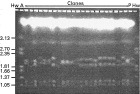
Fig. 1. Novel sizes of chromosomes appear during recombination between the Weybridge and WisF125 strains of E. tenella. Hw=Hansenula wingei, the sizes of the chromosomes are given in megabase pairs on the left against the Weybridge strain; A=arprinocid-resistant line derived from Weybridge strain of E. tenella; P=WisF125 precocious line derived from Wisconsin strain (A and P were parents for the mating.) Clones=22 clones characterized by recombinant phenotypes of A and P parents and each derived from infection with a single sporocyst. Chromosomes separated by pulsed field gel electrophoresis.

Fig. 2. Scheme used to demonstrate recombination between strain-specific immunity and resistance to the anticoccidial drug robenidine in E. maxima.

Table 1. Recovery of Relevant Recombinants from passage of the Progeny of the Cross
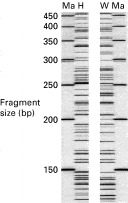
Fig. 3. AFLP analyses of the H and W strains of E. maxima reveal a high frequency of polymorphisms; shown by bands that are present in either track, but not both. Ma=50 bp markers; H=Houghton strain of E. maxima; W=Weybridge strain of E. maxima.
 You have
Access
- 7
- Cited by