Nearly 25% of these neonates have critical CHD that will require cardiac surgery within the first year of life.Reference Benjamin Emelia, Muntner and Alonso1,Reference Oster, Lee, Honein, Riehle-Colarusso, Shin and Correa2 The incidence of single-ventricle heart disease is 0.8 cases per 1000 live births, with hypoplastic left heart syndrome as one of the most common forms. Most infants require a series of three-staged palliative surgical procedures in the first 3 years of their life.Reference Turner, Ohye, Ungerleider, Meliones, Nelson McMillan, Cooper and Jacobs3 The first surgery has the highest rate of mortality and morbidity. However, over the past three decades, mortality has dramatically decreased from 75 to 18%,Reference Hasegawa, Masuda and Okumura4 resulting in more infants being discharged home to await the second surgery.
Caring for infants after the first-stage palliative surgery can result in challenges beyond the usual parenting responsibilities secondary to medicalised care at home,Reference Ohman, Stromvall-Larsson, Nilsson and Mellander5 demanding care routines,Reference Hill, Silverman, Noel and Bartz6,Reference Golfenshtein, Hanlon, Deatrick and Medoff-Cooper7 the potential for socialReference Stoffel, Spirig, Stiasny, Bernet, Dave and Knirsch8 and financial constraints,Reference Hearps, McCarthy, Muscara, Burke, Jones and Anderson9 and impact on family relationships.Reference Franich-Ray, Bright and Anderson10 Although current descriptive studies provide valuable information related to factors that contribute to caregivers’ adaptation and coping with these medically fragile infants, they failed to capture the nuances of caregivers’ experiences during the most critical “interstage” period (time between the first and second surgical procedures).Reference Hill, Silverman, Noel and Bartz6,Reference Stoffel, Spirig, Stiasny, Bernet, Dave and Knirsch8,Reference Hartman and Medoff-Cooper11
With mortality rates reported as high as 16% during the interstage period, an innovative interstage home monitoring strategy was developed to improve surveillance and detect early clinical condition changes before acute decompensation.Reference Ghanayem, Allen, Tabbutt, Atz, Clabby and Cooper12,Reference Castellanos, Herrington, Adler, Haas, Ram Kumar and Kung13 This home monitoring strategy requires caregivers to track daily oral intake, weight, and oxygen saturation levels. Caregivers are provided with a list of abnormal parameters to notify the healthcare team. Unfortunately, this places the decision-making responsibility on caregivers to make medical assessments that can be life-threatening, by significantly impacting their level of stress and anxiety. Furthermore, studies that showed improved interstage survival after implementing a home monitoring programme did not investigate the impact on the caregiver and families, their concerns and reactions, or their role as parents.Reference Hartman and Medoff-Cooper11–Reference Castellanos, Herrington, Adler, Haas, Ram Kumar and Kung13 The lack of support and being unprepared to assume the parent–caregiver role is frequently cited as a contributor to caregiver burden.Reference Golfenshtein, Hanlon, Deatrick and Medoff-Cooper7,Reference March14 A recent American Heart Association Scientific Statement on Interstage Home Monitoring identified the lack of qualitative studies to address the caregiver perceptions and support needs during this time.Reference Rudd, Ghanayem and Hill15
Few qualitative studies have addressed the experiences of caregivers of infants with single-ventricle heart disease, and the studies that have been conducted were in countries outside of the United States of America. Despite published qualitative research,Reference Stoffel, Spirig, Stiasny, Bernet, Dave and Knirsch8,Reference Hartman and Medoff-Cooper11,Reference Rempel, Ravindran, Rogers and Magill-Evans16 there is a lack of depth and breadth of understanding of the caregivers’ experiences associated with an increased burden of in-home care and hospital readmission in the interstage period, and data collection was obtained well after the actual interstage period and had to rely upon delayed recall of events, emotions, and caregivers’ experiences.Reference Rempel, Ravindran, Rogers and Magill-Evans16 In addition, the majority of studies had predominantly White patients. Thus, research with a more culturally diverse group of caregivers from various socioeconomic backgrounds was needed to explore a wider breadth of experiences related to interstage infants’ care. The purpose of this study was to explore the perception of caregivers’ everyday experiences, the impact on parents transitioning to a caregiver role, and the successes and challenges associated with caregiving during the interstage period.
Materials and methods
Design
The methodology of Grounded TheoryReference Charmaz17 influenced by ConstructivismReference Corbin and Strauss18 guided this qualitative study to understand caregivers’ experiences during the interstage period. Approval was obtained from the institutional review boards (hospital study site and the academic affiliation).
Sample and setting
Amid the COVID-19 pandemic from November, 2019 to July, 2020, caregivers who were over 18 years old whose infant underwent the first-stage surgery for single-ventricle heart disease and was discharged from the hospital 2 to 4 months before the interview were purposively recruited to participate in the study. Eligible patients were invited to participate during their in-person follow-up visits in an interstage clinic in a large metropolitan children’s hospital in southern California. Despite the stay-at-home national mandate, in-person clinic appointments continued. However, patients’ recruitment and interview during the pandemic were conducted via telephone for about half of our sample.
Data collection and analysis
Patients completed the sociodemographic questionnaires after giving informed consent. This was followed by an in-depth audio-recorded in person or telephonic interview. A professional transcriptionist transcribed the digitally recorded interviews verbatim conducted by the first author; a certified interpreter was also at interviews with Spanish-speaking patients. The audio files of interviews done in Spanish were translated and transcribed by a professional translator. The certified interpreter was also one of the Heart Institute social workers, who reviewed the transcripts for accuracy after it was translated to English. In keeping with the Grounded Theory approach, transcripts were systematically coded after data were de-identified and checked for accuracy. We used process codes (gerunds) to conduct line-by-line coding, which focused on patients’ actions while staying close to the data itself.Reference Charmaz17 After the first seven interviews, we reviewed all initial codes for frequently appearing and most important codes. We identified 20 focused codes. Using Atlas.ti,19 a data management software, the data connected with the focused codes were identified, marked, and examined.
Using an Excel spreadsheet, the data connected to each focused code was systematically examined using the constant comparison technique.Reference Charmaz17 We examined nuances and similarities in the data. With this detailed process, we narrowed the list of 20 focused codes to 12, which were systematically analysed across several succeeding interviews. Through the continued process of challenging and refining the data, we developed four categories with related properties. To further enrich and clarify relationships between categories and properties, we conducted additional patient interviews using the Grounded Theory technique of theoretical sampling.Reference Charmaz17 At this step, we used abduction to explore interpretations with data, noting contradictions and inconsistencies in the data; this sharpened our theoretical insights. After the 18th interview, we determined three categories with related properties that support our grounded theory. At every level of analysis, memo writing and diagramming techniques were used to explore analytic hunches, develop abstract categories, and combine ideas related to the phenomena (caregivers’ self-reliance). Further, to enhance methodological rigour, the research team collaborated in each stage of coding and analysis.
Results
Sample characteristics
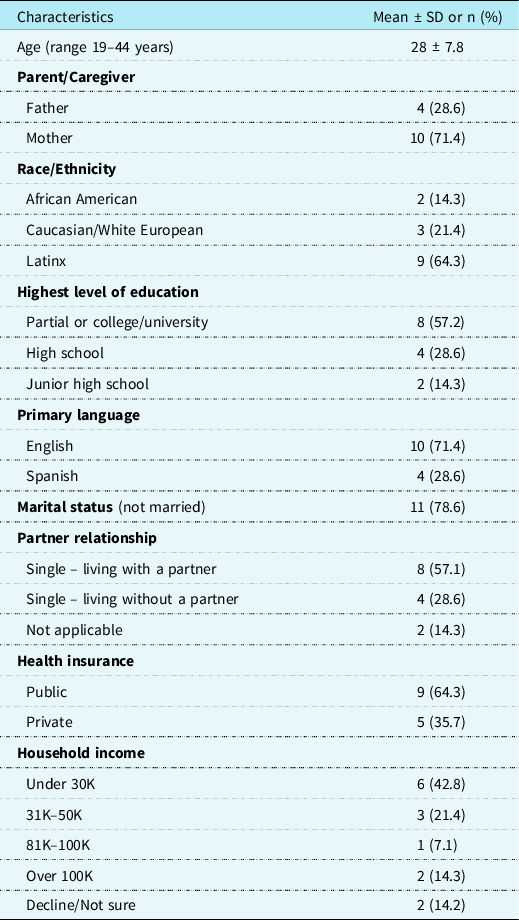
The 14 caregivers (10 mothers and 4 fathers) with a mean age (28 ± 7.8) were interviewed in person or via telephone. Some were interviewed twice (n = 4) for a total of 18 interviews (mean = 64 minutes [range: 45–95]). A certified interpreter participated in the interviews of three Spanish-speaking patients. Many of the patients were Latinx (64%). Most of the sample was English-speaking (71%), attended some college or other schooling after high school (57%), and had a household income of less than $30,000 (42%). Additional patient characteristics are available in Table 1.
Demographic, socioeconomic, and psychosocial characteristics of interstage caregivers (n = 14)

Grounded theory: developing a sense of self-reliance
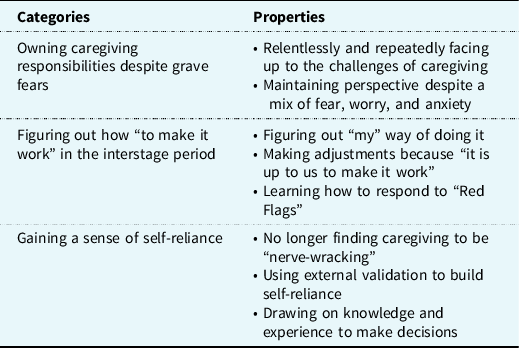
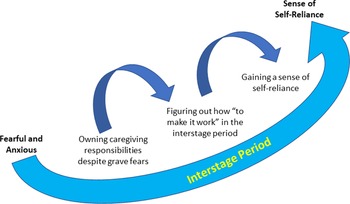
In this study, we used patients’ quotations to explain conceptual categories drawn from the data analyses. We developed a Grounded Theory called Developing a Sense of Self-Reliance through detailed analyses of patients’ interview data. The context of the caregivers’ trajectory towards the development of a sense of self-reliance is explained by the following three categories: (1) Owning caregiving responsibilities despite grave fears, (2) Figuring out how “to make it work” in the interstage period, and (3) Gaining a sense of self-reliance (see Table 2). Together, these categories encompass the caregiving process for our sample patients, which are depicted as an arrow pointing in the direction of movement (see Fig 1). The caregiving experience from each category to the next reflects the caregivers’ progression as they were adapting to their infants’ care during the interstage period. A quotation best exemplified the context of the patients’ experiences from a 33-year-old first-time mother who said,
There’s always a sense of anxiety when you have an interstage baby because you’re just constantly worried that his heart is going to stop, that the shunt is going to close, that he’s going to get sick!
Grounded theory: developing a sense of self-reliance in the interstage period – categories and properties

Grounded theory: developing a sense of self-reliance in the interstage period.

Owning caregiving responsibilities despite grave fears
In this study, caregivers often found themselves worried; fears of the unknown caused most of their worries. The properties of owning caregiving responsibilities despite grave fears are Relentlessly and repeatedly facing up to the challenges of caregiving and maintaining perspective despite a mix of fear, worry, and anxiety. These properties reflect the beginning steps of acquiring caregiving skills that are needed to care for their vulnerable infants.
Relentlessly and repeatedly facing up to the challenges of caregiving
Most caregivers in the study were powering through the demanding care activities of everyday life with their infants by sheer determination. For some caregivers, owning the role meant assuming care responsibilities with no option of giving up. As one caregiver said,
I just need to make it happen – my day is full in the morning, and at the beginning, when the baby first came home, at nighttime too. Sometimes, I feel overwhelmed – but what can I do? There’s no one else to do it but me. I can’t just give up on her. I am her mother, and it is my responsibility to take care of her.
The caregivers’ relentless desire to keep their infants well-nourished led to a determination to figure out how to do things so their infant would not vomit. Most caregivers tried out strategy after strategy to help their infant feed successfully. As one father said,
For me what was going through my mind at that time was just a way to figure out he wouldn’t throw up. I tried literally ten things so he wouldn’t throw up!
For most caregivers, feeding the required volume of milk was a priority. They believed that their infants’ hydration was the only way to avoid the grave complication of the shunt closing. As one mother said,
So, I think — the way I explain it to people — it’s almost like having a newborn but on steroids because there’s so much other stuff to worry about. You know, I feel like the biggest worry for me is keeping him hydrated because I don’t want him to be dehydrated and have issues with the shunts. So, every three hours we’re waking him up to eat whether he’s sleeping or not!
As their infants showed progress in weight gain and were able to feed without problems, caregivers became more comfortable caring for their infants. Even the fear-based, intrusive thoughts of their infant becoming re-hospitalised or dying started to recede. One of the caregivers said:
I feel calmer with him now. Before, I felt frustrated and afraid that something might happen to him, and he couldn’t be with me. I worried about that all the time. But now it’s—I feel more comfortable with him.
Nonetheless, the intense feeding schedule led to exhaustion. So, some caregivers used tools to keep them going. One mother explained how the use of an alarm clock triggered a series of steps that were mandatory in her mind, “when I hear my alarm go off, [I] gotta get up, go get her bottle, and feed her.”
Maintaining perspective despite a mix of fear, worry, and anxiety
Each caregiver adopted a viewpoint that helped them accept their reality, but it came with mixed feelings. One father took a present-day attitude to avoid thinking about the future; he coped using the motto of, “Basically, not to focus so much on the future, but to take it one day at a time.” A mother had a similar approach. She said, “I just deal with what I need to do and what I was told to do, day to day. I just don’t think much of it. I just do it!” For some caregivers, their perspective was based on priorities; they put their own needs lower than their infant’s needs. As one parent said, “everything took a back seat” to their infant’s needs. One mother explained that she did not like her situation, but “What I like now doesn’t matter!”
Another caregiver drew strength from her mother-in-law, whose influence provided a temporary respite from her fears and worries. Talking about this gave her the strength to carry on caring for her infant. She explained,
When my husband’s mom, my mom-in-law, came and I felt like – she has a really positive outlook about it, at all times. She’s always super hopeful and just, “He’s gonna be fine. He’s gonna have a normal life. Don’t worry.” And I felt like she could worry about it and I could just kind of, step away for a minute, or just kind of have someone else to see, “Does he look extra blue to you?” You know, it kind of took the responsibility off me, in a way. And then, just kind of talking through – I think I was able to talk through all my fears, and she was able to remind me what everyone said in the hospital, what the cardiologist had said, you know, “Don’t worry this much!”
By being focused on their present situation, caregivers were better able to deal with worries. One mother described, no matter how she tried to ignore the future and focus on the now, “it feels like there’s always this weight, and you can’t really – you want it to be gone, but it feels like it never will be!” In this way, the fear remained a constant threat to a steady perspective. For example, one of the caregivers, fearing her infant would not gain weight, became obsessed over bottle counting, saying:
So, I was supposed to keep doing it every day, but I kind of got more into counting the bottles and trying to get him to gain weight, I was so scared he wouldn’t gain.
Thus, for parents, tending to their overall mindset was part of the work of daily caregiving.
Figuring out how “to make it work” in the interstage period
The second category, Figuring out how “to make it work,” has three properties. This included (1) Figuring out “my” way of doing it, (2) Making adjustments because “it is up to us to make it work, and (3) Learning to respond to “Red Flags.”
Figuring out “my” way of doing it
Through “trial and error,” most caregivers gradually found themselves “getting in a routine” but having less self-judgment as they realised that there was “no one way of doing things.” Through this, caregivers realised that things worked better if they devised their own system tailored to their own situation. For example, one mother revealed, “I’d rather figure it out on my own before I get help.” Getting organised with the details of what, how much, and when interventions had to be done for his infant was the first goal for one father. He said:
Like when I got home, first thing I did — I went out and bought a whiteboard, and I hung it up on the wall. I wrote out, “This is what we’re supposed to give him, and this is how much, and this is the times, this is today’s weight” and basically wrote out a whole system for us. That made it a lot easier!
Caregivers were instructed by healthcare personnel to check their infant’s oxygen saturation two to three times a day. However, most caregivers placed the pulse oximeters on their infants and kept them there day and night. As one mother remarked,
I couldn’t imagine not checking him for three hours at a time or something, you know? So, I thought, “Okay, if he’s wearing this [pulse oximeter], at least the alarm will go off and wake me up. And I can look over and I don’t have to get out of bed and check him and, you know, turn the lights on. I can just look over and see the numbers, and that will kind of give me peace of mind.
Having the pulse oximeters continuously on their infants gave some caregivers a feeling of assurance and provided a source of validation that all was fine.
Making adjustments because “it is up to us to make it work”
The patients reported that caring for their infants “took a lot from us, lots of stress, and sleepless nights.” Most caregivers said they were apprehensive that something would happen to their infants if they were not watching. One mother described an adjustment she made to deal with this,
I was so worried something will happen to him when I go take a bath. I bring him to the bathroom with me so I can see him while I take a bath. I always have my eyes on him because he could wake up, cry and then turn blue and then, you know.
By bringing the baby right into the bathroom with her while she performed her self-hygiene tasks, this caregiver altered her typical practice and found a way to make it work “alone.”
Most caregivers were well aware of the difficulty they faced providing complex care to their infants without help. Not only did they lack a helper in the home, but many could not rely on their family or friends because they had many obligations with their own lives and families. One mother’s remark exemplified this realisation,
So, I think that the first days were harder for the family and for me. We do not have very much family and friends. And, our other families have their own responsibilities and cannot help all the time. So, really it is up to us to make it work!
Adjustments that were required to make things function involved many aspects of life. For example, some caregivers decided they need to quit their job to dedicate their time to care for their infants at home. Others found a job that offered flexible hours, such as one father who said,
So, bringing him home, feeding was that hard for me; it’s put stress on me when I had to come back to feed him from working. So, I quit my actual job to be able to be with him more, so I picked up doing Lyft, driving people back and forth.
Learning how to respond to “red flags”
While the early days of caregiving brought dependence on the pulse oximeter, time and experience brought more confidence. Having tempered their fears and reduced their anxiety over time, caregivers found they could focus on becoming more responsive to the specific, nuanced needs of their infants with less stress. Eventually, caregivers learned how to respond more and more to their infant’s needs and found ways to be responsive that resembled what it would be like if they were still in the hospital. For example, from the start, caregivers found it difficult when their infants got “fussy” because they did not know how to calm them down so their infant would not “turn blue.” However, in time, caregivers learned to assess their infants’ condition and discern a true desaturation, a real red flag, versus an episode of fussiness that was not dangerous. One mother shared her experience, saying:
Well, her oxygen saturations had to be from 70 to 80, and that night I noticed that her oxygen levels were in the 60s, and she got a little agitated, and she dropped down to 49. So that’s like a red flag already, like the fact that she’s staying in the 60s and then when she went down to 49, I was like, “Okay, I gotta call the hospital.”
Her confidence gave her the ability to interpret the signs without panic. Another mother used techniques and when they did not work, she used her best judgment to decide what to do:
She started screaming and I couldn’t calm her down, and so I got nervous because she was turning deep red and I couldn’t calm her down, which usually I could, and her pulse ox wasn’t coming up. So, I waited a few minutes, and then I said, “I’m going to the hospital.” I was – I got in the car with her and we were on our way here, but she calmed down on the way, so I turned around went back home.
The key difference for this caregiver was the ability to examine the red flag, interpret it, act, and continue to act without as much fear or doubt, even when it meant changing course was the right thing to do.
Gaining a sense of self-reliance
Eventually, caregivers accepted the realisation that their infant was totally dependent on them for 24-hour care. They started to become comfortable being the provider of complex in-home care, which led to a beginning sense of self-reliance. This category has three properties: (1) No longer finding caregiving to be “nerve-wracking,” (2) Using external validation to build self-reliance, and (3) Drawing on knowledge and experience to make decisions.
No longer finding caregiving to be “nerve-wracking”
For most, being with their infants non-stop throughout the interstage period helped them transition from feeling highly anxious to being more at ease in the caregiver role. As one single father said:
I think just having her, over time, it’s, like, made me get more comfortable around her – and it’s just me, so the sooner I get used to it, the better.
One mother overcame the tense difficulty of feeding her infant through a feeding tube by keeping at it, claiming practice made it easier. She said,
I had to feed her every 3 hours through her tube, so it was daily and constant, but as I do it, I was learning more. And then I noticed he gets more comfortable and it didn’t look like he’s hurting anymore. So, I felt better. When I started to get used to doing it, it didn’t feel so bad anymore.
As already noted, many parents relied on the pulse oximeter, but the sound of the alarm was jolting, especially if it woke a caregiver from sleep. One mother reported abruptly waking up with doubts and questions that played on her nerves. She described it by saying, “How long has it [been]beeping? Did I sleep through it? It was nerve-wracking!” While the pulse oximeter was helpful at first, caregivers eventually realised that their infants could sleep through the night without it and do fine. As one mother said:
But now I don’t leave it on [pulse oximeter] all night just because I know she’s not perfect – but I know that she’s better. It was in the beginning when I didn’t know, and I was by myself. So, it’s not like I had nurses checking on her every few hours. So, it made me feel better to have the machine; that way if her numbers fell, it would beep and alert me.
As their infants showed progress in weight gain and were able to feed and sleep without problems, caregivers became more confident in their ability to care for their infants. Even the fear-based, intrusive thoughts of their infant becoming re-hospitalised or dying receded. One of the caregivers said:
I feel calmer with him now. Before, I felt frustrated and afraid that something might happen to him, and he couldn’t be with me. I worried about that all the time. But now it’s—I feel more comfortable with him.
Using external validation to build self-reliance
Gradually over time and with steadfast focus, caregivers adapted to caring for their medically complex infants. Despite gains in confidence, many caregivers still sought validation for how they handled their infants’ care. As one of the mothers said:
And they told me, specifically, that I was doing a good job. And I really felt a lot better since then, I think I just needed someone to tell me that I was doing the right things for him, and he was growing and, you know, gaining weight and stuff. And that’s all reassuring, but it was really helpful to hear that they were super happy with him, and they were super happy with what I was doing!
This kind of affirmation supported a growing sense that they could trust themselves, a sense of self-reliance. When bringing their infants to the interstage clinic for follow-up care, caregivers highly valued hearing that their infants were progressing well. Not only was it great news about their infant, but it validated their caregiving skills, saying:
But I gradually understood. With the care I gave him and going to the appointments, I feel better because everything is going well. He hasn’t had any complications!
One of the mothers found herself with a stronger sense of her ability when she received affirmation in her role as a caregiver from nurses who commended her for a job well done. She explained how complimented she was, saying:
Like literally all the nurses here were saying, “You should be a nurse. You should be a nurse.” I don’t like needles, so I don’t see myself doing that.
Another mother compared herself to nurses, the health professionals whom she saw as being the most competent in complex infant care, as a way to show how confident she felt:
I felt like a nurse. I felt like a nurse - because I was already on it, like I already knew I had to give him a bath. I had to put his pulse ox on; I had to check if he’s gaining weight. I knew exactly what to do as if he was in the hospital. So, it was just little stuff like that that made me feel like all right, I know how I’m gonna take care of him just like his nurses in the hospital!
Drawing on knowledge and experience to make decisions
Caregivers described how they used knowledge and how it augmented their sense of competence in responding to their infants’ needs, which further moved them towards developing self-reliance. As one mother explained,
I haven’t called 911. I almost did it, when I could not calm her down. She was screaming and turning deep red and I was worried she will not get enough oxygen. But now that I’m learning her, I’m understanding a little bit more that she’s gonna cry sometimes. I always check her number – her sats, but when she’s upset like that, her numbers don’t look good anyway, so it doesn’t really help.
Some caregivers developed the ability to rely on their assessments to guide them on the next actions before calling their healthcare providers. In one situation, when an infant was showing oxygen desaturation at home, the mother called her spouse to return home because she was worried about their infant’s oxygen saturation. The infant’s father showed troubleshooting skills almost similar to what a nurse would do, saying:
I had to come home ’cause she freaked out. It was 62 and he stayed at 62. I got home and held his foot because his foot was cold. If his foot’s cold, it’s gonna give a low pulse ox reading. It’s gonna give a low oxygen reading. So, I warmed his foot up, and then she came in, and she’s like “Why is he 84 with you?” I’m like “Because his foot was cold. You can’t check his oxygen if his foot’s cold.”
Another mother explained how she decided when it was time to call the nurse for advice:
I did notice that her tongue looked a little more pale, like on the purple side. Not like a regular pink, looks pretty dusky. So even though I was already gonna check her oxygen levels, I was gonna leave her on it for at least an hour just to see — make sure that her tongue color wasn’t just the color like that. And then that’s when I noticed that her sats was low too, so that’s how it went about before I called the nurse in the clinic.
Caregivers reported how they weighed and compared problems against each other when making their infants’ assessments and what to do. As one of the fathers said,
The biggest thing is his saturations because if he’s missing a little bit of feed, that can be made up the next day. If his saturations dip too low and he de-sats and he’s not getting enough oxygen, that’s gonna be a big problem because that’s life-threatening.
Discussion
Our findings highlight the caregiver responsibilities for infants with single-ventricle heart disease during the interstage period that far exceeds that of infants without heart disease. Since these infants require complex care at home, there is a critical need to delve into the caregivers’ experience to identify commonalities in their daily coping with caregiving tasks, stress, fear, and uncertainty. Our Grounded Theory, Developing a Sense of Self-Reliance, offers a roadmap grounded in the patients’ data and highlights milestones caregivers reach as they develop a sense of self-reliance despite fears and worries. Each milestone signals the caregivers’ readiness to adapt selflessly and the willingness to sacrifice their own needs to care for their infants.
The vital role of parent–caregivers during the interstage period is attributed to the Single-Ventricle Home Monitoring programme’s success and improved survival outcomes.Reference Anderson, Beekman and Kugler20,Reference Rudd, Frommelt and Tweddell21 In this study, caregivers achieved this vital role by holding themselves accountable for assessing oxygenation and the status of their infants that had previously been done in a hospital setting by trained clinicians. Caregivers were relentless as they face care challenges, which led them to master caregiving skills and maintain perspective despite a mix of fear, worry, and anxiety. This is consistent with other findingsReference Hill, Silverman, Noel and Bartz6,Reference Hartman and Medoff-Cooper11 that suggest home caregivers’ can adapt to the acute stress of home care demands after their infants’ cardiac surgery. Although the level of stress and anxiety reported by the caregivers in this study were low compared to previous studies,Reference Hill, Silverman, Noel and Bartz6,Reference Golfenshtein, Hanlon, Deatrick and Medoff-Cooper7,Reference Franich-Ray, Bright and Anderson10 it suggests that they had already acquired the technical aspects of care and learned to rely on their resources by the time of the interview. Additionally, many of the caregivers in our sample were focused on their present situation, which may have made them better able to deal with their fears, worries, and uncertain future.
Our patients overcame their daily struggles by actively engaging in strategies to figure out how “to make it work” to help them continue providing medically complex care to their infants at home. Our theory suggests that caregivers needed to acquire skills and apply coping strategies to develop a sense of self-reliance. Some of our patients were partnered, and others were single parents; they all realised that it was up to them to make things work, so they had to adjust to a new lifestyle. This seemed to have contributed to their quest to develop self-reliance. Their infants’ vulnerable status plus the COVID-19 pandemic forced the patients to limit social contact with family and friends, and to protect their infants from being exposed to anyone with a viral or bacterial illness. It was extra challenging for caregivers to provide intensive care to their infants without family and friends’ usual support. Hence, the caregivers in this study seemed to rely more extensively on their own resources. Our findings deepen the understanding of the importance of gaining self-reliance and highlight that healthcare professionals need to be aware of, improved caregiver support during a pandemic or when limited family support is identified. Further, healthcare providers should be cognizant of these additional stressors during follow-up clinic visits.
Being cognizant of the risk of interstage mortality, caregivers seemed to rely heavily on objective data, specifically the pulse oximetry saturation, to cope with their feelings of fear and uncertainty. The alarm from the pulse oximeter served as a warning device to alert them that their infant was in trouble. The alarm was a source of assurance for most of the caregivers. However, over time, the need to continuously monitor pulse oximetry on their infants receded as they gained confidence and felt assured that their infants were doing well. Some caregivers demonstrated an impressive ability to identify red flags, recognise the significance of low pulse oximeter readings, and take proper actions to confirm that the readings were consistent with the infants’ condition. In some situations, caregivers exercised judgment akin to what a nurse would do in a similar situation.
In this study, caregivers emerged from overcoming challenges in care with a sense of self-confidence in their caregiving and decision-making skills. Our theory suggests that self-reliance was strengthened during each developmental phase. In owning responsibilities, caregivers honed their skills; when caregivers figured things out, their decision-making skills were strengthened; when caregivers no longer felt caregiving was nerve-wracking, they began to have a sense of self-reliance. The sense of self-reliance was strengthened when caregivers received affirmation for a job well done.
To our knowledge, this is the first study that identified self-reliance as a theoretical framework in understanding the experience of interstage caregivers as they coped with the burden of care with a limited support system. While existing studiesReference Johansson, Aarts and Darj22,Reference McNamara, Cutler, Lundsberg, Kennedy and Gariepy23 on self-reliance amongst parents of infants focused on pregnant women or moms of healthy newborns, the data from our study showed that caregivers of infants with single-ventricle heart disease gained self-reliance on their path from the first to the second of their infants’ surgery.
Conclusions
Developing a sense of self-reliance outlines the process of caregivers owning caregiving responsibility with grave fear during the interstage period, figuring out how “to make it work,” and gaining a sense of self-reliance. The caregivers may use this roadmap to chart their journey in concrete and practical ways to support them during the overwhelming interstage period. With interstage home monitoring being the standard of care at most paediatric cardiac centres, future studies should focus on interventions to support caregivers in the home at each pivot point along the path towards self-reliance. For example, development of parent/family support services in behavioural health within the umbrella of the interstage home monitoring programme. Caregivers’ development of the mindset of self-reliance is strengthened by knowledge, use of practical skills, and experience with navigating available resources. The recent American Heart Association Scientific Statement,Reference Rempel, Ravindran, Rogers and Magill-Evans16 identified qualitative research as a key research priority for addressing the knowledge gap in interstage home monitoring for infants with single-ventricle heart disease. This study responds to this gap to address the needs of caregivers and family of interstage caregivers’ experience.
Study limitations
Investigator bias may have impacted one of the author’s perceptions of patients due to previous indirect contact as part of clinical responsibilities/practice. As a team, the investigators remained aware of this potential bias and the lack of representation of Spanish speakers in our team during data analysis and review of findings. We used the technique of memo writing to identify and reduce bias. Other notable strengths of this study include the ethnically diverse sample and the inclusion of fathers as primary caregivers. A grounded theory approach allowed for the inductive and abductive generation of theory from data.
Acknowledgements
The authors gratefully acknowledge the assistance of Jennifer Carillo, SW, Department of Clinical Social Work, Children’s Hospital Los Angeles in interviewing Spanish-speaking families for this research, Karen Haas, MN, RN and MariaTheresa Alquiros, MSN, RN, Nurse Care Managers, Children’s Hospital Los Angeles for their help in participants’ recruitment.
Financial support
This work was partially supported by the University of California Los Angeles Graduate Fellowship Awards, Institute for Nursing and Interprofessional Research (Children’s Hospital Los Angeles), and Audrienne H. Moseley Scholarship Fund.
Conflict of interest
None.
Ethical standards
This research did not involve human or animal experimentation. Approval was obtained from the institutional review boards (hospital study site and the academic affiliation).