INTRODUCTION
Cognitive therapy (CT) has utility for ambulatory patients with stable or chronic medical- psychiatric comorbidity (White, Reference White2001; Moorey et al., Reference Moorey, Greer and Gill2002) but, in acute medical settings, it is impractical to use psychotherapy built around standard parameters such as weekly 50-minute sessions, full privacy, no interruptions or competing agendas, no pain, regular clothing, and comfortable seating.
In Part I, a companion paper, we described the model for CT in acute hospital settings, highlighting assessment, and formulation processes (Levin et al., Reference Levin, White and Kissane2011). The aim of Part II is to review common acute medical situations that are suitable for CT interventions, the limitations and potential pitfalls of such therapy, and the educational ramifications for psychosomatic medicine (PM) training.
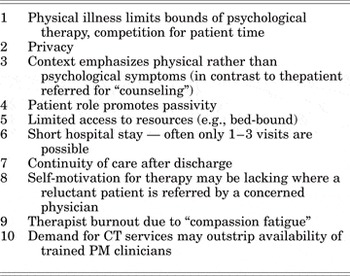
The complexities of implementing CT in acute hospital settings are summarized in Table 1. First, continuity of care is problematic, where access to outpatient CT is unreliable and integration of care should be a service delivery consideration. Second, multiple competing interests challenge PM for patient time; CT needs to be flexible in accommodating these demands. Third, the passivity of the stereotypic “good patient,” further confounded by illness-related lethargy, is in contrast to the active approach promoted by CT, which may have to be tempered in response. Fourth, achieving CT goals can be challenging when the admission is chaotic, the patient unwell, and the length of stay short. Finally, goals of therapy should be realistic (e.g., “reduce anger so that I can start chemotherapy;” “start antidepressant, recover from pneumonia, set up appointment for couples therapy in 2 weeks”).
Common challenges conducting CT in acute medical settings

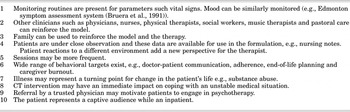
While inpatient CT presents many challenges, it also presents many opportunities (see Table 2). An illness can be a turning point for improving a relationship, stopping an addiction, treating depression, or committing to CT. Physicians and nurses can both reinforce the need for psychotherapy and vouch for the CT clinician's trustworthiness. Involving other care providers in this way can also provide the impetus for multi-disciplinary teams to review and improve on their communication and psychological care skills. There is often the opportunity to address their emotional reaction when relevant counter-transference, such as difficulty discussing end-of-life goals of care with a much-loved patient. Family work is another opportunity that adds further depth to the therapy.
CT opportunities presented by the acute hospital setting

METHODS
Using narrative review, we describe eight common clinical challenges that are suitable for CT intervention: (1) Acutely distressed or hopeless patients; (2) Patients expressing pivotal distorted cognitions/images; (3) Patients who catastrophize as a prominent cognitive bias; (4) Patients who benefit from distraction and activation strategies; (5) Panic and anxiety: relaxation and breathing strategies; (6) Suicidal patients; (7) Patients who are stuck: problem-solving; (8) Inhibited or shy patients: modeling and experimentation.
For each of these challenges, we outline CT strategies and consider their timing in relation to assessment/formulation. Limitations of CT in the acute medical context are discussed. Because this review is aimed primarily at PM trainees and educators, exemplary dialogues model CT techniques, and the implications for dissemination, research and training are considered.
RESULTANT TECHNIQUES
In acute medical settings, urgency dictates that psychological symptoms be addressed speedily to maximize coping, the thoughts and behaviors people use to manage the internal and external demands of stressful events (Folkman, Reference Folkman2010). Assessment amidst crisis should be succinct — CT therefore unfolds in parallel to data gathering because of the urgent need to relieve distress, improve coping, and facilitate problem-solving. This contrasts to traditional psychotherapy models where a full assessment is followed serially by evenly paced psychotherapy, once or twice a week. CT strategies should not be implemented in isolation but preferably unfold within a comprehensive formulation, with clearly defined therapy goals (Levin et al., Reference Levin, White and Kissane2011). The following strategies for managing eight common clinical challenges assume that this conceptualization has been established collaboratively within a trusting clinician-patient relationship.
1. PATIENTS WITH NEGATIVE EMOTIONAL DISTRESS OR WHO HAVE LOST HOPE
Relieving negative emotional distress such as sadness, anxiety, or anger is perhaps the PM clinician's commonest task. The cardinal rule here is to address negative affect wherever it appears in the conversation, before continuing with the assessment or psychotherapy. Addressing negative affect is important because, (1) Noxious emotions are a source of significant suffering — its relief is a major aim. (2) Negative emotions are disruptive to rational problem-solving and complex collaborative endeavors such as shared decision-making (see Section 7). Fear or anger (e.g., consequent to fight, flight, or freeze cognitions) cause a person to cone down cognitively on the threat, to the exclusion of extraneous environmental detail. This tunnel vision is adaptive if it improves focus, but behavioral reactions such as avoidance and “paralysis” or physiological arousal symptoms (palpitations, hypertension, and shortness of breath or diarrhea (Beck & Emery, Reference Beck and Emery1985)) can cause secondary, maladaptive distress. Thus, by regulating negative emotions, the clinician can potentially improve coping responses to the threat. (3) A positive emotion generated by an empathic clinician (e.g., “I understand your tears…” [smiles gently]) causes a momentary break in the negative emotional state, signaling that it is safe to widen attentional focus away from the threat and reduce the intensity of the negative emotion. This is based on the broaden-and-build theory of positive emotions (Fredrickson, Reference Fredrickson2004). It justifies using strategies such as appropriately making light of an obvious difficulty or using humor to cheer up a patient because these broaden the focus and build up coping responses.
The clinician should therefore respond empathically as a first step to modulating negative emotions by using empathic silence, naming/acknowledging the emotion, normalizing, validating, apologizing, encouraging further expression, restating or offering praise. These strategies are activated in response actual emotions (e.g., tears, verbalization of distress) or emotional cues (e.g., silence hinting at underlying emotion; facial expression suggesting anger). However, because strong negative emotion and suffering are invariably present in PM, the clinician can initiate exploring the consequences of suffering without waiting for overt patient cues or distress. Clues suggesting emotional difficulties can be identified before the consultation starts from referring clinicians, medical notes, and non-verbal communications:
Dr. Green: “Dr. Smith told me about the lymphoma and the complications from the treatments. You really have had a rough road!”
Ms. Brown: “Yes, doctor. It has been awful. I was on a breathing machine in the ICU. I miss my son” [Tears.]
Once the emotional suffering has been acknowledged, the clinician gently starts to gather further relevant data:
Dr. Green: I am very sorry that you have had such a difficult time … [Apologizes for suffering, empathic silence] I would like to learn more about what you have been going through.
Any of the empathic techniques listed previously could be used in the above example with equal efficacy; acknowledgement of affective experiences early in the session helps the patient to feel understood, building the therapeutic alliance, and facilitating data-gathering.
Another way to modulate strong affect is via mood ratings. The clinician focuses on those emotions experienced most intensely or frequently (e.g., guilt, intensity 80%), as a prelude to reframing. Once reframing of the distorted automatic thought has occurred, the patient is asked to re-rate the emotion to empirically demonstrate cause and effect. Reframing and other CT strategies for relieving distressing emotions are further discussed in Sections 2–5, emphasizing CT's broad goal of managing affect as part of adaptation to the acute medical setting.
Acute difficulty coping, feeling overwhelmed, or distressed is related to a loss of hope (Folkman, Reference Folkman2010). Demoralization can also reflect that loss of hope (Clarke & Kissane, Reference Clarke and Kissane2002). Susan Folkman, the CT researcher, explains that because of the interdependence between hope and coping, reviving hope is an important adaptive task if there is to be any chance of turning a threat into a challenge. She explains that “… hope legitimizes conflicting expectations” (Folkman, Reference Folkman2010).
Dr. Green: “I understand that you have been through a difficult surgery and your surgeon is not sure whether you are out of the woods yet. That must be tough.”
The clinician's empathic response promotes hope by acknowledging the uncertainty in a supportive way.
2. PATIENTS WHO EXPRESS PIVOTAL DISTORTED COGNITIONS OR IMAGES
If the PM clinician/patient identify that a particular cognition is stoking the patient's emotional responses, this is called a “hot cognition.” Using affect fluctuations to explore cognitions (When you feel angry, what thought goes through your mind?) can be a very effective way of engaging patients in the initial process of psychotherapeutic change.
Reframing can occur during the initial evaluation, even in the opening minutes of the session and can produce dramatic results in psychotherapy, lessening emotional intensity. Creation of an early “Aha!” experience, where patients gain new insights into sources of their distress, builds hope and trust, the foundations of healing relationships.
Consider a PM consultation called because the patient wishes to sign out of the hospital against medical advice. Within opening minutes of the interview, the patient states, “I know I will die if I go ahead with the transplant.” The clinician immediately recognizes the importance of this distorted cognition:
Dr. Green: “What evidence do you have to support your prediction? [Therapist listens] What indications have you had from your doctors that you are unlikely to survive? [Therapist listens] What are the common complications of transplant? If these do occur, how might your doctors treat them? [Explores understanding] So it sounds like the transplant is dangerous and there is a chance that you may die, but there is a reasonable chance of surviving — this is why the doctors are recommending it. Does that sound accurate? [Reframes] What other ways might there be to approach your dilemma, apart from signing out?” [Explores alternative coping responses]
More formal “evidence for and against analysis” (Beck, Reference Beck1995) may be implemented later, if time allows. This involves writing down the automatic thought “I know I will die if I go ahead with transplantation” and asking the patient to rate the degree to which s/he believes that this belief is true on a scale from 0–100%. Next, the patient rates the severity of their reaction to the automatic thought, e.g., anxiety, 100%, reflecting severe anxiety. In two columns below, evidence supporting and negating the automatic thought is listed. Distorted automatic thoughts are evaluated, counter arguments considered, and the thought reframed. Subsequently, the patient re-rates their strength of conviction that the original automatic thought (“I know I will die …”) was correct. A lower rating should ensue. Next, they re-rate the anxiety intensity associated with wanting to leave the hospital (the behavioral reaction). A lower rating will also ensue here. Finally, the patient is invited to consider alternatives to the thought that a stem cell transplant will lead to death:
Dr. Green: Having considered the evidence for and against and seen the strength of your belief reduced from 90% to 60%, how might you re-word this belief?
Ms. Brown: It is more reasonable to describe the transplant as life threatening rather than a death sentence. After considering the evidence for and against, I see that my chances of surviving may be better than I first thought.
Dr. Green: How much do you want to check out of hospital now?
Ms. Brown: A part of me still wants to get the hell out of Dodge, but I think that it is reasonable to consider the treatment further. It is my best chance of surviving.
Considering the evidence for and against is a powerful way of reframing an automatic thought, but it does require 10–20 minutes and reasonable concentration.
One caveat regarding reframing is that there is often a grain of truth behind “distorted” automatic thoughts. Premature reframing or reassurance may be deleterious. The art is in recognition of when exploration is apt. Consider a dying patient who worries that “my family is avoiding me” and feels depressed. These could be labeled as a distorted “abandonment schemata” but in reality, family members, overwhelmed in the face of likely death, may really be avoiding the patient; thus, there is some truth to these beliefs.
Here, Socratic questioning, should explore the degree of perceived abandonment rather than seeing abandonment as “all or nothing.” After ascertaining the degree of abandonment, a next step might be assisting the patient to improve cohesion of the family. “Realistic” automatic thoughts — thoughts likely in fact to be true — trigger other automatic thoughts (e.g., “I can't go on with this sadness any more”) that should be addressed. Consider a person with worsening, incurable cancer. Here the approach involves understanding the dysfunctional automatic thoughts that a person has in response to any realistic thoughts:
Ms. Brown: I won't be alive to see my son graduate. [Realistic automatic thought]
Dr. Green: How do you feel emotionally when you think about that?
Ms. Brown: Hopeless.
Dr. Green: When you are feeling hopeless and thinking that you won't be alive when your son is older, which aspect of that thought makes you feel most hopeless?
Ms. Brown: There is nothing I can do. I won't be there for him. [Helplessness, abandonment as secondary distorted automatic thoughts]
The therapist then explores these secondary cognitions, discussing what can be done for her son now and after her death (e.g., legacy planning), specifically reframing the absoluteness of her perceived helplessness. She is invited to consider what she can do for her son now that will continue to support him in the future. She is praised for having done everything humanly possible, from surgery to chemotherapy, to contain the illness and be there for her son.
Automatic images are reframed similarly to distorted automatic thoughts. A teary patient whose shaven hair is growing back after chemotherapy sees herself as a “concentration camp survivor:”
Dr. Green: I can understand how upsetting this must be [acknowledges affect]. If you were to see a stylish woman in a trendy café with short spiky hair, would you think of her as a concentration camp survivor? How would you describe her … cosmopolitan, daring …? Do you think that some of these terms might apply to you too? Even if the woman was a concentration camp survivor, what would you say to her, sitting in a café without a scarf on her shaved head … [Reframes]
Ms. Brown: That you are brave for holding your head high. It is not your fault that your head was shaved. I guess that I could say the same to myself. It takes a lot of courage to take the scarf off but it does say that I am a survivor!
3. PATIENTS WHO CATASTROPHIZE (AND OTHER RELATED DISTORTIONS)
CT describes several thinking biases, which are consistent distortions of thinking patterns (Beck et al., Reference Beck, Rush and Shaw1979). If corrected, significant emotional relief can occur. Because these are consistent biases, the patients can be encouraged to recognize instances when they think this way and substitute alternative ways of thinking that are more balanced.
Catastrophizing is one such thinking bias characterized by a tendency to expect extremely negative outcomes. It is a drastic form of pessimistic “fortune telling” (another common bias when the future is predicted negatively) (Beck, Reference Beck1995). A similar construct that focuses on not only the catastrophic outcome, but its predicted velocity of impact is the looming cognitive style (Levin et al., Reference Levin, Riskind and Li2007). To illustrate, consider a 50-year-old man who does not want his octogenarian father to be told of his cancer diagnosis because, “… he will rapidly lose hope and give up.” In fact, the patient may have faced severe past adversities without losing hope and might cope equally well with the current dilemma. Even if he does lose hope, who is to say that this will be a rapid process (the use of the word “rapidly” suggests the looming cognitive style)? Catastrophizing is commonly associated with severe anxiety but when addressed, significant relief follows. This thinking bias is particularly associated with distress and dysfunction when associated with pain (Jacobsen & Butler, Reference Jacobsen and Butler1996; Sullivan et al., Reference Sullivan, Thorn and Haythornthwaite2001). One specific strategy for de-catastrophizing is the “best, worst, most likely outcome” technique:
Dr. Green: When you notice that your pain is more severe, how do you feel emotionally?
Ms. Brown: I feel depressed and anxious and think, “This is terrible, I can't stand this one second longer.”
Dr. Green: It sounds like when you are in pain, the worst thing for you is that you cannot stand it one second longer. Is that right?
Ms. Brown: I can't, it's awful.
Dr. Green: What is the best thing that could happen?
Ms. Brown: That the pain would disappear and never come back.
Dr. Green: And what about something midway — not the worst outcome, but not the best one either?
The antidote to catastrophizing understands that potential outcomes exist on a continuum. Therapy continues by considering the relative likelihood of these varied scenarios and planning ways of tackling the best, worst and most likely outcomes, should they occur.
While the “best, worst, most likely outcome” technique is classically described as a strategy used for treating catastrophizing, panic, and anxiety (Beck & Emery, Reference Beck and Emery1985), in medical settings, it can also be used to discuss prognosis (Kiely et al., Reference Kiely, Tattersall and Stockler2010):
Ms. Brown: Cancer is a death sentence.
Dr. Green: What has your oncologist discussed regarding your prognosis?
Ms. Brown: He said that the lymphoma is widespread and would eventually kill me.
Dr. Green: So the worst-case scenario is that, because it has spread, you will die. What is the best-case scenario?
Ms. Brown: That the lymphoma would be cured. My oncologist said that there are new treatments in the pipeline.
Dr. Green: And what is the most likely outcome, according to your oncologist?
Ms. Brown: He said that we have to wait to see how I respond to the treatments. Patients who respond can live for several years.
Dr. Green: So the most likely outcome is that, if you respond to the treatments, then you may live for several years. Can we talk about the worst-case scenario? If this were to occur, what sort of planning might we have to consider …? [Develops an action plan for getting through the worst- case scenario, even if it is dying/death]
It bears emphasizing that an essential ingredient for using the “best, worst, and most likely” outcome technique successfully is to collaboratively develop a reasonable approach for dealing with the most feared outcome, even if that is death.
Catastrophizing and its related anxiety may also be associated with the cognitive biases of overestimating the threat and underestimating personal coping resources. For example, where there is a fear of cancer recurrence, patients may overestimate the likelihood/velocity of recurrence and their ability to deal with this outcome.
Other Related Cognitive Distortions
A variety of other cognitive biases can also be seen:
• If the cancer comes back, I am dead. [All-or-nothing thinking. There are numerous second line treatments]
• When I get short of breath running up the stairs, I worry that the lymphoma has returned. [Amplification of physical symptoms]
• No man will want to touch me after seeing the breast reconstruction scar. [Mind-reading]
Other examples of thinking errors are emotional reasoning, labeling, magnification or minimization, overgeneralization, personalization, and “should” and “must” statements (Beck, Reference Beck1995).
The following dialogue illustrates reframing of depressive cognitive biases — a negative view of the self, others, and the future while discounting positive achievements:
Dr. Green: What does it say about you that even though you are depressed, hate your body, and don't see much of a future, [negative bias] you are teaching full-time while receiving radiation in the evenings? Does it say that you are fighting a hard battle or that you have given up? [Therapist reframes negativity in terms of positive gains made in the face of adversity]
Ms. Brown: I suppose it says that I have not given up yet. It is an enormous effort to teach all day, then receive radiation therapy and get up to do it all again the next day.
Coping With Uncertainty
Folkman describes coping with uncertainty as dependent on the appraisal of the odds of getting through a medical condition (Folkman, Reference Folkman2010). People who see their odds as bleak, or who in fact have a poor chance of surviving can with the help of their clinician personalize their odds appraisal to promote hope. For example, a patient may rationalize, that “while the median survival is 8 months, I am strong and fit, which makes it likely that I will survive much longer.” Similarly, the clinician might praise the patient's strengths or personalize the odds by saying, “You are in good hands,” or “You could not have come to a better hospital; your oncologist is a national expert in treating this type of cancer.” Belief in God can also personalize the odds if an individual can use their religious beliefs to confer protection or comfort.
A final consideration is the consequences of over-emphasizing the importance of positive thinking,” a cognitive distortion known as the “tyranny of positive thinking.” Here patients are told that they “must” think positively all of the time, which is impossible, even in a well person. When a realistic thought crosses their mind, such as, “I may die from the cancer,” they try but fail to block it out, resulting in secondary guilt and distress. The strategy to address the “tyranny of positive thinking” is to explore this rule via Socratic thinking, gradually re-orienting thinking toward a stance of realistic optimism. Realistic optimism is also an apt description of the therapeutic attitude in PM, promoting both coping and hope while acknowledging the immutable.
4. HOW TO DISTRACT AND ACTIVATE PATIENTS
The conceptual basis for using distraction or activation strategies is that all perceptive processes vary in amplitude (Winterowd et al., Reference Winterowd, Beck and Gruener2003). Pain level is never constant, for example, at 10/10. Activities such as napping, showering, or even distraction via visitors can improve pain. Other symptoms such as sadness, worry, distress, or fatigue will vary in amplitude from minute to minute and hour to hour, as does happiness and excitement.
Because emotions vary in this way, clinicians can implement distraction and sequencing of activities to reduce the intensity of target symptoms. It is crucial to recognize that the goal here is to use distraction or activation to reduce the symptom below a coping threshold, rather than eliminating it entirely, i.e., amelioration rather than cure.
Dr. Green: If there are two sad patients with cancer, one sitting alone in the dark, the other being visited by mischievous grandchildren, which one will feel more depressed? [Socializes patient to principle of distraction]
Ms. Brown: The first patient, of course.
There are many ways to distract and activate in hospital: reading, internet, crafts, walking around the nurses' station, music therapy, telephoning friends, keeping a diary, visitors, prayer, and so on. There are also many ways to accentuate boredom: lie in bed rather than sitting in the chair, watch daytime television, ask visitors not to come and resting rather than forcing yourself to walk. Pushing yourself as active coping is better than passive rest, especially in chronic illnesses such as cardiac failure, diabetes or cancer, where treatments are protracted and can foster hope (Folkman, Reference Folkman2010).
The role of avoidance, classically seen as an anxiety-maintaining behavior, is now recognized in depressed people who, by avoiding sensible activities, worsen depression. Emerging data suggests that behavioral activation targeting specific activities that are avoided can improve depression, even in more severe cases (Dimidjian et al., Reference Dimidjian, Hollon and Dobson2006; Dobson et al., Reference Dobson, Hollon and Dimidjian2008). Behavioral activation can provide the impetus to re-engage with valued activities that may have been avoided because of sadness, grief, or illness.
The clinical art lies first in selecting a distracting/activating activity that is reasonably attainable. If the chosen task is too ambitious, cognitions of failure will emerge. Second, as in the adaptive coping model, it is important to recognize that symptoms may not be cured, only improved. The clinician must convince the patient that an improvement of some 10–20% in anxiety levels is significant. This can be done by asking whether a 10 or 20% tax rebate or a 5% salary increase would be significant.
One simple way that the clinician can activate patients is by “walking and talking” or conducting therapy with the patient seated rather than lying passively in bed. This does require more therapeutic effort, but the activation dividends make it worthwhile.
A more rigorous behavioral activation technique involves using a self-report diary, where daily activities are rated for “pleasure” and “achievement” on a scale from 0–5. The anchors for this Likert scale are constructed collaboratively with each patient. The patient and therapist then use these ratings to decide which activities might improve or worsen symptoms of depression (Beck, Reference Beck1995). This is a powerful technique for patients confronting life-threatening illnesses, as they are forced to prioritize and choose core from peripheral values. Nevertheless, a self-report diary is difficult to keep when patients are very sick, when a short admission is packed with multiple procedures, or if the therapist's follow-up is unpredictable, resulting in loss of continuity. This strategy may therefore be better suited to ambulatory patients.
5. ANXIETY AND PANIC: RELAXATION AND BREATHING STRATEGIES
Mindful breathing and relaxation techniques are invaluable for patients undergoing blood draws, painful procedures, scans, anti-cancer infusions, radiation and so forth. Pain and discomfort trigger breath-holding, tensing muscles, and eventually leading to hyperventilation. These techniques help regulate the respiratory rate which, in turn, decreases panic and anxiety. It is virtually impossible to panic when breathing slowly.
The simplest technique for regulating respiratory rate is diaphragmatic breathing. This involves counting until the lungs are filled with air and then slowly counting downwards again until the lungs are emptied with one hand resting on the abdomen. If done correctly, the hand resting on the abdomen rises with inspiration. A second method is progressive muscle relaxation, starting with the toes and progressively relaxing the whole body. Here the respiratory rate is slowed indirectly. A third method is to add visualization of a calming image (favorite room, garden, beach) to sustain the serenity of mind and body.
Whatever technique is used, it is vital that it be set up as an empirical experiment by measuring the target symptom such as anxiety on a Likert scale, before and after the intervention, proving the effectiveness of the technique to the patient.
There are several limitations to using breathing and relaxation techniques in acute medical settings. First, where trust is an issue (e.g., past abuse), relaxation may be perceived as letting down one's guard, increasing anxiety. Second, sufficient time must be set aside for the exercise, at a minimum 15–20 minutes. Third, hospital interruptions can be disruptive. Finally, the availability of follow-up coaching, audio-aids, and therapist expertise, all contribute to the likelihood of the intervention succeeding.
Prophylactic relaxation techniques are also effective. Jacobsen et al. (Reference Jacobsen, Meade and Stein2002) developed a stress management intervention for chemotherapy patients that were largely self-administered, using print and audio instructions. Using three techniques, paced abdominal breathing, progressive muscle relaxation with guided imagery, and coping self-statements, depression and anxiety symptoms were significantly less than that of the control group after several cycles of chemotherapy.
Dealing with Panic
Panic can paralyze acute medical care. CT of panic is based on education and interceptive exposure (hyperventilation challenge experiment) (McHugh et al., Reference McHugh, Smits and Otto2009).
Dr. Green: Panic attacks are frightening. [Acknowledges affect] Would it be helpful if I explained what a panic attack is? Panic is a primitive reflex that actives the fight, freeze, or flee reflexes in response to threats such as wild animals or enemy attacks. The problem when you panic in a hospital is that there are no real threats; although being sick can be scary, doctors are trying to help, not hurt. Panic in hospital is like a false alarm — the fire alarms go off, the firemen are mobilized, but it is just toast burning in the toaster. [Educates]
Ms. Brown: How do I turn off the false alarm? It feels so real.
Dr. Green: You need to slow your breathing. Panting worsens panic, but it is impossible to panic when your breathing is slow and deep. I would like to do a little experiment where we measure your anxiety, then ask you to breath fast for a few seconds until you feel panicky, so that we can use a breathing technique to slow down your breathing and deactivate the panic.
Hyperventilation challenges are not usually conducted at the time of the first meeting in regular outpatient CT, but in acute medical settings, panic frequently threatens the delivery of medical care. If there are no contraindications, a hyperventilation challenge, can safely be done as part of the first assessment/intervention. Benzodiazepines can also be combined with relaxation and breathing strategies to augment the onset and quality of anxiolysis. Traditional CT often frowns upon the use of benzodiazepines, arguing that they interfere with habituation to anxiety but, in acute medical settings, practicality and time urgency trump.
6. THE SUICIDAL PATIENT: DEVELOPING A SUICIDE SAFETY PLAN
Suicidal patients are a heterogeneous group with triggers that include mood disorders, hopelessness, meaninglessness, substance abuse, socioeconomic crises, impulsivity (Hawton & van Heeringen, Reference Hawton and van Heeringen2009), psychosis, automatic associations of self with death (Nock et al., Reference Nock, Park and Finn2010), problem-solving deficits and related negative cognitions (Beck et al., Reference Beck, Kovacs and Weissman1975; Reference Beck, Steer, Kovacs and Garrison1985; Hughes & Neimeyer, Reference Hughes and Neimeyer1993), cancer (Robson et al., Reference Robson, Scrutton and Wilkinson2010), anxiety (Nepon et al., Reference Nepon, Belik and Bolton2010), and panic (Goodwin & Roy-Byrne, Reference Goodwin and Roy-Byrne2006). The clinician's often harrowing task is, after completing the assessment and formulation, to develop a suicide safety plan and to motivate the patient to live.
One tool to address distorted cognitions that heighten the desire to commit suicide is an advantage-disadvantage analysis. The starting point is identifying the “hot cognition” that relates to the desire to consider suicide:
Ms. Brown: There's no light at the end of the cancer tunnel. [Tearful.] I'm at the point where I feel I'd be better off dead. If I had a bunch of sleeping tablets, I would just take them.
Dr. Green: This has been a difficult chemotherapy cycle. [Empathic silence] Could I ask you a few questions about your thoughts? [Patient nods] When you say that there is no light at the end of the tunnel [Doctor writes this cognition down], how much do you believe this to be true on a scale from 0–100?
Ms. Brown: About 75%. Although my cancer is not curable, my oncologist feels that we can achieve control for several years. By then, I hope that there may be better treatments.
Dr. Green: I understand. [Writes down 75% next to the cognition] And when you feel that there is no light at the end of the tunnel, how much do you want to take a bunch of sleeping tablets on a scale from 0–100, where 100 is a really strong desire to take the tablets and be dead?
Ms. Brown: I guess about 90%. No one really wants to take their life on a rational level, but I have really had enough.
The second step is to perform the actual advantage/disadvantage analysis. The paper is divided into two columns, one labeled “Advantages of Being Dead” and the other, “Disadvantages of Being Dead.”
Dr. Green: I can see how difficult things are for you. [Empathic silence] Would it be worthwhile trying to better understand the feelings behind wanting to take your life? [Patient nods] Can we first consider some of the advantages of taking your own life?
Ms. Brown: [Somewhat surprised] Well, I wouldn't be in pain. And my family wouldn't have to suffer, watching me waste away like this. [Dr. Green writes these down]
Dr. Green: What are the disadvantages of being dead?
Ms. Brown: I would disappoint my parents — they both had cancer and did not commit suicide. My children might think that I am cowardly or that suicide is OK when the going gets tough. I would also like to see my grandson born in 5 months. [Dr. Green writes these down]
The third step involves reviewing the list of pros and cons collaboratively and considering alternatives or re-frames to items listed under “Advantages of Being Dead.” For example, asking if better cancer pain management might improve end-of-life care:
Dr. Green: If we could significantly improve your cancer-pain, how might this change the degree to which you might consider taking your own life?
Ms. Brown: Less pain and a decent night's sleep would make a big difference …
The final step involves re-rating how strongly the patient believes that there is “no light at the end of the tunnel” and re-rating her desire to attempt suicide (which should decrease proportionately). The overall approach here is to show the patient that how one perceives one's situation can alter the desire to attempt suicide.
With the advantage/disadvantage analysis completed, the clinician can work closely with the patient to develop a suicide safety plan that facilitates achievement of the overall therapy goals:
Dr. Green: How would it be if we worked on a suicide safety plan? This would allow us to treat your depression and see if the pain service can work to aggressively improve your pain control. In two to three weeks, we should have a better idea of how we are doing. How does that sound?
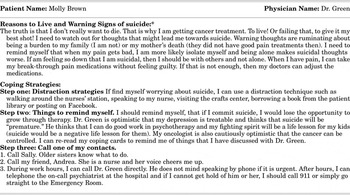
Safety plans can include reasons for living (taken from the advantage/disadvantage analysis, supplemented by any further details the clinician can provide); warning signs of thoughts that may lead to an increased likelihood of suicidal behavior and “talk backs” (reframes) to these thoughts. Distraction techniques can be listed here; with a hierarchical list of supportive people that the patient can talk to if s/he is worried about suicide. The safety plan should be personalized to reflect elements of the therapy. It is not a contract or form letter, but rather a direct reflection of the psychotherapy (see Table 3).
Suicide safety plan

*In the patient's own handwriting
7. PATIENTS WHO ARE STUCK: PROBLEM-SOLVING
Problem-solving was distilled from cognitive therapy as a stand-alone therapeutic strategy, with good research data (albeit from outpatient therapy) demonstrating its efficacy (Nezu et al., Reference Nezu, Maguth Nezu, Friedman, Faddis and Houts1998; Reference Nezu, Nezu and Felgoise2003). Problem-solving reflects the coping model for dealing with chronic illness (Folkman & Lazarus, Reference Folkman and Lazarus1988) by promoting adaptation.
In essence, it examines common maladaptive ways that people solve problems, for instance, (1) assuming that the first answer is always the best; (2) “others” do not have problems coping with illness; (3) “all of my problems are due to the illness;” (4) there is a perfect solution to each problem; (5) no-one else can understand; or (6) people cannot change. This is contrasted by a more desirable and healthier positive problem orientation, for instance, (1) the belief that you can improve your own quality of life; (2) that problems are common and normal; and (3) that you can accurately identify problems and act rationally rather than impulsively to solve them.
Problem-solving provides techniques for better approaching problems: (1) defining the issues more accurately, (2) generating potential solutions, (3) implementing the most reasonable solution, (4) monitoring outcomes, and (5) modifying the solution based on data collected or feedback. Much of the work in PM revolves around problem-solving. However, this may vary from the classical approach described above, to one that emphasizes cognitive errors in problem-solving. The PM clinician often plays a more active role in problem-solving in acute medical settings. He or she may advocate for the patient, gather resources to facilitate problem-solving, or use personal knowledge of the medical system to problem-solve. For example, a non-English speaking patient, incontinent after a radical prostatectomy, could not do the pelvic floor exercises in the patient brochure and was unable to sleep or travel home because the adult diapers did not contain the flow of urine. He became depressed and suicidal. The clinician liaised with the surgeon's nurse, helped the patient research condom drainage bags as an alternative to diapers, set up a physical therapy appointment with a translator to help the patient improve voluntary control of his pelvic floor muscles and started an antidepressant. Within a week there was significant improvement in depression, sleep, and incontinence management. By 2 weeks, the patient was able to travel home on an airplane. At 4-week follow-up, although incontinence persisted, coping was improved and depression levels were 50% lower. In this instance, the therapist was active in the problem-solving paradigm. Contrast this with problem-solving therapy in a more independent inpatient being treated for a bony metastasis from breast cancer, where the clinician focuses on cognitions exclusively:
Ms. Brown: I just want the pain and the cancer to disappear completely [there is a perfect solution to every problem]. Once they go away, my problems will be gone too [all of my problems are due to my illness].
Dr. Green: How realistic is it to expect the radiation to resolve all of the pain and cancer instantly? What might be more reasonable expectations? [Set realistic goals] What are your options for coping better with the pain? Can we list them on this piece of paper? Didn't your oncologist say that you could take additional medication for breakthrough pain? Could consulting with a pain and palliative-care physician be beneficial? [Generating alternatives]
Reflection on the relative advantages versus disadvantages of potential solutions while deferring critical appraisal can be particularly useful. For example, one patient wanted to return to work while receiving ambulatory chemotherapy, but needed a letter from his doctor's office for his work. The nurse promised to prepare a letter but never did despite multiple requests over a period of 4 weeks. The patient despaired as bills piled up. Brainstorming generated a short written list of potential solutions: (1) patient calls doctor to complain; (2) PM clinician calls doctor or nurse; and (3) patient or PM clinician calls the patient representative. The advantages and disadvantages of each approach were debated. The patient chose the option least likely to “create waves”: the matter was resolved within 24 hours after the therapist called the patient representative to explain the dilemma. The patient representative in turn called the nurse directly.
8. NEGOTIATING HEALTH CARE: MODELING AND EXPERIMENTING FOR INHIBITED PATIENTS
People who are shy, inhibited, and socially phobic, or have low health literacy can have great difficulty negotiating the health care system and advocating for themselves. This leads to frustration, helplessness, and often demoralization. A useful technique to help them be heard is role-playing. Here the clinician pretends that he or she is the patient and role-models a desirable communication strategy. Roles are then reversed and the patient imitates the therapist's communication. Later, the patient can experiment with the strategy in the real world. This approach teaches the social skills that are necessary to negotiate the medical system. Consider a patient who is too scared to ask her doctor about her prognosis:
Dr. Green: What might happen if you were to ask your oncologist about your prognosis?
Ms. Brown: I couldn't. I would just freeze up and nothing would come out of my mouth.
Dr. Green: Let's first think about the advantages and disadvantages of asking your oncologist directly about your prognosis? … OK, next would you be willing to do a short role-play? Pretend for a moment that I am you: Doctor, if I complete the chemotherapy, what do you think my prognosis will be? I need to know so that I can make plans for work.
Ms. Brown: Just like that! … Doctor, if I complete the chemotherapy, what do you think my prognosis will be? I need to know so that I can make plans for work … You make it seem so simple.
Dr. Green: Why don't you try it out on me? I'll pretend to be your oncologist and you ask me about your prognosis.
Role-playing efficacy can be assessed with self-rated measurements of predicted anxiety or behavioral outcomes (e.g., that I'll freeze up if I ask the doctor about my prognosis) before and after the exercise. The key is to treat the exercise as an experiment with the aim of seeing to what degree the strategy is helpful and tweaking it further if necessary.
Second opinions are an important part of informed decision-making. However, patients often feel that it is impolite to ask their doctor for copies of their medical records or that the doctor might be insulted by the request. Elderly patients, who have been socialized to respect a doctor's judgment as final, also find second opinions challenging. Here the strategy is to assess how reasonable these cognitions are and whether there are alternative ways of looking at the situation (e.g., considering whether two brains are better than one).
“Homework,” a fundamental CT technique for increasing the impact of therapy into the real world can be adapted to help patients negotiate and adapt to acute medical settings. Ideally, patients should set their own homework goals:
Dr. Green: What would you like to work on between now and when we meet again, tomorrow?
Ms. Brown: I want to walk down to the coffee shop, without my wig, to buy a paper.
Dr. Green: That will be a big achievement because you have been reluctant to leave your room without the wig, until now. How might it make you feel?
Ms. Brown: More of a survivor and less of a patient. There is no cancer clinic in a coffee shop [Laughs].
Behavioral activation e.g., walking or sitting in the chair or lounge is an attainable homework assignment. Patients can also be challenged to gather more data to support or refute hypotheses as homework exercises. For example, a patient who believes that “cancer means death” may be asked to gather specific prognostic information when his physician next conducts rounds. Generating alternative responses to a scenario can also be adapted to a homework exercise:
Dr. Green: We have discussed the advantages and disadvantages of not telling your children about the cancer. Understandably, you want to protect them. What would you think about discussing this issue with your wife tonight to see whether there might be alternative ways of discussing your illness with the kids, while continuing to reassure them?
Diary keeping may be a useful homework assignment, but only if the therapeutic relationship has been established and the treatment framework is predictable. Demoralized patients might be asked to keep a diary of their achievements so that they can grant themselves due credit. Logs of dysfunctional thoughts are also useful as the therapy moves forward. Reviewing coping cards is another achievable homework goal. Coping cards are useful recorded understandings distilled from the therapy that help bridge between sessions:
Dr. Green: How about we write this down on a coping card? “When I feel panicky, I need to remind myself that even without slow breathing, the symptoms will subside. Dr. Green has never lost a patient to panic yet.”
Ms. Brown: [Laughs] I am going to stick the coping card on the MRI scanner!
ENGAGING THE RELUCTANT PATIENT
Developing trust may be the key initial therapeutic goal; secondary goals can be developed later, once trust has been established. To illustrate, consider a patient who declines psychological help. The clinician, while respecting the patient's request to not engage in psychotherapy, may ask, “Would it be OK if I stopped by tomorrow to see how you are doing and say hello?” And so an informal engagement and observation phase begins.
CONCLUSION
The use of CT in acute medical settings requires a coherent structure for gathering data, rapid integration of bio-psychosocial factors with case conceptualization, and adaptation to the altered therapeutic parameters in acute medical settings.
One of our strongest recommendations is that clinicians combine the assessment interview with distress relieving interventions, such as reframing distorted cognitions or behavioral techniques. The intervention should unfold in parallel with the assessment, rather than serially, especially where the patient is significantly distressed or “stuck.” Although one danger of intervening during the assessment phase is premature reassurance, well-constructed and timely reframing of “hot” negative cognitions relieves distress and begins to offer hope for managing symptoms.
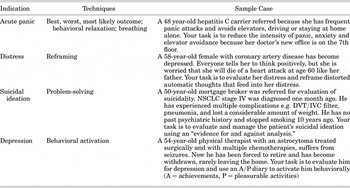
The ACGME program requirements for PM fellowships specify training in “non- pharmacologic interventions” including CT and other short-term therapies with participation in “continuity of care” (June, 2003). Providing effective CT encompasses the GME core competencies of Patient Care and Interpersonal and Communication Skills. Standardized methods for training and assessing residents and fellows in CT using audio or video recording of sessions are well established (Sudak, Reference Sudak2009). PM specific core competencies and assessment of these competencies are similarly an important issue for the Academy of Psychosomatic Medicine (APM) and, to this end, the APM's fellowship committee has developed a set of clinical vignettes to assess fellows' mastery of the GME core competencies. This could be taken a step further by adapting CT training and assessment methodology using communication simulation. Here, clinicians role-play standardized PM scenarios with actors playing patients (see Table 4). Facilitators deliver feedback augmented by video replay, after which clinicians practice the CT intervention again. A blinded rater using a standardized checklist objectively evaluates skill uptake on such simulated videos. We have developed and piloted such a Communication Skills Training approach for PM fellows, focusing on “Responding to Patient Anger” and “Breaking Bad News” (Bialer et al., Reference Bialer, Roth and Kissane2009). Further adaptation of this methodology to CT in acute medical settings is underway.
Simulated scenarios for educational training of PM fellows

As the ACGME continues to place increased emphasis on evaluation, assessment, and demonstration that programs and trainees are meeting the requirements and mastery of these core competencies, development and dissemination of effective methods to accomplish this have become essential. CT training uses audio or video recording of actual therapy sessions for supervision, but adapting this methodology to acute medical settings by recording bedside psychotherapy has not yet been tried. Theoretically it should be feasible and our group has been able to video not dissimilar doctor-patient meetings in the ICU and medical clinics. Future steps should focus on dissemination of CT to PM clinicians and accumulation of data supporting its efficacy in acute medical settings.