Emotional disorders and distress are generally conceptualised along a continuum, with similar psychological processes considered relevant to the experience of negative affectivity in clinical and non-clinical populations (Roseman & Kaiser, Reference Roseman, Kaiser, Scherer, Schorr and Johnstone2001). Cognitive models emphasise the relationship between evaluative judgments or appraisals of situations and events, and the resulting affective experience (e.g., Beck, Reference Beck1976). More recent advances have expanded upon these early models to encompass interpretations of internal events, pointing to exciting new avenues for research and understanding of psychopathological processes.
Initially, research investigating the appraisal of internal processes primarily focused on the subjective interpretation of cognitive and physiological symptoms. The development of self-report measures has enabled thorough investigation of these appraisal domains, which have been linked to negative affect and a variety of psychopathological conditions. Catastrophic appraisals of physical symptoms as assessed by the Anxiety Sensitivity Index (Reiss, Peterson, Gursky, & McNally, Reference Reiss, Peterson, Gursky and McNally1986) have been shown to produce increased physiological arousal and discomfort (Eke & McNally, Reference Eke and McNally1996; Gregor, & Zvolensky, Reference Gregor and Zvolensky2008), and have been implicated in the aetiology and maintenance of panic disorder and social phobia (e.g., Rapee, Reference Rapee1987; Rapee & Heimberg, Reference Rapee and Heimberg1997). Likewise, maladaptive appraisals of internal cognitive events, as assessed by the Meta-Cognitions Questionnaire, are associated with increased worry and anxiety (Cartwright-Hatton & Wells, Reference Cartwright-Hatton and Wells1997), and are thought to contribute to the maintenance of psychological disturbances, including obsessive compulsive disorder and generalised anxiety disorder (Wells, Reference Wells2000).
Increasingly, enquiry into the interpretation of internal events has extended beyond the level of cognitive and physiological symptoms to include appraisals relating to the experiential (or feeling) aspects of emotion. Various models have proposed that threatening appraisals of affective experience, such as the perception that emotions are uncontrollable, unacceptable or harmful, produce fear and intolerance of these experiences, motivating emotional avoidance or modulation (e.g., Barlow, Reference Barlow2000; Leahy, Reference Leahy2002). Modulation of emotions can be considered adaptive or maladaptive, depending on the context and regulation strategy that is selected (Gross, Reference Gross1998). Thus, emotional intolerance, combined with limited access to adaptive regulation strategies, may lead to a myriad of unhelpful control strategies, such as emotional suppression, worry, deliberate self-harm, cognitive distraction, and behavioural avoidance of emotionally evocative situations (e.g., Hayes, Wilson, Gifford, Follette, & Strosahl, Reference Hayes, Wilson, Gifford, Follette and Strosahl1996; Mennin, Heimberg, Turk, & Fresco, Reference Mennin, Heimberg, Turk and Fresco2005). These experiential avoidance strategies are thought to dampen emotional experience in the short term, but paradoxically result in increased negative affectivity and reduced quality of life in the long term.
Individual differences in beliefs about emotional experience are an important avenue of investigation given the potential cognitive, affective and behavioural consequences of these appraisals. Furthermore, this construct has high clinical utility, as affect intolerance, dysregulation and avoidance have been implicated in many disorders, including depression, substance abuse, post-traumatic stress disorder, obsessive compulsive disorder and generalised anxiety disorder (e.g., Boden et al., Reference Boden, Westermann, McRae, Kuo, Alvarez, Kulkarni and Bonn-Miller2013; Hayes et al., Reference Hayes, Wilson, Gifford, Follette and Strosahl1996; McCubbin & Sampson, Reference McCubbin and Sampson2006; Stapinski, Abbott, & Rapee, Reference Stapinski, Abbott and Rapee2010). Understanding disorders in the context of dysfunctional emotional processes has led to therapeutic advances that encourage non-judgmental and accepting attitudes towards emotions, and the adoption of more adaptive regulation strategies (e.g., Hayes, Pistorello, & Levin, Reference Hayes, Pistorello and Levin2012; Linehan, Reference Linehan1993; Newman, Castonguay, Borkovec, & Molnar, Reference Newman, Castonguay, Borkovec, Molnar, Heimberg, Turk and Mennin2004; Roemer & Orsillo, Reference Roemer and Orsillo2003). However, more empirical data are needed to evaluate and clarify the theory and potential mechanisms of change underlying these treatment approaches.
Initial self-report investigations of affective processes have explored the nature of emotion regulation deficits. The Acceptance and Action Questionnaire (Hayes et al., Reference Hayes, Strosahl, Wilson, Bissett, Pistorello, Toarmino and McCurry2004), Difficulties in Emotional Regulation Scale (Gratz & Roemer, Reference Gratz and Roemer2004), and Trait Meta-Mood Scale (Salovey, Mayer, Goldman, Turvey, & Palfai, Reference Salovey, Mayer, Goldman, Turvey, Palfai and Pennebaker1995) have been used to access emotional acceptance and deficits in awareness, clarity and regulation that are related to psychological distress. Other measures have been developed to assess appraisals of emotional experience that may exacerbate negative affectivity and motivate emotional avoidance and/or modulation; for example, the Anxiety Control Questionnaire (Rapee, Craske, Brown, & Barlow, Reference Rapee, Craske, Brown and Barlow1996) and the Affect Control Scale (Williams, Chambless, & Ahrens, Reference Williams, Chambless and Ahrens1997). Consistent with theoretical models, studies employing these instruments have demonstrated an association between perceptions of emotional uncontrollability and increased distress, arousal and negative affectivity (Rapee et al., Reference Rapee, Craske, Brown and Barlow1996; Salters-Pedneault, Gentes, & Roemer, Reference Salters-Pedneault, Gentes and Roemer2007; Williams et al., Reference Williams, Chambless and Ahrens1997). However, these measures of emotional appraisal are limited by a specific focus on beliefs about uncontrollability. Additional beliefs may contribute to affect intolerance; for example, the perception of emotions as intense, persistent, embarrassing, overwhelming or harmful; or the belief that emotions are related to a variety of negative consequences. Considering the centrality of experiential avoidance to current models of emotional dysfunction, beliefs relating to the need to avoid or suppress emotional reactions also warrant further investigation. Emotionally intolerant individuals may endorse the use of a variety of strategies to dampen affective experience, including distraction, deliberate emotional suppression, avoidance of potential triggers, and safety behaviours such as controlling others and reassurance seeking. Unfortunately, current emotion measures do not permit assessment across the breadth of beliefs and emotional avoidance mechanisms of potential relevance to psychological disturbance.
In view of the limitations in scope of existing measures, the aim of the present study was to develop a psychometrically sound self-report instrument to more comprehensively identify the beliefs and avoidance strategies related to affect intolerance. This measure should assist in directing further research aimed at clarifying relationships between affect intolerance, regulation deficits, and psychological wellbeing. Identification of specific maladaptive beliefs to be modified via psychological treatment would also have considerable clinical utility. In developing this measure, items were drawn together from established measures of emotion, with new items written to include hypothesised dimensions not covered by other measures. Given the high interrelation between appraisals of discrete emotions (see Williams et al., Reference Williams, Chambless and Ahrens1997), the measure was designed to assess beliefs across the breadth of negative emotional experiences. Cognitions relating to negative affect were considered more pertinent to investigations of experiential avoidance and psychological distress; therefore, positive emotions were omitted for the sake of simplicity and brevity.
In sum, the Affect Intolerance Scale (AIS) was designed to provide a multidimensional evaluation of the beliefs central to affect intolerance. Items were developed to identify beliefs within the following domains: (1) perceptions relating to the uncontrollability of emotions; (2) appraisal of emotions as intense, distressing or overwhelming; (3) perception of a range of catastrophic consequences associated with negative emotions; (4) the perception that negative emotions should be avoided or suppressed; and (5) the perceived utility of a range of avoidance strategies (safety behaviours) used to cope with unwanted negative emotions. The present research sought to evaluate the psychometric properties of the AIS and the hypothesised subset of affect intolerance domains. Following from current theoretical models, the hypothesised association between affect intolerance and psychological symptoms was also examined.
Method
Participants
Participants were 593 undergraduate students who participated in return for course credit. Participants were primarily female (74%), with a mean age of 20.7 years (SD = 5.6). The sample was ethnically diverse, with 33.6% of participants identifying with an ethnic background other than Australian. Other self-reported ethnicities were as follows: North East Asian, 12.8%; North African and Middle Eastern, 4.7%; South East Asian, 4.7%; Southern and Eastern European, 4.6%; Southern and Central Asian, 3.9%; other, 2.8%.
The study procedures were approved by the Macquarie University Human Research Ethics Committee. Participants completed the study measures as part of a larger set of questionnaires. For analyses that required mean values, participants with missing data on self-report measures were not excluded; rather, missing values were replaced with the scale mean, provided that at least 80% of items on that scale were completed.
Development of the Affect Intolerance Scale
Items designed to assess affect intolerance across the hypothesised dimensions were developed through review and modification of items from existing measures of emotional appraisal and related constructs. In addition, new items were written, based on consultations with senior clinical psychologists and researchers. In generating new items, long, ambiguous and double-barrelled items were avoided in order to maximise the readability of the scale (DeVellis, Reference DeVellis2003). The initial item pool for the Affect Intolerance Scale (AIS) consisted of a large number of items (156), which were evaluated for clarity, scope and face validity by 10 experts with experience in emotional research and psychological disorders. On the basis of this review, some items were reworded to improve clarity and others were deleted, leaving 89 items. A degree of over-inclusiveness is recommended during the initial stages of scale development to ensure the final measure comprehensively samples the construct of interest (Clark & Watson, Reference Clark and Watson1995).
The scale instructions prompted participants to consider appraisals across a range of negative emotional experiences, stating: ‘In this questionnaire we are interested in your beliefs and perceptions about your experience of negative emotions. Please think about your beliefs and responses across a broad range of negative feelings, such as anxiety, sadness, anger, depression, and stress’. Participants were asked about their agreement with each statement ‘in general’ in order to assess trait appraisals of emotional experience. Participants indicated their agreement on a 6-point Likert-type scale facilitated by word anchors (1 = strongly disagree, 2 = moderately disagree, 3 = mildly disagree, 4 = mildly agree, 5 = moderately agree, 6 = strongly agree).
Measures
Affect Control Scale
The Affect Control Scale (ACS; Williams et al., Reference Williams, Chambless and Ahrens1997) was included to evaluate the convergent and incremental validity of the AIS. This measure assesses fear of loss of control across four emotional domains: anger, anxiety, depression, and positive emotions. Items are rated on a 7-point Likert-type scale with higher scores indicating greater fear of emotions. The ACS has demonstrated convergent validity with another measure of perceived emotional control, and has been shown to predict fear of emotional responses in a laboratory setting (Williams et al., Reference Williams, Chambless and Ahrens1997). The scale also demonstrated good temporal stability (r = .77), and internal consistency (α = .92) in an undergraduate sample. Adequate internal consistency was also demonstrated in the current sample (α = .93).
Difficulties in Emotion Regulation Scale
The Difficulties in Emotion Regulation Scale (DERS; Gratz & Roemer, Reference Gratz and Roemer2004) was employed to assess the convergent and incremental validity of the AIS. Items are rated on a 5-point Likert-type scale to index emotional dysregulation across six dimensions: non-acceptance of emotional experiences, difficulty engaging in goal-directed behaviour when distressed, poor impulse control, lack of emotional awareness, limited access to emotion regulation strategies, and lack of emotional clarity. In addition to subscale scores, the scale provides a total score, with higher scores indicative of greater emotion regulation difficulties. Good convergent and predictive validity has been demonstrated between the DERS and established measures of conceptually linked constructs (Gratz & Roemer, Reference Gratz and Roemer2004). The reliability of the DERS is supported by adequate internal consistency (α = .93) and temporal stability (ρ = .88) in an undergraduate sample (Gratz & Roemer, Reference Gratz and Roemer2004). The internal consistency of the DERS in the current sample was good (α = .94).
Cognitive-Behavioural Avoidance Scale
The Cognitive-Behavioural Avoidance Scale (CBAS; Ottenbreit & Dobson, Reference Ottenbreit and Dobson2004) provides multidimensional assessment of cognitive and behavioural avoidance across social and non-social domains. All items are rated on a 5-point Likert-type scale, with higher scores indicative of higher levels of avoidance. Convergent validity of the CBAS with existing avoidance measures has been established, and the scale demonstrated adequate internal consistency (α = .91) and test-retest reliability (r = .92) in an undergraduate sample (Ottenbreit & Dobson, Reference Ottenbreit and Dobson2004). The CBAS also demonstrated good internal consistency in the current sample (α = .94). This scale was employed to investigate the convergent validity of the AIS.
Penn State Worry Questionnaire
The Penn State Worry Questionnaire (PSWQ; Meyer, Miller, Metzger, & Borkovec, Reference Meyer, Miller, Metzger and Borkovec1990) assesses excessive and uncontrollable worry on a 5-point Likert-type scale, with high scores indicating greater worry severity. The PSWQ demonstrates good convergent validity with a number of established measures of anxiety and psychopathology, and predicts clinical worry (Davey, Reference Davey1993; Fresco, Mennin, Heimberg, & Turk, Reference Fresco, Mennin, Heimberg and Turk2003; Meyer et al., Reference Meyer, Miller, Metzger and Borkovec1990). Good test-retest reliability has been demonstrated in an undergraduate sample (r = .92), and good internal consistency has been found in both undergraduate and psychiatric samples (α ranges from .91 to .95; Brown, Antony, & Barlow, Reference Brown, Antony and Barlow1992; Meyer et al., Reference Meyer, Miller, Metzger and Borkovec1990). Comparable internal consistency was also demonstrated in the present sample (α = .93). Current models suggest that affect intolerance contributes to unhelpful emotion dampening strategies, such as worry; therefore the PSWQ was used to evaluate the criterion relationship of the AIS with worry severity.
Depression Anxiety Stress Scales
Symptoms of anxiety, depression and stress were measured using the 21-item Depression Anxiety and Stress Scales (DASS-21; Lovibond & Lovibond, Reference Lovibond and Lovibond1993). Items are rated on a 4-point Likert-type scale, with higher scores indicating more severe symptoms experienced over the past week. The scale has demonstrated adequate test-retest reliability in a clinical sample (Depression: r = .71, Anxiety: r = .79, Stress: r = .81), and convergent and discriminant validity has been demonstrated in both non-clinical and clinical samples (Brown, Korotitsch, Chorpita, & Barlow, Reference Brown, Korotitsch, Chorpita and Barlow1997; Lovibond & Lovibond, Reference Lovibond and Lovibond1995). The short version of the DASS has good internal consistency for all subscales (Depression: α = .81, Anxiety: α = .73, Stress: α = .81), with even higher internal consistency reported in clinical samples (Antony, Bieling, Cox, Enns, & Swinson, Reference Antony, Bieling, Cox, Enns and Swinson1998; Lovibond & Lovibond, Reference Lovibond and Lovibond1995). All subscales demonstrated good internal consistency in the present sample (Depression: α = .85, Anxiety: α = .76, Stress: α = .80). The DASS-21 was used to assess the criterion validity of the AIS by evaluating the proposed relationship between maladaptive emotional appraisal and symptoms of psychopathology.
Data Analysis
A multistep approach was adopted to evaluate the factor structure of the AIS. Using the random selection function in the SPSS statistical package, the sample was divided into a development sample and a cross-validation sample (n = 297 and n = 296, respectively). Independent samples t tests and chi-squared tests were used to compare the split samples on all variables. These tests revealed no significant differences on any demographic or variables of interest, supporting the similarity of the subsamples (all p values < .05). Initial item and exploratory factor analyses were conducted on the development sample. A confirmatory factor analysis using the AMOS 5.0 (Arbuckle, Reference Arbuckle2006) statistical program was subsequently applied to test the stability of the empirically determined factor solution in the cross-validation sample. Eight participants with missing data on one or more of the scale items were excluded from the confirmatory factor analysis (n = 288).
Results
Item Analysis and Scale Refinement
A large pool of 89 items were initially selected for screening; however, a shorter final scale was preferred in order to maximise its practical utility. Therefore, the psychometric properties of each item within the total scale were considered in determining its inclusion in the final measure. Items were deleted if they had highly skewed or unbalanced distributions, or low item-total correlations (Clark & Watson, Reference Clark and Watson1995). To reduce item redundancy within the scale, differently worded items sampling the same concept were compared, and the item with the highest item-total correlation was retained. These procedures reduced the measure to 31 items. Using the Flesch-Kinaid method in Microsoft Word 2002, the readability level of the final scale and instructions was estimated at a Grade 7.8 level.
Exploratory Factor Analyses
A Principal Components Analysis was performed to determine the factor structure of the measure. The Barlett's test of sphericity and the Kaiser-Meyer-Olkin (KMO) measure of sampling adequacy indicated the scale was suitable for factor analysis procedures, KMO = .94, Barlett's χ2(465, N = 297) = 5064, p < .001. Five factors showed eigenvalues greater than 1 (12.6, 2.2, 1.3, 1.2, 1.1); however, visual inspection of the scree plot suggested a two-factor solution. Therefore, two-, three-, four- and five-factor solutions were tested and reviewed to determine the most meaningful factor structure. Factors were expected to be correlated, thus an oblique rotation (direct oblimin) was employed. Inspection of the highest loading items for each factor indicated that the two-factor solution was more interpretable than a three-, four- or five-factor solution. A Horn's parallel analysis (Watkins, Reference Watkins2000) was conducted to compare the factor eigenvalues to the average eigenvalues produced from 100 random data sets. This analysis further supported the two-factor solution, as only these eigenvalues were higher than the corresponding values generated in the parallel analysis. Rotation of the two-factor solution converged after six iterations.
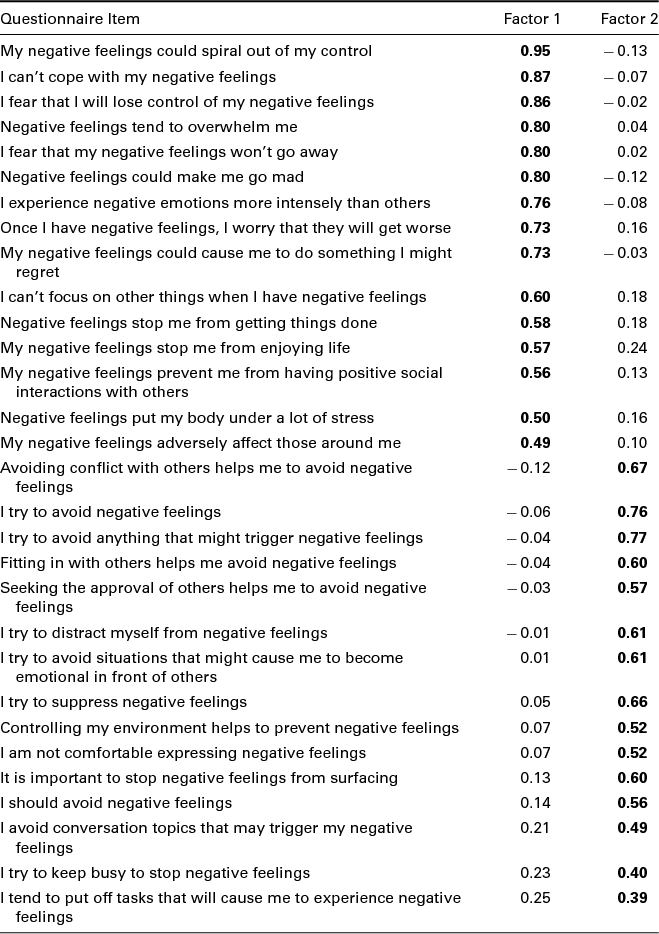
The two-factor solution distinguished items broadly related to threatening appraisals of negative emotions, and those related to the perceived need to avoid or suppress negative emotions using a variety of strategies. One item from the first factor was deleted at this point because of strong cross-loadings on the second factor (>.30). Therefore the final scale incorporated 30 items, with 15 items clearly loading on the ‘Threat Expectancy’ subscale, and 15 items clearly loading on the ‘Avoid/Suppress’ subscale. The factors accounted for 40.5% and 7.4% of the variance, respectively. Factor loadings for items in the final scale are presented in Table 1.
Item Factor Loadings for the Two-Factor Model of the Affect Intolerance Scale

Note: Bold text indicates primary factor loadings.
Confirmatory Factor Analysis
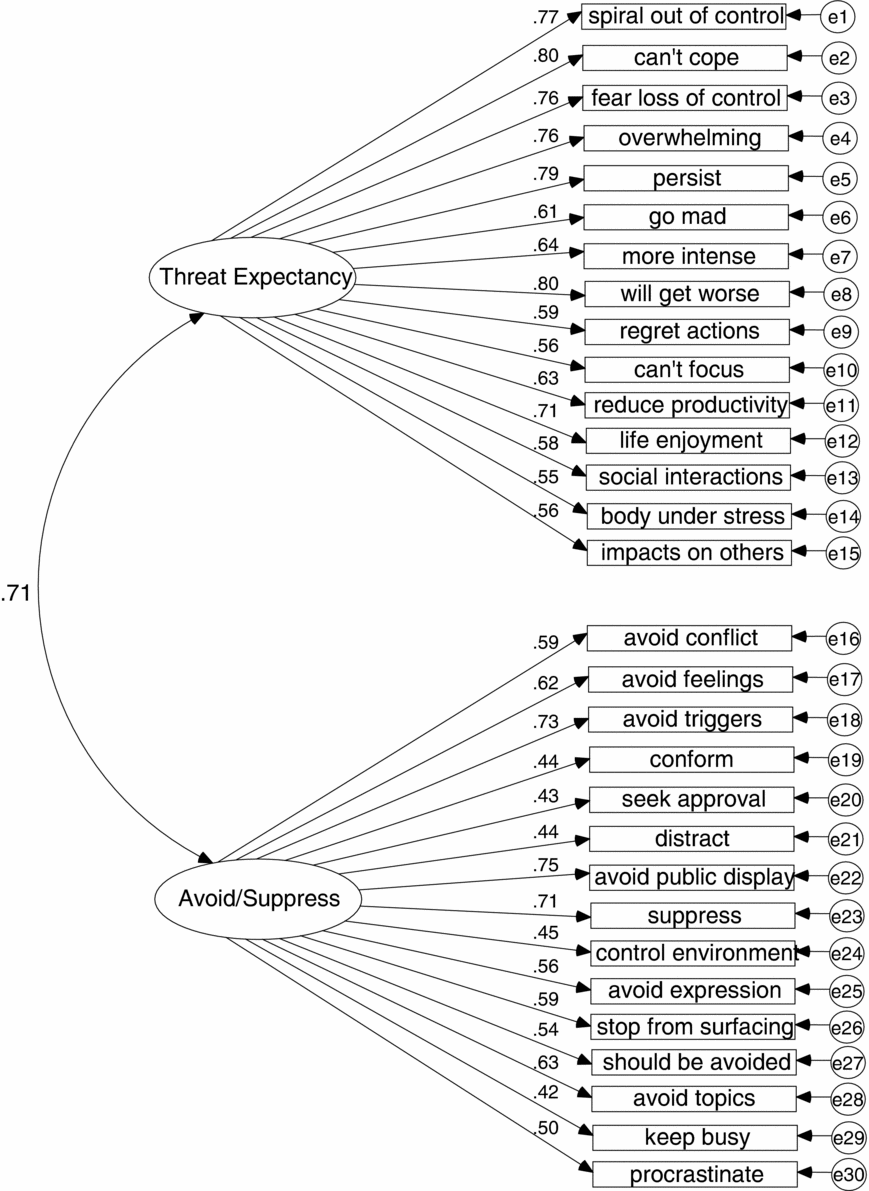
The stability of the two-factor solution in the cross-validation sample was evaluated in AMOS 5.0 using confirmatory factor analysis employing maximum likelihood estimation. All items loaded significantly on the factor to which they had been assigned. Goodness-of-fit indices were reviewed to evaluate fit to the data. A root mean square error of approximation (RMSEA) value less than .08, chi-square to degrees of freedom ratio (χ2/df) below 2, parsimony-adjusted comparative fit index (PCFI) greater than 0.5, and Tucker-Lewis index (TLI) and comparative fit index (CFI) values greater than .90 are considered indices of an acceptable model fit (Bollen, Reference Bollen1989; Mulaik et al., Reference Mulaik, James, Van Alstine, Bennett, Lind and Stilwell1989; Vandenberg & Lance, Reference Vandenberg and Lance2000). Initially, some fit indices suggested less than adequate fit, RMSEA = .07, χ2/df = 2.48, PCFI = .78, TLI = .84, CFI = .85. Previous research indicates that it is often necessary and justified to allow some item error terms within models to covary, due to non-random measurement error related to method effects such as similar item content or format (Byrne, Reference Byrne2010; Byrne, Shavelson & Muthen, Reference Byrne, Shavelson and Muthén1989; Cole, Ciesla, & Steiger, Reference Cole, Ciesla and Steiger2007). These covariances are typically identified by reviewing items with large modification indices indicative of specification inadequacy. As this represents an exploratory strategy, inspection of modification indices and identification of item error terms to covary was conducted within data from the development sample. Sixteen error covariances with high modification indices (>10) were reviewed; in eight cases the correlation between unique variances for items within the same factor was considered indicative of shared method variance due to similar item content. Covarying error terms were applied for these items to the cross-validation model; the resulting parameter estimates were not substantially different from the original model. Results are shown in Figure 1; however, to reduce complexity the covariance paths are not depicted in the figure.
AMOS Confirmatory Factor Analysis Results in Cross-Validation Sample.
Note: Observed variables (items) are designated by a rectangle, and unobserved/latent variables (factors) are represented by ellipses. Unique error variances are shown with small circles; the letter and numbers assigned to each error term are insignificant. Single-headed arrows indicate a direct relationship, with path coefficients (factor loadings) quantifying the extent each item loads on the corresponding factor. Double-headed arrows represent correlations between connected elements.
Improved fit was observed for the adjusted model, with fit indices demonstrating adequate to good model fit, RMSEA = .06, χ2/df = 1.99, PCFI = .82, TLI = .89, CFI = .90. In view of the considerable correlation between factors (r = .71), a one-factor solution was also considered and compared with the two-factor solution for model fit to the data. Comparison of fit indices indicated the two-factor solution reflected a superior fit to the data compared to those obtained for the one-factor solution, RMSEA = .08, χ2/df = 2.80, PCFI = .75, TLI = .80, CFI = .82.
Internal Consistency
Internal consistencies were calculated for the total scale score and each of the factors derived from the exploratory factor analysis. All Cronbach's alphas indicated good internal consistency (total scale: α = .94; Threat Expectancy subscale: α = .94; Avoid/Suppress subscale α = .88). The average inter-item correlations were .36 for the total scale, .49 for the Threat Expectancy subscale, and .33 for the Avoid/Suppress subscale.
Test-Retest Reliability
The AIS was readministered to a subset of participants (n = 24) after an average of 2 weeks (mean = 14.3 days, SD = 0.9, range 13 to 17 days). Independent t tests and chi-squared tests indicated the retest sample did not differ significantly from the total sample on any demographic or variable of interest. Pearson correlations were calculated to examine the temporal stability of the total scale and subscales over the test-retest period. All correlation coefficients indicated good reliability (total scale: r = .86; Threat Expectancy subscale: r = .86; Avoid/Suppress subscale r = .84).
Convergent Validity
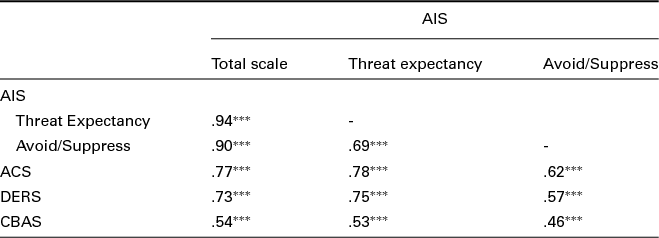
Construct validity of the scale was examined by calculating Pearson correlations between AIS scores (total and subscale) and an existing measure of emotional appraisal, the ACS. As the ACS does not incorporate items assessing avoidance or suppression of emotions, validity of the AIS was further established by assessing its relationship with cognitive and behavioural avoidance as assessed by the CBAS. Given the interrelationship that is likely to exist between affect intolerance and emotion regulation deficits, correlations between the AIS and DERS were also examined. As can be seen in Table 2, there were strong positive correlations between the AIS and all measures of interest. Supporting the validity of the two-factor solution, a different pattern of association was demonstrated between the two AIS subscales. As would be expected, the Threat Expectancy subscale demonstrated a stronger association with fear of emotional uncontrollability as assessed by the ACS; tests for significance between non-independent correlations (see Bruning & Kintz, Reference Bruning and Kintz1977) indicated that this difference was significant, p < .001. Compared to the Avoid/Suppress subscale, Threat Expectancy was also more highly correlated with emotional regulation difficulties as assessed by the DERS, p < .001. However, correlation strength with the CBAS was not significantly stronger for the Avoid/Suppress subscale (p > .05); rather, both subscales demonstrated a strong positive relationship with cognitive and behavioural avoidance.
Correlations Between the Affect Intolerance Scale and Related Constructs
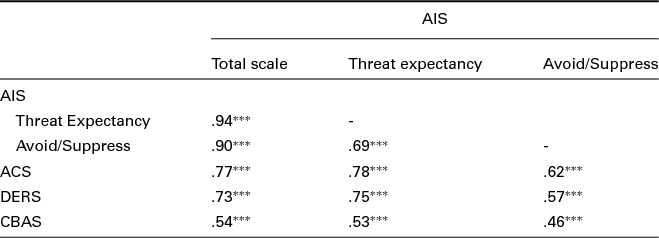
Note: AIS = Affect Intolerance Scale, ACS = Affect Control Scale, CBAS = Cognitive-Behavioural Avoidance Scale, DERS = Difficulties in Emotion Regulation Scale.
*** = p < .001.
Criterion Validity
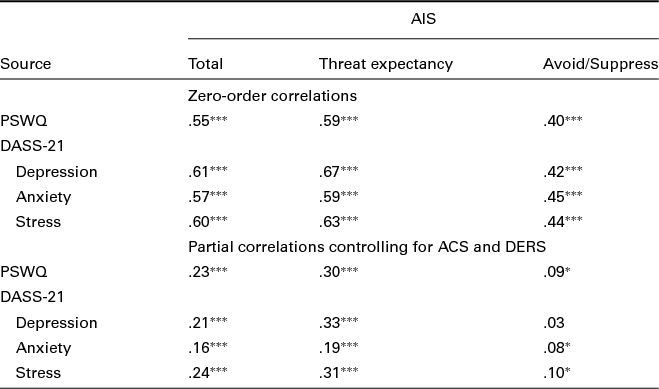
Pearson correlations were calculated to evaluate the hypothesised relationship between affect intolerance as assessed by the AIS and psychopathological symptoms. As seen in Table 3, AIS subscale and total scores were significantly and positively correlated with worry (PSWQ), and symptoms of stress, anxiety and depression (DASS-21). Although large correlations were observed between the criterion measures and both AIS subscales, the Threat Expectancy factor showed significantly higher correlations with all measures (all p values < .05).
Zero-Order and Partial Correlations Between the Affect Intolerance Scale and Criterion Measures
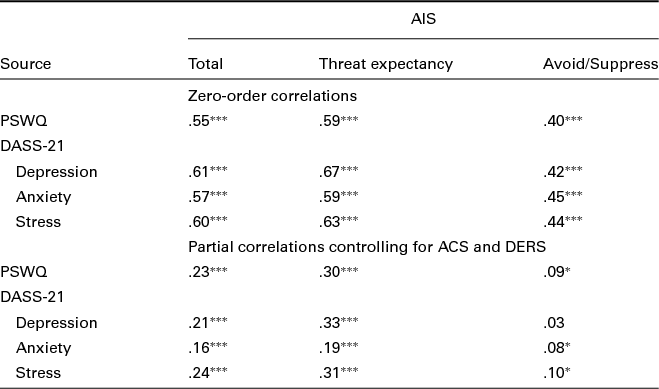
Note: AIS = Affect Intolerance Scale, PSWQ = Penn State Worry Questionnaire, DASS-21 = 21-item Depression Anxiety and Stress Scales, ACS = Affect Control Scale, DERS = Difficulties in Emotion Regulation Scale.
*p < .05, **p < .01, ***p < .001.
To explore whether the AIS adds to the existing literature in predicting clinically relevant outcomes, partial correlations with symptom measures were calculated after controlling for variance accounted for by existing scales assessing emotional appraisal (ACS) and regulation (DERS). The results, shown in Table 3, provided support for the incremental validity of the AIS. Total AIS and Threat Expectancy scores remained significant unique predictors of depression, anxiety, stress, and worry severity. The Avoid/Suppress subscale also accounted for unique variance in worry severity, anxiety and stress symptoms, but was not uniquely associated with depression symptoms.
AIS and Demographic Variables
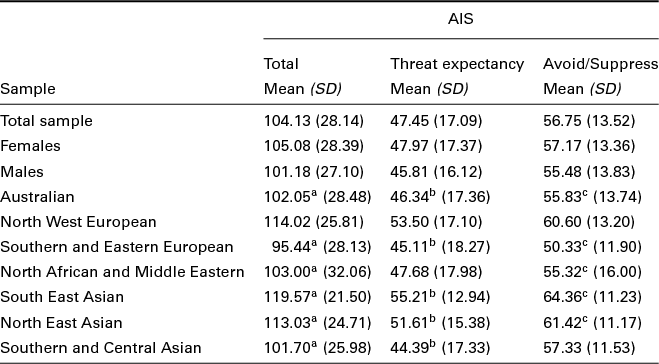
Table 4 presents mean AIS total and subscale scores by sex and ethnicity. Independent groups t tests revealed no sex differences on AIS total or subscale scores.
Mean Total and Subscale Affect Intolerance Scale Scores by Sex and Ethnicity
Note: No significant differences were indicated for means without superscripts.
aAt p < .05, South East Asians differed significantly from Australians, Southern and Eastern Europeans, North African and Middle Easterners, and Southern and Central Asians. North East Asians differed significantly from Australians and Southern and Eastern Europeans.
bAt p < .05, South East Asians differed significantly from Australians, Southern and Eastern Europeans, and Southern and Central Asians. North East Asians differed significantly from Australians.
cAt p < .05, South East Asians and North East Asians differed significantly from Australians, Southern and Eastern Europeans and North African and Middle Easterners. Australians differed significantly from Southern and Eastern Europeans.
A one-way between-groups analysis of variance showed a significant effect of ethnic background on total AIS scores, F(7, 583) = 3.28, p < .01; Threat Expectancy subscale, F(7, 584) = 2.07, p < .05; and Avoid/Suppress subscale scores, F(7, 584) = 4.09, p < .001. Follow-up comparisons using the Tukey HSD test were used to identify differences on total and subscale scores between the various ethnic groups included in the study; significant differences are indicated in Table 4. Pearson correlations revealed no significant relationship between age and AIS subscale or total scores (total scale: r = −.07; Threat Expectancy subscale: r = .01; Avoid/Suppress subscale r = −.03).
Discussion
The present study described the development and psychometric properties of an integrated measure assessing affect intolerance. The results provide support for the validity and reliability of the AIS, and suggest that this measure adds to the literature as a potentially useful research and clinical tool. Although a number of appraisal dimensions were proposed initially, exploratory analyses supported two distinct dimensions of affect appraisal. Perceptions of emotions as uncontrollable, intense/overwhelming and related to a variety of negative consequences all loaded together onto one factor. This Threat Expectancy subscale therefore comprises a range of beliefs regarding the consequences and threatening nature of negative emotional experiences. Endorsement of emotional suppression and avoidant responses to affective experience loaded on the second factor, thus this Avoid/Suppress subscale represents the perceived utility of various strategies aimed at avoiding or dampening emotions. The two-factor solution was supported by confirmatory analysis procedures with a cross-validation sample. Although two distinct factors were supported, the strong intercorrelation between factors and high overall internal consistency of the measure suggests that these factors represent two dimensions within the underlying construct of affect intolerance. Thus, total scale or subscales scores for the AIS could be used in future research, depending on the question of interest.
The AIS exhibited sound psychometric properties, with good test-retest reliability over a 2-week period, and good internal consistency for total and subscale scores. The construct validity of the AIS was supported by strong correlations with existing measures assessing fear of emotional uncontrollability (ACS), and cognitive and behavioural avoidance (CBAS). A strong relationship was also found between the AIS and emotion regulation difficulties as assessed by the DERS. To further evaluate the validity and utility of the AIS, the hypothesised relationship between affect intolerance and psychological distress was examined. Total and subscale AIS scores showed moderate to strong correlations with worry severity, and symptoms of depression, anxiety and stress. The observation that affect intolerance was associated with all three psychopathological symptom profiles supports recent perspectives emphasising the commonality in processes underlying emotional disturbances (e.g., Barlow, Reference Barlow2000).
The AIS was designed to add to existing emotion measures by comprehensively assessing cognitive appraisals related to affect intolerance. To determine whether this measure adds to the literature in predicting clinically relevant outcomes, its relationship to measures of psychopathology was assessed while controlling for variance attributable to existing measures assessing emotional uncontrollability (ACS) and regulation deficits (DERS). Total AIS scores and Threat Expectancy scores were significantly associated with worry severity, depression, anxiety and stress above and beyond variance accounted for by the existing measures of emotion. The Avoid/Suppress subscale also demonstrated a unique association with all measures of worry, anxiety and stress, but no unique relationship with symptoms of depression. This latter finding may indicate that the relationship between emotional avoidance and depressive symptoms is more complex, perhaps because avoidance or distraction from intense emotions can be adaptive under some circumstances (e.g., Gross, Reference Gross1998). Nevertheless, these analyses support the incremental validity of the AIS. The AIS clearly shares variance with existing measures of emotional processes, but these analyses indicate this construct makes an additional contribution to the explanation of psychopathological symptoms.
The Avoid/Suppress factor did not correlate more strongly with cognitive and behavioural avoidance (as assessed by the CBAS) than the Threat Expectancy factor. This finding suggests these two dimensions of affect intolerance both predict cognitive and behavioural avoidance to a similar extent. The Threat Expectancy subscale appeared the more dominant AIS factor in general, showing stronger associations with all criterion measures. This may indicate that the perception of threat from emotional experiences is the most important component of affect intolerance, and more strongly related to psychopathology than emotional avoidance. Alternatively, it may be that emotional avoidance is more difficult to assess, perhaps because the nature of emotional avoidance renders this construct less amenable to self report. Emotional avoidance is thought to be selected through both strategic and automatic processes (Borkovec, Alcaine, & Behar, Reference Borkovec, Alcaine, Behar, Heimberg, Turk and Mennin2004) and thus avoidance mechanisms may partly operate outside of conscious awareness. Assessment of this construct may be further complicated by the idiosyncratic nature of the avoidance mechanisms and safety behaviours that are used to dampen or suppress emotional experience. Despite the potential difficulties inherent in self-report assessment of emotional avoidance, the current study supports the validity of the Avoid/Suppress subscale of the AIS, showing moderate to strong correlations with all convergent and criterion measures. Furthermore, this dimension has considerable research utility, given the centrality of emotional avoidance processes to current theoretical models of psychological distress (e.g., Hayes et al., Reference Hayes, Strosahl, Wilson, Bissett, Pistorello, Toarmino and McCurry2004; Mennin et al., Reference Mennin, Heimberg, Turk and Fresco2005), and the independent relationship it demonstrated with clinical symptoms above and beyond existing measures of emotion.
In addition to its value as a research tool, the AIS may prove useful in clinical practice to identify and track specific maladaptive beliefs to be targeted in therapy. Current therapeutic interventions commonly incorporate training and practice of adaptive emotion regulation strategies (e.g., Linehan, Reference Linehan1993; Newman et al., Reference Newman, Castonguay, Borkovec, Molnar, Heimberg, Turk and Mennin2004), which may in turn produce more adaptive emotional appraisals. In addition, it may be possible to modify maladaptive beliefs about emotion by using cognitive therapy techniques to directly challenge these appraisals. Further research will be important to investigate the efficacy of such strategies in shifting unhelpful emotional appraisals and psychological distress.
Supplementary analyses investigating demographic variables revealed that differences in ethnic background were related to beliefs about emotional experience. In particular, individuals from South East and North East Asian backgrounds endorsed more threatening appraisals on some dimensions than individuals from other cultures. However, the cultural differences observed in the present study should be interpreted with caution, given the small sample sizes for some ethnic groups, and lack of information regarding the level of acculturation for those included in the sample. Although preliminary, these results highlight the need to consider the influence of cultural factors on the experience and perception of emotions. Indeed, ethnic background and level of acculturation may be promising avenues of investigation to understand the formation and maintenance of maladaptive emotional appraisals.
A significant strength of the present study was the use of a relatively large sample, which enabled thorough examination of the psychometric properties of the AIS, including replication of the scale's factor structure with a cross-validation sample. However, several limitations must also be noted. First, the use of a student sample, with a majority of female participants of Australian background, raises questions as to the generalisability of the present results to men and individuals from diverse ethnic backgrounds. In view of the potential influence of culture and gender socialisation on emotional appraisal and experience (Kitayama & Markus, Reference Kitayama and Markus1994; Manstead, Reference Manstead, Gale and Eysenck1992), the factor structure and relationships observed in the present study will need to be replicated in other samples, including a broader representation of gender and cultural diversity. Furthermore, it will be important to verify the proposed factor structure and construct relationships within clinical samples. Given the AIS specifically assesses intolerance of negative emotions, extension of this measure to incorporate positive emotions may also be warranted in future investigations. An additional limitation of the present study relates to the test-retest interval of 2 weeks. Stability of the AIS over a longer interval would have provided more solid evidence that the scale assesses enduring ‘trait’ appraisals of emotional experience.
These limitations notwithstanding, this article provides preliminary support for the validity and reliability of a multidimensional measure of affect intolerance. This measure shows promise in identifying cognitive processes relevant to psychopathology, pointing to potential clinical applications and the utility of further investigations to clarify relationships between affect intolerance, difficulties in emotion regulation and psychological wellbeing. Exploration of factors involved in the formation and maintenance of maladaptive emotional appraisals, including the impact of parental modelling, physiological reactivity and cultural factors, would be intriguing directions for future research.
Acknowledgments
This research was supported by a research training fellowship from the New South Wales Institute of Psychiatry to the first author. The authors would like to acknowledge Alan Taylor for his statistical advice.