1. INTRODUCTION
Ship locks are among the oldest and the most common waterway navigation structures; they enable vessels to move from a waterway section at one level to another section of waterway at a different level. Differences in water level are created because of dam construction, and ship locks improve navigation on inland waterways (McCartney et al., Reference McCartney, George, Lee, Lindgren and Neilson1998). Although inland waterway transport is perceived to have considerable societal importance in achieving sustainable mobility, it is growing at only a modest rate (Wiegmans and Konings, Reference Wiegmans and Konings2007). Because this potential requires new concepts to be realised, attention should be paid to innovations that can improve vessel traffic management. Intelligent transportation systems have been developed in the field of road transportation and hence the term “intelligent infrastructure” typically refers to that transportation mode. Recent research has been increasingly directed towards intelligent infrastructure development and control structure design (Negenborn et al., Reference Negenborn, Lukszo and Hellendoorn2010). Unlike other transport modes, the use of computational intelligence in inland water transportation is still in its infancy (Willems and Schmorak, Reference Willems and Schmorak2010), particularly in regard to replacing humans in the decision-making process in real time. Transportation systems control is gaining importance, and in the marine systems field the focus of research is on the swarming behaviour of vessels (Kiencke et al., Reference Kiencke, Nielsen, Sutton, Schilling, Papageorgiou and Asama2006). The aim of this research is to emphasise the potential application of artificial intelligence as a control tool in vessel traffic management on inland waterways.
Although expert systems have been successfully used in the design of large structures (Adeli and Balasubramanyam, Reference Adeli and Balasubramanyam1988) such as ship locks, this analysis focuses on the implementation of a Fuzzy Expert System (FES) designed to assist lockmasters (ship lock operators) in the decision-making process. Adeli (Reference Adeli1988) published an article extolling the advantages of expert systems based on artificial intelligence implemented in construction engineering and management. Developing an expert system for ship lock control raises two specific challenges: gathering expert knowledge and adapting to changes in control criteria priorities.
The proposed model is based on previous research. The initial research on designing a control algorithm based on artificial intelligence for ship lock control was published by Bugarski et al. (Reference Bugarski, Bačkalić and Kuzmanov2013). It was performed on a model of the ship lock Novi Sad; the control algorithm relied on fuzzy logic and was designed solely on the basis of operator experience. Kanović et al. (Reference Kanović, Bugarski and Bačkalić2014) published a paper where three different optimisation techniques (genetic algorithms, particle swarm optimisation and artificial bee colony) were tested for possible implementation in a fuzzy expert system for a ship lock control. The reference model was the ship lock Kucura. A unique set of parameters was selected during this comparison so that the results were comparable: 30 individuals (particles, bees) and 15 generations (iterations). The present research is performed on the ship lock Sombor, where it is possible to implement a Supervisory Control And Data Acquisition (SCADA) system with a FES.
The developed FES is optimised (fine-tuned) using a Particle Swarm Optimisation (PSO) algorithm to achieve the best economic criterion composed of two opposing criteria that are linearly combined. PSO is selected as the most appropriate optimisation technique based on previous research (Kanović et al., Reference Kanović, Bugarski and Bačkalić2014). The PSO algorithm used in this research is a variant of a basic algorithm developed and published by Kanović et al. (Reference Kanović, Rapaić and Jeličić2011; Reference Kanović, Rapaić and Jeličić2013). Optimisation was performed with 100 particles (200 particles was also tested but did not provide better results) to achieve a better distribution of particles across the search space. With this relatively large number of particles, the algorithm quickly converged to a certain optimal solution (even after nine or ten iterations). An example of tuning a fuzzy controller using PSO was proposed by Bouallegue et al. (Reference Bouallegue, Haggege, Ayadi and Benrejeb2012), and Garcia-Nieto et al. (Reference Garcia-Nieto, Alba and Olivera2012) successfully applied swarm intelligence in traffic control. The presented FES is intended to be a decision support system implemented in an existing Programmable Logic Controller (PLC) and SCADA system in a ship lock control room. There are existing examples of improving PLC and SCADA control logic in irrigation canals (Figueiredo et al., Reference Figueiredo, Botto and Rijo2013), but the presented model is a rare application of artificial intelligence in navigable canals.
Section 2 presents a brief description of the ship lockage process, and Section 3 discusses the proposed methodology. Section 4 presents the optimisation criteria. Section 5 summarises and discusses the empirical results, and Section 6 presents the concluding remarks.
2. SHIP LOCKAGE PROCESS
A ship lock is an enclosed chamber in a waterway with watertight gates at each end designed for overcoming differences in water level by admitting or releasing water. As hydraulic engineering facilities, locks are designed to enable ships to overcome obstacles (rapids, weirs, or dams) on the waterway (Partenscky, Reference Partenscky1986). The organisation of vessel traffic on a waterway in the ship lock zone represents a compromise between rational lock utilisation and the minimisation of vessel delays in the lock zone (Bačkalić, Reference Bačkalić2001; Smith et al., Reference Smith, Sweeney and Campbell2009).
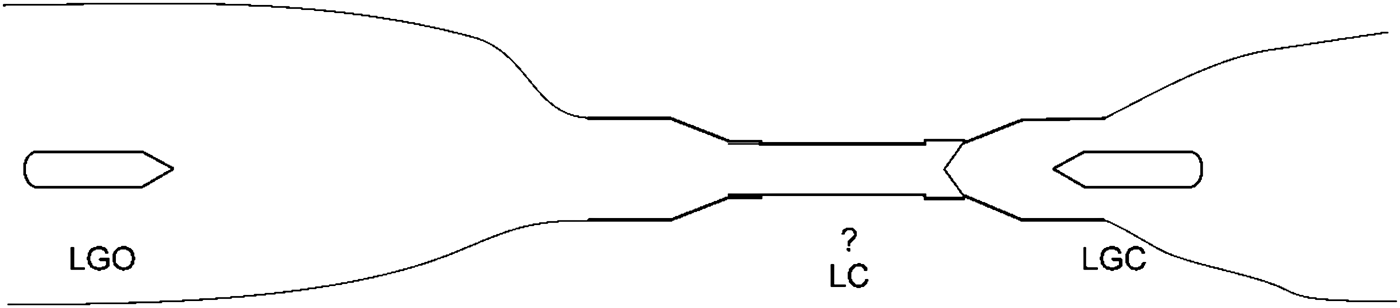
Among the various types of ship locks, this study focused on a specific choice: a single-channel two-way lock (Figure 1). The analysed system as a single queuing node utilises a First In First Out (FIFO) queuing discipline, and vessel arrivals are random from both levels (Mundy and Campbell, Reference Mundy and Campbell2005; Smith et al., Reference Smith, Sweeney and Campbell2009). A multi-trajectory approach of vessels from the same direction is possible, but only up to a reference point. The reference point is the first pre-signal. Overtaking is forbidden after the reference point, and vessels form a queue according to the FIFO principle. The primary objective in controlling a ship lock and managing vessel transitions is evaluating and reducing traffic delays (Khisty, Reference Khisty1996) while minimising the consumption of water and energy (Ting and Schonfeld, Reference Ting and Schonfeld2001; Campbell et al., Reference Campbell, Smith, Sweeney, Mundy and Nauss2007; Bugarski et al., Reference Bugarski, Bačkalić and Kuzmanov2013). The lockmasters, as part of the inland waterways tradition, are responsible for the proper functioning of the lock and vessel traffic control in the lock zone. Their vessel traffic control decisions are based on estimates under conditions of uncertainty. Therefore, the experience of the lockmaster plays a significant role in the decision-making process. The lockmaster often faces a decision-making dilemma as to whether to prioritise saving water and energy or reducing the waiting time of a vessel (Figure 1).
A dilemma situation in control of a single-channel two-way lock.

The lockmaster must simultaneously control lock operations and vessel traffic in the ship lock zone. Similar to a Vessel Traffic Service (VTS) operator in the maritime environment, experience is necessary in both ship lock control and quality decision support (Praetorius and Lützhöft, Reference Praetorius and Lützhöft2012). An adaptive expert system for ship lock control based on human experience can provide the necessary decision support. A fuzzy expert system was thus developed and applied to describe and solve the lockmaster's problem.
3. FUZZY INFERENCE SYSTEM
Zadeh (Reference Zadeh1975) introduced the concept of linguistic variables and fuzzy (approximate) reasoning. By using fuzzy logic and fuzzy inference systems (Kosko, Reference Kosko1993; Kecman, Reference Kecman2001; Siddique and Adeli, Reference Siddique and Adeli2013), one can gather knowledge from experts in a specific field and implement it in a control algorithm to achieve the desired control of a specific system. The fuzzy logic approach attempts to mimic the process of human decision making, only at a much faster rate. Teodorović and Vukadinović (Reference Teodorović and Vukadinović1998) applied fuzzy logic and artificial intelligence to traffic control and demonstrated good results.
3.1. Building the Fuzzy Expert System
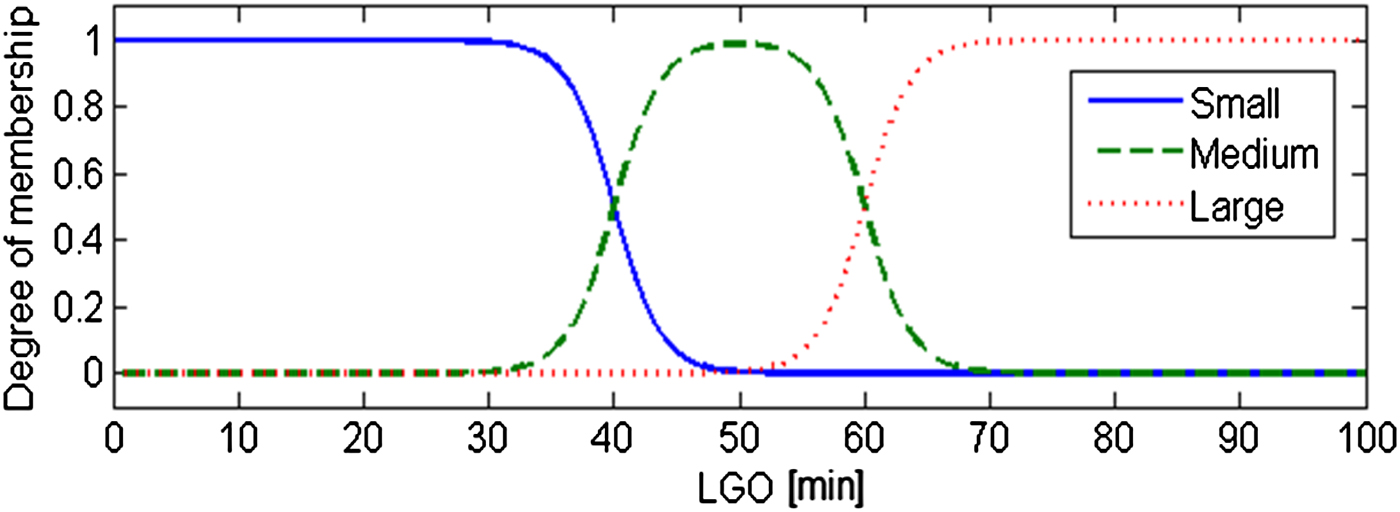
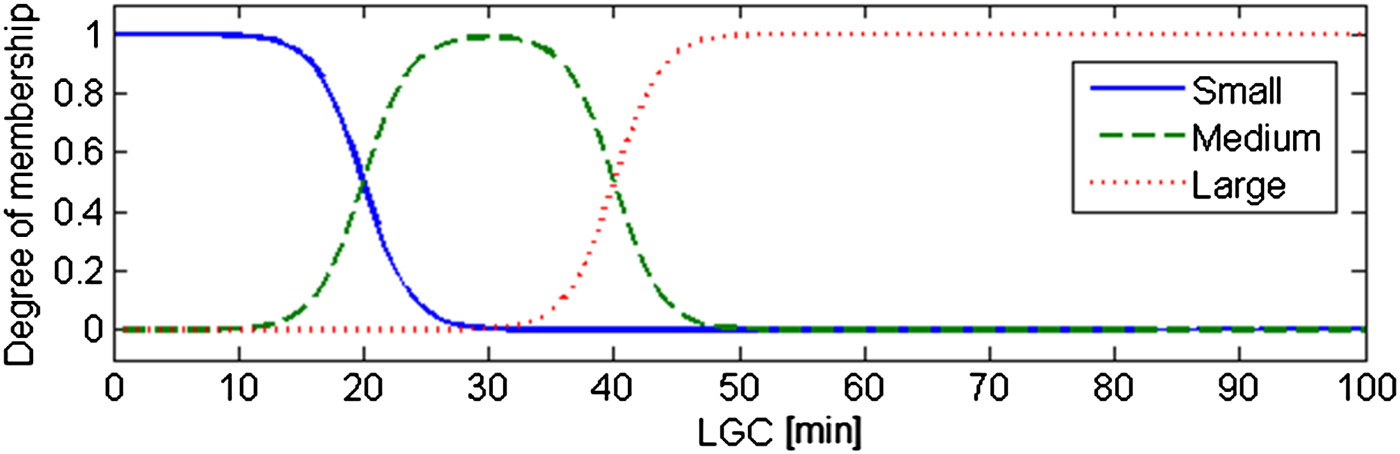
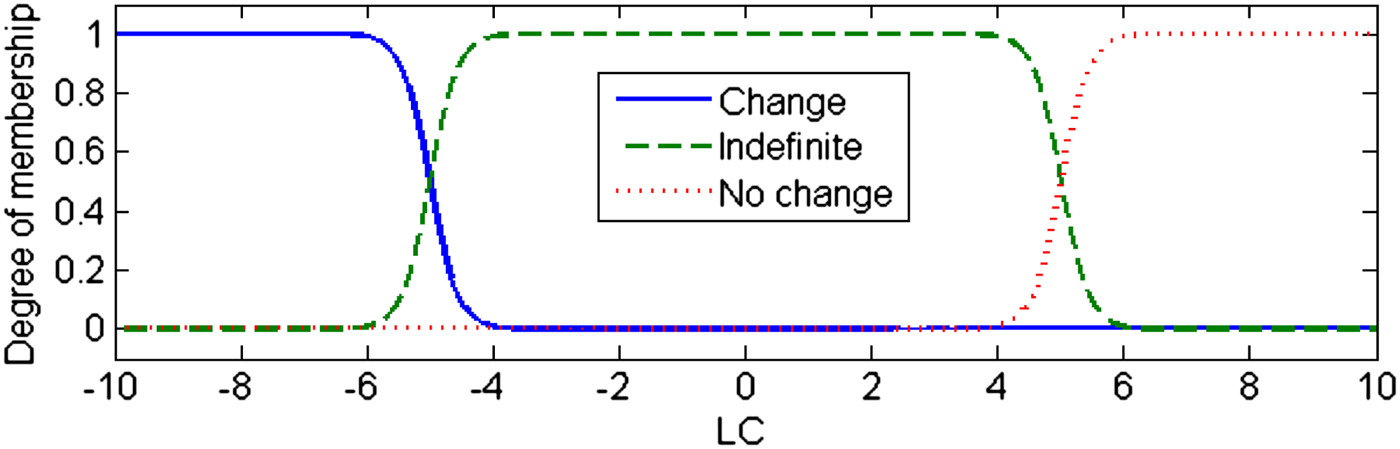
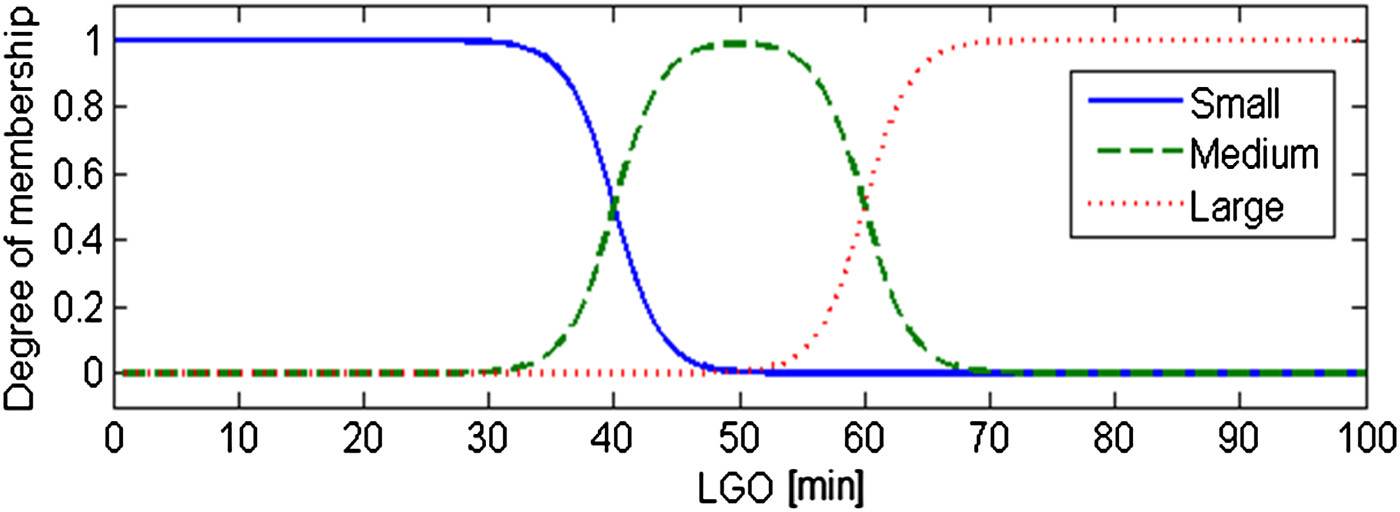
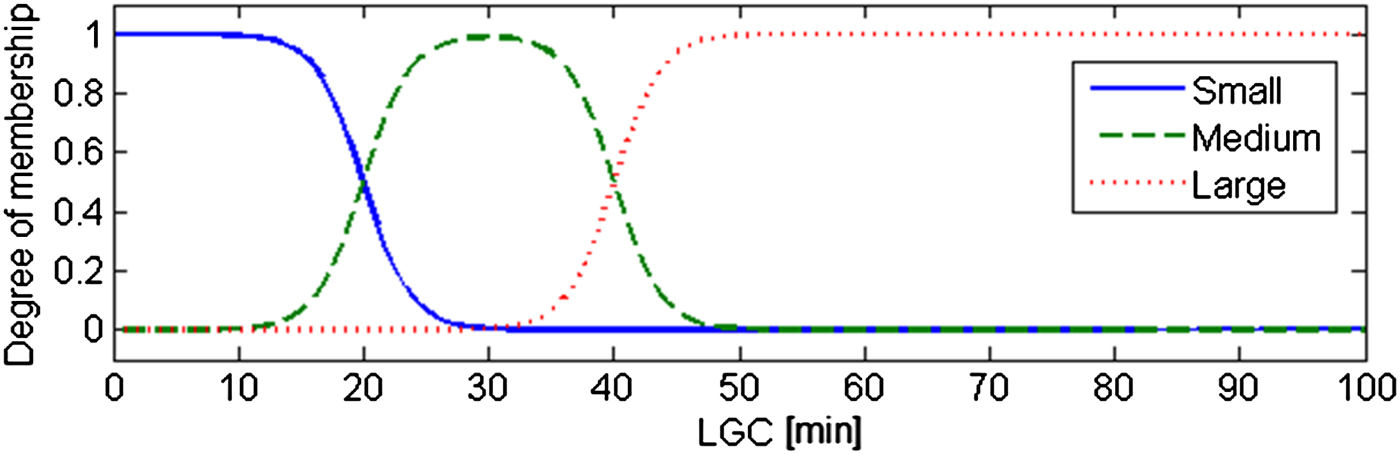
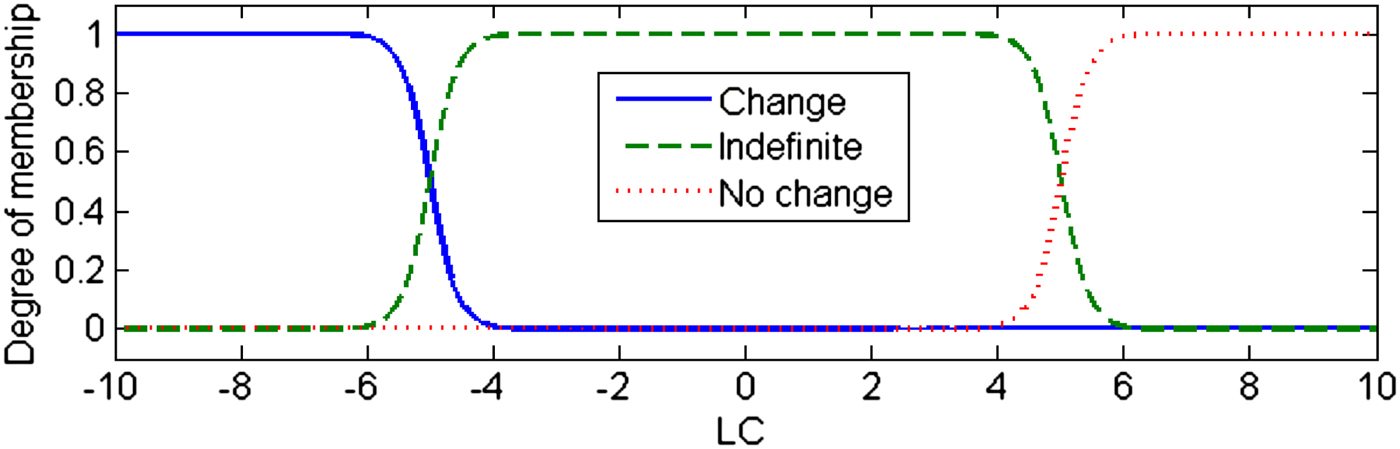
When building the basic FES, the primary goal was incorporating descriptive estimations from the lockmaster that were based on experience. Necessary data for the basic FES design were collected through interviews with lockmasters and during observations in field research. The interviews consisted of searching for answers to a given question for different distances of a vessel from the level at which the gate is currently open and from the level at which the gate is currently closed. The lockmaster makes decisions based on subjective estimations of vessel distances from the lock. The distance between a vessel in motion and the lock cannot be precisely defined. Therefore, a narrow zone around the vessel can be considered as a ship domain (Pietrzykowski and Uriasz, Reference Pietrzykowski and Uriasz2009; Wang et al., Reference Wang, Meng, Xu and Wang2009). Thus, the hypothesis that the distance of a vessel from the lock constitutes an input fuzzy variable is in accordance with research that defined a vessel's domain as a fuzzy value (Pietrzykowski, Reference Pietrzykowski2008). Bugarski et al. (Reference Bugarski, Bačkalić and Kuzmanov2013) designed basic membership functions of a fuzzy expert system for ship lock control. Two main variables are implemented as inputs to the FES (distances of vessels from the ship lock on both sides – open gate (LGO) and closed gate (LGC)) (Figure 1). Both input variables are implemented with three linguistic values (Small, Medium and Large) represented by corresponding membership functions (Figures 2 and 3). These measures can be calculated from information obtained from river information services or predicted (Zhang and Ge, Reference Zhang and Ge2013). The output variable is the “Change of the lock condition” (LC) implemented with Change, No Change or Indefinite (Figure 4). The distances from the lock (input variables) are expressed in minutes required to reach the ship lock, and the output value after defuzzification is given in universal units. This universal value is compared with the limit value (zero in this study) and produces a binary decision (to change or not).
Input variable LGO (Level where the Gate is Open).
Input variable LGC (Level where the Gate is Closed).
Output variable LC (Lock Condition).
Fuzzy rules are presented in Table 1 and are not part of the optimisation process. They are based on the work of Bugarski et al. (Reference Bugarski, Bačkalić and Kuzmanov2013).
Fuzzy rules (Bugarski et al., Reference Bugarski, Bačkalić and Kuzmanov2013).

Approximate reasoning in the fuzzy inference system is performed in several phases: fuzzification, “AND” phase, implication, aggregation and defuzzification. The methods chosen for each of these phases influence the output of the fuzzy inference system. This research covered 19 experiments with test sub-datasets with different methods for the above-mentioned phases. The experiments covered the Minimum and Product method for the implication phase, the Maximum, Sum and Probabilistic OR for the aggregation phase and five different methods for the defuzzification phase, including the Centre of gravity, Bisection of area, Mean of maximum, Largest of maximum and Smallest of maximum. The best results were obtained with the combination of methods presented in Table 2. This combination is very common in applications of fuzzy inference systems.
Selected methods of approximate reasoning.

4. PSO OPTIMISATION OF THE MEMBERSHIP FUNCTIONS
As previously mentioned, the lock operation involves opposing interests from the lock owners and the shippers. Two opposing criteria describe these interests: the minimal Average Waiting Time per vessel (AWT) and the minimal Number of Empty Lockages (NEL), as introduced by Bugarski et al. (Reference Bugarski, Bačkalić and Kuzmanov2013). This is a trade-off situation designed to provide efficiency between these two criteria. The primary goal is to maximise the profit made by the lock company, but not at the expense of the ship owners.
The most common optimisation technique for similar problems is the Genetic Algorithm (GA) outlined in Tsou et al. (Reference Tsou, Kao and Su2010), but we have selected the Particle Swarm Optimisation (PSO) method because it converges faster and much more smoothly to optimal values of the membership function parameters. Additionally, certain complexities can arise during execution of the GA with multiple optima (Aytug and Koehler, Reference Aytug and Koehler2007). Unlike the GA, the PSO is a population-based stochastic optimisation technique that operates on the principle inspired by the social behaviour of flocks of birds or schools of fish (Kennedy and Eberhart, Reference Kennedy and Eberhart2001; Panigrahi et al., Reference Panigrahi, Shi and Lim2011; Ankur et al., Reference Ankur, Debanjan, Mehta, Shalivahan and Bhattacharya2011). Although it is a relatively new optimisation algorithm, the PSO has been confirmed as advantageous for multiple objective fuzzy optimisation scenarios (Panigrahi et al., Reference Panigrahi, Shi and Lim2011; Tapkan et al., Reference Tapkan, Ozbakir and Baykasoglu2013).
4.1. Particle Swarm Optimisation
The PSO represents a sociological system of simple individuals who interact with other individuals and the environment. Several variants of optimisation algorithms based on a swarm (cluster) of particles exist, including insects (bees and ants with pheromones), arthropods, and water drops. The generally accepted name of these systems is “swarm intelligence.” Simulations of these systems are able to model relatively unpredictable group dynamics and social behaviours (Bergh, Reference Bergh2001), and this behaviour may lead to better solutions. The particles (potential solutions) move throughout the space of the problem by following the current best particles (Kordon, Reference Kordon2010). PSO has been successfully used to solve various types of problems, including optimisation functions (Shafahi and Bagherian, Reference Shafahi and Bagherian2013), the training of artificial neural networks, and fuzzy classification systems (Chen, Reference Chen2006). One of the advantages of PSO is that it does not use derivatives in determining an optimum (Ren et al., Reference Ren, Cao and Zhu2006), though combining PSO with gradient algorithms (Plevris and Papadrakakis, Reference Plevris and Papadrakakis2011) or differential evolutions is not rare (Sedki and Ouazar, Reference Sedki and Ouazar2012). PSO is preferable to optimisation algorithms when addressing multi-objective optimisation problems (Xu et al., Reference Xu, Yang and Long2012) and is frequently used in combination with fuzzy logic (Li and Pan, Reference Li and Pan2013).
A few variations exist in the PSO algorithms proposed by different authors. For example, Krohling and dos Santos Coelho (Reference Krohling and dos Santos Coelho2006) proposed a “co-evolutionary” PSO with a Gaussian probability distribution of accelerating coefficients. The version of the algorithm selected for application in our research was introduced by Rapaić and Kanović (Reference Rapaić and Kanović2009) and generalised in Kanović et al (Reference Kanović, Rapaić and Jeličić2011). The PSO is initialised with a set of randomly generated solutions (particles). In each step of the algorithm, the value of each particle is updated with the two best values. The first value represents the best solution that the individual particle has achieved thus far (pbest in Equation (1)). The second value represents the global best solution (fitness) achieved by any particle in the population (gbest in Equation (1)). After calculating these two best values, the velocities and positions of every particle are updated based on the following equations:
 $$\eqalign{ v = v & + c_1 \ {^\ast} rand {^\ast} \left( {\,pbest - present} \right)\ + \cr & c_2 \ {^\ast} rand \left( {gbest - present} \right)} $$
 $$\matrix{ {\,present = present + v} \cr} $$
where v is the velocity (weighting factor for the particle), present is the current solution, pbest is the personal best solution, gbest is the global best solution (in the entire population), rand is the randomly generated number [0, 1], and c 1 , and c 2 are the learning factors.
The learning factors (c 1 and c 2 in Equation (1)) represent the cognitive and social components, respectively, and determine how fast the particles move toward the optimal solution.
4.2. Optimisation of membership function parameters
The working principle of fuzzy inference mimics that of human reasoning. However, the question remains whether the obtained fuzzy sets are the best choice for the quality control of ship locks. Can the computer determine better control tactics than the human mind? Is it possible, with certain changes in the membership functions, to improve the obtained results?
The proposed optimisation and testing of the FES were carried out based on the generated dataset of vessel traffic densities. The dataset was chosen to correspond to actual traffic conditions and was formed on the basis of simulation experiments that could describe possible states of the system. Simulation models that closely described the complex process of vessel traffic were developed, verified and validated from research on navigable canal capacity (Bačkalić, Reference Bačkalić2001). The lockmaster's dilemma rarely appears in situations where the traffic density is significantly lower than the ship lock capacity or close to the ship lock capacity limit.
To compare the work of the various fuzzy expert systems, it is necessary to form an assessment, i.e., a universal criterion. In this case, the criterion can be conceived as an “economic” criterion and defined as a weighted sum of the NEL and AWT (see Equation (3)):
 $$E = A \ {^\ast} NEL + B \ {^\ast}AWT$$
where E is the optimality criterion, A and B are the weight coefficients, NEL is the number of empty lockages, and AWT is the average waiting time per vessel.
Parameters A and B are the weighting factors for the multi-criteria objective function defined by Equation (3); they are used to give more or less importance to each separate criterion (NEL and AWT). Coefficients A and B tell us which is more expensive - the waiting of the vessels or the waste of water and energy. The initial values of these coefficients were set to A = B = 1. If parameters A and B are equal, then NEL and AWT are of “approximately equal” importance, meaning that one empty lockage per year is “approximately equal” to one minute of average waiting time per vessel. In practice, every time the lockmaster wants to change strategy he would change the relation between these two parameters and give more weight to one of the two opposing criteria. After this, the optimisation process must be re-done, offering the new membership function parameters as the result of the new objective function. The lockmaster can then accept the new parameters of the expert system to achieve the desired operating strategy.
One hundred individuals (particles) were generated, and the process of “seeking” the best solution lasted for ten iterations. After nine to ten iterations, the algorithm converged to a certain optimum. The number of individuals affects the variety of the initial variables, which affects the speed of convergence and identification of better solutions. However, an increase in the number of individuals significantly prolongs the time of program execution; for example, the duration of one iteration with 100 individuals is approximately 25 minutes on an average PC, whereas the simulation runs for nearly an hour with 200 individuals. When fuzzy inference systems are optimised, both input and output variables are typically considered. In this case, only input membership function parameters are optimised because changes in output variables do not affect the final decision.
The FES is designed with three variables (two inputs and one output) implemented with three linguistic values each. The sigmoid membership functions used in the FES are of a Gaussian asymmetric type. The symmetric Gaussian function depends on two parameters σ and a as given by
 $$f\left( {x,\;\sigma,\; a} \right) = e^{\displaystyle{{ - \left( {x - a} \right)^2} \over {2\sigma ^2}}} $$
The asymmetric Gaussian function is a combination of both of these parameters. The first function, specified by σ 1 and a 1 , determines the shape of the left-most curve. The second function, specified by σ 2 and a 2 , determines the shape of the right-most curve. In the presented case, a is a variable parameter of the membership function and parameter σ is constant (σ 1 = σ 2 = σ).
To achieve a workable and quality optimisation process, the number of variables has been reduced in accordance with the following assumptions: (a) the output variable does not significantly affect the final decision; (b) the slopes are fixed to a priori given values; and (c) the positions of the neighbouring membership functions of linguistic values are linked to each other because of the mutual overlapping. The final number of unknown parameters is four.
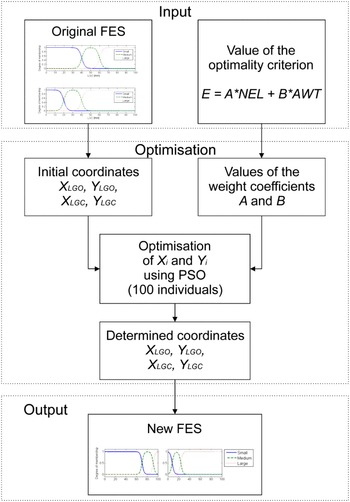
Each particle consists of four values (coordinates). These values are parameters that define the position of the asymmetric Gaussian membership functions. The first two values, X LGO and Y LGO , determine the parameters a 1 and a 2 for the fuzzy variable LGO. The other two values, X LGC and Y LGC , determine the parameters a 1 and a 2 for the fuzzy variable LGC. As shown in Figures 2 and 3, the input FES variables consist of three sigmoid functions. The “Medium” sigmoid function is defined with two values X and Y, and the other two sigmoid functions can be treated as inverse functions. Figure 5 shows the steps of the optimisation procedure of the FES for control of the ship lockage process.
Schematic of the optimisation procedure of the FES for control of ship lockage process.

The PSO algorithm was implemented with the following parameters: v max = 0·4, v min = 0·05 (maximal and minimal speed v), c 1 = 1·1 and c 2 = 1·2 (learning factors; see Equation (1)). The maximal and minimal speed of a particle is determined experimentally. Chosen values are fixed during the optimisation process to values that provide movement of a particle in the search space that is neither too fast nor too slow. Cognitive and social components (learning factors c 1 and c 2 ) are selected based on experience to give a slight advantage to movement towards a global best solution in comparison to a local best solution of a particle (Kanović et al., Reference Kanović, Rapaić and Jeličić2013). They are chosen so that the social component is more influential than the cognitive component, i.e., the movement of individuals through the solution space is influenced to a greater extent by the global best solution than the local best solution. These values produced the best performance of the PSO algorithm in our test cases.
The particle coordinates (X LGO , YLGO, XLGC, YLGC ) were limited to intervals of real numbers [0, 100] corresponding to the interval of input fuzzy variables (in minutes). They were initially randomly generated within an interval [10, 90] to ensure more central distribution within the search space. The four listed coordinates were the position parameters of sigmoid membership functions “Small” and “Large” as to distance of a vessel from the ship lock in minutes. A value of 10 denoted that any distance closer than 10 minutes should belong more to fuzzy set “Small” than to “Medium”. Likewise, a value of 90 denoted that any distance beyond 90 minutes should belong more to fuzzy set “Large” than to “Medium”.
5. RESULTS AND DISCUSSION
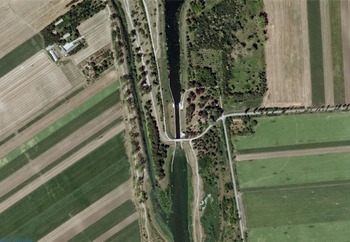
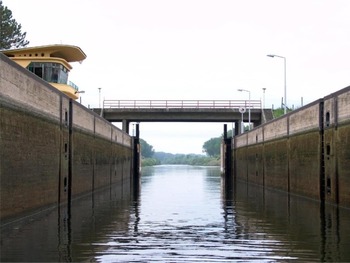
In Serbia, there is a complex system of Danube-Tisa-Danube navigable canals with a total length of approximately 600 km. In this system, 12 ship locks are in use and can be classified into three characteristic groups. All of them are designed for the same vessel category but differ in some technical details. Three relevant representatives of each group were selected (locks with the largest traffic density). Although they differ in some technical details, the rules of navigation and order of control operations are identical for all analysed locks. The ship lock Sombor (Figures 6 and 7) was observed as an actual representative system. The time intervals needed for the transition were defined by time measurements and interviews with lockmasters. A total of 25 minutes is required for the transition with a vessel in the chamber (one vessel at a time), and 15 minutes are required when no vessel is present.
Location of the ship lock Sombor.

The ship lock Sombor.

The simulation was conducted with a database of vessel arrivals from the generated dataset that included possible states of the system. However, the proposed expert system can be expanded to fit other lock varieties with minor revisions to the FES design.
After ten iterations of the PSO algorithm, the particles were observed to gather around certain values. The global best solution was a particle with parameters X LGO = 38·89, Y LGO = 61·94, X LGC = 22·31 and Y LGC = 44·2. Table 3 shows the simulation results with the original fuzzy expert system, the results obtained with the new optimised FES, and the results obtained using the criteria of AWT and NEL.
Comparative presentation of simulation results.

NEL - number of empty lockages
AWT - average waiting time
The above results for the economic criterion were obtained for A = 1 and B = 1 (see Equation (3)). The weighting parameters A and B can take on other numeric values, depending on the importance of the AWT or the NEL. To understand the variations of the results and the positions of the membership functions, two additional cases were taken under consideration. The first case used A = 2 and B = 0·5, and the second used A = 0·5 and B = 2. The first case represented the economic criterion in which the NEL is more important than the AWT. The second case addressed the opposite situation. In the initial economic criterion, a 1:1 relationship existed between A and B. In the two new cases, the ratio was 4:1 or 1:4.
New parameters were obtained after applying the PSO algorithm with the newly listed coefficients. Table 4 shows the values of these parameters for the original FES, the optimised FES with the first variant of the economic criteria, and the optimised FES in new cases with the coefficients A and B different from 1.
Comparative overview of the FES parameter values obtained from different forms of the economic criteria.

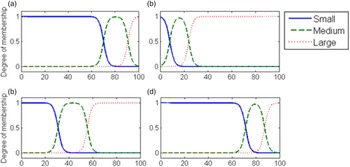
The fuzzy input membership functions, as constructed and based on the values from the last two columns in Table 4, are shown in Figure 8. The upper two graphs (Figures 8(a) and 8(b)) represent the membership functions for the variables LGO and LGC in the FES, which were obtained with the coefficients A = 2 and B = 0·5, and the lower two graphs (Figures 8(c) and 8(d)) with the coefficients A = 0·5 and B = 2. Figure 8 shows the significant differences observing the membership function boundaries in the originally proposed FES (Figures 2 and 3). The rules (Table 1) were not considered for optimisation.
Input fuzzy variables based on the parameters obtained with different economic criteria: (a) LGO 4:1, (b) LGC 4:1, (c) LGO 1:4, (d) LGC 1:4

An empty lockage occurs as the result of only one rule in the rule base — when LGO is “Large” and LGC is “Small” (Table 1). In the first case (A = 2, B = 0·5; Figures 8(a) and 8(b), this rule is activated in a situation when a ship approaches from the open gate side at a distance greater than 90 minutes from the lock, whereas a ship that approaches from the closed gate side is located at a distance of less than 10 minutes. The difference (80 min) is two times greater than the difference in the basic FES, which tells us that an empty lockage occurs only in extreme cases. The results of the new FES simulation compared with those from the original are presented in Table 5.
Test results with different Fuzzy Expert Systems (FES).

NEL - number of empty lockages
AWT - average waiting time
In the case of A = 2 and B = 0·5 (“Optimised 4:1” row in Table 5), the number of empty lockages, a total of 670, decreases by 98 compared with the number obtained using the original FES and by 74 compared with the number obtained using the first optimised FES. However, the average waiting time is 144·19 minutes, which increases by 6·18 minutes compared with the time obtained with the original FES and by 8·59 minutes compared with the results obtained with the first optimised FES. It can be concluded that the reduced NEL leads to an increase in the AWT, which is expected when considering the new coefficients for the economic criterion and the logic of the lock operation. If the chosen coefficients are A = 0·5 and B = 2 (lower waiting time favoured), then the NEL is 842, which is 74 or 98 more, compared with the respective results from the previous optimisations, whereas the AWT is 112·49 minutes, which is 25·52 and 23·11 minutes less. Table 6 presents these differences expressed as percentages.
Relative changes in the results comparing the original FES.

NEL - number of empty lockages
AWT - average waiting time
The positive values in Table 6 represent improvements compared with the results obtained with the original FES. The differences in values are not significant for two reasons: (1) testing was performed on the generated dataset of possible states of the system and (2) the results are generalised and averaged. Both FESs give similar outputs in the control process when the vessel traffic densities are low (less than 30% of lock capacity) or high (more than 70% of lock capacity). At low traffic densities, empty lockages are frequent and vessel delays are minimal, regardless of the defined criteria of the optimality. Similarly, empty lockages at higher vessel traffic densities are very rare because a vessel is almost always waiting for the lockage on the other side. The greatest improvements are achieved in the traffic density interval between 30–70% of capacity because the operator's dilemma mostly appears in these cases.
The results shown in Table 6 cover three cases of relations between coefficients A and B. The first case (1:1) occurs when NEL and AWT are approximately equally important and two other cases (4:1 and 1:4) cover two situations when one criterion is more important than the other. Factors 0·5 and 2 are chosen to define the latter relations. In practice, a ship lock management or a lockmaster must choose these coefficients, and this raises questions about how to analyse, assess and establish this relation. First, a lockmaster must analyse which is more important: water and energy consumption or vessel waiting times in the ship lock zone. The solution to this problem demands in-depth analysis because it is subject to many unpredictable conditions. Energy consumption for operating the lock strictly depends on the number of lockages. Water consumption depends on several different factors (location: river or canal; water supply: free flow or pumps; consumers: settlements, industry and irrigation; evaporation: low or high temperatures; economics: energy and water prices). All of these factors require a very complex analysis as a basis for the new assessment of the relation between the two coefficients; then the new optimisation process can be performed with a new objective function. The results of the optimisation will return two values to the operator: the estimated number of empty lockages and the average waiting time in minutes per vessel. If the operator is satisfied with the provided results, he can accept the new parameters of the membership functions of the FES; if the results are not satisfactory, the optimisation process should be repeated with new coefficients A and B. If the management of the ship lock is able to define the costs for each part of the criterion, then the optimal values for A and B can be determined and the proposed FES can be optimised to that specific goal. Moreover, operators can expect to achieve better FES performance.
6. CONCLUSIONS
An appropriate optimisation technique was presented to improve a proposed FES that was designed for decision-making support in the ship lockage process and for training lockmasters. This new approach in the field of vessel traffic control in the ship lock zone represents a rare use of artificial intelligence in water transport. The basic characteristics of the proposed system were adaptability and flexibility.
A FES was designed for a single-channel two-way lock (single chamber - single vessel). Future research should consider the development of a control algorithm for a multi-channel lock (operating in series or parallel), which is not rare in actual systems. This may require more input variables and/or more complex fuzzy rules. The authors hope that including vessel priorities (military, commercial, etc.) in the proposed system could significantly improve the results. Lockmasters could use the proposed system as a valuable aid in making decisions, particularly if many vessels with different priorities request lockages over a short time span.
Based on the obtained results, it can be concluded that the PSO algorithm provided certain improvements. More important, the improvements were present under both economic criteria (NEL and AWT). There were 24 fewer empty lockages with the optimised FES than with the original FES. The average waiting time per vessel was shortened by 2·41 minutes. It was demonstrated that a good selection of economic criteria parameters can significantly improve the FES performance. Thus the optimisation approach was proven to be satisfactory. It should be noted that the obtained results largely depended on traffic density. The developed FES was designed according to existing navigation rules (allowed navigation speed) and the technical characteristics of a ship lock (duration of the chamber filling/emptying and duration of additional operations in the lock zone). The expert system must be redesigned if any characteristic of the current situation is changed. In addition, the proposed expert system can be applied in two modes. In semi-automatic mode, it is designed to be used as a support in the decision-making process. In the more automated variant, the FES can directly control ship lock operations, thus eliminating the need for human operators and decreasing the probability of errors caused by human factors.
In future research, attention should be given to different disciplines of queues and more complex cases (i.e., multiple arrivals and multi-trajectory arrivals on both sides of a ship lock). Decision-making in cases of a multi-trajectory approach differs from the proposed model. A multi-trajectory approach occurs in ship locks whose chambers are designed to accommodate more vessels simultaneously. In these cases, the total ship lockage process takes significantly longer and the problem exhibits completely different characteristics and sequences of activities.
ACKNOWLEDGEMENTS
This research was supported by the Ministry of Education, Science and Technological Development (Government of the Republic of Serbia) under Grant Number TR 36007.