Childhood obesity is defined as the body mass index ⩾95th percentile for age and gender by the Center for Disease Control and Prevention.Reference Flegal, Wei and Ogden 1 There is strong evidence that over-consumption of calories and a steady decline in physical activities play a major role in growing rates of childhood obesity all over the world.Reference Troiano, Briefel and Carroll 2 Echocardiographic examinations of obese children have revealed early and preclinical left ventricular or septal hypertrophy, and left or right ventricular dysfunction.Reference Dietz and Gortmaker 3 Childhood obesity is also a major determinant of cardiovascular risk later in adult life.Reference Dietz and Gortmaker 3 , Reference Harada, Ogino and Takada 4 Moreover, most of the obese people have unfavourable levels of metabolic risk factors and biochemical markers during the 15–20 years preceding the onset of cardiovascular disease.Reference Hulsegge, Spijkerman and van der Schouw 5 Prevention may be achieved by changing the dietary habits of these children and applying regular exercise programmes.Reference Gutin 6 , Reference Yin, Gutin and Johnson 7 Therefore, we evaluated the cardiovascular risk profiles and the biochemical parameters of obese children before and after a 6-month diet and exercise programme adjusted for their age and gender.
Materials and methods
A total of 34 obese children comprising 18 females and 16 males with the body mass index ⩾95th percentile for age and gender were enrolled in this prospective study. These children were evaluated in the Pediatry and Pediatric Cardiology Outpatient clinics of the University of Health Sciences, Kartal Koşuyolu Research and Training Hospital, Istanbul, Turkey, between December 2016 and June 2017. The information about their medical and family histories and the written consents for the study were obtained from their parents. All of these children were overweight/obese from birth and have not had a regular diet and exercise for the last 2 years. The exclusion criteria were the children with syndromic obesity – Prader Willi, Laurence-Moon Biedle syndrome, and so on – with systemic illnesses – cystic fibrosis or inflammatory bowel disease, hepatitis, and so on, using medication – with the family history of hereditary hyperlipidaemia and/or atherosclerosis, and who did not accept the diet and exercise programme. The heights and weights of the children included in the study were measured twice, with the shoes off, and the average was recorded. The body mass index was calculated dividing the weight in kilograms by the square of height in meters. Children with the body mass index ⩾95th percentile for age and gender and mean body mass index >25 kg/m2 were accepted as obese according to the criteria of Center for Disease Control.Reference Flegal, Wei and Ogden 1 Their blood pressures were measured twice by a standard sphygmomanometer in the sitting position, with 10 minutes interval between the two measurements, and after a 30 minutes resting period. The average was recorded as the final blood pressure value. The children were accepted as hypertensive if they had systolic and diastolic blood pressures ⩾95th percentile specific to their age, sex, and height. 8 The cardiac structure and ventricular functions were evaluated by M-mode, pulsed-wave, and coloured-mode tissue Doppler echocardiography (Philips iE33 with 5-MHz transducer) according to the American Society of Echocardiography.Reference Lang, Bierig and Devereux 9 The images were obtained in the apical four chamber, parasternal short- and long-axis views. Left ventricular diameter, left ventricular posterior wall thickness, ejection fraction, fractional shortening, mitral and tricuspid annular plane systolic excursion measurements were performed by two-dimensional M-mode echocardiography.
Moreover, mitral and tricuspid early diastolic, late diastolic, and the early and late systolic Doppler velocities were measured by tissue Doppler echocardiography to reveal the systolic and diastolic ventricular dysfunction. The ratio of mitral early diastolic velocity to tissue Doppler mitral early diastolic velocity was also calculated to assess diastolic dysfunction. Left ventricular myocardial performance index was calculated, defined as the subtraction of the ejection time from the mitral closure opening time interval value divided by the mitral closure opening time, for the quantification of the global left ventricular function. All these measurements were repeated after the application of a 6-month diet and exercise programme. The venous blood samples of the children were obtained after 12 hours of fasting to measure blood glucose, total cholesterol, high and low-density lipoprotein cholesterols, aspartate aminotransferase, alanine aminotransferase, and triglyceride levels by the enzymatic spectrophotometric method. The Hba1c level was analysed by liquid chromatography. The thyroid hormone levels, thyroid stimulating hormone, and thyroxine were evaluated by direct chemiluminescence immunoassay technique. The norm values accepted for the age group of this study were between 5.4 and 6.1 mIU/L for thyroid stimulating hormone and 160–178 nmol/L for thyroxine.Reference Reinehr and Andler 10 High fasting glucose (≥110 mg/dl) and HbA1c levels (≥6%), hypercholesterolemia (≥200 mg/dl), decreased high-density lipoprotein cholesterol (≤40 mg/dl), increased low-density lipoprotein cholesterol (≥100 mg/dl), and hypertriglyceridemia (≥110 mg/dl) were accepted as the biochemical cardiovascular risk factors.Reference Lippi, Arosio and Prior 11
The diet, adjusted by the dietitian according to the age and gender of the children, provided 1000–1200 kcal/day. It included protein in at least two meals (25–30%), a carbohydrate with each meal (45–50%), a little amount of fat (15–20%), and two portions of fruit and vegetables throughout the day.Reference Banks, Williams and Cumberlidge 12
The exercise programme recommended by the physiotherapist for the obese children included 10 minutes of warming up, 30 minutes of resistance training, 10 minutes of aerobic exercise, 10 minutes of agility training, 5 minutes of cool-down, and short rest periods between the exercises.Reference Banks, Williams and Cumberlidge 12 Moreover, the time for playing with computers and watching television was limited to 1 hour/day in coordination with their parents.
The study was approved by the Ethics Committee of University of Health Sciences, Kartal Koşuyolu Research Hospital, Istanbul, Turkey.
Statistical analysis
Statistical Package for the Social Sciences, version 15.0 (SPSS Inc., Chicago, IL, USA) software was used for statistical analysis. Following the descriptive statistics, mean, SD, median, interquartile range, and percent change were obtained. The normality of the distributions was analysed with the Shapiro–Wilk test. A p-value >0.05 was considered normally distributed. Paired t-test was performed for the normally distributed variables, and the Wilcoxon test for the variables that do not follow a Gaussian distribution.
For all analysis, the criterion for the statistical significance was p<0.05.
Results
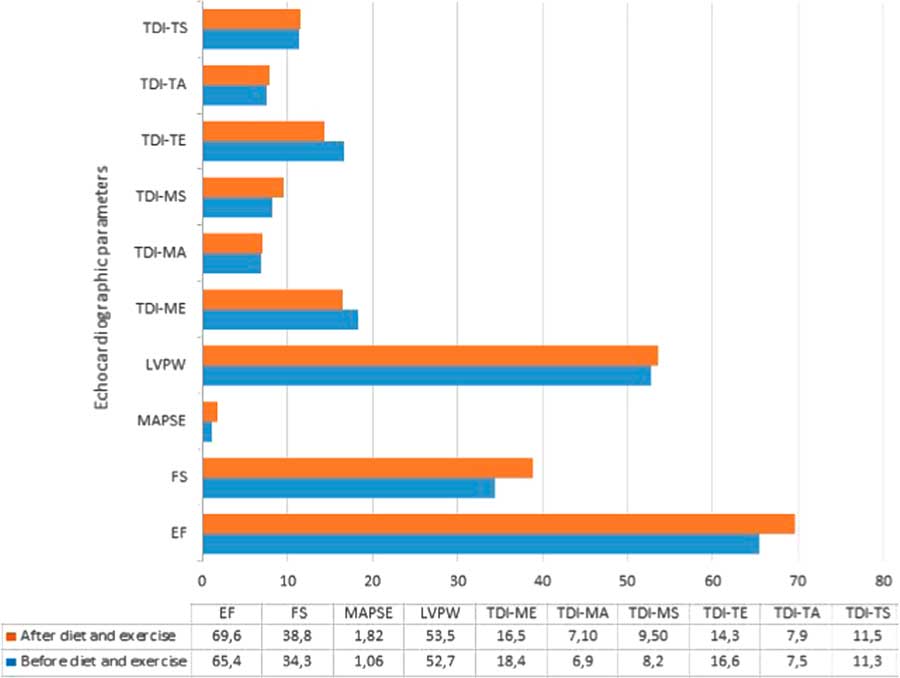
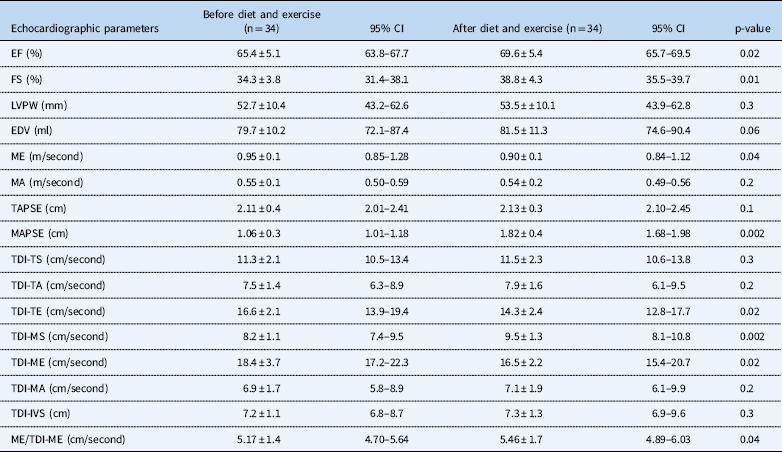
The mean age of 34 obese children was 10.8±2.3 years. Their mean weights and the body mass indexes significantly decreased after the diet and exercise when compared with before (56.1±18.2 versus 63.8±19.3 kg and 25.1±4.5 versus 28.4±4.3 kg/m2, respectively, p-value <0.05). In the terms of percentage change, the weight was decreased by 12.2% and the body mass index by 11.8% at the end of the programme. The statistical analysis of the echocardiographic parameters revealed that the values related to the systolic ventricular functions, that is ejection fraction, fractional shortening, mitral annular plane systolic excursion, and tissue Doppler mitral systolic velocity measurements were significantly raised following the diet and exercise programme (p-value <0.05). The percentage change revealed that the ejection fraction, fractional shortening, mitral annular plane systolic excursion, and tissue Doppler mitral systolic velocity values increased by 20.3, 11.4, 16.1, and 12.4%, respectively, after diet and exercise. Elevated tissue Doppler mitral and tricuspid early diastolic velocities, associated with the early diastolic ventricular dysfunction, were significantly decreased after the weight reduction. Moreover, the ratio of mitral early diastolic velocity to tissue Doppler mitral early diastolic velocity, related with diastolic dysfunction, was significantly increased after the weight reduction (p-value <0.05) (Table 1). Tissue Doppler mitral and tricuspid early diastolic velocities decreased by 30.2 and 15.7%, respectively. The mean echocardiographic values of the children before and after diet and exercise were compared in Figure 1.
Comparison of the echocardiographic parameters of the obese children before and after diet and exercise. EF: Ejection fraction, FS: Fractional shortening, LVPW: Left ventricular posterior wall thickness, EDV: End diastolic volüme, ME: Mitral early diastolic velocity, MA: Mitral late diastolic velocity, TAPSE: Tricuspid axial plane systolic excurcision, TDI: Tissue Doppler Imaging/TE: Tricuspid early diastolic velocity, TS: Tricuspid early systolic velocity, MS: Mitral systolic velocity, ME: Mitral early diastolic velocity, IVS: Interventricular septum systolic velocity.

Analysis of the echocardiographic parameters of obese children before and after diet and exercise.

p-value <0.05 was accepted as statistically significant
CI=confidence interval; EDV=end diastolic volume; EF=ejection fraction; FS=fractional shortening; IVS=interventricular septum systolic velocity; LVPW=left ventricular posterior wall thickness; MA=mitral late diastolic velocity; MAPSE=mitral annular plane systolic excursion; ME=mitral early diastolic velocity; MS=mitral systolic velocity; TAPSE=tricuspid axial plane systolic excursion; TDI=tissue Doppler imaging; TE=tricuspid early diastolic velocity; TS=tricuspid early systolic velocity
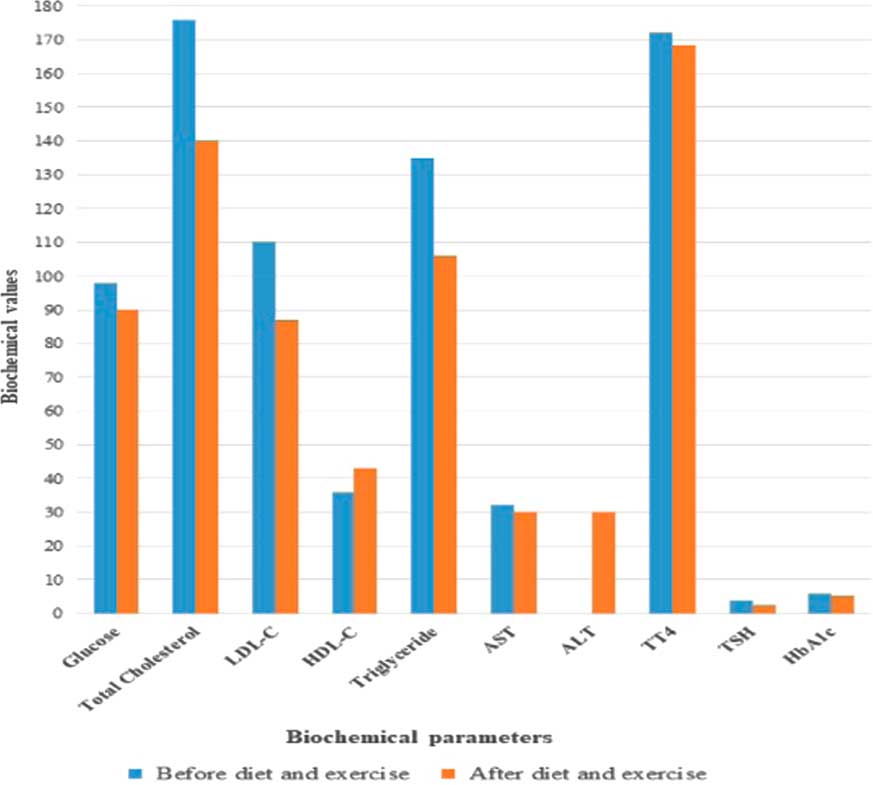
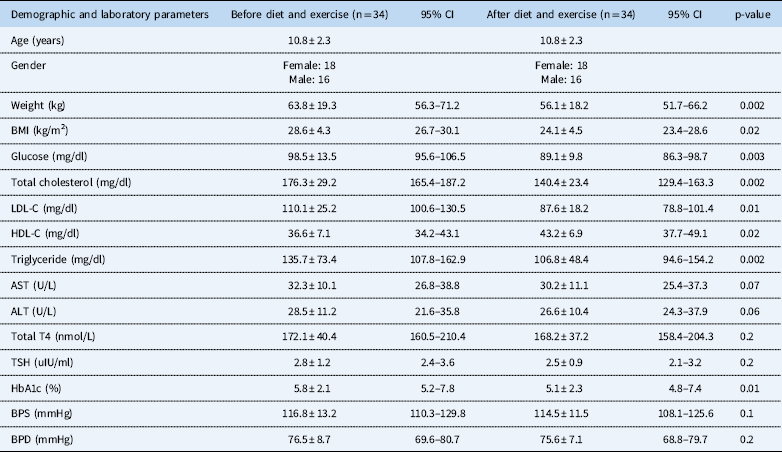
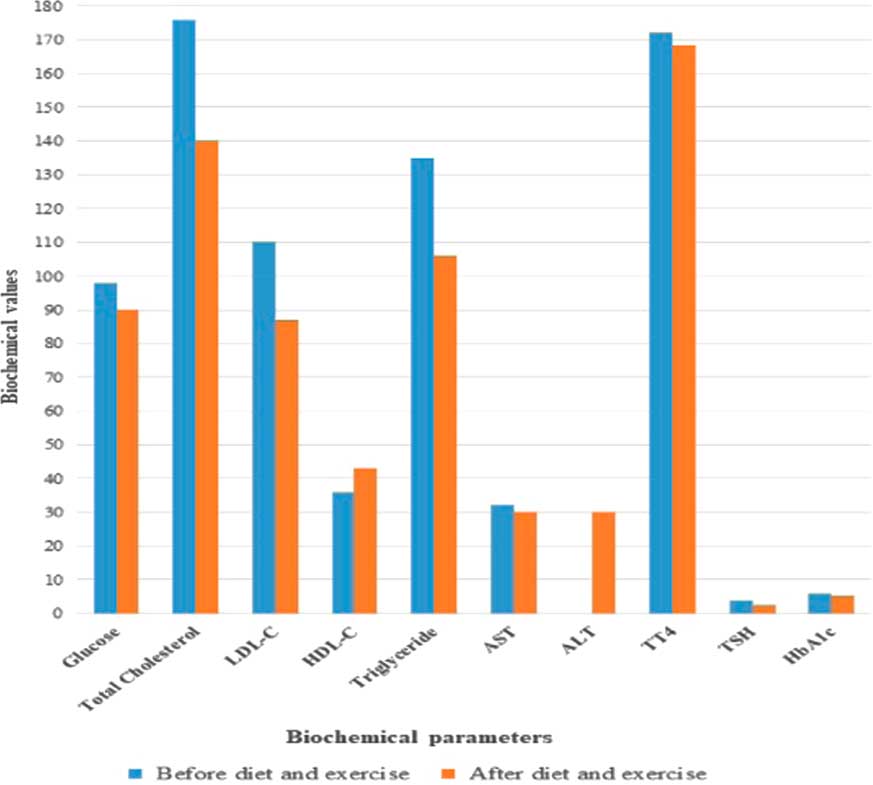
Glucose, HbA1c, total cholesterol, low-density lipoprotein cholesterol, and triglyceride levels were significantly decreased compared with the values before diet and exercise (89.1±9.8 versus 98.5±13.5 mg/dl, 5.1±2.3 versus 5.8±2.1%, 151.4±23.4 versus 176.3±29.2 mg/dl, 94.6±18.2 versus 110.1±25.2 mg/dl, and 106.8±48.4 versus 135.7±73.4 mg/dl, respectively; all p-values <0.05), whereas the high-density lipoprotein cholesterol levels were significantly increased (41.2±6.9 versus 37.6±7.1 mg/dl, p<0.05). The blood pressure, thyroid hormone levels, and the liver function tests of the children were at the upper limits of the normal ranges, so moderately decreased after diet and exercise and the differences were not statistically significant (p-values >0.05) (Table 2). The mean biochemical values were shown in Figure 2.
Comparison of the biochemical parameters of obese children before and after diet and exercise. HDL-C: High-density lipoprotein cholesterol, LDL-C: Low-density lipoprotein cholesterol, AST: Aspartate aminotransferase, ALT: Alanine amino transferase, TT4: Thyroxine, TSH: Thyroid stimulating hormone, HbA1c: Hemoglobin A1c.
Analysis of the demographic characteristics and laboratory parameters of obese children before and after diet and exercise.

p-value <0.05 was accepted as statistically significant
ALT=alanine aminotransferase; AST=aspartate aminotransferase; BMI=body mass index; BPD=diastolic blood pressure; BPS=systolic blood pressure; CI=confidence interval; HbA1c=haemoglobin A1c; HDL-C=high-density lipoprotein cholesterol; LDL-C=low-density lipoprotein cholesterol; TSH=thyroid stimulating hormone; TT4=thyroxine
Discussion
Obesity has become one of the most serious health issues in both children and adults all over the world.Reference Lee, Ha and Christiani 13 , Reference Raitakari, Juonala and Kahonen 14 The importance of weight loss via regular diet and exercise in the growing years would become more evident when the effects of obesity on the cardiac functions of children have been determined. The present study showed that the obesity significantly impaired the systolic and early diastolic ventricular functions from the childhood and distorted their blood glucose, HbA1c and lipid levels; all of which could be returned almost to normal ranges by a regular diet and exercise programme of 6 months.Reference Randall, Kwagyan and Huang 15 , Reference Randall and Randall 16 Altered haemodynamics due to the high volume of circulating blood in obese people lead to larger stroke volumes and subsequent left ventricular dilatation.Reference Lee and Oh 17 Compensatory hypertrophy may develop as a result, thus impairing the diastolic or both systolic and diastolic ventricular functions.Reference Freedman, Khan and Dietz 18 , Reference Verma, Jayaraman and Kumar 19 Pascual et al revealed that the obese children had subclinical left ventricular diastolic dysfunction in all grades of obesity and disturbed systolic functions in the early stages of obesity, which were reversible with weight reduction.Reference Alpert 20 On the basis of our findings, 12.1% of weight loss resulted in 20.3, 11.4, 16.1, and 12.4% rise in ejection fraction, fractional shortening, mitral annular plane systolic excursion, and tissue Doppler mitral systolic velocity, respectively, associated with the improved systolic ventricular functions. The early diastolic functions were also improved by 30.2 and 15.7% with respect to the tissue Doppler mitral and tricuspid early diastolic velocities. Moreover, the ratio of mitral early diastolic velocity to tissue Doppler mitral early diastolic velocity, a reliable indicator of diastolic dysfunction,Reference Choi, Eun and Kim 21 , Reference Cantinotti, Giordano and Scalese 22 revealed an improvement after the weight reduction. Clinically, overt cardiac dysfunction usually does not occur in obese children, so we preferred pulsed-wave and coloured-mode tissue Doppler imaging to evaluate the subclinical systolic and diastolic ventricular dysfunctions. It was reported in the Bogalusa heart study that 77% of obese children under the age of 8 years would become obese in their adulthood and that the successful prevention and treatment of obesity in childhood could reduce the adult incidence of cardiovascular morbidity.Reference Freedman, Khan and Dietz 18 Abdullah et al demonstrated that the longer the duration of obesity, the more the risk of cardiac failure or cardiomyopathy of obesity.Reference Pascual, Pascual and Soria 23 According to the information we got from their parents, the children in our study had been overweight from birth with an average number of years with obesity was about 9 years, and had not applied any regular diet or exercise for the last 2 years. Since they were in the growing ages and the duration of obesity was not so long, weight reduction might have improved their cardiac functions in a relatively short period of time. The relative risk of cardiovascular mortality in the people with the highest body mass index has been reported to be 2–4 times that of the normal weight group in nearly all of the largest studies.Reference Abdullah, Wolfe and Stoelwinder 24 , Reference Kim, Després and Koh 25 The children and their families were informed about the association between the changes in body weight, cardiac functions, biochemical parameters, duration of obesity, and the role of diet and exercise in the prevention of cardiovascular mortality risk in adult life.
The risk of diabetes increases by 9% for each kilogram of weight gain and generally starts to increase at a body mass index of 22 and becomes 40 times higher at a body mass index over 35.Reference Schwab, Doerfer and Hecker 26 Several studies have revealed that impaired glucose tolerance and diabetes may result in carotid arterial intima medial thickness and impaired left ventricular functions.Reference Schwab, Doerfer and Hecker 26 , Reference Sikaris 27 Despite being within the normal ranges, the children in the present study had the highest fasting blood glucose and HbA1c levels in the obese group before diet and exercise, with the highest mean body mass index of 28.4±4.3 kg/m2. Their body mass indexes decreased by 11.8% and fasting glucose levels by 10.9% after diet and exercise. It was suggested that 10–20% fall in the body mass index resulted in a decrease in the type 2 diabetes and cardiovascular morbidity risk up to four-folds.Reference Abdullah, Wolfe and Stoelwinder 24 , Reference Sikaris 27 Some studies have shown that body weight is one of the major determinants of serum transaminase levels.Reference Kim, Després and Koh 25 Although the liver enzyme levels in the present study were slightly higher in the obese group before the diet and exercise, we could not find a correlation between the transaminase levels and weight loss.
Dyslipidaemia was also revealed to have a positive relationship with the obesity. Dabas et al showed that dyslipidaemia can serve as an early biomarker for cardiovascular dysfunction in adolescents with type 1 diabetes.Reference Sikaris 27 Lack of stimulation of lipoprotein lipase increases triglycerides by means of increased production and decreased the clearance of triglyceride-rich lipoproteins in the obese people.Reference Kim, Després and Koh 25 , Reference Sikaris 27 However, obesity lowers high-density lipoprotein cholesterol in men and women of all ages and ethnicities. After the cholesterol ester transport protein exchanges triglycerides from very low-density lipoprotein cholesterol to high-density lipoprotein cholesterol, triglyceride-rich high-density lipoprotein cholesterol particles are rapidly lipolyzed by hepatic lipase allowing high-density lipoprotein cholesterol to be removed from the circulation.Reference Kim, Després and Koh 25 , Reference Sikaris 27 , Reference Despres and Krauss 28 Relevantly, the total cholesterol, low-density lipoprotein cholesterol, and triglyceride levels were significantly higher, and high-density lipoprotein cholesterol levels were significantly lower in the obese children before diet and exercise, but they became quite close to the normal levels after diet and exercise of 6 months in the present study. We assume that these values may return to the normal ranges if these children achieve longer periods of diet and exercise.
Clinical or subclinical hypothyroidism may contribute to weight gain due to reduced energy expenditure.Reference Udovcic, Pena and Patham 29 , Reference Biondi, Palmieri and Lombardi 30 An Indian study showed that among the obese, 33% had overt and 11% had subclinical hypothyroidism. Thyroid hormones influence cardiac performance via genomic by regulating pacemaker-related genes through transcription, as well as the beta-adrenergic system in cardiomyocytes, or non-genomic factors and increase cardiac output by affecting the stroke volume and heart rate.Reference Udovcic, Pena and Patham 29 – Reference Sanyal and Raychaudhuri 32 Although being slightly higher before the diet and exercise, the thyroid stimulating hormone and thyroxine levels were within the normal ranges in all children enrolled in this study. Several studies have shown that obesity alone accounts for about 70% of essential hypertension cases and that hypertension is present in nearly half of the overweight individuals. Hypertension in obesity is associated with increased sympathetic activity and decreased levels of atrial and ventricular natriuretic peptides such as natural antagonists of the renin/angiotensin/aldosterone system.Reference Gelber, Gaziano and Orav 33 – Reference Giacchetti, Faloia and Sardu 35 As hypertension promotes smooth muscle proliferation that can increase intima medial thickness and left ventricular mass, it acts as an independent cardiac risk factor. Hypertension also adversely affects diastolic cardiac functions.Reference Wang, Larson and Levy 36 Despite being higher before diet and exercise, the blood pressures of the children in our study were within the normal ranges. Therefore, we can infer that the changes in the cardiac parameters in this study were not related to hypertension.
The main limitation of this study was the sample size. Our hospital is a tertiary cardiovascular surgery centre, so most of the children followed in our hospital have congenital heart abnormalities or syndromic diseases. As our aim was to show the cardiac functions in healthy obese children before and after diet and exercise, we selected the obese children with no cardiac, syndromic, or chronic diseases and the ones who accepted to attend a 6-month-diet and an exercise programme. We excluded eight obese children who wanted to quit the diet and exercise programme. Moreover, this is a single-centre study, so the results cannot be generalised.
Consequently, we found subclinical systolic and early diastolic dysfunction which could only be detected by echocardiography and biochemical disturbance in the obese children. These changes were improved by regular diet and exercise. We recommend at least one echocardiographic evaluation of obese children, even if they do not have any cardiac manifestations. Furthermore, we believe that echocardiography should be repeated every 3–4 years, as these children may become symptomatic if they continue to be obese. Further studies with larger sample size are needed to investigate new weight reduction modalities for the obese children who have difficulty in losing weight. Paediatricians and health policymakers have the major responsibility in motivating the obese children for healthy eating habits and exercise to protect their cardiovascular health.
Acknowledgements
Thanks to Dr Dilşad Save and Dr Füsun Güzelmeriç for their help in the statistical analysis and interpretation of the data.
Financial support
This research received no specific grant from any funding agency, commercial or not-for-profit sectors.
Conflicts of interest
There is no conflict of interest.