Implications
Although animal transport of long duration is more likely to compromise animal welfare than short journeys, it is important to recognise that it is not journey duration per se but the associated negative aspects that are the cause of the observed welfare issues. Factors such as extreme temperatures and lack of food, water and rest are all exacerbated by the length of exposure, and thus, journey duration. These aspects are most likely solvable for many of our farm animal species. Therefore, provided conditions are optimal, most healthy and fit farm animals could possibly be exposed to long transport durations without necessarily compromising their welfare. In contrast, animals in a poor state of fitness should not be transported at all.
Introduction
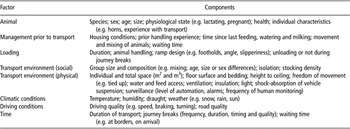
Transport of animals gives rise to concern about the welfare of the animals during and following the journey. Production animals are among those transported in the highest number and for the longest distances, and the possible consequences for their welfare have led to increasing regulation in the form of transport legislation, such as that of the European Union (EU, 2004). In terms of both public concern and animal welfare legislation, focus has often been on transport duration and, in particular, long durations, presumably because it is easy for laypersons to relate to, and because of its suitability as a legislative tool, in terms of quantification and control. In the current European legislation, long journeys are defined as those exceeding 8 h (EU, 2004). However, it is but one of many factors, which influence an animal when it is moved from one place to another. Table 1 lists some important factors involved when assessing the potential welfare consequences of a road journey, although many of them are also relevant for other types of transport, such as air, ship or rail transport.
Factors and their components to be taken into consideration when assessing the potential welfare risks to animals during road transport

This review will concentrate on those aspects of animal welfare associated specifically with the duration of road transport, that is, the time the animals spend on the vehicle. However, as is evident from Table 1, we cannot completely ignore the many other factors influencing animal welfare in this situation, but these are considered only when they interact with the effects of journey duration.
Investigations of journey duration
Although there is a considerable body of science relevant to the welfare of farm animals during transport (e.g. see Appleby et al., Reference Appleby, Cussen, Garcés, Lambert and Turner2008), Cockram (Reference Cockram2007) found a general paucity of scientific investigations into the specific effects of journey duration. There may be at least two reasons for this. First, and perhaps mainly, it is difficult to obtain sufficient data to carry out stringent and powerful statistical analyses. This will become evident in the subsequent literature review. Second, it is often difficult to gather good, scientific evidence related to animal welfare during transport, because data collection and sampling are hampered by factors such as limited space and the movement of the vehicle. Most investigations, therefore, measure only a relatively small number of variables, chosen among those that were practically possible to obtain. Only very few investigations (e.g. Grigor et al., Reference Grigor, Cockram, Steele, le Sueur, Forsyth, Guthrie, Johnson, Sandilands, Reid, Sinclair and Brown2001) give a more complete picture of the welfare consequences of transport duration through simultaneous measurements of behaviour, stress physiology and health.
Many of the available results arise from investigations, which can be divided roughly into three categories: (i) comparisons between journeys of different duration carried out as one trial (e.g. Knowles et al., Reference Knowles, Warriss, Brown and Edwards1999a); (ii) investigations at different time points during one transport (e.g. Knights and Smith, Reference Knights and Smith2007); and (iii) comparison of results obtained from different experiments in which transport duration was not necessarily a factor of interest in the individual trials (e.g. Gade et al., Reference Gade, Christensen, Baltzer and Petersen2007). Investigations of the first type would yield the most rigorous results for a review such as this, but <10% of the cited literature are one-trial comparisons of different transport durations.
The available investigations do not always indicate the purpose of the journey or distinguish between different types of animals. For animals transported with the intention of further production, the welfare consequences of transportation also include the ability of the animals to adapt to their novel environment and changes in their susceptibility to disease following transport. This does not imply, however, that animals transported for the purpose of slaughter can be moved under less optimal conditions (Terlouw et al., Reference Terlouw, Arnould, Auperin, Berri, le Bihan-Duval, Deiss, Lefèvre, Lensink and Mounier2008). On the contrary, some animals sent for slaughter, such as adult animals to be culled, are often in a poorer state than animals transported for breeding or continuous rearing, and may thus be in need of better, more gentle transport conditions than fitter conspecifics to ensure their welfare.
Assessment of welfare during transport
Welfare during transport can be assessed from a number of measures (Scientific Committee on Animal Health and Animal Welfare (SCAHAW), 2002) associated with the behaviour of the animal (e.g. Cockram and Mitchell, Reference Cockram and Mitchell1999), their metabolism (e.g. Hogan et al., Reference Hogan, Petherick and Phillips2007), stress physiology (reviewed by Knowles and Warriss, Reference Knowles and Warriss2000) and pathology (e.g. Chirase et al., Reference Chirase, Greene, Purdy, Loan, Auvermann, Parker, Walborg, Stevenson, Xu and Klaunig2004). It is necessary to collect information on a diverse set of measures, because transport affects different aspects of the animal’s body and biological functions, and because there are no exact threshold values separating normal stress responses from reduced welfare of the animal (Moberg, Reference Moberg2000). In particular, it can be difficult to interpret the changes over time, which contributes to the problem of quantifying maximum transport durations.
If a journey is punctuated by stationary periods, these will influence the welfare consequences of transport duration for the animals (Fisher et al., Reference Fisher, Colditz, Lee and Ferguson2009). The effects of such pauses will depend on their frequency and duration, whether unloading takes place and mixing occurs, together with the propensity of the species to lie down during transport, and the availability of food and water on and off the vehicle (Table 1). Breaks of long duration will add to the total journey time, and breaks which are longer than is necessary to eat, drink and rest will increase the risk of aggressive behaviour, which is rarely seen while the vehicle is in motion (e.g. pigs: Gade and Christensen, Reference Gade and Christensen1998).
Aims
The aims of this review are threefold. First, we have strived to gather all the available scientific knowledge on the effects of – specifically – transport duration on the welfare of cattle, sheep, horses, pigs and poultry. This was done to investigate the extent to which the specific subject of transport duration had been covered in the different species, identifying areas where little or no knowledge was available. We have endeavoured to omit only those articles, in which the interpretation of results has been obscured by other factors. Second, we discuss the currently known effects of transport duration on farm animal welfare in the light of animal welfare legislation, commonalities across species, and the notion of time. In this context, it was not our aim to formulate definitions of maximum journey lengths for the species covered. Finally, we attempt to identify the key areas of concern when wanting to ensure the welfare of farm animals during road transport of long duration.
The conditions and caveats mentioned in this introduction should be kept in mind when reading the following review.
Cattle
Calves
In legislation such as the European Union transport regulation (EU, 2004), calves are defined as cattle <6 months of age. This age limit is not biologically based, as there are large differences between a milk-fed, newly born calf, which is not yet a ruminant and a 6-month old calf, which in many ways is comparable to much older cattle. On the basis of the available literature, most transport of calves occurs at two time points: (i) very young dairy calves, that is, <1 month of age, being moved from the dairy herd to specialised calf-rearing facilities or (ii) calves from suckler herds being transported for subsequent fattening immediately after weaning at 5 to 9 months of age depending on weaning time in different production systems. In the following, the available results on transport duration and welfare of calves are presented, starting with the youngest calves.
In a comparison between two different transport durations Kent and Ewbank (Reference Kent and Ewbank1986a) found only a few differences in metabolic measures and behaviour of calves of 7 to 21 days of age transported for 6 or 18 h. Similarly, Mormede et al. (Reference Mormede, Soissons, Bluth, Raoult, Legarff, Levieux and Dantzer1982) investigated the responses to transport on a large number of physiological variables in 4- to 32-day-old calves. Among the variables measured only serum albumin concentrations increased more following long (overnight lairage without access to food and water followed by ∼10 h transport) compared to short journeys (∼3 h transport). One week later, a higher incidence of hypoglycaemia and respiratory disease was found in the calves that had been transported the longest. However, the overnight lairage confound the direct comparison of transport duration in this study.
More recently, Grigor et al. (Reference Grigor, Cockram, Steele, le Sueur, Forsyth, Guthrie, Johnson, Sandilands, Reid, Sinclair and Brown2001) transported calves of the same age as above for two periods of 9 h and performed a broad spectrum of measurements (e.g. including nasal swabs after pre-transport intranasal inoculation of bovine herpes virus), but with emphasis on the occurrence or absence of transport. They found that transported calves had increased rectal temperature and increased risk of respiratory disease following transportation. During transport, calves showed less lying behaviour than non-transported calves, and the highest incidence of lying occurred towards the end of the journey. In addition, among the transported calves some did not drink milk upon arrival, which is unusual for calves of that age, and may be a sign of fatigue. The transported calves showed signs of energy mobilisation (increased plasma concentration of free fatty acids (FFA)) and physical exertion (increased plasma activity of creatine kinase), but were not dehydrated. This was contrary to that reported by Knowles et al. (Reference Knowles, Brown, Edwards, Phillips and Warriss1999b), who found evidence of dehydration and weight loss when calves <1 month of age were transported for 19 h.
It is generally accepted that calves <1 month of age have not yet fully developed their physiological stress responses, as exposure to known bovine stressors and injection of adrenocorticotropic hormone (ACTH) has been shown to elicit no or a reduced stress response in young calves (Hartmann et al., Reference Hartmann, Bruer, Herzog, Meyer, Rhode, Schulze and Steinbach1973; van Reenen et al., Reference Van Reenen, O’Connell, van der Werf, Korte, Hopster, Jones and Blokhuis2005). Lack of stress responses in some of the investigations mentioned above is therefore not evidence that transport is not stressful for calves in this age group. There are, however, investigations that do find effects (Grigor et al., Reference Grigor, Cockram, Steele, le Sueur, Forsyth, Guthrie, Johnson, Sandilands, Reid, Sinclair and Brown2001), whereas others do not find effects (Knowles et al., Reference Knowles, Warriss, Brown, Edwards, Watkins and Phillips1997) of transport on typical physiological measures of stress such as plasma cortisol concentration. These divergent results may be due to differences in the developmental stage of the calves, highlighting the difficulties in using these measures to assess welfare in young animals.
When comparing transport durations of either 6 or 18 h for 3-month old calves, Kent and Ewbank (Reference Kent and Ewbank1986b) found that the animals lay down more during the longer journey. It is not known whether this is a sign of fatigue or adaptation to the transport environment allowing the animals to rest. A gradual increase in body mobilisation, such as increased glucose and FFA in plasma was found for both journey durations, and FFA took significantly longer to return to normal concentrations in calves transported for 18 h. In this trial, it is, however, not possible to disentangle the effects of prolonged transport from the concurrent effects of food and water deprivation.
For older calves (up to 6 months of age) no investigations of transport duration could be found, but some comparisons exist between transported and non-transported animals. In a study where 6-month old calves were transported for 6 h, Kent and Ewbank (Reference Kent and Ewbank1983) found a higher occurrence of behavioural indicators of stress, such as increased frequency of defecation, urination and salivation and less lying and rumination when compared to animals that were not transported. Following transport, the calves had increased concentrations of plasma cortisol and showed signs of dehydration such as increased serum protein concentration and an 8% body weight (BW) loss. Similar results with regard to activation of the hypothalamic-pituitary-adrenal (HPA) axis were found by Knights and Smith (Reference Knights and Smith2007) after 10 h of calf transport, in which cortisol concentrations increased for the duration of the journey, whereas the plasma ACTH concentration was elevated from 1 to 7 h after the start of the journey. Following just 3 h of transport of newly weaned beef calves (∼250 kg), Arthington et al. (Reference Arthington, Eicher, Kunkle and Martin2003) found changes in the plasma concentration of acute-phase proteins, which are indicators of tissue damage, infection and stress. Chirase et al. (Reference Chirase, Greene, Purdy, Loan, Auvermann, Parker, Walborg, Stevenson, Xu and Klaunig2004) transported 200 kg beef calves for 20 h and found increase in a number of bio-markers related to respiratory disease. Taken together these disparate results indicate that transport of older calves for even short durations lead to stress responses, which are likely to be influenced by pre-transport handling and loading. There is, however, not sufficient evidence to conclude on the welfare effects of journey duration for calves <1 month of age.
Young cattle, steers and heifers
This category includes beef and dairy cattle older than 6 months of age, but not females that have calved, that is, not cows. Transport is mainly for slaughter or continuous fattening, and most of the studies have focussed on intensively kept cattle and on transport lasting 2 to 24 h (SCAHAW, 2002). It is reasonable to assume that big differences exist in the response to transport between intensively and extensively kept cattle (Manteca and Ruiz de la Torre, Reference Manteca and Ruiz de la Torre1996), as these differ both in their level of previous human contact and in their morphology (e.g. the presence of horns). In accordance with this, Minka and Ayo (Reference Minka and Ayo2007) studied different breeds of horned African cattle and found breed differences in the prevalence of injuries (sum of wounds, contusions, lacerations, fractures, dislocations and abdominal hernia) following 10 to 12 h of transport. However, it is not only on the vehicle that intensive and extensive rearing causes a difference. It is most likely that journeys, which include more than one loading and unloading and with breaks carried out in lairage, will be far more stressful for extensively than for intensively reared beef cattle that have become used to environmental changes and human contact (Tarrant and Grandin, Reference Tarrant and Grandin2000).
A body of research during the last two decades has documented the need for recumbent rest in heifers and cows (e.g. Munksgaard and Simonsen, Reference Munksgaard and Simonsen1996; Fisher et al., Reference Fisher, Verkerk, Morrow and Matthews2002; Jensen et al., Reference Jensen, Munksgaard, Pedersen, Ladewig and Matthews2004). It has been shown – without investigating issues concerned with transport – that cattle prioritise recumbent resting behaviour highly, and that the animals show signs of high levels of motivation when deprived from lying behaviour (Jensen et al., Reference Jensen, Pedersen and Munksgaard2005). In addition, when left undisturbed, they will spend approximately 12 h resting in recumbency every day (e.g. Munksgaard et al., Reference Munksgaard, Jensen, Pedersen, Hansen and Matthews2005). On the basis of this and the potentially serious consequences of loss of balance and subsequent falling of cattle during transport, recumbent resting is one of the most important measures when assessing the experience of transport for these animals (SCAHAW, 2002).
A number of investigations have shown, that – except for calves – cattle do not lie down during transport, although they appear to find it demanding to remain standing and compensate subsequently by increasing their lying behaviour when the journey is completed (as reviewed by Tarrant and Grandin, Reference Tarrant and Grandin2000). It has been suggested that cattle, if they lie down during transport, presumably do not rest optimally due to a combination of BW, floor conditions and the movement of the vehicle, and that the reason for recumbency is exhaustion (as reviewed by Knowles, Reference Knowles1999). This is supported by Knowles et al. (Reference Knowles, Warriss, Brown and Edwards1999a), who transported mature beef steers and heifers for up to 31 h. After approximately 20 h, some individuals lay down, and had higher concentrations of plasma cortisol but did not differ from standing individuals in their plasma activity of creatine kinase. Knowles et al. (Reference Knowles, Warriss, Brown and Edwards1999a) also quantified physiological indicators of dehydration, for example, plasma total protein, albumin and osmolality, but only plasma osmolality was affected by the duration of the journey. The authors reported most of the changes occurred during the initial 15 h of transport and recommended transport duration not to exceed 24 h, although the observed metabolic and adrenocortical changes after 31 h of transport were described as ‘not extreme’. Tarrant et al. (Reference Tarrant, Kenny, Harrington and Murphy1992) transported young cattle for 24 h at different stocking densities, and observed at the highest stocking density of 600 kg/m2 that the animals were unable to lie down due to lack of space, with a higher risk of falling due to decreased room to adjust their positions.
Warriss et al. (Reference Warriss, Brown, Knowles, Kestin, Edwards, Dolan and Phillips1995) compared transport of steers aged 12 to 18 months for 5, 10 or 15 h at a space allowance of approximately 1 m2 per animal. They found that increased journey duration led to increased weight loss and physiological signs of dehydration, food deprivation (as indicated by plasma concentration of urea) and fatigue (based on plasma concentration of creatine phosphokinase and lactate). However, these animals were considerably younger than the ones transported by Knowles et al. (Reference Knowles, Warriss, Brown and Edwards1999a). The length of food deprivation before and during transport has great influence on the rate with which the transported animals begin to mobilise body reserves. Schwartzkopf-Genswein et al. (Reference Schwartzkopf-Genswein, Booth-McLean, Shah, Entz, Bach, Mears, Schaefer, Cook, Church and McAllister2007) found increased bunk attendance in beef cattle steers in the month following transport of 15 h compared to 3 h. Chupin et al. (Reference Chupin, Savignac, Aupiais and Lucbert2000; cf. SCAHAW, 2002) food-deprived young cattle and found that although the animals were highly motivated to feed after 14 h, it took 24 h of deprivation before metabolic indicators of body mobilisation (e.g. plasma concentration of urea) were evident. It is important to keep in mind, however, that these animals were not transported, and that food deprivation combined with transport may have a more severe effect than deprivation alone.
Hogan et al. (Reference Hogan, Petherick and Phillips2007) reviewed the impact on cattle of food and water deprivation. They state that deprivation can be associated with stress and induce hunger and thirst, which is not compatible with high levels of animal welfare. On the basis of a limited amount of data, they described how the normal control of pathogenic bacteria in the rumen is weakened by 24 h food deprivation, potentially increasing the risk of infections in the intestinal tract. The authors focus on adult animals and recommend that food and water deprivation should not exceed 24 h.
Although intensively reared cattle may be accustomed to high stocking densities, they find the confinement with conspecifics on a limited area and the movements of the vehicle among the stressful elements of transport (Kenny and Tarrant, Reference Kenny and Tarrant1987; Tarrant and Grandin, Reference Tarrant and Grandin2000). Odore et al. (Reference Odore, D’Angelo, Badino, Bellino, Pagliasso and Re2004) transported young bulls for 14 h and observed activation of the HPA-axis as well as the sympathetic nervous system. These reactions returned to normal after 24 h. Apart from transient effects of loading and the start of the journey there are no indications that cortisol concentrations increase with journey duration in young cattle (see review by Cockram and Mitchell, Reference Cockram and Mitchell1999). It is, however, important with frequent sampling to fully describe the development during transport, and this is often not the case in investigations, which include transport of long duration.
Dairy and beef cows
Cows are defined as female cattle that have calved at least once. Dairy cows are most often transported as a consequence of culling, that is, removal from the herd for slaughter, and in the United States, old cull breeding stock often travel longer distances than young animals (Grandin, Reference Grandin2008). The animals may be in poor condition and suffer from production diseases, which may be the cause for culling in the first place, and some may be clearly unsuitable for transport, such as downer cows (Grandin, Reference Grandin1998). However, many dairy cows are culled due to poor reproduction, and some are culled because they are difficult to handle or cannot use the milking system, and as such are in no poorer condition than the remaining herd. This makes cull cows a very heterogenous category in terms of physical fitness. There are a very limited number of investigations into the response of cows to transport of any length, and it has not been possible to find results for beef cows. It is therefore not known, whether certain types of cull cows are less suitable for transport. Transport of healthy dairy and beef cows will in many ways be comparable to that of young cattle, and the following is simply highlighting those aspects, in which dairy cows – and in particular some cull cows – may be expected to differ from the described effects of transport duration on young cattle.
Dairy cows can be expected to be more sensitive to food and water deprivation than young cattle, if they are high yielding and thus have a high metabolism and, as a consequence of potential morbidity, poor condition leading up to culling (Hogan et al., Reference Hogan, Petherick and Phillips2007). There are, however, no published data to substantiate this. Animals in poor condition will also be more susceptible to exhaustion due to poor muscle strength and low levels of mobilisable energy. The effects of clinical or subclinical production diseases, such as mastitis and lameness, on dairy cow welfare during transport have not been investigated. Dairy cows with large udders, or which are not used for physical activity due to housing in tie-stalls, as well as animals in poor condition will have more difficulties getting up following a rest period or a fall during transport (Caspersen, Reference Caspersen2003). In addition, lactating cows will be encumbered by a full udder, if they are not milked regularly, and this is likely to affect dairy cows more than beef cows due to their higher milk production and larger udder.
Sheep
Transport of sheep, in particular, lambs for slaughter and breeding stock, has been the focus of a number of studies. In terms of transport duration, particularly live export leads to substantial journey times (e.g. Phillips, Reference Phillips2008), as does transport between markets.
As opposed to cattle, both lambs and adult sheep lie down during transport and consequently it is assumed the animals are able to rest (Cockram et al., Reference Cockram, Kent, Jackson, Goddard, Doherty, McGilp, Fox, Studdert-Kennedy, McConnell and O’Riordan1997; Cockram, Reference Cockram2007). Despite this, both lambs and ewes show behavioural signs that transport is stressful such as reduced lying time and rumination compared to non-transported animals (Cockram et al., Reference Cockram, Kent, Goddard, Waran, McGilp, Jackson, Muwanga and Prytherch1996). However, lack of detailed behavioural data collected during transport of sheep prevents identification of exact time limits for journey duration in terms of level of distress, which may be indicated by the occurrence of behaviours such as vocalisation and panting (Cockram, Reference Cockram2004).
Management before transport influences the effect of transport on sheep. Cockram et al. (Reference Cockram, Kent, Goddard, Waran, Jackson, McGilp, Southall, Armory, McConnell, O’Riordan and Wilkins2000) found that sheep, which had been kept at pasture before transport lie down less during a 16 h journey than sheep, which had previously been housed inside in pens on straw. Level of food deprivation before transport influences the rate with which the animals mobilise body reserves, but sheep are presumed to be more resilient to food and, especially, water deprivation, than other livestock (SCAHAW, 2002). Quality of the driving also influence the lying behaviour of sheep during transport, as both lying down and ease of standing are hampered by rough compared to gentle driving (Cockram et al., Reference Cockram, Baxter, Smith, Bell, Howard, Prescott and Mitchell2004). Lambs transported for 48 h after weaning showed increased plasma concentration of haptoglobin and β-hydroxybutyrate, reflecting long-term stress and fasting (Tadich et al., Reference Tadich, Gallo, Brito and Broom2009). Unlike Cockram et al.’s study (Reference Cockram, Kent, Goddard, Waran, McGilp, Jackson, Muwanga and Prytherch1996), many of these studies do not use non-transported food and water-deprived controls, and therefore the effects of transport as such are often difficult to separate from effects of food and water deprivation.
In a comparison between transport of lambs for 22, 24 or 32 h, where the journeys were broken by resting periods of different duration, Knowles et al. (Reference Knowles, Warriss, Brown, Kestin, Edwards, Perry, Watkins and Phillips1996) found physiological signs of food deprivation and dehydration for all journey durations. Lamb weight loss was also recorded by Knowles et al. (Reference Knowles, Warriss, Brown, Kestin, Rhind, Edwards, Anil and Dolan1993) after 14 h of transport, and by Hall et al. (Reference Hall, Broom and Kiddy1998) following 14 h confinement in a parked transport vehicle, and the animals show strong feeding and drinking motivation after just 12 h of transport (Cockram et al., Reference Cockram, Kent, Goddard, Waran, McGilp, Jackson, Muwanga and Prytherch1996; Knowles, Reference Knowles1998). An important factor influencing dehydration is ambient temperature. Knowles (Reference Knowles1998) found sheep to be more sensitive to dehydration at higher (e.g. above 20°C) than at lower ambient temperatures, which in turn influenced the observed effects of journey duration.
Transport can be stressful for both adult sheep and lambs, showing physiological responses such as increased heart rate and elevated plasma concentration of cortisol (Cockram et al., Reference Cockram, Kent, Goddard, Waran, McGilp, Jackson, Muwanga and Prytherch1996). Parrott et al. (Reference Parrott, Misson and de la Riva1994) compared responses to transport with responses to known stressors and found that the physiological stress responses to simulated transport were similar to those found when the animals were socially isolated, which is known to be highly aversive to sheep (Baldock and Sibly, Reference Baldock and Sibly1990; van Adrichem and Vogt, Reference Van Adrichem and Vogt1993). The main factors associated with transport, which cause physiological stress reactions in sheep are loading and the start of the driving (Broom et al., Reference Broom, Goode, Hall, Lloyd and Parrott1996; Cockram et al., Reference Cockram, Kent, Goddard, Waran, McGilp, Jackson, Muwanga and Prytherch1996; Knowles et al., Reference Knowles, Warriss, Brown, Kestin, Edwards, Perry, Watkins and Phillips1996 and Reference Knowles, Warriss, Brown and Edwards1998; Parrott et al., Reference Parrott, Hall, Lloyd, Goode and Broom1998). These events will occur in connection with transport of any duration, and although they take place at the beginning of the journey, such stress responses are energy consuming, and there is thus a higher risk of energy deprivation (Cockram, Reference Cockram2007). Transport of sheep has been found to increase their susceptibility to diseases, such as pneumonia and salmonella infection, as well as increase mortality (Higgs et al., Reference Higgs, Norris and Richards1993; Brogden et al., Reference Brogden, Lehmkuhl and Cutlip1998).
Horses
Transport of horses owned privately for leisure purposes will often be of relatively short duration, as when such horses are transported (individually or in pairs) in horse trailers pulled by cars to local or regional horse shows and amateur competitions. Wehnert et al. (Reference Wehnert, Schmidt, Aurich, Müller and Aurich2009) found only transient effects on heart rate following transport up to 8-h duration. Longer transportation of horses occurs in association with the movement of horses used for professional, sometimes international, competitions, and for horses exported for breeding, new ownership or slaughter. In the relatively few scientific investigations into horse welfare during long journeys, the purpose of the transportation is often ignored. However, it can be assumed that the welfare consequences of journey time may differ between horses bound for international competition and horses transported for slaughter. In this review, only road transport is included; however, other types of transport, such as shipping, can be of durations which require the conditions to be similar to those found during non-transport housing (e.g. 25 days shipment from Italy to Argentina; Cavallone et al., Reference Cavallone, Di Giancamillo, Secchiero, Belloli, Pravettoni and Rimoldi2002).
Transport of horses for 24 h leads to changes in muscle metabolism and stress indicators such as increased plasma cortisol and neutrophil : lymphocyte ratio, as well as weight loss and dehydration when compared to values before transport (Stull and Rodiek, Reference Stull and Rodiek2000). However, other factors than transport duration can influence the magnitude of these changes. In a later study, Stull and Rodiek (Reference Stull and Rodiek2002) found that horses transported for 24 h with their head tied up showed greater stress reactions than horses transported loose in pairs.
An investigation of nine journeys between 600 and 2500 km of more than 300 horses classified as candidates for slaughter showed that muscle fatigue and dehydration increased significantly from 6 to 30 h of transport, especially in journeys over 27 h (Stull, Reference Stull1999). Transport of healthy horses in warm weather for more than 24 h without access to water led to severe dehydration, and journeys over 28 h, even with periodic access to water, can cause increased fatigue and exhaustion (Friend et al., Reference Friend, Martin, Householder and Bushong1998; Friend, Reference Friend2000). There are indications that it takes quite a while before horses start to drink during watering breaks, that they drink very little, and that they may refuse to drink from sources that are novel to them (Mars et al., Reference Mars, Kiesling, Ross, Armstrong and Murray1992; Iacono et al., Reference Iacono, Friend, Johnson, Krawczel and Archer2007). These aspects need to be considered when assessing the potential benefit of watering breaks during transport.
Pneumonia has been found in horses following long transportation (26 to 32 h: Ito et al., Reference Ito, Hobo, Eto and Sato2001; 37 to 49 h: Oikawa et al., Reference Oikawa, Hobo, Oyamada and Yoshikawa2005). This can be caused by mild pre-transport infections that develop into clinical disease as a consequence of transport (Raphel and Beech, Reference Raphel and Beech1982), or be caused by gasses and particles to which the horses are exposed during transport (Leadon et al., Reference Leadon, Frank, Backhouse, Frank and Atock1990; Hobo et al., Reference Hobo, Kuwano and Oikawa1995). In addition, stress associated with transportation can reduce the natural immune defense against infections. A number of investigations have found changes in immunological blood measures following long transport of horses (24 h: Stull and Rodiek, Reference Stull and Rodiek2000; 24 h v. 0 h: Stull et al., Reference Stull, Spier, Aldridge, Blanchard and Stott2004; 24 h v. 2 × 12 h: Stull et al., Reference Stull, Morrow, Aldridge, Stott and McGlone2008), and the likelihood of respiratory disease has been found to be lower with journey durations below 12 h (Oikawa and Kusunose, Reference Oikawa and Kusunose1995). The measurements carried out reflect that these studies were aimed at the effects of journey duration on the horses’ ability to compete upon arrival, and not their welfare during transport.
Physiological changes have been found following transport of horses over distances of 100, 200 and 300 km (Fazio et al., Reference Fazio, Medica, Aronica, Grasso and Ferlazzo2008), which the authors describe as short journeys. They found increased plasma cortisol concentrations following all journeys, whereas ACTH measured after transport was increased only for journeys of 100 and 200 km. Compared to pre-transport concentrations β-endorphin increased following 100 km transport, but had fallen after 300 km. Similar results have been found by others, in which significant increases in ACTH and β-endorphin were seen only after journeys of < 50 km (e.g. Ferlazzo et al., Reference Ferlazzo, Medica, Campo, Grasso and Aronica1997). These stress responses are highly dependent on the horse’s level of experience with transport (Fazio et al., Reference Fazio, Medica and Ferlazzo1995). Alberghina et al. (Reference Alberghina, Medica, Cusumano, Fazio and Ferlazzo2000) found a higher degree of stress during transport in young (3 to 7 years), inexperienced horses, but emphasised, that young horses are better suited to adapt to long journeys than older (13 to 20 years) horses.
Pigs
A number of scientific investigations have assessed the effects of transport on the welfare of pigs. However, only few of these have focused specifically on transport duration, and journeys lasting more than 24 h have hardly been studied in pigs. Almost all the available studies on transport duration have been carried out on growing or fattening pigs, and no results are available from transport of sows or boars.
Newly weaned pigs
Piglets weaned at 4 weeks of age have little experience eating solid food and drinking water, and 1 to 2 days often pass before they start feeding after weaning (Bruininx et al., Reference Bruininx, Binnendijk, van der Peet-Schwering, Schrama, den Hartog, Everts and Beynen2002 and Reference Bruininx, Schellingerhout, Binnendijk, van der Peet-Schwering, Schrama, den Hartog, Everts and Beynen2004; Dybkjær et al., Reference Dybkjær, Jacobsen, Tøgersen and Poulsen2006). Transport immediately after weaning can therefore be expected to prolong the period of fasting, which in turn may lead to the increased risk of diarrhoea and reduced growth (Madec et al., Reference Madec, Bridoux, Bounaix and Jestin1998; McCracken et al., Reference McCracken, Spurlock, Roos, Zuckermann and Gaskins1999).
Few scientific investigations have been published on the effects of transport duration on newly weaned piglets, and all of them involve piglets weaned before 4 weeks of age. Wamnes et al. (Reference Wamnes, Lewis and Berry2006) transported 17-day old piglets at weaning, and found that transport for <20 min resulted in a post-weaning weight loss similar to that of piglets transported for 12 or 24 h, whereas 6 h of transport leads to a smaller weight loss and a faster weight recovery than the minimally transported control piglets. The authors attribute this unexpected finding to a higher motivation to feed and drink in the 6-h transported piglets. Berry and Lewis (Reference Berry and Lewis2001) confined groups of 17-day old piglets at weaning in high-walled wooden boxes for different durations (0 to 24 h) and in different ambient temperatures (20°C to 35°C) to simulate the food and water deprivation aspect of transport. They found a significant interactive effect of confinement duration and temperature on weight loss, which increased with increasing temperatures, but only in confinements lasting 24 h. In a later study, using actual transport of piglets of similar age, significantly more drinking activity was recorded following 24 h of transport as compared to no transport, whereas there was no difference compared to journeys of 6 and 12 h (Lewis and Berry, Reference Lewis and Berry2006). This lack of effect may be due to the negative impact of weaning on piglets and their inexperience with obtaining solid food and water, which may obscure a potential additive effect of stress experienced during transport at this point in time.
Growing pigs
In a recent investigation, pigs weighing 18 kg were transported for 16 h with or without an 8-h break in which they were unloaded and given access to food and water for 2 h, that is, lairage (Williams et al., Reference Williams, Minton, Patterson, Marchant Forde and Eicher2008). Adding lairage to the transport caused changes in immune function, cytokine and chemokine expression, as well as gut microbiota. However, clear effects of lairage on the welfare of the piglets cannot be established based on this study. Bradshaw et al. (Reference Bradshaw, Parrott, Goode, Lloyd, Rodway and Broom1996b) transported 35 kg pigs for 8 h and found an initial increase in cortisol concentration, followed by a gradual decrease, which did not reach pre-transport concentrations at the end of the journey. Pigs have also been found to vomit during transport (Bradshaw et al., Reference Bradshaw, Hall and Broom1996a and Reference Bradshaw, Parrott, Goode, Lloyd, Rodway and Broom1996b) indicating that pigs may experience malaise due to travel sickness, which may persist for the duration of the journey.
Fattening pigs
The available investigations of transport duration on fattening pigs fall into two categories: controlled experiments and analysis of data collected on commercial transport of slaughter animals.
The concentration of serum or plasma cortisol over time during transport has been investigated in a number of studies. Averós et al. (Reference Averós, Herranz, Sanchez, Comella and Gosálvez2007) examined physiological stress parameters in pigs (98 kg) from different herds exposed to journeys lasting either 1 h (70 km) or 13 h (900 km). Increases in serum cortisol concentrations in the period from 6 h before loading to unloading were greater for the short compared to the long journeys, which also led to a fall in glucose concentrations not seen after the short journeys. The results may indicate habituation to the transport over time or a depletion of cortisol, as well as greater metabolic strain on the longer journey due to more extended food deprivation (Knowles and Warriss, Reference Knowles and Warriss2000).
Brown et al. (Reference Brown, Knowles, Edwards and Warriss1999) exposed pigs (80 to 100 kg) to transport for 0, 8, 16 or 24 h, and found a significant increase in plasma lactate and cortisol concentrations following 16 h of transport. Weight loss, as well as plasma protein and albumin concentrations increased with increasing transport duration indicating dehydration, and the authors suggest that the increase with transport duration of ultimate pH in muscle tissue after 2 h chilling of the carcass could be a sign of increased fatigue or prolonged stress. Pigs transported for 24 h were more active and consumed more food and water during the first 6 h after arrival compared to pigs on the shorter journeys. The authors suggest that the 24-h food deprivation together with relatively low stocking densities during transport (⩽0.54 m2/100 kg) used in this study had a more profound effect on the variables measured than the transport itself. Although some of the behavioural and physiological measurements indicate otherwise, the authors suggest that up to 16 h of transport, even without access to water, is acceptable in terms of the welfare of the pigs.
Mota-Rojas et al. (Reference Mota-Rojas, Becerril, Lemus, Sánchez, González, Olmos, Ramírez and Alonso-Spilsbury2006) transported fattening pigs for 8, 16 or 24 h without access to food and water. Incidence of bruising, redness of the skin, shaky-leg syndrome and number of pigs lying down upon arrival all increased with increasing journey duration. More hyperventilation was seen in the intermediate transport length, whereas no effect of journey duration was found on live weight on arrival.
Mortality during transport is an indisputable indicator of welfare as any animal that dies in transit can be expected to have experienced some degree of suffering before death. A number of studies based on large data sets from transport of commercial slaughter pigs to the slaughterhouse have found positive correlations between journey duration and mortality during transport (e.g. Ritter et al., Reference Ritter, Ellis, Brinkmann, DeDecker, Keffaber, Kocher, Peterson, Schlipf and Wolter2006; Vecerek et al., Reference Vecerek, Malena, Malena, Voslarova and Chloupek2006b; Malena et al., Reference Malena, Voslarova, Kozak, Belobradek, Bedanova, Steinhauser and Vecerek2007). However, based on data from 739 journeys to the slaughterhouse, Averós et al. (Reference Averós, Knowles, Brown, Warriss and Gosálvez2008) found that the risk of death increased with increasing journey duration only if the pigs had not been food deprived before the journey.
Gosálvez et al. (Reference Gosálvez, Averós, Valdelvira and Herranz2006) found on the basis of data from 496 journeys of more than 90 000 slaughter pigs that mortality increased with transport distance, as did weight loss. An interaction was found between transport distance and number of farms from which the pigs were collected. Mortality was 0.2% to 0.3% when pigs were transported from a single location. However, mortality increased to 0.7% when pigs from several farms were involved and the distance was over 100 km. Werner et al. (Reference Werner, Reiners and Wicke2007) found higher mortality following 1-h transport (0.2%) than after 4- and 6-h transport (both <0.1%), but the authors do not appear to take into account that more animals with circulatory problems were among those being exposed to 1-h transport. These results indicate that associated factors, such as mixing and state of the animals pre-transport, may be the root cause of the negative welfare impact of longer transport durations.
Poultry
Poultry transport may be classified into one of four categories: (i) day-old chicks transported from the commercial hatchery to the poultry producer; (ii) broilers transported to slaughter; (iii) pullets transported from rearing facility to egg producer; and (iv) transport of spent hens, that is egg-layers at the end of profitable egg production. Although turkeys, ducks, geese and ostriches are also transported, most scientific investigations of transport duration relate to domestic chickens, and the following will only deal with this species. However, no scientific studies of welfare and transport duration have been carried out in pullets. In addition, poultry differ from the other species in this review in terms of loading and unloading as they are carried onto the transport vehicle in containers in which they remain for the duration of the journey.
In a recent review on poultry transport, Mitchell and Kettlewell (Reference Mitchell and Kettlewell2009) list mortality, thermal environment and stress-induced pathologies as the major welfare concerns associated with transport of poultry. Although increased transport duration may exacerbate these aspects, the authors describe the main causal factors as poor vehicle and container design, inadequate on-board climate control and physiological characteristics of the birds resulting from genetic selection for production traits.
Day-old chicks
Newly hatched chicks, also referred to as day-old chicks, can be transported for 24 h within the first 72 h of life without access to food or water (EU, 2004), because the yolk sac supplies the chick with sufficient nutrients. Feeding prior to transport had no effect on subsequent live weight and growth for 2 weeks when day-old chicks were transported for 20 h (Pisarski et al., Reference Pisarski, Pijarska and Malec2005).
Valros et al. (Reference Valros, Vuorenrnaa and Janczak2008) studied growth and behavioural development for 5 weeks following simulation of transport (confinement in box with intermittent movement without access to food and water for 4 or 14 h) of day-old chicks of two egg layer strains. No effects were found on growth or measures of fearfulness (tonic immobility test); only time of first perching differed between treatments as chickens exposed to 14 h of simulated transport perched a day earlier than birds on the other treatment. The authors described the effects as sporadic and were reluctant to make strong conclusions on long-term effects of transport stress. We were unable to find other investigations into the effects of transport duration on the welfare of day-old chicks. As these birds are the foundation of the subsequent egg or meat production, it may be assumed that aspects of transport, including duration, which affect subsequent production levels negatively, will be avoided by producers. This does not in any way imply that high subsequent production provides evidence of high welfare during transport. In addition, due to the relative low value of the individual bird, high transport mortalities may still be economically viable, despite negative welfare consequences.
Broilers
Vecerek et al. (Reference Vecerek, Grbalova, Voslarova, Janackova and Malena2006a) found higher mortalities in broilers transported up to 300 km compared to journeys up to 50 km (0.9% v. 0.2%), but they do not indicate the journey times involved. Warriss et al. (Reference Warriss, Bevis, Brown and Edwards1992) found similar results for transport of 9- and 4-h duration (0.3% v. 0.2%). Their results, together with those of Bayliss and Hinton (Reference Bayliss and Hinton1990) also indicate that it is the time spent on the vehicle, including stationary waiting time, which affects mortality, rather than distance driven. Seasonal effects have been found, with mortality of broilers following transport being higher during extreme temperatures leading to either heat or cold stress (Hunter et al., Reference Hunter, Mitchell and Matheu1997), the latter being excacerbated by journey duration (Bayliss and Hinton, Reference Bayliss and Hinton1990). These findings confirm the conclusions by Mitchell and Kettlewell (Reference Mitchell and Kettlewell2009), who emphasise the importance of an appropriate thermal environment.
A number of older investigations found higher frequencies of bruising with increasing transport duration, when comparing 2, 4 and 6 h of transport (Scholtyssek and Ehinger, Reference Scholtyssek and Ehinger1976). Using the same durations, Ehinger and Gschwindt (Reference Ehinger and Gschwindt1981) found that meat pH measured post mortem decreased with transport duration, and live weight has been found to decrease linearly with transport duration when measured up to 4.5 h, causing a weight loss of 3% (Scholtyssek et al., Reference Scholtyssek, Ehinger and Lohman1977). In addition, blood corticosterone was higher in broilers following transport for 4 h compared to 2-h duration (Freeman, Reference Freeman1984). Knowles and Broom (Reference Knowles and Broom1990) found in their review only few investigations into the welfare effects of journey duration in broilers, but conclude that there must be a transport duration above which welfare of broilers is significantly reduced. However, they do not venture a guess at this threshold. As is the case for most of the species dealt with in this review, other parameters are likely to influence the welfare during transport of broilers, such as handling prior to transport and ambient temperature.
Spent hens
Spent hens are particularly sensitive to handling and arousal, as their bone strength has been severely reduced by high egg production making them prone to fractures (Kim et al., Reference Kim, Donalson, Herrera, Kubena, Nisbet and Ricke2005). Many factors influence the physical condition of these hens, for example, age of the birds, previous housing (e.g. free range or battery) and method of catching can all interact with transport duration to severely compromise the welfare of the birds (Knowles and Broom, Reference Knowles and Broom1990; Knowles, Reference Knowles1994). High mortality has been found following transport of spent hens (Petracci et al., Reference Petracci, Bianchi, Cavani, Gaspari and Lavazza2006), and this increases with transport duration. Voslarova et al. (Reference Voslarova, Janackova, Vitula, Kozak and Vecerek2007) found mortalities of 0.6% and 1.6% on journeys of <50 km and up to 300 km, respectively. It has often been discussed whether these animals should be transported at all, and alternative methods of catching and killing are being sought (e.g. Tinker et al., Reference Tinker, Berry, Rycroft and Sparks2004). An example of this is a portable culling system (Chickpulp amba, Sunds, Denmark), which can be operated in the immediate vicinity of the hen house.
Discussion
The present literature review highlights the lack of investigations in which transport duration is among the main factors examined, and in which a broad spectrum of welfare parameters is included. Typically, few measures are taken and sampling is – most likely for practical reasons – carried out before loading and after unloading. This confounds the effects of handling in connection with transport, and also does not allow assessment during the actual journey, all of which impede firm conclusions to be made on the relationship between transport duration and animal welfare. However, there are a number of commonalities across species, which indicates that increasing transport duration affects negatively the welfare of the animals being transported. These are founded in prolonged food and water deprivation (e.g. Brown et al., Reference Brown, Knowles, Edwards and Warriss1999), lack of rest (e.g. Warriss et al., Reference Warriss, Brown, Knowles, Kestin, Edwards, Dolan and Phillips1995) and the risk of prolonged exposure to extreme temperatures (e.g. Bayliss and Hinton, Reference Bayliss and Hinton1990). In addition, the state of the animal before transport affects its capacity to cope with the stress of transport (e.g. Knowles, Reference Knowles1994). Critical effects of these factors on animal welfare and their exacerbation by journey duration are discussed below.
Health and management prior to transport
Age, experience, level of food deprivation, health status and fitness of the animals may influence the welfare effects of long journeys. Some of these effects are documented (e.g. Lewis and Berry, Reference Lewis and Berry2006; Averós et al., Reference Averós, Knowles, Brown, Warriss and Gosálvez2008), but for animals transported for culling, hardly any scientific investigations of the effects on welfare associated with transport exist. It may, however, be expected that animals transported for slaughter due to disease, are less suited for long transportation than healthier herd members, as the transport may elicit, increase or prolong pain and other kinds of distress associated with the disease. For similar reasons, animals at the end of their productive life, such as spent hens, and multiparous sows and cows, are likely to be less suited for transport of any length than younger animals transported for slaughter. Although not all cull animals are in poor condition, the likelihood of fragility is greater, and some may even have debilitating injuries prior to any handling, such as lameness. It is clear that such animals should not be transported, or at least transported as carefully and for as little time as possible (Knowles and Broom, Reference Knowles and Broom1990; Grandin, Reference Grandin1998).
Schwartzkopf-Genswein et al. (Reference Schwartzkopf-Genswein, Booth-McLean, Shah, Entz, Bach, Mears, Schaefer, Cook, Church and McAllister2007) found that prior conditioning of calves to transport improved their ability to tolerate the stress of transport and handling. However, for most farm animals, transportation is infrequent, and thus no possibility for habituation exists. One exception to this can be found in horses, in whose case regular transport to and from competitions will affect their ability to cope with prolonged transport (Alberghina et al., Reference Alberghina, Medica, Cusumano, Fazio and Ferlazzo2000). Parallels could be drawn to some circus animals, where frequent transportation of long duration occurs, but in which the negative impact may be reduced, as the animals habituate and are transported in the same enclosures in which they are usually housed (Nevill and Friend, Reference Nevill and Friend2003; Anon, 2008).
Access to food and water
One of the major concerns when transporting animals for long periods of time is providing access to food and, perhaps more importantly, water. Sheep appear more resilient to food and water deprivation than most other livestock (e.g. Cockram et al., Reference Cockram, Kent, Jackson, Goddard, Doherty, McGilp, Fox, Studdert-Kennedy, McConnell and O’Riordan1997), whereas horses may be exposed to prolonged thirst and dehydration on long journeys, as they are reluctant to drink during transport and from unknown sources (e.g. Mars et al., Reference Mars, Kiesling, Ross, Armstrong and Murray1992). Newly weaned pigs are unlikely to benefit from breaks during long journeys, as they are not yet accustomed to eating solid food and drinking water (e.g. Dybkjær et al., Reference Dybkjær, Jacobsen, Tøgersen and Poulsen2006). It is therefore not surprising that animals confined during transport without access to food or water lose BW (e.g. Brown et al., Reference Brown, Knowles, Edwards and Warriss1999; Stull and Rodiek, Reference Stull and Rodiek2000), however, this is not a consequence of the transport as such, but of the animal management in transit.
Journey breaks for feeding and watering where the animals are unloaded may be chosen for practical reasons or because legislation dictates it (e.g. EU, 2004). However, movement of animals off and onto the vehicle can be very stressful (e.g. Broom et al., Reference Broom, Goode, Hall, Lloyd and Parrott1996) and increase the risk of injury (Minka and Ayo, Reference Minka and Ayo2007). In addition, these journey breaks will occur in an environment novel to the animal, and may involve mixing with unknown conspecifics. An alternative solution could be that innovative ways of providing accessible food and water on the transport vehicle are developed, so that breaks can be achieved simply by stopping the vehicle for a period in a sheltered area to allow the possibility to feed and drink, as well as proper rest.
Rest and exhaustion
Cattle need recumbent rest but rarely lie down while on the vehicle (Tarrant and Grandin, Reference Tarrant and Grandin2000), whereas sheep, pigs and poultry lie down during transport, although sufficient rest may not be obtained (e.g. Cockram et al., Reference Cockram, Kent, Goddard, Waran, McGilp, Jackson, Muwanga and Prytherch1996). The negative effects of transport on the ability to rest can only be expected to be intensified with time. It is therefore even more important on journeys of long duration to ensure that floor conditions and stocking density allow proper rest to take place (see Petherick and Phillips, Reference Petherick and Phillips2009). Quality of driving and various aspects of vehicle design, such as shock absorption, are factors, which influence the comfort of the transported animals (Cockram et al., Reference Cockram, Ranson, Imlah, Goddard, Burrells and Harkiss1994 and Reference Cockram, Kent, Goddard, Waran, McGilp, Jackson, Muwanga and Prytherch1996). Resting breaks, which include unloading the animals are associated with negative aspects (see previous section), and it is therefore important that we continue to gain scientific knowledge into the effects of on-vehicle journey breaks during animal transport.
Climate
The climatic conditions in the immediate environment surrounding the animals are important for their welfare, as prolonged heat or cold stress will have detrimental effects on all the species dealt with in this review (e.g. Averós et al., Reference Averós, Herranz, Sanchez, Comella and Gosálvez2007; Mitchell and Kettlewell, Reference Mitchell and Kettlewell2009). Some young animals, such as day-old chicks and just-weaned piglets, are likely to be more susceptible to extreme temperatures (e.g. Berry and Lewis, Reference Berry and Lewis2001), as are animals that are sick or injured. Although heat and cold stress should be avoided, this is even more pertinent on longer journeys, as prolonged exposure to extreme temperatures will lead to suffering and ultimately death. On-board climatic control combined with appropriate stocking densities should be employed as tools to ensure a species- and age-specific suitable transport climate.
Identifying the key factors, which are exacerbated by time
In a most useful paper, Cockram (Reference Cockram2007) suggests a rationale for determining maximum durations of animal transport based on different premises, such as transport being continuously aversive to the animal, involving many risks, including those of infection from contaminated animals. As such, the shorter the journey the lesser the animals are affected, and the more the associated risks are reduced. He also suggests that animal welfare is compromised after certain duration, but emphasises, that there is a lack of data available to document these premises and to quantify thresholds. The present review has confirmed this paucity of knowledge.
When assessing the negative welfare impact of transport duration, it is important to distinguish between aspects, which will impair welfare on transport of any duration, such as those associated with loading, and factors, which may be exacerbated as the journey progresses. Time, in itself, is rarely the root cause of poor welfare. It is other factors associated with transport, which may result in poor welfare with time. We therefore agree with Cockram’s (Reference Cockram2007) suggestion that future scientific investigations put more emphasis on the quality of transport rather than duration, and that this is taken into account when determining legislative demands in relation to animals transport.
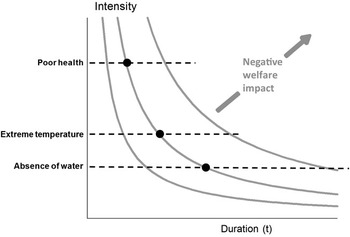
The immediate benefit of transport duration as a legislation tool is, that it is relatively easy to describe, measure and control, especially with the emergence of technological tools, such as global positioning systems. What is clear from the above, however, is that maximum journey durations are not easy to define or to relate to animal welfare because a number of interactive factors are at play. Four main aspects have, however, emerged out of the many interactions: (i) the condition of the animal prior to transport or in connection with handling and loading, and which is relevant to journeys of any duration; (ii) the associated effects of prolonged deprivation of food and water with journey duration; (iii) the lack of appropriate rest for some species due to vehicle movement; and (iv) the thermal environment surrounding the animals on the vehicle at any given time. The first could be solved by not transporting animals, which are not suited for transport at all due to, for example, debilitating disease or high levels of fearfulness. If transport cannot be avoided, particular care should be taken in the pre-transport handling and loading of these animals, and – if relevant – pain relief can be used to reduce the negative impact of the transport, which should be as short as possible. The last three issues could be solved through on-board solutions for feeding and watering combined with on-board breaks in the journey to allow resting at suitable stocking densities together with improved climate control. In Figure 1, a graphical model of the effects of transport duration on animal welfare is shown. Only factors that are exacerbated by time are relevant, and three examples are given.
Schematic model of the potential development over time of the impact on animal welfare of some factors. The y axis denotes the intensity of a given factor, which is assumed to be constant over time (as indicated by stippled lines). The x axis denotes the time during which the animal is exposed to said factor (in this example duration of transport). Each of the grey isolines indicates a trajectory of equal welfare impact, calculated as the product of intensity and duration. The negative welfare impact increases in the direction of the arrow. Three examples of factors, where the welfare impact is exacerbated by time, are shown. Their placement on the y axis is hypothetical and depends on their exact and relative values. Points of equal welfare impact (●) occur at different times during the journey for the factors shown.

There are, however, animal categories, for which special considerations are needed: long distance transportation of piglets at weaning may not be possible in the vehicles currently available due to the inexperience of these animals with eating solid food and drinking water (Bruininx et al., Reference Bruininx, Binnendijk, van der Peet-Schwering, Schrama, den Hartog, Everts and Beynen2002, Reference Bruininx, Schellingerhout, Binnendijk, van der Peet-Schwering, Schrama, den Hartog, Everts and Beynen2004; Dybkjær et al., Reference Dybkjær, Jacobsen, Tøgersen and Poulsen2006). On-board resting may not be possible for cattle, even during breaks in the travel (Knowles, Reference Knowles1999), and horses may need gradually to be accustomed to both travel and novel water sources (Mars et al., Reference Mars, Kiesling, Ross, Armstrong and Murray1992). For all other animals, it can be assumed that the better the fitness of the animal and the better the conditions on board the vehicle, the longer the animal can be transported without significant consequences for its welfare. Evaluation of the quality of the transport environment, as suggested by Cockram (Reference Cockram2007), should include the factors listed in Table 1.
Conclusion
Although animal transport of long duration is more likely to compromise animal welfare than shorter journeys, it is important to recognise that it is not journey duration per se but the associated negative aspects, which are the cause of the observed welfare issues. Factors such as extreme temperatures and lack of food, water and rest are all exacerbated by length of exposure, and thus journey duration. These aspects are most likely solvable for many of our farm animal species. Therefore, provided conditions are optimal, most healthy and fit farm animals could possibly be exposed to long transport durations without necessarily compromising their welfare. In contrast, animals in a poor state of fitness should not be transported at all.
Acknowledgements
The authors were financed by the Danish Ministry of Food, Agriculture and Fisheries, with additional support from the Danish Animal Protection Society.