INTRODUCTION
Angiostrongylus vasorum (Baillet, 1866) is a nematode that lives in the pulmonary arteries and the right heart of foxes, dogs and other canids. Slugs and snails are the relevant intermediate hosts (Guilhon and Cens, Reference Guilhon and Cens1973) harbouring the infective third-stage larvae (L3) that are orally ingested by the definitive host.
Reports from several European countries show that A. vasorum has established and is wide-spread in the fox population. Over the last decades, increasing local and regional prevalence (Saeed et al. Reference Saeed, Maddox-Hyttel, Monrad and Kapel2006; Morgan et al. Reference Morgan, Tomlinson, Hunter, Nichols, Roberts, Fox and Taylor2008; Al-Sabi et al. Reference Al-Sabi, Kapel, Johansson, Espersen, Koch and Willesen2013; Eleni et al. Reference Eleni, Grifoni, Di Egidio, Meoli and De Liberato2014; McCarthy et al. Reference McCarthy, Ferrand, De Waal, Zintl, McGrath, Byrne and O'Neill2016) and accumulating reports of new endemic areas indicate an increased transmission and apparent geographical spread (Sréter et al. Reference Sréter, Széll, Marucci, Pozio and Varga2003; Taylor et al. Reference Taylor, Garcia Gato, Learmount, Aziz, Montgomery, Rose, Coulthwaite, McGarry, Forman, Allen, Wall and Morgan2015). Respiratory signs, coagulation disorders and occasionally neurological symptoms are typically occurring in dogs with angiostrongylosis (Chapman et al. Reference Chapman, Boag, Guitian and Boswood2004; Schnyder et al. Reference Schnyder, Fahrion, Riond, Ossent, Webster, Kranjc, Glaus and Deplazes2010), and if left untreated, the disease may be fatal. On the contrary, descriptions of clinical signs in foxes are rare. Simpson (Reference Simpson1996) described clinical illness in two shot foxes, diagnosed with severe A. vasorum infection at necropsy, including aimless wandering and emaciation. In naturally infected foxes, description of right ventricular hypertrophy, granulomatous pneumonia and arterial media hypertrophy may further suggest that pathological changes can be severe and eventually lead to respiratory failure and death (Poli et al. Reference Poli, Arispici, Mancianti and Abramo1991; Eleni et al. Reference Eleni, Grifoni, Di Egidio, Meoli and De Liberato2014). In opposition to that, studies from UK and Newfoundland (Canada) showed that body condition was not different in naturally infected and uninfected foxes (Jeffery et al. Reference Jeffery, Lankester, McGrath and Whitney2004; Morgan et al. Reference Morgan, Tomlinson, Hunter, Nichols, Roberts, Fox and Taylor2008). Also in experimentally infected foxes clinical signs were absent within the first 10–20 weeks of infection (Webster et al. Reference Webster, Monrad, Kapel, Kristensen, Jensen and Thamsborg2017; Woolsey et al. Reference Woolsey, Webster, Thamsborg, Schnyder, Monrad and Kapel2017). Based on their widespread occurrence and the high prevalence of A. vasorum in foxes, the observed limited impact of A. vasorum infection on fox health and on the fact that they are not, in general, subject to anthelmintic treatment, it is assumed that foxes represent the most important definitive host responsible for parasite transmission.
In dogs, the most common diagnostic method is the isolation of A. vasorum first-stage larvae (L1) from fecal samples (Deplazes et al. Reference Deplazes, Eckert, Mathis, von Samson-Himmelstjerna and Zahner2016), or, increasingly, by serological tests (Schnyder et al. Reference Schnyder, Jefferies, Schucan, Morgan and Deplazes2015). Also, a bedside clinical assay for rapid diagnosis detecting antigen is available (Schnyder et al. Reference Schnyder, Stebler, Naucke, Lorentz and Deplazes2014). In foxes, the detection of A. vasorum is most often accomplished by recovery of adult specimens from lungs during necropsy (Saeed et al. Reference Saeed, Maddox-Hyttel, Monrad and Kapel2006; Magi et al. Reference Magi, Macchioni, Dell'Omodarme, Prati, Calderini, Gabrielli, Iori and Cancrini2009; Taylor et al. Reference Taylor, Garcia Gato, Learmount, Aziz, Montgomery, Rose, Coulthwaite, McGarry, Forman, Allen, Wall and Morgan2015), or by isolation and PCR typing of fecal larvae (Al-Sabi et al. Reference Al-Sabi, Deplazes, Webster, Willesen, Davidson and Kapel2010). For epidemiological investigations, a serological test applicable on blood and/or tissue fluids would allow for a faster and less labour intensive method than dissection and therefore would be more appropriate for mass-screening of fox samples. Our aim was to evaluate enzme-linked immunosorbant assays (ELISAs) for detection of circulating A. vasorum antigen (Ag-ELISA) and specific antibodies (Ab-ELISA) in sera/blood from naturally and experimentally infected foxes.
MATERIALS AND METHODS
Necropsy and sample collection of wild foxes
Over the years 2013–2015, 215 Swiss red foxes (Vulpes vulpes) from the northeastern and eastern part of Switzerland were shot by hunters during the hunting season and provided for endoparasite examination to the Institute of Parasitology, University of Zurich. The content of the intestines was examined macroscopically and by sedimentation to identify intestinal parasites, as previously described (Hofer et al. Reference Hofer, Gloor, Muller, Mathis, Hegglin and Deplazes2000). Lungs and hearts were finely dissected along the blood vessels and airways, and repeatedly washed in a water filled funnel glass. The sediment was then examined for lungworms, including A. vasorum, and the worm burden (WB) was determined. Sex and approximate age of foxes (younger or older than 1-year old) based on tooth wear and morphology were determined and blood was collected either from the heart or from the bag in which the heart and lung tissues were stored.
Serum samples from experimentally inoculated silver foxes (V. vulpes)
The serum samples originated from two previously performed experiments (Webster et al. Reference Webster, Monrad, Kapel, Kristensen, Jensen and Thamsborg2017; Woolsey et al. Reference Woolsey, Webster, Thamsborg, Schnyder, Monrad and Kapel2017; for the experimental design: see Supplementary Figs. S1 and S2). Briefly, in the first experiment (trial 1) 28 female foxes, comprising 14 adults (>1·5 years old) and 14 juvenile foxes (5 months old), were inoculated with A. vasorum L3 originating from experimentally infected Biomphalaria glabrata snails. The L1 used to infect B. glabrata were isolated from feces of a naturally infected Danish dog and passaged once in farmed foxes. Half of each age group was infected with 50 L3, the other half with 200 L3. In the second experiment (trial 2), 48 foxes assigned to five different groups were inoculated with 100 A. vasorum L3 once, twice or three times. Fecal samples were collected for determination of larvae per gram feces (LPG). Serum samples were regularly obtained from the jugular vein and WB was determined at necropsy after 9 weeks (trial 1) and 22 weeks (trial 2). These studies were conducted under the Danish experimental animal licence no. 2005/561–1060.
Serological tests
In order to evaluate the quality of the whole blood samples or bloody fluids of hunted foxes and their adequacy for tests originally developed for serum samples, we performed an ELISA for detection of antibodies against Toxocara canis, a very common parasite in red foxes. Ten fox whole-blood samples from Ohio (USA) from 1991, 15 fox whole blood samples from Zurich (Switzerland) from 1998, 20 A. vasorum positive and 20 negative fox whole-blood samples (as determined by necropsy) from 2013, two samples of dogs experimentally infected with A. vasorum as positive controls, as well as 10 sera of specific pathogen-free (SPF) dogs as negative controls were tested. The test was conducted according to the method of Fahrion et al. (Reference Fahrion, Staebler and Deplazes2008).
The Ag-ELISA was conducted as previously described for dogs (Schnyder et al. Reference Schnyder, Tanner, Webster, Barutzki and Deplazes2011). For antibody detection, the sandwich-ELISA based on A. vasorum adult somatic antigen purified with monoclonal antibodies (mAb 5/5) was used (Schucan et al. Reference Schucan, Schnyder, Tanner, Barutzki, Traversa and Deplazes2012). Data are presented as individual optical density (OD) values.
Cut-off determination
Cut-off values were determined based on the mean plus three times the standard deviation (s.d.) of the OD values of 45 blood samples (15 randomly selected samples from each of the years 2013, 2014 and 2015) from wild Swiss red foxes negative for A. vasorum at necropsy, resulting in a cut-off OD of 0·260 and of 0·144 for the Ag-ELISA and Ab-ELISA, respectively.
Sensitivity and specificity, cross-reactivity
Sensitivity was calculated based on matched necropsy (detection of adult A. vasorum specimens or not) and ELISA results of the 215 wild foxes. Additional calculations were performed by combining Ag-ELISA and Ab-ELISA results. Two different combinations were adopted: In the ‘AND’ case, only if a sample was positive in both the Ag-ELISA and Ab-ELISA, it was considered positive; if either antigen or antibody results were negative, the sample was considered negative. In the ‘OR’ case, a positive result in either the Ag-ELISA or Ab-ELISA was considered positive. If both results were negative, the sample was considered negative. Sensitivities and specificities were calculated for both combinations based on the calculated sensitivities and specificities of the Ag-ELISA and Ab-ELISA (Schnyder et al. Reference Schnyder, Schaper, Bilbrough, Morgan and Deplazes2013a).
Cross-reactivity was evaluated based on ELISA results of 103 A. vasorum free wild foxes from the above Swiss survey positive for Capillaria aerophila (syn. Eucoleus aerophilus) (n = 88), Crenosoma vulpis (n = 15), T. canis (n = 39), Echinococcus multilocularis (n = 63), Taenia spp. (n = 27), Mesocestoides spp. (n = 40) and/or other nematodes (n = 11) upon necropsy.
Statistical analysis
Statistical analysis was performed with Microsoft Windows Excel 2007 and IBM SPSS Statistics 22. Larval output data were log-transformed prior to analysis due to non-normal data distribution. Pearson correlations were calculated for LPG, WB and Ag-ELISA and Ab-ELISA OD values for experimentally infected foxes. In addition, Pearson correlations for WB and antigen and antibody OD values were calculated for the 215 wild Swiss foxes.
RESULTS
Antigen detection in necropsied wild foxes
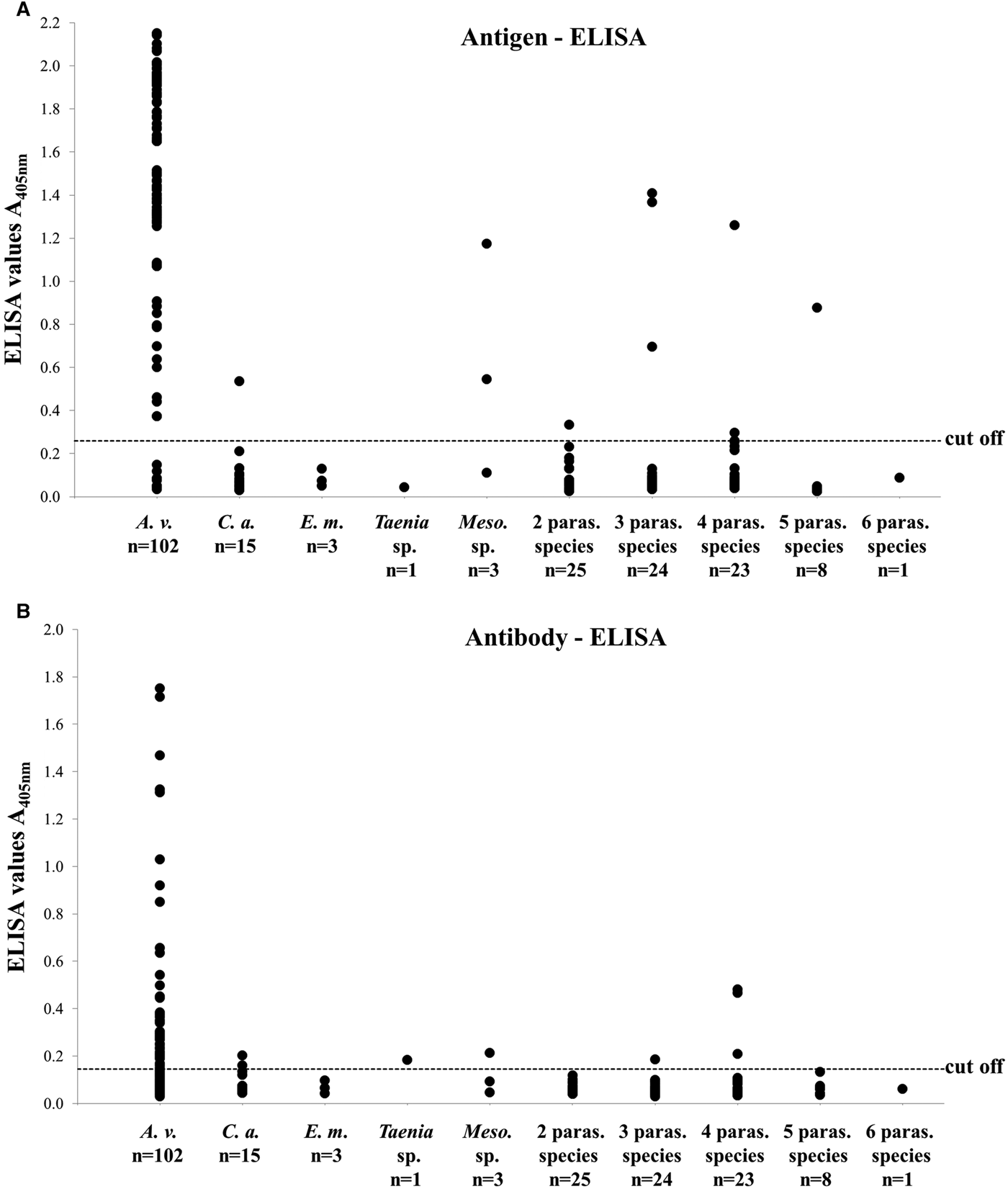
A total of 102 wild foxes were harbouring adult A. vasorum stages detected at necropsy with a WB ranging from 1 to 42 adult specimens (mean = 6·17, median = 3·5, s.d. = 6·93). Of these, 93 foxes (91·2%) were positive for antigen detection. The nine negative foxes in the Ag-ELISA were all harbouring a single adult A. vasorum specimen each. Twelve of 113 foxes (10·6%) negative at necropsy were found to be antigen positive. Sensitivity and specificity was 91·2 and 89·4%, respectively, using necropsy data as reference standard. Of 103 foxes harbouring other parasites than A. vasorum, ten foxes (9·7%) had antigen values above the cut-off: one infected with C. aerophila, two with Mesocestoides sp. and seven with mixed endoparasitic infections (Fig. 1).
Evaluation for cross-reactions of the ELISAs for detection of circulating Angiostrongylus vasorum (A.v.) antigen (A) and specific antibodies (B) in fox blood samples from 102 foxes harbouring A. vasorum and 103 wild foxes naturally infected with only Capillaria aerophila (C.a., syn. Eucoleus aerophilus), Toxocara canis (T.c.), Echinococcus multilocularis (E.m.), Taenia sp., Mesocestoides sp., other nematodes or multiple parasitic infections. Columns stating two to six parasite species do not include foxes infected with Angiostrongylus vasorum. Foxes above cut-off and infected with more than two parasite species (other than A. vasorum) were infected with: C. aerophila, Crenosoma vulpis, T. canis, E. multilocularis, Taenia sp., Mesocestoides sp. and/or other nematodes.

Antigen detection in experimentally infected foxes
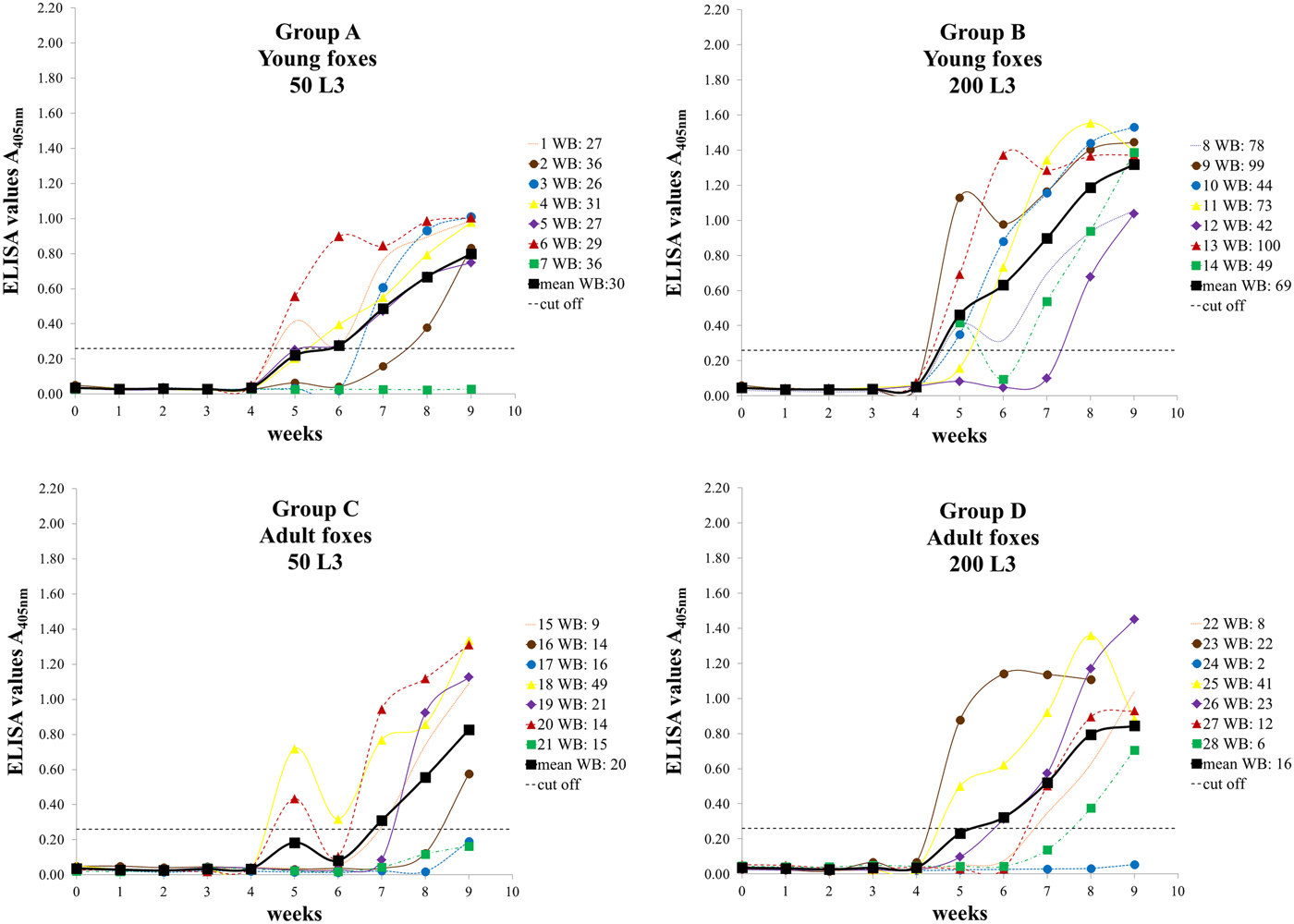
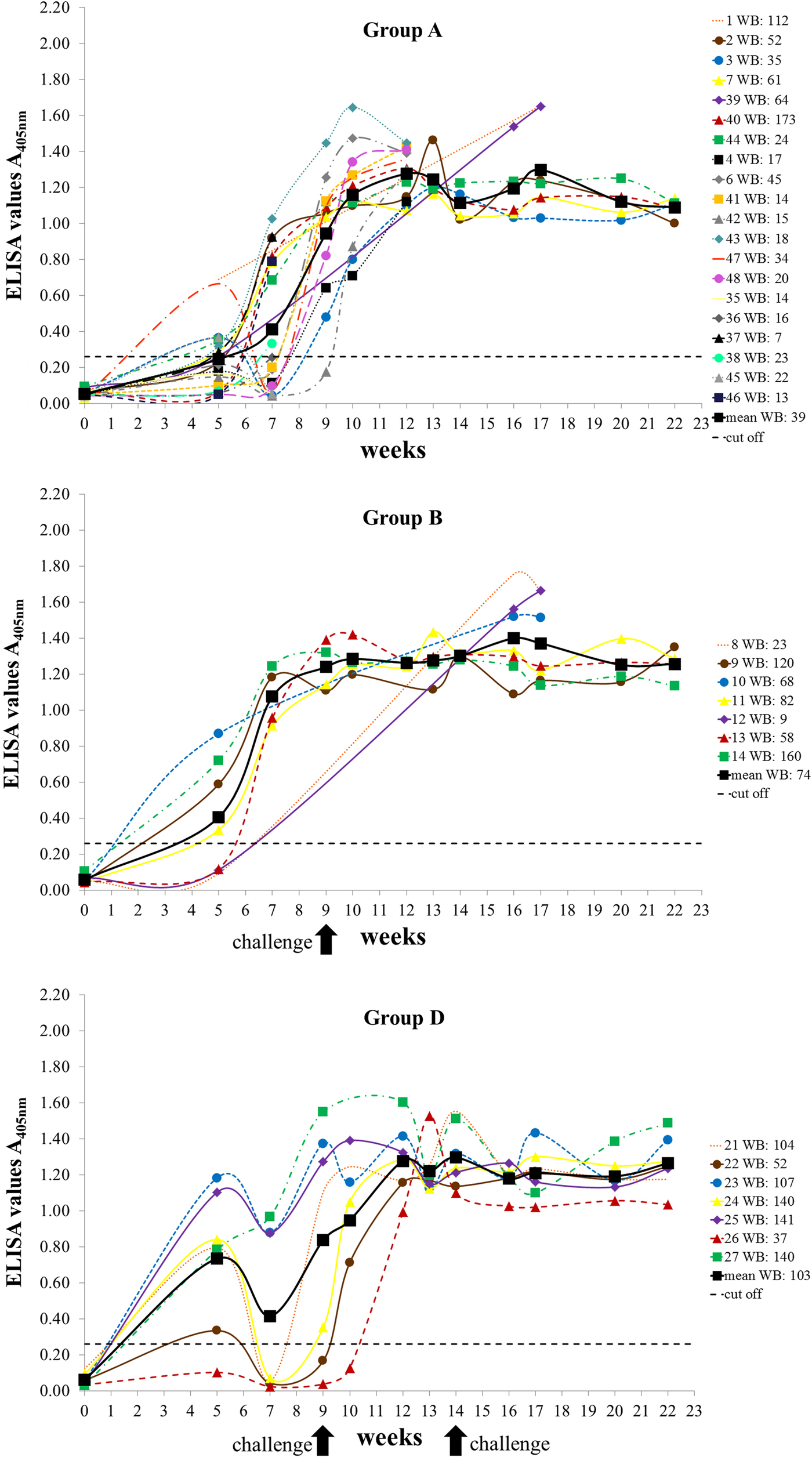
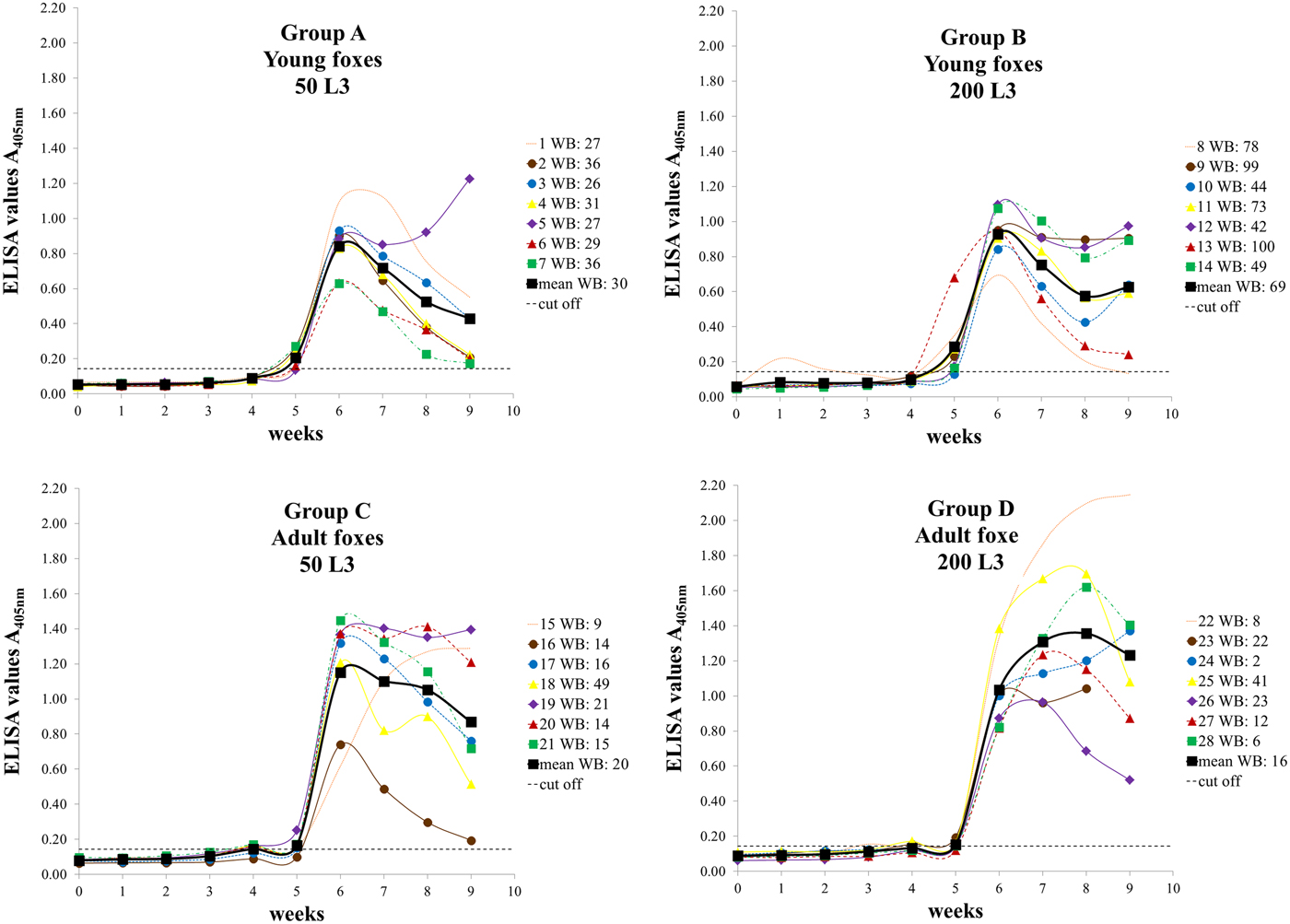
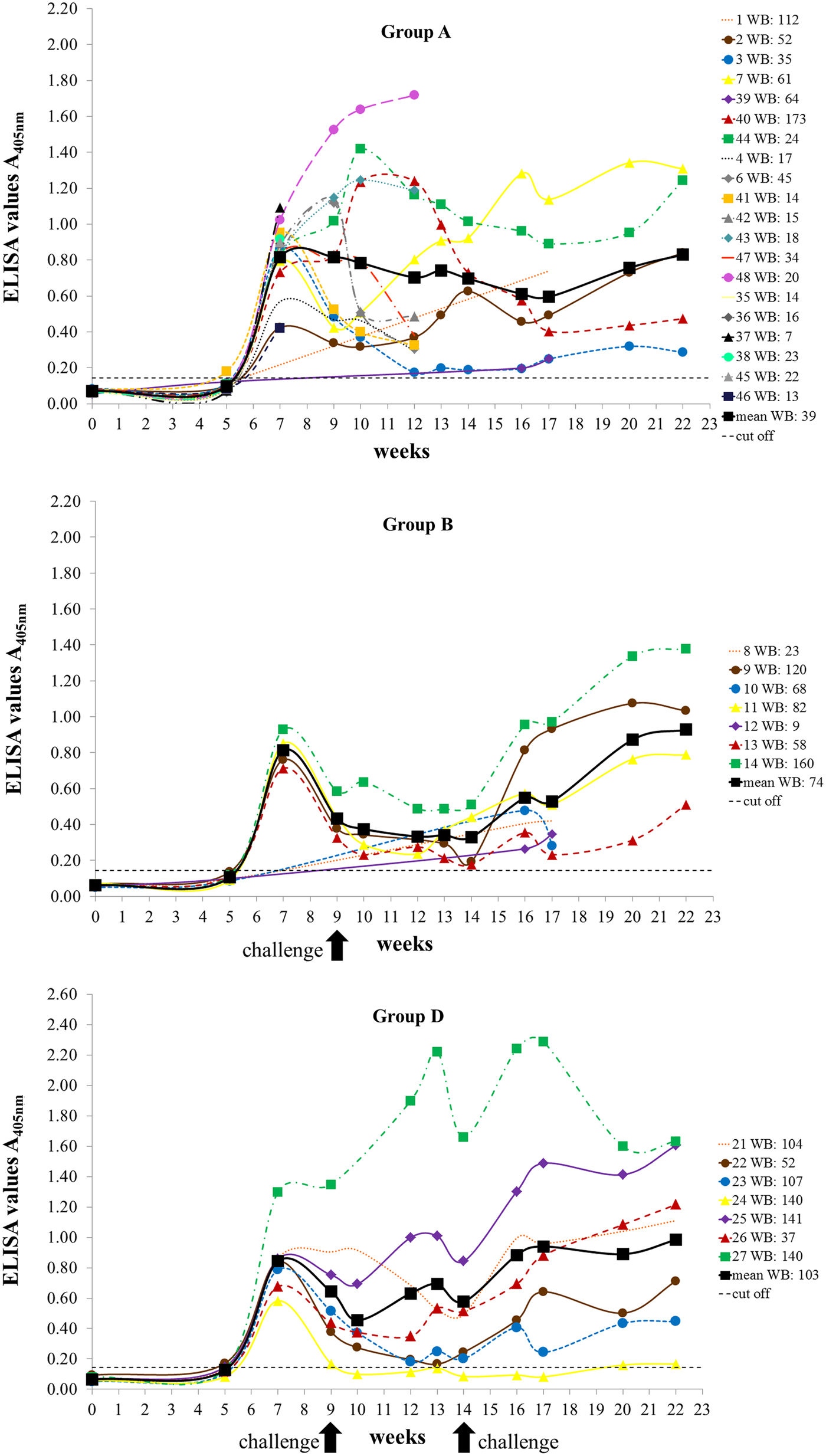
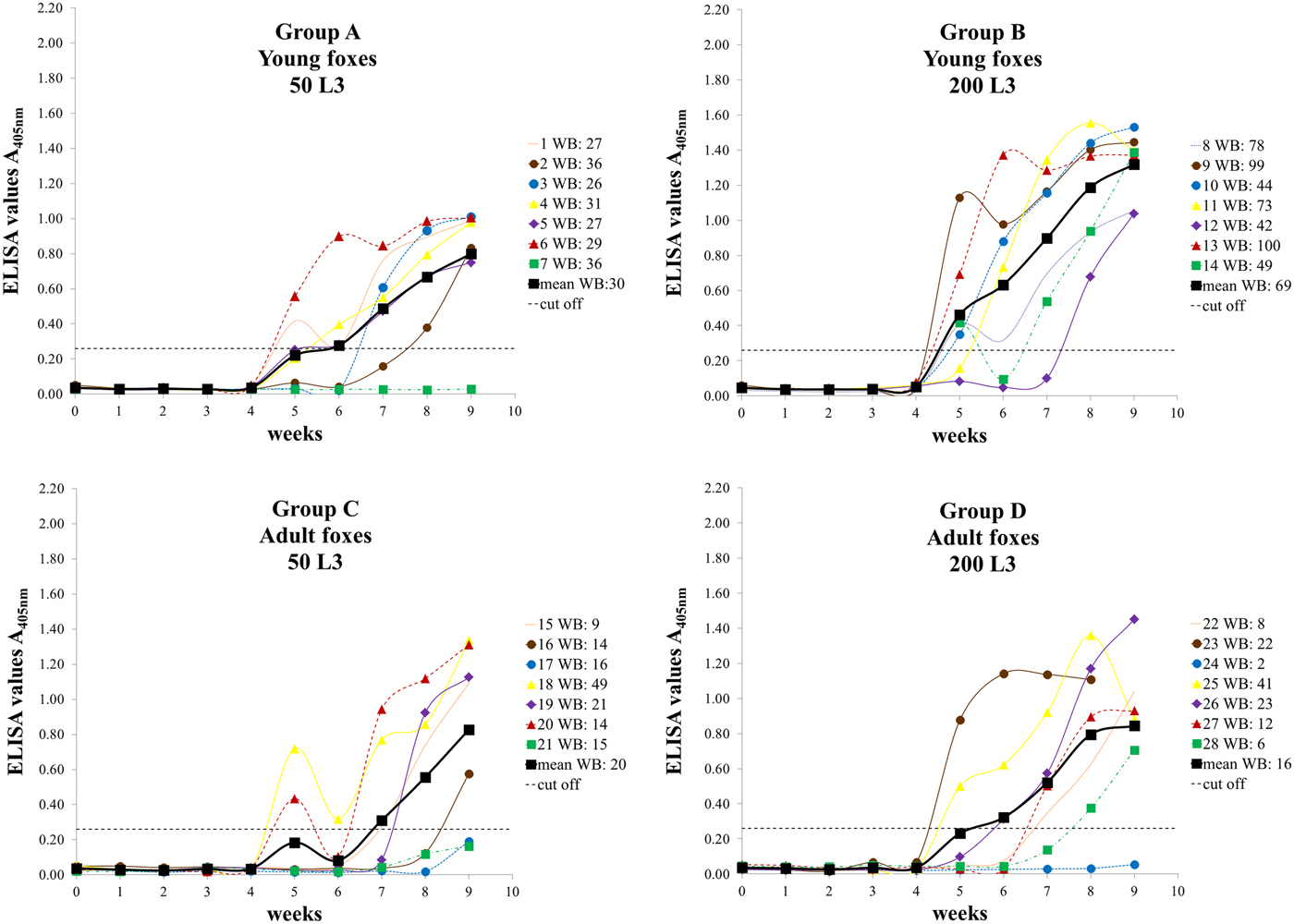
Antigen was detected between 5 and 11 weeks post-inoculation (wpi) in foxes in both experiments (Figs 2 and 3). Seven animals, four in the first and three in the second trial, with WB equal to 1, 2, 14, 15, 16 (2x) and 36, respectively, did not become antigen positive. One fox of trial 2 (group A) that died shortly after inoculation (not related to the A. vasorum infection) and before the second blood draw was not included in the serological follow-up.
Detection of circulating antigen of Angiostrongylus vasorum (trial 1): Weekly antigen OD values of individual foxes belonging to four different inoculation groups, and mean OD values of each group. Fourteen young foxes (groups A and B) and 14 adult foxes (groups C and D), seven of each age group, were inoculated with 50 or 200 A. vasorum third-stage larvae (L3). Blood was drawn once weekly until 9 wpi, when animals were euthanized and worm burden (WB) was determined.
Detection of circulating antigen of Angiostrongylus vasorum (trial 2): OD values of foxes of groups A [n = 20; inoculated with 100 third-stage larvae (L3)], B (n = 7; inoculated twice with 100 L3) and D (n = 7; inoculated three times with 100 L3) as well as group arithmetic means are shown starting from inoculation until necropsy, when worm burden (WB) was determined. Blood sampling is indicated with a marker for each individual. Inoculation challenges are indicated with an arrow.
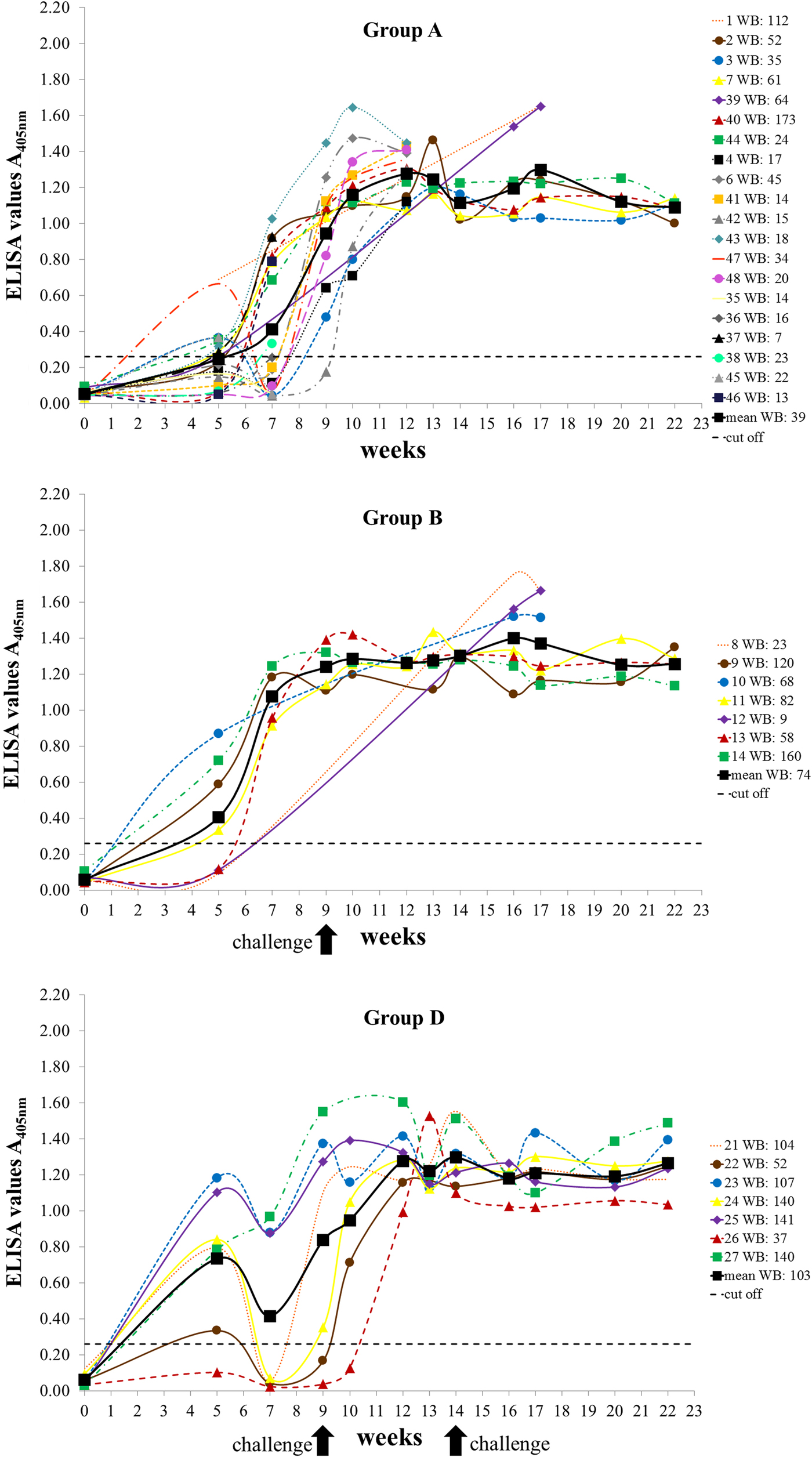
Six of 28 foxes (21·4%) in trial 1 and eight of 47 foxes (17%) in trial 2, which were first positive at 5 wpi, showed a decrease in antigen values at 6 or 7 wpi; eight of them (two of the first and six of the second experiment) actually dropped under the cut-off value. However, after this drop, antigen values increased again in all foxes that were followed up for a longer period of time (and not euthanized at 9 wpi). By 10 wpi, all foxes were seropositive again. The other 61 foxes, which did not show this drop, had a steady increase in antigen OD values for several weeks and kept steady circulating antigen levels until nine or 22 wpi, respectively (Figs 2 and 3). The six non-inoculated control foxes of the first experiment were always seronegative.
Comparing the groups of trial 1, five (71·4%) out of seven of the young foxes inoculated with 200 L3 (group B) were already seropositive at 5 wpi. In contrast, only two (28·6%) foxes were seropositive at 5 wpi from the juvenile group inoculated with 50 L3 (group A) as well as from both adult groups (C and D, Fig. 2).
Foxes of groups A, B and D of trial 2 showed comparable dynamic patterns of measured antigen values over time. At 5 wpi, nine foxes (45%) of group A were found antigen positive, while four (57·1%) foxes were seropositive in group B and six foxes in group D (85·7%). The last fox to become antigen positive did at 11 wpi. 10–12 wpi all groups reached a plateau. The two infected control groups C and E showed antigen levels comparable to group A (Supplementary Fig. S3).
Antibody detection in wild foxes
Suitability of old fox blood samples (including full blood samples and tissue fluid) for detection of antibodies was confirmed by T. canis positive results among the 65 reference wild red foxes (from the USA and Switzerland), and in the A. vasorum positive control dogs, whereas the samples from SPF dogs were negative.
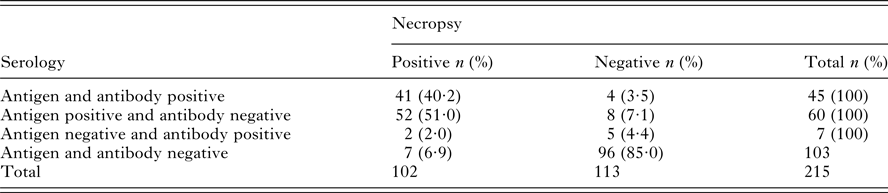
Forty-three of 102 foxes (46·1%) with A. vasorum adults at necropsy, and nine of 113 (8·0%) foxes negative at necropsy, were antibody positive, four (3·5%) of which were also antigen positive (Table 1). A sensitivity of 42·2% and a specificity of 92·0% were calculated based on necropsy findings.
Contingency table of the results of the ELISA for detection of circulating Angiostrongylus vasorum antigen and the ELISA for detection of specific antibodies based on 215 necropsied Swiss red foxes between the years 2013 and 2015

Eight of 103 surveyed foxes (7·8%) negative for A. vasorum at necropsy but infected with other parasites had antibody values above cut-off, two infected with C. aerophila, one with Taenia sp. and one with Mesocestoides sp., and four with multiple endoparasite species (excluding A. vasorum) (Fig. 1). Three foxes were positive in both, the Ag-ELISA and Ab-ELISA, one fox was infected with C. aerophila, another with Mesocestoides sp., and the last one with four helminth species other than A. vasorum.
When combining the two ELISAs, the ‘OR’ combination resulted in a combined sensitivity of 94·4% and a specificity of 82·3%. With the ‘AND’ combination, sensitivity was 38·4% and specificity was 99·2%.
Antibody detection in experimentally infected foxes
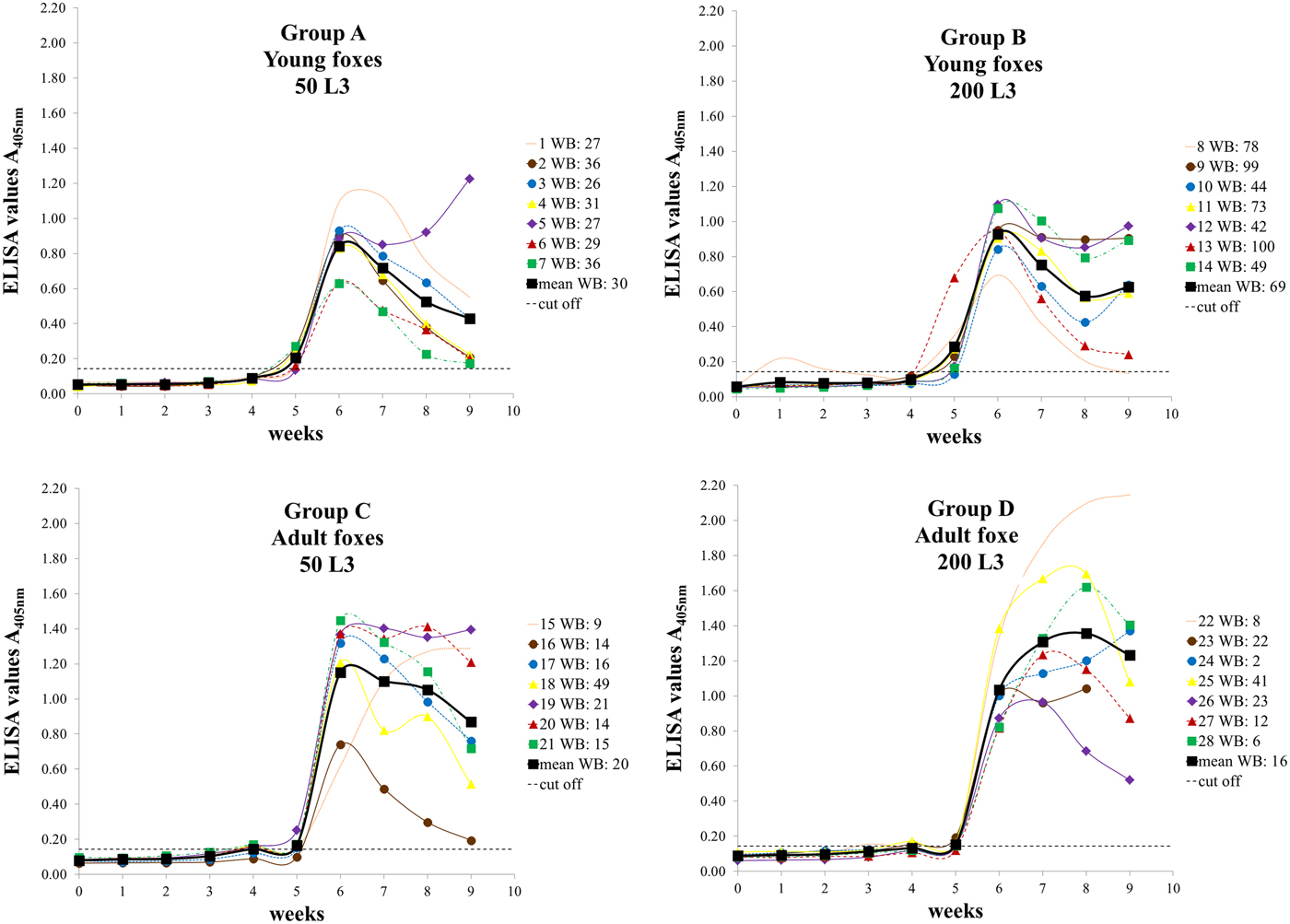
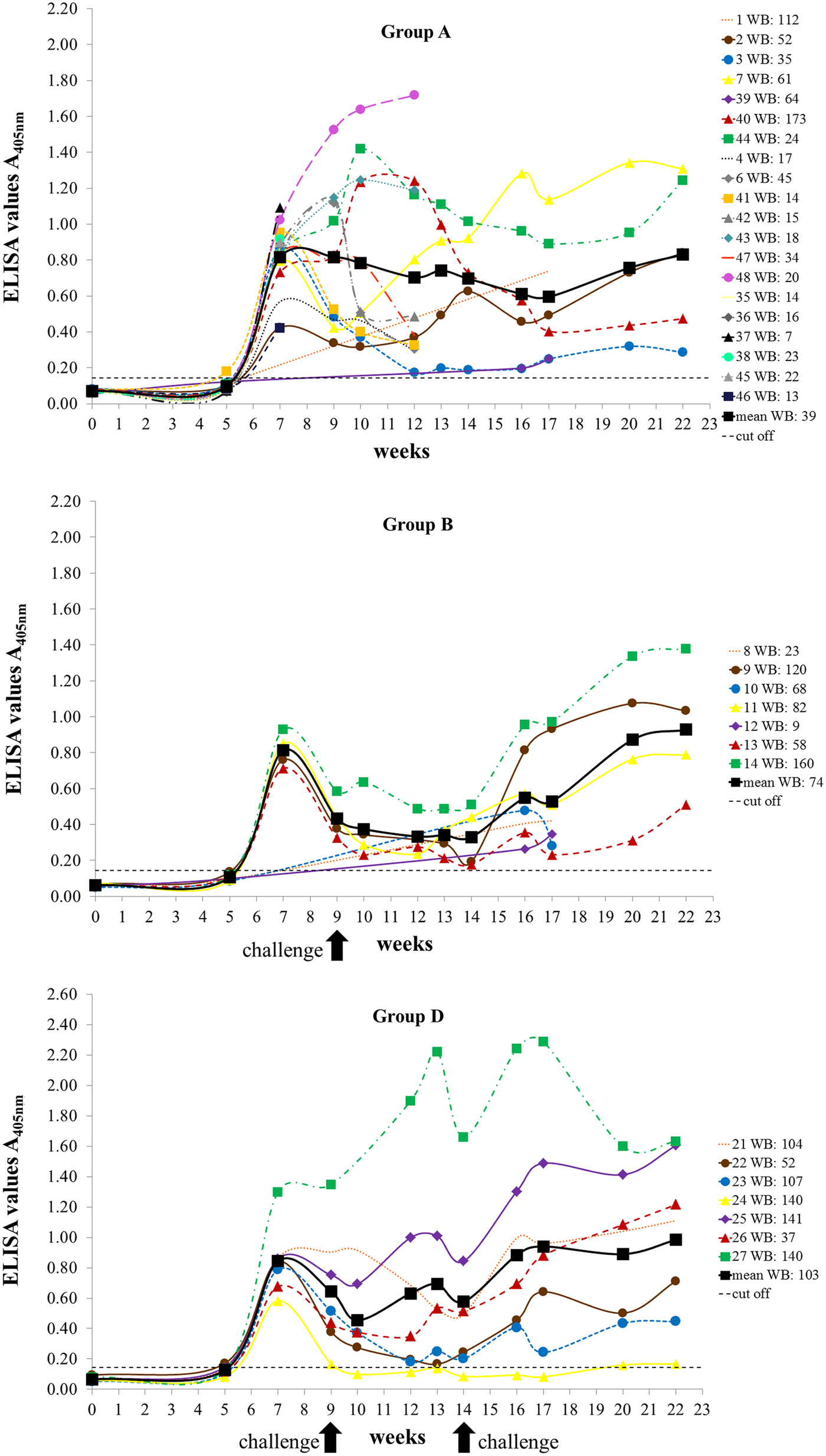
Detailed trends for antibody detection are displayed in Figs 4 and 5. The most noticeable increase in antibody OD values was observed between 5 and 7 wpi for the foxes of both experiments. Seventeen (60·7%) foxes of trials 1 and 23 (48·9%) foxes of trial 2 had a peak at 6 or 7 wpi, respectively, followed by a decrease in values over the next couple of weeks. Six challenged foxes further showed noticeable increase in antibody OD values 3–4 or 7 weeks after being challenged.
Detection of specific antibodies against Angiostrongylus vasorum (trial 1): antibody OD values of individual foxes belonging to four different inoculation groups and mean OD values of each group. Fourteen young foxes (groups A and B) and 14 adult foxes (groups C and D), seven of each age group, were inoculated with 50 or 200 A. vasorum third stage larvae (L3). Blood was drawn once weekly until 9 wpi, when animals were euthanized and worm burden (WB) was determined.
Detection of specific antibodies against Angiostrongylus vasorum (trial 2): OD values of foxes of groups A [n = 20; inoculated with 100 third-stage larvae (L3)], B (n = 7; inoculated twice with 100 L3) and D (n = 7; inoculated three times with 100 L3) as well as group arithmetic means from inoculation until necropsy, when worm burden (WB) was determined. Blood sampling is indicated with a marker for each individual. Inoculation challenges are indicated with an arrow.
In trial 1 (Fig. 4), follow-up antibody values of the juvenile foxes (both with high and low inoculation dose) and the adult foxes infected with 50 L3 were comparable. Throughout the experiment the values of the adult foxes infected with 200 L3 (group D) were less uniform and variable over time for each animal. Adult foxes had higher OD values by trend when compared with juvenile foxes.
In trial 2 (Fig. 5), antibody values of foxes in group A (inoculated once) were highly variable after the initial increase about 7 wpi, with foxes showing then increasing or decreasing levels, or showing both, up to 22 wpi. In group B (inoculated twice, initially and 9 wpi), antibody levels had a decreasing tendency from 7 wpi after initial inoculation until approximately 7 weeks after challenge, where antibody levels had increased in four of seven foxes. Comparable trends were observed in group D (inoculated three times): antibody levels decreased from 7 wpi and increased again 7 weeks after the first challenge in six foxes. At 6 or 8 weeks post second challenge all seven foxes had a minor increase in antibody OD values. The infected control groups C and E showed antibody values comparable with group A (Supplementary Fig. S4).
One fox of the first and two foxes of the second trial dropped below the cut-off after peaking at 5 and 7 wpi, respectively. Of these, one remained seronegative for 9 weeks before becoming positive again at 20 wpi. In general, after 7 wpi the antibody values of individual foxes were highly diverse. The six uninfected control foxes of the first experiment remained antibody seronegative.
Correlations between ELISA OD values and WBs and larvae per gram of feces
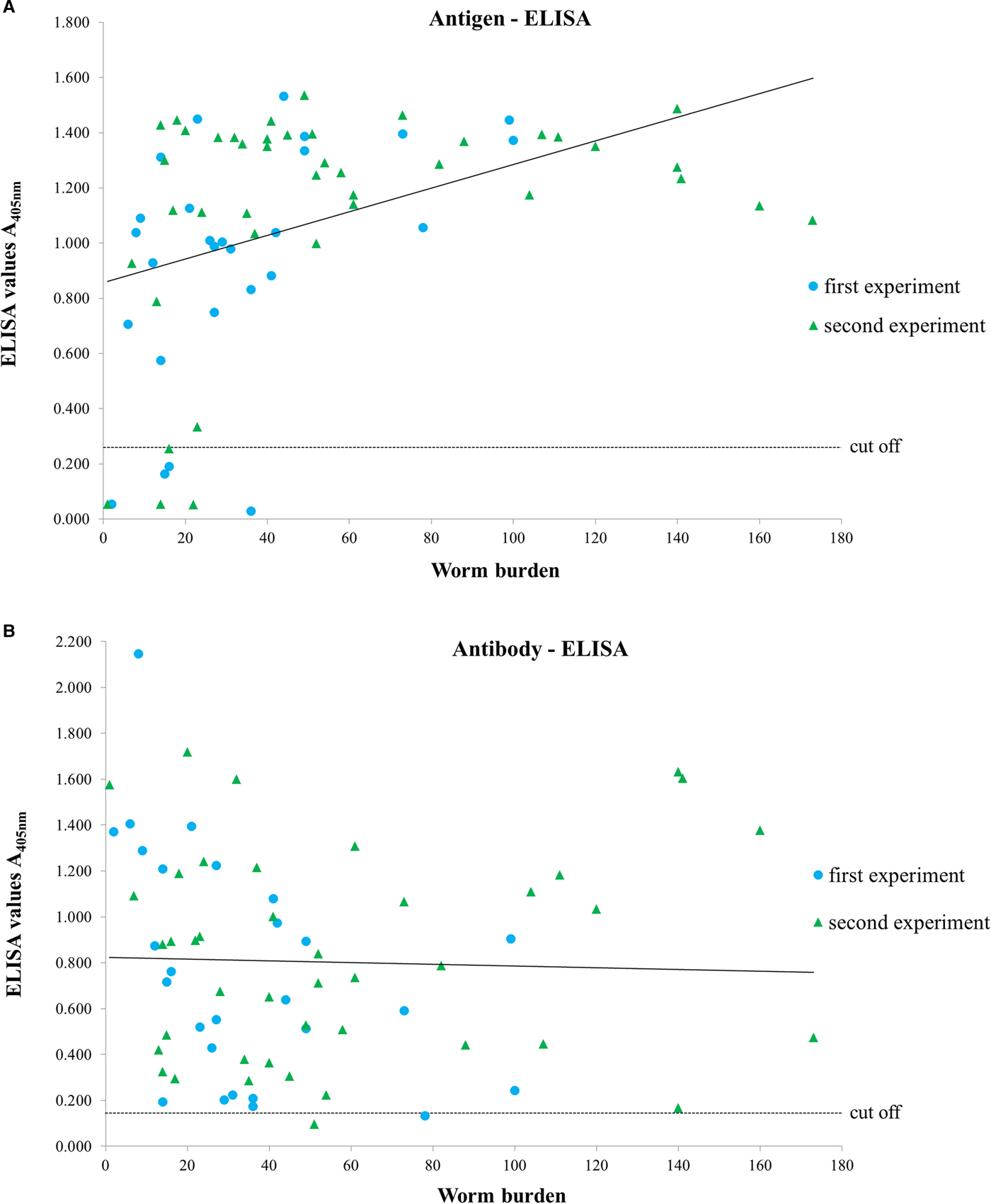
In experimentally infected foxes, both WB and mean LPG had weak Pearson correlations (r = 0·412, P ⩽ 0·0001, r 2 = 0·169; and r = 0·585, P ⩽ 0·0001, r 2 = 0·342, respectively) to antigen OD values at necropsy. Antibody values did not correlate with either WB or LPG (r = −0·033, P = 0·786, r 2 = 0·001; and r = 0·078, P = 0·108, r 2 = 0·006, respectively) (Fig. 6). Single foxes showed high antibody OD values and low WB, while others had low antibody OD values with high WB (Figs 4 and 5). As an example, two foxes in trial 2 of the same infection group (D) harbouring the exact same high number of adult A. vasorum specimens (WB: 140) had highly contrasting antibody OD trends (Fig. 5).
Scattering of Angiostrongylus vasorum worm burden against antigen (A) (r = 0·412, P ⩽ 0·0001, r 2 = 0·169) or antibody (B) (r = −0·033, P = 0·786, r 2 = 0·001) OD values determined at necropsy of experimentally inoculated foxes (trial 1, n = 27, blue circles, trial 2, n = 42, green triangles).

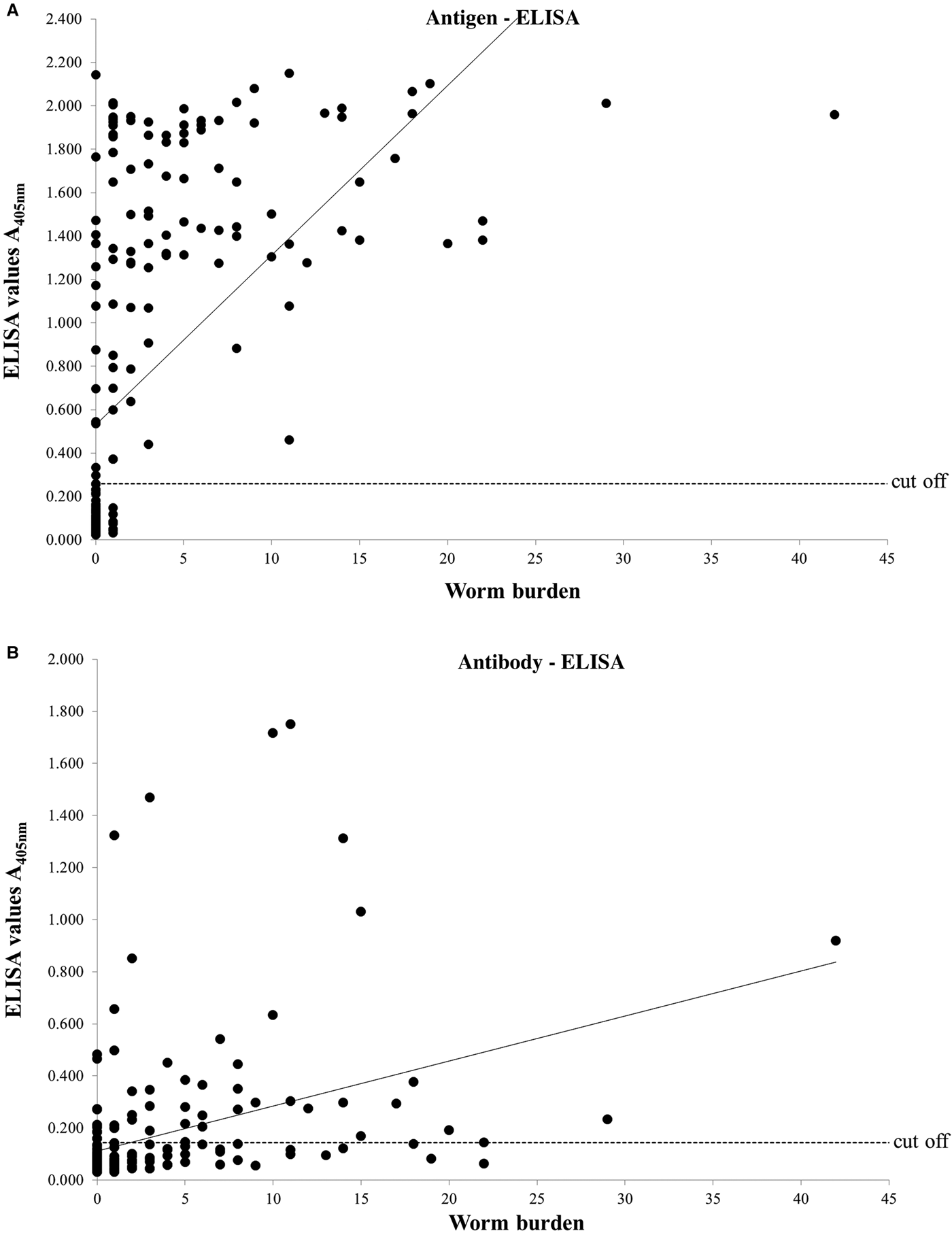
In the wild Swiss foxes (Fig. 7), WB had weak correlations to both antigen and antibody OD values: r = 0·569, P ⩽ 0·0001, r 2 = 0·323, and r = 0·378, P ⩽ 0·0001, r 2 = 0·143, respectively.
Scattering of Angiostrongylus vasorum worm burden against antigen (A) (r = 0·569, P ⩽ 0·0001, r 2 = 0·3234) or antibody (B) (r = 0·378, P ⩽ 0·0001, r 2 = 0·1429) OD values determined at necropsy of 215 wild Swiss foxes.

DISCUSSION
This study shows that A. vasorum antigen and antibody detection in fox sera and whole-blood samples is possible with the previously described ELISAs (Schnyder et al. Reference Schnyder, Tanner, Webster, Barutzki and Deplazes2011; Schucan et al. Reference Schucan, Schnyder, Tanner, Barutzki, Traversa and Deplazes2012) and therefore represent potential suitable methods for epidemiological screening of wild foxes for A. vasorum. Whereas the Ag-ELISA has a high sensitivity and a high specificity with blood of naturally infected foxes, the specificity of the Ab-ELISA was comparably high, but sensitivity was low.
For the past years, the Ag-ELISA and Ab-ELISAs have successfully been used to detect A. vasorum infections in dogs (Guardone et al. Reference Guardone, Schnyder, Macchioni, Deplazes and Magi2013; Schnyder et al. Reference Schnyder, Schaper, Bilbrough, Morgan and Deplazes2013a, Reference Schnyder, Schaper, Pantchev, Kowalska, Szwedko and Deplazesb; Lurati et al. Reference Lurati, Deplazes, Hegglin and Schnyder2015). In dogs, a comparison between these serological methods, the Baermann technique and PCR performed with blood, feces and tracheal swabs showed that the most consistent results were obtained in ELISAs (Schnyder et al. Reference Schnyder, Jefferies, Schucan, Morgan and Deplazes2015). The Ag-ELISA can detect positive dogs as early as 5 wpi and shows a sensitivity of 95·7% and a specificity of 94% (Schnyder et al. Reference Schnyder, Tanner, Webster, Barutzki and Deplazes2011) for dog samples. These results are comparable with the results we obtained with the wild fox samples, where sensitivity was 91·2% and specificity 89·4%, and antigen detection is possible after 5–7 wpi. As in dogs, antigen detection in foxes is consistent throughout the course of infection over a long period of time. In both trials antigen values of foxes remained high after 6–10 wpi in foxes receiving single or repeated inoculations. The results of the eight foxes, which persisted antigen negative and the two foxes, which had their first positive antigen values 10–11 wpi, indicate that antigen may not always be detected or may only be detected later during infection. If these findings are associated with the nine naturally infected foxes (each harbouring only one worm), which were negative in the Ag-ELISA, one may assume that these wild foxes were shot about 4 weeks after ingestion of L1 [first adult stages are present 25 days after inoculation (Guilhon and Cens, Reference Guilhon and Cens1973)] and had no time to build-up sufficient circulating antigen levels yet, or simply that one adult A. vasorum specimen is not sufficient to produce antigen levels above the cut-off.
A positive correlation between WB and antigen OD values was demonstrated: the presence of a higher number of adult specimens induced higher levels of circulating antigen and therefore higher antigen OD values. Thus, higher values in foxes may correlate with higher infection burdens. Similarly, there was a positive correlation of LPG at necropsy and antigen values. Higher mean numbers of L1 were observed in foxes of groups that were challenged, and these were also harbouring higher mean numbers of adult specimens (Woolsey et al. Reference Woolsey, Webster, Thamsborg, Schnyder, Monrad and Kapel2017). Nevertheless, LPG findings from foxes throughout the course of infection were not consistent; some did not even shed L1 at all (Webster et al. Reference Webster, Monrad, Kapel, Kristensen, Jensen and Thamsborg2017). Intermittent excretion (Oliveira-Júnior et al. Reference Oliveira-Júnior, Barçante, Barçante, Dias and Lima2006) of larvae needs to be taken into account, and larval output is not a stable indicator for higher infection rate (Webster et al. Reference Webster, Monrad, Kapel, Kristensen, Jensen and Thamsborg2017). On the other hand, antigen values proved to be very stable during the course of the infection and represent a more reliable indicator for WB. The reasons for the decrease in antigen values after 5 wpi, which was seen in 14 out of 75 (18·7%) foxes, are not fully understood. During this time, ingested L3 reach the adult mature stage in the definitive host and females carry eggs, which are then shed into the arteries. Six to seven wpi infected animals start shedding L1 (Guilhon and Cens, Reference Guilhon and Cens1973); however, some variability due to different strains and host-switching between foxes and dogs could be hypothesized. Different lineages of A. vasorum have been described (Jefferies et al. Reference Jefferies, Shaw, Viney and Morgan2009), but no evident differences of biological aspects or virulence are, to our knowledge, mentioned. Considering therefore the life cycle of A. vasorum, there seems to be no reason for a decrease in circulating antigens, as it is supposedly produced by adult worms; but interestingly, also about 6–7 wpi, a peak in antibody values (which is afterwards followed by a decrease) was observed. Antigen–antibody complex formation leading to a clearance of both may explain this phenomenon. Indeed, such complex formation has been discussed in D. immitis infections in dogs as well as in cats (Little et al. Reference Little, Raymond, Thomas, Gruntmeir, Hostetler, Meinkoth and Blagburn2014; Drake et al. Reference Drake, Gruntmeir, Merritt, Allen and Little2015), leading to reduced antigen detection. In previous studies, a relevant role for immunopathogenesis in the lungs of A. vasorum infected dogs was attributed to the formation of complexes of immunoglobulins, fibrin and complement, with predominant IgA (Caruso and Prestwood, Reference Caruso and Prestwood1988). The formation of antigen–antibody complexes were therefore also proposed as a causal mechanism underlying behind some antigen negative A. vasorum infected dogs seroconverting to positive after heat treatment (Schnyder et al. Reference Schnyder, Stebler, Naucke, Lorentz and Deplazes2014).
The sandwich Ab-ELISA with somatic antigen and purified with mAb 5/5 can detect infections in dogs 3–5 wpi, with a sensitivity of 81% in naturally infected dogs and a specificity of 98·8% in randomly selected dog samples (Schucan et al. Reference Schucan, Schnyder, Tanner, Barutzki, Traversa and Deplazes2012). In contrast, the same ELISA setting has a sensitivity of 42·2% when performed with wild fox samples. In experimentally infected foxes, antibody detection was possible in 38·7% of animals 5 wpi and in 100% 7 wpi. A noticeable difference between dogs and foxes is seen 6–7 wpi. If dogs are left untreated, specific antibodies are detectable for several months. In contrast, the present study demonstrates decreasing antibody levels in more than half of all foxes after 7 wpi (in a few foxes below cut-off), although animals never received anthelmintic treatment and the presence of adult specimens was proven at necropsy.
The low sensitivity of the Ab-ELISA in naturally infected foxes can be explained with this OD value drop followed by a continuous trend of decreasing OD values over time, occurring in more than 50% of experimentally infected foxes. Assuming persistency of this trend, OD values can therefore drop under the cut-off level, if foxes are not reinfected. In fact, in the experimentally infected foxes we see a trend towards increasing antibody values after challenges, and higher infection doses leading to higher antibody values in both juvenile and adult foxes. Simultaneously, WB and antibody values at necropsy did not correlate in experimentally infected foxes, nor did inoculation dose and WB in adults (Webster et al. Reference Webster, Monrad, Kapel, Kristensen, Jensen and Thamsborg2017). Antibody values in the experimentally infected farm foxes were highly variable over time following comparable inoculation doses, within groups and even within individuals. At once, the naturally infected foxes originated from different areas and environments; from some no parasites were isolated and others were infected with up to six different parasite species. Therefore, naturally infected foxes were presumably exposed to highly varying parasitic and/or other immunological stimuli, and antibody response in naturally infected foxes may be even more diverse than in experimentally infected foxes.
In opposition to low sensitivity, specificity of the Ab-ELISA with fox samples was high (92·0%). Interestingly, in our study 10·6% of foxes negative at necropsy were antigen seropositive and 8·0% of necropsy negative foxes were antibody seropositive. A total of 3·5% (n = 4) of foxes, which were negative at necropsy were positive in both ELISAs. Likely though, these results indicate that approximately 4–11% of A. vasorum positive foxes had probably been missed upon dissection, supporting that the dissection technique is not 100% accurate (Houpin et al. Reference Houpin, McCarthy, Ferrand, De Waal, O'Neill and Zintl2016). In fact, it is not possible to open every small vessel in the lung to recover all parasites, which are thin and relatively small (particularly males). The dissection technique, which was used to examine naturally infected foxes, is comparable with the one described by Houpin et al. (Reference Houpin, McCarthy, Ferrand, De Waal, O'Neill and Zintl2016). These authors compared dissection with PCR of BALF (bronchoalveolar lavage fluid) and with a serological in-clinic assay (Angio Detect™, IDEXX Laboratories, Westbrook, Maine, USA) for detection of A. vasorum antigen in tissue fluid, obtaining a sensitivity of 84·1, 69·5 and 76·8%, respectively, assuming positivity for all samples positive by any of the methods applied. The in-clinic commercial ELISA detects circulating antigen as well, however, as shown for dogs, with a lower sensitivity than the ELISA employed here (Schnyder et al. Reference Schnyder, Stebler, Naucke, Lorentz and Deplazes2014). Comparably, this latter ELISA showed a higher sensitivity (91·2%) than the in-clinic assay using fox material (76·8%, Houpin et al. Reference Houpin, McCarthy, Ferrand, De Waal, O'Neill and Zintl2016).
Dissection may lead to false-negative results, especially when the animals are infected with few parasites or were only recently infected, and therefore this method cannot be considered as a gold standard. Likewise, at least the three foxes with apparent cross-reactions being positive for both antigen and antibody detection (and positive for C. aerophila, Mesocestoides sp. or three parasite species, respectively) but negative for A. vasorum at dissection, and possibly also other apparently cross-reacting sera, with high probability had adult worms that were not detected. Conducting cross-reactivity studies with foxes experimentally infected with specific helminths other than A. vasorum could have helped supporting specificity results; such samples were however not available. Complementary to necropsy, another approach to better estimate specificity and sensitivity of the present ELISAs may consist in Bayesian statistical inference techniques, as formerly described for evaluating different methods to identify cows infected with Taenia saginata in absence of a gold standard test (Eichenberger et al. Reference Eichenberger, Lewis, Gabriel, Dorny, Torgerson and Deplazes2013).
In previous studies with experimentally infected foxes, the animals had only mild haematological changes when infected and challenged with A. vasorum L3 (Woolsey et al. Reference Woolsey, Webster, Thamsborg, Schnyder, Monrad and Kapel2017). Merely the number of eosinophils, basophils and, in some groups, lymphocytes slightly increased at certain time points in some of the infection groups (Woolsey et al. Reference Woolsey, Webster, Thamsborg, Schnyder, Monrad and Kapel2017). The amount of neutrophils did not change, which suggests a very mild or even a lack of inflammatory haematological reaction. Lymphocyte numbers are relevant in this context because B cells are responsible for the adaptive part of humoral immunity as antibody producers. The antibody responses observed in the present study, though, are merely a reaction to a single specific epitope. The haematological changes, a 7-week interval of antibody increase after each infection or challenge, combined with the finding of increasing mean WB in challenged groups, speak for the absence of protective immunity in foxes. Foxes can apparently tolerate a patent A. vasorum infection over a long period of time, suggesting a balanced host–parasite interplay between foxes and A. vasorum that is particularly well adapted to favour the transmission of the parasite (Webster et al. Reference Webster, Monrad, Kapel, Kristensen, Jensen and Thamsborg2017; Woolsey et al. Reference Woolsey, Webster, Thamsborg, Schnyder, Monrad and Kapel2017).
Current knowledge on A. vasorum infections or prevalence in foxes mostly relies on necropsy results. However, the procedures for isolation of A. vasorum from dead foxes can be time consuming and laborious. The presented ELISAs may represent an alternative and efficient approach for mass-screening of A. vasorum infections in fox populations, also when lungs and hearts are not available. Combining both ELISAs, if the ‘OR’ combination is applied, sensitivity can be further increased, reaching at least 94·4%. In addition, the combination of both ELISAs may provide valuable indications of the time of infection or reinfection in foxes: animals which are only positive in the Ag-ELISA, but negative in the Ab-ELISA most likely were infected weeks or months ago and were not reinfected during this time, while foxes only seropositive for antibodies may have been infected 5–7 weeks before.
Our findings from experimentally and naturally infected foxes provide some evidence that foxes develop parasite tolerance and confirm the potential for life-lasting survival of A. vasorum in definitive hosts (Rosen et al. Reference Rosen, Ash and Wallace1970). This contributes to our understanding of the epidemiology of A. vasorum infection in red foxes, underpinning their significance for the establishment of endemic foci of the parasite and for the epidemiological dynamic that is evident in many parts of Europe where A. vasorum has been found over the last few decades.
SUPPLEMENTARY MATERIAL
The supplementary material for this article can be found at https://doi.org/10.1017/S0031182017000427
ACKNOWLEDGEMENTS
The authors thank Jesper Monrad and Pia Webster who were involved in the experimental studies. We would like to acknowledge Deborah Joekel, Francesca Gori and Stefan Müller who organized fox lung collection, and Katja Huggel and Katharina Stebler who provided laboratory assistance. This paper represents a part of the veterinary doctoral dissertation of Nina Germitsch.
FINANCIAL SUPPORT
We would like to acknowledge Bayer Vital GmbH, Business Unit Animal Health, Germany, for the financial support of Nina Germitsch in the form of a doctoral fellowship.