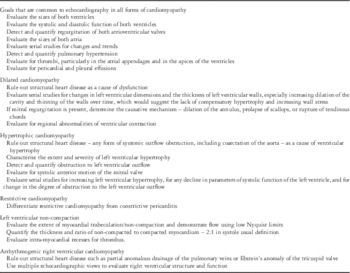
Echocardiography remains the mainstay of non-invasive, serial evaluation of ventricular function in children because of its widespread availability, ease of use, and ability to provide assessment in real time. Measurements that are derived from echocardiography, particularly pertaining to ventricular size and systolic function, are often used as surrogate or secondary end points in clinical trials.Reference Fleming 1 , Reference Gheorghiade, Adams, Gattis, Teerlink, Orlandi and O’Connor 2 Reliable and reproducible assessment of ventricular size and function is essential for the diagnosis and follow-up of children with heart failure. The role of quantitative echocardiography in children is challenged by the wide range of pathological states that underlie heart failure – univentricular versus biventricular heart, with a systemic right ventricle versus a systemic left ventricle – the variation in the size of children – from neonate to adult – and the large number of measurements that is available for use. It can be difficult for the clinician to decide which measurements to make, how to make them, and how to interpret them. In this review, we shall evaluate the evidence supporting the use of specific types of measurements, and provide guidelines on how these are best performed and interpreted. We shall discuss common phenotypes of cardiomyopathy – dilated, hypertrophic, restrictive, non-compaction, and arrhythmogenic right ventricular cardiomyopathy. Dilated cardiomyopathy, the commonest of these, is characterised by systolic dysfunction, whereas the hypertrophic and restrictive varieties are characterised by diastolic dysfunction with preserved systolic function. We shall separately discuss the univentricular heart and the failing right ventricle. The goals of echocardiography include some common features that are shared among all forms of cardiomyopathy, and other goals that are specific to individual types of cardiomyopathy. These are summarised in the Table 1.
Goals of echocardiographic evaluation in cardiomyopathy.

Dilated cardiomyopathy
Dilated cardiomyopathy is a form of heart failure that has been studied the best from the standpoint of echocardiography. The predictive nature and reproducibility of echocardiographic measurements are best examined within the construct of either a registry – with strength in numbers through pooling of data – or a clinical trial – where the measurements are performed in a manner that is blinded to patient outcomes. The North American Pediatric Cardiomyopathy Registry and the National Australian Childhood Cardiomyopathy Study are important resources that have serial data on thousands of children with cardiomyopathy.Reference Grenier, Osganian and Cox 3 , Reference Nugent, Daubeney and Chondros 4 Pediatric Cardiomyopathy Registry studies have identified lower fractional shortening and higher end-diastolic dimension of the left ventricle as predictors of subsequent transplantation,Reference Towbin, Lowe and Colan 5 , Reference Alvarez, Orav and Wilkinson 6 and, conversely, have identified lower end-diastolic dimension of the left ventricle as a predictor of recovery.Reference Everitt, Sleeper and Lu 7 The National Australian Childhood Cardiomyopathy Study identified lower fractional shortening of the left ventricle as an independent predictor of death or transplantation.Reference Alexander, Daubeney and Nugent 8 In both these studies, measurements on echocardiograms were performed at individual clinical sites. In contrast, in the Ventricular Volume Variability study of the Pediatric Heart Network, funded by the National Institutes of Health, Bethesda, United States of America, measurements were performed in a core facility for echocardiography that was blinded to the clinical status and outcomes of individual patients.Reference Colan, Shirali and Margossian 9 A secondary analysis of data from the Ventricular Volume Variability study evaluated 63 variables – 38 echocardiographic measurements and 25 clinical parameters – as potential predictors of progression of disease.Reference Molina, Shrader and Colan 10 This study identified larger end-diastolic dimension and lower ejection fraction of the left ventricle, color M-mode flow propagation slope, and the age of the child as independent predictors of progression of dilated cardiomyopathy. The identification of the diastolic dimension of the left ventricle and measures of systolic function obtained from the phase of ejection – fractional shortening and ejection fraction – as consistent markers of prognosis provide the foundation for approaches to improve the reproducibility of those measurements. Since 2012, the Ventricular Volume Variability study has provided important insights about the impact of the type of measurement, the averaging of multiple cardiac cycles, and the variability in reader – one versus more than one – modality, and algorithm on the reproducibility of these measurements.
In order to improve the reproducibility of measurements, proven strategies include the following: averaging measurements that are obtained from three cardiac cycles, particularly in the most dilated and dysfunctional ventricles, having a single reader perform all the measurements, and minimising the use of calculated measurements that involve multiple quantities.Reference Colan, Shirali and Margossian 9 , Reference Margossian, Chen and Sleeper 11 The three two-dimensional algorithms for measuring the volume of the left ventricle use different formulae; they are not interchangeable, and have varying reproducibility. The 5/6×area×length (bullet) technique is more reproducible than the Simpson’s modified or Simpson’s biplane apical algorithms. Simpson’s biplane apical technique underestimates the volume and ejection fraction of the left ventricle – and has worse reproducibility – when compared with the bullet technique. In order to make serial measurements that are meaningful, a single algorithm should be used consistently, and the measurements should be referenced to nomograms that are designed for the specific algorithm. Similarly, although linear measurements of the dimension of the left ventricle can be made by either two-dimensional or M-mode, the two modalities do not yield identical measurements, and should not be used interchangeably.Reference Lee, Margossian and Sleeper 12 The high variability between readers in performing echocardiographic measurements, demonstrated by the Ventricular Volume Variability study, combined with declining re-imbursements, increasing demands, and the rapid advances in automation and machine learning, make a strong case for measurements that are performed in an automated manner – and averaged across multiple cardiac cycles in an effortless manner. Conceivably, this could improve both the speed and reproducibility of echocardiographic measurements.
Hypertrophic cardiomyopathy
Hypertrophic cardiomyopathy is characterised by hypertrophy of the ventricles in the absence of a physiological stimulus. From the standpoint of echocardiography, the condition is characterised by hypertrophy of either the left ventricle alone or of both the ventricles.Reference Maron, McKenna and Danielson 13 Left ventricular hypertrophy is either concentric or asymmetric, typically involving the basal septum more than the posterior wall; rarely, the hypertrophy is confined to the cardiac apex. With the aid of two-dimensional and M-mode techniques, the magnitude and distribution of hypertrophy can be delineated. In the typical case, the left ventricle is thickened, the size of its cavity is diminished, and its systolic function is hyperdynamic. In end-stage disease or in specific forms of hypertrophic cardiomyopathy,Reference Maron, Roberts and Arad 14 the left ventricle may enlarge and may have depressed systolic function.
Echocardiography is the most useful tool for the diagnosis of obstruction to left ventricular outflow and for describing the degree and nature of the obstruction. Obstruction may be latent and provoked by exercise, provocative manoeuvers, or pharmacological agents. Obstruction can either occur in the sub-aortic area from anterior motion of the anterior mitral leaflet in systole, which makes mid-systolic contact with the ventricular septum, or in the mid cavity of the left ventricle, due to obliteration of the cavity of the ventricle resulting from apposition of the thickened walls. The Doppler pattern of obstruction to left ventricular outflow is characterised by acceleration of flow in the mid to late portion of systole. Progression of disease to end-stage, or evolution of disease to a dilated phenotype, may be associated with a decrease in the degree of left ventricular outflow obstruction.
The anterior motion of the mitral valve in systole also results in mitral regurgitation that is directed towards the posterior aspect of the left atrium. If the jet of regurgitation is central or directed anteriorly, or if multiple jets are present, an intrinsic abnormality of the mitral valve apparatus should be suspected. This may have implications for the therapeutic approach for relief of obstruction to the left ventricular outflow. The left atrium is often enlarged due to the combination of mitral regurgitation and abnormal diastolic function of the left ventricle; assessment of the latter is an important goal for the evaluation of hypertrophic cardiomyopathy. As will be detailed elsewhere in this review, assessment of left ventricular diastolic function in children poses considerable challenges to the clinician.
The Doppler pattern of transmitral inflow may demonstrate abnormalities including a decrease in the velocity of early diastolic filling (E wave), a corresponding increase in late filling of the ventricle in atrial systole (A wave) resulting in a reversed E/A ratio, prolonged duration of early diastolic deceleration of transmitral inflow, and prolongation of the time taken for isovolumetric relaxation of the left ventricle. The pulmonary veins may exhibit an increase in the duration of reversed flow during atrial systole, coupled with a progressive decrease in antegrade flow during ventricular systole. The velocity of relaxation of the myocardium, measured by tissue Doppler, is decreased in early diastole. McMahon et alReference McMahon, Nagueh and Pignatelli 15 studied 80 children with hypertrophic cardiomyopathy and found that a high value for the ratio of early diastolic velocity of transmitral inflow to the early diastolic velocity of relaxation of the septal myocardium predicted death, cardiac arrest, or ventricular tachycardia.
Studies to stratify risk in adults with hypertrophic cardiomyopathy have identified extreme hypertrophy of the left ventricle, thickness >30 mm, as a major risk factor, and a Doppler gradient >30 mm in the left ventricular outflow tract as a minor risk factor.Reference Maron, McKenna and Danielson 13 In contrast, data from a large registry of children with hypertrophic cardiomyopathy showed that children are at higher risk for cardiac death that is not sudden.Reference Lipshultz, Orav and Wilkinson 16 This study revealed that echocardiographic measurements were important prognostic factors in hypertrophic cardiomyopathy, but that the specific variables that predicted outcomes varied according to the aetiology and phenotype of presentation – for example, death or cardiac transplantation was predicted by elevated end diastolic thickness of the left ventricle in children under 1 year of age and, in contrast, was predicted by depressed shortening fraction of the left ventricle in children over 1 year of age. In children with mixed hypertrophic and dilated cardiomyopathy, elevated end diastolic thickness of the left ventricle was a predictor of poorer prognosis, as was the presence of congestive heart failure. The data published from the National Australian Childhood Cardiomyopathy Study on a longitudinal cohort of 80 children with primary hypertrophic cardiomyopathy identified increasing thickness of the left ventricle as well as a concentric pattern of hypertrophy and lower fractional shortening of the left ventricle as risk factors for death or transplantation.Reference Nugent, Daubeney and Chondros 17
Restrictive cardiomyopathy
Restrictive cardiomyopathy is characterised by poor compliance of the ventricles, resulting in abnormalities of diastolic filling. In this type of cardiomyopathy, the ventricles exhibit normal or decreased size and normal or near-normal systolic function. There is substantial overlap between this type of cardiomyopathy and the hypertrophic type. Echocardiograms of patients with restrictive cardiomyopathy are notable for marked enlargement of both atria. The systemic veins may be dilated. Pulmonary hypertension is commonly present. The atrial septum and the cardiac valves may be thickened. Doppler interrogation of the pulmonary and hepatic veins may reveal velocities that are higher in diastole than in systole and prolonged, high-velocity reversals of flow during atrial systole.
In a large study of children with restrictive cardiomyopathy who were followed-up through the Pediatric Cardiomyopathy Registry, Webber et alReference Webber, Lipshultz and Sleeper 18 found that two-thirds of children with restrictive cardiomyopathy had a phenotype that was purely restrictive. The remaining one-third of patients had a mixed phenotype, with the co-existence of hypertrophic cardiomyopathy. Survival did not differ between the two groups. This study revealed that lower fractional shortening of the left ventricle and, in children with the mixed phenotype, greater thickness of the left ventricular posterior wall independently predict mortality and heart transplantation.
Left ventricular non-compaction
This disorder is characterised by multiple prominent trabeculations and deep inter-trabecular recesses in the left ventricular myocardium. In a series of 242 children with this disease, Brescia et alReference Brescia, Rossano and Pignatelli 19 found that three-fifths had left ventricular systolic dysfunction, the presence of which was strongly associated with mortality. In children, an undulating course has been described,Reference Pignatelli, McMahon and Dreyer 20 with presentations that vary between the dilated and the hypertrophic phenotype over time.
Arrhythmogenic right ventricular cardiomyopathy
Echocardiography is not the primary diagnostic test for this form of cardiomyopathy; cardiac MRI studies are diagnostic. Echocardiographic findings may include dilation, regional or global hypokinesis, aneurysms, increased echogenicity, and hypertrabeculation of the apex of the right ventricle.
The failing right ventricle
In the bi-ventricular heart, the right ventricle may be either in the sub-pulmonary position, as is seen after the repair of tetralogy of Fallot, or in the systemic position, as is seen in congenitally corrected transposition of the great arteries or after the atrial switch operation for transposition of the great arteries. The anterior, retrosternal position of the right ventricle, coupled with its complex crescentic shape, make it an elusive target for echocardiography. In addition, the right ventricle has a complex, almost peristaltic contraction pattern, characterised by predominantly longitudinal shortening of the inflow and sinus and predominantly circumferential and radial shortening of the outflow. There is paucity of standard measurements of the size and systolic function of the right ventricle and, unsurprisingly, of echocardiographic measurements of the right ventricle that predict outcomes in children. In 2010, the American Society of Echocardiography and the European Association of Echocardiography together developed guidelines for echocardiographic assessment of the right heart;Reference Rudski, Lai and Afilalo 21 these guidelines have been updated recently.Reference Lang, Badano and Mor-Avi 22 Both sets of guidelines specifically address the subpulmonary right ventricle alone, and the normal values that are provided apply primarily to adults. Nevertheless, in the absence of a single reliable measurement of the function of the right ventricle in children, these guidelines serve as a useful starting point for several principles. Multiple acoustic windows should be used in order to image as much of the right ventricle as is possible, and both qualitative and quantitative parameters should be reported. The parameters that should be evaluated include the sizes of the right atrium and the right ventricle.
In paediatric practice, the systolic function of the right ventricle is most often graded qualitatively using a combination of views that, taken together, provide for qualitative evaluation of the longitudinal, circumferential, and radial function of the right ventricle. The four-chamber view from the apex of the heart lends itself to measurement of the fractional change in the area of the inflow and sinus of the right ventricle, but this view does not factor in the outflow tract. The longitudinal shortening of the right ventricle can be quantified by measuring the excursion or the peak systolic velocity of the annular plane of the tricuspid valve using M-mode or tissue Doppler, respectively. It is easy to perform both these measurements. Normal paediatric data are available for both, although for the subpulmonary and not for the systemic right ventricle. Both measurements are dependent on the angle of interrogation and on the loading conditions of the right ventricle, and are insensitive to localised abnormalities of wall motion.
The presence and severity of tricuspid regurgitation is an important associated finding with right ventricular failure. This may be due to a combination of dilation of the tricuspid annulus and of the sinus of the right ventricle, which leads to tenting and failure of coaptation of the leaflets of the tricuspid valve. Dysfunction of the papillary muscles of the tricuspid valve may be part of global dysfunction of the right ventricle, and may contribute to the mechanisms of tricuspid regurgitation. The inefficiencies of flow and output due to tricuspid regurgitation, coupled with the circumferential attachments of the papillary muscles of the tricuspid valve, create a vicious cycle where tricuspid regurgitation leads to increased dilation of the right ventricle, which, in turn, leads to increased tricuspid regurgitation.
The failing univentricular heart
Echocardiographic assessment of the function of the univentricular heart is challenging before, during, and after the completion of staged palliative surgery. The altered geometry of the ventricle, the presence of septal defects and volume loading, and the absence of normative data are all factors that limit the utility of traditional echocardiographic quantitative techniques. Consequently, and similar to the subpulmonary right ventricle, there is paucity of echocardiographic measurements of the univentricular heart that predict outcomes in children. Qualitative assessment of the systolic function of the single ventricle is the most common option in most centres, but this is not ideal. Margossian et alReference Margossian, Schwartz and Prakash 23 showed that agreement between observers in a core laboratory for qualitative assessment of ventricular function was, at best, modest for the single left ventricle and weak for the single right ventricle. The Pediatric Heart Network studied a cohort of 546 patients who had undergone the Fontan operation.Reference Anderson, Sleeper and Mahony 24 They found that the ejection fraction of the ventricle was normal in the majority of patients; however, almost three-fourths of the patients exhibited abnormalities in the markers of diastolic function of the systemic ventricle. These markers of diastolic dysfunction were more abnormal in children who had undergone the Fontan at older ages. Whether these findings correlate with heart failure in this cohort is not known.
Echocardiographic assessment of diastolic function
Beyond the classic phenotypes of hypertrophic and restrictive cardiomyopathy, there is limited literature on the incidence and clinical implications of left ventricular diastolic dysfunction in children. Although this entity has been studied extensively in adults, there are many differences between the adult and the paediatric heart. Standard echocardiographic techniques for left ventricular diastology rely on measurements of the velocities of blood flow into and out of the left atrium – that is, Doppler evaluation of the pulmonary veins and mitral inflow, respectively. The paradigm that is used in adults provides for grading of diastolic dysfunction as abnormal relaxation, pseudonormal filling, or restrictive filling, based primarily on the differences between the characteristics of flow between early and late diastolic flow across the mitral valve.Reference Nagueh, Appleton and Gillebert 25 Given the inherently faster heart rates that are encountered in children, the separation of early and late diastolic inflows may be incomplete, thus limiting the clinical utility of diastology.Reference Molina, Shrader and Colan 10 Faster heart rates can affect the interpretation of time intervals even if the separation of flow signals is complete, and it remains unclear how values should be adjusted for heart rate. Dragulescu et alReference Dragulescu, Mertens and Friedberg 26 performed an important study wherein three independent readers interpreted left ventricular diastolic function in 116 children with various forms of cardiomyopathy and in 50 normal children. They applied the adult paradigm for grading diastolic dysfunctionReference Nagueh, Appleton and Gillebert 25 and separately applied the adult paradigm coupled with age-appropriate reference values. They did not adjust any of the measurements for heart rate. They found that the parameters that were used to define diastolic dysfunction in adults, including the time for isovolumic relaxation, the ratio of early to late diastolic inflow peak velocity across the mitral valve, and the velocity of flow in the pulmonary veins, were within normal range in most children with cardiomyopathy. The investigators agreed with each other for the grading of diastolic dysfunction in only a third of children with cardiomyopathy. In addition, they found that many individual children met conflicting criteria for the diagnosis or categorisation of diastolic dysfunction. These considerations should be factored into the extrapolation of criteria derived from studies performed in adults to evaluate left ventricular diastolic function in children with cardiomyopathy.
Conclusions
In children with dilated, hypertrophic, and restrictive cardiomyopathies and left ventricular non-compaction, standard measurements of left ventricular size, wall thickness, and systolic function correlate well with clinical outcomes. Recent studies have provided useful guidelines to improve the reproducibility of these measurements. In patients with failure of either the right ventricle or the univentricular heart, echocardiographic measures that reliably predict prognosis have not been identified. The evaluation of diastolic dysfunction in children remains a challenge.
Acknowledgement
None.
Financial Support
This research received no specific grant from any funding agency, commercial, or not-for-profit sectors.
Conflicts of Interest
There are no relevant conflicts of interest.
Ethical Standards
The authors assert that all procedures contributing to this study comply with the ethical standards of the relevant national guidelines on human experimentation and with the Helsinki Declaration of 1975, as revised in 2008.