Introduction
To date, in populous southern China, farmers have been suffering from the shortage of ruminant feedstuffs due to the decrease of arable land per capita and high labour cost in field management, resulting from the competition between humans and animals for grains. Rice (Oryza sativa L.) harvesting produces approximately 2268 million tonnes of rice straw as crop residue annually in China (Li et al., Reference Li, Ji, Wang, Qin, Hou and Shen2017). Therefore, rice straw constitutes the main supply of feedstuffs for smallholder producers, and ensiling is the preferred method for long-term preservation of seasonal waste in the humid subtropics (Zhao et al., Reference Zhao, Dong, Li, Chen, Bai, Jia and Shao2019). However, the hollow stem and low water-soluble carbohydrate (WSC) content of rice straw might pose challenges to make quality silages. Besides, feeding fibrous feeds for livestock is difficult to meet nutritional needs and causes low digestibility.
Over the past decades, a partial substitution of straw with agricultural by-products has been encouraged to constitute rations (Pirmohammadi et al., Reference Pirmohammadi, Rouzbehan, Rezayazdi and Zahedifar2006; Cao et al., Reference Cao, Cai, Hirakubo, Fukui and Matsuyama2011). In Southeast China, citrus and sweet potatoes are harvested in autumn, and a great deal of by-products (including citrus pulp, sweet potato peels and vines) is produced during the harvesting and processing periods. These seasonal by-products usually contain high WSC and crude protein (CP) contents. Sweet potato (Ipomoea batatas L.) is known for its high productivity and low management requirements, and it has been one of the major food crops in developing countries (Ali et al., Reference Ali, Mlambo, Mangwe and Dlamini2016; Joo et al., Reference Joo, Kim, Paradhipta, Lee, Amanullah, Kim, Chang and Kim2018). In these regions, sweet potato peels (SPP) and vines (SPV) are normally discarded as waste due to their low market value (Maloney et al., Reference Maloney, Truong and Allen2012). On the other hand, these by-products have received more attention recently for feed application since sweet potatoes contained various phenolic compounds, which could be considered as a natural antioxidant (Ali et al., Reference Ali, Mlambo, Mangwe and Dlamini2016). Anastácio and Carvalho (Reference Anastácio and Carvalho2013) reported that SPP possessed more than threefold phenolic contents than the other plant tissues. Citrus pulp (CRP) is the by-product after juice extraction, containing high contents of fermentable substrates such as monosaccharides and non-starch polysaccharides (Migwi et al., Reference Migwi, Gallagher and Van Barneveld2000). Deterioration of silage occurs during transferring and feed-out period in tropics and subtropics. As the main by-product in brewer industry, wet brewers' grains (WBG) have been proved beneficial to aerobic stability (Wang and Nishino, Reference Wang and Nishino2008). Previous studies reported that applying ethanol or WBG prevented silages from increasing pH and restrained the growth of aerobic bacteria (Yuan et al., Reference Yuan, Wang, Guo, Wen, Desta and Shao2016; Wang et al., Reference Wang, Zhao, Yu, Li, Tao, Chen and Shao2020), which contributed to prolong the aerobically stable time.
Given that the high moisture content of these agricultural by-products, excessive effluent may be produced during the process of silage making (Gebrehanna et al., Reference Gebrehanna, Gordon, Madani, VanderZaag and Wood2014). Therefore, dry roughage like rice straw becomes an ideal absorbent for making mixed silages with wet by-products in order to acquire suitable preservation for a year-round feed supply. The objective of this experiment was to investigate the fermentation profile, aerobic stability and in vitro digestibility of mixed silages produced by rice straw and various agricultural by-products (CRP, SPP and SPV) when ensiled with or without WBG.
Materials and methods
Silage preparation
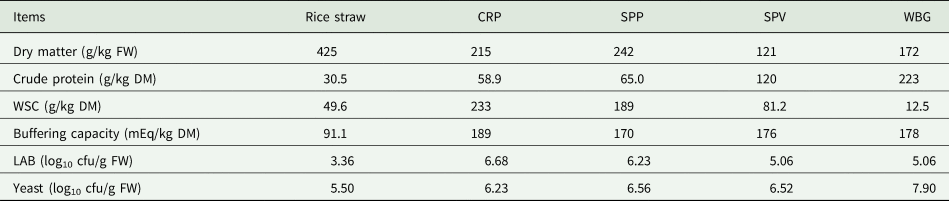
Rice (O. sativa L.) straw was mowed from the fields of Nanjing Agricultural University (32.04°N, 118.88°E, 20 m asl, Jiangsu, China), leaving the stubble of 10 cm and wilting in the field for 24 h. CRP underwent extraction in a commercial juicy factory, SPP, SPV and WBG were kindly supplied by Wushan dairy farm (Ningbo, Zhejiang, China). Raw materials were chopped to a length of 1–2 cm by a forage cutter (93ZT-300; Xingrong Co., Yongkang, China). The characteristics of raw materials were presented in Table 1.
Characteristics of raw materials

CRP, citrus pulp; SPP, sweet potato peels; SPV, sweet potato vines; WBG, wet, brewers' grains; FW, fresh weight; DM, dry matter; WSC, water-soluble carbohydrate; mEq, milligram equivalent; LAB, lactic acid bacteria; cfu, colony-forming units.
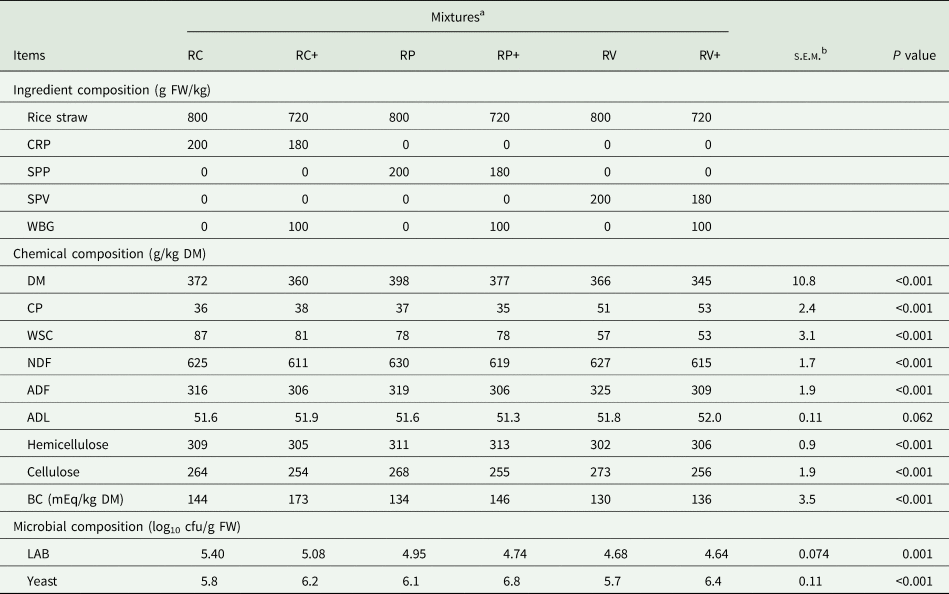
Rice straw was mixed with CRP, SPP and SPV at the ratio of 4:1 on fresh weight (FW) basis, respectively, according to the optimum straw-residue proportion as recorded in our previous study (Yuan et al., Reference Yuan, Yu, Li, Shimojo and Shao2013). Then half of mixtures were homogenized with 100 g application of WBG/kg based on FW. Seven formulations and specific percentage of ingredients were shown in Table 2, treatments were set as follows: (i) only rice straw (control); (ii) rice straw + CRP (RC); (iii) rice straw + CRP + WBG (RC+); (iv) rice straw + SPP (RP); (v) rice straw + SPP + WBG (RP+); (vi) rice straw + SPV (RV); (v) rice straw + SPV + WBG (RV+). From each treatment, 10 kg well-mixed samples were packed manually into a laboratory silo (polyethylene bottle, 15 litres capacity), and sealed with a screw top. Five replicates of each treatment were prepared and opened on days 3, 7, 14, 30 and 60 after ensiling.
Chemical and microbial composition analyses
The raw materials and samples of silage were prepared for chemical composition analyses. The extract was made by blending 90 g silage with 180 ml distilled water and stored at 4 °C for 24 h, then filtered through two layers of gauze and a filter paper (Xinhua Co., Ltd., Hangzhou, China) and stored at −20 °C in a refrigerator for pH, ammonia nitrogen (NH3-N; Broderick and Kang, Reference Broderick and Kang1980), organic acid and ethanol determination. Organic acids (acetic acid, propionic acid, butyric acid and lactic acid) and ethanol contents were analysed using the Agilent HPLC 1260 (Agilent Technologies, Inc., Suzhou, China, Berlin, Germany) equipped with a refractive index detector (column: Carbomix® H-NP5; Sepax Technologies, Inc.; eluent: 2.5 mmol/l H2SO4, 0.5 ml/min; temperature: 55 °C). The buffering capacity (BC) of raw materials was measured according to the method of Playne and McDonald (Reference Playne and McDonald1966).
About 100 g samples of silages were dried by lyophilization and ground to pass a 1 mm screen by a laboratory knife mill (FW100, Taisite Instrument Co., Ltd., Tianjin, China). The powder was gathered and stored into sealed plastic bags, then prepared for the subsequent measurements. The dry matter (DM), ash and ether extract (EE) contents were measured according to AOAC (2000). DM loss was calculated as the difference of DM contents between opening the silos and prior to ensiling. The total nitrogen (TN) content was measured via Kjeldahl procedure, then CP content was calculated as multiplying TN by 6.25 (AOAC 2000). The WSC content was determined via method colorimetry of anthrone-sulfuric acid (Thomas, Reference Thomas1977). The neutral detergent fibre (NDF) and acid detergent fibre (ADF) contents were sequentially measured with an ANKOM 200i fibre analyser (ANKOM Technology, Inc., Macedon, NY, USA), heated α-amylase and sodium sulphite were used in the NDF procedure. Then the acid detergent lignin (ADL) content was measured in a beaker using sulphuric acid. The procedures above were described by Vansoest et al. (Reference Vansoest, Robertson and Lewis1991), and results of NDF, ADF and ADL were expressed on DM basis inclusive of residual ash. Then the cellulose content was calculated as ADF minus ADL, and hemicellulose content was calculated as NDF minus ADF. Total digestible nutrients (TDN) were estimated according to the following equation:

where TDN and ADF contents are calculated on DM basis (g/kg DM; Wang et al., Reference Wang, Zhao, Yu, Li, Tao, Chen and Shao2020).
Plating method was adopted for microbial counting. Approximately 10 g of raw materials was blended with 90 ml sterilized saline solution (0.85% sodium chloride). The lactic acid bacteria (LAB) was enumerated on Man Rogosa Sharp agar (MRS) medium after incubation in anaerobic incubators at 37 °C for 2 days (Yuan et al., Reference Yuan, Wang, Guo, Wen, Desta and Shao2016), and the yeast was counted on potato dextrose agar medium incubated at 37 °C for 3 days (Mugabe et al., Reference Mugabe, Yuan, Li, Dong and Shao2019). All microbial data were transformed to log10 and presented on a FW basis.
Evaluation of mixed silage quality
The V-score system was adopted to evaluate the quality of mixed silages. This evaluation criterion was calculated from the contents of NH3-N and volatile fatty acids (including acetic acid, propionic acid and butyric acid) on the percentage of DM basis (Takahashi et al., Reference Takahashi, Horiguchi and Goto2005). The quality of silage could be classified by the 100-point scale: to be good with a score between 81 and 100; to be medium with a score between 60 and 80; to be inferior when it is below 60.
Aerobic stability
Silages after 60 days of ensiling were used for aerobic stability test, 5 kg of silage mass from each silo was loosely loaded into a sterile and insulated polyethylene bottle (capacity of 25 litres), covered by two layers of gauze to avoid dust contamination and silage dehydration (Tabacco et al., Reference Tabacco, Piano, Cavallarin, Bernardes and Borreani2009). The definition of aerobic stability is the number of hours that temperature of silage mass remains stable before increasing more than 2 °C above ambient temperature. Five replicates of each treatment were prepared and the method of temperature measurement was conducted following the procedure of Chen et al. (Reference Chen, Dong, Li and Shao2019).
In vitro incubation of 60-day silages
The following procedures were approved by the Ethics Committee of Nanjing Agricultural University. Silages after 60 days of ensiling were used as substrates to investigate in vitro digestibility and gas production (GP) according to the method of Contreras-Govea et al. (Reference Contreras-Govea, Muck, Mertens and Weimer2011) with some modifications. Ground samples (1 g) were placed in nylon bags (ANKOM Technology) that were washed with acetone, dried at 55 °C for 24 h and weighed previously. Then each nylon bag was heat-sealed and separately placed into a serum bottle (120 ml capacity) which was equipped with a 100 ml glass syringe for GP determination. Rumen fluid was collected from five rumen-cannulated Holstein cows before morning feeding. These cows were fed with a diet containing 500 g corn silage/kg, 470 g concentrate/kg and 30 g soybean oil/kg on a DM basis combined with supplemental minerals and vitamins. Rumen fluid was filtered through four layers of cheesecloth into a pre-warmed (39 °C) thermos bottle and then mixed with mineral buffer solution (1:2, v/v), the whole operation process was carried out under continuous flushing with CO2 (Menke and Steingass, Reference Menke and Steingass1988). After that 60 ml of rumen fluid-buffer mixture was transferred into each serum bottle. Three runs of incubation were conducted in 3 weeks, and a total of 105 serum bottles (7 treatments × 5 replicates × 3 runs), with three serum bottles per run as blanks (rumen fluid-buffer mixture + an empty nylon bag without substrate), were prepared. These bottles were sealed with a rubber stopper and then incubated at 39 °C for 72 h. The cumulative gas volume was recorded at 4, 8, 12, 24, 48 and 72 h of incubation according to the difference between the value displayed on the corresponding syringe and the means of blanks. At the end of in vitro incubation process, nylon bags were repeatedly rinsed with distilled water and dried at 65 °C for 48 h, then weighed to determine in vitro digestibility of dry matter (IVDMD), neutral detergent fibre (IVNDFD) and acid detergent fibre (IVADFD). IVDMD, IVNDFD and IVADFD were calculated based on the degrading percentage of DM, NDF and ADF after incubation, and corrected by the blanks.
Statistical analyses
All statistical procedures were performed with SAS (Version 9.2; SAS Institute Inc., Cary, NC, USA). Data on fermentation characteristics were analysed by following statistical model:

Data on chemical composition and in vitro parameters were analysed by following statistical model:

where Yijk and Yij are the values of dependent variable; μ is overall mean; Si is the effect of substitution types (i = 1–3); Wj is the effect of WBG application (j = 1 and 2); Dk is the effect of ensiling days (k = 1–5); (S × W)ij, (S × D)ik, (W × D)jk and (S × W × D)ijk are interaction effects between previously defined fixed effects; and eij and eijk are the residual error terms. Interaction effects were declared at P < 0.05. Tukey's multiple comparisons were used for determination of the statistical difference among means and considered as significant at the level of P < 0.05.
Results
Characteristics of pre-ensiled materials
The chemical and microbial composition of raw materials and pre-ensiled mixtures are presented in Tables 1 and 2, respectively. The rice straw has a high DM content, low CP and WSC contents and LAB population. Inversely, four by-products have extremely low DM contents (<250 g FW/kg) and relatively higher LAB population (>1 × 10⁵ cfu/g FW). The pre-ensiled mixtures have lower DM contents and higher CP and WSC contents as compared to the rice straw prior to ensiling.
Chemical and microbial composition of mixtures before ensiling

FW, fresh weight; CRP, citrus pulp; SPP, sweet potato peels; SPV, sweet potato vines; WBG, wet, brewers' grains; DM, dry matter; CP, crude protein; WSC, water-soluble carbohydrate; NDF, neutral detergent fibre; ADF, acid detergent fibre; ADL, acid detergent lignin; BC, buffering capacity; mEq, milligram equivalent; LAB, lactic acid bacteria; cfu, colony-forming units.
a Mixtures: RC, rice straw + CRP; RC+, rice straw + CRP + WBG; RP, rice straw + SPP; RP+, rice straw + SPP + WBG; RV, rice straw + SPV; RV+, rice straw + SPV + WBG.
b Standard error of mean.
Fermentation characteristics of rice straw silages
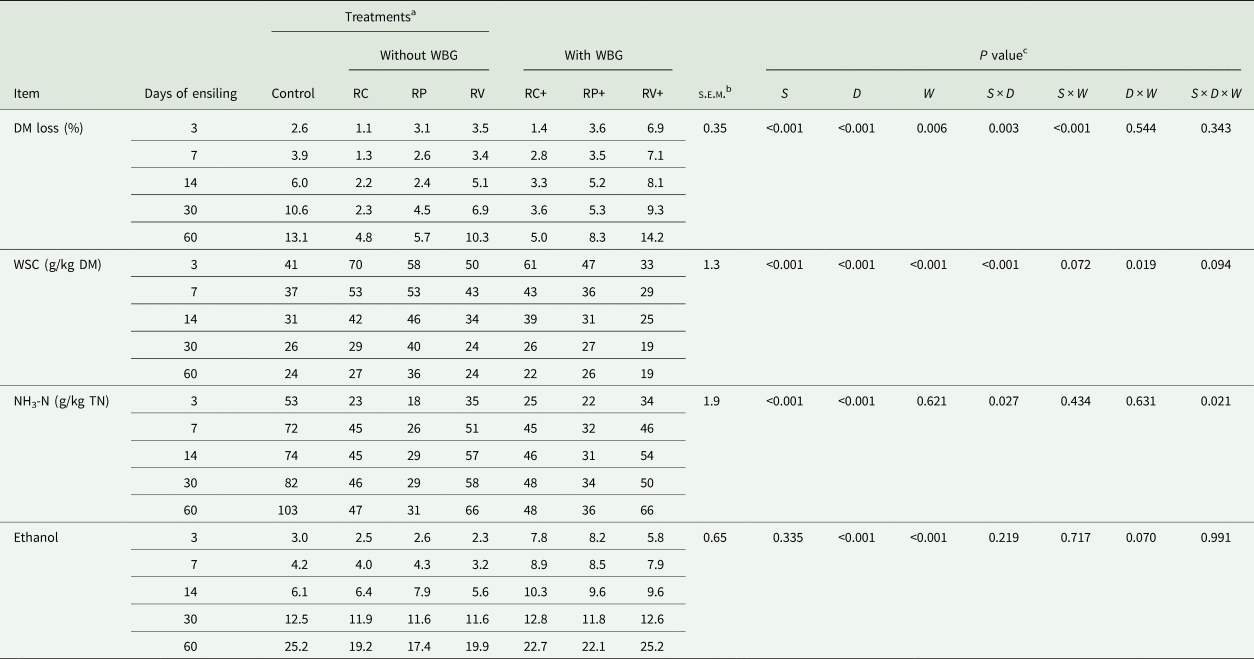
Dynamics of DM losses, WSC, NH3-N and ethanol contents are presented in Table 3. For the DM losses, different substitution types significantly (P < 0.001) decrease DM losses, and a significant (P = 0.006) increase is observed when ensiled with WBG. There is a significant (P < 0.001) two-way interaction among substitution types and WBG application for DM losses. The WSC contents are linearly decreased (P < 0.001) during ensiling, WBG application results in a higher (P < 0.001) WSC consumption. The NH3-N accumulates during ensiling, silages with different substitutions have significantly (P < 0.001) lower NH3-N contents as compared to control, while WBG application has no significant (P = 0.621) effect. For ethanol contents, different substitution types have no significant (P = 0.335) effect, WBG application significantly (P < 0.001) increases ethanol contents by the first 7 days.
Dynamics of DM loss, WSC, NH3-N and ethanol contents during ensiling

DM, dry matter; WSC, water soluble carbohydrate; NH3-N, ammonia nitrogen; TN, total nitrogen.
a Treatments: control, only rice straw; RC, rice straw + CRP; RC+, rice straw + CRP + WBG; RP, rice straw + SPP; RP+, rice straw + SPP + WBG; RV, rice straw + SPV; RV+, rice straw + SPV + WBG.
b Standard error of means.
c P value: S, the effect of substitution types; D, the effect of ensiling days; W, the effect of WBG application; S × D, S × W, D × W and S × D × W, two-way and three-way interaction among main factors.
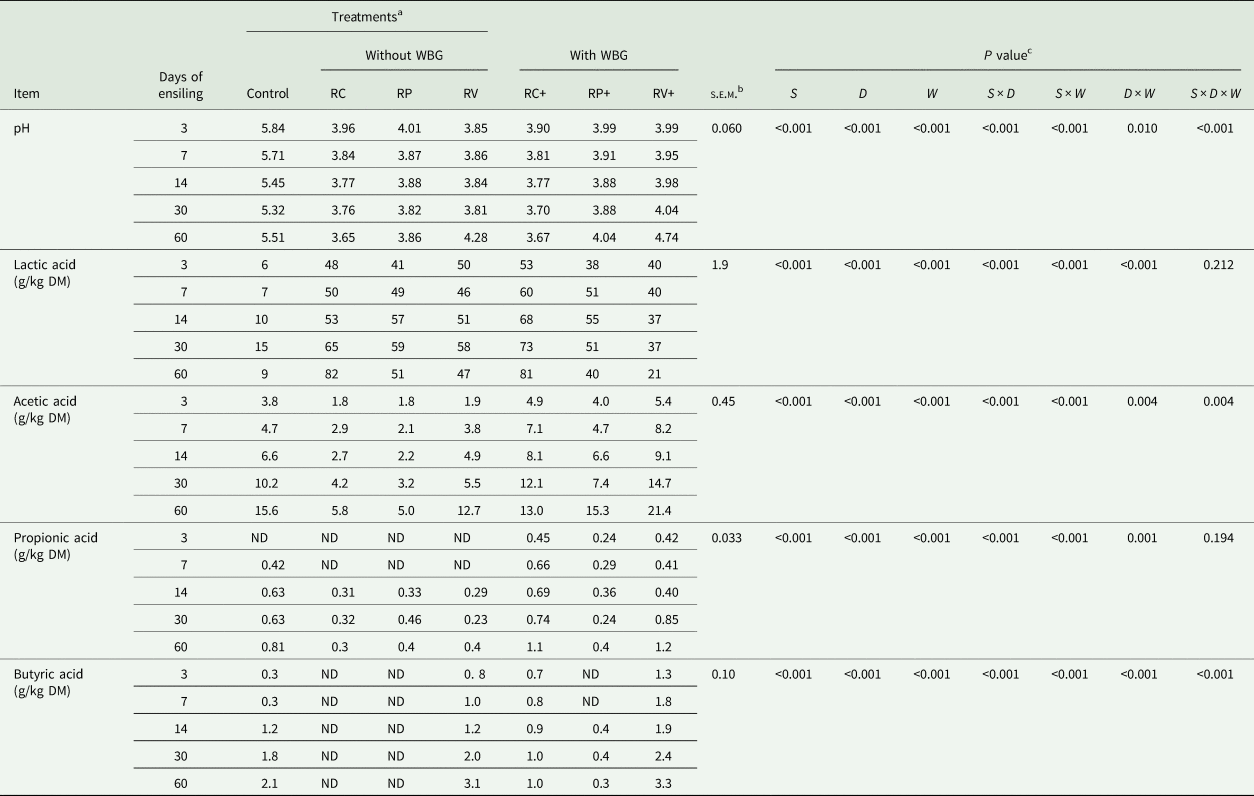
Table 4 illustrates the dynamics of pH and organic acid contents during ensiling, the effects of substitution types, ensiling days, WBG application and their two-way interactions on pH, lactic acid (LA), acetic acid (AA), propionic acid (PA) and butyric acid (BA) contents are significant (P < 0.05). A sustainable increasing LA content is observed in CRP-substituted silages. There is a reduction of LA content in SPP- and SPV-substituted silages after 30 days of ensiling, correspondingly, an increase of pH is observed in these silages during the late period of ensiling. WBG application significantly (P < 0.05) increases AA contents during ensiling. PA contents were all below 1.2 g/kg DM. CRP- and SPP-substituted silages have significantly (P < 0.05) lower BA contents than control, regardless of WBG application.
Dynamics of pH, lactic acid and volatile fatty acids contents during ensiling

DM, dry matter; WSC, water soluble carbohydrate; NH3-N, ammonia nitrogen; TN, total nitrogen.
a Treatments: control, only rice straw; RC, rice straw + CRP; RC+, rice straw + CRP + WBG; RP, rice straw + SPP; RP+, rice straw + SPP + WBG; RV, rice straw + SPV; RV+, rice straw + SPV + WBG.
b Standard error of means.
c P value: S, the effect of substitution types; D, the effect of ensiling days; W, the effect of WBG application; S × D, S × W, D × W and S × D × W, two-way and three-way interaction among main factors.
Chemical composition and in vitro parameters of silages after 60 days of ensiling
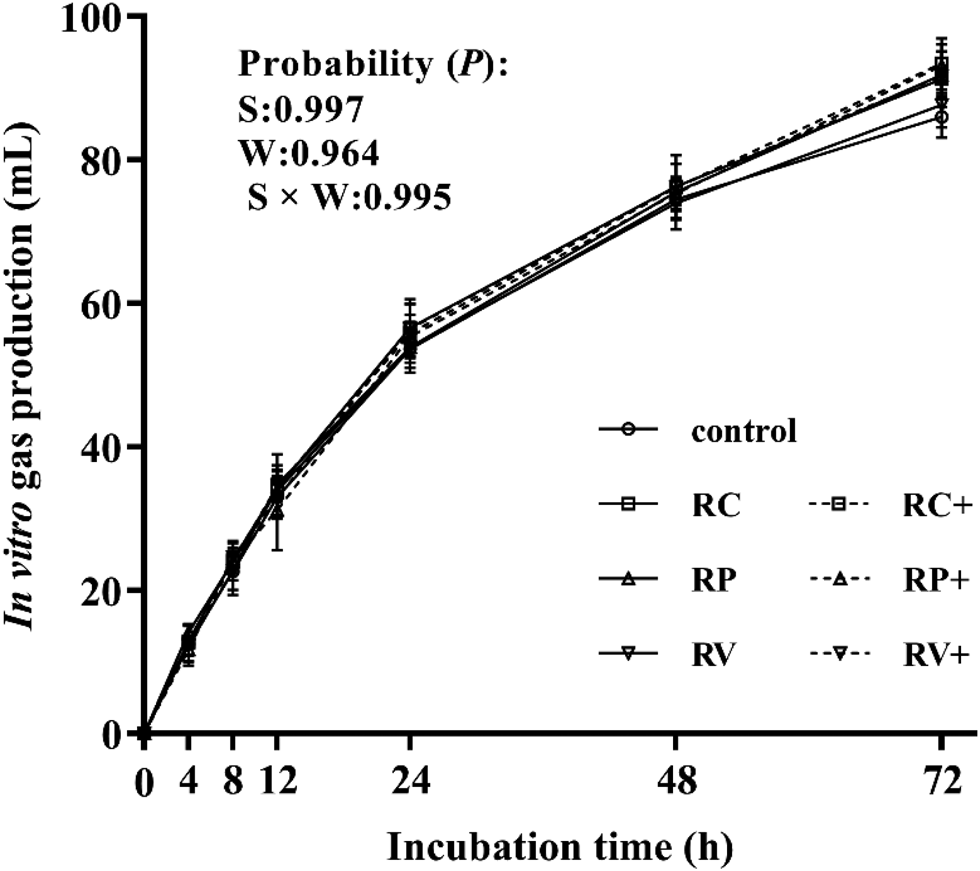
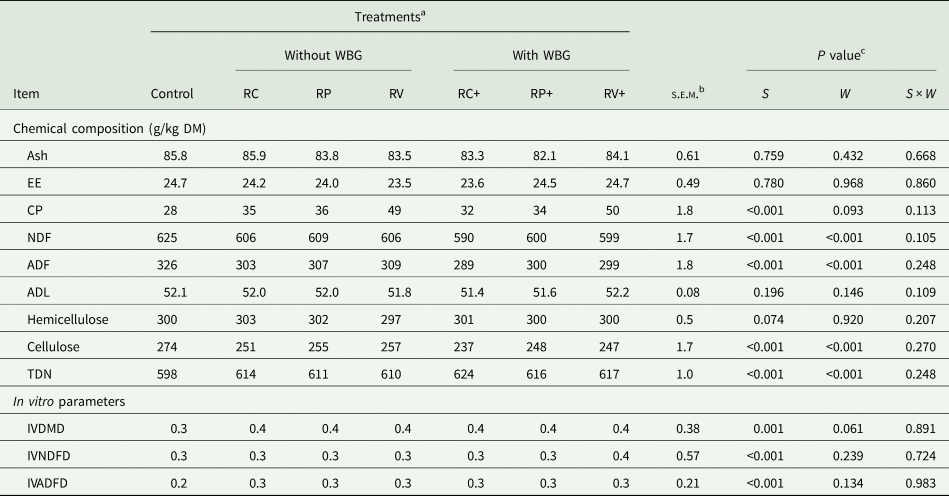
Table 5 illustrates the chemical composition and in vitro parameters of rice straw silages after 60 days of ensiling. There is no (P ≥ 0.109) two-way interaction between substitution types and WBG application on studied variables. Substitution types or WBG application has no effect (P ≥ 0.432) on ash and EE contents. For structural carbohydrate compositions, it is observed that substitution types and WBG application significantly (P < 0.001) decrease NDF, ADF and cellulose contents, while having no (P ≥ 0.07) significant effect on hemicellulose and ADL contents. For in vitro digestibility, substitution types significantly (P ≤ 0.001) increase IVDMD, IVNDFD and IVADFD, while WBG application has no (P ≥ 0.061) significant effect on in vitro digestibility. Figure 1 presents 72 h cumulative GP from the in vitro incubation. The substitution types and WBG application have no effect (P > 0.05) on GP.
The cumulative in vitro gas production of rice straw silages ensiled with or without WBG. Treatments: control: rice straw alone; RC: 800 g rice straw/kg + 200 g CRP/kg; RC+: 720 g rice straw/kg + 180 g CRP/kg + 100 g WBG/kg; RP: 800 g rice straw/kg + 200 g SPP/kg; RP+: 720 g rice straw/kg + 180 g SPP/kg + 100 g WBG/kg; RV: 800 g rice straw/kg + 200 g SPV/kg; RV+: 720 g rice straw/kg + 180 g SPV/kg + 100 g WBG/kg. S, the effect of substitution types; W, the effect of WBG application; S × W, two-way interaction between main factors.

Chemical composition and in vitro parameters of silages after 60 days of ensiling

DM, dry matter; EE, ether extract; CP, crude protein; NDF, neutral detergent fibre; ADF, acid detergent fibre; ADL, acid detergent lignin; TDN, total digestible nutrients; IVDMD, in vitro dry matter digestibility (72 h of incubation); IVNDFD, in vitro neutral detergent fibre digestibility (72 h); IVADFD, in vitro acid detergent fibre digestibility (72 h).
a Treatments: control, only rice straw; RC, rice straw + CRP; RC+, rice straw + CRP + WBG; RP, rice straw + SPP; RP+, rice straw + SPP + WBG; RV, rice straw + SPV; RV+, rice straw + SPV + WBG.
b Standard error of means.
c P value: S, the effect of substitution types; W, the effect of WBG application; S × W, two-way interaction between main factors.
Aerobic stability and V-score of rice straw silages
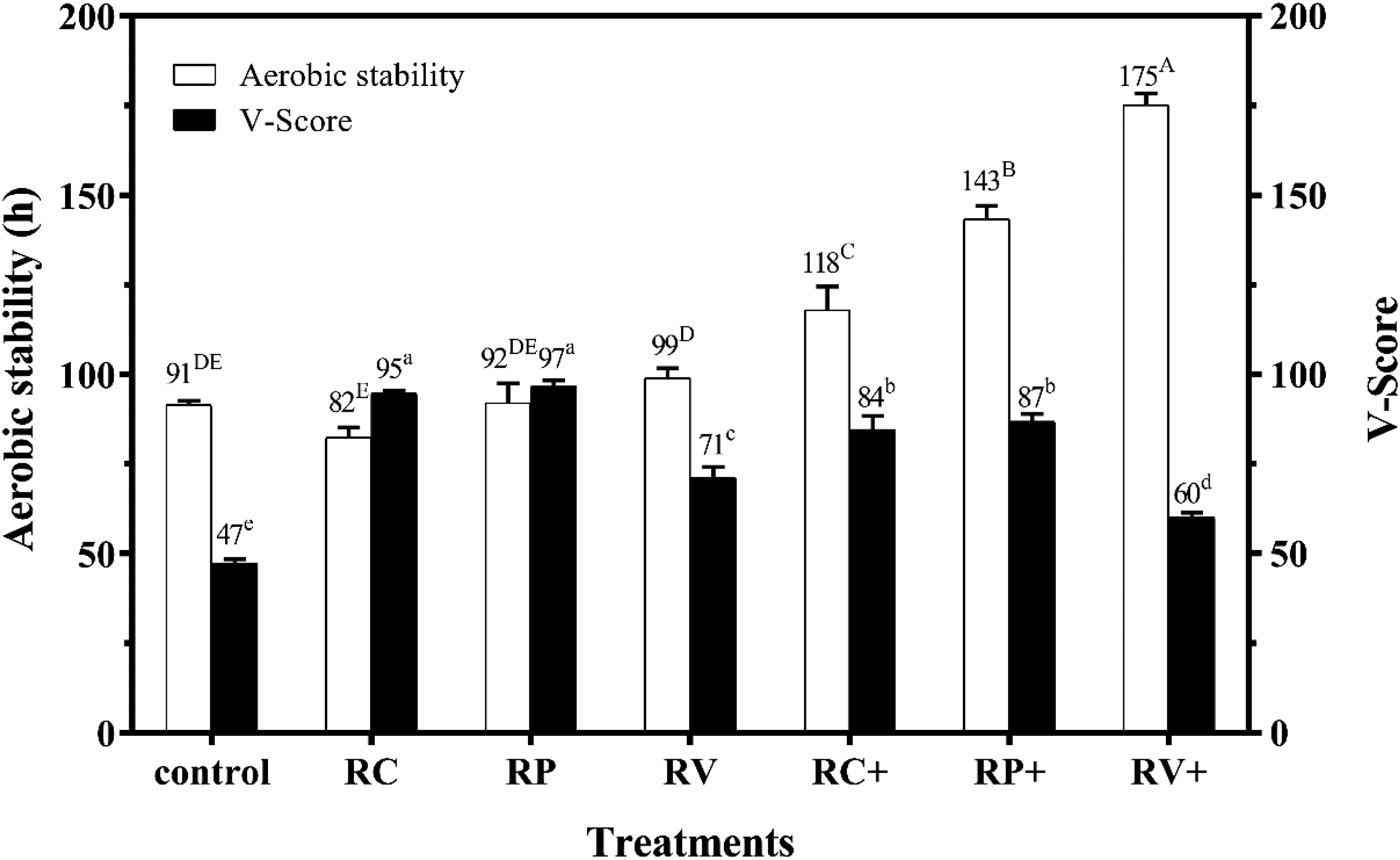
The aerobic stability and V-score of rice straw silages are presented in Fig. 2. WBG application significantly (P < 0.05) prolongs aerobically stable time (118, 143 and 175 h for RC+, RP+ and RV+ silages, respectively) compared to control and mixed silages without WBG application (<99 h). According to the index of V-score evaluation, CRP- and SPP-substituted silages gain excellent grades (>84 points). However, WBG application results in a reduction of about ten points on V-scores (84, 87 and 60 points for RC+, RP+ and RV+ silages, respectively).
The aerobic stability and V-scores of rice straw silages. Treatments: control: control: rice straw alone; RC: 800 g rice straw/kg + 200 g CRP/kg; RC+: 720 g rice straw/kg + 180 g CRP/kg + 100 g WBG/kg; RP: 800 g rice straw/kg + 200 g SPP/kg; RP+: 720 g rice straw/kg + 180 g SPP/kg + 100 g WBG/kg; RV: 800 g rice straw/kg + 200 g SPV/kg; RV+: 720 g rice straw/kg + 180 g SPV/kg + 100 g WBG/kg. A–EMeans within aerobic stability with different capital letters are statistically significantly different (P < 0.05). a–eMeans within V-scores with different lowcase are statistically significantly different (P < 0.05).

Discussion
Characteristics of pre-ensiled materials
Owing to the high yield of rice and rising price of forage, in Southeast China, rice straw became an alternative source of feedstuffs (Li et al., Reference Li, Ji, Wang, Qin, Hou and Shen2017). Obviously, rice straw is short of nutritive and fermentable substrates. In the present experiment, the CP and WSC contents were 30.5 and 49.6 g/kg DM, respectively, which might fail to initiate fermentation for long-term preservation nor meet nutritional needs in animal feeding. With the substitutions of various agricultural by-products and the application of WBG, the DM content in mixed silages dropped to an optimal level, and WSC contents increased (>50 g/kg DM) for motivating successful ensiling. There was one issue that the high population of yeast could lead to adverse effects when silos were opened. Filya (Reference Filya2003) have reported that aerobic deterioration is prone to occur in silages which possess more than 1 × 10⁵ cfu/g FW yeasts.
Fermentation characteristics of rice straw silages
Ensiling is a unique fermentation process that involves variability in chemical composition, epiphytic microbiota and nutrients. Quality silage is highly dependent on the rapid development of LAB, which ferment substrates to LA. Hence, the reduction of pH inhibits the growth of inefficient microorganisms, consequently minimizes the loss of nutrients as possible. In this experiment, it is difficult to ensile rice straw alone, the control silages yielded extremely low fermentation products, which were lower than forages with similar WSC content in previous studies (Zhang et al., Reference Zhang, Yu and Na2018). It was likely due to the relatively higher DM content of rice straw since LAB proliferation would be delayed in high DM content material (Kung et al., Reference Kung, Shaver, Grant and Schmidt2018). Therefore, wetter and sugar-rich materials were employed for improving the fermentation quality of rice straw silages.
Overall, all substitution types had a positive effect on reducing the losses during ensiling, characterized by lower DM losses, WSC consumption, NH3-N and ethanol production. However, it was unexpected that WBG application resulted in higher DM losses. This result might be explained by the hetero-fermentation when ensiled with WBG. The NH3-N was ascribed to plant enzyme and microbial proteolytic process during ensiling (Kung et al., Reference Kung, Shaver, Grant and Schmidt2018). Generally, high DM silages have lower NH3-N content than wetter silages because the fermentation of the latter is more robust. The lower NH3-N contents in all mixed silages indicated that the low pH induced the deactivation of harmful microorganism activities, and the plant proteinase was mainly responsible for acceptable NH3-N production (<100 g/kg TN). The NH3-N could combine with the hydrogen ions, whereafter enhancing the BC and resisting pH from reduction (Kung et al., Reference Kung, Robinson, Ranjit, Chen, Golt and Pesek2000) in RV and RV+ silages. Excessive ethanol production implies energy waste during ensiling (Zhao et al., Reference Zhao, Wang, Dong, Li, Jia and Shao2021). WBG-treated silages had significantly higher ethanol contents during the first 7 days of ensiling; it was related to the large population of yeast in WBG, which accelerated ethanol production during the initial stage of ensiling.
All mixed silages had markedly higher LA contents than control silages, and pH in these silages dramatically declined to below 4.20 after 3 days of ensiling, which indicated all substitution types were accepted as beneficial for forage preservation. After an initial acceleration, the LA content in CRP-substituted silages kept increasing, and the highest LA content (82.4 g/kg DM) was recorded in RC silages after 60 days of ensiling, which was almost 1.4 times amount of WSC consumed. Considering the low pH in CRP-substituted silages (pH < 3.8), it indicated that structural carbohydrates in rice straw were decomposed to extra substrates for LAB metabolism during the mid-late stage of ensiling (Desta et al., Reference Desta, Yuan, Li and Shao2016). The two-way interaction indicated there was a synergistic effect between substitution types and WBG application on lactic acid and AA contents. With the application of WBG, reductions of LA content were observed in RP+ and RV+ silages after 30 days of ensiling, correspondingly, AA content increased, which implied these silages underwent hetero-fermentation to some extent. This result was consistent with Wang and Nishino (Reference Wang and Nishino2008) that the hetero-fermentative LAB, including Lactobacillus brevis, Weissella spp. and Lactobacillus buchneri, were common in total mixed ration (TMR) silages containing WBG, suggesting that WBG might facilitate the growth and survival of hetero-fermentative LAB. In spite of the nutritive loss brought from hetero-fermentation, moderately higher AA content might contribute to restricting against aerobic deterioration according to Wilkinson and Davies (Reference Wilkinson and Davies2013). BA production should be avoided during ensiling (Kung et al., Reference Kung, Shaver, Grant and Schmidt2018). Relatively higher BA contents (≥3.0 g/kg DM) were observed in SPV-substituted silages, reflected a larger extent of proteolysis in RV and RV+ silages. Compared to CRP and SPP, substitution of SPV resulted in higher NH3-N and BA contents. It might be explained that SPV is usually contaminated by soil; in this regard, silages with SPV substitution were prone to clostridial fermentation.
Chemical composition and in vitro parameters of rice silages ensiled for 60 days
Despite the positive effect of substitution types on CP contents, each treatment possesses a low CP content, which indicates nutritive supplementation or elevation of the substitution proportion is needed to achieve suitable levels of animal production. The reduction of structural carbohydrate contents in mixed silages could be derived from two major reasons. On the one hand, acid hydrolysis caused by fermentation products (mainly LA) could degrade structural carbohydrates into soluble fermentative substrates. Dewar et al. (Reference Dewar, McDonald and Whittenbury1963) revealed that lignocelluloses could be decomposed by organic acid during ensiling. On the other hand, considering the high cellulose content in rice straw (Zhao et al., Reference Zhao, Wang, Dong, Li, Jia and Shao2021), the more non-structural components of agricultural by-products diluted the proportion of cellulose. In addition, substitution of agricultural by-products and WBG application tended to increase the TDN, indicating less losses of nutrients after fermentation.
In vitro digestibility has received extensive acceptance as an evaluation index on the nutritional value of ruminant roughages (Rymer et al., Reference Rymer, Huntington, Williams and Givens2005; Zhao et al., Reference Zhao, Wang, Dong, Li, Jia and Shao2021). Given that the digestibility is negatively associated with the content of lignin and silica, rice straw silages usually present poor in vitro digestibility (Seo and Sakoda, Reference Seo and Sakoda2014). In this regard, the IVDMD, IVNDFD and IVADFD of all silages were below 0.4. It is hypothesized that substitution of agricultural by-products might have a positive effect on in vitro parameters. In practice, CRP and SPP substitution only had a numerical improvement on IVDMD, IVNDFD and GP. It seemed that the percentage of replacement is too low to have a significant impact on digestibility. These results were consistent with Zhao et al. (Reference Zhao, Dong, Chen, Wang and Shao2020) that using bamboo shoot shell as a replacement (range from 150 to 350 g/kg) in TMR silages had no obvious effect on the GP and in vitro digestibility. Higher IVDMD in SPV-substituted silages was related to the high proportion of CP in SPV. Wang et al. (Reference Wang, Li, Dong, Chen and Shao2018) evaluated legume herbage substitution in various straw silages and found the IVDMD was positively correlated with the proportion of CP. It implied SPV substitution has a positive effect on providing more digestible substrate in the rumen digestion.
Evaluation of aerobic stability and V-score of rice straw silages
During the transferring and feed-out period, silage is prone to deterioration when exposed to air. It was anticipated that the substitution of agricultural by-products would improve the aerobic stability according to the evidence that mixed silages had higher moisture contents. Less heat is needed to raise the same temperature of drier material than is required for wetter material during aerobic exposure (Wilkinson and Davies, Reference Wilkinson and Davies2013). However, CRP substitution had a negative effect on the aerobic stability illustrated by a reduction of 9 h as compared to control; moreover, SPP and SPV substitutions seemingly had no significant improvement on aerobic stability when ensiled without WBG. It might be explained by the significantly higher LA contents in these silages. As a result of lactate assimilation, yeasts are regarded as the initiator of aerobic deterioration, which causes the rise of pH and temperature. The improvement of aerobic stability in WBG-contained silages might be related to the high proportion of alcohols in WBG. Wang and Nishino (Reference Wang and Nishino2008) have reported that the substitution of WBG in TMR silages could resist aerobic deterioration, and Yuan et al. (Reference Yuan, Wang, Guo, Wen, Desta and Shao2016) revealed the application of ethanol could restrict the growth of harmful microbes and delay the increase of pH in TMR silages during aerobic exposure. Besides, elevated AA contents also contributed to the aerobic stability; according to Wilkinson and Davies (Reference Wilkinson and Davies2013), silages with AA content above 8 g/kg FW were more stable when exposed to air.
The V-score system has gained wide acceptance as an evaluation of silage quality based on volatile constituents (Takahashi et al., Reference Takahashi, Horiguchi and Goto2005). According to the index, the quality of silages with CRP and SPP substitution was favourable (>84 points). The quality of SPV-substituted silage was moderate, suffering from higher NH3-N and BA contents.
Conclusion
The substitution of CRP, SPP and SPV enhanced fermentation quality and in vitro digestibility in rice straw silages. WBG application could promote hetero-fermentation and improved aerobic stability. The SPP substitution combined with WBG application was recommended, as a result of the optimal balance of fermentation quality, aerobic stability and in vitro digestibility.
Data
All data and models used during the study appear in the submitted article.
Author contributions
Sifan Chen: data curation, formal analysis and writing – original draft preparation; Junfeng Li: investigation and visualization; Zhihao Dong: resources; Jian Wang: methodology and software; Jie Zhao and Siran Wang: investigation and visualization; Tao Shao: resources, supervision, funding acquisition, project administration and writing – review and editing.
Financial support
This work was partially supported by Research on Key Technologies of Digestion of Anti-nutrient Factors and Palatability Improvement of Forage (2021YFD1300302); Key Laboratory of Forage Cultivation, Processing and High Efficient Utilization, Ministry of Agriculture.
Conflict of interest
None.
Ethical standards
The procedures of animal experiment were approved by the Ethics Committee of Nanjing Agricultural University.