Evidence from nosological and epidemiological studies suggests that depressive disorders can be detected in children, with an estimated prevalence of 1% to 2% (Costello, Angold, Burns, Stangl, et al., Reference Costello, Angold, Burns, Stangl, Tweed and Erkanli1996; Costello, Mustillo, Erkanli, Keeler, & Angold, Reference Costello, Mustillo, Erkanli, Keeler and Angold2003; Kashani et al., Reference Kashani, Mcgee, Clarkson, Anderson, Walton and Williams1983). Studies also indicate that an additional 9%–12% of children have depressive symptoms that do not meet the criteria for a full diagnosis (Egger & Angold, Reference Egger and Angold2006; Gonzalez-Tejera et al., Reference Gonzalez-Tejera, Canino, Ramirez, Chavez, Shrout and Bird2005) but that nevertheless cause considerable impairment (Goodman & Tully, Reference Goodman and Tully2009; Keenan et al., Reference Keenan, Hipwell, Feng, Babinski, Hinze and Rischall2008; Lewinsohn, Solomon, Seeley, & Zeiss, Reference Lewinsohn, Solomon, Seeley and Zeiss2000; Luby, Si, Belden, Tandon, & Spitznagel, Reference Luby, Si, Belden, Tandon and Spitznagel2009) and increase children's risk for developing future depressive disorders (Johnson, Cohen, & Kasen, Reference Johnson, Cohen and Kasen2009; Rohde, Beevers, Stice, & O'Neil, Reference Rohde, Beevers, Stice and O'Neil2009). Moreover, research supports a dimensional approach, in which depression varies along a continuum of increasing severity (Fergusson, Horwood, Ridder, & Beautrais, Reference Fergusson, Horwood, Ridder and Beautrais2005; Klein, Shankman, Lewinsohn, & Seeley, Reference Klein, Shankman, Lewinsohn and Seeley2009; Wesselhoeft, Sorensen, Heiervang, & Bilenberg, Reference Wesselhoeft, Sorensen, Heiervang and Bilenberg2013). Given the importance of subclinical depression and the implied risk for the development of future depressive disorders, we studied depression as a dimensional construct expressed as the number of DSM-5 defined symptoms of major depression.
The prevalence of depressive disorders may increase from preschool to school age (Bufferd, Dougherty, Carlson, Rose, & Klein, Reference Bufferd, Dougherty, Carlson, Rose and Klein2012; Luby, Gaffrey, Tillman, April, & Belden, Reference Luby, Gaffrey, Tillman, April and Belden2014). Moreover, there are strong indications that certain changes in developmental domains during this period may influence the development of depression, such as cognition, social development, peer relations (Keenan, Shaw, Delliquadri, Giovannelli, & Walsh, Reference Keenan, Shaw, Delliquadri, Giovannelli and Walsh1998; Lavigne et al., Reference Lavigne, Arend, Rosenbaum, Binns, Christoffel and Gibbons1998), and emotion regulation (Sroufe, Reference Sroufe1996). The transition from preschool to first grade may further represent a challenging time for children, as they experience a variety of social demands from key developmental tasks, such as making friends and obtaining new social and academic skills in their new school setting (Benson, Haycraft, Steyaert, & Weigel, Reference Benson, Haycraft, Steyaert and Weigel1979; Mesman, Bongers, & Koot, Reference Mesman, Bongers and Koot2001; Nelson, Rubin, & Fox, Reference Nelson, Rubin and Fox2005). An inability to successfully adapt to these social demands may increase the risk that children internalize their problems (Masten & Coastsworth, Reference Masten, Coastsworth, Cicchetti and Cohen1995). Numerous studies have identified risk and protective factors for depression in older school-age children (Caspi & Silva, Reference Caspi and Silva1995; De Bellis et al., Reference De Bellis, Dahl, Perel, Birmaher, al-Shabbout and Williamson1996; Kovacs, Devlin, Pollock, Richards, & Mukerji, Reference Kovacs, Devlin, Pollock, Richards and Mukerji1997; Lewinsohn, Gotlib, & Seeley, Reference Lewinsohn, Gotlib and Seeley1997). Because of the increasing rates of depression and developmental changes in young school-age children, we cannot overlook the possibility that certain risk and protective factors may be unique to young school-age children or that certain factors may be differentially important for younger compared with older children. Thus, findings from studies on older school-age children simply cannot be extrapolated to younger children. However, although the transition from preschool to school is developmentally important, information on the precursors and developmental pathways for depression is almost nonexistent, and prospective research on internalizing symptoms is limited (Bufferd et al., Reference Bufferd, Dougherty, Olino, Dyson, Laptook and Carlson2014; Dougherty et al., Reference Dougherty, Smith, Bufferd, Stringaris, Leibenluft and Carlson2013; Luby et al., Reference Luby, Gaffrey, Tillman, April and Belden2014; Perren & Alsaker, Reference Perren and Alsaker2009; Sterba, Prinstein, & Cox, Reference Sterba, Prinstein and Cox2007; Zahn-Waxler, Reference Zahn-Waxler and Davidson2000).
Although the specific components of causal models of depression in older school-age children and adolescents may differ, such models share the view that depression is determined both by (a) factors related to the child (e.g., temperament) and by (b) factors related to the environment (e.g., parenting), as well as their interactions (Coie et al., Reference Coie, Watt, West, Hawkins, Asarnow and Markman1993; Hankin et al., Reference Hankin, Oppenheimer, Jenness, Barrocas, Shapero and Goldband2009). However, to date, most research on young school-age children's depressive symptoms has employed a cross-sectional design to examine main effects (Costello, Angold, Burns, Erkanli, et al., Reference Costello, Angold, Burns, Erkanli, Stangl and Tweed1996; Ford, Goodman, & Meltzer, Reference Ford, Goodman and Meltzer2003; Keenan et al., Reference Keenan, Hipwell, Feng, Babinski, Hinze and Rischall2008). Such main effects are important first steps for understanding the etiology of depression in this age group, but to obtain a complete picture, detailed research on interactions and subgroups is required. Therefore, in the present inquiry, we extend research reporting main effects by testing the importance of interactions between child and contextual factors. We selected variables previously implicated in the development of depressive symptoms in children for each of these two domains: child factors (e.g., temperament and social skills) and contextual factors (e.g., parental depression and life events) for the prediction of DSM-5 defined symptoms of major depression in young children. In addition, we included symptoms of other common psychiatric disorders in children to investigate the degree of comorbidity with depression and whether these other childhood disorders would contribute to the growth or decline in depressive symptoms from preschool to first grade.
Child Factors
Temperament generally consists of three broad dimensions: negative affect, surgency (i.e., extraversion), and effortful control (i.e., self-regulation; Rothbart, Ahadi, Hershey, & Fisher, Reference Rothbart, Ahadi, Hershey and Fisher2001). Several studies have reported that high levels of negative affect and low effortful control correlate with and predict depressive symptoms in older children and adolescents (Caspi & Silva, Reference Caspi and Silva1995; Rothbart et al., Reference Rothbart, Ahadi, Hershey and Fisher2001), whereas the findings concerning surgency are less consistent (Nigg, Reference Nigg2006). Temperament characteristics may moderate the effects of stress and coping, and the influence of individuals’ temperament and environment on depression may differ across individuals and genders (Compas, Connor-Smith, & Jaser, Reference Compas, Connor-Smith and Jaser2004). Thus, in the current study, we examine whether negative affect and effortful control predict depressive symptoms in young children and whether temperament moderates the effects of contextual risk and protective factors.
Social-skill deficits in children may contribute to substantial difficulties in developing and maintaining satisfactory interpersonal relationships and in gaining social acceptance by peers and teachers (Gresham, MacMillan, Bocian, Ward, & Forness, Reference Gresham, MacMillan, Bocian, Ward and Forness1998; Maag & Irvin, Reference Maag and Irvin2005). Poor social skills may increase the risk of social rejection by peers; and such rejection may induce feelings of loneliness, helplessness, and shame, emotions that are closely related to depression. Studies on older children and adolescents indicate that poor social skills increase children's risk for depression (Cole, Martin, Powers, & Truglio, Reference Cole, Martin, Powers and Truglio1996; Nilsen, Karevold, Roysamb, Gustavson, & Mathiesen, Reference Nilsen, Karevold, Roysamb, Gustavson and Mathiesen2013; Segrin, Reference Segrin2000). Poor social skills might also serve as a diathesis in the development of depression (Segrin, Reference Segrin1996; Segrin & Flora, Reference Segrin and Flora1998) because children with good social skills may obtain social support that helps them cope with stressful events (Segrin, Reference Segrin2000). Failing to establish rewarding social relationships may be especially challenging for young children who are beginning to expand their social networks and who have less-developed coping strategies at their disposal. Therefore, facing life challenges with poor social skills may increase children's risk for developing depressive symptoms over and above any main effects. Previous studies have revealed that temperamental vulnerabilities may both increase the children's chances of suffering stress and decrease their ability to cope with stressors (Garber, Reference Garber2006). Regarding the strong association between temperamental vulnerability and depression as indicated in previous studies, it would be interesting to investigate whether good social skills will moderate the link between temperament and depression and whether such skills will have an effect at the temperamental level. However, to our knowledge, no study has tested the hypothesis that social skills interact with stressors and may decrease as well as increase the risk for depression.
There is substantial comorbidity between depression and anxiety disorders (Lewinsohn, Zinbarg, Seeley, Lewinsohn, & Sack, Reference Lewinsohn, Zinbarg, Seeley, Lewinsohn and Sack1997), conduct disorders (Kovacs & Devlin, Reference Kovacs and Devlin1998) and attention-deficit/hyperactivity disorder (ADHD; Angold, Costello, & Erkanli, Reference Angold, Costello and Erkanli1999; Luby, Heffelfinger, et al., Reference Luby, Heffelfinger, Mrakotsky, Brown, Hessler and Spitznagel2003) in school age children, and some studies have indicated that this also is the case among preschoolers (Bufferd, Dougherty, Carlson, & Klein, Reference Bufferd, Dougherty, Carlson and Klein2011; Bufferd et al., Reference Bufferd, Dougherty, Carlson, Rose and Klein2012; von Klitzing et al., Reference von Klitzing, White, Otto, Fuchs, Egger and Klein2014; Wichstrøm & Berg-Nielsen, Reference Wichstrøm and Berg-Nielsen2014; Wichstrøm et al., Reference Wichstrøm, Berg-Nielsen, Angold, Egger, Solheim and Sveen2012). The presence of comorbid psychiatric disorders during childhood has emerged as a key risk factor for depression onset and recurrence at school age and later in life (Birmaher, Ryan, Williamson, Brent, & Kaufman, Reference Birmaher, Ryan, Williamson, Brent and Kaufman1996; Bufferd et al., Reference Bufferd, Dougherty, Olino, Dyson, Laptook and Carlson2014; Caspi et al., Reference Caspi, Sugden, Moffitt, Taylor, Craig and Harrington2003; Kaufman et al., Reference Kaufman, Yang, Douglas-Palumberi, Houshyar, Lipschitz and Krystal2004), and comorbid disorders should therefore be included in a comprehensive model of depression in early childhood (Kaufman et al., Reference Kaufman, Yang, Douglas-Palumberi, Houshyar, Lipschitz and Krystal2004).
Contextual Factors
Negative life events have emerged as one of the most consistent depressogenic stressors across the life span (Williamson, Birmaher, Dahl, & Ryan, Reference Williamson, Birmaher, Dahl and Ryan2005). Recent research has extended these findings from children and adolescents and reported that stressful life events among preschoolers also predicted depression 6 months later (Luby, Belden, & Spitznagel, Reference Luby, Belden and Spitznagel2006) and over a 3-year follow-up period in a prospective study of children aged between 3 and 6 years (Bufferd et al., Reference Bufferd, Dougherty, Olino, Dyson, Laptook and Carlson2014). The latter study also found that temperamental fearfulness and inhibition interacted with life stressors to predict the onset of depression in children at 6 years, thus including that the effect of life stress may differ according to child temperament, a proposition we will test in the research reported herein.
School-age children of depressed parents may be at a three- to fourfold higher risk for developing depression prior to adulthood (Beardslee, Versage, & Gladstone, Reference Beardslee, Versage and Gladstone1998), and up to 45% of such children have an episode of major depression by late adolescence (Beardslee et al., Reference Beardslee, Versage and Gladstone1998; Hammen, Henry, & Daley, Reference Hammen, Henry and Daley2000). A recent meta-analysis (Goodman et al., Reference Goodman, Rouse, Connell, Broth, Hall and Heyward2011) showed that the effect of parental depression on internalizing symptoms was stronger among younger children than among older children, but whether these effects hold for prospective relationships and, specifically, for depressive symptoms remains unclear. Therefore, we include parental depression in our model.
Having parents who have the ability to be responsive and sensitive to the child's emotional signals, provide adequate support, and create a climate in which the whole range of emotions are accepted is hypothesized to facilitate children's learning about their own and others’ emotions (Biringen, Reference Biringen2000; Eisenberg, Cumberland, & Spinrad, Reference Eisenberg, Cumberland and Spinrad1998). Emotionally unavailable parents will not serve as a secure foundation for their children and may not contribute to adaptive emotional regulation skills. Moreover, inconsistent and poor emotion regulation may increase the risk for depressive symptoms in their children (Chaplin, Cole, & Zahn-Waxler, Reference Chaplin, Cole and Zahn-Waxler2005; Garber & Flynn, Reference Garber and Flynn2001). Parental emotional availability will therefore be investigated as a potential protector against depressive symptoms.
Both research and theory on parental emotion socialization have recognized that parents' ability to consider their own and their children's emotions is crucial for positive child development (Gottman, Katz, & Hooven, Reference Gottman, Katz and Hooven1996; Sharp & Fonagy, Reference Sharp and Fonagy2008). Children's emotion understanding (EU) refers to their understanding of the nature, causes, and consequences of emotions and the control and regulation of emotions in themselves and others. An important feature of depression across the life span is cognitive bias, which is associated with misreading one's own and others' emotions (Horowitz & Garber, Reference Horowitz and Garber2006). Therefore, parents who misread their child's emotions, including low accuracy in estimating their children's EU, may increase their child's risk for depression. Parental ability to accurately estimate children's emotions may be particularly important for preschool and early school-age children because younger children are less able to self-regulate than older children and are thus more dependent on their parents' ability to assist them in emotion regulation. Over the last decade, researchers have suggested that low parental accuracy is generally correlated with child psychopathology (Sharp & Fonagy, Reference Sharp and Fonagy2008; Sharp, Fonagy, & Goodyer, Reference Sharp, Fonagy and Goodyer2006). For example, a study by Sharp et al. (Reference Sharp, Fonagy and Goodyer2006) found that mothers who poorly estimated their children's mental states also rated their children as having more symptoms of behavioral and emotional problems. To our knowledge, no study has investigated whether parental accuracy in estimating children's EU may be associated with depressive symptoms in children. Accordingly, we undertake such an inquiry in the present study.
As indicated above, with respect to temperament and life challenges, several theories highlight the differential effect of environmental conditions on children (Belsky & Pluess, Reference Belsky and Pluess2009; Ingram & Luxton, Reference Ingram, Luxton, Hankin and Abela2005; Lerner & Lerner, Reference Lerner, Lerner, Carey and McDevitt1994). Many empirical studies support the proposition that children with a difficult temperament, or poor self-control, may suffer developmentally when they are exposed to poor parenting but may benefit developmentally when they are exposed to especially sensitive parenting. In addition to these differential susceptibilities, certain children with poor self-regulation or high negative emotional reactivity may have greater need of external support or regulation for optimal development than children who have better self-regulation or do not have a tendency toward negative affect. During the preschool period, parents are the primary source of such comfort or external regulation, and accurately perceiving their child's mental state may better position parents to offer such regulation. Several studies have reported that children with a difficult temperament are the most sensitive to differences in parenting or parental depression (Kiff, Lengua, & Bush, Reference Kiff, Lengua and Bush2011), although exceptions exist (Gartstein & Bateman, Reference Gartstein and Bateman2008). However, to our knowledge, no study has addressed the possibility that the effects of parental accuracy may be moderated by the child's temperament, as presented here.
Control Variables
Several factors may explain the relationship between the above predictors and symptoms of depression. Although most studies reported no gender difference in depression before adolescence (Compas et al., Reference Compas, Oppedisano, Conner, Gerhardt, Hinden and Achenbach1997; Johnson et al., Reference Johnson, Cohen and Kasen2009), the largest epidemiological study to date that examined the prevalence rate of preschool depression found a preponderance of males among depressed individuals (Wichstrøm et al., Reference Wichstrøm, Berg-Nielsen, Angold, Egger, Solheim and Sveen2012). Hence, we adjusted for gender. Low socioeconomic status (SES) is also related to childhood depression (Wichstrøm et al., Reference Wichstrøm, Berg-Nielsen, Angold, Egger, Solheim and Sveen2012) and could be related to predictors such as parenting and other psychiatric disorders in the child. Therefore, we also controlled for SES. Parents more often accurately estimate children with high EU as opposed to children with lower EU (Kårstad, Kvello, Wichstrøm, & Berg-Nielsen, Reference Kårstad, Kvello, Wichstrøm and Berg-Nielsen2013). Further, because low EU also is lowered among children with a range of psychological disorders, possibly including dysphoria (Southam-Gerow & Kendall, Reference Southam-Gerow and Kendall2002), we therefore adjusted for child EU when estimating the effect of parental accuracy. Finally, previous studies have shown that children with decreased language skills in early childhood had more internalizing behavior problems in later childhood (Beitchman et al., Reference Beitchman, Wilson, Johnson, Atkinson, Young and Adlaf2001; Bornstein, Hahn, & Suwalskyet, Reference Bornstein, Hahn and Suwalskyet2013).We therefore adjusted for children's verbal ability.
In summary, this study sought to examine the overall change in depressive symptoms and the intraindividual stability of the DSM-5 defined symptoms of major depression during the period from age 4 to first grade. We also examined the main effects and the combined effects of factors in the child, and contextual risk and protective factors on the level of and change in depressive symptoms from age 4 to first grade, while adjusting for potential confounders. We hypothesized that child temperament (negative affect), parental depression, and negative life events would predict increased depressive symptoms, whereas social skills and parental accuracy would predict comparative reduction in depressive symptoms. In addition, several moderation effects were forecasted. First, we hypothesized that temperamentally vulnerable (low effortful control or high negative affect) children who faced contextual adversity (negative life events, parental depression, parental emotional unavailability, or inaccurate parental estimates of the child's EU) would have greater increases in rates of depressive symptoms from preschool to first grade than less temperamentally vulnerable children. Second, children with poor social skills would have greater increases in rates of depressive symptoms when facing contextual adversity (negative life events, parental depression, parental emotional unavailability, or inaccurate parental estimates of the child's EU) compared with children with good social skills. In addition, we expect that more temperamentally vulnerable children, that is, children high on negative affect and low on effortful control, would be more aversively affected by depression when suffering from low social competence.
Method
Participants and procedure
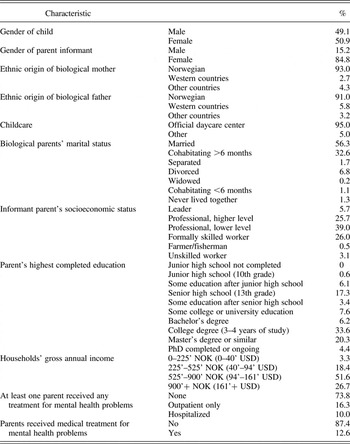
An invitation letter, together with the Strengths and Difficulties Questionnaire (SDQ) 4–16 version (Goodman, Reference Goodman1997), was sent to the parents of all 4-year-old children born in 2003 and 2004 who lived in the city of Trondheim, Norway. Parents returned the completed SDQ when they attended their scheduled appointment for an ordinary community health checkup for 4-year-olds. Details on the procedure and recruitment have been presented elsewhere (Wichstrøm et al., Reference Wichstrøm, Berg-Nielsen, Angold, Egger, Solheim and Sveen2012); thus, only a brief outline is provided here. Most children (n = 3,358, 97.2%) who were invited appeared at the city's well-child clinics; therefore, this sample is, in practice, a community sample. Parents who had insufficient proficiency in Norwegian to complete the SDQ screen were excluded from the study (n = 176, 4.2%). Each parent was informed about the study by the health nurse at the well-child clinic according to procedures approved by the Regional Committee for Medical and Health Research Ethics, and written consent to participate in the study was obtained from each parent. We oversampled for mental health problems by using the SDQ total problem scores (20 items), which were divided into four strata (cutoffs: 0–4, 5–8, 9–11, and 12–40) to increase statistical power in the event of infrequent conditions. The SDQ has an excellent screening ability for psychiatric disorders in this age group (Sveen, Berg-Nielsen, Lydersen, & Wichstrom, Reference Sveen, Berg-Nielsen, Lydersen and Wichstrom2013). Using a random-number generator, proportions of parents in each stratum were drawn to participate in a structured diagnostic interview concerning their child's mental health. The drawing probabilities increased in SDQ scores, that is, 0.37, 0.48, 0.70, and 0.89 for the four strata, respectively. Of the 1,250 parents selected, 995 (79.6%) completed a structured diagnostic interview (the Preschool Age Psychiatric Assessment [PAPA]; Egger, Erkanli, et al., Reference Egger, Erkanli, Keeler, Potts, Walter and Angold2006). Furthermore, 935 of those parents (94.3%) brought their child to the university for further testing and examination (Time 1 [T1]). Each family received compensation of NOK 300 (approximately US $35) for attending. The dropout rate after consent was received at the well-child clinic did not differ across the four SDQ strata (χ2 = 5.70, df = 3, p = .13) or gender (χ2 = 0.23, df = 1, p = .63). Questionnaires were sent to the daycare centers that the children attended (95.0% were in such centers), with the request that the teacher who knew the child best should complete them (n = 973). Children and parents were reassessed after 2 years (n = 795, 76.4%; Time 2 [T2]), when all the children were in first grade. Social skills constituted the only study variable that predicted attrition, but the predictive value was modest (Cox and Snell proxy R 2 = 2.4%). Descriptive information on the sample is presented in Table 1. In addition, for T1, the following should be noted: M age = 4.4 years (SD = 0.18) and M number \ of \ siblings = 1.3 (SD = 1.0), with 12.8% being an only child. At T2, M age = 6.7 years (SD = 0.25).
Participant characteristics

Measures
Symptoms of major depression
The PAPA (Egger et al., Reference Egger, Erkanli, Keeler, Potts, Walter and Angold2006) was used to assess symptoms of major depression. The PAPA is a semistructured psychiatric interview completed by parents of children aged 2 to 6 years that uses a structured protocol with both required and optional follow-up questions. We created a scale score that consisted of the number of DSM-5 defined symptoms of major depressive disorder (MDD; e.g., diminished interest or pleasure in all or most activities, depressed mood most of the day, and agitation or psychomotor retardation). The interviewers (n = 7) had at least a bachelor's degree in a relevant field, extensive prior experience working with children and families, and training by the team that developed the PAPA. Regular meetings with master coders were held, and the interviewer was observed behind a one-way mirror to ensure adherence to the interview protocol and to avoid rater drift. In total, 9% of the interview audio recordings were recoded by blinded raters. The interrater reliability (intraclass correlation coefficient [ICC]) between multiple pairs of raters was 0.90.
Other child psychiatric disorders
The PAPA (Egger et al., Reference Egger, Erkanli, Keeler, Potts, Walter and Angold2006) was used as a diagnostic tool. Because there was a low prevalence of disorders (Wichstrøm et al., Reference Wichstrøm, Berg-Nielsen, Angold, Egger, Solheim and Sveen2012), we expected a combination of depression and other disorders (i.e., comorbidity) to be considerably less prevalent. Psychopathology was therefore measured dimensionally as symptom counts. Accordingly, scales scores consisting of the number of DSM-IV defined symptoms and of combined oppositional defiant disorder/conduct disorder (ODD/CD) were created. Regarding anxiety disorders, the number of symptoms varies considerably between disorders. To avoid a composite dominated by a select number of anxiety disorders, a scale score consisting of the number of anxiety disorders was therefore created. The ICC between multiple pairs of raters were ADHD = 0.96, ODD and CD = 0.96, and anxiety disorders = 0.81.
Child factors
Parents reported temperament using the Children's Behavior Questionnaire, long version (Rothbart et al., Reference Rothbart, Ahadi, Hershey and Fisher2001), which included negative affectivity (α = 0.88) and effortful control (α = 0.84). Verbal skills were measured using the Norwegian version of the Peabody Picture Vocabulary Test (Dunn & Dunn, Reference Dunn and Dunn1997; α = 0.98). Social skills were measured using the total score on the 30-item Social Skills Rating System (Gresham & Elliot, Reference Gresham and Elliot1990) completed by the teachers, and this measure consists of three dimensions: cooperation, assertion, and self-control (α = 0.93). EU was measured by the Test of Emotion Comprehension (TEC; Pons & Harris, Reference Pons and Harris2000). The TEC is designed for children aged 3 to 11 years and comprises nine components organized by Pons, Harris, and de Rosnay (Reference Pons, Harris and de Rosnay2004) in a three-period developmental framework of external mentalistic and reflective periods of understanding. The external period include children's ability to recognize and name emotions on the basis of expressive cues (recognition), an understanding that their feelings are affected by external events or objects (external), and an understanding of the relationship between memory and emotion (reminder). The mentalistic period is characterized by an ability to connect beliefs to emotions (belief), distinguish between the expression and experience of emotion (hiding), and understand that people's emotional reactions depend on their desires (desire). In the reflective period, children acknowledge psychological strategies to maintain control over emotions (regulation), understand that a person may experience multiple or even contradictory emotional responses to a situation (mixed), and realize that emotions are linked to both morally reprehensible and praiseworthy actions (morality). The TEC uses a picture book that presents simple cartoon scenarios. A short story that accompanies each cartoon is read to the child, and at the end of each story, the child is asked to indicate the emotional response of the story protagonist by pointing to one of four cartoon faces that represent different emotions, two displaying negative emotions (sad and scared; sad and angry; or scared and angry) and two of the nonnegative emotions (happy and just alright). Practice questions are administered before the test question to confirm children's comprehension of the procedure. The components increase in difficulty and yield a sum score ranging from 0 (failure on all components) to 9 (success on all components). Recognition (Component 1) and external (Component 2) are assessed with five test items, and at least four of the five items must be answered to obtain score of 1. Desire (Component 3) is assessed with four test items (4/4 must be answered correctly to obtain a score of 1), whereas belief (Component 4), reminder (Component 5), regulation (Component 6), hiding (Component 7), and mixed (Component 8) consist of one item each. Morality (Component 9) is assessed with two items, and both must be answered to obtain a score of 1. For a more detailed description of the TEC, see Pons et al. (Reference Pons, Harris and de Rosnay2004). Because items on this scale are dichotomous, internal consistency was calculated using the theta value, which accounts for categorically ordered data (θ = 0.82; Zumbo, Gadermann, & Zeisser, Reference Zumbo, Gadermann and Zeisser2007).
Contextual factors
Life events were assessed by the PAPA (Egger et al., Reference Egger, Erkanli, Keeler, Potts, Walter and Angold2006) through parental reports of the number of (25) lifetime traumatic life events (e.g., assault, abuse, or poisoning) and (14) stressful life events (e.g., parental divorce, the death of a pet, or moving) that their child had encountered during the previous 3 months. The total number was summed to yield a total negative life-event score. Depression in caregivers was measured using the Beck Depression Inventory—II (α = 0.87). Emotional availability (EA) was measured by the EA scales (Biringen, Robinson, & Emde, Reference Biringen, Robinson and Emde1998) used to assess dyadic interactions between parents and children. The parent and the child were observed on four consecutive interactive sessions: free play, child lead play, parent lead play, and clean up (lasting 30 min in total; Eyberg, Nelson, Duke, & Boggs, Reference Eyberg, Nelson, Duke and Boggs2005), which were videotaped. EA scales include four parental dimensions (sensitivity, structuring, nonintrusiveness, and nonhostility) and a sum of these scores. The total parent EA scale, which is a sum of the above dimensions, was used in this study (α = 0.74). The interrater reliability between multiple blinded coders was ICC = 0.71 on a random 10% sample of the videotapes for the total EA parent scale.
The accuracy of parental estimates of children's EU was assessed using a method described by Sharp et al. (Reference Sharp, Fonagy and Goodyer2006). Because parents' ability to “read” their child's emotions is an important aspect of parental accuracy, as emphasized by Sharp and Fonagy (Reference Sharp and Fonagy2008), we chose EU to measure parental accuracy. We tested children alone (as described above), and parents were instructed to respond to the TEC as if they were their child. The name of the individual child was mentioned frequently during the test to remind the parents that they were to guess their own child's responses. The measure of parental accuracy consists of an item-by-item correspondence between the parent's estimate of and the child's actual response (0–21) to each TEC question. Because the parental accuracy measure captures the agreement in responses between parents and children without taking the actual correctness of the child's response into account, we chose to use all the items instead of the total score (0–9) because the total scores include scoring rules that depend on the correctness of the answer. This approach avoided the possibility of a parent generating an estimated score that exactly matched that of the child (e.g., 3/9) while incorrectly estimating all of the child's individual responses. Because parental accuracy is a difference score at the item level, whereas the child's TEC score represents the level across items, the two measures are conceptually independent (Kårstad et al., Reference Kårstad, Kvello, Wichstrøm and Berg-Nielsen2013; Kårstad, Wichstrøm, Reinfjell, Belsky, & Berg-Nielsen, Reference Kårstad, Wichstrøm, Reinfjell, Belsky and Berg-Nielsen2015). Information on parents' SES included categories for unskilled workers, farmers/fishermen, skilled workers, lower professionals, higher professionals, and leaders. Such information was obtained from interviews with parents and was coded according to the International Labour Organization's scheme for classifying occupations (ISCO-88).
Results
We estimated the population frequency of individual DSM-5 symptoms at T1 and T2, respectively, and the 95% confidence interval (CI) of the corresponding T2/T1 ratio, which will provide a test of whether the proportion has increased or decreased from T1 to T2: depressed or irritable mood most of the day, most days (7.1% and 6.8%, CI = 0.63–1.14); anhedonia (0.7% and 1.2%, CI = 0.28–3.83); weight or appetite change (8.9% and 6.0%, CI = 0.43–0.81); trouble falling or staying asleep (12.5% and 10.6%, CI = 0.64–1.00); psychomotor agitation or retardation (0.6% and 2.0%, CI = 0.80–7.54); tiredness or fatigue (1.1% and 3.1%, CI = 0.96–4.83); worthlessness or guilt (2.3% and 7.8%, CI = 1.99–4.77); decreased concentration (8.4% and 12.4%, CI = 1.22–1.92); and suicidality (5.5% and 4.7%, CI = 0.60–1.41). Note that the above symptom definitions have been shortened for simplicity of presentation. Recall that we oversampled for mental health problems. The analyses above were therefore performed with weights inverse to the drawing probabilities and Taylor linearization to provide correct population estimates. In brief, the analyses showed that weight or appetite change and sleep problems decreased while worthlessness or guilt and decreased concentration increased from T1 to T2. In addition, the increase in tiredness and fatigue was bordering on significance. At T1 0.3% fulfilled the criteria for MDD, whereas 0.2% did so at T2.
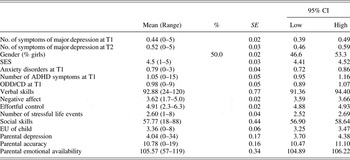
Table 2 presents descriptive statistics for all the studied predictors and outcomes. The sample was screen stratified; therefore, all analyses were conducted using weights proportional to the inverse of the selection probability for each participant (i.e., low screen scores were “weighted up”; high scores were “weighted down”). A robust maximum likelihood estimator was used to account for the skewness of the psychopathology data and to yield correct standard errors. Missing data were addressed according to the full information maximum likelihood procedure using Mplus 7.11(Muthén & Muthén, Reference Muthén and Muthén1998–2013).
Descriptive statistics for all study variables

Note: T1, Time 1; T2, Time 2; SES, socioeconomic status; ADHD, attention-deficit/hyperactivity disorder; ODD, oppositional defiant disorder; CD, conduct disorder; EU, emotion understanding.
To test whether the apparent increase in depressive symptoms shown in Table 2 was significant, a model with the means freely estimated was compared with a model with equal means at T1 and T2 using the Satorra–Bentler procedure (Satorra, Reference Satorra, Heijmans, Pollock and Satorra2000). The difference was significant (Δχ2 = 28.51, df = 2, p < .001). The distributions of symptoms were as follows: T1: one symptom (23.3%), two symptoms (7.3%), three symptoms (1.4%), four symptoms (.4%), and five symptoms (.01%); T2: one symptom (23.5%), two symptoms (7.8%), three symptoms (2.5%), four symptoms (1.2%), and five symptoms (.2%). The stability coefficient in depressive symptoms from T1 to T2 was r = .19 (p < .001).
A growth curve model was used to test for a change in depressive symptoms. To accommodate a growth curve analysis with two measurement points, the error terms for depressive symptoms at T1 and T2 were set to zero, resulting in a saturated model. The intercept was set to T1, and the slope represented the yearly change. The slope was regressed on the intercept to control for different development of depressive symptoms according to the initial level of depressive symptoms.
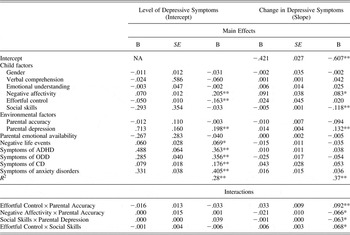
Predictors of the level (intercept) of and change (slope) in depressive symptoms were analyzed in two steps. First, the main effects of child and environmental factors were estimated by regressing the level of and change in depressive symptoms on these factors. Because, as previously noted, child gender might confound the results, we adjusted for the effect of gender. All predictors were allowed to correlate. Second, the specified interactions between child and environmental factors were tested by adding one interaction term to the model at a time using mean-centered values. The results are presented in Table 3, which indicates that children who scored high on negative affect exhibited more depressive symptoms and a greater increase in depressive symptoms than children who scored low on negative affect. Effortful control was related to a lower level of depressive symptoms (but not to any change in symptoms), whereas social skills predicted a reduction in depressive symptoms (but was unrelated to the initial level of symptoms). Regarding symptoms of other psychiatric disorders, both ADHD and ODD covaried with the initial level of depressive symptoms but did not predict any change in such symptoms. Parental depression was the only environmental factor that was related to children's depressive symptoms, predicting the initial level of symptoms and further increases in symptoms from age 4 to first grade.
Child and contextual risk factors regressed on the intercept and slope of depressive symptoms from preschool to first grade

Note: ADHD, Attention-deficit/hyperactivity disorder; ODD, oppositional defiant disorder; CD, conduct disorder; Parental Accuracy, parental accuracy in estimating emotion understanding.
*p < .05. **p < .01.
Significant interactions between child and contextual factors are detailed in Table 3. Note that no main effect of parental accuracy was found, but in combination with effortful control and negative affectivity, parental accuracy predicted a change in depressive symptoms. Parental depression interacted with children's social skills to predict a change in depressive symptoms. Moreover, effortful control interacted with the effect of social skills in predicting changes in depressive symptoms. To gain further insight into the interactions, the children were divided into three equal groups based on their scores for effortful control, negative affect, and social skills and models were re-estimated in multiple group analyses. Parental accuracy was found to have a protective effect against increases in depressive symptoms for children who had the lowest scores for effortful control (β = –0.26, p = .001) but not for children who had medium (β = –0.06, p = .46) or high (β = 0.04, p = .57) scores for effortful control. In a similar fashion, parental accuracy had no protective effect for children with low or medium scores for negative affectivity (low, β = 0.02, p = .76; medium, β = –0.05, p = .51) but had a protective effect for high-scoring children (β = –0.16, p = .05). Parental depression did not have any significant effect on changes in children's depressive symptoms when we divided the children into three equal groups with respect to social skills. The effect of social skills on change in depressive symptoms was present in children with low (β = –0.14, p = .002) and medium (β = –0.13, p = .01) but not in children with high effortful control (β = –0.05, p = .41). When we corrected for multiplicity using an incremental procedure (Benjamini & Hochberg, Reference Benjamini and Hochberg1995), the p values less than .05 were no longer significant, whereas the p values less than .01 remained significant.
Discussion
The present study investigated risk and protective factors at age 4 that determine the level of DSM-5 defined MDD symptoms and that predict a change in depressive symptoms from age 4 to first grade. The overall level of symptoms was low, as would be expected in a community sample. The level of depressive symptoms increased from age 4 to first grade, and the intraindividual stability of symptoms between the two time points was low. Depressive symptoms at age 4 covaried with symptoms of ADHD and ODD, but those symptom scores did not predict any change in depressive symptoms from ages 4 to 6. Children who scored high on negative affectivity and who have parents who scored high on parental depression had higher initial levels of depressive symptoms and greater increases in depressive symptoms when they reached first grade. Moreover, effortful control was related to a lower level of depressive symptoms but not to a change in symptoms; by contrast, social skills were related to a comparative reduction in depressive symptoms but were unrelated to the initial level of symptoms. Several interactions emerged between children's temperament and context.
Change and stability of depressive symptoms
Bufferd et al. (Reference Bufferd, Dougherty, Carlson, Rose and Klein2012) reported a significant increase in the rate of any depression diagnosis from age 3 to age 6, which is comparable to the findings regarding the level of symptoms obtained in the present study. Bufferd et al. proposed at least two interpretations of this increase in depressive symptoms. First, a steep increase in EU occurs during the late preschool and early school years (Pons et al., Reference Pons, Harris and de Rosnay2004). Children thus become increasingly aware of their own emotions, including sadness, as their vocabulary and communicative skills increase (Harris, Reference Harris, Lewis and Haviland-Jones2000; Pons et al., Reference Pons, Harris and de Rosnay2004) and as they become better able to convey distress to their parents. Hence, increased parent-reported depressive symptoms may be due to children`s enhanced ability to articulate their feelings. The increase in depressive symptoms may simply reflect children's growing ability to verbalize distress, which may increase parents' awareness of these symptoms (Bufferd et al., Reference Bufferd, Dougherty, Carlson, Rose and Klein2012). Second, the increase may also reflect an actual change in depression rate as the children face increasing performance demands when they transition to school age and begin to compare themselves with others, perhaps less favorably (Bufferd et al., Reference Bufferd, Dougherty, Carlson, Rose and Klein2012; Cole, Jacquez, & Maschman, Reference Cole, Jacquez and Maschman2001). Despite an increase of the mean number of depressive symptoms, the results indicate that there is a change in the pattern of symptoms over time. Symptoms such as sleep problems decreased over time, while in contrast the percentage of children with fatigue and poor concentration increased. In the transition from preschool to first grade, children will gradually start participating in activities that are both physically and cognitively more challenging. Fatigue-related problems and poor concentration may therefore be easier for parents to be aware of. There is also a significant increase in the percentage of children with symptoms of worthlessness or guilt. These symptoms of worthlessness and guilt may indicate that children have developed complex-conscious emotions and cognitive skills, making them able to verbally express such feelings. In one study it was found that children (5–9 years old) with depressed mothers were more vulnerable for developing maladaptive guilt responses associated with more arousal, distress, and a sense of responsibility for interpersonal conflicts (Zahn-Waxler, Kochanska, Krupnick, & McKnew, Reference Zahn-Waxler, Kochanska, Krupnick and McKnew1990). In addition a study by Luby, Belden, Sullivan, et al. (Reference Luby, Belden, Sullivan, Hayen, McCadney and Spitznagel2009) found that maladaptive guilt was related to preschool onset depression at the early age of 3 years old. The role of guilt in early childhood depression has been given little attention compared to adult depression (Luby, Belden, Sullivan, et al., Reference Luby, Belden, Pautsch, Si and Spitznagel2009). Although the present study explains individual differences in depression and not population-level changes, factors explaining individual differences may also operate at the group level. Bufferd et al. (Reference Bufferd, Dougherty, Carlson, Rose and Klein2012) found no intraindividual stability of depressive diagnoses. However, the rate of depression at age 3 was very low, implying that there was limited power to detect such stability. The stability of depressive symptoms found in the present study is comparable to that reported by Luby et al. (Reference Luby, Gaffrey, Tillman, April and Belden2014), who found intraindividual stability over 6–8 years, and previous research assessing the stability of global internalizing problems from early to middle childhood (Keiley, Lofthouse, Bates, Dodge, & Pettit, Reference Keiley, Lofthouse, Bates, Dodge and Pettit2003; Sterba et al., Reference Sterba, Prinstein and Cox2007).
Child factors
The finding that negative affectivity predicts depressive symptoms is consistent with previous studies that reported higher negative affect in children with internalizing symptoms (Anthony, Lonigan, Hooe, & Phillips, Reference Anthony, Lonigan, Hooe and Phillips2002; Eisenberg et al., Reference Eisenberg, Cumberland, Spinrad, Fabes, Shepard and Reiser2001) and higher depressive symptoms in preschoolers (Hopkins, Lavigne, Gouze, LeBailly, & Bryant, Reference Hopkins, Lavigne, Gouze, LeBailly and Bryant2013). Because negative affect and depressive symptoms may partly reflect the same phenomenon, one might argue that a concurrent association between the two constructs is expected. We extend the above cross-sectional findings by demonstrating that negative affectivity predicts increased depression, even when we adjust for initial levels of depression. The prediction of a change in depressive symptoms, even after we adjust for the initial level of depressive symptoms, via negative affect is not merely attributable to communalities between depression and negative affectivity, such as item overlap in the measurements.
Evidence from previous studies indicates that at least some individuals with depression have social-skill deficits (Segrin, Reference Segrin2000). A recent study found that low levels of social skills in early adolescence predict increases in depressive symptoms in late adolescence (Nilsen et al., Reference Nilsen, Karevold, Roysamb, Gustavson and Mathiesen2013). However, little is known about the association between social skills and depression during the period from preschool to young school age. Our results showed that higher social skills at age 4 decreased the risk for depressive symptoms in first grade. One possible explanation for this finding is that socially competent children know how to respond to invitations to play and share, which may contribute to friendships and, thereby, social support from peers and adults. Such social support, in turn, may buffer the effects of stress. Social skills may also reduce the risk for social exclusion and peer victimization, which have been found to increase the risk for depression, at least among older children and adolescents (Segrin, Reference Segrin2000). Although children's social skills markedly increase during the years in question (Berger, Reference Berger2011; Matthews, Deary, & Ehiteman, Reference Matthews, Deary and Ehiteman2009), they may superficially be expected to protect older children against depression. Moreover, as children become increasingly autonomous from their parents and place increasing importance on peer groups from preschool to first grade (Buysse, Goldman, West, & Hollingsworth, Reference Buysse, Goldman, West, Hollingsworth, Brown, Odom and McConnel2008; Quinn & Hennessy, Reference Quinn and Hennessy2010), social skills may constitute a more important protective factor against depression in first grade than in preschool, thus rendering a larger proportion of first-grade children vulnerable to depression. This vulnerability may be especially important because school-age children are expected to face increasing social demands by forming new peer and teacher relationships, both of which have been found to predict emotional problems (Arbeau, Coplan, & Weeks, Reference Arbeau, Coplan and Weeks2010; Hamre & Pianta, Reference Hamre and Pianta2005; Hay, Payne, & Chadwick, Reference Hay, Payne and Chadwick2004). Findings from previous studies on adolescence showed that girls reported higher levels of social skills and depressive symptoms compared to boys (Eberhart & Hammen, Reference Eberhart and Hammen2006; Eberhart, Shih, Hammen, & Brennan, Reference Eberhart, Shih, Hammen and Brennan2006; Nilsen et al., Reference Nilsen, Karevold, Roysamb, Gustavson and Mathiesen2013; Zahn-Waxler, Crick, Shirtcliff, & Woods, Reference Zahn-Waxler, Crick, Shirtcliff, Woods, Cicchetti and Cohen2006). However, we did not find such gender-specific vulnerability among the young school-aged children. The results of the present study showed that increased social competence skills in children were protective against the development of depressive symptoms only for certain individuals (e.g., those children with low and medium effortful control). Having good social competence skills may therefore especially be of protective value for children with temperamental vulnerabilities such as low and medium effortful control (self-regulation), as shown by the present study.
Regarding having another psychiatric disorder, ADHD and ODD covaried with the initial level of depressive symptoms but did not increase the probability of developing depressive symptoms in first grade. These results contrast with those of some previous studies; Bufferd et al. (Reference Bufferd, Dougherty, Carlson and Klein2011, Reference Bufferd, Dougherty, Carlson, Rose and Klein2012), in children aged 3 to 6 years, and von Klitzing et al. (Reference von Klitzing, White, Otto, Fuchs, Egger and Klein2014), in children aged 3 to 5 years, observed comorbidity between anxiety and depression, with depression increasing in the presence of anxiety disorder and vice versa. The results of the present study should be considered on basis of the fact that we studied a sample of children with low to moderate levels of MDD symptoms, who therefore may not have developed symptoms of other comorbid psychiatric disorders yet. The results also differ from previous studies on adolescents (Birmaher et al., Reference Birmaher, Ryan, Williamson, Brent and Kaufman1996). At least some of the comorbidity in older children and adolescents is likely to have developed as a complication due to lasting depression. Further studies are therefore needed to reveal the relationship between psychiatric comorbidity and depressive symptoms in young school-aged children.
Contextual factors
A notable finding was that the accuracy of parental estimates of child EU protected against increases in depressive symptoms for children with low effortful control but not for children with medium or high effortful control. The same pattern of results was found for negative affect; parental accuracy had a protective effect for high-scoring children but not for other children. Similarly, Kiff et al. (Reference Kiff, Lengua and Bush2011) found that the impact of maternal guidance on reducing children's depressive symptoms was stronger for children with low, compared with those with high, effortful control. Children with little effortful control or high negative affect (i.e., those who have deficiencies regulating their own behavior, attention, and emotions), may be in particular need of external (i.e., parental) regulation. To act as efficient external emotional regulators with respect to their child's inner states (emotions/cognitions), parents need to accurately perceive these states in their child (i.e., to estimate accurately). Thus, parents with low accuracy in their regulatory efforts may be less helpful in the regulation of present emotions; thus, children may fail to learn efficient emotion regulation strategies when their parents cannot accurately “read” them. Hence, these children's future emotion regulation may also be compromised, thereby explaining the predictive value of the accuracy of parental estimates on subsequent depressive symptoms in children. Children who already have good self-regulation skills may not need external regulation from their parents; therefore, their parents' ability to accurately estimate will have less of an effect on their depressive outcomes. In these cases, an internalization of parental regulation may have already occurred at an earlier developmental stage.
The influence of parental depression found in this inquiry is comparable with findings from previous studies on depression in older children (Caspi et al., Reference Caspi, Sugden, Moffitt, Taylor, Craig and Harrington2003; Kovacs et al., Reference Kovacs, Devlin, Pollock, Richards and Mukerji1997; Lewinsohn, Gotlib, et al., Reference Lewinsohn, Gotlib and Seeley1997; Maag & Irvin, Reference Maag and Irvin2005) and the few existing studies on young children (Bufferd et al., Reference Bufferd, Dougherty, Olino, Dyson, Laptook and Carlson2014) and preschool children (Luby et al., Reference Luby, Belden and Spitznagel2006; Luby, Si, et al., Reference Luby, Si, Belden, Tandon and Spitznagel2009; von Klitzing et al., Reference von Klitzing, White, Otto, Fuchs, Egger and Klein2014). Approximately one-third of the variation in children's depression can be attributed to genetic variation (Rice, Reference Rice2010); therefore, a correlation between parental and offspring depression is expected. However, affective disorders in parents may also interfere with parenting. Depressed mothers have been rated as less engaged, more authoritarian, and more rejecting of and less responsive to preschoolers' expressions of distress than nondepressed mothers. Such a style of parenting may increase children's risk for depression (McLeod, Wood, & Weisz, Reference McLeod, Wood and Weisz2007; Rapee, Reference Rapee1997) above their genetic risk (Luby et al., Reference Luby, Belden and Spitznagel2006).
In contrast to the large body of literature demonstrating that stressful life events are key risk factors in the development of MDD in older children and adults (Caspi et al., Reference Caspi, McClay, Moffitt, Mill, Martin and Craig2002; Eisenberg, Pidada, & Liew, Reference Eisenberg, Pidada and Liew2001; Grant, Compas, Thurm, McMahon, & Gipson, Reference Grant, Compas, Thurm, McMahon and Gipson2004), the present study did not detect such an effect. One study examined preschool children (Luby et al., Reference Luby, Belden and Spitznagel2006) and found that life events predicted subsequent depression. Further, Bufferd et al. (Reference Bufferd, Dougherty, Olino, Dyson, Laptook and Carlson2014) found that life stressors moderated the effects of both parental mood and anxiety disorders, as well as those of temperamental fearfulness/inhibition, in predicting onset of depression in 6-year-old children. However, whereas Luby et al. and Bufferd et al. investigated children with MDD, we studied a community sample of children with predominantly low to moderate levels of MDD symptoms. The children in our sample may have been more resilient to stressful life events than children who are clinically depressed. Further, during early childhood, negative life events may be less important in subclinical depression. This conjecture is consistent with a study that compared older and younger children and found that negative life events predicted internalizing symptoms during middle childhood but not among younger children (Timmermans, van Lier, & Koot, 2010). Given the mixed findings concerning the impact of stressful life events on depressive symptoms in young children, further research is needed.
Although this study had notable strengths, such as a large, representative community sample, a state-of-the-art structured diagnostic tool, and prospective data, the results should be considered in the context of several limitations. Although the PAPA is an interviewer-based method in which the interviewer makes the decision of whether a symptom is present, we nevertheless relied on one parent as the informant on child symptoms. This use of a parent as the informant could also introduce shared method variance, which could potentially inflate associations with other parent-reported measures. However, the validity of parent-based diagnoses has been demonstrated through correlations with teacher and child reports and though associations with biological findings (Luby, Belden, Pautsch, Si, & Spitznagel, Reference Luby, Belden, Pautsch, Si and Spitznagel2009; Luby, Heffelfinger, et al., Reference Luby, Heffelfinger, Mrakotsky, Brown, Hessler and Spitznagel2003). Moreover, although the concurrent association between parent-reported predictors (e.g. parental depression), and parent reports of depression in their child might be exaggerated due to biased reporting, there is no ready reason that such biased reporting should prospectively predict increased depression when the potentially exaggerated association between child depression and parental risk factors have been adjusted for. Nonetheless, the presence or absence of a symptom should be based on information from multiple sources, including reports from a second parent, observations of the child, and reports from teachers. Moreover, the present study examined symptoms of MDD, not a clinical disorder. Although the existing literature has suggested that a continuum exists from depressive symptoms to depressive disorder (Luby, Mrakotsky, et al., Reference Luby, Mrakotsky, Heffelfinger, Brown, Hessler and Spitznagel2003), our results should be replicated in samples that allow for the study of clinical MDD.
The measure of parental accuracy in estimating child EU is yet not validated; therefore, the results should be interpreted with caution. Finally, it should be acknowledged that, apart from the effect of the intercept (age 4 depression), the effects of individual predictors were small. Obviously, childhood depression is influenced by a range of factors not specified in the present model.
It should also be acknowledged that due to the many significant tests performed, we corrected for this multiple testing and not all interactions were significant on the p ≤ .01 level, which was the cutoff calculated by our incremental procedure. Hence the interactions involving social skills and the Negative Affectivity × Parental Accuracy interaction are in particular need of replication.
In conclusion, parental depression may serve as an independent risk factor for the development of children's depressive symptoms in the transition from preschool to first grade. Interventions intended to treat parental depression should be emphasized. Moreover, social skills protect against the development of depressive symptoms, and efforts to increase such skills in preschoolers, particularly among children with low or medium effortful control, may be a preventative measure for depression. Finally, children with low effortful control and high negative affect may benefit from having parents who accurately estimate their ability to understand emotions.