




No CrossRef data available.
E-STABILITY DOES NOT IMPLY LEARNABILITY
Published online by Cambridge University Press: 28 April 2005
Abstract
The concept of E-stability is widely used as a learnability criterion in studies of macroeconomic dynamics with adaptive learning. In this paper, it is demonstrated, via a counterexample, that E-stability generally does not imply learnability of rational expectations equilibria. The result indicates that E-stability may not be a robust device for equilibrium selection.
Information
- Type
- NOTES
- Information
- Copyright
- © 2005 Cambridge University Press
INTRODUCTION AND BACKGROUND
In recent years, there has been an explosion in research that studies macroeconomic dynamics with adaptive learning.1
A detailed literature review of the topic is beyond the scope of this paper. A comprehensive reading on adaptive learning is Evans and Honkapohja (2001).
In this paper, I revisit the concept of E-stability and demonstrate, via a counterexample, that E-stability does not always imply learnability of an REE. The example used is a generic reduced-form model with expectations dated at time t and a lag of the endogenous variable. In particular, I show that, for certain parameter regions for which E-stability holds for a minimal state variable (MSV) solution, there is a learning algorithm (namely, stochastic gradient) that does not converge to the solution; that is, the REE is not learnable. Furthermore, I discuss some examples of economic models that can be expressed in this reduced form.
The fact that E-stability may not always be an appropriate learnability criterion is not entirely new to the literature. This possibility has been pointed out by Barucci and Landi (1997) and further explored by Heinemann (2000). Nevertheless, in the former article, there is no example confirming the assertion. The latter article provides an example for which numerical simulations indicate that stability or instability under stochastic gradient learning is independent of the E-stability conditions; in particular, it is shown that the stochastic gradient algorithm converges to an E-unstable solution, that is, that E-stability is not a necessary condition for learnability. In the present paper, I further show that there may exist E-stable equilibria that are not learnable by a stochastic gradient algorithm or, in other words, that E-stability is not a sufficient condition for learnability.
MODEL
Suppose that the reduced form of the model is


where {wt} is an AR(1) exogenous variable with |ρ| < 1 and ut ∼i.i.d.(0, σ2u). When writing the expectations, the asterisk is used to denote that they are not necessarily the expectations in the statistical sense.
Let xt = (yt, wt)′ and Φ = (ϕ1, ϕ2)′. If agents perceive the law of motion of yt to be

then the true law of motion of yt is

where

is a mapping from the perceived law of motion to the true law of motion and

Solving the fixed-point problem
yields the MSV rational expectations solutions

It can be shown that for |α + λ| < 1, the only stationary solution is
. Furthermore, for α and λ such that |α + λ|>1,
and
both solutions are stationary. For the remaining combinations of α and λ, both solutions are either nonstationary or nonreal.2
The model studied here is the similar to the one in Sect. 8.6.2 of Evans and Honkapohja (2001). The only difference is that the present model does include an intercept. Although this alteration does not have an effect on the stationarity properties of the solutions
, it will imply different E-stability conditions, which will now depend on the persistence ρ of the exogenous variable. Apart from the MSV solutions, the model may also have other solutions, for example, sunspot equilibria. The analysis of E-stability or instability of such solutions is beyond the scope of this paper.
E-STABILITY AND LEARNABILITY
An REE is expectationally stable or E-stable if it is a locally asymptotically stable equilibrium of the ordinary differential equation

Equivalently, an REE is E-stable if the Jacobian of T(Φ) − Φ evaluated at the REE, that is,

is a stable matrix (i.e., it has eigenvalues with strictly negative real parts).3
The concept of E-stability is extensively discussed by Evans and Honkapohja (2001).
A widely used learning algorithm is the recursive least squares, which is expressed as


It has been shown by Marcet and Sargent (1989) that E-stability is a necessary and sufficient condition for convergence of the recursive least-squares algorithm. Because of this property and because least squares is a simple and natural choice for estimating parameters of linear models, E-stability has been widely used as a learnability criterion.
Nevertheless, E-stability does not always imply learnability when the estimation algorithm is stochastic gradient. This learning algorithm is expressed recursively as

The algorithm differs from least squares in that it ignores the second moment matrix when updating.4
For more details on the two algorithms, see Marcet and Sargent (1989), Barucci and Landi (1997), and Evans and Honkapohja (2001).

where
. The local asymptotic stability of an REE
under stochastic gradient learning is again determined by the stability of the Jacobian matrix JSG(Φ) = d[M(Φ)(T(Φ) − Φ)]/dΦ, evaluated at
. The stochastic gradient algorithm converges locally to the REE if and only if the real parts of the eigenvalues of
are strictly negative.
Using the reduced-form model introduced in the preceding section, it is possible to demonstrate that E-stability, that is, stability of
, does not necessarily imply stability of
. The E-stability conditions [by imposing that the eigenvalues of
have strictly negative real parts] are

For |α + λ| < 1, the unique stationary solution
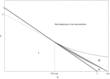
is always E-stable. For the areas defined by |α + λ|>1, |αλ| < 1/4, and |α| < 1/2, it is possible to find regions for which both solutions are E-stable, only one solution is E-stable, or no solution is E-stable. For example, if ρ>0, in the area defined by α, λ>0, λ < −ρ2α + ρ, and α + λ>1 (shown in Figure 1 as region II, including the shaded area), both solutions are stationary, but only
is E-stable, whereas in the area defined by α, λ>0, λ > − ρ2α + ρ and αλ < 1/4 (shown in Figure 1 as region III), both solutions are stationary, but none is E-stable.

E-stability and learnability regions. In region I, defined by the thicksolid line, the solution $\bar{\Phi}_{-}$ is E-stable and learnable with stochasticgradient. In region III, the solution is neither E-stable nor learnable withstochastic gradient. In region II (which includes the shaded area) thesolution is E-stable, but is learnable with stochastic gradient only forsome parameters. The shaded area corresponds to combinations ofα and λ where the solution isE-stable but not learnable with stochastic gradient.
Next, the conditions for learnability under stochastic gradient are determined by the stability of the matrix

where the matrix
as well as all the derivations of the stability properties are given in Appendixes A and B.
Although it is not possible to present the learnability conditions under stochastic gradient learning in an elegant way, it is straightforward to explore these numerically, by using a finely defined grid of the regions of interest. In this manner, it can be shown, for example, that
is stable under stochastic gradient only for part of region II of Figure 1. In particular, in the shaded part of region II, the E-stable solution
is not learnable by stochastic gradient learning.5
The analysis was done by calculating the eigenvalues of the relevant Jacobian matrices for a thin grid of 2,000 points of the region defined by α, λ ∈ (0, 1/ρ). To produce Figure 1, the parameters γ and σ were set to 0.5, and ρ was set to 0.9. The codes were written using Matlab 6.0 and are available at http://wueconb.wustl.edu/jda/md/contents.html.
is not learnable under stochastic gradient, becomes larger.
Models that can be expressed in the reduced form analyzed here are the loglinearized versions of the real business cycle (RBC) model and, in general, several dynamic stochastic general equilibrium models. An example of how such models can be written in this reduced form can be found in Giannitsarou (2004). Note that for standard versions of the RBC model [e.g., Hansen (1985)], the reduced-form coefficients are in the zone defined by |α + λ| < 1; that is, the model is regular or saddle-point stable, for all reasonable calibrations of the model parameters. In this zone, the unique stationary equilibrium is E-stable and always learnable under stochastic gradient learning. However, for irregular models (i.e., models with indeterminacies), reasonable calibrations can yield solutions in the shaded parameter region of interest shown in Figure 1. In the next section, I provide an example that fits in this category, namely, the model of Schmitt-Grohé and Uribe (1997). Thus the counterexample provided here cannot be characterized as pathological.
Furthermore, the result presented here has implications for the learnability of REEs under heterogeneous learning, in particular, for the case where some proportion of the population estimates using least squares and the rest of the agents use stochastic gradient. This issue is covered extensively by Giannitsarou (2003).
Finally, turning to the general issue of equilibrium selection, the present result is also related to the recent work of McCallum (2002a,b). Basing his analysis on a similar reduced-form model (the difference is that it includes an intercept), McCallum first demonstrates how to select a unique MSV solution and then shows that this solution is always E-stable, thus concluding that it is always (least squares) learnable in real time. This argument is then used to reinforce the appropriateness of his equilibrium selection device. However, as illustrated here, the unique MSV solution (as defined by McCallum) may fail to be learnable if the adaptive algorithm is other than least-squares learning.
EXAMPLE
In this section, the model of Schmitt-Grohé and Uribe (1997) is employed as an example for demonstrating how a plausible RBC model can be mapped into the reduced form (1)–(2). This model is irregular; that is, for certain parameter values, it has an indeterminate steady state, and therefore it is a potential candidate for having parameter values that bring the coefficients α and λ in the shaded area of Figure 1. The model is an extension of the Hansen (1985) model, augmented with a government that maintains a balanced budget and finances its constant expenditures by taxing labor income at an endogenously determined rate.6
Schmitt-Grohé and Uribe (1997) present their model in continuous time, without uncertainty. Here, I include an exogenous technological shock in the production function and the model is presented in discrete time.


where Kt, Yt, Ct, Nt, Θt, and G denote capital, output, consumption, labor, labor income tax rate, and government expenditures, respectively. It is assumed that δ, β, Θt ∈ (0, 1). Furthermore, the production function has constant returns to scale, sk + sn = 1, and sk, sn>0. The loglinearized equilibrium conditions are


where si = δK/Y, sc = C/Y, and λt is the Lagrange multiplier. Uppercase letters denote the steady-state values of the variables; lowercase letters denote the loglinear variables, that is, xt = logXt − logX for any variable Xt of the model. Equations (22)–(25) correspond to equations (12)–(15) of Schmitt-Grohé and Uribe (1997). Using (22) and (25), one can write nt, by eliminating θt, as

Next, replace nt in (23) and (24) to obtain


The coefficients κi, μi, i = 1, 2, 3 are stated in Appendix C. Using the above equations, one can eliminate λt to obtain the reduced form (1), with

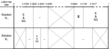
where d = μ1 + κ1μ2 − κ2. Using the calibration of Schmitt-Grohé and Uribe (1997) for yearly data (δ = 0.1, β = 1/1.04, sk = 0.3) and setting ρ = 0.9 and σ = 0.01, it can easily be shown that for labor tax rates in the range (0.6660, 0.7194) the solution
is E-stable but not learnable with stochastic gradient learning. Figure 2 summarizes the stability properties for both solutions, for the above calibration and for all steady-state labor tax rates Θ ∈ (0, 1).7
The computations were done with Matlab 6.0, by calculating the relevant eigenvalues of
and
. The code is available at http://wueconb.wustl.edu/jda/md/contents.html.

E-stability and learnability for the model of Schmitt-Grohé and Uribe (1997).The left column shows the values of the steady-state tax rate Θ that determinethe stability properties of the twosolutions. For the crossed-out areas, the corresponding solutions are eithernonstationary or nonreal. E & SG denotes a solution that isE-stable and learnable with stochastic gradient. A hyphen isused to denote a solution that is neither E-stable nor learnable withstochastic gradient.
CONCLUDING REMARKS
The idea behind the E-stability conditions goes far back to the work of DeCanio (1979) and Evans (1985) and it was originally viewed as a kind of learning process taking place in notional time, without the need of any associated real-time adaptive algorithm. Originally, its appeal drew from explaining how economic agents come to possess rational expectations, thereby justifying the existence of rational expectations equilibria. After Marcet and Sargent (1989) showed the equivalence of E-stability with convergence of real-time adaptive least-squares learning, the E-stability conditions have been extensively used as a criterion of learnability of REEs.
Motivated by this fact, I provided a counterexample that shows that E-stability generally does not imply learnability. Naturally, this result raises an important issue: How robust is adaptive learning as an equilibrium selection device? So far, the literature has been heavily relying on E-stability to make inferences about which equilibria are learnable or not; it appears, however, that which equilibria are learned depends on the selected learning algorithm. This is a somewhat alarming result, given that the suggested alternative algorithm (stochastic gradient) is just a small deviation from the commonly used least-squares algorithm. It would thus be useful to identify general criteria under which E-stability implies or does not imply stability under algorithms other than the least squares.
I thank Peter Sørensen and two anonymous referees for their recommendations on improving this paper.
APPENDIX A: E-STABILITY AND STOCHASTIC GRADIENT LEARNABILITY CONDITIONS
The matrix dT(Φ)/dΦ is

Noting that
, the matrix
that determines the E-stability conditions reduces to

This has eigenvalues

Furthermore, the second moment matrix M(Φ) is defined by

Since wt is a stationary AR(1), m22 = σ2u/(1 − ρ2). Moreover, yt = T1(Φ)yt−1 + T2(Φ)wt−1 + V(Φ)ut, and in the limit yt will be stationary; thus,


and


At the two solutions,
and
; thus, the second moment matrix simplifies to

The Jacobian that determines learnability conditions under stochastic gradient is

Although there are analytic expressions for the eigenvalues of
, it is not possible to present them in an elegant way, and they are therefore omitted.
APPENDIX B: E-STABILITY PARAMETER REGIONS
To find the regions where the solutions are E-stable, it is assumed for simplicity that ρ>0. Analogous analysis can be done for ρ < 0, but the regions are different.
Solution
. Assuming that 1 − 4αλ>0, it follows that

Thus, the first E-stability condition (E1) is always satisfied for
.
Next, for the second E-stability condition (E2), assuming that 1 − 4αλ>0, it is required that

If 2αρ − 1 < 0, or equivalently, α < 1/(2ρ), then the above condition is satisfied. If 2αρ − 1>0, or equivalently, 0<1/(2ρ)<α, then

Thus, (E2) is satisfied for all λ if α < 1/(2ρ), and for all λ < ρ − αρ2 if α>1/(2ρ). To conclude, whenever
is stationary, it is E-stable for all λ if α < 1/(2ρ), and for all λ < ρ − αρ2 if α>1/(2ρ).
Solution
. Assuming that 1 − 4αλ>0, (E1) is satisfied if

This condition is only satisfied if 1 − 4αλ>1 or, equivalently, if αλ < 0, that is, only when α and λ have opposite signs. Thus, the first E-stability condition (E1) is satisfied for all λ < 0 if α>0, and for all λ>0 if α < 0.
Next, for the second E-stability condition (E2), I restrict attention to the areas where (E1) is satisfied. Note that αλ < 0 implies

Thus, if α>0, (E2) is always satisfied because

If α < 0, (E2) is equivalent to

Therefore, whenever α and λ have opposite signs, the second E-stability condition (E2) holds for all λ < 0 if α>0, and for λ>ρ − αρ2. To conclude, whenever solution
is stationary, it is E-stable for all λ and α such that λ < 0 and α>0, and for all λ and α such that α>0 and λ>ρ − αρ2.
APPENDIX C: COEFFICIENTS FOR THE EXAMPLE
The coefficients of (28) and (29) are


References
Barucci E. &
L. Landi
1997
Least mean squares learning in self-referential linear stochastic models.
Economics Letters
57,
313–
317.Google Scholar
DeCanio S.
1979
Rational expectations and learning from experience.
Quarterly Journal of Economics
94,
47–
57.Google Scholar
Evans G.W.
1985
Expectational stability and the multiple equilibria problem in linear rational expectations models.
Quarterly Journal of Economics
100,
1217–
1233.Google Scholar
Evans G.W. &
S. Honkapohja
2001
Learning and Expectations in Macroeconomics.
Princeton, NJ:
Princeton University Press.
Giannitsarou C.
2004
Supply-Side Reforms and Learning Dynamics.
Mimeograph.
Forthcoming.
Hansen G.D.
1985
Indivisible labor and the business cycle.
Journal of Monetary Economics
16,
309–
327.Google Scholar
Heinemann M.
2000
Convergence of adaptive learning and expectational stability: The case of multiple rational-expectations equilibria.
Macroeconomic Dynamics
4,
263–
288.Google Scholar
Marcet A. &
T. Sargent
1989
Convergence of least squares mechanisms in self-referential linear stochastic models.
Journal of Economic Theory
48,
337–
368.Google Scholar
McCallum B.
1983
On nonuniqueness in rational expectations models: An attempt at perspective.
Journal of Monetary Economics
11,
139–
168.Google Scholar
McCallum B.
2002a
Consistent Expectations, Rational Expectations, Multiple-Solution Indeterminacies, and Least-Squares Learnability.
NBER working paper 9218.
McCallum B.
2002b
The Unique Minimum State Variable RE Solution is E-Stable in All Well Formulated Linear Models.
Mimeograph,
Carnegie Mellon.
Schmitt-Grohé S. &
M. Uribe
1997
Balanced-budget rules, distortionary taxes, and aggregate instability.
Journal of Political Economy
105,
976–
1000.Google Scholar
E-stability and learnability regions. In region I, defined by the thicksolid line, the solution $\bar{\Phi}_{-}$ is E-stable and learnable with stochasticgradient. In region III, the solution is neither E-stable nor learnable withstochastic gradient. In region II (which includes the shaded area) thesolution is E-stable, but is learnable with stochastic gradient only forsome parameters. The shaded area corresponds to combinations ofα and λ where the solution isE-stable but not learnable with stochastic gradient.
E-stability and learnability for the model of Schmitt-Grohé and Uribe (1997).The left column shows the values of the steady-state tax rate Θ that determinethe stability properties of the twosolutions. For the crossed-out areas, the corresponding solutions are eithernonstationary or nonreal. E & SG denotes a solution that isE-stable and learnable with stochastic gradient. A hyphen isused to denote a solution that is neither E-stable nor learnable withstochastic gradient.
 You have
Access
- 11
- Cited by