The Republic of Haiti, home to approximately 10.4 million people, has been plagued by a history of political, economic, and disaster-related challenges.Reference Hou and Shi1 From the financial burden of the Haiti Revolution of 1791-1804 to the longstanding foreign debt, Haiti has been in a state of chronic poverty for an extended period of time.Reference Alsan, Westerhaus and Herce2 On January 12, 2010, the economic situation in Haiti worsened when a 7.0 magnitude earthquake struck near Port-au-Prince, the capital and most populated city of Haiti.3 The earthquake resulted in 300 000 deaths and displaced more than 1 million people, causing further economic, social, and familial distress.3 Prior to the 2010 earthquake, Haiti had experienced a history of frequent natural disasters,Reference Raviola, Eustache and Oswald4 including hurricanes Gustav, Hanna, and Ike, which caused extensive flooding and impacted 9 out of 10 of Haiti’s regions.5 With such a devastating history of political instability, poverty, and frequent disasters, the citizens of Haiti continue to face development challenges.
Natural disasters are known to cause increased stress, loss and destruction of property, loss and injury of family members, mental health complications, scarcity of basic provisions, and destruction of social networks.6 In addition to the environmental and social disruptions caused by the 2010 Haiti earthquake, the subsequent cholera outbreak in Haiti caused significant morbidity and thousands of deaths.Reference Pfrimmer7 Such change and disruption can raise levels of family stress, which has been associated with an increased level of vulnerability to child abuse in the household.Reference Curtis, Miller and Berry8
Although a number of studies have indicated that child abuse is increasingly prevalent after disasters,Reference Curtis, Miller and Berry8, Reference Keenan, Marshall and Nocera9 the full extent of the problem has not been thoroughly studied, particularly in Haiti. A review of relevant literature revealed limited epidemiological research on the demographic variables, socioeconomic situations, and living conditions before and after natural disasters and there are very few studies examining the prevalence of emotional and physical abuse in households following disasters.
Defining Emotional and Physical Child Abuse
Abuse of children is a widespread violation of human rights and an important public health issue. Child abuse refers to all forms of physical and emotional ill treatment, sexual abuse, neglect, and exploitation that results in actual or potential harm to the child’s health, development, or dignity.10 The 2 forms of abuse that are highlighted in this paper are emotional and physical abuse. Emotional abuse refers to the failure of a caregiver to provide an appropriate and supportive environment and includes acts that have an adverse effect on the emotional health and development of a child.Reference Hoffman11 Physical abuse refers to any punishment in which physical force is used and intended to cause some degree of pain or discomfort, however light.12 A “severe physical abuse” category is also being examined by combining the 2 most severe forms of abuse from the physical abuse indicators: “hit or slapped child on the face, head, or ears” and “beat child again and again, as strong as possible.”
Convention on the Rights of the Child
The Convention on the Rights of the Child was created with the intention of guaranteeing children rights in all circumstances. Article 19 states that, “Children have the right to be protected from being hurt and mistreated, physically, or mentally by their parents, or anyone else who looks after them.”12 In terms of discipline, the Convention does not specify what forms of punishment parents should use. Nevertheless, from the United Nation’s perspective, any form of discipline involving violence is unacceptable.12 Although the Democratic Republic of Haiti ratified the Convention on the Rights of the Child13 in 1995, children who are disaster victims are still at risk of having their rights violated, including their right to be protected from emotional, physical, and severe physical child abuse.
Haiti’s Position on Child Abuse and Corporal Punishment
Corporal punishment can be defined as violence inflicted on children by parents, caregivers, teachers, and others in the name of discipline.Reference Milne14 A law prohibiting and eliminating all forms of abuse, violence, maltreatment, or inhumane treatment of children was published15 in the Official Gazette of the Government of Haiti, Le Moniteur No. 41 on June 5, 2003.
Article 2 of this law states that “all forms of abuse and violence against children and their exploitation are prohibited.”15 Similarly, a Haitian law from September 24, 2001, prohibits the use of corporal punishment in families and schools.16 Despite the existing law to eliminate corporal punishment, the committee on the Rights of the Child remains concerned at the persistent practice of corporal punishment by parents or teachers and the ill treatment of children in Haiti.17 Organizations that are invested in the protection of children in Haiti include the United Nations International Children’s Emergency Fund, Beyond Borders, Fondation Enfant Jésus, Brigade pour la protection des mineurs, PLAN International, and Save the Children, among others.
The objective of this study was to provide a descriptive overview of demographic characteristics, socioeconomic situation, and living conditions of Haitian citizens, as well as to report on the household prevalence of emotional, physical, and severe physical child abuse following the earthquake in Haiti. The demographic, socioeconomic, and living conditions before and after the earthquake were examined using data from the 2005/2006 and the 2012 Demographic and Health Surveys (DHSs).
The child abuse–related indicators are from the 2012 Haiti DHS, which are derived from the globally utilized Child Discipline Module of the Multiple Indicator Cluster Surveys. Since the module was only introduced to the DHS Haiti surveys in 2012, child abuse data are only available post-earthquake and are reported for a single time point.
METHODS
Study Sample
This study uses data from the DHS. The DHS is a nationally representative household survey funded by the United States Agency for International Development.Reference Program18 It provides data for a range of monitoring and impact-evaluation indicators in the areas of population and health. Since 1984, the DHS program has provided technical assistance to demographic and health surveys in over 90 countries, including Haiti.Reference Program18 To address the study objective of examining demographic characteristics, socioeconomic status, and living conditions, this study used Haiti-specific data from the 2005/2006 (household n = 9998) and 2012 (household n = 13 181) cycle of the Demographic and Health Survey. To determine the prevalence of emotional, physical, and severe physical child abuse in households, data from the 2012 cycle were used. All samples were weighted using appropriate DHS sampling weights.
Both the pre-earthquake (2005/2006) and post-earthquake (2012) surveys used a 2-stage sampling design where the sample population was stratified and drawn at 2 levels.Reference Cayemittes, Busangu and de Bizimana19 First, the 10 geographic regions of Haiti and a “camps” region were separated into urban and rural parts to form the sampling strata. The “metropolitan area” region included only urban areas and was stratified according to the 6 communes.Reference Cayemittes, Busangu and de Bizimana19 Households were then randomly sampled within each strata proportionally to the actual distribution of the population. The households were preselected in the central office prior to the start of fieldwork.Reference Cayemittes, Busangu and de Bizimana19 To prevent bias, no changes or replacements were allowed in the field. For the settlement camps, sites were selected from the most up-to-date list at the time of the survey, and because of the highly mobile nature of the camp population, the collection of data in the camps immediately followed the household enumeration process.Reference Cayemittes, Busangu and de Bizimana19
Descriptive Variables
This study examined data for household demographic characteristics, living conditions, and socioeconomic status. These variables were reported from the 2005/2006 (pre-earthquake) and 2012 (post-earthquake) DHS cycles. Demographic variables included geographic region, urban/rural residence, number of household members, age of household head, sex of household head, marital status of household head, and highest educational attainment of household head. Living conditions were examined using the following indicators: (1) whether or not the household had electricity, a radio, a television, a mobile phone, a landline phone, and a refrigerator, and (2) whether or not the household shared toilet facilities with other households. Socioeconomic status was established using the wealth index, a composite measure of a household’s cumulative living standard. The wealth index is calculated using data on a household’s ownership of selected assets, materials used for housing construction, types of water access, and sanitation facilities.Reference Cayemittes, Busangu and de Bizimana19 Each household is assigned a score for each property and a sum of all scores is calculated. Households are then ranked in ascending order of total score and divided into 5 relatively equal categories from 1 (lowest quintile) to 5 (highest quintile).Reference Cayemittes, Busangu and de Bizimana19
Indicators for Emotional and Physical Abuse
Data on emotional abuse were collected by randomly selecting a child aged 2 to 15 in each household and asking the household respondent if the randomly selected child experienced any of the following in the past month of the 2012 survey period by anyone in the household: (1) “yelled or screamed at child,” (2) “called child dumb, lazy, or another name,” (3) “revoked privileges to child,” (4) “asked child to kneel,” and (5) “deprived the child of meal to punish him/her.” Similarly, data on physical abuse were collected by asking the household respondent whether any of the following were experienced by the randomly selected child in the past month: (1) “shook child,” (2) “pulled child’s ears,” (3) “hit or slapped child on the face, head, or ears,” (4) “hit or slapped child on hand, arm or leg,” (5) “hit child on bottom,” and (6) “beat child again and again, as strong as possible.” Respondents were also asked if they believed if “child needs to be physically punished to be brought up properly.” A severe physical abuse variable was created by combining 2 of the most severe forms of physical abuse: “hit or slapped child on the face, head, or ears” and “beat child again and again, as strong as possible.”
Statistical Analysis
Descriptive analyses were performed to determine sociodemographic characteristics, socioeconomic status, living conditions, and the household prevalence of emotional and physical child abuse. Continuous variables were summarized using measures of central tendency (mean) and dispersion (range and standard deviation). Categorical variables were summarized using frequencies and percentages. Sociodemographic, socioeconomic, and living-condition data were summarized for both the 2005/2006 (pre-earthquake) and 2012 (post-earthquake) DHS cycles. Emotional and physical child abuse data were summarized only for the 2012 post-earthquake DHS cycle. A chi-square test (critical P value of <.05) was used to compare the differences in proportions for categorical data that were available pre-earthquake and post- earthquake, and an independent t test (critical P value of <.05) was used to compare the means of data that were available both pre-earthquake and post-earthquake. Mapping was also conducted with the aim of comparing emotional, physical, and severe physical abuse across Haiti’s 10 geographic regions. A dedicated “camps” category was included by DHS to represent households who were displaced after the earthquake and were living in temporary camps at the time of the survey.
Ethics
This study has been approved by Queen’s University Health Sciences & Affiliated Teaching Hospitals Research Ethics Board. The Demographic and Health Survey provides deidentified data, with data collection being undertaken using internationally and nationally approved protocols.
RESULTS
Sociodemographic Characteristics
Sociodemographic characteristics, socioeconomic status, and living conditions changed significantly from the pre-earthquake (2005/2006) to the post-earthquake (2012) time period.
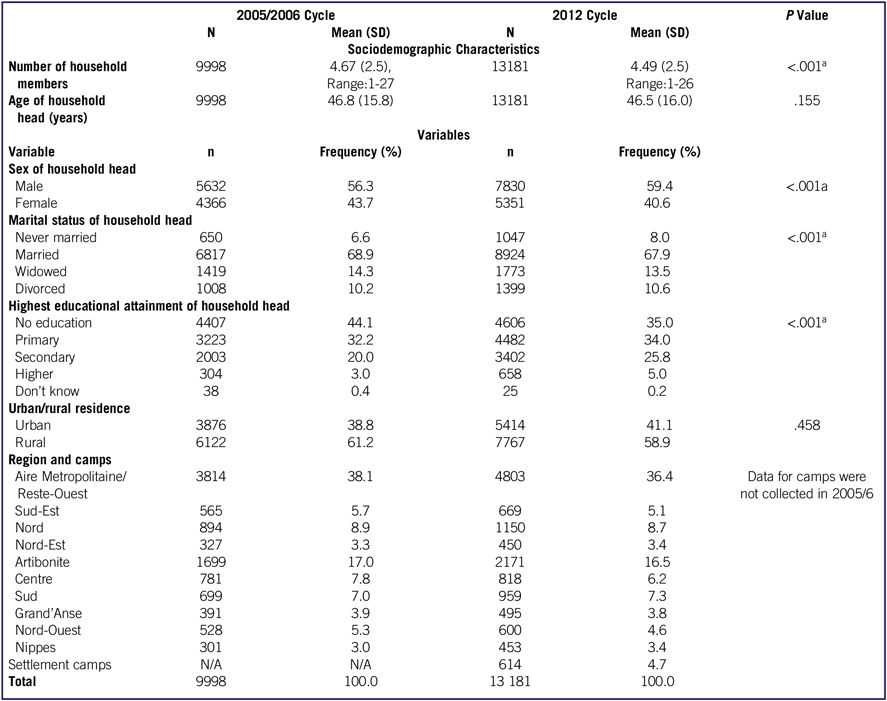
Among the statistically significant differences (P < .05), the most notable were seen for sex of household head and highest education attainment of household head. The sex of household head changed from 56.3% male in 2005/2006 to 59.4% male in 2012. There were improvements made in the highest education attainment of the household head. The most notable change occurred in the “no education” category, where the frequency of household heads without any education decreased from 44.1% in 2005/2006 to 35.0% in 2012. Lastly, 4.7% of the study population were living in camps after the earthquake (Table 1).
Comparison of Sociodemographic Characteristics Before and After the 2010 Haiti Earthquake

a P values for comparison of independent t test for continuous variables and Pearson chi-square test for categorical variables between 2005/2006 and 2012 data.
Socioeconomic Status and Living Conditions
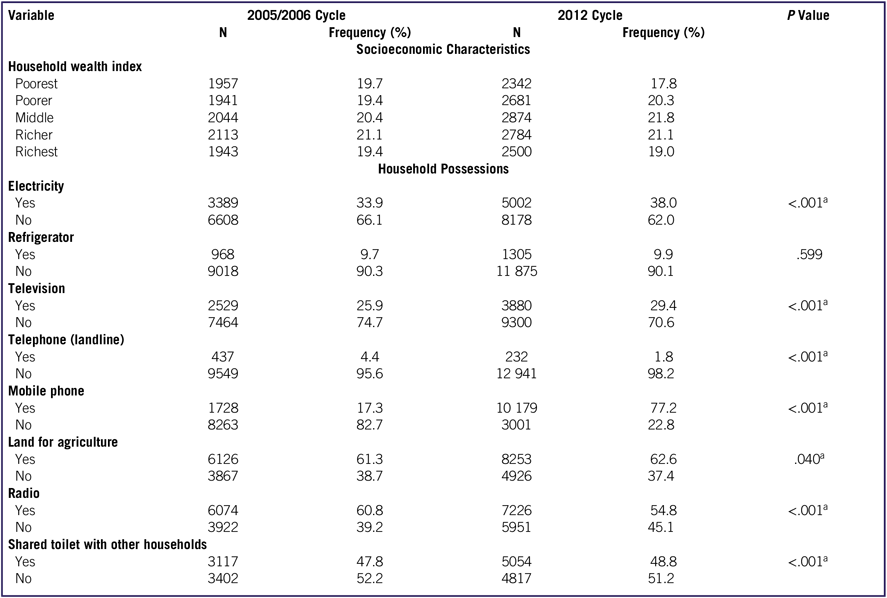
A Pearson chi-square test was conducted for the observed differences in socioeconomic situations and living conditions from the pre-earthquake to the post-earthquake period. There was a statistically significant difference (P ≤ .05) seen for the socioeconomic status indicator wealth status. Additionally, results from the chi-square tests revealed that there were statistically significant differences in the following household items pre-earthquake and post-earthquake: electricity (33.9% in 2005/2006 and 38% in 2012), television (25.9% in 2005/2006 and 29.4% in 2012), landline telephone (4.4% in 2005/2006 and 1.8% in 2012), mobile phone (17.3% in 2005/2006 and 77.2% in 2012), radio (60.8% in 2005/2006 and 54.8% in 2012), and sharing toilet with other households (47.8% in 2005/2006 and 48.8.4% in 2012). In contrast, there was no statistically significant difference in the proportion of households who owned refrigerators (9.7% in 2005/2006 and 9.9% in 2012) or land for agriculture before and after the earthquake (61.3% in 2005/2006 and 62.6% in 2012) (Table 2).
Comparison of Socioeconomic Situations and Living Conditions Before and After the 2010 Haiti Earthquake

a P values from Pearson chi-square tests for significant differences in proportions between 2005/2006 and 2012 data.
Household Prevalence of Emotional and Physical Abuse
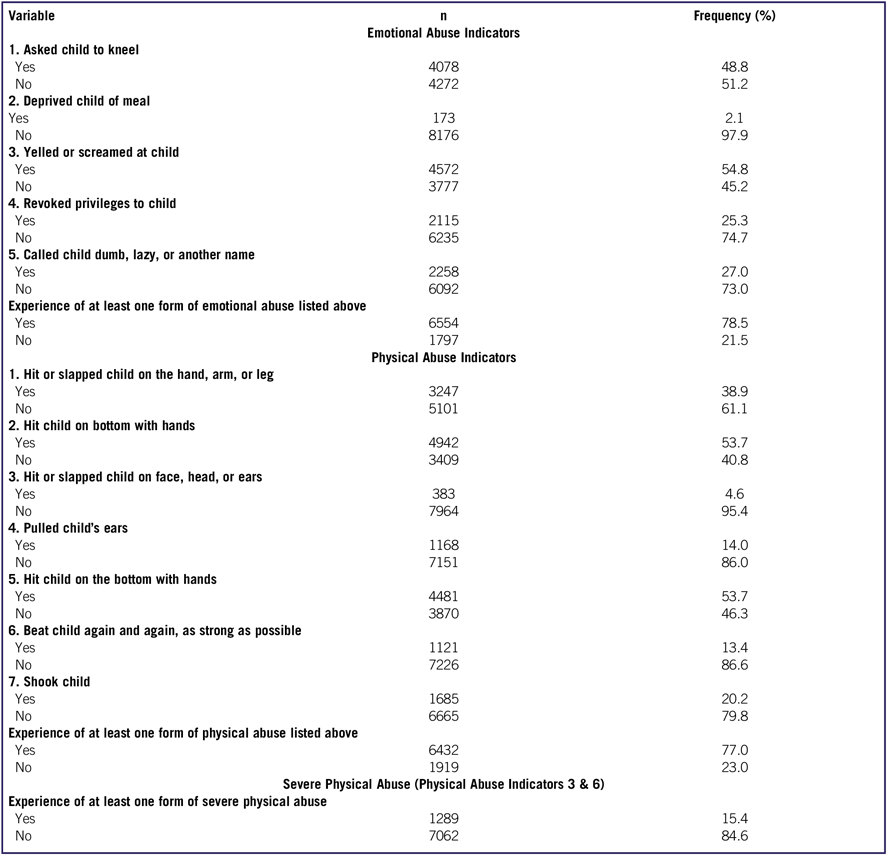
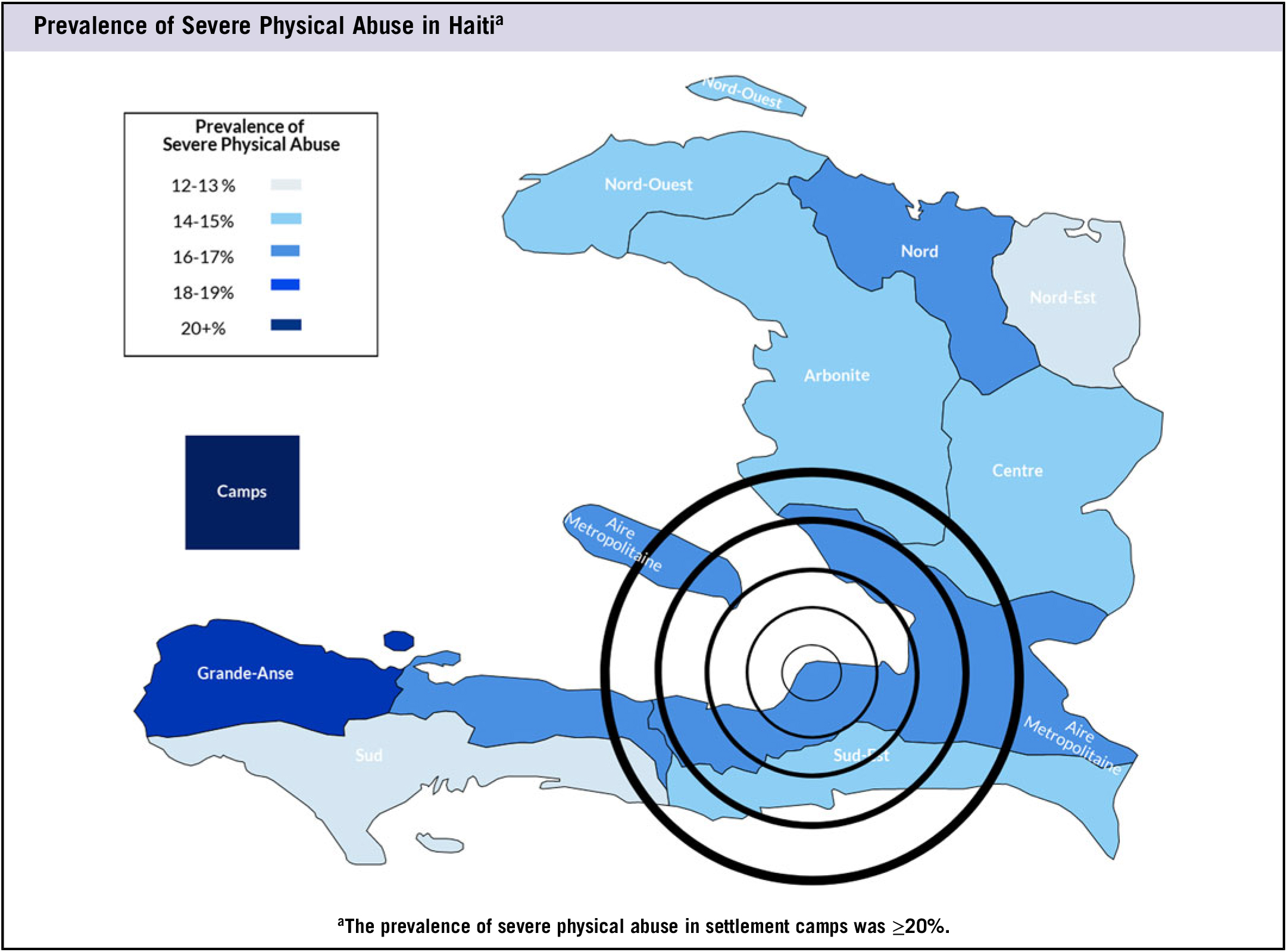
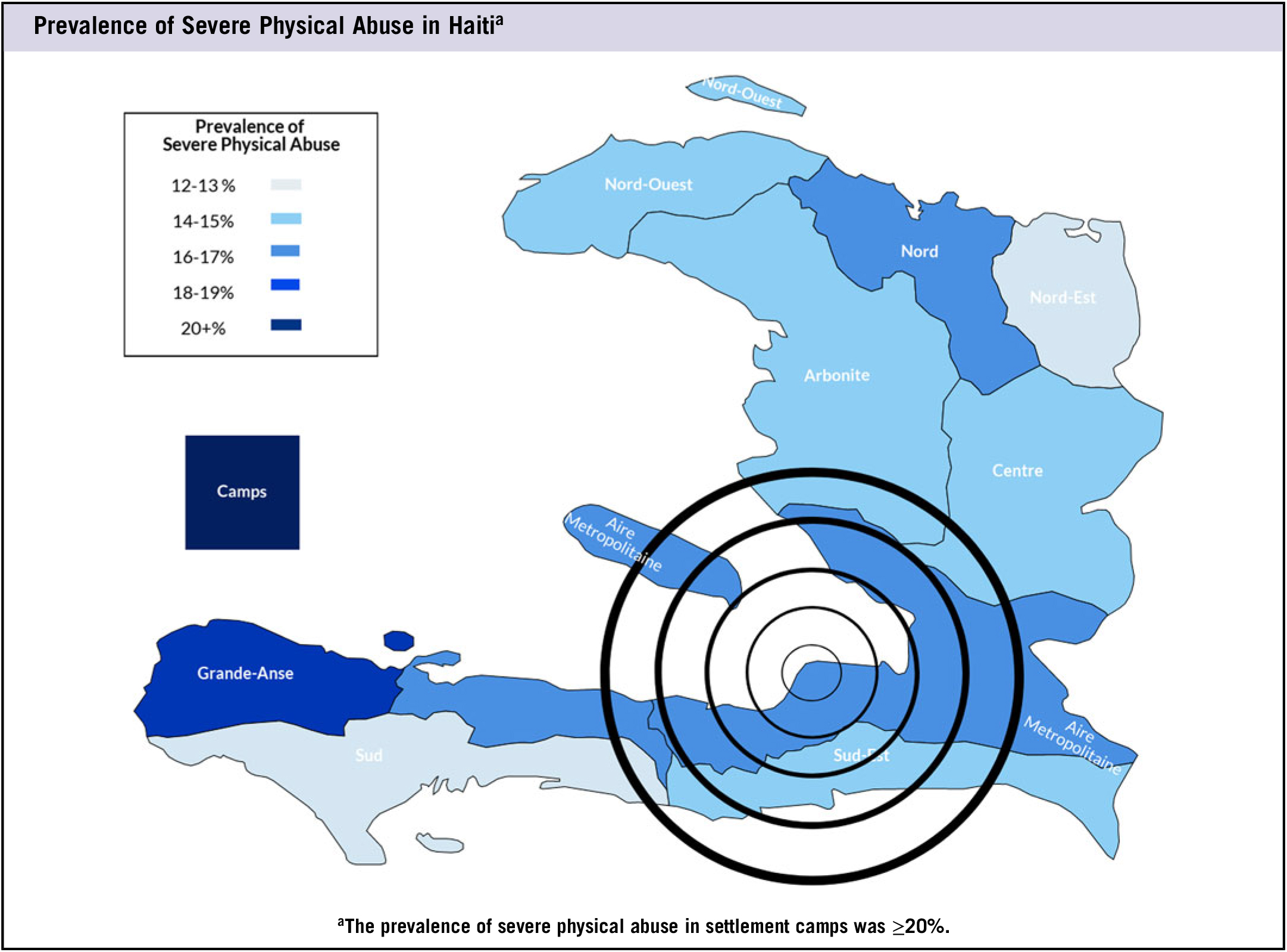
The prevalence of at least 1 form of emotional, physical, and severe physical abuse in the month prior to the 2012 survey was 78.5%, 77.0%, and 15.4% respectively. The most common act of emotional abuse was “yelled or screamed at child” (54.8%), followed by “asked child to kneel” (48.8%), “called child dumb, lazy, or another name” (27.0%), “revoked privileges to child” (25.3%), and “deprived child of meal” (2.1%). For physical abuse, 28.5% of the respondents believed that their child needed to be physically punished to be brought up properly. The most common form of physical abuse was “hit child on the bottom with hands” (53.7%), followed by “hit or slapped child on the hand, arm, or leg” (38.9%), “shook child” (20.2%), “pulled child’s ears” (14.0%), “beat child again and again, as strong as possible” (13.4%), and lastly, “hit or slapped child on face, head, or ears” (4.6%) (Table 3). A visual analysis of abuse prevalence in relation to the 10 geographic regions of Haiti and its proximity to the epicenter of the earthquake did not identify any conclusive patterns. However, the prevalence of severe physical abuse among children living in camps (25.0%) was found to be higher than that among children who did not live in camps (Figure 1).
Prevalence Estimates of Emotional, Physical, and Severe Physical Child Abuse in the Household in the Month Prior to Survey in 2012

Prevalence of Severe Physical Abuse in Haitia
DISCUSSION
Emotional and Physical Abuse
There were some alarming findings regarding the prevalence estimates of child abuse in the household. Though different forms of child abuse often occur together,Reference Chiu, Lutfey and Litman20 we have chosen to analyze them separately. Individual analyses showed that both physical and emotional abuse were very common, while severe physical abuse was less common. Although we do not have baseline prevalence estimates of emotional or physical abuse before the earthquake in Haiti, the estimates we found are considerably higher than global average estimates (22.6% for physical abuse and 36.3% for emotional abuse).Reference Hillis, Mercy and Amobi21
Mapping revealed that occurrences of severe physical child abuse were higher among children residing in camps (25.0% prevalence) 2 years after the earthquake than they were among children not living in camps. This may be explained by corporal punishment being more accepted in Haitian culture and consequently parents not being deterred by others observing their acts of child maltreatment. Severe physical abuse could also be higher in camps because of the even greater levels of stress, frustration, and lack of social support experienced by parents living in camps.
In addition to violating a basic human right, any form of abuse can have severe negative implications to a child’s well-being, including short- and long-term physical and psychological adverse health outcomes. Although the nature of and attitudes towards child abuse are often rooted in cultural and societal norms,Reference Lilleston, Goldmann and Verma22 both the World Report on Violence and HealthReference Krug, Mercy and Dahlberg23 and the World Report on Violence Against ChildrenReference Pinheiro24 acknowledged child abuse as a violation of human rights, universally across nations and cultures. While Haiti has ratified the Convention on the Rights of the Child in 1995, and there are existing Haitian laws that prohibit corporal punishment,17 there is an immediate need for enforcement policies and penalties around child abuse in the household. Additionally, awareness campaigns and interventions are needed to encourage healthy forms of child discipline. The effectiveness of the very few interventions around child abuse and maltreatment prevention in Haiti should be further studied. Among those that have been assessed, parental education programs aimed at increasing knowledge of child development and encouraging positive child management strategies have shown some positive results in preventing child maltreatment.Reference Mikton and Butchart25 Relatedly, education-focused home visitation by nurses or trained personnel has successfully been used as a tool to prevent child abuse.Reference Olds, Henderson and Chamberlin26 We must also acknowledge that aside from the impacts of the earthquake, many of these households in Haiti live with ongoing stress of chronic poverty, which may influence the dynamic in the home and potentially the incidence of child abuse. Any subsequent interventions must consider these contextual realities.
Sociodemographic, Socioeconomic, and Living Condition Characteristics
This paper presents some important findings on sociodemographic characteristics, socioeconomic characteristics, and living conditions, which are important determinants of the economic and health status of a population. Regarding the sociodemographic results, the 2012 survey results showed that approximately 5.0% of the population reported living in camps.
Although there are no DHS data to compare the number of people living in camps before and after the earthquake, the number of people living in camps is likely to be higher after the earthquake, given that the government of Haiti reported that about 1.3 million people were living in temporary shelters in the Port-au-Prince metropolitan area immediately after the earthquake.3 The household head was predominantly male for both cycles of the survey. This is expected, given that Haiti is considered a patriarchal society. In 2012, only one-third of the surveyed population had electricity in the household. This number is low and alarming, considering that lack of electricity has negative implications for safety, for children who want to study at home, and for adults who earn a living working from home. Moreover, the percentage of households who shared a toilet with other households slightly increased after the earthquake. This may be a result of the fact that 105 000 homes were destroyed and over 208 000 homes were damaged as a result of the earthquake.3 Additionally, millions of people were displaced,3 and thus were without a toilet of their own. While the use of shared toilets increased overall, we did not explore the regional variation in this study. Thus, the use of shared toilets may have increased in areas close to the epicenter such as Port-au-Prince, while there may have been a decrease in areas directly affected by the cholera outbreak, such as Artibonite.
While statistical differences were found in most of the sociodemographic categories, meaningful differences appear to be related most to household possessions and the level of educational attainment of the household head. One of the most notable and positive findings of this study was the drastic 59.9% increase in household possession of mobile phones from 2005/2006 to 2012. This may not be directly related to the earthquake. A leading explanation for this increase is the opening of a third private cellular phone company in Haiti in 2010, which allowed Haiti to reach a much higher mobile density.Reference Bengtsson, Lu and Thorson27 In comparison, neighboring Dominican Republic also showed an increase in the possession of mobile phones from 2007 (68.8%) to 2013 (89.3%).Reference Molina, Ramírez and José28, Reference Achécar, Ramírez and José29
The increase in mobile phone usage may benefit the citizens of Haiti in numerous ways. Studies have indicated that mobile phone usage can be beneficial in disaster and disease outbreak situations as it may be easier to communicate, as well geospatially locate the movement of people.Reference Bengtsson, Lu and Thorson27, Reference Gething and Tatem30 Existing approaches to assessing population movements immediately after natural disasters, such as eyewitnesses, transport surveys, and manual registration of individuals at emergency-relief centers, are often inadequate.Reference Gething and Tatem30 A post-earthquake geospatial study in Haiti that tracked 1.6 million Subscriber Identity Module (SIM) cards anonymously found that estimates of population movements during disasters can be delivered rapidly with high validity.Reference Bengtsson, Lu and Thorson27 Additionally, in low- and middle-income countries, mobile phones have shown some promise in increasing knowledge of health and modifying health-related behaviors, such as smoking and alcohol intake.Reference Bastawrous and Armstrong31 The practice of using mobile devices in homes to prevent violence and child maltreatment has not been studied extensively; however, the results have been promising. An experimental study found that parents randomized to obligatory cellular phone usage demonstrated better parenting practices than parents without use of obligatory cellular phone technology.Reference Blakeslee, Patel and Simon32 The increase in mobile phone ownership may be beneficial in changing health behaviors as well as educating parents and caregivers on positive parenting practices and the implications of child abuse and maltreatment.
Another positive change that was seen after the earthquake was the improvement of educational attainment of the household head. Although the reason behind the notable decrease in “no education” and the increase in “primary,” “secondary,” and “higher education” cannot be definitively ascertained, some evidence-based speculations can be made. After recognizing that Haiti had one of the lowest school enrolment rates in the world, in 2007 the World Bank funded the Education For All adaptable program, which aimed to improve and rebuild the education system through the implementation of sustainable programs to improve (1) access to primary education, (2) quality of primary education, and (3) the institutional capacity in the education sector.Reference Eras, Joseph and Franco33 Improved educational attainment may also be secondary to the massive world-wide humanitarian response that followed after the disaster and resulted in large numbers of governmental and nongovernmental organizations joining together in efforts to improve the health, education, and economy in Haiti.Reference Engle34, Reference Kligerman, Barry and Walmer35
Strengths
There are many strengths to this study. First, given that the DHSs are nationally representative, the results are generalizable at the country level. This analysis used large sample sizes of 9998 (2005/2006) and 13 181 (2012), which allowed us to detect differences in prevalence estimates at 80% or greater power even across population subgroups. Furthermore, this study helps address a gap in current literature by providing information on sociodemographic characteristics, socioeconomic situations, and living conditions before and after the disaster, while providing the prevalence of household child-targeted emotional, physical, and severe physical abuse post-earthquake. The findings may be helpful for understanding current patterns in Haiti and for comparison with future DHS cycles. Lastly, similar to other secondary analyses of cross-sectional studies, this study was relatively resource-efficient to complete.
Limitations
The results of this study must be considered in the context of some limitations. Child abuse–related data were only available post-earthquake, and consequently we were not able to compare pre-earthquake and post-earthquake prevalence estimates for child abuse in Haiti. However, the post-earthquake estimates do indicate that child abuse prevalence is higher than global averagesReference Hillis, Mercy and Amobi21 and higher than levels previously published in the Violence Against Children in Haiti Study.Reference Reza, Lea and Hast36 Secondly, the household survey was conducted approximately 2 years after the earthquake, which may result in an underestimation of the true prevalence of child abuse directly after the disaster when stress and disruption were likely higher. It is likely, however, that the impacts of the earthquake on families continued in Haiti as a result of the cholera epidemic,Reference Pfrimmer7 the continued rebuilding of homes and displacement of people,Reference DesRoches, Comerio and Eberhard37 the fragile economy, and political instability.Reference Cavallo, Powell and Becerra38 In addition, there is a possibility of social desirability bias in this study, because child abuse is a sensitive topic and respondents who abused the randomly selected child may have answered questions in a manner that will be viewed favorably by the interviewer. This could have resulted in the potential underreporting of emotional and physical child abuse.
CONCLUSIONS
This study showed some similarities, but predominantly meaningful differences in the sociodemographic characteristics, socioeconomic situation, and living conditions of households in Haiti before and after the earthquake. Noteworthy differences included increased mobile phone possession and the improvement of education attainment for household heads. This study also ascertained that the household prevalence of emotional, physical, and severe physical child abuse in Haiti is high, and there is an immediate need for enforcement of existing policies, interventions, and awareness campaigns around all forms of child abuse and their associated adverse health and development outcomes. Children living in camps may be at a higher risk of severe physical abuse than children not living in camps.